

In the year 2542, humanity had reached an age of enlightenment, where technology and knowledge had advanced to levels previously unimaginable.
Amidst the bustling metropolis of Neo-Tokyo, two men stood apart from the crowd, their expressions grave and determined. They were Dr. Elias Hartman, a renowned historian, and Kael Renwick, a brilliant physicist.
Their mission was as crucial as it was unprecedented: they had to travel back to the early 21st century to avert a catastrophe, a global war rooted in a millennia-old misunderstanding of religious texts that threatened to wipe out the progress of the enlightened age.
Elias and Kael had spent years researching the origins of religious texts, particularly the Bible.

Their findings were both groundbreaking and alarming. The Bible, revered by billions, was not a divine prophecy but a collection of embellished reports from historians of long ago.
These historians, lacking a comprehensive understanding and accurate recording methods, had chronicled events that occurred tens of thousands of years prior. Over time, their writings got misinterpreted and deified, leading humanity astray.
The duo stepped into the time portal, their hearts heavy with the weight of their mission. They emerged in the year 2024, a time when religious fervor was still potent, and the world was on the brink of environmental and societal collapse. The air was thick with pollution, and the political climate was rife with tension and division.
Their first destination was a conference on religious studies in New York City. With his scholarly demeanor, Elias took the stage amidst curious and skeptical academics.

“Ladies and gentlemen,” he began, his voice steady and authoritative, “I come from a future where we have uncovered the true origins of the Bible. It is not a prophecy or a divine mandate but a series of embellished reports from ancient historians who chronicled events inaccurately. These events occurred thousands of years ago and have no bearing on our future.”
The audience was stunned into silence, then erupted into a cacophony of disbelief and anger. Kael stepped forward, his presence commanding and reassuring.
“We understand this is difficult to accept,” Kael said, “but we have irrefutable evidence. The misinterpretations of these texts have led humanity down a dangerous path. If we do not correct our course, we will self-destruct.”
They presented their evidence: ancient manuscripts, carbon-dated artifacts, and advanced simulations showing the actual timeline of historical events. These artifacts and simulations, based on the latest scientific methods and technologies of the 26th century, provided a clear and irrefutable picture of the true origins of the Bible, shifting the room’s atmosphere from hostility to curiosity.
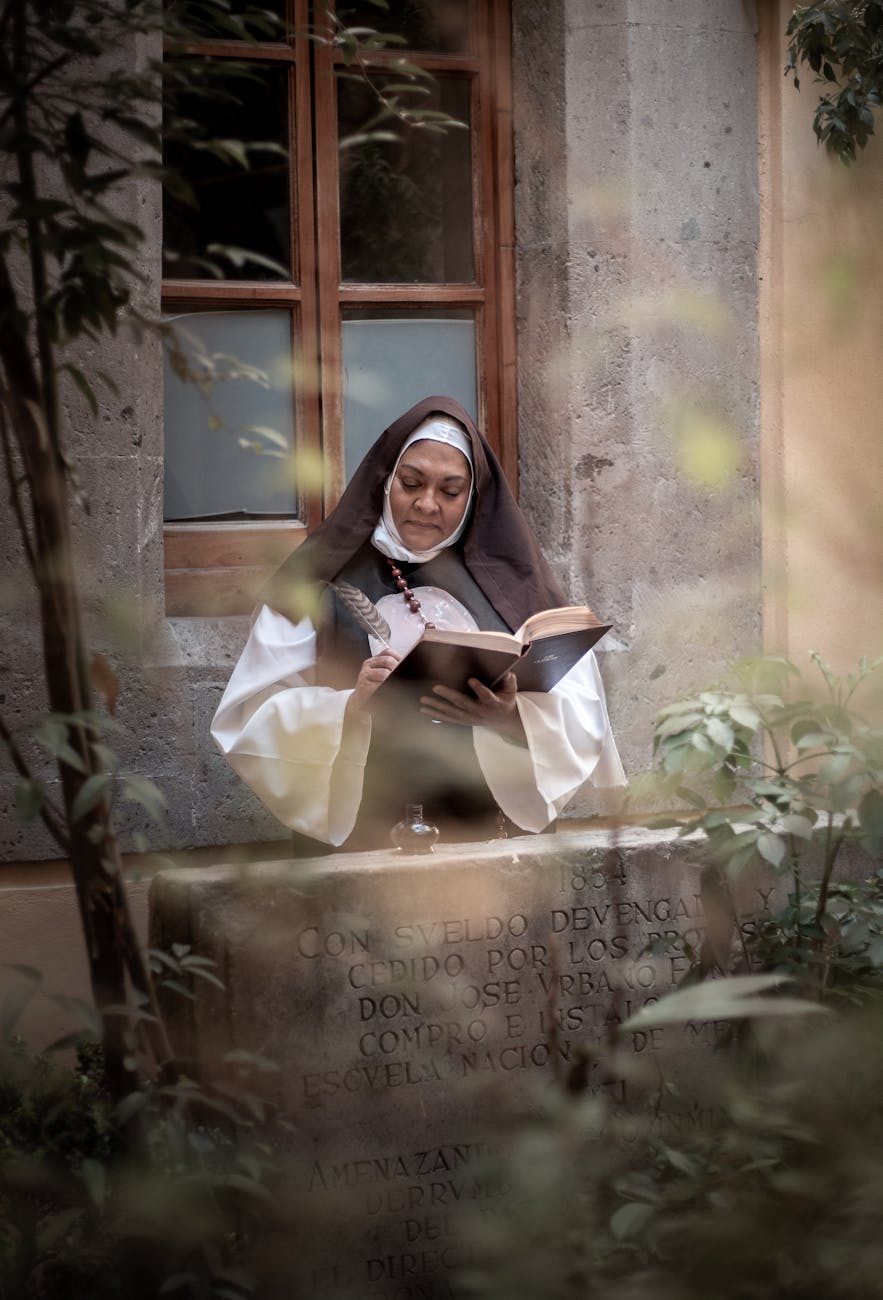
As their journey continued, Elias and Kael faced fierce opposition from religious leaders and institutions that saw their revelations as threatening. They were branded heretics and faced numerous attempts to discredit their work, including public denouncements, smear campaigns, and even physical threats. However, they also found allies in unexpected places—scientists, open-minded theologians, and everyday people who saw the truth in their words.

In a small town in the Midwest, they met Sarah, a young pastor who had long questioned the traditional interpretations of the Bible. She invited them to speak to her congregation, a modest group yearning for answers in an uncertain world.
Elias spoke passionately,
“The Bible’s true value lies in its moral and ethical teachings, not in its historical accuracy. We must embrace its wisdom while understanding that it is not a roadmap for our future.”
Kael added,
“Science and spirituality can coexist. We must use our knowledge to heal our planet and unite as a species, not divide ourselves based on ancient misunderstandings.”
Slowly but surely, their message began to spread. More people started questioning long-held beliefs, seeking knowledge and understanding over blind faith.
Grassroots movements for environmental preservation, social justice, and scientific advancement gained momentum.
Their journey was arduous, filled with moments of despair and hope. But Elias and Kael knew that the future depended on their success. As they stood on the steps of the United Nations, addressing the world for the first time, they felt a sense of destiny.
“Our future was not recorded or written in ancient texts,”
Elias declared.
“It is shaped by our actions today. Let us forge a path of understanding, compassion, and progress.”
Kael concluded,
“We have the power to change our destiny. Let us choose wisely and ensure a future where humanity thrives in sinc with our planet and one another.”
The world watched, listened, and began to change. The seeds of enlightenment they planted grew into a global movement, steering humanity away from the brink of disaster and towards a brighter, more united future. Elias and Kael fulfilled their mission, not by erasing the past but by illuminating the truth and guiding humanity toward a new dawn.
 benandsteve.com