
GROFF MEDIA 2024© TRUTH ENDURES IMDBPRO
Presented by benandsteve.com By: Benjamin Groff II©s
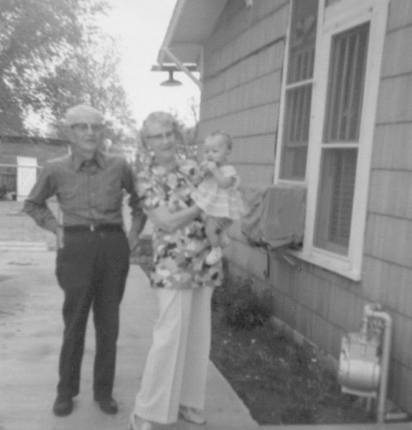
The house at 608 E Kiowa Street was a two-story, single-family dwelling. It was the largest home on the street. It was on the road’s south side, just east of Jefferson Elementary School. The exterior was adorned with a well-kept garden. There was a porch with a swing where we spent many evenings. A large oak tree provided shade in the summer. It was my grandparents’ home from when I was born until my grandmother passed away in the mid-1970s.
With its shale shingle siding, the house always seemed enormous to me. The first floor held a kitchen, a cozy den, and a bedroom. It contained a formal sitting room and a living room where their black-and-white television rested. Upstairs were three large rooms—spacious enough for my grandmother to host visiting relatives from out of state.
My grandmother’s hospitality was legendary. She accommodated up to three full-size beds with people. She had sleeping cots and plenty of room to use if needed. She was always ready to welcome more guests into her home, making everyone feel like they belonged.

One of the most memorable aspects of the upstairs was the introduction to an old-fashioned necessity: the chamber pot. My grandmother clarified that it was mainly for the ‘men folk.’ The women seemed to manage through the night without issue. Every morning, my grandfather would empty the pot into the downstairs toilet. Then he would step outside. He would wash it thoroughly with the garden hose. He’d always follow this routine by filling it halfway with water and calling out to my grandmother,
“Ok, Mom, I got halfway there.”
To which she’d respond from somewhere in the house,
“Don’t put the lid on it. I’m bringing the bleach!”
Everyone called them Pop and Mom. Over the years, the names became so natural that they started addressing each other that way. This was true except when my grandmother was exasperated with Pop for not hearing her. Then, she’d call him by his actual name, the very name I shared with him. But beneath the surface, how much they loved and cared for each other was always evident.
“BEN!”
Whenever I visited, I couldn’t help but worry that the neighbors thought she was yelling at me for misbehaving. I loved my grandparents too much to ever cause trouble. I tried my best to help Pop hear her. I acted as a go-between for their familiar, loving banter.
Another curiosity upstairs was an old doorstop. It was a gift from my great-grandfather. He was a stern, fire-and-brimstone Baptist preacher. He roamed Northeast Texas, Southwest Arkansas, and Southeast Oklahoma. His mission work often left my grandmother unsure which state they lived in since their farm straddled all three.

She once told me something interesting. The doorstop had accompanied her brother. He came to give my grandfather permission to marry her. It remained tucked away upstairs because, as she explained,
“Times have changed, and it wouldn’t be proper to show it in the main part of the house.”

In the kitchen, a small toy was tucked inside a cabinet. It was the only toy my grandmother ever bought for my dad during his childhood. Money was tight back then, and buying toys was a luxury most couldn’t afford. Yet, she purchased this wind-up toy. It would dance and entertain my dad as a toddler while she worked around the house. When my grandmother passed away, the toy went to my dad. After his passing, I found it in our attic. It was worn and weathered by time. Yet, it still carried the weight of all those cherished memories. I kept it—not for its value, but for the stories and love it symbolized.
The family gatherings we shared there pull me back to that old house, even though it no longer stands. Mom and Pop’s home was a magnet for loved ones, filled with laughter and warmth. Even during the most challenging economic times, a sense of togetherness and unity prevailed. This feeling seems more elusive in today’s world. Their old radio will not pick up the stations it once did.

I often wonder what Mom and Pop would think if they saw our modern world—technology and conveniences. But more than that, I wonder how they’d feel. How would they react if they saw what we’ve done with the legacy they left us? They instilled the values of hard work, love, and togetherness. Would they be proud of the way we’ve upheld these values? Would they recognize the strong family bonds they worked so hard to instill? The actual family values of love before judgment.
Those questions linger, just like the memory of the old house on Kiowa Street.
 benandsteve.com