
GROFF MEDIA 2024© TRUTH ENDURES IMDBPRO
Presented by benandsteve.com By: Benjamin Groff II©s
Tim and His Prize Chicken
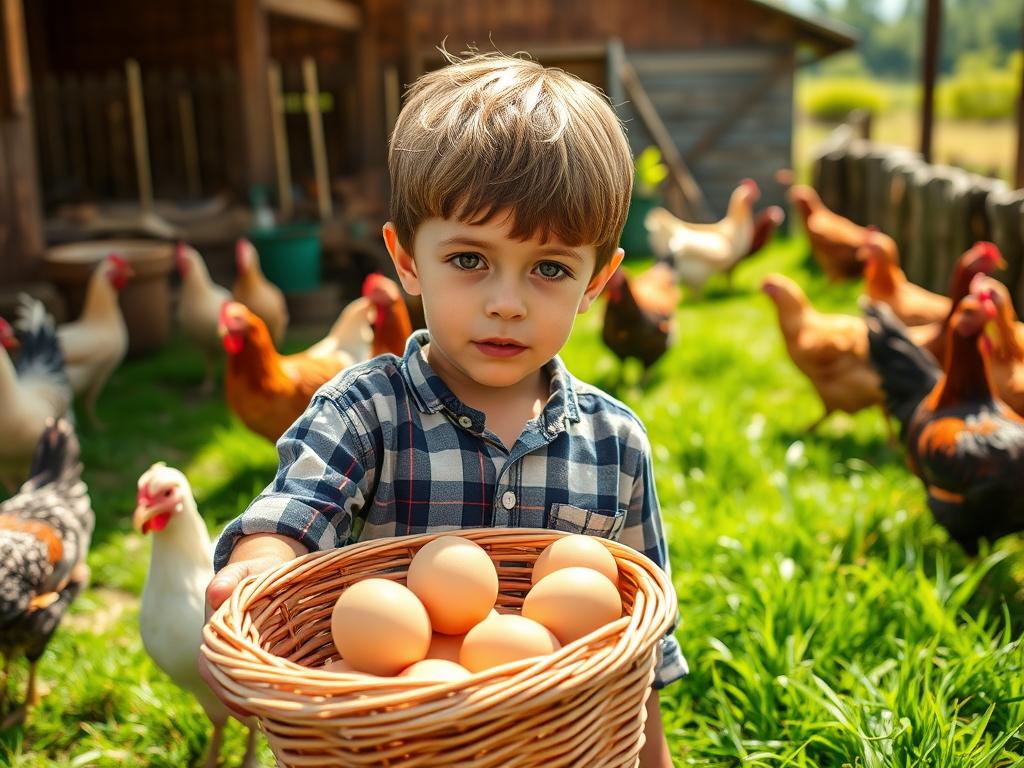
Tim had been caring for his father’s White Rock chicken pen for months. It was a new chore he got handed as he got older. Tim collected eggs from nests, fed the chickens, and cleaned the pens. He also ensured plenty of fresh water for the fowl to drink.
One day, Tim’s father came home from work. He told Tim they were going on a short trip. The purpose of the trip was to look at game roosters and hens. He suggested that if Tim wanted to buy one, he should bring the money. Tim had been saving this money from doing chores and receiving it as gifts.
Tim gathered his savings—an impressive $25.00—and he and his father set off to explore this new thing he had just heard about: “Game Chickens.” They arrived at a property owned by the Gaines family about twenty miles away. Tim was surprised to see dozens of small doghouses spread across the backyard.
Mr. Gaines, a middle-aged man, came out of the house, greeted Tim’s father, and asked,
“You’re here about the chickens, aren’t you?”
Tim and his father answered in unison,
“Yes, we are!”
They looked around and discussed their options. Tim’s father purchased five hens and five guineas. Tim proudly bought a rooster with his savings.
When they returned home, Tim’s father explained,
“We’ll use the rooster you bought to encourage these hens to lay eggs. Once we collect enough eggs, we’ll place them in a new incubator I bought. I’ll teach you how chickens lay eggs. You’ll also learn how they set and hatch their eggs.”
It felt like forever to collect enough eggs, but it only took about a week. Once they had gathered a good number, Tim’s father marked each egg with an ‘X’ on one side. He marked an ‘O’ on the other side of each egg. He then placed them in the incubator. He ensured the proper humidity. He added a small amount of water to the bottom tray. A screen was placed over the water, and the eggs were laid on top.
Tim’s father explained, –––
“For the first eighteen days, we must turn the eggs regularly. Turn them at least thrice daily. This prevents the developing chicks from sticking to the shell. The incubator will handle the temperature, but it’s up to us to turn them.”
Tim learned they couldn’t touch the eggs with bare hands, as oils from their skin clog the shell’s pores. They used cotton gloves to handle them. Tim eagerly helped his father turn the eggs daily, hoping to see signs of life inside.
As they approached the last three days, Tim’s father announced, –––
“No more turning. The chicks need to position themselves for hatching now. And we must keep the incubator closed—no peeking!”
It was the hardest thing for a nine-year-old to resist opening the incubator, but Tim managed. Then, on the twentieth day, he heard a faint ––
“Peep, peep!”
“Should we open it and see if they’re okay?”
Tim asked excitedly.
“Not yet,”
His father replied.
“Let’s give it another day or two to make sure they all have time to hatch.”
That was not the answer Tim wanted to hear, but he trusted his father. The next two days felt like an eternity. The soft peep grew louder, and his father finally said, –––
“Let’s open it up and see what we have!”
To their amazement, all fifty eggs had hatched. The incubator was full of tiny, fluffy chicks, chirping loudly in their new world.
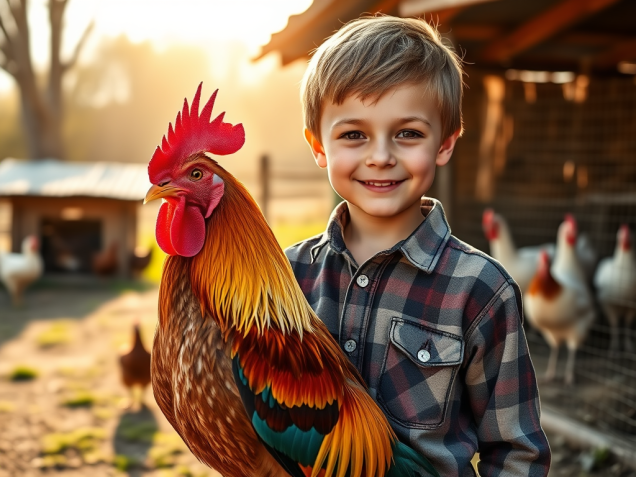
Over the next month, Tim was responsible for feeding the chicks a unique grain mix. He also provided fresh water with added vitamins to prevent early diseases common in poultry. In about eight weeks, the chicks had grown into young roosters and hens, scattering in all directions across the farm.
Tim learned that game roosters were naturally aggressive toward each other. As they matured, the males had to be separated or butchered. Many ended up in the freezer, while a few got held back as breeders for future generations.
Tim’s father also explained why Mr. Gaines had so many small doghouses in his yard.
“He separates his game roosters to keep them from fighting. Some people sell them, and some even use them for illegal cockfighting, but we’ll never do that. It’s inhumane and against the law.”
As for the guineas, Tim’s father let them roam freely around the farm.
“They’re the best burglar alarms you can have. If anything or anyone unusual comes around, they’ll make a racket.”
Tim discovered the game chickens laid green, blue, and brown eggs. All are in demand by area residents looking to avoid white eggs, and they have added health benefits.
Through this experience, Tim gained a lifelong appreciation for the care and responsibility of raising animals. He learned patience, the importance of careful handling, and how to nurture life from beginning to maturity. This lesson stayed with him forever.
 benandsteve.com