Gerald The Goose Goes Mad On Park Goers Until He Finds Officer Tom A Friend For Life.

Groff Media 2024© Truth Endures IMDbPro

Presented by benandsteve.com By: Benjamin Groff II©


In the heart of a bustling city, there was a quaint park known for its serene beauty and vibrant wildlife. Among the ducks and swans was one particularly notorious resident—a mad goose named Gerald. Gerald had a reputation for chasing unsuspecting park-goers, honking furiously and flapping his wings in a display of avian aggression.

One sunny afternoon, the park was filled with families enjoying picnics and children playing games. A commotion erupted as Gerald began his usual antics, sending people scattering in all directions. Exasperated by the chaos, the park’s caretaker decided it was time to call for help. Enter Officer Tom, a kind-hearted police officer known for his patience and love for animals.

Officer Tom arrived at the park, his calm demeanor contrasting sharply with the commotion around him. As he approached Gerald, the goose stopped, tilting his head curiously. Something about Officer Tom intrigued Gerald. Instead of chasing him away, Gerald shuffled to the officer and nuzzled his leg affectionately.

Seeing the unexpected bond forming, Officer Tom decided to take Gerald home. He became the goose’s sole caretaker, and they developed a deep friendship. A gentle loyalty to Tom replaced Gerald’s wild antics, and the two became inseparable. They were a familiar sight around town, with Gerald waddling faithfully beside Tom on his daily patrols.

As the years passed, Officer Tom grew older, and his hair turned silver. Gerald, too, showed signs of aging, but their bond remained as strong as ever. The townspeople grew fond of the duo, often stopping to chat with Tom and feed Gerald treats. They became beloved characters in the town’s story, symbolizing friendship and loyalty.

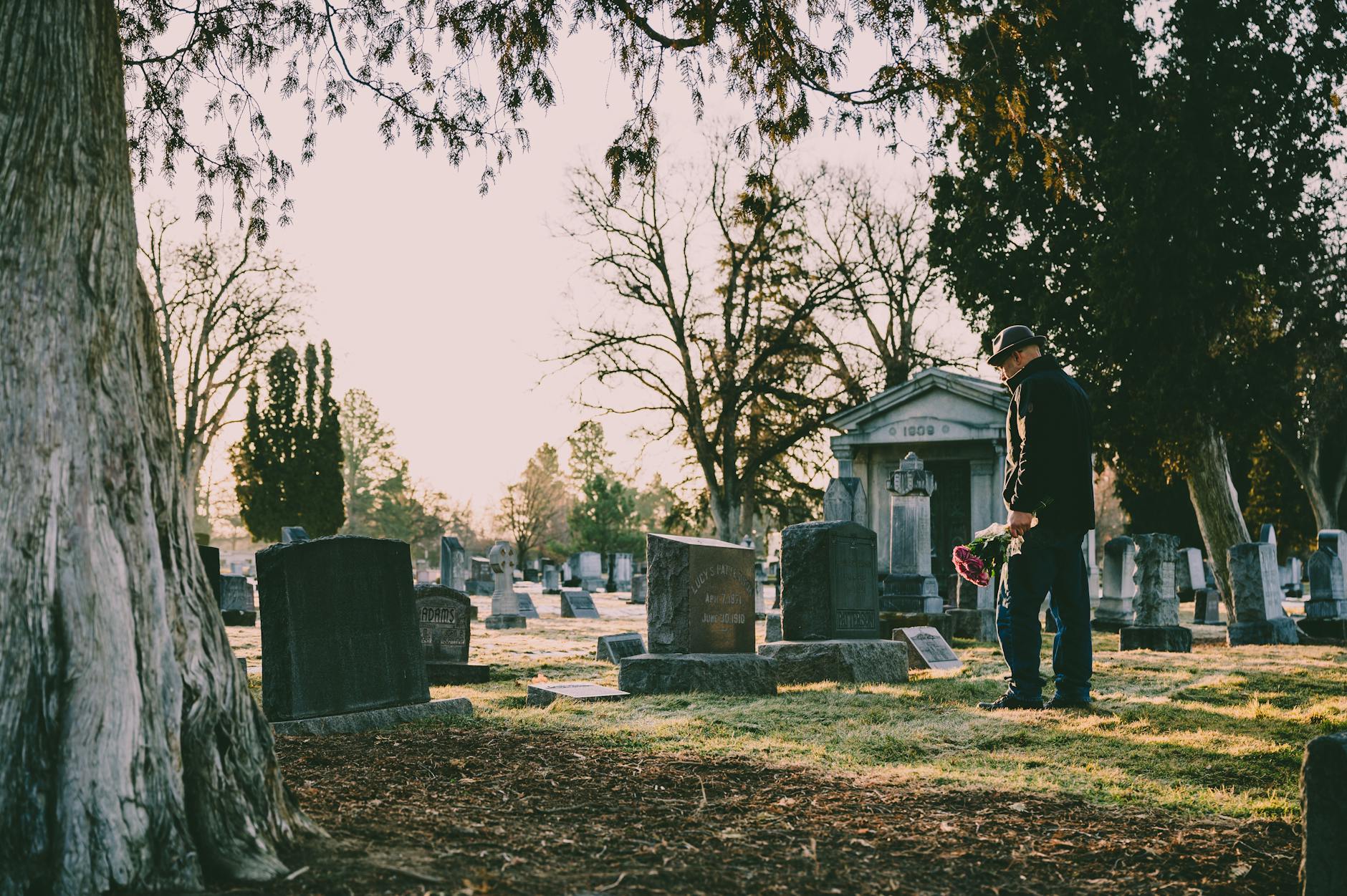
One day, the town was struck by the sad news of Officer Tom’s passing. The townspeople mourned the passing of their beloved officer, but their hearts also went out to Gerald, who was now alone. Concerned about the old goose, the townspeople gathered to decide what to do.

In a touching display of unity, the town took turns caring for Gerald. Each day, a different family welcomed him into their home, ensuring he was well-fed and loved. Though he missed his dear friend, Tom, Gerald found comfort in the townspeople’s kindness.

And so, Gerald lived out his days surrounded by the love and care of the community. The story of the mad goose and the kind-hearted officer became a cherished legend, reminding everyone of the power of friendship and the importance of looking out for one another.

Leave a comment

This site uses Akismet to reduce spam. Learn how your comment data is processed.

COYOTES CAUSING TROUBLE IN METRO AREAS

Groff Media 2024© Truth Endures IMDbPro

Presented by benandsteve.com By: Benjamin Groff II© 


The overpopulation of coyotes in many metropolitan areas, including Arizona, California, and Nevada, is a severe issue. This poses a threat to our pets and disrupts the balance of the local ecosystem, leading to potential conflicts with humans and other wildlife.

  • Bring Pets Indoors: When a coyote is spotted nearby, the most effective action is immediately bringing pets inside. Never leave small pets, like dogs or cats, unattended outdoors, especially at night, as they are at high risk. This simple step can significantly reduce the chances of a coyote attack, giving you control over your pet’s safety.Make Noise: If you can do so safely, use loud noises to scare the coyote away. Yelling, clapping, or banging objects can be effective, as coyotes tend to be skittish around loud sounds.
  • Use Water or Bright Lights: If accessible, spray water or turn on outdoor lights to deter the coyote from staying near your property. Many coyotes dislike sudden light exposure or water splashes.
    • Secure Food Sources: Coyotes are drawn to food left outdoors, such as pet food, garbage, or bird feeders. Remove these attractants by keeping pet food indoors, securing trash bins, and cleaning up fallen fruit or food from patios.
    • Fence Your Yard: Installing a tall, solid fence (at least 6 feet high) with a roller at the top can prevent coyotes from jumping over. A ‘coyote roller’ is a simple yet effective device that one can add to the top of a fence. It consists of a PVC pipe or metal rod that spins freely, making it difficult for coyotes to gain a foothold. Use Coyote Repellents: Commercial coyote repellents around the yard. These products typically use strong odors to discourage coyotes from venturing too close.
      • Consult Arizona Wildlife Authorities: For ongoing issues, contacting local wildlife or animal control agencies can help address concerns about coyote activity. In Arizona, the Arizona Game and Fish Department offers guidance on wildlife management.

        Organizing neighborhood awareness of wildlife encounters is crucial in building a united approach to preventing conflicts with coyotes. Sharing best practices and staying alert about sightings will benefit other pet owners and encourage community-wide efforts to limit coyote activity. Educating the community can all play a part in keeping our pets and properties safe.

        Otis’ Second Chance

        A Story By Benjamin Groff© Groff Media 2024© Truth Endures

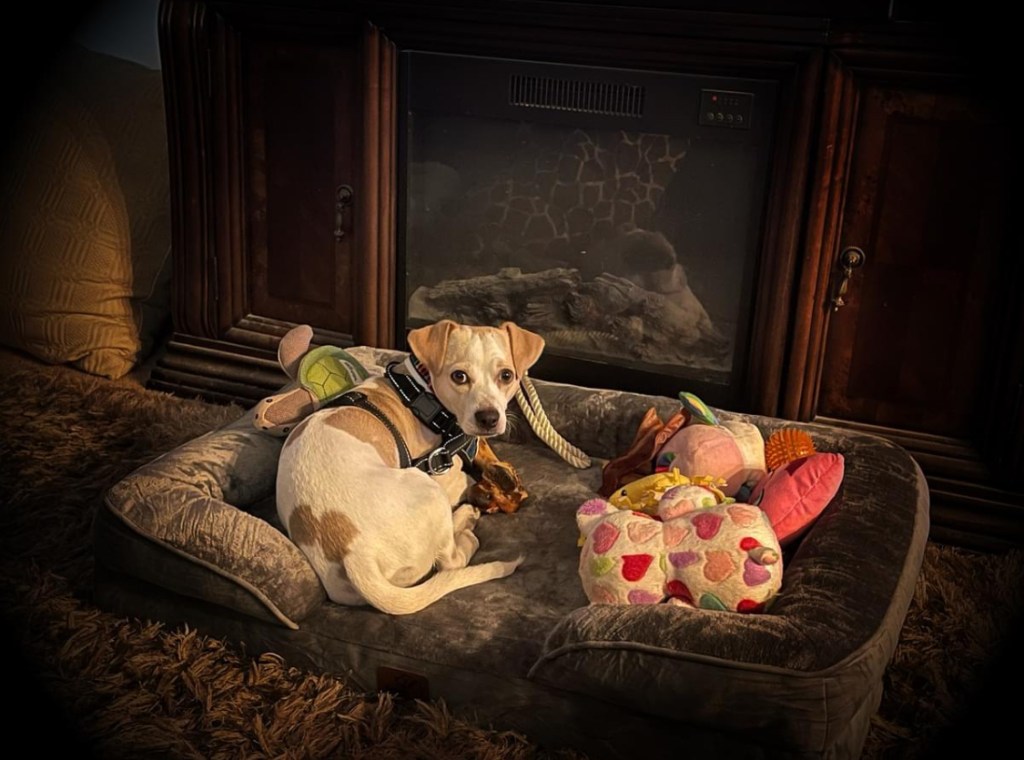
        Despite the unbearable desert heat, Otis, a small white and tan dog with soft, sad eyes, bravely limped along the cracked streets of Mesa, Arizona. The sun beat down on him relentlessly, but he refused to give up. Abandoned on the outskirts of town, with nothing but the scorching pavement under his paws, every breath he took felt heavy, every step harder than the last.

        He didn’t understand why he’d been left. One minute, he was curling up in the backseat of a car, and the next, the door swung open, and he was pushed out, and the car was speeding away. Otis had waited by the side of the road, panting and confused, hoping they’d come back. But they never did.

        Days passed, and Otis grew weaker; the desert offered no relief, just endless heat. But fate wasn’t done with him yet.

        At a local rescue center, George and Henry, an older couple known for their kindness to animals, were sitting at home when they got a call. They hadn’t owned a dog since Shooter, their beloved companion, had passed away three years ago. Shooter had been their family, filling their lives with joy and unconditional love. But when they lost him, the grief was so deep they couldn’t imagine having another dog.

        Yet, the call they received from the rescue center had them thinking. Animal Control officers found the dog, who would be named Otis, wandering the streets, desperately needing a home. Could they come and see him?

        When George and Henry arrived at the shelter, they saw Otis—thin and weary but with a glimmer of hope in his eyes. It reminded them of Shooter, of how he looked at them when he needed comfort. Without a word, George knelt beside the dog, his hand gently resting on Otis’ head. Henry stood beside him, his heart swelling at the sight.

        Despite his weakness, Otis leaned into George’s touch, a silent acknowledgment that he was safe. In that moment, a bond was formed, strong and unbreakable. It was as if they had known each other for years, not just a few minutes.

        The decision to bring Otis home was not a difficult one. George and Henry knew Otis needed them, but they hadn’t realized how much they needed him. Losing Shooter had left a hole in their hearts, and while Otis could never replace him, he had a way of healing parts of them they hadn’t realized were still broken.

        Back at their home, Otis quickly settled in. George would joke that Otis had chosen them just as much as they had chosen him. The dog followed them everywhere, always by their side, as if he couldn’t believe his luck—he had found a family, a real home, where he would never get abandoned again.

        As the weeks went by, Otis grew stronger. His coat filled out, his energy returned, and he thrived under the love and care George and Henry gave him. They’d take him on long walks, though always in the early mornings or evenings to avoid the brutal Arizona sun. Otis loved their little garden, where he’d chase butterflies and curl up under the shade of a tree, a far cry from the harsh desert streets where his journey had started.

        For George and Henry, Otis brought life back into their home. The house felt warm again, filled with the sounds of paws on the floor and the happy panting of a dog that finally knew he was safe. They talked about Shooter often, his memory always present, but now there was a new energy and chapter that Otis had helped them begin. His joyous presence filled their home with warmth and happiness.

        Otis may have started his life alone, abandoned, and lost, but in George and Henry, he found something special—a family who had also been waiting for a second chance at love.

        In the cool evenings, as they sat on their porch with Otis at their feet, George would smile at Henry and say,

        “Shooter sent him to us, didn’t he?”

        And Henry, with a soft nod, would agree.

        “I think he did.”

        The End.

        The Heartwarming Story of Jello: From Community Beloved Dog to Honorary Mayor of Millbrook

        Jello, a spirited dog with golden fur, floppy ears, and a tail that wagged like a metronome, lived in the quaint town of Millbrook. He was a free spirit, beloved by all, and a fixture of the community, embodying the warmth and unity of Millbrook.

        Jello had his routines. Every morning, he would trot to the bakery where Mrs. Thompson would have a fresh scone waiting for him. Then, he’d visit the school playground, where children would shower him with affection and sneak him bits of their lunches. Jello often spent afternoons lounging in the sun outside the library, where Mr. Caldwell would read to him from the latest novels. By evening, he would make his rounds at the town square, greeting everyone with a joyful bark before curling up under the big oak tree for the night. The community’s love for Jello was palpable, creating a sense of unity and togetherness.

        The townspeople adored Jello so much that someone humorously suggested nominating Jello for Mayor when the mayoral election came around. The idea quickly gained traction. “Who better to represent our town than Jello?” they said. “He’s loyal, kind, and brings everyone together.” And so, in an unprecedented turn of events, Jello’s name appeared on the ballot.

        As the election drew near, excitement buzzed through Millbrook. Posters of Jello, donning a makeshift mayoral sash, adorned shop windows and bulletin boards. The slogan “A Mayor Who Cares” echoed through the streets. But a week before the election, something terrible happened: Jello went missing.

        Panic spread like wildfire. Where could he be? The entire town, deeply concerned, rallied to search for him. Kids formed search parties, calling his name through the woods and fields. Shopkeepers closed early to join the search; even the local police were on high alert. There were flyers everywhere: ‘Missing: Jello. Our Town Hero. Please Help!’. The town’s reaction to Jello’s disappearance was a testament to their deep empathy and concern.

        As days passed with no sign of Jello, whispers of foul play began to circulate. The thought was too dreadful to bear, but the town’s unity shone through their worry. They held candlelight vigils, their collective hope a beacon in the darkness, a testament to their resilience and unity.

        On the eve of the election, a familiar bark echoed through the town square just as hope was waning. It was Jello, looking a bit dirty and tired but otherwise unharmed. The townspeople greeted Jello with cheers and tears of joy. Mr. Caldwell, who had been leading a search party near the old mill, found him trapped in an abandoned shed, likely having chased a squirrel inside and gotten stuck.

        The town’s relief was palpable. Shopkeepers cleaned him up, fed him his favorite treats, and gave him more attention. Election day arrived, and with Jello safe and sound, the town celebrated their unusual but heartwarming choice for Mayor. After tallying the votes, it was no surprise that Jello won by a landslide. Although the title of Mayor was symbolic, the gesture embodied the spirit of Millbrook: a community united by love, kindness, and the belief that sometimes the best leaders remind us of the simple, unspoken bonds we share.

        Jello, the dog who roamed freely but belonged to everyone, was now the honorary Mayor of Millbrook. His tale became a cherished legend, reminding all who heard it of the power of community and the unexpected ways in which leaders can emerge.

        Midnight: Guardian of Secrets in Solstice Hollow

        In the small, forgotten town of Solstice Hollow, days bled into each other with the relentless monotony of time. The sun hung heavy and perpetually on the horizon, a blazing sphere casting an otherworldly glow over the desolate streets. It was always twilight here, neither night nor day, as if the town existed in a pocket of suspended reality.

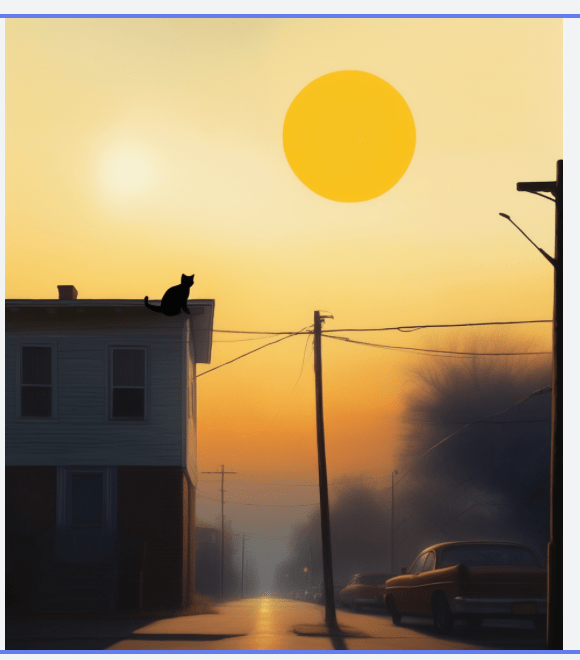
        The alley in the photograph was known as Whispering Lane, a narrow pathway flanked by crumbling buildings that seemed to sigh with the weight of their own history. Shadows stretched long and lean across the cracked pavement, and the air was thick with the scent of old wood and dust. At the intersection of the lane and Main Street stood an old house, its paint peeling and windows dark, a silent sentinel in this forgotten part of the world.

        On the roof of this house sat a black cat, its eyes glinting like emeralds in the perpetual twilight. The cat, known to the townsfolk as Midnight, had been there for as long as anyone could remember. Legend had it that Midnight was not an ordinary cat, but a guardian of secrets, a keeper of the town’s strange and sorrowful tales.

        One such tale was that of Eleanor Weaver, a young woman who had lived in Solstice Hollow many decades ago. Eleanor was a spirited and curious soul, always wandering the boundaries of the town, seeking something beyond the endless dusk. She was fascinated by Whispering Lane, drawn to its eerie silence and the whispers that seemed to emanate from the very walls.

        One evening, Eleanor ventured further down the lane than ever before. The sun, fixed in its eternal descent, bathed the alley in a warm, golden hue, casting long shadows that seemed to beckon her forward. As she walked, she heard faint murmurs, indistinct yet strangely comforting, as if the lane itself were sharing its secrets with her.

        At the end of the lane, where the shadows were deepest, Eleanor discovered a hidden door set into the side of an old brick building. The door was ancient and weathered, its surface etched with cryptic symbols. With a mixture of trepidation and excitement, she pushed it open and stepped inside.

        What Eleanor found beyond the door was a realm beyond her wildest imaginings—a place where time flowed differently, and the laws of reality were mere suggestions. She wandered through dreamlike landscapes, met beings of light and shadow, and learned the true nature of Solstice Hollow. She discovered that the town was a sanctuary, a refuge for those who had lost their way in the world. The perpetual twilight was a barrier, a protective veil that kept the town hidden from the rest of existence.

        Days turned into weeks, and weeks into months, yet Eleanor felt no urge to return. She had found her place, her purpose, in this otherworldly dimension. But as with all who ventured too far into the unknown, a time came when she had to make a choice: remain in the dreamscape forever, or return to the world she had left behind.

        Eleanor chose to return, carrying with her the knowledge and serenity she had gained. She emerged from the hidden door, back into the eternal twilight of Whispering Lane. The townsfolk noticed a change in her—a quiet wisdom in her eyes, a sense of peace that seemed to radiate from her very being. She never spoke of what she had seen, but Midnight, the ever-watchful cat, seemed to understand.

        Years passed, and Eleanor’s tale became part of the whispered legends of Solstice Hollow. The hidden door was never found again, and some began to doubt it had ever existed. Yet, on still evenings when the sun cast its golden glow over Whispering Lane, the whispers could still be heard, faint but persistent, as if the alley itself remembered.

        Midnight remained on the rooftop, a silent guardian, watching over the town and its secrets. And in the timeless twilight of Solstice Hollow, life continued, a delicate dance between reality and the unknown.

        ~ ROSE ~ A WILD HORSE FOR A SUMMER WITH BUD

        Photo by David Dibert on Pexels.com

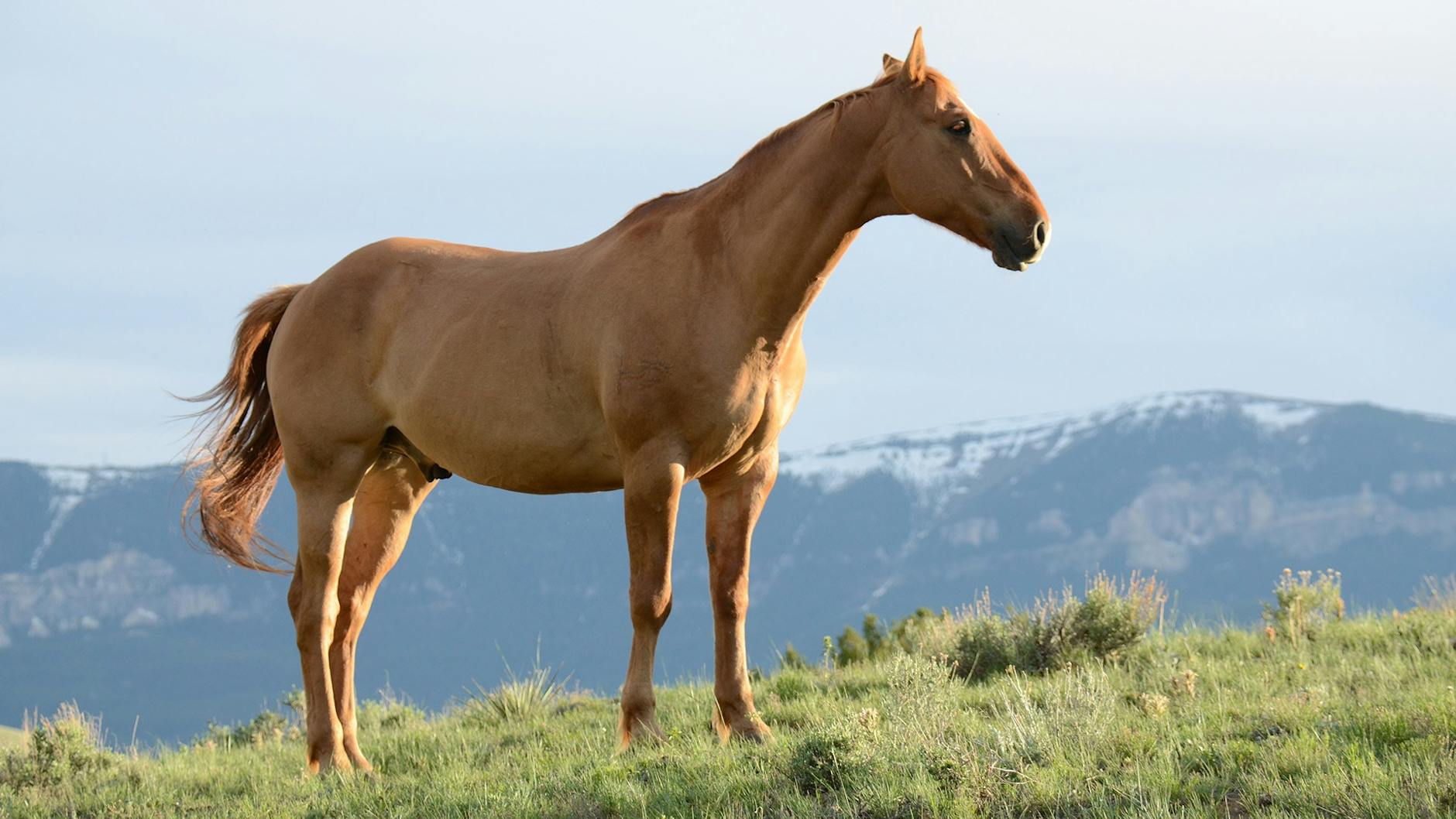
        Bud was only 14 when he first met what would become his best friend for the summer. She had never been around people running wild in a pasture since birth. A 3-year-old Dunn filly, a horse commonly referred to in the region as a Red-River-Dunn for its color, a reddish tint coat with black stockings, mane, and tail. She had darker red hair around her mane and ears, slicked down her jacket, and features made for a beautiful horse.

        Bud’s dad bought her at a horse auction, and he and Bud went to load Rose; she had never been touched. Getting a rope to place a halter on her was a rodeo of itself in the lots behind the auction house. Getting her loaded into a trailer was a site to see. She reared and fought, tearing the trailer’s tail lights, clearance lights, and various fixtures off the trailer before finally getting into the trailer, most likely tiring from repeated attempts to load. No whips or harsh attempts were made to get Rose into the trailer; she never saw such strange things and was frightened by their appearance.

        After a ride home, Bud wondered if the new horse would still be standing; it was long after midnight when they arrived back at the farm. As they pulled into the barnyard, Bud’s dad backed the trailer into an empty pen and unloaded the horse. The father and son gave the horse some hay and water and a gallon of oats. Then, the two went to the house; it had been a long night.

        A technique known as plow-driving or plow-reining

        A few hours later, which most people would describe as the following day, Bud and his father were up with sunrise. That is the way you work on a farm. They went to do their chores. By the time Bud got to the barn where the new horse was, he was shocked to see his dad had a saddle on it and was behind it, plow-driving it. Plow-driving is a process where one runs a rope from each side of the bridal through the stirrups of a saddle to about ten feet behind the horse to teach it reign before mounting it and training it at riding; it is very similar to what you would see a farmer doing to guide his draw-horse behind a plow on a farm.

        Bud had always heard of how his dad had a magic touch with horses but never witnessed the gift so many spoke about. What happened next would deepen the mystery even greater.

        Bud’s dad saw him entering the pen and said,

        “I am glad you are here; it is time for you to get on her. I think we will call her Rose.”

        The father then proceeded to gather the reigns in his hands and walked up to steady the bridal and hold the horse steady. As he did, he angled the horse’s head, and Bud could see his father quietly speaking into the horse’s ear. Then his father said,

        “It is ok now. You can get on.”

        Bud stood there thinking that not 8 hours earlier, they had watched this horse, which a human had never touched, nearly destroy an endgate on a stock trailer, taking over an hour to load from a dock where it usually takes five minutes for the most problematic cases. But Bud trusted his dad and knew he would never place him in danger, so he went up. He was expecting to be going for an 8-second Bronco ride.

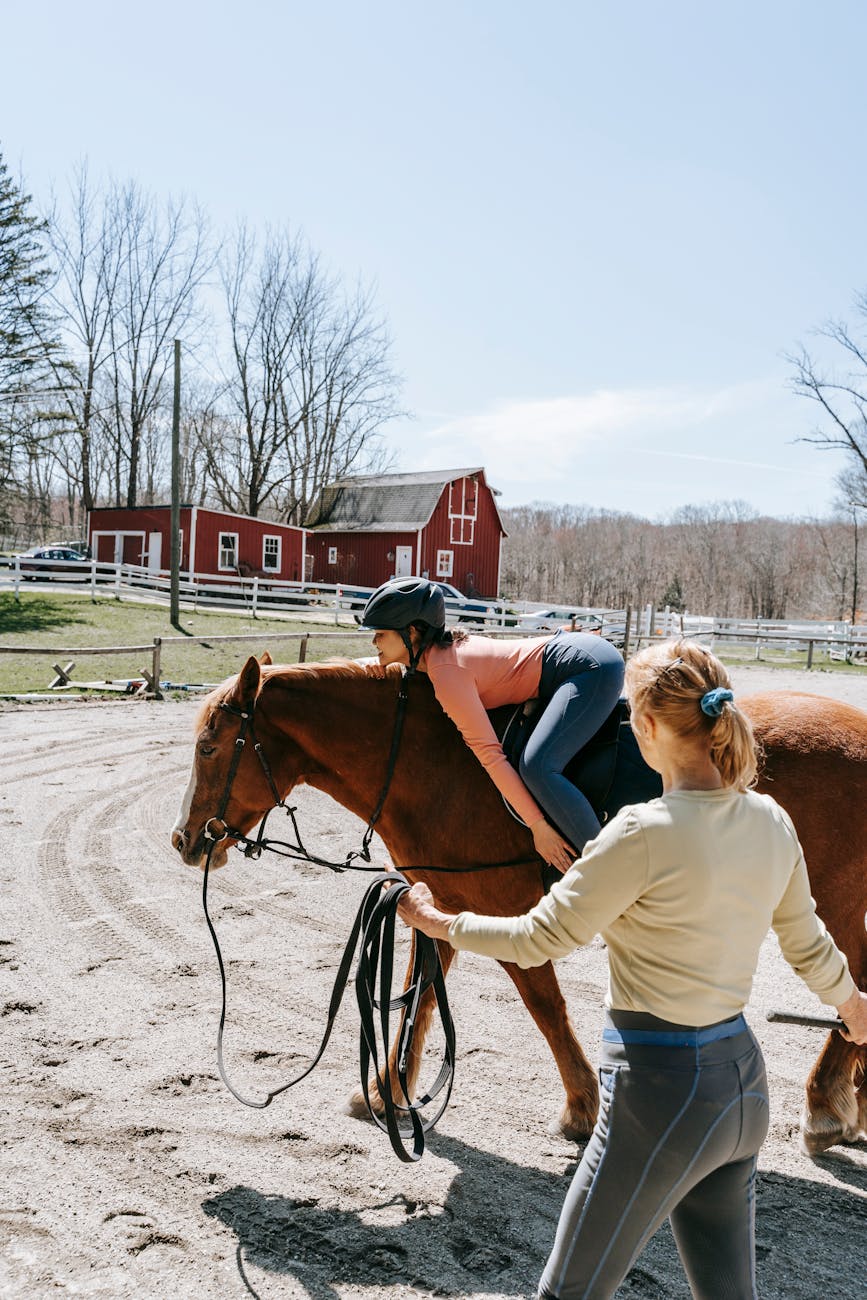
        After Bud settled in the saddle, he first experienced what he would describe to friends and family as the Cadillac ride. Using just two leather reins from a halter and not a bridle, he clicked his mouth for Rose to go, and she began walking. He reigned her using the plow-rein system; he gradually began using neck touch reining by letting the rein on the neck tell the horse which direction you wanted it to go. Rose was incredibly talented, a fast learner, and became acquainted with people fast. On the first day, the father and son had the horse performing levels of training that typically take weeks or months for other horses.

        Bud’s dad said, as the day progressed,

        “Rose will be yours for the summer. We sold Sam, which was your horse, so I wanted to buy this green horse to get you something to work on.”

        A green horse needs training in horsemanship, riding, leading, mannerisms, and behavior. Bud feared Rose would be a challenge if she had any flashbacks and wanted to return to her before human days. 

        The next day, Bud’s biggest concern was the end of school before Summer break. He had fourth-quarter tests to pass. Rose would have to hold until he had his schooling squared away, but he knew she’d be waiting for the summer that was about to come.

        Watch for part 2 tomorrow!

        Until The End He Was A Pal

        It was a lazy Sunday. We had been at the desert retreat. We had bought it and happily named it the Roads End Ranch. It is west of Phoenix, Arizona. The location was so remote. Cattle still stirred throughout the desert region. They crossed the roadways undeterred by speeding cars. These cars carried new homeowners to neighborhoods built further out of the city. Occasionally, you would see a dead cow with all fours extending straight up. It had fallen victim to a collision with someone from the big town. They were speeding over a hill at night. When we first moved to the Roads End, we brought our fearless terrier, “Buddie.” We built him a castle of a doghouse. It had access to an airconditioned tool building. He was all of ten pounds and fattened on hotdogs. He loved them and would fight the biggest opponent before him and win to get his. Earlier in the summer, Buddy appeared sluggish and started drooping.

        We thought he had been caught out in the heat. He had refused to take shelter in the tool shed. Instead, he wanted to fight with a ground squirrel that terrorized him daily. But the more we checked on him, the worse he got. We rushed him to a veterinarian, and testing began. They were baffled for two days. They not conclude what was wrong with this terror of the UPS driver. The little black attack dog would hide behind his favorite bush. He watched the driver unload the truck. Then he would rush up to the fence. He raised Cain with a bark so fierce. It startled the driver every time. Buddie was in trouble. Finally, a phone call came. The Vet’s office tech informed us about Buddie’s test results. The results confirmed he had advanced Valley Fever. It can be deadly if not caught in time, and they were sorry. It had been due to the delay in returning test results. We met a few hours later at the Veterinary Office. We said our goodbyes to Buddie. He slowly went to sleep. We brought him home to the Roads End Ranch. We buried him in his favorite corner. This was the one he liked to catch the UPS man. After his passing, we were finished with the idea of having more pals. Losing him had just been too hard. Besides, we were taking care of Steve’s mother, and she was entering hospice and taking up all of our time. It was all we do to her.

        We took the best care of Steve’s mother, keeping her in our home through many ups and downs. Then, in June, she passed early one Sunday morning. It was quiet. Nothing was moving, not even our cat. It had been over a year since losing Buddie. And, now we were experiencing loss again. A month of memorials seemed to take place. We remembered her in Arizona. Then, we returned to Oklahoma to lay her to rest.

        Then, we came home. The house was empty. It was just the two of us and the cat, Blanche, a spade female, Siamese. We had brought her with us from the move when we left Wichita, Kansas following 9/11, nearly six years earlier. She only became vocal when something got on her nerves or when I talked to her. She would talk back to Steve if he yelled at her, they had a relationship like that. 

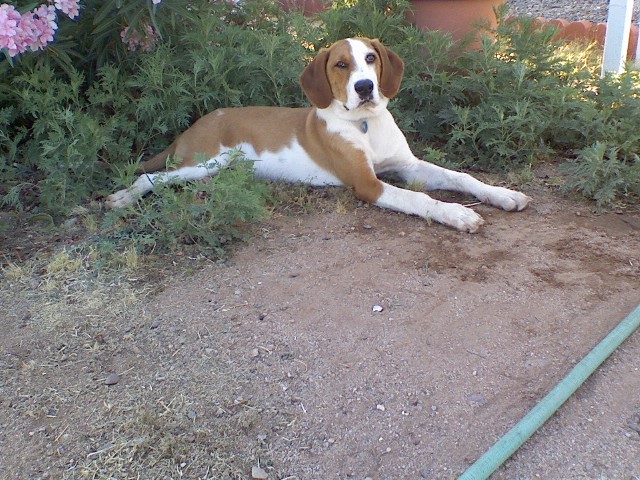
        A few months passed, and Steve suggested we drive to the South Phoenix animal shelter and look at dogs. He said we didn’t want to get one—just look to get out of the house. So we left. When arriving, we walked through the outdoor kennel area. There were so many dogs, all barking for attention—except for one. He was a hound dog. He looked pitiful. It was like he had lost his last best friend. He was moping over in a corner of his kennel. He was not excited to see anyone. Yet, he came to us. Steve asked if we take him for a walk, and the attendants provided a lead. The hound strolled around with us for ten minutes. He did not seem more excited than Eeyore from Winnie The Pooh.

        We leave the Roads End Ranch. During our walk with this dog, we decide to adopt an 80-pound, six-month-old American Fox Hound. We get him to our car and load him into the backseat. As both of us sit down up front, his head appears between the seats. He looks at the two of us. I asked Steve what are we calling him? We were listening to a song by an artist named Shooter Jennings, whom we both enjoyed. So, our dog found himself named Shooter at that point. We only put a little thought into it.  

        Shooter grew into a 120-pound dog, the most loyal hound a person ever asked for. He never made a mistake or mess in the house. He always strives to please us. His life was one of loyalty. He was a big scaredy-cat but the most excellent protector. He hated thunderstorms. He would only go out in the rain if you went with him. You had to hold an umbrella over him while he did his business. He’d keep it and refuse to go outside if you didn’t offer to take the umbrella. If you had a big juicy bone, you lay a towel down on the floor. Tell him to keep it on the towel. Not a piece of the bone would hit any other part of the floor. He stayed put. He was the perfect boy. He loved other people. Too much sometimes. Steve often accidentally tripped our home alarm. The local police department would arrive. That is when you realize naming your dog Shooter was not the best choice. The first time they were here, we yelled, “Shooter, get down!” The look on the officer’s face was priceless. We were using the wrong tone. It wasn’t how we should have been saying it. The officer asked if we were alone and if we were okay. Are you being threatened?

        We had to explain that was the dog’s name. We had to go through the whole dog licensing explanation. Fortunately, I had photo identifications made of ‘Shooter’. I offer them, which brought fun to the moment. After that incident, I took action to make sure the 911 center had a note. It stated that a dog named Shooter lived at our location. They should expect to hear us yelling commands at him because he loves everybody. “Shooter” lived until the age of 14. One summer, a micro-burst struck and tore the roof off our home. During the process, we were reduced to living out of one room of our home while it was under repair. “Shooter” had been showing signs of slowing down. We had been concerned we would find him gone some morning, but he was always there to greet us.

        While the house was under construction, “Shooter” seemed worse. We called a veterinarian to come to our home. He not be there until the next day because of the damage. That evening, his breathing became labored, and we cuddled with him, holding our pal. He raised his head, let out two last whines, and died. Our “Shooter-boy” was gone. He had been our best friend and closest family member many times. He was filling in for the loss of others who passed. He taught us how to love and be brave during thunderstorms. In the end, I believe he showed us how even to die.

        “Shooter”

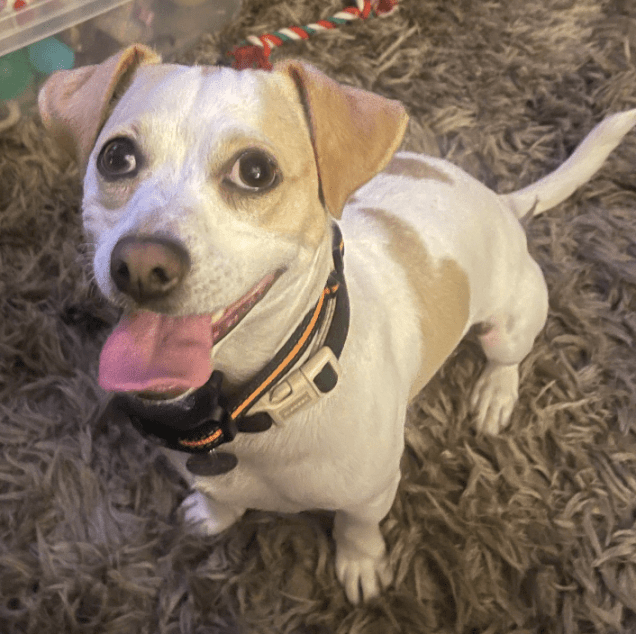
        Today we have Otis. A Jack Russell Terrier. We describe him as a terror. He is a character. And a handful at times. He keeps us busy. Wanting to play, and running in and out of the house. He is very protective of his home. We have to put him in a safe area when we have company. He needs time to adjust to new people being inside. We wait to see what is up with him each day. Never knowing what he will do next.

        “OTIS”

        Otis is named after the drunk on the Andy Griffith show. This is mainly because when we went to adopt him, he escaped from the shelter. Four people were chasing him around the parking lot and buildings. He finally was captured. And placed in a holding cell. We couldn’t help but love his innocent look he had after his little run from the law. He has an attitude. He will growl when he has had enough of you. Telling you to let him be. If you notice not any single one of our dogs have a single thing in common. Except that they were rescued from animal shelters. And they live a full and happy life.

        Leave a comment

        This site uses Akismet to reduce spam. Learn how your comment data is processed.