The Healing Impact of Simple Acts: A Hug Can Change Everything

2–3 minutes

The Hug That Changed Everything

Mina at the Farmer's Market
Mina hugging at the Market

It was about five weeks after my back surgery when Steve and I went shopping at our farmers’ market. Normally, Saturdays are our day, but since he had volunteered the day before, we made our visit on Sunday instead. That simple change in schedule turned into something unexpected and heartwarming.

We ended up in the checkout lane of one of our favorite “checkout girls,” as we call her. Mina. She hadn’t seen me since before my surgery, and when she spotted us, her face lit up. She came running from behind the register. She wrapped her arms around both of us and hugged us tight. It felt like a son coming home from college after a long absence. She even insisted we give her our address so she can invite us to a family event she was planning. We’re still not sure what event it will be, but the invitation itself felt like a gift.

That hug reminded me of something simple yet profound. It showed the power of being openly accepting. Let people into your life regardless of who they are, what they look like, or where they come from. In Mina’s hug, I felt seen, valued, and welcomed back into the community.

It brought to mind another story—one shared with me for this blog.

It was 3 a.m. in a quiet hospital corridor when a young musician, newly diagnosed with leukemia, sat in fear and loneliness. The sterile lights and hum of machines gave her no comfort. She cried quietly, believing no one noticed.

But someone did.

A nurse named Ben saw her distress and asked, “Are you okay?” He didn’t prescribe medicine or adjust a machine—he offered a hug. That single gesture, simple as it was, gave her strength. It reminded her she wasn’t just a patient but a person worth comforting. She later said that hug stayed with her long after the treatments, even into remission.


Kindness has a transformative power. It’s impactful whether shown by a nurse in a hospital or a cashier in a farmers’ market. It can change moments and sometimes lives. We often think it has to be grand or costly. The truth is, the simplest acts—a hug, a smile, an invitation—can ripple far beyond what we imagine.

Mina’s hug will not make the news. Nurse Ben’s probably didn’t either. But for the people who received them, they became unforgettable.


  • When was the last time a small act of kindness made a real difference in your day?
  • Have you offered something that felt ordinary to you but has meant the world to someone else?
  • What small kindness can you extend today to be someone’s “Mina” or “Nurse Ben”?

Life is full of struggles and invisible battles, but kindness—especially when it surprises us—has the power to heal. A hug. A smile. An invitation. They seem small, but they carry extraordinary weight.

You never know whose burden you’ll lighten or whose courage you’ll restore. Sometimes the smallest things are the biggest miracles. And without even realizing it, you are the miracle-giver.


By Benjamin GroffMedia© | benandsteve.com | ©2025 
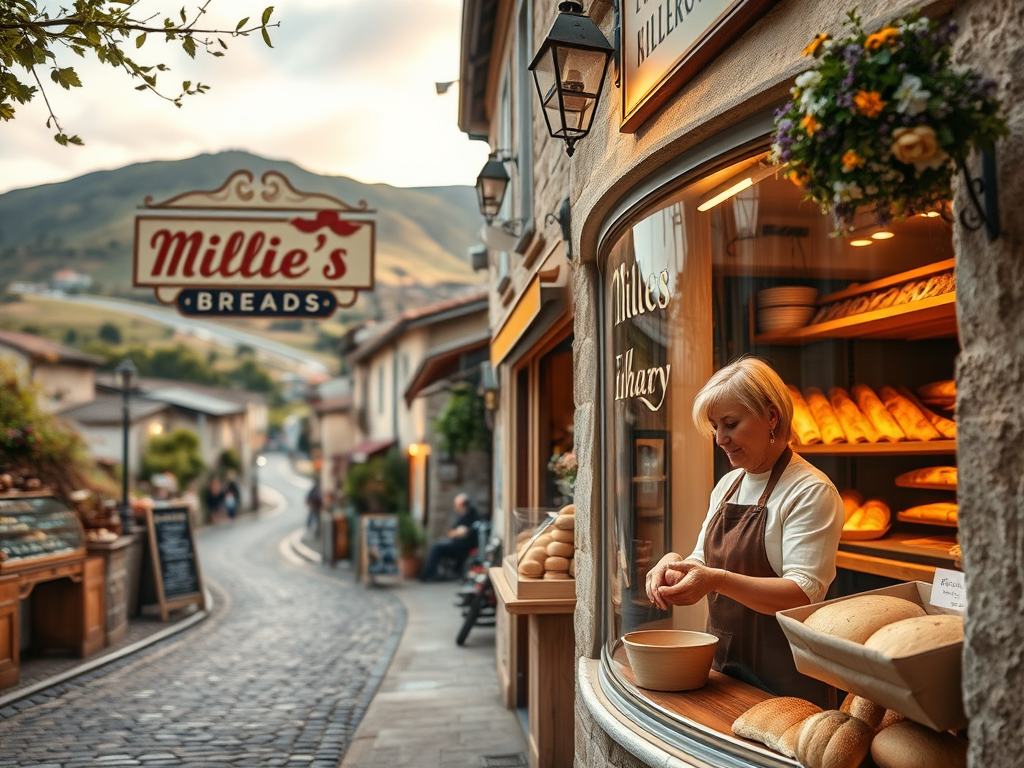
Warm Bread, Warm Hearts: A Touching Tale from Willowbrook

GROFF MEDIA 2024© TRUTH ENDURES IMDBPRO

Presented by benandsteve.com By: Benjamin Groff II©

2–4 minutes

The Baker’s Extra Loaf

Willowbrook was a quaint town nestled between rolling hills and winding cobblestone streets. In this charming setting, a little bakery called Millie’s Breads stood. Millie, the baker, had spent decades perfecting her craft. She kneaded dough with love, and the air filled with the comforting aroma of fresh bread.

Every morning, without fail, Millie would bake precisely enough loaves to meet the demands of her customers—except for one. Each day, she would bake an extra loaf. The townsfolk often wondered why, but Millie never spoke of it. The extra loaf sat on the counter until closing time. It remained untouched and unnoticed. By morning, it would quietly disappear, adding to the mystery.

Speculations floated through the town. Some believed Millie kept it for herself. She always said she had little appetite for bread after a long baking day. Others whispered that she was feeding a stray cat or a secret admirer. But no one knew the truth.

One chilly winter evening, young Emma, the florist’s daughter, stayed behind after closing. She wanted to help her mother pick up an order of pastries for a town event. As they waited, Emma noticed Millie wrapping the extra loaf in brown paper and slipping out the back door. Emma felt curious, so she decided to follow at a distance. Her eyes were keen, and her heart was open to the possibility of a heartwarming discovery.

Hidden in the shadows, Emma saw Millie stop by an old wooden bench. An elderly man sat on it, wrapped in a tattered coat. His face was weathered, and his hands trembled from the cold. Millie handed him the loaf with a warm smile, exchanging a few kind words before returning to her shop.

Emma’s heart swelled with admiration. The extra loaf wasn’t a mystery after all. It was an act of quiet kindness. A small gesture of compassion that no one ever knew about. The man, known simply as Mr. Thomas, had once been a beloved schoolteacher but had fallen hard after losing his family.

The next day, Emma shared what she had seen with her mother. Word spread through the town, and the townspeople, inspired by Millie’s act of kindness, found their ways to contribute. Some would leave warm clothing on the bench. Others discreetly added a little extra to their purchases at Millie’s bakery. They knew it would go to someone in need.

One evening, as Millie once again delivered the extra loaf, she found Mr. Thomas sitting on the bench with a new coat draped over his shoulders and a gentle smile. He looked at her with gratitude and said,

“Your kindness has brought more than just bread, Millie. You’ve brought me hope.”

His words echoed the profound impact of Millie’s simple act of kindness.

Millie patted his hand, offering her usual warm smile, and returned to her bakery. She never needed recognition, for she believed that kindness, like bread, was best when shared freely.

The baker continued to bake an extra loaf each day. The town of Willowbrook learned that sometimes, the smallest gestures hold the most significant meaning. Millie’s simple act of kindness brought hope to Mr. Thomas and inspired the townspeople to look out for each other, fostering a sense of community and shared responsibility.

Finding Hope in Difficult Times

GROFF MEDIA 2024© TRUTH ENDURES IMDBPRO

Presented by benandsteve.com By: Benjamin Groff II©

2–3 minutes

Every morning, the sun rose over Willow Creek. Clara Jackson would pour herself a cup of coffee. She would then sit by the window and scroll through the news on her phone. Headlines blared with despair. Civil rights were being denied. People were being removed from their families because of their citizenship status. There were natural disasters, economic struggles, and political turmoil. It seemed as if the world was unraveling thread by thread. Each day felt heavier than the last, and Clara found it harder to believe in a brighter tomorrow.

One cold morning, as the weight of the world’s problems sat on her chest, she noticed her elderly neighbor, Mr. Thompson, hobbling down the sidewalk with a broom in hand. His frail figure moved with purpose. He swept the fallen leaves away from everyone’s doorstep. As he worked, he whistled a tune that carried a sense of ease Clara hadn’t felt in a long time.

Curious, she stepped outside and called out,

“Mr. Thompson, what are you doing out here so early?”

The old man looked up and smiled warmly.

“Clearing the way, my dear. It’s a little thing, but it makes the morning brighter for everyone.”

Clara laughed softly.

“With all that’s happening in the world, does this really make a difference?”

Mr. Thompson leaned on his broom and nodded.

“Oh, it does, Clara. You see, the world’s got its troubles, but right here, right now, we can still bring goodness. You can’t control the storms outside, but you can light a candle inside.”

His words settled into Clara’s heart like a gentle breeze pushing away the clouds. That afternoon, instead of drowning in the news, she baked cookies and shared them with neighbors. She took her old paintbrushes out of the closet and added splashes of color to the worn fence outside. And as she handed out treats to passing children, she felt something stir inside her—hope.

Days turned into weeks, and Clara found that small acts of kindness helped her navigate the darkness in the world. She volunteered at the local shelter. She also planted flowers along the sidewalks. Clara spent more time listening to the laughter of children at the park. The news was still grim, but Clara had found something stronger—hope born from action, not fear.

One evening, she closed her book and looked out at the quiet street. She realized the world hadn’t changed overnight. But she had. And that was enough to believe in a brighter tomorrow.