The Elevator of Life: A Profound Story of Honesty

2–3 minutes

The Whiskey Sea and the Elevators

The man had lived his life in balance—not a saint, not a sinner, but somewhere in between. He had helped when strong. He erred when he was weak. Now, in his elder years, he carried the weight of both. His body ached. His breath came shorter. One night, he sank into a sleep so deep it felt like stepping into another world.

A ship appeared from the darkness. Its hull was blackened with age. It floated on a sea of whiskey. The whiskey shimmered like molten amber under the moonlight. A cigar extended from the deck like a gangplank, smoke curling in lazy ribbons. Hesitant but curious, the man stepped onto the cigar and walked across, balancing himself as if crossing into another reality.

On board, a captain awaited him—tall, weathered, eyes that had seen too much. “I’m here to take you to your next destination,” the captain said, voice low and certain. The man nodded. The ship cut across the whiskey sea. It came to rest before a towering building of glass and brass. Its entrance was lined with golden elevators, each gleaming like judgment itself.

Inside, a sharply dressed man waited in the lobby. His shoes were polished so bright they caught the reflection of the man’s weary face. He gestured toward a chair. “Tell me your life story,” he said.

And so the man spoke. He told of the good—moments of kindness, loyalty, laughter. He confessed to the bad—times of selfishness, anger, and failure. He left nothing out, for what use was there in lying at the end? The suited man listened, not judging, only nodding as though each word was weighed like coin on a scale.

At the end, silence hung heavy. The suited man pressed a single button. The doors of one elevator slid open, glowing with light the man did not quite see. He stepped ahead, heart pounding. Whether the elevator rose or fell, he did not know. But as the doors closed, he understood something profound. The true measure had never been perfection. It was honesty. It was the courage to walk the bridge, board the ship, and face the truth of who he had been.


By Benjamin GroffMedia© | benandsteve.com | 2025 
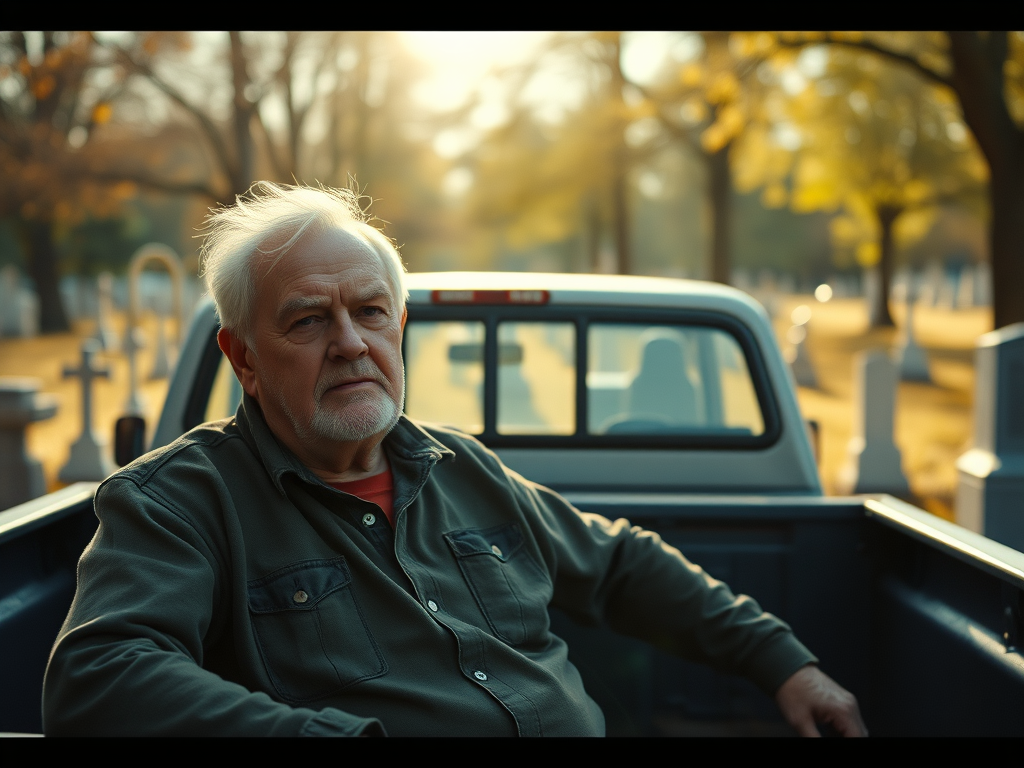
The Last Trip

2–3 minutes

Joe’s Last Trip

Joe had been lost in grief ever since Belinda, his wife of fifty years, passed away. Now nearly 80, his health was slipping. His memory faltered. His doctor warned he would soon need full-time care. One day, he might not even remember who he was. Watching Belinda decline into that same fog had torn him apart. Joe swore he wouldn’t let himself linger the way she had.

He made up his mind. Quietly, carefully, he wrote out a plan on paper and kept it folded in his pocket. When the time came, he would go to a scenic overlook, drink a fifth of whiskey, and take his own life as the sun slipped below the horizon. In his truck’s glovebox sat both the bottle and a revolver, waiting.

As the months wore on, Joe’s forgetfulness grew worse. He climbed into the wrong car. He mistook strangers’ houses for his own. He baffled neighbors with his confused blunders. It might have been comical if it weren’t so tragic. Then one morning, Joe woke with rare clarity. Today, he thought, would be the day. He dressed. He tipped his waitress a hundred dollars at breakfast. He filled his truck and signed the title over to the station owner. He stopped by the bank to remind young Betty, the teller, that she would inherit his house someday. He even visited Belinda’s grave, promising to leave a light on so she’d know he was coming home.

It took him five hours to find the overlook—a place barely half a mile from his house. As the sky burned orange, Joe followed the instructions from his pocket: whiskey first, then the gun. Memories came in waves—his youth, his marriage, his place in the community. With a last swig, he cocked the revolver, looked toward the heavens, and whispered, “Honey, I’m on my way.” He pulled the trigger.

Darkness. Then voices. A bright light. He thought he was dead—until he woke the next morning in County General Hospital.

“Good morning, Joe,” a nurse said. “We were wondering when you’d wake up. How was your trip last night?”

Joe frowned. “Trip? What trip?”

“The usual,” she smiled. “Breakfast, gas station, bank, then the overlook. The sheriff’s department was waiting for you. You got lost again, but they helped you find your way.”

Joe’s face hardened. “Dadblast it, that was my plan to do myself in! I’ve got a right to my privacy.”

The doctor walked in, shaking his head. “You do, Joe. But here in Canada, there’s another way. You qualify for MAiD—the Medical Assistance in Dying law. You don’t have to go alone with a bottle and a gun.”

Joe stared at him, confused. “Did I… forget that too?”

By Benjamin GroffMedia© | benandsteve.com | 2025