The Sonoran Desert’s Buck Milford – Chapter 5: Heatstroke and Hallucinations

By Benjamin GroffMedia© | benandsteve.com | 2025 Truth Endures©

2–4 minutes

Other Strange Sightings In The Desert

Buck Milford wasn’t the type to complain. He’d driven through sandstorms. He had broken up fistfights at quilt raffles. Once, he gave a field sobriety test to a goat wearing sunglasses. That day was different. The Arizona sun scorched the earth like a microwave set on vengeful. Even Buck was close to breaking.

The heat index had hit 127. A road sign melted. Melted. The “SLOW CHILDREN AT PLAY” sign now reads “OW.”

Buck had parked his cruiser under the only tree between Ajo and Yuma. It was a desperate little mesquite. It looked like it had made some poor life choices. He sipped water from his melted ice chest and tilted his hat over his forehead.
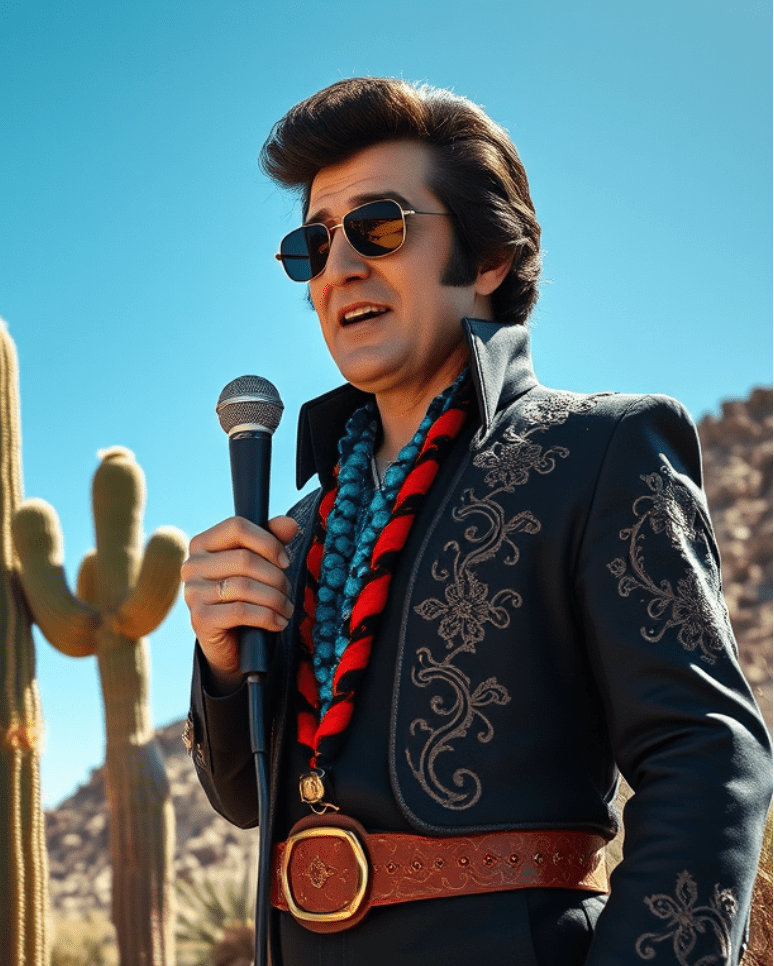
That’s when he saw Elvis.

Plain as day.

Standing next to the patrol car, wearing a powder-blue jumpsuit and holding a chili dog.

“Elvis?”

Buck mumbled.

“That you?”

Elvis gave him a nod. 

“It’s hot out here, hoss.”

Buck blinked. 

“I must’ve been out in the sun too long…”

Suddenly, another figure emerged from behind the tree.

Skinny. Nervous. Clutching a clipboard and a sheriff’s badge held on by Scotch tape.

“Buck! Buck, there’s been a violation!” 

The man squeaked. 

“A code triple-seven! Unlicensed harmonica discharge in a non-musical zone!”

Buck sat up straight. 

“Barney Fife?”

It was indeed Barney Fife. Or instead, it was someone who looked, sounded, and panicked exactly like Don Knotts. This person was holding a ticket book the size of a Bible.

Barney fumbled with his pen. 

“Now, now, Buck, I don’t want any trouble, but this whole desert’s outta code. These crickets! The yodeling! There’s dancing! Dancing, Buck! It’s indecent!”

Buck stood up, swaying slightly. 

“Barney, are you… real?”

Barney narrowed his eyes. 

“As real as a jelly doughnut on a Wednesday morning, Trooper. Now I’m gonna need you to confiscate Carl Sandlin’s banjo and suspend his taco license—right away!”

Behind them, Elvis leaned against the cruiser and took a bite of his chili dog. 

“Let the boy yodel, Barney.”

“I will not!”

Barney barked. 

“This is law and order, not Hee Haw Live!”

At that moment, Carl himself drove by in a dune buggy. It was covered in tinfoil and wind chimes. He waved like a parade marshal.

“I’m playin’ at dawn!”

Carl shouted. 

“Bring earplugs or bring maracas!”

Barney turned purple. 

“I’ll have his badge!”

Buck stared in stunned silence.
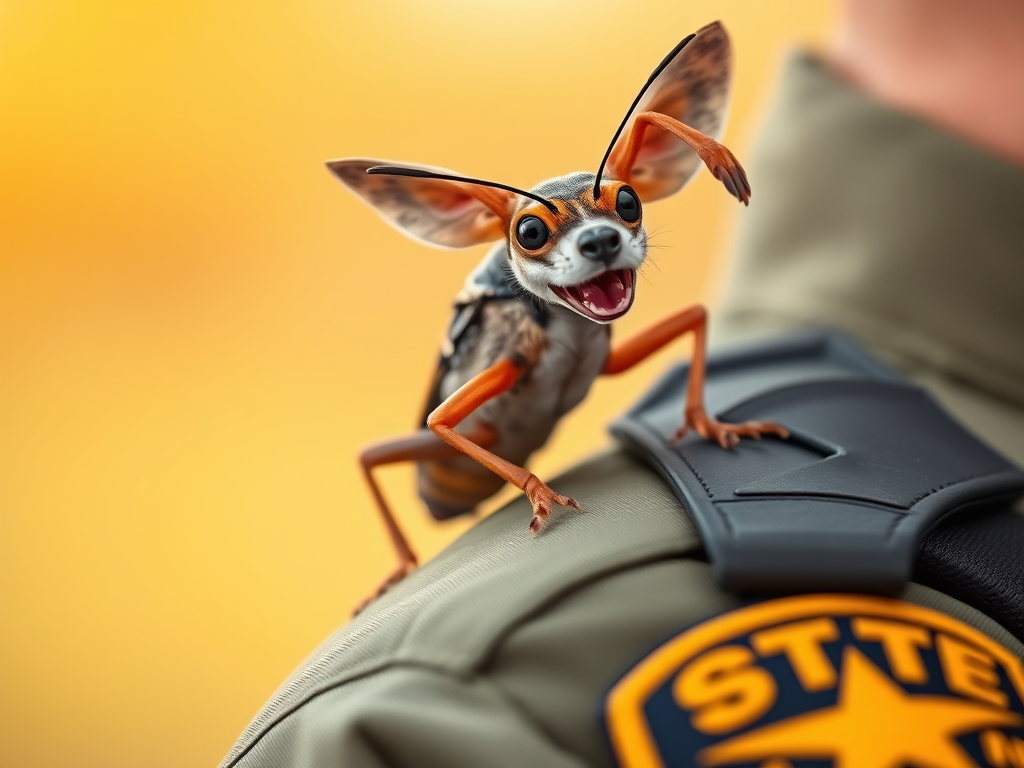
A cricket landed on his shoulder and began humming ––

“Love Me Tender.”

The next thing Buck remembered was being propped up in a folding chair outside the Ajo gas station. A bag of frozen peas was on his forehead. He had a bottle of Gatorade in each hand.

“You passed out cold.”

Said Melba, the station clerk, who also claimed to be a licensed Reiki therapist. 

“Said something about Elvis, Barney Fife, and indecent line dancing.”

Buck blinked. 

“I didn’t… wrestle Carl off a unicycle, did I?”

“Not today.”

Buck took a long drink, sighed, and muttered, 

“I’m starting to think this desert has a sense of humor.”

A Desert with a sense of humor? Barney Fife? Elvis? Our Crime Fighter has been out in the nether regions of the Sonoran Desert too long. That, or he sees dead people. Whatever it’s going to lead to, it’s another exciting story of Arizona’s most famous crime fighter, Buck Milford! That Mexican Beagle Cricket is sorta cute, isn’t it?

The Sonoran Desert’s Buck Milford – Chapter 4: Yodels and Yellows

By Benjamin GroffMedia© | benandsteve.com | 2025 Truth Endures©

2–4 minutes

Buck Plays a Tune!

The Mexican beagle crickets arrived five days ago. Already, the Arizona Department of Wildlife had received over 300 complaints. Not about damage, mind you—but about the music.

“They’re too dang punctual,”

one retiree griped.


“They hum like my mother-in-law when she’s judging me,”

wrote another.


One anonymous caller just yelled. MAKE IT STOP!” for forty-two seconds before hanging up.

Buck Milford was used to desert weirdness. He’d once ticketed a man for driving a dune buggy made entirely of rattlesnake skins. But nothing prepared him for Carl Sandlins latest idea: The Great Cricket Peace Yodel.

“I’ve been listenin’ to ‘em closely,”

Carl explained, pacing in front of his yurt-slash-taco-stand.

“And I think they respond to pitch. What we got here is a musical species. They ain’t hostile—they just need harmony!”

Carl wore what he called his “diplomatic vest.” It was a sequined denim jacket with fringe. He also equipped himself with an old harmonica, a rusted washboard, and a five-gallon pickle bucket labeled AMBASSADOR DRUM.

Buck just stared at him.

“You sure you haven’t been drinking your aloe again, Carl?”

But Carl was undeterred. That night at 2:00 a.m., he set up two lawn chairs. Fifteen minutes before the crickets’ usual humming ritual, he arranged a battery-powered spotlight. He also prepared a megaphone duct-taped to a broomstick.

“Alright, fellas,”

he said into the megaphone.

“Let’s talk tunes!”

Buck sat in the cruiser, sipping lukewarm coffee, radio off. “This is going to end with him either arrested, abducted, or somehow elected,” he muttered.

At exactly 2:15 a.m., right on schedule, the desert came alive with humming.

But this time… Carl joined in.

He yodeled.

He drummed.

He played a harmonica solo that sounded like a walrus stepping on bubble wrap.

And for thirty glorious seconds… the crickets paused.

Then, they hummed louder than ever.

They didn’t just hum The Andy Griffith Show this time. They mashed it up with Achy Breaky Heart. It sounded suspiciously like a 1996 Taco Bell jingle.

Carl dropped his bucket.

“They answered me, Buck! I think we’re collaborating!”

Buck opened his door.

“Carl, I think they’re angry.”

Suddenly, thousands of beagle crickets surged toward the yurt, drawn to the sounds of tin, harmonica, and misguided ambition. They swarmed Carl’s taco stand, leapt onto the megaphone, and—somehow—turned on his margarita blender.

It spun wildly. Salsa flew.

The crickets began line-dancing.

Buck had seen a lot, but beagle crickets doing synchronized grapevines under a disco light powered by solar lawn gnomes? That was new.

The next morning, the bugs had gone quiet. Carl stood in the rubble of his salsa bar. He was shirtless and proud.

“We made contact,”

he said, eyes shining.

“They danced, Buck. They danced!”

Buck surveyed the scene: overturned lawn chairs, chewed speaker wire, a cricket still stuck in a jar of queso.

“Well, Carl,”

he said,

“either they liked your music—or they mistook you for a piñata.”

Carl smiled.

“Doesn’t matter. Tonight, I’m bringin’ in the banjo!”

SO! CARL. He is bringing in the Banjo! Will it be on his knee? And will someone named Ole Susanna show up in Chapter Five if Carl swings that Banjo too wildly? That is a story for tomorrow. So be sure to check back and see if the Mexican Beagle Crickets have segued into classical jazz. Also, will the Highway Patrol get Buck a larger fly swatter?

In The City Of Echoes Finding Where You Are Going Can Be Elusive

By Benjamin GroffMedia© | benandsteve.com | 2025 Truth Endures©

2–3 minutes

The City of Echoes

They told him Newvale was easy to navigate—just a grid of neatly intersecting streets, all named with letters and numbers. A1 to Z26, crosscut by 1st to 99th. Clean. Logical. Unmistakable.

That’s what made it so disorienting when Jonah realized he was lost.

He turned down H12 Street, or maybe it was H21. The signage shimmered under a weak afternoon sun. Every block held the same slate-gray buildings with mirrored windows. Every corner had a coffee shop called “BeanSync,” identical inside and out. The same barista. The same music looping—something jazzy and off-tempo that made his nerves vibrate.

He pulled out his phone to get his bearings. No signal.

No GPS. No bars. Just a cheerful little message:
“Welcome to Newvale! You are here.”
The map spun in place, mocking him.

He asked a woman passing by, dressed in a green trench coat.

“Excuse me, which way to Central Station?”

She stopped, smiled with blank politeness, and said,

“Just follow H Street until you reach 12.”

“I’ve already passed twelve blocks.”

She nodded, like that made perfect sense, then walked off.

He turned the corner again—there was “BeanSync,” again. The same man spilled his coffee at the same outside table. The same dog barked twice, then ran to the same hydrant.

Jonah checked the street sign: H12.

He spun around.

So was the last corner.

He began to walk faster, then jog. He changed directions at random—A Street to W Street to Q16. All the same buildings. Same people, repeating like shadows in a broken projector.

Finally, panting, he stopped inside yet another BeanSync.

“Do you serve anything besides Americano?”

He asked the barista.

She smiled.

“Just follow H Street until you reach 12.”

His heart sank.

Behind the counter, a door creaked open. A man stepped out—rumpled, eyes twitching, holding a half-empty cup.

“You’re new?”

the man said.

“Lost?”

“Yes! How do I get out of here?”

The man leaned close.

“You don’t.”

Jonah backed away.

“What do you mean?”

“The city loops. It doesn’t end. It just resets.”

“That’s not possible.”

“Neither is ten identicalbaristas named Kira.”

Jonah turned to look. The barista waved cheerfully.

Back outside, he ran. He tried screaming. No one noticed. Or rather, they all noticed in the same way—heads turned in perfect rhythm, brows raised identically, disinterest coordinated like choreography.

It was dark by the time Jonah found a bench.

Across the street, a woman in a green trench coat asked a passerby,

“Excuse me, which way to Central Station?”

Jonah watched the man smile politely and answer,

“Just follow H Street until you reach 12.”

The woman nodded and walked off.

The bench creaked beside him.

A man sat down. Rumpled. Cup half-full.

“You’re new?”

he asked.

Jonah nodded slowly.

The man sighed, sipping.

“It’s not a city. It’s a maze. It just wears the mask of civilization.”

Jonah looked up. Above the buildings, a flickering billboard blinked to life:

“Welcome to Newvale! You are here.”

Still. Always. Unchanging.

And somewhere, jazz played again.

Looping. Forever.

Professor Incredible: The Accidental Peacemaker

By Benjamin GroffMedia© | benandsteve.com | 2025 Truth Endures©

2–3 minutes

Professor Incredible and the Formula of All Things

Nobody paid much attention to Professor Incredible.

He was a quiet, peculiar man with wild hair and socks that rarely matched. He taught chemistry at the Third-Rate University of Northern Something. His lectures were confusing. His labs were explosive. His office smelled faintly of lemon cake and regret.

One Tuesday afternoon, Professor Incredible was mixing compounds to cure hiccups in parakeets (don’t ask). He tripped over his cat and accidentally spilled three unlabeled vials into a teacup. When he came to after the small puff of smoke cleared, he sipped the tea. Of course, he did. He then scribbled down what he felt was a rather pleasant aftertaste.

That night, he slept peacefully for the first time in years. His arthritis vanished. So did his neighbor’s yappy dog’s aggression. So did the neighborhood’s potholes. So did his runny nose. Something was… different.

The next day, two bickering students visited his office arguing over which was better—crunchy or creamy peanut butter. Absentmindedly, the professor handed them a flask of the leftover formula and said,

“Here. Split this and shake hands.”

They did.

Instantly, they blinked, smiled, and calmly agreed that both were wonderful in different ways. Then they shared a sandwich.

The formula, it turned out, only worked if applied by two people in conflict—who disagreed with equal passion. It didn’t pick a side. It didn’t declare a winner. Instead, it softened anger, lifted empathy, and melted stubbornness into understanding. It didn’t erase problems; it made people care enough to solve them together.

Soon, world leaders were sipping the formula while discussing borders. Rival fans hugged at sporting events. Siblings divided closets in peace. Traffic moved smoother. Even social media got a little less… cruel.

Professor Incredible was offered a Nobel Prize, but declined.

“The formula was an accident,”

he said.

“What matters is what people do with it.”

And so, the world changed—not because the formula was magic, but because people finally heard one another. Understood each other. Worked side by side.

All it took was a little chemistry—and two people willing to try.

The Wisdom of Old Trees: A Tale of Drought and Survival

By Benjamin GroffMedia© | benandsteve.com | 2025 Truth Endures©

2–3 minutes

“Whispers from the Cottonwood”

Old Man Teller always said, “You don’t need a weather app when the trees are talkin’.” Most folks in town rolled their eyes. They dismissed the words as just another tale from a man with more years behind him than teeth. But Maggie believed him—always had.

Each morning, before the sun stretched across the Oklahoma horizon, Maggie walked down to the creek behind her farmhouse. The tall cottonwood trees stood like ancient guardians. She’d place her hand on the bark and close her eyes. She’d listen. She listened not just with her ears, but with her skin, her breath, her bones.

One autumn, the cottonwoods began shedding their leaves earlier than usual. Not the vibrant yellow fall kind, but pale and crisp, like they’d been drained of color. The crickets were fewer, and the frogs that usually croaked a lullaby at dusk had gone strangely silent. A stillness settled in the evenings—not peaceful, but hollow, like a breath being held too long.

Teller nodded solemnly when Maggie brought it up. “Means drought’s comin’. The earth’s tightening its belt.”

Sure enough, by December the ponds were cracked at the edges and even the cattle seemed quieter. Yet it wasn’t just the drought. Coyotes started howling at midday. Raccoons were foraging in broad daylight. Wild plum bushes flowered in January—six weeks early.

Nature, it seemed, was shouting.

In spring, the winds changed direction. Not from the south like usual, but from the east—harsh, dry, and persistent. That’s when Teller warned the town council: “There’s fire in that wind. Better get ready.” They didn’t listen. But when the wildfires crept dangerously close in May, only Maggie’s house stood untouched. She’d cleared brush months ago, just as the cottonwoods had told her to.

The next year, people started listening more. They noticed the ants building their hills higher before rain. The deer migrating sooner. Even the sky’s color at dusk began to carry meaning again.

Nature doesn’t send memos or push notifications. But it tells you everything—if you’re willing to sit still, pay attention, and speak its language.

And as Old Man Teller liked to remind them, with a wink, “The land was here long before you. Trust it to know what’s comin’.”

The Last Chair: A Story of Loss and Recovery

By Benjamin GroffMedia© | benandsteve.com | 2025 Truth Endures©

1–2 minutes

“The Last Chair at the Table”

There used to be four chairs at the table.
Every Sunday, without fail, they were filled.

Anna always brought the rolls.
George never remembered the salad.
And Michael, the youngest, made them laugh so hard someone usually spilled something.
Then there was Claire. The one who set the table. Who kept the tradition.

But life doesn’t ask for permission when it starts rearranging things.

Anna moved three states away for a job that offered better pay and less time.
George passed unexpectedly—just one late afternoon in September, gone with no goodbyes.
Michael, grief-stricken and incapable of facing the silence, stopped coming.

And Claire… she kept setting the table. All four chairs. Every Sunday.

It felt foolish at first—preparing a meal for no one. But over time, the quiet stopped being so loud. She began to remember George’s voice not as an echo of absence, but as a smile in her thoughts. She started writing letters to Anna and cooking Michael’s favorite dish, just in case he came.

And one Sunday, he did.

He didn’t say much—just sat in his chair like it had never been empty.
They ate. They laughed. No one mentioned the salad.

Recovery isn’t about replacing what’s lost.
It’s about honoring it enough to keep living.

Even if all you do is keep setting the table.

What Used To Be Considered Contents Of A Friendly Letter To Relatives And Friends – Sent Via The Postal Service!

Once common, a letter like this is no longer sent, a quiet casualty of how communication has evolved.

By Benjamin GroffMedia© | benandsteve.com | 2025 Truth Endures©

4–6 minutes

Photo by John-Mark Smith on Pexels.com

Otis the Protector & the Blessing of Good Friends

Dear Lawrence and Matilda,

Summer is the season when friendly faces return. Over the last two days, we’ve been lucky to welcome four dear friends into our lives again. One of them we hadn’t seen in nearly twenty years.

Our friend David moved away long ago in pursuit of new opportunities. We kept in touch online, and about a year ago, we sold his mother one of our cars. He trusted our word that the car was solid and dependable—and that trust meant a lot.

David and his spouse Josh flew into town Thursday. We already had our plans set. We planned to have dinner at our favorite Main Street spot, Christina’s Wildberry Restaurant. The food there is so good you’ll want to order extra sides. (And I do.)

We caught up on everything. David had moved on from California and now lives in Seattle, working as a film producer for Amazon. We had once caught a glimpse of him in a movie. We wondered if acting was his calling. Yet, he ended up behind the camera instead. The conversation flowed easily as we shared stories of the past twenty years. We talked about loved ones we’d lost. We discussed the changes in our lives. We even shared our various health battles. It was a wonderful reunion.

Back at home, yet, Otis—our ever-vigilant dog—was not quite as enthusiastic. He’s fiercely protective of our home, and new visitors throw his routine into chaos. He needed time to warm up: slow approaches, sniffing, backing off. Growling. Barking. Panting. It was a whole process. After a solid half-hour of cautious interaction, Otis finally accepted David and Josh. But his window of friendliness only lasted about five to ten minutes—just in time for them to leave.

And then came Saturday morning.

Otis had barely recovered from his last round of introductions. Then our friends Angie and Sasha showed up for breakfast—again at Christina’s Wildberry. But this time, Otis escalated. He was in full protection mode from the moment they approached the door. We strapped him into his safety vest. I controlled his lunges. As soon as the door opened, he exploded into noise. Growls, barks, lunges—the works. He reared on his hind legs like a wild stallion, roaring from the depths of his protective instincts. I had to scoop him up just so our friends was allowed to come inside.

We finally decided the best move was to leave for breakfast and give Otis a break. I would be the last one out. I unhooked his leash and bent down to reassure him.

“You’re in charge now,”

I said.

“Watch the house, and you’re free to bite anyone who tries to get in.”

His ears perked. Head tilted. Tail wagging. He jumped up with glee, clearly proud to be entrusted with such an important task. I locked the door and set the alarm—knowing full well that no burglar was getting past Commander Otis.

At the restaurant, our regular waitress Christine (no relation to the owner) greeted us with a smile. We always sit in her section. The service is consistently wonderful, and the food never disappoints. As we enjoyed our meal, we caught up on recent happenings. We also discussed the month ahead. We talked about my upcoming surgery in July. Not the easiest topic, but one that matters deeply among close friends. Angie and Sasha have supported us immensely. We rely on them more than words can express.

After breakfast, we walked next door to the wholesale closeout auction warehouse. It’s a local gem filled with Amazon returns and overstock items. It’s a weekly stop for us, and we nearly always walk out with a treasure or two. This time was no exception—we all left holding bags of bargains from the $10, $5, and $3 tables. The outer walls of the warehouse show moderately priced goods under $50. These include cooking gear, tools, and musical equipment.

But that’s where I had to call it a day. My legs gave out—one of the symptoms tied to my spinal disc issue. It’s why surgery is coming. I was brought home to rest in my easy chair while Steve, Angie, and Sasha continued the shopping mission.

They headed to the local children’s home thrift store. Steve found me a kitchen stool. It was a fantastic find that will make cooking much easier. It allows me to sit while preparing meals. He also scored a new cutting board, which we’ve been sorely needing. The one we’ve been using is over twenty years old and has clearly done its time.

Later, the crew returned home, showing off their finds and bragging about their deals. We laughed, relaxed, and soaked in the joy of good company.

It’s been a full couple of days, and yes, I’m tired—but I’m also grateful. Sharing time with friends is a blessing, whether we saw them last week or haven’t seen them in decades. Add a protective dog with a dramatic flair. Include a few great meals and a handful of discount treasures. You’ve got the makings of a truly memorable summer weekend.

Talk again soon. Say hello to the folks.

With love,

Benjamin, Steven and Otis

The Art of Embracing Laziness in Summer

By Benjamin GroffMedia© | benandsteve.com | 2025 Truth Endures©

2–3 minutes

The Fine Art of Doing Nothing

There’s a certain magic that shows up in late June. It drifts in on a warm breeze. It wraps itself around your shoulders like a sun-warmed blanket. It whispers, “Slow down a while.”

That was exactly what happened to me last Saturday.

I had plans, mind you. Big ones. Rake the yard. Clean out the garage. Paint that little table I rescued from a flea market. But then the sun was golden and lazy. It was the type of sunshine that doesn’t rush you. It invites you to stay awhile. So, I made a bold decision: I postponed productivity.

Instead of pulling out the rakes and tools, I pulled out a lawn chair. I poured a tall glass of iced tea. Then I plopped down under the shade of the patio covering. I did absolutely nothing. And I mean nothing. No phone. No music. No news. I listened to birdsong and felt a slight breeze. I heard the sound of a neighbor’s sprinkler ticking rhythmically like a metronome for summer’s easy tempo.

I watched the clouds. I counted the dragonflies. I let the world spin on without me—and it did just fine.

The dog lay beside me, belly-up to the sky, offering a solid endorsement for this lazy lifestyle. Even a stray cat, who usually stares at me like staff, sauntered over and decided to join the movement. We were a trio of content creatures, basking in a moment that cost nothing but meant everything.

At the end of the day, the lawn remained a jumble of rocks. The garage was still messy. The table continued to wait. But my heart? My heart was lighter. My shoulders less tense. And my soul? Sun-soaked and satisfied.

Summer has a way of reminding us that rest is not a reward—it’s a right. And sometimes, the most productive thing you can do is give yourself permission to simply be.


Moral of the story:

Don’t underestimate the power of a lazy summer day. It is true that you’re doing nothing—but you are just giving your spirit exactly what it needs.

The Story Behind Grandma’s Pie Shelf

By Benjamin GroffMedia© | benandsteve.com | 2025 Truth Endures©

1–2 minutes

“The Pie Shelf”

It sat on the back porch, just outside the screen door. It was an old wooden shelf, weather-worn and slightly crooked. Everyone in the family knew it as “the pie shelf.”

Nobody remembered who gave it that name. Maybe it was Grandma. She used to cool her pies on it every Sunday afternoon. That was back when a breeze still found its way through the kitchen windows. There were always two pies—one for dinner and one “just in case someone dropped by.”

That shelf saw more life than most furniture in the house. Birthday cakes cooled there. Jars of canned peaches lined up in neat rows. Once, a baby kitten was found curled up in the corner, fast asleep next to a lemon meringue.

Years later, after Grandma had passed and the house had new owners, the pie shelf remained. Weathered, yes. Empty, often. But it stood—quiet and proud—like it was waiting for one more pie to be set on top.

When I visited the house last fall, I found it just the same. I brushed off the dust. Then, I straightened one of the legs with a folded napkin. For no reason at all, I baked an apple pie and set it right there on the top shelf.

I didn’t expect visitors. But just before sunset, a neighbor from years ago strolled by, drawn by the scent. He laughed when he saw the pie shelf.

“Some things,”

he said,

“don’t ever really leave us.”

We each took a slice and sat there on the porch, sharing stories of the people who came before us. For a brief moment, it seemed as though they were still here. They felt just inside the screen door, waiting for us to come in.

Remembering An Inlaw Who Is Dearly Departed (But – Yes…Still Alive)

By Benjamin GroffMedia© | benandsteve.com | 2025 Truth Endures©

3–4 minutes

There are moments in life when we contemplate our relationships with relatives who are dearly departed. Some have passed on, leaving behind only memories. Others are dearly departed in a different sense. They are no longer married into the family. Yet their presence lingers in our stories, our recollections, and sometimes, in our affections.

This story is about one such family member, who dearly departed not through death, but through divorce—from my sister. For nearly eighteen years or more, he was a big part of our family. Long before the wedding, during their dating years, he was already woven into our daily lives. He would often spend the night at our house. More than a few times, he slept in my room just to be near her. He was older than both of us, and a farmer by trade. During the winter months, farming slowed down. During this time, he worked as a parts clerk at his father’s Chevrolet dealership in town.

Since I worked for him on the farm, I spent nearly as much time with him as my sister did. From sunrise to sunset, we toiled together—planting crops, moving irrigation pipe, working cattle, and hauling hay. He even pitched in at the Girl Scout Camp where my dad was the ranger. And that’s where this story takes place.

It was the summer of 1978. A flood had wiped out a water line. The line ran from a well to a storage tank at the Girl Scout Camp. Special piping was needed for repairs. My dad asked Benny to take me to Clinton, Oklahoma, to pick up the materials. I was thrilled when he handed me the keys to one of the camp’s state-owned ranger vehicles. For a brief moment, I thought, “Wow, I get to drive!” But then he said, “Give these to Benny—he’ll be the one driving.” Shucks.

Still, the outing promised a break from our usual routine. We set out just before noon, heading west on State Highway 152. As we neared the town of Eakly, an Oklahoma Highway Patrol car coming toward us slowed dramatically. The trooper gave us both a piercing look, as if trying to place us. After passing us, he glanced back as though deciding whether to turn around. Odd, we thought—we hadn’t been speeding or doing anything wrong.

A few miles farther west, another patrol car did the exact same thing. Now we were both feeling uneasy. We even pulled over to check the truck—maybe something was dragging, maybe we had a flat tire—but everything checked out.

Four more patrol units gave us the same strange treatment. By now we were more than a little paranoid. What were we missing? We hadn’t turned on the radio, thinking it wasn’t our place to use official equipment in the state-owned truck. If we had, we’d have had our answer.

When we finally returned to the Ranger’s Quarters with the piping, we were greeted with wide eyes and urgent questions. Turns out, there had been a prison break nearby. The escapees had stolen a state vehicle—same color, same model, same government-issued license plate as the one we were driving. No wonder the troopers were ready to pounce. If we had known, we would’ve waved our Girl Scout badges out the window. We would have done this for the entire ride, like waving a white flag.

That trip became one of the many memorable moments I shared with my once-brother-in-law Benny. It was the story told every holiday. And it got laughs no matter how many times it was heard. Benny was a close comrade through much of my youth and during family gatherings. It was hard to see him and my sister go their separate ways. Still, I understood and respected her reasons. Sometimes life and family change in ways you don’t expect. And sometimes, those changes, though painful, lead to something better.

But Benny—well, he’ll always be one of our dearly departed.

The Trail Guardians – Chapter Four: Jackie’s Trail

By Benjamin GroffMedia© | benandsteve.com | 2025 Truth Endures©

4–6 minutes

Sunrise sparkled through the trees, casting golden streaks through the ridge of the canyon as a new day began. The dogs had curled up around Benji during the long night after the wildcat screams. Sleep had eluded him, but at least their warmth had kept the cold at bay.

Jackie the Snake Fighter

Benji checked his backpack. Two cans of Vienna sausages. Two bottles of water. Not much, but enough if he rationed carefully. He didn’t know how long it would be before he saw civilization again. He jumped to his feet. He kicked dirt over the glowing embers of the fire. Then he spotted an old bucket lying in the grass. He fetched water from the same spot where he’d seen the wildcats drink and thoroughly doused the coals.

He whistled and called out,

“Okay, guys! Let’s find our way out of here!”

The dogs were now rested after the brutal meeting with the hogs the day before. They let out a few excited barks. They circled around him. They were ready.

“Jackie!”

Benji called out, his voice clear and hopeful.

“Let’s get going and take us home, girl!”

It was Jackie’s moment to lead.

She barked once, turned, and began moving with purpose down a faint trail. Her nose worked the ground like a compass, tracing the path with quiet certainty. She paused now and then to sniff, confirming her route, then pressed ahead.

Benji followed without hesitation.


“Good girl, Jackie. Take us home.”

As they retraced their steps, Benji noticed something he’d missed before. The chaos of the hog attack had distracted him from exploring further. Just east of where that meeting occurred, he saw something new. It was something he’d only ever heard described in hushed tones: the Bottomless Pits.

He turned to the dogs.

“Come on, guys. We’re close. I need to see this.”

He approached the edge of a steep cliff. It was seventy-five feet straight down to a deep, green pool below. The surface was fed by water trickling from the mouth of a sand rock ridge. “That’s a natural spring,” Benji murmured to himself, “surrounded by vegetation and carved into the canyon by wind and rain.” The erosion had shaped the space into something mysterious and timeless. There was no telling how far the pit actually went.

He stood there, staring into the depths. He imagined what happened to those who had entered “No Man’s Land” and never returned. No sane person would ever try a descent.

The dogs looked at each other, almost as if wondering whether this was going to turn into their next mission. They seemed relieved when Benji turned back and said, “Okay, Jackie. Take us on home.”

Their return journey was quieter, more deliberate. The woods themselves seemed to exhale—less ominous now, more at peace, as if the danger had passed.

Eventually, the familiar rise of Miller Hill came into view. Beyond it stood the barn, and flickering on the porch was the warm, welcome glow of a light. As they emerged from the tree line, Benji spotted people in the clearing. A search party—his father among them, his mother as well. They had been looking everywhere… except in the place no one dared go.

Benji’s dad stepped ahead quickly, his face a mix of relief and frustration.

“Son,”

he said,

“you knew that area was off-limits. No one goes back there. Why did you?”

Benji, still trembling slightly from nerves and exhaustion, answered quietly,

“I wasn’t looking for anything, really. But now I know what’s back there.”

His father narrowed his eyes.

“What? What did you find? No one ever comes back.”

Benji looked him in the eye.


“Feral hogs. Wildcats bigger than our dogs. And pits that look bottomless. I figure the people who disappeared… they didn’t make it out because they were walking in the dark. They either fell in—or the hogs got to them.”

The searchers stood silently for a moment, absorbing his words. Then came relief, and the reunions began.

Benji made a point to thank everyone who’d come looking for him. One by one. Then, he helped lift each of the dogs into the back of his father’s pickup. This time, he insisted they ride up front.

Oggy, Bruiser, and Jackie settled into the cab like visiting royalty, each peering out the windows with pride and dignity. They had saved Benji, and he knew they deserved far more than a truck ride.

The truck rolled down the familiar dirt road toward home. Benji sat in the open bed under the early morning sun. He leaned back. He opened his last two cans of Vienna sausages. Then, he drank from one of his remaining bottles of water. He was there, alone in the quiet. The wind brushed his face. The trees grew smaller behind him. He finally relaxed.

He had made it out of No Man’s Land.

Benji would never forget what he found there. But even better, he wouldn’t forget how his three pals had worked together to take care of him. And when he got home he would tell his dad about the dogs doing the great things they did. He also wanted to repay his canine friends in some way. In Chapter 5, Benji repays them and that is how the story ends in an unexpected way.

How can this story end in any unexpected way? A boy and his dogs have made it out of No Man’s Land. They are safe, aren’t they? We all are, aren’t we? Or are we? What Chapter five holds will have you asking questions of your own. It looks like the dogs will still be looking for a tree or two come Chapter Five!

The Trail Guardians – Chapter Three: Bruiser’s Stand

By Benjamin GroffMedia© | benandsteve.com | 2025 Truth Endures©

4–6 minutes

Let’s get back to our story. –– Benji stood in the middle of the woods, heart racing, with three feral hogs growling and snorting nearby. Jackie had lost the scent trail. She couldn’t find the way home. Benji had just thrown away his only peace offering: the beef jerky. The hogs tore through the jerky in seconds. Benji and the three dogs tried to figure out what direction to go. But, now those hogs had regained interest in something more satisfying—the boy.

Oggy circled and snapped at the first boar, trying to keep it distracted. Jackie stood stiff and alert. She barked furiously at the second one. Her tail was rigid and her fur was raised. She positioned herself between the beast and Benji.

Bruiser, Dad’s Shadow

But it was Bruiser who took the lead.

With a thunderous bark, he lunged at the second boar. The clash was brutal. Bruiser’s sheer size and strength gave him an edge. Still, the wild boar was enraged and dangerous. It slashed with its tusks.

Benji screamed,

“No! Bruiser!”

But Bruiser didn’t back down. He planted his feet and forced the boar back with muscle and fury. Oggy darted in to nip at the animal’s hind legs while Jackie’s relentless barking finally drove the creature into retreat.

Within moments, the two remaining boars, startled and overwhelmed, turned tail and vanished into the trees.

Bruiser limped back, a fresh gash on his shoulder. Benji dropped to his knees and wrapped his arms around him, whispering,

“You saved us. You’re the bravest dog in the world.”

The three dogs surrounded Benji, panting heavily—not from fear, but from duty fulfilled. They had done their job.

The sun had dipped lower now, and the smell of distant cooking reminded Benji of home. He hoped Jackie would catch a scent that would guide them back—but no such luck.

They were still stuck in No Man’s Land.

Benji sighed and looked at his companions.

“Well, boys… looks like we’re gonna be here for a while. As well find a safe place to rest.”

The fading daylight painted the woods in long shadows. The path behind them had become a confusing tangle of trees and underbrush.

“I don’t know where we are,” 

Benji admitted.

Oggy was licking his sore paws. Bruiser winced with every step. Jackie stood alert—ears perked, head rotating like a radar dish, listening for signs of danger.

Benji reached into his backpack and pulled out his trusty binoculars. Scanning the area, he spotted something—a cave etched into the canyon wall, not far off. It resembled an ancient hollow carved out of sandstone by the water long ago. If they can reach it safely, it can make a decent shelter for the night.

He pulled out a handkerchief. He tore it in half. He tied one piece to a high branch to mark the location.

Oggy took point. Bruiser limped beside Benji. Jackie stuck close this time and carefully marked her trail. They made their way to the cave.

Ten minutes later, they arrived at the entrance. The cave was shallow and quiet, with no signs of animal tracks inside. It looked safe—for now.

Benji gathered dead wood from the forest floor and built a small fire at the cave’s entrance. As the flickering flames grew, casting dancing shadows, the four of them settled in.

But Benji had a surprise.

He hadn’t given all the food to the hogs. He had two cans of Vienna sausages tucked in his backpack. They were beneath a rolled-up poncho. His dad always said to keep them in case of emergencies.

He popped open a can. Instantly, three sets of ears perked up.

Benji smiled and shared the sausages with the dogs, eating slowly and grateful that they had something to eat. But he couldn’t help wondering: How are we going to get out of this mess?

As night fell, the forest faded into darkness. The stars lit up the sky, and the wind rustled the trees outside. The cave offered shelter from the breeze, and the dogs took turns keeping watch while Benji dozed beside the fire.

At around three in the morning, a sharp, blood-curdling scream echoed through the canyon.

All three dogs leaped up, growling and tense. Benji jolted awake. The fire had burned down to glowing coals.

Another scream—closer this time.

Benji grabbed a long stick and jabbed it into the embers, trying to spark a flame. The dogs stood bristling, their fur raised, eyes locked on the darkness beyond.

This is the most dangerous moment yet—except maybe for the hogs.

Benji fumbled through his backpack and found a small flashlight. He switched it on and swept the beam across the canyon.

There, near a shallow watering hole, stood two full-grown wildcats—the biggest Benji had ever seen. Easily 130 pounds each. But the barking, the firelight, and the beam of the flashlight startled them. They bolted, disappearing into the trees.

Benji sat back down, heart pounding. Sleep was impossible now.

Thinking to himself –––

Was something else out there?

Has anyone even started looking for him yet?

He’d never been gone this long.

He sighed and pulled the blanket around him tighter.

“When I get back,” 

he whispered to himself

 “I’m gonna be in big trouble. For good this time.”

But for now, he is still in No Man’s Land.

And he is lost.

They called it No Man’s Land for a reason. Legend has it, no man who ever entered those woods was seen again. That little detail? It’s something Benji overlooked when planning his latest adventure. Rumor has it. No search party will go in after him. No one’s willing to take the chance they will not come back either. So maybe Benji ought to start thinking about an extended stay. Is anyone even organizing a search? Or will they just do a flyover, check a few boxes, and call it good? Check back tomorrow as the story continues—because things in No Man’s Land are only getting stranger.

Title: The Trail Guardians – Chapter Two: Into the Hollow

By Benjamin GroffMedia© | benandsteve.com | 2025 Truth Endures©

2–4 minutes

The trail that day led into Cottonwood Hollow. It was a deep gully nestled between two ridges. The area was thick with ancient trees and the scent of cool, damp earth. Benji had finally summoned the courage to enter what the kids around the farm called “No Man’s Land.”

oggy doggy
Oggy Doggy, The Best Friend A Family Ever Had

Oggy darted ahead, barking sharply as he flushed out a covey of quail.

“Good boy!” 

Benji laughed, breaking into a jog behind him.

Bruiser trotted beside him, his heavy paws crunching over dry leaves. Every time a twig snapped, his muscular body tensed. If the wind shifted, he was ready to protect until he decided there was no danger.

Jackie moved like a ghost, glancing back from time to time, her black-and-white tail swaying gently. She paused here and there to mark tree trunks, just in case they needed help finding the way back.

About halfway through the Hollow, Oggy let out a sharp yip and froze—body crouched low, fur bristling.

Benji halted.

“What is it, boy?”

Then he saw it. A feral boar was rooting near the creek bed. Its coarse hair rose. Its tusks caught the last golden light of the afternoon. Oggy growled, weaving left and right, trying to distract it.

Bruiser stepped in front of Benji and barked once—low and commanding. The boar noticed the big dog and paused, nostrils flaring.

“Back up… slowly,” 

Benji whispered.

They had only taken a few steps when Jackie barked behind them. Benji spun around.

A second boar had crept up from the rear.

Trapped.

Benji’s heart pounded. Feral hogs? He’d never seen any this close to the farm before. His dad’s hogs were penned and docile. These? These had tusks. And just as panic set in, a third hog emerged from the brush, snorting and stomping.

Think, Benji. Think.

He reached into his pocket and pulled out a pouch of beef jerky—the snack he’d saved for later. Tearing it open, he waved a piece in the air.

The hogs’ heads turned toward the scent. Without wasting a second, Benji hurled the entire pouch as far as he can into the underbrush.

It worked.

All three hogs charged the pouch, squealing and shoving as they fought over the jerky.

Benji snapped his fingers. The dogs hustled back to his side, and together, they crept away.

But now, the sun was dipping low behind the ridge. Shadows stretched across the Hollow, and the light had grown dim. In the chaos, Benji had lost track of their path.

Everything looked the same.

He called softly,

“Jackie, take us home.”

Jackie trotted out, sniffing at nearby logs and bushes, searching for the scent trail she had left. But her markings were gone—wiped away. The boars, rubbing against the trunks and rolling in the undergrowth, had erased everything she’d left behind.

She circled wider, nose to the ground—but still, nothing.

Benji stood in the middle of the woods. Three feral hogs were still growling and grunting in the distance. They were gathered around a torn bag of jerky.

Title: The Trail Guardians – Chapter One: The Afternoon Call

Title: The Trail Guardians

By Benjamin GroffMedia© | benandsteve.com | 2025 Truth Endures©

3–4 minutes

Bruiser, Oggy and Jackie
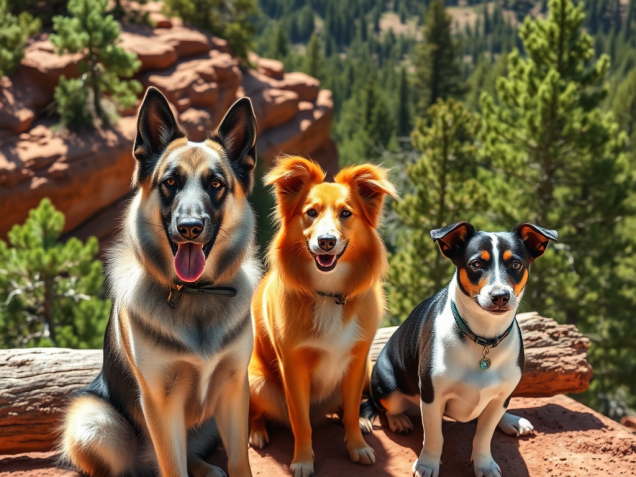
Bruiser, Oggy and Jackie, three friends that protected Benji.

Every day at exactly 3:35 p.m., the yellow school bus rumbled down the dusty country road. Its brakes squealed in protest. It stopped at the gate of the Miller farm. Waiting by the fence—tails wagging, ears alert—stood three loyal dogs: Oggy, Bruiser, and Jackie.

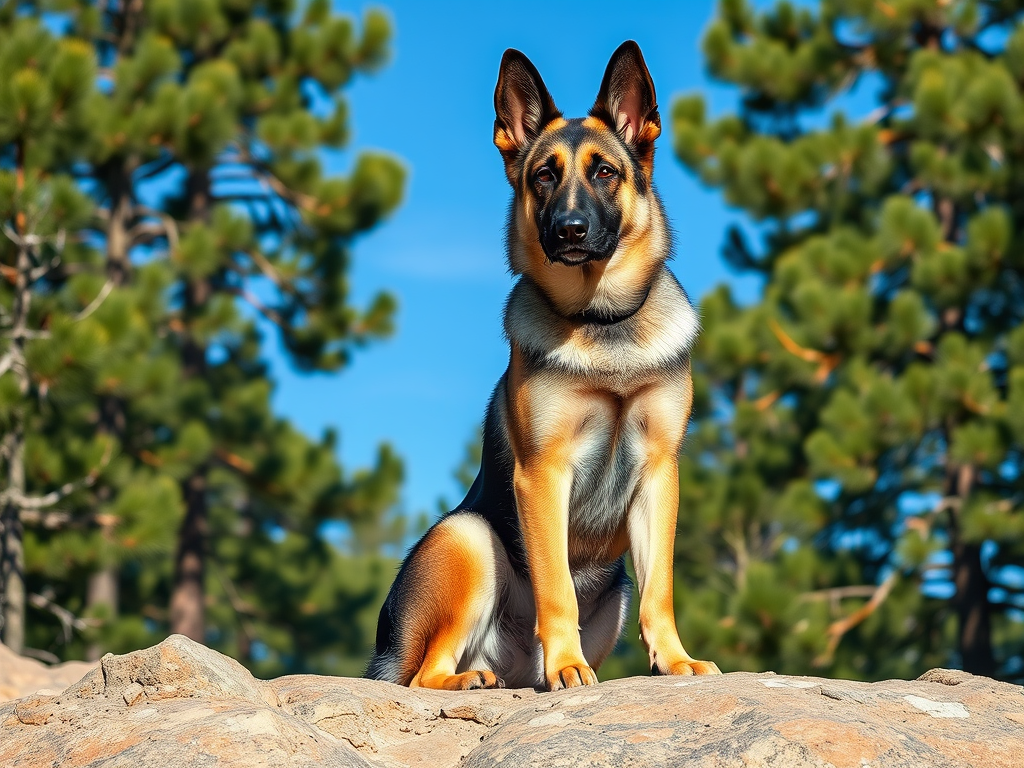
Oggy, a wiry shepherd-collie mix, zipped back and forth like a bolt of lightning, always the first to move. Bruiser was a proud and imposing German shepherd. His stare could make thunder retreat. He sat like a sentry. His eyes were fixed on the distant tree line. Jackie was a small but wise rat terrier. She lay in the shade, her head tilted. It was as if she was listening to the wind for stories.

Benji stepped off the bus. His backpack bounced and his heart was full of energy. He called out,

“Who’s ready for a hike?”

The dogs barked in harmony. Their daily ritual had begun—school ended, and the adventure began.

The woods, hills, and winding creeks beyond the Miller farm stretched wild and untamed. They were alive with beauty and mystery. There was a kind of danger only country kids and creatures could sense. Benji’s father trusted the dogs with more than just companionship. They each had a job:

Oggy, ever eager, raced ahead to flush out snakes, spook wild hogs, or alert the team to anything unusual. Bruiser stayed at Benji’s side, calm and formidable—his job was protection. Jackie had a sharp nose and clever instincts. She always brought up the rear. She tracked every step and memorized the path home.

Together, they were more than a team. They were guardians: a boy and his dogs, bound by loyalty, instinct, and love.

They had explored nearly every trail across the farm. But there was one place they had never dared to enter.

Benji called it No Man’s Land.

Even the cattle avoided it. Horses snorted and veered away from its edges. Dense with tangled brush, towering trees, and sheer, jagged cliffs, it lay beyond the farthest bend of the creek. You couldn’t see more than a few yards into it, even when standing on the embankment across the water. It was as if the woods had secrets they weren’t ready to share.

Sometimes, the team would gather at that high bank and stare into the thicket. Benji would speak softly as if trying not to disturb whatever is listening.

“What’s back there?”

he’d wonder aloud.

“Nobody’s ever gone in. But one day, we’ll be brave enough to cross that creek and find out.”

He told the dogs his plan: the safest way in would be through Cottonwood Hollow. If they cut through the grove, they would reach No Man’s Land without being seen from the road—or the house.

Before they set off, a familiar sound echoed across the pasture—the dinner bell.

Its clang was sharp and sure, and the dogs didn’t need to be told twice. The four companions turned for home. They momentarily forgot their trail. The promise of a warm meal and kind voices led them back.

They didn’t cross into No Man’s Land that day.

But they would.

And when they did, they’d uncover something none of them would ever have imagined.

Meet Benji and His Canine Companions: A Heartwarming Tale

By Benjamin GroffMedia© | benandsteve.com | 2025 Truth Endures©

2–3 minutes

In the quiet stretch of Oklahoma back-country, the hills roll gently. The wind carries the scent of cedar and earth. A school bus door creaks open every afternoon at 3:35 p.m. Out steps a boy named Benji. He is full of curiosity and grit. He loves the wild places that lie just beyond the fence line. But he’s not alone. Waiting faithfully at the gate are his three loyal companions—Oggy, Bruiser, and Jackie.

To most folks, they’re just dogs. But to Benji—and anyone lucky enough to witness them in action—they’re guardians. Each has a purpose. Each with a soul as big as the land they roam.

Oggy is the scout. He is a lightning-fast border collie. His job is to stay out front. He sniffs out threats and leads the way with sharp instinct. Bruiser, the muscle-bound mastiff mix with a thunderous bark and a heart of gold, never strays from Benji’s side. He is the protector. And Jackie, the wise and steady golden retriever, always takes the rear. She remembers every twist and turn in the woods. She is the quiet navigator. She ensures they always find their way back home.

What begins as a simple after-school tradition—just a boy and his dogs hiking the countryside—becomes something far greater. These four face the untamed wilderness. They discover the secrets of the land. They defend each other against the dangers that lurk in the shadows. These include wild boars, treacherous terrain, and even the unpredictable spirit of nature itself.

But this story isn’t just about survival—it’s about trust and purpose. It’s about the powerful bond that exists between a child and the animals who would give anything to protect him. It’s about finding your place in the world, knowing your role, and honoring it with everything you’ve got. It’s about how the world can feel vast and uncertain. Having the right ones by your side can make all the difference.

The Trail Guardians is a heartwarming, adventurous tale set against the backdrop of rural America. It is perfect for readers who believe in the magic of animals. It also appeals to those who appreciate the courage of kids and the timeless rhythm of life in the country.

Watch for the first of five exciting chapters. Enjoy this engaging short read as we count down to the first day of summer!

Join Benji, Oggy, Bruiser, and Jackie on their journey. They explore wild places where memories are made. Loyalty is tested, and legends are born.

This is only the beginning.

Starting Tuesday June 17th, 2025!

The Story Behind Operation Lawn Flamingo

By Benjamin GroffMedia© | benandsteve.com | 2025 Truth Endures©

2–3 minutes

“Operation Lawn Flamingo”

Photo by Jeffry S.S. on Pexels.com

In the summer of 1963, the hottest thing in the small town of Hickory Bluff wasn’t the weather—it was Mrs. Bonnie Ledbetter’s yard.

She’d just returned from a week in Florida. She unveiled her latest acquisition with grand ceremony. In one hand, she held a glass of instant iced tea. Her latest acquisition was a pair of bright pink plastic flamingos. They were staked proudly beside her birdbath like sentinels of suburbia.

“They’re classy,”

she declared.

“Very Palm Beach.”

This declaration ignited a cold war of lawn decor on Dogwood Lane.

Mr. Gilmore, her neighbor, responded with a gnome holding a fishing pole. Mrs. Thornton countered with a ceramic frog playing a banjo. By August, the entire block looked like a cross between a garden center clearance bin and a fever dream.

But it was eleven-year-old Joey Timmons who took things to the next level.

Armed with a flashlight, a wagon, and a deep appreciation for chaos, Joey launched what he called “Operation Lawn Flamingo.” On a moonless night, he crept from house to house, relocating Mrs. Ledbetter’s flamingos in increasingly absurd places. One was discovered straddling the mailbox. The other was found lounging in the birdbath, wearing doll sunglasses.

Photo by Guillaume Meurice on Pexels.com

Mrs. Ledbetter was baffled but undeterred. She blamed squirrels.

Joey’s nightly missions escalated. The flamingos were soon photographed perched on the church steeple, tied to Mr. Gilmore’s TV antenna, and once—legend says—riding tandem on a neighbor’s Schwinn. Each time, they were quietly returned to the yard by sunrise.

But one morning, they were gone.

Panic swept Dogwood Lane. Mrs. Ledbetter posted hand-drawn fliers. Mr. Gilmore offered a $5 reward. The town paper ran a headline: “Fowl Play Suspected in Flamingo Heist.”

Days later, on Labor Day, the mystery was solved. A float in the town parade rolled by, sponsored by the hardware store. There they were—Bonnie’s flamingos—crowned with tinsel, waving from a kiddie pool atop a hay wagon.

Joey Timmons was soaked in sweat and joy. He rode behind them in a cowboy hat. He was grinning like a kid who had just outwitted the world.

Mrs. Ledbetter crossed her arms and muttered,

“Well, I suppose they are getting some sun.”

After the parade, she let Joey keep one of the flamingos. The other still stood guard in her yard until the day she died.

Joey’s been mayor of Hickory Bluff for twelve years now.

Some say he still keeps the flamingo in his office.

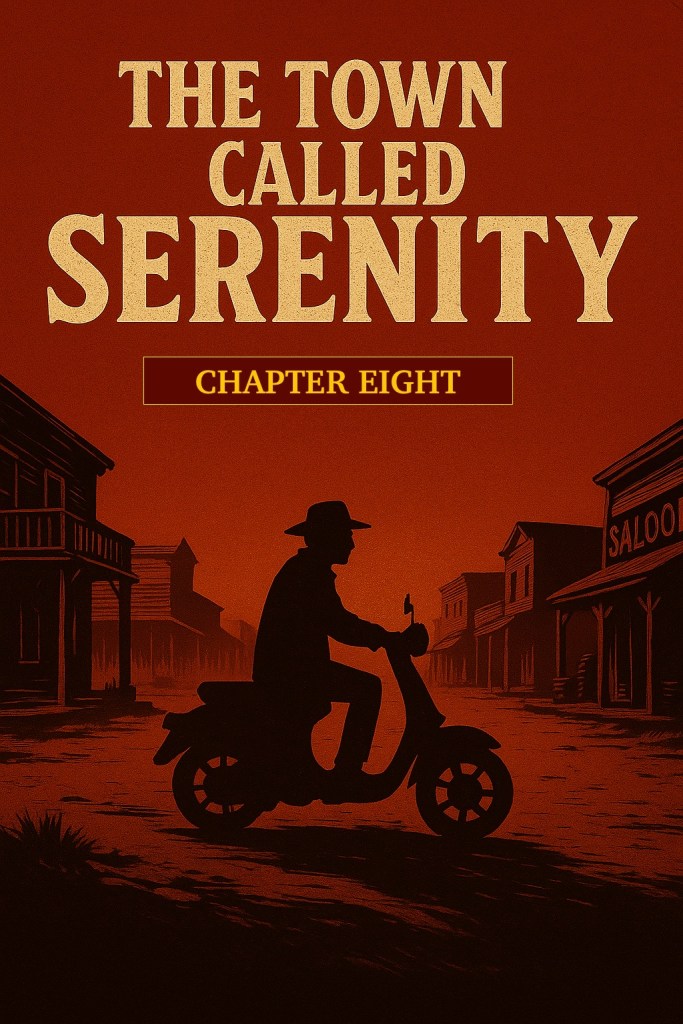
The Town Called Serenity – Chapter Ten: Stand Still, and the Dust Will Bury You

By Benjamin GroffMedia© | benandsteve.com | 2025 Truth Endures©

3–5 minutes

Chapter Ten: Stand Still, and the Dust Will Bury You

By dawn, the desert wind carried more than heat. It took silence—the kind that comes before thunder.

  • Chester Finch stood on the steps of the half-burned church at the edge of Serenity’s main street. His badge was pinned high and proud. His ribs ached. His coat was torn. But his eyes were sharp, and the ledger in his hands could end a dynasty. 
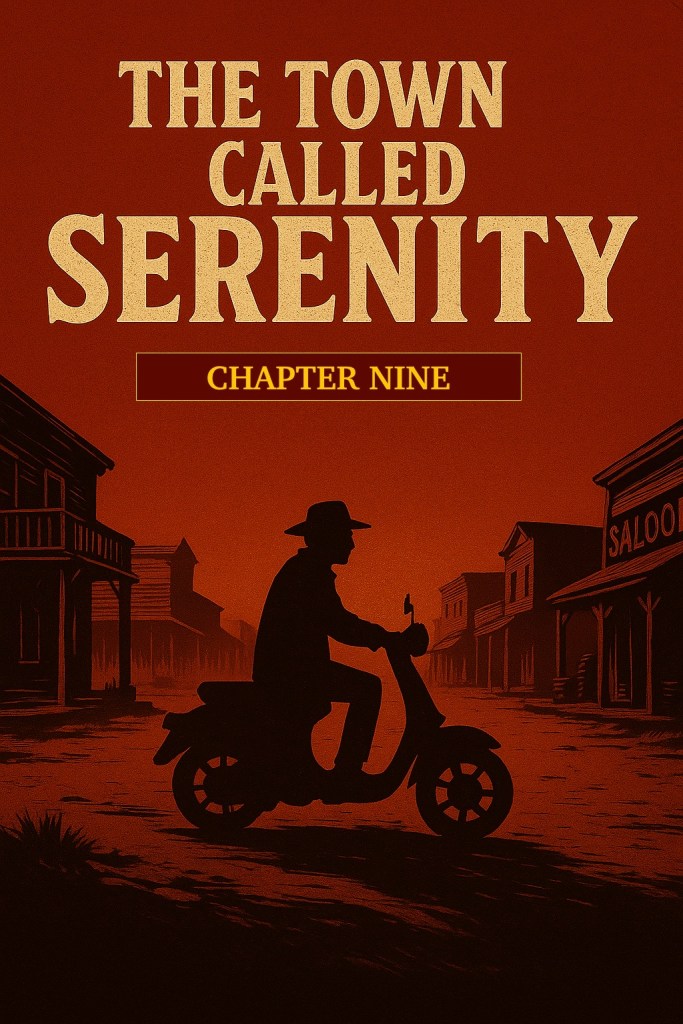
  • The Marshal had pulled his moped from hiding and had it juiced up for duty. The Vespa GTS (300cc) moped shone as slick as the day it was new. It had US Marshal emblems on it and had been stowed inside the jail’s secret compartment. A hiding place that Chester designed the night he arrived in town. 

Chester looked out over the gathering.

Wren was there, her arm in a sling, a rifle strapped across her back.

Petal stood beside her, bruised but alive, clutching a satchel full of Cain’s secrets.

Julep Jake leaned against the doorframe, sharpening his miniature whittled guillotine. 

“A town’s only worth the blood it takes to keep it,” 

He said. 

“Reckon we’re due.”

Even Buck Harlan was the old stagecoach driver who hadn’t spoken more than ten words in a decade. He stood with a shotgun across his knees.

And behind him came the others—storekeepers, grooms, forgotten women, broken men.

Cain had ruled them. Gallow had hunted them.

But now –– now they remembered their names.

Chester raised his voice.

“I’m no savior. I’m no sheriff. I’m just the last man they sent when no one else would come.”

He held up the badge.

“But I say this badge still means something. Not because it’s brass. Not because the government gave it to me. But because I’m willin’ to bleed for it.”

He threw the ledgers down onto the church steps.

“These are Cain’s sins. Every payment, every name, every blackmail note, every fix. And when this town turns that over to the federal office, I just wired—they’re gonna come. Not with a whisper. With subpoenas and dogs.”

A beat of silence.

Then a single voice called out:

“And Gallow?”

Chester turned. 

“He’ll come. Tonight, maybe. It could be sooner. He’ll bring fire.”

He looked to Wren.

“But fire don’t mean nothin’ if you’ve got water and grit.”

Wren nodded once. 

“We stand.”

The townsfolk murmured.

Then they shouted.

Then they began to build.

Barricades. Traps. Makeshift outposts from overturned wagons and scrap wood. Petal turned the saloon into a war room. Julep Jake strung piano wire across alleys. Even the bell tower rang for the first time in years, warning off the vultures.

The Last Hour

Cain, watching from The Assembly, saw the town rise against him and knew he’d lost the crown.

He poured a final drink, set it aside, and vanished through a trapdoor in the fireplace, bound for nowhere.

The Arrival

Gallow came at sunset, just as expected.

He walked straight down the main street—unarmed, unhurried—like he owned time.

But this time, time fought back.

The first tripwire knocked him off balance. A spotlight lit him up. A warning shot clipped his boot.

He crouched, ready to vanish into shadow—until he saw Chester.

Standing in the street. Moped beside him. Rifle in hand.

“You’re outgunned,” 

Gallow called.

“Nope,” 

Chester said. 

“I’m out-cowed.”

The townsfolk emerged—on roofs, behind crates, on balconies.

Gallow took a step. Then another.

Chester held firm.

And Wren, from the bell tower, raised her rifle.

The shot rang out.

Gallow stumbled. Not dead. Just marked.

He turned—bleeding, seething—and ran.

He vanished into the dust from which he’d come.

And the town never saw him again.

Epilogue: A New Kind of Quiet

Serenity changed.

The ledgers made it to Washington. Petal was deputized. Wren chose to stay and built the first real school the town had seen in thirty years. Julep Jake finally finished his guillotine and gave it to a museum in Tulsa.

As for Chester Finch?

He stayed, too.

He never left Serenity.

Not because he had to.

But sometimes, the worst places can create the most profound kind of peace.

Even if you get there on a moped.

The Town Called Serenity

A hero did not save it.

It was saved by the last man willing to stay when everyone else ran.

So the moped was hidden away in the jail’s secret spot—one no one else even knew existed. Good thing Chester made it out alive, or that Vespa would’ve turned into a time capsule! More importantly, this story is a great reminder: the bad guys never truly win.

THE TOWN OF SERENITY – Chapter Nine: A Predator in the Garden

By Benjamin GroffMedia© | benandsteve.com | 2025 Truth Endures©

3–4 minutes

Chapter Nine: A Predator in the Garden

Braddock Cain sat alone in The Assembly, a chessboard in front of him, half-played.

It was something he did when the whiskey wore off, and the world got too quiet. He played both sides of the board. He always made sure black lost.

Tonight, black wasn’t losing.

He moved a knight, sat back, and scowled.

The vault trap should have buried Finch and the girl. He’d received no word from Poke, which was unusual. Too unusual.

A low, sharp knock came at the door—three short raps. 

Then silence.

His eyes narrowed.

“Enter,”

He growled.

The door creaked open, and the man who stepped inside wasn’t Poke. Wasn’t anyone from Serenity? His clothes were clean, military-cut. His boots were dustless. He didn’t wear a hat—but his shadow felt longer than the room allowed.

“Mr. Cain,”

The stranger said. 

“I presume.”

Cain stood, hand already on the grip of his pistol.

“You don’t walk into this room without an invitation.”

“I didn’t walk,” 

The man replied. 

“I arrived.”

Cain didn’t move to open it.

“You’re Gallow,”

He said flatly.

“That’s what they used to call me,”

The man replied. 

“In certain circles. Not the ones you buy into.”

Cain sat back slowly. 

“What do you want?”

Gallow smiled faintly.

“Let’s call it… clarity. You’ve grown fat on rot, Cain. But rot attracts insects. I’m here to burn the carcass clean.”

Cain let out a cold laugh. 

“You think you can walk into my town and—”

Gallow was suddenly in front of him.

Cain hadn’t even seen the movement.

A knife gleamed under Cain’s chin.

“I don’t think,”

Gallow whispered. 

“I replace. You’ve become a liability to men far above either of us. The vault was never your property. The tapes, the ledgers, the names—you were supposed to manage them, not flaunt them.”

Cain’s eyes narrowed. 

“You’re not just here for Finch.”

“I’m not here for Finch at all,”

Gallow said softly.

“He’s just a broken piece. You’re the engine.”

He pulled the knife away and tucked it back into his sleeve.

“I won’t kill you tonight. That would be –– premature. But I will leave you with a choice.”

Gallow tapped the Ashwood file.

“Burn this. Leave town. Or wait for me to come back.”

Then he was gone.

Cain sat still for a long time, listening to the echo of Gallow’s departure. When his hand finally moved, it wasn’t for his gun.

It was for the bottle.

Elsewhere in Serenity

Poke’s body was found behind the saloon—face down, no bullet wound, no blood.

Just two coins were placed over his eyes.

Wren and Chester stood over him in silence.

“Gallow’s here,” 

Wren said. 

“And he’s not working for Cain. He’s cleaning the house.”

Chester looked toward the west horizon, where dust clouds rolled in from the direction of the rail line.

He pulled the badge from his coat and stared at it.

“Time to decide,” 

He muttered. 

“Do I play Marshal—or outlaw?”

Well now, Gallow is certainly making his presence known! And Cain clearly has a big decision to make—but will he actually leave town? If so, he better start packing snacks for the road. But if he’s thinking about staying, he’ll want to give Jonathan Lawson a call. He should secure himself a Colonial Penn Life Insurance policy. It’s unfortunate Poke didn’t think ahead. Maybe those two coins over his eyes are enough to cover a plot in the nearest potter’s field.

As for Marshal Chester Finch, he’s defied the odds and made it to Chapter Ten. And it looks like this final chapter will finally answer the big mystery: the moped. Where has it been? Who hid it? Why wasn’t it tampered with? What was it originally bought for? And when did Chester decide it would be his official Marshal’s ride?

All of this—and more—will be revealed in Chapter Ten. ~ WE Hope ~

The Town Called Serenity – Chapter Eight – The Devil Knows The Way Out

By Benjamin GroffMedia© | benandsteve.com | 2025 Truth Endures©

3–4 minutes

Chapter Eight: The Devil Knows the Way Out

The blast had sealed the main vault door and collapsed part of the tunnel behind them. Smoke choked the air. Brick and metal groaned under stress. Chester blinked through blood and dust, pulling Wren up from the rubble.

“You alright?”

He asked, coughing.

“Been worse,” 

Wren muttered, cradling her left arm. 

“Dislocated, not broken. I’ll pop it back.”

Chester pulled out a penlight and scanned the room. 

“No exit. That was the only way in.”

Wren smiled through the pain. 

“You thought it was.”

She limped to the far wall. A section of decorative tiling was there—old, Spanish-style. It jutted out from the stone like it didn’t belong. She knocked three times in a rhythm that echoed deeper than it should have.

A hollow click responded.

“Cain didn’t build the vault himself. He took it from a man who did. The original owner had escape routes.”

She traced a tile shaped like a broken star and twisted it counterclockwise. With a faint hiss, the tile wall slid inward, revealing a narrow stone chute, half-collapsed and riddled with centipedes.

Chester stared into the black.

“I don’t suppose you brought rope,”

He said.

“Nope.”

“Alright then,”

He grunted, and they vanished into the dark.

In the Streets Above

Petal stood at her shop counter grinding roots when the front door exploded inward.

She ducked instinctively, drawing her old revolver, but it was too late.

Two men in black tactical gear moved in fast, grabbed her arms, and yanked her across the counter. The third figure entered last—calm, silent.

Mr. Gallow.

He picked up a vial from the shelf, sniffed it, and set it down.

“I’ve read your name,”

He said, voice flat. 

“You’re a known associate of Wren. Harboring her. Aiding a rogue federal.”

Petal spat blood and smiled. 

“You got a badge?”

“No. I have jurisdiction.”

He signaled.

The men dragged her out.

They disappeared down the street. Julep Jake watched from his cell window. He was whittling a miniature guillotine from an old broom handle. 

“And now the harvest begins,”

He muttered.

The Long Climb

Chester and Wren emerged two hours later through a rusted maintenance grate behind the abandoned Serenity Theater. They were scratched, covered in brick dust, and exhausted—but alive.

Wren wiped grime from her face. 

“He set us up. Knew we were coming.”

Chester nodded grimly. 

“Means we rattled him.”

She held up the two ledgers she’d saved—one in each hand.

“He loses if these go public.”

Chester took them, tucking them into his coat. 

“Then let’s make sure they do.”

Suddenly—gunfire cracked in the distance. Three pops.

Wren froze. 

“That was near Petal’s.”

Chester’s face hardened. 

“We’re not the only ones he’s playing.”

They moved quickly down the alleys. Even as they ran, Wren stopped cold. She saw the mark scorched onto the alley wall: a circle with a horizontal line through it.

She grabbed Chester’s arm. 

“That’s not Cain’s symbol.”

“What is it?”

Wren’s voice dropped to a whisper. 

“It’s Gallow’s.”

Chester turned, scanning the rooftops.

“Then we’re out of time.”

What exactly did the symbol mean? Chester had the answer—or at least a regulation book with the answer—tucked away in the saddlebags on his moped. The problem? He didn’t bring it with him. And it’s too far to walk back now. Truth is, he hasn’t laid eyes on that moped since he rolled into town. So, is it hidden so well that he forgot where it is? Or is he protecting a strategic location he’s not ready to reveal? With only two chapters left, the Marshal better get moving!

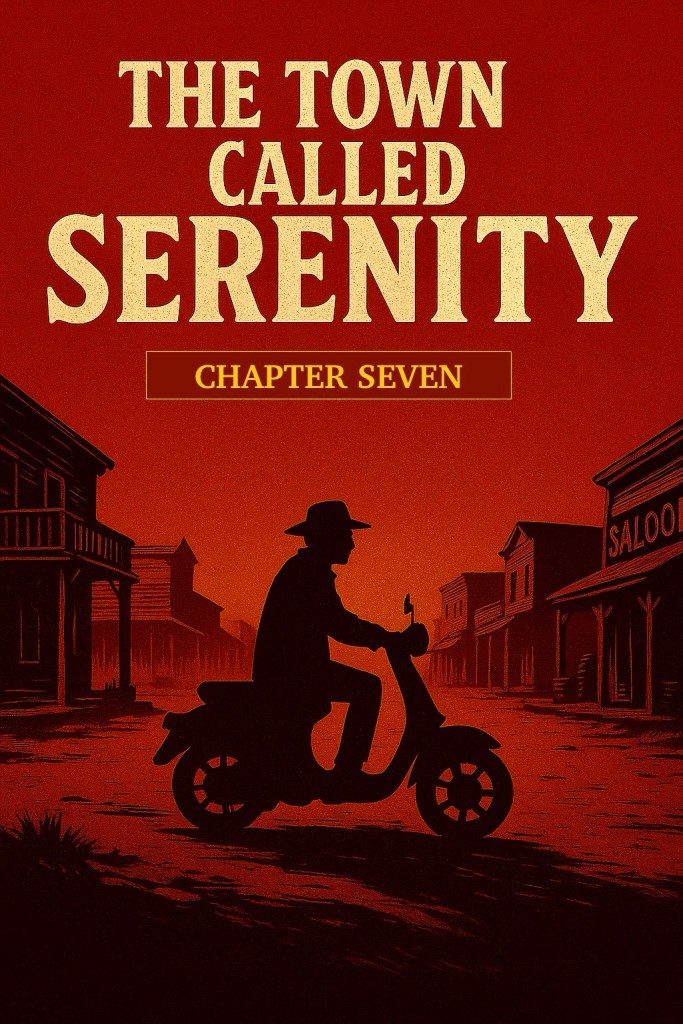
The Town Called Serenity – Chapter Seven – The Hollow Vault

By Benjamin GroffMedia© | benandsteve.com | 2025 Truth Endures©

2–3 minutes

Chapter Seven: The Hollow Vault

Two nights later, Chester and Wren moved through the back alleys of Serenity like smoke.

The plan was simple: infiltrate the vault below The Assembly using the abandoned mine shaft Wren had mapped out. Inside, Cain kept more than just gold and guns—he kept records. Blackmail. Ledgers. Evidence.

Evidence that could break him!

Wren led them to a rusted grate hidden behind the collapsed ruins of an old hardware store. Beneath it: a shaft covered in rotted boards and bad intentions.

“Down there?” 

Chester asked.

“Unless you’d rather try the front door.”

They climbed down slowly, their boots sinking into decades of dust and discarded bones. Lantern light flickered over graffiti scratched into the stone. Old names. Gang signs. Some symbols are older than either of them recognized.

They crawled through two hundred yards of tight rock. They ducked under fallen beams and crossed a flooded tunnel chest-deep in cold water. Finally, they came to a narrow corridor with smooth brick walls.

“This was built after the mine closed,” 

Chester said.

“Cain built it,” 

Wren confirmed. 

“To smuggle in shipments during the lockdown years. It goes straight to his vault room.”

Chester’s hand rested on his revolver. 

“We go in quiet. No guns unless we’re cornered.”

They reached the door—an iron-bound, reinforced, and sealed structure with an old code lock. Wren pulled a tiny folded paper from her coat.

“Petal gave me this,” 

She said.

“It’s the combination. She wrote it down after Cain got drunk and showed off.”

Chester raised an eyebrow. 

“I’m beginning to like that woman.”

Wren punched in the numbers. The lock hissed. The door creaked open.

Inside, the vault glimmered like a serpent’s nest: stacks of cash, boxes of documents, safes within safes.

But the prize wasn’t money.

It was the black books.

Wren went for the ledgers. Chester opened a crate and pulled out a collection of old film reels labeled with names—judges, mayors, even a U.S. senator.

“This is it,”

He whispered.

“This is Cain’s Kingdom in a box!

“This is Cain’s kingdom in a box.”

But then, from behind them—a faint click.

Wren froze. 

“Did you hear—”

Chester tackled her just as the explosion hit.

The vault door slammed shut.

Dust and debris rained down. A trap. It had been rigged.

From above, in a hidden observation room, Braddock Cain watched through a spyglass.

He turned to Poke and said, 

“Let them cook. They wanted into my house. Now they can die in it.”

But neither he—nor Chester—knew that Wren had already mapped another way out.

And worse, Mr. Gallow had just entered Serenity.

Cain’s Kingdom In A Box? Sounds like evidence that sews up this case! But, now Mr. Gallow is in town, and this brings a whole new suggestion for more trouble. Or a solution. It is too early to tell. Maybe Mr Gallow came for the moped. What if the Marshal’s service issued the moped to Chester, and they want it back?