🎬 The Emperor of the North (1973)

By Benjamin GroffMedia© | benandsteve.com | ©2025 

2–3 minutes

Original title: Emperor of the North Pole

Running time: 1h :58m Rating: PG Genre: Period Drama / Thriller

Director: Robert Aldrich Writers: Christopher Knopf, inspired by the works of Jack London

A Ride Through the Great Depression — and Through Human Grit

The film is set in 1933. The Emperor of the North takes place against the backdrop of the Great Depression. During this time, the rails served as a lifeline for the desperate. They also became a battlefield for survival. Ernest Borgnine plays Shack. He is a brutal railroad conductor. Shack rules his train—the Number 19—with an iron fist and a hammer to match. His sworn enemy is the legendary hobo A No. 1, portrayed by Lee Marvin. A No. 1 rides the rails with the confidence of a man. He is cunning and refuses to be beaten by either poverty or authority.

The story becomes a symbolic duel between two men: the enforcer of order and the champion of freedom. Their rivalry becomes a metaphor for a country divided. Some cling to what little control they have. Others have lost everything but their pride.

A Director Who Keeps the Train on Track

Director Robert Aldrich (The Dirty DozenWhatever Happened to Baby Jane?) gives the film a muscular rhythm—every whistle blast and rattling wheel pulse with tension. When you think the film will slow, Aldrich revs it up with a fight. He adds a chase or introduces a moment of quiet resolve. His pacing keeps Emperor of the North from ever running off the rails. It balances moments of raw brutality with haunting glimpses of camaraderie among the downtrodden.

A Cast as Strong as Steel

Lee Marvin and Ernest Borgnine headline a powerhouse ensemble. The cast also includes a young Keith Carradine as Cigarette. He plays the eager, inexperienced hobo who idolizes A No. 1 but still has much to learn about survival and respect. The supporting cast, featuring Malcolm Atterbury, Simon Oakland, Sid Haig, Matt Clark, Elisha Cook Jr., and others, adds authenticity to the Depression-era world. Each actor feels carved from the same rough wood as the era itself—grimy, determined, and vividly alive.

A Story About Class, Pride, and the Price of Survival

Though marketed as an adventure, the movie is a study in pride and power. Shack’s tyranny is born out of fear and obsession; A No. 1’s rebellion comes from principle. The screenplay is inspired by Jack London’s tales of survival and the human spirit. It weaves geography and movement into a dance. This dance stretches across boxcars, over bridges, and into the soul of a broken nation.

“Only one man rides the rails — the other rules them.”

By the film’s climax, we’re left asking who truly wins. Is it the man who guards the system, or the man who defies it? Both emerge scarred by the journey. That’s the real message of Emperor of the North. Survival during desperate times demands both strength and sacrifice.

Verdict: ★★★★☆

A rugged, violent, and beautifully shot Depression-era thriller. Borgnine and Marvin deliver performances as fierce as the clanging of the rails themselves. It’s a story about pride and power. It also explores the peril of trying to be “Emperor” when the world has nothing left to give.


By Benjamin GroffMedia© | benandsteve.com | ©2025 

The Flying Wagon – A Bribed Brother – A Frightened Mother

A true story about two brother’s antics on the Western Plains of Oklahoma in the 1920s and ’30s.

By Benjamin GroffMedia© | benandsteve.com | 2025 Truth Endures©

3–4 minutes

The Flying Wagon

You’ve heard of the Wright Brothers, but you probably haven’t heard of the Groff Brothers—JD and Bennie. Two western Oklahoma boys growing up wild and dusty in the 1920s and ’30s. They didn’t have blueprints or flying machines. What they had was imagination, a tall barn, and a battered old wagon that Bennie believed could fly.

Bennie was the older one. He was full of ideas that didn’t always make sense. They always sounded like fun—at least to him. JD, the youngest, often found himself drafted into Bennie’s adventures under what you might call “big brother persuasion.” Bennie had a way of making cooperation seem more appealing. He would start listing all the minor sins JD had committed that week. JD wasn’t dumb. He knew how to pick his battles.

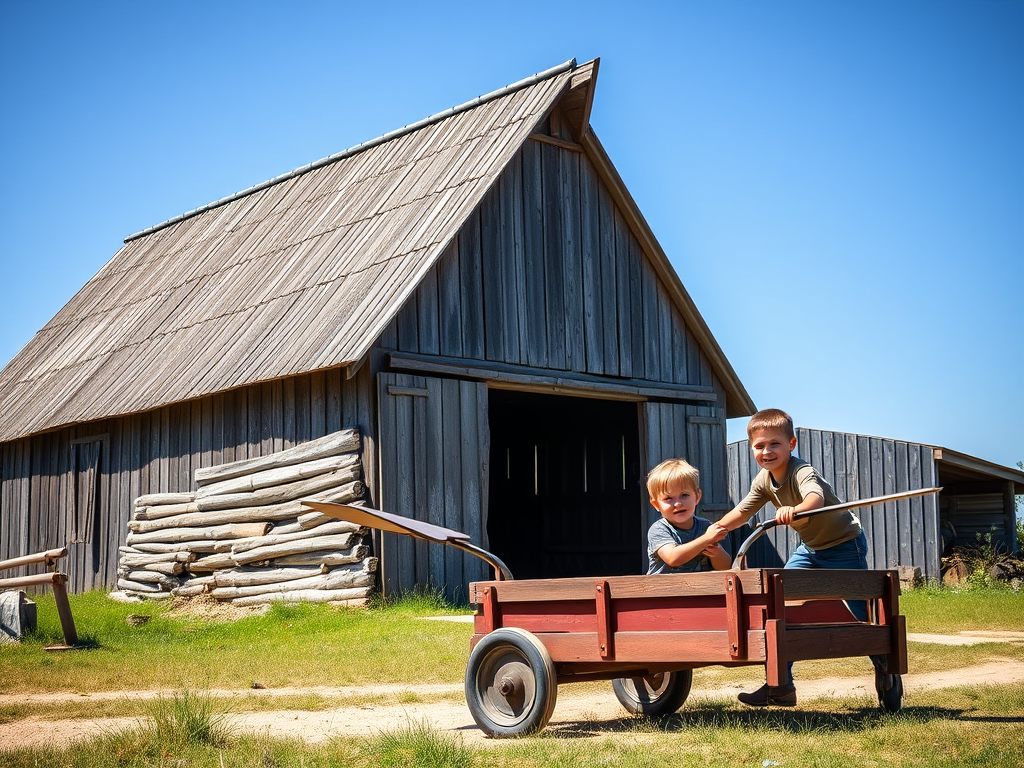
One summer day, Bennie got it in his head that their wagon could be made to fly. All it needed were wings—planks nailed out to the sides—and a launch platform. The barn roof, with its steep pitch and high drop, was just the place. Bennie did the math. He calculated it as only a 1930s farm kid could. He figured the wagon might be too heavy to lift both of them. So, of course, he chose JD to be the pilot.

JD protested. Loudly. But Bennie made his case and called in his leverage. They went up with the wagon. They dragged it onto the roof like a couple of cartoon inventors chasing the wind.

Perched high above the ground, JD sat nervously in the creaking wagon, holding on to the sides. The wings were loose, the wheels rattled, and JD knew better than anyone how this would end.

“Hold on tight and don’t jump out!” Bennie shouted.

“I won’t,” JD called back, “I’ll fall!”

And with that, Bennie gave the wagon a mighty shove.

It was right about then that their mother—Mom—looked out the kitchen window. She saw what no mother should ever see: her youngest son soaring off the roof in a makeshift flying contraption. She dropped what she was doing and ran out the door, just in time to witness gravity take over. The wagon left the barn roof for the briefest moment of flight—then fell straight down like a stone.

JD hit the ground in a cloud of dust and bent wood. Miraculously, he survived—more scared than scraped, and too winded to say anything right away. Bennie stood nearby, squinting at the wreckage like a disappointed engineer.

“Well,” Bennie muttered, “I guess there wasn’t enough lift.”

Mom had a different theory: they would never try that again.

JD agreed with Mom.

That was just one of many scrapes the Groff brothers got into over the years. Bennie had the ideas, and JD often paid the price. But through it all, they stuck together—laughing, fighting, inventing, surviving. That’s what brothers did.

The wild stunts and hijinks came to an end far too soon. Bennie passed away in his mid-forties, and with him, a certain spark left the family. One relative said the family had been “a little less jovial” ever since.

It’s true. A parent never fully recovers from losing a child. And a brother never fully recovers from losing his bud.

For a moment, a wagon flew on top of a barn in western Oklahoma. Two boys believed they could touch the sky.

Elmer’s Tough Ride: A Journey Through the Dust Bowl

GROFF MEDIA 2024© TRUTH ENDURES IMDBPRO

Presented by benandsteve.com By: Benjamin Groff II©s

4–6 minutes

Pa Elmer’s Ride

The winter had been relentless. The worst sandstorm in memory had swept through the region the year before. It buried the land in towering drifts of dust and sand. In some places, these drifts were waist-deep.

It marked the beginning of the Dust Bowl. This was a devastating era of dust storms. These storms crippled agriculture and reshaped life across the American and Canadian prairies in the 1930s.

Few families had stored enough food from the past year’s harvest. Even fewer were sure how long this disaster would last.

They say two things in life are certain: death and taxes. And for Elmer, tax time had come knocking. He had no choice but to ride nearly forty miles to the courthouse. He needed to pay his property taxes in person. He risked default if he didn’t. Despite the hard times, he had always kept his land in good standing. He intended to do so now, even with their dwindling savings. With three young children to feed, responsibility was heavily on his shoulders. His two sons and daughter were too young to fully grasp the hardship that had taken hold of the land. The struggle was real for Elmer and his wife, Ma Ma.

The night before his journey, Elmer told Ma Ma,

“I’ll be up by 3:30 and gone before sunrise. There’s no need to let anyone know I’m carrying money. Hard times make people desperate.”

While he trusted his neighbors, he wasn’t about to take unnecessary risks. He planned to make it halfway and camp near the Washita River before reaching the courthouse the next day.

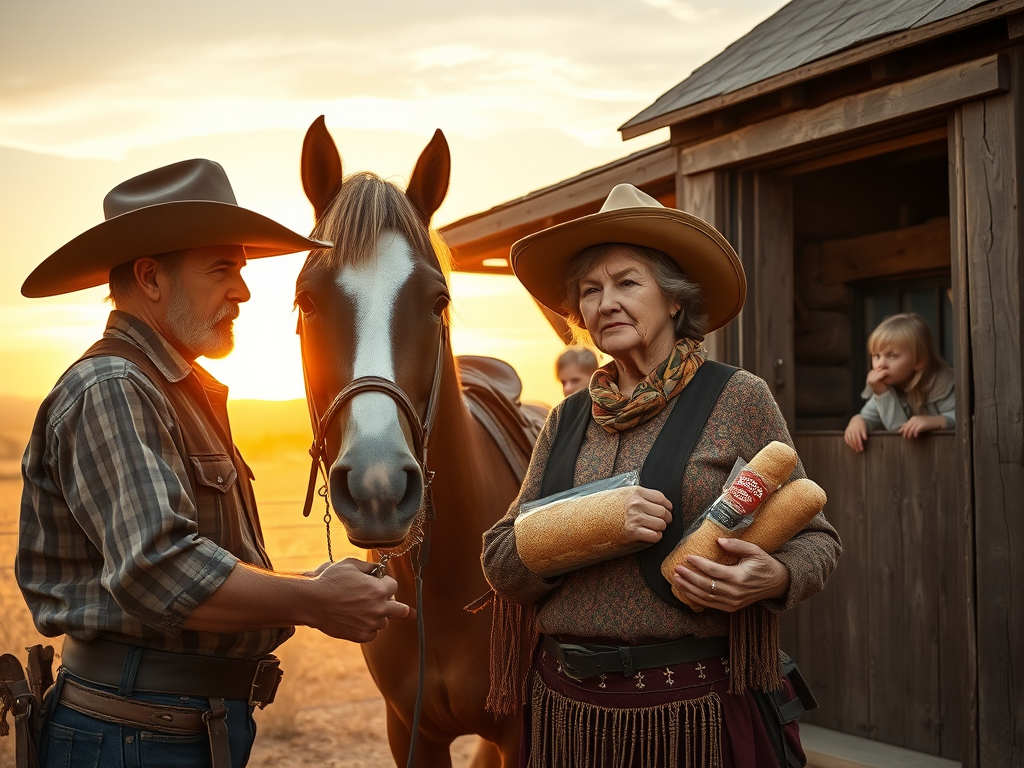
At dawn, Pa Elmer saddled his pony, Smokey. Ma Ma handed him a small bundle—a few slices of fresh bread and beef jerky from the smokehouse.

“It’s not much,”

she said, touching his knee as he mounted up,

“but it’ll hold you over till you’re back. Ride safe, and don’t take any risks. Smokey can outrun any trouble that comes your way.”

Pa Elmer bent down in the saddle and kissed her.

“Two days there, a day and a half back. I’ll be fine.”

The parents didn’t know it. Their three children watched from behind the screen door, their little faces pressed against the mesh. As Ma-Ma gave Smokey a firm slap on the hip, Pa clicked his tongue and hollered,

“Yaw!”

The journey had begun.

Back inside, Ma Ma found the children still watching. She shooed them back to bed. Then she settled into her rocking chair with the Bible. It was her source of comfort through times of uncertainty.

The Ride to Town

Pa made good time. Smokey, eager for the open trail, trotted strong beneath him. By evening, they had covered thirty miles. Elmer found a spot near the Washita River where the grass was matted down—a daytime swimming hole. He unsaddled Smokey. Then, he tied him to a long rope to graze. Elmer stretched out beneath a tree, using his saddle as a pillow.

Sleep took him fast; it was a blessing he had dozed off facing east. The first light of dawn warmed his face, stirring him awake. After a quick breakfast of beef jerky, he saddled Smokey and continued.

By mid-morning, he reached the county seat. He tied Smokey to the hitching rail and strode into the courthouse. The county clerk barely glanced up from her papers.

“You here to ask for an extension on your taxes like everyone else?”

she asked.

Elmer tipped his hat.

“No, ma’am. I’m here to pay my taxes for this year and next.”

The clerk blinked, then scribbled out a receipt, her expression unreadable.

Paid this date: $28.33 for two years of property taxes.

Elmer folded the receipt and tucked it into the same safe spot where his money had been. Simply saying ––––

“Thank you, Mam!”

Pa had finished his business.

Trouble in Town

As he walked back to Smokey, a man loitering nearby gave a slow nod.

“That’s a fine-looking horse you got there. I’d buy him off you for $25.”

Elmer stiffened.

“No, you wouldn’t.”

The man’s eyes darkened, and his tone shifted.

“Maybe I just take the horse for nothin’.”

Elmer didn’t flinch. He met the man’s stare with steely resolve.

“No, you’d be lyin’ dead if you tried.”

A tense silence hung between them before the man forced a crooked smile.

“Mister, I was just jokin’.” 

He backed away.

“You have yourself a nice day.”

Elmer wasted no time. He swung into the saddle and galloped out of town.

The Journey Home

The Journey Home

Elmer has made the ride back in a day. Still, he took his time. He stopped by a few relatives along the way. In this part of the country, it was tradition—when you passed by kin, you paid a visit.

Late in the afternoon, as he approached home, he saw Ma Ma and the kids waiting at the gate. The children ran to meet him, full of questions.

“Well, Pa? How’d it go?” 

Ma Ma asked, relief washing over her face.

Elmer grinned and swung down from Smokey.

“Would’ve been home sooner,” 

he said, stretching his legs,

“but I kept runnin’ out of pipe tobacco.”

Ma Ma shook her head with a chuckle. As the family led him inside, the weight of the journey melted away. Home had never felt so good.

Resilience and Change: The Life of a Depression-Era Farmer

A Story By: Benjamin H Groff II© Groff Media 2024© Truth Endures

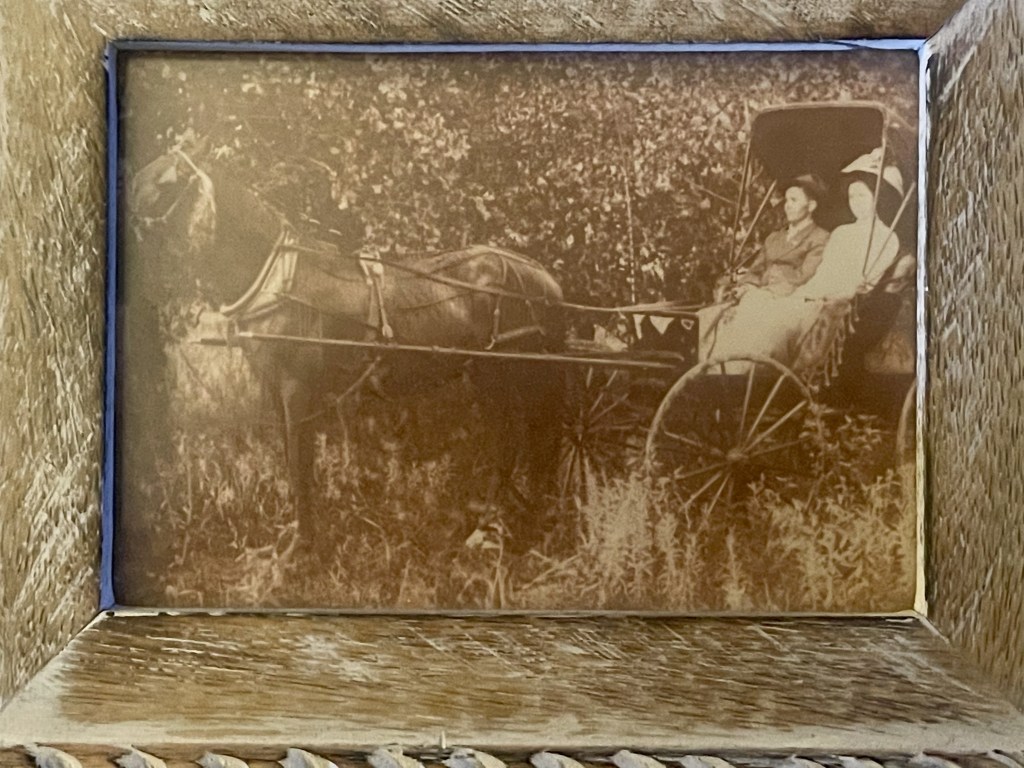
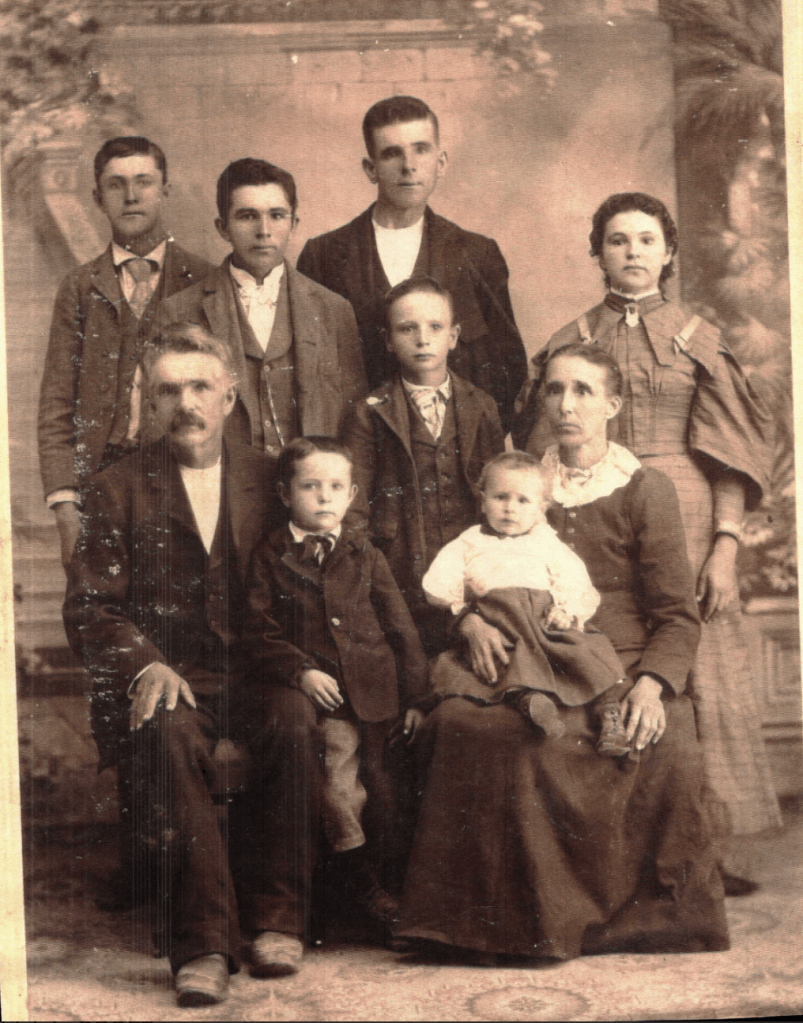
Benjamin Harrison Groff stood at the edge of his farmland west of Eakly, on Cobb Creek in Caddo County, Oklahoma, his weathered hands resting on his hips as he surveyed the fields. The sun was setting behind the Oklahoma hills, casting a golden hue over the land he’d come to love and toil. It was 1930, and though the country was heading into hard times, B.H. Groff had built a life here, one of stability and quiet perseverance.

Ben H and Florence Groff

He was 38 years old, married to Florence, and father to three children—Bennie, Dorothy, and JD. His modest but sturdy house had been their home for as long as he could remember. Its value was $3500, and though it wasn’t much compared to the sprawling estates some wealthier landowners had, it was theirs. They had a lodger, Lex Long, a 22-year-old man who had come to stay a while back. The Groffs didn’t need the money, but Lex had been good company with the world the way it was; having an extra hand around never hurt.

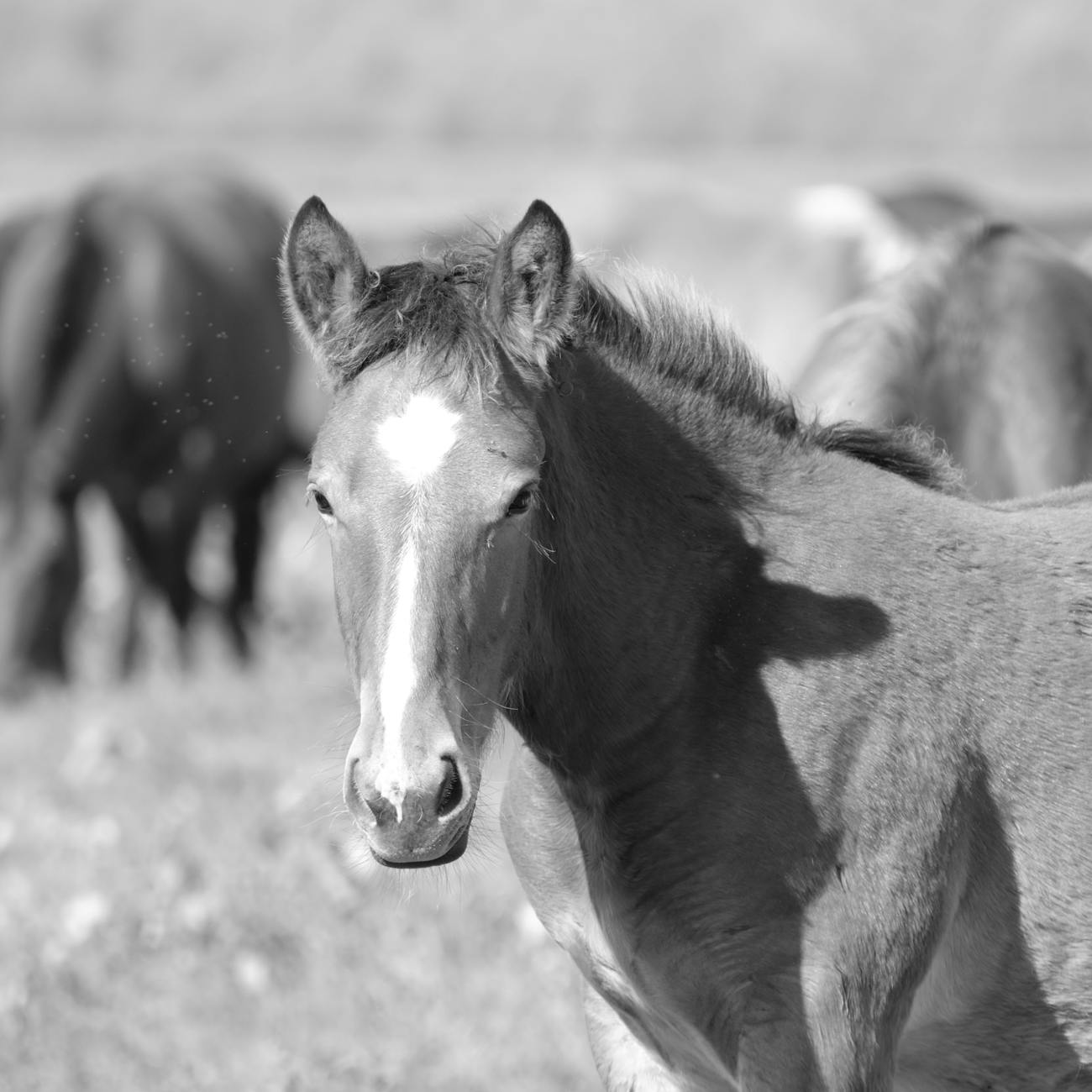
Draught Horses like those kept on Groff’s Farm.

B.H. had been a farmer for most of his life, following in the footsteps of his father, Ulrich Groff, who had immigrated from Switzerland in the late 1800s. B.H. remembered his father well—stubborn, proud, and meticulous about his work. Ulrich had come to America with nothing, finding his way to Illinois, where he built a life with Martha, B.H.’s mother, who hailed from Tennessee. Ulrich had passed a few years ago, but his values and work ethic lived on in his son. Farming had been the family’s lifeblood; Ulrich Groff is a name well known around Olney, Illinois, as the man who, along with his sons, built a barn without any metal, using only wood. It remained a place to see when people visited the town. Through the current day, but lately, B.H. has been reconsidering.

The census taker had come by not too long ago, scribbling down notes as B.H. answered the questions. He had explained that, while still farming, he had recently taken on a new role as an employer, overseeing other farms and workers. The long days of breaking his back were coming to an end. He felt more like a foreman now, guiding others and ensuring the crops were harvested on time. This transition was not just a change in his work but a step towards providing more stability for his family and the families of his workers.

Nearby Binger, Oklahoma 1930s

But still, something was unsettling in the air. The world was shifting—money was tight for many, and the Groffs, while not destitute, were careful with every penny. B.H. looked at their old house, and the absence of a radio set inside was a testament to their simpler lifestyle. He had thought about getting one, but Florence had insisted it wasn’t necessary. “We have each other,” she would say, “What more entertainment do we need?” The lack of a radio, a luxury many families could afford, was a stark reminder of the economic hardships of the time.

At dinner, B.H. would listen to Bennie, Dorothy, and J.D. chatter about school and life on the farm. Bennie, at 13, was getting taller by the day, eager to follow in his father’s footsteps, while Dorothy and J.D. still had a spark of youthful innocence. Florence, ever watchful, would smile softly, her hands always busy with mending or preparing food. The simplicity of their lives didn’t bother her—it was how she preferred it. Their home was a haven of warmth and contentment, a place where the simple joys of life were cherished. The family’s unity and resilience in the face of adversity were a beacon of hope, a testament to the strength of the human spirit during the Great Depression, uplifting those who hear their story.

Ulrich Groff & Family

B.H. often wondered what his father would think of the life he’d built. Ulrich had been proud of his roots, reminding B.H. of the Groff family’s journey from Switzerland to America. Now, with Ulrich gone, B.H. felt the weight of his legacy. He wanted to honor it, but times were changing. Ben wasn’t just a farmer anymore but a man responsible for more than his land. He was an employer now, managing men who had their own families. This shift in his role was a sign of progress and a departure from his father’s more straightforward life, reflecting the uncertain and changing dynamics of the farming community during the Great Depression.

The fields stretched out before him, endless and full of promise. As the sun dipped below the horizon, B.H. looked at the land. He knew that whatever the future held, it would be shaped by hard work, perseverance, and the simple joys of family. And perhaps there was room for a bit of change along the way. The future was uncertain, but B.H. was ready to face it with the same determination that had guided him so far.

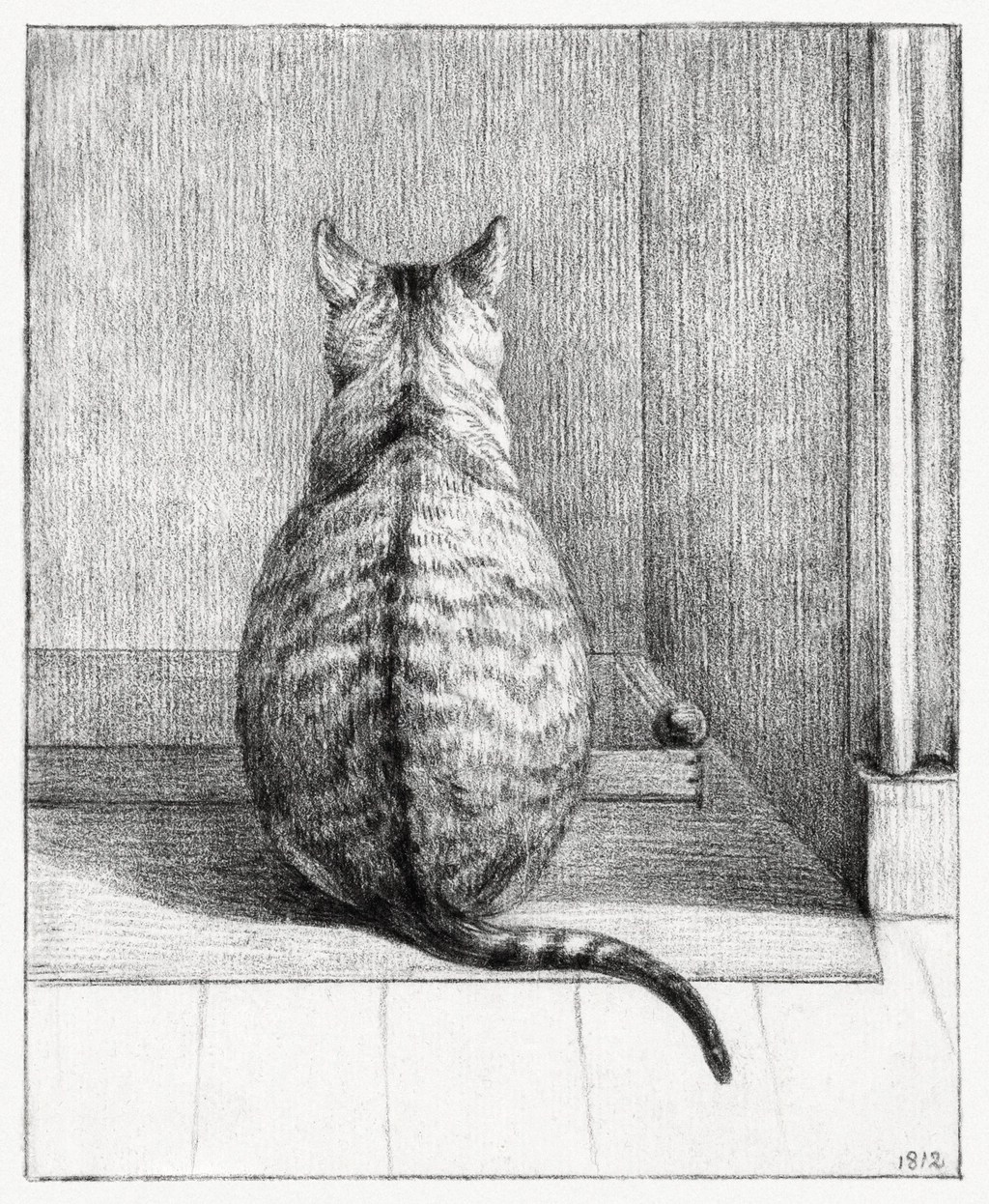
The Cat That Came To Dinner

A Story By: Benjamin Groff© Groff Media 2024© Truth Endures

It was the early 1930s, and the Oklahoma Dust Bowl swept through the Lower Plains States, leaving the land desolate. Sand drifts piled high against fence lines and buried the once-thriving crops. The sky, often a fiery orange, seemed to smoke under the relentless barrage of dust, with the sun reduced to a mere, dim glow fighting to penetrate the thick haze. In these trying times, the ingenuity of the people shone through. Cotton sacks and burlap gunny sacks, soaked in water, were draped over windows, turning the blistering wind into a cool, damp breeze—a crude yet effective method of finding relief from the unforgiving heat.

One late afternoon, as the sun struggled to set, casting long shadows across the Groff household near the Caddo-Washita County line, Florence ‘Mom’ Groff finished preparing the evening meal—known simply as “Supper.” The family gathered around the table, hands clasped in prayer, their faces etched with the lines of hard work and resilience.

But as they lifted their heads, ready to eat, a sound cut through the thick silence—a soft, sad meow. The children were the first to hear it, their eyes widening in surprise. Then Mom and Pop heard it, too, and a hush fell over the room.

Mom Groff had always wished for a cat, a companion to keep her company, and a mouser to guard the pantry. To her, the sound was nothing short of a divine blessing, a wish finally granted amidst the harshness of their lives. The family’s joy was palpable, a rare moment of lightness in a world often shrouded in dust. Their hearts swelled with hope and anticipation, their spirits lifted by the prospect of a new member in their humble household.

With a heart full of hope, Mom poured a saucer of milk and gently opened the screen door, its hinges creaking as she knelt. Mom propped the door open and called softly, coaxing the stray Cat into the kitchen’s warmth.

The Cat, a scraggly creature with dust-matted fur, cautiously stepped inside, its eyes wide and curious. It approached the saucer and began to lap the milk, its tail flicking contentedly. The family watched in silence, their smiles growing as they saw the Cat settling in, imagining it becoming a permanent household member.

But fate had other plans. Just as the Cat seemed at ease, a sudden gust of wind caught the screen door, slamming it shut with a thunderous WHACK! The noise startled the Cat, sending it into a frenzy. With a yowl that echoed through the house, the Cat leaped onto the dining table in a single bound, scattering dishes, plates, glasses, and silverware in all directions. Food splattered across the room, landing in the laps of the children and Ben, Mom’s husband, who sat stunned at the chaos unfolding before them.

Now in full panic mode, the Cat darted around the kitchen, running along the walls as if possessed, leaving deep scratch marks and a trail of destruction in its wake. The family could only watch in disbelief as the once-peaceful scene became utter chaos. Dishes clattered, food splattered, and the Cat’s wild antics turned the kitchen into a battleground.

Finally, Ben, known as “Pop,” rose from his chair with the calm of a man who had seen it all. He grabbed a broom and walked to the kitchen door, his face determined. As he held the door open, he quietly muttered, ––– “scat, you son of a bitch, you. Scat!”

“Scat, you son of a bitch, you. Scat!”

With that, the Cat shot out the door, disappearing into the dust-laden twilight, leaving behind a shambling kitchen and a family in stunned silence. The sudden departure of the Cat left the family in a state of shock, their hearts still racing from the unexpected turn of events. The once lively kitchen now stood in stark contrast to the chaos that had just unfolded.

The story might have ended there, but it became a cherished family tale, retold with laughter that brought tears to the eyes of those who heard it. My dad, JD Groff, was the one who shared it most often, his voice shaking with joy as he recalled Pop’s uncharacteristic outburst. Dad would always add with a chuckle, “Pop never cursed a day in his life until that damn Cat tore the hell out of our dinner table.”