Take Me Back To Yesterday Once More

5–8 minutes

The Farm That Built Me
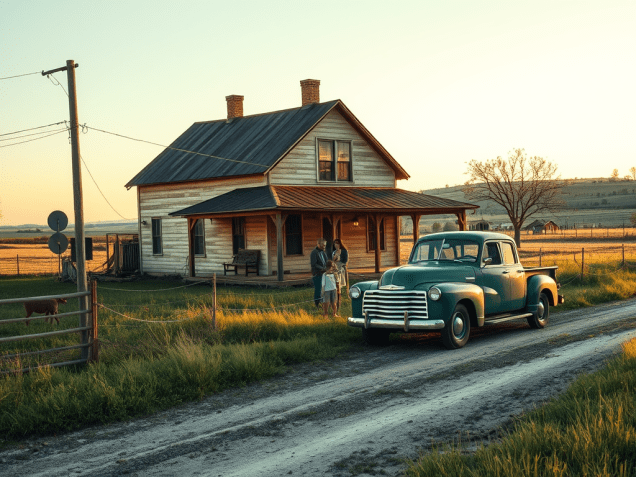
When I look back on my childhood, I’m struck by how much life changed. The changes happened between the time I was born and when I turned eight. We didn’t have indoor plumbing at first. Initially we hauled water from town in five gallon buckets. That was for drinking and cooking. In a big tank in the back of my dad’s truck, water was hauled for the livestock. Eventually water was found on the farm in a well far south of our house. Than ran pipe as far as possible. But, the water pipe stopped about twenty feet shy of our kitchen door. My parents couldn’t afford to run it inside. Every day, we carried buckets from the outdoor faucet to the house. This was still an improvement over hauling water all the way from town.

If you have ever heard of the ‘little brown shack out back.’ Well we had one. We used it even after water was found on the place. Because their wasn’t a bathroom in built in the house. It would be added later. We would walk a trail to the shack in the summer and winter. It wasn’t fancy built at all. It had yellow jackets nest high on the wall. It had a hook and eye lock to secure the door when you were inside. A wooden block turned to keep the door shut when you left. It was cold as ice in winter and hot as hell in the summer. And our company didn’t take to it. It would cut their visits short. And sometimes I wondered if that wasn’t my dad’s plan for having for so long to start with.

Around the same time, we got our first telephone. The line lay exposed down the center of the dirt road. It was shared on a party line with two other houses. Every time the road grader came, the blade cut the wire. We would wait weeks for the phone man to splice it back together. They buried it once, but the sandrock kept them from going deep. The grader still found it. Eventually, someone figured out how to run it four feet off to the side of the road. That man got a promotion—and passed away not long after. These were the everyday challenges of our farm life.

Electricity was another novelty. We had it most of the time. But if it went off during a storm, it was especially bad during a snow event. We would be without lights for a week or longer. They were also the threads that wove our family together. These challenges taught us the value of perseverance. They also brought the joy of shared triumphs.

Heat was another story. Before our fireplace was installed, a single stove in the living room was turned down at night to save propane. We woke up to breath clouds in the cold air before school. Summers weren’t much easier. With no air conditioning, the whole family slept in the living room on pallets. We threw every door and window open. This helped capture the breeze from the five-acre lake a quarter mile south. We’d even open the fireplace flue to pull in a cool draft. It sounds uncomfortable now.

Back then, it was more than just a living arrangement. It was a testament to the value of family closeness. Six kids, two parents, visitors, and dogs—living in one big indoor campsite every night. If you’ve never known family closeness, you’ve missed something truly special. It’s these moments that I look back on with nostalgia and a deep appreciation for the bond we shared.

My father raised American Quarter Horses, and our farm revolved around them. We only kept one stud at a time to avoid brutal fights. Mares were bred individually, often requiring long hauls to other states to introduce new bloodlines. Our horses went everywhere—rodeo circuits, calf-cutting competitions, and even television shows. One star from Gunsmoke, Buck Taylor, called about a horse. Another buyer phoned from New York City during the Garden Square Futurity. He called to thank my dad for the mare Molly. Molly had taken him to the finals. My dad didn’t like us talking about our customers because he valued humility over reputation. As a kid, I didn’t understand. Now I do.

I remember the early 1970s and how tight our family budget must have been. My dad would come home from his barbershop with sacks of horse feed loaded in the back of his truck. He’d park in front of the house. Then, he’d hoist a heavy sack onto his shoulder and walk nearly two city blocks. He’d go down a hill, across a pasture, and all the way to our barn. He had back and leg issues that made every step painful, but he refused to “waste” fuel in his truck.

At the time, I didn’t grasp how precious that gallon of gas was during the oil crisis of the 1970s. To me, it was just Dad doing what he always did. He worked hard. He quietly bore pain. He put his family and animals first. Only now do I understand it was more than thrift; it was discipline and determination passed down like an heirloom.

That simple act—carrying those sacks of feed instead of burning a gallon of gas—left a mark on me. It taught me that sacrifice, resourcefulness, and responsibility are not always loud or dramatic. Sometimes they’re a man. He is alone at dusk, carrying a heavy burden down a path. This happens because it’s the right thing to do.

Everything shifted when Dad took a job at a Girl Scout camp. Horses were sold off until only a few remained for us to ride. We moved to the camp and poured ourselves into cleaning trails, rebuilding facilities, and living outdoors. Yet Dad’s passion for horses never dimmed. We still attended auctions and brought home horses to train. One day, I spotted a skittish dun mare at an auction—Lady. I knew she’d been mistreated and asked Dad to buy her. With patience, grooming, and daily walks, she became the smoothest riding horse I ever had. Lady followed me everywhere without reins, just like a loyal dog. Later, bred to a stud sixty miles away, she gave birth to a colt with the same gentle spirit.

Those years formed me. They were a school of life. They taught me resourcefulness. They also taught patience. I learned how to read the quiet signals of both people and animals. We didn’t have much, but we had each other. And now, decades later, every time a cool breeze brushes my face, I remember those nights in the living room. The windows were open. I hear the sound of our horses in the pasture. These are proof that even the simplest moments can shape a lifetime. The lessons I learned from farm life continue to inspire me. They shape my perspective. I appreciate the value of patience, resourcefulness, and the importance of family.


By Benjamin GroffMedia© | benandsteve.com | ©2025

Life Without Stunt Doubles: Embracing Real Struggles

By Benjamin GroffMedia© | benandsteve.com | 2025 Truth Endures©

2–3 minutes

There Are No Stand-Ins in Real Life

Benjamin Groff II

There’s a movie out there—The Fall Guy—that reminds us of a truth we often forget. In Hollywood, when the action gets dangerous, they call in a stunt double. Someone else takes the fall, gets bruised, and gets burned. Then, they step aside so the star can walk away without a scratch.

But out here, in the real world, there are no stand-ins.

I was raised on a farm. My stand-in never showed up when I fell off the back of a truck hauling hay. They didn’t when I landed wrong jumping a ditch with a bale slung over my shoulder. No one else was there to take my place when a horse threw me. A cow with more attitude than brains also decided I was in her way. Every bruise, every scar, every ache in my knees—those were earned the hard way, by me.

When I became a police officer, the stakes only got higher. I was the one in the scuffle, the one trying to wrestle control out of chaos. I went through a windshield once during a pursuit. Another time, I got clipped by a car while waving traffic around a wreck on a rainy night. I never saw it coming—but I sure felt it. I still do.

There were fires, chemical spills, panicked families crying out for help. I didn’t hand off the breathing problems that came after pulling someone out of a smoky building. There was no double standing in my boots, breathing what I breathed, lifting what I lifted, hurting where I hurt.

The human body doesn’t forget. It keeps the ledger. Muscles remember the weight. Bones remember the falls. Your mind moves on. But, your back doesn’t let you forget the day you lifted more than you should’ve. It also reminds you of the time you hit the ground harder than expected.

There’s no editing room where the rough scenes get cut, no second take when a decision goes sideways. Every moment counts. Every choice echoes. That’s real life.

It’s not glamorous. You don’t get stunt bonuses. There is no applause when you get up off the ground with dust in your mouth. You have a limp in your step. But it’s yours. Every fall, every break, every bruise—it’s part of the story. And no one else gets to claim it.

The movies make heroes out of actors. But out here, the real stories are written in blood, sweat, and healing bones. No stand-ins. Just you.

A Close Encounter: Horseback Riding and a Snake Surprise

Benjamin GroffMedia© | benandsteve.com | 2025 Truth Endures©

3–5 minutes

When a Snake Crosses Your Path

Photo by Turuncu Sakal on Pexels.com

I was nine when my dad, sisters, and I rode horseback along the four-mile-long road circling our property. My dad liked the longer ride of four miles. He guided the horses through the deep sand that had accumulated in the red dirt of Western Oklahoma.

It was a bright, crisp spring afternoon. The season had warmed the land for several weeks. Still, I wore a light jean jacket to ward off the lingering chill.

Riding with my dad was always a solemn occasion. We never spoke much; we rode. Yet, when we returned home, we understood each other completely. Words weren’t necessary—the simple joy of riding together across the open land spoke directly to the soul.

Like my sisters, I had been on horseback since I could remember. My dad had propped me up in the saddle before I could sit upright. I considered myself a decent rider. Still, I was nowhere near my father’s skill. He seemed to move with his horse as though they were one being.

That afternoon, I sensed that my sisters were there more out of duty than enjoyment. Their smiles felt forced, their laughter shallow. Though they didn’t do it outright, I could tell their hearts were elsewhere. I didn’t think this would be the last time they rode with us. They were growing up. My sisters were drawn to other interests. They were leaving behind the horses that had once been a central part of our childhood.

Photo by Darya Sannikova on Pexels.com

I was the fourth rider in our single-file procession, coming behind my dad and sisters. We had traveled this route countless times. I knew the landmarks well. There was an oil well pump that sometimes startled the horses. Barking dogs lived at a neighbor’s line. A tattered rag flapped from a barbed-wire fence. These were the things that made a horse shy, and I took note of them with each ride.

We had covered nearly three miles when I noticed my dad and sisters had gained some distance ahead of me. It was just a few lengths, nothing unusual. But as I would later learn, riding close together has its benefits.

As we neared a mainly sandy stretch of road, my oldest sister turned in her saddle. She glanced back at me. Her expression was unreadable, but how she looked made my stomach tighten.

And then I saw it—a six-foot black bullsnake slithering onto the road.

It had watched the first three horses pass, believing the coast was clear. But I was still coming. Just as my eyes locked onto the snake, my horse saw it, too.

Photo by hayriyenur . on Pexels.com

His reaction was immediate—dodge and run.

My horse reared before I knew what was happening, jerking to the left while I pitched to the right. The world tilted, and sand rushed up to meet me. Then, there was an impact. I hit the ground hard, my breath escaping in a sharp gasp.

I hated snakes. At that age, I was convinced they were all out to kill me. I was lying in the dirt. My heart pounded as I scrambled to my feet, half-expecting the snake to strike. But my faithful horse hadn’t abandoned me. The horse trotted back, ears flicking, nostrils flaring with the same nervous energy I felt.

Ahead, my dad turned in the saddle, completely unaware of what had just happened. He saw me standing there, dust-covered and rattled, and called out in his usual no-nonsense tone:

“Would you quit fooling around and get back on your horse?”

Photo by Bozan Gu00fczel on Pexels.com

I was “fuming.” I muttered curses under my breath—at my horse, my dad, and that wretched snake. And at myself for not anticipating the spook that can send a horse sideways.

I climbed back into the saddle. I was convinced the snake would follow us up the road. It would try its luck again. It didn’t. But my horse remained, shying at every stick and shadow for the rest of the ride.

When we finally arrived home, I unsaddled and brushed him down, smoothing his coat and murmuring reassurances. He had been just as much a victim in the afternoon’s chaos as I had.

That afternoon was the second time I was ever thrown from a horse. The last time came when I was twenty. I was riding a high-spirited horse that my dad no longer handled. That horse was downright mean—no snakes needed to send him bucking.

The Last Drop: A Cowboy’s Journey of Sacrifice

GROFF MEDIA 2024© TRUTH ENDURES IMDBPRO

Presented by benandsteve.com By: Benjamin Groff II©s

2–4 minutes

The Last Drop

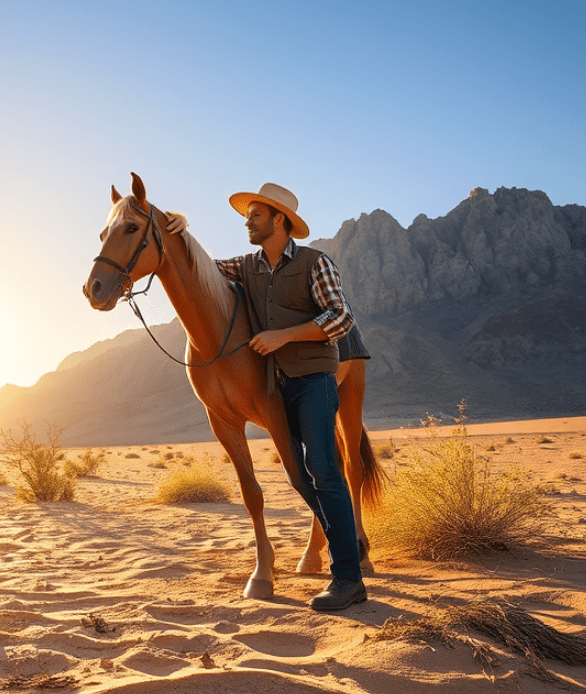
The desert stretched endlessly before him. A sea of golden sand and jagged rock shimmering under the merciless sun. Nathan Calloway, a weathered cowboy, pulled his bandanna higher over his nose. He squinted against the glare. Nathan’s loyal companion, Dusty, plodded steadily ahead, hooves sinking into the loose sand. It had been days since they left the last water hole. The journey across this godforsaken land felt like it would never end.

Nathan had one canteen slung across his saddle. He’d filled it to the brim at the last watering hole, which seemed a hundred miles behind them now. Each time Nathan drank, he made sure Dusty drank, too. He’d pour water into his old, sweat-stained hat, holding it steady while the horse lapped it.

Miles passed, the sun crawling toward the horizon without relief. Nathan should’ve run dry by now. His canteen weighted it, sloshing like he had just filled it. He didn’t question it—just kept pouring for Dusty, letting the horse drink before taking a sip himself.

By the time they reached the halfway mark, the world felt different. The heat played tricks on Nathan’s mind, distorting the horizon and bending the sky. The rhythmic clopping of Dusty’s hooves became a heartbeat against the silence.

Then, Dusty spoke.

“Thanks, partner,” 

The horse said, his voice deep and smooth as rolling thunder.

Nathan blinked hard, his throat tightening. 

“What was that?”

“For the water,”

Dusty said, shaking his mane. 

“I appreciate it.”

Nathan swallowed. He knew heat can make a man see things and hear things that weren’t real. But this felt different. He’d spent years with Dusty—maybe it just took this long to finally listen to him.

“You’re welcome, old boy,”

Nathan murmured, tipping the canteen over his hat again. Dusty drank, his dark eyes filled with something knowing, something grateful. The horse seemed to understand the sacrifice Nathan was making for him. Nathan, in turn, felt a deep sense of responsibility and care for his companion.

The two trudged on, man and horse, surviving together. The sun burned down. Their shadows stretched thin. The canteen never emptied as long as Nathan gave to Dusty first.

Then, just as the town rooftops shimmered into view, something changed.

Nathan stopped. His body ached, exhaustion weighing him down. The canteen felt lighter now. The end was so close—only a half-mile to go. He took a long, deep drink, the first he hadn’t shared. The water was warm but pure, sliding down his throat. Nathan’s hands trembled as he lowered the canteen.

Dusty faltered. The horse’s breath came shallow, his steps unsteady.

Nathan hesitated. He looked at the canteen, now feeling light as air. Nathan shook it—nothing.

The world spun. The last stretch of desert blurred. Nathan swayed in the saddle.

A mile outside town, they found him. The townsfolk rushed ahead, lifting the man from his horse, but Nathan Calloway was gone. Dusty stood by, head bowed, his sides heaving. The canteen dangled empty from the saddle, not a drop left inside.

“You almost made it,”

Someone whispered.

No one noticed Dusty raise his head slightly, his dark eyes glistening with something almost human. He looked toward where his rider lay, then toward the empty horizon.

Deep in the desert’s silence, a voice like rolling thunder whispered,

“We made it.”

My Father’s Journey: From Service Station to Horse Ranch

GROFF MEDIA 2024© TRUTH ENDURES IMDBPRO

Presented by benandsteve.com By: Benjamin Groff II©s

4–5 minutes

Today, as I write, I ponder what story to share. Specific recollections stand out, shaping my life in ways that make them worth remembering.


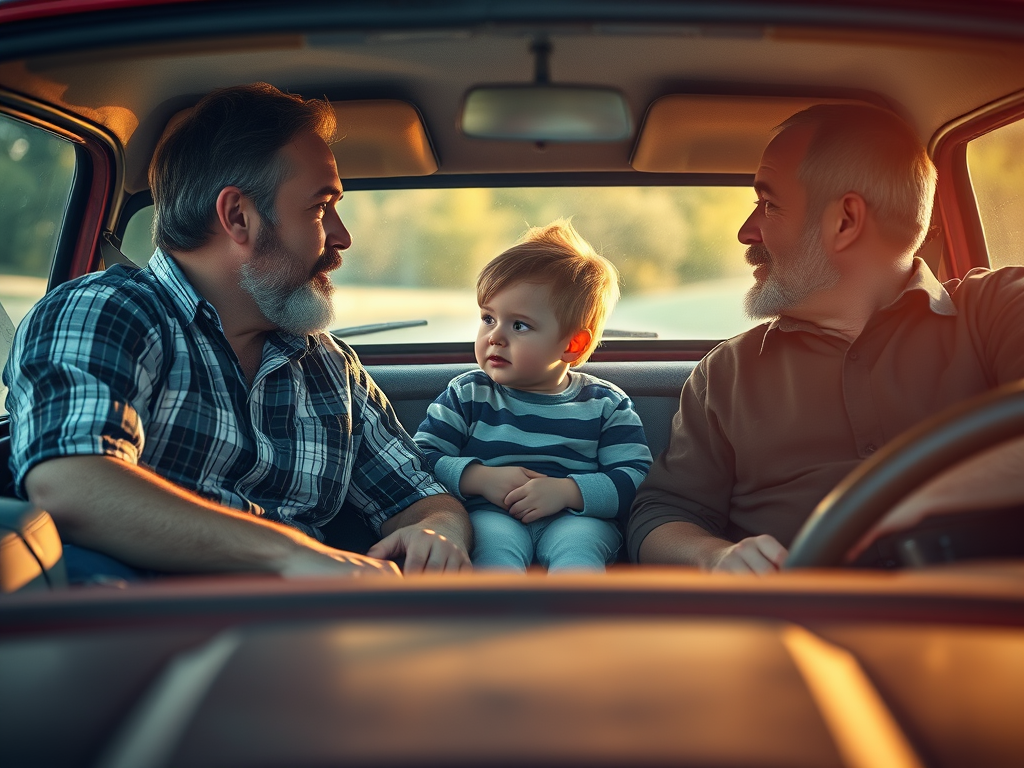
One of my fondest memories is traveling with my father and one of his friends. These journeys often involved a horse—whether for a rodeo, a parade, or taking a mare to be bred. I remember sitting in the middle of the pickup seat. The air conditioning blasted my face. The two men talked nonstop. The smell of their cigarettes filled the cab; they never cracked a window. Though I never smoked a day in my life, I suspect I passively inhaled enough to equate to thirty packs.

This was the early 1970s when smoking held no taboos, even around children. My father eventually quit in his late fifties, relieved to be free of nicotine’s grip. Sadly, six months later, he responded to a chlorine leak at a swimming pool. While shutting off the container, he inhaled the toxic gas, permanently damaging his lungs. From then on, breathing was a struggle. The medications he took to manage his condition weakened his bones. By 63, he was no longer capable of walking. He passed away shortly after. But in those 63 years, he packed in a lifetime of experiences.


Reflecting on my childhood, I marvel at how my parents managed to supply for six children. We weren’t wealthy, yet they kept us clothed, fed, and engaged—horse riding, basketball, piano lessons, and football. We started in a beautiful three-bedroom brick home in a great community. My father owned a Texaco service station and volunteered as a fireman. Some neighbors even urged him to run for city council, but his passion lay elsewhere. He dreamed of owning a quarter-horse farm, a dream that required sacrifice.


The first step was selling our home. We moved into a one-bedroom rental, with my parents in the sole bedroom and us kids on foldout couches. My father attended barber school, planning for the future. A year later, he purchased forty acres in a small town 35 miles away. He used the money from selling the house and service station. The land was densely wooded, and my father and three older brothers worked tirelessly to clear it for a home.


He found a house nearby for sale, provided it was moved. It had four rooms downstairs, one upstairs, and disconnected kitchen and bathroom additions. Two trucks transported the house 28 miles to our new farm. Once settled, we designated rooms: the kitchen, living room, and bedrooms. The steep stairs to the upstairs bedroom often left me bruised from falls. I loved that room. It had windows at both ends, letting a breeze flow as I gazed at the valley. I imagined future adventures.
I discovered my secret hideout underneath those stairs, meant to be my sister’s closet. Small enough to squeeze deep inside, I stayed undetected until I was spotted and lost my perfect hiding place.


Life on the farm lacked modern conveniences, including indoor plumbing. My father found an abandoned outhouse and positioned it over a dry well. Inside, we had two five-gallon buckets of water for drinking, with a dipper hanging above and another for washing dishes. Each day, my father refilled them after closing his barbershop in town.


We also had no phone service at first. When we finally got a phone, I was about eight. The company laid a single line down the rural road. We shared it with three other families on a party line. Each household had a distinct ring. Still, anyone might eavesdrop. Power outages were frequent, lasting days during snowstorms or severe thunderstorms, making access to our home difficult in bad weather.


My father and brothers built horse barns south of our home. At one point, we had over forty horses. Spring was the busiest, with foals being born. My father hosted roping events, where friends gathered to rope all day. Eventually, he installed arena lighting, allowing him to ride even after long days in the barbershop. I joined him often, eating more red sand from falling off horses and calves than I care to remember.


Over time, the horses dwindled to just mine and his. My siblings had moved on from riding. My father worried that his aging stud horse was no longer suitable for breeding. That’s when he became a ranger at the Girl Scout camp, changing my world entirely. Life on the farm transitioned into something new and unknown. What I learned at the camp shaped me. It taught me the value of acceptance. The lessons in resilience have stayed with me through life’s most challenging moments. But that, as they say, is another story entirely.

To end, I want to include a question I recently asked my 95-year-old mother:

“You went through so much. It all started after selling the brick home. You moved from the life we had in the city. Knowing all this, would you do it again?”

She replied,

“in a heartbeat!”