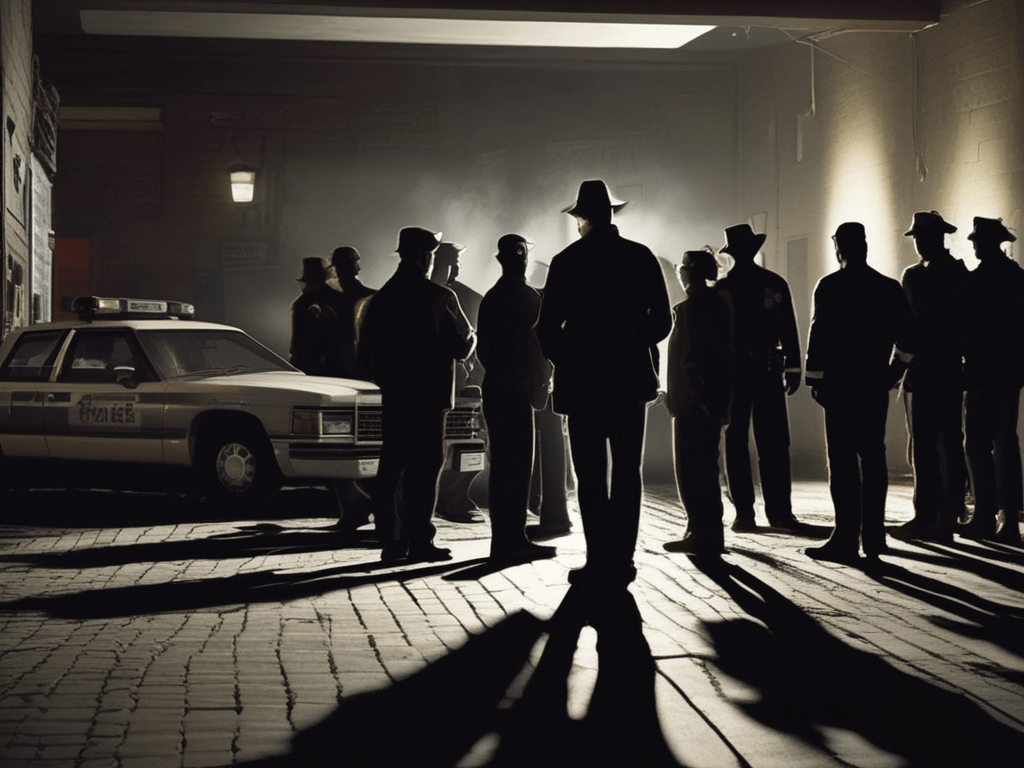
The Town Called Serenity – Welcome Committee

By Benjamin GroffMedia© | benandsteve.com | 2025 Truth Endures©

3–5 minutes

Chapter Three: Welcome Committee.

A town allergic to rules.

The Town Called Serenity

By noon the next day, the heat in Serenity had risen to an oppressive boil. The town smelled of dry rot, sweat, and gun oil. Somewhere in the distance, a fiddle played off-key. Somewhere closer, someone was being punched.

Chester Finch stepped out of the rickety sheriff’s office he had claimed, swatting at flies with his hat. His left eye was bruised from a scuffle the night before, and he had re-holstered his sidearm four times that morning alone—once while buying coffee, once while crossing the street, once during a handshake, and once because a six-year-old pointed a slingshot at him and said, 

“Bang.”

Serenity wasn’t just lawless—it was allergic to rules.

A woman named Petal ran the general store and apothecary. She greeted Chester with an arched brow, and a cigarette clung in the corner of her mouth.

“You’re still alive,”

She said, counting change. 

“Didn’t expect that.”

“Thanks for the confidence,” 

Chester replied, tipping his hat.

She shrugged. 

“Ain’t personal. We don’t usually see second sunrises on lawmen.”

Chester had started to respond when a shadow fell across the dusty street. Four men approached—spaced out like predators, walking with the purpose that made children vanish and shutters slam.

The Gentlemen had arrived.

The one in front was tall, clean-shaven, and wore a preacher’s collar over a duster that flared in the wind. A thick Bible was tucked under one arm. His name was Silas Crane, but most folks called him Reverend Knuckle. He smiled with too many teeth.

“Marshal,” 

He said. 

“We heard you were new in town. Thought we’d come to say hello proper-like.”

Behind him stood the other three:

  • Dutch, a former bare-knuckle boxer with hands like cinder blocks and a voice like gravel being chewed.
  • Miles, a one-eyed fiddler with a twitchy finger, never stopped humming.
  • And Jonas, the silent butcher-aproned brute who carried a wood-chopping ax like it was a handshake waiting to happen.

Chester stayed calm. He’d dealt with worse—once, a rogue bootleg militia in Nevada. Another time, a cult leader in Kentucky had a fondness for snakes and a penchant for blackmail. These four? They were just another test. Or so he hoped.

“I appreciate the hospitality,” 

Chester said, thumb resting on his belt. 

“But I’m here on business.”

Silas opened his Bible, then punched Chester square in the jaw. The Marshal hit the dirt hard.

“Chapter One,”

Silas said, closing the book. 

“Verse one: The meek get stomped.”

Dutch cracked his knuckles. 

“You wanna deliver the sermon, or should we take it from here?”

Chester wiped the blood from his lip and sat up. 

“You fellas always greet visitors with scripture and assault?”

“We greet threats,”

Silas replied, crouching. 

“You’re Cain’s business now. That means you’re ours.”

Behind them, the few townsfolk watching began to edge away, some disappearing entirely. Petal stayed, lighting a second cigarette from the first.

Chester stood up slowly. 

“You done?”

Silas raised an eyebrow.

Because that’s when the door behind them swung open, and out walked Julep Jake, shirtless, handcuffed, and barefoot.

“Marshal,” 

Jake yelled, grinning wildly, 

“you left the cell unlocked again! I declare myself free! By raccoon law!”

Everyone froze.

Even Jonas blinked.

Silas turned slightly. 

“What is—?”

And that’s when Chester moved. Fast.

He used the distraction to land a gut punch on Dutch. He spun around Silas. Then, he kicked Miles’ fiddle clean across the street. Jonas came at him like a wrecking ball, but Chester ducked and flipped a barrel in the way. The brute went tumbling.

It wasn’t a win. It was a delay.

But it was enough.

When the dust settled, Chester stood there, breathing hard, badge still gleaming. Around him, the Gentlemen nursed bruises and bruised pride.

“You tell Cain,”

Chester said, voice steady, 

“that if he wants me gone, he better send a storm. Because the breeze just isn’t cuttin’ it.”

Silas stared at him, blood on his lip. Then he smiled that too-wide smile again.

“This is gonna be fun,” 

He whispered.

They left him standing there, Jake still rambling behind him about his re-election campaign.

Later That Night ––

From a rooftop, a girl no older than fourteen watched the fight unfold. Her name was Wren. She didn’t talk much and didn’t smile either. But she watched everything. She scribbled something in a notebook.

The new Marshal wasn’t like the last dozen.

This one fought back.

The Town Called Serenity – Chapter One

By Benjamin GroffMedia© | benandsteve.com | 2025 Truth Endures©

3–4 minutes

The Town Called Serenity

In a remote corner of the state, the roads grow narrow. The trees lean in like they’re sharing secrets. There lies a town called Serenity. The name is a cruel joke—there’s nothing serene about it. This is a place where street signs double as target practice. The law has long since departed. No one has noticed. The welcome sign on the outskirts used to say, Population: 312. Someone scratched it out and replaced it with Too Many.

In Serenity, bars outnumber churches, and the only thing thinner than a promise is a badge. It’s where outlaws hide not from the law but from one another. It’s a haven for grifters, gunmen, and ghosts of good men who didn’t make it out.

And into this outlaw’s paradise rolled Chester Finch.

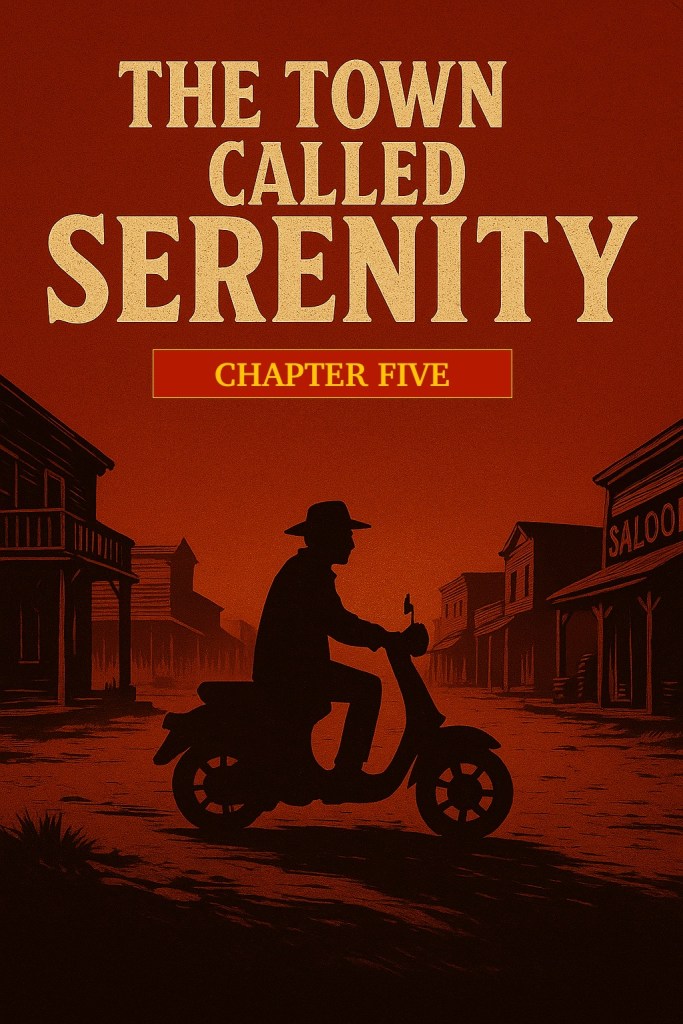
Deputy U.S. Marshal Chester Finch was not the image of frontier justice. He didn’t ride in on a stallion or a dusty pickup truck. No, Chester arrived in Serenity on a cherry-red moped. It’s the kind you’d see zipping through suburbs. You also find it parked at a vegan coffee shop. He wore regulation boots, a broad-brimmed hat, and a badge that gleamed as if it still held some hope.

The moped sputtered as it crossed the town’s crooked boundary, its two-cycle engine whining like a mosquito. Chester parked outside the Rusted Spur Saloon. It was half brothel, half bar, and all trouble. Eyes were already watching him from behind dusty windows and cracked doors.

On the porch, an older man with a shotgun across his knees spat into a tin can and said, 

“That there’s the funniest damn thing I’ve seen all week.”

Chester dismounted, kicked the stand down, and brushed the dust off his badge. 

“I’m lookin’ for the sheriff,”

He said.

The older man cackled. 

“Ain’t had a sheriff since Mad-Eye Morgan got shot for winnin’ too many poker hands. That was six months back.”

“Then I suppose I’m it now,” 

Chester replied, squinting at the sun. 

“By order of the U.S. Marshal Service, I’m here to restore order.”

The laughter that followed came from more than just the porch. It drifted from second-story windows and behind swinging doors. It came from a town. The town believed the law was something you threw in a ditch. It was buried with the rest of your conscience.

Chester knew this wouldn’t be easy. He knew his badge would draw more bullets than respect. But he also knew Serenity was on the brink of something worse. The federal files hinted at growing ties to outlaw syndicates. There were whispers of gun-running. A name kept popping up: Braddock Cain.

Cain ran Serenity like a private kingdom. Tall, scarred, and charming as a rattlesnake in a bowtie, he was the unspoken king of vice. No one crossed him unless they wanted to disappear.

Chester had crossed worse. Or so he told himself.

His first night in Serenity ended with a knife fight. There was a horse in a bar. The moped was set on fire by a drunk named Julep Jake, who claimed to be the mayor. Chester arrested him anyway. This unpopular move earned him a cracked rib and a bloodied lip. It also earned him the first sliver of respect from the few decent souls still buried in Serenity’s mess.

By morning, Chester had taken over an old sheriff’s office. It was half caved in and smelled of rot and regret. He nailed his badge to the door. It was symbolic more than anything. And in this town, symbols were dangerous.

He had come for peace, riding on two wheels and carrying a quiet resolve. He found a town at war with itself. It was a fight that takes more than a badge to win.

But Chester Finch wasn’t here for symbolism. He was here to end the laughing.

Coming Friday The Ten Part Story Begins On The Town Called Serenity

By Benjamin GroffMedia© | benandsteve.com | 2025 Truth Endures©

1–2 minutes

Summary:

The Town Called Serenity

A town lies in the lawless fringes of the state. It is so dangerous and rotten that only the most desperate or the most damned ever call it home. Serenity—where outlaws drink with murderers, where honest men bleed before their second breath, and where fear rides in daylight.

Enter Chester Finch, a disgraced Deputy U.S. Marshal with a forgotten past and a laughable ride—a moped. But Serenity’s not a place that cares about appearances. It cares about power. And when Chester arrives, he’s not just up against crooked sheriffs, backroom executions, and townsfolk too scared to speak. He’s walking into the jaws of Braddock Cain—a kingpin with an empire built on blackmail and buried secrets.

Chester uncovers the layers of corruption. He discovers a larger threat: Gallow. Gallow is a ghost from his past with no badge, no mercy, and no leash. When Gallow comes to cleanse Serenity in fire, Chester must rally the few brave enough to fight. He must stand in the middle of a street where justice hasn’t walked in years.

This is a tale of grit, guilt, redemption—and standing tall when hell itself tells you to kneel.

Watch for the first Chapter in a series of 10! You can find them here beginning May 30th, 2025!

Lessons from the street: Shattered Expectations

By Benjamin GroffMedia© | benandsteve.com | 2025 Truth Endures

3–4 minutes

“Shattered Expectations”

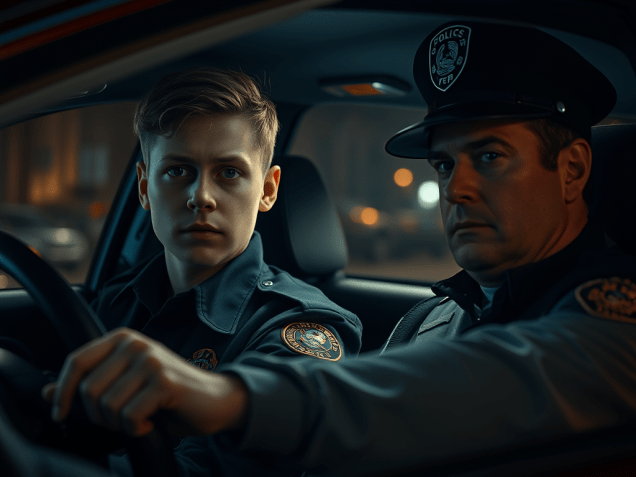
The night was calm in that tense, waiting way cops get used to. It was the quiet that makes your stomach coil. You know it won’t last. I was still new then, riding with my training officer. He was a crusty, seen-it-all type who barely spoke unless it was to point out something I’d done wrong. If I ever earned his approval, it’d be the same day pigs sprouted wings and took to the skies.

We cruised down a dark side street when I spotted a car weaving just enough to catch my attention. I hit the lights. It was a rust-bucket sedan packed with teenagers—maybe five of them, wide-eyed and frozen as I approached. My training officer stayed in the car. That was his style: throw the rookie in the water and see if he sank.

I had the driver step out. He was lanky, maybe seventeen. He wore his coat like a belt, tied around his waist. It seemed too warm for sleeves but too cool to ditch. As he stepped out, the hem of the coat caught on something. Then—clink clink clink—CRASH. Three or four bottles of beer tumbled from under the coat like traitors abandoning ship. They hit the pavement. The bottles shattered in an amber mess around our feet.

The kid froze. I froze. Then we both looked at the puddle between us. From where my training officer sat, it probably looked like I’d lost my temper and smashed the bottles myself. Great.

Before I processed the situation, the radio crackled with a priority call—armed robbery. We were the closest unit.

“Back in the car,”

Came the voice from the patrol unit.

I turned to the kids, who now looked ready to faint.

“Go to the police station. Wait there. I’ll meet you after this call.”

They didn’t argue. They didn’t run. I just nodded in frightened unison, which, in hindsight, has been the most surprising part of the whole thing.

We sped off. The call was a blur—adrenaline, sirens, controlled chaos. When it wrapped, I reminded my training officer about the teens.

“We need to swing by the station. The kids should be there.”

He gave me a skeptical glance.

“Right…”

But sure enough, there they were when we rolled up to the front of the station. All of them were sitting on the bench outside like they were waiting for a ride to Sunday school. Nobody had moved. Nobody had tried to hide or ditch the evidence.

I had them step inside one at a time. No citations. No handcuffs. It was just a firm talk I remembered getting when I was about their age. I laid it on thick—the “blood on the highway” speech, consequences, how lucky they were, all of it. They nodded solemnly. They got the message.

As we returned to the patrol car, my training officer gave me a sideways look.

“You know,”

He said,

“you didn’t have to bust the beer bottles like that. That was an asshole move.”

I laughed.

“That wasn’t me. The kid’s coat dragged them out. Total accident.”

He squinted at me like I was trying to sell him beachfront property in Kansas.

“Uh-huh,”

he said.

“Sure.”

I never did convince him. But a week later, during roll call, he told another officer I had

“a decent head on my shoulders.”

Coming from him, that was a standing ovation.

And me? I still smile every time I think of those kids. They sat quietly in front of the station, smelling like cheap beer and bad decisions. They were waiting for the rookie cop who didn’t quite screw it all up.

The Last Post: A Security Nightmare at Ridgewood

By Benjamin GroffMedia© | benandsteve.com | 2025 Truth Endures©

3–4 minutes

“The Last Post”

The night shift at Ridgewood Corporate Plaza was supposed to be quiet. Ten floors of empty offices, humming servers, and fluorescent lights dimmed for the janitors’ comfort. The tenants had gone home. The day’s buzz was replaced by the solemn hum of vending machines. There was also the distant thrum of traffic.

That’s when the trouble started.

At exactly 11:42 PM, a woman from the 8th floor called 911. Her voice trembled as she whispered into the phone from behind a copier machine:

“It’s the security guard. He’s –– drunk. He has a gun, and he’s playing with it.”

“Officer intoxicated w/ a gun!”

Officer Marquez and his partner were already in the area and responded within minutes. They pulled up to the building’s glassy facade. They saw the guard—an older man with a thick mustache and sun-lathered skin. His uniform hung loose on his wiry frame. He stood under the lobby lights like he was in a stage play.

He spun a revolver on his index finger like an old-time cowboy. His other hand clutched a bottle of whiskey that sloshed wildly with each twirl.

Pow! 

He shouted, aiming at an invisible outlaw in the corner.

“You see that, Tex? That’s the ol’ Ridgewood Quickdraw!”

Inside, a cluster of overnight IT workers and janitors peeked nervously from the elevator bank. Some held phones. Others gripped cleaning poles like makeshift weapons.

“Sir,” 

Officer Marquez called out, stepping carefully from the squad car. 

“Let’s talk. Put the gun down, okay?”

The guard, whose name tag read Terry,” stopped spinning the weapon. He looked over as if noticing the world around him.

“Well, I’ll be,” 

He slurred. 

“Company’s here.” 

He saluted with the barrel of the gun, then promptly dropped it. The weapon clattered to the floor. It spun in a circle like a coin. Finally, it came to a rest near a vending machine.

Marquez’s hand was already on his holster, but he didn’t draw. His partner approached slowly from the other side.

“Mr. Terry,” 

She said, calm but firm. 

“You’re scaring people. Can we take a seat over here and talk things through?”

Terry blinked at her, then at the people behind the glass, the ones he was supposed to protect.

“They don’t trust me,” 

He muttered. 

“Not anymore. It used to be a man with a badge, and a sidearm meant something.” 

He took another swig from the bottle, winced, and gave a soft, hollow chuckle. 

“Guess all that’s old-fashioned now.”

Marquez knelt beside the dropped gun and slid it back with his foot.

“It’s not about trust,” 

He said. 

“It’s about safety. Yours and theirs.”

Terry looked down at his trembling hands. The whiskey sloshed in the bottle, no longer steady. Finally, he let it drop, too, and it landed with a dull thunk.

He sat heavily on the bench by the entrance, slumping over like a man who hadn’t rested in decades. The officers approached, cuffed him gently, and led him out into the cool night.

As the police cruiser pulled away, the building behind him exhaled a collective sigh of relief.

Inside, someone from IT muttered, 

“I never want to see another cowboy movie again.”

But for years afterward, whenever a door creaked open late at night, or the lights flickered for no reason, the cleaning crew would joke:

“That’s just Terry, doing one last patrol.”

And everyone would pause. They were half amused and half uneasy. They remembered the night the security guard became the danger he was supposed to guard against.

The Heartfelt Impact of Loss in Law Enforcement

By Benjamin GroffMedia© | benandsteve.com | 2025 Truth Endures©

3–4 minutes

JOHN BLAZEK

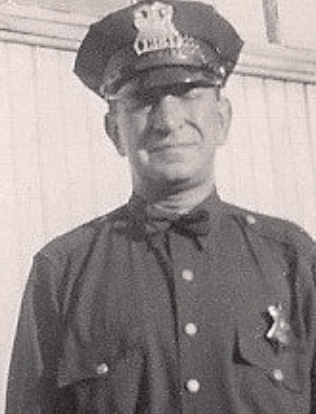
My grandfather had a host of brothers. Their father, Ulrich Groff Jr., had been married twice—the second time after his first wife died. Among my grandfather’s many brothers was one named Frank. In the family, he was known as Grand Uncle Frank or Great Uncle Frank, depending on who was telling. Frank lived a colorful, hard-worn life. He was the one who taught me how to ride a bike and always had a funny story to tell. He was raised on a farm. He worked odd jobs in his youth. Eventually, he found a steady calling with the Chicago Police Department.

Frank’s career on the force was mostly uneventful, at least by police standards. He would occasionally talk about the small-time crooks. He mentioned the drunks and the desperate people. He and his partner had to haul these people off to jail. But there was one story he told with a quiet solemnity—one that never left him. It was a time when being a police officer was a tough job, especially in a city like Chicago. The streets were rough, and the criminals should not be taken lightly.

Frank Groff

It was the night his partner died.

According to Frank, it had been a typical shift. He and his partner had picked up a couple of rowdy men, causing trouble. One of them shoved Frank’s partner during the scuffle. The man was quickly subdued and locked up. As far as Frank knew, it was nothing out of the ordinary. They had handled far worse and walked away without a scratch.

But the next morning, a knock at Frank’s door brought grim news. Fellow officers informed him that his partner, John Blazek, had passed away during the night.

John had hit his head during the scuffle—no one thought much of it at the time, including John himself. Like many men of his era, he brushed it off, finished his shift, and went home. Officer Blazek called a fellow officer to give him a ride. He didn’t feel quite right. Still, no one suspected anything serious. He went to bed and never woke up. The suddenness of his passing left everyone in shock and disbelief.

The official record read:

John Blazek

Patrolman John Blazek died after suffering a head injury. He fell or was pushed to the floor inside the 22nd District’s cell room. This incident occurred at 943 West Maxwell Street the prior night. He did not realize he had suffered a skull fracture. He attempted to go home at the end of his shift at 8:00 am. Blazek did not walk home and called another officer to pick him up. Once he got home, his condition worsened. He passed away the next day from the head injury.

Patrolman Blazek was a U.S. Army veteran of World War I who had served with the Chicago Police Department for 26 years. His sudden and unexpected death left a void in the community. His wife and two sons survive him.

Frank never quite recovered from that night. Though he stayed on the force, something in him changed. He stopped talking about the job as much. When he did, it was with a heavier voice. He had arrested many criminals and survived several street scuffles. Yet, the quiet death of his partner haunted him the most. They didn’t see it coming. He retired a few years later, and we see that the incident had taken a toll on him. He spent his days quietly, often lost in thought.

Years later, after Frank’s retirement, we found a worn copy of the police report. It was on John Blazek’s death and among his things. It was folded carefully into the pages of his Bible. Eventually, Frank passed on. On the back, in his handwriting, were the words:

“We don’t always know the moment something changes us. But we carry it. Always.”

Confronting Darkness: Stories from the Beat

Benjamin GroffMedia© | benandsteve.com | 2025 Truth Endures©

2–3 minutes

In The Dark Of Night

When I began my career in law enforcement, I experienced many “firsts.” One of the earliest was being assigned to a beat. I patrolled the alleys and streets of downtown, checking businesses and parks at night. The darkness was deep and constant. If fear crept in, the silence can feel almost haunting at times.

But I never let the shadows spook me. Not the sudden dash of a stray cat nor the wind rattling loose tin from an awning overhead. For a long time, I found nothing out of the ordinary. That is, until one night.

It happened in the park, beneath a pavilion by the river’s edge. I noticed someone lying across a picnic table. At nearly 2 a.m., the park was supposed to be empty. I stayed alert as I approached. I was constantly aware that people didn’t always travel alone. I didn’t want to be caught off guard.

As I approached, I spotted a can of spray paint beside her. A streak of glossy red paint coated her nose and mouth, dripping down her chin. She was a woman, and visibly pregnant, nearly full-term by the look of her.


I tried to wake her, but she didn’t respond. Her pulse was faint. Luckily, I had just been issued a portable radio—until recently, we’d relied on call boxes for communication. The radio gave me direct access to headquarters.

I keyed the mic and said,

“I need an ambulance under the pavilion at the river’s edge entrance. I have an unconscious female subject who appears to have been huffing paint. She’s approximately nine months pregnant.”

Headquarters confirmed and dispatched an ambulance promptly. Once it arrived, I assisted the paramedics. The woman was transported to a local hospital and then transferred to a larger facility for specialized care.


While searching the area, I found someone nearby who had passed out by the riverbank. I managed to rouse him. He was a man, around 32 years old, clearly intoxicated and unsteady. I placed him under arrest for public intoxication.

As I helped him up to the road, he turned to me and asked quietly,

“Is she going to be okay? I told her not to do that–– but she wouldn’t listen. That’s my baby, you know? I hope she’s alright.”

“Yes,”

I said.

I said,

“I hope the baby is okay, too. I’ve arranged a ride and a safe place for you to sleep tonight.”

The transport unit pulled up. As he climbed in, he paused, looked at me, and said,

“I’m glad you found us. It has saved both of us. Thank you!”

I nodded and replied,

“You’re welcome, try to get some sleep.”

It was one of the few times someone going to jail thanked me for stepping into their life. There would be other moments like this, but not many involving an unborn child.

I later learned the mother’s actions had not affected the baby. She had been admitted for addiction treatment, and hopefully, she stayed through the delivery and beyond. I never saw her again. I often think of that night. I think of how close things came to ending differently. Sometimes, just showing up can change everything.

Reminiscences

A True Story By: Benjamin Groff© Groff Media 2024© Truth Endures

When the youngest officer on duty is the only resource available, the weight of responsibility rests heavily on his shoulders, underscoring the significance of his role.

Our town’s police force was small, with just twelve officers. Eight were assigned to the streets, patrolling, responding to calls, controlling traffic, and maintaining visibility. The remaining four worked in the office, answering phones, dispatching calls over the radio, and managing the jail’s inmates. The officers rotated between desk and patrol duties, ensuring they stayed sharp and well-versed in all aspects of the job.

Most shifts saw only one officer on patrol and one in the office. This lean staffing was the backdrop when I first joined the police department and met Chief Marion Toehay Jr., known to me simply as Junior or Chief.

Junior and I formed a friendship that spanned over fifty years. Together, we witnessed the stark realities of life and death, often arriving too late to save those in peril. The helplessness we felt in those moments was crushing, made worse by the accusing stares of grieving families who saw us as their last hope.

One such event took place at a State Park east of the City. We arrived in a secluded area and noticed a boat stalled in the middle of the lake. The people onboard were waving and shouting, but their words got lost in the distance. As we waved back, trying to assess the situation, it became clear the boat was sinking.

We shouted for them to stay with the boat, realizing quickly that we couldn’t reach them from where we stood. We jumped back into the car and raced toward the dam, sirens blaring and lights flashing. Junior was on the radio, desperately calling for the Lake Patrol or anyone with a boat to respond. But the only way to reach the sinking boat was to drive fifteen miles around the lake on rural roads.

When we arrived, only the boat’s nose remained visible, bobbing on the water. A man clung to it, the sole survivor. He told us that a father and his two children had drowned, trying to swim to shore instead of staying with the boat.

At that time, the Oklahoma Lake Patrol was often assigned to different lakes, a reality dictated by tight state budgets. Law enforcement presence on lakes was inconsistent, as it may still be today in some areas. The Lake Patrol recovered the bodies of the father and his children that night and the following day.

Junior and I found ourselves witnessing several drownings, often by tragic coincidence, whenever we were near the lake or river. It seemed almost inevitable.

The department was also where I encountered my first homicide—a brutal murder-suicide that has stayed with me. A couple going through a divorce ended their marriage in violence. The husband had hidden in their home, and when his wife returned to gather belongings, he slipped up behind her and shot her in the back of the head. She crumpled to the floor, unaware of his presence or intent.

He then went to the bedroom, entered the ensuite, and used a shotgun loaded with double-ought buckshot to end his own life. The blast obliterated his face, leaving a gruesome scene with skull fragments embedded in the ceiling and blood splattered across the walls. Fingerprints confirmed his identity, but everyone in town knew who he was.

That was my first assignment at 18, in a department stretched thin. A pow-wow was happening in town, and every officer was working overtime. The City’s ambulance had to transport a critically ill prisoner to a hospital 50 miles away, and someone had to accompany them. It fell to me. Despite having just finished a 12-hour shift, I boarded the ambulance at 7:00 AM, the roads shrouded in fog as we responded to Code 3. The nurse was upset that I’d handcuffed the combative prisoner to the stretcher, and the driver got lost on the way. It was chaotic, but in many ways, it was one of the best times of my life.

that Man Is Dead! a small victory in the shadow of a dark night

A Story By: Benjamin Groff© Groff Media 2024© Groff Media

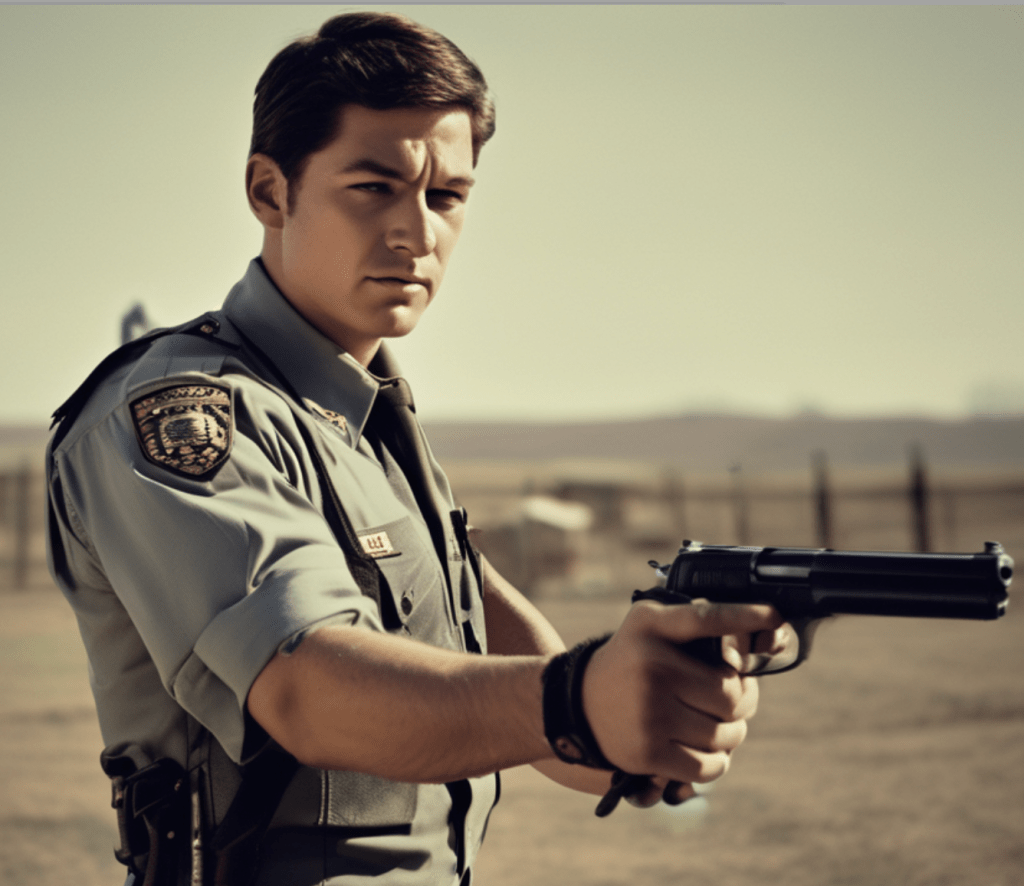
It was a windy afternoon, and the Kid decided to get some practice in at the shooting range before his night shift began at 8:00 PM. He had picked up a couple of bags of reloaded .38s for his .357 Magnum and figured he could get through them if he hurried. The range was just beyond the gates at the end of the city trailer park, where he and other police officers lived as a perk of working for the city.

As he drove down the lane towards the range, he noticed a small plane taking off to the north from the nearby municipal airport. He parked his car at the furthest shooting post, grabbed a paper target from the back seat, and stapled it to a board in the turnstile. Returning to the ten-yard line, he swapped out his duty loads for the reloads and closed the cylinder. Using the post for support, he lined up his shot but paused, holstering his gun instead.

He needed to practice reloading without looking, a crucial skill in a high-stress situation. He loaded his belt’s bullet loops, checked his watch, and started when the second hand hit twelve. Six shots, unload, reload, six more shots. But when he looked down, twenty seconds had passed, and he was off-target.

“Shit. Double shit!”

he yelled, frustration bubbling over.

Just then, two marked patrol units and the Chief’s car pulled up behind the range. The Kid knew that when others arrived, he had to stop shooting. Were they there to mock his poor shooting? No, they wanted to practice too. Who was going to run the tower? One of the officers asked, and the Chief responded, 

“I’ve got it covered!”

The Kid muttered to himself, annoyed. This evening was supposed to be his time. Now, everyone would see how bad his eyesight had gotten. The officers set up new targets and returned to the ten-yard line.

The Chief’s voice cracked through the speaker: 

“We’re shooting six, reloading six, shooting six, reloading six, shooting six, and reloading six. Then, leave your cylinder open. Ready on the Right, Ready on The Left, Ready on The Firing Line—fire!”

The range erupted in gunfire, reminiscent of Melvin Purvis taking down Pretty Boy Floyd in the cornfield. The Kid managed to get through his first loop, fire again, reload, and leave his cylinder open just as the others finished. They moved forward to check their targets.

“Now, gentlemen,” 

The Chief announced, 

“we will shoot from the hip, reload, and holster.”

“Ready on the left, ready on the right, ready on the firing line. Fire!”

Six shots rang out almost in unison, like something out of Gunsmoke. The officers reloaded and holstered their weapons.

Then the Chief called out, 

“Lanes four and five, you’re marked for looking while loading your ammo.”

The officers on lanes four and five protested, 

“Chief, you’re killing us!”

The Chief looking at the officers ––

“No, officers,”

the Chief replied with a sly grin, 

“I’m keeping you alive.”

As the banter continued, a call came over the car radio, 

“Headquarters to all available units. Unit 203 requests backup at SIR-DIXIE QUICK-STOP on a 10-48. Three subjects in a vehicle.”

A 10-48 indicated a National Crime Information Center Want or Warrant on the vehicle or its occupants. The practice ended abruptly as everyone rushed to their cars, eager to respond.

Knowing the city’s streets like the back of his hand, the Kid took a shortcut through alleys and arrived at the Quick Stop within minutes. By the time the other officers arrived, the Kid and the officer on the scene had all three suspects handcuffed and in the patrol unit.

It turned out the first suspect, identified as Ed, was wanted in Texas for nearly beating a State Trooper to death and tying him to a barbed-wire fence. The second suspect, Poncho, had a Tucumcari, New Mexico, address and was wanted for questioning in a murder. The third, known only as Thistle, was simply drunk and likely would have been killed by the other two had he not been arrested. All three got booked on public intoxication charges, with more serious charges pending confirmation from the respective states.

The Kid had been on desk duty after surgery a month earlier, so despite his initial involvement, he got relegated to working the radio and tending to the jail for the rest of the night. The shift was uneventful, with only the usual disturbance and prowler calls.

The Kid had a routine of checking the jail cells at irregular intervals—never on the hour, always keeping the prisoners guessing. At 2:15 AM, he made an unscheduled check. He opened the drunk tank window and saw the three occupants spaced apart: Poncho on the south wall, Ed against the west cell bars, and Thistle on the north side. Above Ed, a shirt was tied to the bars, seemingly his.

The Kid’s first thought was that the shirt might be bait to lure him in. But as he examined the scene, it appeared all three men were sleeping. He returned to the radio office and called his Lieutenant, explaining the situation. They got back to the cell together, and the Lieutenant instructed the Kid to untie the shirt. As the Kid began to do so, the Lieutenant bumped him and whispered,

“That man is dead. Put the shirt back.”

The Kid complied, leaving the shirt as he had found it. They moved the two living prisoners to separate cells and locked the tank holding Ed. The Kid, the only one with the key, went downstairs to call detectives, the Chief, and an ambulance.

The fire department, located across the hallway, had already been roused by the commotion. The assistant fire chief speculated that the incident might have been a failed sexual exploitation attempt that ended in death. When the ambulance arrived, the task of bringing a dead body down the stairs was both problematic and unsettling.

Within twenty-four hours, the Oklahoma Bureau of Investigation (OSBI) arrived, and obscene, harassing, and threatening phone calls began pouring into the station. After a thorough investigation by the OSBI, local sheriff’s department, and media scrutiny, the exact cause of Ed’s death remained a mystery.

Some speculated that one of the other prisoners had helped Ed end his life, while others thought he might have done it himself, with the knot slipping loose. In the end, the Kid learned a hard lesson: sometimes, even a villain meets a dead end.

But there was a silver lining. In the aftermath, the Kid finally mastered the skill he had been struggling with—reloading his revolver from his loops without looking—a small victory in the shadow of a dark night.

The ENDING – Monday Morning Was A Killer For One Neighborhood – Ding Dong

A Story By Benjamin Groff© Groff Media2024© Truth Endures

It was a Monday morning, and everyone was starting their week. Neighbors were running about getting to their cars to hit the road and begin to work. John and Mary Wagner were still at home. Both had stayed in their vehicles since arriving home for the weekend, but no one noticed. It wasn’t unusual. They were known for locking their doors on weekends and never leaving the house, so staying home all weekend didn’t signal any concerns.

However, on Monday morning, John was usually the first to leave. He was out of the house and on the road by 6:00 AM to beat rush hour traffic, and Mary would leave by 7:00 AM with their two children, Max and Terri. So what was happening that day? The neighbor two doors down was a lady named Alice Morgan. She watched the neighborhood, curious about the Wagners’ home. 

Why aren’t they moving about this Monday? She asked herself

As the neighborhood drivers leaving for work thinned out, Alice meandered to the Wagners. Walking to the front door, she peered through the front bay window and saw no one inside. She went on up to the door and rang the bell, 

DING DONG, BING, BING, DING, DING, BONG

Alice thought to herself, what a weird doorbell ring. She rang it again to listen to the rhythm,

DING, DONG, BING, BING, DING, DING, BONG

No one came to the door. Curious about the cars remaining in the drive, Alice went to look inside them to see if there was anything strange about them.

Walking under an A-Frame carport, she saw two people in each car. She went up to the first vehicle, a 2017 Ford Pickup, and started to knock on the window before seeing that John Wagner appeared to be stone dead sitting behind its driver’s wheel. He had what looked like a gunshot to his forehead, and a trail of dried blood ran down his head to his chest. Startled, she ran over to Mary’s vehicle to find that Mary also appeared to have been shot in the same manner. The two kids lay dead in the back seat of Mary’s car, a blue 2020 Volvo XC60. Seeing this, Alice began screaming bloody murder and ran down the street, screaming louder and louder as she went toward her home. 

Once inside her home, Alice called 911 and told the operator that she had just found four dead people at her neighbor’s house, and she thought someone murdered four people. The 911 operator asked why she felt someone murdered the four people, and she said they had all had a single gunshot to the forehead and laid over in a car at their home.

Within two minutes, the City of Appleton Police Department had police officers on the scene. Alice Morgan was in the middle of the crime scene, pointing to the dead bodies and explaining the ding-dong doorbell to police officers. They asked her to sit in a patrol unit so they could get a statement from her in writing and a recording of her saying how and what she had discovered. They put her in the back of a patrol unit while she was still talking non-stop, closed the door, and walked away.

Burt Johnson was the lead detective assigned to investigate what had happened to the family. 

A seasoned detective with a knack for piecing together even the most cryptic of puzzles, Burt Johnson arrived on the scene shortly after the first responders. He assessed the surroundings with a practiced eye, noting the position of the vehicles, the broken glass, and the eerie stillness that hung over the Wagner household.

The forensics team was already at work, taking samples and photographing the scene. Burt walked over to the patrol unit where Alice Morgan sat, her face pale and her hands trembling. He opened the door and crouched down to her level.

“Alice, I’m Detective Johnson. Can you walk me through what you saw this morning?”

Alice took a deep breath and recounted her morning, the odd stillness, the peculiar doorbell chime, and the horrifying discovery of the bodies. Burt listened intently, nodding occasionally.

“Thank you, Alice. You’ve been accommodating,” he said, gently patting her hand. “We’ll get someone to take you home soon. For now, try to relax.”

Burt then moved to the vehicles, examining the positions of the bodies. The gunshot wounds were precise, execution-style. These shootings were not random acts of violence; someone put planning into carrying them out. He noted the positions of the vehicles, the lack of struggle, and the fact that the shooter targeted both parents and children.

A uniformed officer approached Burt. “Detective, we found something in the mailbox. It’s an envelope addressed to you.”

Burt’s eyebrows shot up. He took the envelope, carefully opened it, and pulled out a letter. The handwriting was neat, almost meticulous.

“Detective Johnson, You’re getting warmer. This family was just the beginning. Find me before I find my next target.

  • “The Avenger”

Burt felt a chill run down his spine. The Avenger was a name he was all too familiar with – a shadowy figure who had been linked to several high-profile murders, always leaving behind cryptic notes and taunting the police.

Back at the precinct, Burt convened his team. They pored over the evidence, looking for clues that might lead them to the Avenger. The forensic team reported that no fingerprints or DNA were left behind, but they had found traces of a rare chemical compound used in industrial cleaning agents.

Burt’s mind raced. He remembered a case from years ago involving a disgruntled former employee of an industrial cleaning company. The man, Thomas Greene, had a history of mental instability and a vendetta against those he felt had wronged him. Could Thomas be the Avenger?

With a possible suspect in mind, Burt and his team delved into Thomas Greene’s past, uncovering a pattern of behavior that matched the Avenger’s MO. They also discovered that Thomas recently had been in Appleton.

A breakthrough came when a witness reported seeing a man matching Thomas’s description near the Wagner’s home on Sunday night. Burt mobilized his team, and they tracked Thomas’s movements through security footage and witness statements.

Their efforts paid off. They found Thomas hiding in an abandoned warehouse on the outskirts of town. Burt and his team moved in and apprehended him without incident.

Back at the precinct, under intense interrogation, Thomas eventually broke down. He confessed to the murders, revealing that he had been following the Wagner family for weeks, meticulously planning their deaths. He saw himself as an avenger, righting perceived wrongs with his twisted sense of justice.

The Appleton community breathed a sigh of relief as news of Thomas Greene’s arrest spread. Burt, exhausted but relieved, knew there would be more work to ensure Thomas was prosecuted and put away for good. But for now, he could take comfort in justice being served for the Wagner family.

Still shaken but grateful, Alice Morgan found solace in knowing that her vigilance had played a crucial role in solving the case. The neighborhood, once again, felt safe.

And as Burt Johnson left the precinct that night, he couldn’t help but think about the families still haunted by the Avenger’s previous crimes. He promised to continue his pursuit of justice, no matter where it led him.