The Guardians of Christmas Eve

Groff Media 2024© Truth Endures IMDbPro

Presented by benandsteve.com By: Benjamin Groff II©
3–4 minutes

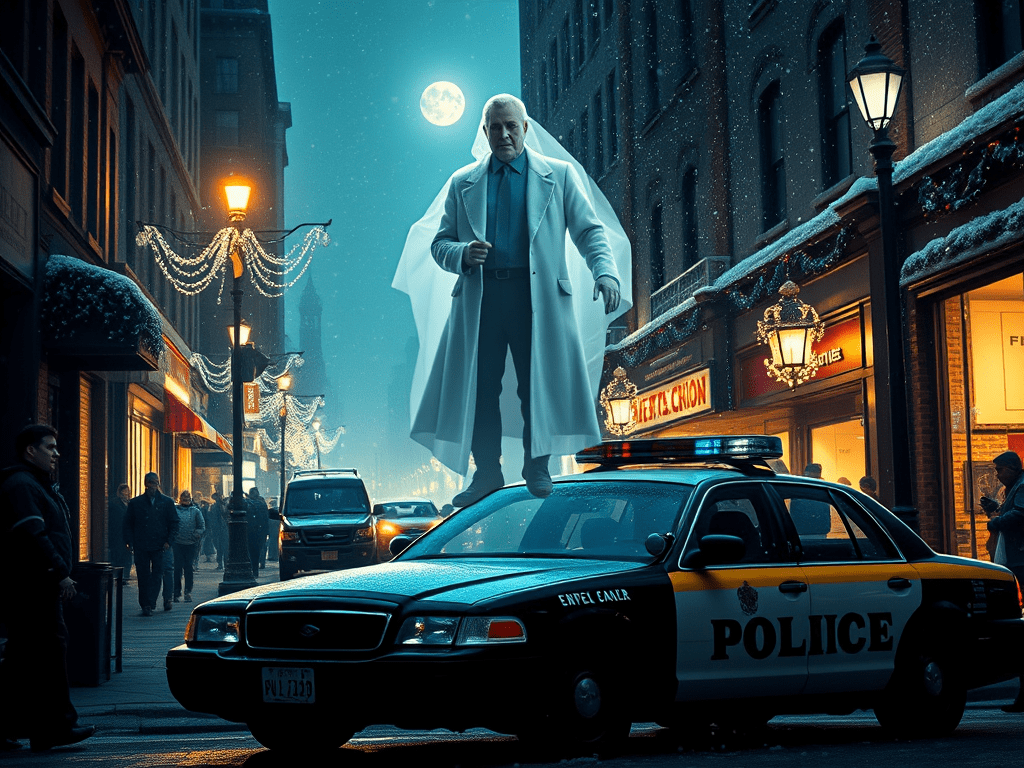
In the heart of the bustling city, the frigid December air carried the soft hum of holiday cheer. Festive lights adorned streetlamps, casting warm glows onto the snow-dusted streets. For the officers of the 8th Precinct, Christmas Eve was far from quiet. Calls came in relentlessly: domestic disputes, stranded travelers, and even a wayward reindeer reported near the city park. These dedicated officers were on duty, ready to serve and protect.

What the officers didn’t know was that they had three spectral protectors watching over them—The Guardians of Christmas Eve.

Each of these ghostly policemen had once served the city. They were bound by duty. A deep sense of loyalty held their spirits. They lingered to make sure that no harm would come to those who now walked the beat.


Inspector Miles Hanley

Miles Hanley was a tall and imposing figure. He had been the precinct’s first chief when the station was founded in the late 1800s. Known for his wisdom, he fiercely protected his officers. He carried his ghostly silver pocket watch. He used it to guide the others through the city. On this night, Hanley floated above a lone patrol car. It was parked at the edge of a dark alley. His translucent form shimmered in the moonlight.

“Johnson’s heading into a bad spot,”

Hanley muttered, watching the young officer approach a shadowy figure rummaging through garbage bins. With a flick of his watch, he whispered through the veil of time, nudging Johnson’s instincts. The officer hesitated, then called for backup—averting a potential ambush. Hanley grinned.

“Still got it.”


Officer Rosie McKinney

Rosie, affectionately called “Mama Mac” by her peers, had patrolled the city during the 1940s. She had an uncanny knack for reading people, even in death. Tonight, she hovered near a busy intersection where Officer Emily Torres was directing traffic midst a chaotic pile-up.

“Stay sharp, Emily,”

Rosie murmured, spotting a distracted driver barreling toward the scene. With a wave of her ethereal baton, she sent a gust of icy wind straight into the driver’s face. The man slammed on his brakes just in time, his car skidding to a halt inches from the officer. Rosie chuckled, tipping her ghostly hat. “That’s one less hospital visit tonight.”


Detective Lou Vargas

Lou had been a beloved detective in the 1970s, known for his quick wit and unshakable resolve. He now roamed the precinct’s cold case archives, whispering clues to frustrated officers. But tonight, Lou focused on Officer Brandon Lee. Officer Lee had just been called to investigate a suspicious package left near a crowded shopping district.

As Brandon approached the package, Lou materialized briefly behind him, a shadowy whisper in the winter night. “Check the wires, kid. Look left before you kneel.” Obeying the faint warning in his gut, Brandon discovered the package was harmless—a forgotten Christmas gift. Still, he felt the hairs on his neck stand like someone had been there with him.


A Christmas Morning Promise

As dawn broke over the city, the officers returned to the precinct, exhausted but safe. Unseen by human eyes, Miles, Rosie, and Lou gathered on the station’s rooftop, gazing at the snow-covered streets below.

“We did good,”

Lou said, leaning on his ghostly cane.

“Not a single officer lost,” Rosie added softly.

Miles held up his pocket watch, the spectral clock hands freezing as the sun rose. “Until next year,” he said, and the three faded into the morning mist.

Below, Officer Torres rubbed her arms against the chill. “Did you feel that?” she asked Officer Lee.

“Yeah,” he replied, staring at the horizon. “Like someone was watching over us.”

And so they were.
Haunted Memories: The Ghosts of Groff House

GROFF MEDIA 2024© TRUTH ENDURES IMDBPRO

Presented by benandsteve.com By: Benjamin Groff II©s

5–7 minutes

The Old Groff House
The Groff House first moved to Binger from Anadarko, Ok

The old farmhouse was to be our new home. Moving from the city to the farm felt like an adventure, but the others didn’t share my enthusiasm. They struggled with giving up indoor plumbing, a telephone, and dependable electricity.


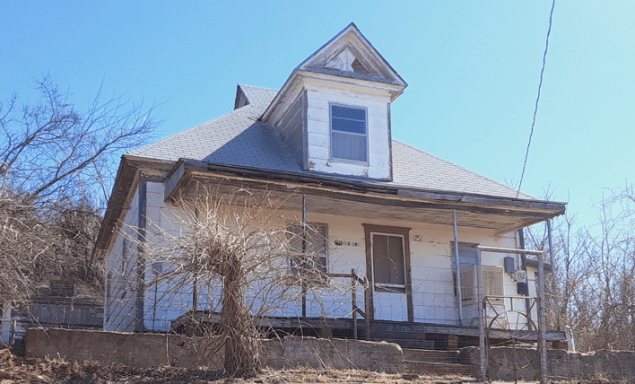
For my father, though, this was the beginning of a dream—a quarter-horse ranch of his own. The house had been moved from another town and placed onto a block foundation. Uneven concrete blocks, haphazardly arranged, served as makeshift steps leading up to the front door. The door was old, with a large square glass pane in the upper half and weathered wood below. Layers of peeling white paint flaked away inside and out, revealing the scars of time.


But what stood out most was the screen door. It had a single spring that pulled it shut with a sharp clap. This sound still echoes in my memory. Above it, a simple porch overhang provided some protection from the rain. It offered slightly less protection from the sun. The overhang always seemed too small for its purpose.


I was the youngest of six children—or seven, depending on how you counted. My mother’s youngest brother, Uncle Ricky, practically lived with us. He had been raised alongside my older brothers, and I always considered him one of us. These memories of our close-knit family bring a sense of nostalgia and warmth.


My sisters and I stayed close to the house initially. Our parents were wary of hidden dangers lurking in the fields and pastures. Rusted cans, barbed wire, and remnants of years gone by littered the property. My brothers were tasked with clearing the land, ensuring no horse would stumble upon a forgotten hazard. But even without the safety excuse, the grown-ups didn’t need us underfoot as they worked to build barns and fences.


The house felt enormous to my sisters and me. It had only four rooms downstairs. There was one large room upstairs. The ground floor had interconnected doorways. These doorways allowed us to run in endless circles around the stairwell. The kitchen, with its worn linoleum floor and a large propane stove, was the heart of the home. The living room had threadbare furniture. Its windows had seen better days. It was where we gathered in the evenings. We were expected to behave when our parents were home, but the house became our playground when they weren’t.


One evening, my oldest sister shared a story she had heard at school. A man, unknown to us, had been found dead in the upstairs room. Hung himself, they said. His wife had passed away downstairs, and he had followed soon after. My younger sister and I absorbed the tale. We were unsure whether it was truth or fiction. Nonetheless, it rooted itself in our minds.


My parents’ conversations surfaced bits and pieces of the house’s history. They assured us no one had died there—at least, not to their knowledge. But then came the phrase that stuck with us:

“But if they did, there’s nothing to worry about.”

It was as if they had confirmed it without confirming it. They planted just enough doubt to keep our imaginations running wild.


And then, one night, something happened that we would never forget.


It had been an unbearably hot day, the humidity clinging to us like a second skin. We had no air conditioning. We relied on a single box fan upstairs for the boys at night. During the day, we moved it downstairs. As evening fell, a storm rolled in. The sky darkened, thunder rumbled, and the first lightning strike knocked out our power.


We huddled by the screen door, watching the storm unfold. Rain poured down in sheets, lightning flashing every few seconds. We saw him in one brilliant burst of light—a rider on a white horse just beyond our fence.


My oldest sister called for our mother.

“There’s a man out on the road! Should we call him in?”


The lightning illuminated him again. The horse and rider are stark white, motionless against the downpour. They turned into our driveway and stopped at the yard gate. The rider tilted his head, water spilling off the brim of his hat, but he did not move.


We yelled for our parents, urging them to look. The rain intensified, drumming against the roof. And then, in the next flash of lightning—he was gone. No retreating figure, no horse galloping away. Just empty, rain-slicked ground where he had stood.


That wasn’t the last strange occurrence. The memory of the white horse and its rider haunted us, lingering in the corners of our minds. We couldn’t shake the feeling that we were not alone in the house. We felt that unseen presences were walking the same halls.


The dirt roads in Oklahoma turn sandy in the summer. They capture every footprint—deer, bobcat, rabbit, and occasional lost traveler. One morning, waiting for the school bus, we saw her.
A tiny older woman walked at a steady pace past our house. We called out a greeting, but she didn’t acknowledge us. The school bus approached from behind, and I considered asking the driver to stop and offer her a ride.


But when we reached the road, she was gone.


What we didn’t see was more unsettling than her disappearance—tracks. There were no prints in the soft sand, no sign that anyone had walked there.


I looked at my sisters. One of them whispered,

“Don’t say anything. They’ll think we’re crazy.”


Later, an old-timer visited us often. He told us about a train depot standing across the road long before we arrived. He suspected that some soldiers returning from World War I, whose bodies were unclaimed, never left that station. He spoke of ghostly figures wandering the fields at night. Strange sounds echoed from the direction of the old depot. His stories added another layer of mystery to our already haunted farmhouse.


Over the years, my father and I rode our horses through the backcountry. We found old graves. Some were Indian graves, others belonged to settlers, and some were marked only by time-worn stones. One day, I asked my father if it was sad that they had been forgotten.


He looked at me thoughtfully.

“They’re remembered the way they’re meant to be. You don’t need a grave to be remembered. It’s what you do while you’re alive that matters.”


I understood what he meant, but some of me still felt sorrow for those lost souls. Maybe they weren’t as alone as I thought. They still walked in the rain, strolled along dirt roads, or found another way to be remembered. The mystery of their existence lingers, leaving us with more questions than answers.