The Other Laws That Are Weird And Strange That Snag People!

2–4 minutes

When Weird Laws Get Real: Strange Rules That Actually Snagged People

We’ve all heard about oddball laws that lurk in dusty legal books. Some examples include bans on whistling at canaries or outlawing whale hunting in landlocked states. Most sound like punchlines, not punishments. But here’s the kicker: some of America’s strangest laws have actually been enforced. Real people have faced consequences because of them.


In Woburn, Massachusetts, city ordinances once required that bar patrons stay seated while drinking. Sounds silly? Local authorities enforced it. The rule came from strict licensing codes. Bar owners had to police their customers. A little too much standing around with a pint trigger fines or even a license suspension. Imagine being told to “sit down or get out” just for holding your beer upright!


In Alaska, it’s illegal for someone who is intoxicated to stay in a bar. That’s right: you can’t be drunk in a place that exists to serve alcohol. Police actively enforce this law. They have arrested bar patrons. They have even fined bartenders for allowing visibly drunk people to hang around. It’s like a bouncer’s dream written into law, with teeth.


Here’s one that isn’t just quirky—it’s downright controversial. Civil forfeiture laws let police seize property, like cars or cash, without ever charging the owner with a crime. It’s happened across the country. Regular folks are stripped of thousands of dollars. They have to fight uphill battles in court just to get their property back. Technically legal, often enforced, and more than a little surreal.


Another group that bumps into odd laws are self-proclaimed “sovereign citizens.” These are individuals who claim they’re not bound by U.S. laws, often flooding courts with bizarre paperwork or filing fake liens on judges and officials. Sounds like a fringe hobby—until the arrests come down. Many sovereign citizens have faced jail time for fraud, impersonation, or obstruction. Turns out the government doesn’t take kindly to “opting out” of its authority.


In 1997, Chandler, Arizona, became the stage for one of the strangest law enforcement crackdowns in modern memory. Police, alongside Border Patrol, conducted sweeps that targeted hundreds of people suspected of being undocumented immigrants. The problem? Many of those arrested were actually legal residents or citizens. What was meant to be law enforcement turned into a scandal over racial profiling and civil rights.


It’s easy to laugh at quirky laws about dogs’ hair or Sunday shopping bans. But when enforced, even the strangest rules can shape lives, communities, and freedoms. These cases remind us that laws, no matter how odd they sound, carry real consequences. Sometimes, the difference between comedy and tragedy is simply whether the rulebook is dusted off.


About the Author:

Benjamin Groff is a former police officer and radio news anchor. He has hosted programs for CNN and ABC News affiliates in Colorado and Wyoming. His career in law enforcement began in 1980 and lasted more than two decades. This gave him first hand insight into the criminal mind and public safety. Moreover, it provided him with an understanding of the human stories that often go untold. His writing draws on these experiences, blending street-level truth with a journalist’s eye for the bigger picture.

By Benjamin GroffMedia© | benandsteve.com | 2025 

Strange Laws Still on the Books in the US

2–3 minutes

Laughable Laws Still Technically Legal in the U.S.

Believe it or not, there are plenty of bizarre laws still sitting in state and local legal codes. Some are outdated, while others are downright absurd. Some rules originated to deal with bygone concerns. Others weren’t removed with the times. These rules range from amusing to downright perplexing.


A Few Noteworthy Oddities

  • No dog hair for sale in Delaware. If you collect your pet’s hair, and you try to sell it, you will face a hefty fine. The fine is up to $2,400. (1).
  • Do not whistle for your canary in Berkeley before 7 AM. Ornithophiles, beware. Making that whistle too early can land you in legal hot water. (2).
  • Cannibalism loophole in Idaho? — It sounds bizarre, but Idaho’s law specifies that non-consensual cannibalism is illegal. This implies that if someone consents, the law doesn’t technically apply (3).
  • Selling silly string in Meriden, Connecticut is regulated. It must be locked up in stores. Anyone under 18 can’t buy it (4).
  • Helium balloon limits also apply in Connecticut. You can earn a $75 fine. This fine is incurred by releasing more than 10 balloons in 24 hours. (5).
  • The “pickle must bounce” myth — This rule is touted as a real law. In reality, it is mostly an urban legend with no legal basis. (6).
  • Sink scrubbing is outlawed in Baltimore. Cleaning your sink is seen as pollution under local regulations. (7).
  • Saying goodbye to blue laws — In Bergen County, NJ, malls are shut on Sundays. This is due to strict retail blue laws. These laws are a holdover from colonial-era legislation (8).
  • Whaling ban in landlocked Utah — Yes, it was once illegal to hunt whales there—though that law was repealed (9).

Why They Still Exist

These odd laws often stem from cultural quirks or outdated public health concerns. Many are no longer enforced, existing more as quirky relics than current legal threats (10). But they serve as a humorous reminder: sometimes our legal system moves at a glacial pace.

About the Author:

Benjamin Groff is a former police officer and radio news anchor. He has hosted programs for CNN and ABC News affiliates in Colorado and Wyoming. His career in law enforcement began in 1980 and lasted more than two decades. This gave him first hand insight into the criminal mind and public safety. Moreover, it provided him with an understanding of the human stories that often go untold. His writing draws on these experiences, blending street-level truth with a journalist’s eye for the bigger picture.

By Benjamin GroffMedia© | benandsteve.com | 2025 
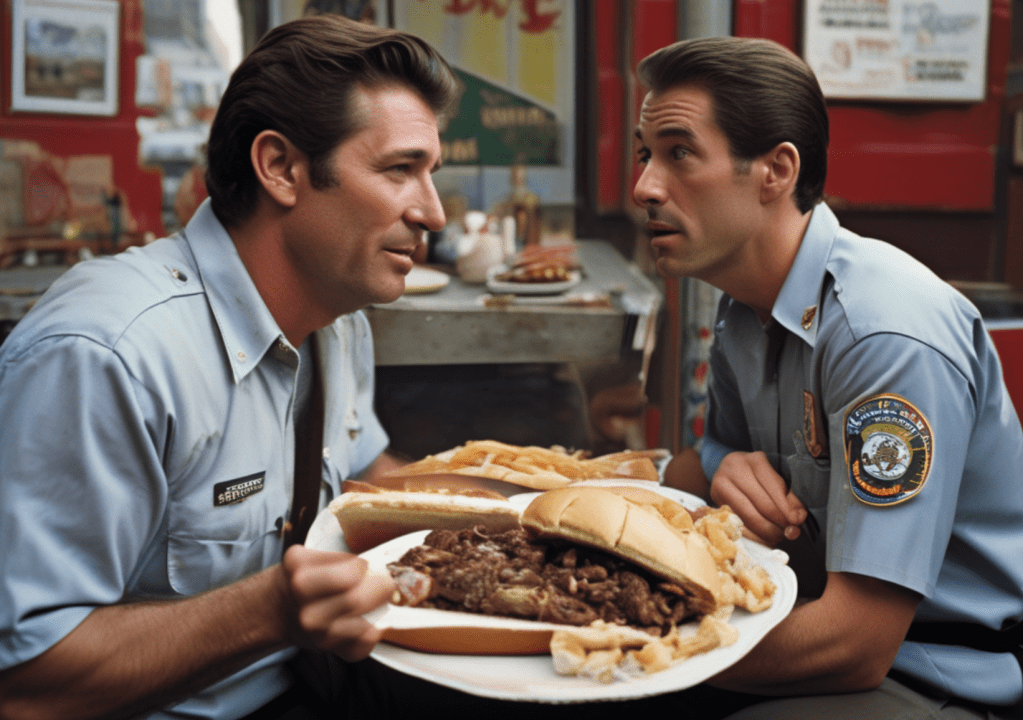
The Legend of Chuck McCready: The Philly Cheesesteak Incident

A Story By: Benjamin Groff© Groff Media 2024© Truth Endures

In the late 1980s, in the heart of Philadelphia, there was a small, hole-in-the-wall cheesesteak joint called “Tony’s Grub Hub.” The scent of sizzling beef and onions filled the air, and the line for a classic Philly cheesesteak often wrapped around the block. Among the regulars was a local character named Chuck McCready, a fierce, well-loved figure in the neighborhood known for his larger-than-life personality and his deep, almost spiritual love for Philadelphia’s favorite sandwich.

Chuck was a man of principle and passion who never took kindly to the concept of “rules,” especially those that got in the way of a good meal. One fateful evening, Chuck was seated at his usual spot in Tony’s, about to dig into his third cheesesteak of the night—a massive, dripping monster of a sandwich stuffed with extra meat, onions, and a double helping of cheese whiz.

But as Chuck was about to take his first bite, a group of police officers entered the establishment. They had received reports of someone fitting Chuck’s description causing a disturbance in the area earlier that day. They approached Chuck, asking him to step outside for questioning.

Not one to back down, Chuck looked up from his cheesesteak, his hands still clutching the sandwich, and growled, “What’s the charge? Eating a cheesesteak? A succulent Philly cheesesteak?”

The officers, taken aback by his unexpected response, insisted he come quietly. Now fully immersed in the moment, Chuck stood up, holding his half-eaten cheesesteak high like a wand. “This is America, baby!” he bellowed, “Home of the free, where a man can enjoy his meal in peace!”

What happened next was a chaotic scene of Chuck getting dragged out of the restaurant, still holding his cheesesteak, shouting about his rights, and demanding to know why a man couldn’t enjoy a simple meal without being harassed. As the officers tried to force him into the squad car, Chuck continued his tirade: “Is this how we treat a cheesesteak lover in Philly? America is a democracy! My actions are freedom manifest!”

The incident was caught on camera by a passerby and quickly went viral. With Chuck’s impassioned defense of his right to eat a cheesesteak, the video resonated with people across the country. Memes of Chuck McCready declaring “This is freedom manifest!” while clutching a cheesesteak became an overnight sensation.

Years later, Chuck McCready became a folk hero, a symbol of defiance and the right to enjoy life’s simple pleasures. His story was told and retold, often with embellishments, but always with the same core message: no one comes between a man and his cheesesteak in America. His iconic catchphrase, “What’s the charge? Eating a cheesesteak?” became a rallying cry for those who valued freedom and a good meal.

Chuck McCready, the man who stood up for his right to enjoy a succulent Philly cheesesteak, became a legend in the city of brotherly love and is forever remembered as the Cheesesteak Defender.