The Revolving House Of Mystery

By Benjamin GroffMedia© | benandsteve.com | 2025 Truth Endures©
10–15 minutes

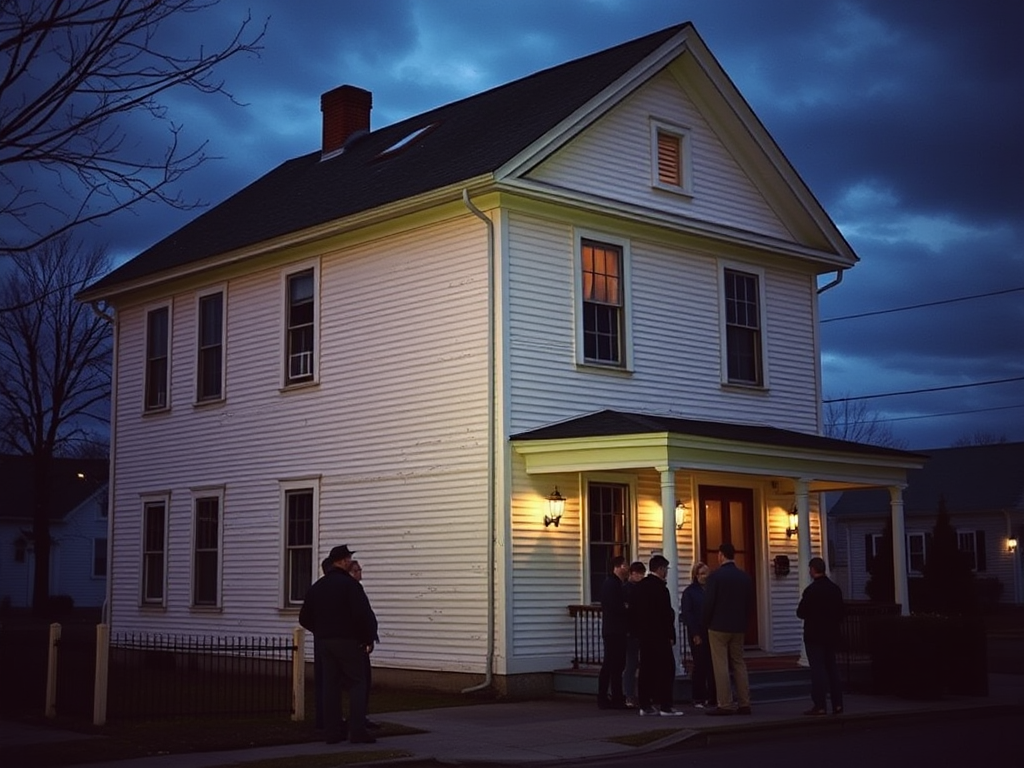
Far from the edges of the town, set an old two-story house. No one ever saw anyone going in or out of the house. The townspeople referred to the old house as the Sims’ place. As far as everyone knew, the last member of the Sims’ family had died years ago. They didn’t know who inherited the ownership of the house. Still, without being seen, the lawn remained manicured and the house was painted and kept up. It looked like the model home for anyone wanting to buy a house. The problem was it wasn’t for sale. As far as anyone knew, they never met anyone who lived there. If anyone lived there at all, nobody knew.

That didn’t stop the stories from spreading.

Children dared each other to run up the front walk and touch the heavy oak door. Teenagers boasted of throwing pebbles at the upstairs windows—until one swore he saw a pale face staring back. No one ever stayed long. The Sims’ place pressed against your skin. It was like a cold hand resting on the back of your neck.

The mail never piled up, though no one ever saw it being collected. No lights came on at night. The porch lantern flickered gently with each dusk. It was like it was welcoming someone home.

One autumn morning, a moving truck pulled into the narrow drive. This was just after the first frost turned the fields silver.

People watched from porches and behind curtains, half-certain the truck would vanish like smoke. But it didn’t. A tall man in a dark coat stepped out. He stood for a long moment at the edge of the walk. Then, he turned the knob and entered without knocking. The door swung open smoothly, like it had been waiting.

By noon, the truck was gone. No one had seen anything carried in or out.

That night, a light glowed faintly in the attic window—the first time anyone had seen one inside in decades.

The next day, the town’s quietest librarian, Mrs. Evelyn Crane, who hadn’t missed a shift in forty years, did not show up for work.

They found Mrs. Crane’s front door wide open, her coat still hanging by the hook, tea cooling on the counter. Nothing was out of place—except for the fact she was gone.

On the floor of her study, neatly laid out, was a photograph no one remembered being taken. It showed the Sims’ house bathed in golden afternoon light. In the top-floor window, a shadowy figure could just barely be made out. A figure with Evelyn Crane’s unmistakable silhouette—bunned hair, long cardigan, glasses catching the light.

The photo was crisp, fresh—too fresh. The paper hadn’t yellowed, and the ink hadn’t aged. Yet, the style, tone, and eerie texture of the photograph made it feel as if it were decades old.

Sheriff McKinley requested a discreet investigation. 

Quiet was always the town’s way. A formal missing person report was filed. It was filed only after a week had passed. The report was done with hushed voices.

The librarian’s house sat untouched after that—no one eager to enter it. On the morning of the seventh day, someone noticed a flicker in the Sims’ attic window. The light now flickered slightly. Like a candle in a room with a draft. Like someone moving just beyond its reach.

Then others began to disappear.

Not suddenly, but subtly. A school janitor didn’t show up for work. The pharmacist’s assistant left for her lunch break and never came back. With each absence, the same pattern followed—no signs of struggle, no witnesses, just something left behind. A photograph, a trinket, a drawing… always showing the Sims’ house. 

Always with a shadow in the attic.

One morning, the mayor ordered a city records search. He wanted to find any deeds, wills, or other documents related to the Sims family’s legal existence.

The file was blank.

No birth certificates. No death records. No property tax history. Just a penciled note in the margins of a 1933 zoning map:

“Leave undisturbed. Occupied.”

By whom, no one knew. But the attic light still burned. And some said if you stood on the sidewalk long enough, you would hear soft music playing. A woman humming. And the sound of someone pacing slowly across wooden floors.

Would you like to explore who—or what—is in the attic next? Or maybe follow a new character brave (or foolish) enough to enter the house?

His name was Jonah Bell. A drifter by most accounts, though some swore he’d grown up just a few towns over. He had that type of face—familiar, yet hard to place—late thirties. Wore an old canvas satchel, carried a notebook bound in cracked leather, and spoke only when spoken to.

Jonah arrived on foot, just before dusk. He stopped outside the Sims’ house. He looked it over for a long minute. He muttered something under his breath that sounded like “Still standing.”

A few townsfolk watched him from a distance, expecting him to keep walking. Instead, he opened the rusted gate, walked straight up the weedless stone path, and knocked once.

No one had ever knocked before.

The door creaked open as if it had been listening.

He stepped inside.

The air in the entry hall was still and dry. It was faintly perfumed with old cedar and beeswax. There was also a hint of something sweeter, like lilacs. The floors gleamed under a thin veil of dust. Every piece of furniture stood precisely placed, as if awaiting a long-anticipated visit.

Jonah took out his notebook and began jotting down notes. He whispered as he walked, like he was reciting some memorized litany to keep his courage close.

He passed through the parlor—walls lined with books, many handwritten, their spines bare. The grandfather clock stood frozen at 3:17. In the mirror above the fireplace, his reflection wavered slightly, a half-second behind his movements.

He didn’t stop.

At the end of the hall, the narrow staircase rose, twisting sharply to the left halfway up. It was there, on the sixth step, that the air grew colder.

He reached the landing, hesitated only briefly, then started the climb to the attic. Each step groaned—not with age, but with reluctance, like the house was reconsidering his welcome.

The attic door was shut. White paint cracked along its edges. Carved into the wood, nearly invisible unless you looked for it, was a single word:

“Stay.”

Jonah opened it anyway.

The attic was warm, despite the chill below. A low, golden light poured from an unseen source, casting no transparent shadows. Dust floated like tiny spirits in the air.

In the center of the attic was a rocking chair. And in it, a woman sat.

She was facing the window, her back to Jonah. Gray hair pinned neatly. A music box was on a small table beside her. It played a lilting tune. This was the same tune Evelyn Crane used to hum at the library desk.

Jonah didn’t speak. He stepped closer, notebook open, pencil ready.

The woman turned her head slowly, not startled—expectant.

She had no eyes.

Just smooth, unbroken skin where they should have been. Still, she looked at him.

And she smiled.

“I was wondering,” 

She said in a voice like leaves scraping on glass, 

“When you’d come back.”

Jonah’s pencil trembled. A page fluttered loose from his notebook.

It was a drawing—sketched in charcoal—of this very attic. The woman in the chair. The music box. The golden light.

Dated: October 13, 1922.

Jonah stared at the sketch, hands trembling, mind racing.

“I don’t remember drawing this.” 

He said aloud, but only to himself.

The woman in the chair—still smiling—nodded slowly. 

“You never do, not at first.”

He took a cautious step closer, boots silent on the attic’s polished wood. 

“Who are you?” 

He asked. 

“What is this place?”

The woman tilted her head. 

“The house remembers.” 

She said. 

“Even when you forget.”

Jonah knelt to retrieve the page. His fingers brushed the corner of the rocking chair. In a sudden rush, something opened in him. It was a flood of memory. It was not like something recalled, but like a dream breaking the surface after years of sinking.

He was ten. Standing in this very attic. A woman—this same woman—was brushing his hair, humming that tune.

Her face was younger, but the eyes—nonexistent yet somehow seeing—were just the same.

“You called me your boy.” 

He whispered, blinking hard. 

“But that can’t be. You’re not… real.”

“Oh, I’m real.” 

She said. 

“As real as anything you forgot.”

He backed away. 

“I’ve never lived here.”

The woman raised one hand and pointed to the rafters. Jonah followed her gaze.

Up near the slanted beams, nailed between two joists, was a faded photograph. A family portrait—sepia-toned. 

A tall man with a mustache. A small boy with serious eyes. And a woman in a white dress, her arms around them both.

Jonah felt his knees weaken.

The boy was him.

Same face, same eyes.

He staggered back.

“No, no, this can’t—”

“You were born here, Jonah.” 

The woman said gently. 

“And you left. They made you leave. But the house… the house never forgot. Neither did I.”

He looked around now with different eyes. Not the attic of a haunted place, but something older. Familiar. As though the walls were whispering lullabies from a life he’d buried.

“I don’t understand,”

He murmured.

“You don’t have to.” 

She said. 

“You only need to remember why you came back.”

He looked down at his notebook again. Page after page of sketches—rooms in the house. A hand-drawn map of the garden. Symbols he didn’t recognize but somehow understood. At the very end, a single phrase repeated over and over:

“The house is waiting. The house is watching. The house wants me home.”

Suddenly, the attic door slammed shut behind him.

He didn’t turn.

The rocking chair creaked gently as the woman leaned forward.

“Now,” 

She said, her voice sharper, colder. 

“Are you ready to take your place?”

Jonah closed the notebook and looked out the attic window again. Down below, on the street, a child stood at the edge of the lawn. Watching the house and watching him.

The way he once had.

The woman’s eyes—those smooth, sightless hollows—seemed to deepen as she leaned closer.

“You were always meant to return.” 

She said. 

“Not as the boy you were, but as the man we need.”

Jonah’s voice caught in his throat. 

“We?”

The rocking chair stopped moving.

Suddenly, the attic air thickened, as if the room had drawn a breath and was holding it. All around him, the golden light faded. It was replaced by a dim, pulsing glow from the floorboards beneath his feet. The wood creaked in rhythm—a heartbeat.

And then the whispering began.

Not from the woman. From the house.

It came from the walls, from the pipes, from behind the bookshelves. Countless voices, layered over one another. Some frantic, some pleading, others calm and patient, like they had waited an eternity.

He was made out the names—EvelynTommyClara—names of the vanished.

“We are here.” 

The voices murmured. 

“Waiting. Watching. Living still.”

Jonah stumbled backward toward the attic window, but the light outside had changed. The sky beyond was no longer dusky violet but deep, ink-black. No stars. No moon. Only the faint shimmer of fog rolling in across the lawn.

The child he had seen moments ago was no longer there.

The woman in the chair stood.

Not slowly. Not creakingly. She rose, as though the gravity in the attic shifted just for her.

“The house keeps what it claims.” 

She said. 

“And it chose you long ago.”

Jonah opened his notebook again, desperately flipping pages. The last one had changed.

Where once the phrase had repeated—The house is waiting. The house is watching.—now there was only one line:

“The house has taken root in me.”

His hands began to tremble. He dropped the notebook.

The floor beneath him rippled slightly, the wooden planks softening beneath his boots. He looked down. He saw the faint outline of veins—not his. They were pressing against his skin from below. The veins snaked up his legs like ivy. His reflection in the attic’s glass window twisted subtly—his eyes darker, his face slackening.

The woman smiled gently now.

“You will remember everything soon.” 

She whispered.

Then her body folded in on itself, collapsing like smoke caught in reverse. She vanished, leaving the rocking chair slowly swaying, empty once more.

Jonah tried to scream but found no sound.

The voices filled the attic.

“Welcome home.”

Outside, the porch lantern flickered brighter.

And in the attic window, a tall man is now be seen standing in the golden glow, perfectly still. Eyes like shadow. Watching.

Jonah Bell had returned.

But he would not be leaving again.

The next morning, a thin layer of fog clung to the outskirts of town, thickest around the old Sims’ place. The porch lantern had burned through the night, casting a low amber halo across the perfectly trimmed lawn.

A small group of townsfolk had gathered again on the sidewalk, just beyond the rusted gate. They stood quietly—arms crossed, coffee cups in hand, pretending they were just out for a walk.

Sheriff McKinley stood among them, jaw tight, his badge catching the early sun.

“Who was he?” 

Asked Mr. Darnell, the barber, adjusting his cap.

“No one local.” 

Said the sheriff.

“Drifter, maybe. Name’s Jonah Bell. Didn’t leave a car. Walked in, like they all do.”

The crowd fell silent again. No birds sang. Even the breeze seemed reluctant to pass through the yard.

And then, from the attic window, the light flickered once.

Mrs. Calloway, who had lived on that block the longest, shook her head slowly and muttered, half to herself:

“Oh dear. It’s starting all over again.”

No one disagreed.

They stood a while longer, staring at the house. They quietly dispersed. Each of them walked away faster than they meant to.

None of them noticed the child standing just beyond the fog, clutching a sketchpad and watching the window.

Waiting for the house to notice him.

Professor Incredible: The Accidental Peacemaker

By Benjamin GroffMedia© | benandsteve.com | 2025 Truth Endures©

2–3 minutes

Professor Incredible and the Formula of All Things

Nobody paid much attention to Professor Incredible.

He was a quiet, peculiar man with wild hair and socks that rarely matched. He taught chemistry at the Third-Rate University of Northern Something. His lectures were confusing. His labs were explosive. His office smelled faintly of lemon cake and regret.

One Tuesday afternoon, Professor Incredible was mixing compounds to cure hiccups in parakeets (don’t ask). He tripped over his cat and accidentally spilled three unlabeled vials into a teacup. When he came to after the small puff of smoke cleared, he sipped the tea. Of course, he did. He then scribbled down what he felt was a rather pleasant aftertaste.

That night, he slept peacefully for the first time in years. His arthritis vanished. So did his neighbor’s yappy dog’s aggression. So did the neighborhood’s potholes. So did his runny nose. Something was… different.

The next day, two bickering students visited his office arguing over which was better—crunchy or creamy peanut butter. Absentmindedly, the professor handed them a flask of the leftover formula and said,

“Here. Split this and shake hands.”

They did.

Instantly, they blinked, smiled, and calmly agreed that both were wonderful in different ways. Then they shared a sandwich.

The formula, it turned out, only worked if applied by two people in conflict—who disagreed with equal passion. It didn’t pick a side. It didn’t declare a winner. Instead, it softened anger, lifted empathy, and melted stubbornness into understanding. It didn’t erase problems; it made people care enough to solve them together.

Soon, world leaders were sipping the formula while discussing borders. Rival fans hugged at sporting events. Siblings divided closets in peace. Traffic moved smoother. Even social media got a little less… cruel.

Professor Incredible was offered a Nobel Prize, but declined.

“The formula was an accident,”

he said.

“What matters is what people do with it.”

And so, the world changed—not because the formula was magic, but because people finally heard one another. Understood each other. Worked side by side.

All it took was a little chemistry—and two people willing to try.

Surviving Apocalypses: Earl’s Hilarious Journey

By Benjamin GroffMedia© | benandsteve.com | 2025 Truth Endures©

2–3 minutes

“How Earl Survived the End of the World (Three Times In One Week)”

It all started on Monday when the news said the world was ending. Again.

“Experts warn: AI, killer bees, and rising sea levels converge by Wednesday,” read the headline on Earl’s phone. He sighed, sipped his lukewarm coffee (the microwave broke last week—tragic), and Googled “How to survive multiple apocalypses.”

Step one: hoard supplies.

Earl ran to the grocery store, but unfortunately, so did the entire neighborhood. All that was left on the shelves were 37 cans of creamed spinach and one gluten-free hot dog bun. He grabbed both. Earl wasn’t proud.

Step two: fortify your home.

This was trickier. Earl’s DIY skills peaked at assembling an IKEA lamp in 2014 (and even that leans a little). He taped bubble wrap over the windows. He stacked his furniture into a makeshift barricade. He hung a sign on the door that read: “Beware of Dog (or raccoon—honestly not sure anymore).”

By Tuesday, the threat had shifted. AI wasn’t trying to destroy us; it just wanted us to finish a customer satisfaction survey. Earl politely declined. The bees were delayed due to weather conditions. The sea levels were rising slowly. Earl figured he had time to finish his Netflix backlog.

Then came Wednesday.

That’s when the real disaster struck:

🚨 The Wi-Fi went out. 🚨

Earl sat there, blinking into the void, unsure how to continue. How does one live without memes? How do you know what to be outraged about if you can’t check Twitter?

Earl tried reading a book. (Printed words? On paper? Barbaric.) He tried talking to my houseplants. Phil the fern judged him silently.

Finally, Earl ventured outside — mask on, hand sanitizer holstered like a gunslinger — only to discover ––

The neighborhood kids had set up a barter system.

“Two rolls of toilet paper for a bottle of sriracha!” 

One kid yelled.

“Half a pack of Oreo’s for an iPhone charger!”

Another bargained.

Earl traded three cans of creamed spinach for a Wi-Fi hotspot code—the best deal of his life.

By Thursday, the headlines read: World Fine (For Now).” 

Earl sighed in relief –– until he heard a knock at the door.

A drone hovered outside, lowering a package. Earl opened it to find:

A “survival for beginners” guidebook

An emergency avocado (slightly bruised)

A note that read:

“Stay tuned. Apocalypse 2.0 beta release coming Friday.”

Earl looked up at the sky, took a deep breath, and whispered:

“I’m going to need more creamed spinach.”

The Lost Shopper: A Remarkable Time-Travel Mystery

GROFF MEDIA 2024© TRUTH ENDURES IMDBPRO

Presented by benandsteve.com By: Benjamin Groff II©s

3–4 minutes

The Lost Shopper

Harold Wexley left his house on a crisp October morning in 1977. He carried a shopping list, which his wife, Martha, had scribbled on the back of an old envelope. The list read bread, milk, eggs, and a pound of ground beef. That was all he needed. The sun was high, and the air smelled like damp earth. He had a pocket full of change jingling as he walked toward Miller’s Grocery, just six blocks away.

Harold never returned home.

Martha waited—first hours, then days. The police took her report, shook their heads, and assured her that most missing persons had turned up. Neighbors speculated wildly. Some thought maybe Harold had amnesia. Others guessed he’d run off with some floozy. He had just vanished into thin air.

The years passed, and Martha grew old. The town changed. Miller’s Grocery shut down in the ’90s, replaced by a chain supermarket. The world moved on.

Then, in 2024, something impossible happened.

Found Where He Was Lost

At precisely 9:17 a.m. on a Saturday, an employee at the local SaveMore supermarket screamed, sending a ripple of confusion through the store.

Harold Wexley stood in aisle seven, between the cereal and baking goods. He wore the same corduroy jacket. He also wore brown slacks and scuffed loafers. These were the clothes he wore when he left home 47 years earlier. Harold was still clutching the shopping list in his hand. His hair had not grown. His skin had not aged.

When the police arrived, Harold blinked at them in utter confusion.

“What’s all the fuss about?”

He asked, his voice scratchy from disuse.

“I just came in to pick up a few things.”

The officer, utterly dumbfounded, asked,

“Sir, do you know what year it is?”

Harold laughed.

“What question is that? It’s 1977.”

The grocery store manager rushed ahead.

“Sir, this place wasn’t even here back then. This store opened in 1999!”

Harold frowned, rubbing his temple. He looked down at the list in his hand. The ink had not faded. The paper wasn’t brittle. His clothes smelled faintly of Martha’s lavender detergent.

But Martha was gone. His house was gone. His entire world had disappeared. He had been standing in this store, this spot. It was as if no time had passed.

The Mystery Remains

Scientists, journalists, and conspiracy theorists all descended upon Harold. Tests revealed that he was, biologically, still 42 years old. He remembered nothing beyond walking into Miller’s Grocery on that fateful day. He hadn’t eaten in 47 years. He hadn’t aged.

Some claimed he had slipped into a time loop. They believed the store had somehow preserved him in a pocket of frozen time. Others whispered about aliens, government experiments, or divine intervention.

Harold, meanwhile, was only concerned with one thing.

“Can someone tell me where my wife is?”

No one had the heart to answer him.

Epilogue

Harold never adjusted to the modern world. He refused to believe that the year was 2024, even when he saw flat-screen TVs and self-checkout kiosks. He spent his days wandering the grocery store, staring at shelves full of strange new products. He was looking for the familiar brands of his youth.

One night, after closing, a janitor was working late. He swore he saw Harold standing in aisle seven. Then he blinked, and Harold was gone.

The next day, an old yellow envelope with a shopping list was found on the floor. It was written in Martha’s neat handwriting. It seemed to have fallen from Harold’s hand in confusion.

No one ever saw Harold again. Sometimes, in the stillness of the grocery store, employees swore they heard the faint jingle of coins. The coins seemed to come from a pocket that wasn’t there, as if Harold’s spirit still wandered the aisles.

And sometimes, in the stillness of the grocery store, shoppers would listen closely. Even they swore they heard the faint jingle of coins. The sound came from a pocket of a man’s pants. It was from Harold, who had disappeared again.

When Time Stopped: A Tale from Briar Hollow

GROFF MEDIA 2024© TRUTH ENDURES IMDBPRO

Presented by benandsteve.com By: Benjamin Groff II©s

2–3 minutes

It happened at precisely 3:17 p.m. on a warm autumn afternoon. The town of Briar Hollow had always been a quiet place. The most exciting event of the week was the arrival of fresh pies at Millie’s Diner. But on this particular day, something changed. Time stopped.


No one saw it happen. There was no flash of light, and there was no tremor in the ground. One moment, the clock on the courthouse tower was ticking as usual, and the next, its hands were frozen. Birds hung motionless in the sky, leaves hovered mid-fall, and the wind seemed trapped.


At first, the townsfolk didn’t notice. Old Mr. Grady blinks in confusion halfway through handing change to a customer, as the coins refuse to drop from his fingers. Sarah Porter had been driving to the grocery store. She finds her car inexplicably locked in place. The engine still hums. Children at the playground hang in mid-swing, their laughter caught in their throats.


And then, they noticed each other. Wide eyes met, tentative steps were taken, and panicked voices rose into the still air. The world had paused, yet they remained unstuck, the only things moving in a town frozen in time.


The local librarian, Maggie Holcomb, was the first to suggest that something bigger was at play.

“This isn’t just a power outage,”

she murmured, staring at the unmoving second hand of her wristwatch.

“This is…impossible.”


Hours passed, though the sky did not change. The sun remained where it was, suspended in golden radiance. Some tried to leave town, only to find that the roads looped them back to the center. Others attempted to wake those frozen, but their efforts were in vain. The townsfolk, once filled with panic, began to feel a creeping sense of fear. Fear turned to despair, and then—acceptance. Their emotional journey mirrored the strange stillness that had befallen their town.


The people of Briar Hollow, despite the unchanging world around them, learned to adapt. They still spoke, ate, laughed, and cried. Days passed, though they had no real way to count them. And just when they resigned to this strange eternity, the clocks began to tick again. Their resilience in the face of the unknown was a testament to the human spirit.


It was as sudden as it had started. The coins fell from Mr. Grady’s hand, Sarah’s car lurched ahead, and the children’s laughter resumed mid-breath. The world snapped back into motion, unaware that it had ever paused.


Yet, the people of Briar Hollow knew. They would never forget that strange day when time stopped. It was an even stranger feeling that just, it had been watching them.

Star trek – Space The Final Frontier – A Five Year Mission – Bonds That Did And Didn’t Last A Lifetime

Reposted By: Benjamin Groff© Groff Media 2024© Truth Endures

In the storied annals of the Star Trek universe, what began as a television series in the 1960s blossomed into a cultural phenomenon, giving birth to a vision of a harmonious future that fans continue to embrace. Behind the scenes, however, the camaraderie portrayed on screen did not always extend to real life. The tensions between certain cast members, notably William Shatner (Captain Kirk) and George Takei (Hikaru Sulu), became a topic of public interest, casting a shadow over the show’s legacy.

Though these actors became involved in personal feuds for decades, their occasional joint appearances remain momentous for fans. Alongside Walter Koenig, who portrayed Pavel Chekov, these three actors are the last surviving members of the original cast, each representing a connection to the show’s storied past. Koenig, notably, has managed to stay above the fray, providing a calm contrast to his costars’ more public disagreements.

A particularly memorable gathering took place at the 2016 Destination: Star Trek Convention in Birmingham, England. Here, a faithful recreation of the Enterprise Bridge set the stage for a rare photo featuring Shatner, Takei, and Koenig. Unlike what some may have assumed, this gathering was going to be a gathering of friends celebrating their accomplished successes, which created such longevity. Instead, it was a simple yet significant moment—a testament to the enduring bond, however complicated, between them.

For fans, this image was a bittersweet reminder of a time when the entire cast of the original series still walked among us. With Nichelle Nichols (Uhura) still alive at the time, the photo symbolized the resilience of these iconic figures and the passage of time. It was a moment captured not as an epitaph but as a celebration of survival, legacy, and the stories that continue to bring joy to generations.

As the years pass and opportunities for such reunions grow less likely, this photograph—and the event it commemorates—becomes even more meaningful. While the on-screen unity may not always have reflected real-life relationships, the lasting impact of Star Trek remains undeniable. Even with its complexities, the shared history of these actors continues to evoke nostalgia and appreciation for the universe they helped to create.