The Town Called Serenity – Chapter Ten: Stand Still, and the Dust Will Bury You

By Benjamin GroffMedia© | benandsteve.com | 2025 Truth Endures©

3–5 minutes

Chapter Ten: Stand Still, and the Dust Will Bury You

By dawn, the desert wind carried more than heat. It took silence—the kind that comes before thunder.

  • Chester Finch stood on the steps of the half-burned church at the edge of Serenity’s main street. His badge was pinned high and proud. His ribs ached. His coat was torn. But his eyes were sharp, and the ledger in his hands could end a dynasty. 
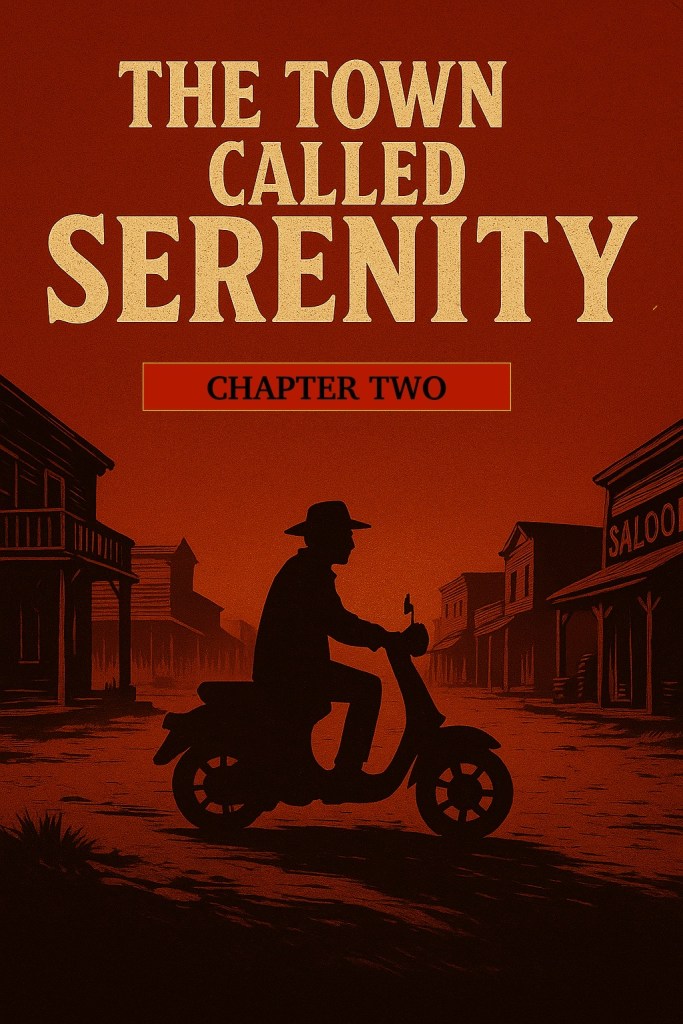
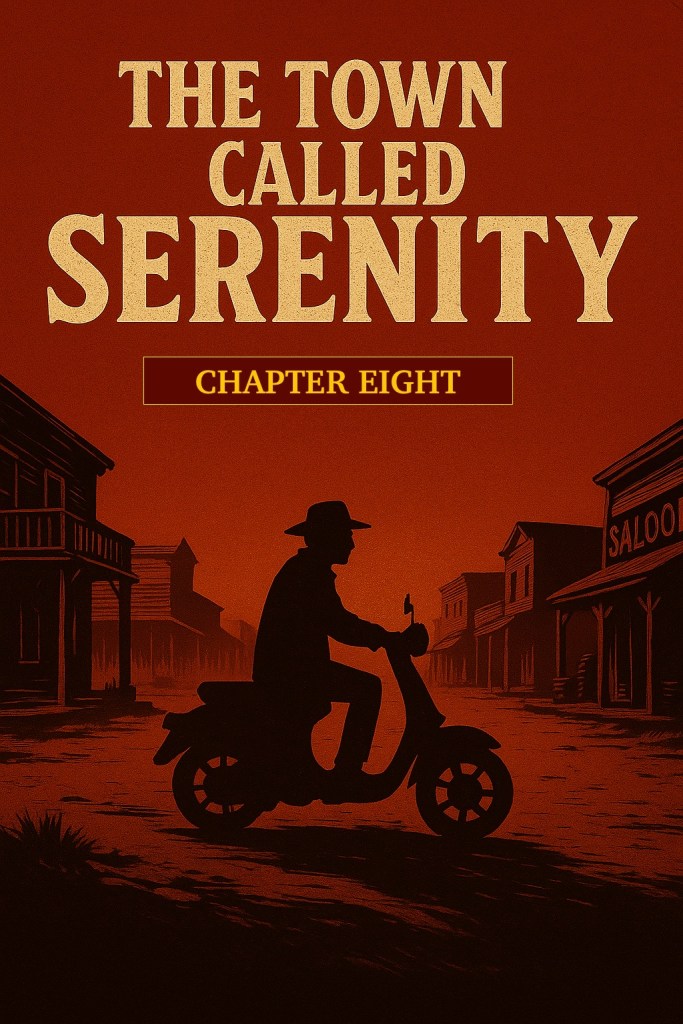
  • The Marshal had pulled his moped from hiding and had it juiced up for duty. The Vespa GTS (300cc) moped shone as slick as the day it was new. It had US Marshal emblems on it and had been stowed inside the jail’s secret compartment. A hiding place that Chester designed the night he arrived in town. 

Chester looked out over the gathering.

Wren was there, her arm in a sling, a rifle strapped across her back.

Petal stood beside her, bruised but alive, clutching a satchel full of Cain’s secrets.

Julep Jake leaned against the doorframe, sharpening his miniature whittled guillotine. 

“A town’s only worth the blood it takes to keep it,” 

He said. 

“Reckon we’re due.”

Even Buck Harlan was the old stagecoach driver who hadn’t spoken more than ten words in a decade. He stood with a shotgun across his knees.

And behind him came the others—storekeepers, grooms, forgotten women, broken men.

Cain had ruled them. Gallow had hunted them.

But now –– now they remembered their names.

Chester raised his voice.

“I’m no savior. I’m no sheriff. I’m just the last man they sent when no one else would come.”

He held up the badge.

“But I say this badge still means something. Not because it’s brass. Not because the government gave it to me. But because I’m willin’ to bleed for it.”

He threw the ledgers down onto the church steps.

“These are Cain’s sins. Every payment, every name, every blackmail note, every fix. And when this town turns that over to the federal office, I just wired—they’re gonna come. Not with a whisper. With subpoenas and dogs.”

A beat of silence.

Then a single voice called out:

“And Gallow?”

Chester turned. 

“He’ll come. Tonight, maybe. It could be sooner. He’ll bring fire.”

He looked to Wren.

“But fire don’t mean nothin’ if you’ve got water and grit.”

Wren nodded once. 

“We stand.”

The townsfolk murmured.

Then they shouted.

Then they began to build.

Barricades. Traps. Makeshift outposts from overturned wagons and scrap wood. Petal turned the saloon into a war room. Julep Jake strung piano wire across alleys. Even the bell tower rang for the first time in years, warning off the vultures.

The Last Hour

Cain, watching from The Assembly, saw the town rise against him and knew he’d lost the crown.

He poured a final drink, set it aside, and vanished through a trapdoor in the fireplace, bound for nowhere.

The Arrival

Gallow came at sunset, just as expected.

He walked straight down the main street—unarmed, unhurried—like he owned time.

But this time, time fought back.

The first tripwire knocked him off balance. A spotlight lit him up. A warning shot clipped his boot.

He crouched, ready to vanish into shadow—until he saw Chester.

Standing in the street. Moped beside him. Rifle in hand.

“You’re outgunned,” 

Gallow called.

“Nope,” 

Chester said. 

“I’m out-cowed.”

The townsfolk emerged—on roofs, behind crates, on balconies.

Gallow took a step. Then another.

Chester held firm.

And Wren, from the bell tower, raised her rifle.

The shot rang out.

Gallow stumbled. Not dead. Just marked.

He turned—bleeding, seething—and ran.

He vanished into the dust from which he’d come.

And the town never saw him again.

Epilogue: A New Kind of Quiet

Serenity changed.

The ledgers made it to Washington. Petal was deputized. Wren chose to stay and built the first real school the town had seen in thirty years. Julep Jake finally finished his guillotine and gave it to a museum in Tulsa.

As for Chester Finch?

He stayed, too.

He never left Serenity.

Not because he had to.

But sometimes, the worst places can create the most profound kind of peace.

Even if you get there on a moped.

The Town Called Serenity

A hero did not save it.

It was saved by the last man willing to stay when everyone else ran.

So the moped was hidden away in the jail’s secret spot—one no one else even knew existed. Good thing Chester made it out alive, or that Vespa would’ve turned into a time capsule! More importantly, this story is a great reminder: the bad guys never truly win.
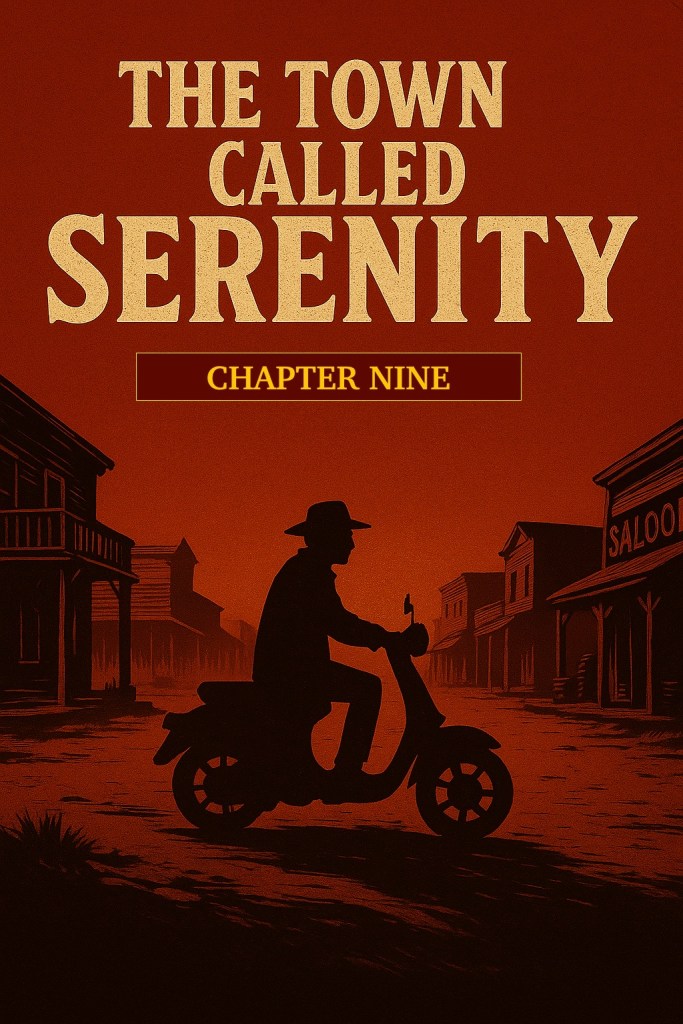
THE TOWN OF SERENITY – Chapter Nine: A Predator in the Garden

By Benjamin GroffMedia© | benandsteve.com | 2025 Truth Endures©

3–4 minutes

Chapter Nine: A Predator in the Garden

Braddock Cain sat alone in The Assembly, a chessboard in front of him, half-played.

It was something he did when the whiskey wore off, and the world got too quiet. He played both sides of the board. He always made sure black lost.

Tonight, black wasn’t losing.

He moved a knight, sat back, and scowled.

The vault trap should have buried Finch and the girl. He’d received no word from Poke, which was unusual. Too unusual.

A low, sharp knock came at the door—three short raps. 

Then silence.

His eyes narrowed.

“Enter,”

He growled.

The door creaked open, and the man who stepped inside wasn’t Poke. Wasn’t anyone from Serenity? His clothes were clean, military-cut. His boots were dustless. He didn’t wear a hat—but his shadow felt longer than the room allowed.

“Mr. Cain,”

The stranger said. 

“I presume.”

Cain stood, hand already on the grip of his pistol.

“You don’t walk into this room without an invitation.”

“I didn’t walk,” 

The man replied. 

“I arrived.”

Cain didn’t move to open it.

“You’re Gallow,”

He said flatly.

“That’s what they used to call me,”

The man replied. 

“In certain circles. Not the ones you buy into.”

Cain sat back slowly. 

“What do you want?”

Gallow smiled faintly.

“Let’s call it… clarity. You’ve grown fat on rot, Cain. But rot attracts insects. I’m here to burn the carcass clean.”

Cain let out a cold laugh. 

“You think you can walk into my town and—”

Gallow was suddenly in front of him.

Cain hadn’t even seen the movement.

A knife gleamed under Cain’s chin.

“I don’t think,”

Gallow whispered. 

“I replace. You’ve become a liability to men far above either of us. The vault was never your property. The tapes, the ledgers, the names—you were supposed to manage them, not flaunt them.”

Cain’s eyes narrowed. 

“You’re not just here for Finch.”

“I’m not here for Finch at all,”

Gallow said softly.

“He’s just a broken piece. You’re the engine.”

He pulled the knife away and tucked it back into his sleeve.

“I won’t kill you tonight. That would be –– premature. But I will leave you with a choice.”

Gallow tapped the Ashwood file.

“Burn this. Leave town. Or wait for me to come back.”

Then he was gone.

Cain sat still for a long time, listening to the echo of Gallow’s departure. When his hand finally moved, it wasn’t for his gun.

It was for the bottle.

Elsewhere in Serenity

Poke’s body was found behind the saloon—face down, no bullet wound, no blood.

Just two coins were placed over his eyes.

Wren and Chester stood over him in silence.

“Gallow’s here,” 

Wren said. 

“And he’s not working for Cain. He’s cleaning the house.”

Chester looked toward the west horizon, where dust clouds rolled in from the direction of the rail line.

He pulled the badge from his coat and stared at it.

“Time to decide,” 

He muttered. 

“Do I play Marshal—or outlaw?”

Well now, Gallow is certainly making his presence known! And Cain clearly has a big decision to make—but will he actually leave town? If so, he better start packing snacks for the road. But if he’s thinking about staying, he’ll want to give Jonathan Lawson a call. He should secure himself a Colonial Penn Life Insurance policy. It’s unfortunate Poke didn’t think ahead. Maybe those two coins over his eyes are enough to cover a plot in the nearest potter’s field.

As for Marshal Chester Finch, he’s defied the odds and made it to Chapter Ten. And it looks like this final chapter will finally answer the big mystery: the moped. Where has it been? Who hid it? Why wasn’t it tampered with? What was it originally bought for? And when did Chester decide it would be his official Marshal’s ride?

All of this—and more—will be revealed in Chapter Ten. ~ WE Hope ~

The Town Called Serenity – Chapter Eight – The Devil Knows The Way Out

By Benjamin GroffMedia© | benandsteve.com | 2025 Truth Endures©

3–4 minutes

Chapter Eight: The Devil Knows the Way Out

The blast had sealed the main vault door and collapsed part of the tunnel behind them. Smoke choked the air. Brick and metal groaned under stress. Chester blinked through blood and dust, pulling Wren up from the rubble.

“You alright?”

He asked, coughing.

“Been worse,” 

Wren muttered, cradling her left arm. 

“Dislocated, not broken. I’ll pop it back.”

Chester pulled out a penlight and scanned the room. 

“No exit. That was the only way in.”

Wren smiled through the pain. 

“You thought it was.”

She limped to the far wall. A section of decorative tiling was there—old, Spanish-style. It jutted out from the stone like it didn’t belong. She knocked three times in a rhythm that echoed deeper than it should have.

A hollow click responded.

“Cain didn’t build the vault himself. He took it from a man who did. The original owner had escape routes.”

She traced a tile shaped like a broken star and twisted it counterclockwise. With a faint hiss, the tile wall slid inward, revealing a narrow stone chute, half-collapsed and riddled with centipedes.

Chester stared into the black.

“I don’t suppose you brought rope,”

He said.

“Nope.”

“Alright then,”

He grunted, and they vanished into the dark.

In the Streets Above

Petal stood at her shop counter grinding roots when the front door exploded inward.

She ducked instinctively, drawing her old revolver, but it was too late.

Two men in black tactical gear moved in fast, grabbed her arms, and yanked her across the counter. The third figure entered last—calm, silent.

Mr. Gallow.

He picked up a vial from the shelf, sniffed it, and set it down.

“I’ve read your name,”

He said, voice flat. 

“You’re a known associate of Wren. Harboring her. Aiding a rogue federal.”

Petal spat blood and smiled. 

“You got a badge?”

“No. I have jurisdiction.”

He signaled.

The men dragged her out.

They disappeared down the street. Julep Jake watched from his cell window. He was whittling a miniature guillotine from an old broom handle. 

“And now the harvest begins,”

He muttered.

The Long Climb

Chester and Wren emerged two hours later through a rusted maintenance grate behind the abandoned Serenity Theater. They were scratched, covered in brick dust, and exhausted—but alive.

Wren wiped grime from her face. 

“He set us up. Knew we were coming.”

Chester nodded grimly. 

“Means we rattled him.”

She held up the two ledgers she’d saved—one in each hand.

“He loses if these go public.”

Chester took them, tucking them into his coat. 

“Then let’s make sure they do.”

Suddenly—gunfire cracked in the distance. Three pops.

Wren froze. 

“That was near Petal’s.”

Chester’s face hardened. 

“We’re not the only ones he’s playing.”

They moved quickly down the alleys. Even as they ran, Wren stopped cold. She saw the mark scorched onto the alley wall: a circle with a horizontal line through it.

She grabbed Chester’s arm. 

“That’s not Cain’s symbol.”

“What is it?”

Wren’s voice dropped to a whisper. 

“It’s Gallow’s.”

Chester turned, scanning the rooftops.

“Then we’re out of time.”

What exactly did the symbol mean? Chester had the answer—or at least a regulation book with the answer—tucked away in the saddlebags on his moped. The problem? He didn’t bring it with him. And it’s too far to walk back now. Truth is, he hasn’t laid eyes on that moped since he rolled into town. So, is it hidden so well that he forgot where it is? Or is he protecting a strategic location he’s not ready to reveal? With only two chapters left, the Marshal better get moving!

The Town Called Serenity – Chapter Two ~ The Man In The Velvet Chair ~

By Benjamin GroffMedia© | benandsteve.com | 2025 Truth Endures©

3–4 minutes

Chapter Two: The Man in the Velvet Chair

Braddock Cain held court in what used to be Serenity’s town hall. It has been redubbed The Assembly. This tongue-in-cheek title amused him to no end. The building’s original seal featured a gavel and olive branch. It had been charred. A mural of a coiled snake wrapped around a set of broken scales replaced it.

Cain reclined in a velvet chair salvaged from an old theater. His legs were crossed and his boots polished. A glass of brandy swirled in his hand. He dressed like a gentleman, but everything about him screamed predator. His jaw bore a faded scar shaped like a question mark, and his eyes—green, sharp, reptilian—missed nothing.

He was listening to the daily reports from his lieutenants. These included moonshine shipments and bribe tallies. They discussed who’d been bought and who needed reminding. It was during this time that the news came in.

“Marshal rode in today,” 

Said a wiry man named Poke, who hadn’t blinked since 1989. 

“Little fella on a moped. Arrested Julep Jake, if you can believe it.”

Cain’s eyebrow lifted slightly.

“Didn’t shoot him?” 

He asked, his voice smooth as oiled leather.

“No, sir. I hauled him off. Jake’s in the old jailhouse right now. He’s hollerin’ about election fraud. He’s claimin’ he’s immune to state law because of a sacred raccoon spirit.”

Cain chuckled, swirling his drink.

Side Note:

Julep Jake was a Yale-educated botanist. He loved whiskey-fueled nonsense. He habitually wore a sash that read “Honorary Mayor 4 Life.” Despite all this, he had a breakdown during a lecture on invasive species. He ended up in Serenity after wandering the desert in a bathrobe. He decided, on divine instruction, that this was where civilization needed his governance. The raccoon spirit came later, after a bad batch of moonshine.

Cain leaned forward, elbows on his knees. 

“So. The law’s back in town.”

Poke nodded. 

“Says he’s here to clean up.”

Cain smiled faintly. 

“Then let’s give him something to mop up.”

He rose, slow and deliberate. Every movement was calculated with the same precision he used to carve out his little empire. Cain wasn’t just a criminal—he was a tactician. He knew that fear didn’t come from bloodshed alone. It came from control. Predictability. Making people believe that resistance was a form of suicide.

“Send word to the Gentlemen,”

Cain said.

The Gentlemen weren’t gentlemen at all. They were Cain’s enforcers—four men, each with a particular specialty. One was a former preacher who liked to break fingers while quoting scripture. Another was a silent giant who wore a butcher’s apron even on Sundays.

“Tell them I want to meet our new Marshal. Kindly, of course. Offer him a warm Serenity welcome.”

Poke nodded and vanished.

Cain turned to the shattered windows behind him, looking out over his kingdom. Dust swirled in the streets. Somewhere, a gunshot echoed, followed by laughter.

“I do enjoy it when they come in idealistic,”

Cain murmured, sipping his drink. 

“They bleed slower.”

Coming Friday The Ten Part Story Begins On The Town Called Serenity

By Benjamin GroffMedia© | benandsteve.com | 2025 Truth Endures©

1–2 minutes

Summary:

The Town Called Serenity

A town lies in the lawless fringes of the state. It is so dangerous and rotten that only the most desperate or the most damned ever call it home. Serenity—where outlaws drink with murderers, where honest men bleed before their second breath, and where fear rides in daylight.

Enter Chester Finch, a disgraced Deputy U.S. Marshal with a forgotten past and a laughable ride—a moped. But Serenity’s not a place that cares about appearances. It cares about power. And when Chester arrives, he’s not just up against crooked sheriffs, backroom executions, and townsfolk too scared to speak. He’s walking into the jaws of Braddock Cain—a kingpin with an empire built on blackmail and buried secrets.

Chester uncovers the layers of corruption. He discovers a larger threat: Gallow. Gallow is a ghost from his past with no badge, no mercy, and no leash. When Gallow comes to cleanse Serenity in fire, Chester must rally the few brave enough to fight. He must stand in the middle of a street where justice hasn’t walked in years.

This is a tale of grit, guilt, redemption—and standing tall when hell itself tells you to kneel.

Watch for the first Chapter in a series of 10! You can find them here beginning May 30th, 2025!

Red ‘Pinky’ Green: The Man Behind Marlow’s Legend – A Man They Called “Blue”

By Benjamin GroffMedia© | benandsteve.com | 2025 Truth Endures©

3–5 minutes

The Curious Legacy of Red “Pinky” Green, Known to All as Blue

The little town of Marlow’s Ridge was nestled between dusty hills and a river. This river had long forgotten how to rush. In this quaint setting lived a man named Red Green. His middle name was “Pinky,” a leftover from a grandmother who thought nicknames were good luck. But everyone in town—young, old, shopkeeper, sheriff, or schoolkid—called him Blue.

No one quite remembered how the name Blue came to be. Some said it was due to the denim shirt he always wore. It was frayed at the cuffs and patched at the elbows. Others swore it was because of his eyes. They were deep and stormy. They held stories no one ever heard him tell. Whatever the reason, the name stuck. And so did he.

Blue wasn’t what you’d call important. He wasn’t elected to anything. He didn’t own a business. He didn’t sing in church or march in parades. He wasn’t married and never had kids. He lived alone in a one-room shack on the edge of town. He built it himself, board by salvaged board. His house had a tin roof and a potbelly stove. The garden always grew more vegetables than one man can eat.

He was a fixture more than a figure. You’d see him mending a neighbor’s fence one day. The next day, he is fishing at the creek. Sometimes, he’d sit on the courthouse bench, whittling a stick into something halfway useful. He spoke little, smiled often, and always paid cash—exact change. Kids liked him because he had a knack for fixing broken toys with bits of wire and rubber bands. Adults liked him because he never asked for anything and always showed up when you needed another set of hands.

Blue was what folks called thrifty. He wore the same clothes for years. He repurposed everything. He carried a coffee can full of loose screws like it was a treasure. He never took credit, never owed money, and never once called attention to himself.

He died peacefully, in his sleep, sometime between dusk and dawn. So when he passed, the town mourned. They felt that soft, uncertain way people do when they realize someone quiet had been a cornerstone all along.

There was no family to speak of. The county handled the burial, and someone brought a pie to the service, which seemed appropriate. The people were about to scatter and return to their lives. Just then, the county clerk arrived with a letter in hand.

It was Blue’s ‘Will.’

Written in neat cursive on lined notebook paper, the will was short, but what it said stunned everyone with its unexpected generosity:

To the Town of Marlow’s Ridge,

If you’re hearing this, it means I’ve gone on ahead. It’s no use making a fuss, but I have a few things to leave behind.

First, I’ve set aside $20,000 for the school’s library. I want to make sure the kids get real books with pages they can turn.

Second, I’m giving $15,000 to the fire department. You’ve bailed me out more than once when I let that stove get too hot.

To Miss Delaney at the diner, you’ll find I’ve paid off your mortgage. You gave me free coffee every Monday for ten years. I figured it was time I returned the favor.

To the town mechanic, I left you my truck. It barely runs, but the toolbox in the back can come in handy.

The rest—over $300,000 in cash and savings—I want to put into a fund for the town. I want to fix up the playground, paint the church, and replace the town hall’s roof. You know what needs doing.

You were all my family. Maybe I didn’t say it, but I hope I showed it.

Thanks for everything.

Red “Pinky” Green, but you knew me as Blue.

There was silence. It was not the kind that follows shock or grief. It was the kind that settles when truth lands heavy and sweet, like the last snowfall of winter.

In the next weeks, the town changed. It didn’t change in the way bulldozers and scaffolding alter things. It changed in how people react when they realize they’ve misjudged someone. Children now whispered stories of Blue’s secret treasure. Adults spoke his name with a new reverence. The diner added a “Blue Plate Special” in his honor. Every kid at school got a brand new library card. His actions inspired a wave of kindness and respect that swept through the town.

The bench outside the courthouse where he used to sit remained empty. Someone carved his name into it, not his full name, just the one that mattered. A simple yet powerful tribute that ensured his memory would never fade.

BLUE

No title. No explanation.

This is just a reminder that sometimes, the quietest lives leave the loudest echoes.

The Sacred Telephone: A Journey Through Time – It’s Your Dime!

By Benjamin GroffMedia© | benandsteve.com | 2025 Truth Endures©

3–5 minutes

Photo by Rafael Duran on Pexels.com

When Phones Were Tied To The Wall

I remember when the telephone was sacred. It wasn’t sacred in the biblical sense. It was sacred in how a thing becomes sacred through ritual and reverence. It hung on the kitchen wall. It was a beige rotary with a coiled cord. The cord always managed to tangle itself, no matter how carefully we stretched it. There was no strolling around the yard while chatting, no slipping it in your pocket. That phone was anchored to the wall, and in a way, so were we.

Back then, if you were expecting a call, you waited—at home. You couldn’t run errands or mow the lawn and hope they’d “just leave a message.” There was no voicemail, and answering machines were still considered a luxury or a spy device. If you missed a call, that was it. Maybe they’d try again. Or, they wouldn’t.

There was an entire culture built around the act of calling. If the phone rang during dinner, it was a dilemma. Do you get up and answer it? That would offend Mom, who just set the casserole on the table. Or do you let it ring and risk missing something important? ‘Important’ means anything—a job offer or a family emergency. More often than not, it was just Aunt Margaret from Tulsa, who forgot about time zones again.

It’s Your Dime!

Long-distance calls were a whole other beast. Before area codes were common knowledge, calling someone more than a town away was a financial decision. “Unlimited minutes” became a birthright later. You thought twice, maybe three times. Sometimes, you waited until Sunday after 7 p.m., when the rates went down. You’d hear people say, 

“Make it quick; it’s a long distance,”

And suddenly, the air would tighten. Conversations became lean and efficient. There was no room for small talk when every second cost a dime.

And God help you if you live in a house with teenagers.

We had one line for the whole family. If someone was on the phone, that was it: no call waiting, no second line, no privacy. I sometimes sat on the front steps, listening to my older sister whisper sweet nothings to her boyfriend. At the same time, she stretched the phone cord into the hall closet for “privacy.” This meant insulation from our relentless teasing.

My Name Is In The Phone Book!

Phone books were gospel—fat and yellow and always near the phone. If someone’s number changed, you had to physically write it down in the back of the book. Otherwise, you risked losing it forever. If you didn’t know someone’s number, you called the operator, who answered with an almost magical, 

“Information, how may I help you?”

There was a time when arriving in a new town didn’t mean turning on a GPS. It didn’t involve scrolling through social media, either. Instead, it meant pulling up to a phone booth and flipping through the phone book. Every booth had one, thick and heavy, usually hanging from a little metal chain to keep it from wandering off. If you were looking for someone, all you needed was their name. You’d find their phone number listed alphabetically, and right next to it—their home address.

It was all just there, in plain ink, as ordinary as the weather report. Privacy wasn’t the concern it is today. Back then, being listed in the phone book was considered part of being a community member. It was how people stayed connected. Out-of-town relatives, old friends, and even traveling salespeople brought to your doorstep with just a name and a little patience. And it meant something to have your name listed in the phone book.

It’s funny now how phones used to ring, and everyone rushed to answer. It was exciting—an event. Now our phones ring, and we stare at the screen half the time like it’s a burden. Back then, it was a connection. A real, human voice carried over copper lines and across miles. There was a weight to it. You felt the distance.

It Is So Nice To Hear From You!

Photo by Min An on Pexels.com

And maybe that’s what I miss the most—not the inconvenience, not the cords or the costs, but the intention. Calls were planned. Conversations were meaningful, not disposable. There was something beautiful about the limits. There was something grounding about a phone that couldn’t follow you around. There was honesty in waiting for someone to call and hoping they’d find you home.

Because that was the world then—tied to the wall, rooted in place, and always listening. It was a simpler time in many ways. Yet, it would confuse anyone who had never experienced the rotary telephone era. 

The Last Post: A Security Nightmare at Ridgewood

By Benjamin GroffMedia© | benandsteve.com | 2025 Truth Endures©

3–4 minutes

“The Last Post”

The night shift at Ridgewood Corporate Plaza was supposed to be quiet. Ten floors of empty offices, humming servers, and fluorescent lights dimmed for the janitors’ comfort. The tenants had gone home. The day’s buzz was replaced by the solemn hum of vending machines. There was also the distant thrum of traffic.

That’s when the trouble started.

At exactly 11:42 PM, a woman from the 8th floor called 911. Her voice trembled as she whispered into the phone from behind a copier machine:

“It’s the security guard. He’s –– drunk. He has a gun, and he’s playing with it.”

“Officer intoxicated w/ a gun!”

Officer Marquez and his partner were already in the area and responded within minutes. They pulled up to the building’s glassy facade. They saw the guard—an older man with a thick mustache and sun-lathered skin. His uniform hung loose on his wiry frame. He stood under the lobby lights like he was in a stage play.

He spun a revolver on his index finger like an old-time cowboy. His other hand clutched a bottle of whiskey that sloshed wildly with each twirl.

Pow! 

He shouted, aiming at an invisible outlaw in the corner.

“You see that, Tex? That’s the ol’ Ridgewood Quickdraw!”

Inside, a cluster of overnight IT workers and janitors peeked nervously from the elevator bank. Some held phones. Others gripped cleaning poles like makeshift weapons.

“Sir,” 

Officer Marquez called out, stepping carefully from the squad car. 

“Let’s talk. Put the gun down, okay?”

The guard, whose name tag read Terry,” stopped spinning the weapon. He looked over as if noticing the world around him.

“Well, I’ll be,” 

He slurred. 

“Company’s here.” 

He saluted with the barrel of the gun, then promptly dropped it. The weapon clattered to the floor. It spun in a circle like a coin. Finally, it came to a rest near a vending machine.

Marquez’s hand was already on his holster, but he didn’t draw. His partner approached slowly from the other side.

“Mr. Terry,” 

She said, calm but firm. 

“You’re scaring people. Can we take a seat over here and talk things through?”

Terry blinked at her, then at the people behind the glass, the ones he was supposed to protect.

“They don’t trust me,” 

He muttered. 

“Not anymore. It used to be a man with a badge, and a sidearm meant something.” 

He took another swig from the bottle, winced, and gave a soft, hollow chuckle. 

“Guess all that’s old-fashioned now.”

Marquez knelt beside the dropped gun and slid it back with his foot.

“It’s not about trust,” 

He said. 

“It’s about safety. Yours and theirs.”

Terry looked down at his trembling hands. The whiskey sloshed in the bottle, no longer steady. Finally, he let it drop, too, and it landed with a dull thunk.

He sat heavily on the bench by the entrance, slumping over like a man who hadn’t rested in decades. The officers approached, cuffed him gently, and led him out into the cool night.

As the police cruiser pulled away, the building behind him exhaled a collective sigh of relief.

Inside, someone from IT muttered, 

“I never want to see another cowboy movie again.”

But for years afterward, whenever a door creaked open late at night, or the lights flickered for no reason, the cleaning crew would joke:

“That’s just Terry, doing one last patrol.”

And everyone would pause. They were half amused and half uneasy. They remembered the night the security guard became the danger he was supposed to guard against.

Detective Clara Vale: Unraveling Pine Hollow’s Secrets

By Benjamin GroffMedia© | benandsteve.com | 2025 Truth Endures©

2–4 minutes

The morning sun had just begun to burn away the last wisps of fog. The fog clung to Pine Hollow’s deserted streets. At this moment, Detective Clara Vale stepped off the county bus. The little town—nestled between whispering pines and rocky hills—was where everyone knew your grandmother’s maiden name. In this town, no secret stayed buried for long. But something about the silent hush felt different today, as if the forest was holding its breath.

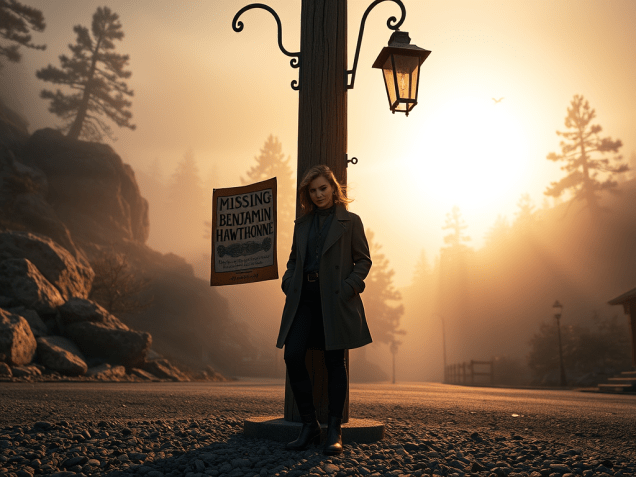
Clara’s boots crunched on the gravel. She walked to the crooked lamppost at the town square. There, a single bulletin board displayed the hand-painted flyer she’d come to see:

“Missing: Benjamin Hawthorne. Last seen at the Old Mill.”

Benjamin, a local schoolteacher, had vanished two nights before. He left only a trail of broken glass in his classroom. A smear of muddy footprints led into the woods. Clara studied the flyer’s edges—fresh tears around the corners told her someone had already pulled it down once. She taped it back in place and set off.

Her first stop was the Old Mill, its rotting wood groaning in the breeze. Inside, moonlight slanted through broken windows, illuminating desks overturned, and chalk dust still hovering in the air. Clara knelt by a desk. She noted the glass shards and a single, battered notebook. It lay open to a page filled with frantic mathematical equations. This was Benjamin’s lifework on the community’s crumbling dam.

Clara closed the book gently and pocketed it. The dam’s collapse would flood half the town; had Benjamin discovered a flaw and been threatened into silence?

As dusk fell, Clara meticulously combed through the Hawthorne farm. Benjamin’s aging parents stuttered about late-night visitors. Strange trucks idled on the gravel road, and their headlights flickered like watchful eyes. Their hands trembled as they described a low rumble, like a machine in the woods. Clara’s pulse quickened at the implication of clandestine logging or worse. She assured them she’d find Benjamin, her determination unwavering, then slipped out the back door.

By midnight, Clara was deep in the forest, tracking tire tracks that plunged toward the dam’s service tunnel. She shone her flashlight on fresh scuff marks along the tunnel walls. Heart pounding, she crept ahead until she heard a muffled voice. 

“Detective… over here.” 

Benjamin emerged from the shadows, bruised but alive, clutching the dam’s blueprints. 

“They wanted me to falsify the safety report,” 

He whispered. 

“When I refused, they locked me up.” 

Clara’s eyes narrowed as headlights flared above ground—masked men were coming back. Benjamin was by her side. She retraced her steps. She used the winding tunnel to slip past the guard trucks waiting at the entrance.

When they burst into the open, Clara raised her badge like a beacon. 

“State Police—step away from the dam!” 

Her command sent the conspirators scattering into the trees. Moments later, sirens rang in the distance—backup arrived earlier to secure the scene. In the stillness that followed, Clara handed Benjamin his blueprints. 

“Now the town knows the truth,” 

She said. As the first light of dawn filtered through the pines, Pine Hollow exhaled, its secrets finally laid to rest. 

The collective sigh of relief was relatable as Detective Vale boarded the morning bus, ready for whatever mystery came next.

Life with Otis: The Rascal Dog’s Adventures

By Benjamin GroffMedia© | benandsteve.com | 2025 Truth Endures©

1–2 minutes

Otis the Rascal

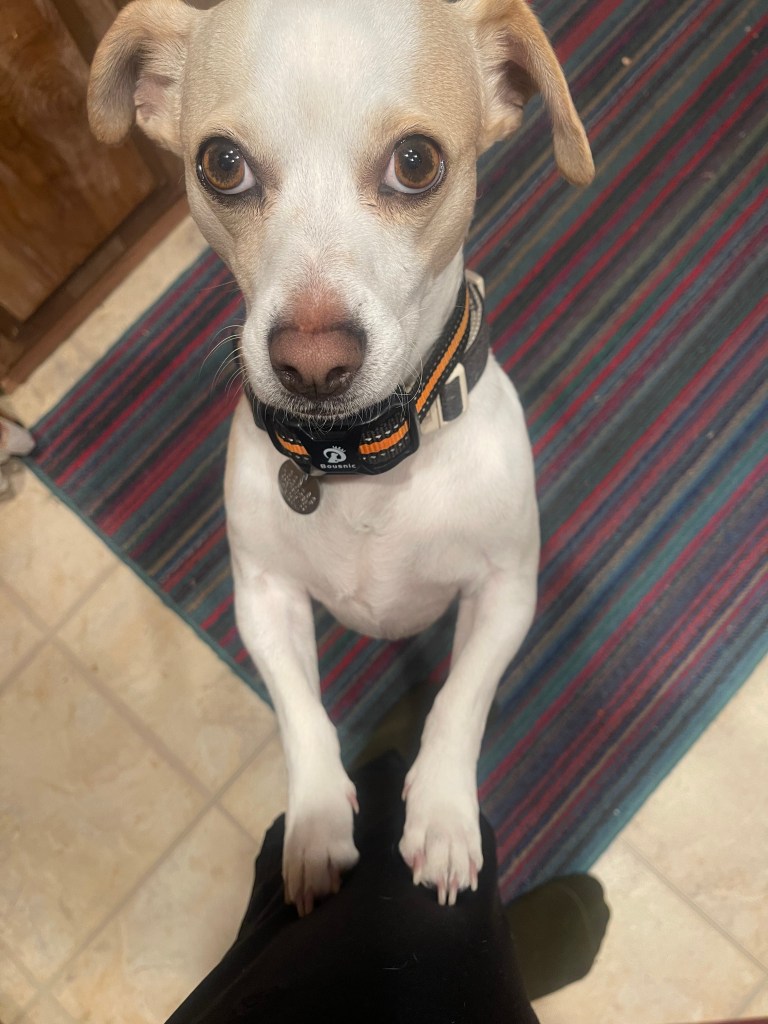
Our dog Otis is a handful—and that’s putting it mildly. He’s been part of our lives for over eight months now, and frankly, he has us wrapped around his paw. That’s how I see it, anyway.

Each morning, I dig into news articles. Meanwhile, Otis curls up on my lap. He looks like the innocent angel he most definitely is not. Don’t be fooled by the calm exterior—he’s always on high alert. He knows the sounds of the mail truck, the delivery van, and anything that dare to approach our house. With every rumble outside, he barks thunderously. He is desperate to storm the front lines. If only that pesky screened door weren’t in his way.

A simple knock on the door transforms Otis into a spinning, barking whirlwind. Imagine a Tasmanian devil with a bark louder than his bite (but don’t tell him that). He’s so protective that we often must hold him back when company arrives. Sometimes, he gets so worked up. He earns a timeout in his kennel. There, he huffs in protest like a disgruntled dragon.

Sunday was a special day—Otis got to join us for a visit with friends, one of his all-time favorite activities. He made nice with their dog, at least at first. But soon, his sly, bullish side took over. He snatched the ball and refused to return it, parading it like a trophy, asserting his love for socializing.

After a long day of play, Otis stayed awake the entire ride home, refusing to miss a moment. He joined us for some late-night TV, eyes heavy but stubbornly open. When bedtime finally arrived, he collapsed into a deep sleep filled with dreams. He was chasing tennis balls. He also was reliving his glorious day of dominance and friendship. I like to think he also dreamed of the day he outsmarted the mail truck.

Lost in the Forest: A Night of Mystery

By Benjamin GroffMedia© | benandsteve.com | 2025 Truth Endures©

2–3 minutes

The Night Hunt

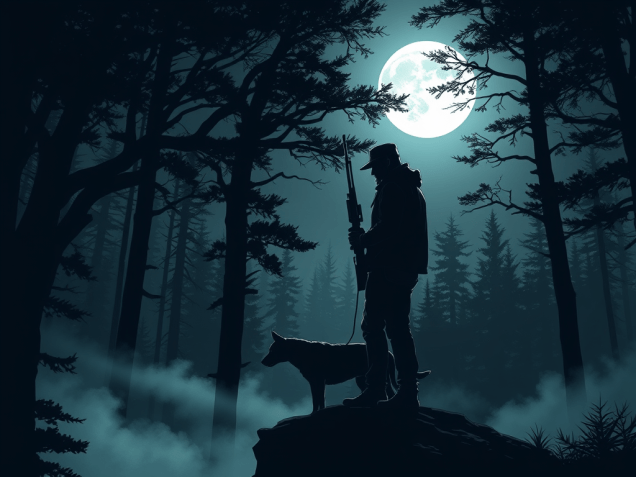
It was a night like any other in the deep woods outside Willow Creek. Forty years ago—give or take—a man and his dog set off for one of their usual late-night hunts. The man, grizzled and silent, kissed his wife on the forehead and muttered something about a long run. She barely looked up from her sewing. She was accustomed to his absences. He needed to run beneath the moonlight with only a rifle and his hound for company. She didn’t ask where he went. He never said.

The forest swallowed them quickly. Trees leaned in like eavesdropping strangers, and the undergrowth whispered beneath their boots and paws. The dog was a wiry black mutt with a white streak down its spine. It caught the scent of something just beyond the bend. It bolted. The man, cursing but grinning, gave chase.

They ran deeper and deeper into the overgrown trail for what felt like miles until the land suddenly disappeared.

The dog reached the edge of the cliff first. It barked, wild and electric, then dove headlong into the dark.

The man reached the edge just in time to see nothing at all. No bark. No rustle. There is just silence and blackness below. Without hesitation—without fear—he followed.

And that’s where the story ends, at least in the world we know.

The man awoke beside his dog in another place—somewhere between dream and fog. The stars above were fixed in unfamiliar constellations, and the air hummed with a silence too perfect to be real. He stood, brushed off dust that wasn’t dust, and called out.

No echo returned.

For years—or was it minutes?—he and the dog wandered this pale mirror of the forest they once knew. Sometimes, they saw flickers of their old lives. His wife was crying at the hearth. His brother was digging through the old footlocker for the will. But they couldn’t speak, they couldn’t reach, they only watched.

The man no longer aged. The dog’s coat remained pristine. Together, they waited—for what, neither capable of saying.

Then, one night, they heard something rustling through the brush ahead. They walked a trail that hadn’t been there before. The dog tensed. The man raised his hand. A shape moved—slowly, purposefully.

It was another hunter. Rifle slung over his shoulder. Dog at his side. Eyes vacant. He looked familiar.

The man called out. The hunter looked through him, then walked past.

The dog growled, uneasy.

And from the darkness behind them, a second pair of footsteps began to follow. They had found the lost forest of hunters who had died without a place to go.

The Memory Game: A Humorous Tale of Aging

By Benjamin GroffMedia© | benandsteve.com | 2025 Truth Endures©

2–4 minutes

“The Memory Game”

Earl and Edna had been married for fifty-two years. In those five decades, they had developed a comfortable rhythm, like an old song they both knew by heart. Lately, the lyrics were getting harder to remember.

It all started on a Tuesday morning when Earl stood in the living room, scratching his head.

“Edna,”

He called,

“have you seen my glasses?”

“They’re on your head, Earl,”

Edna replied from the kitchen, her voice tinged with amusement.

Earl patted his scalp and chuckled.

“Well, I’ll be. Guess I’ve been wearing ‘em this whole time.”

But later that day, Edna forgot to turn off the iron. This left a suspicious scorch mark on Earl’s good slacks. That evening, Earl nearly brushed his teeth with muscle ointment. The next morning, Edna scheduled a doctor’s appointment—for both of them.

At Dr. Preston’s office, they sat side by side, holding hands, looking like two nervous schoolchildren awaiting their report cards.

“Doctor,”

Edna began,

“we’re both starting to forget things. Little things, mostly, but…”

Dr. Preston smiled kindly.

“That’s perfectly normal as we get older. One strategy that helps is to write things down. Keep a notepad handy, leave little notes where you’ll see them. It makes a world of difference.”

Earl snorted.

“Write things down? My memory’s just fine. It’s Edna’s that needs the fixing.”

Dr. Preston gave them both a knowing look.

“Just try it. You’ll thank me.”

When they got home, Edna felt a nap coming on and settled into her recliner with a cozy blanket. Earl switched on the TV, flipping channels, landing on a baseball game he wasn’t really watching.

After a while, Edna sat up.

“Earl, dear, would you go to the kitchen and get me a dish of ice cream?”

Earl muted the TV.

“Sure thing, sweetheart.”

“And write it down, so you don’t forget.”

Earl waved her off.

“Nonsense, Edna. It’s a dish of ice cream. I’ve got it.”

“But I’d like strawberries on it too,”

She added.

“And whipped cream.”

Earl tapped his temple confidently.

“Ice cream, strawberries, whipped cream. No problem.”

Edna gave him a skeptical look.

“You sure you don’t want to write it down?”

Earl shook his head and marched into the kitchen.

For the next fifteen minutes, Edna listened as pots clanged. Cabinet doors creaked. The microwave beeped, and something—was that the blender?—whirred loudly.

Finally, Earl returned, triumphant, a plate in his hands.

“Here you go!”

He declared, setting the plate on her lap.

Edna stared at the plate. Bacon. Eggs. A sprig of parsley.

She looked up at him with an exasperated sigh.

“Earl, where’s the toast I asked for?”

Earl blinked, confused.

“Toast?”

Edna shook her head, laughing despite herself.

“Looks like we’re both making notes from now on.”

Earl sat down beside her, rubbing his chin thoughtfully.

“Maybe we should just order takeout.”

And together, they chuckled, holding hands, as the baseball game played softly in the background.

After a moment, Earl squinted at the screen.

“Edna… do you know who’s winning? I can’t tell.”

Edna grinned slyly.

“That’s because, Earl… you’re on first base.”

Earl frowned.

“I’m on first base?”

“No, no,”

Edna said, shaking her head with mock seriousness,

“Who’s on first.”

Earl’s eyes widened.

“Who’s on first?”

Edna corrected, her eyes twinkling.

“No, Who’s on third,”

They both burst out laughing. They cackled until they were wiping tears from their eyes. The baseball game was long forgotten. Their memories were momentarily lost, but their joy was perfectly intact.

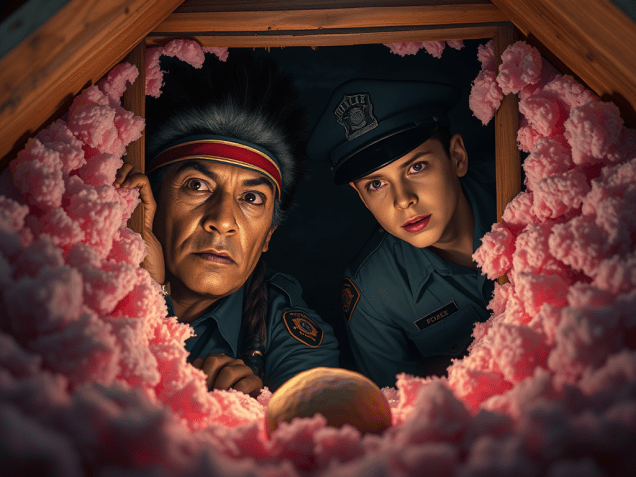
Inside the Attic: Capturing a Dangerous Fugitive

By Benjamin GroffMedia© | benandsteve.com | 2025 Truth Endures©

2–3 minutes

Early in my law enforcement career, I rode with some of the best in the business. These included David “Booty” Ware, Bruce Poolaw, Junior Toehay, Don Gabbard, and Buttin Williams. All were Native American except for Gabbard, a character in his own right.


By the time I was 19, I had experienced more than most people do in a lifetime. I was just getting started.


One day, nearly every law enforcement officer in the county joined a search. They were looking for a man named Virgil Bass. He had a felony warrant and was considered dangerous. Virgil had vowed he wouldn’t go to jail without a fight. If anyone tried to arrest him, he’d either kill them or die trying.


We started early that morning, sweeping from one end of the county to another. By evening, we reached Virgil’s parents’ house on the county’s west side. We surrounded the place, each of us watching for any sign of an escape.


Bruce and I approached the door and stepped inside. His parents claimed they hadn’t seen him, but they kept glancing up at the ceiling.


Bruce, all 6’6″ of him, said firmly,

“We need to check everywhere.”


We made a show of slamming doors, stomping around, acting like we’d searched every corner. Then we got to the attic.


Bruce looked at me.

“You’re the only one who’ll fit up there. I’ll give you a boost.”


Before I knew it, my head was poking through the attic opening. It was pitch black. I called down,

“I need a flashlight!”


I was half-expecting a two-by-four to come crashing down on me—or worse. If Virgil was up there, he saw me silhouetted by the light from below.


Bruce handed me his flashlight. I pulled myself up until my arms were entirely inside the attic and swept the beam around. The attic was filled with fluffy pink insulation. One spot was different. A trail led from the opening to a lumpy insulation patch. About five feet away, the insulation looked disturbed.


I looked down at Bruce.

“I need a poker iron.”


I heard Bruce ask the family if they had one, and he handed it to me within seconds. I jabbed the iron into the lump, then thought better of it and started whacking the hell out of it.


Suddenly, there was yelling and cursing, and Virgil burst out of the insulation.


“Stop it! Stop it! I give up!”

he hollered.


I ordered him to follow me down, and once he was out, we cuffed him. We took him outside to Booty’s patrol car. Booty looked at the lump rising over Virgil’s eye. He asked,

“How’d that happen?”


I shrugged.

“He fell on a poker iron.”


The whole crew burst out laughing. After all, it’s easy to fall on a poker iron. This is especially true when hiding in an attic after threatening to die before going to jail.

Surviving Apocalypses: Earl’s Hilarious Journey

By Benjamin GroffMedia© | benandsteve.com | 2025 Truth Endures©

2–3 minutes

“How Earl Survived the End of the World (Three Times In One Week)”

It all started on Monday when the news said the world was ending. Again.

“Experts warn: AI, killer bees, and rising sea levels converge by Wednesday,” read the headline on Earl’s phone. He sighed, sipped his lukewarm coffee (the microwave broke last week—tragic), and Googled “How to survive multiple apocalypses.”

Step one: hoard supplies.

Earl ran to the grocery store, but unfortunately, so did the entire neighborhood. All that was left on the shelves were 37 cans of creamed spinach and one gluten-free hot dog bun. He grabbed both. Earl wasn’t proud.

Step two: fortify your home.

This was trickier. Earl’s DIY skills peaked at assembling an IKEA lamp in 2014 (and even that leans a little). He taped bubble wrap over the windows. He stacked his furniture into a makeshift barricade. He hung a sign on the door that read: “Beware of Dog (or raccoon—honestly not sure anymore).”

By Tuesday, the threat had shifted. AI wasn’t trying to destroy us; it just wanted us to finish a customer satisfaction survey. Earl politely declined. The bees were delayed due to weather conditions. The sea levels were rising slowly. Earl figured he had time to finish his Netflix backlog.

Then came Wednesday.

That’s when the real disaster struck:

🚨 The Wi-Fi went out. 🚨

Earl sat there, blinking into the void, unsure how to continue. How does one live without memes? How do you know what to be outraged about if you can’t check Twitter?

Earl tried reading a book. (Printed words? On paper? Barbaric.) He tried talking to my houseplants. Phil the fern judged him silently.

Finally, Earl ventured outside — mask on, hand sanitizer holstered like a gunslinger — only to discover ––

The neighborhood kids had set up a barter system.

“Two rolls of toilet paper for a bottle of sriracha!” 

One kid yelled.

“Half a pack of Oreo’s for an iPhone charger!”

Another bargained.

Earl traded three cans of creamed spinach for a Wi-Fi hotspot code—the best deal of his life.

By Thursday, the headlines read: World Fine (For Now).” 

Earl sighed in relief –– until he heard a knock at the door.

A drone hovered outside, lowering a package. Earl opened it to find:

A “survival for beginners” guidebook

An emergency avocado (slightly bruised)

A note that read:

“Stay tuned. Apocalypse 2.0 beta release coming Friday.”

Earl looked up at the sky, took a deep breath, and whispered:

“I’m going to need more creamed spinach.”

Kidnap Attempt Foiled: A Cop’s Gripping Night Shift

By Benjamin GroffMedia© | benandsteve.com | 2025 Truth Endures©

4–6 minutes

It had been a strange, unsettling night.

Officer Tim Roff
Tim Roff

The mid-shift clocked out at 0200 hours. Officer Tim Roff was left alone on the graveyard shift. He was the only officer covering the North and South Districts. Every radio call felt heavier. Every silence stretched longer. He hoped the mutual aid agreement with neighboring jurisdictions would hold if things spiraled beyond his reach. But for now, it was just him, his determination a steady flame in the darkness.

Alone.

Roff approached every call with a practiced urgency. He arrived fast, assessed fast, and moved on fast. Each moment was calculated to cover as much ground as one man can.

At 0330 hours, the dispatch’s voice crackled over the radio, sharp and urgent:

“Tim, we’ve got a report. The male suspect drove an older blue Chevy Monte Carlo, heading to 230 North Madison Street. Planning to kidnap a child from the grandmother watching them tonight.”

A chill settled in Roff’s chest. Alone or not, this couldn’t wait. Dispatch gave him a phone number for more intel.

Patrol Division Night Duty
On Patrol

He stopped briefly at the north division substation and called the number. The story spilled out: Robert Sams, 38 years old, white male, born February 20th, was not alone—he was bringing others. He didn’t have custody of the children, but he was coming to take them anyway. He was planning to run, wanting to force the mother’s hand.

Roff parked his cruiser near the house and waited. Time slowed. Every passing headlight made his pulse jump. Then—there it was. Like clockwork, the Monte Carlo crept down NW 23rd and turned onto Madison. Roff pulled in behind. He hit the emergency lights and followed as the car swung into the driveway. The tension in the air was palpable.

Before Roff even opened his door, the driver bolted for the house.

“Damn it,”

Roff muttered, keying the mic.

“Need backup.”

But the nearest unit was a reserve officer, miles away, filling in from another city—not tonight.

Roff watched the front door swallow the man and grimaced.

“What is this?” he muttered bitterly. “National Take-the-Night-Off Day for cops—and no one told me.”

When backup finally arrived, Roff pointed to the car’s occupants.

“Watch them—don’t let anyone leave.”

Then he approached the front door and knocked.

A woman opened it, anxious, shifting on her feet.

“He ran out the back,”

she said.

Roff’s instincts flared. He circled to the rear, scanning the rain-soaked earth outside the back door. Not a single footprint. Untouched. She’d lied.

He jogged back around. His heart pounded harder now—not from the chase. It was from the relentless math of being outnumbered and alone. The fear was a heavy burden on his shoulders.

He called to the backup officer, loud enough for the woman to hear:

“If anyone comes out the back—shoot!”

He knew it wouldn’t happen, but fear was leverage.

Facing the woman again, he leveled his voice.

“I know you’re lying. If you don’t come clean, I’ll take you in for harboring a fugitive.”

It wasn’t airtight, but it was enough.

Her shoulders sagged.

“He’s in the garage,”

she admitted.

“Under the table.”

She led him through the house. At the garage door, Roff drew his sidearm. Alone again, with no cover. His stomach clenched.

“Come out,”

he commanded,

“or I’ll shoot.”

A shaky voice from under the table:

“Don’t shoot! I’m coming out!”

Roff cuffed Sam and walked him to the cruiser. He identified the other passengers and radioed dispatch for warrant checks. One by one, the answers came: felony warrant. Felony warrant. Felony warrant. Every single one.

Four prisoners. One patrol car. A 25-mile drive to the county jail. And no one else to cover his city.

Roff radioed neighboring agencies asking them to cover calls if any came in. Then he called the sheriff’s office for the official notification ––

“County, be advised I am 10-15 four times to your location. If there are any calls for my area, ask area units to cover calls per the mutual aid compact.”

He locked them in, buckled them tight, and checked the restraints twice. Just as he closed the last door, a car pulled behind him. A woman stepped out, flashing her ID—the child’s mother.

“It’s over,” Roff told her. “We stopped it.”

She followed him inside and retrieved her child. Relief flooded her face as she hugged her baby, her tears a testament to the fear she had endured. She left, her steps lighter, her burden lifted.

Roff radioed the sheriff’s office,

As Roff pulled onto the highway toward the jail, the prisoners chatted pleasantly in the back seat. Their casual demeanor was unsettling, given the gravity of their crimes. But Roff’s nerves stayed taut. His eyes flicked to the mirror every few seconds. He was alone with four felons and had 25 miles of dark road ahead.

At the jail, the booking officer whistled when he saw them.

“You win tonight’s prize, Roff. Biggest catch I’ve seen from one guy in a long time. Hell it will probably hold as a record for a month or two.”

Roff just nodded, the weight of the night still pressing against his chest. The adrenaline was fading, leaving a hollow feeling. He was alone again, with the echoes of the night’s events reverberating in his mind.

From Alps to Illinois: Ulrich L. Groff’s Inspiring Life Story

By Benjamin GroffMedia© | benandsteve.com | 2025 Truth Endures©

3–5 minutes

The Life and Legacy of Ulrich L. Groff

Ulrich Groff Sr.

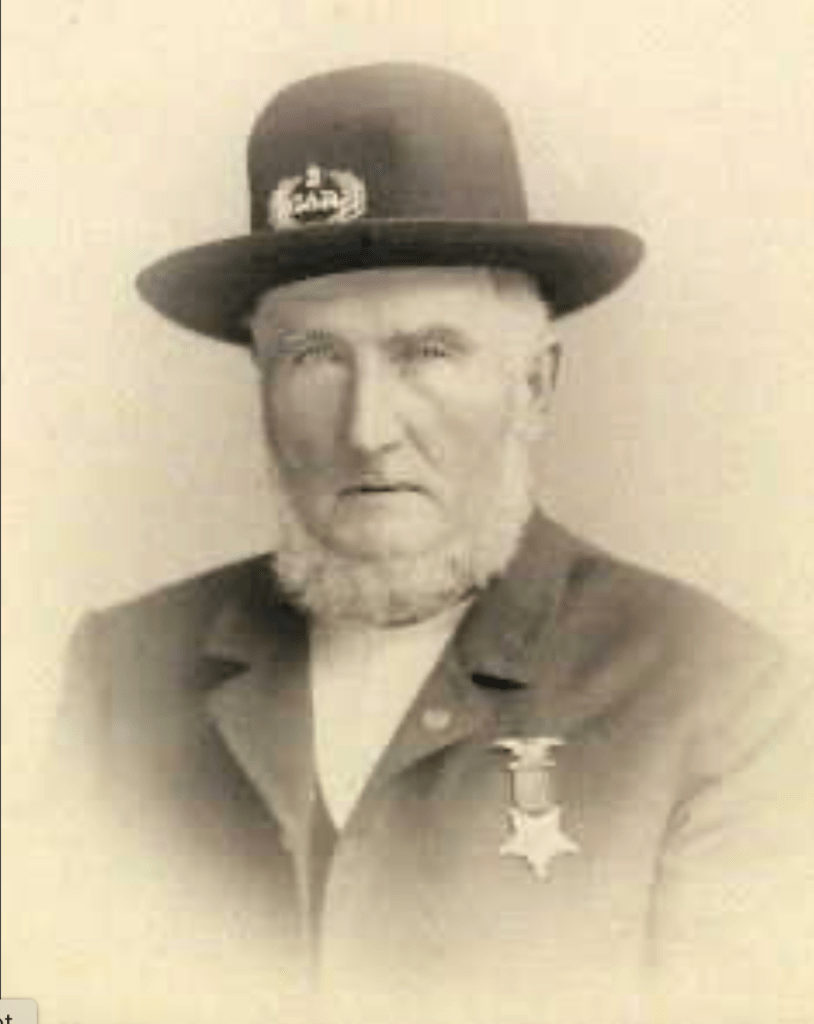
Ulrich L. Groff was born on October 8, 1848, in the alpine village of Wengen, nestled in the canton of Bern, Switzerland. Ulrich and Mary Miller Groff were Swiss natives. They were described on their immigration papers as “tillers of the soil.” These were farmers seeking a better future. In Switzerland, the Groff family lived in a small but close-knit community. It was in this environment that Ulrich learned the values of hard work. He also learned perseverance and family unity.

In 1852, when Ulrich was just four years old, the Groff family made a monumental journey to America. 

Their voyage took them across the Atlantic Ocean. This information is from family records shared by Sylvia Little, the mother of Jackie Lee Little. They traveled aboard one of the last great sailing ships. The journey lasted a whole month at sea before they landed in the port of New Orleans. From there, the family traveled north through the Wabash and Illinois Rivers, eventually arriving in Vincennes, Indiana.

There, they purchased wagons and teams of oxen to make the final leg of their journey. The Groffs settled in Richland County, Illinois. They would lay down roots and build a new life from the ground up. They faced challenges like language barriers, unfamiliar customs, and the harshness of the American frontier.

By 1860, the Groffs had firmly established themselves in Claremont Township, Richland County. The census that year listed young Ulrich as a ten-year-old student, attending school alongside his brothers Michael and Joseph. His father, a determined farmer, was farming 640 dollars’ worth of land—no small feat for an immigrant family. It was a humble beginning but one filled with purpose and promise.

On December 6, 1870, Ulrich Jr. married Martha Allen Eaks in Richland County. Martha had been born in Cannon City, Tennessee, on December 11, 1849, to William C. and Frances Eakes. Ulrich and Martha began a family together and raised their children on the Illinois prairie.

Ulrich Groff Jr. And Family

By 1880, Ulrich was a working farmer, and he and Martha had three sons: Ira Allen, Harvey S., and Otis E. Over the years, their household expanded to include nine children, with Benjamin H. Groff I. becoming a middle child. Eight of Ulrich Jr.’s children survived to adulthood. The Groff household, a warm and united family, also became a multi-generational home. By 1900, Ulrich’s mother, Mary, was a 74-year-old widow. She had survived the long journey from Switzerland. She also overcame the challenges of building a life in a new land. At that time, she was living with the family.

Martha passed away on February 22, 1906, at 56, and was laid to rest in Eureka Cemetery in Claremont. In 1909, Ulrich remarried, taking Ellen L. Richter of Olney, Illinois, as his wife. Ellen had been born in Bullitt County, Kentucky, to James and Catherine Yates Richter. Ulrich and Ellen had no children together. Later, they helped raise two grandchildren, Cleo and Walker. They stepped in after the children lost their father, Odis Edward Groff.

Ulrich bridged two continents and saw a century of change. He became a U.S. citizen in 1869 and worked on Illinois soil, much like his ancestors did in Switzerland. He never learned to read or write but valued education and ensured his children access it. His life was defined by perseverance, faith, and the quiet strength of a man who carried his family’s burden. Ulrich also became a respected member of the Richland County community. He was known for his hard work, honesty, and willingness to help others.

Ulrich Jr. passed away on June 6, 1927, at the age of 78 years, 7 months, and 29 days. He was buried beside Martha in Eureka Cemetery. Ellen lived on until 1939 when she passed away at the age of 82. She, too, was buried in Eureka.

The legacy of Ulrich L. Groff endures in the farmland he once tilled. It continues through the descendants he raised. The journey his family made was filled with hope. It was marked by courage and the will to start again. They traveled from the Alps of Switzerland to the heartland of Illinois.

Before Otis passed away, he and Ulrich’s son, Benjamin, discovered land in Oklahoma. In the early 1900s, they began farming it together. Benjamin and his sister, Laura Alice Dowty, eventually settled there permanently. They raised their families there and spent the rest of their lives on that land.

The Burden of Inaction: A Haunting Missed Call

By Benjamin GroffMedia© | benandsteve.com | 2025 Truth Endures©

2–3 minutes

A Missed Call

It was January 28th, 1986. Tim was driving to an appointment, his car weaving through fifty miles of winding highways. The radio crackled with the morning news. The Space Shuttle Challenger was set to launch, carrying the first civilian teacher into space.

As the announcer spoke, a sudden, vivid image flashed in Tim’s mind—an explosion, fiery and bright. He gripped the wheel tighter. Then, just as quickly, the vision faded.

This wasn’t the first time. During his years in law enforcement, Tim had experienced moments like this—flashes of insight, warnings he couldn’t explain. Colleagues had asked how he knew things before they happened. He’d only ever shrugged and said, “I’ve got a sixth sense, I guess.”

A commercial break interrupted the news. Tim leaned back, letting the hum of ads drown out the unease rising in his chest. Don’t be ridiculous, he told himself. There are engineers, scientists—people much smarter than me working on this. Who am I to question it?

Then the news returned, live coverage from Cape Canaveral. As the launch countdown continued, Tim felt it again. A deep, cold shiver passed across his neck. Then he envisioned the same haunting image of destruction.

He reached for the dashboard, then pulled his hand back. Should I call? he wondered. Would they even listen? The idea of calling NASA felt absurd. What would I say? he thought. That I had a feeling?

No one would believe him. He’d be laughed off the line—or worse. He pictured himself in a hospital gown, locked behind heavy doors for making prank calls to a national space agency.

So he drove on.

At the appointment, Tim entered the lobby and stepped up to the front desk. Just as he began to sign in, a man burst from his office, wide-eyed.

“You won’t believe what just happened!”

He turned on the TV. On the screen, the Space Shuttle Challenger rose into the sky—and then disintegrated in a plume of smoke and fire.

Gasps filled the room.

Tim stood frozen. The weight hit him all at once. Not just the horror of what had happened but also the hollow ache remained. He knew he had seen it coming… and done nothing.

In the days that followed, he replayed it again and again. The moment he didn’t call. The chance he didn’t take. The voice he silenced.

If he had picked up that phone, maybe nothing would’ve changed. Or maybe someone would’ve listened. Maybe someone smarter than him would’ve paused for just a second. He would never know.

One thing became clear to Tim that day. The burden of inaction weighs heavier than the risk of being wrong.

If he was able do it over, he’d make the call.

No matter how crazy it sounded.

This story is from actual events. The names of those in the story were changed to protect their privacy.

The Heartfelt Impact of Loss in Law Enforcement

By Benjamin GroffMedia© | benandsteve.com | 2025 Truth Endures©

3–4 minutes

JOHN BLAZEK

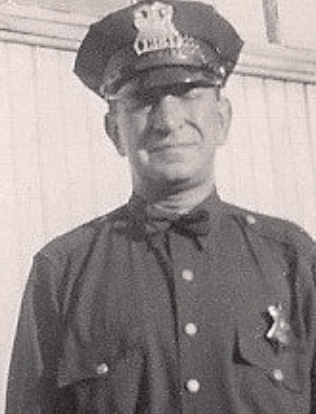
My grandfather had a host of brothers. Their father, Ulrich Groff Jr., had been married twice—the second time after his first wife died. Among my grandfather’s many brothers was one named Frank. In the family, he was known as Grand Uncle Frank or Great Uncle Frank, depending on who was telling. Frank lived a colorful, hard-worn life. He was the one who taught me how to ride a bike and always had a funny story to tell. He was raised on a farm. He worked odd jobs in his youth. Eventually, he found a steady calling with the Chicago Police Department.

Frank’s career on the force was mostly uneventful, at least by police standards. He would occasionally talk about the small-time crooks. He mentioned the drunks and the desperate people. He and his partner had to haul these people off to jail. But there was one story he told with a quiet solemnity—one that never left him. It was a time when being a police officer was a tough job, especially in a city like Chicago. The streets were rough, and the criminals should not be taken lightly.

Frank Groff

It was the night his partner died.

According to Frank, it had been a typical shift. He and his partner had picked up a couple of rowdy men, causing trouble. One of them shoved Frank’s partner during the scuffle. The man was quickly subdued and locked up. As far as Frank knew, it was nothing out of the ordinary. They had handled far worse and walked away without a scratch.

But the next morning, a knock at Frank’s door brought grim news. Fellow officers informed him that his partner, John Blazek, had passed away during the night.

John had hit his head during the scuffle—no one thought much of it at the time, including John himself. Like many men of his era, he brushed it off, finished his shift, and went home. Officer Blazek called a fellow officer to give him a ride. He didn’t feel quite right. Still, no one suspected anything serious. He went to bed and never woke up. The suddenness of his passing left everyone in shock and disbelief.

The official record read:

John Blazek

Patrolman John Blazek died after suffering a head injury. He fell or was pushed to the floor inside the 22nd District’s cell room. This incident occurred at 943 West Maxwell Street the prior night. He did not realize he had suffered a skull fracture. He attempted to go home at the end of his shift at 8:00 am. Blazek did not walk home and called another officer to pick him up. Once he got home, his condition worsened. He passed away the next day from the head injury.

Patrolman Blazek was a U.S. Army veteran of World War I who had served with the Chicago Police Department for 26 years. His sudden and unexpected death left a void in the community. His wife and two sons survive him.

Frank never quite recovered from that night. Though he stayed on the force, something in him changed. He stopped talking about the job as much. When he did, it was with a heavier voice. He had arrested many criminals and survived several street scuffles. Yet, the quiet death of his partner haunted him the most. They didn’t see it coming. He retired a few years later, and we see that the incident had taken a toll on him. He spent his days quietly, often lost in thought.

Years later, after Frank’s retirement, we found a worn copy of the police report. It was on John Blazek’s death and among his things. It was folded carefully into the pages of his Bible. Eventually, Frank passed on. On the back, in his handwriting, were the words:

“We don’t always know the moment something changes us. But we carry it. Always.”

Lloyd Bickerstaff: The Steady Voice of Elk City Police

By Benjamin GroffMedia© | benandsteve.com | 2025 Truth Endures©

3–4 minutes

The Quiet Backbone

Lt. Lloyd J. ‘Bick’ Bickerstaff E.C.P.D.

I keep a photo in a drawer in my desk. It is tucked beneath an old leather-bound notebook and a yellowing map of Beckham County. It’s a photo of Lloyd Joe “Bick” Bickerstaff. The image was taken about a month before his promotion to Captain with the Elk City, Oklahoma Police Department.

In the picture, Bick sits in his unit, his uniform crisp in the late autumn light. The shadows are long. The wind has just started to turn cold. That unmistakable Oklahoma sky behind him stretches flat and wide. It is quiet, open, and full of secrets. He wears a half-smile that says, 

“I’ve seen things, but I’ll carry them quietly.”

Bick and his brother were born in Sentinel, Oklahoma. I only heard his brother’s name once in passing. Sentinel is a patch of land barely big enough to hold the stories it carries. They began their careers as State Troopers with the Oklahoma Highway Patrol. The two brothers wore matching uniforms and chased something bigger than themselves.

But by the time I knew Bick, he rarely mentioned his siblings. I assumed time had done what it often does to families. Maybe there was a falling out—just distance. I never asked, and he never offered.

I knew he had a wife who baked cinnamon rolls on Sundays. He also had two children. One child was off in Sayre, chasing classes at a junior college. The other was a veterinarian who had graduated from Oklahoma State University. His life beyond the badge was quiet but rich. He even operated a small answering service—its operators worked right from his living room. You knew that life grounded him.

Nevertheless, Bick was more than just a veteran officer inside the department. He was the compass.

When rookies came in shaken from their first domestic call, Bick was the one who handed them a cup of bad coffee and said,

“It gets better if you let it.”

He never lectured. He just listened. And when he spoke, it was always worth hearing.

I remember the weeks leading up to his promotion. The department was shifting—a new Chief was being promoted, and a Major was moving up from Captain. Everyone felt the tremors of change. But Bick? He was steady and unmoved. I asked if he was nervous about entering a bigger role during such a turbulent time.

He just smiled that same quiet smile.

“Storms pass,” 

He said.

“Someone’s gotta keep the porch light on.”

He did more than that.

He held the whole house together.

Years passed. And then, like storms do, time took Bick from us. When the news came, I expected many familiar faces at the service. Officers from every corner of the state would be paying their respects. But they didn’t come. Time had moved on, and so had they. Somehow, the news of Bickerstaff’s passing hadn’t brought them back.

Elk City Police Chief Bill Putman did what mattered. He escorted Bick’s casket from Elk City to the Old Soldiers Cemetery in Oklahoma City. That quiet, deliberate ride said more than any ceremony. It was loyalty. It was respect. It was love.

I was there, too, standing back in the shadows as the service ended. I didn’t speak. Didn’t approach the family. I just paused long enough to leave a final tribute at the edge of his resting place. It was a farewell from someone who had seen firsthand what quiet strength looks like.

Maybe Bickerstaff would’ve preferred it this way. No fanfare. There is no parade of names—just those who mattered most.

I like to think I was one of them.

Bick was never the loudest voice in the room. He didn’t need to be.

But when he spoke, the room listened.

And when he left, the silence he left behind was deafening.

The echo he once carried over the radio has gone quiet. And somewhere out in Western Oklahoma, no one will ever hear that calm, steady voice call out again—

“Attention, all stations and units; stand by for a broadcast.”

Gallows Humor: Essential for First Responders’ Survival

Benjamin GroffMedia© | benandsteve.com | 2025 Truth Endures©

3–5 minutes

We had to invest a lot of time making each other laugh. Honestly, the truth behind what we dealt with every day was so damn depressing. I’m talking about my days in law enforcement. There were long shifts, chaos, and tragedies. We pulled practical jokes to stay sane.

We had an incredibly well-liked lieutenant. I admired him immensely. He was competent, dedicated, and a strong leader. Yet somehow, he always found himself in absurd situations. He was often under fire from the chief. I’ll admit, on more than one occasion, I have played a small role in those misadventures.

One day, we were in the breakroom. It never failed. Just as you were halfway through a cup of coffee, a call would come down. You’d have to bolt. Out of habit, everyone would set their half-filled cups on the vending machine on the way out. When we returned from a call, the lieutenant came in, frustrated. He began to reprimand everyone for making the breakroom look like a pigsty. This was ironic, given the usual state of his desk.

The Coffee Cup Incident
The Coffee Cup Case

He stomped to the vending machine and picked up the abandoned cups. The first few were empty, which he confirmed by holding them up to the light, right over his face. Then he grabbed one that still had coffee and did the same. It spilled directly onto his uniform. He stood there stunned, dripping. The rest of us just sat, silently watching like it was a movie scene.

I walked over, grabbed his tie, and wrung it out. A drip of coffee came out and landed on his boot. The whole shift erupted in laughter. The lieutenant stormed out, fired up his patrol car, and squealed the tires, leaving the station.

Unluckily for him, the chief had parked just down the street to watch the night shift in action. He saw the whole thing and chewed the lieutenant for over an hour.

Despite the pranks, the lieutenant and I had a solid bond. One time, he made a big announcement at shift change in front of everyone. He said he’d be riding with me to assess my patrolling skills. I just looked at him and said, “That’s fine, but you’re gonna have to sit over there and be quiet.” The room burst into laughter. He chuckled and said,

“Only you could get away with saying something like that.”

That was our partnership. He knew I’d undoubtedly have his back, no matter what. Off-duty, we were good friends. We went fishing together. We also vacationed with each other’s families. I had his back more than once when things got real in the field.

There were other moments, too. One traffic officer had a bad habit of leaving his patrol unit running and unlocked outside the station. It was just begging for a prank. One night, another officer and I gave in to temptation. My buddy hopped in the driver’s seat; I took the passenger side. He threw it into drive, and off we went—sirens blaring.

Inside, the officer was digging through his briefcase, organizing reports. When we took off, he jumped so high that he spilled the contents everywhere. Another officer watching couldn’t stop laughing long enough to explain that it was just us. The guy never left his car running again.

Someone had a bright idea once. They sprinkled paper punch-outs and glitter on the ceiling fan blades above the chief’s desk. The switch was right next to where he sat. We all gathered casually in the hallway outside his office the next day as he walked in and sat down. He flipped the fan on, and poof—a cloud of glitter and confetti rained down. He was not amused, but the image of him sitting there covered in sparkles was priceless.

It sounds like a waste of time to outsiders, but these pranks were how we coped. We had seen some of the worst humanity had to offer—child abuse cases, fatal car crashes, suicides. These moments of humor were survival mechanisms. It’s not unique to us; veterans, ER nurses, and paramedics do it. It’s often called gallows humor, and studies have shown it serves a psychological role. A 2022 article in Police1 explains the benefits of using dark humor in traumatic fields. It helps create emotional distance and encourages bonding. It also prevents burnout.

To the public, the jokes sound crude or inappropriate. But behind closed doors, it was how we held onto our sanity. This was true among those who carried the weight of human suffering daily. It was how we kept the darkness from winning.