
GROFF MEDIA 2024© TRUTH ENDURES IMDBPRO
Presented by benandsteve.com By: Benjamin Groff II©s

The Great Bison Incident (A True Story)
Carney had no idea what his neighbor, Ted Ortiz, had done. Ted had recently purchased what everyone around here called a buffalo—though, technically, they were bison. His grand idea? Cross-breeding the massive bull with his cattle. What is there to go wrong?
That morning, Carney had spent hours plowing one of his fields. When he finally finished, he hopped down from his tractor. He stretched his back and pulled out his packed lunch—a simple sandwich and a thermos of water. After a few quick gulps, he was ready to tackle the next field.
He set off across the pasture, taking his usual shortcut. Halfway across, he heard a deep, rumbling snort behind him. At first, he figured it was just one of Ted’s cows and kept walking. But then he noticed something—the snorting sound was moving with him.
Carney turned around and froze.
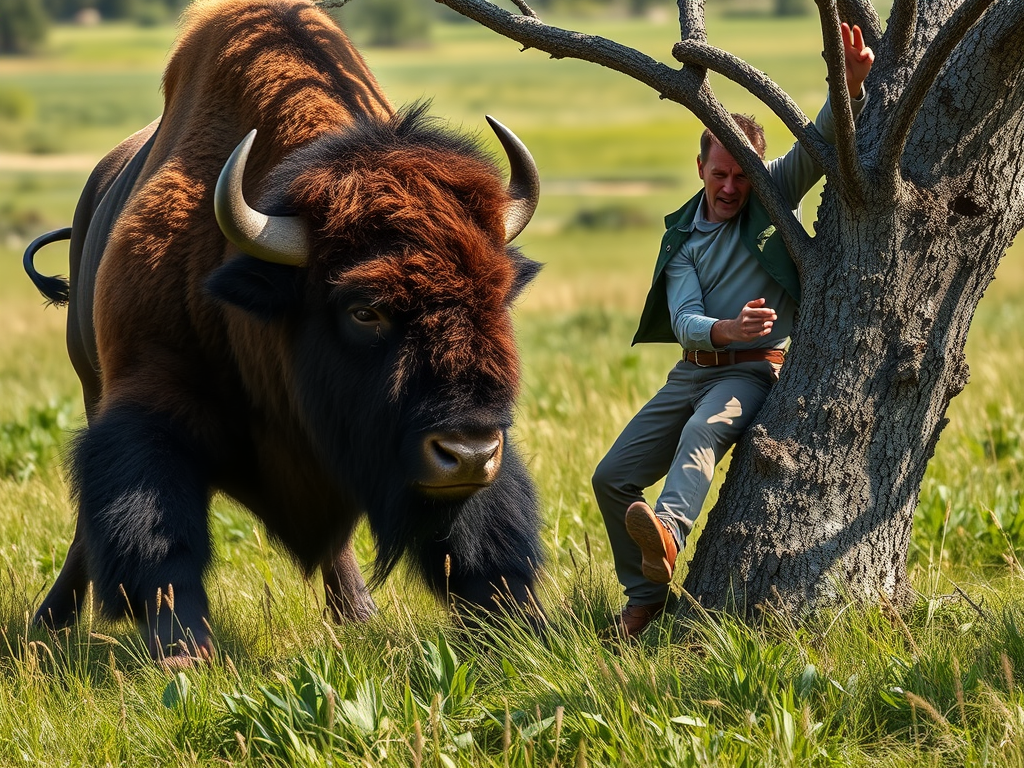
A massive, very annoyed bull bison stood just a few yards away. And Carney had unknowingly interrupted the beast’s afternoon of affection.
The bison pawed the ground, snorted louder, and locked eyes with Carney. He had seconds to decide—fall, play dead, or run like hell. He chose the latter.
Now, Carney was in his fifties. He was not exactly a sprinter, but he moved like an Olympic athlete when faced with a furious bison. His only hope was a nearby tree. He scrambled up, arms and legs flailing, barely reaching a branch as the bull slammed into the trunk below.
Unfortunately, Carney had picked the wrong tree.
It was dead.
The bison rammed it again. The whole thing groaned and wobbled. Carney had two choices—jump and run or ride the tree down like a doomed cowboy in a slow-motion disaster.
So he jumped. And ran.
And here’s where things took an unexpected turn.
Carney swears he made it to the fence, jumped over, and escaped without a scratch. But according to the newspaper, the story went a little differently.
The article claimed that the bison knocked the tree over after Carney hit the ground. Then it turned its fury back on him. Carney had no other options. He did the only thing he thought possible. He dropped to the ground. His face was down in the dirt, and he played dead.
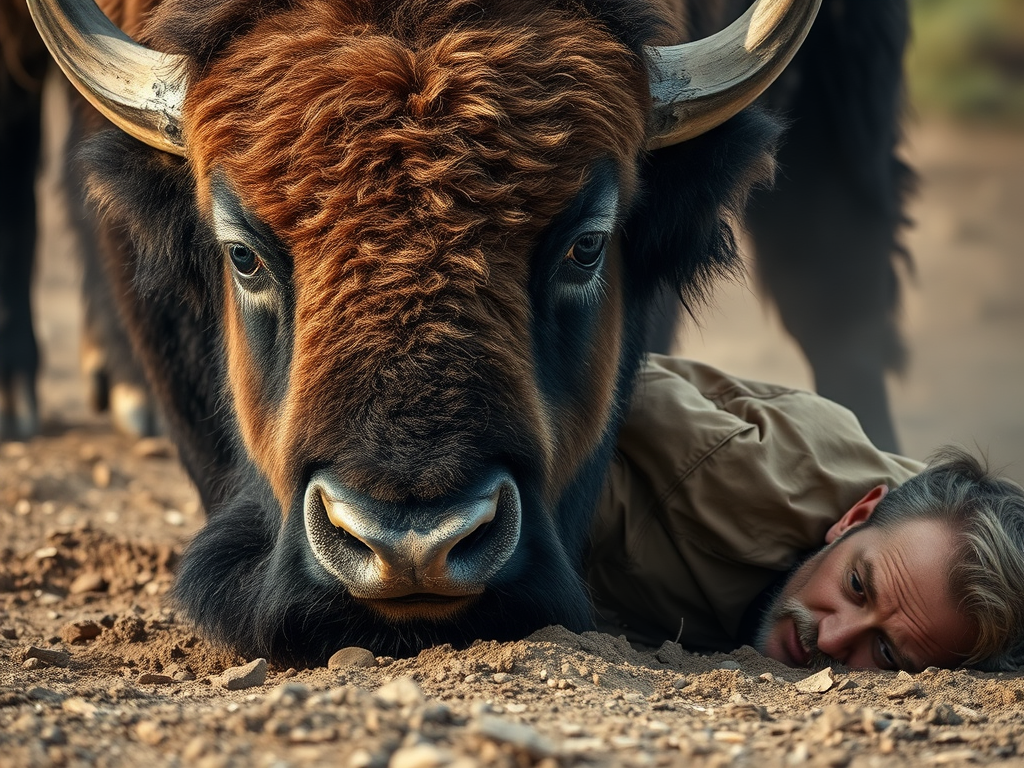
The bison approached, snorting, its heavy breath huffing across Carney’s back. It sniffed his head. His shoulders. His boots. Then, it reached his backside—and suddenly, something changed.
The bull gagged.
Its eyes watered, and its massive body trembled. The mighty beast gave a final snort of disgust. It turned its tail and bolted. The beast ran away as fast as its hooves carried it.
Carney, shaking but victorious, got to his feet and went to the other field. Before plowing, he had to detour into the nearest creek. He needed to scrub off whatever offended that bison so severely.

The newspaper never revealed its source for this version of events, but everyone had their suspicions. Most believed the town barber had something to do with it. After all, most of the town’s best stories started in his shop.
To this day, the Great Bison Incident resurfaces whenever the local men need a good laugh. It is a legendary reminder that sometimes survival comes down to sheer luck, including an unfortunate choice in lunch. It’s a tale that never fails to entertain.
This is a true story. The names have been changed to protect the privacy of those in real life.


 benandsteve.com