The Cat That Came To Dinner

A Story By: Benjamin Groff© Groff Media 2024© Truth Endures
It was the early 1930s, and the Oklahoma Dust Bowl swept through the Lower Plains States, leaving the land desolate. Sand drifts piled high against fence lines and buried the once-thriving crops. The sky, often a fiery orange, seemed to smoke under the relentless barrage of dust, with the sun reduced to a mere, dim glow fighting to penetrate the thick haze. In these trying times, the ingenuity of the people shone through. Cotton sacks and burlap gunny sacks, soaked in water, were draped over windows, turning the blistering wind into a cool, damp breeze—a crude yet effective method of finding relief from the unforgiving heat.

One late afternoon, as the sun struggled to set, casting long shadows across the Groff household near the Caddo-Washita County line, Florence ‘Mom’ Groff finished preparing the evening meal—known simply as “Supper.” The family gathered around the table, hands clasped in prayer, their faces etched with the lines of hard work and resilience.

But as they lifted their heads, ready to eat, a sound cut through the thick silence—a soft, sad meow. The children were the first to hear it, their eyes widening in surprise. Then Mom and Pop heard it, too, and a hush fell over the room.

Mom Groff had always wished for a cat, a companion to keep her company, and a mouser to guard the pantry. To her, the sound was nothing short of a divine blessing, a wish finally granted amidst the harshness of their lives. The family’s joy was palpable, a rare moment of lightness in a world often shrouded in dust. Their hearts swelled with hope and anticipation, their spirits lifted by the prospect of a new member in their humble household.

With a heart full of hope, Mom poured a saucer of milk and gently opened the screen door, its hinges creaking as she knelt. Mom propped the door open and called softly, coaxing the stray Cat into the kitchen’s warmth.

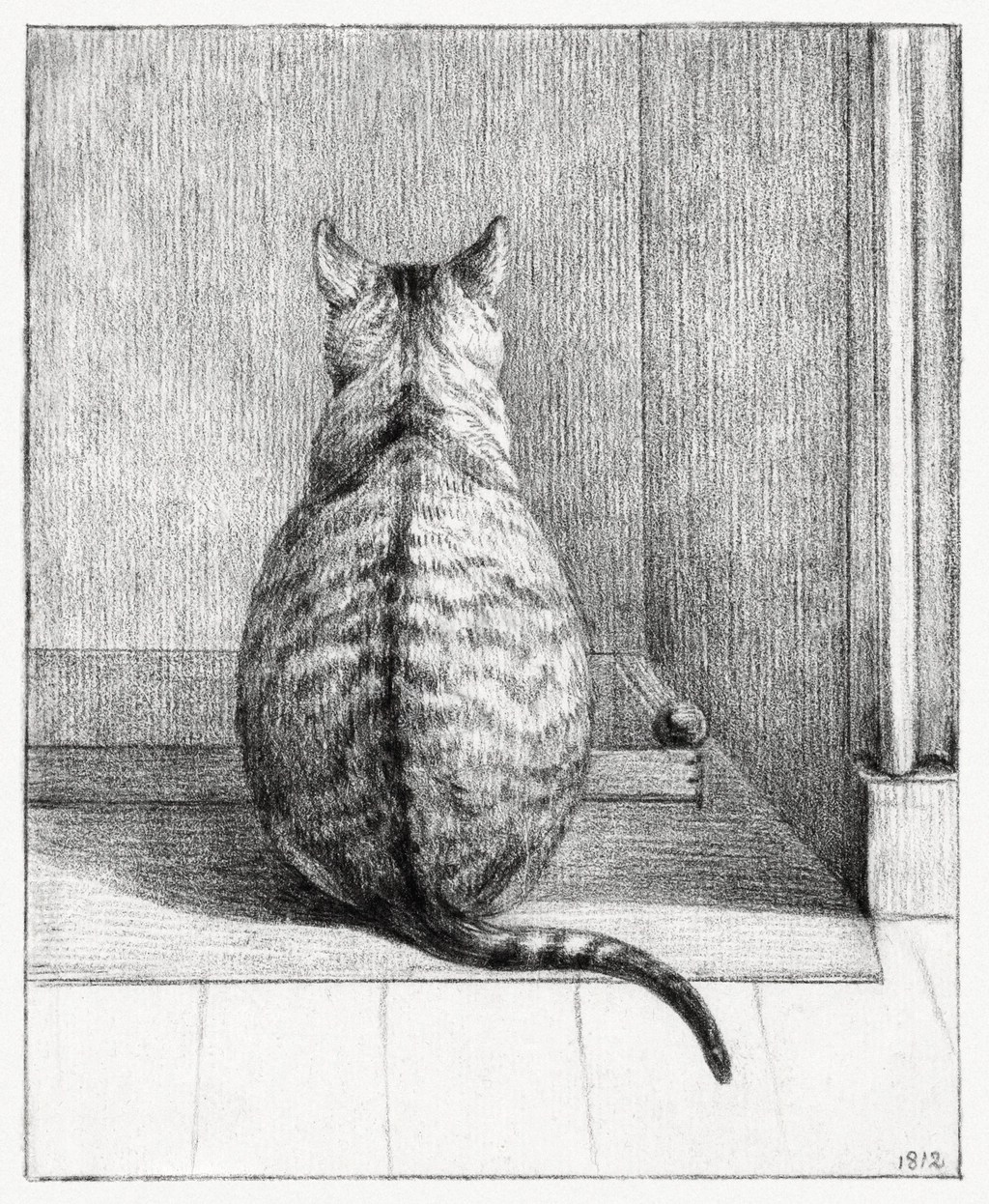
The Cat, a scraggly creature with dust-matted fur, cautiously stepped inside, its eyes wide and curious. It approached the saucer and began to lap the milk, its tail flicking contentedly. The family watched in silence, their smiles growing as they saw the Cat settling in, imagining it becoming a permanent household member.

But fate had other plans. Just as the Cat seemed at ease, a sudden gust of wind caught the screen door, slamming it shut with a thunderous WHACK! The noise startled the Cat, sending it into a frenzy. With a yowl that echoed through the house, the Cat leaped onto the dining table in a single bound, scattering dishes, plates, glasses, and silverware in all directions. Food splattered across the room, landing in the laps of the children and Ben, Mom’s husband, who sat stunned at the chaos unfolding before them.

Now in full panic mode, the Cat darted around the kitchen, running along the walls as if possessed, leaving deep scratch marks and a trail of destruction in its wake. The family could only watch in disbelief as the once-peaceful scene became utter chaos. Dishes clattered, food splattered, and the Cat’s wild antics turned the kitchen into a battleground.

Finally, Ben, known as “Pop,” rose from his chair with the calm of a man who had seen it all. He grabbed a broom and walked to the kitchen door, his face determined. As he held the door open, he quietly muttered, ––– “scat, you son of a bitch, you. Scat!”

“Scat, you son of a bitch, you. Scat!”

With that, the Cat shot out the door, disappearing into the dust-laden twilight, leaving behind a shambling kitchen and a family in stunned silence. The sudden departure of the Cat left the family in a state of shock, their hearts still racing from the unexpected turn of events. The once lively kitchen now stood in stark contrast to the chaos that had just unfolded.

The story might have ended there, but it became a cherished family tale, retold with laughter that brought tears to the eyes of those who heard it. My dad, JD Groff, was the one who shared it most often, his voice shaking with joy as he recalled Pop’s uncharacteristic outburst. Dad would always add with a chuckle, “Pop never cursed a day in his life until that damn Cat tore the hell out of our dinner table.”

An Old Truck For The Twins – A Promise From The Farm

A Story By: Benjamin Groff© Groff Media 2024© Truth Endures

Jessie and Frank, twin brothers, were not just ordinary farm boys. They were the backbone of their father’s farm, taking on the most challenging tasks that even grown men often avoided. They hauled hay, built fences, chopped wood, and tended to the livestock. Their relentless dedication and resilience inspired all who knew them. As they reached high school, they dreamt of a future beyond the farm, envisioning themselves attending an out-of-state university on agriculture scholarships.

At 17, the twins were nearly indistinguishable in appearance, voice, and mannerisms. Their mother, Ann, often found herself confused by their playful antics, while their father, James, could always tell them apart with a steely blue-eyed gaze that seemed to pierce straight through to their souls.

The boys had always known that their father had set a challenge for them: the one who excelled in school, worked hardest on the farm, stayed out of trouble by the time they turned 18, and would inherit their grandfather’s old truck. This truck, a symbol of their grandfather’s dedication to the farm, had been kept out of sight, locked away in a shed the boys were forbidden to enter. James had made it clear that if they ever crossed that line, the promise of the truck would vanish.

The truck was not extravagant, just an old farm pickup—a 1972 Chevrolet Cheyenne. Yet, in its prime, it was the epitome of rugged style, loaded with air conditioning, an AM radio, tilt steering, and optional cruise control. The dimmer switch was a silver push knob, and the wipers had three speeds: delay, slow, and fast. Its 350-horsepower engine with a four-barrel carburetor and dual exhaust pipes made it rumble in a way that the twins found irresistibly cool.

The story goes that their grandfather bought a brand-new truck when the twins were still in grade school. Disappointed, he told James to lock it away for one of the boys and returned to his old Cheyenne, never repurchasing another vehicle. He swore that nothing could replace the reliability and charm of that old truck.

As graduation approached, Jessie and Frank received their final transcripts and were thrilled to learn they both got accepted to their dream college. They had met all of James and Ann’s conditions, and the day of reckoning arrived on a Sunday before Memorial Day. The family gathered for a noon meal when Frank, unable to contain his excitement, suggested they finally see who would inherit the shed’s contents. Little did they know, the surprise of a lifetime was waiting for them.

James, with a knowing smile, opened both transcripts. –––

“Boys, you’ve always given your best on the farm and never brought shame to our family. But as you grow older, you’ll realize that in an instant, you can destroy everything your name stands for. You must protect it with everything you have by always being your best. Now, about these school results…”

Jessie and Frank exchanged curious glances. They knew they had done well in school, but their father’s words left them on edge. As James continued, his grin widened, and he looked at Ann and their grandfather. –––

“Damn it, I told both of you this would happen. I knew it!”

Ann, perplexed, interrupted. –––

“What are you talking about, James? You knew what?”

James continued with his monologue –––

“Ten years ago, when we locked that shed, I told you this would end in a tie. Those boys are identical in everything they do, even when they take different courses. And sure enough, they tied on their transcripts!”

Their grandfather chuckled. –––

“Well, it’s good I had another shed at my place, too. I knew they’d tie, and what was in that one shed wouldn’t be enough for both of them.

Jessie and Frank, quietly processing the unfolding events, began to understand the lesson their family had taught them all these years—hard work, equality, and family values.

James asked, –––

“Ann, did you know Pop had another shed down at his place?”

Ann shook her head, still in disbelief. –––

“No one told me a thing! You’d think someone would, but no—never a single word.”

James, towering over the dining table, spread his arms wide and declared, –––

“Let’s put an end to this and see what’s in the shed.”

Their grandfather suggested waiting until morning, but James insisted –––

“No, Pop. Let’s show the boys what’s in my shed. It may not be what they’re expecting, but it is what it is.”

The twins were baffled, unsure of what to expect. At the shed, James paused before unlocking the door and turning to Ann. –––

“What if they aren’t pleased? We’ve only fed, schooled, clothed, and sheltered them for 18 years. What if they don’t like what’s inside?”

Jessie, ever the joker, quipped, –––

“Well, only one of us will be disappointed, so you’ve got that going for you.”

As the shed door creaked open, lights flickered on inside, and their grandfather exclaimed, –––

“Hey! You’ve brought the stuff from my shed down here! How’d you do that?”

Inside were the old truck and two brand-new pickups—precisely like the ones Jessie and Frank had admired recently at a local dealership. The old truck, as promised, would go to both boys on one condition: they had to promise to keep farming the land when they returned from college.


True to their word, Jessie and Frank returned after college, not just as graduates, but as committed farmers. They continued the legacy of their family, working the land with the same dedication and resilience they had shown in their youth. They went into business together, selling signature meats and grains. The old truck became the symbol of their brand, preserved in pristine condition in a showroom at their farm headquarters. With under thirty miles on the odometer, it remains as good as new, touched only by the twins. Anyone else wanting that privilege must work on their farm for over ten years without complaint, earn top grades, and uphold the family’s good name.

The Bird That Couldn’t Fly Forward. A Case For The NSA And NASA

A Story By: Benjamin Groff© Groff Media 2024© Truth Endures

The bird that couldn’t fly forward. A family of birds hatched in a tree on a busy street in Brooklyn, on a branch above Olive Avenue. The tree stretched out over the sidewalk, and Cindy and Chad, two twins inside a set of apartments, could see the birds as they hatched. They called the birds Larry, Harry, and Barry. After characters from a children’s program, they watched each day.

Larry and Harry had wings with feathers that reasonably matched one another, but Harry had one white feather on his left wing that set him apart. Barry had white feathers on both wings and a white feathered head. He could have similar makings of a bald eagle, only had he been larger. The two kids enjoyed watching the mother feed the birds and often would get upset at how Larry and Harry seemed to bully Barry—sometimes stealing food that the mother was feeding to give to the birds.

When the birds grew older, their mother began nudging them out of the nest to teach them to fly. They would plummet to the ground, only to be lifted by the mother and nudged out of the nest again until they began to flap their wings and fly. Larry and Harry flapped their wings and began to fly short distances, finding branches to land on and steadying their weight before the mother would unbalance them and make them fly further. Barry was a different story.

When nudged out of the nest, Barry flapped his wings in the wrong rotation; his feathers seemed to ruffle in the opposite direction, and he began to fly backward. The kids sat in the window and laughed at first, thinking the bird would stop this funny maneuver and change his movement to flying forward, but his backward flying motion intensified.

Barry appeared to have an inner radar that guided him around obstacles that would be in his way that other birds would typically use their eyesight. He managed to fly better than typical birds and became famous in the neighborhood. People took videos and photos of the backward-flying bird and posted them on the internet, and Barry, the Backward Flying Bird, became a Viral Sensation worldwide.

NASA, NSA, and the National Security Agency also began noticing. Is this bird some device planted by an adversary, or did someone utilize some secret plan that was supposed to remain hidden at NASA? How could an animal mysteriously fly around and go backward?

As Barry’s fame spread, his unique ability to fly backward attracted the attention of curious onlookers and influential organizations. The NSA and NASA couldn’t ignore the viral videos any longer. The agencies began to speculate that Barry might be a highly advanced drone or an experiment gone awry. Was he an alien probe sent to observe Earth? Or a covert government project that had somehow been released into the wild? They needed to find out—and fast.
Cindy and Chad noticed unmarked vans parked on their street and people in suits and dark glasses speaking into earpieces one bright morning. The twins immediately knew that Barry had drawn more attention than anticipated. They watched anxiously from their window as the agents set up strange equipment under the tree where Barry and his brothers had hatched.

“They’re going to take him away!”

Chad exclaimed, worried.

“We can’t let that happen,”

Cindy said with determination.

The twins, fueled by their determination and love for Barry, quickly devised a plan. They now knew Barry’s flight pattern by heart; they had spent countless hours watching him. They waited until the agents were distracted, then quietly slipped out of their apartment, sneaking up to the tree.

“Barry!”


Cindy whispered, holding out her hand. Amazingly, Barry recognized her voice and fluttered down, hovering just above her palm, still flying backward. Their bond was unbreakable, a testament to the power of friendship.
At that moment, one of the agents noticed them.

“Hey! Get away from that bird!”

He shouted, but it was too late. Cindy and Chad sprinted down the street with Barry flying backward above them, just out of reach.

The chase through Brooklyn was both thrilling and chaotic. Barry’s backward flight confused the agents, unsure how to capture a bird that never flew where they expected. Barry expertly navigated through alleyways, over fences, and even under bridges, always just one step—or flap—ahead.

Meanwhile, the twins led him toward a nearby park, hoping to find some refuge. As they ran, Chad had an idea.

“We need to get him to the highest point in the park,”

He said. He can use that to his advantage.

They raced to the top of a hill, where a tall statue stood. Barry, sensing what they wanted him to do, flew to the top of the statue and perched there, still facing backward. The agents surrounded the park, closing in on them, but something unexpected happened.

Barry began to spin in circles, faster and faster, like a small whirlwind. The wind picked up around him as he did, swirling the leaves and dust into a mini-tornado. The agents, caught off guard, were forced to step back.

“Look at him!”

Chad shouted, amazed.

Barry created a vortex of air, using his unique flying ability to generate a mighty wind that pushed the agents back. The twins realized that Barry’s backward flying wasn’t just a quirk but a gift. And now, it was saving them.

The wind grew stronger, and soon, the agents were struggling to stay on their feet. With a final burst of energy, Barry released the vortex, sending a wave of air that knocked the agents off balance and caused them to tumble down the hill. The twins cheered as Barry floated down, landing gently on Chad’s shoulder. It was a victory, a testament to the power of uniqueness and friendship.

By the time the agents recovered, it was clear they were outmatched. Barry wasn’t just any bird; he was unique and had proven it.

Realizing they couldn’t take him away, the agents called off their operation. Later, they approached the twins with respect, not threats.

“We were wrong about Barry,”

One of the agents admitted.

“He’s not a threat—he’s remarkable. We want to study him, but only if you agree.”

Cindy and Chad looked at each other, then at Barry, who was now perched between them.

“You can study him,”

Cindy said carefully,

“but only if he stays free. He’s not just a bird—he’s our friend.”

The agents agreed, and from that day on, Barry became a symbol of curiosity and wonder. Scientists from NASA and the NSA studied his flight patterns from afar, learning from him without interfering in his life. Barry, the Backward Flying Bird, became an even bigger sensation, hailed as a hero for saving the day in Brooklyn.

Cindy and Chad’s bravery was recognized, too. The twins were invited to NASA to meet with scientists and learn about aerodynamics, space, and more. Their friendship with Barry became the subject of documentaries, books, and even a children’s program that other kids watched and loved.

Ultimately, Barry continued to fly backward, defying all logic and expectation. And while he may have seemed like a small bird in a big city, to Cindy and Chad—and the world—he was nothing short of extraordinary.

‘Jiggers’ Journey

A Story By: Benjamin Groff© Groff Media 2024© Truth Endures

Jiggers, a scruffy little terrier mix, never thought he’d find himself alone on a dusty country road. He had always been a good dog, or so he thought, despite the odd quirks that seemed to annoy his last owner. Jiggers had a habit of wallowing in the grass until he was covered in bites from yard bugs, which made him scratch and twitch endlessly. His owner, frustrated by Jiggers’ seemingly strange behavior, finally decided he had enough. Without a second thought, he opened the car door, shoved Jiggers out, and drove away, leaving the confused dog staring after the disappearing taillights.

Jiggers stood there for a while, his ears drooping as he tried to understand what had just happened. The sun was high, and the heat made the road shimmer like a mirage. Jiggers looked around, his nose twitching as he sniffed the unfamiliar air. He didn’t know where to go but knew he couldn’t stay there. He needed to find shelter before nightfall.

Not too far ahead, Jiggers spotted a farm with a large red barn and a farmhouse nestled among fields of tall corn. His tail wagged with hope as he trotted toward the house, his paws kicking up small dust clouds. The farmhouse looked like a safe place; maybe someone there would be kind enough to give him food and a place to sleep.

As he approached the porch, a heavyset woman with an apron tied around her waist stepped out of the house. 

Jiggers wagged his tail even harder, hoping to win her with his best puppy-dog eyes. But the woman’s face twisted into a scowl before he could even reach the steps. She grabbed a pan of water on the porch and hurled it at him, the cold liquid splashing across his fur.

“Get out of here, you mangy mutt!” 

she shouted, her voice harsh and unforgiving.

The woman’s cruel act left Jiggers shaken and confused. He couldn’t understand why she was so mean. All he wanted was a little kindness, but it seemed that wasn’t something he would find at the farm. The injustice of it all was palpable.

With his spirits dampened, Jiggers kept moving, his legs growing tired as the day wore on. He followed the road, unsure where it would lead him but knowing he had to keep going. After what felt like hours, he heard the sounds of children laughing and playing. His ears perked up, and he quickened his pace, thinking the kids would be friendly.

Jiggers rounded a bend and saw a small group of children playing in a yard. They were throwing a ball back and forth, their laughter filling the air. Jiggers barked happily and ran toward them, hoping they would let him join the fun. But as soon as the children saw him, they screamed and scattered in all directions. A stern-looking man came out of a nearby building, waving his arms and shouting.

“Get out of here, dog! You’re not allowed on school grounds!”

he yelled.

Jiggers skidded to a halt, his tail tucking between his legs as he realized he wasn’t welcome there either. He didn’t understand what he had done wrong. He was trying to find a place where he could belong. But it seemed like everywhere he went, Jiggers got met with fear or anger.

The sun began to dip below the horizon, casting long shadows across the road. Jiggers was tired, hungry, and more than a little scared. He had been alone for five hours, and the world seemed much more significant and scarier than he had ever imagined. He remembered watching television with his last owner, seeing shows where animals were left out in the dark, facing all sorts of dangers. He didn’t want that to happen to him.

Jiggers kept walking, his paws sore from the rough pavement. He didn’t know where he would sleep, but Jiggers knew he needed to find somewhere safe. As the last rays of sunlight faded and the sky changed to purple, Jiggers spotted a small, abandoned shed at the edge of a field. It wasn’t much, but it was better than nothing.

He squeezed through a gap in the door and curled up on a patch of dry straw in the corner. The shed was old and smelled musty, but it was quiet and hidden from the world outside. Jiggers rested his head on his paws and closed his eyes, trying to push away the sadness in his chest. He didn’t know what tomorrow would bring, but for now, he was safe, and that was enough.

Jiggers may not have found a new home that day, but he hadn’t given up hope. He was being a dog, and sometimes, that was all he could do. 

As he was about to drift off to sleep, a farmer entered the shed for a tool and saw Jiggers. The farmer was kind, got down on one knee, and called to the tired and frightened pup. Saying, –––

“You will be quite the surprise for the Misses. She’s been mightly lonely since Beau passed away. It is like you just got handed to us. Can we call you Lucky?” 

And, just like that, Jigger’s tail began wagging, and his life changed; plus, he went from being named for what someone thought was weird about him to what someone thought was the best thing in him!

The farmer picked up Lucky, cuddled him in his arms and carried him to his truck and together they rode to a new home where his new life would be full of love and pampering.

As you read his story, remember that you can make a difference in the lives of abandoned animals. Your support and care can improve their stories.

Echoes of Laughter: Nights at the Red Barn Café. ~ Cordell, Oklahoma 1968

A Story By: Benjamin Groff© Groff Media 2024© Truth Endures

The sun dipped low over the plains, painting the sky with hues of yellow and burnt orange. As dusk embraced the town, a familiar buzz began to build around the old auction barn. Trucks and trailers, caked in red dirt, lined the gravel lot. The air was thick with the mingling scents of hay, leather, and anticipation. But as the final gavel fell and the last winning bidder of the last horse to sell walked up to the young gelding and led him away, the real excitement shifted just east of the heart of Cordell: The Red Barn Café.

Perched on the corner of Main and Elm, the café’s crimson façade glowed warmly under the neon sign that blinked “Open.” Its rustic wooden doors beckoned the weary and the jubilant alike. A symphony of clinking glasses, spirited chatter, and the occasional burst of laughter filled the room.

Photo is simulated image, it does not represent the actual design of the actual Red Barn in Cordell.

Tonight was no different.

Big Jake JD Groff, a seasoned auction hand with a penchant for tall tales and horse trader, sauntered in, his boots echoing on the worn wooden floor, followed by his son, Benjamin, age 6. Jake tipped his hat to Mary Lou, the ever-smiling waitress who’d been serving slices of pie and pots of coffee since anyone could remember.

“Evenin’, Mary Lou. Got any of that pecan pie left?” Jake drawled.

“For you, Two-Bit? Always,” she winked, scribbling his order.

At the corner booth, a group of cowboys huddled close, their hats resting on the table, revealing sweat-stained brows and sunburned necks. Among them was young Delmer Scott, with a bearded-faced and eager, attending his 100th auction. His eyes sparkled as he recounted his purchase. He was known to everyone as “Scott!”

“Got me a real beauty tonight,” Scott boasted, his voice brimming with pride. “A chestnut mare, strong legs, and a spirit that’d make the wind jealous.” 

Jake, his best friend, said to him,

“‘You SOB, you bought a goddamn jackass, and you know it!”

Scott shot back, Groff,

“you lying bitch, you’re just jealous because you bought a goddamn nearly dead 30-year-old plow horse that is about to keel.”

Old Man Harris, a legend in these parts, chuckled softly, his grey mustache twitching.

“Son, every horse looks like a winner under those auction lights. Wait till you’re trying to saddle her on a cold morning.”

The table erupted in laughter, the kind that warms the soul. This type of banter draws crowds to the Red Barn after auctions every Saturday Night. The food and service are the icing on the cake.

Near the jukebox, which softly crooned Patsy Cline tunes, a group from out of state compared notes. They’d driven from Texas, lured by tales of the Cordell auctions. Amid shared stories and friendly ribbing, they marveled at the community’s camaraderie.

“It’s like we’ve known y’all our whole lives, if we may; it’s the damnest thing we ever saw!” 

One of them mused, raising a mug of steaming coffee.

As the night wore on, tales grew taller. Jake recounted the time he supposedly outbid a millionaire from Tulsa with just “a wink and a handshake,” while Mary Lou swore she saw Elvis pass through town once, stopping by for a slice of her famous pie.

But beneath the banter and jest, there was an unspoken understanding. These nights at the Red Barn Café were more than just post-auction gatherings; they were the threads that wove the community together. In a rapidly changing world, where traditions faded, and new ways emerged, this little café stood as a testament to simpler times.

By 2:00 AM, as the crowd began to thin and the neon sign’s glow dimmed, the stories had been told, deals celebrated, and friendships fortified. Clutching a worn napkin filled with advice scribbled by his newfound mentors, Scott loved the warmth that had little to do with the strong coffee, but be damned if he’d ever say anything about it around Jake!

Benjamin stepped out into the fantastic night with his dad, Jake. He glanced back at the Red Barn Café, its silhouette etched against the starlit sky. Like so many before him, he knew those smoking, cussing, and storytelling friends who gathered had memories forged within their souls that would be cherished for a lifetime.

Decades later, the tales of Saturday nights at the Red Barn Café in Cordell, Oklahoma, would become legends as the world moved on. Stories of laughter, camaraderie, and the indelible spirit of a community bound by shared passions and dreams were only folktales of a time gone by; the Red Barn had been torn down, and its memory erased for generations. The true legends of those days are left to a few who remember Saturday Nights at the Red Barn Cafe in Cordell, Oklahoma!

that Man Is Dead! a small victory in the shadow of a dark night

A Story By: Benjamin Groff© Groff Media 2024© Groff Media

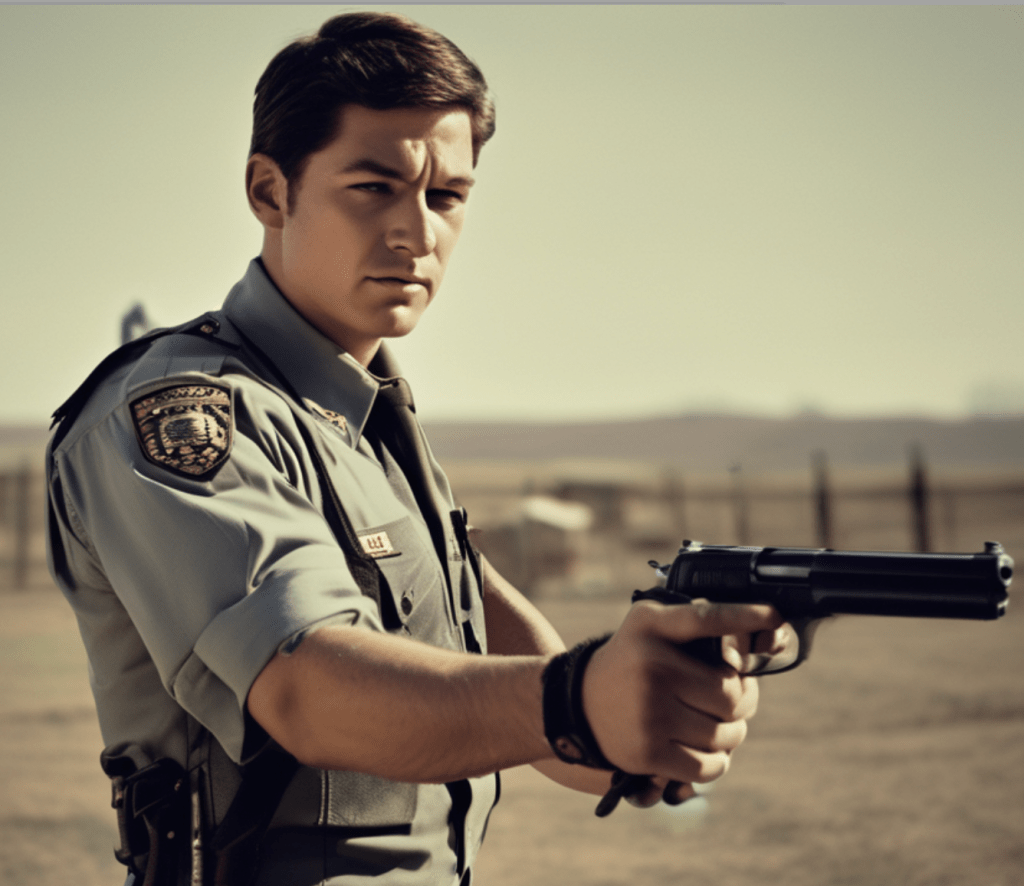
It was a windy afternoon, and the Kid decided to get some practice in at the shooting range before his night shift began at 8:00 PM. He had picked up a couple of bags of reloaded .38s for his .357 Magnum and figured he could get through them if he hurried. The range was just beyond the gates at the end of the city trailer park, where he and other police officers lived as a perk of working for the city.

As he drove down the lane towards the range, he noticed a small plane taking off to the north from the nearby municipal airport. He parked his car at the furthest shooting post, grabbed a paper target from the back seat, and stapled it to a board in the turnstile. Returning to the ten-yard line, he swapped out his duty loads for the reloads and closed the cylinder. Using the post for support, he lined up his shot but paused, holstering his gun instead.

He needed to practice reloading without looking, a crucial skill in a high-stress situation. He loaded his belt’s bullet loops, checked his watch, and started when the second hand hit twelve. Six shots, unload, reload, six more shots. But when he looked down, twenty seconds had passed, and he was off-target.

“Shit. Double shit!”

he yelled, frustration bubbling over.

Just then, two marked patrol units and the Chief’s car pulled up behind the range. The Kid knew that when others arrived, he had to stop shooting. Were they there to mock his poor shooting? No, they wanted to practice too. Who was going to run the tower? One of the officers asked, and the Chief responded, 

“I’ve got it covered!”

The Kid muttered to himself, annoyed. This evening was supposed to be his time. Now, everyone would see how bad his eyesight had gotten. The officers set up new targets and returned to the ten-yard line.

The Chief’s voice cracked through the speaker: 

“We’re shooting six, reloading six, shooting six, reloading six, shooting six, and reloading six. Then, leave your cylinder open. Ready on the Right, Ready on The Left, Ready on The Firing Line—fire!”

The range erupted in gunfire, reminiscent of Melvin Purvis taking down Pretty Boy Floyd in the cornfield. The Kid managed to get through his first loop, fire again, reload, and leave his cylinder open just as the others finished. They moved forward to check their targets.

“Now, gentlemen,” 

The Chief announced, 

“we will shoot from the hip, reload, and holster.”

“Ready on the left, ready on the right, ready on the firing line. Fire!”

Six shots rang out almost in unison, like something out of Gunsmoke. The officers reloaded and holstered their weapons.

Then the Chief called out, 

“Lanes four and five, you’re marked for looking while loading your ammo.”

The officers on lanes four and five protested, 

“Chief, you’re killing us!”

The Chief looking at the officers ––

“No, officers,”

the Chief replied with a sly grin, 

“I’m keeping you alive.”

As the banter continued, a call came over the car radio, 

“Headquarters to all available units. Unit 203 requests backup at SIR-DIXIE QUICK-STOP on a 10-48. Three subjects in a vehicle.”

A 10-48 indicated a National Crime Information Center Want or Warrant on the vehicle or its occupants. The practice ended abruptly as everyone rushed to their cars, eager to respond.

Knowing the city’s streets like the back of his hand, the Kid took a shortcut through alleys and arrived at the Quick Stop within minutes. By the time the other officers arrived, the Kid and the officer on the scene had all three suspects handcuffed and in the patrol unit.

It turned out the first suspect, identified as Ed, was wanted in Texas for nearly beating a State Trooper to death and tying him to a barbed-wire fence. The second suspect, Poncho, had a Tucumcari, New Mexico, address and was wanted for questioning in a murder. The third, known only as Thistle, was simply drunk and likely would have been killed by the other two had he not been arrested. All three got booked on public intoxication charges, with more serious charges pending confirmation from the respective states.

The Kid had been on desk duty after surgery a month earlier, so despite his initial involvement, he got relegated to working the radio and tending to the jail for the rest of the night. The shift was uneventful, with only the usual disturbance and prowler calls.

The Kid had a routine of checking the jail cells at irregular intervals—never on the hour, always keeping the prisoners guessing. At 2:15 AM, he made an unscheduled check. He opened the drunk tank window and saw the three occupants spaced apart: Poncho on the south wall, Ed against the west cell bars, and Thistle on the north side. Above Ed, a shirt was tied to the bars, seemingly his.

The Kid’s first thought was that the shirt might be bait to lure him in. But as he examined the scene, it appeared all three men were sleeping. He returned to the radio office and called his Lieutenant, explaining the situation. They got back to the cell together, and the Lieutenant instructed the Kid to untie the shirt. As the Kid began to do so, the Lieutenant bumped him and whispered,

“That man is dead. Put the shirt back.”

The Kid complied, leaving the shirt as he had found it. They moved the two living prisoners to separate cells and locked the tank holding Ed. The Kid, the only one with the key, went downstairs to call detectives, the Chief, and an ambulance.

The fire department, located across the hallway, had already been roused by the commotion. The assistant fire chief speculated that the incident might have been a failed sexual exploitation attempt that ended in death. When the ambulance arrived, the task of bringing a dead body down the stairs was both problematic and unsettling.

Within twenty-four hours, the Oklahoma Bureau of Investigation (OSBI) arrived, and obscene, harassing, and threatening phone calls began pouring into the station. After a thorough investigation by the OSBI, local sheriff’s department, and media scrutiny, the exact cause of Ed’s death remained a mystery.

Some speculated that one of the other prisoners had helped Ed end his life, while others thought he might have done it himself, with the knot slipping loose. In the end, the Kid learned a hard lesson: sometimes, even a villain meets a dead end.

But there was a silver lining. In the aftermath, the Kid finally mastered the skill he had been struggling with—reloading his revolver from his loops without looking—a small victory in the shadow of a dark night.

The Hidden Trails ~ The Silent Path To Danny’s Peace Of Mind

A Story By: Benjamin Groff© Groff Media 2024© Truth Endures

Every day after school, the weight of the small, tightly-knit town in the heart of the Oklahoma hills seemed to press harder on Danny’s shoulders. The rumors, the whispers behind his back, and the constant need to mask who he was took a toll on him. 

At sixteen, he was already an expert at blending in, concealing his true self beneath layers of false smiles and careful words. But the act drained him. In stark contrast, the woods were the only place where he could breathe and feel free, a sanctuary that beckoned him from behind his family’s modest home.

The woods were the only place where he could breathe and feel free. Nestled behind his family’s farmstyle home, the sprawling expanse of forest beckoned him like a sanctuary. It was his escape, a world where no one judged him or cared who he loved and where he could be.

Every day, as soon as the final school bell rang, Danny would hurry home, change out of his school clothes, and grab his two loyal companions—Scout, an energetic Border Collie, and Rusty, a golden retriever with a heart as big as the sky. The moment he stepped into the woods, the weight on his chest began to lift, with the dogs by his side, their presence adding to the sense of freedom.

He knew every trail like the back of his hand, each winding path, every hidden meadow, and the secret spots that felt like they belonged to him alone. He would venture deep into the canyons, where the towering cliffs seemed to embrace him, sheltering him from the outside world. The sound of the wind whispering through the trees and the rustling leaves underfoot became his symphony.

The lake, with its glassy surface reflecting the changing colors of the sky, was his favorite spot. Here, he could sit for hours, watching Scout and Rusty chase each other along the shore, their barks echoing off the canyon walls. The beauty and tranquility of the place calmed his restless heart. It was here, in the stillness, that he could let his thoughts wander freely.

He often imagined what it would be like to live without fear, to love whomever he chose openly. But such thoughts were dangerous in a town like his. The smallness of the place meant that everyone knew everyone, and secrets were as rare as rain in the summer. So, he kept his dreams tucked away, only allowing them to surface in these moments of solitude.

As the sun set in the western sky, casting long shadows across the landscape, Danny would reluctantly begin the journey home. Sensing his mood, the dogs would walk quietly beside him, their once energetic bounces replaced by a calm understanding. The return to reality was always bittersweet, but their silent support made it bearable.

But each day, the promise of the woods and the solace they offered kept him going. The hidden trails became his refuge, where he could escape the daily blues of school and the oppressive weight of his secret identity. In the forest, Danny was free, even if only for a few precious hours.

And so, the days passed, with each walk bringing him closer to understanding himself and finding the courage he needed. The woods were patient, waiting for the day Danny would no longer need to hide when he could step out from the shadows and into the light of his truth.

Until then, the hidden trails remained his sanctuary, where he could find peace and strength, one step at a time.

Taking A Stand IN The Oklahoma Hills Where I was Born, My Uncle Sam Shows How

A Story By: Benjamin Groff© Groff Media 2024© Truth Endures

In the backwoods of Eastern Oklahoma’s hill country, an older man named Sam McElroy and his wife, Dora, lived a quiet life. Sam, my great uncle, was a man of grit and stubbornness, traits that only deepened as he aged. Their modest cabin, tucked away from the world, sat outside a small community known as Eagle Town, home to the oldest post office in Oklahoma.


Despite his years, Sam’s marksmanship was legendary. His eyesight might have dimmed for reading, but he could still shoot a rock off a ledge from a hundred yards away with his trusty .22 rifle. He favored his 12-gauge shotgun up close, dispatching targets with the same precision. But Sam found no thrill in shooting at rocks; they didn’t challenge him. His absolute joy came from hunting squirrels, rabbits, and other small game—creatures that could run, making every shot a test of skill.


“There’s no sport in shooting something that can’t run,” he’d say, “and you can eat them too!”


In the mid-1970s, the tranquility of Sam and Dora’s life was disturbed. Tree-logging companies began encroaching on their land, felling the tall trees and sending them off on giant semi-trucks to be milled. The loud and reckless trucks sped down the dirt road past their cabin, kicking up dust that settled on everything, including Dora’s freshly washed laundry.


One day, Sam had had enough. He stopped one of the drivers and firmly requested that the trucks slow down on Tuesdays, the day Dora hung her laundry out to dry. The driver nodded but dismissed the request as soon as he drove away.


The following Tuesday, as trucks roared by again, covering Dora’s linens in dust, Sam’s patience snapped.


“This is it!” Sam declared. “They’re going to goddamn stop today if it’s the last thing I do!”

“This is it!” Sam declared. “They’re going to goddamn stop today if it’s the last thing I do!”

He grabbed a cane-bottom chair from the porch, slung his 12-gauge shotgun over his shoulder, and marched to the dirt road. There, he placed the chair, sat down, and waited.


It wasn’t long before a truck barreled down the road, only to screech to a halt in front of Sam. The driver, bewildered, got out and demanded,

“I need to get through here.”


“My wife needs to get her laundry dry without you jackasses throwing dirt on it,” Sam retorted. “I asked you to slow down on Tuesdays, and you ignored me. Now, you can sit here until her laundry is dry!”


The driver, clearly irritated, shot back,

“We’ll see about that, old-timer!”

He climbed back into his truck and radioed his boss. Soon, more trucks lined up behind the first, and another from the opposite direction joined the standstill. Sam remained steadfast, his shotgun resting across his lap.


Minutes later, a man in a company pickup arrived. He introduced himself as Mike Williams, the logging company supervisor. He informed Sam that blocking the road cost them a lot of money.

“And you’re costing us clean clothes!”

Sam shot back.

“You’ve been speeding past here every week, covering my wife’s laundry in dust.”


Williams threatened to call the sheriff, to which Sam responded,

“Go ahead.”


Forty-five minutes later, McCurtain County Sheriff Joe Phillips arrived at the scene. The road was clogged with trucks, stretching ten deep in both directions. After hearing the situation, the sheriff walked over to Sam’s porch, grabbed another cane-bottom chair, and carried it to the middle of the road. He sat beside Sam, pulled out a stick and pocket knife, and began whittling.


“How long do you think it’ll take for the laundry to dry?”

the sheriff asked.


“A couple of hours should do it,”

Sam replied.


Sheriff Phillips turned to the drivers and Mike Williams.

“Well, we’ll be here for at least two more hours. Might as well kill your engines and save some fuel.”


From that day forward, the logging trucks were no longer scheduled to run on Tuesdays between 10:00 AM and 4:00 PM. Sam’s act of defiance earned him respect, and he soon became a valuable liaison for Mike Williams, helping the logging company identify landowners in the Oklahoma Hills, where they sought to expand. Sheriff Phillips also found a trusted ally in Sam, who knew the remote areas of the county like the back of his hand.


Today, the old cabin is little more than a dilapidated shack, barely standing along the dirt road north of Eagle Town. But the legend of my Uncle Sam lives on, echoing through the hills where I was born.

A Unifying Vision in Glendale: Kamala Harris and Tim Walz Champion Bipartisan Cooperation at Campaign Rally

A Report By: Benjamin Groff© Groff Media 2024© Truth Endures

Groff Media 2024© Truth Endures

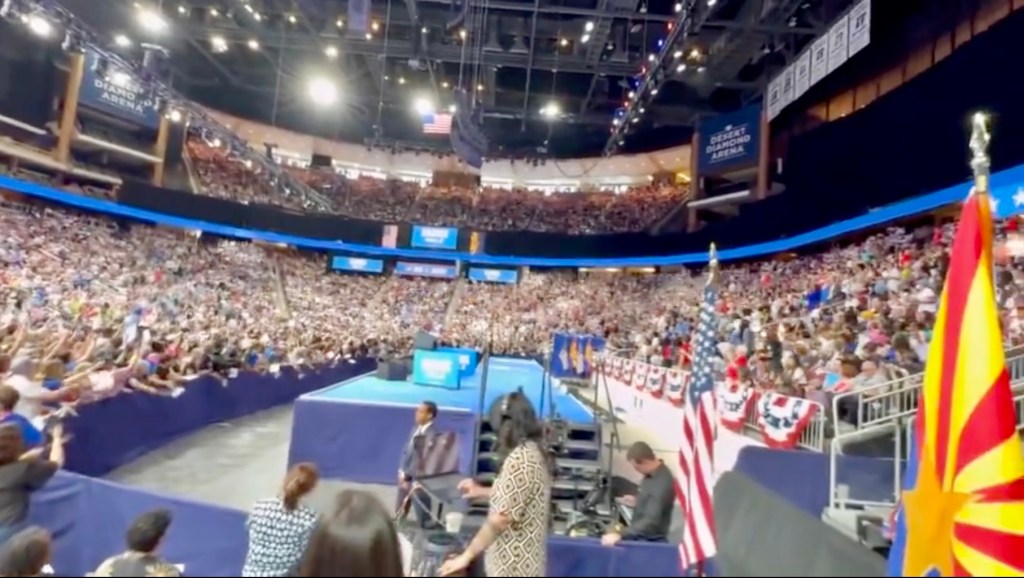
Glendale, AZ — On a sweltering Friday afternoon, August 9, 2024, Glendale, Arizona, became the latest stop on Vice President Kamala Harris and Minnesota Governor Tim Walz’s Western campaign trail. The rally was not just a show of support for the Democratic ticket but a testament to the power of unity and bipartisan cooperation in an era often marked by division.

The event attracted a diverse crowd of enthusiastic supporters, united by a shared belief in the Harris-Walz vision for America’s future. Many attendees expressed their excitement about the campaign’s message of collaboration across party lines, a refreshing contrast to the polarized political climate of recent years.

Vice President Harris, who has been a trailblazer throughout her career, took the stage with her characteristic poise and determination. She addressed the crowd with a message focused on building bridges, not walls. “We are stronger together,” Harris proclaimed. “This campaign is about bringing people from all walks of life together to solve the real problems facing our nation. We must move beyond the divisiveness that has plagued our politics and work towards solutions that benefit every American, regardless of party affiliation.”

Governor Walz echoed Harris’s sentiments, emphasizing the importance of working with Republicans to achieve meaningful progress. “We cannot afford to be bogged down by the politics of the past,” Walz said. “We need to find common ground, and that means reaching out to those who may not always agree with us but who share our love for this country.”

Throughout the rally, the speakers underscored their commitment to bipartisan cooperation, highlighting their belief that real change can only come through collaboration. The Harris-Walz campaign has made a concerted effort to reach out to moderate Republicans and independents, recognizing that achieving lasting change requires the support of a broad coalition.

One of the most poignant moments of the rally came when Harris and Walz addressed the need for bipartisan efforts to protect democracy. “Our democracy is fragile,” Harris warned. “It requires constant care and attention. We must stand united against those who seek to undermine it, and that means working with anyone willing to uphold our democratic values.”

Walz, who has been known for his pragmatic approach to governance in Minnesota, shared success stories from his time working across the aisle to pass legislation that benefited all Minnesotans. He spoke of the importance of setting aside political differences to address critical issues such as healthcare, education, and economic inequality.

The atmosphere at the Glendale rally was one of hope and determination. Supporters waved signs reading “Unity for All” and “Country Over Party,” capturing the essence of the Harris-Walz message. The crowd, a blend of ages, races, and backgrounds, served as a microcosm of the diverse coalition the campaign hopes to build.

Attendees were energized by the event, many expressing optimism about the possibility of a new era of cooperation in Washington. “It’s time for our leaders to stop fighting and start working together,” said Maria Lopez, a Glendale resident who attended the rally with her family. “Kamala and Tim understand that we can’t solve our problems alone—we need everyone at the table.”

As the rally concluded, Harris and Walz left the stage to a chorus of cheers, the sense of unity palpable among the crowd. Their message was clear: the future of America depends on our ability to come together, transcend divisions, and work toward a common goal. The rally in Glendale was not just a campaign event but a call to action—a call for all Americans to embrace the spirit of cooperation and move forward as one nation.

In an election cycle often marked by partisan rancor, the Harris-Walz rally in Glendale was a refreshing reminder of what is possible when leaders prioritize collaboration over conflict. As the campaign continues its journey through the West, the message of unity and bipartisan cooperation remains at the heart of their vision for America’s future. The rally in Glendale was a powerful demonstration of that commitment, offering a hopeful glimpse of what the future could hold.


The Legend of Chuck McCready: The Philly Cheesesteak Incident

A Story By: Benjamin Groff© Groff Media 2024© Truth Endures

In the late 1980s, in the heart of Philadelphia, there was a small, hole-in-the-wall cheesesteak joint called “Tony’s Grub Hub.” The scent of sizzling beef and onions filled the air, and the line for a classic Philly cheesesteak often wrapped around the block. Among the regulars was a local character named Chuck McCready, a fierce, well-loved figure in the neighborhood known for his larger-than-life personality and his deep, almost spiritual love for Philadelphia’s favorite sandwich.

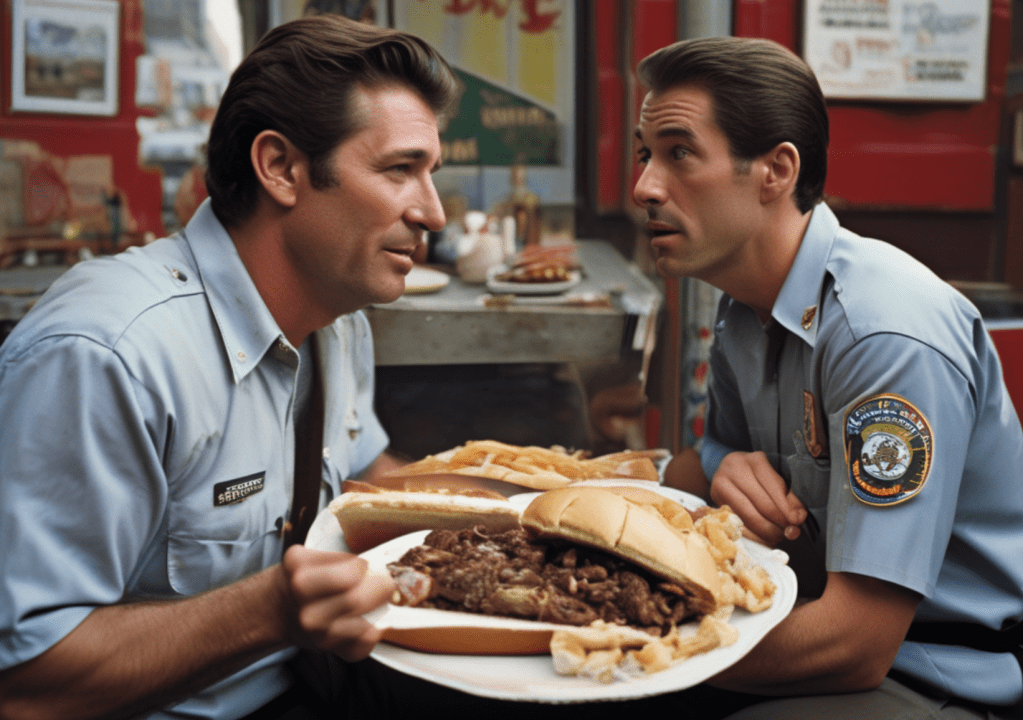
Chuck was a man of principle and passion who never took kindly to the concept of “rules,” especially those that got in the way of a good meal. One fateful evening, Chuck was seated at his usual spot in Tony’s, about to dig into his third cheesesteak of the night—a massive, dripping monster of a sandwich stuffed with extra meat, onions, and a double helping of cheese whiz.

But as Chuck was about to take his first bite, a group of police officers entered the establishment. They had received reports of someone fitting Chuck’s description causing a disturbance in the area earlier that day. They approached Chuck, asking him to step outside for questioning.

Not one to back down, Chuck looked up from his cheesesteak, his hands still clutching the sandwich, and growled, “What’s the charge? Eating a cheesesteak? A succulent Philly cheesesteak?”

The officers, taken aback by his unexpected response, insisted he come quietly. Now fully immersed in the moment, Chuck stood up, holding his half-eaten cheesesteak high like a wand. “This is America, baby!” he bellowed, “Home of the free, where a man can enjoy his meal in peace!”

What happened next was a chaotic scene of Chuck getting dragged out of the restaurant, still holding his cheesesteak, shouting about his rights, and demanding to know why a man couldn’t enjoy a simple meal without being harassed. As the officers tried to force him into the squad car, Chuck continued his tirade: “Is this how we treat a cheesesteak lover in Philly? America is a democracy! My actions are freedom manifest!”

The incident was caught on camera by a passerby and quickly went viral. With Chuck’s impassioned defense of his right to eat a cheesesteak, the video resonated with people across the country. Memes of Chuck McCready declaring “This is freedom manifest!” while clutching a cheesesteak became an overnight sensation.

Years later, Chuck McCready became a folk hero, a symbol of defiance and the right to enjoy life’s simple pleasures. His story was told and retold, often with embellishments, but always with the same core message: no one comes between a man and his cheesesteak in America. His iconic catchphrase, “What’s the charge? Eating a cheesesteak?” became a rallying cry for those who valued freedom and a good meal.

Chuck McCready, the man who stood up for his right to enjoy a succulent Philly cheesesteak, became a legend in the city of brotherly love and is forever remembered as the Cheesesteak Defender.

Who Is Tim Walz?

By: Heather Cox Richardson From Substack – Reposted By: Benjamin Groff© Groff Media 2024© Truth Endures

On August 6, 2024 Heather Cox Richardson wrote on Substack the following entry, it was to the point and told exactly what people should know about Tim Walz. He is a decent human being. Who has done a number of things in life. Some of those things came at making human decisions. Fallible to a point, he may be. Who isn’t? Heather’s writing begins next –––

Today Vice President Kamala Harris named her choice for her vice presidential running mate: Governor Tim Walz of Minnesota. Walz grew up in rural Nebraska. He enlisted in the Army National Guard when he was 17 and served for 24 years, retiring in 2005 as a command sergeant major, making him the highest-ranking enlisted soldier ever to serve in Congress, according to the House Committee on Veterans’ Affairs.  

He went to college with the educational benefits afforded him thanks to his service in the Army, and graduated from Chadron (Nebraska) State College. From 1989 to 1990, he taught at a high school in China, then became a social studies teacher in Alliance, Nebraska, where he met fellow teacher Gwen Whipple, who became his wife. They moved to Minnesota, where they both continued teaching and had two children, Hope and Gus, through IVF. 

Walz became the faculty advisor for the school’s gay-straight alliance organization at the same time that he coached the high-school football team from a 0–27 record to a state championship. The advisor “really needed to be the football coach, who was the soldier and was straight and was married,” Walz said in 2018. 

Walz ran for Congress in 2005 after some of his students were asked to leave a rally for George W. Bush because one of them had a sticker for Democratic presidential nominee John Kerry. Walz won and served in Congress for twelve years, sitting on the House Agriculture Committee, the Transportation and Infrastructure Committee, and the Committee on Veterans’ Affairs.

Voters elected Walz to the Minnesota state house in 2018, and in his second term they gave him a slim majority in the state legislature. With that support, Walz signed into law protections for abortion rights, supported gender-affirming care, and legalized the recreational use of marijuana. He signed into law gun safety legislation and protections for voting rights, and pushed for action to combat climate change and to promote renewable energy. 

Strong tax revenues and spending cuts gave the state a $17.6 billion surplus, and the Democrats under Walz used the money not to cut taxes, as Republicans wanted, but to invest in education, fund free breakfast and lunch for schoolchildren, make tuition free at the state’s public colleges for students whose families earned less than $80,000 a year, and invest in paid family and medical leave and health insurance coverage regardless of immigration status. 

While MAGA Republicans are already trying to define Walz as “far left,” his votes in Congress put him pretty squarely in the middle.  His work with Lieutenant Governor Peggy Flanagan to expand technology production and infrastructure funding in the state was rewarded in 2023, when Minnesota knocked Texas out of the top five states for business. The CNBC rating looked at 86 indicators in 10 categories, including the workforce, infrastructure, health, and business friendliness. 

Walz checks a number of boxes for the 2024 election, most notably that he hails from near the battleground states of Wisconsin, Michigan, and Pennsylvania and comes across as a normal, nice guy. He favors unions, workers’ rights, and a $15 minimum wage. He is also the person who coined the phrase that took away the dangerous overtones of today’s MAGA Republicans by dubbing them “weird.” As a student of his said: “In politics he’s good at calling out B.S. without getting nasty or too down in the dirt…. It’s the kind of common sense he showed as a coach: practical and kinda goofy.”

Walz is also a symbol of an important resetting of the Democratic Party. He has been unapologetic about his popular programs. On Sunday, July 28, when CNN’s Jake Tapper listed some of Walz’s policies and asked if they made Walz vulnerable to Trump calling him a “big government liberal,” Walz joked that he was, indeed, a “monster.” 

“Kids are eating and having full bellies so they can go learn, and women are making their own health care decisions, and we’re a top five business state, and we also rank in the top three of happiness…. The fact of the matter is,” where Democratic policies are implemented, “quality of life is higher, the economies are better…educational attainment is better. So yeah, my kids are going to eat here, and you’re going to have a chance to go to college, and you’re going to have an opportunity to live where we’re working on reducing carbon emissions. Oh, and by the way, you’re going to have personal incomes that are higher, and you’re going to have health insurance. So if that’s where they want to label me, I’m more than happy to take the label.” 

Right-wing reactionary politicians have claimed to represent ordinary Americans since the time of the passage of the Voting Rights Act—on August 6, 1965, exactly 59 years ago today—by insisting that a government that works for communities is a “socialist” plan to elevate undeserving women and racial, ethnic, and gender minorities at the expense of hardworking white men. 

Historically, though, rural America has quite often been the heart of the country’s progressive politics, and the Midwest has had a central place in that progressivism. Walz reintegrates that history with today’s Democratic Party. 

That reintegration has left the Republicans flatfooted. Trump and J.D. Vance expected to continue their posturing as champions of the common man, but on that front the credentials of a New York real estate developer who inherited millions of dollars and of a Yale-educated venture capitalist pale next to a Nebraska-born schoolteacher. Bryan Metzger, politics reporter at Business Insider, pointed out that J.D. Vance tried to hit Walz as a “San Francisco-style liberal,” but while Vance lived in San Francisco as a venture capitalist between 2013 and 2017, Walz went to San Francisco for the first time just last month. 

Head writer and producer of A Closer Look at Late Night with Seth Meyers Sal Gentile summed up Walz’s progressive politics and community vibe when he wrote on social media: “Tim Walz will expand free school lunches, raise the minimum wage, make it easier to unionize, fix your [carburetor], replace the old wiring in your basement, spray that wasp’s nest under the deck, install a new spring for your garage door and put a new chain on your lawnmower.” 

Vice President Harris had a very deep bench from which to choose a running mate, but her choice of Walz seems to have been widely popular. Representatives Alexandria Ocasio-Cortez of New York and Joe Manchin of West Virginia, who are usually on opposite sides of the party, both praised the choice, prompting Ocasio-Cortez to post: “Dems in disconcerting levels of array.” 

Harris and Walz held their first rally together tonight in Philadelphia, where Pennsylvania governor Josh Shapiro, who had been a top contender for the vice presidential slot, fired up the crowd. “Each of us has a responsibility to get off the sidelines, to get in the game, and to do our part,” he said. “Are you ready to do your part? Are you ready to form a more perfect union? Are you ready to build an America where no matter what you look like, where you come from, who you love, or who you pray to, that this will be a place for you? And are you ready to look the next president of the United States in the eye and say, ‘Hello, Madam President?’ I am too, so let’s get to work!”

Pennsylvania is a crucial state, and Shapiro issued a statement offering his “enthusiastic support” to the ticket. He pledged “to work to unite Pennsylvanians behind my friends Kamala Harris and Tim Walz and defeat Donald Trump.”

The Constant Battle For Change And Remaining The Same: The Revolving Door To Maintain Equality

A Story By: Benjamin Groff© Groff Media 2024© Truth Endures

Reasoning: This story underscores the resilience of individuals and communities in the face of societal and political challenges. By reflecting on the journey of an older gay couple who have navigated the tumultuous landscape of LGBTQ+ rights over decades, the narrative aims to emphasize both progress and ongoing struggles. The juxtaposition of their personal history with a contemporary political event draws attention to society’s persistent absurdities and injustices, ultimately advocating for continued vigilance and activism.

The older man gazed into the mirror, his eyes reflecting the many memories that spanned decades. They reminded him of his first visit to the Valley of the Sun. Back then, he was a young man, brimming with energy and a deep yearning to be outdoors. He spent every afternoon splashing in the swimming pool with his husband.

Like many others, they had moved to Arizona shortly after 9/11, whose lives had been upended by the crisis and the subsequent changes in their employers’ operations. The man and his husband had been together for nearly forty-three years, marked by immense change. They witnessed their rights get granted, taken away, increased, and reduced. They experienced the joy of gaining the Right to marry, only to face the threat of that Right being stripped away again by those who sought to erase it from the Constitution.

Today, the couple sat together, watching television. On the screen, a man was pouting about the low attendance at his campaign rally, blaming weather forecasters for giving poor weather reports. He suggested that the forecasts were intentionally misleading to hurt attendance at his event. Ironically, his opponent held a rally in the same city, and the venue overflowed with supporters.

The man’s complaint didn’t hold water but was a familiar narrative. The couple faced countless absurd accusations and unfounded criticisms throughout their lives. Yet, these baseless claims often gained traction, much like the current political spectacle on TV. Despite the challenges, the couple remained steadfast, their love and commitment enduring through each wave of societal change.

Their story was one of resilience. It was a testament to the progress and a reminder of the ongoing struggles. They stood together in the face of adversity, embodying the strength and determination to navigate an unjust and unpredictable world. Their journey was far from over, and they knew the fight for equality and acceptance was ongoing. But they found solace in each other, drawing strength from their shared history and the promise of a better future.

The spectacle they saw from the orange blob smearing the screen was nothing to fear. They had been dealing with such bleak freaks ever since Anita Bryant’s stint selling orange juice in Florida. The two had overcome the attempts to destroy their beings then, and they knew, along with allies, it could be done again. It was just sad that there were still people in 2024 so set on destroying others because they were so small-minded.

Together, they will make it –– regardless of how life challenges the two!

— THIS IS A SPECIAL REPORT — Concerning georgia’s Voter Cancelation Portal!

by Doug Bock Clark Posted by Benjamin Groff© Groff Media 2024© Truth Endures

“A Terrible Vulnerability”: Cybersecurity Researcher Discovers Yet Another Flaw in Georgia’s Voter Cancellation Portal

ProPublica is a Pulitzer Prize-winning investigative newsroom. Sign up for The Big Story newsletter to receive stories like this one in your inbox.

Until Monday, a new online portal run by the Georgia Secretary of State’s Office contained what experts describe as a serious security vulnerability that would have allowed anyone to submit a voter cancellation request for any Georgian. All that was required was a name, date of birth and county of residence — information easily discoverable for many people online.

The flaw was brought to the attention of ProPublica and Atlanta News First over the weekend by a cybersecurity researcher, Jason Parker. Parker, who uses they/them pronouns, said that after discovering it, they attempted to contact the Georgia Secretary of State’s Office. The office said it had no records of Parker’s attempts to reach out.

“It’s a terrible vulnerability to leave open, and it’s essential to be fixed,” Parker said.

The issue Parker exposed was “as bad as any voter cancellation bug could be” and “incredibly sloppy coding,” said Zach Edwards, a senior threat researcher at the cybersecurity firm Silent Push, who reviewed the flaw at the request of ProPublica. “It’s shocking to have one of these bugs occur on a serious website.” Edwards said that even a basic penetration test, in which outside experts vet the security of a website before its launch, “should have picked this up.”

ProPublica and Atlanta News First jointly alerted the Secretary of State’s Office to the vulnerability and held the publication of their articles until it was fixed.

“We have updated the process to include an error message letting the individual know their submission is incomplete and will not be processed,” Blake Evans, Georgia’s elections director, said in a statement from the Secretary of State’s Office.

In the days after the portal launched last Monday, The Associated Press and The Current each reported the existence of separate security vulnerabilities that exposed voters’ sensitive personal information, including the last four digits of their Social Security number and their full driver’s license number. The Secretary of State’s Office told the news organizations that it quickly fixed the portal. Democrats warned that the system could be abused, as right-wing activists have been challenging tens of thousands of voter registrations in a different process that a 2021 state law expanded. Over the weekend, ProPublica reported that users of the portal had unsuccessfully attempted to cancel the voter registrations of two prominent Republican officials, Secretary of State Brad Raffensperger and Rep. Marjorie Taylor Greene.

The flaw found by Parker was different from the two previously reported ones. This one would allow any user of the portal to bypass the screen that requires a driver’s license number and submit the cancellation request without it.

The Secretary of State “needs to consider this an all-hands-on-deck” moment “and hire multiple testing and security firms and stop relying on the public’s goodwill and pro bono security researchers to test the quality of their website,” Edwards said. “At this point, we should assume there are other subtle bugs that could have potentially serious impact.” Edwards said that it would have been easy for a malicious actor to automate cancellation requests to get around security measures built into the website and submit thousands of them.

In a video shared with ProPublica, Parker, who is moving from Georgia to another state, demonstrated how the registration cancellation tool could be exploited in roughly a minute. First, they entered their name, date of birth and county of residence to get past the website’s initial screening page. When the portal asked them for a driver’s license number, Parker right-clicked to inspect the browser’s HTML code — a basic option available to anyone — and deleted a few lines of code requiring them to submit their driver’s license number. Parker then hit submit. A window popped up stating that “Your cancellation request has been successfully submitted” and that county election workers would process the request within a week.

Parker said it took them less than two hours of poking around the website to find the vulnerability.

“Incomplete paper and online applications will not be accepted,” Evans said in the statement. (Parker’s cancellation request would have lacked a driver’s license number.) The Secretary of State’s Office did not respond to individual questions about what testing the portal underwent before launch, the system’s security procedures, what happened to Parker’s cancellation request and how the public could be sure of the portal’s security given the recent disclosures of security flaws.

“The Secretary of State’s Office needs to do better,” said Marisa Pyle, the senior democracy defense manager for Georgia with All Voting is Local, a voting rights advocacy organization. “The state needs to be really intentional about how it rolls out these things. It needs to make sure they’re secure and provide their rationale for making them.”

Jake Braun, the author of a book on cybersecurity flaws in election systems and lecturer at the University of Chicago, said that there is a long history of elections-related websites suffering from easily exploitable security failures, including Russians hacking election infrastructure during the 2016 election and public-interest competitions in which participants breached replicas of state election websites in minutes. Online elections infrastructure, he said, “needs more standards and better standards.”

Edwards said that the portal’s vulnerability-plagued rollout showed the necessity of improving the vetting process.

“Georgia should step up and pass a law saying all new websites in which the public interacts with government documents should have an outside review,” Edwards said. The public “should expect” officials “did some due diligence.”

Do you have any information about the Georgia voter registration cancellation portal, voter challenges or anything voter-related that we should know? Contact reporter Doug Bock Clark by email at doug.clark@propublica.org and by phone or Signal at 678-243-0784. If you’re concerned about confidentiality, check out our advice on the most secure ways to share tips.

A Guest Post: Why is America Running from building subways while the rest of the world is in a subway boom? “This is a special posting”

BY BENJAMIN SCHNEIDER4 MINUTE READ Posted By: Benjamin Groff© Groff Media 2024© Truth Endures

Subway train passing the Golden Horn Metro Bridge over the Golden Horn in Istanbul [Photo: Getty Images]

The most spectacular way to cross the Bosphorus is by boat, but the most impressive way is by subway. Istanbul’s Marmaray Line, completed in 2013, links Asia and Europe by way of an eight-and-a-half-mile undersea tunnel. The ride is so fast and so smooth, it feels like a hovercraft.

“It’s like a sci-fi movie,” my dad remarked as we rolled above the waters of the Golden Horn on the M2, another relatively new transit line that crosses another iconic body of water in Istanbul. (His take on robotaxis: “It’s like The Invisible Man!”) Even Istanbul’s light rail lines are completely different from their American counterparts. The T1 tram arrives every two or three minutes, and enjoys seamless signal priority that keeps the train moving at all times, except when it’s picking up passengers. The view, once again, is awesome.

When my dad and I traveled to Istanbul last year, we were prepared to witness the city’s beauty and stand in awe of its history. But what really blew us away was the city’s transit system. 

For Americans, state-of-the art transit systems like the one in Istanbul are about as familiar as the transporter on Star Trek. As the U.S. lavishes billions on highway expansions and subsidizes tricked-out SUVs, other countries are investing in transit systems that are setting new standards for speed, convenience, and technology. Increasingly, transportation is looking like another area of American exceptionalism. 

Earlier this month, I wrote a piece in CityLab about the rise of “rapid regional rail.” New transit lines in London, Seoul, Delhi, Guangzhou, and numerous other global cities, straddle the line between suburban commuter rail and urban metros. They cover long distances at very high speeds—as fast as 100 miles per hour—but with frequencies as good as every three minutes. These systems make big cities feel smaller, allowing riders to effectively teleport across busy neighborhoods to the other side of the metropolis. But rapid regional rail is just one flavor of transit innovation that’s spreading across the world.  Spain and France are automating more and more of their existing subway lines, allowing for increased frequency and lower operating costs. Transit lines in Vienna are being upgraded with platform screen doors, improving rider safety and comfort while people wait for their trains. Three-quarters of global metro systems, from Sapporo to Santiago, operate “endless” open gangway trains that increase capacity onboard and allow passengers to spread out.  

Name a global city, and it’s probably building miles of new rail transit, oftentimes with much more impressive technical specs than Americans are used to. Rome, Athens, Montreal, Moscow, Mumbai, Sao Paolo, Lagos, Cairo, Tel Aviv, Doha, Shanghai, Bangkok—these diverse cities are unified in their bet that transit is the way of the future.

It’s a smart bet. High-quality transit is the only way to facilitate upward growth without causing unbearable amounts of congestion. It’s the only way to speed up trips through crowded neighborhoods. And it’s by far the most efficient and straightforward way to reduce pollution and carbon emissions from transportation. As an added bonus, a transit-oriented model of urban growth allows for much more pleasant surface-level streetscapes, with more space for walking, biking, and communing. PRESENTED BY ING Where does US investment go from here?The investment conundrum that reveals why businesses are reluctant to put money to work

On a more philosophical level, these once-in-a lifetime transportation investments signal faith in a better future; that transforming the way people get around cities will pay dividends for generations to come. This faith is lacking in the U.S.—and so is the transit construction. 

The opening lines of a 2023 article, “Once a Leader in Urban Rail Investment, the United States Now Trails” by transportation researcher Yonah Freemark sums up the situation:

As late as 1980, the United States had more kilometers of metro lines per capita than all large developed countries but the United Kingdom—thanks in part to large public investments in projects like Washington’s Metro and San Francisco’s BART. In the decades since, both the United States and the United Kingdom have stagnated, falling behind even as other countries, particularly China, but also India and many in Europe and South America, have invested in massive new construction campaigns. Much of the world’s urban areas are rapidly becoming dominated by metro service.

This graph in Freemark’s article tells the same story even more starkly. See the U.S. flatlining in transit miles per capita, while other countries embark on steep growth curves:

These are the statistics underlying the reality that in San Francisco; Washington, D.C.; Boston; Atlanta; and many other major cities in the U.S., not a single mile of rail transit is currently under construction. 

New York City currently has fewer miles of rail transit than it did in 1940. The city’s exceedingly modest transit expansion plans—a one-mile extension of the Second Avenue Subway and a light rail line connecting Brooklyn and Queens—are effectively on hold following Governor Kathy Hochul’s cancellation of congestion pricing.

Los Angeles and Seattle are the only cities in the U.S. whose transit development plans come remotely close to those seen in other global cities. And while their future transit maps are impressive, all of those colorful lines don’t mean the same things as the ones on Istanbul’s transit map. LA and Seattle’s light rail lines are not nearly as fast, frequent, or high-capacity as the heavy rail metros being built in other countries.

Nor are they as high-tech. Honolulu is the only city in the U.S. currently building an automated metro line, and it’s doing so at a snail’s pace. New York City just debuted a handful of open gangway trains—a first in the U.S. And platform screen doors only exist on airport people movers. 

Why is it so hard for the U.S. to build quality transit? 

This is one of the central questions underpinning this newsletter and my book. It’s also something that several other researchers and journalists, such as Eric Goldwyn and Jerusalem Demsas, are looking into. There’s no easy answer, though there is a growing consensus around certain factors that are holding America’s transit systems back.

But pointing out the degree of the discrepancy between the U.S. and other countries is an important place to start. Otherwise, there’s a risk of normalizing the nation’s dismal transit status quo. 

This story was republished with permission from The Urban Condition.

Apply to the Most Innovative Companies Awards and be recognized as an organization driving the world forward through innovation. Early-rate deadline: Friday, August 23.


ABOUT THE AUTHOR

Benjamin Schneider is a freelance journalist who covers cities, public policy, and occasionally, arts and culture. He has worked as a staff writer at the San Francisco Examiner, SF Weekly, and CityLab, helping create the CityLab 

A News Report Waiting For Its Headline “Politicians Play With How Votes Get Certified!”

A Story By: Benjamin Groff© Groff Media 2024© Truth Endures

In the heart of Georgia, the political landscape was shifting beneath the surface, unseen by most but sensed by many. The Georgia State Election Board, a government body entrusted with overseeing the state’s election rules, had recently become a focal point of national attention. Former President Donald Trump had praised the board in an unusual move, commending three members: Janice Johnston, Rick Jeffares, and Janelle King. “Pitbulls fighting for honesty, transparency, and victory,” he had called them. But what exactly were they fighting for?

Max Flugrath, director of communications for Fair Fight Action, a keen political observer, had meticulously followed these developments. He noted the oddity of Trump’s involvement in such detailed matters. Typically, Trump preferred grand gestures and sweeping statements rather than delving into the minutiae of election certification rules. Yet here he was, thanking these newly appointed board members for their efforts to change Georgia’s certification rules.

The backdrop to this intrigue was a rapidly approaching election, less than 100 days away. The Trump-aligned members of the Georgia State Election Board had convened a meeting that Flugrath noted was unlawfully noticed and carried out. In this meeting, they advanced changes to the state’s election certification process, changes that could potentially undermine the democratic processes in Georgia. These changes could lead to delays in election results, create uncertainty, and allow for manipulation of the election outcome, a cause for concern for all citizens.

A lawsuit quickly followed, challenging the legality and transparency of the board’s actions. The controversy forced the board to hold another vote on some of the proposed election rule changes, scheduled for Tuesday, August 6. The proposed changes were alarming to many. One such rule would empower local election officials to slow down or refuse to certify the 2024 election results. With election deniers in local election positions, the implications were chilling.

Flugrath’s analysis painted a stark picture. The new rules, if passed, could be used to sow doubt in the election results, creating delays and uncertainty. The behavior you read about is not just a Georgia issue; similar behavior patterns were emerging in other states. Across the country, efforts were underway to change election rules, often under the guise of ensuring honesty and transparency. It’s vital for Americans to remain vigilant and demand transparency in these processes, as they have the potential to undermine the very foundation of democratic elections.

In Texas, a similar narrative was unfolding. The state’s election board, encouraged by Georgia’s actions, began proposing changes to the certification process. In Florida, [newly appointed election officials, who were praised by Trump for their dedication and were seen as his allies], were pushing for rules that would grant them unprecedented power over election outcomes. Even in Pennsylvania, whispers of changes to election certification rules were becoming louder.

As the shadows of democracy stretched across the nation, citizens found themselves in a united battle for the integrity of their elections. Flugrath’s warnings resonated, echoing the sentiments of those who valued transparency and fairness. The fight was about the upcoming election and preserving the principles that had long underpinned the democratic process. It’s a fight that unites us all, regardless of our political affiliations.

The day the vote arrived in Georgia. Protesters gathered outside the election board’s meeting, voicing dissent. Inside, the tension was palpable. The board members, conscious of the national scrutiny, deliberated their decision. The future of Georgia’s election rules hung in the balance, a microcosm of the broader struggle across the United States.

As the sun set, the board announced its decision. The proposed changes got narrowly voted down, a victory for those advocating transparency and fairness. But the battle was far from over. The events in Georgia had set a precedent, a reminder of the fragility of democracy and the constant vigilance required to protect it.

Flugrath watched the aftermath with cautious optimism. The shadows of inequity are held at bay for now, but the fight for the soul of American democracy continued. The story unfolded in real-time, with the stakes higher than ever.

This story is about a news report that could be featured in any newspaper or news program in the United States. It is taken from actual events currently taking place. Whether or not this is the exact outcome relies upon the people of Georgia. The news report may be the opposite of what you just read. The board voted to instate these rules and overthrow the state election to favor any person of their choice.

Read the article that inspired this story. It is reality. We hope this story comes true. Sadly, it looks like it will become fiction. The originating news report may be found here!

Remembering Jürgen Ahrend –– The Legendary Organ Builder

A Story By: Benjamin Groff© Groff Media 2024© Truth Endures

In the picturesque town of Göttingen, Germany, where the echoes of time vibrated through the cobblestone streets, a young prodigy named Jürgen Ahrend unearthed a profound connection to the world. Born on April 28, 1930, Jürgen was no ordinary child; his fascination with music was a beacon of his identity from a tender age. The harmonies of the local church organ would enrapture his imagination, and he would spend hours in silent contemplation, envisioning the creation of such magnificent sounds himself. This early passion for music and organ building is a testament to his lifelong dedication and can inspire us all.

At sixteen, Jürgen began his journey into the world of organ building, serving an apprenticeship with the renowned firm of Paul Ott. From 1946 to 1948, he learned the intricate art of crafting and restoring these majestic instruments. His apprenticeship was more than a mere training period; it was a formative time that solidified his passion and honed his skills. After completing his apprenticeship, Jürgen stayed on as an employee, perfecting his craft each day.

In 1954, Jürgen embarked on a new chapter of his life, forming a partnership with Gerhard Brunzema in Leer–Loga, Lower Saxony. Together, they created a symphony of work, producing 54 new organs and restoring 19. Their collaboration was a harmonious blend of innovation and tradition, each organ they built or restored becoming a testament to their dedication and artistry. However, in 1972, Brunzema left the firm, and Jürgen faced a new challenge. With unyielding determination, he established Jürgen Ahrend Orgelbau, a workshop that would soon become legendary in organ building.

Jürgen’s reputation grew with each project he undertook. His restoration of the Rysum organ and the Arp Schnitger organ in Hamburg’s Hauptkirche St. Jacobi (St. James’s Church) garnered international acclaim. These restorations were not mere repairs; they were acts of reverence, breathing new life into historical treasures. Jürgen’s meticulous attention to detail, his deep respect for the original craftsmanship, and his unwavering commitment to excellence ensured that each organ retained its unique voice, echoing through the centuries. His commitment to excellence is a testament to his dedication and can be felt in every note that resonates with his organs.

In 2009, filmmakers documented Jürgen’s remarkable journey in the film Martinikerk Rondeau. Through extensive interviews, he shared his wisdom, passion, and the philosophy that guided his work. The film offered a glimpse into the mind of a master craftsman, revealing the depth of his commitment to preserving the art of organ building.

As Jürgen approached his later years, he passed the torch to his son, Hendrik, in 2005. Under Hendrik’s leadership, Jürgen Ahrend Orgelbau continued to thrive, carrying forward the legacy of excellence that Jürgen had established. Jürgen’s influence remained palpable, his spirit woven into every pipe, every key, and every note resonating from the organs crafted in their workshop. The continuation of his legacy through his son, Hendrik, ensures that Jürgen’s influence will be felt for generations to come.

On August 1, 2024, Jürgen Ahrend passed away at 94. His life, marked by dedication, artistry, and an unwavering love for music, left an indelible mark on the world. Jürgen’s legacy lives on in the organs he built and restored, in the workshops where future generations of organ builders draw inspiration, and in the hearts of those touched by the music he so lovingly crafted.

Jürgen Ahrend was more than an organ builder; he was a maestro whose work transcended time, a guardian of musical heritage, and a beacon of passion and perseverance. His story is a tribute to the power of art, the importance of preserving history, and the enduring impact of one man’s dedication to his craft.

The Nightmare They Escaped Is Part Of The Plan In Project 2025

Click the here for full report!

Two Russian dissidents released in a prisoner swap on Thursday said they refused to sign a petition for mercy to be sent to Russian President Vladimir Putin as requested by prison officials. 

During a news conference in Germany, Vladimir Kara-Murza and Ilya Yashin said they did not admit guilt or give Russian officials their consent to be removed, and vowed to return home one day. 

Mr Kara-Murza said the deal had saved “16 human lives” and that he had been convinced he would die in prison.

He added that many Russians were “opposed to Putin’s war in Ukraine”.

We require to listen to those who on were brought home. The hell they describe is the future Donald Trump and the GOP dream of for the U.S.A.

Horace Thistle’s Clocks ––– Capturing A Family’s Most Precious Moments!

A Story By: Benjamin Groff© Groff Media 2024© Truth Endures

A unique and gifted clockmaker named Horace Thistle resided in the quaint town of Willowbrook, nestled amidst rolling hills and whispering pines. Horace’s talent surpassed the ordinary mechanics of time. His clocks were not mere timekeepers; they were enchanting devices that could capture and immortalize moments in a delicate dance of gears and hands.

Horace’s shop, Timeless Treasures, stood at the heart of the town square. Its windows were full of clocks, each more intricate than the last. People from all walks of life visited his shop, drawn by the promise of clocks that measured time in a way no other timepieces could.

“Good day, Mr. Thistle,” David greeted, eyes scanning the wondrous creations that lined the walls.
“Welcome, Thompsons,” Horace replied with a warm smile. “How may I assist you today?”

One crisp autumn day, the Thompson family, filled with anticipation, stepped into the shop. Sarah and David Thompson, accompanied by their two young children, Emily and Ben, had been intrigued by the rumors of Horace’s magical clocks. They had come to see if these whispers held any truth.

Sarah stepped forward, holding Emily’s hand. “We’ve heard that your clocks can mark special moments in our lives. Is that true?”

Horace’s eyes twinkled. “Indeed, it is. My clock’s design is to capture the essence of your family’s milestones. Each tick is a memory; each chimes a celebration.”

Intrigued and excited, the Thompsons made a decision that would forever change their lives. They chose to commission a clock from Horace. He asked them to share their most cherished moments, and as they spoke, he listened intently, his hands working with the precision of a maestro composing a symphony.

Over the next few weeks, Horace poured his heart and soul into crafting the Thompson family’s clock. He inscribed the day Sarah and David met on the clock face, their wedding day marked with a delicate engraving of intertwined rings. The birthdates of Emily and Ben are each adorned with tiny, twinkling stars.

When the clock was finally ready, the Thompsons returned to the shop. Horace unveiled the masterpiece—a grand wooden clock with ornate carvings and delicate details. As the family gathered around, he wound the clock and set it in motion.

The clock’s hands began to move, but not steadily. Instead, they danced, slowing down during moments of joy and speeding up during excitement. Each tick resonated with the laughter of birthdays, the warmth of holidays, and the quiet comfort of everyday moments.

The Thompson family’s clock became a cherished heirloom as the years passed. It recorded Emily’s first steps, Ben’s school achievements, and countless family gatherings. Each time they look at it, they will remember the love and memories that had shaped their lives.

Word of Horace’s extraordinary clocks spread far and wide, and families from distant towns came to Willowbrook, seeking their own Timeless Treasures.

Horace welcomed them all, listening to their stories and weaving their memories into the fabric of time.

So, in the little town of Willowbrook, the clockmaker who could capture moments continued to craft his magical clocks, ensuring that no memory was ever lost to the relentless march of time.

The Night Everything Changed ~ Neighbors became inseparable Putting Aside Their Sexuality.

A Story By: Benjamin Groff© Groff Media 2024© Truth Endures

In the quiet town of Maplewood, where everyone knew each other’s business, Frank Henderson was known for his stern opinions and narrow views. A man set in his ways often muttered under his breath about the changing world, particularly about his new neighbor, Adam. Adam was young, openly gay, and unashamedly himself, much to Frank’s chagrin.

Frank had lived in Maplewood his whole life, where traditions ran deep. Frank’s meeting new people within the community gets resisted. He prided himself on his neat lawn, spotless car, and strict adherence to the values he had grown up with. He watched behind his curtains as Adam moved in, noting the rainbow flag that fluttered proudly from the porch. Frank scoffed, shaking his head. “Not in my neighborhood,” he muttered to himself.

Days turned into weeks, and Frank’s irritation only grew. He avoided Adam, never engaging in more than a curt nod if their paths crossed. He dismissed his wife, Martha, whenever she suggested they invite Adam over for dinner, insisting they didn’t need to associate with “those kinds of people.”

But everything changed one fateful night.

It was a typical summer evening when the sound of shattering glass pierced the stillness. Frank bolted upright from his recliner, his heart racing. He rushed to the window and saw flames licking the side of his garage. His car! Panic surged as he stumbled outside, yelling for Martha to call 911.

A voice called out from the darkness as he struggled with the garden hose, trying in vain to douse the growing flames. “Frank! Frank, let me help!” It was Adam, running toward him with a fire extinguisher in hand.

For a moment, Frank hesitated, pride and prejudice warring within him. But as the fire roared louder, he swallowed his pride. “Alright, over here!” he shouted, pointing to the source of the fire.

Together, they fought the flames, Adam’s quick thinking and calm demeanor providing the guidance Frank desperately needed. Within minutes, the fire was under control, and the garage and car were saved from destruction. As the fire trucks pulled up, Frank found himself leaning against the charred wall, breathing heavily.

“Thank you,” he said, turning to Adam. The words felt foreign on his tongue, but he meant them. “I… I don’t know what I would have done without you.”

“Thank you,” he said, turning to Adam. The words felt foreign on his tongue, but he meant them. “I… I don’t know what I would have done without you.”

Adam smiled, brushing ash from his hands.

“No problem, Frank. I’m just glad I can help.”

In the days that followed, Frank found himself reevaluating his views. He watched as Adam continued to go about his life, kind and friendly to everyone he met. Frank began to notice the little things—how Adam helped Mrs. Johnson with her groceries or how he always waved to the children playing in the street.

As the sun dipped below the horizon one evening, Frank made his way next door. He knocked hesitantly, feeling out of place. Adam opened the door, surprise flickering across his face.

“Frank, hi! What can I do for you?”

Frank shifted uncomfortably.

“I wanted to say thanks again for the other night. And ––– I was wondering if you’d like to come over for dinner. Martha makes a mean pot roast.”

Adam’s smile widened.

“I’d love to. Thank you, Frank.”

Over pot roast and mashed potatoes, a tentative friendship began forming that night. They talked about everything—life, love, and the struggles each had faced. Frank truly listened, and for the first time, he saw Adam as more than just his gay neighbor. He saw him as a person, someone who had shown him kindness when he needed it most.

As the months passed, Frank’s views continued to soften. He began to understand that love and kindness knew no boundaries and that people were more than the labels society placed on them. He found himself defending Adam when others in the town gossiped, challenging the bigotry he once held so dear.

In the end, it was a simple act of bravery and compassion that changed Frank’s heart. He learned that neighbors were more than just the people who lived next door; they were the ones who stood by you in times of need and who showed you the power of acceptance and love. And in that quiet town of Maplewood, Frank Henderson became a testament to the idea that it’s never too late to change, grow, and embrace the world with an open heart.

Winning Big, By Realizing How Not To Spend It – A Jackpot In Vegas

A Story by: Benjamin Groff© Groff Media2024© Truth Endures

Vernon and Bernice had traveled from Pumpkin Center, Oklahoma, to Las Vegas to attend a conference paid for by Bernice’s employer, the Magic Pipe Copper Company. The company was not involved in magic, pipes, or cups despite its name. Its primary function was to handle hotel bookings, changes, and cancellations. Any calls unrelated to these services got transferred to another company, Heads Turning Company, which was not affiliated with the Magic Pipe Copper Company.

Bernice’s conference was to begin tomorrow, and Vernon had saved for his part of the trip for nearly a year, knowing he would get to go about Las Vegas alone while Bernice attended the conference during the daytime. Bernice had told Vernon that she didn’t mind if he gambled but didn’t want him to go overboard and go broke. He promised her that he would tell her immediately if their finances changed. She told him that if you win something big, it better be enough for us to live forever because the company would probably fire me for it. She was kidding, but Vernon thought she was serious. He had read about a company in Russia that had all but killed an employee who won big in Las Vegas and tried to stay in the USA with their winnings. Vernon was from a small town and never caught on to the more significant influences of life.

As Bernice left for her conference, she kissed Vernon and said,

“You behave today, and we will go to the all-you-can-eat buffet tonight!”

He agreed and returned her kiss. After she left, Vernon hurried around, finished dressing, and checked his cash. He was sure he kept his big bills hidden. Some were in his zipper-hidden belt; some were in his socks under his feet and inside his shoes, and some were in a pocket hidden inside his waistband. Then he had a hundred and fifty folded into a money clip. In his wallet, he kept fifty-ones. To make it look like that was all his money should a robber hold him up. He checked the news for a quick update, and the headlines reported that a horse was blocking Fremont Street near downtown Las Vegas. Suitable for Vernon, he had planned to stay inside the casino most of the morning.

As Vernon left the couple’s hotel room, he double-checked to ensure he locked the room door and had the key card to get back in. Check. Everything was in order. Vernon walked to the elevator and proceeded to the ground floor.

The doors opened onto the Gaming Floor, and one-armed bandits were ringing and rolling, lights were flashing, and loud sounds were banging. All of the attractions caught Vernon’s attention and drew him in closer.

A lady sitting behind one of the machines screamed,

“I just won $1000!” and began jumping up and down.

A man a few rows over hollered,

“I won $100!”

Vernon thought, here I am with my money clip and $150. I have to see what I can win. Vernon sat down, put $20.00 in a slot machine, hit ‘bet everything,’ and rolled suddenly. The screen lit up with “JACKPOT,” and the machine went wild. Nothing came out of the machine, but the sounds were incredible. And people began crowding in around Vernon. People were making all kinds of gestures and comments; Vernon, not knowing what he had just done, said, I don’t know what happened; did I break it? A lady in the crowd said,

“Did you break it? Ha! HE WANTS TO KNOW IF HE BROKE IT”

The crowd erupted into laughter and cheers, their excitement palpable.

The lady replied to Vernon,

HONEY, you didn’t break it. You might have broken the house but didn’t break the machine. You just won a bunch of money—from the looks of things, you just won about Fifty Million Dollars!

Vernon was left in a state of shock. How did a mere $20 bill transform into this? And how was he going to break the news to his wife? He still needed to collect the money, but should he? These thoughts raced through Vernon’s mind when a man in a suit suddenly approached him.

Are you the one who played this machine?

Vernon replied,

Yes, I put in $20 and played, and it started doing this.

The man put a key into the machine, printed a paper, and told Vernon to come. The crowd cheered him as he left. The man took Vernon to the Hotel’s office and asked him to be seated. He then told Vernon that he had just won $92 million and asked if he would like that paid out in cash, check, or wired to his bank. The man told him the law requires him to pay taxes on the winnings, which the bank had already performed. That is why he was only getting $52 million. Vernon was speechless. He said his wife was attending a conference and asked if she had to pay her share too, and the man said no, this takes care of everything. Vernon said how about the business that she works for? Will they get any of it like the guy from Russia had to? The man laughed and said no, this is the United States; for now, with our form of government, those things do not happen here. However, if we allow the wrong people into leadership, that could easily change. So be careful of who you support when you go to vote.

Vern told the man he wanted all but twenty thousand deposited in their home banking account and would take the twenty thousand in cash. Vernon liked it in a bag that wouldn’t draw attention. So the man went to the casino and obtained shopping bags for children’s toys. He returned to the office and showed it to Vernon, letting him pick which bags he wanted to put money in. Then, Vernon left carrying twenty thousand dollars out of the office in children’s toy bags. Vernon returned to the hotel room and waited for Bernice to return from her conference.

At 4:00 PM, Bernice returned from her conference. Vernon asked if she was attending the sessions the next day. She said she was. He told her he had seen all he wanted of Las Vegas and was about ready to go home. She suggested he could surely play poker or slots tomorrow, or wondered if he might have lost all his money. Vernon explained he had not lost all his money, but they would be going home with more than they came with, and that is where he wanted to leave it.

Bernice said,


Let me go to the morning session, at least. There will be a bonus for us doing that. Lord knows we can use the money.

Vernon replied

You know we have all the money we need. More than we will ever need.

Bernice suggested he must have fallen and hit his head. Or he had been drinking the tall drinks the bartender was trying to sell because they always needed more cash come payday.

Vernon explained to her that has changed.

Today, Bernice, that all changed. I won a jackpot, and they put $52 million in our checking account and looked in these toy bags. That is the cash I kept for us to go home on.

Bernice nearly fainted as she looked at the cash and suggested he must have robbed a bank. He explained to her he had won on the first spin of the one-armed bandit and showed her a photo of him accepting the winnings at the hotel lobby. She pointed out they offered an increase in comfort for the two to experience, like a suite, free meals, and bar service. They were giving you a complete complimentary setup.

Vernon dryly said –––

They did, but I told them we already had this one paid for.

Bernice, shockingly looking amazed, –––

You know they would give you a suite and a nice upgrade for free.

Vernon, in his state of innocence, pleaded –––

You are the only sweet I want, and I don’t need to upgrade.

Bernice, looking defeated, thinking out loud –––

What do we need all that money for? You will always need help understanding how to use it.

Vernon agreed with her.

The moral of this story is that the people who win jackpots are rarely the ones who truly have any business access to one.