Binger Oklahoma Home Of Johnny Bench – The slow vanishing of the heartland!

By Benjamin GroffMedia© | benandsteve.com | ©2025 

7–10 minutes

The next photographs depict an small town in Oklahoma from its birth through current day.

Going to town. Getting groceries, supplies and other needed items were essential trips in the late 1800s and early 1900s. Towns like Binger, Oklahoma were places where such trading centers would become popular. Train depots and later bus lines would bring needed connections to the area.
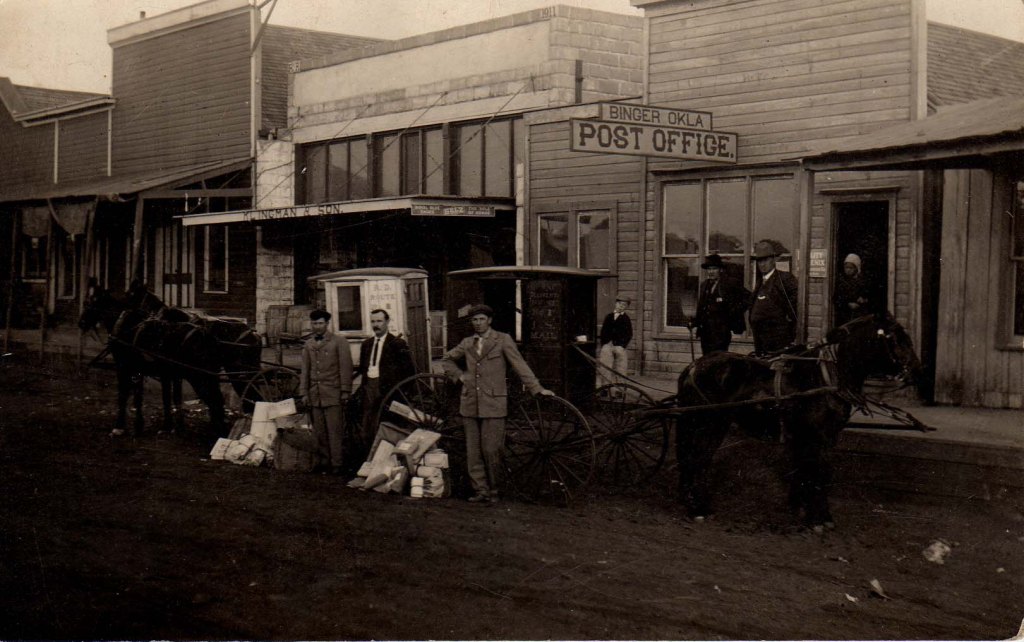
The above photos capture buildings that no longer stand. They were lost in one of the early fires that shaped the town’s history. The original downtown was once located near the area now known as the Johnny Bench Ball Park. This is at the Fair Grounds. After each fire, the town slowly shifted north. It rebuilt itself one block at a time. Eventually, it settled into its current location. The Post Office was a major accomplishment for any community to achieve. When a post office came, it marked the community’s success. The community became a reliable base for investors, visitors, and tourists.

State Highway 152 now runs through the center of town. Locals know it as Main Street. This familiar stretch has quietly observed generations pass through. This place is not what I call my hometown. But, it remains part of my associations. It is woven into the landscape of where I grew up and the memories that shaped me. During the 1950s to 1980s, hundreds of teenagers gathered on Binger’s Main Street. They saw it as the Main Drag on Friday and Saturday nights. It was as hot as a radio station spinning its latest hit. Both tunes filled the air from the City Hall. Tires spun all the way to the east end by the CO-OP. Button Williams, the towns Police Chief, watching carefully over the towns teen as he had since God’s creation. His Assistant Chief Jerry Wright there to catch calls on off nights.

Binger has always felt like one of those places where sports held the town together. The fields and courts were filled with tough farm kids. They were shaped by long days and dusty roads. Life taught them strength early. Many came from the Caddo and Kiowa Nations. People from other tribes joined them. Together they formed a close-knit spirit. This made every game feel like a community event.

From those humble beginnings came Johnny Bench. He was a local boy who carried his talent all the way to the Cincinnati Reds. He proudly wore number 5. The town still honors him with a small museum. It serves as a quiet reminder of how far a dream can travel from a place like this. And then there was Robert Johnson Jr., who tasted professional baseball but chose the familiar comfort of small-town life instead. In these memories, the heart of Binger lives on. It resides not just in its history. It also lies in the way it shaped those who once called it home. My grandfather bought the first Model T Ford from the town of Binger’s Ford dealership. They came to town to sell them when the Model T’s came out. “Pop” described the Ford outfit as being near where an old Caddo Electric building sets today. If you drive through the town, you will see the big white building. It’s on the corner near US281 and SH-152.
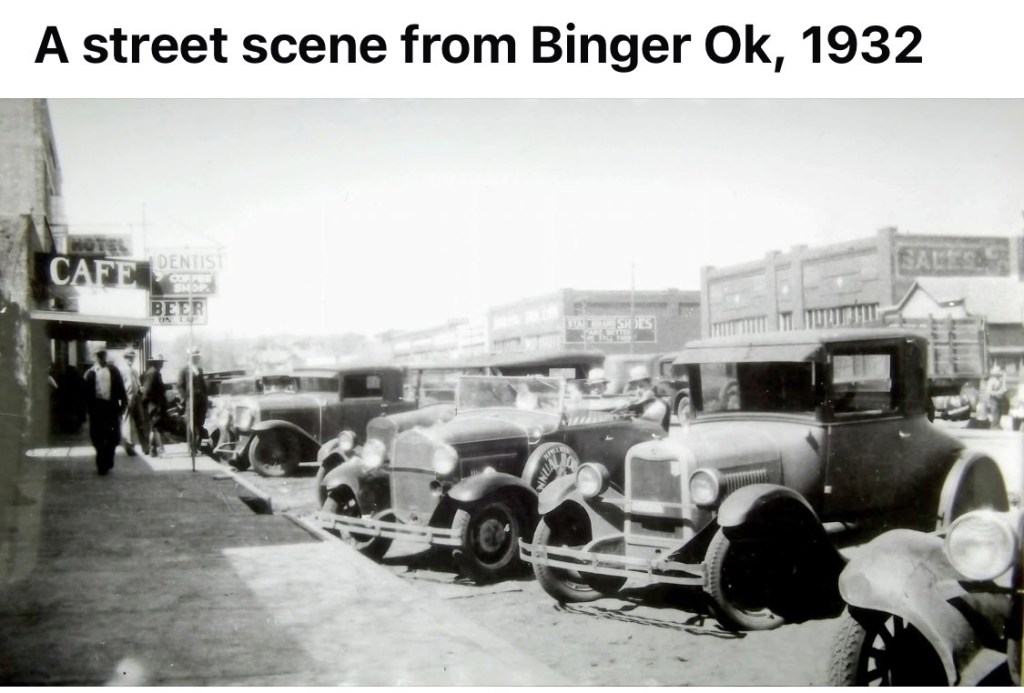
The above photo shows Main Street in Binger, Oklahoma, in 1932. It captures a quiet moment frozen in time. After the town burned twice, it rose again each time. It was rebuilt about a block north of its original location. This carried with it the stubborn spirit of those who refused to let it disappear. This image shows what became the final resting place of that rebuilt heart of town.
When the sidewalks were poured, metal rings were set into the concrete. They were meant to tether horses and wagons. Townsfolk stepped inside to conduct their daily business. For decades, those rings remained. They served as humble reminders of a slower pace and simpler life. In the mid-1970s, new federal accessibility requirements called for lower ramps and fresh pavement. With that change, the old sidewalks were replaced. The iron echoes of the past quietly vanished. Now, only memory and photographs tell their story.
This photo was found behind a old counter in the back of a business in the 1970s. Its dated as being in the 1920s. Which is a possibility. The name of the business is unknown. Yet longtime residents at the time did recognize the business as belonging to the town.
Binger once hosted three cafes and a hardware store. It also had two barber shops, a bar, and a propane company. There was a drug store, a movie theater, and two grocery stores. Additionally, it featured two laundries, a plumbing company, and a funeral home. The town included a post office, an electrical repair shop, a junk-pawn shop, and a pool hall. Binger also had two dry goods stores and a Western Auto. It had a Chevrolet Dealership, a TV Repair Service, and Three Service Stations. These were a Sinclair, a Gulf, and a Git-N-Go. There was also a dress shoppe. There was even a healthy farmer’s Co-Op. There were many other businesses that came and went in between the years. The public school was well respected in the County and had been given financial support to meet its needs.

This is a photo of the buses traveling both directions along Main Street in Binger. I’ve carried it with me for years. I have shared it many times. It always stirs the same familiar sense of remembering. This photo was taken while looking west. It captures the gentle rise at the end of the street — Binger Hill. For generations, this slope has slowed heavy trucks. It becomes unforgiving during icy winter storms.

On the right side, the white building stands just before the line of trees begins. It once served as City Hall. Inside were the fire department, water department, and city clerk. The building also housed a small police office. There was a jail that I can assure you no one was eager to test. The bars were thick, cold steel, reinforced and unyielding. I saw more than a few individuals placed there by the town’s two-man police force. This pair quietly carried more responsibility than most ever realized.

This photograph isn’t just about traffic or buildings. It holds a piece of a time when Binger moved at a gentler pace. The town watched over its own. Every corner held a story waiting to be remembered.


Johnny Bench rode home with the Binger High School baseball team on April 1, 1965. They had just played a game in nearby Riverside. This was a routine trip. It would become a moment forever etched into the town’s history. As the bus crested a hill, the coach suddenly realized the brakes had failed. The vehicle couldn’t slow down. It careened into a curve at dangerous speed. It burst through the guardrail and plunged nearly fifty feet into a ravine below.

The accident claimed the lives of two young teammates, Harold Sims and Billy Joe Wylie. This loss rippled through a small community that mourned deeply. Amid the chaos, Bench survived. He was guided by advice once given by his father. His father was a propane truck driver who understood the dangers of the road. He had told his son that in such a situation, the safest place was the floor of the vehicle. Remembering those words, Johnny dropped down. He instinctively pulled teammate David Gunter with him. This act well have saved both of their lives.
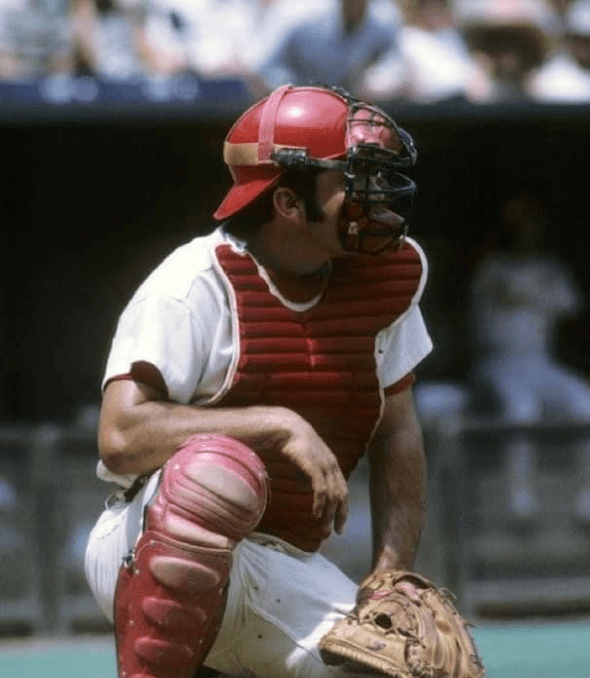
What followed was not just a tale of tragedy. It was also a story of instinct and survival. There was a quiet strength carried forth from a small Oklahoma town into the story of a legendary career.

Johnny Bench, the legendary Cincinnati Reds catcher, was known for the remarkable size and strength of his hands. Many claim he can palm as many as five baseballs in one hand. He famously demonstrated this skill on the television program This Is Your Life in the early 1970s. This moment is still remembered by many longtime fans.
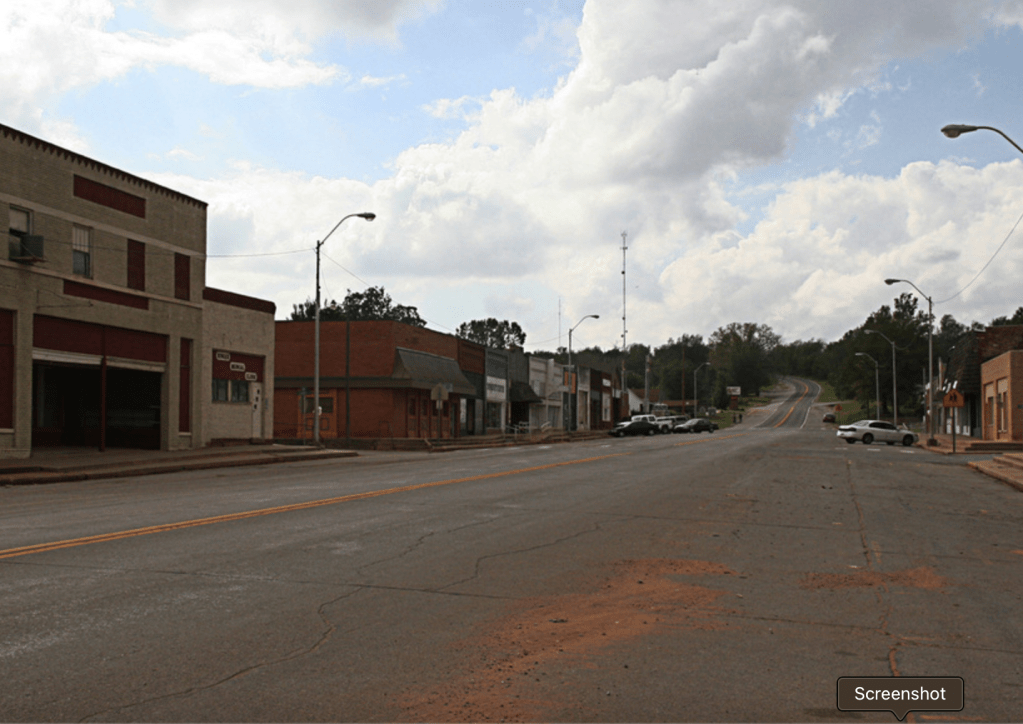

Today the state highway runs right through the town’s middle section. What once was a Main Street with shops and store fronts bustling with shoppers and townspeople is now empty. It is nearly deserted.
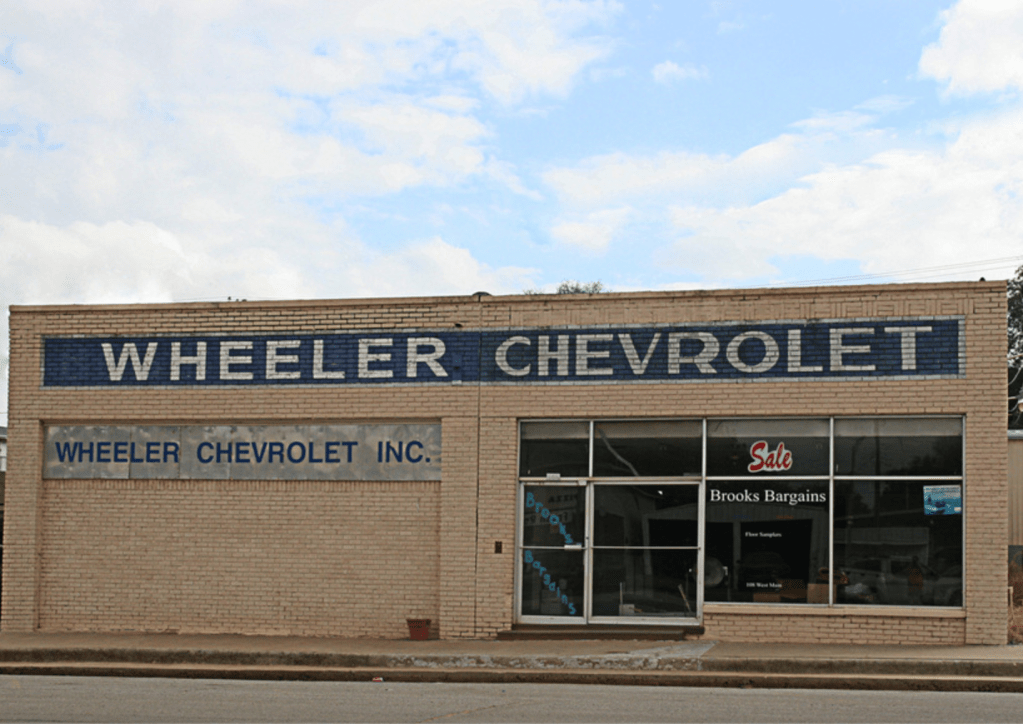
Cart’s Lumber on the Town’s East side is one of the few businesses providing services to the town.
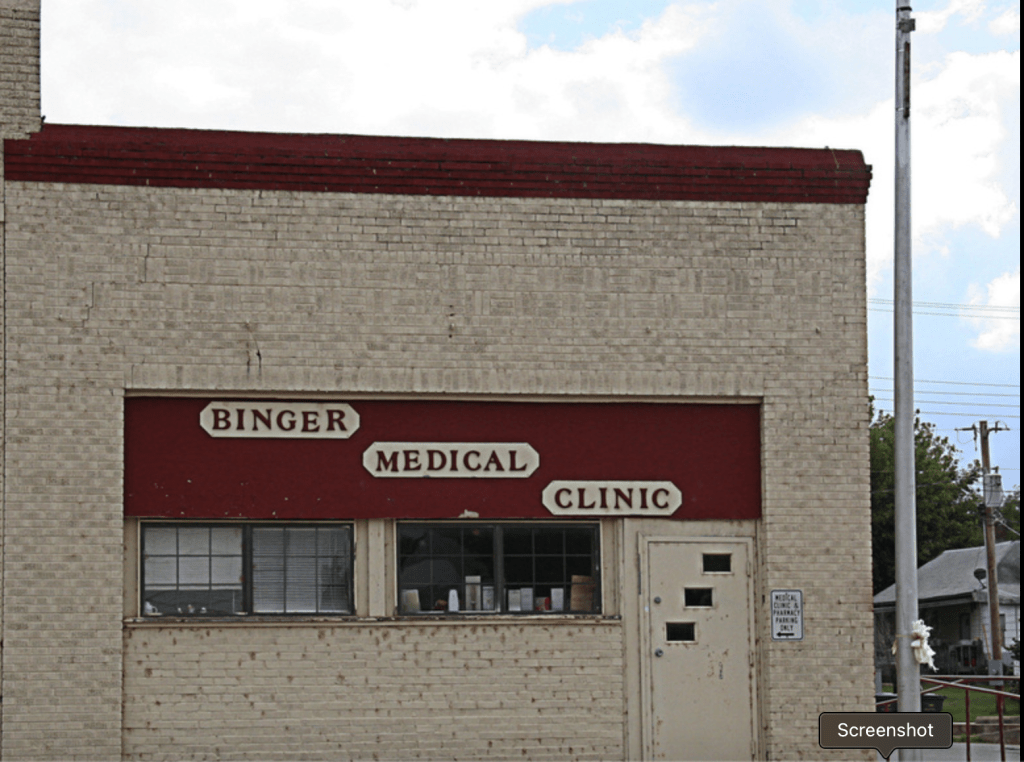
The Medical Center reportedly closed some years ago.

There are a few businesses still open in the town. A dollar store, a satellite bank of a local branch is located on the hill. There is one diner. A convenience store. A bar and the Post Office. But for most part, the buildings you find will be empty, boarded up and closed. In the 1970s, the town’s streets were packed with people parking to go shopping on Main Street. Now, the streets are wide open. Many contribute the towns rundown to the Caddo Electric Headquarters moving it’s headquarters three miles east of town. It caused many doing business with the Electric Cooperative to avoid stopping in Binger. It was the first set of nails in the towns casket. The others were placed there when too much faith was placed in the oil industry. Then as shops began to close, people began to move, and the towns center stopped functioning. I know because I was there and watched it. This was the town closest to our farm. I graduated from a school some fifteen minutes away, a place called Lookeba-Sickles. And that place is story for another day!


By Benjamin GroffMedia© | benandsteve.com | ©2025 

The Art of Embracing Laziness in Summer

By Benjamin GroffMedia© | benandsteve.com | 2025 Truth Endures©

2–3 minutes

The Fine Art of Doing Nothing

There’s a certain magic that shows up in late June. It drifts in on a warm breeze. It wraps itself around your shoulders like a sun-warmed blanket. It whispers, “Slow down a while.”

That was exactly what happened to me last Saturday.

I had plans, mind you. Big ones. Rake the yard. Clean out the garage. Paint that little table I rescued from a flea market. But then the sun was golden and lazy. It was the type of sunshine that doesn’t rush you. It invites you to stay awhile. So, I made a bold decision: I postponed productivity.

Instead of pulling out the rakes and tools, I pulled out a lawn chair. I poured a tall glass of iced tea. Then I plopped down under the shade of the patio covering. I did absolutely nothing. And I mean nothing. No phone. No music. No news. I listened to birdsong and felt a slight breeze. I heard the sound of a neighbor’s sprinkler ticking rhythmically like a metronome for summer’s easy tempo.

I watched the clouds. I counted the dragonflies. I let the world spin on without me—and it did just fine.

The dog lay beside me, belly-up to the sky, offering a solid endorsement for this lazy lifestyle. Even a stray cat, who usually stares at me like staff, sauntered over and decided to join the movement. We were a trio of content creatures, basking in a moment that cost nothing but meant everything.

At the end of the day, the lawn remained a jumble of rocks. The garage was still messy. The table continued to wait. But my heart? My heart was lighter. My shoulders less tense. And my soul? Sun-soaked and satisfied.

Summer has a way of reminding us that rest is not a reward—it’s a right. And sometimes, the most productive thing you can do is give yourself permission to simply be.


Moral of the story:

Don’t underestimate the power of a lazy summer day. It is true that you’re doing nothing—but you are just giving your spirit exactly what it needs.

Remembering Horace Speed: A MLB Player’s Legacy

By Benjamin GroffMedia© | benandsteve.com | 2025 Truth Endures©

By Benjamin GroffMedia© | benandsteve.com | 2025 Truth Endures©

1–2 minutes

Horace Speed (1951–2025): Former Major League Outfielder Remembered for His Speed and Perseverance

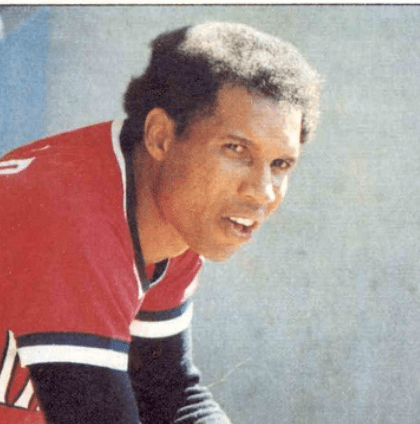
Horace Speed

Horace Solomon Speed was a former Major League Baseball player. He was known for his blazing speed and quiet determination. He passed away on May 26, 2025, at the age of 73.

Born on January 22, 1951, in Pasadena, California, Speed was a standout athlete from an early age. The San Francisco Giants drafted him out of Pasadena High School. This was during the Major League Baseball’s round of the 1969 June Amateur Draft. Speed spent most of his professional career in the minor leagues. Nonetheless, his dedication to the game paid off. He finally broke into the majors with the Cleveland Indians.

Speed made his MLB debut on September 14, 1975, and played parts of three seasons with the Indians. Throughout 62 games, he was often utilized as a pinch runner and reserve outfielder, capitalizing on his hallmark speed. While his offensive stats — a .140 batting average, seven stolen bases, and eight runs scored — show limited playing time, his presence was valuable. He made significant contributions in late-game situations, particularly on the bases.

Speed’s journey through professional baseball was a testament to resilience. He spent nearly a decade in the minors. Before reaching the major leagues, he served as a model of perseverance for countless aspiring athletes. His career was modest in statistical output. Nevertheless, it remains a testament to hard work and patience. It inspires all who hear his story.

After retiring from baseball, Speed largely stayed out of the public eye, living a private life away from the spotlight. His modesty stands out. He has made significant contributions to the sport. This modesty is a reminder of the humility that can be found in even the most accomplished individuals.

Horace Speed’s passing marks the loss of a quiet but determined competitor. His journey inspired those who watched him run, hustle, and chase his dreams. He is remembered for his achievements on the field. More importantly, he is remembered for the character he displayed in getting there.

Jason Conti’s Impact on MLB History

January 27, 1975 – May 17, 2025

By Benjamin GroffMedia© | benandsteve.com | 2025 Truth Endures©

1–2 minutes

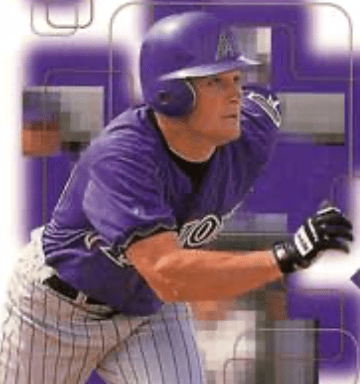
Jason Conti, AZ Diamondbacks

Stanley Jason Conti was a former Major League Baseball outfielder. He was known for his defensive prowess. He contributed to several MLB teams. Conti passed away on May 17, 2025, his cause of death has not been disclosed.

Conti was born on January 27, 1975, in Pittsburgh, Pennsylvania. The Arizona Diamondbacks drafted him in the 32nd round of the 1996 amateur draft. He came from the University of Pittsburgh. He made his highly anticipated MLB debut with the Diamondbacks on June 29, 2000, filled with excitement and promise. He played for the Tampa Bay Devil Rays, Milwaukee Brewers, and Texas Rangers over a five-year major league career. Known for his strong throwing arm, Conti made memorable defensive plays. He threw out Atlanta’s Brian Jordan at third base on consecutive nights. He also gunned down Chicago’s Frank Thomas at home plate in back-to-back games. He appeared in 182 MLB games, recording a .238 batting average with six home runs and 47 RBIs.

After his time in the majors, Conti continued his baseball career in the minor leagues, even taking his talent overseas. He played in Italy for the Bologna Italieri of the Series 1-A Championship League during the 2007 season. His performance on the field showcased his skills on a global stage.

Conti’s passion for baseball and his memorable moments on the field left a lasting impression on fans and teammates alike. He is remembered for his athletic achievements and unwavering dedication to the sport, a commitment that inspired many.

He is survived by his family, friends, and countless fans who appreciated his contributions to baseball.


A memorial service will honor Jason Conti’s life and career.

Sophie’s Baseball Blog Is Back At Bat!

Benjamin GroffMedia© | benandsteve.com | 2025 Truth Endures©

1–2 minutes

Spring is here, and that means baseball season is in full swing—just like Sophie’s Baseball Blog! Keeping up with the Phillies and Nationals has never been easier. For a quick way to stay updated, visit benandsteve.com. Click on the NEWS4YOU tab. Then, slide down to Sophie’s page—your one-stop shop for all the latest game insights and highlights. It’s a home run every time! ⚾🔥

Reliving Harry Caray’s Magic: A Cubs Story

GROFF MEDIA 2024© TRUTH ENDURES IMDBPRO

Presented by benandsteve.com By: Benjamin Groff II©

2–3 minutes

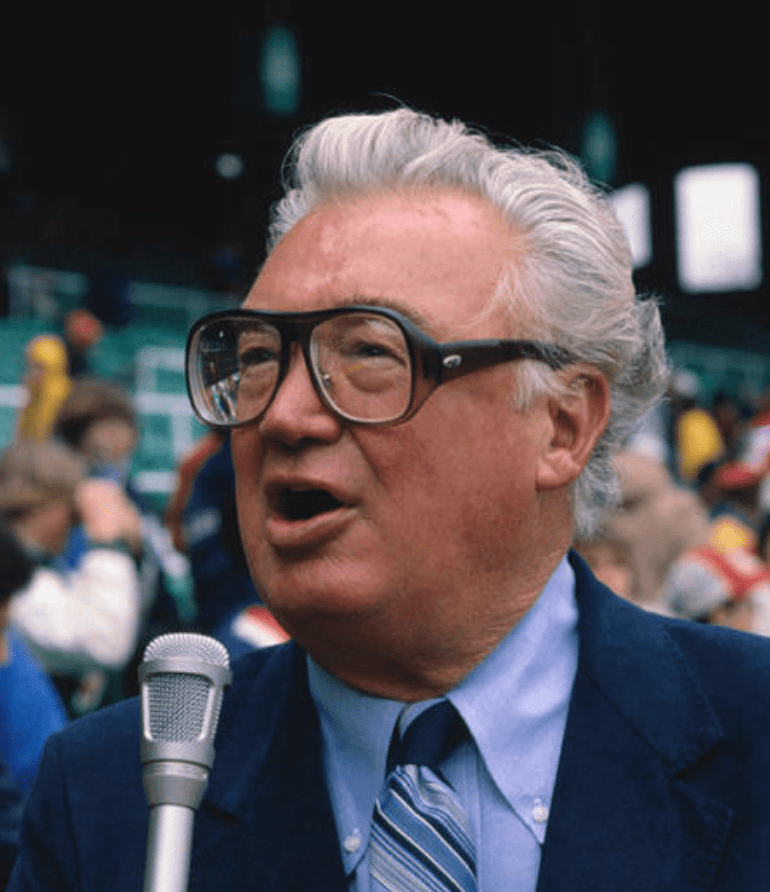
My Afternoons with Harry Caray

The sun beat down outside. The heat rolled in waves off the pavement. Inside my living room, the air was incredible, and the beer was ice-cold. It was that time of day again—my afternoons with Harry Caray.

The ritual was sacred. A six-pack, fresh from the ice chest, sat beside my recliner, already dripping with condensation. The TV crackled to life. There he was—Harry Caray, larger than life. His voice boomed through the speakers like an old friend stepping through the door.

“Holy cow! It’s a beautiful day for baseball!”

It didn’t matter where the Cubs were playing—Wrigley Field, St. Louis, Los Angeles—Harry brought the game home. The crack of the bat and the crowd’s screaming made each moment vivid. The agony of a blown lead and the thrill of a rally were more alive because Harry was calling it.

I took a long sip of my beer as the game unfolded, Harry’s voice rising and falling with every pitch.

“Ahhh, folks, that one just missed!”

he’d groan after a close ball.

“Boy, oh boy, you gotta be kiddin’ me!”

when the ump made a call against the Cubs. And when a fan made a barehanded grab in the stands?

“Let me tell ya, that guy deserves a contract!”

But no moment was more sacred than the seventh-inning stretch.

The organ at Wrigley Field fired up, and Harry’s voice slurred just enough to let you know he was enjoying the day as much as I was, belted out those legendary words:

“All right, Cubs fans, lemme hear ya! A one! A two! A three!”

And then it began:

“Take me out to the ballgame…”

I stood up from my chair, beer in hand, and sang along like I was in the bleachers. My voice didn’t hold a candle to Harry’s, but that didn’t matter. Our tradition was a shared experience that connected me to every other Cubs fan.

For those few moments, nothing else existed—just me, Harry, and the game.

When the ninth inning came, the excitement peaked. Whether the Cubs had pulled off a miracle or suffered another heartbreak, I lifted my beer. I then raised it one last time toward the screen.

“To you, Harry. Your legacy lives on in every Cubs fan. Holy cow, what a ride.”

Bob Kelly, 97, Former Major League Pitcher and Last Surviving Player Managed by Hornsby and Frisch

Groff Media 2024© Truth Endures IMDbPro

Presented by benandsteve.com By: Benjamin Groff II©

2–3 minutes

In Memoriam

Bob Kelly

Robert Edward “Bob” Kelly, a distinguished former Major League Baseball pitcher. And an enduring symbol of the golden era of baseball. He passed away peacefully on November 27, 2024, in Old Lyme, Connecticut. He was 97 years old.

Born on October 4, 1927, Kelly’s journey to the Major Leagues began on the sandlots of East Cleveland, Ohio. His exceptional talent emerged early, leading East Cleveland Shaw High School to a state championship in 1944. A standout pitcher, he achieved a 7–2 record in 13 games, striking out an impressive 75 batters.

Kelly’s college baseball years, playing for Purdue University from 1946 to 1947. And Western Reserve (now Case Western Reserve University) from 1948 to 1949. Both were a testament to his resilience and skill. These formative years set the stage for a professional career that would be marked by these very qualities.

Kelly made his Major League debut in 1951 with the Chicago Cubs. He went on to pitch for the Cincinnati Redlegs and Cleveland Indians. Over his career, he demonstrated remarkable adaptability, competing during an era defined by legendary hitters and managerial icons. His versatility was a testament to his love for the game and his dedication to his craft.

Kelly enjoyed a significant time in the Major League. He was also a mainstay in the minor leagues. Notably, he played with the Los Angeles Angels of the Pacific Coast League. His contributions to the sport extended beyond his pitching abilities. He became a mentor to younger players. He instilled in them the values of professionalism and sportsmanship. His influence on them will be felt for generations to come.

Off the field, Kelly was deeply devoted to his family. He was a loving husband, father, and grandfather. He valued time spent with loved ones. He was known for his warmth, wit, and humility. His legacy extends beyond baseball, touching the lives of those fortunate enough to know him.

Bob Kelly’s life was a testament to the enduring spirit of baseball and the power of perseverance. His impact on the game and the people around him will be remembered fondly by fans, friends, and family.

In keeping with his family’s wishes, a private funeral service will honor his life. The family requests donations to youth baseball programs. This is to honor his memory. They want to make sure that Kelly’s love for the game inspires future generations.

WTAQ-WLUK REPORTS HANK THE DOG HAS DIED

Reposted from WTAQ 1360AM – WLUK 97.5FM NEWS ON DEMAND

(WTAQ-WLUK) — Hank the Dog, a stray who showed up at the Milwaukee Brewers’ spring training facility a decade ago and quickly became the team’s unofficial mascot, has reportedly died.

Social media posts Wednesday point to a Facebook post announcing Hank’s death. It reads, in part:

Today we had to say goodbye to a phenomenal dog: Hank the Ballpark Pup.

Many outside of Wisconsin do not know who he is, but every Brewers fan and Wisconsinite that has been paying attention — do. He was OUR little celebrity — and he NEVER failed to bring it and represent.

He was/is my favorite Brewer and he will be truly missed!

In February 2014, the stray pooch wandered onto the Brewers’ Arizona complex looking roughed up. He was taken to a veterinarian, who spotted a tail injury and some gray markings around his right hind leg — a sign that it may have been run over by a vehicle. The vet believed the dog to be around two years old.

The Brewers took the dog in and named him “Hank” after baseball legend Hank Aaron, who began his career in Milwaukee.

When the team could not find Hank’s previous owner, he was adopted by Marti Wronski and her family. Wronski, a Neenah native and 1994 graduate of St. Norbert College, served as the Brewers’ vice president and general counsel at the time. She is now the organization’s chief operating officer.

Hank’s story is one of rags to riches. He became a canine sensation, with the Brewers selling Hank-themed clothes and a stuffed toy version of the dog at their team store. The Brewers also gave away Hank bobblehead dolls at a game.

With his celebrity status, Hank also helped raise funds for the Make-A-Wish Foundation and the Wisconsin Humane Society. He even paid a visit to Fox Cities Stadium in Grand Chute.

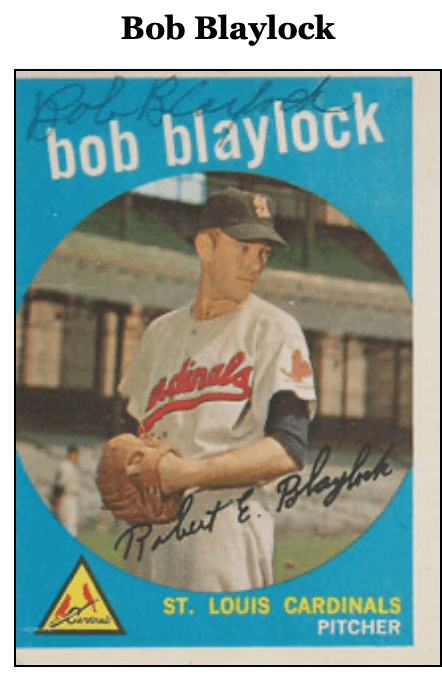
Baseball’s Robert Edward “Bob” Blaylock Has Died. And Few Noticed.

By: Benjamin Groff© Groff Media 2024© Truth Endures

Robert Blaylock Obituary

Obituary published on Legacy.com by Green Hill Funeral Home of Owasso on Sep. 4, 2024.

Obituary of Robert Edward Blaylock
Robert Edward Blaylock, Husband, Father, Grandfather & Great Grandfather went to be with Jesus on September 1st, 2024, at the age of 89. He was born on June 28th, 1935, in Chattanooga, OK to Cecil and Fannie Blaylock.
Bob was a 1953 graduate of Muldrow High School where he excelled in baseball and basketball. After graduation he signed to play baseball with the St. Louis Cardinals organization. Bob’s love for baseball continued throughout his whole life, he was a great coach on and off the field. He was also inducted into the University of Arkansas – Ft. Smith for his basketball achievements in 2012 and he was the 1st Hall of Fame inductee at Muldrow High School in 2014.
He married Barbara Thompson on Oct 3, 1956. They had 3 children, Robyn, Russ and Terri. After his baseball career he raised his family in Tulsa, OK where he Managed the Saratoga Hotel and owned the Saratoga Restaurant until his retirement in 1997. After his retirement he bought a farm in Talala, OK where he raised racehorses and cattle. Bob loved animals of all kinds, he had pot belly pigs, cats, dogs and numerous Martin houses that he monitored hourly with his shotgun to keep the starlings away!
Bob’s Celebration of Life will be at 11:00 AM Friday, September 6th, 2024 at First Baptist Church, Owasso, OK. The visitation will be at Greenhill Funeral Home Thursday, September 5th, 2024, from 5:00 – 7:00 PM.
He was preceded in death by his wife Barbara, Parents Cecil & Fannie Blaylock, Brother & Sister-in-Law Harold & Wanda Blaylock and one infant sister Glenna Fay Blaylock.
He is survived by his sister and brother-in-law, Lois & OC Flanagan.
He is a Proud Papa of 9 Grandchildren and 10 Great Grandchildren who will always love and cherish the memories they have with him.
Pallbearers are his Grandsons John Einhellig, Tyler Lambert, Justin & Josh Beal and Luke & Jake Blaylock.
To send flowers to the family or plant a tree in memory of Robert Blaylock, please visit Tribute Store

EDITORS NOTE: Bob Blaylock’s talent on the mound caught the eye of the St. Louis Cardinals organization, with whom he would spend his entire ten-year professional career.
Bob made his MLB debut on July 22, 1956, pitching for the Cardinals against the Brooklyn Dodgers. Despite a promising start, his time in the majors was marked by challenges, including an injury in his youth that left him with only three fingers on his non-pitching hand. Yet, he was a hard thrower who led the American Association in strikeouts in 1958, a testament to his resilience and determination that should inspire us all.
Over two MLB seasons, in 1956 and 1959, Bob pitched in 17 games, striking out 42 batters. Though his major league career was brief, his impact was felt deeply by those who knew him. He was also part of a unique trio of unrelated Blaylocks who played in the National League during the 1950s, sharing the field with names like Marv and Gary Blaylock.