The Forgetful Pilot – Where Passengers May Land On Take-Off Like It Or Not!

2–3 minutes

The Forgetful Pilot And His Bruised Passengers

Most airline pilots have checklists that go something like this: flaps set, fuel topped, doors secured. But not Captain Earl “Forgetful” Finley. Earl had a knack for skipping one step in particular: buttoning down the rear cargo door.

The incident was first noticed in Burnt Corn, Alabama. The Hicks family boarded Earl’s plane for what they thought would be a scenic hop to Birmingham. At takeoff, the nose lifted off the runway. The rear door gave way. The Hicks family scooted right out like biscuits from a greased pan. They landed unhurt on the asphalt, dazed but alive, while their suitcases rolled to a neat stop beside them. Earl circled back, tipped his cap out the cockpit window, and hollered:

“Y’all hold on better next time!”

Word of Earl’s absent-minded ways spread, but strangely enough, passengers kept buying tickets. His next mishap was in Turkey, Texas. Earl had agreed to carry a package to Pie Town, New Mexico. He also agreed to let a fellow named Harlan Sanders (no relation to the famous chicken man) ride along. At about 1,000 feet, Harlan and the packages slid right out the back. Earl didn’t even flinch. By then, he’d become so used to it he was strapping parachute windshirts onto the parcels. Sanders walked away dusty but unharmed, grumbling about never getting frequent flyer miles.

What began as chaos somehow turned into a spectacle. Passengers developed a knack for bracing themselves near anything bolted down. Earl’s flights became less about getting somewhere. They became more about the thrill of not falling out. Photographers started gathering at small airports, cameras ready to capture people and parcels tumbling skyward. Some passengers even leaned into the fame—hollering and waving as they slid into the blue.

Captain Earl never made it big with the airlines. Yet, he sure made history as the only pilot whose passengers packed harnesses, not snacks.

When asked why he never bothered to secure the back gate, Captain Earl’s answer was as confident as it was ridiculous:

“If I close that gate, the wind can’t blow straight through, and that drag slows me down. With it open, the air just zips right on out the back and keeps me flying faster. Shut it tight, and I’d lose two hours off my daily routes!”


By Benjamin GroffMedia© | benandsteve.com | 2025 

Finding Hope in Forgotten Places

2–3 minutes

I Just Came In to See if Someone Still Cares

The neon beer sign buzzed faintly against the cracked window of Earl’s Place, a bar that had seen better years. The wooden floor creaked under the weight of boots that hadn’t walked through in a long time. Jack pushed the door open and paused. He wasn’t sure why he’d come. Maybe it was habit. Maybe it was the song playing faintly from the jukebox in the corner—one he hadn’t heard in years.

“I just came in to see if someone still cares…”

He let out a dry chuckle.

“Well, ain’t that the truth.”

At a corner table, an older man nursed a black coffee, his hat tipped low. Folks just called him “Red,” though his hair had long gone silver. He raised his head, eyes sharp despite the years.

“Jack,

he said, as if the name had been waiting on his tongue.

“Didn’t think I’d see you again.”

Jack shrugged and slid into the booth.

“Figured I’d find out if anybody remembered me.”

Red studied him for a moment.

“You mean if anybody still cares.”

Jack didn’t answer. His face told enough. Years of disappointments, false starts, and self-inflicted wounds weighed heavy on him. Work had dried up, his family had drifted off, and the last of his friends had stopped calling. He wasn’t looking for pity. Just… something.

“You know,”

Red said slowly,

“folks got it wrong. They think it’s a man’s mistakes that define him. But I’ll tell you something—it’s his fight against those mistakes that shows who he really is.”

Jack stared down at his calloused hands.

“What if you get tired of fighting?”

Red leaned in, voice low but steady.

“Then you rest. But you don’t quit. If you quit that is when you hand yourself over to those demons for good. As long as you’ve got breath, you’ve still got a say in how the story ends.”

The jukebox crackled, replaying the song’s chorus, as if to punctuate the thought. Jack felt a sting behind his eyes he hadn’t let out in years. He cleared his throat.

“Guess I just needed to hear it from someone who wasn’t me.”

Red gave a slow nod.

“That’s why you came. Not for the beer. Not for the music. To find out if someone still cared. And I do. Hell, maybe more folks do than you think. You just stopped listening.”

Jack sat back, the weight in his chest easing, just a little. The bar was still dim. The world outside remained hard. For the first time in a long while, he didn’t feel invisible.

That night, as he stepped out into the cool air, Jack realized something. It wasn’t forgiveness from the world he was after—it was the fight inside himself he had to forgive. And maybe, just maybe, that was enough to start over.

By Benjamin GroffMedia© | benandsteve.com | 2025 

From Hauling Oranges to Inspiring a Movement

2–3 minutes

The Brothers and the Orange Truck

Groff Media2025© BrotherTruckers

Eddie and Carl had always been close, but nothing tied them together like their truck. A massive eighteen-wheeler, shining chrome dulled by road dust, it was both their livelihood and their burden. They’d gone deep into debt to buy it. They hoped to build their hauling business around orange deliveries from the groves in California.

But the payments ate away at every mile they drove.

Even with steady work, the numbers never added up. So they tried to get clever. They began running side jobs—hauling crates of produce, lumber, even furniture—between their orange routes. One drove while the other slept. Their heads were propped against the hard cab window. They woke with stiff necks that seemed to worsen each week. 

“Just a few more years,” 

Carl would mutter. 

“We’ll get ahead.” 

Eddie always nodded, though neither believed it completely.

Then the crisis hit. On a rain-slicked highway outside Phoenix, a sudden shudder ran through the truck. Eddie, at the wheel, felt the steering go slack. He fought the wheel, but the trailer jackknifed, scattering oranges across three lanes of traffic. By some miracle, no one was killed—but the damage was catastrophic. Their load was ruined, the rig torn apart, and the trucking company that contracted them pulled their work instantly.

The brothers sat on the shoulder. They were soaked in the rain. They watched cars crunch over the fruit they had worked so hard to deliver. They thought it was the end.

But in the weeks that followed, something unexpected happened. Photos of the accident—highways littered with smashed oranges, drivers climbing out to help clean up—went viral. 

Reporters picked up the story of the brothers who worked around the clock. Their necks were stiff, and their wallets were thin. They were just trying to get ahead. 

Sympathy poured in. A crowdfunding campaign was launched. And soon, Eddie and Carl weren’t just hauling oranges anymore. They were speaking about small-town grit and about persistence. They talked about what it meant to keep pushing ahead when the load was too heavy.

The truck nearly broke them. The crisis almost ruined them. In losing everything, they discovered something bigger. They found a community that believed in them more than they had ever felt in themselves.


By Benjamin GroffMedia© | benandsteve.com | ©2025 

The Secret to Mr. Dink’s Disguise Adventures

2–3 minutes

Mr. Dink and the Secret Agent’s Beard

Mr. Dink had always dreamed of growing a grand, bushy beard. He wanted more than a scruffy patch or stubble. He desired the beard that inspired respect. It was like the beard of a ship’s captain or a wise old philosopher. For years he tried: tonics, oils, even rubbing garlic on his chin (his grandmother’s advice). Nothing worked. At best, he muster a shadow of stubble that made him look perpetually halfway through shaving.

One lazy afternoon, flipping through a magazine, something caught his eye: an ad for “Undercover Agent Supplies.” The list included fake passports, invisible ink, and, most importantly, false facial hair kits. Mr. Dink’s heart skipped. At last, a way to see himself with a beard! He sent in his order, expecting a modest beginner’s kit.

But somewhere in the warehouse, a mistake was made. Instead of the novice set, Mr. Dink received a professional-grade disguise kit—the very same used by secret service agents. When he opened it, the contents dazzled him. There were full beards in every style imaginable. Mustaches curled or drooped. Eyebrows that changed a man’s entire face. There were wigs, glasses, voice changers, even adhesive skin molds.

Mr. Dink began experimenting right away. In one disguise, he was a grizzled lumberjack. In another, a mysterious professor. And when he wore the gray beard and cap, not even his closest neighbors recognized him. To his shock, the disguises worked so well that people began speaking freely around him. He heard what they really thought about Mr. Dink—sometimes kind, sometimes critical, sometimes hilariously wrong.

At first it stung. But as he listened, he realized how little people truly saw of him, how much they judged by appearances. And oddly, this knowledge freed him. He began wearing the disguises not to hide, but to understand. And the beard—the one he never grew—became a symbol of all the lives he slip into.

In the end, Mr. Dink discovered he hadn’t needed a beard to be respected. He needed confidence, curiosity, and a little humor. Still, he kept the kit. There were times when being a secret agent was just too much fun. The allure of having a glorious beard was hard to resist.


By Benjamin GroffMedia© | benandsteve.com | ©2025

Elias: The Man with an Animal Connection – Better Than Dr Doolittle And Wiser Than Dr Livingstone

2–3 minutes

The Listener

Elias never thought of himself as special. He lived in a small cabin at the edge of the woods. There, he worked as a carpenter. In the evenings, he fed the stray cats that wandered in from the trees. He had always felt an odd comfort around animals. He attributed this to his quiet nature and patient hands.

It began with his dog, Rusty. One evening while Elias rubbed behind the old hound’s ears, he thought he heard a whisper. It wasn’t a sound exactly, but a clear impression: “Don’t stop, that feels good.” Elias froze, hand hovering mid-scratch. Rusty nudged him insistently, and the thought returned, playful and warm. At first, Elias dismissed it as his imagination. The barn cat slinked across the porch the next morning. Yet, he felt a sharp pang of hunger that wasn’t his own. He realized something impossible was happening.

At first, the animals spoke only in feelings. They expressed affection when he stroked their fur. There was annoyance if he pulled away too soon, and gratitude when he left out food. But as days passed, the impressions grew sharper, almost like sentences forming inside his mind. One afternoon, Rusty limped. Elias felt a jolt of pain in his knee. This was followed by the plea: “It hurts, please help.” He checked and found a thorn buried deep in the dog’s paw. A sparrow darted to his windowsill and flooded him with urgency: “Nest broken, chicks in danger.” Elias followed its pull and discovered a nest toppled in the wind. He rescued the hatchlings before the foxes found them.

Word seemed to spread, though Elias never understood how. Stray dogs lingered near his cabin. Deer stared at him without fear. Once, even a wounded hawk landed on his porch rail. Each brought with it a silent voice—requests for healing, warnings of predators, messages of danger to others of their kind. With every answered call, Elias felt the bond deepen.

Soon he realized this gift was more than companionship. It was responsibility. He can bridge a gap no one else: soothing fear, preventing harm, guiding creatures toward safety. A flood threatened the lower fields. He was awoken by the frantic voices of burrowing animals. He led the farmer’s family to higher ground just in time. Poachers crept through the forest one autumn night. The owls carried their presence to him in overlapping echoes. He alerted the rangers. Before long, his reputation surpassed even that of Dr. Doolittle, carrying an edge that would have made famed explorer Dr. Livingstone himself take notice.

Elias no longer saw himself as just a man in a cabin. He was part of a living chorus, every feather, paw, and claw connected through an unseen thread. And though it sometimes weighed heavy on him, he carried it gladly. For the first time in history, animals had found someone who truly listened. He had discovered a purpose greater than he’d ever imagined.


By Benjamin GroffMedia© | benandsteve.com | 2025

Harold the Tortoise Pulls Off Great Escape #2—This Time the Law Catches Up

Harold’s Great Escape

Photo by Edwin Lopez on Pexels.com

Harold was no ordinary backyard pet. Being a tortoise, his adventures rarely involved chasing tennis balls or tugging on ropes. Instead, Harold was a master of patience, persistence, and plotting. He had already made a name for himself with one backyard escape. Still, this time, his curiosity carried him farther than anyone expected.

It began with the fence. Harold had spent weeks studying it, eyeing the weak spots with quiet determination. One morning, the house was still waking up. He pressed against a loose slat. It was just enough for daylight to seep through. Inch by inch, Harold squeezed his shell until he was finally free. He paused. He sniffed the air (at least, as much as tortoises sniff). He set off at his own steady pace toward the unknown.

The journey was slow but deliberate. He trundled across lawns. He navigated flowerbeds. He even startled a neighbor’s cat. Upon seeing Harold’s ancient face, the cat decided this was a creature best left unchallenged. Hours passed. Harold’s determined little legs carried him farther. The sound of traffic began to hum in the distance.

By midafternoon, Harold had reached a busy city intersection. Cars rumbled by, drivers honked, and the crosswalk lights blinked red and green. Unfazed, Harold simply marched out onto the asphalt, oblivious to the commotion he was causing.

It was then that Officer Ramirez, patrolling the area, spotted something unusual in the middle of the road. At first glance, it looked like a rock—or maybe even debris. But as he got closer, he noticed the little legs moving steadily ahead.

“Well, you don’t see that every day,” Ramirez muttered, pulling his cruiser to the curb.

Stepping into the street, he held up his hand to stop traffic, much to the confusion of the waiting drivers. Then, carefully, he scooped Harold up. “You’re one brave little guy,” he said, examining the tortoise’s shell. That’s when he saw it: a neatly written phone number in permanent marker, curved along Harold’s back.

A quick call later, Harold’s worried family answered. Within the hour, Harold was back in his yard, much to their relief. The fence slat was nailed firmly back in place. Harold received a fresh helping of lettuce as a homecoming feast.

Of course, Harold munched away happily, but his eyes still lingered on the fence. After all, a tortoise’s heart—slow and steady though it is—was always drawn to adventure. For Harold’s caretakers, it would mean something different. The next day, the front page of the local newspaper ran with headlines and the story about Harold’s Great Escape!

By Staff Reporter Scoop Gatter

It isn’t every day that traffic stops because of a tortoise. Yet, that’s exactly what happened yesterday afternoon at the corner of Maple Avenue and 3rd Street.

Officer Luis Ramirez of the city police department was on routine patrol. He spotted what he thought was a rock in the middle of the intersection. A closer look revealed something far more unusual. A slow-moving tortoise named Harold was making his way across the street. It seemed to him as if it were just another stretch of backyard lawn.

“I had to do a double take,” Ramirez said with a laugh. “You expect to see dogs or cats wandering off now and then, but not a tortoise. Cars were stopping, people were staring—it was a sight.”

Officer Ramirez quickly stopped traffic and carried Harold to safety. A phone number was written in marker on Harold’s shell. This was a precaution his owner had taken after the tortoise’s first great escape. Thanks to that bit of foresight, Ramirez called the family directly.

Within the hour, Harold was back home, munching lettuce in his yard as though nothing had happened. His owner is relieved and amused. She says the family plans to reinforce their backyard fence. She also admits Harold has a knack for adventure.

“He’s slow, but he’s sneaky,” the owner joked. “You turn your back for an afternoon, and suddenly he’s halfway to downtown.”

As for Harold, he remains unfazed by all the attention. With his second escape under his belt, neighbors are already calling him “the Houdini of Maple Avenue.”

The Day the Johnson’s Mimic Bird Flew the Coop And Flew Throughout Johnson City, Kansas

3–4 minutes

The Day the Mimic Bird Flew the Coop

Earl and Mabel Thompson were a quiet couple in their seventies. They lived on Maple Street in a small white house with blue shutters. Most evenings were spent watching the news or sipping tea on the porch. Their pride and joy, though, wasn’t a grandchild or a garden, but a bird—a rare mime bird. Unlike parrots, which repeated words, this bird can mimic voices perfectly. You’d swear the real person was in the room.

They named him Charlie.

One summer morning, Mabel was dusting the birdcage. Earl was fumbling with the Sunday crossword. Charlie spotted the cage door ajar. With a gleeful flap, he darted out the window and into the open sky. Earl dropped his pencil. “Mabel, the bird’s loose!”

But by then, Charlie was already over Johnson City, Kansas Main Street, testing his repertoire of voices.


Trouble Takes Flight

Charlie’s first stop was the Jenkins’ house. Hovering outside the kitchen window, he called out in Mr. Jenkins’ voice:


“Darlin’, I burned the roast again!”

Mrs. Jenkins stormed into the kitchen, waving a wooden spoon, ready for a fight. Poor Mr. Jenkins had been quietly napping in his recliner. He nearly fell over when she accused him of ruining dinner. He hadn’t even touched it.

From there, Charlie zipped down to O’Malley’s Bar. Perched on the ceiling fan, he crooned in half a dozen voices: “Put that on my tab!” “You call that a drink?” and, worst of all, in the barkeep’s own gruff tone: “Next round’s free, boys!” Chaos erupted as patrons demanded their “free round,” and fists began flying before anyone realized the voice was coming from above.


Civic Mischief

Not content with bars and kitchens, Charlie wheeled into the Johnson City police station. He perched outside the dispatcher’s window. He barked in Officer Daniels’ exact voice:
“Unit 12, urgent back-up on Fifth and Main!”

Three patrol cars roared away with sirens blaring. The station was left in confusion. The real Officer Daniels walked out of the bathroom holding a sandwich. One County Unit, A State Patrol Car and the city’s only other active patrol unit.

Later that same afternoon, Charlie wandered into Johnson City’s Hospital. There, using a spot-on imitation of the head doctor, he announced over the intercom:


“Paging Dr. Howard, please report to Room 207. Emergency tonsil transplant, stat!”

Patients and nurses alike scrambled in a tizzy, while Dr. Howard was still in the cafeteria with a mouthful of Jell-O. He nearly joked. Squirming to get up his belly got wedged beneath the table and chair. A colleague that was with Doctor Howard, began laughing so hard he nearly passed out from the added action.

Charlie flew down to Johnson City John Deere. He landed in their parts department. There, he began calling out engine parts numbers from bin numbers. This drove the parts clerks absolutely crazy.


The Chase and the Capture

Word spread of a mysterious troublemaker around town. By that time, Earl and Mabel were chasing after Charlie with a birdcage. They called sweetly, “Here, Charlie! Come home, dear!”

The town’s patience was running thin, though most couldn’t help but laugh at the absurdity. Charlie was exhausted from a day of impersonations. Finally, he landed right back on Earl’s shoulder with a satisfied squawk:


“Well, that was fun!”

—in Earl’s exact voice.

Earl sighed, Mabel shook her head, and the crowd around them burst into laughter.


Aftermath

From that day on, Charlie’s cage was fitted with a brand-new lock. Earl swore it would never happen again.

Still, every now and then, when the wind blew just right across Maple Street, folks swore they heard Charlie. He was practicing a new trick. The voices varied—sometimes the mayor, sometimes the school principal—but the laughter it brought the town was always the same.


By Benjamin GroffMedia© | benandsteve.com | 2025 

Eldoria’s Shattered Crown: A Tale of Courage and Redemption

2–3 minutes

The Knight and the Shattered Crown

The kingdom of Eldoria lay beneath a shadow. Once filled with music, trade, and the bright laughter of children, its streets had grown silent. A great dragon, black as midnight and wreathed in fire, had descended from the northern mountains. With its arrival, the crown of the king—the source of Eldoria’s unity and prosperity—was shattered into three pieces. These pieces were scattered across the land. Without the crown, the kingdom faltered, its people divided, its armies weakened.

But hope was not lost.

The Oath

Sir Alaric of Bindenvale was no stranger to hardship. He was a knight forged in battles and tempered by loyalty. He was summoned to the king’s side as illness gnawed at the ruler’s strength. The king’s voice was weak, but his eyes burned with command as he entrusted Alaric with a quest: 

“Find the three shards of the crown. Restore it, and our kingdom will live again.”

Alaric bowed deeply, vowing to see the quest through or perish in its pursuit. Armed with his blade, Lion’s Fang, and guided by his unyielding faith, he rode forth.

The Trials

The first shard was said to lie in the Forest of Whispers, guarded by spirits of the old world. There, Alaric endured visions meant to unseat his courage—faces of fallen comrades, echoes of failures long past. But he pressed on, offering words of honor instead of fear, and the spirits relented, gifting him the shard.

The second shard rested in the Abyss of Cindral, a labyrinth of fire and stone. Alaric fought creatures born of molten rock and endured heat that melts steel. At the abyss’s heart, he found the shard embedded in stone, pried free by his resolve rather than brute strength.

The third shard was the most perilous: it lay in the dragon’s lair itself. Alaric faced the beast, its scales impenetrable and its fire endless. Yet he recalled the oath he had made—not to defeat the dragon, but to save the kingdom. Using wit, he lured the beast into a trap of crumbling stone. This gave him just enough time to seize the final shard.

The Return

Weary but unbroken, Sir Alaric returned to Eldoria. The shards were reforged by the kingdom’s smiths into the Crown of Unity. As it was placed once more upon the king’s brow, light returned to the realm, driving back the dragon’s shadow. The people of Eldoria cheered. They celebrated not merely for their crown. They honored the knight whose courage and humility had bound them together once more.

Sir Alaric never sought glory, only service. Yet in taverns and halls for generations to come, his story was told. It was the story of a knight who saved a kingdom not through conquest. Instead, he saved it through honor, sacrifice, and faith.


By Benjamin GroffMedia© | benandsteve.com | 2025 

How a Talking Box Changed a Village Forever

2–3 minutes

The Man Who Brought the Talking Box

Long ago, in a village nestled between mountains and rivers, the people lived simple lives. They farmed, fished, and told stories by firelight. The outside world was a distant rumor; progress had passed them by like a river running around a stone.

One day, a man arrived carrying a strange box. He called it a television. The villagers had never heard such a word. When he told them it would show pictures that talked, they laughed and shook their heads. “You are a fool,” they said. “Only dreams speak, not boxes.”

But the man was prepared. He produced a car battery and some wires. With a flicker of static, light and sound filled the screen. A newsreader from a city hundreds of miles away appeared, his voice echoing across the quiet square. The villagers gasped. They fell to their knees. They did not see a machine—they saw a miracle. To them, this man had called forth visions from the air. He was no salesman. He was a god.

They showered him with gifts: food, gold, comforts he had never imagined. Women sang songs to him, elders bowed in reverence, and children followed him as though he were a prophet. The man, intoxicated by their devotion, stopped trying to sell televisions. Why would he? To share the secret would be to share his power. Instead, he worked to suppress progress, warning of curses should other machines arrive. If anyone else brought innovation to the village, his godhood would vanish.

But gods made of flesh will not stand forever. One day, another traveler arrived, carrying a radio. The villagers gathered again. They looked at the newcomer in awe. Their awe was just like when they revered their god of the television. Voices once poured from the box without wires or pictures. In that instant, the spell broke. The villagers realized the man was no deity, only a trickster who had hoarded knowledge.

The gifts stopped. The songs ended. He was left alone with his machine, just another man in a world where progress is not be-dammed forever.


Moral

Power built on ignorance never lasts. Sooner or later, truth finds a way to flicker into the light.

By Benjamin GroffMedia© | benandsteve.com | 2025 

Counting Seconds: A New Perspective on Time

2–3 minutes

How Counting Seconds Can Change Your View of Time

He almost walked past the park bench that morning. Another day, another half-forgotten hour drifting into the pile of others. Life, he thought, had been nothing special. Sixty years gone, and what was left? A handful of photographs, some worn-out stories, and too many missed chances.

Something pulled him down onto the bench. An older gentleman sat next to him. The man’s eyes seemed to know something he didn’t. They exchanged the small talk of strangers until the conversation wandered toward time itself.

“You say sixty years is nothing?”

The old man asked with a quiet smile.

“Let’s count it differently.”

He leaned back, gaze fixed on the trees swaying above them.

“In your life, the Earth has spun on its axis more than 21,900 times. That’s 21,900 sunrises and sunsets — not one of them the same. You’ve lived through over 525,000 hours. Do you realize how many conversations, choices, and quiet moments fit into that span? More than 31 million minutes. More than 1.8 billion seconds. And each one a chance to live, to change, to love.”

The man swallowed. He had never thought of it like that. He had always measured himself by birthdays, promotions missed, or years lost to routine. But suddenly his life didn’t seem so small. Each second, he realized, was a story. Every minute, a chance to change one.

“And here’s the wonder,”

the older man continued.

“Every one of those seconds kept you alive. Your heart beat. Your lungs pulled in air. The Earth carried you through another rotation of light and shadow. You’ve orbited the Sun sixty times, son. That’s not nothing. That’s a journey.”

They sat in silence after that. The bench creaked beneath them. The leaves whispered. And for the first time in a long time, he felt his life wasn’t slipping away. Instead, it was unfolding — second by second, minute by minute. It unfolded in ways he had never stopped to count.

As he stood to leave, the old man gave him a final thought:

“Don’t measure your worth in years, or even decades. Measure it in seconds well-lived. Those, my friend, are endless if you pay attention.”

By Benjamin GroffMedia© | benandsteve.com | 2025 

The Last Trip

2–3 minutes

Joe’s Last Trip

Joe had been lost in grief ever since Belinda, his wife of fifty years, passed away. Now nearly 80, his health was slipping. His memory faltered. His doctor warned he would soon need full-time care. One day, he might not even remember who he was. Watching Belinda decline into that same fog had torn him apart. Joe swore he wouldn’t let himself linger the way she had.

He made up his mind. Quietly, carefully, he wrote out a plan on paper and kept it folded in his pocket. When the time came, he would go to a scenic overlook, drink a fifth of whiskey, and take his own life as the sun slipped below the horizon. In his truck’s glovebox sat both the bottle and a revolver, waiting.

As the months wore on, Joe’s forgetfulness grew worse. He climbed into the wrong car. He mistook strangers’ houses for his own. He baffled neighbors with his confused blunders. It might have been comical if it weren’t so tragic. Then one morning, Joe woke with rare clarity. Today, he thought, would be the day. He dressed. He tipped his waitress a hundred dollars at breakfast. He filled his truck and signed the title over to the station owner. He stopped by the bank to remind young Betty, the teller, that she would inherit his house someday. He even visited Belinda’s grave, promising to leave a light on so she’d know he was coming home.

It took him five hours to find the overlook—a place barely half a mile from his house. As the sky burned orange, Joe followed the instructions from his pocket: whiskey first, then the gun. Memories came in waves—his youth, his marriage, his place in the community. With a last swig, he cocked the revolver, looked toward the heavens, and whispered, “Honey, I’m on my way.” He pulled the trigger.

Darkness. Then voices. A bright light. He thought he was dead—until he woke the next morning in County General Hospital.

“Good morning, Joe,” a nurse said. “We were wondering when you’d wake up. How was your trip last night?”

Joe frowned. “Trip? What trip?”

“The usual,” she smiled. “Breakfast, gas station, bank, then the overlook. The sheriff’s department was waiting for you. You got lost again, but they helped you find your way.”

Joe’s face hardened. “Dadblast it, that was my plan to do myself in! I’ve got a right to my privacy.”

The doctor walked in, shaking his head. “You do, Joe. But here in Canada, there’s another way. You qualify for MAiD—the Medical Assistance in Dying law. You don’t have to go alone with a bottle and a gun.”

Joe stared at him, confused. “Did I… forget that too?”

By Benjamin GroffMedia© | benandsteve.com | 2025 

The Great Tortoise Escape: A Neighborhood Mystery

2–3 minutes

The Great Tortoise Caper

Photo by Edwin Lopez on Pexels.com

Harold was not your average backyard pet. For one thing, he was a tortoise—stoic, slow-moving, and entirely uninterested in chew toys or squeaky balls. He had a knack for testing boundaries. He focused specifically on the wooden fence that separated his little patch of green from the rest of the world.

It was a warm Thursday morning when Harold spotted his chance. The gate, left just barely ajar, beckoned. And so, with all the urgency of a creature who could nap through an earthquake, he set off.

The first few feet were thrilling—new smells, unfamiliar blades of grass. Soon he found himself among tall weeds. They brushed the top of his shell. The sunlight dappled through in golden patches. Harold was, for the first time in years, truly free.

Back at the house, his caretaker, Miriam, noticed the absence almost instantly. Panic bloomed. Harold wasn’t fast, but he was determined, and that made him unpredictable. She called the local HOA, who wasted no time sending out a neighborhood alert. Within the hour, a small army of retirees—sun hats on, binoculars in hand—fanned out through the cul-de-sacs and common areas. They called his name as if he actually come when called.

“Check under the hedges!”

shouted Frank from three doors down.


“Don’t forget the drainage ditch!”

added Ethel, peering into a shrub like it might hold the crown jewels.

But Harold was nowhere near the hedges. He was ambling through a corridor of tall grass, blissfully unaware of the search party. The grass parted to reveal shimmering water ahead—one of the golf course ponds, its surface gleaming like a mirror. Harold paused at the edge, the water rippling as a golf ball plunked in somewhere across the way.

It was here, in this quiet moment, that his adventure almost took a turn. The pond’s soft edge gave way under his front foot. Harold slid ahead, catching himself just in time. He gave the pond a slow, thoughtful look, decided it was not his scene, and turned back toward the grass.

Hours later, Miriam spotted him in the shade of a ficus tree near the clubhouse. He was calm, content, and entirely unbothered by the chaos he’d caused. The search party gathered, relieved, and one by one, they drifted back to their homes.

Harold was returned to his yard, the gate firmly latched this time. If you looked closely the next morning, you might have seen him sitting by that same gate. He was staring out at the world beyond. He was already plotting his next great escape.

By Benjamin GroffMedia© | benandsteve.com | 2025 

Forgiveness and Memories: A Story Unfolds

1–2 minutes

The Last Letter

The envelope had no return address—just Ben Keller’s name written in neat, looping script he hadn’t seen in twenty years.

It arrived on a Wednesday, the gray morning when the world felt slightly out of focus. He set it on the kitchen table. He stared at it over his coffee. The handwriting gnawed at a half-buried memory.

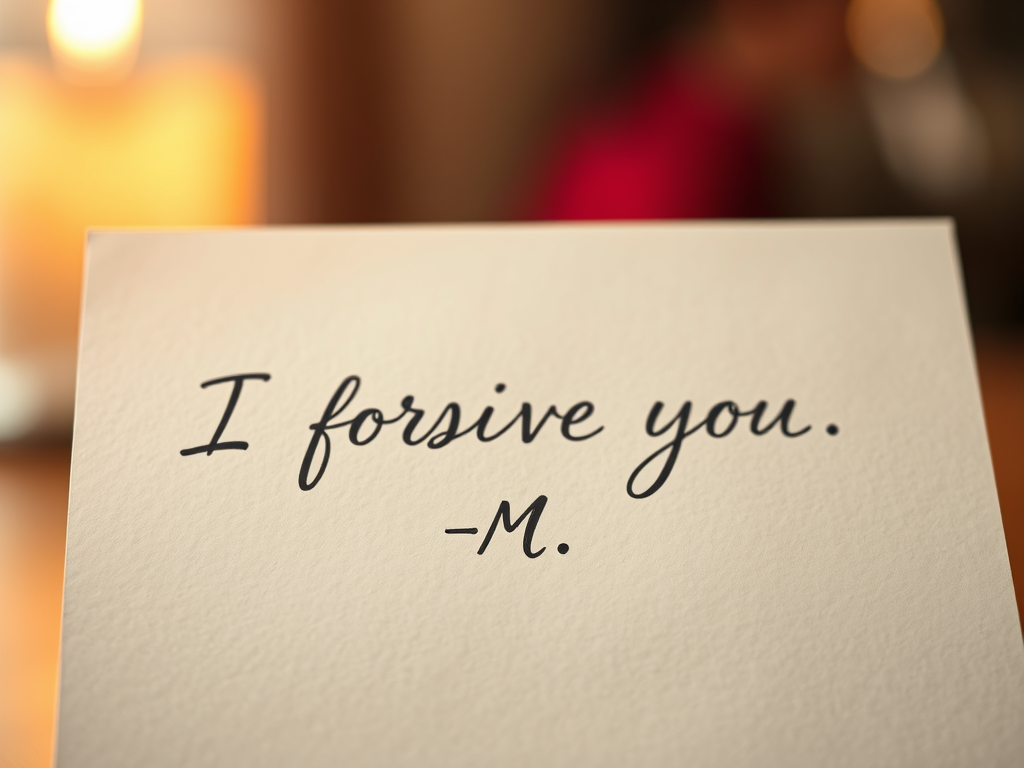
When he finally opened it, there were only four words inside: “I forgive you. – M.”

Ben’s mind spun. M had only one reason to forgive him. It was Maggie Lowe, his best friend from the summer of ’98. They were both seventeen then. The girl who vanished after that last night on the lake. The girl everyone assumed had run away.

For the rest of the day, the letter sat in his jacket pocket, a warm weight against his chest. That night, he drove out to the lake. It looked smaller than it had in his memory. The old pier was still there. The boards were warped and groaned under his steps.

Halfway down, he stopped. Someone was standing at the end of the pier, back to him, long hair rippling in the wind.

“Maggie?”

The figure turned. Same face. Same eyes. Not aged a day.

Ben’s breath caught.

“How…?”

She smiled faintly, holding up her hand. A folded sheet of paper slipped from her fingers, catching the wind before it hit the water.

“You always wondered what happened. Now you’ll remember.”

When Ben blinked, she was gone.

And in his pocket, the original letter was gone too.

By Benjamin GroffMedia© | benandsteve.com | 2025 

The Secrets Behind Earl’s Brothers Benches

2–3 minutes

The Silent Partner

Everyone in town knew Earl’s Brothers Benches. The name was painted in hand-cut wooden letters across the weathered front of the shop. The scent of sawdust lingered in the air like an old hymn. Customers would often ask about the other brother—the one whose name they didn’t see behind the counter.

“Oh, he had to go away for a while,”

Earl would say with a small smile, never elaborating.

“I expect to see him again someday.”

Most people took it at face value, assuming the absent brother was traveling, sick, or otherwise tied up. No one guessed the truth—that “the silent partner” had been dead before the shop even opened. His name was there only out of love and respect. Earl had lost a sibling decades earlier in a winter tragedy. The boy fell through the ice on a frozen pond and never came back.

But the story of the missing brother was more tangled than anyone knew.

The boy who drowned wasn’t Earl’s only brother. Earl didn’t tell customers this. He didn’t even tell his closest kin. As a young man, Earl’s father had been married before. The union was brief and ended when he was drafted into the military. Afraid he would die in service, he’d released his young bride from her vows. She remarried while he was overseas, but not before giving birth to a son—his son.

That son grew up two cities away, unaware of his father’s new life and family. For years, the two boys—half-brothers—lived separate lives. Then, after the drowning, the surviving twin grew restless, convinced there was “someone else out there.” His persistence finally wore down their father, who told him the truth.

In secret, the two half-brothers met. They became friends, confidants—and eventually, quiet business partners. The late brother’s name went on the sign. The living half-brother kept his part in the business quiet. This was a private arrangement that suited them both.

The shop carried on for years until Earl’s death. Only when the will was read did the family learn of a “beneficiary” in another city. He was a man no one recognized. When he arrived, the room fell silent. He looked exactly like Earl.

The resemblance was uncanny—two men from different lives, bound by the same father’s face. Only then did the family start to piece together the truth: the “silent partner” they thought had been long dead had been right there all along…

And now, the other brother stood before them. He was alive and held the keys to a business. This business had carried both their names.

By Benjamin GroffMedia© | benandsteve.com | 2025 

Orange Noise II: Revenge Unleashed

3–4 minutes

Orange Noise (By Pets Demand.)

By popular demand, this follow-up dives deeper into how the Orange Noise machines ended up producing such deadly results. Here’s the story.

It began as a fad.

“Orange Noise Therapy — the next step in restful sleep. Scientifically engineered to calm your mind and gently drift you into the deepest dreams.”

The commercials showed happy couples. There were slow-motion scenes of blissful smiles beneath soft blankets. In the background, a low, warm hum laced with delicate chimes sounded. It was hypnotic in a way you couldn’t quite describe. It made you want to close your eyes.

And so the orders poured in.

At first, it seemed perfect. People reported sleeping deeper than they had in years. Doctors praised it. Sleep scientists called it “a breakthrough.” Sales skyrocketed.

But then, somewhere in the shadows, something shifted.

A young woman in Warsaw woke to find her bird dead in its cage. The bars bent as if from desperate thrashing. A man in Toronto woke up with deep, bleeding scratches down his legs. He had no memory of how they got there. Reports trickled in, never connected — until they were too many to ignore.

Couples, families, entire households found dead. No signs of forced entry. No fingerprints. No footprints. Just wounds — savage, animal wounds.

But still, no one suspected the pets.

The killings always happened at night. Always when the chimes were playing. And the footage — when it existed — was either corrupted or mysteriously missing. Except for one file.

Detective Randall Kerrigan found it in a police evidence server, buried under mislabeled case notes. He watched it alone, the faint hiss of the playback filling his dim office. A couple lay in bed, breathing slow and deep. The chimes played softly in the background.

Then their cat jumped onto the bed. Kerrigan leaned up. The animal froze in place, eyes wide, pupils blown black. Its tail twitched once, twice — and then it lunged.

Kerrigan stopped the video, the cursor trembling in his hand. He replayed it. Again. And again. Each time, the truth pressed heavier on his chest: the Orange Noise wasn’t just calming humans. It was triggering something in animals. Something primal.

By morning, he’d traced dozens of similar cases — all linked to the therapy. The broadcasts were still going out, millions of households unknowingly inviting their killers into their bedrooms each night.

He took the evidence to his superiors. They dismissed it. “Mass hysteria,” they said. “A coincidence.” No one wanted to pull a billion-dollar product off the shelves. No one wanted to admit that bedtime bliss had become a death sentence.

Kerrigan tried to go public, but the networks shut him down. Lawsuits loomed. His badge was taken.

That night, he sat alone in his apartment. He heard it faint at first, then louder. It was the warm hum and the delicate chimes.

They weren’t coming from his speakers. They were coming from outside. From every apartment, every home in the city.

His own dog padded into the room, eyes fixed on him in a way they never had before.

Kerrigan stared back, a sick mix of fear and grief twisting in his gut. He reached slowly for the pistol on the table. Knowing that if he was right, this was the only chance he had. But a part of him hesitated. Because if he was wrong, he’d be killing the last friend he had left.

The dog took a step ahead.

And in that moment, hope and despair became the same thing. It was the hope that he can save himself. It was also the despair of knowing what it would cost him.

Seeking Help Falling Asleep Couples Turn To Orange Noise – Finding A Dangerous Routine – “Sleep. Chime. Kill.”

2–3 minutes

The Orange Noise

It started with an ad.

“Orange Noise Therapy — the next step in restful sleep. Scientifically engineered to calm your mind and gently drift you into the deepest dreams.

Couples bought in right away. Play the chimes before bed, and your mind slips into serenity. The sound was a soft hum. It was tinted with faint bells. It was hypnotic in a way you couldn’t describe. Yet, you couldn’t forget it.

For people, it was heaven. For their pets, it was something else entirely.

At first, it was subtle. A dog pacing more than usual after bedtime. A cat sitting and staring at its owners all night long. Harmless quirks. But soon, reports started to trickle in — mysterious night attacks. Couples found dead in their homes. No signs of forced entry. No fingerprints. Only scratches, bites, and wounds that didn’t make sense.

No one connected it to the Orange Noise. Not the police. Not the doctors. Not the scientists. Because who would suspect the pets?

The murders grew in number and geography. Tokyo. Paris. Chicago. Johannesburg. Always at night. Always when the chimes played. And always with the same eerie detail: the victims had purchased Orange Noise Therapy.

The breakthrough came in a dark, windowless police archive room. Detective Randall Kerrigan sat alone, replaying hours of video footage from a suburban home. He was only watching out of boredom at first. The husband and wife were asleep in bed, chimes faint in the background. Then movement — the couple’s Labrador trotted into view. Kerrigan almost skipped ahead, but something about the dog’s posture froze him.

The tail was stiff. The eyes were locked on the sleeping pair.

And then, without hesitation, the dog leapt.

Kerrigan slammed the pause button, heart thudding in his chest. He rewound and watched again. It wasn’t rage. It wasn’t fear. It was… programmed. Deliberate.

The detective knew the nightmare wasn’t just in this room, or this city. It was global. And the real horror? The chimes were still being broadcast every night. Piped into thousands of homes, turning pets into killers while their owners dreamed sweetly beside them.

No one had thought to turn it off.

By Benjamin GroffMedia© | benandsteve.com | 2025 

The Revolving House Of Mystery

By Benjamin GroffMedia© | benandsteve.com | 2025 Truth Endures©

10–15 minutes

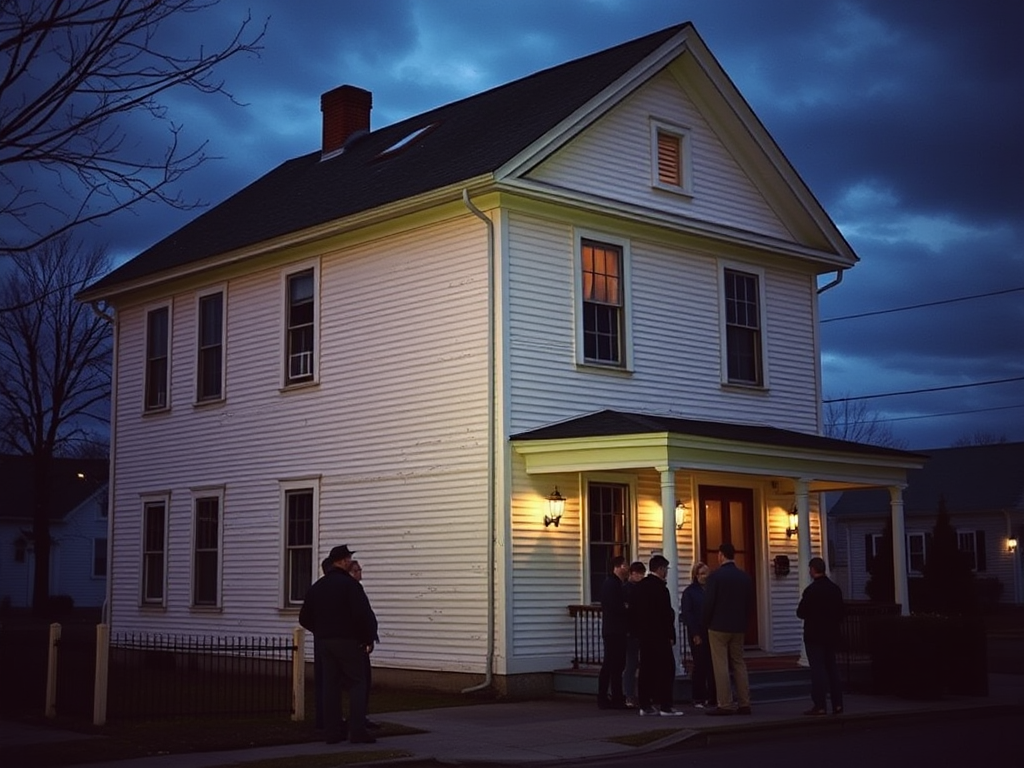
Far from the edges of the town, set an old two-story house. No one ever saw anyone going in or out of the house. The townspeople referred to the old house as the Sims’ place. As far as everyone knew, the last member of the Sims’ family had died years ago. They didn’t know who inherited the ownership of the house. Still, without being seen, the lawn remained manicured and the house was painted and kept up. It looked like the model home for anyone wanting to buy a house. The problem was it wasn’t for sale. As far as anyone knew, they never met anyone who lived there. If anyone lived there at all, nobody knew.

That didn’t stop the stories from spreading.

Children dared each other to run up the front walk and touch the heavy oak door. Teenagers boasted of throwing pebbles at the upstairs windows—until one swore he saw a pale face staring back. No one ever stayed long. The Sims’ place pressed against your skin. It was like a cold hand resting on the back of your neck.

The mail never piled up, though no one ever saw it being collected. No lights came on at night. The porch lantern flickered gently with each dusk. It was like it was welcoming someone home.

One autumn morning, a moving truck pulled into the narrow drive. This was just after the first frost turned the fields silver.

People watched from porches and behind curtains, half-certain the truck would vanish like smoke. But it didn’t. A tall man in a dark coat stepped out. He stood for a long moment at the edge of the walk. Then, he turned the knob and entered without knocking. The door swung open smoothly, like it had been waiting.

By noon, the truck was gone. No one had seen anything carried in or out.

That night, a light glowed faintly in the attic window—the first time anyone had seen one inside in decades.

The next day, the town’s quietest librarian, Mrs. Evelyn Crane, who hadn’t missed a shift in forty years, did not show up for work.

They found Mrs. Crane’s front door wide open, her coat still hanging by the hook, tea cooling on the counter. Nothing was out of place—except for the fact she was gone.

On the floor of her study, neatly laid out, was a photograph no one remembered being taken. It showed the Sims’ house bathed in golden afternoon light. In the top-floor window, a shadowy figure could just barely be made out. A figure with Evelyn Crane’s unmistakable silhouette—bunned hair, long cardigan, glasses catching the light.

The photo was crisp, fresh—too fresh. The paper hadn’t yellowed, and the ink hadn’t aged. Yet, the style, tone, and eerie texture of the photograph made it feel as if it were decades old.

Sheriff McKinley requested a discreet investigation. 

Quiet was always the town’s way. A formal missing person report was filed. It was filed only after a week had passed. The report was done with hushed voices.

The librarian’s house sat untouched after that—no one eager to enter it. On the morning of the seventh day, someone noticed a flicker in the Sims’ attic window. The light now flickered slightly. Like a candle in a room with a draft. Like someone moving just beyond its reach.

Then others began to disappear.

Not suddenly, but subtly. A school janitor didn’t show up for work. The pharmacist’s assistant left for her lunch break and never came back. With each absence, the same pattern followed—no signs of struggle, no witnesses, just something left behind. A photograph, a trinket, a drawing… always showing the Sims’ house. 

Always with a shadow in the attic.

One morning, the mayor ordered a city records search. He wanted to find any deeds, wills, or other documents related to the Sims family’s legal existence.

The file was blank.

No birth certificates. No death records. No property tax history. Just a penciled note in the margins of a 1933 zoning map:

“Leave undisturbed. Occupied.”

By whom, no one knew. But the attic light still burned. And some said if you stood on the sidewalk long enough, you would hear soft music playing. A woman humming. And the sound of someone pacing slowly across wooden floors.

Would you like to explore who—or what—is in the attic next? Or maybe follow a new character brave (or foolish) enough to enter the house?

His name was Jonah Bell. A drifter by most accounts, though some swore he’d grown up just a few towns over. He had that type of face—familiar, yet hard to place—late thirties. Wore an old canvas satchel, carried a notebook bound in cracked leather, and spoke only when spoken to.

Jonah arrived on foot, just before dusk. He stopped outside the Sims’ house. He looked it over for a long minute. He muttered something under his breath that sounded like “Still standing.”

A few townsfolk watched him from a distance, expecting him to keep walking. Instead, he opened the rusted gate, walked straight up the weedless stone path, and knocked once.

No one had ever knocked before.

The door creaked open as if it had been listening.

He stepped inside.

The air in the entry hall was still and dry. It was faintly perfumed with old cedar and beeswax. There was also a hint of something sweeter, like lilacs. The floors gleamed under a thin veil of dust. Every piece of furniture stood precisely placed, as if awaiting a long-anticipated visit.

Jonah took out his notebook and began jotting down notes. He whispered as he walked, like he was reciting some memorized litany to keep his courage close.

He passed through the parlor—walls lined with books, many handwritten, their spines bare. The grandfather clock stood frozen at 3:17. In the mirror above the fireplace, his reflection wavered slightly, a half-second behind his movements.

He didn’t stop.

At the end of the hall, the narrow staircase rose, twisting sharply to the left halfway up. It was there, on the sixth step, that the air grew colder.

He reached the landing, hesitated only briefly, then started the climb to the attic. Each step groaned—not with age, but with reluctance, like the house was reconsidering his welcome.

The attic door was shut. White paint cracked along its edges. Carved into the wood, nearly invisible unless you looked for it, was a single word:

“Stay.”

Jonah opened it anyway.

The attic was warm, despite the chill below. A low, golden light poured from an unseen source, casting no transparent shadows. Dust floated like tiny spirits in the air.

In the center of the attic was a rocking chair. And in it, a woman sat.

She was facing the window, her back to Jonah. Gray hair pinned neatly. A music box was on a small table beside her. It played a lilting tune. This was the same tune Evelyn Crane used to hum at the library desk.

Jonah didn’t speak. He stepped closer, notebook open, pencil ready.

The woman turned her head slowly, not startled—expectant.

She had no eyes.

Just smooth, unbroken skin where they should have been. Still, she looked at him.

And she smiled.

“I was wondering,” 

She said in a voice like leaves scraping on glass, 

“When you’d come back.”

Jonah’s pencil trembled. A page fluttered loose from his notebook.

It was a drawing—sketched in charcoal—of this very attic. The woman in the chair. The music box. The golden light.

Dated: October 13, 1922.

Jonah stared at the sketch, hands trembling, mind racing.

“I don’t remember drawing this.” 

He said aloud, but only to himself.

The woman in the chair—still smiling—nodded slowly. 

“You never do, not at first.”

He took a cautious step closer, boots silent on the attic’s polished wood. 

“Who are you?” 

He asked. 

“What is this place?”

The woman tilted her head. 

“The house remembers.” 

She said. 

“Even when you forget.”

Jonah knelt to retrieve the page. His fingers brushed the corner of the rocking chair. In a sudden rush, something opened in him. It was a flood of memory. It was not like something recalled, but like a dream breaking the surface after years of sinking.

He was ten. Standing in this very attic. A woman—this same woman—was brushing his hair, humming that tune.

Her face was younger, but the eyes—nonexistent yet somehow seeing—were just the same.

“You called me your boy.” 

He whispered, blinking hard. 

“But that can’t be. You’re not… real.”

“Oh, I’m real.” 

She said. 

“As real as anything you forgot.”

He backed away. 

“I’ve never lived here.”

The woman raised one hand and pointed to the rafters. Jonah followed her gaze.

Up near the slanted beams, nailed between two joists, was a faded photograph. A family portrait—sepia-toned. 

A tall man with a mustache. A small boy with serious eyes. And a woman in a white dress, her arms around them both.

Jonah felt his knees weaken.

The boy was him.

Same face, same eyes.

He staggered back.

“No, no, this can’t—”

“You were born here, Jonah.” 

The woman said gently. 

“And you left. They made you leave. But the house… the house never forgot. Neither did I.”

He looked around now with different eyes. Not the attic of a haunted place, but something older. Familiar. As though the walls were whispering lullabies from a life he’d buried.

“I don’t understand,”

He murmured.

“You don’t have to.” 

She said. 

“You only need to remember why you came back.”

He looked down at his notebook again. Page after page of sketches—rooms in the house. A hand-drawn map of the garden. Symbols he didn’t recognize but somehow understood. At the very end, a single phrase repeated over and over:

“The house is waiting. The house is watching. The house wants me home.”

Suddenly, the attic door slammed shut behind him.

He didn’t turn.

The rocking chair creaked gently as the woman leaned forward.

“Now,” 

She said, her voice sharper, colder. 

“Are you ready to take your place?”

Jonah closed the notebook and looked out the attic window again. Down below, on the street, a child stood at the edge of the lawn. Watching the house and watching him.

The way he once had.

The woman’s eyes—those smooth, sightless hollows—seemed to deepen as she leaned closer.

“You were always meant to return.” 

She said. 

“Not as the boy you were, but as the man we need.”

Jonah’s voice caught in his throat. 

“We?”

The rocking chair stopped moving.

Suddenly, the attic air thickened, as if the room had drawn a breath and was holding it. All around him, the golden light faded. It was replaced by a dim, pulsing glow from the floorboards beneath his feet. The wood creaked in rhythm—a heartbeat.

And then the whispering began.

Not from the woman. From the house.

It came from the walls, from the pipes, from behind the bookshelves. Countless voices, layered over one another. Some frantic, some pleading, others calm and patient, like they had waited an eternity.

He was made out the names—EvelynTommyClara—names of the vanished.

“We are here.” 

The voices murmured. 

“Waiting. Watching. Living still.”

Jonah stumbled backward toward the attic window, but the light outside had changed. The sky beyond was no longer dusky violet but deep, ink-black. No stars. No moon. Only the faint shimmer of fog rolling in across the lawn.

The child he had seen moments ago was no longer there.

The woman in the chair stood.

Not slowly. Not creakingly. She rose, as though the gravity in the attic shifted just for her.

“The house keeps what it claims.” 

She said. 

“And it chose you long ago.”

Jonah opened his notebook again, desperately flipping pages. The last one had changed.

Where once the phrase had repeated—The house is waiting. The house is watching.—now there was only one line:

“The house has taken root in me.”

His hands began to tremble. He dropped the notebook.

The floor beneath him rippled slightly, the wooden planks softening beneath his boots. He looked down. He saw the faint outline of veins—not his. They were pressing against his skin from below. The veins snaked up his legs like ivy. His reflection in the attic’s glass window twisted subtly—his eyes darker, his face slackening.

The woman smiled gently now.

“You will remember everything soon.” 

She whispered.

Then her body folded in on itself, collapsing like smoke caught in reverse. She vanished, leaving the rocking chair slowly swaying, empty once more.

Jonah tried to scream but found no sound.

The voices filled the attic.

“Welcome home.”

Outside, the porch lantern flickered brighter.

And in the attic window, a tall man is now be seen standing in the golden glow, perfectly still. Eyes like shadow. Watching.

Jonah Bell had returned.

But he would not be leaving again.

The next morning, a thin layer of fog clung to the outskirts of town, thickest around the old Sims’ place. The porch lantern had burned through the night, casting a low amber halo across the perfectly trimmed lawn.

A small group of townsfolk had gathered again on the sidewalk, just beyond the rusted gate. They stood quietly—arms crossed, coffee cups in hand, pretending they were just out for a walk.

Sheriff McKinley stood among them, jaw tight, his badge catching the early sun.

“Who was he?” 

Asked Mr. Darnell, the barber, adjusting his cap.

“No one local.” 

Said the sheriff.

“Drifter, maybe. Name’s Jonah Bell. Didn’t leave a car. Walked in, like they all do.”

The crowd fell silent again. No birds sang. Even the breeze seemed reluctant to pass through the yard.

And then, from the attic window, the light flickered once.

Mrs. Calloway, who had lived on that block the longest, shook her head slowly and muttered, half to herself:

“Oh dear. It’s starting all over again.”

No one disagreed.

They stood a while longer, staring at the house. They quietly dispersed. Each of them walked away faster than they meant to.

None of them noticed the child standing just beyond the fog, clutching a sketchpad and watching the window.

Waiting for the house to notice him.

The Sonoran Desert’s Buck Milford – Chapter 9: Showdown at Sunset

By Benjamin GroffMedia© | benandsteve.com | 2025 Truth Endures©

2–3 minutes

Catching Heat In Ajo, Arizona

The sun dipped low. It cast long shadows over the scorched earth of Ajo. The stage was set for the ultimate confrontation. Every faction had gathered. Mayor Gonzalez stood with her fleet of feisty seniors armed with flyswatters. Carl Sandlin rode his tinfoil-covered dune buggy, banjo in hand. A defiant Barney Fife-lookalike still clutched his oversized ticket book. Buck was caught in the middle, displaying a mixture of resignation and amusement.

Across the dusty open space, the beagle crickets aligned themselves in rows that shimmered in the golden glow. Their usual hum was replaced by a rising, almost militant chorus of chirps. It was a rallying cry that sent a shiver down everyone’s spine (or was it just the cool desert breeze?).

Mayor Gonzalez stepped up, megaphone in hand, and declared,

“Today, we settle this once and for all! You bugs have terrorized our town long enough, and you’re coming to justice!

At the same time, Carl revved his banjo as if it were a trigger. He let out a wild, improvised yodel. This merged into a banjo riff—a challenge thrown down in musical form. The tension was palpable.

Then came the unexpected moment. Buck acted on pure instinct. His genius shone brightly from a half-forgotten lunch order. He pulled out a thermos of peanut butter sandwiches.

“Folks, and… critters,”

he announced, his voice steady.

“Sometimes all you need is a little tad of nourishment. It’s a reminder of simpler days.”

He scattered the sandwiches across the open space. The crickets, baffled by the offering (and even enticed by the rich aroma), paused their chorus. Slowly, as if savoring each bite, they began to nibble at the offerings. One by one, the insects lowered their guard. In that surreal instant, music and mayhem faded into an almost peaceful tableau.

Barney Fife-like hollered,

“This is it—the bug truce is on!”

While Mayor Gonzalez’s frown slowly morphed into a reluctant smile as her deputies put down their flyswatters.

For a heartbeat, the desert held its breath.

How long can everyone hold their breath? Too long, and we’ll have folks fainting in the streets—because that’s what happens when you forget to breathe! We hope the Mayor will remind the crowd to inhale. Barney Fife or Buck himself might do that too. We need this reminder before we move on to Chapter 10—the final installment of this wild ride.

If you’ve been reading since Chapter 1, you already know how it started. It began with unidentified flying toilets. Additionally, there was a full-blown invasion of Mexican Beagle Crickets across Southern Arizona’s Sonoran Desert. But if you just tuned in now… do yourself a favor—go back to the beginning. Otherwise, you’ll be as lost as the lady in the blue ’74 Buick LeSabre. She’s still sitting at the stop sign outside Ajo. She’s waiting for directions that may never come.

Happening Now: Monitor Lizard Not Actually T-Rex in Disguise

Jurassic Farce: When Lizards Go Rogue

By Benjamin GroffMedia© | benandsteve.com | 2025 Truth Endures©

1–2 minutes

A while back, WordPress Community Members discussed a curious topic. They wondered whether it was possible to bring back a dinosaur. If so, they questioned which dinosaur it would be.

An attempt to do so may have been underway recently. This became obvious when a monitor lizard screamed and ran for its life. It crashed out of a second-floor window. It then proceeded to lead authorities through a multi-state chase. People were urged to protect their gardens, poodles, and pus— ugh, cats.

Anyways, it is making National News. And I fear that other lizards, regardless of their variety, will start trying the same thing. Suddenly Boom! There will be someone who succeeds, and their progress will be shared with like-minded individuals. Soon we will have a full-throated invasion of body-snatching giant lizards running around telling everyone they are dinosaurs.

Here is breaking news for when they do! HEADLINE: No, Monitor Lizards Are Not in The Dinosaur Family. They are a type of lizard belonging to the family Varanidae. While both dinosaurs and monitor lizards are reptiles, they diverged from a common ancestor long ago. Dinosaurs are part of the archosaur lineage, which also includes birds and crocodiles. Monitor lizards are part of the squamata lineage, which includes other lizards and snakes. 

The Sonoran Desert’s Buck Milford – Chapter 7: Buck Joins the Bug Peace Talks

By Benjamin GroffMedia© | benandsteve.com | 2025 Truth Endures©

2–3 minutes

Salsa Dancing To A Deal With The Mexican Beagle Crickets

The escalating cricket crisis soon took a bizarre turn. After the Mayor declared martial law, Buck inexplicably found himself roped into a ceasefire negotiation. It was by invitation and circumstance, not entirely by choice.

Under the twilight sky, Buck set up a pair of folding chairs near the old taco stand. It was now decked out as a makeshift negotiation table. He sat alongside Carl Sandlin, who was still sporting his sequined –––

“diplomatic vest.”

An unexpected guest joined them: Gladys “The Negotiator” Ramirez. She is a spry 82-year-old with a background in community organizing and a penchant for peanut butter.

A gentle breeze stirred the desert sand as dozens of beagle crickets gathered in a semicircle. Their chirps and hums intermingled with the soft strumming of Carl’s banjo. It was not a formal diplomatic session at all. Instead, it was a surreal backyard barbecue meeting. Buck found himself as the unintended mediator.

Carl, with a dramatic flourish, announced,

“I propose we work together! You bugs, you stop the invasions, and we guarantee a steady supply of fresh, organic salsa.”

The crickets, of course, did not respond with words, but their synchronized humming seemed to offer a tentative –––

“aye.”

Then, Gladys cleared her throat.

“Now listen here, critters. We are not capable to talk your language, but I do know a thing or two about compromise. How ’bout a trade?”

There was a pause that lasted nearly two seconds in cricket time. A single cricket marched ahead. It tapped an abandoned sombrero with its leg, as if in silent agreement.

Buck, rubbing the bridge of his nose, grinned. He thought,

“I have to admit, this is just the most peculiar peace talk.”

It was indeed the most peculiar peace talk this side of a cactus convention.

The ceasefire was as fragile as the morning dew on the desert floor. For one mystical, humid moment, man and cricket reached an understanding.

Will this agreement hold? The Mexican Beagle Crickets and man—finally in harmony? Or will the crickets grow weary of salsa and develop a taste for avocado dip instead? Will a sudden craving for classic TV jingles like Sanford and Son or The Beverly Hillbillies derail the peace? And what happens when today’s senior citizens pass on—will the next generation need to renegotiate the whole deal? With only a few chapters left, Buck better hustle—answers aren’t going to find themselves!