The Preacher Who Didn’t Believe In God

A Story By Benjamin Groff© Groff Media2024© Truth Endures

Frank Johnson was not your run-of-the-mill pastor. He delivered sermons each Sunday that never bored his parishioners. Never since being hired by the Shady Grove Baptist Church Governing Body had they been so excited about their evangelical image having such a trophy behind the altar. Pride be damned, they couldn’t take another year of losing members to the metro church in the nearby city.

There was one more thing about Frank Johnson that was not typical: He didn’t believe in God. He felt the bible was dogma, the souls tossing their money in the offering plate fools, and Frank felt that one might have issues if they thought they would join their loved ones in the hereafter. If they said it was because God didn’t think their sin was no longer a big deal, he felt them to be mental. He tried to preach that prayer wasn’t an answer to your needs but to your peace.

Frank’s unconventional sermons attracted even more attention as the weeks passed. Though veiled in traditional language, his messages subtly nudged the congregation towards introspection rather than blind faith. He spoke of personal responsibility, community power, and compassion’s importance. Shady Grove Baptist Church members started to see their faith not as a means to an end but as a guide for living a meaningful life.
One Sunday, Frank decided it was time to reveal his true beliefs. He stood at the pulpit, looking at the faces that had come to trust and respect him. Taking a deep breath, he began.

“My dear friends, I need to share something deeply personal with you today. It’s something that has weighed on my heart for a long time. I do not believe in God. I never have, and I never will. This confession, though it may shock some of you, comes from a place of deep conviction and honesty. I hope you can see the courage it took for me to share this with you.


A gasp rippled through the congregation, but Frank continued, his voice steady and calm.


“I know this might come as a shock to many of you. You may feel betrayed or confused. But I ask you to hear me out. My disbelief in God does not diminish the value of the lessons we’ve explored together. If anything, it enhances them. For I believe that the true power of our faith lies not in the promise of an afterlife, but in the strength and kindness we show one another in this life.”


He paused, letting his words sink in. The silence was palpable, but no one left their seat.


“Think about the times you’ve felt most connected to your faith. Was it in moments of quiet prayer or in the acts of love and service you performed for others? Was it in the rituals or the genuine care you showed to a needy neighbor? Faith, to me, is not about believing in something unseen. It’s about believing in each other. It’s about creating a community where we support and uplift one another.”


Frank could see the wheels turning in their minds. He pressed on, his conviction growing stronger.


“I challenge you all to consider this: What if we took the principles we hold dear – love, compassion, kindness – and applied them not because we seek divine approval but because we know it makes the world a better place? What if our faith was a commitment to each other rather than an unseen deity? This challenge is not meant to undermine your beliefs, but to encourage you to think critically about the role of faith in our lives.”

Murmurs of agreement began to spread through the congregation. Frank knew he had to drive the point home.


“We don’t need to believe in God to be good people. We don’t need the promise of heaven to motivate us to do what’s right. We can find strength and purpose in each other, in our shared humanity. So, will you join me on this journey? Will you help me build a community based on trust, respect, and love without the need for divine justification?”

One by one, the members of the congregation stood up, some with tears in their eyes, others with resolute expressions. They walked to the front of the church, forming a circle around Frank. In this moment, we were not a group of individuals with differing beliefs, but a united community, bound by our shared values and commitment to each other.


In that moment, Shady Grove Baptist Church transformed. It became a place where faith in humanity, rather than God, was the cornerstone. Frank had not only shared his truth but also inspired his congregation to see the power within themselves and in each other. In doing so, he had created a new kind of faith—one that was grounded in the reality of human connection and the potential for goodness in everyone.

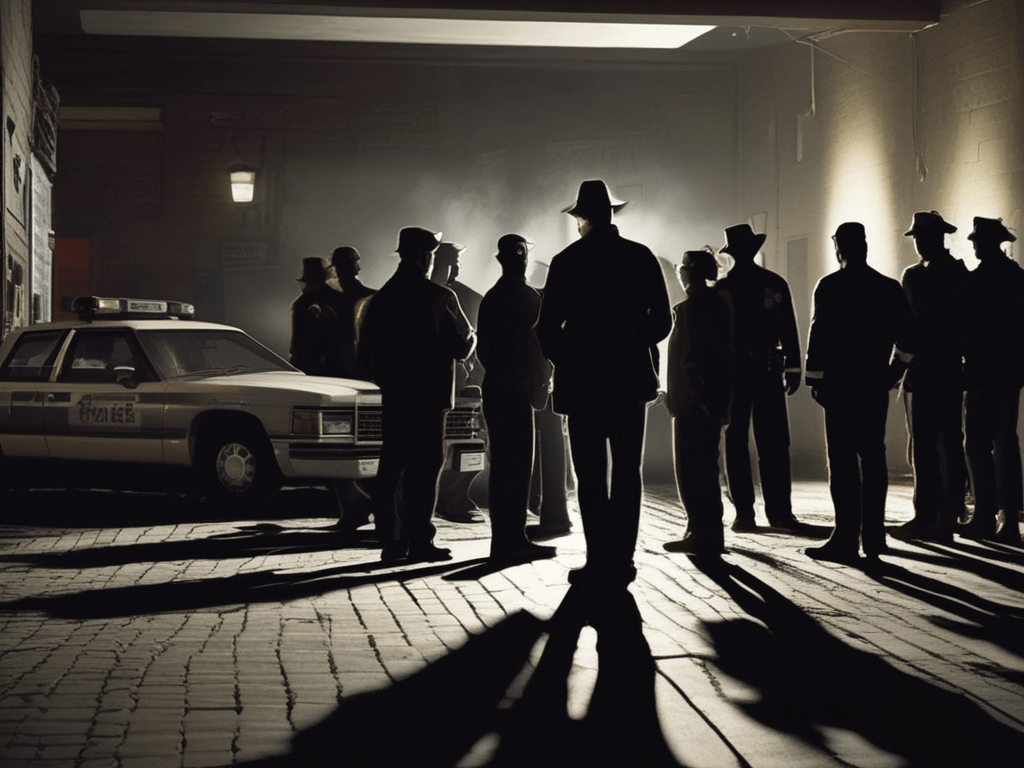
The ENDING – Monday Morning Was A Killer For One Neighborhood – Ding Dong

A Story By Benjamin Groff© Groff Media2024© Truth Endures

It was a Monday morning, and everyone was starting their week. Neighbors were running about getting to their cars to hit the road and begin to work. John and Mary Wagner were still at home. Both had stayed in their vehicles since arriving home for the weekend, but no one noticed. It wasn’t unusual. They were known for locking their doors on weekends and never leaving the house, so staying home all weekend didn’t signal any concerns.

However, on Monday morning, John was usually the first to leave. He was out of the house and on the road by 6:00 AM to beat rush hour traffic, and Mary would leave by 7:00 AM with their two children, Max and Terri. So what was happening that day? The neighbor two doors down was a lady named Alice Morgan. She watched the neighborhood, curious about the Wagners’ home. 

Why aren’t they moving about this Monday? She asked herself

As the neighborhood drivers leaving for work thinned out, Alice meandered to the Wagners. Walking to the front door, she peered through the front bay window and saw no one inside. She went on up to the door and rang the bell, 

DING DONG, BING, BING, DING, DING, BONG

Alice thought to herself, what a weird doorbell ring. She rang it again to listen to the rhythm,

DING, DONG, BING, BING, DING, DING, BONG

No one came to the door. Curious about the cars remaining in the drive, Alice went to look inside them to see if there was anything strange about them.

Walking under an A-Frame carport, she saw two people in each car. She went up to the first vehicle, a 2017 Ford Pickup, and started to knock on the window before seeing that John Wagner appeared to be stone dead sitting behind its driver’s wheel. He had what looked like a gunshot to his forehead, and a trail of dried blood ran down his head to his chest. Startled, she ran over to Mary’s vehicle to find that Mary also appeared to have been shot in the same manner. The two kids lay dead in the back seat of Mary’s car, a blue 2020 Volvo XC60. Seeing this, Alice began screaming bloody murder and ran down the street, screaming louder and louder as she went toward her home. 

Once inside her home, Alice called 911 and told the operator that she had just found four dead people at her neighbor’s house, and she thought someone murdered four people. The 911 operator asked why she felt someone murdered the four people, and she said they had all had a single gunshot to the forehead and laid over in a car at their home.

Within two minutes, the City of Appleton Police Department had police officers on the scene. Alice Morgan was in the middle of the crime scene, pointing to the dead bodies and explaining the ding-dong doorbell to police officers. They asked her to sit in a patrol unit so they could get a statement from her in writing and a recording of her saying how and what she had discovered. They put her in the back of a patrol unit while she was still talking non-stop, closed the door, and walked away.

Burt Johnson was the lead detective assigned to investigate what had happened to the family. 

A seasoned detective with a knack for piecing together even the most cryptic of puzzles, Burt Johnson arrived on the scene shortly after the first responders. He assessed the surroundings with a practiced eye, noting the position of the vehicles, the broken glass, and the eerie stillness that hung over the Wagner household.

The forensics team was already at work, taking samples and photographing the scene. Burt walked over to the patrol unit where Alice Morgan sat, her face pale and her hands trembling. He opened the door and crouched down to her level.

“Alice, I’m Detective Johnson. Can you walk me through what you saw this morning?”

Alice took a deep breath and recounted her morning, the odd stillness, the peculiar doorbell chime, and the horrifying discovery of the bodies. Burt listened intently, nodding occasionally.

“Thank you, Alice. You’ve been accommodating,” he said, gently patting her hand. “We’ll get someone to take you home soon. For now, try to relax.”

Burt then moved to the vehicles, examining the positions of the bodies. The gunshot wounds were precise, execution-style. These shootings were not random acts of violence; someone put planning into carrying them out. He noted the positions of the vehicles, the lack of struggle, and the fact that the shooter targeted both parents and children.

A uniformed officer approached Burt. “Detective, we found something in the mailbox. It’s an envelope addressed to you.”

Burt’s eyebrows shot up. He took the envelope, carefully opened it, and pulled out a letter. The handwriting was neat, almost meticulous.

“Detective Johnson, You’re getting warmer. This family was just the beginning. Find me before I find my next target.

  • “The Avenger”

Burt felt a chill run down his spine. The Avenger was a name he was all too familiar with – a shadowy figure who had been linked to several high-profile murders, always leaving behind cryptic notes and taunting the police.

Back at the precinct, Burt convened his team. They pored over the evidence, looking for clues that might lead them to the Avenger. The forensic team reported that no fingerprints or DNA were left behind, but they had found traces of a rare chemical compound used in industrial cleaning agents.

Burt’s mind raced. He remembered a case from years ago involving a disgruntled former employee of an industrial cleaning company. The man, Thomas Greene, had a history of mental instability and a vendetta against those he felt had wronged him. Could Thomas be the Avenger?

With a possible suspect in mind, Burt and his team delved into Thomas Greene’s past, uncovering a pattern of behavior that matched the Avenger’s MO. They also discovered that Thomas recently had been in Appleton.

A breakthrough came when a witness reported seeing a man matching Thomas’s description near the Wagner’s home on Sunday night. Burt mobilized his team, and they tracked Thomas’s movements through security footage and witness statements.

Their efforts paid off. They found Thomas hiding in an abandoned warehouse on the outskirts of town. Burt and his team moved in and apprehended him without incident.

Back at the precinct, under intense interrogation, Thomas eventually broke down. He confessed to the murders, revealing that he had been following the Wagner family for weeks, meticulously planning their deaths. He saw himself as an avenger, righting perceived wrongs with his twisted sense of justice.

The Appleton community breathed a sigh of relief as news of Thomas Greene’s arrest spread. Burt, exhausted but relieved, knew there would be more work to ensure Thomas was prosecuted and put away for good. But for now, he could take comfort in justice being served for the Wagner family.

Still shaken but grateful, Alice Morgan found solace in knowing that her vigilance had played a crucial role in solving the case. The neighborhood, once again, felt safe.

And as Burt Johnson left the precinct that night, he couldn’t help but think about the families still haunted by the Avenger’s previous crimes. He promised to continue his pursuit of justice, no matter where it led him.