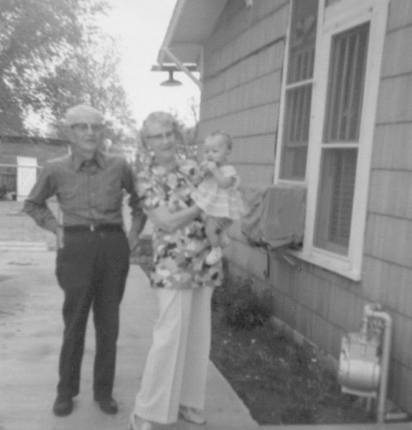
The Island – A Serialized Dystopian Story * Chapter Eight

1–2 minutes

Haven’s Reach: The Spark

It happened on a rainless night in early winter. The Council had banned music in the public square, but a child’s voice broke the silence. A boy no older than ten sang a lullaby his grandmother had taught him, his voice rising above the wind. For a moment, the crowd froze in fear. Then another joined. And another. Soon, the plaza filled with song.

The guards stormed in, batons raised, but the people didn’t scatter. They sang louder. The air trembled with a sound that was part hymn, part rebellion. Harper, standing among them, felt her chest swell. For the first time since Eli’s disappearance, she felt less alone.

The spark was not fire or violence—it was courage in harmony. By dawn, the Council declared the singers enemies of Order. But they had already lit something no decree extinguished.


By Benjamin GroffMedia© | benandsteve.com | ©2025 

Some Memories Are Best Left Unchanged

By Benjamin GroffMedia© | benandsteve.com | 2025 Truth Endures©

3–4 minutes

Some Memories Are Best Left Unchanged

At 62, I’ve lived through six decades of friendships. Every ten years or so, there’s an evolution. New people come into your life. A few stay, and most eventually move on. In that revolving cycle, we come to appreciate each other’s company, character, talents, and sometimes, our usefulness. Life seems to have been designed this way for me. Over time, I’ve even developed an instinct for craving these transitions. Maybe it’s self-preservation. It’s growth.

Recently, I came across a post that stopped me in my tracks. It said, 

“There’s a heavy emotional toll that comes with holding on to dead relationships. They fill your life with noise—unanswered messages, awkward small talk, the guilt of obligation just because something once meant something.” 

That struck a chord.

Because the truth is—life isn’t a museum of past connections. It’s meant to be lived peering ahead, with people who show who you are now, not who you once were.

Outgrowing someone isn’t betrayal. It’s growth. Letting go doesn’t mean you never loved them. Instead, it means you love yourself enough to protect your peace.

That’s how I feel about many past connections. Some, I miss dearly. Others, I’ve outgrown. And a few? I had to run for my survival.

One thing I’ve learned about long-term relationships—whether with people, places, or versions of ourselves—is the importance of taking regular inventory. What am I still carrying? What deserves to come with me into the future, and what needs to be laid to rest?

For me, I try to leave behind no unfinished business where love, sincerity, or kindness once lived. If you hope to rekindle old ties after a long silence, I offer this gentle caution. Some memories are best left untouched. If you plan to relive the past, go ahead. But please, go without me. We survived it once. I’m not eager to tempt fate with a rerun.

These days, I want to do something different. If there’s something we always talked about doing—some dream we never dared to chase—let’s talk about that. Let’s look ahead, not backward.

Getting older has made me clearer about what I want—and what I refuse to carry. It’s also made me think about my father. I remember him telling stories from the war, from his school days, from the old neighborhoods we lived in. He’d speak fondly of his buddies, show me their photos, and share their shenanigans. But he kept them in their place. He never tried to drag them ahead into the current day. He understood something I now understand: some memories belong to a time and place that can’t—and should not—be reentered.

I still get news from “back home,” as I call it. From the town I left 44 years ago. Many of the people I grew up with never left it. And I can’t return there—not fully—without recalling the world I chose to leave behind.

Of the 25 classmates I graduated with, at least eight are gone now. Some were lost to murder, some to accidents, and others to illness. I came from a small farming town where everyone knew everyone. If the death toll isn’t sobering enough, something even more surprising is how many of us turned out differently. This is more than anyone would’ve guessed. Five of my classmates have since come out as gay. A revelation that would have stunned our small-town sensibilities back then.

Interestingly, it’s not the ones who stayed close to home who thrived—it’s the ones who left. Who dared to change? Who moved ahead?

And maybe that’s the lesson.

Some memories deserve our respect—but not our resurrection.

Some people, our gratitude—but not our return.

Because the past has its place—and so do we.

And some memories…

are best left unchanged.

We Shall Come Rejoicing Marrying Only The He’s And The She’s

By Benjamin GroffMedia© | benandsteve.com | 2025 Truth Endures©

1–2 minutes

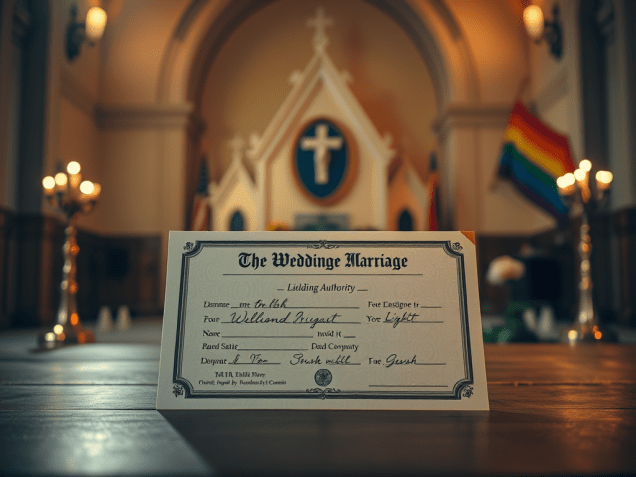
The Baptists are at it again. They are raising a protest over who should be allowed to marry. It is as though they alone have the final word.
Yet, let us be clear: They are opposing who can walk into a county or state office. They do not want everyone to ask for a marriage license or enter into a legally recognized civil contract. That is not a religious rite. It is a legal agreement—filed, signed, and validated by the state. What the Baptists are trying to do is assert control over who can enter into that civil contract. Moreover, that is where their argument starts to fall apart.


One can understand a church’s wish to define marriage for its faith tradition. For example, it only performs holy matrimony for male-female couples. That is their theological prerogative. Furthermore, the LGBTQI+ community is better served by choosing faith institutions that embrace and affirm their unions. Those places do exist. They conduct beautiful, sacred ceremonies filled with love and meaning.


The Baptists alleged to be upset over same-sex couples marrying are not fighting for “Holy Sanctioned” marriage. Their effort is a thinly veiled effort to legislate bias. They aim to stir up fear and rally support for political agendas. When the current battle over trans rights no longer generates the same heat, they will seek another issue. This will be the next fire they try to stoke. It will be another wedge to deepen divisions. They will build up the offering plate and feed the partisan machine.


Trying to impose a ceremony on a church that fundamentally rejects it leads to resentment. Such an action only reinforces division. It is counterproductive. The real problem arises when religious institutions try to dictate who can access civil marriage through the state. That is not about faith. That is about politics, prejudice, and, frankly, power.

The Grand Tour of Heartbreak and Hope: A Country Ballad in the Courtroom

By Benjamin GroffMedia© | benandsteve.com | 2025 Truth Endures©

3–4 minutes

That just about does it, don’t it? Step Right up Come On In!

The Honorable Judge Bledsoe peered over his glasses, clearly unimpressed. “Mr. Rawlins, you understand this is a legal proceeding, not the Grand Ole Opry?”

“Yes, Your Honor,”

Said Henry Rawlins. He stood tall in his dusty boots and bolo tie. One hand rested on a weathered Bible. The other clutched a crumpled lyric sheet.

Across the courtroom, his soon-to-be ex-wife, Sherry Lynn, sat rigid in her seat, her lawyer whispering furiously in her ear. Henry’s lawyer had already given up and was sitting down, his face red, wiping his forehead with a handkerchief.

Henry cleared his throat.

“But if the court will allow, I’d like to offer my final statement in my own words. I would also like to include the words of a few gentlemen. They helped me understand what went wrong.”

A murmur passed through the courtroom.

Judge Bledsoe sighed.

“Mr. Rawlins, continue—briefly.”

Henry nodded, unfolding the page.

“Your Honor, I ain’t a lawyer. But I know pain, regret, and how a man can lose his way. And those feelings are best told not in legal briefs but in country songs. So I offer my case—in three verses and a broken heart.”

He stepped ahead.

He turned to Sherry Lynn.

“I didn’t fight. I figured I’d already lost. And I didn’t blame her—not entirely. I hadn’t been easy to love.”

The courtroom was silent. Even the bailiff looked up from his crossword.

“Then,” Henry continued,

“I walked through what George Jones called ‘The Grand Tour.’ I opened the closet and saw her dresses hangin’ like ghosts. Our baby’s room still had the mobile spinnin’ slow. The smell of her perfume lingered like a memory that didn’t know how to leave.”

Judge Bledsoe adjusted in his seat, then motioned for him to finish.

“But, Your Honor, here’s the thing. I almost didn’t show up here today. I nearly signed the papers and walked away. But then I heard Randy Travis singing. He was singing ‘On the Other Hand… there’s a golden band.’ It reminded me of someone who would not understand.”

Henry looked again at Sherry Lynn, softer now.

“On one hand, I messed up. I got too comfortable. I stopped listening. I stopped holding her when she needed to be held. But on the other hand, I still believe in us. That golden band still means something to me. Maybe I’m a fool for sayin’ this here in court. I’d rather fight to fix it. I won’t stand here and let it all go to hell while quoting country songs.”

He folded the paper, tucked it into his jacket, and looked down.

“I rest my case.”

A pause. Then Judge Bledsoe leaned back in his chair.

“Well,” 

he said slowly,

“I’ve been on this bench for twenty-three years. I’ve heard lawyers argue using everything from scripture to Shakespeare. But, I’ve never heard anyone use Vern Gosdin.”

The judge turned to Sherry Lynn.

“Mrs. Rawlins, do you still wish to continue with the divorce?”

She was silent for a moment. Her expression softened as she looked at Henry—looked at him—for the first time in months.

“I… I don’t know,” 

She said, her voice barely above a whisper.

“But maybe we should talk. Not here. Somewhere real.”

Judge Bledsoe smiled faintly.

But, on the other hand…The George, Vern and Randy Plea.

“Court is adjourned.”

As the gavel fell, Henry turned to Sherry Lynn.

“There’s a little diner down the road,” 

He said.

“We used to get cherry pie there after church.”

She nodded.

“Maybe one slice… on the other hand.”

Breaking Habits: Harold Wexley’s Journey

Benjamin GroffMedia© | benandsteve.com | 2025 Truth Endures©

2–3 minutes

Harold Wexley meets Clara.
Harold Wexley Meets Clara And Breaks A Lifetime Habit.

Harold Wexley had long been known as a man of chance, a stochastic gentleman in the truest sense. Every decision he made was determined by a roll of the dice. It is also a flip of a coin, or even the pull of a card from his always on-hand deck. From his morning coffee to his afternoon walk, these decisions were all governed by chance. He couldn’t help himself; he believed the universe spoke best through randomness.

Harold’s peculiar habits started in childhood, much to the frustration of his parents. When asked whether he wanted vanilla or chocolate ice cream, he had a peculiar method. He would spin a top to let its direction decide his fate. By adulthood, his stochastic tendencies had taken total hold of his life. He never planned meetings but let a shuffled calendar decide his day. His wardrobe choices were dictated by pulling slips of paper from a hat. Even Harold’s relationships were governed by chance. If a coin landed on heads, he’d go on a second date. If it landed on tails, he’d never call again.

One day, Harold found himself at an unfamiliar café. That morning, he drew a card from his well-worn deck. It led him three blocks further than his usual haunt. He sat down with his coffee—black, no sugar. The choice was dictated by the number he rolled. He noticed a woman sitting across from him, watching with curiosity. She had auburn hair, a sharp gaze, and a half-smile that suggested amusement.

“You look like a man who just lost a bet,”

She said, sipping her latte.

“Not lost,”

Harold corrected, pulling a die from his pocket and rolling it across the table.

“Just after fate.”

She watched as the die landed on a four. Harold nodded. He reached for a muffin from the café’s showcase. It was as if he had just received permission from the universe.

“And if it had been a five?”

She asked, tilting her head.

“No muffin,”

He replied, taking a bite.

She chuckled.

“So, does chance decide everything for you?”

Harold hesitated. For the first time in years, he found himself unsure. The habit had become so ingrained that Harold had never considered questioning it. But as he met her gaze, something unfamiliar stirred—a wish to choose, not just to follow.

“Not everything,” he admitted, slipping the die back into his pocket.

“At least… not today.”

And for the first time in as long as he remembered, Harold decided without rolling, flipping, or shuffling. He asked for her name.

She smiled.

“Clara.”

He extended a hand.

“Harold.”

The universe held its breath, waiting. But for once, Harold ignored it.

Honoring Tradition: Birthday Memories and Family Bonds

GROFF MEDIA 2024© TRUTH ENDURES IMDBPRO

Presented by benandsteve.com By: Benjamin Groff II©s

2–4 minutes

February 17th: A Day to Remember

Today is February 17th. In the United States, it’s recognized as Presidents’ Day. This holiday honors past leaders and their contributions to the nation. Initially, the day was all about Washington and Lincoln, but eventually, every other president wanted in on the act. At least, that’s how I remember it from my elementary school days.

Groff Family Celebrations
Groff Media©

But for me, February 17th holds a much deeper meaning. It marks the birthdays of three people who shaped my life. They are my grandmother, father, and an uncle by marriage to my father’s sister. And with that, it also carries a tradition that has lingered through the years.

When they were alive, our family gathered every year on the Sunday before their birthdays. Relatives, friends, and even neighbors would fill my grandparents’ home. Some were from their old farm. Others came from their city life after retirement. As a child, I didn’t fully grasp the significance of these gatherings. Now, in my retirement years, I see it so clearly. The warmth of belonging, the shared stories, the laughter—it all meant something. Looking back at the old photos, I understand now what I couldn’t then.

After they passed, my mother kept the tradition alive in her way. Every year, without fail, she’d call each of us siblings and ask,

“You know what day it is?”

Groff Family Celebrations Groff Media©

But time moves ahead, as it always does. My mother is now 95. She no longer makes those calls. Her mind can’t reach for the dates and details that once anchored her. So instead, we call her. And the tradition continues, binding us together in shared memories and love.

Only my sister and I acknowledge the day out of six siblings. Sometimes, I call her first. Other times, like this morning, she beats me to it—before I’ve even had my first sip of coffee. Our conversation is brief but meaningful, a moment to honor the three lives that shaped us. And, of course, to share a hearty laugh at the memory of my father’s favorite joke.

My dad was a barber, and in our town, barbershops traditionally closed on Mondays. But when Presidents’ Day landed on February 17th, he saw an opportunity for mischief. At family gatherings, he’d grin and announce,

“If the Post Office is closing on my birthday, then I suppose I have to close my shop too!”

In those years, he’d even hang a sign in his shop window:

“JOINING THE POST OFFICE—WE WILL BE CLOSED ON MONDAY IN RECOGNITION OF MY BIRTHDAY.”

My Father JD
Groff Media©

He thought it was the funniest thing in the world, and as kids, we did too.

I always admired my dad. I looked up to him, though I never told him outright. I wish I had. There were so many times I wanted to say the words, but I never quite found the right moment. And yet, I believe he knew. Somehow, he always knew things about me that I never spoke out loud.

Even on February 17th, I felt his presence in the quiet traditions that remained. I sense it in the phone calls, laughter, and stories we still tell.

And I think—that’s enough.

Cherished Memories from 608 E Kiowa Street

GROFF MEDIA 2024© TRUTH ENDURES IMDBPRO

Presented by benandsteve.com By: Benjamin Groff II©s

3–5 minutes

The house at 608 E Kiowa Street was a two-story, single-family dwelling. It was the largest home on the street. It was on the road’s south side, just east of Jefferson Elementary School. The exterior was adorned with a well-kept garden. There was a porch with a swing where we spent many evenings. A large oak tree provided shade in the summer. It was my grandparents’ home from when I was born until my grandmother passed away in the mid-1970s.

With its shale shingle siding, the house always seemed enormous to me. The first floor held a kitchen, a cozy den, and a bedroom. It contained a formal sitting room and a living room where their black-and-white television rested. Upstairs were three large rooms—spacious enough for my grandmother to host visiting relatives from out of state.

My grandmother’s hospitality was legendary. She accommodated up to three full-size beds with people. She had sleeping cots and plenty of room to use if needed. She was always ready to welcome more guests into her home, making everyone feel like they belonged.

One of the most memorable aspects of the upstairs was the introduction to an old-fashioned necessity: the chamber pot. My grandmother clarified that it was mainly for the ‘men folk.’ The women seemed to manage through the night without issue. Every morning, my grandfather would empty the pot into the downstairs toilet. Then he would step outside. He would wash it thoroughly with the garden hose. He’d always follow this routine by filling it halfway with water and calling out to my grandmother,

“Ok, Mom, I got halfway there.”

To which she’d respond from somewhere in the house,

“Don’t put the lid on it. I’m bringing the bleach!”

Everyone called them Pop and Mom. Over the years, the names became so natural that they started addressing each other that way. This was true except when my grandmother was exasperated with Pop for not hearing her. Then, she’d call him by his actual name, the very name I shared with him. But beneath the surface, how much they loved and cared for each other was always evident.

“BEN!”

Whenever I visited, I couldn’t help but worry that the neighbors thought she was yelling at me for misbehaving. I loved my grandparents too much to ever cause trouble. I tried my best to help Pop hear her. I acted as a go-between for their familiar, loving banter.

Another curiosity upstairs was an old doorstop. It was a gift from my great-grandfather. He was a stern, fire-and-brimstone Baptist preacher. He roamed Northeast Texas, Southwest Arkansas, and Southeast Oklahoma. His mission work often left my grandmother unsure which state they lived in since their farm straddled all three.

She once told me something interesting. The doorstop had accompanied her brother. He came to give my grandfather permission to marry her. It remained tucked away upstairs because, as she explained,

“Times have changed, and it wouldn’t be proper to show it in the main part of the house.”

In the kitchen, a small toy was tucked inside a cabinet. It was the only toy my grandmother ever bought for my dad during his childhood. Money was tight back then, and buying toys was a luxury most couldn’t afford. Yet, she purchased this wind-up toy. It would dance and entertain my dad as a toddler while she worked around the house. When my grandmother passed away, the toy went to my dad. After his passing, I found it in our attic. It was worn and weathered by time. Yet, it still carried the weight of all those cherished memories. I kept it—not for its value, but for the stories and love it symbolized.

The family gatherings we shared there pull me back to that old house, even though it no longer stands. Mom and Pop’s home was a magnet for loved ones, filled with laughter and warmth. Even during the most challenging economic times, a sense of togetherness and unity prevailed. This feeling seems more elusive in today’s world. Their old radio will not pick up the stations it once did.

I often wonder what Mom and Pop would think if they saw our modern world—technology and conveniences. But more than that, I wonder how they’d feel. How would they react if they saw what we’ve done with the legacy they left us? They instilled the values of hard work, love, and togetherness. Would they be proud of the way we’ve upheld these values? Would they recognize the strong family bonds they worked so hard to instill? The actual family values of love before judgment.

Those questions linger, just like the memory of the old house on Kiowa Street.

The Enduring Love Story of Henry and Harry

GROFF MEDIA 2024© TRUTH ENDURES IMDBPRO

Presented by benandsteve.com By: Benjamin Groff II©s

4–6 minutes

Henry and Harry met by accident one evening when Henry was riding with Harry’s roommate and fellow police officer, Teddy. Henry and Teddy stopped by Teddy’s house to pick up the legal papers Teddy needed for a court filing. He invited Henry in to meet his roommate, Harry.

When they entered the door, Harry was getting ready for his shift. He walked down a hallway wearing only his trousers and no shirt. Henry and Harry’s eyes locked onto each other as Teddy introduced them. Neither knew the other’s intentions or interests; they nodded and said hello, an electric charge lingering between them.

Harry worked at the police station’s front desk and communications center. Suddenly, Henry worked for the local radio station. He began coming to the station instead of calling on the phone for the day’s latest police activity. Henry would sit patiently. He went through the radio and comment logs. He looked for items to place in his news reports on the radio. Then, he would make small talk with Harry, their conversations stretching a little longer each time.

One day, Henry asked Harry if the officer was off the next weekend. Harry confirmed that he was. Henry explained that his boss wanted him to travel to Loca City. He needed to pick up his son and return him to Elm City. Harry said he’d love to go along for the adventure. Henry explained they go there on Saturday and return on Sunday. This way, he would be there to get the youngster after he got out of church.

When Saturday came, the two left Elm City for the nearly two-hour drive to Loca City. During the drive, they talked, learning more about each other’s pasts, dreams, and fears. At times, their arms brushed against each other on the armrest of Henry’s Ford Thunderbird. Unknown to each were the butterflies fluttering in their stomachs as the pair drove down the highway.

Upon arriving in Loca City, the pair stopped for burgers. Across the street, there was a movie theater. And, of course, they would take in a movie— Friday the 13th: Season of the Witch.

By all standards, the movie was a flop. But the film still had spooky moments, especially for Harry, who jumped and yelped throughout. It was ironic—him being the one who worked for the police department. Afterward, the two laughed at how jumpy Harry had been, and Harry was embarrassed.

It was getting late, and they decided to find a motel for the night. The two found a Holiday Inn Holidome. Henry said he would take care of the room. Harry was asked to watch the car. Harry complied. A few minutes later, Henry returned with room keys and said—

“I’m sorry about this. The hotel only had one room, and it had a queen bed.”

Harry’s reply was accepting.

“I don’t have a problem with it. I slept with my best friends all through hay harvest.”

Once in the room, the television came on. Of all things, it was a rerun of The Tonight Show with Joan Rivers. The two settled in with Joan Rivers rattling on. At some point, one of their elbows flinched into the other. Then, a tickling match ensued. The tickling led to rolling around in the bed, which led to a still moment.

Henry reached up and kissed Harry. That was in 1982. And in 2024, that kiss still lasts.

They demonstrated remarkable courage, enduring the hardships of hiding their relationship to protect their careers. They faced moments of having to pretend to be twin brothers to avoid violent repercussions. They even experienced the loss of family members who couldn’t accept their love. But through it all, they clung to each other, a testament to their resilience and the power of their love.

They were finally capable of marrying. They did so without fanfare—just them and a few close friends. There was a quiet understanding that this was always meant to be. But even then, their love faced challenges. They faced the threat of losing their rights as a married couple. Additionally, there was the ever-existing worry of discrimination in housing, employment, and medical care.

After over forty years together, they pridefully ponder on their journey. The fights, love, laughter, and pain were all part of their story. If anything, the years only strengthened their love. Their relationship is a beacon of hope for enduring love in a world that often challenges it.

Henry reaches for Harry’s hand as they sit on their porch, watching the sun set over their quiet neighborhood. His grip is weaker than it used to be, but the warmth is still the same.

“No matter what they take from us,” Henry says softly, “they can’t take this.”

Harry smiles, his thumb brushing over Henry’s knuckles.

“No, they can’t.”

After all, it is where they began—and will always belong. Their home is their sanctuary. It is where their love has blossomed and endured. Their home is a testament to their resilience and the power of love.

This is a true story. The names and places have been changed to protect the identities of those lives involved.

Discovering a Father’s Hidden Letters

GROFF MEDIA 2024© TRUTH ENDURES IMDBPRO

Presented by benandsteve.com By: Benjamin Groff II©s

3–5 minutes

The last of the guests had left. A heavy silence remained, seeming to fill every corner of the house. It had been a long day. Victor placed his hands over his face. He tried to collect himself from everything that had happened in the last few days. His father had passed, and the funeral had brought together friends and family he had not seen in years. Once filled with laughter and conversation, the house now stood eerily silent.

He walked to the refrigerator for a cold glass of water. Something caught his eye—a wooden cigar box atop a cabinet. It was the old kind –– the type that hadn’t been made in years. It was a mystery, a relic from a bygone era. His father must have been holding onto it.

Curious, Victor set his glass on the kitchen table and reached for the box. He found letters bundled with a rubber band as he pried it open. The postmark on the top envelope was dated 1942. He ran his fingers over the stack, noticing the new rubber band. His father had handled these recently.

Victor’s mother, Emily, had passed nearly seven years ago. Since then, his father, Bob, has never been the same. He continued with life, but something had changed—like a light had dimmed.

He carefully removed the band and unfolded the first letter. A small tobacco sack slipped out as he did, landing softly on the table. It felt empty, save for dust. Pushing it aside, Victor began to read.

My Dearest Emily,

Today, we are adrift going “over there.” I don’t know what we will find when or if we wash ashore. Yet, I know one thing—I wish to get back to you more than anything. You are my love, my most faithful and one and only! I promise with all my heart to survive this mission and see you again! I have to make this quick to get to the mail plane before it takes off.

Love, Bob

Letter after letter, Victor saw the same unwavering devotion. His hands trembled as he read the words, feeling the weight of his father’s love and sacrifice. Then, one in particular caught his attention:

My Dearest Emily,

We ran into trouble and had to fight the Japanese in the middle of the ocean. We won. The chiefs say it will be a decisive battle in the war. I certainly hope so. We took losses. Some of my buddies are gone. But I am still here, as I promised you I would be. I love you and can only count the days until this war ends, and I am back home with you. I promise I will never leave your side again once I return!

Love, Bob

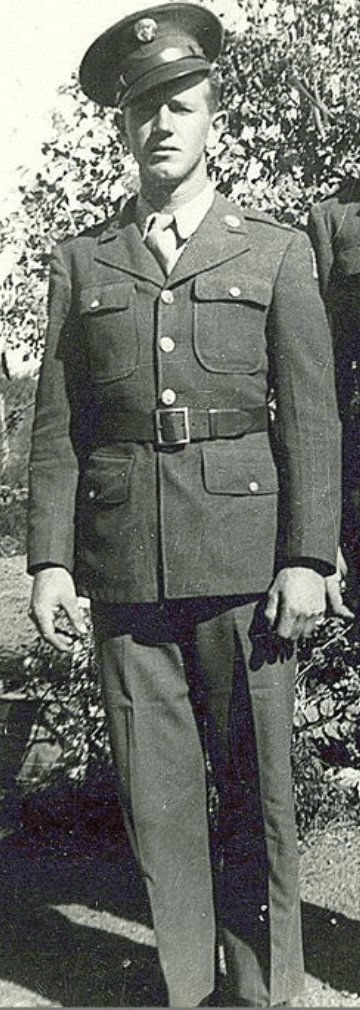
Victor looked at the date on the letter and the weight of his father’s words. Could Bob have been in the Battle of Midway? He had never spoken much about his military service. The letters seemed to carry the burden of his unspoken past.

No kid should have to be a killer of another. It is the most horrible thing you can imagine.

Those were the only words his father had ever spoken about the war.

Victor leaned back in his chair, staring at the letters before him. His father had seen horrors he had never spoken of and endured trials he had buried deep. Yet, through it all, the one thing that had kept him going was his profound and unwavering love for Emily.

He suddenly understood why, after her passing, his father had never quite been the same. Bob had kept his promise—he had never left her side. And when Emily was gone, so too, in a way, was Bob.

A lump began to form in Victor’s throat. He had always known his parents’ love was strong, but he had never truly grasped its depth until now. He had a newfound appreciation for the man his father had been. He gently and reverently returned the letters to the cigar box. Each one was a testament to his father’s enduring love.

As he placed the box back on the cabinet, he felt something shift within him. Grief remained, but now it was accompanied by a deep admiration. His father had lived and loved with an intensity few understood.

And finally, after all these years, he was with Emily again.