Standing Watch At A Western Oklahoma Oil Well Blowout.

Groff Media 2024© Truth Endures IMDbPro

Presented by benandsteve.com By: Benjamin Groff II©

3–5 minutes

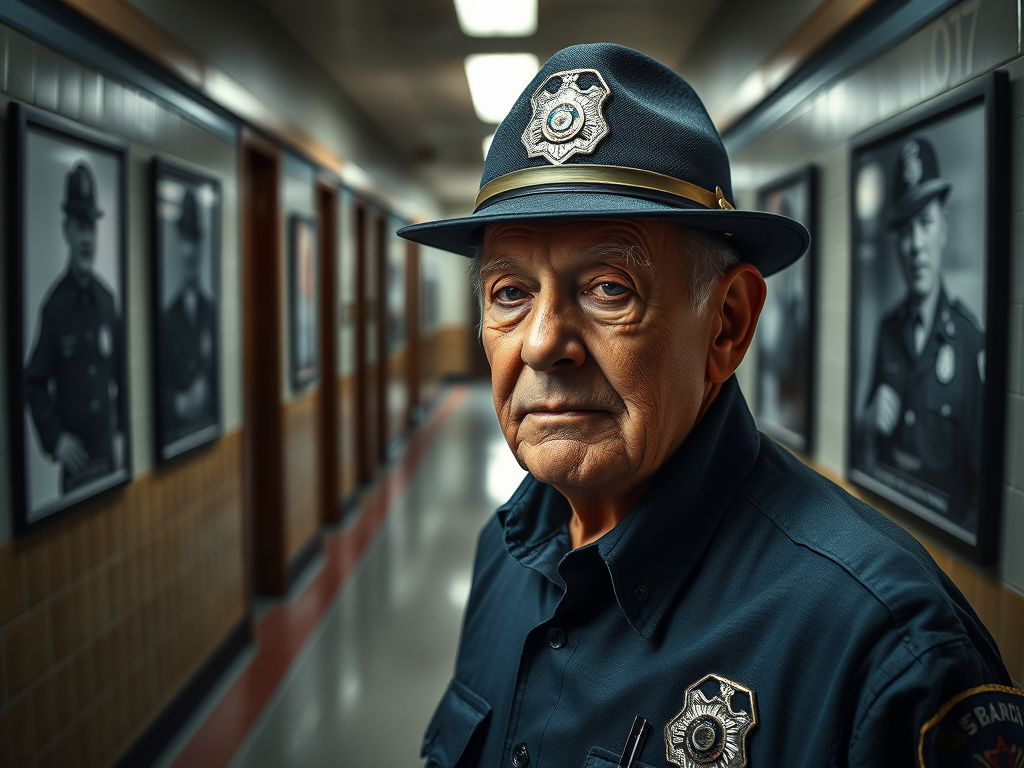
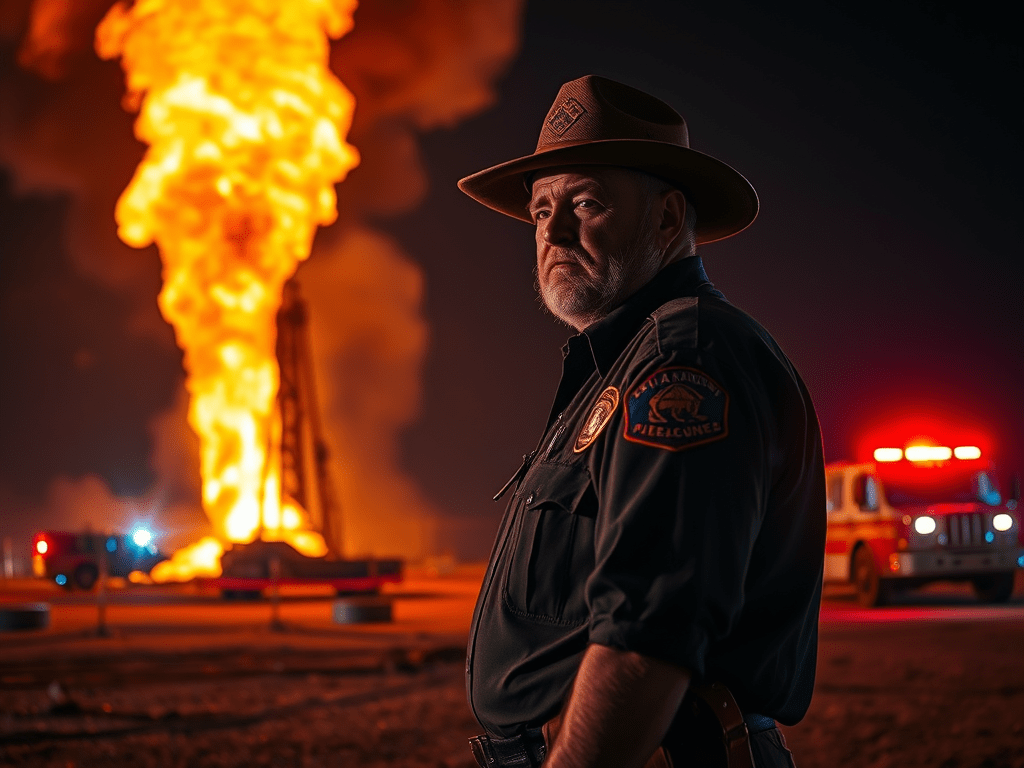
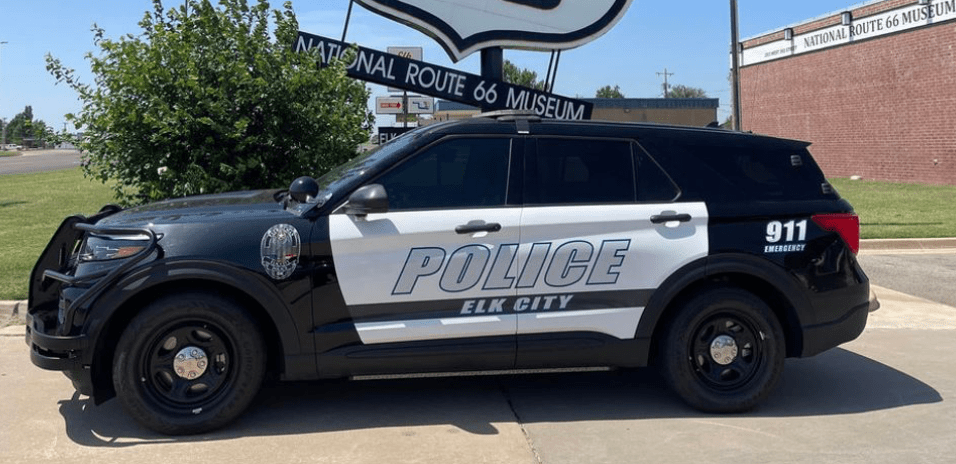
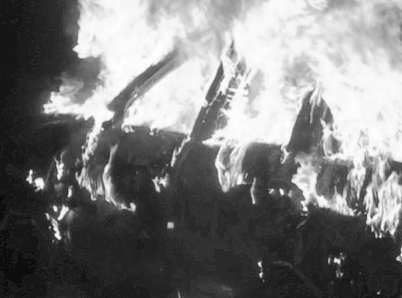
The midnight wind howled across the open plains of Elk City, Oklahoma. It carried with it the acrid stench of crude oil. Officer Ben Groff sensed the urgency of the situation. He adjusted his hat and squinted into the orange glow from the ruptured well. The blowout had sent a geyser of oil and gas roaring skyward earlier that evening. Now it loomed like a ticking time bomb. Nearby tanks, filled with thousands of gallons of oil, were dangerously close to the chaotic inferno.

Ben’s radio crackled to life.

“Unit 3, you still holding up out there?

Came Chief Smith’s voice, heavy with concern.

“Yeah, Chief,”

Ben replied, his tone steady but cautious.

“Still no sign of the fire spreading, but the pressure’s climbing. The oil company’s crew says it will be hours before they can cap this.”

“Good. Keep everyone clear. If those tanks go –– Well, you know.”

The Chief replied.

Ben glanced over his shoulder toward the blockade he’d set up a quarter-mile away. Emergency lights from firetrucks and patrol cars painted the dark sky red and blue. Despite the late hour, onlookers had gathered, their curiosity undeterred by the danger.

“Roger that,”

he said.

He turned back to the scene. Flames licked the blackened steel of the wellhead, dancing with reckless abandon. He felt the heat even from his position, a hundred yards away. His job was simple, yet it was a constant reminder of the imminent danger. He had to make sure no one came close enough to worsen things. Simple, but nerve-wracking.

Suddenly, a sharp sound pierced the night—a metallic creak followed by the unmistakable hiss of escaping gas. Ben’s heart raced as he angled his unit’s spotlight, sweeping it toward the tanks. One of the smaller storage units had started to swell, its walls bulging under the pressure.

“Unit 3 to Unit 1 – Chief, we’ve got a problem,”

Ben said on his radio.

“We see it,”

Smith replied.

“Fire team’s moving in to cool it down. Stay put, Groff.”

Stay put. The phrase echoed in Ben’s mind. It was his job, but standing watch over a potential explosion felt like waiting for lightning to strike. He tightened his grip on his duty belt and exhaled a long, steady breath.

Out of the corner of his eye, a sudden movement caught Ben’s attention. A shadow darted near the edge of the well site, and in that split second, Ben’s heart skipped a beat. The potential danger was now tangible.

“Hey!”

Ben shouted, drawing his sidearm.

“Who’s there?”

The figure froze, then turned toward him—a teenager, wide-eyed and terrified.

“My dad works out here!”

The boy yelled.

“I think he’s still at the tanks!”

Ben’s stomach sank. He knew most of the local oilfield workers and their families. If the boy was right, someone’s life was on the line.

“Stay back! You want to get blow’d up?”

Ben ordered, with his Okie drawl, sprinting toward the tanks. The boy tried to follow, but Ben’s stern glare stopped him.

Reaching the tanks, Ben shouted over the roar of the fire.

“Anybody here? Call out!”

A faint cough answered him. Ben scanned the area with his flashlight and spotted a man slumped near the base of one of the tanks. The man’s face smeared with soot.

“Hang on!”

Ben yelled, holstering his weapon and grabbing the man under the arms. The heat was nearly unbearable as he dragged the worker away, his boots slipping in the slick oil-coated ground.

Behind him, a loud bang split the air—a pressure-release valve venting gas. The flames flared brighter, hungrily reaching toward the tanks.

Ben hauled the man to safety, where fire crews took over, administering oxygen and checking for injuries. The teenager rushed ahead, tears streaming down his face as he embraced his father.

Ben stepped back, his breath coming in ragged gasps. He looked toward the wellhead, where firefighters were now dousing the tanks with foam. The danger wasn’t over; the worst had been averted thanks to the fire department. The relief was palpable, not just for Ben, but for the boy and his family.

“Good work, Guys,”

Smith’s voice crackled over the radio.

Ben waited to reply. He stood there, sweat mixing with the grime on his face. Watching the flames fight their losing battle against the relentless efforts of the fire crew. His role in the emergency response was crucial, and he acted bravely and quickly.

Another night in Elk City. Another close call.

Thanksgiving At The Police Department

Groff Media 2024© Truth Endures IMDbPro

Presented by benandsteve.com By: Benjamin Groff II©

3–4 minutes

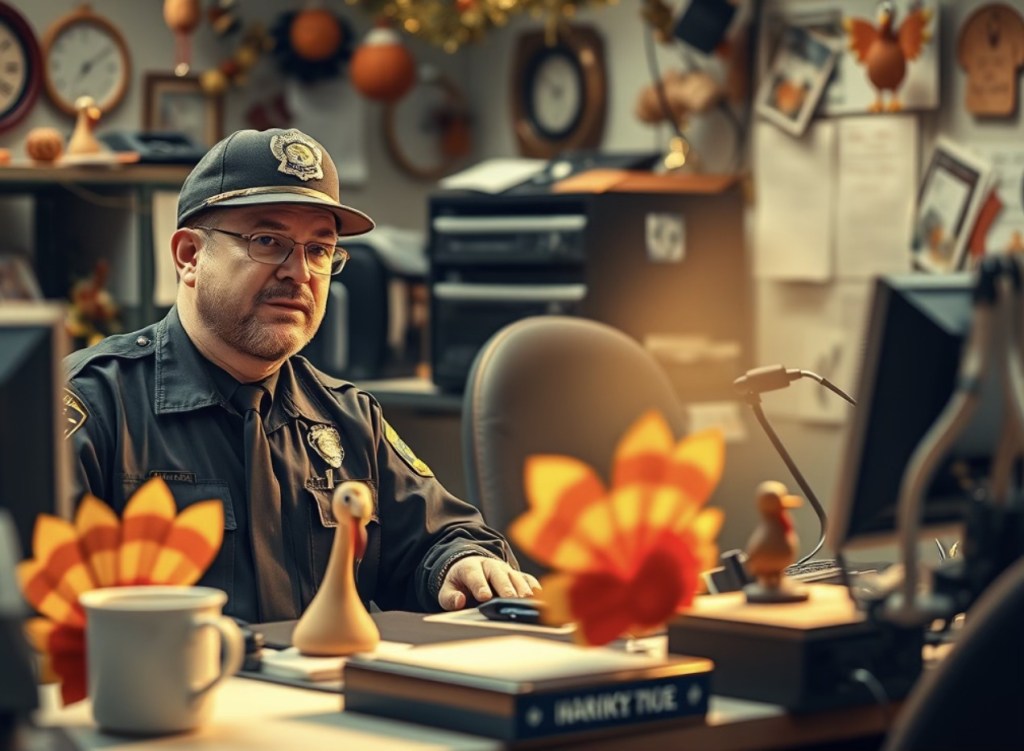
Thanksgiving at the Elk City Police Department was a paradox of warmth and chaos. While dispatchers decorated their consoles with paper turkeys and the smell of leftover pie filled the air, the holiday calls kept coming. It was supposed to be a day of gratitude and family, but for the officers on duty, it was one of their busiest days of the year.

Officer Jim Layfette, a ten-year veteran of the force, leaned back in his chair and sipped lukewarm coffee.

“Thanksgiving,”

he muttered to his rookie partner, Dan Thomas.

“The one day everyone thinks they can play Jerry Springer.”

Their first call came just before 2 p.m., a disturbance at a modest home on Fourth Street. Two brothers were at each other’s throats over who was more entitled to the last slice of pumpkin pie. When Layfette and Thomnas arrived, the brothers were outside, yelling loud enough to drown out the TV playing the Cowboys game.

“Seriously?”

Thomas asked as they broke up the fight.

“Welcome to the holiday shift,”

Layfette replied. The brothers were separated and sent home with stern warnings and a firm reminder that family arguments weren’t worth a trip to jail.

“Unit 4, you’ve got a 10-16 on Elm Street. Argument over stuffing. Use caution—reporting party says it’s ‘too moist.'”

As the day wore on, the calls became more bizarre. At a small rental house on the edge of town, a woman had locked her husband out because he had insulted her mother’s green bean casserole. He stood in the front yard, arms crossed and shivering in a light jacket, refusing to apologize. Thomas handed him a blanket from the patrol car while Layfette gave him a brief lecture on tact.

“Is it that bad?”

The husband asked.

Layfette smirked.

“I’ve had worse. Just say sorry and move on.”

By evening, the call volume skyrocketed. In one house, a drunken uncle had tried to carve the turkey with a chainsaw. In another, two cousins had turned a friendly card game into a shouting match that ended with one flipping the table. When Layfette thought the shift couldn’t get weirder, the radio crackled with another call.

The dispatcher, Chris, kept things lively with dry humor.

“Unit 4, you’ve got a 10-16 on Elm Street. Argument over stuffing. Use caution—reporting party says it’s ‘too moist.'”

Layfette couldn’t suppress a laugh at the Elm Street house when the elderly matriarch opened the door.

“I didn’t call you,”

she said with a sigh.

“It was my daughter. She’s too sensitive. But if you could take the turkey with you.”

“No, ma’am, thanks for the offer,” 

Layfette replied.

Officers gathered at the station to share a potluck meal and stories of their day. Amidst the oddball arguments and creative resolutions, a sense of camaraderie and shared experience began to emerge. Thomas, who had started the shift apprehensive about the chaos, was beginning to see the humor in it all, feeling a part of the team.

“It’s like therapy,” 

Layfette told him as they sat in the patrol car during a lull.

“Families blow off steam, and we get to play referee. It beats the usual stuff.”

By the end of their shift, Layfette and Thomas had responded to a dozen calls. No one had been seriously hurt, and most of the disputes ended with hugs and laughter. This sense of accomplishment and the fact that they had kept the peace on a chaotic day filled them with a deep sense of fulfillment and pride.

As they handed off their patrol car to the next shift, Layfette gave Thomas a pat on the shoulder.

“Congratulations, rookie. You survived your first Thanksgiving shift.”

He grinned.

“And I thought holidays were supposed to be relaxing.”

“Not here,” 

Layfette said with a chuckle.

“Welcome to the Elk City PD.”

They left the station to find the night unusually quiet, as though the town had finally run out of steam. It was a well-spent Thanksgiving for the officers—keeping the peace one turkey-fueled feud at a time.

Highway Reckoning – When There Is Real Blood On The Highway ––– “He said we were both going to die!”

Groff Media 2024© Truth Endures IMDbPro

Presented by benandsteve.com By: Benjamin Groff II©

3–5 minutes

Officer Ben Groff had been juggling back-to-back court appearances at the Beckham County courthouse all morning. The docket was full of traffic violations and a few petty crimes, each case chewing away precious hours he would rather spend patrolling Elk City streets. 

The courtroom’s musty air and the monotony of testimonies felt like a prison until his radio crackled to life with a voice that cut through the monotony like a razor.

“Priority call for Elk City PD. Possible domestic disturbance turned vehicle crash at Interstate 40 and State Highway 6. Ambulances en route. Officers needed to secure the scene. Witnesses report shots fired. Groff and Wheeler, you’re closest.”

Groff glanced at his fellow officer, Lieutenant Wheeler, seated across the room as a witness for a separate case. Wheeler’s eyes mirrored the same urgency. Without needing words, both men left the courthouse, striding quickly to their cruisers.

Moments later, Groff sped East on Interstate 40 toward the reported scene, the shrill wail of his siren slicing through the rural quiet. The chaos became evident as he neared the overpass where Interstate 40 crossed Old Highway 66.

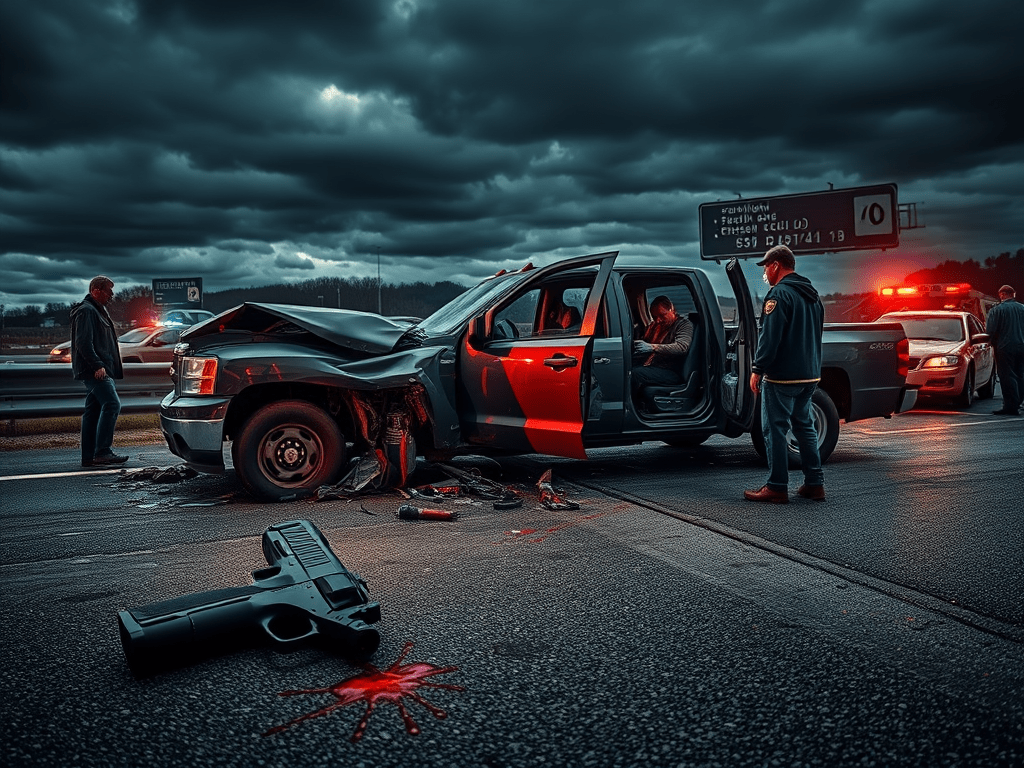
A mangled pickup truck rested askew across the interstate median, its engine smoking and horn blaring. A crushed sedan lay twenty yards away, its front end obliterated. Skid marks and shattered glass littered the asphalt like jagged scars. Traffic had stopped, and several drivers had exited their vehicles to rubberneck or assist.

Groff slowed only enough to navigate the melee before parking behind Wheeler’s cruiser. As Groff exited his vehicle, he took in the scene—a woman, visibly distraught, sat against the guardrail, holding a bloodied handgun. Paramedics surrounded her, carefully taking the weapon from her trembling hands.

“Groff, over here!” 

Wheeler shouted, pointing toward the pickup.

Inside, a man slumped lifelessly in the driver’s seat, a gunshot wound to his head. His hands still gripped the steering wheel, frozen in what seemed to be the final moment of his fatal decision. He had experienced the syndrome known in police work as having a Cadaveric Spasm or Instantaneous Rigor. 

“She shot him, Ben,” 

Wheeler said grimly. 

“Witnesses say he tried to crash the truck into the underpass while she fought him off.”

Groff nodded, taking in Wheeler’s words while scanning for immediate threats. 

“What caused the head-on with the sedan?”

“When she shot him, the truck swerved across the median into oncoming traffic,”

Wheeler explained. 

“A family of three was in that car. Paramedics say they’re alive, but it’s bad.”

“He said we were both going to die!”

Groff approached the woman at the guardrail, her tear-streaked face contorted in anguish. 

“Ma’am, I’m Officer Groff. I need you to tell me what happened.”

Through sobs, she explained the escalating argument at a gas station on Old Highway 66. Her husband, enraged over perceived slights, had driven recklessly onto the interstate, swerving wildly. When she tried to grab the wheel to prevent him from crashing into the underpass, he attacked her. In desperation, she retrieved the handgun from the glovebox and fired.

“He said we were both going to die!”

She whispered, her voice quaking. 

“I didn’t want to hurt him, but I couldn’t let him kill us.”

Groff nodded solemnly, trying to balance empathy with the need for clarity. 

“You did what you thought was necessary to survive. Right now, our focus is ensuring you’re safe and getting everyone the help they need.”

As he spoke, highway patrol officers arrived to assist with traffic control. Paramedics transported the injured family to the hospital, and the medical examiner began their grim work on the deceased husband.

Groff and Wheeler pieced together the scene as investigators. The domestic dispute was the tragic catalyst but also underscored the unpredictable volatility of police and emergency calls.

Hours later, Groff sat on the hood of his cruiser, staring at the fading sunlight over Interstate 40. Wheeler joined him, his expression weary. 

“Another senseless tragedy,” 

Wheeler said.

“Yeah,”

Groff replied, the day’s weight pressing down. 

“But at least she survived.”

The call would haunt them both for a long time, a stark reminder of the thin line officers walk between preserving life and untangling the wreckage of human conflict. For Groff, it was just another chapter in a small-town officer’s unpredictable, often harrowing life.

A Last Breath in Elk City –– An Emergency Calls Impact

Groff Media 2024© Truth Endures IMDbPro

Presented by benandsteve.com By: Benjamin Groff II©

2–4 minutes

Officer Ben Groff was sipping his coffee when the dispatcher’s voice crackled over the radio:

Ben’s heart sank. Unresponsive calls rarely ended well, but there was no time for speculation. He flipped on his patrol car’s lights, the urgency of the situation palpable, and sped through Elk City’s quiet streets.

Pulling up to the modest brick house, upon arrival, Ben was met by the frantic figure of a woman waving her arms. Her cries cut through the crisp evening air.

“Help him! Please, he’s not breathing!” 

She screamed, her voice thick with terror and desperation, cutting through the crisp evening air.

Ben rushed through the backyard gate to find a man sprawled on the grass. His skin had a bluish tinge, his lips ashen. A can of tobacco lay spilled nearby, and the faint, acrid scent of chewing tobacco lingered in the air. Without hesitation, Ben dropped to his knees and began chest compressions.

“Stay with me, buddy!” 

He muttered, counting each press. He tilted the man’s head back and prepared for rescue breaths. As his lips met the man’s, the bitter taste of tobacco hit him like a punch. He pushed past the revulsion, determined to do everything he could.

Minutes felt like hours as he alternated compressions and breaths. The wife, clutching her robe, sobbed uncontrollably nearby.

The wail of the Elk City Fire Department’s engine announced the arrival of help. Firefighters and paramedics streamed into the backyard, their calm precision contrasting with the chaos. The wife’s sobs turned into hopeful gasps as they quickly took over, attaching monitors and preparing to transport the man.

Ben stood back, his chest heaving, sweat mixing with the cool night air. The lead paramedic gave him a somber shake of the head. “We’ll do what we can on the way.”

The wife collapsed to her knees.

“He can’t be gone! He just can’t!” 

She cried, clutching at Ben’s uniform. He knelt beside her, steadying her trembling shoulders.

“Ma’am, listen to me,”

He said gently.

“Let’s get you to the hospital. I’ll take you.”

Ben helped her into his patrol car and jumped into the driver’s seat. With lights and sirens blazing, he circled Elk City’s streets, his mind racing. This kind of call never left you—the taste of desperation as real as the tobacco on his tongue, the weight of every life lost or saved resting heavily on your shoulders.

As they reached the hospital, Ben parked and helped the woman inside. She stumbled into the emergency room, her cries echoing in the sterile space. He stayed close, quietly offering whatever comfort he could, the uncertainty of the man’s fate hanging heavy in the air.

“Thank you for trying,” 

The medical team wheeled the man into the ER, leaving Ben and the man’s wife in a stark, quiet waiting room. She gripped his arm as though it were a lifeline.

She whispered between sobs.

Ben nodded, feeling the weight of her words. In a job where victories were rare, and heartbreak was plenty, sometimes all you could do was try. And for this woman, in her darkest hour, his effort mattered. Officer Groff remained with the lady until her family arrived to hear the news and begin to support her grieving. The heartbreaking call was not the first for Groff and would not be the last!

Justice Served: Stolen Vehicle Chase in Elk City

Groff Media 2024© Truth Endures IMDbPro

Presented by benandsteve.com By: Benjamin Groff II©


3–4 minutes

Officer Ben Groff had just started his shift at the Elk City Police Department when the call came through dispatch:

“Units should be advised of a report of a stolen vehicle spotted heading north on Main Street. It collided with several vehicles in front of the theater and continued. The suspect is a white Dodge Charger. All units respond.”

Ben’s patrol car roared to life as he drove through Third and Madison Avenue to intercept the vehicle on Main Street. Ben hit the lights and siren, merging into the city’s bustling evening traffic. Main Street was alive with its usual commotion—families grabbing dinner, teens cruising, and trucks rumbling through on their way to the interstate. The Charger weaved recklessly through it all, its driver seemingly unfazed by the chaos.

Ben’s adrenaline surged as he radioed in.

“Unit 3 in pursuit. The suspect vehicle appears to be trying to head towards Washington Street through alleyways.”

As the stolen vehicle blew past a red light, narrowly missing a minivan, Ben deftly maneuvered around other cars, keeping his pursuit controlled but relentless. He’d chased suspects before, but this one felt different—the driver was audacious and desperate, taking wild risks that jeopardized everyone on the road. The danger was palpable, the stakes high, and the adrenaline was pumping.

When the Charger made a sharp turn onto a quieter side street, Ben followed, his tires screeching on the asphalt. For a moment, the streetlights flickered off the Charger’s rear window, and Ben caught a glimpse of the driver—a young woman, her face twisted with determination.

Finally, the suspect tried to cut through an alley too narrow for her car’s speed. The Charger clipped a dumpster and spun out, slamming into a utility pole. Smoke billowed from the crumpled hood.

Ben skidded to a stop, jumping out with his weapon drawn.

“Show me your hands! Out of the car, now!”

The woman hesitated before stepping out, her hands trembling but raised. She was strikingly familiar—Lisa Rhodes, the girlfriend of the auto magnate and social media influencer John DeLorean. The revelation sent a shockwave through the scene, a twist in the narrative that no one, not even Ben, saw coming.

“You’ve got to be kidding me,”

Ben muttered under his breath.

Lisa tried to talk her way – out of it, her voice honeyed but shaky.

“Officer, I didn’t steal this car. It’s one I borrowed. A man, let me borrow it—this is just a misunderstanding!”

Ben wasn’t buying it. As he cuffed her, he noticed her purse on the passenger seat. When he peeked inside, his suspicions were confirmed—a substantial stash of drugs, including pills and small baggies of powder.

Backup arrived moments later, securing the scene. Lila’s protests grew louder as the reality of her arrest sank in.

“You don’t know who you’re messing with! John will have his attorneys save me and get your badge for this!”

Ben smirked as he read her rights.

“Maybe he will, but not before I make sure you face the consequences of tonight’s little joyride.”

Ben’s determination was unwavering, and his commitment to upholding the law was resolute, making it clear that justice would prevail.

Back at the station, the news spread like wildfire. Lila Rhodes, the woman frequently seen on John DeLorean’s arm at high-profile events, was booked for possession and vehicle theft. Reporters swarmed the station, eager for a statement. As she promised, high-profile attorneys showed up the following day to post bail and escort her back to California.

Later, as Ben completed his report, his sergeant clapped him on the shoulder.

“Hell of a job tonight, Ben. You nabbed someone who thought she was untouchable.”

Ben nodded, exhausted but satisfied. In Elk City, justice didn’t care about status or connections—it only cared about the law. This matter would become evident as Ben brought in well-known individuals on burglary, auto theft, and other felony charges. That is a story coming soon.

NOTE: Some names, locations, and information are changed or edited to contain alternate identifications for privacy reasons.

“The Cattle Crossing”

Groff Media 2024© Truth Endures IMDbPro

Presented by benandsteve.com By: Benjamin Groff II©


2–3 minutes

The radio crackled with urgency.

“All Units Be On The Lookout – suspect fleeing northbound on Highway 34 in a black pickup. Speed exceeding 90 miles an hour. Be advised; driver is armed and dangerous.”

Officer Ben Groff tightened his grip on the steering wheel of his cruiser, eyes scanning the road ahead and radioing his headquarters as he spotted the vehicle from the broadcast.

“Headquarters, Unit 3, I see the suspect vehicle Northbound on Highway 34 from the Love’s Travel Stop!”

The highway stretched endlessly, bordered by barbed wire, open pastures, and woodrail fencing for the local ranches. A faint plume of dust in the distance marked the suspect’s location.

“Unit 3 in pursuit,”

Ben confirmed, activating his siren.

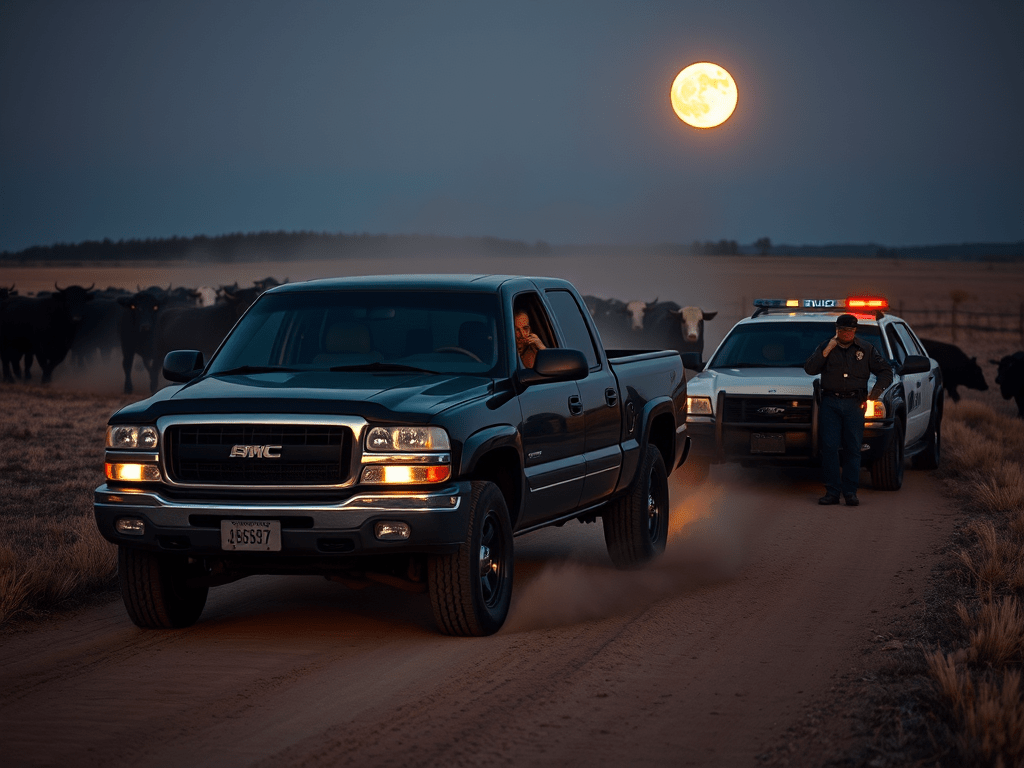
The pickup swerved erratically, weaving around slower vehicles as the chase intensified. Ben could see a rifle strapped to the back window of the truck and a pile of what looked like stolen tools in the bed.

“Suspect heading into open ranch country,” 

The dispatcher warned. 

“Roadwork ahead near Hammon. Proceed with caution.”

Ben knew the area well. It was dotted with cattle crossings—gates sometimes left open by careless ranchers. He pressed the accelerator, narrowing the distance between him and the fleeing truck.

Ahead, the suspect veered sharply onto a dirt road, kicking up a cloud of grit. Ben followed, his cruiser skidding slightly on the loose gravel. The air was thick with dust, obscuring his view, but he kept his focus sharp.

Suddenly, the truck skidded to a halt in the middle of the road. Ben braked hard, stopping a safe distance away. Before he could exit his vehicle, he heard the lowing of cattle.

A herd of cows, dozens strong, unexpectedly strolled across the road. The nightlight, reflecting the full moon’s setting, backlit their black and brown, and their movement was leisurely, indifferent to the chaos.

The suspect jumped out of the truck, shouting and waving his arms to clear a path through the herd. The cows, unimpressed, continued their slow march, blocking any escape.

Ben saw his opportunity. He exited his cruiser, drawing his weapon.

“Hands up, don’t move! You’re surrounded!”

The suspect froze, looking back and forth between the officer and the unyielding wall of cattle. A few other units arrived, their sirens wailing as they boxed him in. The man dropped to his knees, his hands raised in surrender.

Ben moved forward cautiously, cuffs in hand, as the cows watched the scene unfold with mild curiosity.

One of the arriving officers couldn’t help but joke, 

“Looks like the cows did our job for us.”

Ben chuckled as he secured the suspect.

“Sometimes justice moves at its own pace. You should have seen his face when I told him –– he was surrounded!”

As the sun dipped below the horizon, the herd finally cleared the road, leaving behind a trail of hoofprints and a story for Ben to tell at the station.

Navigating Ethics in Law Enforcement

Groff Media 2024© Truth Endures IMDbPro

Presented by benandsteve.com By: Benjamin Groff II©


4–5 minutes

After completing my training, I got assigned to a two-person unit for part of my shift. Unfortunately, this arrangement led to the exposure of my partner’s extramarital affair with a young woman who worked at a nightclub on the city’s east side. His behavior was hard to ignore. Night after night, he would leave the patrol unit to spend hours inside the club, leaving me alone to monitor radio calls. Each absence grew longer and my frustration deeper.


The city grappled with a surge in burglaries targeting vehicles, garages, homes, and businesses. As crime reports piled up, the department needed to be closer to solving the problem. Sitting in the patrol car logging incidents while my partner dallied at the bar weighed heavily on me. Worse, my delayed response times to calls had begun to draw attention, placing me in a difficult position.

Addressing the issue felt like navigating a minefield. On one hand, I had a duty to uphold the integrity of our patrol duties. On the other, reporting my concerns to a sergeant or lieutenant risked exposing my partner’s personal life, which I preferred to avoid. Going over their heads to the Captain or Major felt equally precarious. However, during my travels to pistol shooting competitions, I established a good rapport with the Chief of Police. I decided to take a chance.


One afternoon, I invited the Chief for coffee to discuss an upcoming qualification event. Once seated, I confessed my more profound concerns. I told him about my partner’s absences, the nightclub, and the woman I suspected was involved. I explained why I had yet to go through the chain of command and emphasized that my primary concern was the integrity of our patrol duties. To my relief, the Chief not only understood but also reassured me that I had made the right choice. His promise to handle the situation discreetly was a weight off my shoulders.


A week later, the schedule was released, and to my disappointment, I again got paired with the same partner. The pattern continued, with him vanishing into the nightclub and leaving me to manage radio calls alone. Frustration mounted, but I stayed focused on my responsibilities.
At the following briefing, Lieutenant Wheeler announced a significant change: I would get assigned to a solo unit. My former partner, now in a solo unit, would no longer work with me. Other patrol officers, except the K9 unit, were paired up. The decision felt like a small but meaningful vindication, a recognition of my commitment to upholding the integrity of our patrol duties.


Working solo was a challenge. Within my first three days, I responded to two fatal calls—more than many officers encounter in a month. However, I was not alone. I appreciated the support of my fellow officers, who often checked in during traffic stops or guided me through the intricacies of field reporting. Their support was a testament to the camaraderie in law enforcement and the importance of teamwork.


One night, around 1:00 AM, I intercepted a burglary alarm call at a sporting goods store. I was close to the location and informed dispatch I would respond. Oddly, my former partner claimed the call, though he was across town. Dispatch redirected him to return to headquarters instead. I only thought of it once I reached the station later.


The pieces fell into place. The Chief observed my partner’s behavior, noting how long his patrol unit lingered at the nightclub each night. The Chief orchestrated a fake alarm call to confirm his suspicions and monitored my partner’s response time. This thorough investigation led to the end of my partner’s career; he resigned the following day.


The aftermath was messy. My former partner left town with the barmaid and her four children, abandoning his wife of many years. She was devastated and began calling the department, requesting me by name to visit her. I got met with her anguish and accusations each time: “Why didn’t you tell me?” At just 21 years old, I struggled to understand why she held me responsible for policing her husband’s fidelity.


While I tried to console her, the experience left a deep impression. It wasn’t just a lesson about personal integrity and the far-reaching consequences of a lack of it. From then on, I made it a point to know my partners better, ensuring they had solid personal ethics or no attachments that could spill into their professional lives.


This early chapter of my career shaped my approach to law enforcement. It reminded me that while we wear a badge to uphold the law, we also carry the weight of trust—not just from the public but from those who depend on us, on and off duty. The importance of personal integrity in law enforcement cannot be overstated. It is not just about following the rules, but about the impact of our actions on the lives of others.

The Third Night. “That’s The SOB!”

Groff Media 2024© Truth Endures IMDbPro

Presented by benandsteve.com By: Benjamin Groff II©

3–5 minutes

On my third night in the patrol division, a sense of foreboding hung over me. I couldn’t explain it. Maybe it was the intensity of the past two nights or the instincts honed over years in other divisions. Something felt off. I kept this unease to myself—I didn’t want Lt. Wheeler thinking I was jittery about the job. I wasn’t. It was just that sixth sense I’d learned to trust, the one that sometimes whispered when trouble was brewing.

At 2000 hours, we rolled out of headquarters, heading west along Old Route 66, now Third Street in our city. Before we made it far, dispatch radioed in: the Oklahoma Highway Patrol needed us to respond to a Signal 82—an injury accident—since their units were tied up. The details were scarce, but we learned an Elk City ambulance was already en route.

We reached the outskirts about three miles from town when the ambulance reported on-scene: a single-car slide-off with no injuries needing investigation. Routine stuff. Then, the airwaves exploded with an alert: Officer Down. The call came from ten miles further west. A semi-truck pulling a lowboy trailer was reported fleeing the scene.

Adrenaline surged. I radioed the sheriff’s department, letting them know our position and offering to assist. They authorized us to operate in their jurisdiction—a necessary formality. We sped west, scanning every shadow and turn.

Minutes later, a semi barreled out of Berlin Road, ignoring the stop sign as it merged onto Highway 6. I didn’t need to think twice.

“That’s the son of a bitch!”

I yelled, heart pounding.

Lt. Wheeler swung our Ford Crown Victoria into a hard U-turn, tires screaming. The truck’s hydraulic hoses flapped loose, whipping in the wind, as though the trailer had been hastily unhooked. Wheeler hit the lights and siren. The truck swerved to the shoulder but didn’t stop. I grabbed the shotgun as Wheeler directed the spotlight, illuminating the truck’s cab and surrounding darkness. I slipped into the bar ditch, invisible in the shadows, covering Wheeler as he approached.

The driver finally exited and handed over an expired license. Something felt off—more than just the expired ID. Radio chatter hinted at potential damage to the truck’s undercarriage, but we still didn’t know what had happened to the downed officer. Wheeler told the driver to stay put while he inspected the vehicle.

Then it happened.

The driver propped his foot on our patrol unit’s bumper and reached toward his pants leg. My instincts screamed.

“Hands on the hood! Feet on the ground!”

I ordered, the shotgun steady at his head. He froze, and Wheeler shot me a look—half surprise, half reproach—but patted the man down and cuffed him.

By now, a Beckham County deputy arrived. As the suspect squirmed in our back seat, I kept a close watch, retrieving his details for the report. His movements grew erratic, twisting and jerking. I yanked the door open.

“Knock it off!” I barked.

It felt like hours had passed, though it had been only minutes. Finally, the chilling news crackled over the radio: Trooper Guy David Nalley had been shot in the back of the head during a traffic stop. The suspect’s valid driver’s license had been found in Nalley’s hand.

The gravity of the situation hit like a gut punch.

As we transferred the suspect to the deputy’s vehicle, he managed to slip a gun from his boot, kicking it beneath the seat—a grim reminder of the Supreme Court ruling restricting how far we could search without probable cause. Had we known his connection to Nalley, we could have searched him thoroughly.

Soon after, an ambulance carrying Nalley approached, and we provided an emergency escort to the hospital twenty miles away. Inside the ER, chaos reigned. I found myself at the head of Nalley’s stretcher, squeezing an airway bag while nurses and doctors scrambled to save him. Despite their frantic efforts, I knew it was too late.

Outside, the air was heavy with sorrow. Trooper Nalley was gone—a devoted husband, a proud family man, and a true giant in every sense. He was the kind of man you thought of when hearing Jimmy Dean’s “Big John.”

The suspect’s story ended in tragedy too. During a mental evaluation, he took hostages with a gun smuggled in by his wife. He was killed during the standoff. His name isn’t worth remembering.

But Nalley’s is. He served with honor and left a legacy of kindness and courage. That night, I realized something: no amount of training or preparation can truly prepare you for moments like these.

When You Fight For your Life Any Thing Is Fair! Lt Wheeler’s Advice Of A Lifetime

Groff Media 2024© Truth Endures IMDbPro

Presented by benandsteve.com By: Benjamin Groff II©


3–5 minutes
Officer Steve Mahan
Shot and Killed Jan 5. 1983

As I prepared for work, the memory of Officer Steve Mahan lingered heavily in my thoughts. He had been shot and killed on January 5th, 1983—a day etched in tragedy. That morning, a dense, unrelenting fog blanketed the world as if nature itself mourned the impending loss. I recalled how the rescue helicopter, grounded by the impenetrable fog, couldn’t transport him to a larger hospital equipped to treat his severe head trauma. Desperate, the doctors had no choice but to send him by ambulance over 100 miles away.


The ambulance crawled through the soupy mist, often unable to exceed 30 miles per hour. Time was slipping away, and the slow, arduous journey became a race against death. Despite their best efforts, he passed en route, his life extinguished before the fog could lift.


That day haunted me. As I pulled on my uniform, I reminded myself that tonight, I would be assigned to the very unit he had been using on the night he was executed. A weight settled on my shoulders—not fear but a solemn understanding of the risks we all faced. Yet, I felt a measure of reassurance knowing that Lt. Wheeler would be by my side, his steady guidance serving as both a compass and a shield against the uncertainty of the streets.

On my first day of patrol, the challenges of the job revealed themselves immediately, with a fatality marking my inaugural call. It was a sobering introduction to the weight of my duty. My Lieutenant, a seasoned mentor, shared his wisdom throughout the shift as we navigated the Oklahoma Statutes, Title 21. He precisely explained how every crime must meet specific legal criteria before being classified as such and emphasized the foundational principle that every suspect is presumed innocent until proven guilty. That early understanding of the law, I realized, was not just knowledge—it was a tool for justice and fairness, critical to our line of work.

The second day began differently. I was well-rested but curious about what this shift could bring. What could top the tragic death of the older woman the day before? The night unfolded quietly at first. My Lieutenant and I were patrolling the city’s southern section, with him now shifting the conversation to Title 47 of the Oklahoma Statutes, covering traffic laws and their nuances.

Then, without warning, the calm was shattered. The Lieutenant slammed our unit’s transmission into park and leapt out, his movements fluid and precise. Before I could react, he bolted to my side of the vehicle and tackled a man gripping his wife by the hair on the sidewalk. It had all happened instantly—I hadn’t even registered the altercation out of the corner of my eye. When I opened my door, Lieutenant Wheeler was already cuffing the suspect with practiced efficiency.

I stood momentarily frozen, feeling like I had failed to pull my weight. The Lieutenant’s decisive action was a masterclass in vigilance, and I resolved to sharpen my instincts.

After ensuring the woman was safe and gathering her statement, we booked the man into jail on charges of public intoxication, disorderly conduct, and assault and battery. The routine of patrol resumed, but the night had already taken on a different tone. During this lull, Lieutenant Wheeler imparted what I’ve come to regard as the most crucial lesson of my career.

He also stressed the importance of situational awareness and knowing the city like the back of my hand. While my previous experience in communications had given me a solid understanding of the city from a dispatcher’s perspective, patrolling the streets was entirely different.

He taught me to read the moving pieces of the urban puzzle—to develop a comprehensive view that encompassed the road ahead and the vast expanses on either side. Under his guidance, my observational skills sharpened, leading to accomplishments such as preventing a potential robbery and aiding in a successful arrest, which I could later be proud of.

It felt like I’d absorbed a semester’s criminal justice training in just two nights. But nothing could have prepared me for what was to come on the third night. Neither of us could have anticipated the events that would unfold, including a high-speed escort and a tense high profile traffic stop and truthfully, neither of us would have chosen to.

What happened next would change everything. Yet, in the end, it would pass unnoticed by the world—a fleeting moment in the grand scheme of our duty. This moment, however, was a stark reminder of the unpredictable nature of our work and the need for constant vigilance and resilience. That is the story which unfolded for day three.

She Choked On A Prune – My First Call!

Groff Media 2024© Truth Endures IMDbPro

Presented by benandsteve.com By: Benjamin Groff II©

Time seemed to drag, yet it flew by in anticipation of the Chief’s order transferring me from Communications to Patrol. For years, I had taken complaints from the desk, booked prisoners, and processed bail. The routine had become second nature. The prospect of patrolling the streets promised a sense of freedom and a refreshing change of pace.

During my first month in Patrol, I was paired with Lieutenant Wheeler to acclimate to the policies and procedures specific to the division. Although I was already well-versed in most aspects of law enforcement, having spent significant time in the field, I understood the necessity of these transitional steps.

On October 25th, I reported for duty as usual, albeit in a different capacity. Lieutenant Wheeler adopted a methodical approach to the training, ensuring it was as instructive as possible. I kept an open mind, ready to absorb whatever new insights might come my way.

The shift started without delay. As we pulled out of the department gates, our first call came in from dispatch:

“Unit 5, respond to 305 East 1st Street. Signal 30 reported. Ambulance en route.”

Signal 30—a fatality. It was unusual for such a code to be broadcast if paramedics had not yet arrived. The ambiguity piqued our curiosity as we headed to the scene.

The address led us to an older neighborhood in the city’s central section. Upon arrival, we entered a modest single-family home and were met by a home healthcare worker. She explained, visibly shaken, that she had been sitting at the kitchen table with the 94-year-old female resident when the woman began choking on a prune. Despite her efforts to dislodge the obstruction, the victim had succumbed before she could call 911. The paramedics, now on-site, confirmed the death.

I radioed headquarters to notify the medical examiner (ME), who lived nearby and arrived within five minutes to officially pronounce the woman deceased.

Amid the formalities, the victim’s son, a doctor, arrived at the scene. Breaking the news to him was a somber task. I informed him that his mother had choked on a prune during dinner and that, despite all efforts, she had passed away. He asked to see her, and I assured him he could once the ME completed his assessment. The son was visibly displeased with the presence of the ME, which I understood; the clinical nature of such evaluations can be distressing, particularly for grieving family members.

Meanwhile, Lieutenant Wheeler assigned me an unexpected task. Puffing on his pipe, he directed me to document the incident as though it were a homicide investigation.

“For practice,” he said, “for when we have the real thing.”

So, I meticulously diagrammed the house, including the kitchen and living room, and wrote a detailed report as instructed. It was a somber start to my Patrol assignment—a reminder that, in this line of work, even the routine can take on unexpected gravity.

Rebuilding Trust: The Impact of a New Police Facility

Groff Media 2024© Truth Endures IMDbPro

Presented by benandsteve.com By: Benjamin Groff II©

In a gleaming, state-of-the-art facility, I yearned for the old station. The building at 303 West Fifth Street had something the new place lacked—character. It bore the marks of its long history, each crack and stain a testament to its battles and stories. By contrast, the new facility felt overly polished, almost ostentatious. Yet, I couldn’t deny its benefits. It offered the community better services and restored a sense of dignity lost after years of wear, neglect, and the relentless battering of Oklahoma’s weather.

The new station brought more than aesthetics; it symbolized the department’s renewed professionalism. After years of enduring lousy press and negative public perception, the facility served as a much-needed fresh start. The change was palpable. Officers began taking pride in their appearance—shining their brass, maintaining their units meticulously, and improving their health. Fast food runs gave way to salads and healthier choices. Quarterly fitness tests became mandatory, along with regular firearm qualifications.

Meanwhile, I was immersed in building the station’s new crime information center, logging details that painted a clearer picture of the city’s criminal landscape. Patterns emerged from seemingly unrelated incidents. Though not enough to secure warrants, the connections hinted at the methods and motives behind a string of burglaries. It was like assembling a jigsaw puzzle, piece by piece.

My role included ride-a-longs with patrol officers to understand their work firsthand. Having served both in dispatch and on patrol in previous departments, I could see both sides. During these rides, I shared my theories about the crimes, but my ideas were often met with skepticism. The officers humored me, though politely dismissive, and I couldn’t help but feel a pang of frustration. There had to be another way to make them see what I was uncovering.

Amid this, my focus shifted when the Chief of Police gave me unexpected news: I was to start competing in pistol-shooting matches across western Oklahoma. The announcement caught me off guard. As a Communications Officer, I only carried a sidearm if assigned to special events like parades or rodeos. Nonetheless, I attended the matches, often pitted against seasoned professionals. My performance, however, left much to be desired. It wasn’t until years later that I discovered the real issue—I was nearsighted. Once I got glasses, both my shooting and driving skills improved significantly.

The Chief’s directive had a purpose. On October 1, 1984, I received official notice of my transfer from Communications to the Patrol Division, effective October 25. My new assignment under Lieutenant Wheeler marked the beginning of a new chapter.

In my final weeks in Communications, I worked tirelessly to ensure a seamless transition for my replacement. I completed data entries and left the crime database in pristine order. The move to patrol was a dramatic shift that would challenge me in ways I couldn’t yet imagine—but also shape my career in profound and unexpected ways.

Saying Goodbye to The Old Station – And Hello to A New Destination 16

Groff Media 2024© Truth Endures IMDbPro

Presented by benandsteve.com By: Benjamin Groff II

The days felt strange for those of us who worked nights. As the darkness stretched on, one night blending into the next, daylight seemed more a memory than reality. Law enforcement is more than just a job; it’s a close-knit community, a world. There’s a deep-rooted fellowship among officers and an unbreakable chain of command that’s everything. Yet, that structure was sometimes a challenge for me to accept.

In a large family—four older brothers, two older sisters, a strict father, and a devoted mother—order was part of life. In a rural setting, the school was the only place outside the home where I experienced a different structure. Dad was the highest authority in our household, followed by Mom, then the eldest sibling present, down to the youngest. Dad’s words held firm even in his absence; his authority was an invisible force that needed no reinforcement.

Adjusting to the chain of command in law enforcement took me time, especially after starting in small departments with more relaxed structures. But at Elk City Police Department, things were different. There was a formal hierarchy: chief, assistant chief, major, captain, lieutenant, sergeant, patrolman, and communications officer. Here, I quickly learned that approaching the chief directly with questions or concerns was a breach of protocol, often met with a firm reminder to follow the ranks.

Simple tasks became lessons in patience. Whether I needed a lightbulb replaced or advice on a report, the chain of command required me to go through several levels before reaching a solution; I would have to wait days to get a minor answer. Frustrated, I eventually bit my lip and followed the structure, even if I didn’t like it. My captain called me out over the most minor lapses, like failing to change a burnt lightbulb on time, and I’d swallow my frustration, understanding that order was paramount.

As the community passed a tax to fund a new police station, we began to outgrow the quirks of our aging headquarters at 303 West Fifth Street. The old building, despite its shortcomings, was more than just a structure. It was a part of us, a place where we shared stories, laughed, and supported each other. Built in the 1930s, it had weathered time and neglect. Prisoners on the second floor could flood toilets, causing wastewater to seep into the dispatch and booking area below. But it was our home, filled with memories and camaraderie.

The new station was completed in 1984. Moving was bittersweet, not just for the community, who’d grown used to stopping by the old station for a friendly chat, but for us, too. The new facility was a symbol of progress, outfitted with state-of-the-art security, bulletproof glass, and advanced communication systems. The dispatch had better lighting, new mirrors, and high-tech computers; the National Law Enforcement Telecommunications System and National Crime Information Center computers were side-by-side. Every call was recorded and could be retrieved at any moment.

The jail had electronically controlled gates, holding cells, a kitchen, and a secure emergency exit. Security cameras covered the entire facility, displaying activity on monitors in the booking area. There were dedicated offices for records, evidence, detectives, and the command staff. In every way, it was an upgrade.

On the day of the move, I was instructed by ‘Captain Bick’ to stay home and prepare for the night shift. Despite my eagerness to be part of the transition, I respected his orders. Later that evening, I found myself driving to the old station out of habit. As I parked and entered, I was struck by the emptiness of the dispatch office. This was where I had sent officers out, received urgent calls, and coordinated responses. Now, it was a mere shell of its former self. Assistant Fire Chief Bob, who was also present, chuckled, ‘You’re at the wrong place—no cops here anymore!’

I smiled, feeling a wave of nostalgia, and pointed to the old wall that separated our side from the fire department. ‘Did you know President Carter’s original ‘Beast’ limousine was parked right on the other side of that wall one night? All the fire trucks were cleared out, and our officers watched to ensure no one touched it.’

Bob laughed, “Yeah, I remember that night. I was here too.”

It was hard to let go of stories like that—stories that had lifted people’s spirits and given them a break from their own troubles. With a sigh, I left the old building, heading to the new station, marveling at the thought of a facility so high-tech that even the door lock had a security code… which someone had promptly taped over because officers kept forgetting it.

After settling in, I was tasked with a significant assignment: entering city burglary data into the new computer system. I approached this task with the same dedication I gave every task, and it quickly provided me with valuable insights into the patterns of theft in the city. Over the next two years, this groundwork would prove instrumental in helping us dismantle a significant theft ring. But that’s a story for another time—this one is about the journey to a new place and the adjustments, big and small, that shaped us along the way.

Responding To The Last Call ––– The Last Of The Calls As They Were Reported 16

Groff Media 2024© Truth Endures IMDbPro

Presented by benandsteve.com By: Benjamin Groff II©

It had been a long year. On January 5th, 1983, we lost an officer in the line of duty. That spring, three officers were arrested for stealing from a business they’d responded to on an alarm call. By summer, automobile burglaries and thefts were on the rise. The suspects were careful, leaving no evidence. Their modus operandi was smooth and untraceable—no one ever heard, saw, or interrupted these thieves. Most stolen items ranged in value from around $200, making each theft a felony under Oklahoma law.

The city was facing yet another wave of crime. Typically, it had about 10,000 residents, but the recent oil boom brought an influx, swelling the population to around 25,000. The sudden increase in population put a strain on the city’s resources, leading to a rise in crime. Jobs attracted people from all over, but housing needed to catch up. Tent cities sprang up in the southern sector, and parks filled with tents when vacant lots overflowed. Expecting thousands of oil jobs, many newcomers broke and scraped by.

Among the job seekers were newly released inmates from Cook County Detention in Chicago. Judges offered a stark choice: a one-way bus ticket to Elk City, Oklahoma, or a lengthy jail sentence. Most took the bus ticket. Upon arrival, they had to call the detention center from Elk City’s bus depot to check-in. Ducks in the city park began disappearing as desperate people scavenged for food. In response, the city council enacted a law prohibiting the molestation of ducks, with fines and jail time for violations. Signs reading “DO NOT MOLEST THE DUCKS” popped up, adding a hint of levity to an otherwise grim situation.

But ducks were far from the town’s biggest problem. It wasn’t the bars, the transient hotels renting beds by the shift, or even the “ladies of the night.” The real threat seemed to be the string of broad daylight robberies plaguing the community’s three leading grocery stores, and each hit at least once. One robbery even happened just a block from the police station, with the suspects abandoning their getaway vehicle behind the station in a post office lot.

The police department’s image was suffering. Officers worked 12-hour shifts, often doubling up due to the flood of calls, sometimes stacked five to ten deep. I reported at 5 p.m. for a 6 p.m. start to my 12-hour shift one day, noticing a huddle of high-ranking officers and county deputies outside an office. Figuring I’d get briefed later, I didn’t poke around—I had enough court subpoenas already without getting involved in another incident. And this was one situation I was glad to avoid.

“You have got to be kidding me,”

When my Captain came over, he told me they’d just brought in an officer for raping his daughter. This shocking revelation not only shamed the individual officer’s reputation but cast a shadow on the entire department; as police officers failed, the public’s trust in law enforcement was further eroded.

“You have got to be kidding me,” was all I could say.

This scandal was nearly the final blow for our department, already reeling from the recent departure of a chief struggling with personal issues. Within hours, newspapers and television stations caught wind of the arrest, and the phone lines lit up. Callers unleashed waves of abuse, condemning every officer affiliated with the department. The calls went on for days, creating a hostile environment for all officers and making their jobs even more difficult.

The officers arrested earlier in the year were convicted, further damaging the department’s reputation.

Amid this turmoil, my law enforcement career truly began. Although I had worked in various positions and departments, it was in this community that I found my calling. This city is where I started my adult life and career earnestly. I remained loyal to this place, forming memories with people in the booking area, the jail, and the streets. A shift in the workforce followed, which opened doors for me—an unexpected opportunity in a turbulent time. Could it get any worse? The heat was about to get turned up. In coming stories!

(You’ve been reading the back story for the big news over the next forty years involving several lives and lifetimes.)

be advised—a signal-82 subject is trapped in a burning vehicle –– The Call I Remember

Groff Media 2024© Truth Endures IMDbPro

Presented by benandsteve.com By: Benjamin Groff II©

In law enforcement, some memories haunt you, especially the ones from the most harrowing nights on the job. I was an emergency dispatcher for a police department in southwest Oklahoma, responsible for dispatching fire, police, and ambulance services across five communities. Nights could get overwhelming, but one Saturday evening stands out.

Calls had been constant. Officers were busy responding to domestic disturbances, prowler sightings, burglaries, and other emergencies. In the 1980s, our department monitored Channel 9 on a citizen’s band radio, the go-to emergency frequency.

After 1:00 AM, a call cut through the static:

“Please help—we have an EMERGENCY!”

The voice was frantic. I picked up the station radio and replied, “This is Carnegie Police Department. Go ahead with your emergency traffic.”

The caller explained that a car had veered off the highway east of town, hit a ditch, and burst into flames. The driver was trapped inside. There was no time to lose. I quickly alerted the local police unit, activated the volunteer fire and ambulance lines, and relayed the details.
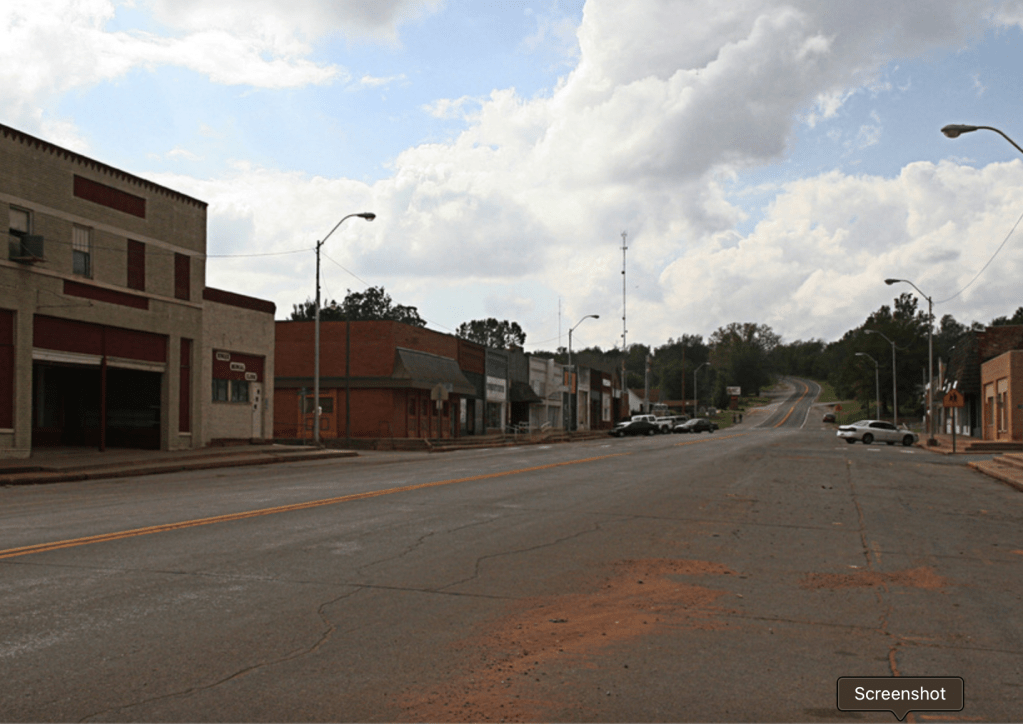
“Carnegie, Unit 2, be advised—a signal-82 subject is trapped in a burning vehicle near Carlin Lawrence Airport, east of Carnegie on Highway 9.”

The unit acknowledged and responded immediately. Meanwhile, I could hear the fire chief coordinating firefighters over the phone, and the ambulance confirmed they were en route.

Since the crash was outside city limits, I switched to the state’s point-to-point frequency to contact the Oklahoma Highway Patrol.

“Carnegie Police Department to Lawton OHP—rush traffic.”

The “rush traffic” designation signaled an urgent, life-or-death call. The OHP dispatcher responded immediately, and I relayed the details. Within seconds, they were alerting highway patrol units. Nearby sheriff’s deputies also began converging on the scene.

From the initial call, the first responders arrived in just over two minutes. The fire department reached the scene in under seven minutes, and the ambulance arrived by minute eight. The Highway Patrol, coming from the county seat 25 miles away, arrived about 30 minutes later.

Tragically, there was a home nearby, less than half a block from where the car crashed. The residents had slept through the commotion, unaware of the horror unfolding so close. Later, we discovered that the vehicle was registered to someone living in that house— their son. Breaking the news was a gut-wrenching moment for all of us.

The medical examiner arrived around 4:00 AM. Once the flames had subsided, investigators could finally assess the scene. The examiner determined that the driver had died on impact; the fire had not been the cause. If the driver had died from the flames, he would have shown signs of struggling for breath, but there were none. After sending the body for a complete analysis and identification through dental records, investigators believed that he’d likely fallen asleep at the wheel on his way home from a party. There was no indication of intoxication.

The smell of a burning body lingers. For days, sometimes weeks, it haunts those who encounter it. It’s one of the harshest experiences for civilians to witness, let alone the emergency responders who encounter it repeatedly. Nothing truly prepares you for a night like that, even for the most seasoned law enforcement and fire personnel.

Killed Walking Along The Highway – How A Killer Is Captured –– By Two Keen Deputies!

Groff Media 2024© Truth Endures IMDbPro

Presented by benandsteve.com By: Benjamin Groff II©

On a dark, silent night in 1980, the highways through Caddo County near the rural communities of Gracemont and Binger, Oklahoma, were deserted. Residents had long settled in their homes, leaving the quiet stretches of U.S. Highway 281 nearly void of movement. It was a time when law enforcement in rural Oklahoma had limited resources and technology, making cases like this all the more challenging to solve.

That night, an Indigenous man, Jasper Williams, had set out on foot from his home, heading south along a dirt road that eventually led to the pavement of Highway 281. It was common for community members to walk from one home to another, no matter the distance, and Jasper was going to a friend’s house. The night was pitch black, with no moonlight or streetlights to guide him, save for the faint outline of the highway stretching before him.

As Jasper walked, visibility was almost nonexistent. The road was shrouded in darkness, with no nearby lights to help him stay clear of the highway’s center. At some point, as he walked around six miles north of Gracemont—almost midway between there and Binger—tragedy struck. Jasper was hit by a passing vehicle, which left him severely injured on the side of the road. By daylight, he was found deceased, having bled to death, with no car in sight and no immediate reports of an accident.

Upon closer inspection, deputies discovered fragments of evidence scattered on Jasper’s clothing and body: broken glass, bits of chrome, a hubcap, and remnants of a car’s signal light and headlight assembly, as well as traces of paint. With these clues, investigators determined the incident might not be an ordinary accident but potentially a case of vehicular homicide.

Deputy Hamilton drove a
Ford Ranchero

The case was assigned as a homicide due to the absence of witnesses, the lack of any report from the driver, and the fact that the vehicle fled the scene. Caddo County Deputies Hamilton and Ware—both of whom have since passed—took on the painstaking task of finding the person responsible. Armed with the physical evidence, they began an exhaustive search of autobody shops across the county and surrounding areas, hoping to find a vehicle with damage matching the debris at the scene.

After several weeks, their search finally paid off. The deputies located a damaged vehicle that matched the evidence they’d collected. The owner was identified and subsequently interviewed, leading to the arrest of a man named Larry Johnson.

During questioning, Johnson admitted he had left a bar in Binger around 2 a.m. on the night Jasper was killed. On his drive home, he confessed to drifting in and out of sleep, initially thinking he had hit an animal, possibly a dog. However, he chose not to stop. Later, after hearing news of the fatal accident, he realized he was likely the driver involved but continued to hope he was wrong.

Binger Main St. There Were
Bars On Both Sides of Street.

Johnson was later tried in Caddo County, where a jury found him guilty of manslaughter. He was sentenced to serve 15 years at Oklahoma’s Granite Reformatory.

Note: Some names, dates, and details have been altered to protect individuals’ privacy.

What to Expect if Authoritarianism Takes Over in 2025

If you wake up one morning and it gets decided that the far right movement has successfully won up and down the ballot the offices that will allow them control of the Senate, House, and Presidency, what happens on January 21st when the President takes office? The other’s take will have taken office on January 3rd, 2025.

If a far-right, authoritarian shift happened, imagine daily life feeling tense and disorienting. Freedom of speech and privacy might tighten, and communities could fracture over polarized beliefs.

Social media would likely be more censored, making it hard to know what’s happening.

For those in creative fields, such as storytelling and journalism, the potential for self-censorship is a real concern. Themes might be subtly altered, as work reflecting dissent or critique could become risky.

Public spaces and services would not be immune to the influence of a far-right, authoritarian shift. Schools, healthcare, and public safety could all be shaped by this new ideology, affecting the way history is taught, access to healthcare, and what behavior is punished or protected.

Law enforcement could face a mix of skepticism and loyalty shifts as priorities change, especially in places that once held them in high esteem.

Ultimately, a far-right, authoritarian shift could lead to a personal life that feels guarded. People might find themselves either staying under the radar or trying to navigate systems to protect themselves and their values.

It’s crucial to consider the potential influence of far-right extremism when we vote. Hopefully, there are still enough clear-minded individuals in America who can help prevent such a shift.

In The Heat Of A Phoenix Stakeout, Two Police Officers Survive The Night By Having Each Other’s Back!

A Story By Benjamin Groff© Groff Media 2024© Truth Endures -“Heat of the Night”

The sweltering summer heat of Phoenix had already claimed its territory, with temperatures still hanging in the triple digits long after the sun had sunk below the horizon. Officers Danny Vega and Clyde “CJ” Johnson sat in their aging, air-conditioner-less police unit parked under a flickering streetlight in a worn-out neighborhood. Their mission was to monitor the run-down house across the street, where they suspected a group of outlaws—wanted for heinous crimes from murder to rape and child abuse—were holed up.

Vega, a seasoned officer in his mid-thirties, wiped the sweat off his brow and leaned back in his seat.

“Man, it feels like we are cooking in here,”

he muttered, glancing at his partner, who sat silently. CJ, a younger officer relatively new to the force, looked straight ahead, his face a mask of concentration.

The silence between them was thick, palpable, as though the heat had baked it into something more solid than discomfort. Danny had been paired with CJ only a few months ago, and though they worked well enough together, there was a distance, an unspoken tension. Vega was a no-nonsense, street-smart officer who had grown up in Phoenix, and he was not sure what to make of the rookie—an out-of-towner who seemed too clean, too by the book for the brutal reality of their work.

CJ shifted in his seat, his uniform sticking to his skin. He glanced sideways at Vega.

“Think they are really in there?”

CJ’s voice was steady, but the doubt lingered.

Vega shrugged, his gaze never leaving the house.

“I would not be surprised. The word is out on them. They have no place else to hide. This neighborhood – it is the perfect cover. No one asks questions here.”

The hours passed slowly, sweat dripping from their faces and soaking through their uniforms. The house across the street remained dark and silent. The only noise came from the occasional shout in the distance or the hum of insects in the oppressive night air.

At some point, Vega pulled a crumpled cigarette from his pocket. He held it momentarily as if debating whether to light it.

“You smoke?”

he asked CJ.

CJ shook his head.

“Quit a couple of years back. My old man, well, it killed him, so I figured I would try to live a bit longer.”

Vega raised an eyebrow.

“Good for you.”

He tossed the cigarette out the window, respecting the sentiment. It was the most they had spoken since starting the stakeout, but Vega was not about to get personal.

Still, the night stretched on, and there was nothing but the two of them and the quiet of the deserted street. CJ finally broke the silence.

“You ever wonder if this is it? Like sitting here, baking alive, waiting for something to happen?”

Vega snorted.

“All the time. However, it is the job. It is what we signed up for.”

CJ leaned forward, resting his forearms on the steering wheel.

“Yeah, but I did not sign up to just sit and watch while guys like those,” he nodded toward the house, “hurt people and get away with it.”

Vega studied him for a moment, something clicking into place.

“You think I do not feel the same?”

CJ did not respond right away, and Vega continued.

“Look, kid, I have been doing this a while. It eats at one, they know. But rushing in and losing one’s head is how one makes mistakes. And mistakes? One will cost them or someone else their life.”

CJ turned to face him, eyes intense.

“So we just wait?”

Vega’s jaw tightened.

“Yeah. We wait. We stay smart. We stay sharp.”

A crackle of the radio interrupted them. The dispatcher’s voice was hushed but urgent.

“Unit 12, suspects confirmed inside the target location. SWAT en route. Hold position.”

Vega nodded to CJ, who picked up the receiver.

“Copy that. Holding position.”

The tension ramped up as the house finally stirred with movement. Shadows flitted past the windows. The outlaws were inside, and the knowledge settled like a weight between the two officers.

The time they crawled—minutes that stretched into an hour—SWAT was not coming fast enough. Vega kept his eyes trained on the house while CJ’s fingers drummed on the wheel, nerves on edge.

Suddenly, a door to the house slammed open. A figure darted out—one of the suspects, carrying a duffel bag. Without thinking, CJ moved, reaching for the door handle.

“Wait!

Vega hissed, grabbing his arm.

“Let him go. SWAT will be here any minute.”

However, CJ’s body was coiled, ready to spring.

“He is getting away.”

Vega tightened his grip.

“No, he is not. He will circle back. Trust me.”

CJ’s jaw clenched, but he held back, fighting the urge to act. It took everything in him to stay in the car. Seconds later, the figure disappeared into the shadows of the alley.

Vega let out a slow breath.

“Good call, staying put.”

CJ glanced at him, eyes wide with disbelief.

“Good call? He has gone!”

“No,”

Vega said, his voice calm.

“He is not.”

A low rumble filled the air, and CJ turned to see SWAT units pulling into the street, lights flashing, breaking the stillness. Vega gave him a tight smile.

“See? Patience.”

The raid unfolded quickly after that, with the SWAT team storming the house and bringing out the suspects in cuffs. CJ and Vega watched from the sidelines, the rookie still coming to grips with how close he had been to jumping the gun.

When it was over, they sat back in their sweat-soaked seats, exhausted but relieved.

CJ broke the silence again.

“You were right back there. About not rushing in.”

Vega chuckled.

“Guess the old-timer knows a thing or two.”

CJ smiled, the first real smile Vega had seen from him.

“Thanks, man. For having my back.”

Vega nodded.

“You would do the same for me.”

As the sun rose, casting long shadows over the empty street, the two men sat in the heat of the Phoenix dawn, no longer just partners but something more—a bond forged in sweat, silence, and survival.

Moreover, in that shared quiet, they realized that they had each other’s back no matter what came next.

NightShift In The South District

A Story By: Benjamin Groff© Groff Media 2024© Truth Endures

The city’s skyline, dotted with the faint glow of distant lights, stretched like a jagged silhouette against the darkening sky. As the clock struck 8 p.m., the streets of the south district began to stir with a life all their own. The south district was notorious, where the line between night and day blurred into a constant shade of grey, and danger was not just a possibility but an expectation.

Officer Jacob Reed adjusted his vest and checked his gear before leaving the station. According to the seasoned officers, it was his first solo night shift in the south district, a baptism by fire. He had heard the stories—the gang disputes, the addicts, the desperate, the damned. But nothing could truly prepare him for the reality of patrolling these mean streets.

The radio crackled to life as he started his patrol car, the familiar voice of the dispatcher cutting through the static. “Unit 27, disturbance reported on 5th and Elm. Suspected domestic violence. Proceed with caution.”

Jacob felt a knot tighten in his stomach. Domestic calls were unpredictable and often turned violent. He sped through the streets, the red and blue lights flashing against the crumbling buildings and graffiti-stained walls.

As he arrived, he could already hear the shouting. A man and a woman, voices thick with anger and pain, spilling out from a run-down apartment. Jacob approached cautiously, hand on his holster. The door was ajar, the argument escalating. He knocked loudly, announcing his presence, which momentarily stunned the couple into silence.

The woman, tears streaking her face, pushed past him and ran into the night, leaving Jacob alone with the man—a towering figure, eyes wild with rage and something darker. “You got no business here, cop,” the man snarled.

Jacob knew better than to engage in a back-and-forth. “Sir, I need you to calm down. Let’s talk this out. No one needs to get hurt tonight.”

But the man was beyond reason. He lunged at Jacob, who barely had time to react, wrestling him to the floor. The training kicked in, and within moments, Jacob had the man subdued and in handcuffs. But the adrenaline still pumped through his veins as he led the man to the patrol car, the woman’s disappearance lingering in his mind. It was just the beginning of the night.

The hours they dragged on, each call blurring into the next—a bar fight that ended with broken bottles and blood, a missing child who had been found in an alley shivering and alone, a burglary in progress that turned into a chase through the maze of backstreets.

The south district had a pulse of its own, a relentless, pounding rhythm that seemed to sync with the beat of Jacob’s heart. He could feel the weight of the night pressing down on him, the darkness closing in from all sides. There were moments when the fear gnawed at him, but he pushed it down, focused on the next call, the next crisis.

Around 3 a.m., as the city reached its most sinister hour, Jacob found himself at a crossroads, literally and figuratively. He got flagged down by a frantic woman claiming someone shot her boyfriend. She led him to a dilapidated building where the faint scent of gunpowder still hung in the air. Inside, the scene was grim—a young man, barely older than Jacob, lay bleeding out on the floor.

Jacob radioed for an ambulance and knelt beside the man, trying to stop the bleeding, but the wounds were too severe. The man’s eyes, filled with pain and fear, met Jacob’s. “I didn’t mean to… I didn’t mean…” he rasped before the light in his eyes faded.

Jacob sat back, his hands stained with blood, his heart heavy. The ambulance arrived too late, and as they wheeled the body away, Jacob felt a hollowness settle in. The streets had claimed another life, and despite his best efforts, he was powerless to stop it.

The night continued its brutal march towards dawn, with Jacob responding to calls that tested his resolve—an overdose that ended with a life saved, a car accident where luck favored the victim, and a confrontation with a knife-wielding suspect that left him shaken but unharmed.

As the first light of dawn broke over the horizon, Jacob finally pulled back into the station, exhausted and drained. The south district was a battleground, and the scars it left were not always visible. He had survived the night, but he knew there would be many more like it, each with its dangers, each demanding more from him than he thought he had to give.

But as he hung up his gear and prepared to go home, he knew he would return the next night. Because despite the fear, despite the darkness, there was a part of him that knew he was needed here, in these mean streets, where the line between good and evil was as blurred as the city skyline at dusk

A Step Out of Time – The Day That Kept Repeating –– A Detective Wakes Up Lost In The Future 

Experiencing A Different Version Of The Same Day Over And Over.

A Story By: Benjamin Groff© Groff Media 2024 © Truth Endures

Detective James “Jimmy” O’Connor had seen it all—or so he thought. O’Connor had been on the force since 1951 when respect meant something and a good cop could solve a case with his wits and a firm handshake. But nothing could have prepared him for the day he woke up in 2024, a world so different from the one he knew. It was as if he had stepped into a parallel universe.

It started like any other morning. Jimmy rolled out of bed in his modest home, built solidly after the war when families were booming and life was good. He yawned, stretched, and reached for his old fedora, a relic from yesteryear that still sat faithfully on the bedpost. The sun streamed through the window, but something in the light felt –– off. A glance at the calendar confirmed it. The year read 2024.

“What in the Sam Hill…”

he muttered, running a hand through his graying hair. Had he been in a coma? Had he somehow slept through sixty years of his life?

Still dazed, he dressed in his usual attire: a crisp white shirt, suspenders, pleated trousers, and polished leather shoes. His well-worn and comforting hat sat snugly atop his head. The mirror reflected a man who had not aged a day since the early 1960s. Time had played its tricks, but Jimmy O’Connor remained the same.

Determined to make sense of things, he grabbed his keys and headed out. His faithful 1954 Chevrolet two-door coupe sat waiting in the driveway as he’d left it. The car was nothing fancy—back in the day, it had been the biggest clunker in the department. The boys at the station used to rib him about it, but Jimmy liked it just fine. It had character, just like him.

The drive to the station was surreal. Buildings towered over the officer, sleek and modern. People walked down the streets glued to strange devices, barely looking up. The air buzzed with a thousand sounds, none of which he recognized. And the cars—by God, the cars! They whizzed by silently as if propelled by magic. Jimmy’s old Chevy chugged along, a relic in a world that had moved on without him, a world that felt utterly alien.

When he pulled up to the station, he first noticed the gawking. A group of younger officers stood in the lot, eyes wide and mouths agape as they saw him and his car. One of them, a kid who couldn’t have been more than twenty-five, stepped forward.

“Is that…a ’54 Chevy?”

He asked, awe dripping from his voice.

Jimmy nodded, confused.

“Sure is. Why?”

“That thing’s a classic! How the hell did you get it in such good shape?”

“Just took care of it, I guess,”

Jimmy replied, still trying to process everything.

“Now, what in blazes is going on around here?”

Inside, the station was a hive of activity, but nothing looked the same. Computers sat on every desk, glowing with images Jimmy didn’t understand. Phones weren’t phones anymore; they were slim, glass rectangles everyone seemed glued to. And the fashion—if you could call it that—was wild—bright colors, strange fabrics, and hair that defied gravity.

Jimmy made his way to the chief’s office, nodding at a few familiar faces, now older men. They all stared back as if they’d seen a ghost. When he finally entered the door, Chief Morales looked up from his desk, his eyes nearly popping out of his head.

“Jimmy?”

Chief Morales croaked, his eyes nearly popping out of his head.

“What the hell?”

His voice was a mix of shock and disbelief, mirroring the sentiments of everyone who had laid eyes on the seemingly unchanged detective.

“Chief, I don’t know what’s happening, but I woke up this morning, and the whole world turned upside down. I need answers.”

Morales gestured for him to sit, still in shock.

“You mean to tell me you remember nothing past…when? The 1960s?”

“Last thing I remember, Kennedy was in office, and I was working a case with the old squad,”

Jimmy replied, sinking into the chair.

“Now it’s like I stepped into one of those science fiction movies.”

The chief rubbed his temples.

“Jimmy, it’s 2024. A lot has changed. I don’t know how or why, but you look like you haven’t aged a day.”

“Tell me about it,”

Jimmy grumbled.

“And what’s with the kids these days? I was on a case involving students before this, whatever it was. Are they all this –––different?”

The chief sighed.

“Different doesn’t begin to cover it. Kids these days are a whole new breed. They have connected to the world in ways we couldn’t have imagined in the 60s. Social media, smartphones, instant communication –– They’re more outspoken and more aware but more distracted. It’s a different world, Jimmy.”

Just then, a young officer burst into the room, his face excitedly lit.

“Chief, we’ve got a situation at the high school. Some fight—might be gang-related.”

Jimmy’s ears perked up. A case involving students? An assignment with students –– was familiar territory.

“I’ll go,”

he said, standing up.

“Jimmy, wait—”

Morales started, but Jimmy was already out the door.

On the Case

The high school was a chaotic scene. Teens were scattered everywhere, shouting and recording the commotion on their phones. Jimmy strode in, commanding attention despite the odd looks he received. He spotted a group of kids at the center of it all, some dressed in clothes he could barely comprehend, others with tattoos and piercings that would have been unthinkable in his time.

“Alright, break it up!”

Jimmy barked, his voice cutting through the noise like a knife. The kids looked at him, confused, but the tone was unmistakable. They started to disperse, grumbling under their breath.

A young girl with brightly colored hair and a nose ring approached him.

“Who are you supposed to be? You look like you just walked out of a history book.”

“Detective O’Connor,”

he replied gruffly.

“Now, what’s going on here?”

She shrugged, unimpressed.

“Just a fight. It happens all the time. We caught it on video if you want to see it.”

Jimmy blinked.

“Caught it on video? You mean you filmed it instead of stopping it?”

The girl rolled her eyes.

“Yeah, it’s what we do. Upload it to TikTok, get some likes.”

“Tik…what?”

Jimmy shook his head, feeling like he was slipping further into the twilight zone.

“Never mind,”

she said, dismissing him.

“You wouldn’t get it.”

As he tried to piece together what she meant, a senior officer approached, relieved to see him.

“Detective O’Connor, right? I’ve heard stories about you. The chief said you might be ––– helping out today?

“Helping out, yeah,”

Jimmy replied, still feeling out of place.

“What’s the story here?”

The officer explained the situation—two students from rival groups had fought over something posted online. Jimmy listened, but the details were baffling. Back in his day, fights happened face-to-face, not through the internet.

“Sounds like the same old story, just with a new twist,”

Jimmy said.

“I’ll talk to them.”

He approached the two students, who were now sulking on the sidelines. They looked up at him with a mix of defiance and confusion.

“Alright, you two,”

Jimmy started,

“what’s this all about?”

They exchanged glances before one finally spoke up.

“This boy posted some crap about my sister on Instagram. I wasn’t going to let that slide.”

“Instagram?”

Jimmy repeated, trying to keep up.

“Back in my day, you settled things like men. You talked it out—or, if it came to blows, you did it without an audience.”

The other boy scoffed.

“What do you know, old man? Times have changed.”

“Maybe so,”

Jimmy admitted,

“but respect doesn’t. You don’t solve problems by hiding behind a screen. If you’ve got an issue, you deal with it face-to-face, like men. And you sure don’t let it become a circus for everyone else to watch.”

The boys looked at him, considering his words. It was a message from another time, but something about it resonated. Eventually, they both nodded, muttering apologies under their breath.

As the situation defused, Jimmy felt a strange sense of accomplishment. The methods might have changed, but the core principles still needed to be. Respect, honesty, and responsibility still mattered, even in this brave new world.

The World Keeps Spinning

Back at the station, the day wound down, and Jimmy found himself in the parking lot, staring at his old Chevy. It was the one constant in this sea of change, a reminder of where he came from and who he was. But as he climbed in and turned the key, he couldn’t help but wonder how long he could hold onto the past in a world that seemed determined to move forward without him.

As the engine roared to life, Jimmy tipped his hat, adjusted his rearview mirror, and drove into the setting sun. The road ahead was uncertain, but he’d face it the only way he knew how—one mile at a time, just like he always had.

He’d find his place in this strange new world somewhere along the way. But for now, he was content to be a man out of time, doing his best to keep up with a world that had left him behind.

A Step Out of Time The Next Morning

Detective James “Jimmy” O’Connor had seen it all—or so he thought. O’Connor had been on the force since 1951 when respect meant something and a good cop could solve a case with his wits and a firm handshake. But nothing could have prepared him for the day he woke up in 2024, a world so different from the one he knew. It was as if he had stepped into a parallel universe, a world where the very fabric of society got rewoven.

It started like any other morning. Jimmy rolled out of bed in his modest home, built solidly after the war when families were booming and life was good. He yawned, stretched, and reached for his old fedora, a relic from yesteryear that still sat faithfully on the bedpost. The sun streamed through the window, but something in the light felt –– off. A glance at the calendar confirmed it. The year read 2024.

“What in the Sam Hill…it seems like I’ve been here before.”

he muttered, his voice trembling, running a hand through his graying hair. Had he been in a coma? Had he somehow slept through sixty years of his life?

Still dazed, he dressed in his usual attire: a crisp white shirt, suspenders, pleated trousers, and polished leather shoes. His well-worn and comforting hat sat snugly atop his head. The mirror reflected a man who had not aged a day since the early 1960s. Time had played its tricks, but Jimmy O’Connor remained the same.

Determined to make sense of things, he grabbed his keys and headed out. His faithful 1954 Chevrolet two-door coupe sat waiting in the driveway as he’d left it. The car was nothing fancy—back in the day, it had been the biggest clunker in the department. The boys at the station used to rib him about it, but Jimmy liked it just fine. It had character, just like him.

The drive to the station was surreal. Buildings towered over the officer, sleek and modern. People walked down the streets glued to strange devices, barely looking up. The air buzzed with a thousand sounds, none of which he recognized. And the cars—by God, the cars! They whizzed by silently as if propelled by magic. Jimmy’s old Chevy chugged along, a relic in a world that had moved on without him, a world that felt utterly alien.

When he pulled up to the station, he first noticed the gawking. A group of younger officers stood in the lot, eyes wide and mouths agape as they saw him and his car. One of them, a kid who couldn’t have been more than twenty-five, stepped forward.

“Is that…a ’54 Chevy?”

the young officer asked, his voice filled with awe and disbelief as if he had just seen a relic from a forgotten era.

Jimmy nodded, confused.

“Sure is. Why?

“That thing’s a classic! How the hell did you get it in such good shape?”

“Just took care of it, I guess,”

Jimmy replied, thinking he’d answered the same question a day before, he was still trying to process everything.

“Now, what in blazes is going on around here?”

Inside, the station was a hive of activity, but nothing looked the same. Computers sat on every desk, glowing with images Jimmy didn’t understand. He’d been here before. This is the same thing he had done yesterday. Phones weren’t phones anymore; they were slim, glass rectangles everyone seemed glued to. The fashion starkly contrasted Jimmy’s traditional attire—bright colors, strange fabrics, and hair that defied gravity. The world had become a place where technology and individual expression reigned supreme, a far cry from the simpler times Jimmy was used to. I am repeating yesterday in the future, Jimmy thought to himself.

Jimmy went to the chief’s office, nodding at a few familiar faces, now older men. They all stared back as if they’d seen a ghost, they hadn’t seen Jimmy looking that young in fifty years. When he finally entered the door, Chief Morales looked up from his desk, his eyes nearly popping out of his head.

“Jimmy?”

Chief Morales croaked, his eyes nearly popping out of his head. The shock and disbelief in his voice mirrored the sentiments of everyone who had laid eyes on the seemingly unchanged detective.

“Chief, I don’t know what’s happening, but I woke up this morning, and the whole world turned upside down. I need answers,”

he declared, his voice unwavering despite the chaos around him.

“We did this yesterday, and now it is happening again!

Morales gestured for him to sit, still in shock.

“Like I told you yesterday, when we went through this the last thing I remember, Kennedy was in office, and I was working a case with the old squad,” Jimmy replied, sinking into the chair. “Now it’s like I stepped into one of those science fiction movies.

The chief rubbed his temples.

“Jimmy, it’s 2024. A lot has changed. I don’t know how or why, but you look like you haven’t aged a day.”

“Tell me about it,”

Jimmy grumbled.

“And what’s with the kids these days? I was on a case involving students before this, whatever it was. Are they all this –––different?”

The chief sighed.

“Different doesn’t begin to cover it. Kids these days are a whole new breed. They have connected to the world in ways we couldn’t have imagined in the 60s. Social media, smartphones, instant communication –– They’re more outspoken and more aware but more distracted. It’s a different world, Jimmy.”

Just then, a young officer burst into the room, his face excitedly lit.

“Chief, we’ve got a situation at the high school. Some fight—might be gang-related.”

Jimmy’s ears perked up. A case involving students? An assignment with students –– was familiar territory.

“I’ll go,”

he said, standing up.

“Jimmy, wait—

” Morales started, but Jimmy was already out the door.

On the Case

The high school was a chaotic scene. Teens were scattered everywhere, shouting and recording the commotion on their phones. Jimmy strode in, commanding attention despite the odd looks he received. He spotted a group of kids at the center of it all, some dressed in clothes he could barely comprehend, others with tattoos and piercings that would have been unthinkable in his time.

“Alright, break it up!”

Jimmy barked, his voice cutting through the noise like a knife. The kids looked at him, confused, but the tone was unmistakable. They started to disperse, grumbling under their breath.

A young girl with brightly colored hair and a nose ring approached him.

“Who are you supposed to be? You look like you just walked out of a history book.”

“Detective O’Connor,”

he replied gruffly.

“Now, what’s going on here?”

She shrugged, unimpressed.

“Just a fight. It happens all the time. We caught it on video if you want to see it.”

Jimmy blinked.

“Caught it on video? You mean you filmed it instead of stopping it?”

The girl rolled her eyes.

“Yeah, it’s what we do. Upload it to TikTok, get some likes.”

“Tik…what?”

Jimmy shook his head, feeling like he was slipping further into the twilight zone.

“Never mind,”

she said, dismissing him.

“You wouldn’t get it.”

As he tried to piece together what she meant, a senior officer approached, relieved to see him.

“Detective O’Connor, right? I’ve heard stories about you. The chief said you might be ––– helping out today?”

“Helping out, yeah,”

Jimmy replied, still feeling out of place.

“What’s the story here?”

The officer explained the situation—two students from rival groups had fought over something posted online. Jimmy listened, but the details were baffling. Back in his day, fights happened face-to-face, not through the internet.

“Sounds like the same old story, just with a new twist,”

Jimmy said.

“I’ll talk to them.”

He approached the two students, who were now sulking on the sidelines. They looked up at him with a mix of defiance and confusion.

“Alright, you two,”

Jimmy started,

“what’s this all about?”

They exchanged glances before one finally spoke up.

“This boy posted some crap about my sister on Instagram. I wasn’t going to let that slide.”

“Instagram?”

Jimmy repeated, trying to keep up.

“Back in my day, you settled things like men. You talked it out—or, if it came to blows, you did it without an audience.”

The other boy scoffed.

“What do you know, old man? Times have changed.”

“Maybe so,”

Jimmy admitted,

“but respect doesn’t. You don’t solve problems by hiding behind a screen. If you’ve got an issue, you deal with it face-to-face, like men. And you sure don’t let it become a circus for everyone else to watch.”

The boys looked at him, considering his words. It was a message from another time, but something about it resonated. Eventually, they both nodded, muttering apologies under their breath.

As the situation defused, Jimmy felt a strange sense of accomplishment. The methods might have changed, but the core principles still needed to be. Respect, honesty, and responsibility still mattered, even in this brave new world.

The World Keeps Spinning

Back at the station, the day wound down, and Jimmy found himself in the parking lot, staring at his old Chevy. It was the one constant in this sea of change, a reminder of where he came from and who he was. But as he climbed in and turned the key, he couldn’t help but wonder how long he could hold onto the past in a world that seemed determined to move forward without him.

As the engine roared to life, Jimmy tipped his hat, adjusted his rearview mirror, and drove into the setting sun. The road ahead was uncertain, but he’d face it the only way he knew how—one mile at a time, just like he always had.

He’d find his place in this strange new world somewhere along the way. But for now, he was content to be a man out of time, doing his best to keep up with a world that had left him behind.

A Step Out of Time The Morning After

Detective James “Jimmy” O’Connor had seen it all—or so he thought. O’Connor had been on the force since 1951 when respect meant something and a good cop could solve a case with his wits and a firm handshake. But nothing could have prepared him for the day he woke up in 2024, a world so different from the one he knew. It was as if he had stepped into a parallel universe, a world where the very fabric of society got rewoven.

It started like any other morning. Jimmy rolled out of bed in his modest home, built solidly after the war when families were booming and life was good. He yawned, stretched, and reached for his old fedora, a relic from yesteryear that still sat faithfully on the bedpost. The sun streamed through the window, but something in the light felt –– off. A glance at the calendar confirmed it. The year read 2024.

“What in the Sam Hill…” he muttered, his voice trembling, running a hand through his graying hair. Had he been in a coma? Had he somehow slept through sixty years of his life?

Still dazed, he dressed in his usual attire: a crisp white shirt, suspenders, pleated trousers, and polished leather shoes. His well-worn and comforting hat sat snugly atop his head. The mirror reflected a man who had not aged a day since the early 1960s. Time had played its tricks, but Jimmy O’Connor remained the same.

Determined to make sense of things, he grabbed his keys and headed out. His faithful 1954 Chevrolet two-door coupe sat waiting in the driveway as he’d left it. The car was nothing fancy—back in the day, it had been the biggest clunker in the department. The boys at the station used to rib him about it, but Jimmy liked it just fine. It had character, just like him.

The drive to the station was surreal. Buildings towered over the officer, sleek and modern. People walked down the streets glued to strange devices, barely looking up. The air buzzed with a thousand sounds, none of which he recognized. And the cars—by God, the cars! They whizzed by silently as if propelled by magic. Jimmy’s old Chevy chugged along, a relic in a world that had moved on without him, a world that felt utterly alien.

When he pulled up to the station, he first noticed the gawking. A group of younger officers stood in the lot, eyes wide and mouths agape as they saw him and his car. One of them, a kid who couldn’t have been more than twenty-five, stepped forward.

“Is that…a ’54 Chevy?” the young officer asked, his voice filled with awe and disbelief as if he had just seen a relic from a forgotten era.

Jimmy nodded, confused. “Sure is. Why?”

“That thing’s a classic! How the hell did you get it in such good shape?”

“Just took care of it, I guess,” Jimmy replied, still trying to process everything. “Now, what in blazes is going on around here? This has got to stop!”

Inside, the station was a hive of activity, but nothing looked the same. Computers sat on every desk, glowing with images Jimmy didn’t understand. Phones weren’t phones anymore; they were slim, glass rectangles everyone seemed glued to. The fashion starkly contrasted Jimmy’s traditional attire—bright colors, strange fabrics, and hair that defied gravity. The world had become a place where technology and individual expression reigned supreme, a far cry from the simpler times Jimmy was used to.

Jimmy went to the chief’s office, nodding at a few familiar faces, now older men. They all stared back as if they’d seen a ghost. When he finally entered the door, Chief Morales looked up from his desk, his eyes nearly popping out of his head.

“Jimmy?” Chief Morales croaked, his eyes nearly popping out of his head. The shock and disbelief in his voice mirrored the sentiments of everyone who had laid eyes on the seemingly unchanged detective.

“Chief, I don’t know what’s happening, but I woke up this morning, and the whole world turned upside down. I need answers,” he declared, his voice unwavering despite the chaos around him.

Morales gestured for him to sit, still in shock. “You mean to tell me you remember nothing past…when? The 1960s?”

“Last thing I remember, Kennedy was in office, and I was working a case with the old squad,” Jimmy replied, sinking into the chair. “Now it’s like I stepped into one of those science fiction movies.”

The chief rubbed his temples. “Jimmy, it’s 2024. A lot has changed. I don’t know how or why, but you look like you haven’t aged a day.”

“Tell me about it,” Jimmy grumbled. “And what’s with the kids these days? I was on a case involving students before this, whatever it was. Are they all this –––different?”

The Chief sighed. “Different doesn’t begin to cover it. Kids these days are a whole new breed. They have connected to the world in ways we couldn’t have imagined in the 60s. Social media, smartphones, instant communication –– They’re more outspoken and more aware but more distracted. It’s a different world, Jimmy.”

The Chief then confided to Jimmy, only to tell people two years ago that I came here in 1972. Nixon was still in office. I have no idea what happened, but like you, this day of mine has repeated; until you came, I thought I was going looney. Now I know it is something else.

There is a glitch in the world’s timeline, and it is realigning where everyone is supposed to be. A clerk in fingerprints came here from a 1910 timeline; she has to have had that, or she has nasty tastes in clothing styles. It is all that I can conclude. I wonder if this is a broad-spread matter, and besides the two of us, who would we bring the matter to the attention of? They would lock us up in the looney house if we went to higher-ups and tried to explain this issue.

For now, we should try to blend in and manage it between us and be there for others we suspect of being travelers like us. Detective O’Conner, for the first time, realized that he was no longer in his time and had somehow been moved through generations and life to end up in a year he would probably not have lived to see. He and the Chief had an opportunity to share their values with a generation that sorely needed guidance, and the Chief felt a deep sense of responsibility to do so.

Reminiscences

A True Story By: Benjamin Groff© Groff Media 2024© Truth Endures

When the youngest officer on duty is the only resource available, the weight of responsibility rests heavily on his shoulders, underscoring the significance of his role.

Our town’s police force was small, with just twelve officers. Eight were assigned to the streets, patrolling, responding to calls, controlling traffic, and maintaining visibility. The remaining four worked in the office, answering phones, dispatching calls over the radio, and managing the jail’s inmates. The officers rotated between desk and patrol duties, ensuring they stayed sharp and well-versed in all aspects of the job.

Most shifts saw only one officer on patrol and one in the office. This lean staffing was the backdrop when I first joined the police department and met Chief Marion Toehay Jr., known to me simply as Junior or Chief.

Junior and I formed a friendship that spanned over fifty years. Together, we witnessed the stark realities of life and death, often arriving too late to save those in peril. The helplessness we felt in those moments was crushing, made worse by the accusing stares of grieving families who saw us as their last hope.

One such event took place at a State Park east of the City. We arrived in a secluded area and noticed a boat stalled in the middle of the lake. The people onboard were waving and shouting, but their words got lost in the distance. As we waved back, trying to assess the situation, it became clear the boat was sinking.

We shouted for them to stay with the boat, realizing quickly that we couldn’t reach them from where we stood. We jumped back into the car and raced toward the dam, sirens blaring and lights flashing. Junior was on the radio, desperately calling for the Lake Patrol or anyone with a boat to respond. But the only way to reach the sinking boat was to drive fifteen miles around the lake on rural roads.

When we arrived, only the boat’s nose remained visible, bobbing on the water. A man clung to it, the sole survivor. He told us that a father and his two children had drowned, trying to swim to shore instead of staying with the boat.

At that time, the Oklahoma Lake Patrol was often assigned to different lakes, a reality dictated by tight state budgets. Law enforcement presence on lakes was inconsistent, as it may still be today in some areas. The Lake Patrol recovered the bodies of the father and his children that night and the following day.

Junior and I found ourselves witnessing several drownings, often by tragic coincidence, whenever we were near the lake or river. It seemed almost inevitable.

The department was also where I encountered my first homicide—a brutal murder-suicide that has stayed with me. A couple going through a divorce ended their marriage in violence. The husband had hidden in their home, and when his wife returned to gather belongings, he slipped up behind her and shot her in the back of the head. She crumpled to the floor, unaware of his presence or intent.

He then went to the bedroom, entered the ensuite, and used a shotgun loaded with double-ought buckshot to end his own life. The blast obliterated his face, leaving a gruesome scene with skull fragments embedded in the ceiling and blood splattered across the walls. Fingerprints confirmed his identity, but everyone in town knew who he was.

That was my first assignment at 18, in a department stretched thin. A pow-wow was happening in town, and every officer was working overtime. The City’s ambulance had to transport a critically ill prisoner to a hospital 50 miles away, and someone had to accompany them. It fell to me. Despite having just finished a 12-hour shift, I boarded the ambulance at 7:00 AM, the roads shrouded in fog as we responded to Code 3. The nurse was upset that I’d handcuffed the combative prisoner to the stretcher, and the driver got lost on the way. It was chaotic, but in many ways, it was one of the best times of my life.