The Brothers of Friday the 13th: A Country Music Legacy

By Benjamin GroffMedia© | benandsteve.com | 2025 Truth Endures©

2–4 minutes

The Brothers of Friday the 13th

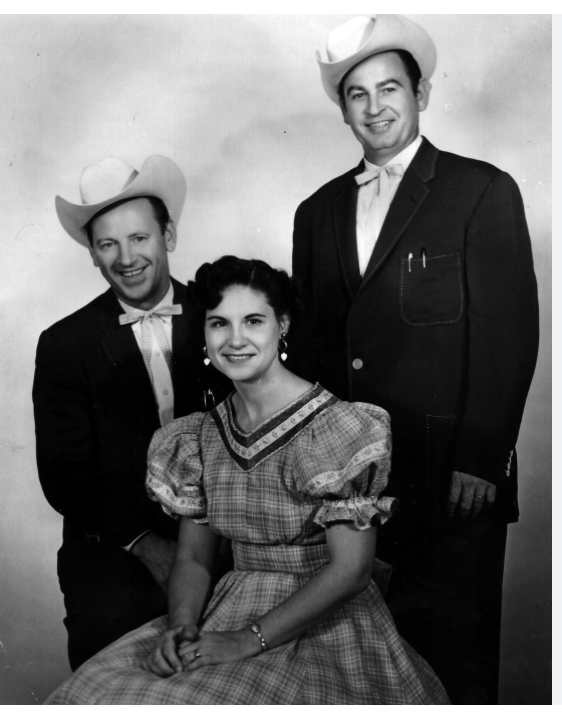
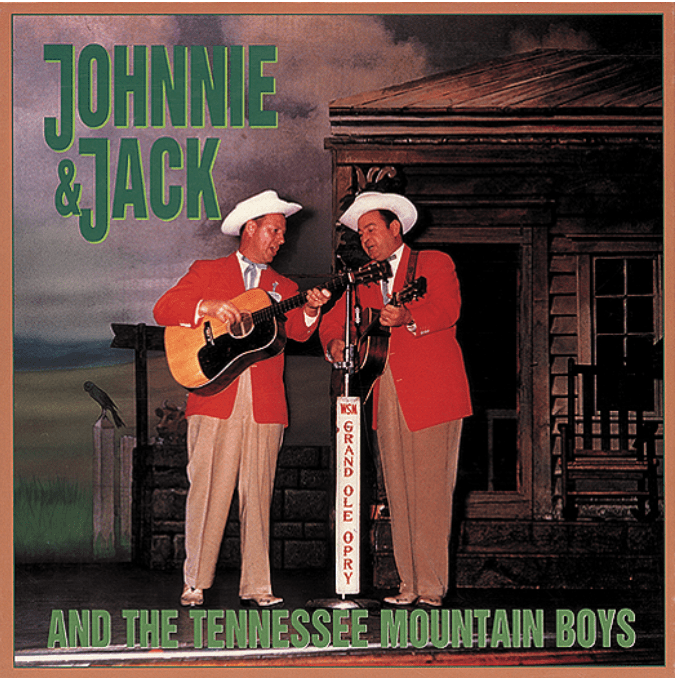
They say Friday the 13th brings bad luck. But, for Jack Anglin and Johnnie Wright, it brought something entirely different. It brought love, brotherhood, and the country music that carves its way into the soul.

Jack and Johnnie were destined to sing. Their childhoods were steeped in gospel, church choirs, and the rhythm of the land. They met as they met most things in life—through music. And they married as they did everything else—on a Friday the 13th. Jack wed Louise, and Johnnie took her sister, Muriel, as his bride. This made them brothers-in-law, but their voices had already made them brothers in spirit, their bond unbreakable.

They began touring as Johnnie & Jack, their harmonies tight as barbed wire and twice as sharp. They sang of sorrow and salvation, of trains leaving and lovers staying. And behind them, always, stood the sisters.

Johnnie’s wife, Muriel, had a soft voice. It could’ve gone unnoticed if not for a quiet evening at home. She hummed along to a song Johnnie was working on. He stopped strumming, looked at her, and knew.

“You need a stage name,” 

He said. 

“Something people will remember.”

He thought a moment, then grinned. 

“Kitty Wells.”

She laughed at the name, but it stuck. Kitty Wells soon became the Queen of Country Music. Her voice turned the tide with It Wasn’t God Who Made Honky Tonk Angels. The song gave women in the country their place in the spotlight.

In a later interview, Johnny recalled that the name “Kitty Wells” came from an old spiritual recording. He used to play it during his early days working at a radio station. The name stuck with him. When it came time to give Muriel a stage name, it felt like the perfect fit. It was familiar, timeless, and filled with meaning.

Life moved fast. Fame came. Tours blurred together. But Jack and Johnnie were always together—on stage, on the road, in life.

Then came March 1963.

Patsy Cline, Cowboy Copas, and Hawkshaw Hawkins—all killed in a plane crash returning after a charity concert. The country music world was shattered. A memorial service was planned, and Jack insisted on going.

“Gotta pay respects,” 

He said. 

“We’ve all come up together.”

But he never made it.

On the fateful morning of March 8, 1963, Jack Anglin was en route to the service. Tragically, he lost control of his car and crashed. His life was taken in an instant. The news reached the church before Johnnie’s arrival. They say the moment he heard, Johnnie was overcome with grief, falling to his knees. The man who had been his constant companion on every stage, in every storm, was no more.

It was a heartbreak no harmony can fix.

Johnnie went on as best he could. Kitty sang. The spotlight stayed, but something had shifted. There was a silence beside him now where Jack’s voice used to be.

Still, the music lived on.

Two men, two sisters, two voices joined by fate, and a wedding date no one forgets. Friday the 13th had given them everything—and, somehow, had taken it all back.

Yet, their songs endure, a testament to their enduring legacy. In every old record and radio play, their voices still resonate. Jack and Johnnie were brothers in music and marriage. Their harmonies echo through the years. It is a timeless tribute to their bond and art.

The Last Post: A Security Nightmare at Ridgewood

By Benjamin GroffMedia© | benandsteve.com | 2025 Truth Endures©

3–4 minutes

“The Last Post”

The night shift at Ridgewood Corporate Plaza was supposed to be quiet. Ten floors of empty offices, humming servers, and fluorescent lights dimmed for the janitors’ comfort. The tenants had gone home. The day’s buzz was replaced by the solemn hum of vending machines. There was also the distant thrum of traffic.

That’s when the trouble started.

At exactly 11:42 PM, a woman from the 8th floor called 911. Her voice trembled as she whispered into the phone from behind a copier machine:

“It’s the security guard. He’s –– drunk. He has a gun, and he’s playing with it.”

“Officer intoxicated w/ a gun!”

Officer Marquez and his partner were already in the area and responded within minutes. They pulled up to the building’s glassy facade. They saw the guard—an older man with a thick mustache and sun-lathered skin. His uniform hung loose on his wiry frame. He stood under the lobby lights like he was in a stage play.

He spun a revolver on his index finger like an old-time cowboy. His other hand clutched a bottle of whiskey that sloshed wildly with each twirl.

Pow! 

He shouted, aiming at an invisible outlaw in the corner.

“You see that, Tex? That’s the ol’ Ridgewood Quickdraw!”

Inside, a cluster of overnight IT workers and janitors peeked nervously from the elevator bank. Some held phones. Others gripped cleaning poles like makeshift weapons.

“Sir,” 

Officer Marquez called out, stepping carefully from the squad car. 

“Let’s talk. Put the gun down, okay?”

The guard, whose name tag read Terry,” stopped spinning the weapon. He looked over as if noticing the world around him.

“Well, I’ll be,” 

He slurred. 

“Company’s here.” 

He saluted with the barrel of the gun, then promptly dropped it. The weapon clattered to the floor. It spun in a circle like a coin. Finally, it came to a rest near a vending machine.

Marquez’s hand was already on his holster, but he didn’t draw. His partner approached slowly from the other side.

“Mr. Terry,” 

She said, calm but firm. 

“You’re scaring people. Can we take a seat over here and talk things through?”

Terry blinked at her, then at the people behind the glass, the ones he was supposed to protect.

“They don’t trust me,” 

He muttered. 

“Not anymore. It used to be a man with a badge, and a sidearm meant something.” 

He took another swig from the bottle, winced, and gave a soft, hollow chuckle. 

“Guess all that’s old-fashioned now.”

Marquez knelt beside the dropped gun and slid it back with his foot.

“It’s not about trust,” 

He said. 

“It’s about safety. Yours and theirs.”

Terry looked down at his trembling hands. The whiskey sloshed in the bottle, no longer steady. Finally, he let it drop, too, and it landed with a dull thunk.

He sat heavily on the bench by the entrance, slumping over like a man who hadn’t rested in decades. The officers approached, cuffed him gently, and led him out into the cool night.

As the police cruiser pulled away, the building behind him exhaled a collective sigh of relief.

Inside, someone from IT muttered, 

“I never want to see another cowboy movie again.”

But for years afterward, whenever a door creaked open late at night, or the lights flickered for no reason, the cleaning crew would joke:

“That’s just Terry, doing one last patrol.”

And everyone would pause. They were half amused and half uneasy. They remembered the night the security guard became the danger he was supposed to guard against.

Detective Clara Vale: Unraveling Pine Hollow’s Secrets

By Benjamin GroffMedia© | benandsteve.com | 2025 Truth Endures©

2–4 minutes

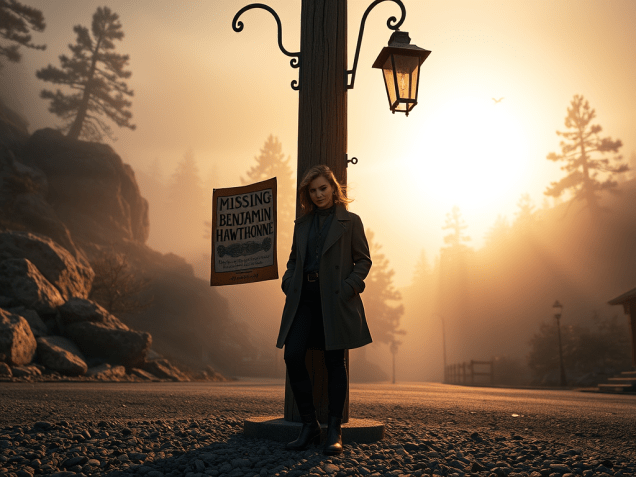
The morning sun had just begun to burn away the last wisps of fog. The fog clung to Pine Hollow’s deserted streets. At this moment, Detective Clara Vale stepped off the county bus. The little town—nestled between whispering pines and rocky hills—was where everyone knew your grandmother’s maiden name. In this town, no secret stayed buried for long. But something about the silent hush felt different today, as if the forest was holding its breath.

Clara’s boots crunched on the gravel. She walked to the crooked lamppost at the town square. There, a single bulletin board displayed the hand-painted flyer she’d come to see:

“Missing: Benjamin Hawthorne. Last seen at the Old Mill.”

Benjamin, a local schoolteacher, had vanished two nights before. He left only a trail of broken glass in his classroom. A smear of muddy footprints led into the woods. Clara studied the flyer’s edges—fresh tears around the corners told her someone had already pulled it down once. She taped it back in place and set off.

Her first stop was the Old Mill, its rotting wood groaning in the breeze. Inside, moonlight slanted through broken windows, illuminating desks overturned, and chalk dust still hovering in the air. Clara knelt by a desk. She noted the glass shards and a single, battered notebook. It lay open to a page filled with frantic mathematical equations. This was Benjamin’s lifework on the community’s crumbling dam.

Clara closed the book gently and pocketed it. The dam’s collapse would flood half the town; had Benjamin discovered a flaw and been threatened into silence?

As dusk fell, Clara meticulously combed through the Hawthorne farm. Benjamin’s aging parents stuttered about late-night visitors. Strange trucks idled on the gravel road, and their headlights flickered like watchful eyes. Their hands trembled as they described a low rumble, like a machine in the woods. Clara’s pulse quickened at the implication of clandestine logging or worse. She assured them she’d find Benjamin, her determination unwavering, then slipped out the back door.

By midnight, Clara was deep in the forest, tracking tire tracks that plunged toward the dam’s service tunnel. She shone her flashlight on fresh scuff marks along the tunnel walls. Heart pounding, she crept ahead until she heard a muffled voice. 

“Detective… over here.” 

Benjamin emerged from the shadows, bruised but alive, clutching the dam’s blueprints. 

“They wanted me to falsify the safety report,” 

He whispered. 

“When I refused, they locked me up.” 

Clara’s eyes narrowed as headlights flared above ground—masked men were coming back. Benjamin was by her side. She retraced her steps. She used the winding tunnel to slip past the guard trucks waiting at the entrance.

When they burst into the open, Clara raised her badge like a beacon. 

“State Police—step away from the dam!” 

Her command sent the conspirators scattering into the trees. Moments later, sirens rang in the distance—backup arrived earlier to secure the scene. In the stillness that followed, Clara handed Benjamin his blueprints. 

“Now the town knows the truth,” 

She said. As the first light of dawn filtered through the pines, Pine Hollow exhaled, its secrets finally laid to rest. 

The collective sigh of relief was relatable as Detective Vale boarded the morning bus, ready for whatever mystery came next.

Life with Otis: The Rascal Dog’s Adventures

By Benjamin GroffMedia© | benandsteve.com | 2025 Truth Endures©

1–2 minutes

Otis the Rascal

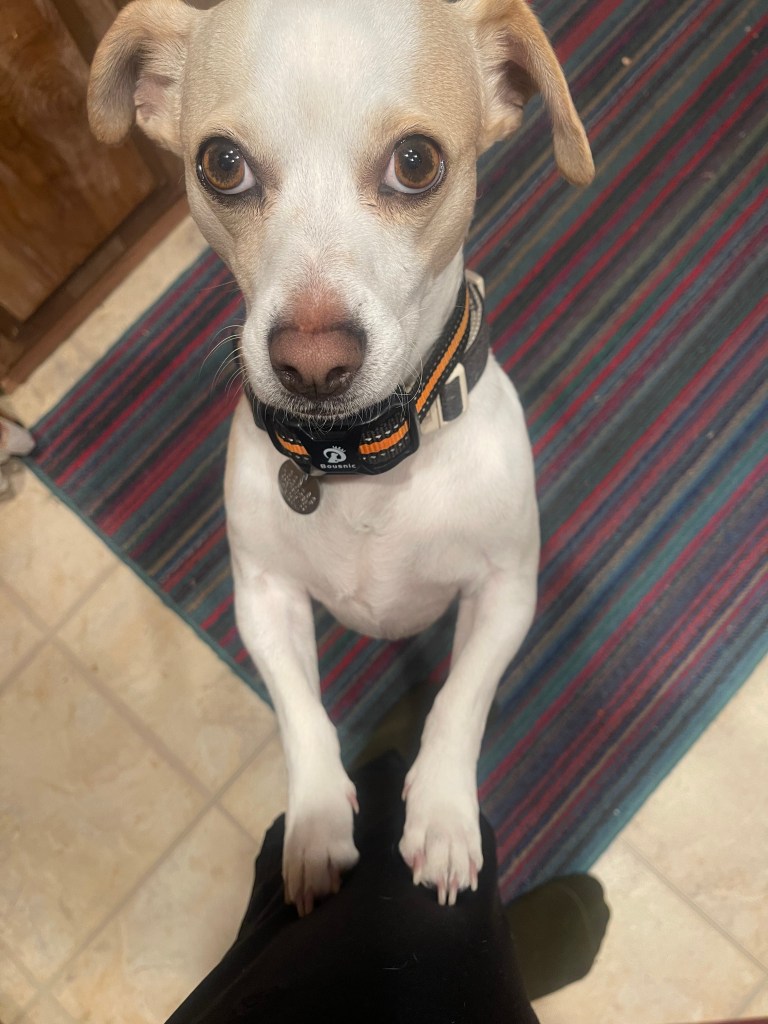
Our dog Otis is a handful—and that’s putting it mildly. He’s been part of our lives for over eight months now, and frankly, he has us wrapped around his paw. That’s how I see it, anyway.

Each morning, I dig into news articles. Meanwhile, Otis curls up on my lap. He looks like the innocent angel he most definitely is not. Don’t be fooled by the calm exterior—he’s always on high alert. He knows the sounds of the mail truck, the delivery van, and anything that dare to approach our house. With every rumble outside, he barks thunderously. He is desperate to storm the front lines. If only that pesky screened door weren’t in his way.

A simple knock on the door transforms Otis into a spinning, barking whirlwind. Imagine a Tasmanian devil with a bark louder than his bite (but don’t tell him that). He’s so protective that we often must hold him back when company arrives. Sometimes, he gets so worked up. He earns a timeout in his kennel. There, he huffs in protest like a disgruntled dragon.

Sunday was a special day—Otis got to join us for a visit with friends, one of his all-time favorite activities. He made nice with their dog, at least at first. But soon, his sly, bullish side took over. He snatched the ball and refused to return it, parading it like a trophy, asserting his love for socializing.

After a long day of play, Otis stayed awake the entire ride home, refusing to miss a moment. He joined us for some late-night TV, eyes heavy but stubbornly open. When bedtime finally arrived, he collapsed into a deep sleep filled with dreams. He was chasing tennis balls. He also was reliving his glorious day of dominance and friendship. I like to think he also dreamed of the day he outsmarted the mail truck.

How Mother’s Day Became a Global Celebration

By Benjamin GroffMedia© | benandsteve.com | 2025 Truth Endures©

2–3 minutes

The Forgotten Fight Behind Mother’s Day

Information for this report provided through ChatGPT

Mother’s Day Celebration Groff Media 2025©

Every year, in nearly every corner of the world, people buy flowers. They write cards and call their mothers to say “thank you.” But few know that Mother’s Day wasn’t always a celebration of brunches and bouquets. It began with a fight. It wasn’t with fists or fire, but with letters and marches. It involved the relentless will of one determined daughter.

The story starts in the United States in the late 1800s. It begins just after a brutal civil war tore the country apart. Ann Reeves Jarvis lived in a small town in West Virginia. She was a mother who believed that motherhood was more than just raising children. It was about strengthening communities. She organized “Mother’s Work Clubs” to teach women how to care for their families and treat illness. During the war, she crossed enemy lines to care for wounded soldiers. Being a mother meant healing, even in a time of hate for her.

When Ann died in 1905, her daughter Anna Jarvis was devastated. But in her grief, she found purpose. Anna believed that mothers—their love, their sacrifices, their invisible labor—deserved to be honored privately and publicly. She envisioned a day when everyone would pause to recognize the power of a mother’s influence.

Mother’s Day Begins Groff Media 2025©

In 1908, Anna held the first official Mother’s Day in her mother’s church. She sent 500 white carnations—her mother’s favorite flower—for the guests. But that was just the beginning. Anna wrote thousands of letters to politicians and ministers, urging them to create a holiday for mothers. She battled for six years until 1914 when the U.S. president made it official: the second Sunday of May would be known as Mother’s Day.

The idea spread across borders and oceans, and countries worldwide adopted it—each adapting it in their way. In Thailand, it aligns with the queen’s birthday. In Ethiopia, it’s celebrated with a family feast. But at its heart, it remains the same: a day to honor the women who shape our lives.

Mothers Day Groff Media 2025©

Ironically, Anna later grew furious at how commercialized Mother’s Day had become—filled with store-bought gifts rather than heartfelt thanks. But she couldn’t even stop its global march. The world had embraced the idea, and the spirit of that first small ceremony had taken root.

The next time you give your mother a flower or a call, remember. This day began not with marketing. It also did not start with tradition. It started with one woman’s vow to never let the world forget what mothers truly do.

Lost in the Forest: A Night of Mystery

By Benjamin GroffMedia© | benandsteve.com | 2025 Truth Endures©

2–3 minutes

The Night Hunt

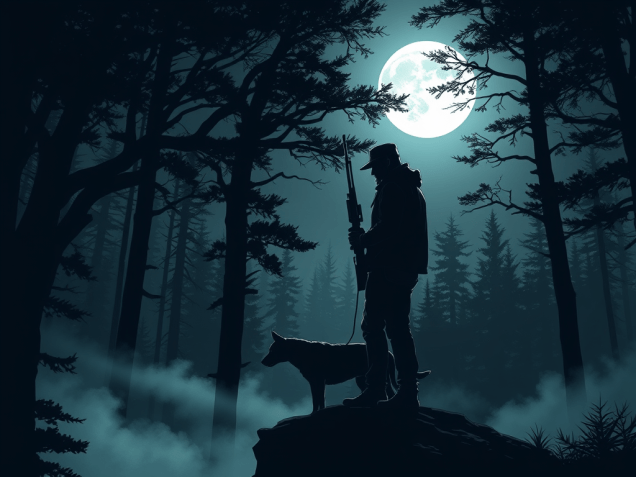
It was a night like any other in the deep woods outside Willow Creek. Forty years ago—give or take—a man and his dog set off for one of their usual late-night hunts. The man, grizzled and silent, kissed his wife on the forehead and muttered something about a long run. She barely looked up from her sewing. She was accustomed to his absences. He needed to run beneath the moonlight with only a rifle and his hound for company. She didn’t ask where he went. He never said.

The forest swallowed them quickly. Trees leaned in like eavesdropping strangers, and the undergrowth whispered beneath their boots and paws. The dog was a wiry black mutt with a white streak down its spine. It caught the scent of something just beyond the bend. It bolted. The man, cursing but grinning, gave chase.

They ran deeper and deeper into the overgrown trail for what felt like miles until the land suddenly disappeared.

The dog reached the edge of the cliff first. It barked, wild and electric, then dove headlong into the dark.

The man reached the edge just in time to see nothing at all. No bark. No rustle. There is just silence and blackness below. Without hesitation—without fear—he followed.

And that’s where the story ends, at least in the world we know.

The man awoke beside his dog in another place—somewhere between dream and fog. The stars above were fixed in unfamiliar constellations, and the air hummed with a silence too perfect to be real. He stood, brushed off dust that wasn’t dust, and called out.

No echo returned.

For years—or was it minutes?—he and the dog wandered this pale mirror of the forest they once knew. Sometimes, they saw flickers of their old lives. His wife was crying at the hearth. His brother was digging through the old footlocker for the will. But they couldn’t speak, they couldn’t reach, they only watched.

The man no longer aged. The dog’s coat remained pristine. Together, they waited—for what, neither capable of saying.

Then, one night, they heard something rustling through the brush ahead. They walked a trail that hadn’t been there before. The dog tensed. The man raised his hand. A shape moved—slowly, purposefully.

It was another hunter. Rifle slung over his shoulder. Dog at his side. Eyes vacant. He looked familiar.

The man called out. The hunter looked through him, then walked past.

The dog growled, uneasy.

And from the darkness behind them, a second pair of footsteps began to follow. They had found the lost forest of hunters who had died without a place to go.

The Memory Game: A Humorous Tale of Aging

By Benjamin GroffMedia© | benandsteve.com | 2025 Truth Endures©

2–4 minutes

“The Memory Game”

Earl and Edna had been married for fifty-two years. In those five decades, they had developed a comfortable rhythm, like an old song they both knew by heart. Lately, the lyrics were getting harder to remember.

It all started on a Tuesday morning when Earl stood in the living room, scratching his head.

“Edna,”

He called,

“have you seen my glasses?”

“They’re on your head, Earl,”

Edna replied from the kitchen, her voice tinged with amusement.

Earl patted his scalp and chuckled.

“Well, I’ll be. Guess I’ve been wearing ‘em this whole time.”

But later that day, Edna forgot to turn off the iron. This left a suspicious scorch mark on Earl’s good slacks. That evening, Earl nearly brushed his teeth with muscle ointment. The next morning, Edna scheduled a doctor’s appointment—for both of them.

At Dr. Preston’s office, they sat side by side, holding hands, looking like two nervous schoolchildren awaiting their report cards.

“Doctor,”

Edna began,

“we’re both starting to forget things. Little things, mostly, but…”

Dr. Preston smiled kindly.

“That’s perfectly normal as we get older. One strategy that helps is to write things down. Keep a notepad handy, leave little notes where you’ll see them. It makes a world of difference.”

Earl snorted.

“Write things down? My memory’s just fine. It’s Edna’s that needs the fixing.”

Dr. Preston gave them both a knowing look.

“Just try it. You’ll thank me.”

When they got home, Edna felt a nap coming on and settled into her recliner with a cozy blanket. Earl switched on the TV, flipping channels, landing on a baseball game he wasn’t really watching.

After a while, Edna sat up.

“Earl, dear, would you go to the kitchen and get me a dish of ice cream?”

Earl muted the TV.

“Sure thing, sweetheart.”

“And write it down, so you don’t forget.”

Earl waved her off.

“Nonsense, Edna. It’s a dish of ice cream. I’ve got it.”

“But I’d like strawberries on it too,”

She added.

“And whipped cream.”

Earl tapped his temple confidently.

“Ice cream, strawberries, whipped cream. No problem.”

Edna gave him a skeptical look.

“You sure you don’t want to write it down?”

Earl shook his head and marched into the kitchen.

For the next fifteen minutes, Edna listened as pots clanged. Cabinet doors creaked. The microwave beeped, and something—was that the blender?—whirred loudly.

Finally, Earl returned, triumphant, a plate in his hands.

“Here you go!”

He declared, setting the plate on her lap.

Edna stared at the plate. Bacon. Eggs. A sprig of parsley.

She looked up at him with an exasperated sigh.

“Earl, where’s the toast I asked for?”

Earl blinked, confused.

“Toast?”

Edna shook her head, laughing despite herself.

“Looks like we’re both making notes from now on.”

Earl sat down beside her, rubbing his chin thoughtfully.

“Maybe we should just order takeout.”

And together, they chuckled, holding hands, as the baseball game played softly in the background.

After a moment, Earl squinted at the screen.

“Edna… do you know who’s winning? I can’t tell.”

Edna grinned slyly.

“That’s because, Earl… you’re on first base.”

Earl frowned.

“I’m on first base?”

“No, no,”

Edna said, shaking her head with mock seriousness,

“Who’s on first.”

Earl’s eyes widened.

“Who’s on first?”

Edna corrected, her eyes twinkling.

“No, Who’s on third,”

They both burst out laughing. They cackled until they were wiping tears from their eyes. The baseball game was long forgotten. Their memories were momentarily lost, but their joy was perfectly intact.

Challenges and Resilience in the LGBTQI+ Community Today –– Beyond PRIDE With A New Pope!

By Benjamin GroffMedia© | benandsteve.com | 2025 Truth Endures©

5–7 minutes

Navigating the Crossroads: Challenges and Resilience in the LGBTQI+ Community

In recent years, the LGBTQI+ community has observed both significant strides toward equality and alarming setbacks that threaten these advancements. As societal acceptance grows in some areas, legislative and social challenges persist, underscoring the need for continued advocacy and awareness.

Mental Health: A Silent Crisis

Mental health disparities continue to be a critical issue within the LGBTQI+ community. According to The Trevor Project’s 2024 National Survey, 39% of LGBTQ+ youth seriously considered attempting suicide in the past year. The rates rise to 46% among transgender and nonbinary youth. Factors contributing to this crisis include discrimination, lack of access to affirming care, and societal stigma. (1)

Intersex youth face even more pronounced challenges. A study highlighted troubling findings about intersex respondents. It showed that 77% had someone try to change their sexuality or gender identity. Over 10% had undergone conversion therapy. (2)

Healthcare Access: Barriers and Disparities

Photo by Celia Daniels on Pexels.com

Access to quality healthcare is a fundamental right, yet many LGBTQI+ individuals face significant obstacles. The Center for American Progress reported that in 2024, 45% of transgender adults postponed medical care due to affordability issues. Additionally, 60% of intersex adults faced the same issue. Additionally, 37% of transgender adults avoided seeking care out of fear of discrimination. (3)

The political landscape further complicates access to necessary care. A survey by FOLX Health revealed that 90% of trans and nonbinary Americans feared the 2024 presidential election. They were concerned it would negatively impact their healthcare access. Notably, 20% had already lost access due to anti-LGBTQ policies. (4)

Legislative Challenges: A Double-Edged Sword

Legislation plays a pivotal role in shaping the experiences of LGBTQI+ individuals. In 2024, nearly 500 anti-LGBTQ+ bills were proposed across the United States, with 46 enacted into law. These laws have had profound effects, with over 70% of LGBTQ+ adults reporting negative impacts on their mental health.

Conversely, there have been positive legislative developments. Thirty-seven pro-equality bills were signed into law, focusing on areas like parenting rights and health and safety. (5)

Community Initiatives: Resilience and Support

Amid these challenges, community-led initiatives have emerged as beacons of hope. In Connecticut, drag performances educate on health and suicide prevention. They create inclusive spaces for dialogue and support. (6)

The introduction of the Pride in Mental Health Act aims to bolster mental health resources for LGBTQ+ youth. It recognizes the unique challenges they face. The act highlights the importance of affirming care. (7)

Conclusion: A Call to Action

Photo by Gotta Be Worth It on Pexels.com

The LGBTQI+ community continues to navigate a complex landscape of progress and adversity. While strides have been made in visibility and rights, significant work remains. We need to guarantee fair access to healthcare. Protection under the law is also necessary. Furthermore, societal acceptance must be achieved.

Allies, policymakers, and community members must advocate for inclusive policies. They should support mental health initiatives. It’s essential to foster environments where LGBTQI+ individuals can thrive without fear of discrimination or harm.


Recent Developments Impacting the LGBTQI+ Community

Posted by Movie and Television Show Writer and Actor Del Shores on Facebook –

LGBTQ+ Rights Under Attack in 2025 — And the Fight Continues! But we, as a community, stand firm and resilient.

I posted it many years ago before we could legally marry someone we loved. Before United States v. Windsor struck down DOMA in 2013, and before Obergefell v. Hodges in 2015, we finally gave our love full legal recognition nationwide.

And it became one of the most shared things I’ve ever posted.

WHERE WE ARE NOW, 2025!

 2025 has seen an alarming surge in anti-LGBTQ+ bills, with over 500 introduced in the U.S. alone.

 Over 774 are specifically anti-trans, and 700 of those are still active.

 Texas leads the charge with 127 of these hate-fueled bills.

Many of these bills are pushed by the GOP, wrapped in the Bible, and weaponized with false righteousness. It’s the same tactic — just a different year with more hateful rhetoric than ever. 

When I wrote “Southern Baptist Sissies” in 2000. I dreamed it would one day feel like a period piece — a snapshot of a fight we’d won. And yet, in 2025, my character Mark’s words still guide me as I fight for and with my LGBTQ+ family and our beautiful allies:

“Sometimes I close my eyes, and I create a perfect world. A world of acceptance and understanding and love. A world where there’s hope. Even if the hope is just whispered, I hear it.”

To the trans community: we see you, love you, and stand with you in unwavering solidarity.

To the so-called Christians using the Bible to harm: you’re using it wrong.

Romans 13:10 — “Love does not harm its neighbor; therefore, love is the fulfillment of the law.”

Let’s love louder, let’s love more, and let’s love without boundaries.

Let’s keep whispering — and shouting — that hope.

“Dear friends, let us love one another, for love comes from God. Everyone who loves has been born of God and knows God. Whoever does not love does not know God because. God is love.” 1 John 4: 7-8.

#ProtectTransKids #LGBTQHistory#SouthernBaptistSissies#HopeIsARevolution#TransRightsAreHumanRights#FaithNotFear 


A NEW POPE

The election of Pope Leo XIV—formerly Cardinal Robert Francis Prevost—marks a historic moment. He becomes the first American to lead the Catholic Church. His choice follows the death of Pope Francis. Pope Francis was noted for his progressive stances on social issues. These included LGBTQ+ inclusion .(1)

Implications for the LGBTQI Community

Pope Leo XIV’s past statements suggest a more conservative approach to LGBTQ+ issues compared to his predecessor. In 2012, he expressed concern about popular culture. He believed it was fostering “sympathy for beliefs and practices that are at odds with the Gospel.” He specifically cited the “homosexual lifestyle” and “alternative families comprised of same-sex partners and their adopted children.” He has opposed the inclusion of teachings on gender in schools. He describes the promotion of gender ideology as confusing. (2)

Pope Leo XIV has not publicly addressed LGBTQ+ issues since his election. His earlier positions show a potential shift from the more inclusive tone set by Pope Francis. Pope Francis had endorsed civil unions for same-sex couples. He also allowed blessings for same-sex unions. This signaled a more welcoming approach. (3)

Awaiting Future Developments

As Pope Leo XIV begins his papacy, the global Catholic community will be observing his leadership closely. This includes LGBTQ+ members. They will watch how it will shape the Church’s stance on inclusion and diversity. His actions in the coming months will offer clearer insights. His statements will reveal the direction he intends to take on these critical issues.

Sources – References:

Favicon
Favicon
Favicon
Favicon
Favicon

 Senator Ed Markey.  CT Insider HRC+1HRC+1 Axios+2Center for American Progress+2KUNC+2HRC+6Teen Vogue+6The Trevor Project+6.  Center for American Progress. euronewsThem+1Center for American Progress+1. The Trevor Project+4American Art Therapy Association+4Brittany Bate+4.

Secrets of The Back Side Fishing Spot

By Benjamin GroffMedia© | benandsteve.com | 2025 Truth Endures©

2–3 minutes

The Back Side
Fishing The Back Side

It was a humid summer evening. The air clung to your skin. The world glowed gold in the last light of day. My friend Bub and I stood at the edge of the old creek, just downstream from the dam. The concrete wall loomed behind us. Its spillway trickled like a broken faucet, feeding the deep pool below. The water turned slow and murky there. This was our favorite spot, a secret place we called “The Backside.”

Bub handed me a bank pole he’d rigged himself. It was a sturdy sapling shaved smooth. A heavy line was tied at the end. A fat hook was baited with a chunk of cut shad. We drove it into the muddy bank. We angled it over the swirling water. We tied it off with an extra rope to a thick root jutting out of the ground. Across the creek, Bub set another pole, whistling as he worked, his boots sinking deep into the silt.

We settled onto the bank, backs against the grass, watching the poles bend and sway with the current. The sounds of the night crept in: frogs croaking, cicadas humming, the occasional splash of a carp rolling. Somewhere distant, a train rumbled across the trestle.

“Think they’ll bite tonight?”

Bub asked, tossing a pebble into the water.

“They always do back here,”

I said, grinning.

“Big ones like the deep pool. They come up from the river, get trapped behind the dam.”

We waited in comfortable silence. Just as the moon began to rise, one of the poles gave a sudden, violent lurch.

“There!”

Bub shouted, scrambling to his feet.

I grabbed the pole, feeling the weight and fight of something strong on the other end. The bank pole bent double, creaking against the strain. Bub rushed over to steady the base. I worked the line by hand. I pulled and gave slack as the fish surged beneath the surface. The water boiled and flashed, silver scales catching the moonlight.

“It’s a big one!”

I gasped.

Together we fought it, step by muddy step. At last, Bub plunged his hand into the water. He grabbed the fish just behind the gills, hauling it onto the bank. It was a channel cat, fat and whiskered, easily ten pounds. We stood over it, grinning like fools, watching it thrash in the mud.

“Told you they always bite back here,”

I said.

Bub laughed and clapped me on the back.

“Best pole fishing spot in the county.”

We reset the pole. We rinsed our hands in the creek. Then, we sat back down under the stars. The dam hummed softly behind us. We didn’t talk much after that. We didn’t need to. The night surrounded us. The water flowed gently. The old dam spoke for us. They weaved our friendship into the quiet rhythm of the creek, one fish at a time.

Inside the Attic: Capturing a Dangerous Fugitive

By Benjamin GroffMedia© | benandsteve.com | 2025 Truth Endures©

2–3 minutes

Early in my law enforcement career, I rode with some of the best in the business. These included David “Booty” Ware, Bruce Poolaw, Junior Toehay, Don Gabbard, and Buttin Williams. All were Native American except for Gabbard, a character in his own right.


By the time I was 19, I had experienced more than most people do in a lifetime. I was just getting started.


One day, nearly every law enforcement officer in the county joined a search. They were looking for a man named Virgil Bass. He had a felony warrant and was considered dangerous. Virgil had vowed he wouldn’t go to jail without a fight. If anyone tried to arrest him, he’d either kill them or die trying.


We started early that morning, sweeping from one end of the county to another. By evening, we reached Virgil’s parents’ house on the county’s west side. We surrounded the place, each of us watching for any sign of an escape.


Bruce and I approached the door and stepped inside. His parents claimed they hadn’t seen him, but they kept glancing up at the ceiling.


Bruce, all 6’6″ of him, said firmly,

“We need to check everywhere.”


We made a show of slamming doors, stomping around, acting like we’d searched every corner. Then we got to the attic.


Bruce looked at me.

“You’re the only one who’ll fit up there. I’ll give you a boost.”


Before I knew it, my head was poking through the attic opening. It was pitch black. I called down,

“I need a flashlight!”


I was half-expecting a two-by-four to come crashing down on me—or worse. If Virgil was up there, he saw me silhouetted by the light from below.


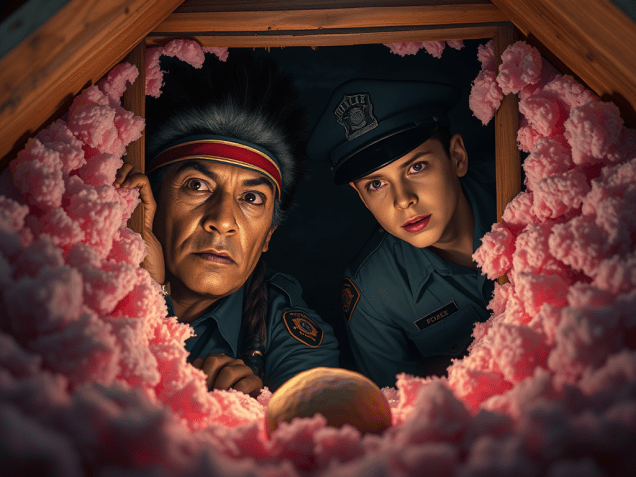
Bruce handed me his flashlight. I pulled myself up until my arms were entirely inside the attic and swept the beam around. The attic was filled with fluffy pink insulation. One spot was different. A trail led from the opening to a lumpy insulation patch. About five feet away, the insulation looked disturbed.


I looked down at Bruce.

“I need a poker iron.”


I heard Bruce ask the family if they had one, and he handed it to me within seconds. I jabbed the iron into the lump, then thought better of it and started whacking the hell out of it.


Suddenly, there was yelling and cursing, and Virgil burst out of the insulation.


“Stop it! Stop it! I give up!”

he hollered.


I ordered him to follow me down, and once he was out, we cuffed him. We took him outside to Booty’s patrol car. Booty looked at the lump rising over Virgil’s eye. He asked,

“How’d that happen?”


I shrugged.

“He fell on a poker iron.”


The whole crew burst out laughing. After all, it’s easy to fall on a poker iron. This is especially true when hiding in an attic after threatening to die before going to jail.

The Day a House Fell: A Family Tale of Humor and Chaos

By Benjamin GroffMedia© | benandsteve.com | 2025 Truth Endures©

3–4 minutes

The Day a House Fell on My Mother’s Head

When we first moved to the farm, my father bartered for just about everything. It was the 1960s. He had a wife and six kids. My young uncle, who felt more like an older brother, was also part of the family. He had plenty of mouths to feed. There were also many projects to tackle.

One of his deals involved tearing down an old house on a neighbor’s property in exchange for the lumber. It wasn’t a one-man job—my three older brothers, my uncle, and even my mother had to pitch in. My two sisters and I were assigned a very important task: holding down the tailgate of the pickup truck.

We were told in no uncertain terms to stay put. We knew exactly what that meant. From our perch on the tailgate, we watched as our dad and brothers clambered across the roof, tossing down boards. My mother hustled to pick them up, stacking them onto a flatbed trailer and into another old truck.

I still don’t know exactly why my mother did what she did next. Maybe she wanted to check on us; maybe she wanted to warn us again. But as boards kept flying off the house, she walked around to where we sat—into what my dad had firmly declared “the danger zone”—and yelled:

“You three stay away from here, or you’ll get hit in the head with a board with a rusty nail!”

And no sooner had the words left her mouth than—WHACK! A board sailed down and smacked her right on the head. Of course, it had a rusty nail. Of course, she screamed. And of course, all three of us screamed right along with her.

Almost instantly, my dad’s head popped up over the roof’s edge.

“What the hell are y’all screaming about?”

We all shouted at once:

“Mama’s bleeding! A board hit Mama in the head! There’s a nail in her head!”

My dad scrambled down the ladder, muttering adult words under his breath.

“Shit. Goddammit, Marge, why the hell were you standing where we told the kids not to go?”

My mother, ever unflappable, shot back:

“You threw that board at me on purpose!”

He glared at her.

“Dammit, I didn’t even know where you were. Kids, get off the tailgate and sit on that log. I gotta take your mother into town.”

They drove off toward Doc’s office, leaving my brothers to finish tearing down the house and loading up the wood. The sun set. The old trucks were filled. My brothers piled us into the pickup. They drove the mile and a half back home.

When we pulled into the yard, our parents were just arriving. My dad helped my mom out of the truck and told us she was fine—just a scratch, he said. Doc had cleaned her up, given her a tetanus shot, and sent her home with something “to relax her.”

Naturally, we kids had to see the wound for ourselves. It didn’t look like much—just a small cut hidden in her hair, surrounded by a bruise. Not exactly a house falling on someone’s head. But it had bled plenty, enough to scare us all.

That night, we sat around eating a casserole that had baked while we were gone, everything back to normal. Or so it seemed.

Later, as my mom recounted what happened, the story took on a life of its own. Over the years, at family gatherings and on phone calls, we’d hear her say,

“Well, you know, the day that house fell on my head…”

In the background, my dad’s familiar sigh would follow:

“Dammit, Marge. It was just a board. And it wouldn’t have hit you if you’d stayed where I told the kids not to go.”

But she never wavered. Even now, at 95, if you ask her, she’ll tell you straight:

“A house fell on my head.”

Lessons from Bill: Radio Adventures and Childhood Memories

By Benjamin GroffMedia© | benandsteve.com | 2025 Truth Endures©

4–7 minutes

I have many stories about growing up. Sometimes, I wonder how I fit everything I did into the years leading to where I am now. As a young teen, I always felt my family was boring. We never seemed to do anything special. But when I share our family stories today, people tell me they spark their forgotten memories. They bring back moments they thought were lost.


One such story involves our neighbors, Bill and his wife, Marie. They rescued every stray dog they found and invited each one into their growing pack.


I first met Bill while riding my bike home from a friend’s house. He had stopped his car to get the mail from his old roadside mailbox. I couldn’t help but stop and say hello. I asked him where he lived. He pointed across the road toward a distant antenna. It stood tall above the trees. “Right under that antenna,” he said with a smile. I had watched that antenna for years. It was massive. It perched on rotating poles to turn the shortwave and CB radio antennas in any direction he wanted. Seeing my interest, Bill invited me to visit the next day—but told me to check with my parents first.


I didn’t know it then, but Bill had been instrumental in bringing electricity to our area through a rural cooperative. He’d helped light up countless homes across several counties. My parents permitted me to visit but warned me not to overstay my welcome.


The next day after school, I finished my chores and pedaled toward Bill and Marie’s. As I left the paved road and turned onto the dirt path, barking erupted. A pack of dogs rushed to greet me, but they wagged their tails instead of attacking and licked my hands. It was like I was the first human they’d seen in years. They crowded around me, gently herding me up the porch steps. I reached for the doorbell, but before pressing it, the dogs nudged me ahead, practically carrying me into the house.


“Hello? Anyone home?”

I called out.


Marie’s sweet voice answered from the kitchen,

“I bet you’re JD’s boy. Bill told me you’d be stopping by. He’ll be out in a minute—say hello to the family.”


She gestured toward the dogs as she named them individually, expecting me to remember each name. There had to be twenty dogs in that living room alone. As I looked around, another thought puzzled me: how did she know I was my dad’s son? I hadn’t even introduced myself yet.
A moment later, Bill entered, smoking his pipe, followed by four more dogs circling his legs. He shook my hand warmly and led me into his den, where I would spend hours learning from him. Bill introduced me to the world of shortwave radio and explained how to get a license. He even lent me a Morse code training record to help me prepare for the exam.


But radios were just the beginning. Bill showed me his greenhouse, where he taught me how starting seedlings early gives a head start in spring. One day, he took me to another outbuilding—a woodworking shop filled with the scent of freshly cut lumber. There, he showed me how he crafted furniture and home goods, staining and treating each piece with care.


When I was almost sixteen, Bill revealed yet another surprise: a mechanic’s shop hidden behind his house. Inside sat an old Datsun pickup.

“I haven’t driven it in years,”

Bill admitted,

“but it’s still here.”


I could feel the gears turning in my head. I was about to get my driver’s license, and that old truck looked like the perfect first car. Before I said anything, I knew I had to check with my dad.
When I asked, my dad said,

“We can look at it.”

To me, that was a yes.


The next day, I returned to Bill’s and asked if he might be interested in selling the truck.
Bill chuckled.

“I never thought about selling it—but if the price is right, maybe.”


“I’ll need a car when I get my license,”

I told him.

“And my dad said we could take a look.”


“Bring your dad down,”

Bill grinned,

“and we’ll talk.”


Dad and I stood in Bill’s mechanic shop a week later, looking over the Datsun. Bill puffed his pipe thoughtfully.

“It ran fine when I parked it. Might go ten miles, might go another hundred thousand. Hard to say with an old truck.”

He smiled at Dad.

“You know how it is with cars.”


Then Bill turned to me.

“I’ll talk price with the boy. You’re too good a horse trader for me to haggle with.”


My dad laughed.

“You know what you’ve got in your savings,”

he told me.

“Don’t spend more than that—and don’t forget tax, title, and insurance.”


At that moment, I felt the weight of adulthood settling on my shoulders. I bartered with Bill for ten minutes, careful with every dollar. Later, I discovered an interesting fact about Bill and my dad. They had been late-night radio buddies for years. They even arranged for a state newspaper courier to toss them papers at a secret highway drop each morning.


I kept visiting Bill and Marie for years. As I grew older, I began to understand Marie’s quiet burdens. They were things I wish I’d been capable of helping with then. I only understood them now, knowing what I know. Bill and his beloved dogs carried on their calm, legendary life on the edge of town.


No one else ever visited them—not like I did. And sometimes, I wonder if that had been the plan all along.


Bill and Marie passed away in the 1990s. Per their wishes, their property was sold to help the local community center. Their home, once full of vibrant life with voices, radio signals, and loyal dogs, became part of something greater. It was destined to be that way.

Every time I turn on a radio, I still feel them with me. When I smell fresh-cut wood or see an old pickup truck, I also think of them. Their stories live on—in mine.

Surviving Apocalypses: Earl’s Hilarious Journey

By Benjamin GroffMedia© | benandsteve.com | 2025 Truth Endures©

2–3 minutes

“How Earl Survived the End of the World (Three Times In One Week)”

It all started on Monday when the news said the world was ending. Again.

“Experts warn: AI, killer bees, and rising sea levels converge by Wednesday,” read the headline on Earl’s phone. He sighed, sipped his lukewarm coffee (the microwave broke last week—tragic), and Googled “How to survive multiple apocalypses.”

Step one: hoard supplies.

Earl ran to the grocery store, but unfortunately, so did the entire neighborhood. All that was left on the shelves were 37 cans of creamed spinach and one gluten-free hot dog bun. He grabbed both. Earl wasn’t proud.

Step two: fortify your home.

This was trickier. Earl’s DIY skills peaked at assembling an IKEA lamp in 2014 (and even that leans a little). He taped bubble wrap over the windows. He stacked his furniture into a makeshift barricade. He hung a sign on the door that read: “Beware of Dog (or raccoon—honestly not sure anymore).”

By Tuesday, the threat had shifted. AI wasn’t trying to destroy us; it just wanted us to finish a customer satisfaction survey. Earl politely declined. The bees were delayed due to weather conditions. The sea levels were rising slowly. Earl figured he had time to finish his Netflix backlog.

Then came Wednesday.

That’s when the real disaster struck:

🚨 The Wi-Fi went out. 🚨

Earl sat there, blinking into the void, unsure how to continue. How does one live without memes? How do you know what to be outraged about if you can’t check Twitter?

Earl tried reading a book. (Printed words? On paper? Barbaric.) He tried talking to my houseplants. Phil the fern judged him silently.

Finally, Earl ventured outside — mask on, hand sanitizer holstered like a gunslinger — only to discover ––

The neighborhood kids had set up a barter system.

“Two rolls of toilet paper for a bottle of sriracha!” 

One kid yelled.

“Half a pack of Oreo’s for an iPhone charger!”

Another bargained.

Earl traded three cans of creamed spinach for a Wi-Fi hotspot code—the best deal of his life.

By Thursday, the headlines read: World Fine (For Now).” 

Earl sighed in relief –– until he heard a knock at the door.

A drone hovered outside, lowering a package. Earl opened it to find:

A “survival for beginners” guidebook

An emergency avocado (slightly bruised)

A note that read:

“Stay tuned. Apocalypse 2.0 beta release coming Friday.”

Earl looked up at the sky, took a deep breath, and whispered:

“I’m going to need more creamed spinach.”

Kidnap Attempt Foiled: A Cop’s Gripping Night Shift

By Benjamin GroffMedia© | benandsteve.com | 2025 Truth Endures©

4–6 minutes

It had been a strange, unsettling night.

Officer Tim Roff
Tim Roff

The mid-shift clocked out at 0200 hours. Officer Tim Roff was left alone on the graveyard shift. He was the only officer covering the North and South Districts. Every radio call felt heavier. Every silence stretched longer. He hoped the mutual aid agreement with neighboring jurisdictions would hold if things spiraled beyond his reach. But for now, it was just him, his determination a steady flame in the darkness.

Alone.

Roff approached every call with a practiced urgency. He arrived fast, assessed fast, and moved on fast. Each moment was calculated to cover as much ground as one man can.

At 0330 hours, the dispatch’s voice crackled over the radio, sharp and urgent:

“Tim, we’ve got a report. The male suspect drove an older blue Chevy Monte Carlo, heading to 230 North Madison Street. Planning to kidnap a child from the grandmother watching them tonight.”

A chill settled in Roff’s chest. Alone or not, this couldn’t wait. Dispatch gave him a phone number for more intel.

Patrol Division Night Duty
On Patrol

He stopped briefly at the north division substation and called the number. The story spilled out: Robert Sams, 38 years old, white male, born February 20th, was not alone—he was bringing others. He didn’t have custody of the children, but he was coming to take them anyway. He was planning to run, wanting to force the mother’s hand.

Roff parked his cruiser near the house and waited. Time slowed. Every passing headlight made his pulse jump. Then—there it was. Like clockwork, the Monte Carlo crept down NW 23rd and turned onto Madison. Roff pulled in behind. He hit the emergency lights and followed as the car swung into the driveway. The tension in the air was palpable.

Before Roff even opened his door, the driver bolted for the house.

“Damn it,”

Roff muttered, keying the mic.

“Need backup.”

But the nearest unit was a reserve officer, miles away, filling in from another city—not tonight.

Roff watched the front door swallow the man and grimaced.

“What is this?” he muttered bitterly. “National Take-the-Night-Off Day for cops—and no one told me.”

When backup finally arrived, Roff pointed to the car’s occupants.

“Watch them—don’t let anyone leave.”

Then he approached the front door and knocked.

A woman opened it, anxious, shifting on her feet.

“He ran out the back,”

she said.

Roff’s instincts flared. He circled to the rear, scanning the rain-soaked earth outside the back door. Not a single footprint. Untouched. She’d lied.

He jogged back around. His heart pounded harder now—not from the chase. It was from the relentless math of being outnumbered and alone. The fear was a heavy burden on his shoulders.

He called to the backup officer, loud enough for the woman to hear:

“If anyone comes out the back—shoot!”

He knew it wouldn’t happen, but fear was leverage.

Facing the woman again, he leveled his voice.

“I know you’re lying. If you don’t come clean, I’ll take you in for harboring a fugitive.”

It wasn’t airtight, but it was enough.

Her shoulders sagged.

“He’s in the garage,”

she admitted.

“Under the table.”

She led him through the house. At the garage door, Roff drew his sidearm. Alone again, with no cover. His stomach clenched.

“Come out,”

he commanded,

“or I’ll shoot.”

A shaky voice from under the table:

“Don’t shoot! I’m coming out!”

Roff cuffed Sam and walked him to the cruiser. He identified the other passengers and radioed dispatch for warrant checks. One by one, the answers came: felony warrant. Felony warrant. Felony warrant. Every single one.

Four prisoners. One patrol car. A 25-mile drive to the county jail. And no one else to cover his city.

Roff radioed neighboring agencies asking them to cover calls if any came in. Then he called the sheriff’s office for the official notification ––

“County, be advised I am 10-15 four times to your location. If there are any calls for my area, ask area units to cover calls per the mutual aid compact.”

He locked them in, buckled them tight, and checked the restraints twice. Just as he closed the last door, a car pulled behind him. A woman stepped out, flashing her ID—the child’s mother.

“It’s over,” Roff told her. “We stopped it.”

She followed him inside and retrieved her child. Relief flooded her face as she hugged her baby, her tears a testament to the fear she had endured. She left, her steps lighter, her burden lifted.

Roff radioed the sheriff’s office,

As Roff pulled onto the highway toward the jail, the prisoners chatted pleasantly in the back seat. Their casual demeanor was unsettling, given the gravity of their crimes. But Roff’s nerves stayed taut. His eyes flicked to the mirror every few seconds. He was alone with four felons and had 25 miles of dark road ahead.

At the jail, the booking officer whistled when he saw them.

“You win tonight’s prize, Roff. Biggest catch I’ve seen from one guy in a long time. Hell it will probably hold as a record for a month or two.”

Roff just nodded, the weight of the night still pressing against his chest. The adrenaline was fading, leaving a hollow feeling. He was alone again, with the echoes of the night’s events reverberating in his mind.

Discovering Lake Tenkiller: A Journey of Self-Discovery

By Benjamin GroffMedia© | benandsteve.com | 2025 Truth Endures©

2–4 minutes

Finding Home at Lake Tenkiller

One man’s journey through Oklahoma’s parks led him somewhere unexpected—and unforgettable.

When I graduated high school, I was no stranger to the outdoors. My dad was a park ranger, so much of my youth was spent in the Oklahoma parks where he worked. But let’s be honest. My version of “camping” came with cabins and beds. I always had the choice to stay inside if the weather got bad. I didn’t venture far into the woods unless I had to. That was just the way it was.

As I entered adulthood, though, something shifted. I started craving a deeper experience with nature, something less structured and more raw. I planned to visit every state park in Oklahoma. I aimed to camp at each one—no cabins—just me, a tent, and the open sky.

That plan lasted exactly five stops.

On my sixth visit, I reached Lake Tenkiller—and everything changed. The water was clear and clean, the air calm, sheltered from Oklahoma’s notorious winds. It was unlike anything I’d experienced. I pitched my tent and knew, deep down, I wouldn’t need to search any further. I had found my place.

Stormy Nights and Quiet Joys

I returned often, even through thunderstorms. While other campers packed up or ran to their cars at the first crack of thunder, I stayed. I watched lightning dance across the water. Thunder rolled through the hills. Rain swept across the lake. These moments became one of my life’s most calming experiences. Tenkiller is situated north of Gore, Oklahoma, in the Cookson Hills. It also feeds the Lower Illinois River, which contributes to the Arkansas River.

In those younger years, full of energy and a touch of recklessness, I embraced the wilderness. I was there for all the peace, the storms, and the quiet lessons only nature can teach.

Evolving Comforts

Eventually, the novelty of sleeping on the ground wore off. The cold felt colder, and the earth felt harder. That’s when I discovered a few rental cabins tucked near a cove. I asked around and spoke to the owner. They explained how they customized cabins for guests. They even hung a shingle with my name on the front.

Suddenly, a fireplace, stove, refrigerator, and absolute beds transformed my experience. It was still my beloved lake—but now with a touch of comfort. When friends heard about it, they wanted in. Soon, I was making the trip with six or eight others. We built a tradition of campfires, storytelling, and fish tales. These tales only grew bigger over time.

Moving On, But Never Forgetting

As the years passed, life caught up with me. Work, family, and obligations—they pulled me in new directions. My visits to Tenkiller slowed, then stopped. One day, I realized it had been years since I’d last seen that clear water.

But that’s the way of things. The lake had given me what I needed when I needed it—freedom, peace, community, clarity. And though I will not return as often, the memories are stitched into who I am. When life gets noisy, I remember those quiet storms. I think of the glassy mornings. I recall the crackle of fire in a lakeside cabin.

Some places stay with you, even after you’ve left them.

Lake Tenkiller is that place for me

From Alps to Illinois: Ulrich L. Groff’s Inspiring Life Story

By Benjamin GroffMedia© | benandsteve.com | 2025 Truth Endures©

3–5 minutes

The Life and Legacy of Ulrich L. Groff

Ulrich Groff Sr.

Ulrich L. Groff was born on October 8, 1848, in the alpine village of Wengen, nestled in the canton of Bern, Switzerland. Ulrich and Mary Miller Groff were Swiss natives. They were described on their immigration papers as “tillers of the soil.” These were farmers seeking a better future. In Switzerland, the Groff family lived in a small but close-knit community. It was in this environment that Ulrich learned the values of hard work. He also learned perseverance and family unity.

In 1852, when Ulrich was just four years old, the Groff family made a monumental journey to America. 

Their voyage took them across the Atlantic Ocean. This information is from family records shared by Sylvia Little, the mother of Jackie Lee Little. They traveled aboard one of the last great sailing ships. The journey lasted a whole month at sea before they landed in the port of New Orleans. From there, the family traveled north through the Wabash and Illinois Rivers, eventually arriving in Vincennes, Indiana.

There, they purchased wagons and teams of oxen to make the final leg of their journey. The Groffs settled in Richland County, Illinois. They would lay down roots and build a new life from the ground up. They faced challenges like language barriers, unfamiliar customs, and the harshness of the American frontier.

By 1860, the Groffs had firmly established themselves in Claremont Township, Richland County. The census that year listed young Ulrich as a ten-year-old student, attending school alongside his brothers Michael and Joseph. His father, a determined farmer, was farming 640 dollars’ worth of land—no small feat for an immigrant family. It was a humble beginning but one filled with purpose and promise.

On December 6, 1870, Ulrich Jr. married Martha Allen Eaks in Richland County. Martha had been born in Cannon City, Tennessee, on December 11, 1849, to William C. and Frances Eakes. Ulrich and Martha began a family together and raised their children on the Illinois prairie.

Ulrich Groff Jr. And Family

By 1880, Ulrich was a working farmer, and he and Martha had three sons: Ira Allen, Harvey S., and Otis E. Over the years, their household expanded to include nine children, with Benjamin H. Groff I. becoming a middle child. Eight of Ulrich Jr.’s children survived to adulthood. The Groff household, a warm and united family, also became a multi-generational home. By 1900, Ulrich’s mother, Mary, was a 74-year-old widow. She had survived the long journey from Switzerland. She also overcame the challenges of building a life in a new land. At that time, she was living with the family.

Martha passed away on February 22, 1906, at 56, and was laid to rest in Eureka Cemetery in Claremont. In 1909, Ulrich remarried, taking Ellen L. Richter of Olney, Illinois, as his wife. Ellen had been born in Bullitt County, Kentucky, to James and Catherine Yates Richter. Ulrich and Ellen had no children together. Later, they helped raise two grandchildren, Cleo and Walker. They stepped in after the children lost their father, Odis Edward Groff.

Ulrich bridged two continents and saw a century of change. He became a U.S. citizen in 1869 and worked on Illinois soil, much like his ancestors did in Switzerland. He never learned to read or write but valued education and ensured his children access it. His life was defined by perseverance, faith, and the quiet strength of a man who carried his family’s burden. Ulrich also became a respected member of the Richland County community. He was known for his hard work, honesty, and willingness to help others.

Ulrich Jr. passed away on June 6, 1927, at the age of 78 years, 7 months, and 29 days. He was buried beside Martha in Eureka Cemetery. Ellen lived on until 1939 when she passed away at the age of 82. She, too, was buried in Eureka.

The legacy of Ulrich L. Groff endures in the farmland he once tilled. It continues through the descendants he raised. The journey his family made was filled with hope. It was marked by courage and the will to start again. They traveled from the Alps of Switzerland to the heartland of Illinois.

Before Otis passed away, he and Ulrich’s son, Benjamin, discovered land in Oklahoma. In the early 1900s, they began farming it together. Benjamin and his sister, Laura Alice Dowty, eventually settled there permanently. They raised their families there and spent the rest of their lives on that land.

The Heartwarming Bond: My Three Childhood Dogs

By Benjamin GroffMedia© | benandsteve.com | 2025 Truth Endures©

By Benjamin GroffMedia© | benandsteve.com | 2025 Truth Endures©

3–4 minutes

My Three Dogs

Growing up, we had dogs that made our lives richer in ways I’m still discovering today. There were three of them: a St. Bernard–Collie mix, a German Shepherd, and a Rat Terrier—Oggy, Bruiser, and Jackie.

These three would become my best friends throughout my childhood.

The first to arrive was Oggy. He was a big, playful dog who loved to wrestle in the front yard for hours. But more than anything, he was our guardian. Oggy knew his role: to watch over us. Every afternoon, he met us at the gate when the school bus dropped us off and escorted us home. No stranger ever approached our house without Oggy ensuring they had our blessing to be there.

Next came Jackie, a spry little hound named after a friend’s dog. Jackie quickly became our best mouser and a fierce snake fighter, teaming up with Oggy on countless backyard missions.

Finally, Bruiser joined the pack—a German Shepherd with a name tougher than his heart. Although Bruiser had been obedience-trained and sounded intimidating, he was naturally gentle and shy. But when it mattered, he showed real courage, standing shoulder to shoulder with Oggy and Jackie to guard our home.

By age 13, the three of them followed me everywhere. We hiked deep into the forests near my dad’s ranger station, trekking miles through wildland few others dared to explore. Jackie scouted ahead, flushing out surprises. Oggy stayed close, my sturdy shield. And Bruiser brought up the rear, quietly ensuring nothing came up behind us.

Looking back, I realize they created a cone of safety around me, a living circle of love and protection. Whether I was on foot, on horseback, or driving a tractor, my trio was always there. They were my constant companions through childhood adventures.

Sometimes, we’d stop at a fallen log and sit together. I would talk to them about my troubles—problems that seemed so large at 13—and they would listen in silence. When I stood up again, the issues felt either solved or less heavy.

We would set off again every afternoon after school unless I had work to do for my dad. If I did have chores, they stayed right by my side, enduring the labor with me.

When I turned 17, we lost Oggy. His arthritis had left him nearly unable to walk, and his eyes had gone cloudy. With love and sorrow, my dad had a veterinarian help him cross over to a better place.

Jackie passed a few years later while I was away from home, already carving my path in the world. And then, in 1984, Bruiser’s body gave out after a long struggle with an incurable skin condition. After months of holding on, my parents made the painful but loving decision to let him go.

Those three dogs had been with me through it all. They ran beside me along ridges. They chased waterfalls. They climbed cliffs to the highest points of the land. They sat with me as we watched the world stretch out for miles.

Jackie once fought off a copperhead snake. She suffered terrible bites that swelled her head to twice its size. Yet, she survived and came running with us again. Oggy and Bruiser learned to shadow me unseen while I rode horseback, quietly blocking any stranger who came too close. It wasn’t training. It was friendship—the kind that instinctively protects without being asked.

In the end, the pain became too much for them to bear. Love helped us let them go. It broke our hearts. I’m grateful my dad made those final decisions because, to me, they weren’t just dogs.

They were my most faithful friends, making my childhood a place of wonder, safety, and unconditional love.

Small Acts of Kindness: A Legacy of Compassion

By Benjamin GroffMedia© | benandsteve.com | 2025 Truth Endures©

3–4 minutes

Francis
Pope Francis

Today, the world said goodbye to Pope Francis. I was reminded of the man who called for compassion among the masses. He urged us to find understanding and acceptance in whatever ways we can. He believed that small steps lead to greater paths. Simple, quiet acts of goodness build a better world.

Altruism was instilled in me from an early age. Through my personal experiences, I’ve come to understand its true meaning. I instinctively understood the Pope’s message and often wished more people worldwide would embrace it as profoundly as I had.

For me, kindness has always been second nature, a lesson I learned from my father. I knew from childhood that even the smallest gestures mattered. It is holding a door open for someone. It is offering a word of acknowledgment or helping a stranger in need. My father, a man of few words but profound actions, taught me this.

Each Sunday morning, the sun rose. He and I would then load our truck with fresh produce from our farm. This was done before the first car appeared on Main Street. We would quietly deliver baskets of food to low-income families across town. It was a ritual performed with no expectation of thanks, no wish for recognition. My father made it clear: this was our shared mission, something sacred, something we did simply because it was right. The smiles on the faces of those families showed the impact of our small acts of kindness. The relief in their eyes was a testament to the difference we made.

Altruism can take on many faces—kindness, decency, a willingness to see others’ needs. Years ago, we visited Las Vegas with my better half and two fellow law enforcement officers. We stopped for a quick meal at a small pizza shop. I noticed an older man lying beneath a tree across the parking lot as we ate. He looked frail and vulnerable—homeless, clearly unwell.

Throughout the meal, I couldn’t shake the image of him. When we finished, I gathered our untouched slices into a to-go box. I told the others I would offer it to him. It didn’t feel right to leave that food behind, not when someone nearby desperately needs it.

As I approached, I saw fear and uncertainty in his eyes. But when I gently asked how he was doing and whether he had eaten, his expression softened. I handed him the pizza and a bottle of water. His hands trembled as he accepted them, tears welling in his eyes.

We spoke briefly. He told me it had been days since he last ate. He had been surviving on whatever water he found. He hadn’t asked for anything—but his gratitude was overwhelming.

Then, quietly, we went our separate ways.
That moment has stayed with me, just as those early Sunday mornings with my father have stayed with me. Compassion doesn’t have to be loud. Kindness doesn’t always wait to be invited. Sometimes, it’s simply about noticing—and acting.

I never saw that man again. I like to believe that the small act of kindness I showed him helped him feel seen and valued. It made him feel stronger for the journey ahead. It’s a testament to the power of small acts of kindness. It gives me hope for a more compassionate world.

As Pope Francis often reminded us, the world doesn’t change through grand gestures alone. It changes one small act of love at a time. And so, in his memory, I urge you, the reader. Please continue noticing. Keep caring and acting—quietly, humbly, and with open hearts. Each of us has the power to make a difference.

The Burden of Inaction: A Haunting Missed Call

By Benjamin GroffMedia© | benandsteve.com | 2025 Truth Endures©

2–3 minutes

A Missed Call

It was January 28th, 1986. Tim was driving to an appointment, his car weaving through fifty miles of winding highways. The radio crackled with the morning news. The Space Shuttle Challenger was set to launch, carrying the first civilian teacher into space.

As the announcer spoke, a sudden, vivid image flashed in Tim’s mind—an explosion, fiery and bright. He gripped the wheel tighter. Then, just as quickly, the vision faded.

This wasn’t the first time. During his years in law enforcement, Tim had experienced moments like this—flashes of insight, warnings he couldn’t explain. Colleagues had asked how he knew things before they happened. He’d only ever shrugged and said, “I’ve got a sixth sense, I guess.”

A commercial break interrupted the news. Tim leaned back, letting the hum of ads drown out the unease rising in his chest. Don’t be ridiculous, he told himself. There are engineers, scientists—people much smarter than me working on this. Who am I to question it?

Then the news returned, live coverage from Cape Canaveral. As the launch countdown continued, Tim felt it again. A deep, cold shiver passed across his neck. Then he envisioned the same haunting image of destruction.

He reached for the dashboard, then pulled his hand back. Should I call? he wondered. Would they even listen? The idea of calling NASA felt absurd. What would I say? he thought. That I had a feeling?

No one would believe him. He’d be laughed off the line—or worse. He pictured himself in a hospital gown, locked behind heavy doors for making prank calls to a national space agency.

So he drove on.

At the appointment, Tim entered the lobby and stepped up to the front desk. Just as he began to sign in, a man burst from his office, wide-eyed.

“You won’t believe what just happened!”

He turned on the TV. On the screen, the Space Shuttle Challenger rose into the sky—and then disintegrated in a plume of smoke and fire.

Gasps filled the room.

Tim stood frozen. The weight hit him all at once. Not just the horror of what had happened but also the hollow ache remained. He knew he had seen it coming… and done nothing.

In the days that followed, he replayed it again and again. The moment he didn’t call. The chance he didn’t take. The voice he silenced.

If he had picked up that phone, maybe nothing would’ve changed. Or maybe someone would’ve listened. Maybe someone smarter than him would’ve paused for just a second. He would never know.

One thing became clear to Tim that day. The burden of inaction weighs heavier than the risk of being wrong.

If he was able do it over, he’d make the call.

No matter how crazy it sounded.

This story is from actual events. The names of those in the story were changed to protect their privacy.

The Life and Career of Erik Ruus: An Estonian Icon

By Benjamin GroffMedia© | benandsteve.com | 2025 Truth Endures©

1–2 minutes

Eric Ruus -The Movie Database Groff Media©

Erik Ruus, a prominent Estonian theater and film figure, passed away on April 22, 2025. He was 62, just one day before his 63rd birthday. Born on April 23, 1962, in Elva, Estonia, Ruus had a distinguished career spanning over four decades. 

SOURCE researched for material (WikipediaIMDb+1xwhos.com+1)

A Life on Stage and Screen

Ruus graduated from the Viljandi Culture Academy in 1982 and began his professional acting career shortly thereafter. He was a longstanding member of the Rakvere Theater from 1985 to 1995 and from 1996 to 2009. Between 1995 and 1996, he performed at the Endla Theater in Pärnu. Since 2009, Ruus has worked as a freelance actor, contributing to various stage productions, films, and television series.​ (1)

Notable Film and Television Roles

Ruus’s film career included roles in several significant Estonian films. He played Peeter in Vaatleja (The Birdwatcher, 1987). This film received international acclaim. It won awards from the Karlovy Vary International Film Festival, the Torino Film Festival, and the Rouen Nordic Film Festival. In Tulivesi (Firewater, 1994), he portrayed Eerik, a position that left a forever impression on audiences. Notable appearances include Minu Leninid (1997) and Ferdinand (2002). He also appeared in Stiilipidu (2005) and Päeva lõpus (2009). His roles continued with Kutsar koputab kolm korda (2010) and Johannes Pääsukese tõeline elu (2019).​ (2)

On television, Ruus appeared in series like Ohtlik lend (2006), Kelgukoerad (2006–2007), Klass: Elu pärast (2010), and Õnne 13 (1997–1999) (3)

Personal Struggles and Resilience

Throughout his life, Ruus faced personal challenges, including struggles with alcohol, which affected his tenure at the Rakvere Theater. His unwavering commitment to his craft is remarkable and a testament to his cause. He continues to inspire many.​ (4)

Erik Ruus’s contributions to Estonian theater and film have left an indelible mark on the country’s cultural landscape. His performances resonated with audiences. His legacy will influence future groups of actors and artists. It is a testament to the impact of his work.

References:

(1) (Wikipedia+1xwhos.com+1xwhos.com+1Wikipedia+1)

(2) Wikipedia+1Wikipedia+1IMDb+4Wikipedia+4TheTVDB+4TheTVDB+4Wikipedia+4EFIS+4

(3) IMDbPro+1TheTVDB+1

(4) Wikipedia