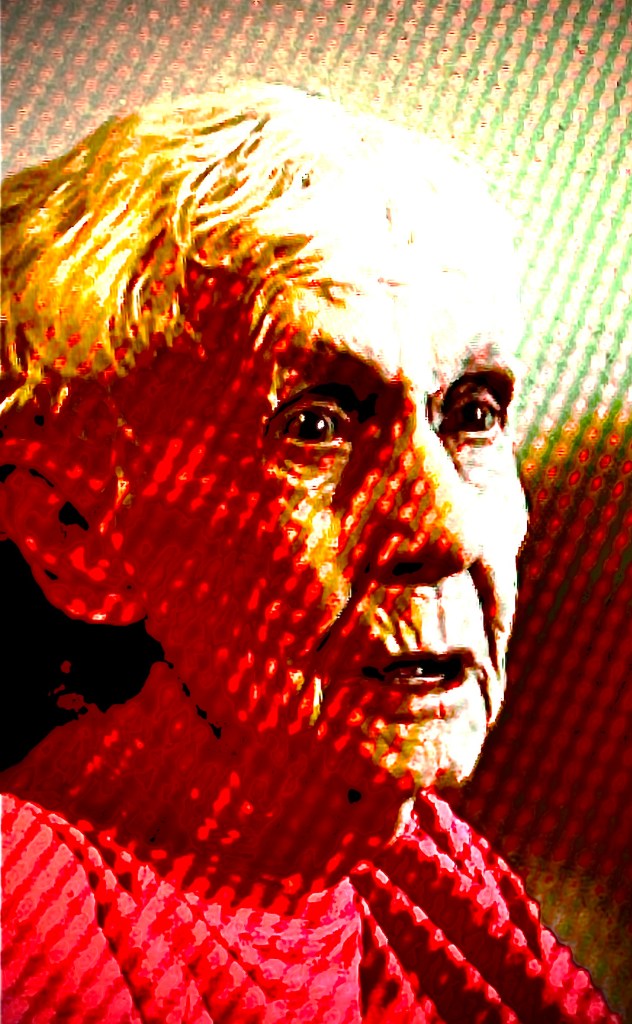
The Memory Game: A Humorous Tale of Aging

By Benjamin GroffMedia© | benandsteve.com | 2025 Truth Endures©

2–4 minutes

“The Memory Game”

Earl and Edna had been married for fifty-two years. In those five decades, they had developed a comfortable rhythm, like an old song they both knew by heart. Lately, the lyrics were getting harder to remember.

It all started on a Tuesday morning when Earl stood in the living room, scratching his head.

“Edna,”

He called,

“have you seen my glasses?”

“They’re on your head, Earl,”

Edna replied from the kitchen, her voice tinged with amusement.

Earl patted his scalp and chuckled.

“Well, I’ll be. Guess I’ve been wearing ‘em this whole time.”

But later that day, Edna forgot to turn off the iron. This left a suspicious scorch mark on Earl’s good slacks. That evening, Earl nearly brushed his teeth with muscle ointment. The next morning, Edna scheduled a doctor’s appointment—for both of them.

At Dr. Preston’s office, they sat side by side, holding hands, looking like two nervous schoolchildren awaiting their report cards.

“Doctor,”

Edna began,

“we’re both starting to forget things. Little things, mostly, but…”

Dr. Preston smiled kindly.

“That’s perfectly normal as we get older. One strategy that helps is to write things down. Keep a notepad handy, leave little notes where you’ll see them. It makes a world of difference.”

Earl snorted.

“Write things down? My memory’s just fine. It’s Edna’s that needs the fixing.”

Dr. Preston gave them both a knowing look.

“Just try it. You’ll thank me.”

When they got home, Edna felt a nap coming on and settled into her recliner with a cozy blanket. Earl switched on the TV, flipping channels, landing on a baseball game he wasn’t really watching.

After a while, Edna sat up.

“Earl, dear, would you go to the kitchen and get me a dish of ice cream?”

Earl muted the TV.

“Sure thing, sweetheart.”

“And write it down, so you don’t forget.”

Earl waved her off.

“Nonsense, Edna. It’s a dish of ice cream. I’ve got it.”

“But I’d like strawberries on it too,”

She added.

“And whipped cream.”

Earl tapped his temple confidently.

“Ice cream, strawberries, whipped cream. No problem.”

Edna gave him a skeptical look.

“You sure you don’t want to write it down?”

Earl shook his head and marched into the kitchen.

For the next fifteen minutes, Edna listened as pots clanged. Cabinet doors creaked. The microwave beeped, and something—was that the blender?—whirred loudly.

Finally, Earl returned, triumphant, a plate in his hands.

“Here you go!”

He declared, setting the plate on her lap.

Edna stared at the plate. Bacon. Eggs. A sprig of parsley.

She looked up at him with an exasperated sigh.

“Earl, where’s the toast I asked for?”

Earl blinked, confused.

“Toast?”

Edna shook her head, laughing despite herself.

“Looks like we’re both making notes from now on.”

Earl sat down beside her, rubbing his chin thoughtfully.

“Maybe we should just order takeout.”

And together, they chuckled, holding hands, as the baseball game played softly in the background.

After a moment, Earl squinted at the screen.

“Edna… do you know who’s winning? I can’t tell.”

Edna grinned slyly.

“That’s because, Earl… you’re on first base.”

Earl frowned.

“I’m on first base?”

“No, no,”

Edna said, shaking her head with mock seriousness,

“Who’s on first.”

Earl’s eyes widened.

“Who’s on first?”

Edna corrected, her eyes twinkling.

“No, Who’s on third,”

They both burst out laughing. They cackled until they were wiping tears from their eyes. The baseball game was long forgotten. Their memories were momentarily lost, but their joy was perfectly intact.


The Pig That Hid Under The Table

By: Benjamin Groff II© Groff Media 2024© Truth Endures IMDbPro

Growing up, my trips to see my grandparents were always a highlight. We had moved to a farm about forty miles east of where they lived, and at least one weekend a month, I’d take a trip west on the Trailways bus. The bus, winding through the state highways, carried passengers to towns large and small, connecting lives along the way.

Fridays were my day of escape. School let out promptly at 3 PM, and I’d head straight to Mills Cafe to buy my bus ticket for $1. That single dollar bought me a ride and a weekend of stories, comfort, and understanding from my grandparents. After securing my ticket, I’d walk down the street to my dad’s barber shop, four doors from the cafe, to wait. Watching for the bus was a serious affair for me. I kept my eyes trained on the road, anxious I might miss it if I blinked. No bathroom breaks, no distractions. I had a mission: get to my grandparents.

Sometimes, folks in the barbershop would try to chat with me, but I was reserved, even standoffish. Sensing my focus, my dad would beam with pride as he explained to his customers,–––

“He’s waiting on the bus. He’s off to check on his grandparents for the weekend, ensuring they’re okay!”

The shop patrons would smile and nod, giving me a knowing look and sometimes adding, –––

“Well, you can’t interrupt a man on a mission.”

But there was another reason I didn’t engage in those conversations. I had a speech impediment that followed me until I was nearly twelve. My words tumbled out wrong, twisted by a thick Eastern accent that stood out in our small Oklahoma town. I’d say “Wooster” instead of rooster or “wise” instead of raise. It sounded right to me, but I was hard to understand to everyone else. My trips to my grandparents were a refuge from the teasing I often faced. They spoke like me, with the same accent, and they took the time to listen.

Bedtime with my grandmother always meant stories—real ones. One of my favorites was her early days with my grandfather when they lived on a farm in Illinois with his family. Not long after their wedding, my grandfather bartered with a neighbor, offering to harvest an acre of corn for a pig and a cow. The pig was young, newly weaned, and just learning to eat regular feed. The neighbor’s wife, however, was a bit unstable, though harmless—or so everyone thought.

One afternoon, while my grandfather and his brothers were out in the fields, my grandmother saw the neighbor’s wife marching down the road toward their home. In one hand, she held a knife, her face twisted in rage as she screamed, –––

“I want my pig!”

My grandmother was still young, not much older than a teenager, and alone in the house. Thinking quickly, she grabbed the little pig, rushed inside, and locked the door behind her. Huddling under the kitchen table, she threw a cloth over the pig, praying it would stay quiet. Outside, the woman’s footsteps grew closer, and her voice turned from angry to menacing.

“I’m going to kill you! I want my pig! Give me my pig!”

The door rattled under the force of the knife stabbing into it, and my grandmother could hear the woman’s curses, slurred with madness. Terrified, she clutched the pig tighter, knowing there was no way she’d give it up—not after my grandfather had worked so hard for it. The pig squirmed in her arms, and she whispered a desperate deal, promising it that if it stayed silent, it would never end up on the dinner table.

The minutes they stretched on like hours. It was sweltering in the kitchen, and my grandmother and the pig were sweaty. The woman outside kept up her assault, pounding on the door and shrieking threats. But the pig, to its credit, didn’t make a sound.

Finally, after an eternity, the woman’s husband happened by in his horse and buggy. He saw her crazed state and managed to coax her away, pulling her back home. My grandmother never saw her again, but for years afterward, she went out of her way to avoid passing that house. And as for the pig? It kept its end of the bargain—staying quiet—and lived to see another day, far from the breakfast table.

Hearing that story as a child gave me courage. Just as my grandmother had faced her fear, hiding under a table with a pig, I could face my challenges, too. Whenever I struggled with my speech, I thought of her and that pig. It gave me the strength to keep pushing forward, knowing that silence—and resilience—could sometimes be the best defense.

Caring for Aging Parents: Fears, Responsibilities, and Reflections

A Story By Benjamin Groff© Groff Media 2024© Truth Endures

Fear of Your Parents’ Old Age

As my mother turned 94 in August 2024, my sister and I took turns caring for her and took time out to celebrate her milestone. I also cared for my mother-in-law until her death in her last years of life in our home and have experienced caring for a parent in their senior and final years. I came across an article that discussed the fears of some individuals in dealing with aging parents. I prepared remarks from it as memory serves and through internet searches on topics debating the subject.

“There is a break in the family history, where the ages accumulate and overlap, and the natural order makes no sense: it’s when the child becomes the parent of their parent.”

It’s when the father grows older and begins to move as if he were walking through fog. Slowly, slowly, imprecisely. It’s when one of the parents who once held your hand firmly when you were little no longer wants to be alone.

I remember when my mother asked me to help her down the stairs. It was a subtle, almost casual request, but its weight sank deep into my chest. She had always been so independent and capable. And yet, there she was, reaching out to me for balance, her hand trembling slightly in mine. It felt like the beginning of a new chapter that neither of us was ready for.

It’s when the father, once strong and unbeatable, weakens and takes two breaths before rising from his seat. My friend Lucy spoke of her father, a man who had always been larger than life, now struggling to remember where he left his glasses. “He used to be so sharp,” she said, her voice thick with the unspoken grief of seeing the man who once seemed invincible begin to fade. 

“Now, it’s like watching a candle burn down.”

It’s when the father, who once commanded and ordered, now only sighs, groans, and searches for the door and window—every hallway now feels distant. And we, as their children, will do nothing but accept that we are responsible for that life.

The life that gave birth to us depends on our life to die in peace. Every child is the parent of their parent’s death. 

Perhaps a father or mother’s old age is, curiously, the final pregnancy—our last lesson—an opportunity to return the care and love they gave us for decades. This sense of duty, though heavy, is a testament to the respect and acknowledgment we have for our parents.

And just as we adapted our homes to care for our babies, blocking power outlets and setting up playpens, we will now rearrange the furniture for our parents. 

The first transformation happens in the bathroom. We will be the parents of our parents, the ones who now install a grab bar in the shower. The grab bar is emblematic and symbolic. 

It inaugurates the “unsteadiness of the waters.” Because the shower, simple and refreshing, now becomes a storm for the old feet of our protectors. We cannot leave them for even a moment.

I once spoke to Sarah, who had installed those grab bars in her mother’s bathroom.

“She used to laugh at the idea of needing help,”

Sarah said, a faint smile on her lips.

“Now, she clings to that bar like a lifeline. And I stand outside the door, listening, ready to rush in if she calls. I never thought I’d have to do that for her.”

The tension in Sarah’s voice was palpable—the love and the frustration, the fear of what was coming, and the bittersweet comfort of being there for her mother.

The home of someone who cares for their parents will have grab bars along the walls. And our arms will extend in the form of railings. Aging is walking while holding onto objects; aging is even climbing stairs without steps. We will be strangers in our own homes. We will observe every detail with fear, unfamiliarity, doubt, and concern.

We will be architects, designers, frustrated engineers. 

How did we not foresee that our parents would get sick and need us? We will regret the sofas, the statues, the spiral staircase, all the obstacles, and the carpet.

But amid this frustration, there are moments of unexpected connection. 

One evening, while helping my father navigate his way to bed, he looked at me with a softness I hadn’t seen before. 

“I’m glad it’s you,” he whispered. You were always the one I could count on.”

At that moment, the roles reversed entirely—no longer just my father, he was now also my child, someone who needed and trusted me. The sweetness of that connection, of being needed in that way, mingled with the deep sadness of seeing him so diminished. 

These moments of connection, however brief, are a source of hope and upliftment amid the challenges of caring for aging parents.

Happy is the child who becomes the parent of their parent before their death, and unfortunate is the child who only appears at the funeral and doesn’t say goodbye a little each day. Being present for our parents in their final years is a duty and a privilege. It’s a chance to repay the love and care they’ve given us and to create lasting memories.

My friend Joseph Klein accompanied his father until his final moments. In the hospital, the nurse was maneuvering to move him from the bed to the stretcher and trying to change the sheets when Joe shouted from his seat:    

“Let me help you.”

He gathered his strength and, for the first time, took his father into his arms, placing his father’s face against his chest.

He cradled his father, consumed by cancer: small, wrinkled, fragile, trembling. He held him for a long time, the time equivalent to his childhood, the time comparable to his adolescence, a long time, an endless time.

By Your Side, Nothing Hurts. He was rocking his father back and forth and caressing his father. Calming his father. And he said softly:

“I’m here, I’m here, Dad!”

At the end of his life, a father wants to hear that his child is there.

There is an inevitable grief in watching our parents age, but also a strange sense of fulfillment in being there for them as they were for us. It is a role we never asked for, yet one we take on with reluctance and a fierce sense of duty. Despite the challenges, there is a deep sense of satisfaction in knowing that we are doing everything possible to make our parents’ final years comfortable and dignified. 

The road is difficult, filled with moments of frustration and exhaustion, but also with love and tenderness—those fleeting instances when the gap between child and parent narrows, and we are simply there for each other, as we always have been.

Some parts of this story have been adapted from an original tale of unknown origin.

~ The Hardest Decision ~

In the quiet corners of her home, Sarah sat her mind adrift in a sea of conflicting emotions. Her mother, once vibrant and robust, now frail and in need of constant care, sat in the living room, a mere shadow of her former self. It had been a long and arduous journey, filled with sleepless nights and endless worry. But now, Sarah faced the most challenging decision of all – the decision to place her mother in a nursing home.

“Mom, I need to talk to you about something important!”

“What is it Dear” Her Mother Asked?

The idea had lingered in Sarah’s mind for months, whispered in hushed tones by concerned family members and well-meaning friends. Each time, she pushed it away, unwilling to confront the reality of the situwation. But as her mother’s needs grew more demanding, Sarah knew she could no longer ignore the inevitable.

With a heavy heart, Sarah approached her mother, her hands trembling with uncertainty. “Mom,” she began softly, “I need to talk to you about something important.”

Her mother looked up, her eyes clouded with confusion. “What is it, dear?” she asked, her voice tinged with worry.

Taking a deep breath, Sarah explained the situation as gently as possible. She spoke of the challenges they faced and the toll it was taking on them. She spoke of the nursing home – a place where her mother could receive the round-the-clock care she needed, where she would be safe and well looked after.

Her mother listened quietly, her expression unreadable. When Sarah finished, there was a long silence, broken only by the clock ticking on the wall.

Finally, her mother spoke, her voice barely above a whisper. “I understand, dear,” she said, her words heavy with resignation. “I know you’re doing what’s best for me.”

Tears welled up in Sarah’s eyes as she embraced her mother tightly. “I love you, Mom,” she whispered, her voice choked with emotion.

“I love you too, dear,” her mother replied, returning the embrace with feeble arms.

In the following days, Sarah worked tirelessly to find the perfect nursing home for her mother. She visited countless facilities, asking questions, taking notes, and carefully weighing her options. When she finally found the right one—a place that felt warm and inviting, with caring staff and a peaceful atmosphere—she knew she had made the right choice.

On the day of the move, Sarah held her mother’s hand tightly as they walked through the doors of the nursing home together. There were tears and moments of doubt, but through it all, Sarah remained steadfast in her decision.

As she watched her mother settle into her new surroundings, Sarah felt a sense of relief wash over her. It wasn’t an easy decision, nor one she had ever imagined having to make, but in the end, it was the right one – for both her and her mother.

And as she kissed her mother goodbye, promising to visit often and never forget her, Sarah knew that, even though their journey had taken an unexpected turn, they would face it together, with love and understanding guiding their way.