Lessons from Bill: Radio Adventures and Childhood Memories

By Benjamin GroffMedia© | benandsteve.com | 2025 Truth Endures©

4–7 minutes

I have many stories about growing up. Sometimes, I wonder how I fit everything I did into the years leading to where I am now. As a young teen, I always felt my family was boring. We never seemed to do anything special. But when I share our family stories today, people tell me they spark their forgotten memories. They bring back moments they thought were lost.


One such story involves our neighbors, Bill and his wife, Marie. They rescued every stray dog they found and invited each one into their growing pack.


I first met Bill while riding my bike home from a friend’s house. He had stopped his car to get the mail from his old roadside mailbox. I couldn’t help but stop and say hello. I asked him where he lived. He pointed across the road toward a distant antenna. It stood tall above the trees. “Right under that antenna,” he said with a smile. I had watched that antenna for years. It was massive. It perched on rotating poles to turn the shortwave and CB radio antennas in any direction he wanted. Seeing my interest, Bill invited me to visit the next day—but told me to check with my parents first.


I didn’t know it then, but Bill had been instrumental in bringing electricity to our area through a rural cooperative. He’d helped light up countless homes across several counties. My parents permitted me to visit but warned me not to overstay my welcome.


The next day after school, I finished my chores and pedaled toward Bill and Marie’s. As I left the paved road and turned onto the dirt path, barking erupted. A pack of dogs rushed to greet me, but they wagged their tails instead of attacking and licked my hands. It was like I was the first human they’d seen in years. They crowded around me, gently herding me up the porch steps. I reached for the doorbell, but before pressing it, the dogs nudged me ahead, practically carrying me into the house.


“Hello? Anyone home?”

I called out.


Marie’s sweet voice answered from the kitchen,

“I bet you’re JD’s boy. Bill told me you’d be stopping by. He’ll be out in a minute—say hello to the family.”


She gestured toward the dogs as she named them individually, expecting me to remember each name. There had to be twenty dogs in that living room alone. As I looked around, another thought puzzled me: how did she know I was my dad’s son? I hadn’t even introduced myself yet.
A moment later, Bill entered, smoking his pipe, followed by four more dogs circling his legs. He shook my hand warmly and led me into his den, where I would spend hours learning from him. Bill introduced me to the world of shortwave radio and explained how to get a license. He even lent me a Morse code training record to help me prepare for the exam.


But radios were just the beginning. Bill showed me his greenhouse, where he taught me how starting seedlings early gives a head start in spring. One day, he took me to another outbuilding—a woodworking shop filled with the scent of freshly cut lumber. There, he showed me how he crafted furniture and home goods, staining and treating each piece with care.


When I was almost sixteen, Bill revealed yet another surprise: a mechanic’s shop hidden behind his house. Inside sat an old Datsun pickup.

“I haven’t driven it in years,”

Bill admitted,

“but it’s still here.”


I could feel the gears turning in my head. I was about to get my driver’s license, and that old truck looked like the perfect first car. Before I said anything, I knew I had to check with my dad.
When I asked, my dad said,

“We can look at it.”

To me, that was a yes.


The next day, I returned to Bill’s and asked if he might be interested in selling the truck.
Bill chuckled.

“I never thought about selling it—but if the price is right, maybe.”


“I’ll need a car when I get my license,”

I told him.

“And my dad said we could take a look.”


“Bring your dad down,”

Bill grinned,

“and we’ll talk.”


Dad and I stood in Bill’s mechanic shop a week later, looking over the Datsun. Bill puffed his pipe thoughtfully.

“It ran fine when I parked it. Might go ten miles, might go another hundred thousand. Hard to say with an old truck.”

He smiled at Dad.

“You know how it is with cars.”


Then Bill turned to me.

“I’ll talk price with the boy. You’re too good a horse trader for me to haggle with.”


My dad laughed.

“You know what you’ve got in your savings,”

he told me.

“Don’t spend more than that—and don’t forget tax, title, and insurance.”


At that moment, I felt the weight of adulthood settling on my shoulders. I bartered with Bill for ten minutes, careful with every dollar. Later, I discovered an interesting fact about Bill and my dad. They had been late-night radio buddies for years. They even arranged for a state newspaper courier to toss them papers at a secret highway drop each morning.


I kept visiting Bill and Marie for years. As I grew older, I began to understand Marie’s quiet burdens. They were things I wish I’d been capable of helping with then. I only understood them now, knowing what I know. Bill and his beloved dogs carried on their calm, legendary life on the edge of town.


No one else ever visited them—not like I did. And sometimes, I wonder if that had been the plan all along.


Bill and Marie passed away in the 1990s. Per their wishes, their property was sold to help the local community center. Their home, once full of vibrant life with voices, radio signals, and loyal dogs, became part of something greater. It was destined to be that way.

Every time I turn on a radio, I still feel them with me. When I smell fresh-cut wood or see an old pickup truck, I also think of them. Their stories live on—in mine.


Life Lessons from a Skunk: Trust and Taking Chances

GROFF MEDIA 2024© TRUTH ENDURES IMDBPRO

Presented by benandsteve.com By: Benjamin Groff II©s

3–5 minutes

It was an old house on the southeast side of town. The floorboards creaked. The front porch sagged just a little in the middle. Jeb and Lorine lived there with their giant Boxer. The dog was as broad as a barrel. He was just as heavy when he flopped into your lap.

At five years old, Tim sometimes spent his afternoons there, waiting for his dad to pick him up. He had just started kindergarten and hated school—not just kindergarten, but the whole idea for the next twelve years. The only good thing was that, for now, Tim only had to go until noon. Then, most days, he’d end up at Jeb and Lorine’s, where things were much more enjoyable.

One thing about their house always intrigued Tim: the mysterious knocking and pounding under the floor. It was a constant occurrence as if something—or someone—was moving beneath them. Tim had been taught not to be rude and ask questions in other people’s homes. He sat quietly, but his mind was buzzing with curiosity.

Maybe it was the bees. Jeb had a beehive in the backyard and collected honey from it. Tim imagined a massive honeycomb hidden under the house, so big that its weight made the boards creak. He pictured golden honey dripping through the cracks in the floor. But no, that didn’t explain the noise. The sound traveled, shifting from one end of the house to the other.

One afternoon, while playing in the backyard, Tim noticed a small fence blocking off a crawl space beneath the house. It was big enough to hold an animal—maybe even a dog. But why would Jeb fence it off? Was he trying to keep something out? Or ––– keep something in?

Curious, Tim dropped to his hands and knees, peering into a dark hole in the foundation. He squinted, trying to make sense of the shadows. Suddenly, two glassy eyes stared back at him. A jolt of surprise went through his body.

Tim let out a startled yelp and scrambled backward his heart racing. He barely managed to stop himself from swearing in shock.

“WHOA! HOLY COW!”

The eyes moved closer, emerging from the darkness. Tim’s breath caught as the creature stepped into the light.

“A SKUNK!”

He shot to his feet and bolted inside, bursting into the living room where Jeb and Lorine sat.

“There’s a skunk under your house!” he gasped. “You gotta get a shovel—hit it over the head! It’s living under there!”

Jeb and Lorine burst into laughter.

“You met Johnny,” Jeb said, shaking his head. “He’s a buddy of mine. Come on, I’ll let you hold him.”

Tim’s eyes widened.

“Hold him?! Are you crazy? He’ll spray us!”

Jeb chuckled.

“No, he won’t. Johnny had his scent glands removed when he was a baby. He can’t spray.”

His words were like a soothing balm, calming Tim’s nerves.

Tim hesitated, his skepticism clear.

“How can you be so sure?”

He asked, his voice tinged with doubt.

“Because I raised him,” Jeb said, standing up. “Found him in my barn after his mama got hit by a car on the highway. Watched that nest for days, but she never came back. He would’ve died if I hadn’t taken him in.”

Tim followed Jeb outside, still wary. The last thing he wanted was to go home reeking of skunk.

Jeb knelt by the crawl space and softly said,

“Johnny, Johnny, come on out, boy.”

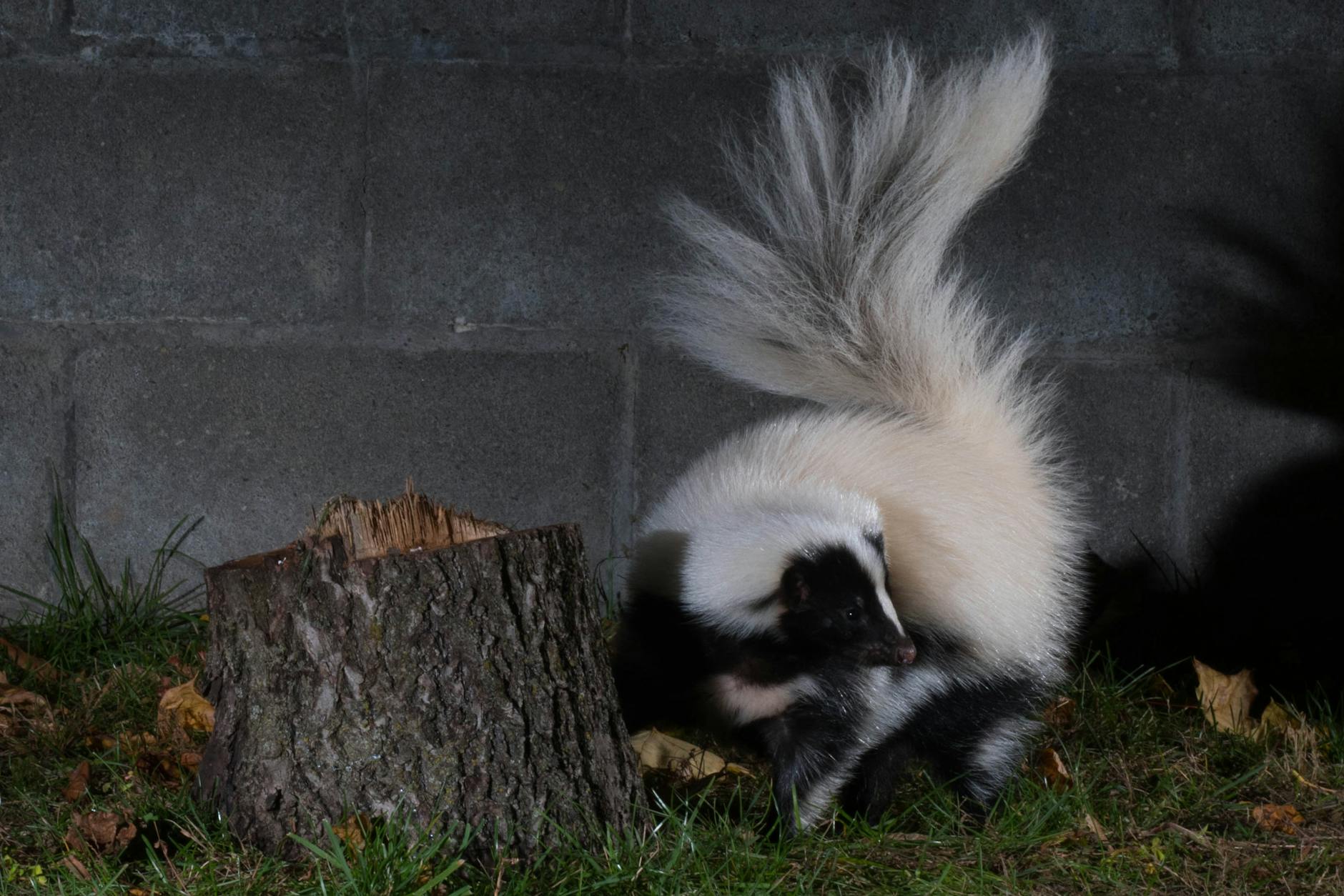
Tim tensed as the skunk waddled into view, its black-and-white fur gleaming in the afternoon sun.

Jeb looked at Tim and grinned.

“Son, I know what you’re thinking. Life’s about trust, taking chances, and finding things out for yourself. You can do all three right now.”

Tim swallowed hard, debating. Does he trust this?

Taking a deep breath, he held out his arms.

Jeb carefully placed Johnny in his hands, and Tim braced himself for the worst. Johnny curled against his chest, nestling under his chin like a kitten. His friendly demeanor melted Tim’s apprehensions.

Tim stood there, stiff at first, then slowly relaxed. The skunk was warm, soft, and oddly ––– pleasant.

After a few minutes, Jeb patted Tim’s shoulder.

“That’s good now. Johnny must return inside, and your daddy’ll be here soon.”

Tim handed Johnny back and followed Jeb into the house. As he sat on the couch, he waited for his dad. He thought about what Jeb had said. It was about trust, taking chances, and learning things for yourself.

When his dad pulled up, Tim climbed into the truck. As they pulled away, his father wrinkled his nose.

“What have you been doing?”

He asked.

“You smell like a skunk!”

Tim just grinned. And said –––

“I’ve been taking a chance on trusting people and other things and learning things for myself.”

The Impact Of Loss: Remembering A Childhood Best Friend For Life

A True Story By: Benjamin Groff II© Groff Media 2024© Truth Endures

When I was just eight years old, death was a concept that I hadn’t fully grasped. The only time it touched my life was when my grandparents’ neighbor, a gentleman named Tom, passed away. I was only seven then, and it happened so quickly that it didn’t leave a deep mark. My grandfather had sat up with Tom the night before he passed, a tradition people followed back then—sitting with the dying. It was a tradition, and my dad would continue the practice as I grew up, sitting with many men in our small town of 750 souls. I always wondered why he was asked to do that.

That night, when Pop, my name for my grandfather, went to sit with Tom, it was just my grandmother and me alone in their big, quiet house. It felt different without him there. Early the following day, around 6:00 AM, my grandmother and I were preparing breakfast when Pop came in through the backdoor. He quietly spoke to her, and I suspected what had happened. Mom, my grandmother, suggested I open the dining room door to let the morning light in. As I did, I overheard their conversation growing louder, and when I looked outside, I saw a hearse slowly pulling up to Tom’s house. I knew Tom had passed.

A few days later, my grandmother took me to his funeral, and Pop was one of the pallbearers. It was the first time I ever saw a person in a casket, and Tom still looked like Tom. After the service, my grandmother praised me to my father, saying I behaved so well—sitting quietly and respectfully. I thought I was just being myself. In those days, grandparents didn’t need to ask permission to take their grandchildren anywhere—funerals, courthouses, doctors’ offices, or even jails. The places they took me were some of the most fascinating.

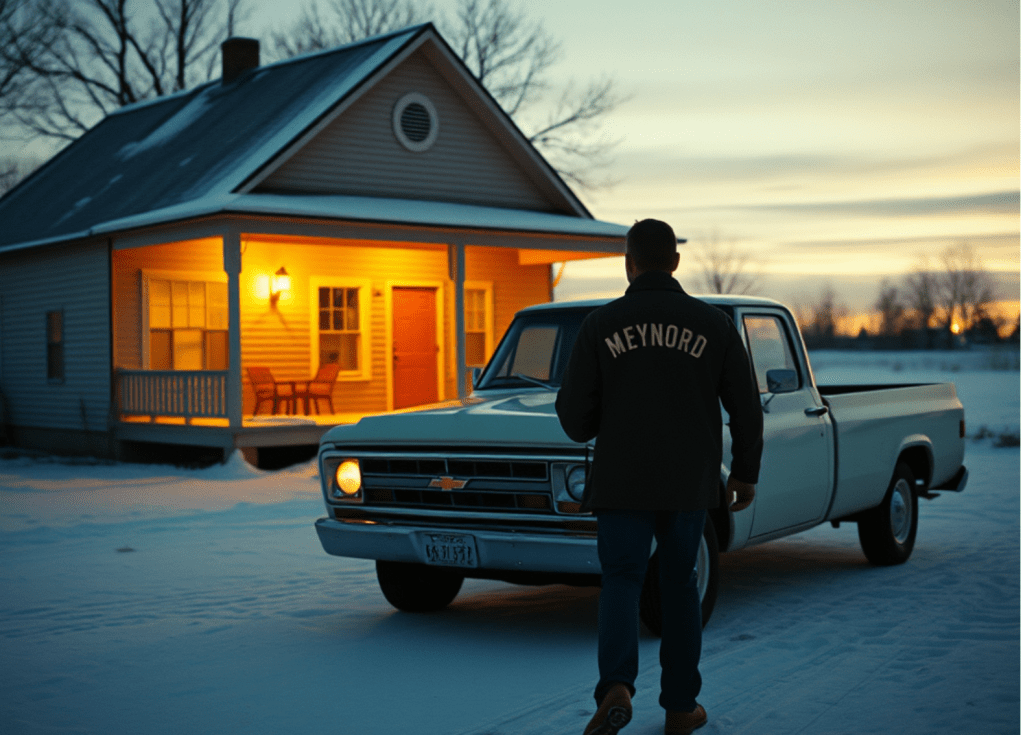
But this story isn’t about Tom. It’s about someone much closer to my heart, a man named Maynord Rider, one of my dad’s dearest friends. Maynord often accompanied us to horse sales on Friday and Saturday nights, and I thought the world of him. He lived two miles south of our farm, a farmer like many others in our area. One cold winter night, our water well froze, and my dad had to drive out over the pasture to fix it. When his headlights passed over Maynord’s bedroom windows, Maynord, instinctively knowing we were in trouble, got out of bed, climbed into his old white Chevrolet pickup, and drove to our house. He pulled up with a five-gallon water thermos and asked if our well had frozen. My mother was surprised—how could he have known? When my dad returned, he asked,

“Maynord, what are you doing here?”

They talked, and it turned out Maynord had guessed right. My dad told him there was no use in fixing it in the dark, and they’d work on it the next day. My dad promised to let Maynord help him the following morning to get him to leave.

There were many stories about Maynord, but they all ended one Thursday in September 1971.

It was the start of a four-day weekend from school due to a statewide teachers’ meeting. The day was beautiful for September in Oklahoma—warm with the usual breeze. I had been pestering my oldest sister, who was tasked with watching me and my other sister. It was just after noon, and the day felt perfect—no school, no bus to catch, just freedom. Then the phone rang. My oldest sister answered, and I could hear her voice change as she said,

“Oh no!” followed by, “I’m not telling him. You should.”

A moment later, she said,

“Mother wants to talk to you.”

I ran to the phone, stretched the cord as far as it would go, and answered.

“Yes, Mother!”

I said, but I could hear a siren approaching in the background. My mother’s voice was calm but direct,

“Benji, Maynord Rider just dropped dead.”

The words hit me like a punch, and I dropped the phone, screaming.

The news hit me like a physical blow, and I dropped the phone, screaming. The rest of the day is a blur, but I remember Ryder, the dog Maynord had given me, howling at the front door, leaning against it as if he, too, understood what had happened. None of the other dogs made a sound—just Ryder, the one I had named after Maynord’s last name.

I wouldn’t see my dad for hours, but I learned the whole story when I did. Maynord had come in from working on the farm for lunch. He ate, felt a bit of indigestion, and decided to lie down for a nap. While his wife, Bonnie, worked in the kitchen, she heard a moan, and when she went to check on him, she found him unresponsive. Panicked, she called my dad at the barbershop, where he cut hair. When he got the call, he told her to call the ambulance and that he’d be there immediately. He told the customers in his shop what had happened, leaving the man in his chair and the shop open as he rushed out.

Driving his Buick Le Sabre station wagon, my dad said the speedometer hit 120 miles per hour as he raced to Maynord’s farm, hoping to get there in time. Hearing this story comforted me, knowing that my dad did everything he could, even though we had lost one of the best men I had ever known.

That Friday night, my parents took me to see Maynord at the funeral home. It was more complicated than when I had seen Tom in his casket. The grief was overwhelming, and I couldn’t contain my tears. It felt like the worst day of my life. For years after Maynord’s death, I would look up at the sky, hoping for some way to talk to him again, but that day never came.

Eventually, I learned that, in life, there would be days harder than that one—the loss of my grandparents and my dad—, but somehow, we keep going, hoping that one day, someone will see our headlights coming over the hill and come to help us, just like Maynord did for us.

The Days Of My Youth, When The West Was Really Wild!

A True Story By: Benjamin Groff© Groff Media 2024© Truth Endures

When the West was wild, and I was nine years old. Strapped on my waist were two silver cap guns and a gunslinger belt. My horse was a pony named Little Bit, named so because of the bridal’s bit size for the horse. On Saturday mornings, my youngest sister and I would watch the antics of Roy Rogers and Del Evans on black-and-white television. During the rest of the weekend and after school, we did our best to live out what we had seen in real life.

My sister’s horse was named Sugar and slightly bigger than mine. Still, mine was fast and could run at a lope, making the breeze hitting my face seem as though we were going at the speed of light. On our farm near a hill south of our home, there were miniature bluffs where my sister and I would ground tie our horse, hide behind, and carry out a shootout with the invisible villains we imagined approaching and trying to steal the farm. We lived miles from town, and this would be our entertainment. Our parents were aware of our riding trips, and while our dad would rather be present, he trusted us to be responsible and safe.

As we roamed the hills on those long, dusty afternoons, it felt like we were the only two kids in the world with such grand adventures. The bluffs were our fortress, the sky our ceiling, and the occasional hawk circling overhead became a witness to our endless battles against make-believe outlaws. The smell of fresh earth, mingled with the sweat of our horses, was intoxicating. It was freedom, pure and simple, a feeling that inspired us and now fills us with nostalgia.


Sometimes, when the wind would shift just right, I’d catch the faint scent of Mom’s cooking from the farmhouse and know it was nearly time to head home. But in those moments, I was Roy Rogers, protector of the ranch, with Little Bit galloping beneath me as we chased the bad guys across the plains.


One day, after an especially exciting shootout, our father must have noticed we’d been gone a little too long. We saw him standing on the front porch as we rounded the bend toward the house. Dad crossed his arms, and his face was stern—Dad always believed in knowing where we were, and he didn’t much like the idea of us riding off without him. But as we neared, I saw the corner of his mouth twitch and a glimmer of pride in his eyes. His silent support reassured us and made us feel more connected to him. Maybe he recognized some of the cowboy spirit in us, or perhaps it was the sight of two kids who had spent the day living their version of the Wild West.


He never scolded us that day, though he didn’t have to say much. With a smile, he helped us unsaddle our horses, and as the sun dipped low behind the hills, we knew our adventures would have to wait until the next day.


But deep down, I think Dad knew, just as we did, that the West wasn’t so wild after all—it was just our way of making the world a little bigger, a little braver, and a whole lot more fun. As the sun dipped low behind the hills, we knew our adventures would have to wait until the next day, filling us with excitement and anticipation for the next chapter of our Wild West escapades.