Memorial Day: From Local Tribute to National Holiday

By Benjamin GroffMedia© | benandsteve.com | 2025 Truth Endures

2–3 minutes

The First Memorial Day: Honoring the Fallen After the Civil War

Photo by Jerry Butler Pexels.com

In the aftermath of the American Civil War—a conflict that claimed more lives than any other in U.S. history—communities across the nation were left mourning. By 1865, with the war concluded, families faced the grim task of honoring more than 600,000 soldiers who had died. This collective grief gave rise to a new tradition: a day of remembrance.

Many towns and cities began their own informal commemorations of fallen soldiers. An early observance of what would become Memorial Day occurred in Charleston, South Carolina. It happened on May 1, 1865. There, newly freed African Americans held a ceremony to honor Union soldiers. These soldiers had died in a Confederate prison camp.

During the war, Confederate forces converted the city’s Washington Racecourse. Today, it is known as Hampton Park. They turned it into a prison for Union soldiers. Over 260 Union troops died there from disease and exposure and were buried in unmarked graves. After the Confederacy’s defeat, Black residents of Charleston, many of them formerly enslaved, took action. They worked to give those soldiers a proper burial. They reinterred the bodies. They built a fence around the site. They marked it with a sign that read: “Martyrs of the Race Course.”
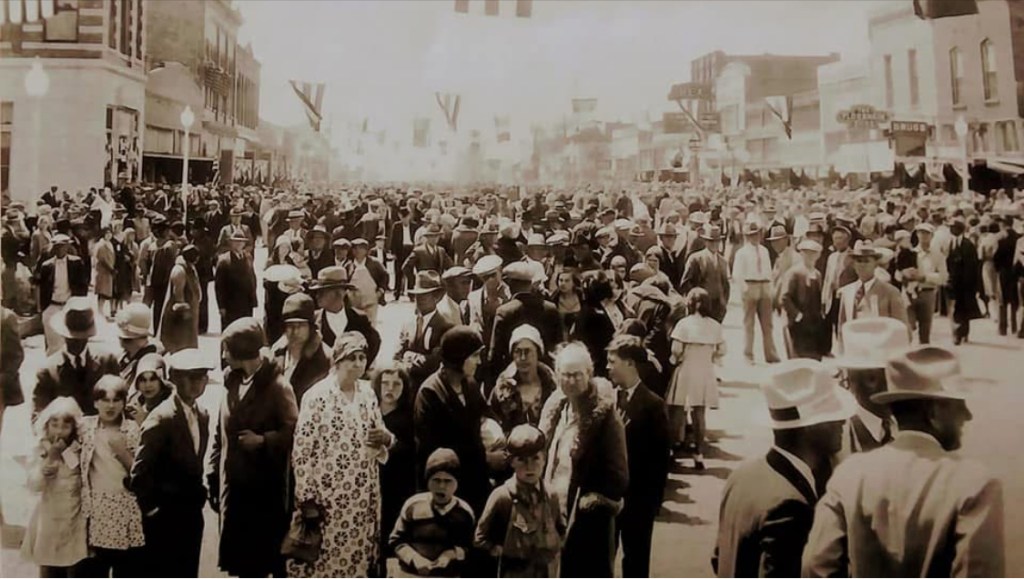
On May 1, a crowd of around 10,000 people—including freedmen, Union troops, and white missionaries—gathered for a solemn procession. The event included prayers, singing, speeches, and the laying of flowers. Children marched with armfuls of blossoms, and the day ended with picnics and patriotic performances. This Charleston observance was largely forgotten in the national narrative for decades. Now, many historians recognize it as the first Memorial Day.

Nonetheless, the tradition took broader root a few years later. In 1868, Union General John A. Logan, head of a veterans’ organization called the Grand Army of the Republic, issued a proclamation. He declared May 30 as Decoration Day, a time to decorate the graves of fallen soldiers with flowers. That year, ceremonies were held at over 100 cemeteries across the country. A major event took place at Arlington National Cemetery. Flowers were placed on the graves of both Union and Confederate soldiers.

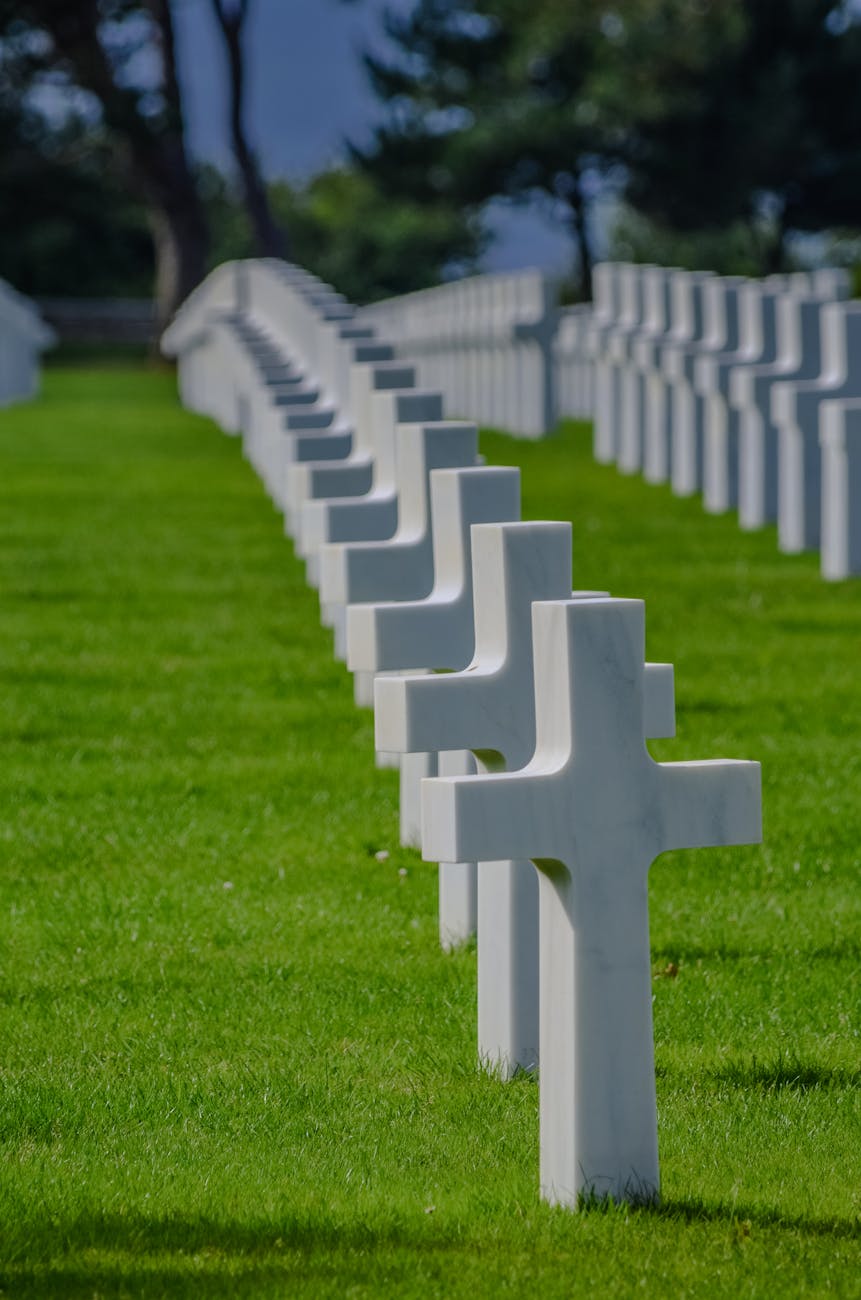
Photo by Hub JACQU on Pexels.com

Over time, Decoration Day evolved into Memorial Day, gradually becoming a national holiday. After World War I, its purpose expanded to honor all Americans who died in military service. In 1971, Memorial Day was declared a federal holiday. It was moved to the last Monday in May. This change ensures a long weekend of remembrance.

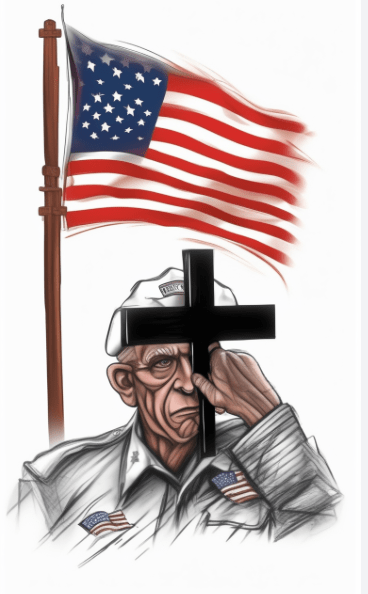
Today, Memorial Day is a time for reflection. It is also a time for gratitude. It honors those who gave their lives in service to the United States—from the Civil War to the current day.
Solemn Reflections: Memorial Day and the Spirit of Sacrifice

As the sun rose over the small town of Oakwood, its warm rays illuminated the rows of white headstones in the Oakwood Cemetery. The city, steeped in a rich history of honoring fallen soldiers, had always observed Memorial Day with solemn pride. This day, originally known as Decoration Day, was established after the Civil War to commemorate the Union and Confederate soldiers who died in the war. It has since evolved to honor all Americans who have died in military service.

Sarah Thompson stood at the cemetery’s gate, holding a bouquet of red, white, and blue flowers. She was in her late thirties, her eyes reflecting sorrow and strength. Visiting the cemetery was her yearly ritual—a pilgrimage to visit the grave of her brother, Daniel, who had died in Afghanistan a decade ago.

As Sarah walked along the gravel path, she remembered the day they received the news. It had been a bright summer afternoon, much like today. Daniel had always been a source of light and joy in their family, with his infectious laughter and boundless energy. The knock on the door that day had shattered their world.

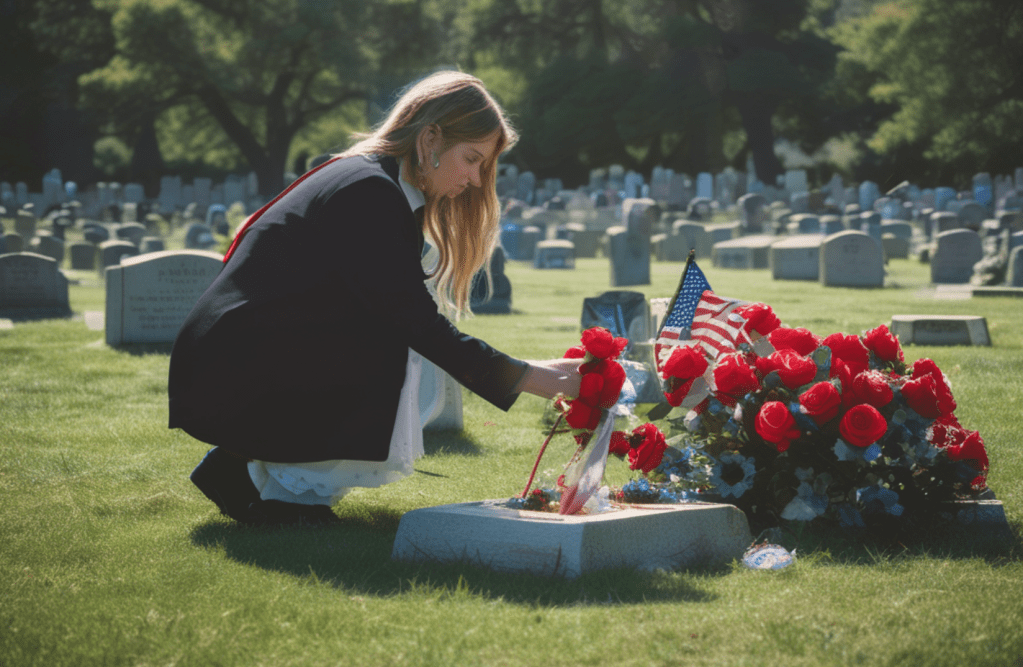
Sarah reached Daniel’s grave and knelt, gently placing the flowers in front of the headstone. She traced her fingers over his name etched in the cold stone and whispered a prayer. Memories flooded back—playing tag in the backyard, late-night talks about their dreams, and the tearful goodbye when he left for his final deployment.

The cemetery, a place of collective grief and remembrance, began to fill with others who had come to pay their respects. Families, friends, and fellow veterans moved among the graves, their shared sorrow palpable in the air. Some walked in silence, their thoughts a private tribute, while others shared stories, their voices a collective echo of the lives lost.

A familiar voice broke Sarah’s reverie. “Hey, Sarah.”

She turned to see Tom, one of Daniel’s best friends from high school, standing nearby. He held a small American flag, which he placed at the base of the headstone. Tom had served alongside Daniel and had been with him during his last moments.

“It’s good to see you, Tom,” Sarah said, her voice soft.

Tom nodded, his eyes filled with shared grief. “I come here every year. Feels like the least I can do.”

They stood in silence for a moment, their hearts heavy with the weight of their loss. Each lost in their thoughts, memories of Daniel flooding their minds. Then Tom began to speak, his voice steady but emotional, his words a testament to the bravery and selflessness of their fallen friend. ‘Daniel was the bravest person I knew,’ he said, his voice breaking with emotion. ‘He always put others before himself. Even in the end, he worried more about us than his safety.’

Sarah smiled through her tears. “That sounds like him.”

The morning wore on, and more people arrived, each carrying their own memories and gratitude. A group of children from the local school, accompanied by their teachers, placed flags on the graves of all the fallen soldiers, a symbol of their respect and understanding of the sacrifices made. The town’s mayor gave a short speech, his words echoing with the collective gratitude and remembrance of the community. A local choir sang ‘America the Beautiful,’ their voices a poignant reminder of the unity and strength that comes from shared values. The collective remembrance was a powerful testament to the sacrifices made by so many.

As the ceremony ended, Sarah and Tom lingered by Daniel’s grave a little longer. They shared stories, laughed, and cried, finding comfort in each other’s company.

“Thank you for being here,” Sarah said as they prepared to leave.

“Always,” Tom replied. “He was my brother, too.”

They returned to the cemetery gate together, the sun now high in the sky. As Sarah looked back one last time at the sea of white headstones, she felt a sense of peace. Memorial Day was not just about remembering the fallen; it was about celebrating their lives and the values they stood for.

Driving home, Sarah contemplated the significance of this day and how she would pass on its importance to her children. She understood that as long as they remembered, Daniel’s spirit would continue to live on. Every Memorial Day, she would return to this hallowed ground, ensuring that the memory of her brother and all those who had made the ultimate sacrifice for their country would never fade.

In checking references part of this story may include referencese similar to others found on the internet. The simularities are incidential and are not included intentional. You can find more these simularities RE: New York. Memorial Day. Monument. Dead Soldier. Wheelchair. Handicapped Boy. | Didier Ruef | Photography. https://www.didierruef.com/gallery-image/Aura/G0000Is39GN2Av9w/I0000aHlCvWVZLNc/C0000EU0LcXmMzWo/