Guthrie’s Arlington Hotel: Hospitality in the Wild West

By Benjamin GroffMedia© | benandsteve.com | 2025 Truth Endures©

4–6 minutes

The Arlington Hotel: First Lady of Guthrie
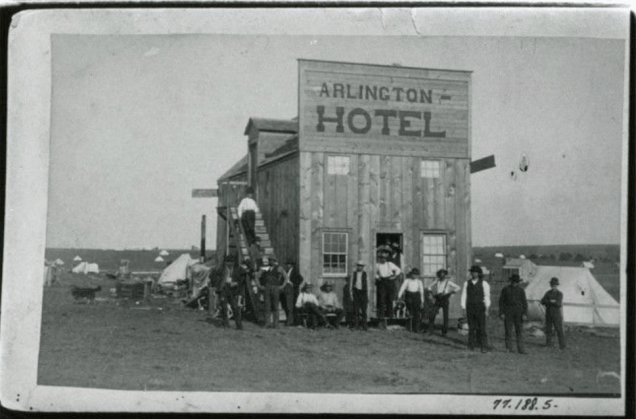
The Arlington Hotel – Guthrie, Oklahoma Territory, 1889. One of the first hotels in the land-run boomtown of Guthrie, Oklahoma Territory. Owned and operated by the fearless Madame Jeffries Star, the Arlington offered hot meals, open doors, and a warm bed to settlers, drifters, and dignitaries alike, serving as both a rest stop and a symbol of frontier resilience.
This rare 1889 photograph captures the Arlington Hotel.
It was one of the first hotels established in Guthrie.
This occurred just days after the historic Land Run opened the
Unassigned Lands of Indian Territory.

In the spring of 1889, the red dirt of Oklahoma Territory was still freshly turned. The streets of Guthrie were more dust than road. Madame Jeffries Star, a bold woman, put up a hand-painted sign above a wooden doorway. It read: “Arlington Hotel – Meals Served at All Hours.”

It was less a hotel than a grand idea built with timber and tenacity. The two-story structure is captured in a faded photograph from that year. It stood proudly among a sea of tents. Hastily constructed shacks surrounded it. Its clapboard siding gleamed in the midday sun, and smoke curled from the kitchen chimney like a ribbon of welcome.

Guthrie had exploded into existence almost overnight with the Land Run of April 22, 1889. Nearly 10,000 settlers poured in by wagon, horseback, and foot, each staking their claim to this new frontier. But when night fell, those same pioneers found themselves with nowhere to go.

Enter Madame Star.

Suggested to be a woman of mystery. Some said she had once owned a boarding house in Kansas City. Others heard she had performed on stage in New Orleans. No one knew for sure. What people knew, though, was that she was shrewd and tireless. She was capable of running a kitchen, a business, and a town council meeting if needed. They had all read about her.
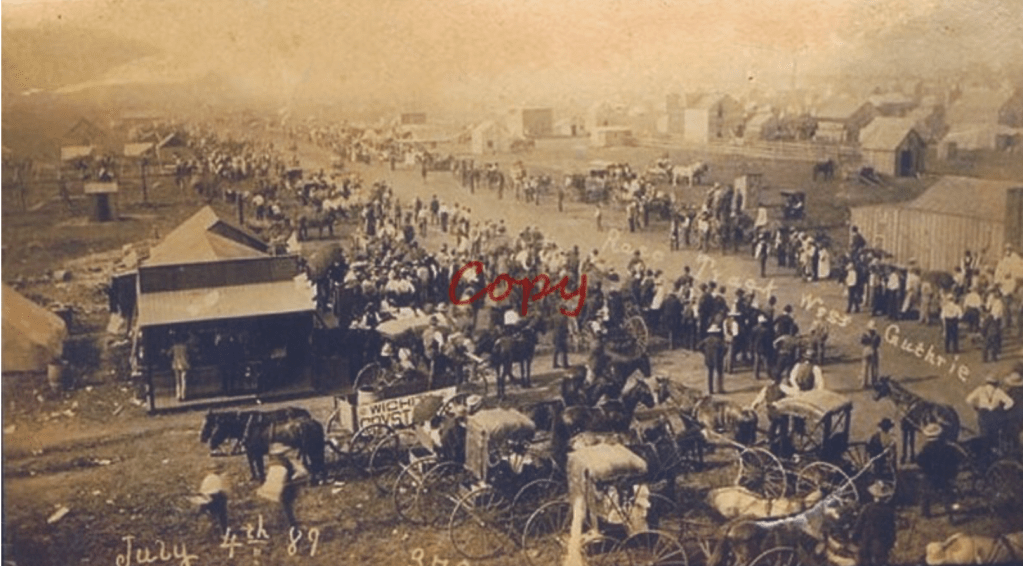
Guthrie Oklahoma 1989

The Arlington Hotel was the first of its kind in Guthrie. It offered rooms upstairs and meals downstairs. There was always a pot of coffee brewing. Cowboys shared breakfast with lawyers. Surveyors clinked glasses with newspaper journalists. Sometimes, soldiers bunked beside farmers who were too exhausted to argue over who got the corner bed.

Madame Star insisted that the Arlington be open 24 hours a day. “Because,” she would say, “history doesn’t keep office hours, and neither should hospitality.”

Meals were hot but straightforward: bacon and biscuits, black-eyed peas, and strong coffee so thick it would float a horseshoe. In the parlor, people came not just to rest, but to talk, to strike deals, to dream out loud. The hotel quickly became Guthrie’s beating heart—a place where the dust of the land met the polish of civilization.

Legend has it that the first territorial judge was hastily appointed just days after the Land Run. He spent his first night in Oklahoma sleeping in Arlington’s parlor. He used a law book for a pillow.

By the end of 1889, the town had a newspaper, a post office, and a telegraph line. Yet, it had always had the Arlington. At the center of it all was the name Madame Star. The image of a lady with her sleeves were rolled and her apron tied. Shouting instructions to her cook. While she poured hot coffee for a stranger fresh off the train.

She reportedly ran the hotel for nearly a decade. Then she vanished from public life as mysteriously as she had arrived. Some say she married a wealthy cattleman and relocated to the South. Others believe she returned to the stage, this time in Denver. But no one knows for sure. No one really knew what she looked like. Some thought they had seen her moving about the kitchen. Others said they saw her walking up the stairs. But she was too busy to stop and chat.

The photo taken that first year is what remains. It is a time capsule of promise. It shows a wooden hotel standing tall against a treeless prairie. And beneath the sign that reads “Arlington Hotel,” one can make out the name painted in bold:

“Prop. Madame Jeffries Star.”

The story was told up and down the rail lines. Its purpose was to pull more people into Oklahoma from the surrounding area. But, research indicates it seems Madame Jeffries Star isn’t a real historical figure. Instead, it is a name featured in an old promotional caption or photograph related to the Arlington Hotel. One photo description I found reads:

“Photograph of the Arlington Hotel, the first hotel in Guthrie, Oklahoma Territory. Prop. Madame Jeffries Star, meals served at all hours.”(1)

The name Madame Jeffries Star appears in promotional materials or signage tied to the Arlington Hotel. Yet, there’s no supporting historical record, biography, or documentation confirming she was a real person. It’s that Madame Star was a marketing persona—much like later figures including Ronald McDonald or Jake from State Farm.

The Arlington is often referred to as the first hotel in Guthrie, Oklahoma. But to avoid historical disputes, we prefer to say it was “one of the first.” There’s no verified evidence placing a real Madame Star anywhere in the country during that time period.

So who did own the hotel? The earliest known location was at 1st and Vilas, later moving around 1896 to North 2nd. Records suggest that the owner was James Douglas—the only documented proprietor I found.

Interestingly, I also came across references to over fifty other hotels operating in Guthrie between 1889 and 1910. They all did brisk business. This continued until the state capital was moved to Oklahoma City. Many in Guthrie have long considered this decision nothing short of a political robbery.
The Last Drop: A Cowboy’s Journey of Sacrifice

GROFF MEDIA 2024© TRUTH ENDURES IMDBPRO

Presented by benandsteve.com By: Benjamin Groff II©s

2–4 minutes

The Last Drop

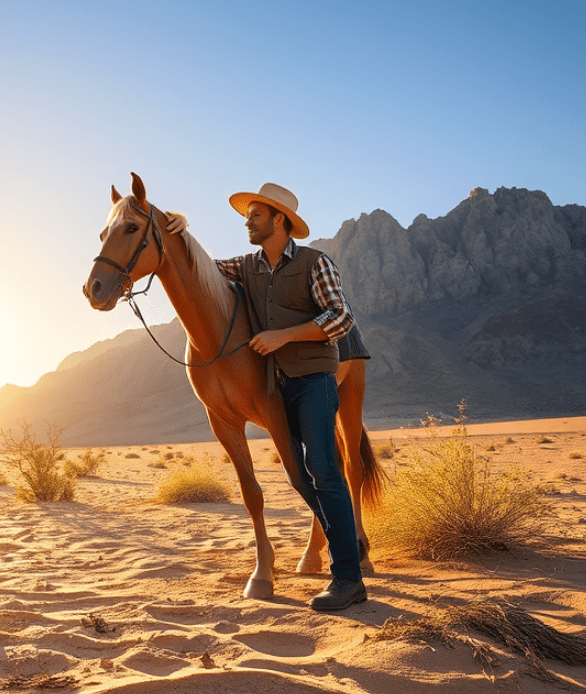
The desert stretched endlessly before him. A sea of golden sand and jagged rock shimmering under the merciless sun. Nathan Calloway, a weathered cowboy, pulled his bandanna higher over his nose. He squinted against the glare. Nathan’s loyal companion, Dusty, plodded steadily ahead, hooves sinking into the loose sand. It had been days since they left the last water hole. The journey across this godforsaken land felt like it would never end.

Nathan had one canteen slung across his saddle. He’d filled it to the brim at the last watering hole, which seemed a hundred miles behind them now. Each time Nathan drank, he made sure Dusty drank, too. He’d pour water into his old, sweat-stained hat, holding it steady while the horse lapped it.

Miles passed, the sun crawling toward the horizon without relief. Nathan should’ve run dry by now. His canteen weighted it, sloshing like he had just filled it. He didn’t question it—just kept pouring for Dusty, letting the horse drink before taking a sip himself.

By the time they reached the halfway mark, the world felt different. The heat played tricks on Nathan’s mind, distorting the horizon and bending the sky. The rhythmic clopping of Dusty’s hooves became a heartbeat against the silence.

Then, Dusty spoke.

“Thanks, partner,” 

The horse said, his voice deep and smooth as rolling thunder.

Nathan blinked hard, his throat tightening. 

“What was that?”

“For the water,”

Dusty said, shaking his mane. 

“I appreciate it.”

Nathan swallowed. He knew heat can make a man see things and hear things that weren’t real. But this felt different. He’d spent years with Dusty—maybe it just took this long to finally listen to him.

“You’re welcome, old boy,”

Nathan murmured, tipping the canteen over his hat again. Dusty drank, his dark eyes filled with something knowing, something grateful. The horse seemed to understand the sacrifice Nathan was making for him. Nathan, in turn, felt a deep sense of responsibility and care for his companion.

The two trudged on, man and horse, surviving together. The sun burned down. Their shadows stretched thin. The canteen never emptied as long as Nathan gave to Dusty first.

Then, just as the town rooftops shimmered into view, something changed.

Nathan stopped. His body ached, exhaustion weighing him down. The canteen felt lighter now. The end was so close—only a half-mile to go. He took a long, deep drink, the first he hadn’t shared. The water was warm but pure, sliding down his throat. Nathan’s hands trembled as he lowered the canteen.

Dusty faltered. The horse’s breath came shallow, his steps unsteady.

Nathan hesitated. He looked at the canteen, now feeling light as air. Nathan shook it—nothing.

The world spun. The last stretch of desert blurred. Nathan swayed in the saddle.

A mile outside town, they found him. The townsfolk rushed ahead, lifting the man from his horse, but Nathan Calloway was gone. Dusty stood by, head bowed, his sides heaving. The canteen dangled empty from the saddle, not a drop left inside.

“You almost made it,”

Someone whispered.

No one noticed Dusty raise his head slightly, his dark eyes glistening with something almost human. He looked toward where his rider lay, then toward the empty horizon.

Deep in the desert’s silence, a voice like rolling thunder whispered,

“We made it.”

The Days Of My Youth, When The West Was Really Wild!

A True Story By: Benjamin Groff© Groff Media 2024© Truth Endures

When the West was wild, and I was nine years old. Strapped on my waist were two silver cap guns and a gunslinger belt. My horse was a pony named Little Bit, named so because of the bridal’s bit size for the horse. On Saturday mornings, my youngest sister and I would watch the antics of Roy Rogers and Del Evans on black-and-white television. During the rest of the weekend and after school, we did our best to live out what we had seen in real life.

My sister’s horse was named Sugar and slightly bigger than mine. Still, mine was fast and could run at a lope, making the breeze hitting my face seem as though we were going at the speed of light. On our farm near a hill south of our home, there were miniature bluffs where my sister and I would ground tie our horse, hide behind, and carry out a shootout with the invisible villains we imagined approaching and trying to steal the farm. We lived miles from town, and this would be our entertainment. Our parents were aware of our riding trips, and while our dad would rather be present, he trusted us to be responsible and safe.

As we roamed the hills on those long, dusty afternoons, it felt like we were the only two kids in the world with such grand adventures. The bluffs were our fortress, the sky our ceiling, and the occasional hawk circling overhead became a witness to our endless battles against make-believe outlaws. The smell of fresh earth, mingled with the sweat of our horses, was intoxicating. It was freedom, pure and simple, a feeling that inspired us and now fills us with nostalgia.


Sometimes, when the wind would shift just right, I’d catch the faint scent of Mom’s cooking from the farmhouse and know it was nearly time to head home. But in those moments, I was Roy Rogers, protector of the ranch, with Little Bit galloping beneath me as we chased the bad guys across the plains.


One day, after an especially exciting shootout, our father must have noticed we’d been gone a little too long. We saw him standing on the front porch as we rounded the bend toward the house. Dad crossed his arms, and his face was stern—Dad always believed in knowing where we were, and he didn’t much like the idea of us riding off without him. But as we neared, I saw the corner of his mouth twitch and a glimmer of pride in his eyes. His silent support reassured us and made us feel more connected to him. Maybe he recognized some of the cowboy spirit in us, or perhaps it was the sight of two kids who had spent the day living their version of the Wild West.


He never scolded us that day, though he didn’t have to say much. With a smile, he helped us unsaddle our horses, and as the sun dipped low behind the hills, we knew our adventures would have to wait until the next day.


But deep down, I think Dad knew, just as we did, that the West wasn’t so wild after all—it was just our way of making the world a little bigger, a little braver, and a whole lot more fun. As the sun dipped low behind the hills, we knew our adventures would have to wait until the next day, filling us with excitement and anticipation for the next chapter of our Wild West escapades.

Me And My Dads Long Walk Home

A True Story By Benjamin Groff© Groff Media 2024© Truth Endures

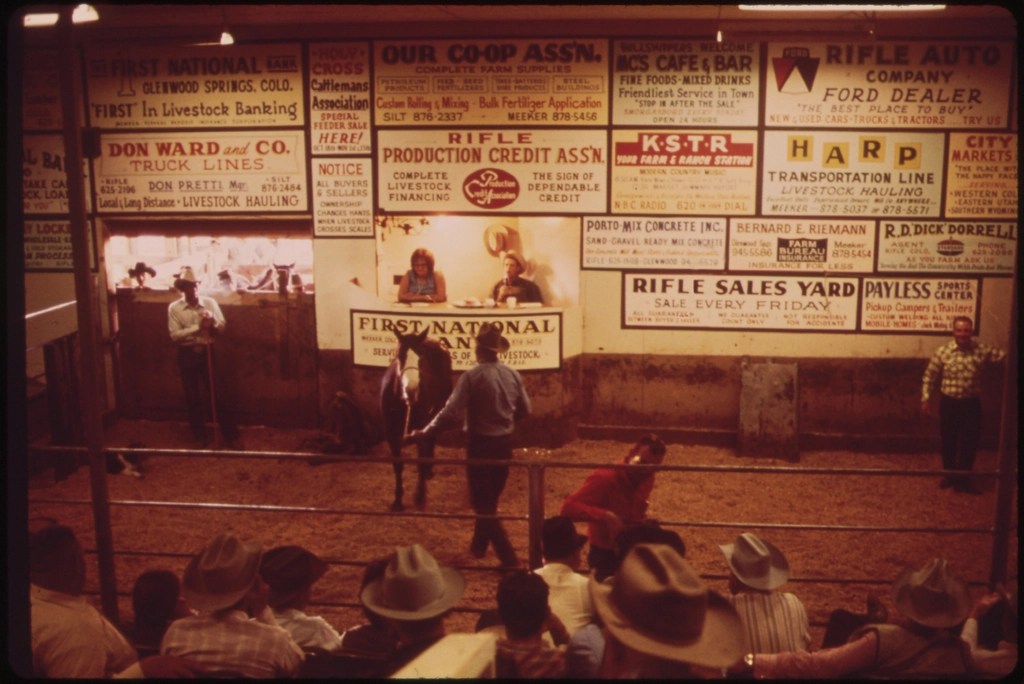
Saturday nights were a ritual for my dad and me. From the time I started school—maybe even before that—every weekend, we’d find ourselves at horse auctions in nearby cities. It was our thing, a bond that felt like a gift wrapped in the familiar scent of hay, the distant sound of auctioneers’ rapid chants, and the sight of the starry night sky as we drove back home.

One particular Saturday night, a local car dealer trying to sell my dad a truck sparked the beginning of this story. My dad, a barber in a small town of about 750 souls, knew a Chevrolet dealer down the street from his shop. The dealer walked in one day, convincing him – he needed to trade his pickup for a newer model. The offer was tempting—my dad could take the truck for the weekend, drive it Saturday night and Sunday, and bring it back on Monday if he decided to make the trade. My dad, a seasoned horse trader who loved a good deal, took the bait.


As Saturday evening approached, I was all set for the auction when my dad arrived in a pickup truck I’d never seen before. “I’ll explain on the way,” he said, inviting me to join him. At nine, we had already faced a few life-altering events together. We had a bond built on trust and shared experiences, even when they led us down rough roads. This bond, forged through our shared love for horse auctions and our mutual trust, was something I cherished deeply.


The drive to the auction was about 45 minutes. The city was only 30 miles away, but this was 1972—speed limits were lower, and the highways were narrower. We took our time, even pulling over on a dirt road for a quick bladder relief break, which was as much a part of our trips as the auctions themselves.


The truck didn’t impress me much. It wasn’t flashy or powerful, and I was surprised my dad had even considered it. But he was a horse trader through and through, always on the lookout for a good deal, and I never questioned his judgment.


The truck did its job—climbing hills, passing cars, and stopping without much fuss. It got us to the auction barn, where we parked and settled in for the night. The auction barn was a lively place, filled with the sounds of horses, the chatter of traders, and the occasional shout of an auctioneer.

The auction lasted until nearly 1:00 AM, but that was nothing new for us. If it had gone on until sunrise, I would have been wide awake beside him. My dad was the envy of every father in that barn, with his young son at his side, fully immersed in horse-trading.


Finally, we made our way out to the parking lot. The truck, waiting for us like a tired old dog, started—barely. It was as if it was protesting the idea of working on a Sunday. We headed back home, north on US Highway 281, moving into the night and now with the town of Gracemont behind us.


Our adventure took an unexpected turn when the truck’s engine stopped 6 miles north of Gracemont. It didn’t sputter or struggle—it just stopped like someone had flipped a switch. My dad, a former service station owner and a man who knew his way around an engine, tried everything to revive it. But the truck had given up, and it was now 1:45 AM.


Stranded on a deserted highway without signs of life, we began walking. We knocked on doors, and my dad stood in the road, instructing me to run if I heard dogs or gunshots. But no one responded. Four houses later, and we’re still waiting.


By now, it was 4:30 AM, and we’d been walking for what felt like forever. Somehow, we covered nearly twenty miles, returning to our farm southeast of Lookeba, Oklahoma. The only break we got was from two teenage boys out drinking beer and driving dirt roads in a Mach1 Mustang. They gave us a lift for the last mile and a half, a sight to behold—my dad, an old cowboy, crammed into the backseat with a couple of rowdy teens and his nine-year-old son.


When we finally entered the house, my mother was asleep on the sofa, a table lamp casting a warm glow in the dim room.


My dad gently nudged her and whispered, –––

“Marge, we’re home.” She said, “Okay, we should all go to bed.”

Riding For Their Lives, Two Cowboys Find One Another On The Way Home

A Story By Benjamin Groff© Groff Media2024©. Truth Endures

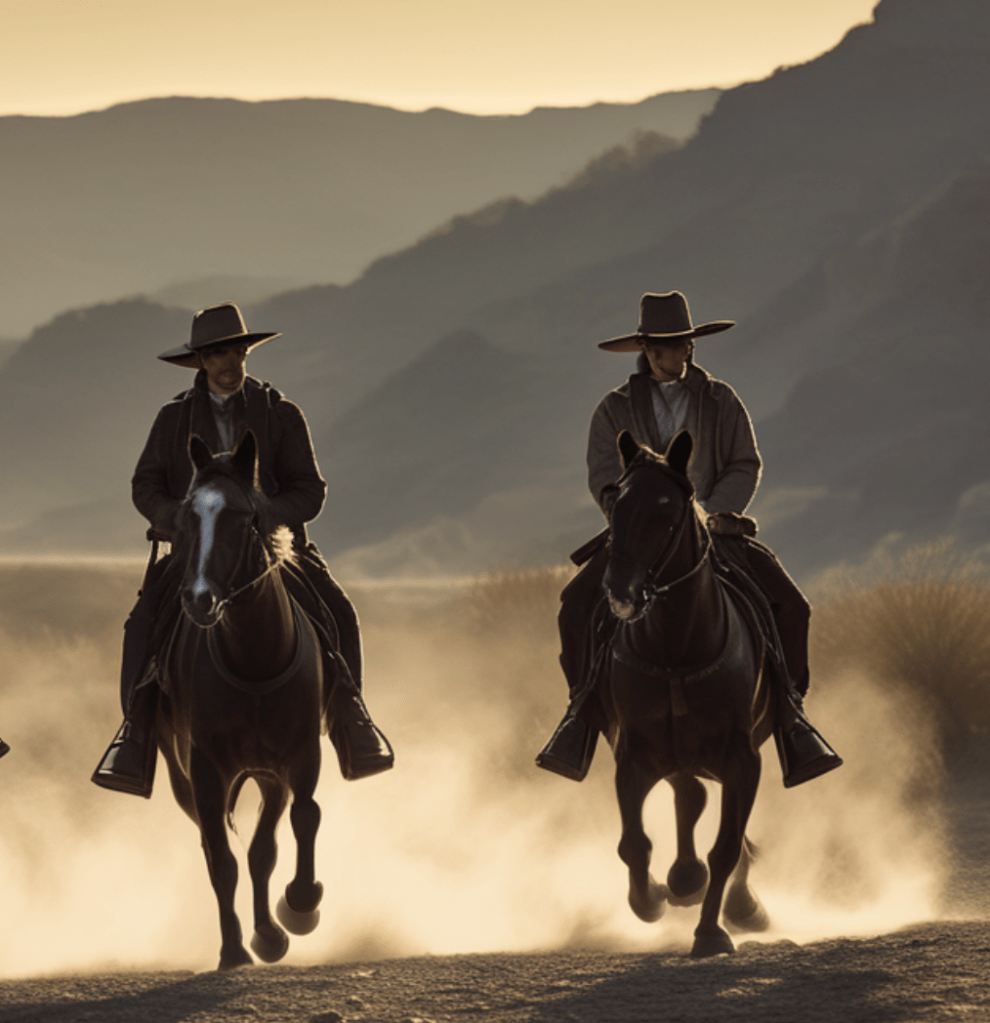
In the rugged expanse of the 1870s, the badlands of old Mexico were no place for the faint of heart. The sun beat down relentlessly on the arid landscape, casting long shadows as two figures galloped toward the distant border of the United States. Dust rose in their wake, marking their desperate flight from a fate they did not deserve.


Thomas “Tommy” Bellamy and Javier “Javi” Morales were not hardened outlaws, but the cards got dealt against them. In a dimly lit cantina, they had accused two desperados of cheating at poker—a claim that sparked a barfight and ended in gunfire. The local sheriff, a man of questionable integrity, saw an opportunity to pin the shootout on Tommy and Javi, branding them as evil men. With the threat of hard labor or the horrors of Mexican prisons looming, their only hope lay in reaching the safety of the U.S. border.


The journey was fraught with challenges. The badlands were an unforgiving terrain with little water and less mercy. Their horses, Midnight and Sol, were their only companions in the vast, empty wilderness. Days blended into nights as they pushed on, driven by the fear of capture and the promise of freedom.


As the miles stretched on, so did Tommy and Javi’s bond. In the quiet moments between the relentless pursuit, they found solace in each other’s company. Around the campfire, under a canopy of stars, they shared stories of their pasts—Tommy, the son of a Tennessee farmer, and Javi, the orphaned child of a Mexican peasant. Their differences faded in the face of their shared struggle, and a deep, unspoken connection began to blossom.


One night, as the embers of their fire glowed softly, Tommy glanced over at Javi. The flickering light cast shadows across Javi’s face, highlighting the weariness and determination etched into his features. Tommy felt a pang of emotion he could not quite place—a mix of admiration, respect, and more.


“Javi,” Tommy began hesitantly, “I don’t know what I’d do without you out here.”
Javi looked up, his dark eyes reflecting the flames. “We’re in this together, Tommy. Always have been, always will be.”


Their eyes locked, and the world around them seemed to fade away at that moment. Tommy reached out, his hand trembling slightly, and Javi met his touch with a quiet intensity. It was a tentative gesture, a bridge between fear and hope, and it spoke volumes more than words ever could.


As the days turned into weeks, their bond grew more pungent, transcending the physical hardships they faced. They encountered hostile landscapes, battled exhaustion, and evaded pursuers while drawing strength from each other. In a land where trust was scarce and betrayal familiar, they had found something rare and precious—unwavering loyalty and love.
One evening, as they neared the border, they found a small, abandoned shack. Exhausted and hungry, they decided to take shelter for the night. Inside, the air was cool, and the silence was broken only by the distant howls of coyotes. They sat close, their shoulders touching, as they shared a meager meal.


“Tommy,” Javi said softly, “do you ever think about what we’ll do once we cross the border?”
Tommy nodded, his gaze fixed on the horizon. “Yeah, I do. We’ll find a place to start fresh. Somewhere we can be free.”


Javi smiled, a rare sight that lit up his face. “As long as we’re together, we’ll make it.”
The border was within reach, but the journey was far from over. The two men knew the dangers that awaited them on the other side, but they faced them with a newfound determination. They were not just running from a past they did not deserve but running toward a future they could build together.


As dawn broke, they saddled their horses and got ready for the final leg of their ride. Tommy glanced at Javi, his heart swelling with pride and affection. They were outlaws by circumstance, but they had found something true and pure in each other.


With a shared nod, they spurred their horses forward, leaving behind the badlands of old Mexico and riding toward the promise of a new life. Their path was uncertain, but their bond was unbreakable, forged in the fires of adversity and tempered by the strength of their love.

Bella Saves The Day

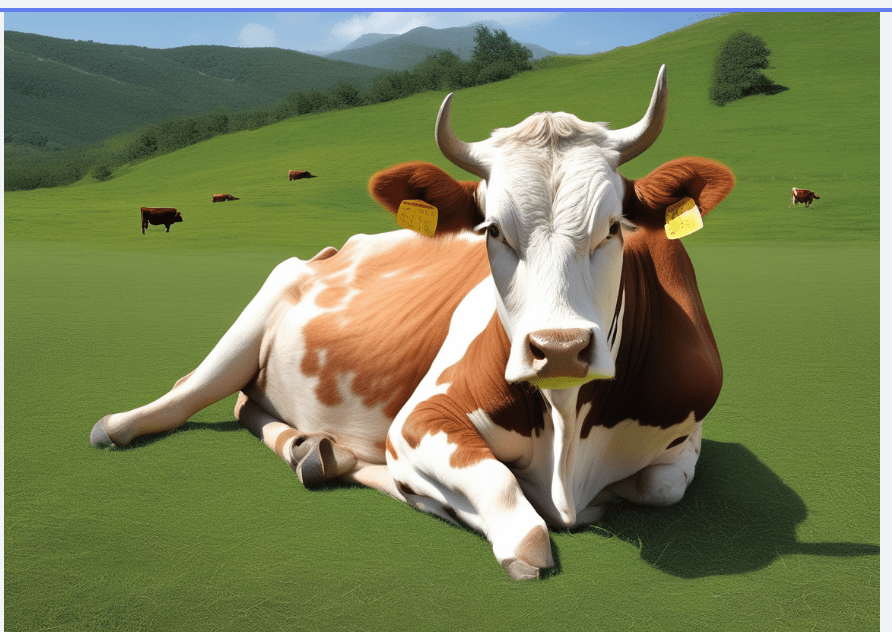
Once upon a time, in the idyllic countryside of Cloverfield, there lived a milk cow named Bella. Bella, with her gentle eyes and a coat that was brown and white as snow, was the heart and soul of a small family farm nestled between rolling hills and vibrant meadows. Her reputation preceded her, known throughout the village for her abundant milk and her kind and serene demeanor.

Each day, Bella’s world would brighten with the first light of dawn. 

As the sun peeked over the horizon, Farmer Joe, a kind-hearted man with a weathered face and a perpetual twinkle in his eye, would greet Bella with a warm smile, his voice filled with affection,

“Good morning, Bella!”

Bella, in turn, would respond with a soft moo, her eyes sparkling with joy at the sight of her favorite human.

Farmer Joe would lead Bella to the milking shed, where she would stand patiently, chewing on sweet clover while Farmer Joe hummed old folk tunes. He had a gentle touch, and Bella never felt any discomfort. As the rhythmic sound of milk filling the pail echoed through the shed, Bella felt a deep sense of contentment, knowing her milk would soon nourish the family and their neighbors.

Bella’s milk was known for its rich and creamy texture. Every morning, Farmer Joe’s wife, Martha, would churn some of the milk into butter and cheese, filling their kitchen with delicious aromas. Martha’s dairy products were the talk of the town, and people from neighboring villages would come to buy them. But Martha always saved a special treat for Bella: a handful of fresh, juicy apples.

After her morning milking, Bella spent her day grazing in the lush pastures, enjoying the company of her fellow cows and the playful calves that bounded around. She had a special friend among the herd, a young and curious calf named Daisy. Daisy followed Bella everywhere, imitating her every move and looking up to her as a wise and gentle mentor.

One day, as Bella and Daisy were grazing near the forest’s edge, they heard a faint, distressed bleating. Bella’s ears perked up, and she looked around to find the source of the sound. It didn’t take long to spot a tiny lamb stuck in a thorny bush, its wool tangled and its eyes wide with fear.

Bella, with her calm and reassuring presence, approached the lamb slowly. Daisy watched in awe as Bella, displaying a courage that belied her gentle nature, gently used her nose to nudge the lamb free from the thorns. Once the lamb was free, it nuzzled Bella in gratitude before scampering to find its flock.

Daisy trotted up to Bella, eyes wide with admiration.

“Bella, you’re so brave!”

she exclaimed.

As the sun began to set, casting a golden glow over Cloverfield, Farmer Joe came to bring Bella and the other cows back to the barn. He noticed a new spring in Bella’s step and the proud look in Daisy’s eyes.

“Had an adventure today, did we?”

he asked, patting Bella affectionately. Bella responded with a contented moo, happy to be home and looking forward to another peaceful night.

Inside the barn, Bella settled into her cozy stall filled with fresh straw. As she lay down, she felt a deep sense of fulfillment. Bella had her family, friends, and the beautiful Cloverfield to call home. She closed her eyes, listening to the soft rustling of the barn and the distant hoot of an owl, grateful for the life she led and the small joys of each day. The tranquility of the night enveloped her, promising a peaceful sleep and a new day filled with possibilities.

And so, Bella the milk cow drifted off to sleep, dreaming of green pastures and new adventures, ready to face whatever the next day would bring with her steady heart and gentle spirit.

~ ROSE ~ A WILD HORSE FOR A SUMMER WITH BUD

Photo by David Dibert on Pexels.com

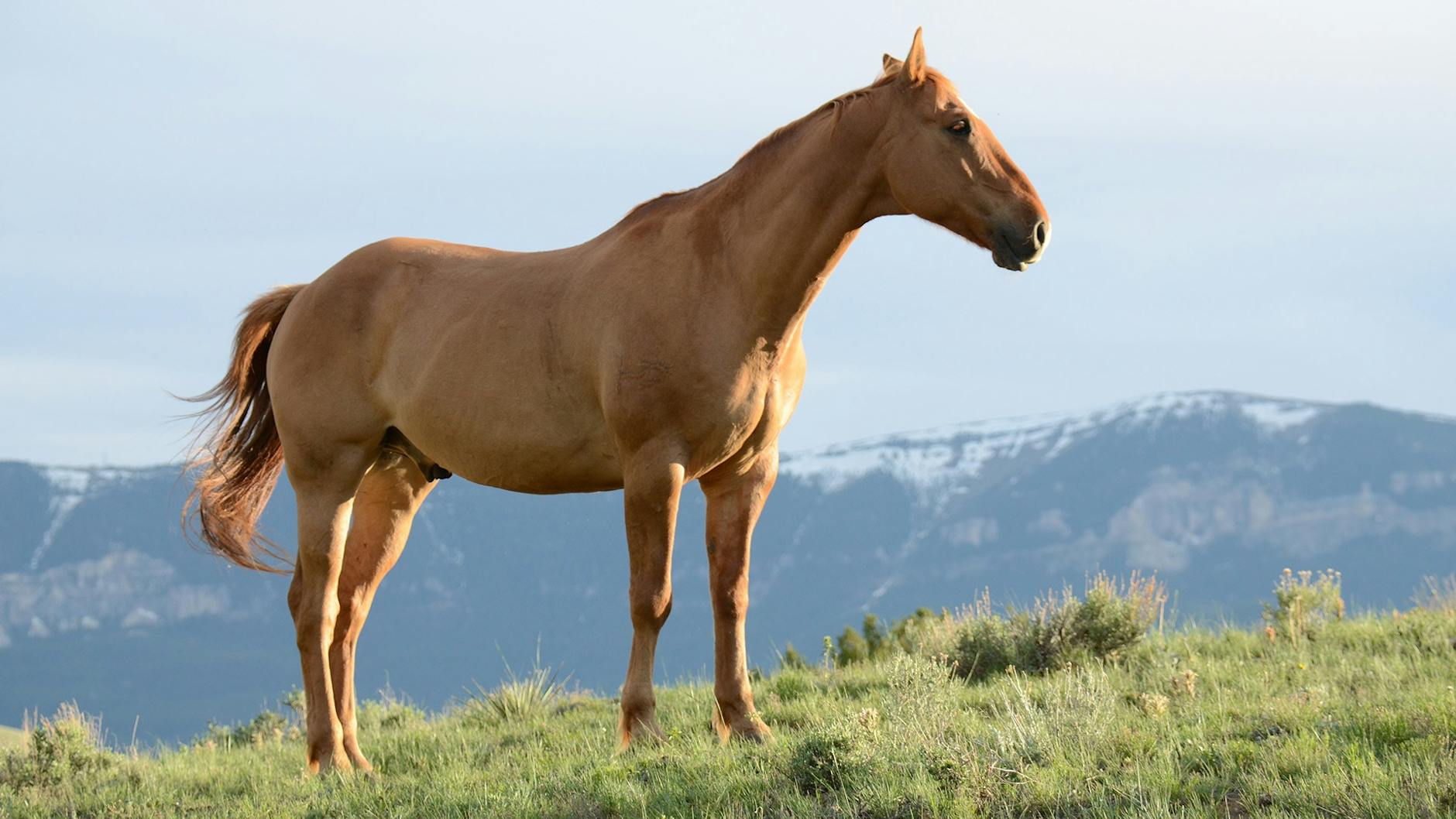
Bud was only 14 when he first met what would become his best friend for the summer. She had never been around people running wild in a pasture since birth. A 3-year-old Dunn filly, a horse commonly referred to in the region as a Red-River-Dunn for its color, a reddish tint coat with black stockings, mane, and tail. She had darker red hair around her mane and ears, slicked down her jacket, and features made for a beautiful horse.

Bud’s dad bought her at a horse auction, and he and Bud went to load Rose; she had never been touched. Getting a rope to place a halter on her was a rodeo of itself in the lots behind the auction house. Getting her loaded into a trailer was a site to see. She reared and fought, tearing the trailer’s tail lights, clearance lights, and various fixtures off the trailer before finally getting into the trailer, most likely tiring from repeated attempts to load. No whips or harsh attempts were made to get Rose into the trailer; she never saw such strange things and was frightened by their appearance.

After a ride home, Bud wondered if the new horse would still be standing; it was long after midnight when they arrived back at the farm. As they pulled into the barnyard, Bud’s dad backed the trailer into an empty pen and unloaded the horse. The father and son gave the horse some hay and water and a gallon of oats. Then, the two went to the house; it had been a long night.

A technique known as plow-driving or plow-reining

A few hours later, which most people would describe as the following day, Bud and his father were up with sunrise. That is the way you work on a farm. They went to do their chores. By the time Bud got to the barn where the new horse was, he was shocked to see his dad had a saddle on it and was behind it, plow-driving it. Plow-driving is a process where one runs a rope from each side of the bridal through the stirrups of a saddle to about ten feet behind the horse to teach it reign before mounting it and training it at riding; it is very similar to what you would see a farmer doing to guide his draw-horse behind a plow on a farm.

Bud had always heard of how his dad had a magic touch with horses but never witnessed the gift so many spoke about. What happened next would deepen the mystery even greater.

Bud’s dad saw him entering the pen and said,

“I am glad you are here; it is time for you to get on her. I think we will call her Rose.”

The father then proceeded to gather the reigns in his hands and walked up to steady the bridal and hold the horse steady. As he did, he angled the horse’s head, and Bud could see his father quietly speaking into the horse’s ear. Then his father said,

“It is ok now. You can get on.”

Bud stood there thinking that not 8 hours earlier, they had watched this horse, which a human had never touched, nearly destroy an endgate on a stock trailer, taking over an hour to load from a dock where it usually takes five minutes for the most problematic cases. But Bud trusted his dad and knew he would never place him in danger, so he went up. He was expecting to be going for an 8-second Bronco ride.

After Bud settled in the saddle, he first experienced what he would describe to friends and family as the Cadillac ride. Using just two leather reins from a halter and not a bridle, he clicked his mouth for Rose to go, and she began walking. He reigned her using the plow-rein system; he gradually began using neck touch reining by letting the rein on the neck tell the horse which direction you wanted it to go. Rose was incredibly talented, a fast learner, and became acquainted with people fast. On the first day, the father and son had the horse performing levels of training that typically take weeks or months for other horses.

Bud’s dad said, as the day progressed,

“Rose will be yours for the summer. We sold Sam, which was your horse, so I wanted to buy this green horse to get you something to work on.”

A green horse needs training in horsemanship, riding, leading, mannerisms, and behavior. Bud feared Rose would be a challenge if she had any flashbacks and wanted to return to her before human days. 

The next day, Bud’s biggest concern was the end of school before Summer break. He had fourth-quarter tests to pass. Rose would have to hold until he had his schooling squared away, but he knew she’d be waiting for the summer that was about to come.

Watch for part 2 tomorrow!