“Herbie” ––– The Tiny Christmas Tree Searches For A Family

This story is pulled from the archives as a celebration for the season edition.
Groff Media 2024© Truth Endures IMDbPro

Presented by benandsteve.com By: Benjamin Groff II©

3–4 minutes

In a quiet forest stood a skinny cedar tree, so different from all the others. The tall, majestic cedars around him stretched their lush branches high. In contrast, the little tree looked scrawny. It had sparse needles and a slightly crooked trunk.

People often came to the forest to select the perfect Christmas tree, always passing him by.

The other trees whispered and rustled in the wind, teasing him.

“Look at you, Herbie,”

They said, giving him the nickname that stuck.

“No one’s ever going to want you.”

Herbie tried to stand tall, but he knew they were right. Year after year, Herbie remained as the big, beautiful trees were chosen and taken away. The forest changed around him. He stayed in his lonely spot. He dreamed of what it would feel like to be wanted.

Then, one crisp winter morning, the tree cutters came again, their saws buzzing. Herbie didn’t expect to get noticed, but this time, something different happened. As they cleared their path, one of the workers stopped, scratched his head, and said,

“Well, let’s take this little one, too. Someone might like it.”

Herbie felt the sharp blade cut through his trunk. Before he could fully understand what was happening, he was bundled with the others and taken to the city.

A sea of magnificent Christmas trees surrounded Herbie at the tree lot. Their branches glistened with dew, and they stood tall and proud. Compared to them, Herbie felt even smaller, and his crooked trunk made him look even more awkward.

Shoppers strolled by, admiring the grand trees and taking them home individually. Herbie overheard a nearby pine whisper,

“Face it, Herbie, you’re not cut out for this. No one’s going to pick you.”

The lot grew emptier daily, and Herbie’s hope dwindled. By Christmas Eve, he was the only tree left, standing under the dim glow of a street lamp. The wind whistled through his sparse branches, and Herbie prepared for the inevitable—being tossed away, unloved.

But just as Herbie’s spirits hit their lowest, a tiny voice broke through the cold night air.

“Mama, look! That one’s perfect!”

Herbie lifted his branches slightly in surprise. A little boy with messy hair and bright, eager eyes was pointing at him.

“Are you sure, Tommy?”

His mother asked, crouching beside him,

“This tree is so small. And, well, it’s not exactly full.”

––––

“Exactly!”

Tommy said with a grin.

“It’s different, just like me. We’ll make it the best Christmas tree ever!”

Herbie’s heart soared as Tommy and his mother carefully carried him home. Tommy got to work in their cozy living room, stringing popcorn and cranberries across Herbie’s branches. His mother tucked shiny ornaments into every gap, and finally, they placed a glowing star on top.

Herbie couldn’t believe it. For the first time, he felt truly beautiful. He wasn’t just a funny-looking tree anymore—a Christmas tree.
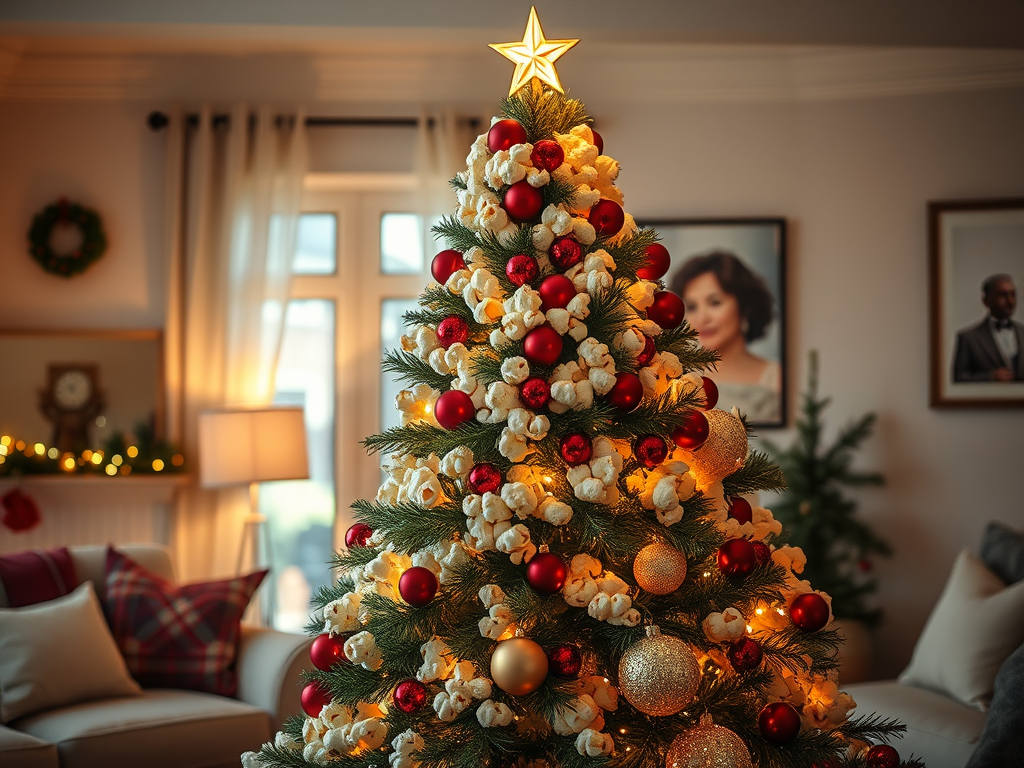
On Christmas morning, Herbie watched with joy as Tommy tore through his presents, his laughter filling the room. The warmth of the fire danced on Herbie’s branches, and he realized he had never felt so happy.

When the holiday ended, Herbie feared getting thrown out like many trees before him. But instead, Tommy’s family carried him to their backyard.

Tommy said, patting his trunk as they planted him firmly in the soil.

“You’re part of our family now, Herbie,”

Year after year, as Herbie grew taller and fuller, Tommy would decorate him anew, even in the coldest winters.

Herbie learned that it wasn’t about how perfect he looked or how he compared to the other trees. The love and care he received—and gave—made him truly special.

And so, Herbie stood proudly, knowing he would always be part of something wonderful: a family.

Can Your Differences Bring Us Together?

1–2 minutes

What Difference Does It Make?

Photo by cottonbro studio on Pexels.com

What difference does it really make — who we are or who we love? We accept without question that some people like black hair, others like blondes, and some like redheads. Some are tall, some are short, some are in between. Yet history shows us how quickly an innocent difference can become a target.

Imagine if tomorrow there was an eruption of public hatred toward blondes. They dye their hair to avoid detection. Or if short people were suddenly ostracized, they try to stay inside except during “short hours.” Many people already camouflage parts of themselves—how they speak, dress, or behave—to stay safe in public. But not everyone can change.

That’s what today’s reflection is about: What do we do with differences that can’t be hidden or changed? When does society’s discomfort become cruelty? Should people who can’t “blend in” be cast aside, alienated, or worse? We’re at our best when we challenge these questions. We must remind ourselves that our shared humanity matters far more than our differences.

A Hopeful Call-to-Action

If differences can be used to divide, they can also be used to unite. Every person you meet carries something unique—something you can’t see at first glance. Rather than asking people to blend in or hide, we can create a world where authenticity is safe and celebrated. Each act of kindness is important. Each open conversation contributes to understanding. Each refusal to judge by appearance fosters inclusivity. These are steps toward a society that values humanity over uniformity. The question isn’t how we can camouflage ourselves—it’s how we can build a place where no one needs to.


By Benjamin GroffMedia© | benandsteve.com | ©2025 

The Man Who Belonged: A Dark Psychological Mystery

GROFF MEDIA 2024© TRUTH ENDURES IMDBPRO

Presented by benandsteve.com By: Benjamin Groff II©s

4–6 minutes

The Man Who Belonged

Ethan Caldwell woke up every morning with the certainty that he was where he was supposed to be. His town, Dunridge, was a place people left but rarely arrived at. It was a quiet, tree-lined community. The roads curved in familiar ways. The seasons changed precisely when expected. The faces at the local diner never seemed to age.

He belonged here. He had always belonged here.

And yet, something was wrong.

It wasn’t how he looked—Ethan was an ordinary man with an ordinary life. He had ten fingers, ten toes, and a name that didn’t feel borrowed. Ethan had memories of childhood scraped knees. He remembered teenage love. His father taught him how to drive down the old county road. He worked at the hardware store. He knew which coffee shop made the best brew. He navigate the town with his eyes closed.

But deep within him, something itched. It wasn’t a feeling of displacement—it was the opposite.

He fit in too well.

There were no awkward silences when he spoke to strangers. No one ever misheard his name or mistook him for someone else. When he ordered at the diner, the waitress nodded as if she had already known his choice. His keys never went missing. The mail always arrived right when he expected.

He tried to shake the feeling, but it settled deeper.

One night, he walked the streets of Dunridge in search of something—he didn’t know what. The town was calm, quiet, and lit by the amber glow of streetlamps. As he passed the shops, he caught his reflection in the glass.

He looked at himself. Normal.

But the reflection wasn’t watching him.

It was waiting.

A chill ran down his spine, and Ethan took a step back. 

The moment he did, the feeling disappeared. He was himself again, the same Ethan Caldwell who had lived here his whole life.

But the thought lingered: Had he lived here his whole life?

The next day, he tried to recall his first memory of Dunridge. It was not just any memory. It was his first one, the earliest thing he remembered.

But there was nothing before the age of twenty-seven.

That wasn’t right.

He had childhood memories. He had school pictures. He had friends who swore they’d known him since grade school.

Hadn’t they?

He asked his neighbor, Mrs. Wallace, how long she had lived in Dunridge. She smiled, hands on her porch railing.

“Oh, all my life.”

“And me?” 

He asked.

She blinked, her smile unwavering. 

“Why, Ethan, you’ve always been here.”

He swallowed. 

“Right. Always.”

Mrs. Wallace nodded as if the question itself was odd. 

“You belong here, Ethan. Always have.”

His stomach twisted.

Somewhere in the distance, a clock tower chimed. Ethan had never noticed it before.

And suddenly, he was sure—something was wrong with this place.

Or maybe something was wrong with him.

That night, incapable of shaking the feeling, Ethan wandered the streets again. The town was as still as ever, its perfection unnerving. He passed the grocery store, the barbershop, and the town hall. Then he found himself in front of the library—its doors unlocked, though he had never seen anyone inside past closing.

He stepped in.

Dust motes filtered in the air, interrupted by his presence. The smell of old paper filled his nostrils. He ran his fingers along the spines of books until he reached the town records. He pulled one down and flipped through its pages.

And his blood ran cold.

There were no births recorded in Dunridge. No deaths. Only arrivals.

A new book, bound in leather, sat on a lower shelf. Inside, Ethan found the names of the people he’d known all his life next to brief descriptions. Scanning the pages, his hands trembled as he read:

Ernest Thatcher – Arrived: October 12, 1956 – Deformed hands, two thumbs on the left hand.

Lillian Monroe – Born without eyes

Samuel Dwyer – three-legged, five-arms, ousted by family at age 1

Patricia Thorne – Hairless, extra digits on each hand

The list went on. Each name was followed by a peculiarity—some mild, others grotesque, all rejected from wherever they came.

Ethan hesitated before flipping to the last page, where his name should have been. And when he found it, he almost dropped the book.

Ethan Calloway – 27 years old. No known origin. No memories before arrival. There is no past to recall. No home before Dunridge.

His breath hitched. His hands shook.

The town knew. All the townsfolk knew.

They were all misfits. They were cast out, discarded, and abandoned. They were left to disappear into a world where their abnormalities were masked. No one asked questions in this world. No one looked out of place because everyone had become perfect.

Even Ethan himself.

But why was he here? Why was he the only one who looked –– normal?

He turned to the mirror again, staring at his reflection under the streetlight.

And then, for the first time, he indeed saw himself.

He saw what he had been blind to all along.

And that’s when the horror set in.

Ethan had ears where his nose should be. There was a mouth where his ears should go. A nose sat on top of his head. His eyes looked back at him from his throat. Then, Ethan wished that he had never questioned his being. 

Sometimes, it is best to not change memories.

Embracing Differences: Robella’s Journey to Belonging

Robella, a woman with physical differences, was born into a world that seemed to reject her. Her hair grew out long and kinky on one side and short and stubby on the other, and she was nearly bald in the back. Her left leg was shorter than the right. The elbow on her right arm is three inches higher than the left. Her nose had a long mole on end, which, when she was in school, all the children nicknamed her ‘witchy-pooh.’ Her body had grown misshaped, and she had to wear specially-made clothes that she made since her parents had distanced themselves from her for being so embarrassing.

Robella, often misunderstood and feared, would rummage the town’s alleys for whatever she could find. She would growl feverishly at anyone who said hello to her or offered to help her, a response born out of years of rejection. However, even this didn’t stop the town’s nicest people from trying to help her. Mrs. Meyers, who ran the bakery, would make a point to set a hot loaf of bread out on the back steps of her store every Monday, knowing that Robella would soon be looking for items the store owners had discarded. Robella would rummage through the cans and junk in the alley until she got to the bread, every week she would sniff it and say out loud,

“Mrs. Myers Bakery always forgets and leaves a loaf of bread in the oven over the weekend. My gain!”

She proceeded down the alley, finding other items that store owners had carefully placed for her, knowing where she would look for them. Robella would find the goods, and she would let out a grunt and laugh and proceed on.

One cold winter day, as Robella made her usual rounds through the alley, she stumbled upon something unexpected. There was a small, wrapped package with a note attached among the carefully placed items. Curiosity piqued, and she hesitated before picking it up.

The note read:

“To Robella,
You are special and loved just as you are. Please join us at the town square tonight for a surprise.

With love,
Your Neighbors”

Robella frowned and grumbled to herself, unsure what to make of it. Despite her mistrust, a flicker of curiosity and hope stirred within her. She decided to see what kind of joke the townspeople might be playing on her.

As the evening approached, Robella made her way to the town square, staying in the shadows so she would not be seen. To her surprise, the square was transformed into a magical wonderland, filled with lights and decorations. The townspeople had gathered, and a large table was set with all kinds of delicious food. At the center of it all stood Mrs. Meyers, holding a beautifully decorated cake.

“Robella, we’ve been waiting for you,”

Mrs. Meyers called warmly, spotting her in the shadows. The crowd turned, and they all smiled at her, to her amazement.


“Come, join us, “
one of the townspeople said, extending a hand towards her.

“We’ve prepared a feast in your honor.”

Robella hesitated, unsure of what to make of this unexpected show of kindness. But Mrs. Meyers, sensing her hesitation, walked over and gently took her hand, leading her to the center of the square.

“This is for you, dear. We want you to know that we see you, we care about you, and we want you to be part of our community. Your differences are what make you special, and we celebrate them.”

Tears welled up in Robella’s eyes. For so long, she had felt nothing but rejection and loneliness. Now, faced with genuine kindness and acceptance, her hardened exterior began to crack. She felt a mix of emotions-disbelief, gratitude, and a glimmer of hope. Could it be that she was finally finding a place where she belonged?

“But I’m so different,”
she whispered, looking down.

“And that makes you unique and wonderful,”
Mrs. Meyers replied.

“We all have our differences, which makes our community rich and beautiful.”

The townspeople came forward one by one, each offering a word of kindness or a small gift. They shared stories of their struggles and how they had overcome them with the support of each other. Robella listened, her heart slowly warming with each tale.

As the night went on, Robella felt something she hadn’t felt in years: a sense of belonging. She realized that she didn’t have to be alone or angry anymore. These people truly cared for her, and they wanted her to be a part of their lives. Their kindness, their acceptance, had the power to transform her life.

From that day forward, Robella became an integral part of the community. She used her skills to help others, sewing clothes for those in need and sharing her resourcefulness. The townspeople, in turn, included her in their daily lives, and she formed deep, meaningful friendships. It was the collective acceptance and kindness of the community that had transformed her life, showing her that she was not alone and that her differences were not a barrier to belonging.

Robella’s heart softened, and her once harsh demeanor transformed into one of kindness and warmth. She learned to smile and laugh genuinely, and the townspeople celebrated her unique qualities, seeing the beauty in her differences. She became an integral part of the community, using her skills to help others, sewing clothes for those in need and sharing her resourcefulness. The townspeople, in turn, included her in their daily lives, and she formed deep, meaningful friendships.