Sharing A Story About “Cleaning Nana’s House” by KJ Stafford

By Benjamin GroffMedia© | benandsteve.com | 2025 Truth Endures©

4–7 minutes

My mother will turn 95 this August—if she makes it that far. Of the six siblings, only my youngest sister and I have cared for her in her old age. Two of the others gradually drifted away after our father passed. They chose, for their own reasons, to cut contact year by year. The two oldest brothers have both died in recent years.

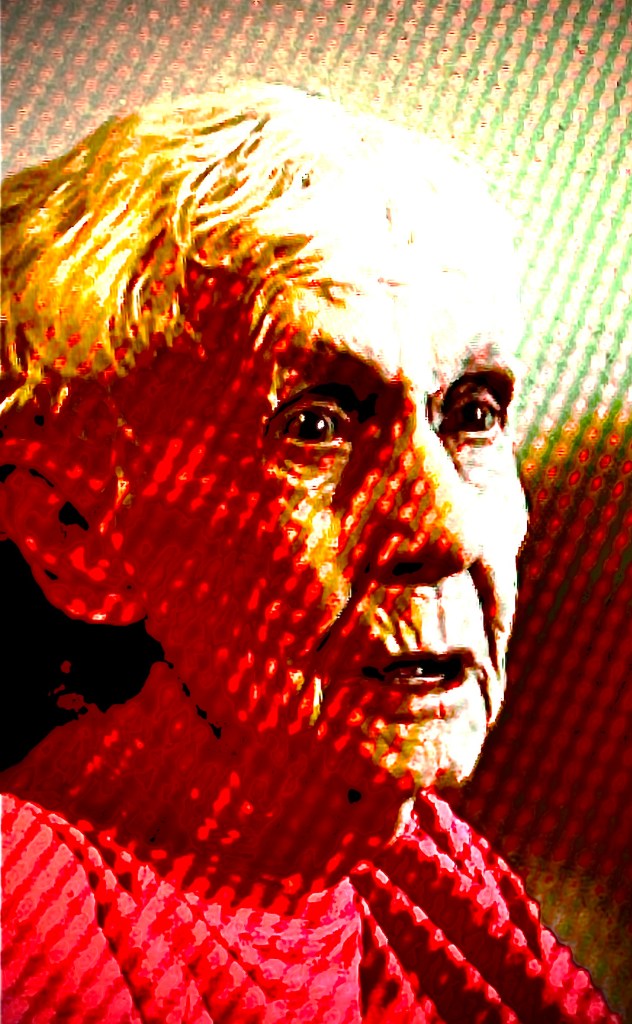
My mother has always had a sharp mind and a strong, toned body. She was constantly on the move, always busy. Even into her 90s, she remained active and mentally alert. But over the past year, she’s started to slip. She now experiences episodes of sundowning. During these moments, she loses track of what she’s saying. She also becomes unaware of where she is or where she’s been.
She now lives far away from me. Our once hour-long phone conversations, filled with talk of daily life, have been reduced to five minutes or less. Her thoughts drift. She forgets what we’re discussing, where she is, or even who she’s speaking with.

The next is a piece shared with me by KJ Stafford, titled “Cleaning Nana’s House.” It resonated deeply. My sisters and I cleaned the house we’d all grown up in. This was before my mother moved in with me for several years. She later moved in with my sister, where she now lives. Stafford’s words capture an experience I believe many can relate to, and with her blessing, I’m sharing it here.

CLEANING NANA’S HOUSE

BY: KJ Stafford

In January of 2024 we moved my Nana into my parents house. Her health was failing, and so was her mind. She was no longer able to live alone anymore and she hated that fact. The woman had been independent her entire life. And now at 90 years old she was forced to be cared for. She could no longer take care of herself. I remember the thought hurting my heart. 


Fast forward to February 2025, I held her hand hours before she passed. I had never experienced death in that way before. Don’t get me wrong, I’ve dealt with death- both grandpa’s, aunts, uncles… but this was different. It had never been so in my face the way this was. I had never been physically there, witnessing the deterioration every day, every hour. I had never actually watched death slowly take someone. They are memories that will be buried inside my brain until death comes for me. Descriptions that will never make it down on paper ––


April 25th 2025: We piled in our cars, drove the 7 hours to my Nana’s house and began the task of clearing out our memories to make room for someone else’s. My Nana had lived in that house for over 50 years. My mom grew up there. My siblings and I spent weeks there during the summer and until 2024 every Thanksgiving of my life was spent in that tiny dining room around the round, antique wood table. The kitchen looks as if it got stuck in the 70’s. Yellow countertops remind me of sunflowers. The floor is tiled and worn from years of cooking. Years of family gatherings. Years of love. There’s the iconic green couch that sits in the living room…or sat- now it will be given to another family. Moved into a different living room after sitting comfortably in it’s corner for all of these years.

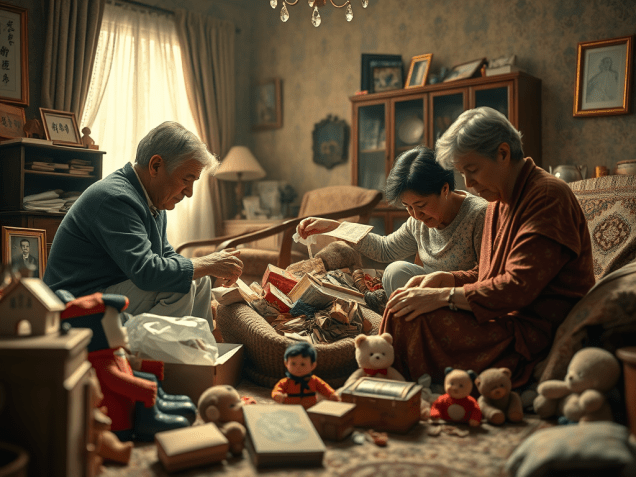
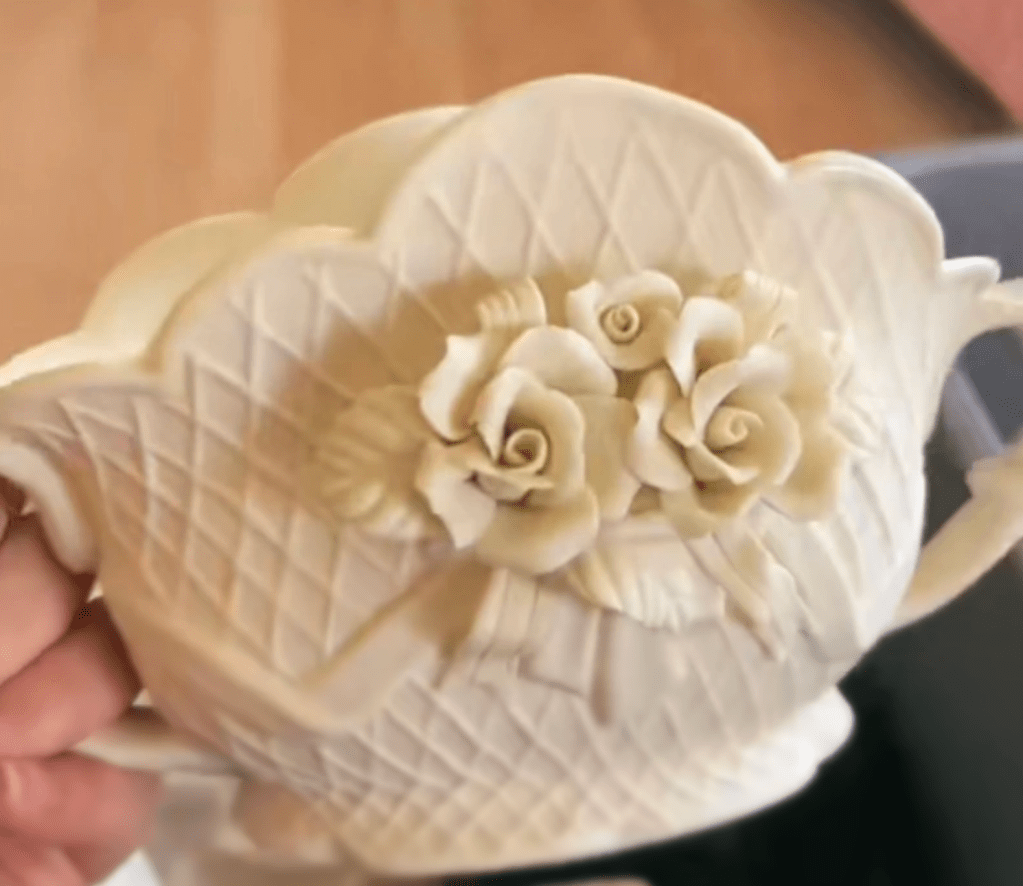
We found love letters from my Grampy to my Nana, boxes of old black and white photographs, ancient toys, jewelry, coats that have somehow found their way back in style, antique glass and trinkets galore. Each find triggering a specific memory. Each find making me wish I could go back 15 years ago. When I was just coming up for the week to visit. Instead of it being the last time within these cozy walls. 

My Nana was by far the strongest woman I’ve ever met. She grew up in Canada, abandoned by her mother before she was 8 years old, left with an alcoholic for a father who was never around. She spent Canadian winters in their small, wooden shack often times by herself. Venturing out into the thick snow every so often to find more logs for the fire- the only thing keeping her warm enough to survive. Scavenging for scraps of food. Eventually being passed on and off to relatives, never having a home to call her own. Never truly feeling loved by a family….


Upon finally coming to America, she met her first husband. She married him when she was only 17 and had three children by the time she was 27. He was a drunk. He was a cheater. She deserved better. One night he got back a little too late, my Nana kicked him out. Divorced his ass. She was the talk of the town. It was unheard of at that time. What woman with three young children abandons her husband? A STRONG one, that’s who. 


She set goals for herself. She knew she wanted to work at the University. She knew that is where she would meet someone else. And she DID. She worked hard until she got hired. And shortly after, she met my Grampy. The sweetest man to ever walk this earth. Years later they had my Mom. 
Without my Nana’s strength. Without her knowing her self-worth, I would have never existed. Had she not followed her intuition. Had she not trusted her gut, there would be no me. No family. And for that, I am forever grateful. 


I like to think she gave me a little of that strength. I feel it within myself sometimes. It’s why I took Stafford as my pen name. I am so honored. Honored that I was able to grow up with her in my life. Thankful that I had her to teach me how to become a strong woman. I vow to live my life as my Nana did. Never accepting less than I deserve and never being afraid to put myself out there, take a risk, trust my gut and grow. 

To read the original story CLEANING NANA’S HOUSE by KJ Stafford click here.

Clicking the line above will also supply images that go with the story.
Unraveling Family Ties: A Crime Scene Journey

Benjamin GroffMedia© | benandsteve.com | 2025 Truth Endures©

4–6 minutes

“The Andersons”

Tim Roff Meets The Andersons
Tim Roff The Andersons Assignment

It was supposed to be a quick assignment.

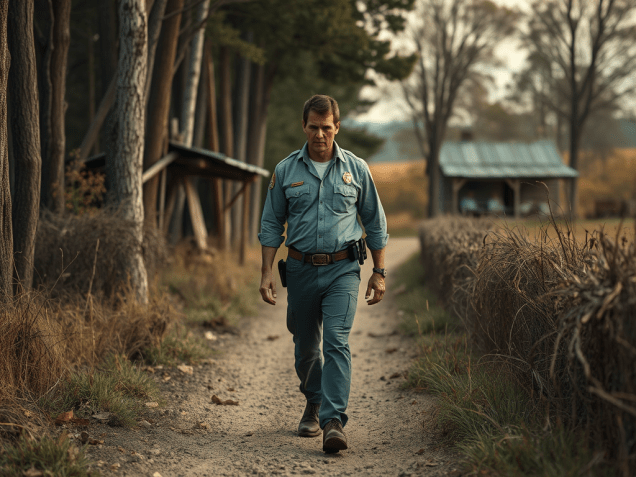
Officer Tim Roff was headed to a remote corner of the county to interview a key witness. This witness was a young girl named Cissy, the only eyewitness to a serious crime.

Nothing about it sounded very difficult. It was a straightforward drive, with a few questions, and Tim wanted to return for lunch.

He fueled his cruiser and pulled out of Delk View, heading west on the highway. The farther he drove, the thinner the traffic got. Eventually, it was just him and the radio. A long ribbon of blacktop stretched toward the horizon.

Forty miles later, he turned off at a row of faded, leaning mailboxes. They looked like they’d been abandoned decades ago.

A dirt road led up a shallow ridge, ending at a rusted metal gate with a handmade sign nailed to it:

“IF U R HEar TO C the Anderson Folks, U-will walk up here.”

Tim squinted at it.

“Charming.”

He parked the cruiser on the shoulder and climbed the gate, boots crunching dry gravel as he started the walk. It was unusually quiet—no dogs barking, livestock, or even a bird in the trees. That struck him as odd for a farm.

The shack was sagging. It stood at the end of the trail, leaning slightly. It looked like it had given up on fighting gravity. Tim knocked. After a few moments, the door creaked open, revealing a woman standing in shadow.

“Ma’am,” Tim said, flashing his badge. “Officer Roff, Delk View PD. I’m here to speak with Cissy.”

The woman gave him a long, assessing look before replying, 

“I’m her mother. But Cissy ain’t here. She’s up at my great-grandparents’ place.”

Of course, she was.

The woman stepped outside and pointed behind the shack.

“You’ll wanna follow the trail goin’ north. Not northeast, not northwest—north. Climb the hill. When you hit the first house, keep going. That ain’t it. Go around back and find the east trail. That’ll get you to Great-Grand Pap’s.”

Tim nodded, trying to chart the path mentally. 

“Appreciate it,”

He said. 

“Wish I’d worn jeans.”

The trail was steep and rocky, winding uphill through thickets and trees. After nearly an hour of hiking, sweat soaking through Tim’s dress shirt, he reached a cabin. An elderly couple sat out front on mismatched chairs, sipping something cold.

“You lost?”

The old man called out.

Tim waved.

“Looking for Great-Grand Pap’s place. Cissy’s supposed to be there.”

The woman laughed. 

“You’re close. Just head east from here. And watch out for bees—they’ve been feisty.”

Tim scratched his neck, thinking out loud ––

“Bees? Terrific.”

Tim trudged on and eventually reached a much nicer house between two ridgelines. Two cars were parked out back.

“You’ve got to be kidding me,” 

He muttered.

“They have a driveway.”

A white-haired man and woman sat on the stoop, smiling like they’d been expecting him.

“Howdy!”

They chimed in unison.

“Howdy,”

Tim replied, a little breathless.

“I’m Officer Roff. I need to speak with Cissy.”

The couple exchanged a look.

“She’s over at Grand-Uncle Maxwell’s place.”

The old man said.

Tim sighed. 

“Grand-Uncle?”

“Yup. Her grandfather’s brother. She’s watchin’ him today while his wife’s out shoppin’.”

Tim, peeking through his sunglasses, looks up –

“Watching him?”

The great-grandfather nodded. 

“Ain’t much to it. Maxwell’s tied to a tree out front. Forty-foot chain. Keeps him from wanderin’ off.”

Tim blinked. 

“I—what?

“Yeah,”

The old man said. 

“See, Maxwell was showin’ his boy how to clean a rifle last year—told him you never clean a loaded gun. The boy asked why. So Maxwell loaded it up, held the barrel to his head like he was cleanin’ it. And said, ‘Because if you pull the trigger, this could hap—’ And bam. Shot himself right through the nose and out the top of his skull.”

The woman nodded solemnly. 

“He ain’t been the same since. I can’t trust him to stay put. We lost three family members to gun cleanin’ accidents.”

“And y’all still own guns?”

Tim asked.

“Well, of course,”

The old man said. 

“But we’re real careful now.”

Tim rubbed the back of his neck. 

“So… why is he her Grand-Uncle and not a Great-Uncle?”

The old man sat up a little straighter. 

“Well, see, Cissy’s mama’s brothers are her uncles. Her mama’s parents are her grandparents. You followin’? But Maxwell’s her grandfather’s brother—so he’s a grand-uncle—different branch. You followin’? My brothers are Great uncles, just like I am a Great Grandpa.You followin’?

“I think so,”

Tim said. 

“But I’m pretty sure Ancestry.com would call him a great-uncle.”

“City folks,”

The old man muttered, shaking his head.

Eventually, they led Tim to Cissy. She was a wide-eyed girl with a thick accent. Her vocabulary included terms Tim had never heard. She explained what she saw, pointing to where it happened, who was there, and what she heard. Tim took meticulous notes. He jotted down not just the events but also the phrases she used. Some of these need translating in court.

He chuckled softly in the cruiser as he rewound his way to civilization. He thought about the chains and the bees. The hand-drawn family tree in his mind intrigued him. He pondered the odd logic of backwoods kinship.

And he couldn’t help but remember what the old man had told him as he left:

“Cousins are once or twice removed, then after that, well… you can marry ’em.”

Tim hoped the DA had a good sense of humor—and a good translator.

The Long Holiday Journey: Family Moments on the Road

GROFF MEDIA 2024© TRUTH ENDURES IMDBPRO

Presented by benandsteve.com By: Benjamin Groff II©s

3–4 minutes

The Long Holiday Ride

Going Home
The Miller Family Going Home For the Holidays,

The old pickup truck rattled down the highway, packed tight with the Miller family. The father, Dale, gripped the steering wheel, his sharp eyes scanning the road ahead. Beside him, their mother, Janice, balanced a warm dish of sweet potatoes wrapped in a towel on her lap. Every thirty seconds she would let out a ‘hiss,’ and reach for the dash, her only comment to Dale’s driving. In the same seat, the children jostled for space. Clayton, the eldest at twenty-two, leaned against the window with his arms crossed. His younger sisters, Maggie and Rachel, squeezed in beside him. Then there was little Jack. He was the baby of the family, barely eight, and sat between his sisters. His feet barely touched the floor.


It was the same every year. They drove forty miles on bumpy roads. Gravel spat against the undercarriage. The chilly air sneaked in through cracks in the old truck’s frame. The family’s first stop was Janice’s side, the sprawling Henderson clan, where a sea of cousins, aunts, and uncles waited. The noon meal would be loud, laughter filling the air along with the scent of roasted turkey and homemade pies.

Clayton was ever the quiet one. He watched the open fields pass by. Meanwhile, Maggie chattered about the games she’d play with her cousins. Rachel checked the food in the back. She made sure nothing had tipped over. Meanwhile, Jack, restless, kicked his feet. He asked every ten minutes, “How much longer?”

When they finally pulled into the driveway of Janice’s childhood home, they heard the noise instantly. It hit them before they even got out of the truck. Kids ran around the yard. Adults stood in clusters laughing. The kitchen was an organized chaos of steaming dishes and busy hands. The family squeezed through the door, greeted by warm hugs, as coats were peeled off and plates were filled.

After lunch, games and stories took up the afternoon. Clayton found himself talking with an uncle about work on the ranch, while Maggie and Rachel gossiped with their cousins. Jack, after an impressive three plates of food, ran outside to join a game of tag. Dale was talking to his favorite brother-in-law, about a horse he was bringing along.

But there was no time to linger too long. As the sun began to sink, Dale gave the usual call: “Time to load up! We still got another stop!” They groaned and said their farewells. Everyone piled back into the truck with full stomachs. Hands waved through the window.

The second stop was Dale’s side, a quieter gathering with just his sister’s family. Fewer cousins, a calmer atmosphere, and jokes cracking from Bus and Virgil. Aunt Sis served coffee and pie, and the talk was slower, nostalgic—old family stories, memories of Christmases past.

Rachel curled up in a chair with a book while Maggie helped Aunt Sis in the kitchen. Jack, fighting off sleep, leaned against his mother, his eyes drooping. Clayton sat with his dad and uncle, talking about the year’s crops and the price of cattle.

By the time they left, the truck was much quieter. The ride home was filled with drowsy murmurs, Jack fast asleep against his mother’s side. Rachel and Maggie leaned on each other, the warmth of the long day still lingering. Dale, was dreaming of all the memories he had been reminded of while seeing his folks and kin.

As the headlights cut through the darkness, Dale glanced in the rear view mirror at his family. It was a long trip every year. Yet, as he looked at his wife and children—fed, happy, and together—he knew it was always worth it.

The holidays weren’t about the miles traveled, but the moments shared. He never had a million dollars, but he sure felt like it.

The Enduring Power of Love and Memory

GROFF MEDIA 2024© TRUTH ENDURES IMDBPRO

Presented by benandsteve.com By: Benjamin Groff II©s

2–3 minutes

A Bridge Beyond Time

The old oak tree, a silent witness to Sarah's life.
The old oak tree is a silent witness to Sarah’s life.

The old oak tree was a silent witness to Sarah’s life. It stood tall at the top of the hill, its branches stretching toward the heavens. Sarah sat on a wooden bench beneath its shade. She stared at the horizon, where the sun-drenched the sky in shades of gold and crimson. This was where she had always met her grandfather, who taught her about life, love, and faith. The oak tree, a symbol of strength and endurance, had always been a part of their meetings.

She can still hear his voice—soft yet firm, filled with wisdom. “Death takes the body, sweetheart, but never let it take your love. Love stays here.” He had placed his hand over her heart when he said it.

It had been a year since he passed. She still felt his presence in the whisper of the wind, even in the rustling leaves. The loss had been unbearable, but time had taught her something—her grandfather was not truly gone.

Her mind held the memories. They were like precious gems, each a testament to his life and their bond. She remembered sitting on his lap as a child, listening to stories of his youth. She recalled the scent of his old leather chair. He hummed an old hymn while tending his garden. She remembered the warmth of his calloused hand in hers during Sunday walks. Like a living tapestry, these memories kept him alive in her heart.

Her heart kept the love. Love did not disappear with death. It remained, placed safely within her, growing stronger each day.

And then there was faith. Faith whispered that this was not the end. It reassured her that she would see him again one day in a place beyond time and sorrow. This promise filled her with hope and anticipation.

Sarah reached into her pocket and pulled out a small wooden cross he had carved for her long ago. Clutching it tightly, she closed her eyes. “I miss you, Grandpa,” she whispered.

A gentle breeze brushed against her cheek. For a brief moment, she almost felt his hand on her shoulder. The sensation was so real that she almost felt the roughness of his palm and the warmth of his touch.

She smiled. Love remained. Memories endured. And faith promised—one day, they would meet again.

Cherished Memories from 608 E Kiowa Street

GROFF MEDIA 2024© TRUTH ENDURES IMDBPRO

Presented by benandsteve.com By: Benjamin Groff II©s

3–5 minutes

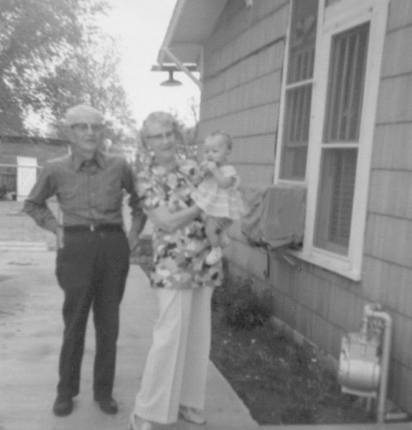
The house at 608 E Kiowa Street was a two-story, single-family dwelling. It was the largest home on the street. It was on the road’s south side, just east of Jefferson Elementary School. The exterior was adorned with a well-kept garden. There was a porch with a swing where we spent many evenings. A large oak tree provided shade in the summer. It was my grandparents’ home from when I was born until my grandmother passed away in the mid-1970s.

With its shale shingle siding, the house always seemed enormous to me. The first floor held a kitchen, a cozy den, and a bedroom. It contained a formal sitting room and a living room where their black-and-white television rested. Upstairs were three large rooms—spacious enough for my grandmother to host visiting relatives from out of state.

My grandmother’s hospitality was legendary. She accommodated up to three full-size beds with people. She had sleeping cots and plenty of room to use if needed. She was always ready to welcome more guests into her home, making everyone feel like they belonged.

One of the most memorable aspects of the upstairs was the introduction to an old-fashioned necessity: the chamber pot. My grandmother clarified that it was mainly for the ‘men folk.’ The women seemed to manage through the night without issue. Every morning, my grandfather would empty the pot into the downstairs toilet. Then he would step outside. He would wash it thoroughly with the garden hose. He’d always follow this routine by filling it halfway with water and calling out to my grandmother,

“Ok, Mom, I got halfway there.”

To which she’d respond from somewhere in the house,

“Don’t put the lid on it. I’m bringing the bleach!”

Everyone called them Pop and Mom. Over the years, the names became so natural that they started addressing each other that way. This was true except when my grandmother was exasperated with Pop for not hearing her. Then, she’d call him by his actual name, the very name I shared with him. But beneath the surface, how much they loved and cared for each other was always evident.

“BEN!”

Whenever I visited, I couldn’t help but worry that the neighbors thought she was yelling at me for misbehaving. I loved my grandparents too much to ever cause trouble. I tried my best to help Pop hear her. I acted as a go-between for their familiar, loving banter.

Another curiosity upstairs was an old doorstop. It was a gift from my great-grandfather. He was a stern, fire-and-brimstone Baptist preacher. He roamed Northeast Texas, Southwest Arkansas, and Southeast Oklahoma. His mission work often left my grandmother unsure which state they lived in since their farm straddled all three.

She once told me something interesting. The doorstop had accompanied her brother. He came to give my grandfather permission to marry her. It remained tucked away upstairs because, as she explained,

“Times have changed, and it wouldn’t be proper to show it in the main part of the house.”

In the kitchen, a small toy was tucked inside a cabinet. It was the only toy my grandmother ever bought for my dad during his childhood. Money was tight back then, and buying toys was a luxury most couldn’t afford. Yet, she purchased this wind-up toy. It would dance and entertain my dad as a toddler while she worked around the house. When my grandmother passed away, the toy went to my dad. After his passing, I found it in our attic. It was worn and weathered by time. Yet, it still carried the weight of all those cherished memories. I kept it—not for its value, but for the stories and love it symbolized.

The family gatherings we shared there pull me back to that old house, even though it no longer stands. Mom and Pop’s home was a magnet for loved ones, filled with laughter and warmth. Even during the most challenging economic times, a sense of togetherness and unity prevailed. This feeling seems more elusive in today’s world. Their old radio will not pick up the stations it once did.

I often wonder what Mom and Pop would think if they saw our modern world—technology and conveniences. But more than that, I wonder how they’d feel. How would they react if they saw what we’ve done with the legacy they left us? They instilled the values of hard work, love, and togetherness. Would they be proud of the way we’ve upheld these values? Would they recognize the strong family bonds they worked so hard to instill? The actual family values of love before judgment.

Those questions linger, just like the memory of the old house on Kiowa Street.

Embracing Identity: Eleanor’s Journey from Tomboy to Lady Athlete

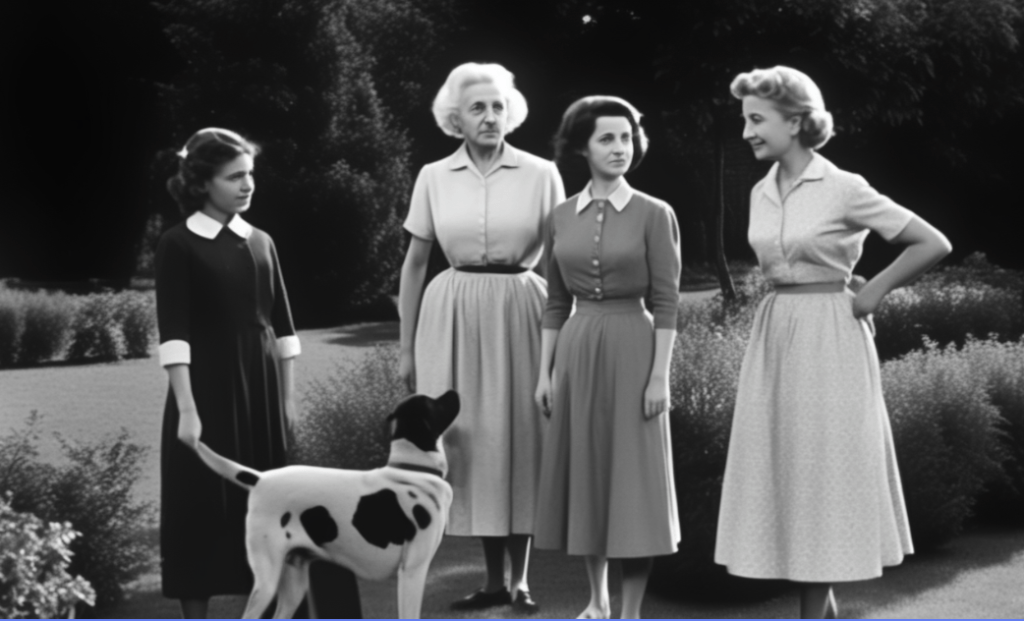
Eleanor’s father sent her to spend two months one summer with her grandmother and two Aunts in the countryside of GoatsManor. Her Aunts, Lilly and Lula, were very precise about how they liked to have the table settings placed each evening. Her Grandmother, Lola, insisted she wears a summer dress to tea at 2 O’clock exactly each afternoon. The ladies explained to Eleanor that she had specific criteria for becoming a lady.

Eleanor was a tomboy turning 14 to 15 years old, and she wished she could still play softball with the youth back in her neighborhood in Boston. Her father, Walter, had become a widower after Eleanor’s mother, Leanne, passed away from cancer two years ago. He was concerned that Elly, as she was known to the neighborhood boys, was becoming less of a lady and more of a roughhouse bar room gal—something he didn’t want for his little girl. So he had called his wife’s mother and aunts and arranged for a summer at GoatsManner.

The first week at GoatsManor was a whirlwind of rules and routines. Eleanor, a tomboy at heart, found herself suffocating in the frilly dresses and precise manners. Her mind often wandered to the dusty baseball diamond and her friends back home. Despite her resistance, her grandmother and aunts persisted, believing that structure and propriety would mold her into a proper young lady.

One hot afternoon, after another tedious tea session, Eleanor wandered into the sprawling fields behind the manor. She needed to clear her head and escape the suffocating expectations. As she walked, she stumbled upon an old barn, its red paint peeling and roof sagging. Curiosity got the better of her, and she pushed open the creaky door.

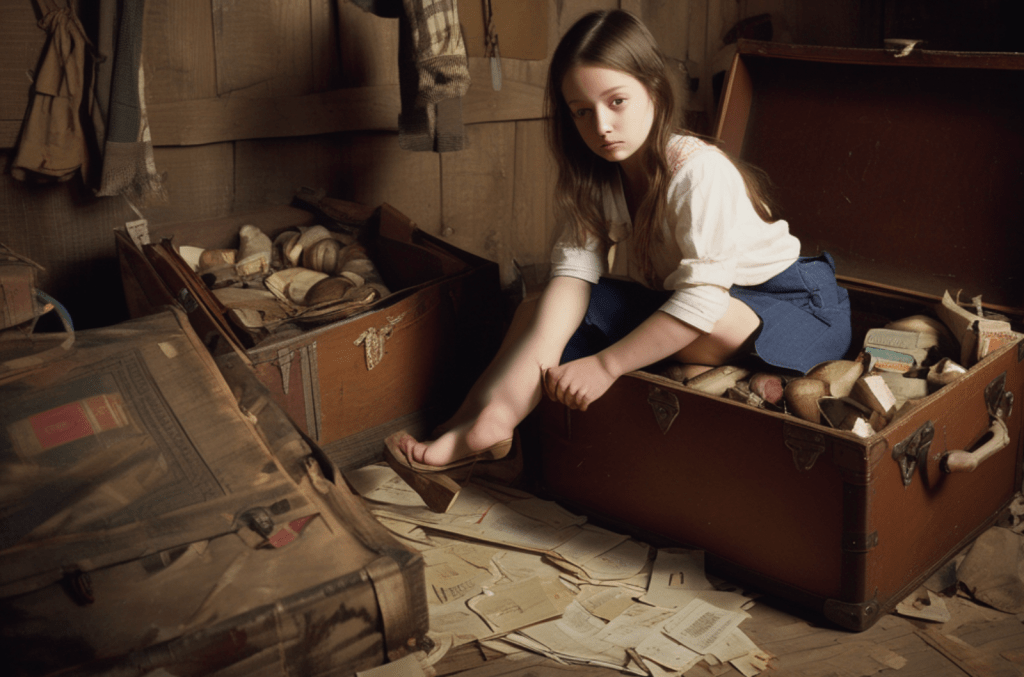
That was the day, Eleanor stumbled upon a hidden treasure: an old, dusty trunk filled with what appeared to be her mother’s childhood belongings. Among the items were a well-worn softball glove, a collection of vintage baseball cards, and a photograph of her mother, Leanne, in a baseball uniform, grinning widely with a bat slung over her shoulder.

Eleanor’s heart raced with excitement and a newfound connection to her mother. She spent hours in the barn, trying on the glove and imagining her mother playing the sport she loved. It was in this dusty sanctuary that Eleanor felt a surge of joy and freedom, a feeling she hadn’t experienced since her mother’s passing. The barn became her refuge, where she could be herself without judgment.

Over the next few weeks, Eleanor made it a habit to visit the barn whenever possible. She practiced throwing and catching, feeling a sense of freedom and joy she hadn’t felt since her mother’s passing. The barn became her refuge, where she could be herself without judgment.
One day, as Eleanor practiced her pitches, she heard a soft applause behind her. She turned to find her grandmother, Lola, watching her with a gentle smile. Eleanor froze, expecting a reprimand, but Lola’s expression was kind.

“I used to watch your mother play out here,” Lola said softly. “She was quite the athlete, just like you.”
Eleanor’s eyes widened in surprise. “You mean Mom played softball too?”

Lola nodded. “Oh, yes. She loved it dearly. She found joy and strength in the game. It’s part of who she was.”
Tears welled up in Eleanor’s eyes as she realized that her mother had shared her passion for softball. She felt a deep connection and renewed sense of purpose to her mother.

From that day on, Lola and Eleanor spent their afternoons in the barn, practicing together. Lola, who had once been a skilled player, taught Eleanor new techniques and shared stories of her mother’s adventures on the field. The bond between grandmother and granddaughter grew stronger with each passing day.


Eleanor still attended the afternoon teas and followed the table-setting rules, but her perspective had shifted. No longer did she feel confined by them. She had found a balance between GoatsManor’s expectations and her own identity. By the summer’s end, Eleanor had become more poised and confident and embraced her love for softball, knowing it was a cherished part of her mother’s legacy.

When it was time to return to Boston, Eleanor left GoatsManor with a newfound sense of self and a heart full of cherished memories. She knew she could be both a lady and a fierce athlete, carrying forward the best of both worlds.

~ The Hardest Decision ~

In the quiet corners of her home, Sarah sat her mind adrift in a sea of conflicting emotions. Her mother, once vibrant and robust, now frail and in need of constant care, sat in the living room, a mere shadow of her former self. It had been a long and arduous journey, filled with sleepless nights and endless worry. But now, Sarah faced the most challenging decision of all – the decision to place her mother in a nursing home.

“Mom, I need to talk to you about something important!”

“What is it Dear” Her Mother Asked?

The idea had lingered in Sarah’s mind for months, whispered in hushed tones by concerned family members and well-meaning friends. Each time, she pushed it away, unwilling to confront the reality of the situwation. But as her mother’s needs grew more demanding, Sarah knew she could no longer ignore the inevitable.

With a heavy heart, Sarah approached her mother, her hands trembling with uncertainty. “Mom,” she began softly, “I need to talk to you about something important.”

Her mother looked up, her eyes clouded with confusion. “What is it, dear?” she asked, her voice tinged with worry.

Taking a deep breath, Sarah explained the situation as gently as possible. She spoke of the challenges they faced and the toll it was taking on them. She spoke of the nursing home – a place where her mother could receive the round-the-clock care she needed, where she would be safe and well looked after.

Her mother listened quietly, her expression unreadable. When Sarah finished, there was a long silence, broken only by the clock ticking on the wall.

Finally, her mother spoke, her voice barely above a whisper. “I understand, dear,” she said, her words heavy with resignation. “I know you’re doing what’s best for me.”

Tears welled up in Sarah’s eyes as she embraced her mother tightly. “I love you, Mom,” she whispered, her voice choked with emotion.

“I love you too, dear,” her mother replied, returning the embrace with feeble arms.

In the following days, Sarah worked tirelessly to find the perfect nursing home for her mother. She visited countless facilities, asking questions, taking notes, and carefully weighing her options. When she finally found the right one—a place that felt warm and inviting, with caring staff and a peaceful atmosphere—she knew she had made the right choice.

On the day of the move, Sarah held her mother’s hand tightly as they walked through the doors of the nursing home together. There were tears and moments of doubt, but through it all, Sarah remained steadfast in her decision.

As she watched her mother settle into her new surroundings, Sarah felt a sense of relief wash over her. It wasn’t an easy decision, nor one she had ever imagined having to make, but in the end, it was the right one – for both her and her mother.

And as she kissed her mother goodbye, promising to visit often and never forget her, Sarah knew that, even though their journey had taken an unexpected turn, they would face it together, with love and understanding guiding their way.