Take Me Back To Yesterday Once More

5–8 minutes

The Farm That Built Me
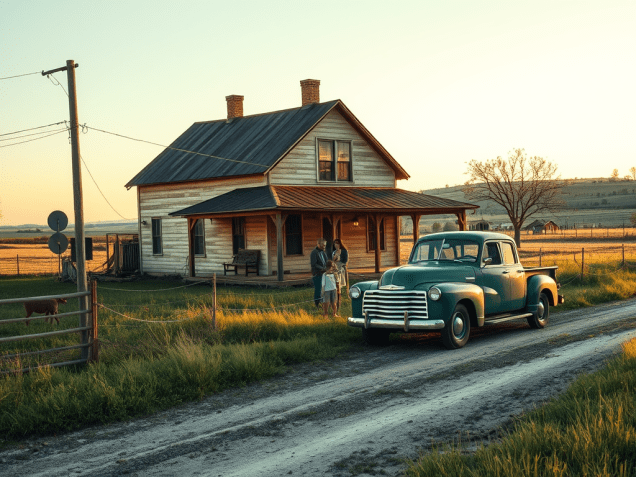
When I look back on my childhood, I’m struck by how much life changed. The changes happened between the time I was born and when I turned eight. We didn’t have indoor plumbing at first. Initially we hauled water from town in five gallon buckets. That was for drinking and cooking. In a big tank in the back of my dad’s truck, water was hauled for the livestock. Eventually water was found on the farm in a well far south of our house. Than ran pipe as far as possible. But, the water pipe stopped about twenty feet shy of our kitchen door. My parents couldn’t afford to run it inside. Every day, we carried buckets from the outdoor faucet to the house. This was still an improvement over hauling water all the way from town.

If you have ever heard of the ‘little brown shack out back.’ Well we had one. We used it even after water was found on the place. Because their wasn’t a bathroom in built in the house. It would be added later. We would walk a trail to the shack in the summer and winter. It wasn’t fancy built at all. It had yellow jackets nest high on the wall. It had a hook and eye lock to secure the door when you were inside. A wooden block turned to keep the door shut when you left. It was cold as ice in winter and hot as hell in the summer. And our company didn’t take to it. It would cut their visits short. And sometimes I wondered if that wasn’t my dad’s plan for having for so long to start with.

Around the same time, we got our first telephone. The line lay exposed down the center of the dirt road. It was shared on a party line with two other houses. Every time the road grader came, the blade cut the wire. We would wait weeks for the phone man to splice it back together. They buried it once, but the sandrock kept them from going deep. The grader still found it. Eventually, someone figured out how to run it four feet off to the side of the road. That man got a promotion—and passed away not long after. These were the everyday challenges of our farm life.

Electricity was another novelty. We had it most of the time. But if it went off during a storm, it was especially bad during a snow event. We would be without lights for a week or longer. They were also the threads that wove our family together. These challenges taught us the value of perseverance. They also brought the joy of shared triumphs.

Heat was another story. Before our fireplace was installed, a single stove in the living room was turned down at night to save propane. We woke up to breath clouds in the cold air before school. Summers weren’t much easier. With no air conditioning, the whole family slept in the living room on pallets. We threw every door and window open. This helped capture the breeze from the five-acre lake a quarter mile south. We’d even open the fireplace flue to pull in a cool draft. It sounds uncomfortable now.

Back then, it was more than just a living arrangement. It was a testament to the value of family closeness. Six kids, two parents, visitors, and dogs—living in one big indoor campsite every night. If you’ve never known family closeness, you’ve missed something truly special. It’s these moments that I look back on with nostalgia and a deep appreciation for the bond we shared.

My father raised American Quarter Horses, and our farm revolved around them. We only kept one stud at a time to avoid brutal fights. Mares were bred individually, often requiring long hauls to other states to introduce new bloodlines. Our horses went everywhere—rodeo circuits, calf-cutting competitions, and even television shows. One star from Gunsmoke, Buck Taylor, called about a horse. Another buyer phoned from New York City during the Garden Square Futurity. He called to thank my dad for the mare Molly. Molly had taken him to the finals. My dad didn’t like us talking about our customers because he valued humility over reputation. As a kid, I didn’t understand. Now I do.

I remember the early 1970s and how tight our family budget must have been. My dad would come home from his barbershop with sacks of horse feed loaded in the back of his truck. He’d park in front of the house. Then, he’d hoist a heavy sack onto his shoulder and walk nearly two city blocks. He’d go down a hill, across a pasture, and all the way to our barn. He had back and leg issues that made every step painful, but he refused to “waste” fuel in his truck.

At the time, I didn’t grasp how precious that gallon of gas was during the oil crisis of the 1970s. To me, it was just Dad doing what he always did. He worked hard. He quietly bore pain. He put his family and animals first. Only now do I understand it was more than thrift; it was discipline and determination passed down like an heirloom.

That simple act—carrying those sacks of feed instead of burning a gallon of gas—left a mark on me. It taught me that sacrifice, resourcefulness, and responsibility are not always loud or dramatic. Sometimes they’re a man. He is alone at dusk, carrying a heavy burden down a path. This happens because it’s the right thing to do.

Everything shifted when Dad took a job at a Girl Scout camp. Horses were sold off until only a few remained for us to ride. We moved to the camp and poured ourselves into cleaning trails, rebuilding facilities, and living outdoors. Yet Dad’s passion for horses never dimmed. We still attended auctions and brought home horses to train. One day, I spotted a skittish dun mare at an auction—Lady. I knew she’d been mistreated and asked Dad to buy her. With patience, grooming, and daily walks, she became the smoothest riding horse I ever had. Lady followed me everywhere without reins, just like a loyal dog. Later, bred to a stud sixty miles away, she gave birth to a colt with the same gentle spirit.

Those years formed me. They were a school of life. They taught me resourcefulness. They also taught patience. I learned how to read the quiet signals of both people and animals. We didn’t have much, but we had each other. And now, decades later, every time a cool breeze brushes my face, I remember those nights in the living room. The windows were open. I hear the sound of our horses in the pasture. These are proof that even the simplest moments can shape a lifetime. The lessons I learned from farm life continue to inspire me. They shape my perspective. I appreciate the value of patience, resourcefulness, and the importance of family.


By Benjamin GroffMedia© | benandsteve.com | ©2025
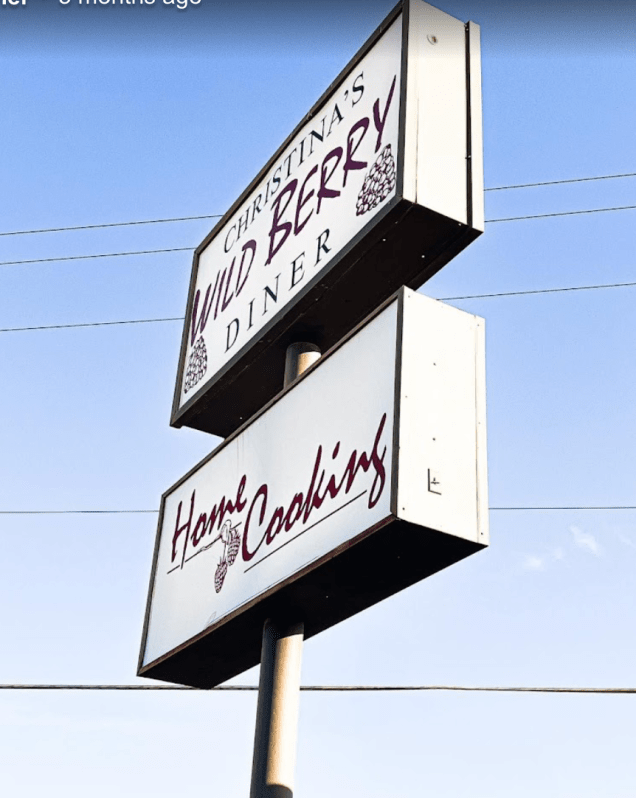
The Comfort of Routine: Breakfast in Mesa, Arizona

2–3 minutes

Breakfast, Community, and the Comfort of Routine

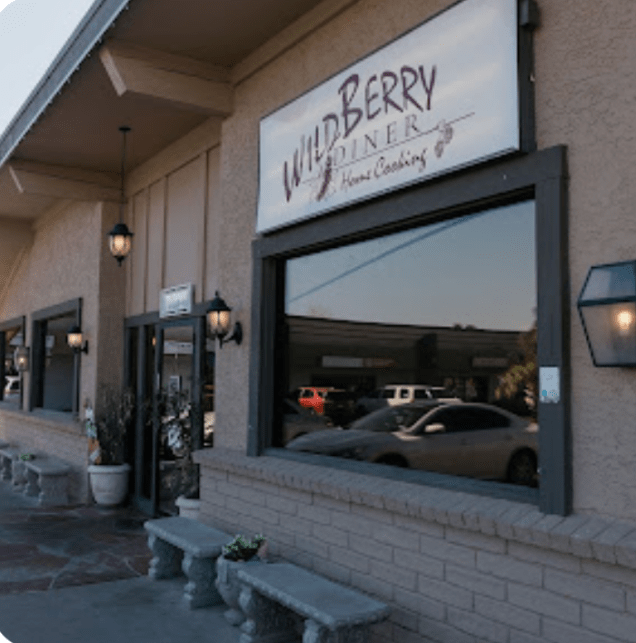
After weeks of rehab after my back surgery, I finally treated myself to breakfast at my favorite spot—Christina’s Wildberry Diner. It didn’t disappoint. It never does. The place is everything a diner should be. It’s a mix of friendly faces. The menu is full of home-cooked favorites. It has the atmosphere that makes first-timers wish they would come back again and again.

Of course, I ordered my usual. Our waitress Christine is our favorite server, not the owner. She knows my routine so well. She brings drinks to the table before we’ve even settled in. She’ll look at me with a grin and ask, “Having your normal with gravy this week?” And my answer is always the same: “Of course!”

My better-half, Steve, makes his order. But it is never quite as predictable. Pancakes one week, toast the next—it keeps Christine on her toes. But no matter what we order, our glasses are never empty. That’s part of what makes this place special. Christine remembers. The staff notices. After four years of showing up on weekends, the diner has come to expect us. If we’re going to be out of town, we let them know. Here, being seen and known is part of belonging.

After breakfast comes the next stop in our routine: Superstition Ranch Market. It’s a no-frills produce market where farmers bring in fresh fruits and vegetables by the bulk. We’ve honed our shopping to an art. We’re in and out in under ten minutes. The savings are worth the trip. The produce is second to none. The clerks know us, too. One cashier in particular likes us at her lane, and when she’s there, that’s where we go. They check on our health. They also check on our recovery. This care says everything about the community we’re lucky to live in.

What makes it remarkable is this: Mesa, Arizona, isn’t a small town. It’s the second-largest city in the state, part of a metro area of more than five million people. And yet, somehow, in the middle of all that, we’ve found a community that feels small, familiar, and deeply connected.

For more than 24 years, we’ve lived in Arizona, and the last 12 in Mesa. Of all the places we’ve called home, this city is one of the most special. It has a blend of people from everywhere. It has a rhythm of routines and unexpected kindness.

By Benjamin GroffMedia© | benandsteve.com | 2025 

One of The Most Powerful Farming Recovery Stories Of This Day

It came only after failing, suicide and horror. A true story. That matters!

The Tragic True Story of Jean-Michel “Michou” — A Farmer’s Silent Cry

Location: Loire-Atlantique, France
Year: 2011
Category: Real Farmer Story | Mental Health | Agriculture Crisis

🌱 Chapter 1: Born in the Soil

Jean-Michel, lovingly called Michou by his village neighbors, was born into a family of farmers in the rural province of Loire-Atlantique, France. His family had been farming for three generations — milking cows, sowing wheat, harvesting barley, and living off the land.

From a young age, Michou learned how to wake before sunrise, milk the cows, repair fences, and drive tractors.
Farming wasn’t a job for him — it was identity, love, and legacy.

“City people see cows as business. For us, they are family.” – Michou

🐄 Chapter 2: A Life of Relentless Labor

Michou managed a small dairy farm with 47 cows. He woke every day at 5:00 AM, fed his cattle, and milked them before the sky even turned blue. After that, he toiled in the fields, checking irrigation, sowing seeds, fixing old machines.

He worked 365 days a year — no holidays, no weekends.

Everyone saw him as the “hardworking farmer of the region,” always smiling, always moving.

But inside, Michou was collapsing.

📉 Chapter 3: The Economic Collapse

After 2008, the dairy industry in Europe began to spiral downward.

Milk prices dropped from €0.32/liter to €0.22/liter

Cost of production was €0.30/liter

Michou was losing money with every drop of milk

He took a loan of €24,000. Then another €18,000. Then mortgaged his tractor.
Still, the bills kept piling up: electricity, fodder, tractor repairs, fertilizers.

“I’m no longer a farmer. I’ve become a machine that produces milk… and debt.” – from Michou’s diary

💔 Chapter 4: When Support Fades

His wife, Lucie, fell ill — stress and fatigue.
His only son, Julien, moved to the city for work.

Michou was left completely alone — with cows and his memories.
His best friend Jacques, also a farmer, had taken his own life just a year before. Another neighbor followed the same path.

The village got quieter. Michou got quieter.

🧠 Chapter 5: Silent Depression

One day, Michou wrote:

“One of my cows was sick today. I cried. Maybe because I am sick too.”

He never shared his pain.
He would feed the cows and whisper to them… but talk to no one else.
Evenings were spent staring at the barn walls, thinking if all his life had been for nothing.

⚰️ Chapter 6: The Last Morning – Continue reading the story click here. The original posting continues with the rest of the story and a turning point that you won’t expect. I wanted to direct you to the original post where you can leave any comments for the author.

Title: The Trail Guardians – Chapter One: The Afternoon Call

Title: The Trail Guardians

By Benjamin GroffMedia© | benandsteve.com | 2025 Truth Endures©

3–4 minutes

Bruiser, Oggy and Jackie
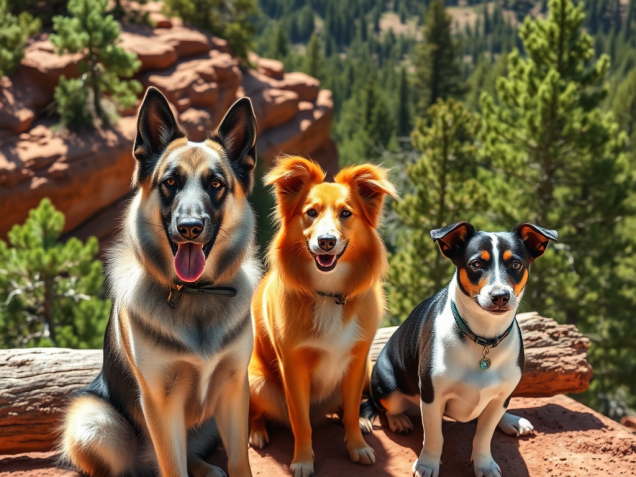
Bruiser, Oggy and Jackie, three friends that protected Benji.

Every day at exactly 3:35 p.m., the yellow school bus rumbled down the dusty country road. Its brakes squealed in protest. It stopped at the gate of the Miller farm. Waiting by the fence—tails wagging, ears alert—stood three loyal dogs: Oggy, Bruiser, and Jackie.

Oggy, a wiry shepherd-collie mix, zipped back and forth like a bolt of lightning, always the first to move. Bruiser was a proud and imposing German shepherd. His stare could make thunder retreat. He sat like a sentry. His eyes were fixed on the distant tree line. Jackie was a small but wise rat terrier. She lay in the shade, her head tilted. It was as if she was listening to the wind for stories.

Benji stepped off the bus. His backpack bounced and his heart was full of energy. He called out,

“Who’s ready for a hike?”

The dogs barked in harmony. Their daily ritual had begun—school ended, and the adventure began.

The woods, hills, and winding creeks beyond the Miller farm stretched wild and untamed. They were alive with beauty and mystery. There was a kind of danger only country kids and creatures could sense. Benji’s father trusted the dogs with more than just companionship. They each had a job:

Oggy, ever eager, raced ahead to flush out snakes, spook wild hogs, or alert the team to anything unusual. Bruiser stayed at Benji’s side, calm and formidable—his job was protection. Jackie had a sharp nose and clever instincts. She always brought up the rear. She tracked every step and memorized the path home.

Together, they were more than a team. They were guardians: a boy and his dogs, bound by loyalty, instinct, and love.

They had explored nearly every trail across the farm. But there was one place they had never dared to enter.

Benji called it No Man’s Land.

Even the cattle avoided it. Horses snorted and veered away from its edges. Dense with tangled brush, towering trees, and sheer, jagged cliffs, it lay beyond the farthest bend of the creek. You couldn’t see more than a few yards into it, even when standing on the embankment across the water. It was as if the woods had secrets they weren’t ready to share.

Sometimes, the team would gather at that high bank and stare into the thicket. Benji would speak softly as if trying not to disturb whatever is listening.

“What’s back there?”

he’d wonder aloud.

“Nobody’s ever gone in. But one day, we’ll be brave enough to cross that creek and find out.”

He told the dogs his plan: the safest way in would be through Cottonwood Hollow. If they cut through the grove, they would reach No Man’s Land without being seen from the road—or the house.

Before they set off, a familiar sound echoed across the pasture—the dinner bell.

Its clang was sharp and sure, and the dogs didn’t need to be told twice. The four companions turned for home. They momentarily forgot their trail. The promise of a warm meal and kind voices led them back.

They didn’t cross into No Man’s Land that day.

But they would.

And when they did, they’d uncover something none of them would ever have imagined.

Memories and Mischief: The Summer of 1980

GROFF MEDIA 2024© TRUTH ENDURES IMDBPRO

Presented by benandsteve.com By: Benjamin Groff II©s

2–4 minutes

The Summer of 1980

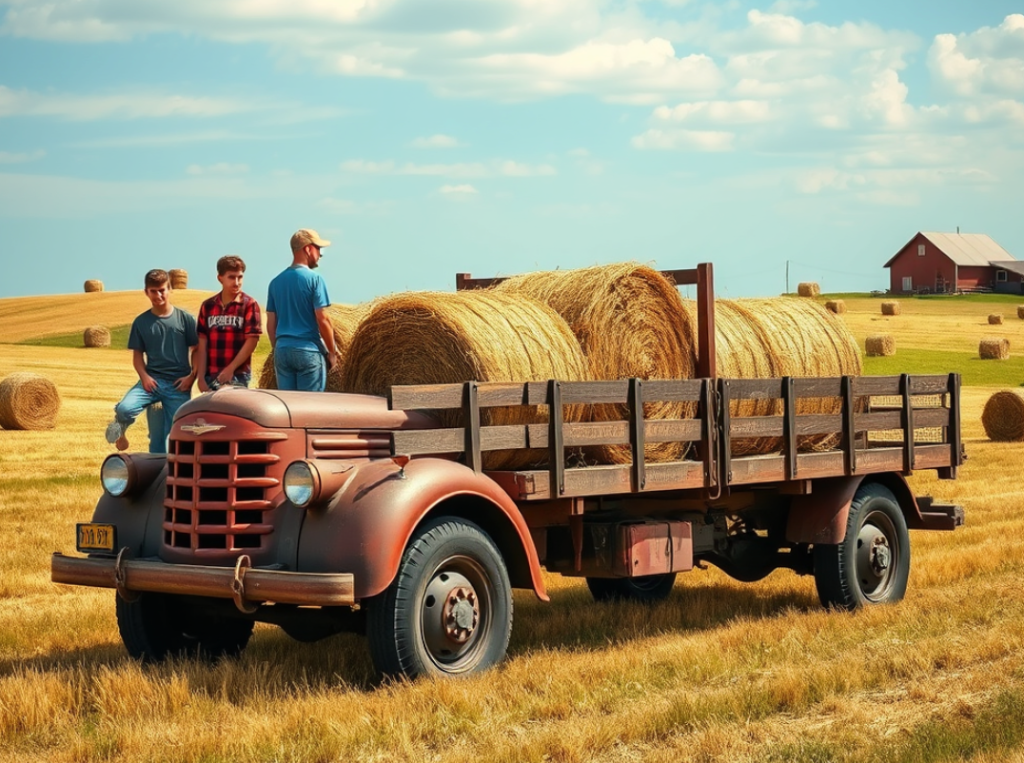
The summer of 1980 would be remembered forever. It was the year three friends—Bub, Johnny, and Clem—took to the hayfields, hauling bales for farmers across the county.

They set out to help the local farmers with two old flatbed farm trucks. The farmers struggled to find enough hands to get their hay cuttings into the barn. What started as a way to earn cash quickly became much more significant.

The boys took turns driving. Two worked at the back of the truck, stacking and securing the bales. They did this while bumping along dirt roads. When they reached a barn, all three pitched in to unload. It was grueling work. It was hot, dusty, and backbreaking. They made a decent sum at fifteen cents per bale when split three ways. More importantly, they earned something money couldn’t buy: the respect of an entire community. Their work ethic, reliability, and bargain rates made them invaluable, and grateful farmers often sweetened the deal with generous tips.

Word spread fast. Soon, the boys had more work than they handled. They got their hands on a third truck and fixed it up. Each took charge of their own rig. They hired extra help to keep up with demand. By summer’s end, the three had hauled an unprecedented amount of hay. No one remembered seeing so much in the valley.

But it wasn’t all work.

The boys had a playful streak, and the town delighted in their antics. One night, Clem slept soundly in their makeshift bunkhouse. Bub got the idea to spread hair remover gel over Clem’s hairy legs. Hours later, Clem woke to a strange smell. He wrinkled his nose. He assumed one of the others had eaten something bad. He groggily rolled over and went back to sleep, unaware of the smooth patches forming on his legs. The next day, Clem discovered the damage in the shower. He saw the damage and heard Bub and Johnny howling with laughter outside the bathroom door.

Clem didn’t get mad. He got even.

At noon, he played the perfect gentleman. He told Bub and Johnny that he held no grudges. He wanted to treat them to lunch. They stayed behind at the barn. He ran to the burger joint and ordered the most enormous double cheeseburgers. There was also a mountain of fries and chocolate malts. For himself, he ordered vanilla. Before returning, he slipped some laxatives into the chocolate malts.

The unsuspecting pair devoured their meal, thanking Clem for his generosity, utterly unaware of the payback coming their way. Four hours later, they were running to the bathroom non-stop, clutching their stomachs, confused and miserable. Clem stood back, arms crossed, grinning. Their “cleaning out” lasted for days. When the town caught wind of the prank, it only added to the growing legend of the hay-hauling boys.

The mischief didn’t stop there.

There were ambushes, booby traps, and endless laughter. Even with their busy schedule, they found time to fish. They caught some of the biggest catfish the town had ever seen.

By summer’s end, they had built more than a successful hay-hauling business—they had created memories that would last a lifetime. Long after the last bale was stacked, folks in town would still talk about the summer of 1980. During that summer, three hardworking boys became the heart and humor of the valley.

Haunted Memories: The Ghosts of Groff House

GROFF MEDIA 2024© TRUTH ENDURES IMDBPRO

Presented by benandsteve.com By: Benjamin Groff II©s

5–7 minutes

The Old Groff House
The Groff House first moved to Binger from Anadarko, Ok

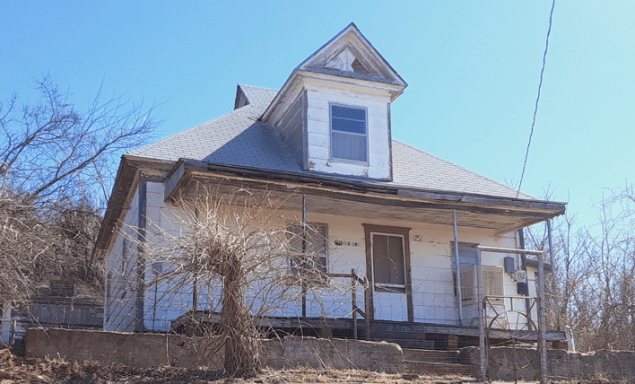
The old farmhouse was to be our new home. Moving from the city to the farm felt like an adventure, but the others didn’t share my enthusiasm. They struggled with giving up indoor plumbing, a telephone, and dependable electricity.


For my father, though, this was the beginning of a dream—a quarter-horse ranch of his own. The house had been moved from another town and placed onto a block foundation. Uneven concrete blocks, haphazardly arranged, served as makeshift steps leading up to the front door. The door was old, with a large square glass pane in the upper half and weathered wood below. Layers of peeling white paint flaked away inside and out, revealing the scars of time.


But what stood out most was the screen door. It had a single spring that pulled it shut with a sharp clap. This sound still echoes in my memory. Above it, a simple porch overhang provided some protection from the rain. It offered slightly less protection from the sun. The overhang always seemed too small for its purpose.


I was the youngest of six children—or seven, depending on how you counted. My mother’s youngest brother, Uncle Ricky, practically lived with us. He had been raised alongside my older brothers, and I always considered him one of us. These memories of our close-knit family bring a sense of nostalgia and warmth.


My sisters and I stayed close to the house initially. Our parents were wary of hidden dangers lurking in the fields and pastures. Rusted cans, barbed wire, and remnants of years gone by littered the property. My brothers were tasked with clearing the land, ensuring no horse would stumble upon a forgotten hazard. But even without the safety excuse, the grown-ups didn’t need us underfoot as they worked to build barns and fences.


The house felt enormous to my sisters and me. It had only four rooms downstairs. There was one large room upstairs. The ground floor had interconnected doorways. These doorways allowed us to run in endless circles around the stairwell. The kitchen, with its worn linoleum floor and a large propane stove, was the heart of the home. The living room had threadbare furniture. Its windows had seen better days. It was where we gathered in the evenings. We were expected to behave when our parents were home, but the house became our playground when they weren’t.


One evening, my oldest sister shared a story she had heard at school. A man, unknown to us, had been found dead in the upstairs room. Hung himself, they said. His wife had passed away downstairs, and he had followed soon after. My younger sister and I absorbed the tale. We were unsure whether it was truth or fiction. Nonetheless, it rooted itself in our minds.


My parents’ conversations surfaced bits and pieces of the house’s history. They assured us no one had died there—at least, not to their knowledge. But then came the phrase that stuck with us:

“But if they did, there’s nothing to worry about.”

It was as if they had confirmed it without confirming it. They planted just enough doubt to keep our imaginations running wild.


And then, one night, something happened that we would never forget.


It had been an unbearably hot day, the humidity clinging to us like a second skin. We had no air conditioning. We relied on a single box fan upstairs for the boys at night. During the day, we moved it downstairs. As evening fell, a storm rolled in. The sky darkened, thunder rumbled, and the first lightning strike knocked out our power.


We huddled by the screen door, watching the storm unfold. Rain poured down in sheets, lightning flashing every few seconds. We saw him in one brilliant burst of light—a rider on a white horse just beyond our fence.


My oldest sister called for our mother.

“There’s a man out on the road! Should we call him in?”


The lightning illuminated him again. The horse and rider are stark white, motionless against the downpour. They turned into our driveway and stopped at the yard gate. The rider tilted his head, water spilling off the brim of his hat, but he did not move.


We yelled for our parents, urging them to look. The rain intensified, drumming against the roof. And then, in the next flash of lightning—he was gone. No retreating figure, no horse galloping away. Just empty, rain-slicked ground where he had stood.


That wasn’t the last strange occurrence. The memory of the white horse and its rider haunted us, lingering in the corners of our minds. We couldn’t shake the feeling that we were not alone in the house. We felt that unseen presences were walking the same halls.


The dirt roads in Oklahoma turn sandy in the summer. They capture every footprint—deer, bobcat, rabbit, and occasional lost traveler. One morning, waiting for the school bus, we saw her.
A tiny older woman walked at a steady pace past our house. We called out a greeting, but she didn’t acknowledge us. The school bus approached from behind, and I considered asking the driver to stop and offer her a ride.


But when we reached the road, she was gone.


What we didn’t see was more unsettling than her disappearance—tracks. There were no prints in the soft sand, no sign that anyone had walked there.


I looked at my sisters. One of them whispered,

“Don’t say anything. They’ll think we’re crazy.”


Later, an old-timer visited us often. He told us about a train depot standing across the road long before we arrived. He suspected that some soldiers returning from World War I, whose bodies were unclaimed, never left that station. He spoke of ghostly figures wandering the fields at night. Strange sounds echoed from the direction of the old depot. His stories added another layer of mystery to our already haunted farmhouse.


Over the years, my father and I rode our horses through the backcountry. We found old graves. Some were Indian graves, others belonged to settlers, and some were marked only by time-worn stones. One day, I asked my father if it was sad that they had been forgotten.


He looked at me thoughtfully.

“They’re remembered the way they’re meant to be. You don’t need a grave to be remembered. It’s what you do while you’re alive that matters.”


I understood what he meant, but some of me still felt sorrow for those lost souls. Maybe they weren’t as alone as I thought. They still walked in the rain, strolled along dirt roads, or found another way to be remembered. The mystery of their existence lingers, leaving us with more questions than answers.

Tim’s Journey Raising Game Chickens

GROFF MEDIA 2024© TRUTH ENDURES IMDBPRO

Presented by benandsteve.com By: Benjamin Groff II©s

4–5 minutes

Tim and His Prize Chicken

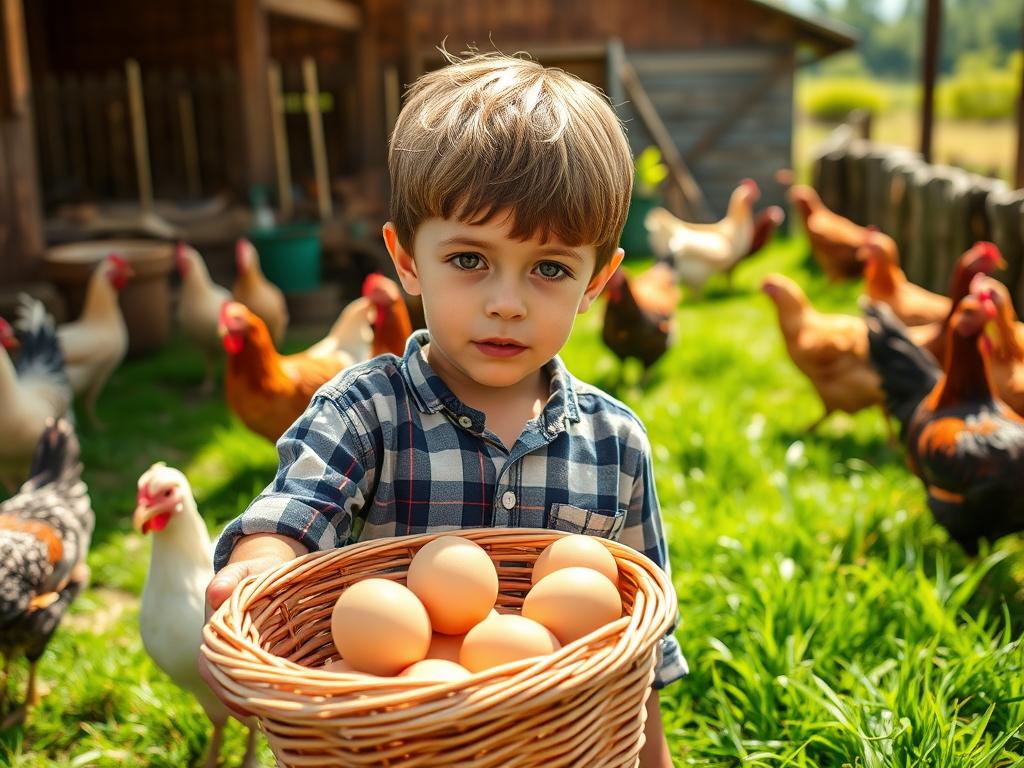
Tim had been caring for his father’s White Rock chicken pen for months. It was a new chore he got handed as he got older. Tim collected eggs from nests, fed the chickens, and cleaned the pens. He also ensured plenty of fresh water for the fowl to drink.

One day, Tim’s father came home from work. He told Tim they were going on a short trip. The purpose of the trip was to look at game roosters and hens. He suggested that if Tim wanted to buy one, he should bring the money. Tim had been saving this money from doing chores and receiving it as gifts.

Tim gathered his savings—an impressive $25.00—and he and his father set off to explore this new thing he had just heard about: “Game Chickens.” They arrived at a property owned by the Gaines family about twenty miles away. Tim was surprised to see dozens of small doghouses spread across the backyard.

Mr. Gaines, a middle-aged man, came out of the house, greeted Tim’s father, and asked, 

“You’re here about the chickens, aren’t you?”

Tim and his father answered in unison, 

“Yes, we are!”

They looked around and discussed their options. Tim’s father purchased five hens and five guineas. Tim proudly bought a rooster with his savings.

When they returned home, Tim’s father explained, 

“We’ll use the rooster you bought to encourage these hens to lay eggs. Once we collect enough eggs, we’ll place them in a new incubator I bought. I’ll teach you how chickens lay eggs. You’ll also learn how they set and hatch their eggs.”

It felt like forever to collect enough eggs, but it only took about a week. Once they had gathered a good number, Tim’s father marked each egg with an ‘X’ on one side. He marked an ‘O’ on the other side of each egg. He then placed them in the incubator. He ensured the proper humidity. He added a small amount of water to the bottom tray. A screen was placed over the water, and the eggs were laid on top.

Tim’s father explained, –––

“For the first eighteen days, we must turn the eggs regularly. Turn them at least thrice daily. This prevents the developing chicks from sticking to the shell. The incubator will handle the temperature, but it’s up to us to turn them.”

Tim learned they couldn’t touch the eggs with bare hands, as oils from their skin clog the shell’s pores. They used cotton gloves to handle them. Tim eagerly helped his father turn the eggs daily, hoping to see signs of life inside.

As they approached the last three days, Tim’s father announced, –––

“No more turning. The chicks need to position themselves for hatching now. And we must keep the incubator closed—no peeking!”

It was the hardest thing for a nine-year-old to resist opening the incubator, but Tim managed. Then, on the twentieth day, he heard a faint ––

“Peep, peep!”

“Should we open it and see if they’re okay?” 

Tim asked excitedly.

“Not yet,”

His father replied.

“Let’s give it another day or two to make sure they all have time to hatch.”

That was not the answer Tim wanted to hear, but he trusted his father. The next two days felt like an eternity. The soft peep grew louder, and his father finally said, –––

“Let’s open it up and see what we have!”

To their amazement, all fifty eggs had hatched. The incubator was full of tiny, fluffy chicks, chirping loudly in their new world.

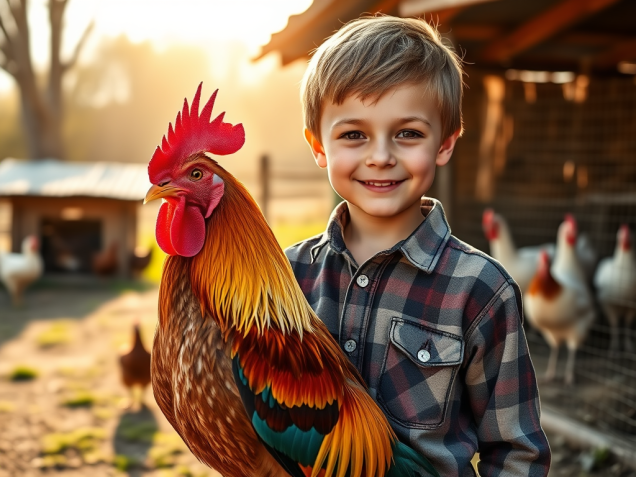
Tim and his Rooster
Tim holding his Rooster

Over the next month, Tim was responsible for feeding the chicks a unique grain mix. He also provided fresh water with added vitamins to prevent early diseases common in poultry. In about eight weeks, the chicks had grown into young roosters and hens, scattering in all directions across the farm.

Tim learned that game roosters were naturally aggressive toward each other. As they matured, the males had to be separated or butchered. Many ended up in the freezer, while a few got held back as breeders for future generations.

Tim’s father also explained why Mr. Gaines had so many small doghouses in his yard.

“He separates his game roosters to keep them from fighting. Some people sell them, and some even use them for illegal cockfighting, but we’ll never do that. It’s inhumane and against the law.”

As for the guineas, Tim’s father let them roam freely around the farm. 

“They’re the best burglar alarms you can have. If anything or anyone unusual comes around, they’ll make a racket.”

Tim discovered the game chickens laid green, blue, and brown eggs. All are in demand by area residents looking to avoid white eggs, and they have added health benefits.

Through this experience, Tim gained a lifelong appreciation for the care and responsibility of raising animals. He learned patience, the importance of careful handling, and how to nurture life from beginning to maturity. This lesson stayed with him forever.

My Father’s Journey: From Service Station to Horse Ranch

GROFF MEDIA 2024© TRUTH ENDURES IMDBPRO

Presented by benandsteve.com By: Benjamin Groff II©s

4–5 minutes

Today, as I write, I ponder what story to share. Specific recollections stand out, shaping my life in ways that make them worth remembering.


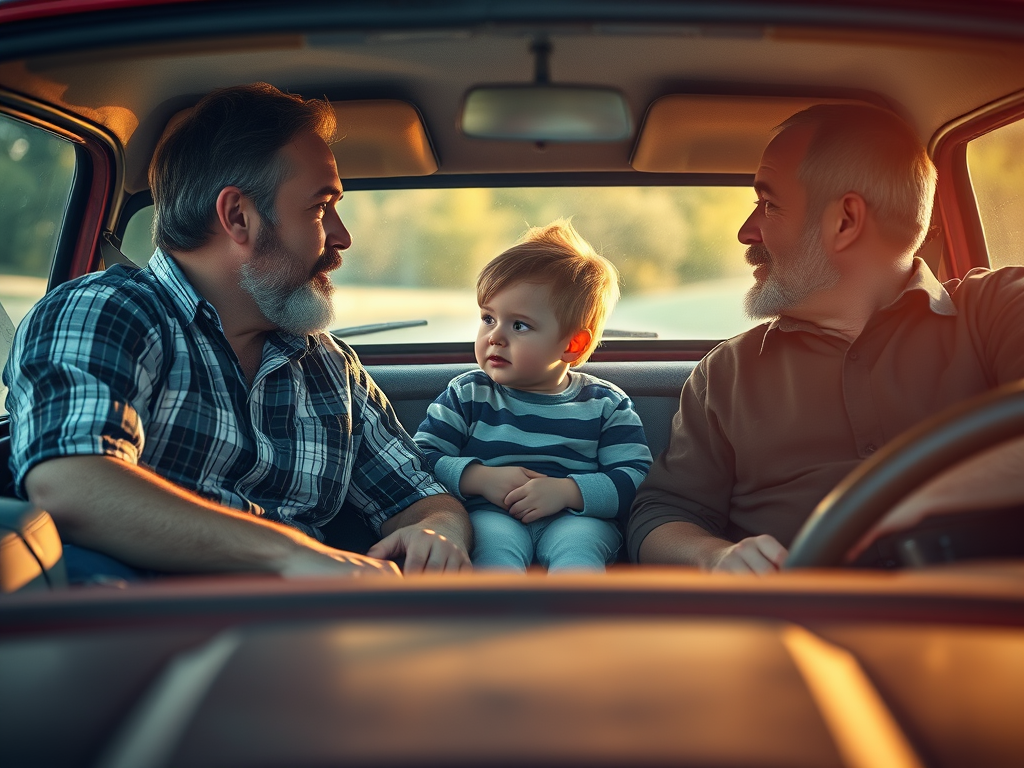
One of my fondest memories is traveling with my father and one of his friends. These journeys often involved a horse—whether for a rodeo, a parade, or taking a mare to be bred. I remember sitting in the middle of the pickup seat. The air conditioning blasted my face. The two men talked nonstop. The smell of their cigarettes filled the cab; they never cracked a window. Though I never smoked a day in my life, I suspect I passively inhaled enough to equate to thirty packs.

This was the early 1970s when smoking held no taboos, even around children. My father eventually quit in his late fifties, relieved to be free of nicotine’s grip. Sadly, six months later, he responded to a chlorine leak at a swimming pool. While shutting off the container, he inhaled the toxic gas, permanently damaging his lungs. From then on, breathing was a struggle. The medications he took to manage his condition weakened his bones. By 63, he was no longer capable of walking. He passed away shortly after. But in those 63 years, he packed in a lifetime of experiences.


Reflecting on my childhood, I marvel at how my parents managed to supply for six children. We weren’t wealthy, yet they kept us clothed, fed, and engaged—horse riding, basketball, piano lessons, and football. We started in a beautiful three-bedroom brick home in a great community. My father owned a Texaco service station and volunteered as a fireman. Some neighbors even urged him to run for city council, but his passion lay elsewhere. He dreamed of owning a quarter-horse farm, a dream that required sacrifice.


The first step was selling our home. We moved into a one-bedroom rental, with my parents in the sole bedroom and us kids on foldout couches. My father attended barber school, planning for the future. A year later, he purchased forty acres in a small town 35 miles away. He used the money from selling the house and service station. The land was densely wooded, and my father and three older brothers worked tirelessly to clear it for a home.


He found a house nearby for sale, provided it was moved. It had four rooms downstairs, one upstairs, and disconnected kitchen and bathroom additions. Two trucks transported the house 28 miles to our new farm. Once settled, we designated rooms: the kitchen, living room, and bedrooms. The steep stairs to the upstairs bedroom often left me bruised from falls. I loved that room. It had windows at both ends, letting a breeze flow as I gazed at the valley. I imagined future adventures.
I discovered my secret hideout underneath those stairs, meant to be my sister’s closet. Small enough to squeeze deep inside, I stayed undetected until I was spotted and lost my perfect hiding place.


Life on the farm lacked modern conveniences, including indoor plumbing. My father found an abandoned outhouse and positioned it over a dry well. Inside, we had two five-gallon buckets of water for drinking, with a dipper hanging above and another for washing dishes. Each day, my father refilled them after closing his barbershop in town.


We also had no phone service at first. When we finally got a phone, I was about eight. The company laid a single line down the rural road. We shared it with three other families on a party line. Each household had a distinct ring. Still, anyone might eavesdrop. Power outages were frequent, lasting days during snowstorms or severe thunderstorms, making access to our home difficult in bad weather.


My father and brothers built horse barns south of our home. At one point, we had over forty horses. Spring was the busiest, with foals being born. My father hosted roping events, where friends gathered to rope all day. Eventually, he installed arena lighting, allowing him to ride even after long days in the barbershop. I joined him often, eating more red sand from falling off horses and calves than I care to remember.


Over time, the horses dwindled to just mine and his. My siblings had moved on from riding. My father worried that his aging stud horse was no longer suitable for breeding. That’s when he became a ranger at the Girl Scout camp, changing my world entirely. Life on the farm transitioned into something new and unknown. What I learned at the camp shaped me. It taught me the value of acceptance. The lessons in resilience have stayed with me through life’s most challenging moments. But that, as they say, is another story entirely.

To end, I want to include a question I recently asked my 95-year-old mother:

“You went through so much. It all started after selling the brick home. You moved from the life we had in the city. Knowing all this, would you do it again?”

She replied,

“in a heartbeat!”