The Man Who Fell Asleep One Night-Dreaming He Became A Sheriff In The Wild West.

He awakes the next morning to find he is still there.

2–3 minutes

Sheriff Without a Gun

Harold was an ordinary man living in a small house on the edge of town. He spent most of his evenings quietly—reading, cooking for one, and watching old Western movies before bed. One night, after drifting off in his recliner, Harold dreamed he was a cowboy riding across the dusty plains.

When he awoke the next morning, he nearly fell out of bed. The world outside his window was no longer his quiet backyard—it was a wild west frontier town. And tied right outside his kitchen door stood a horse named Gus, saddled and ready. Harold blinked twice, rubbed his eyes, and muttered,

“Well… this is new.”

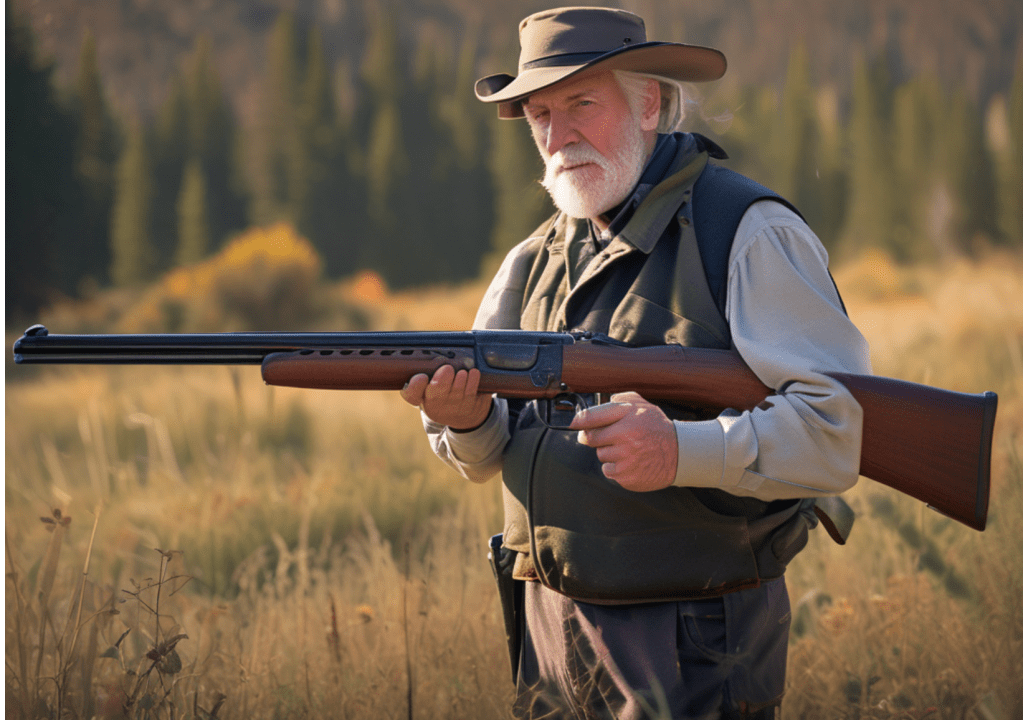
Stepping outside, he was greeted by the townsfolk calling him Sheriff. Sheriff Harold, that is. The twist? He wore no gun.

“Best sheriff we ever had,”

they cheered,

“because you don’t bring trouble.”

But soon, trouble found them anyway. A group of gunslingers rolled into town, looking to cause mayhem.

Harold had no firearm to fight back. Thinking fast, he filled the pockets of his vest with smooth river rocks. When the gunslingers strutted down Main Street, Harold let fly. Whack—right in the shin—crack—one to the forehead. Pebbles rained down like hail until the bandits doubled over, tears streaming, too humiliated to continue.

Harold yelled –

“You get the hell out of here and don’t come back!”

They scrambled for their horses, chased out of town by the rock-throwing Sheriff himself.

From that day on, Sheriff Harold became a legend. The townsfolk swore he was the greatest Sheriff they’d ever known. This wasn’t because he outgunned the bad guys. It was because he outsmarted them. Every morning, Harold would pat Gus on the neck and tip his hat. He remembered that sometimes the simplest tools—a rock, a clever mind, and a little courage—are enough to keep the peace.

But somewhere else, in another world, Harold lay still. His daughter sat quietly at his bedside, holding his hand, eyes brimming with worry.

“Do you think he’ll ever regain consciousness?” 

She asked the doctor softly.

The doctor shook his head. 

“I don’t know. Stroke victims sometimes choose to stay where they are. Maybe Harold is better off living where he is. In that other place, he’s strong and needed. He is riding tall as Sheriff.”

His daughter squeezed his hand, whispering through tears, 

“Then I hope he knows we’ll always be proud of him—here, or there.”

And in the world of his dreams, Sheriff Harold tipped his hat, smiled, and rode Gus into the golden horizon.


By Benjamin GroffMedia© | benandsteve.com | ©2025 
The Anatomy of a Shooter – Part Four: Red Flags and Shrugged Shoulders

By Benjamin GroffMedia© | benandsteve.com | 2025 Truth Endures©

2–4 minutes

Part Four: Red Flags and Shrugged Shoulders

After every mass shooting, the same story unfolds.
News reports reveal the shooter made threats.
He posted disturbing content.
He stockpiled weapons.
He scared people.

And then the world asks, 

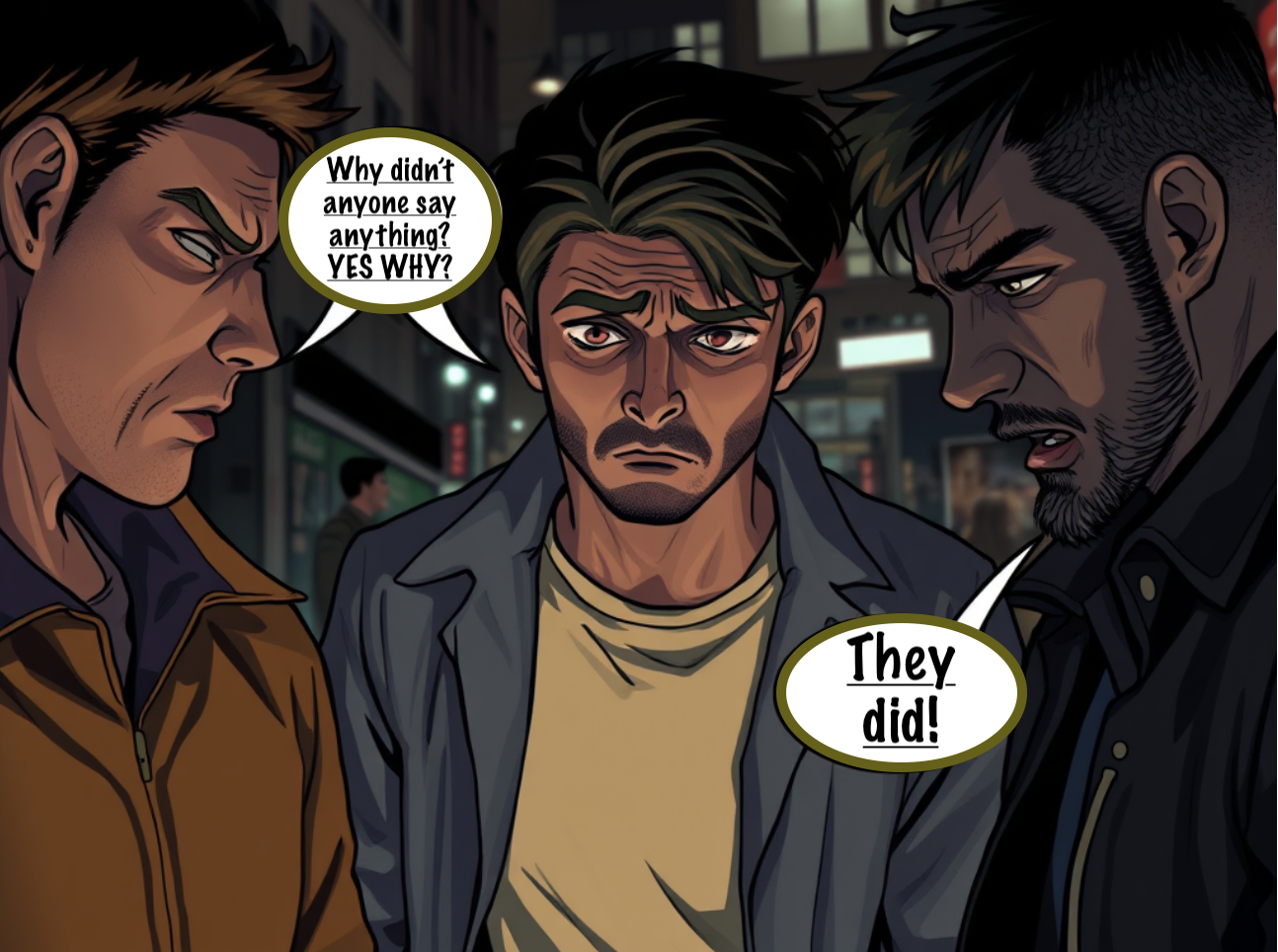
“Why didn’t anyone say something?”

Except someone usually did.

They said it quietly to a friend.
They reported it to HR.
They sent up a flare—but it fizzled in a system built to tolerate discomfort until it explodes.


“It Just Felt Off”

Human instinct is powerful.
We know when something doesn’t feel right—when someone is spiraling, simmering, or clinging to rage a little too tightly.
But we’ve been trained to doubt our gut.

Why?
Because:

  • We don’t want to overreact.
  • We don’t want to get someone in trouble.
  • We don’t want to look paranoid or mean or judgmental.

So we say things like:

  • “He’s just blowing off steam.”
  • “He’s always been like that.”
  • “It’s probably nothing.”

Until it’s not.


The Signs Were There. The Action Wasn’t.

Let’s break it down. Red flags can look like:

  • Obsessive talk about violence or past shooters
  • Extreme ideological rants
  • Sudden personality changes or withdrawal
  • Threats—direct or veiled
  • Obsession with weapons or martyrdom
  • Social media posts that scream “notice me”

But here’s the kicker:
Even when these signs are clear, most people don’t act.
And when they do? They’re often ignored, dismissed, or redirected through layers of bureaucracy.

“It’s not our jurisdiction.”
“We can’t do anything unless he acts.”
“He hasn’t broken any laws.”

We treat early warning signs like legal puzzles, not human lives.


Fear of the Awkward Conversation

Red flags aren’t just missed.
They’re avoided—because confronting someone is uncomfortable.

There are times when you have to take the bull by the horns.
  • What if I’m wrong?
  • What if they get mad?
  • What if it ruins my relationship with them?
  • What if it’s not serious?

So instead of leaning in, we back away.

And we let someone else deal with it.
Except, too often, there isn’t someone else.


The Burden of Hindsight

Afterward, the red flags look obvious.
Crystal clear.
Undeniable.

But by then it’s too late.
And we’re left with vigils, flowers, and questions we didn’t ask soon enough.


A Shift in Mindset

We need to stop treating red flags like rumors.
They’re signals. Warnings.
Opportunities to intervene.

That doesn’t mean we accuse people on a hunch.
It means we build systems and cultures that listen.
That act before a weapon is drawn, not after.

Because by the time the police tape goes up, the story’s already been written.


Coming Up in the Series:

Part Five: What We Can Actually Do About It
We’ve identified the patterns. We’ve seen the signs. Now it’s time to talk about real solutions—what works, what doesn’t, and why “thoughts and prayers” aren’t enough.

About the Author:

Benjamin Groff is a former police officer and radio news anchor. He has hosted programs for CNN and ABC News affiliates in Colorado and Wyoming. His career in law enforcement began in 1980 and lasted more than two decades. This gave him firsthand insight into the criminal mind and public safety. Moreover, it provided him with an understanding of the human stories that often go untold. His writing draws on these experiences, blending street-level truth with a journalist’s eye for the bigger picture.

The Anatomy of a Shooter – Part Three: The Myth of the Lone Wolf

“Monsters aren’t born overnight. They’re made—in silence, in shadows, in places we refuse to look.”

By Benjamin GroffMedia© | benandsteve.com | 2025 Truth Endures©

2–4 minutes

Part Three: The Myth of the Lone Wolf

Every time the news breaks, we hear it:
“He acted alone.”
And just like that, the story is framed.
One man. One moment. One monster. Case closed.

But here’s the problem:
It’s not true.
Or at least, it’s not the whole truth.


The Comfortable Lie

Calling someone a “lone wolf” is tidy. It makes the rest of us feel better.
It tells the public:

  • This was a fluke.
  • It couldn’t have been predicted.
  • There’s nothing we could’ve done.

And maybe, if we say it enough, we’ll believe it.

But in reality? Shooters rarely emerge from a vacuum.
They come from families. Communities. Schools. Workplaces. Chatrooms.
They leave trails of clues—behavioral, verbal, digital, emotional.

And more often than not, somebody saw something.


He Was Always Quiet… Until He Wasn’t

We’ve all heard it:

  • “He kept to himself.”
  • “He was a little odd, but polite.”
  • “He never really fit in.”

The thing is, these aren’t descriptions of a mystery. They’re descriptions of a pattern.

Withdrawn doesn’t mean harmless.
Quiet doesn’t mean invisible.

But we’ve trained ourselves to look away.
To shrug off disturbing comments.
To ignore that one guy at work who’s always simmering just below the surface.
Because to speak up feels awkward. And what if we’re wrong?

Well—what if we’re right?


Behind the Shooter Is a System That Failed

Lone wolf? No.
It’s more like a failure of the pack.

The system failed.

  • The family that didn’t ask questions.
  • The school that let him fall through the cracks.
  • The workplace that ignored his meltdown.
  • The internet forums that radicalized him.
  • The society that let him buy a weapon without blinking.

A shooter might pull the trigger alone, yes.
But the road there was crowded.


When “Alone” Is a Strategy

Photo by Danik Prihodko on Pexels.com

Let’s not forget—some shooters want to be seen as lone wolves.
It fits the fantasy: the avenger, the martyr, the misunderstood genius.
They want us to think no one could’ve stopped them.

Because if we believe that, then we stop looking for answers.
And they get to become a headline instead of a warning.


So What Should We Say Instead?

We should say:
“He was one part of a larger failure.”
“This wasn’t random—it was ignored.”
“This wasn’t a mystery—it was a message we didn’t read in time.”


Coming Up in the Series:

Part Four: Red Flags and Shrugged Shoulders
He gave off signs. He said things. He posted warnings. But no one did anything. Why? Because we’re experts at convincing ourselves it’s not our problem—until it is. That is next!


About the Author:

Benjamin Groff is a former police officer and radio news anchor. He has hosted programs for CNN and ABC News affiliates in Colorado and Wyoming. He writes for organizations from his home in Arizona. His career in law enforcement began in 1980 and lasted more than two decades. This gave him firsthand insight into the criminal mind and public safety. Moreover, it provided him with an understanding of the human stories that often go untold. His writing draws on these experiences, blending street-level truth with a journalist’s eye for the bigger picture.

The Anatomy of a Shooter – Part Two: The Internet Never Forgets (or Forgives)

By Benjamin GroffMedia© | benandsteve.com | 2025 Truth Endures©

2–4 minutes

Part Two: The Internet Never Forgets (or Forgives)

The shooter didn’t get here alone.
Not really.

Sure, maybe they sat alone in a bedroom. A basement. A breakroom.
But they weren’t isolated from influence—just the opposite.
They were plugged into a digital bloodstream that fed them exactly what they wanted, and everything they didn’t need.

Welcome to the echo chamber. Population: too many.


Where the Internet Becomes an Incubator

A lonely, angry person finds a tribe. This occurs somewhere between YouTube rabbit holes, toxic forums, and Reddit threads that should’ve been shut down years ago.

Not a real one. Not the kind that helps you move or calls when you’re sick.
But one that says, 

“You’re right to be angry.”
“They are the problem.”
“You don’t need help—you need revenge.”

That validation is addictive.

And the internet is the perfect dealer:

  • Algorithms push increasingly extreme content.
  • “Communities” form around hate, resentment, and fear.
  • Every post, every comment, every manifesto builds a narrative: You are justified.

From Scrolling to Staging

It starts with watching. Then posting. Then commenting.
Then, maybe, fantasizing.
And eventually, planning.

A shooter doesn’t always invent the blueprint.
They download it—literally. From forums that dissect earlier mass shootings like game film. From chat groups where people joke about body counts and praise past killers like fallen heroes.

Some shooters even leave behind digital footprints—manifestos, livestreams, final posts—as if they’re signing off from a sick performance art.

And let’s not pretend it’s rare.
We’ve seen it again and again.
And again.


The Illusion of Community, the Reality of Collapse

Here’s the twisted irony:
Most of these online “connections” are built on mutual isolation.
It’s a virtual group hug from people who hate everything.

They don’t help each other grow—they help each other decay.

Not everyone in these spaces will act violently. Nevertheless, they create an environment where the leap from “I hate them” to “I’ll show them” feels smaller.
More rational.
More inevitable.


We Let the Fire Burn and Call It Free Speech

Let’s be honest:

We’ve been slow—very slow—to acknowledge how much harm can be done behind a keyboard.
We slap “content warning” stickers on hate, shrug off threats as trolling, and hide behind terms like “edgy humor.”

Meanwhile, more lives are lost.

Photo by Bulat Khamitov on Pexels.com

This isn’t about censoring opinions. It’s about recognizing when opinions become weapons.

A shooter adopts a belief before they pick up a gun. They believe that their anger matters more than your life.

And someone, somewhere, probably upvoted that.


Up Next in the Series:

Part Three: The Myth of the Lone Wolf
They always say, “He acted alone.” But did he? Or was he just the only one who pulled the trigger?

About the Author:
Benjamin Groff is a former police officer and radio news anchor. He has hosted programs for CNN and ABC News affiliates in Colorado and Wyoming. His career in law enforcement began in 1980 and lasted more than two decades. This gave him firsthand insight into the criminal mind and public safety. Moreover, it provided him with an understanding of the human stories that often go untold. His writing draws on these experiences, blending street-level truth with a journalist’s eye for the bigger picture.

The Anatomy of a Shooter – Part One: In the Beginning, There Was Silence

“Monsters aren’t born overnight. They’re made—in silence, in shadows, in places we refuse to look.”

By Benjamin GroffMedia© | benandsteve.com | 2025 Truth Endures©

3–4 minutes

Part One: In the Beginning, There Was Silence

Let’s start with a hard truth:
Shooters don’t come out of nowhere. They come out of silence.

Silence from the people around them.
Silence in rooms where pain festered.
And eventually, silence before the gunfire broke it all.

In this series, I’m not asking for sympathy for those who’ve caused unspeakable pain. But I am asking this:

How does a person get to the point where picking up a gun feels like a solution?

If we keep pretending it’s as simple as “they snapped,” we’re not solving a damn thing. If we keep saying “they were crazy,” we’re not solving a damn thing.


The Seed of Isolation

No one wakes up one day and says, “You know what? Today’s the day I destroy lives.”
It begins slowly. Quietly. Almost invisibly.

Maybe they were left out.
Maybe they were bullied.
Maybe they were weird, withdrawn, angry, or awkward.
Maybe they simply felt invisible.

That kind of loneliness doesn’t whisper—it screams. But not everyone knows how to listen to the silence. Some don’t even try.

And so, that person—young or old—starts pulling away from others. Or worse, starts resenting them.


Grievance: The Gateway Drug

Here’s where things shift.

What started as pain turns into blame.
Not just “I’m hurting,” but “They did this to me.”

And they might be:

  • The cool kids at school
  • The coworkers who laughed
  • The family who ignored
  • The ex who left
  • The entire world

Suddenly, it’s not just a personal wound—it’s a mission. A vendetta. A delusion of justice.

And online, there are entire dark corners ready to cheer them on.


When the Weapon Becomes a Microphone

The shooter mindset often merges with a desire to be seen—finally, undeniably.
And that’s what makes these tragedies feel like performances.
Not just an act of violence, but a message broadcast with blood:

“Look at me now.”

That’s not an excuse.
That’s an alarm bell.


What We Rarely Say Out Loud

Yes, mental illness plays a role in some cases. But not always.
Plenty of people struggle with mental health and don’t turn into killers.

What we’re talking about is a toxic cocktail:

  • Isolation
  • Grievance
  • Identity crisis
  • Obsession
  • Ego
  • Easy access to destruction

It’s not one red flag.
It’s a collection of ignored ones.


So, Why Write This?

Because the only thing more dangerous than a shooter is a society that refuses to understand one.

And understanding doesn’t mean excusing.

It means preventing.


Coming Up in the Series:

  • Part Two: The Online Echo Chamber
    How algorithms and angry forums radicalize the already isolated.
  • Part Three: The Myth of the Lone Wolf
    Why shooters aren’t anomalies—they’re symptoms of something bigger.
  • Part Four: Red Flags and Shrugged Shoulders
    What we miss—and why we keep missing it.
  • Part Five: What We Can Actually Do About It
    Solutions that go beyond slogans and shallow politics.

About the Author:
Benjamin Groff is a former police officer. He is also a radio news anchor. He has hosted programs for CNN and ABC News affiliates in Oklahoma, Colorado and Wyoming. His career in law enforcement began in 1980 and spanned more than two decades. This gave him firsthand insight into the criminal mind and public safety. He also learned about the human stories that often go untold. His writing draws on these experiences, blending street-level truth with a journalist’s eye for the bigger picture.

The Last Post: A Security Nightmare at Ridgewood

By Benjamin GroffMedia© | benandsteve.com | 2025 Truth Endures©

3–4 minutes

“The Last Post”

The night shift at Ridgewood Corporate Plaza was supposed to be quiet. Ten floors of empty offices, humming servers, and fluorescent lights dimmed for the janitors’ comfort. The tenants had gone home. The day’s buzz was replaced by the solemn hum of vending machines. There was also the distant thrum of traffic.

That’s when the trouble started.

At exactly 11:42 PM, a woman from the 8th floor called 911. Her voice trembled as she whispered into the phone from behind a copier machine:

“It’s the security guard. He’s –– drunk. He has a gun, and he’s playing with it.”

“Officer intoxicated w/ a gun!”

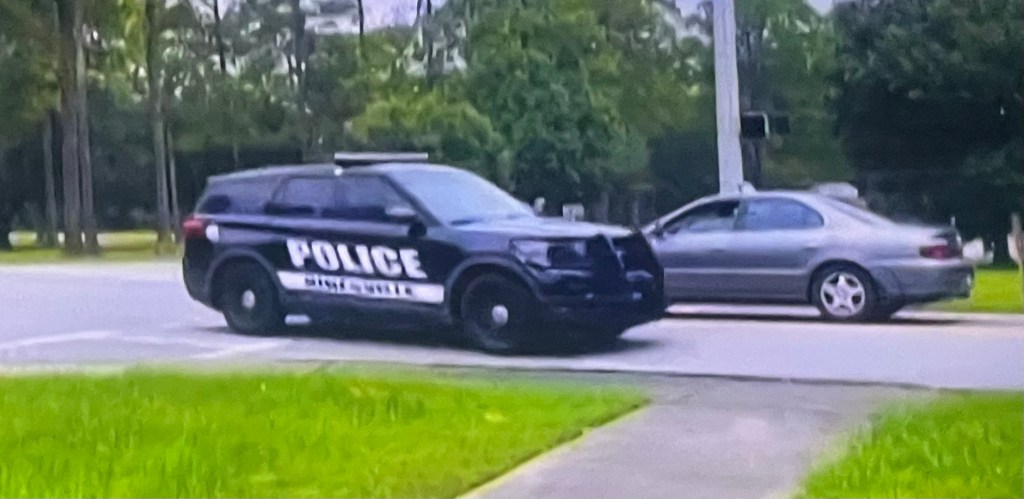
Officer Marquez and his partner were already in the area and responded within minutes. They pulled up to the building’s glassy facade. They saw the guard—an older man with a thick mustache and sun-lathered skin. His uniform hung loose on his wiry frame. He stood under the lobby lights like he was in a stage play.

He spun a revolver on his index finger like an old-time cowboy. His other hand clutched a bottle of whiskey that sloshed wildly with each twirl.

Pow! 

He shouted, aiming at an invisible outlaw in the corner.

“You see that, Tex? That’s the ol’ Ridgewood Quickdraw!”

Inside, a cluster of overnight IT workers and janitors peeked nervously from the elevator bank. Some held phones. Others gripped cleaning poles like makeshift weapons.

“Sir,” 

Officer Marquez called out, stepping carefully from the squad car. 

“Let’s talk. Put the gun down, okay?”

The guard, whose name tag read Terry,” stopped spinning the weapon. He looked over as if noticing the world around him.

“Well, I’ll be,” 

He slurred. 

“Company’s here.” 

He saluted with the barrel of the gun, then promptly dropped it. The weapon clattered to the floor. It spun in a circle like a coin. Finally, it came to a rest near a vending machine.

Marquez’s hand was already on his holster, but he didn’t draw. His partner approached slowly from the other side.

“Mr. Terry,” 

She said, calm but firm. 

“You’re scaring people. Can we take a seat over here and talk things through?”

Terry blinked at her, then at the people behind the glass, the ones he was supposed to protect.

“They don’t trust me,” 

He muttered. 

“Not anymore. It used to be a man with a badge, and a sidearm meant something.” 

He took another swig from the bottle, winced, and gave a soft, hollow chuckle. 

“Guess all that’s old-fashioned now.”

Marquez knelt beside the dropped gun and slid it back with his foot.

“It’s not about trust,” 

He said. 

“It’s about safety. Yours and theirs.”

Terry looked down at his trembling hands. The whiskey sloshed in the bottle, no longer steady. Finally, he let it drop, too, and it landed with a dull thunk.

He sat heavily on the bench by the entrance, slumping over like a man who hadn’t rested in decades. The officers approached, cuffed him gently, and led him out into the cool night.

As the police cruiser pulled away, the building behind him exhaled a collective sigh of relief.

Inside, someone from IT muttered, 

“I never want to see another cowboy movie again.”

But for years afterward, whenever a door creaked open late at night, or the lights flickered for no reason, the cleaning crew would joke:

“That’s just Terry, doing one last patrol.”

And everyone would pause. They were half amused and half uneasy. They remembered the night the security guard became the danger he was supposed to guard against.

Taking A Stand IN The Oklahoma Hills Where I was Born, My Uncle Sam Shows How

A Story By: Benjamin Groff© Groff Media 2024© Truth Endures

In the backwoods of Eastern Oklahoma’s hill country, an older man named Sam McElroy and his wife, Dora, lived a quiet life. Sam, my great uncle, was a man of grit and stubbornness, traits that only deepened as he aged. Their modest cabin, tucked away from the world, sat outside a small community known as Eagle Town, home to the oldest post office in Oklahoma.


Despite his years, Sam’s marksmanship was legendary. His eyesight might have dimmed for reading, but he could still shoot a rock off a ledge from a hundred yards away with his trusty .22 rifle. He favored his 12-gauge shotgun up close, dispatching targets with the same precision. But Sam found no thrill in shooting at rocks; they didn’t challenge him. His absolute joy came from hunting squirrels, rabbits, and other small game—creatures that could run, making every shot a test of skill.


“There’s no sport in shooting something that can’t run,” he’d say, “and you can eat them too!”


In the mid-1970s, the tranquility of Sam and Dora’s life was disturbed. Tree-logging companies began encroaching on their land, felling the tall trees and sending them off on giant semi-trucks to be milled. The loud and reckless trucks sped down the dirt road past their cabin, kicking up dust that settled on everything, including Dora’s freshly washed laundry.


One day, Sam had had enough. He stopped one of the drivers and firmly requested that the trucks slow down on Tuesdays, the day Dora hung her laundry out to dry. The driver nodded but dismissed the request as soon as he drove away.


The following Tuesday, as trucks roared by again, covering Dora’s linens in dust, Sam’s patience snapped.


“This is it!” Sam declared. “They’re going to goddamn stop today if it’s the last thing I do!”

“This is it!” Sam declared. “They’re going to goddamn stop today if it’s the last thing I do!”

He grabbed a cane-bottom chair from the porch, slung his 12-gauge shotgun over his shoulder, and marched to the dirt road. There, he placed the chair, sat down, and waited.


It wasn’t long before a truck barreled down the road, only to screech to a halt in front of Sam. The driver, bewildered, got out and demanded,

“I need to get through here.”


“My wife needs to get her laundry dry without you jackasses throwing dirt on it,” Sam retorted. “I asked you to slow down on Tuesdays, and you ignored me. Now, you can sit here until her laundry is dry!”


The driver, clearly irritated, shot back,

“We’ll see about that, old-timer!”

He climbed back into his truck and radioed his boss. Soon, more trucks lined up behind the first, and another from the opposite direction joined the standstill. Sam remained steadfast, his shotgun resting across his lap.


Minutes later, a man in a company pickup arrived. He introduced himself as Mike Williams, the logging company supervisor. He informed Sam that blocking the road cost them a lot of money.

“And you’re costing us clean clothes!”

Sam shot back.

“You’ve been speeding past here every week, covering my wife’s laundry in dust.”


Williams threatened to call the sheriff, to which Sam responded,

“Go ahead.”


Forty-five minutes later, McCurtain County Sheriff Joe Phillips arrived at the scene. The road was clogged with trucks, stretching ten deep in both directions. After hearing the situation, the sheriff walked over to Sam’s porch, grabbed another cane-bottom chair, and carried it to the middle of the road. He sat beside Sam, pulled out a stick and pocket knife, and began whittling.


“How long do you think it’ll take for the laundry to dry?”

the sheriff asked.


“A couple of hours should do it,”

Sam replied.


Sheriff Phillips turned to the drivers and Mike Williams.

“Well, we’ll be here for at least two more hours. Might as well kill your engines and save some fuel.”


From that day forward, the logging trucks were no longer scheduled to run on Tuesdays between 10:00 AM and 4:00 PM. Sam’s act of defiance earned him respect, and he soon became a valuable liaison for Mike Williams, helping the logging company identify landowners in the Oklahoma Hills, where they sought to expand. Sheriff Phillips also found a trusted ally in Sam, who knew the remote areas of the county like the back of his hand.


Today, the old cabin is little more than a dilapidated shack, barely standing along the dirt road north of Eagle Town. But the legend of my Uncle Sam lives on, echoing through the hills where I was born.

The Last Journey

A Story By Benjamin H Groff© Groff Media Copyright 2024©

At 94, Mabel Johnson had seen her share of life’s trials and tribulations. From the Great Depression to the advent of the internet, she had weathered it all with resilience and grace. But now, in 2024, Mabel faced a new and unprecedented challenge. She knew what to do as she stood in her late husband’s workshop, surrounded by his carefully curated collection of firearms.


Her son, David, lived 1100 miles away with his husband, Alex. They had built a life together filled with love and laughter. But the political climate was changing, and the radical policies of the so-called 2025 Plan, championed by a rising wave of extremists, threatened everything they held dear. The hate-mongers on the Right had made their intentions clear: to eradicate the freedoms and rights of the LGBTQ+ community.


Mabel’s husband, George, had been an avid collector of firearms. His collection was extensive, ranging from vintage rifles to state-of-the-art automatic weapons. Though Mabel had never been a fan of guns, she understood their power and the protection they could offer. Looking over the arsenal, she felt George’s presence and strength guiding her.


Determined to protect her son and his husband, Mabel loaded the weapons into the back of her old station wagon. It was a journey she had to make alone. Mabel left a note for her neighbors, letting them know she was visiting family and might be gone for a while. With a deep breath, she set off on the long drive.


The miles rolled by as Mabel drove through vast countryside, bustling cities, and quiet towns. Memories of David’s childhood filled her thoughts, from his first steps to his high school graduation. She remembered the day he came out to her and George, the fear in his eyes, and the relief when they embraced him with unconditional love. They had always supported him, and now, more than ever, he needed their strength. The road was long and lonely, but Mabel’s determination and love for her son kept her going.


As she crossed state lines, Mabel listened to the news on the radio. Reports of violent clashes and hate-filled rallies filled the airwaves. The world seemed unraveling, and she feared for David’s safety. But she pressed on, determined to reach him in time.


After three days of relentless driving, Mabel finally arrived at David and Alex’s home. The two men rushed out to greet her, their faces etched with worry and relief. David enveloped his mother tightly, tears streaming down his face. The relief was palpable, and Mabel knew she had made the right decision.


“Mama, what are you doing here?” he asked, his voice choked with emotion.
“I came to protect you,” Mabel replied, her voice steady despite her exhaustion. “I brought your father’s collection. You’ll need it.”


David and Alex helped her unload the weapons, their faces a mix of shock and gratitude. They knew the gravity of the situation and the lengths Mabel had gone to ensure their safety.
Mabel shared her plan as the three sat around the kitchen table that night. They would train, learn to defend themselves and stand united against the impending threats. It wasn’t just about the weapons but also about resilience, love, and the unbreakable family bond.


Mabel became a fixture in David and Alex’s home in the following weeks. She taught them everything George had taught her about firearms, and they spent countless hours preparing for whatever might come their way. Inspired by Mabel’s bravery, the community began to rally together, forming a network of support and defense. Neighbors who had never spoken before now stood side by side, united in their determination to protect their loved ones and their rights.


David and Alex knew they were not alone as the political climate grew more hostile. With Mabel, they faced the future with unwavering determination and hope. The journey had been long and arduous, but it was a testament to the power of love and the lengths a mother would go to protect her son.


They stood firm in the face of hate, ready to defend their rights and home. And Mabel, at 94, proved that courage and love knew no age limits.

They stood firm in the face of hate, ready to defend their rights and home. Mabel, at 94, proved that courage and love knew no age limits. The couple then gathered other LGBTQI+ couples and members of the community and built teams like possies in the tens of thousands in cities and counties around the country, saving the land and freedom from extremists.