
GROFF MEDIA 2024© TRUTH ENDURES IMDBPRO
Presented by benandsteve.com By: Benjamin Groff II©s
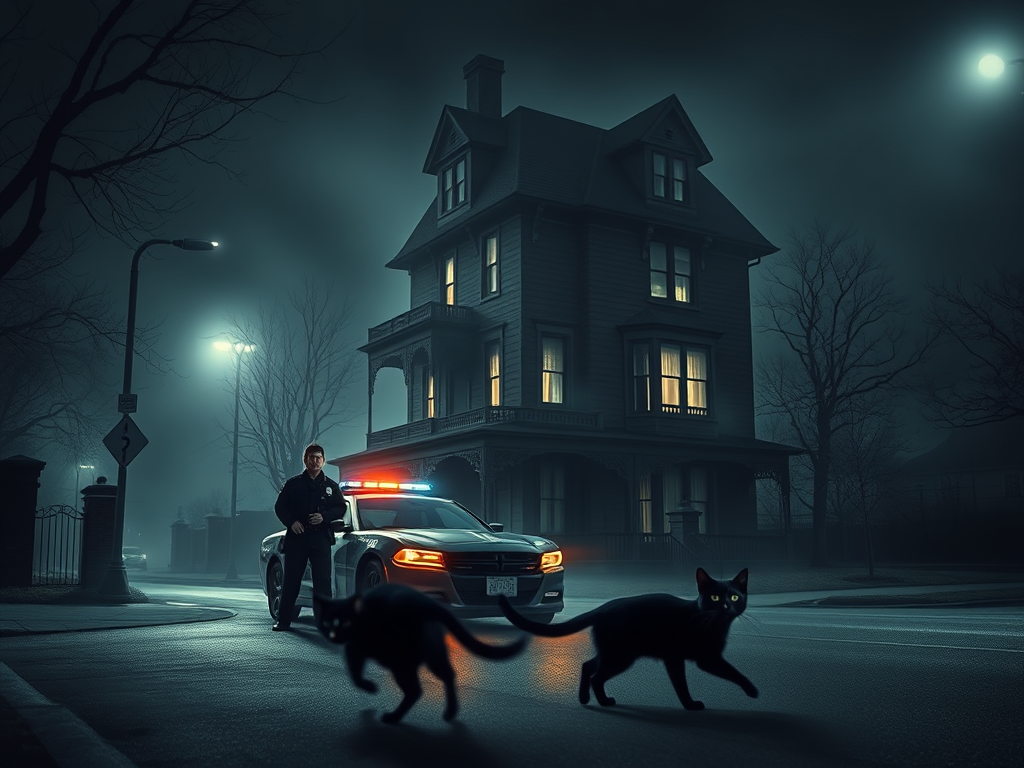
Officer Christopher Cain and Officer William Fife had only been with the department briefly. Max Hinkle and Loyd Mavis’s senior officers often supported them on calls. They ensured the rookies didn’t get in over their heads.
That night, the fog was thicker than the young officers had ever seen. It clung to the streets like a dense blanket, reducing visibility to barely a few feet before their patrol unit. The radio crackled to life, and their dispatcher’s voice cut through the eerie stillness.
“Unit 17 and Unit 23 respond to 809 South Beaver Street. Caller reports strange occurrences and possible screaming.”
The call came in, and without hesitation, the officers prepared to face the unknown.
The mention of strange occurrences and possible screaming on Beaver Street sent a shiver down their spines. The street was lined with old, looming houses, most of which had seen better days. This location stood out as a towering two-story relic. It bore an uncanny resemblance to the Addams Family home from television.
The officers pulled up, the house’s silhouette barely visible through the fog. A black cat let out a piercing yowl as they exited the patrol car and bolted past them. Both officers jumped, reaching instinctively for their sidearms. Their senior partners, standing beside them, chuckled.
“Calm down, boys,”
Sgt. Mavis said, shaking his head.
“You watch too many TV shows.”
Still feeling their hearts pound, Cain and Fife took a deep breath. Mavis folded his arms.
“Did either of you catch what the call was about?”
“Uh, something about strange occurrences,”
Fife answered, regaining his composure.
“And screaming.”
Mavis raised an eyebrow.
“Screaming, huh? Alright, let’s do this by the book. You two take the front. Hinkle and I will check around back. Keep your radios on.”
Cain and Fife stepped onto the warped wooden porch and rapped the door. A moment later, the door creaked open, revealing a frail-looking older woman with white curls piled atop her head. She smiled sweetly, her blue eyes twinkling.
“Oh my, what a surprise! I didn’t expect officers at this hour,” she said in a thin, airy voice. “Please, do come in.”
The officers hesitated but, after protocol, stepped inside. The house smelled of mothballs and something faintly metallic. Antique lamps dimly lit the interior, their glow barely pushing back the shadows.
Cain glanced around, feeling a chill prickle his skin.
“Ma’am, we received a call about disturbing noises from this house. Have you heard anything unusual?”
The older woman chuckled softly.
“Oh, I suppose you mean the screaming?”
Fife shifted uneasily.
“Yes, ma’am. Can you tell us about that?”
Fife asked, his voice betraying his unease. The older woman chuckled softly, her response sending a chill down their spines.
The woman clasped her hands together, her expression turning solemn.
“Oh dear, I’m afraid it’s quite the story. You see, it’s my late husband. He doesn’t always know when to keep quiet.”
Cain frowned.
“Your late husband?”
“Yes, yes,”
She said, waving a frail hand.
“Come with me. I’ll show you.”
She turned and shuffled toward the kitchen. Cain and Fife exchanged a glance before trailing. As they entered the room, the smell of something foul hit them—a sickly, sweet, decaying odor. The woman pointed toward an old, industrial-sized freezer in the corner.
Fife hesitated.
“Ma’am, what exactly are we about to see?”
The older woman gave a thin smile.
“Oh, just an old guest who overstayed his welcome.”
Cain swallowed and slowly stepped ahead. He gripped the handle, feeling the frostbite at his fingertips, and lifted the lid.
A massive humanoid form lay frozen inside the ice and frost-covered meat. Its single, lidless eye remained open in an eternal stare.

Cain recoiled.
Cain recoiled in shock, his mind struggling to process what he saw.
“Jesus H. Christ!”
He exclaimed, his voice trembling with disbelief.
Fife staggered back, radioing for backup.
The older woman let out a sigh.
“Oh dear. I’ll have to explain.”
Mavis and Hinkle burst through the back door, weapons drawn.
“What the hell’s going on?”
Mavis demanded.
Fife pointed at the freezer, his face pale.
“There’s a goddamn cyclops in there.”
Hinkle blinked.
“A what?”
Cain barely found his voice.
“A real, honest-to-God cyclops. Dead. Frozen solid.”
Mavis exhaled sharply and turned to the older woman.
“Ma’am, you’d better start talking. Now.”
She folded her hands.
“Oh, it’s time someone knew. Freezer Boy wasn’t from around here, you see. He came looking for refuge long ago. Poor thing couldn’t adapt. He started getting ––– hungry. My husband and I did what we had to.”
Cain felt his blood run cold.
“And what exactly did you have to do?”
She looked at him with a knowing smile.
“We fed him. Until we couldn’t anymore.”
The room fell into silence. The fog outside thickened, swirling like ghosts against the windows.
And somewhere, deep within the house, another scream echoed.
And it wasn’t human.
“What was that?
Sgt. Davis yelled.
“Who? Who was that, Sergeant? Barry, That was Barry.”
She said,
Sargent Davis asked
“What is up with Barry?”
“He keeps falling out of his crib.”
As the five people went up to the room to look at Barry, the little old lady warned them –
“you were startled at what you saw in the freezer. I don’t know how you will react when you see Barry!”
The Officers asked the old lady whatever became of her late husband. She explained that he died of natural causes. Barry and Freezer Boy fought over who got to eat him. That is how Freezer Boy ended up frozen.
“Poor Freezer Boy never saw it coming, but those two saved me thousands in funeral expenses!”





 benandsteve.com