

Earl’s Service Station was well known in town. It had to be. It was on the corner of Broadway and Main, downtown. Everybody in the city went to get their cars serviced, and the gasoline tank filled up there; they had to; it was the only gas station in the small town. Working in a gas station, Earl or his son Skip would wash the windows of cars while they were filling up. They would still be trying to scrub the bugs off the windshield on warm summer nights, long after the gas had clicked off.
Cars that didn’t need gas would pull in, and without being asked, he would get out to work on their windshield cleaning with squeegees and sponges. It was on the house because Earl had a “full service” operation. When you bought gasoline there, anytime you stopped in, you got service. Everyone knew that you didn’t have to purchase gasoline for the service. Earl provided the work because that was the reputation of his business.
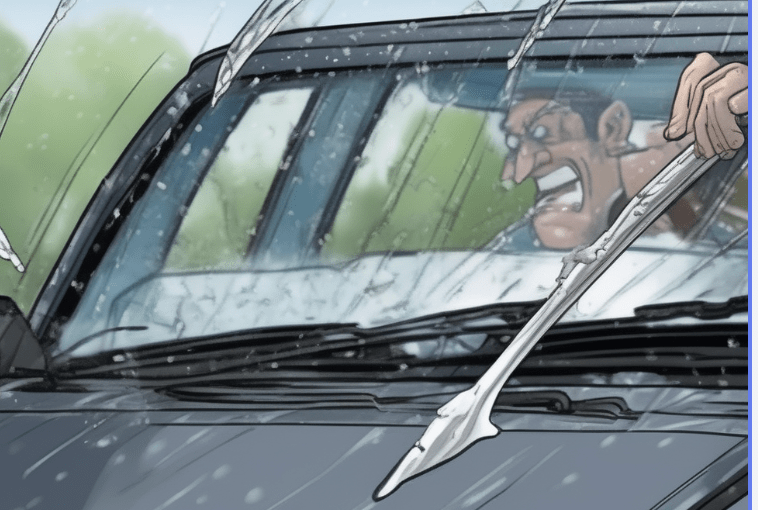
It was the 1960s, and business ran steadily through the 1970s. However, as the 1980s crept in, a truckstop up the road near the big highway had put in giant tanks that held truckloads of fuel and could undersell Earl. It was self-serve, and the drivers had to clean their windshields. They’d have to check their oil and steering fluid, but now, all that didn’t matter.
Earl still had enough local customers and monthly charge accounts to keep his business open; repairing flat tires and selling accessories like windshield wipers, fluid, and antifreeze would keep him afloat. And it did through to the time he retired and handed the business over to his son Skip, who had been working in his father’s station since he was out of high school.
Skip noticed changes over the years, something more than people going to the big station up the road; the cars coming into the service station didn’t have bugs on the windshield. He had watched a television program a month or two earlier and remembered hearing about the windshield phenomenon.
It had a more scientific explanation, but Skip explained it to a group of local coffee drinkers as locals began noticing changes in their community due to the unnecessary killing of insects using insecticides that are too potent for their intended uses. The next phase would change the growth of trees in the region, which could harbor diseases that would wipe out other natural grasses and trees known to the area.
The coffee drinkers howled insults at Skip –––
Skip, you are the gasoline island science professor.
Another said,
Yeah, just like the professor on Giggi’s Island or whatever they named that old show.
The coffee drinkers had a good laugh on Skip’s behalf and left it at that. Skip went on about his business, knowing he was on to something. A few days passed, and an agent from the county’s local university agriculture extension program came into the service station for refueling. Skip introduced himself and said ––
Hey, do you have anything to do with bugs where you work?
The agent said –––
I do. I am responsible for a survey we do every Spring, Summer, Fall, and Winter. We have traps about twenty-five miles outside town and collect and count insects. See their type, how many, where they came from, and if they are locals or travelers. Why do you ask?
Skip replied –––
Windshields. There are hardly any bugs on windshields these days. When I was growing up, it took forever to scrub them off; now, there are hardly any.
The Agent replied –––
It is because of insecticides. The bugs are getting killed off in masses, and they are not coming back. When they do, it kills everything down the line and up the line. It just goes on and on!
The agent’s words hit Skip like a ton of bricks. The number of insects was plummeting drastically, and it was a catastrophe in the making. Without insects, entire food chains would collapse. No crops would get pollinated, leading to a scarcity of food for birds, amphibians, reptiles, and even us. The ripple effect was clear-as the frogs die off, the animals that feed on them would also perish, leading to a devastating impact on the entire ecosystem.
Skip said,
WOW! Such a chain of events is indeed a catastrophe; no one knows about it because all attention is focused on global warming.
The agent told Skip,
Well, only some of the attention. We are trying to educate farmers and homeowners living in rural areas about how to use insecticides and pleading with people not to kill off bee colonies. Plus, quit killing insects. We need them, ants and all, to survive. Remember, the insects will die off with global warming affecting them too; they can’t live where their habitat is changing and are no longer welcoming to their living conditions. It isn’t just the insecticides that we are dealing with. Some areas are turning into deserts; others are seeing floods, and others are experiencing storms like never before. These extreme weather events are all linked to global warming, which is also contributing to the decline of insects.
Skip told the agent that he had tried explaining the issue to his buddies at the coffee shop; however, they didn’t think he knew what he was talking about. The agent said you were right and good for you! I am interviewing with the local media. Tell your friends to watch for it this weekend.
On Sunday morning, Skip stopped at the local cafe for coffee with the crew. As he walked in, everyone began cheering.
“There’s the man” There’s Mr Smarts!”
It wasn’t until Skip sat down that he learned that the Agriculture Agent had referred to him in the interview as what an alert citizen was representative of; he had noticed the changes in his environment and said something.
An ‘alert citizen’ is someone who is observant and proactive in reporting changes in their environment, like Skip. Something so great caused the local agency to alert farmers to stop using all level 1 and 2 pesticides.
At least until the Extension Service looked into the lack of insects in the region. The news article then explained the importance of insects to the livelihood of all living creatures, just as the agent and Skip had talked about.
 benandsteve.com