I often go back through the archives and reread old stories I reported on. Some are small, dusty pieces that barely made a ripple. Others grab you by the collar and refuse to let go. This is one of those stories.
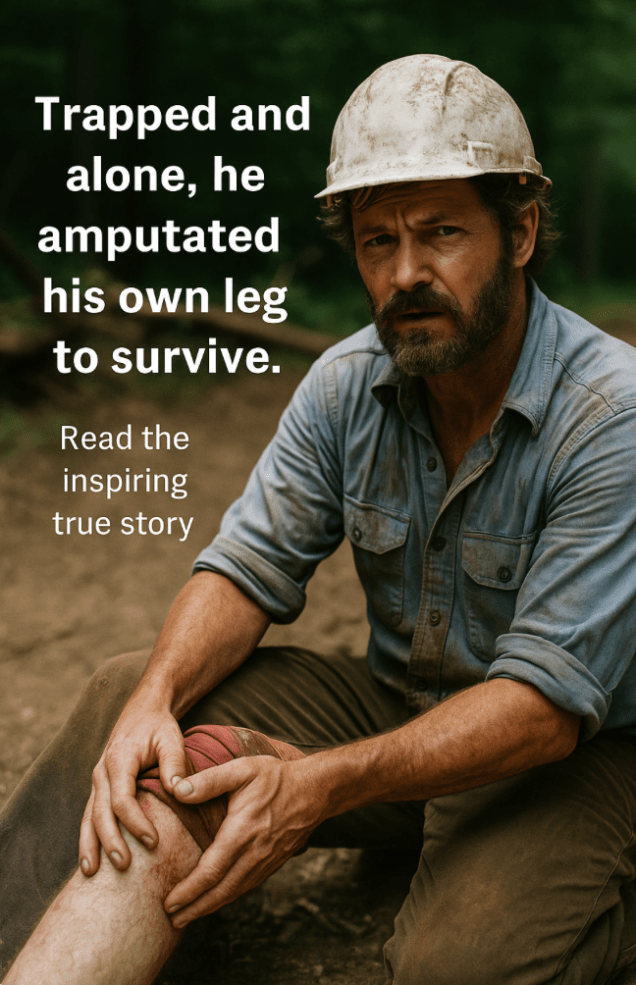
On a summer day in 1993, construction worker Donald Wyman, 37, found himself trapped. He was in the woods of Jefferson County, Pennsylvania. A fallen tree had crushed his leg so severely that he couldn’t free himself. After an hour of pain and helpless screaming, Wyman realized time was running out.
With no other choice, he made a tourniquet out of a shoelace and a wrench from his power saw. Then, with a courage most of us can barely imagine, he amputated his own leg. Using a seven-inch pocketknife—cutting through muscle, skin, and nerves to seize his survival.
Digital Illustration
Badly wounded, he dragged himself to his bulldozer, and drove—bleeding—to his pickup. Once in his truck he managed to reach a neighbor’s farm half a mile away. The neighbor, John Huber, called rescuers, who later found Wyman’s leg still pinned under the tree, boot and all. Thanks to his grit and quick medical response, Wyman survived and was upgraded from critical to stable within days.
Had he hesitated, his story would have been reduced to a one-paragraph obituary in his hometown paper. But Wyman wasn’t a victim—he was a survivor. He did what had to be done.
And that’s the lesson. You may never face a tree crushing your leg. Yet, you may face toxic relationships. You might meet negative influences or habits that hold you back. Sometimes survival means cutting away the very thing that’s dragging you down. You may face a country that has appeared to have turned against you. It won’t be easy. It may hurt. But in the long run, it can save your life—so you can live fully with those you love.
There are stories worth telling—stories shaped by the countless experiences we collect in life. In mine, there have been unforgettable moments. I visited with friends, shared laughter, and exchanged hugs. Then I returned home—only to learn the next day that they were gone. No warning. No signs. One moment, they were part of my world; the next, they had vanished from it.
Those moments taught me a truth that often goes unspoken: nothing in life is definite.
Even when it feels like we’re stuck—repeating the same routines, going through the same motions—life is still moving. The world shifts beneath our feet, often without our awareness, certainly without our consent. Change is not something we invite; it’s something that happens. It shows itself in every breath we take. It appears with every face that enters or leaves our lives. It influences every decision made far beyond our control—from government chambers to hospital rooms.
Change is the only constant.
Sometimes, a change is so small it goes unnoticed—until its effects stretch across history. On February 2, 1959, Waylon Jennings gave up his seat on a chartered airplane to the Big Bopper, J.P. Richardson, who was feeling ill. The plane also carried Buddy Holly and Ritchie Valens. It crashed in an Iowa field just minutes after takeoff. Everyone aboard died.
Waylon Jennings
That one seat swap—an act of kindness, -–– saved Jennings’s life. No one was at fault. But that simple moment, that ordinary change in plan, altered the course of music history and Jennings’s own future. He carried the weight of that change for the rest of his life. And yet, that change gave him more years, more music, more life.
That is how change works. Quiet. Sudden. Unfair. Unpredictable. But real.
When everything feels bleak, we must remember: change is still at work. When loss feels unbearable or the path ahead seems hidden, we must remember: change is still at work. What feels like the end today reveals itself as the beginning of something new tomorrow.
Time moves. People change. Life adapts. Always.
And in that, we find our only real choice: acceptance.
Accepting change—no matter how painful—does not mean surrendering to it. It means choosing to live with eyes open, hearts ready, and spirits willing to grow from what has been lost. We don’t have to like every change. But by accepting it, we start to transform with it—and even rise because of it.
Postscript:
After a tragic 1991 plane crash claimed the lives of several members of Reba McEntire’s band, it was Waylon Jennings—haunted by his own near-miss decades earlier—who offered her a few words she never forgot:
“Reba, you’ll never get over it, but you’ll get through it.”
And that’s the final truth about change. We don’t get over it—we live through it. And somehow, life keeps going.
Everett Langston was trapped in a perpetual orbit. He had been walking in circles for as long as he remembered. It wasn’t a choice, but a fate that had befallen him. Seeing a circular object, even if insignificant, would betray his feet. This sight led him into an endless loop.
Doctors had puzzled over his condition. Some called it a compulsion, others a neurological disorder. But Everett knew the truth: it was a curse.
It started when he was a boy. One autumn afternoon, he saw a pumpkin on his grandmother’s porch. Without realizing it, he walked around it once. Then again. And again. His grandmother, amused at first, soon grew concerned when he wouldn’t stop. His father physically picked him up and carried him inside to break the spell.
As he grew older, the compulsion became more disruptive. A simple trip to the grocery store became an ordeal. Aisles stocked with oranges would catch his eye. The wheels on carts made him spin them in his mind. The bakery’s showcase of bagels would pull him into endless rotations. He learned to avoid certain places. He refused to go near playgrounds. Merry-go-rounds were his nemesis. He avoided tire shops. He walked with his head down in parking lots to keep from spotting hubcaps.
But the world was an entire circle.
One day, Everett found himself in the city’s heart, caught in a storm of misfortune. A coin flipped onto the pavement—a round-the-clock hanging above a storefront. A drain cover was embedded in the sidewalk. He circled each one, his breath coming faster, his steps quick and mechanical. Passersby stared. Some chuckled. Others whispered.
Then he saw it.
In the middle of the city square stood an enormous fountain, its base a perfect, unbroken circle. Panic gripped him. His legs moved before he resisted, pulling him into a slow, deliberate orbit—once, twice, ten times. A police officer approached, asking if he was lost. But Everett only mutter, “I just have to finish.”
The sun dipped below the skyline. His legs ached. His vision blurred. But still, he walked.
And then—just as exhaustion took hold, something remarkable happened.
For the first time in his life, he stopped.
In the fountain’s reflection, he saw the stars above, scattered across the sky in celestial loops, infinite and unending. A smile of understanding crept onto his face. The world had been walking in circles all along, and he was just a part of it.
And so, he kept walking—not because he had to.
He continued to walk. It was not out of compulsion but from a newfound understanding. He accepted his place in the world.
Today, as I write, I ponder what story to share. Specific recollections stand out, shaping my life in ways that make them worth remembering.
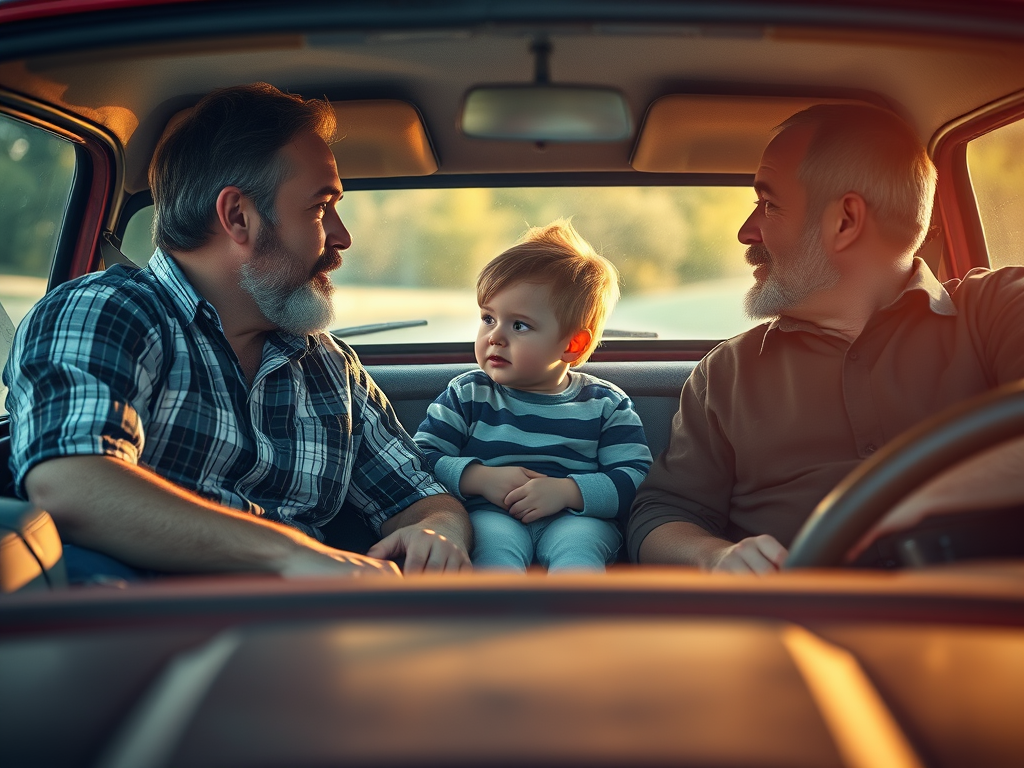
One of my fondest memories is traveling with my father and one of his friends. These journeys often involved a horse—whether for a rodeo, a parade, or taking a mare to be bred. I remember sitting in the middle of the pickup seat. The air conditioning blasted my face. The two men talked nonstop. The smell of their cigarettes filled the cab; they never cracked a window. Though I never smoked a day in my life, I suspect I passively inhaled enough to equate to thirty packs.
This was the early 1970s when smoking held no taboos, even around children. My father eventually quit in his late fifties, relieved to be free of nicotine’s grip. Sadly, six months later, he responded to a chlorine leak at a swimming pool. While shutting off the container, he inhaled the toxic gas, permanently damaging his lungs. From then on, breathing was a struggle. The medications he took to manage his condition weakened his bones. By 63, he was no longer capable of walking. He passed away shortly after. But in those 63 years, he packed in a lifetime of experiences.
Reflecting on my childhood, I marvel at how my parents managed to supply for six children. We weren’t wealthy, yet they kept us clothed, fed, and engaged—horse riding, basketball, piano lessons, and football. We started in a beautiful three-bedroom brick home in a great community. My father owned a Texaco service station and volunteered as a fireman. Some neighbors even urged him to run for city council, but his passion lay elsewhere. He dreamed of owning a quarter-horse farm, a dream that required sacrifice.
The first step was selling our home. We moved into a one-bedroom rental, with my parents in the sole bedroom and us kids on foldout couches. My father attended barber school, planning for the future. A year later, he purchased forty acres in a small town 35 miles away. He used the money from selling the house and service station. The land was densely wooded, and my father and three older brothers worked tirelessly to clear it for a home.
He found a house nearby for sale, provided it was moved. It had four rooms downstairs, one upstairs, and disconnected kitchen and bathroom additions. Two trucks transported the house 28 miles to our new farm. Once settled, we designated rooms: the kitchen, living room, and bedrooms. The steep stairs to the upstairs bedroom often left me bruised from falls. I loved that room. It had windows at both ends, letting a breeze flow as I gazed at the valley. I imagined future adventures. I discovered my secret hideout underneath those stairs, meant to be my sister’s closet. Small enough to squeeze deep inside, I stayed undetected until I was spotted and lost my perfect hiding place.
Life on the farm lacked modern conveniences, including indoor plumbing. My father found an abandoned outhouse and positioned it over a dry well. Inside, we had two five-gallon buckets of water for drinking, with a dipper hanging above and another for washing dishes. Each day, my father refilled them after closing his barbershop in town.
We also had no phone service at first. When we finally got a phone, I was about eight. The company laid a single line down the rural road. We shared it with three other families on a party line. Each household had a distinct ring. Still, anyone might eavesdrop. Power outages were frequent, lasting days during snowstorms or severe thunderstorms, making access to our home difficult in bad weather.
My father and brothers built horse barns south of our home. At one point, we had over forty horses. Spring was the busiest, with foals being born. My father hosted roping events, where friends gathered to rope all day. Eventually, he installed arena lighting, allowing him to ride even after long days in the barbershop. I joined him often, eating more red sand from falling off horses and calves than I care to remember.
Over time, the horses dwindled to just mine and his. My siblings had moved on from riding. My father worried that his aging stud horse was no longer suitable for breeding. That’s when he became a ranger at the Girl Scout camp, changing my world entirely. Life on the farm transitioned into something new and unknown. What I learned at the camp shaped me. It taught me the value of acceptance. The lessons in resilience have stayed with me through life’s most challenging moments. But that, as they say, is another story entirely.
To end, I want to include a question I recently asked my 95-year-old mother:
“You went through so much. It all started after selling the brick home. You moved from the life we had in the city. Knowing all this, would you do it again?”
A new neighbor moved down the road. His name was George. He had two strong mules that could pull a plow, a milk cow, and a rooster, but no hens. It looked like he had just taken up living in an old hut abandoned by old farmers who once lived in the area and had gone on. Bill and Nora lived down the road, and further up the hill lived John and his wife, Laura.
Bill, on his horse, was on his way to check on John and Laura when he passed George’s new living setup. Seeing George’s farming efforts, Bill decided to stop and extend a warm welcome. He introduced George to the rest of the neighbors, John, Laura, and his wife, Nora, and invited him to visit anytime. Bill emphasized the mutual reliance of neighbors and assured George that their door was always open, fostering a sense of community and support.
Bill, after his brief encounter with George, continued his journey to John and Laura’s home. He shared the news of their new neighbor, George, and they all agreed on a plan. They decided to reach out to George and invite him for a warm community dinner on Sunday, a gesture that would help him feel welcomed to their little community.
That night, Bill fed his animals on his farm and locked his barn. He and his wife settled down in their home with a cozy fire flickering in the fireplace. They sat and thought about how lucky they were to have their little farm and life. It was to be a cool night but not cold, and Nora left their bedroom window cracked to let fresh air in as they slept. It must’ve been after midnight when Bill and Nora’s dog “Blue” started barking, and Bill yelled for him to lay down and go to sleep, saying to Blue,
“We’ll go hunting tomorrow, dog!”
The dog, looking miffed, he had heard something unusual but obeyed Bill and lay down, all the while staring out the door, watching for something to move.
The following day, Bill went out to feed his livestock and noticed hay, corn, and other items had gone missing from his barn. The back barn door swung open –– Bill recalled –– it had not been the night before. He saddled his horse and rode to John’s, and they, too, had been missing several things: pots and pans, a chicken, and a piece of meat from their smokehouse. Bill told John not to say anything to George until they knew the new neighbor had anything to do with the missing items. Just because George was new to the area didn’t mean he had taken anything.
On his way home, Bill stopped by to check on George. But, it looked like George was still asleep, and his wife, whom Bill hadn’t met, was timid and only waved through the door. So Bill rode his horse back home.
When he got home, Bill had a hunch and got some stiff bailing wire used to bundle hay. He stuck it into his corn cobs, which he stored in his feed storage bins. He then slid a small band onto a few of his best hens’ legs. That night, Bill and Nora went to bed and again had their window cracked open, and Blue was guarding them next to the bed. Sometime after midnight, Blue began barking and scratching at the door. And again, Bill told him to lie down. But this time, Bill knew why Blue was barking.
The following day, Bill went to his barn, and sure enough, the corncobs he had placed the wire on were gone. Some hay and the hens he had slipped the bans on their legs were gone. Bill returned to the house, had breakfast, and told Nora he was going over to Georges. When he arrived, the neighbor was out in his yard, and the two men met. And Bill asked George if he could see George’s mules. As they were looking at the mules, George saw a corncob and broke it open, and there was a wire. The wire he had stuck in it the night before.
Bill turned to George and said,
“George, this corncob is mine. I put this wire in there last night. I will find the same thing if I break open a few more corncobs. And, I have seen several hens you have today that you didn’t have yesterday, and they have a ban on their legs. I know because I placed it on them last night as well. John is also missing some meat and old pots and pans up the road, and I’ve heard talk from other neighbors about missing things around. We don’t do such things around here!”
George apologized and said that he would bring the items he took back before the day’s end.
At sundown the following day, Bill and John were talking, and they had not heard from George but knew he was at home. George had not returned anything. Other men who were missing items met Bill, and they said ––
“we need to teach George we don’t steal.”
They all agreed. The men went and hitched a team of horses up to a wagon and put an old whiskey barrel and some rope in it. They then went to George’s. When he came out onto his porch, the men surrounded him, tied him up, and put him in the wagon. Some of the men’s wives came to stay with George’s wife while the men took him out in the wagon.
They climbed a tall, steep mountain that was clear of trees on one side. When they got to the top, they set the whiskey barrel out and told George to get inside. He did. Then they tacked on the top. George could only see one small hole in the side of the barrel.
The men told “George, this is your punishment for stealing from us. You are to be in this barrel overnight”, but they were interrupted.
A big ole bear came sniffing out of the woods, and the men jumped on the wagon and took off. Looking out of the hole, George couldn’t see what was going on, but the bear backed up to the barrel, sticking its tail in the hole. When it did, George grabbed it and scared the bear, causing it to run down the mountainside. As it did, the barrel rolled, banged, thumped, jumped, flew, hit, and jarred the barrel. Causing to fall to pieces when it hit the bottom of the mountain. George was beaten and bruised but alive, and the neighbor men in the wagon were all waiting on him. Two of them got on each side of him and helped him into the wagon; another handed him a jar of salve, telling him it would take care of every scratch on him. When he healed, the other men told him to hitch his mules up to his wagon and come by their place, and they’d have some items to help him start farming and set up a house with his wife. Bill and John told him that he never had to steal again in his life. All he had to do was be a good neighbor and help others when they needed it, and others in the community would help him. Bill said, “If you are having trouble, don’t starve. We’ll help you out, just like you will help us out when we need it.”
If you are having trouble, don’t starve. We’ll help you out, just like you will help us out when we need it.
Then, all the farmers and people who lived in the area came together on a sunny afternoon and celebrated having new neighbors, George and Bessie. There was food, games and their fellowship built lifetime bonds. From then on George was the best neighbor and went on to pass on the lessons he learned from Bill and John and the other farmers and neighbors who had turned him away from stealing.









 benandsteve.com