How Mother’s Day Became a Global Celebration

By Benjamin GroffMedia© | benandsteve.com | 2025 Truth Endures©

2–3 minutes

The Forgotten Fight Behind Mother’s Day

Information for this report provided through ChatGPT

Mother’s Day Celebration Groff Media 2025©

Every year, in nearly every corner of the world, people buy flowers. They write cards and call their mothers to say “thank you.” But few know that Mother’s Day wasn’t always a celebration of brunches and bouquets. It began with a fight. It wasn’t with fists or fire, but with letters and marches. It involved the relentless will of one determined daughter.

The story starts in the United States in the late 1800s. It begins just after a brutal civil war tore the country apart. Ann Reeves Jarvis lived in a small town in West Virginia. She was a mother who believed that motherhood was more than just raising children. It was about strengthening communities. She organized “Mother’s Work Clubs” to teach women how to care for their families and treat illness. During the war, she crossed enemy lines to care for wounded soldiers. Being a mother meant healing, even in a time of hate for her.

When Ann died in 1905, her daughter Anna Jarvis was devastated. But in her grief, she found purpose. Anna believed that mothers—their love, their sacrifices, their invisible labor—deserved to be honored privately and publicly. She envisioned a day when everyone would pause to recognize the power of a mother’s influence.
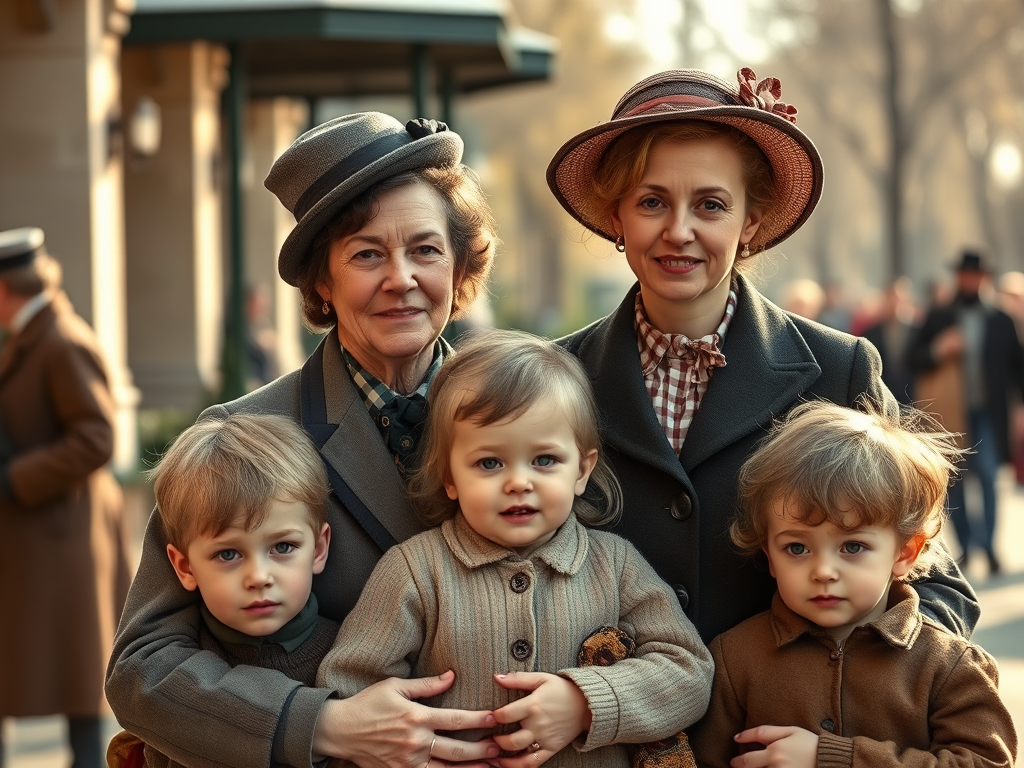
Mother’s Day Begins Groff Media 2025©

In 1908, Anna held the first official Mother’s Day in her mother’s church. She sent 500 white carnations—her mother’s favorite flower—for the guests. But that was just the beginning. Anna wrote thousands of letters to politicians and ministers, urging them to create a holiday for mothers. She battled for six years until 1914 when the U.S. president made it official: the second Sunday of May would be known as Mother’s Day.

The idea spread across borders and oceans, and countries worldwide adopted it—each adapting it in their way. In Thailand, it aligns with the queen’s birthday. In Ethiopia, it’s celebrated with a family feast. But at its heart, it remains the same: a day to honor the women who shape our lives.

Mothers Day Groff Media 2025©

Ironically, Anna later grew furious at how commercialized Mother’s Day had become—filled with store-bought gifts rather than heartfelt thanks. But she couldn’t even stop its global march. The world had embraced the idea, and the spirit of that first small ceremony had taken root.

The next time you give your mother a flower or a call, remember. This day began not with marketing. It also did not start with tradition. It started with one woman’s vow to never let the world forget what mothers truly do.

The Day a House Fell: A Family Tale of Humor and Chaos

By Benjamin GroffMedia© | benandsteve.com | 2025 Truth Endures©

3–4 minutes

The Day a House Fell on My Mother’s Head

When we first moved to the farm, my father bartered for just about everything. It was the 1960s. He had a wife and six kids. My young uncle, who felt more like an older brother, was also part of the family. He had plenty of mouths to feed. There were also many projects to tackle.

One of his deals involved tearing down an old house on a neighbor’s property in exchange for the lumber. It wasn’t a one-man job—my three older brothers, my uncle, and even my mother had to pitch in. My two sisters and I were assigned a very important task: holding down the tailgate of the pickup truck.

We were told in no uncertain terms to stay put. We knew exactly what that meant. From our perch on the tailgate, we watched as our dad and brothers clambered across the roof, tossing down boards. My mother hustled to pick them up, stacking them onto a flatbed trailer and into another old truck.

I still don’t know exactly why my mother did what she did next. Maybe she wanted to check on us; maybe she wanted to warn us again. But as boards kept flying off the house, she walked around to where we sat—into what my dad had firmly declared “the danger zone”—and yelled:

“You three stay away from here, or you’ll get hit in the head with a board with a rusty nail!”

And no sooner had the words left her mouth than—WHACK! A board sailed down and smacked her right on the head. Of course, it had a rusty nail. Of course, she screamed. And of course, all three of us screamed right along with her.

Almost instantly, my dad’s head popped up over the roof’s edge.

“What the hell are y’all screaming about?”

We all shouted at once:

“Mama’s bleeding! A board hit Mama in the head! There’s a nail in her head!”

My dad scrambled down the ladder, muttering adult words under his breath.

“Shit. Goddammit, Marge, why the hell were you standing where we told the kids not to go?”

My mother, ever unflappable, shot back:

“You threw that board at me on purpose!”

He glared at her.

“Dammit, I didn’t even know where you were. Kids, get off the tailgate and sit on that log. I gotta take your mother into town.”

They drove off toward Doc’s office, leaving my brothers to finish tearing down the house and loading up the wood. The sun set. The old trucks were filled. My brothers piled us into the pickup. They drove the mile and a half back home.

When we pulled into the yard, our parents were just arriving. My dad helped my mom out of the truck and told us she was fine—just a scratch, he said. Doc had cleaned her up, given her a tetanus shot, and sent her home with something “to relax her.”

Naturally, we kids had to see the wound for ourselves. It didn’t look like much—just a small cut hidden in her hair, surrounded by a bruise. Not exactly a house falling on someone’s head. But it had bled plenty, enough to scare us all.

That night, we sat around eating a casserole that had baked while we were gone, everything back to normal. Or so it seemed.

Later, as my mom recounted what happened, the story took on a life of its own. Over the years, at family gatherings and on phone calls, we’d hear her say,

“Well, you know, the day that house fell on my head…”

In the background, my dad’s familiar sigh would follow:

“Dammit, Marge. It was just a board. And it wouldn’t have hit you if you’d stayed where I told the kids not to go.”

But she never wavered. Even now, at 95, if you ask her, she’ll tell you straight:

“A house fell on my head.”

Memories of My Grandmother and the Whippoorwill

GROFF MEDIA 2024© TRUTH ENDURES IMDBPRO

Presented by benandsteve.com By: Benjamin Groff II©s

2–3 minutes

My grandmother, whom I affectionately called Mom, often shared childhood memories filled with the enchanting call of the whippoorwill. She spoke of its song with reverence, describing it as a sound of pure beauty that she dearly missed. Her stories wove a special bond between us. They spanned the miles that separated our homes in Northeast Texas, Southwest Arkansas, and Southeast Oklahoma.


Nowhere else, she insisted, did the whippoorwill’s call sound as sweet.


I lived nearly forty miles east of her. It was on a farm where the evenings were alive with the calls of night birds. When Mom visited, I would take her on walks to the barns. We listened to the quail and other birds stirring in the brush.


“Mom, are those the whippoorwills you were talking about?”

I’d ask eagerly.


She would shake her head, smiling softly.

“No, that’s not them.”


Her answer certainly puzzled me. I knew the birds in our region. What I heard matched the description of a whippoorwill. At least, it did to my ears. Yet she remained firm. The sound she longed for existed only in the woods of her childhood, some two hundred miles away.


Mom passed away in April 1975, and with her, I thought, went the mystery of the whippoorwill. But fate had other plans.


Not long after, my parents decided we would take a trip. We went to visit my great-uncle Sam and great-aunt Dora. They lived in the very place where Mom had been born. I expected only a family visit. Yet, something remarkable happened as we settled onto my great-uncle’s front porch.


The evening air cooled as the sun dipped below the horizon. Towering trees stood like silent guardians, their leaves rustling in the gentle breeze. The Ouachita Mountains stretched beyond us, their shadows deepening as dusk settled in. And then, clear as a bell, I heard it.


“Whip-poor-will! Whip-poor-will!”


The call rang through the crisp and melodic trees, carried by the mountains and forest floor acoustics. It was so rich and hauntingly beautiful, unlike anything I had ever heard.

At that moment, I understood.


I knew why Mom had never heard it quite the same anywhere else. Here, and only here, the whippoorwill’s call possessed a magic she had never been capable of finding again.
I have never heard it since.


But in that fleeting moment, I was surrounded by nature’s beauty. I heard the echoes of the whippoorwill’s song. I found peace. It was as if I had brought her wish full circle. I was hearing the sound she longed for. I was honoring her memory in a way that words never could.


And in that sound, I found her again.

Hear the sound in the video below.

Learn about the Whippoorwill here!