Sgt. Steve Mahan: A Line of Duty Sacrifice

Benjamin GroffMedia© | benandsteve.com | 2025 Truth Endures©

4–6 minutes

The Sgt. Steve Mahan StoryElk City, Oklahoma

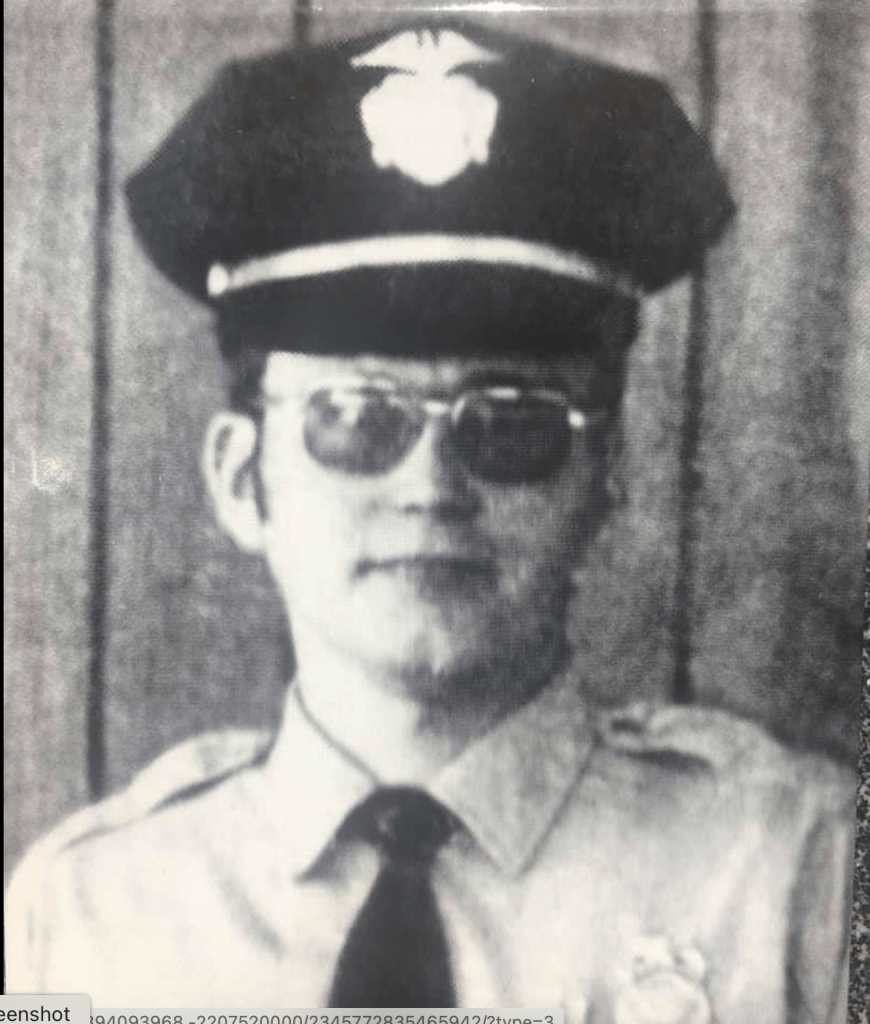
Sgt. Steven L Mahan

Steve Mahan was a laid-back guy — the sleepy type. He rarely overreacted, and getting him excited about anything was hard. One day, Sgt. Mahan responded to a bomb threat at a local school. When he found the suspicious device, he calmly picked it up. He put it in the trunk of his patrol car. Then he drove it back to the police station.

He carried it inside without much fuss and placed it on the booking counter.

I had never seen the top brass lose it all at the same time. The Chief, the Major, and the Captain were all upset at once. They cussed and yelled in perfect unison, ordering Mahan to promptly take the device back outside. Then they called the fire department, which, ironically, was located right next door.

The fire department’s first response? 

“Have him bring it over.”

The Chief shut that idea down on the spot.

If I remember right, Mahan took it to the shooting range. The three top brass joined him there with rifles in hand. They tried to get it to explode.

It turned out to be a dummy.

Thankfully, it was because I was working on the other side of that booking counter the whole time.

Sgt. Steven Mahan was killed in the line of duty on January 5, 1983. That night, his girlfriend was working at the police department. Another female dispatcher was also there. He drove upon an armed robbery in progress at a local hotel. Unbeknownst to him, he was moving into an ambush.

After handing over the cash, the hotel clerk ducked behind the counter and observed the unfolding scene. She promptly called the police, reporting that an officer had been shot in the head. She couldn’t recognize the unit number but noted the word “Supervisor” on the vehicle’s front panel.

Upon realizing it was him, Sgt. Mahan’s girlfriend became understandably distraught. The other dispatcher maintained composure under extreme pressure. She coordinated response units. She relayed critical information from the hotel clerk to surrounding agencies. The suspects were taken into custody within the hour thanks to swift action and coordination.

Sgt. Mahan had been overpowered and shot in the head with a .25 caliber pistol, then fatally shot again in the back of the head with his service weapon. The officers rushed him to the local hospital in the back of a patrol unit. Dense fog made air transport impossible. An ambulance was then dispatched for the nearly three-hour drive to the nearest trauma center. It traveled through whiteout conditions with visibility near zero.

I arrived at the station about an hour after the shooting. I was designated as the point of contact for media outlets. They were calling nonstop. I remained in contact with the ambulance, his girlfriend, and a fellow officer riding alongside Sgt. Mahan. The driver reported struggling to reach even 35 mph on the fog-covered interstate.

Steven L. Mahan
Killed In The Line Of Duty – Elk City, Oklahoma

Roughly thirty miles from the trauma hospital, I heard the ambulance driver radio for local police assistance. They needed help to reach the nearest hospital. The ambulance had to exit the highway. I knew what that meant. I called the Chief’s office. I delivered the news. We had just lost our first officer in the line of duty.

  • Official Summary –

Bobby Lynn Ross was convicted of the 1983 murder of Elk City Police Sgt. Steve Mahan, who was 30 years old at the time. Two co-defendants were also convicted of second-degree murder in connection with the case.

On January 5, 1983, Sgt. Mahan was conducting a routine check when he drove up to the Los Quartos Inn in Elk City, Oklahoma. Unbeknownst to him, an armed robbery was already in progress. Mahan interrupted the robbery, during which Bobby Lynn Ross had already threatened to kill the motel clerk.

Ross disarmed Sgt. Mahan and ordered him to lie on the ground. Although the officer complied, Ross shot him multiple times at close range with a .25-caliber pistol—then took Mahan’s service weapon and shot him again.

Ross was convicted of first-degree murder and robbery with firearms on October 21, 1983.

During a failed clemency hearing before the Oklahoma Pardon and Parole Board on November 19, Ross asked for forgiveness. He addressed Mahan’s family. He claimed he had changed. Sgt. Mahan’s daughter, who was only 18 months old when her father was killed, submitted a heartfelt letter to the board:

“I missed out on all the opportunities that most children had. My father was stolen from me before I even had a chance to know him. My father was doing his job, not out trying to disrupt people’s lives. All I ask for is justice to be served.”

That night, Elk City police detective Jim LaFarlette sped through the darkness. His dying colleague was in the back of a patrol car. A family lost a son. A child lost her father. A community lost a hero.

“We all under the badge were deprived of a brother,”

LaFarlette said of the murder of Elk City police Sgt. Steven Mahan on Jan. 5, 1983. Ross was put to death by lethal injection on December 9th, 1999. Ross had lived 11 years longer than Mahan was allowed.

It was the day of Bobby Lynn Ross’s execution. I called Elk City Police Chief Bill Putman to confirm that the execution was moving ahead. He assured me that it was. He informed me that he and Officer Jim LaFarlette would attend to witness it themselves. Indeed, they did.

The Mayor Who Helped Kill Women

GROFF MEDIA 2024© TRUTH ENDURES IMDBPRO

Presented by benandsteve.com By: Benjamin Groff II©s

6–8 minutes

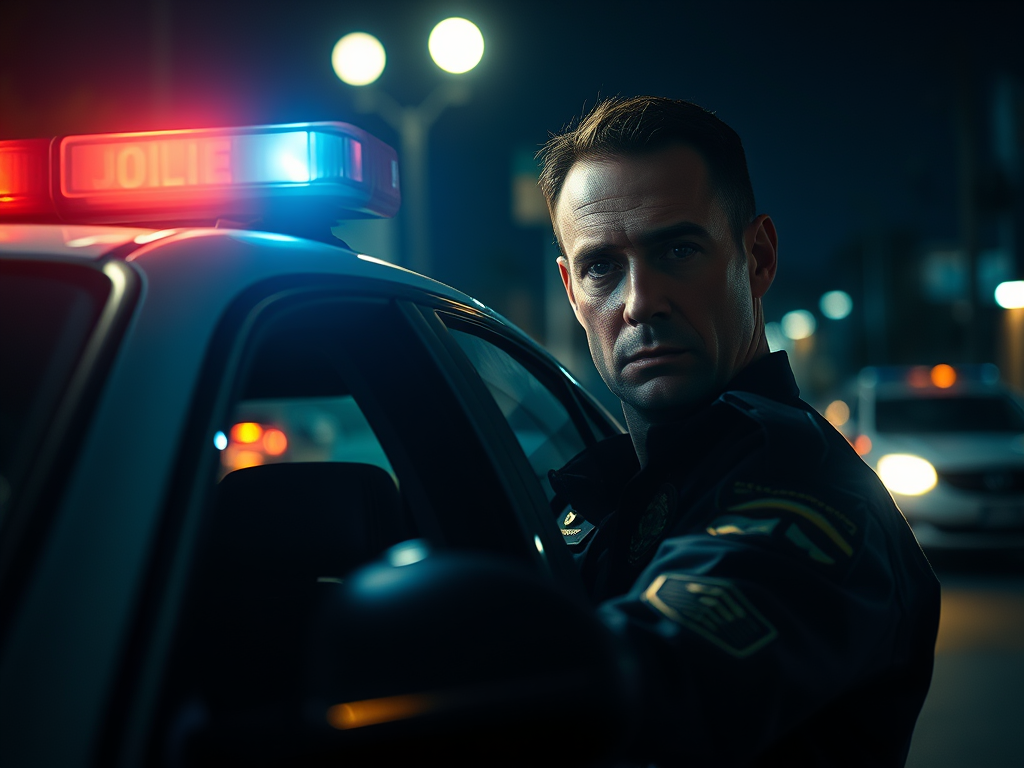
Jethro’s patrol car rounded the corner in the middle of the night. He had been around the block once before. His patrol practices always involved retracing where he had been. Burglars would often wait for a police car to pass and then start their craft. This practice by Jethro helped him lead the department in felony arrests for two years. 

Half-dressed a week earlier, he had come across the Town’s Mayor. The Mayor, Tim Awning, was running across the front lawn of a residence. Jethro had to calm him down. He then heard a story that the Mayor had been a victim of a holdup. Reportedly, a group of thugs had taken his car. The Mayor’s story was in bits and disoriented. Oddly, Mayor Awning said he only wanted to go home. He didn’t want to file a report. 

While driving the Mayor to his home, they came upon his car less than a block away, and Mayor Awning said –

“Stop here; I have an extra set of keys; I will drive it home myself.”

Jethro thought it odd that the Mayor didn’t want to file a report. Even more suspicious, the Mayor insisted that looking inside was useless. He said whatever the hooligans may have done was not an issue. Mayor Awning went even further, insisting Officer Jethro not look into his vehicle. The Mayor claimed his right to privacy through search and seizure rights. 

Now, Jethro was patrolling the same area. He cruised slowly. His patrol car’s lights were turned off, and the windows were rolled down so he hear. Near where Jethro had come upon the Mayor a week earlier, he went to a near stop. The hair on his neck started to rise; his sixth instinct was telling him something, but what? He crept his patrol unit further when he heard a lady screaming. He stopped and tried to find where the screams were coming from.

He looked over his right shoulder. He saw a lady in night clothes running across the front lawn of a home. The same home he had come across the Mayor. He radioed his headquarters his location and told the operator he was out with a distressed resident. The operator sent an extra unit as a precautionary measure. As Jethro exited his unit, he turned on his overhead red and blues, and the lady ran to him screaming –––

“Officer, it isn’t good. I can’t believe it. I just got home and changed for the night. I went in to say goodnight to my roommates. They are all dead. Blood is everywhere!”

Officer Jethro wasn’t sure what to make of the hysterics. But he asked her to catch her breath. And told her another unit was responding. Understanding that whatever she sees is in the house was dramatic he told her they are safe outside. He made sure she had a seat in his unit. Then, he waited for the backup officer to go into the home to see what she had reported. 

The backup arrived. Her name was Officer Jilly. Jethro and she worked together in the South Division for over a year. As they entered the home with their weapons drawn, they went from room to room, securing it. Finally, in the back of the house, they came to the bedroom where the carnage was found. Three women were found slashed to death.

Jethro’s gut twisted at the sight before him. Blood filled the room with a metallic stench. The dim light from the bedside lamp cast eerie shadows over the bodies. The women sprawled across the bed and floor, their nightclothes soaked in deep crimson. Jilly covered her mouth, swallowing the bile rising in her throat.

Jethro took a deep breath and turned to Jilly. 

“Call it in. We need the homicide unit and CSU here now.”

Jilly nodded and stepped into the hallway to radio for assistance. Jethro scanned the room, taking in every detail. There were no signs of forced entry. The door had been unlocked, and there was no shattered glass or overturned furniture. This wasn’t a robbery gone wrong. This was something else—something far more sinister.

Then, he noticed it: A single business card on the nightstand, smeared with blood. He pulled out a glove from his belt, careful not to contaminate any evidence, and picked it up. 

The card read:

Timothy Awning – Mayor

Jethro’s jaw tightened. His mind flashed back to the Mayor’s bizarre behavior a week earlier. He remembered the frantic running across the lawn. There was also the refusal to report the car theft. The Mayor insisted that Jethro does not look inside.

Jethro was a thorough officer. He made notes of everything, time-stamped his reports, and carried a voice-activated tape recorder in his patrol unit. Anything said inside the vehicle was considered public, and Officer Jethro had recorded the entire meeting with Mayor Awning. Now, he had a reason to review it.

“Jilly!” 

He called.

She reentered the room, her face pale. 

“What is it?”

Jethro held up the card. 

“We need to talk to the Mayor. Now.”

——

Mayor Tim Awning sat in his lavish den when Jethro and Jilly arrived. He held a tumbler of whiskey in his hand. 

His eyes flicked toward them, momentarily startled, before he forced a grin.

“Well, Officers, this is a surprise,” he said, shifting in his chair. “What brings you to my home at this hour?”

Jethro stepped ahead, tossing the bloodied business card onto the coffee table. 

“We just left a crime scene. Three women were murdered in the same house where we found you last week.”

Awning’s face paled, but he quickly regained his composure. 

“That’s—terrible. But I don’t see what that has to do with me.”

Jilly folded her arms. 

“Your business card was found at the scene.”

Awning scoffed. 

“I’ve given out thousands of those over the years. That proves nothing.”

Jethro leaned in.

“Your behavior last week was unusual. You were running half-dressed across the lawn. You claimed your car was stolen but refused to file a report. What happened that night, Mayor?”

Awning’s grip on the tumbler tightened. 

“I told you what happened.”

Jethro’s voice dropped. 

“No, you told me a story. But the real story is that you were at that house that night. You saw or did something that made you run. And I think whatever happened, it’s connected to what we found tonight.”

Awning’s jaw clenched. Beads of sweat formed at the Mayor Awning’s temples. Jilly took a step closer. 

“Where were you tonight, Mayor?”

Awning exhaled sharply and downed the rest of his whiskey. He set the glass down with a sharp clink. 

“At home. Alone.”

Jethro exchanged a glance with Jilly. They had him.

——

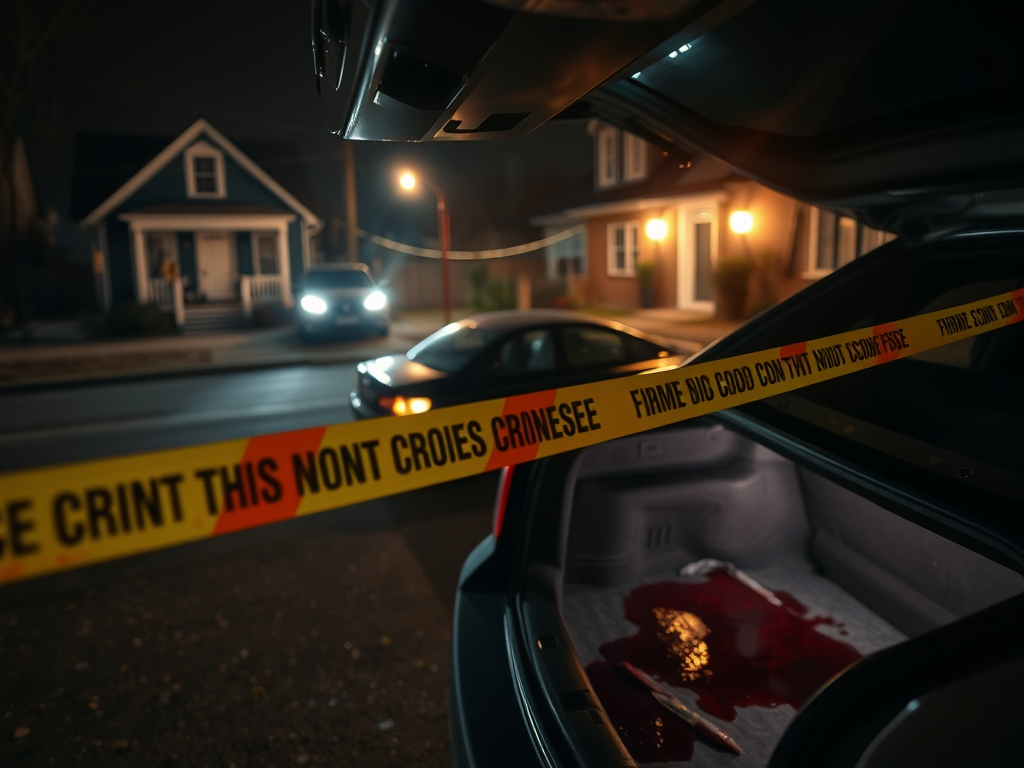
The crime scene investigators recovered more evidence. Fibers from the Mayor’s vehicle matched traces found in the victims’ home. Security footage showed his car in the vicinity the night of the murders. And then there was the most damning piece of evidence—blood found in the trunk of his car.

Faced with overwhelming proof, Mayor Awning finally broke. He confessed that he had been involved in a secret arrangement with influential figures in town. The house was where illegal dealings occurred—deals that had gone wrong. That night a week ago, he had seen a gruesome execution. He panicked and fled, leaving behind his car. The killers, nonetheless, had unfinished business.

By the time Jethro and Jilly had put the pieces together, it was too late for the three women. But it wasn’t too late for justice.

Tim Awning was arrested, and his political career ended in disgrace. As he got led out of his mansion in handcuffs, the weight of his crimes hung heavy in the air. Jethro knew this case would haunt him. Nonetheless, at least now, the Mayor would finally pay for his sins. This Mayor had helped kill women.

Killed Walking Along The Highway – How A Killer Is Captured –– By Two Keen Deputies!

Groff Media 2024© Truth Endures IMDbPro

Presented by benandsteve.com By: Benjamin Groff II©

On a dark, silent night in 1980, the highways through Caddo County near the rural communities of Gracemont and Binger, Oklahoma, were deserted. Residents had long settled in their homes, leaving the quiet stretches of U.S. Highway 281 nearly void of movement. It was a time when law enforcement in rural Oklahoma had limited resources and technology, making cases like this all the more challenging to solve.

That night, an Indigenous man, Jasper Williams, had set out on foot from his home, heading south along a dirt road that eventually led to the pavement of Highway 281. It was common for community members to walk from one home to another, no matter the distance, and Jasper was going to a friend’s house. The night was pitch black, with no moonlight or streetlights to guide him, save for the faint outline of the highway stretching before him.

As Jasper walked, visibility was almost nonexistent. The road was shrouded in darkness, with no nearby lights to help him stay clear of the highway’s center. At some point, as he walked around six miles north of Gracemont—almost midway between there and Binger—tragedy struck. Jasper was hit by a passing vehicle, which left him severely injured on the side of the road. By daylight, he was found deceased, having bled to death, with no car in sight and no immediate reports of an accident.

Upon closer inspection, deputies discovered fragments of evidence scattered on Jasper’s clothing and body: broken glass, bits of chrome, a hubcap, and remnants of a car’s signal light and headlight assembly, as well as traces of paint. With these clues, investigators determined the incident might not be an ordinary accident but potentially a case of vehicular homicide.

Deputy Hamilton drove a
Ford Ranchero

The case was assigned as a homicide due to the absence of witnesses, the lack of any report from the driver, and the fact that the vehicle fled the scene. Caddo County Deputies Hamilton and Ware—both of whom have since passed—took on the painstaking task of finding the person responsible. Armed with the physical evidence, they began an exhaustive search of autobody shops across the county and surrounding areas, hoping to find a vehicle with damage matching the debris at the scene.

After several weeks, their search finally paid off. The deputies located a damaged vehicle that matched the evidence they’d collected. The owner was identified and subsequently interviewed, leading to the arrest of a man named Larry Johnson.

During questioning, Johnson admitted he had left a bar in Binger around 2 a.m. on the night Jasper was killed. On his drive home, he confessed to drifting in and out of sleep, initially thinking he had hit an animal, possibly a dog. However, he chose not to stop. Later, after hearing news of the fatal accident, he realized he was likely the driver involved but continued to hope he was wrong.

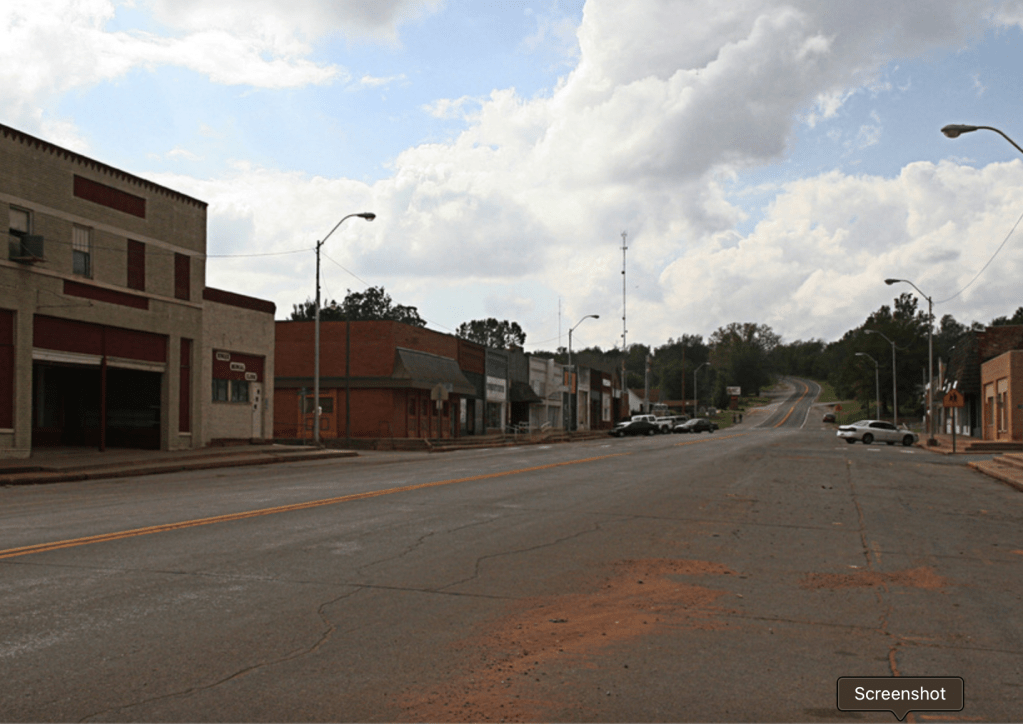
Binger Main St. There Were
Bars On Both Sides of Street.

Johnson was later tried in Caddo County, where a jury found him guilty of manslaughter. He was sentenced to serve 15 years at Oklahoma’s Granite Reformatory.

Note: Some names, dates, and details have been altered to protect individuals’ privacy.

Reminiscences

A True Story By: Benjamin Groff© Groff Media 2024© Truth Endures

When the youngest officer on duty is the only resource available, the weight of responsibility rests heavily on his shoulders, underscoring the significance of his role.

Our town’s police force was small, with just twelve officers. Eight were assigned to the streets, patrolling, responding to calls, controlling traffic, and maintaining visibility. The remaining four worked in the office, answering phones, dispatching calls over the radio, and managing the jail’s inmates. The officers rotated between desk and patrol duties, ensuring they stayed sharp and well-versed in all aspects of the job.

Most shifts saw only one officer on patrol and one in the office. This lean staffing was the backdrop when I first joined the police department and met Chief Marion Toehay Jr., known to me simply as Junior or Chief.

Junior and I formed a friendship that spanned over fifty years. Together, we witnessed the stark realities of life and death, often arriving too late to save those in peril. The helplessness we felt in those moments was crushing, made worse by the accusing stares of grieving families who saw us as their last hope.

One such event took place at a State Park east of the City. We arrived in a secluded area and noticed a boat stalled in the middle of the lake. The people onboard were waving and shouting, but their words got lost in the distance. As we waved back, trying to assess the situation, it became clear the boat was sinking.

We shouted for them to stay with the boat, realizing quickly that we couldn’t reach them from where we stood. We jumped back into the car and raced toward the dam, sirens blaring and lights flashing. Junior was on the radio, desperately calling for the Lake Patrol or anyone with a boat to respond. But the only way to reach the sinking boat was to drive fifteen miles around the lake on rural roads.

When we arrived, only the boat’s nose remained visible, bobbing on the water. A man clung to it, the sole survivor. He told us that a father and his two children had drowned, trying to swim to shore instead of staying with the boat.

At that time, the Oklahoma Lake Patrol was often assigned to different lakes, a reality dictated by tight state budgets. Law enforcement presence on lakes was inconsistent, as it may still be today in some areas. The Lake Patrol recovered the bodies of the father and his children that night and the following day.

Junior and I found ourselves witnessing several drownings, often by tragic coincidence, whenever we were near the lake or river. It seemed almost inevitable.

The department was also where I encountered my first homicide—a brutal murder-suicide that has stayed with me. A couple going through a divorce ended their marriage in violence. The husband had hidden in their home, and when his wife returned to gather belongings, he slipped up behind her and shot her in the back of the head. She crumpled to the floor, unaware of his presence or intent.

He then went to the bedroom, entered the ensuite, and used a shotgun loaded with double-ought buckshot to end his own life. The blast obliterated his face, leaving a gruesome scene with skull fragments embedded in the ceiling and blood splattered across the walls. Fingerprints confirmed his identity, but everyone in town knew who he was.

That was my first assignment at 18, in a department stretched thin. A pow-wow was happening in town, and every officer was working overtime. The City’s ambulance had to transport a critically ill prisoner to a hospital 50 miles away, and someone had to accompany them. It fell to me. Despite having just finished a 12-hour shift, I boarded the ambulance at 7:00 AM, the roads shrouded in fog as we responded to Code 3. The nurse was upset that I’d handcuffed the combative prisoner to the stretcher, and the driver got lost on the way. It was chaotic, but in many ways, it was one of the best times of my life.