The Brothers of Friday the 13th: A Country Music Legacy

By Benjamin GroffMedia© | benandsteve.com | 2025 Truth Endures©

2–4 minutes

The Brothers of Friday the 13th

They say Friday the 13th brings bad luck. But, for Jack Anglin and Johnnie Wright, it brought something entirely different. It brought love, brotherhood, and the country music that carves its way into the soul.
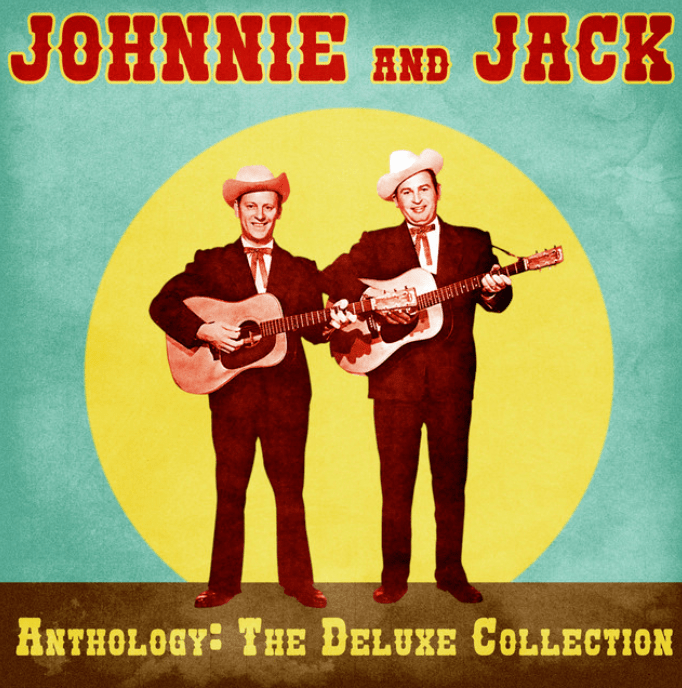
Jack and Johnnie were destined to sing. Their childhoods were steeped in gospel, church choirs, and the rhythm of the land. They met as they met most things in life—through music. And they married as they did everything else—on a Friday the 13th. Jack wed Louise, and Johnnie took her sister, Muriel, as his bride. This made them brothers-in-law, but their voices had already made them brothers in spirit, their bond unbreakable.

They began touring as Johnnie & Jack, their harmonies tight as barbed wire and twice as sharp. They sang of sorrow and salvation, of trains leaving and lovers staying. And behind them, always, stood the sisters.

Johnnie’s wife, Muriel, had a soft voice. It could’ve gone unnoticed if not for a quiet evening at home. She hummed along to a song Johnnie was working on. He stopped strumming, looked at her, and knew.

“You need a stage name,” 

He said. 

“Something people will remember.”

He thought a moment, then grinned. 
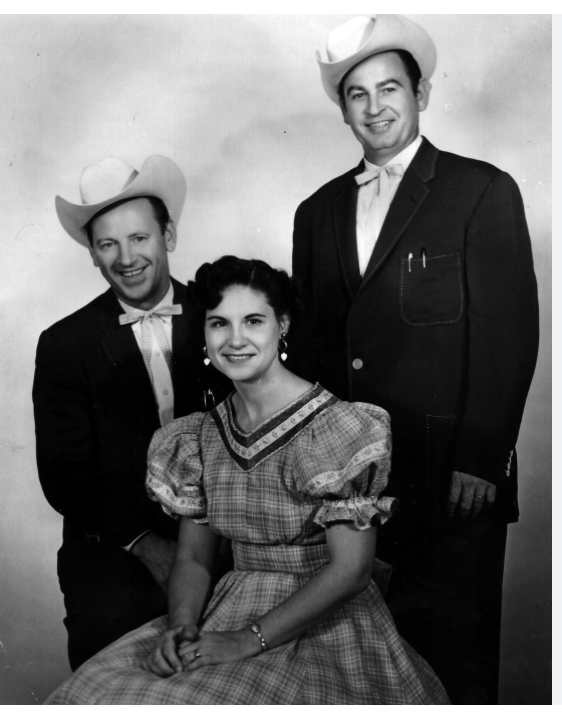
“Kitty Wells.”

She laughed at the name, but it stuck. Kitty Wells soon became the Queen of Country Music. Her voice turned the tide with It Wasn’t God Who Made Honky Tonk Angels. The song gave women in the country their place in the spotlight.

In a later interview, Johnny recalled that the name “Kitty Wells” came from an old spiritual recording. He used to play it during his early days working at a radio station. The name stuck with him. When it came time to give Muriel a stage name, it felt like the perfect fit. It was familiar, timeless, and filled with meaning.

Life moved fast. Fame came. Tours blurred together. But Jack and Johnnie were always together—on stage, on the road, in life.

Then came March 1963.

Patsy Cline, Cowboy Copas, and Hawkshaw Hawkins—all killed in a plane crash returning after a charity concert. The country music world was shattered. A memorial service was planned, and Jack insisted on going.

“Gotta pay respects,” 

He said. 

“We’ve all come up together.”

But he never made it.
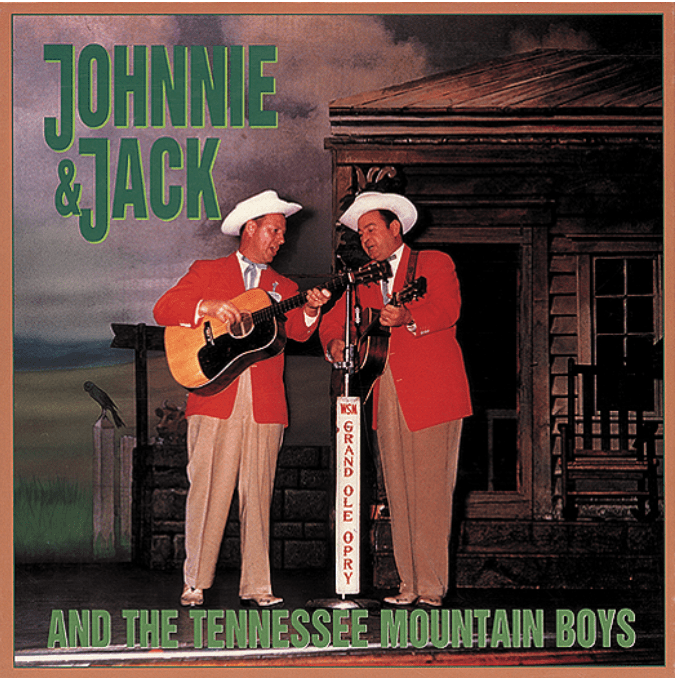
On the fateful morning of March 8, 1963, Jack Anglin was en route to the service. Tragically, he lost control of his car and crashed. His life was taken in an instant. The news reached the church before Johnnie’s arrival. They say the moment he heard, Johnnie was overcome with grief, falling to his knees. The man who had been his constant companion on every stage, in every storm, was no more.

It was a heartbreak no harmony can fix.

Johnnie went on as best he could. Kitty sang. The spotlight stayed, but something had shifted. There was a silence beside him now where Jack’s voice used to be.

Still, the music lived on.

Two men, two sisters, two voices joined by fate, and a wedding date no one forgets. Friday the 13th had given them everything—and, somehow, had taken it all back.

Yet, their songs endure, a testament to their enduring legacy. In every old record and radio play, their voices still resonate. Jack and Johnnie were brothers in music and marriage. Their harmonies echo through the years. It is a timeless tribute to their bond and art.

Childhood Memories and Roberta Flack’s Influence

GROFF MEDIA 2024© TRUTH ENDURES IMDBPRO

Presented by benandsteve.com By: Benjamin Groff II©s

2–3 minutes

The First Time I Ever Saw Your Face, It Was Killing Me Softly

I was between six and eight years old. That was the first time I heard The First Time I Saw Your Face. I also heard Killing Me Softly with His Song for the first time then. My oldest sister, Julie, adored those songs. She was taking piano lessons at that time. She often attempted to play them. Her fingers hesitantly found their way across the keys.

I still remember the old upright piano my parents got for her from a family friend. It was massive and heavy as a full-grown ox. My brothers struggled to carry it to the front wall of our living room. That’s where it stayed for years. Some of the keys stuck, while others refused to make a sound. But a piano tuner visited us. Afterward, the old instrument came to life. It was ready to echo through the house with Julie’s music.

Those long summer days when school was out were filled with Roberta Flack’s voice drifting through our home. Julie played her albums endlessly, the lyrics weaving into my young mind. I remember watching Play Misty for Me. It was my first real brush with suspense. I was more worried about Roberta Flack than I was about Clint Eastwood’s character. My parents had to reassure me that it was just a movie and that no one was in danger.

The First Time I Saw Your Face became inseparable from that film in my memory. In the same way, Killing Me Softly with His Song later found its way into About a Boy. I saw that one at the old Caddo Theater on Main Street in Binger, Oklahoma. My parents never let Julie go to the movies alone, so I was always sent as her reluctant chaperon. At the time, I was too small to protect her from anything. Still, I suppose my presence was enough to keep her out of trouble. At least that’s what my parents hoped.

All these years later, those songs still surface in my mind, uninvited but always welcome. They sneak in when I try to fall asleep while studying and when I need to concentrate. They echo my childhood memories. They replay in the corners of my mind. They are tethered to the days when Julie sat at that old upright piano. She tried to master the melodies.

And for that, I owe it all to Roberta Flack. Shall she rest in peace.

IT WAS JUST ANOTHER DAY, UNTIL THE PHONE CALL!

Photo by Anthony ud83dude42 on Pexels.com
  • For all anyone knew, it was just another day. The sun was rising and appeared to be sunny, with average temperatures warming to 75 degrees by midafternoon, with a light wind from the south. That was the weather forecast everyone heard to start the day, as it echoed from speakers in the downtown square broadcasting from the local radio station KBAD. Topping the news from KBAD included a report concerning a house fire, two auto accidents, and a lost dog report. The station did not broadcast national news because the management felt it included more divisive material for the community and the station’s audience. KBAD’s motto promoted the station and its fans as * Kindhearted * Brilliant * Ambitious and * Devoted! It had a unique frequency on the AM Dial at 1000.0khz AM and 100.0mhz FM. The frequency identifier permitted those who wish to find it an easy way to remember its location on the radio dial. Operating by remote control authorization from the Federal Communications Commission, KBAD’s radio tower stood in two separate locations. The FM Broadcast Transmitter and Antenna broadcast on the same tower as many of the local television stations’ antenna services towers near the edge of town. The AM Broadcast Transmitter was with three directional towers west of the city on a hill that permitted the station to fluctuate power between sunrise – sunset – sunrise hours. The AM station reduced power during the daytime, and the signal with increased power would reach a different area than at night. The night signal could reach several states.
Photo by Mwabonje Ringa on Pexels.com

       The day was unfolding as usual, with one of our regular radio programs in full swing. Suddenly, in the midst of a phone-in segment, a caller made a startling revelation –––

“Do you people know that there is a guy hanging from your radio tower west of town? He is just dangling there.”

The Host was surprised by the caller comment and replied

 Sir, this is a live show. Please, this is not a time for pranks.

The caller shot back. – The caller’s voice was urgent, his words cutting through the airwaves.

‘This is not a joke,’ he insisted. ‘There’s a man, about three-fourths of the way up your middle tower, hanging upside down. You need to get him help.’

The Host, with urgency in his voice, told listeners

We take this seriously; our station manager and engineer are coming to the tower, and emergency responders are responding.

The Host then suggested that the caller should have notified 911 before calling the radio station first.

The man hanging upside down had been hired as a contractor to change the red blinking lights once a year to make sure that it met FCC requirements. On his way up, he experienced a fatal heart attack. He was tied off and had his safety gear on, which prevented him from falling when he could not continue climbing or descent. Due to how high he was, a specialized team of climbers had to be dispatched from over three hundred miles away to go to the scene and create a plan to lower him. It took over 24 hours to get the man to the ground safely.