A Poem and a Poker Game: Life Lessons Learned

GROFF MEDIA 2024© TRUTH ENDURES IMDBPRO

Presented by benandsteve.com By: Benjamin Groff II©s

2–3 minutes

It was cold and snowing the day my dad decided to teach my sister and me how to play poker. We set up a card table in the living room. He brought out his cherished poker chips and cardholder. He placed them carefully in the center.
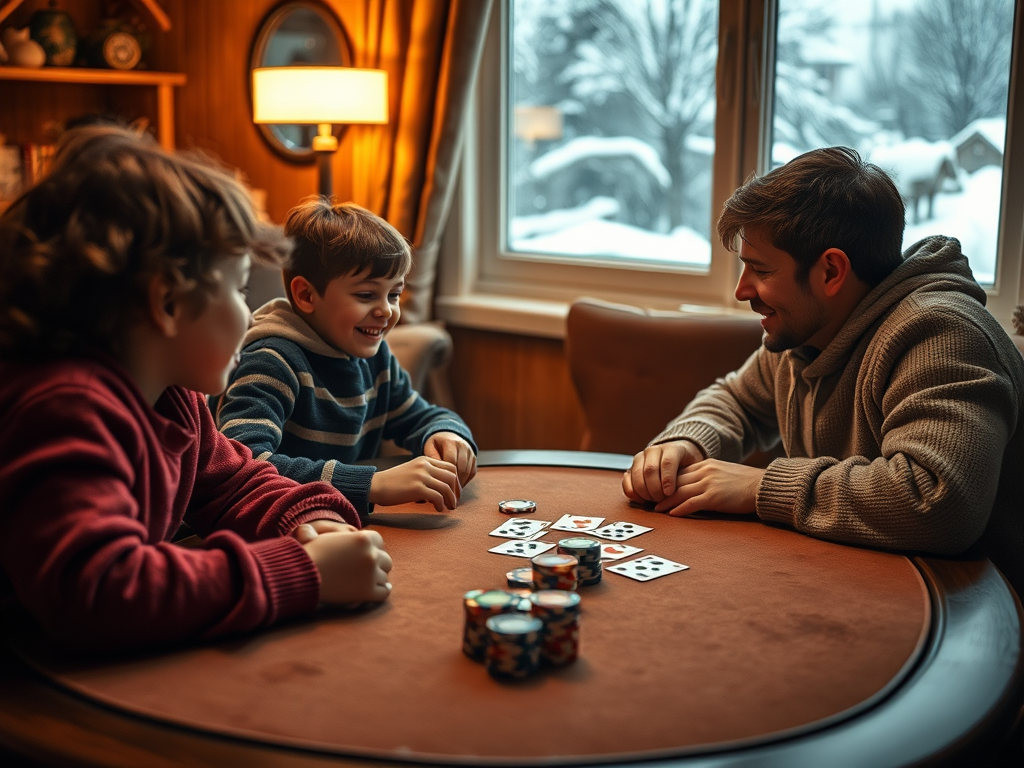
The chips were red, white, and blue. Dad told us not to worry about their dollar value. White was the least expensive. Red was worth more. Blue held the highest value, at least for this game. Then, with a practiced hand, he shuffled the deck and dealt the cards, and our lesson began.

I can’t recall exactly which variation of poker we played. It was Seven Card Stud, Texas Hold’Em, or Five Card Draw. But I remember the three of us sitting around that table. Each had a tall glass of iced tea. The snow piled up outside. With every inch of snowfall, I grew more hopeful that school would get canceled the next day. In my mind, I was already winning.

I caught on quickly, learning to hold onto high-value cards and giving myself a decent advantage. But the real edge came from my dad. He wasn’t just teaching us poker. He was teaching us something more. This lesson would stay with me long after the cards were put away.

A fire crackled in the fireplace, filling the room with warmth, and for a moment, life felt perfect. That house, that evening, that love—it’s a place I often dream of returning to. Yet, it no longer exists beyond memory. And in that memory, my dad shared something else with us. It was a poem—a warm blanket of words that wrapped us in comfort.

It was nonsensical and crude, but it belonged to him, and now it belonged to me. Decades later, I still carry it with me:

DAD’S POEM

I Woke Up Just This Morning

And I Looked Upon The Wall

The Roaches And The Bedbugs

Were Playing A Game Of Ball

The Score Was Six To Nothing

The Roaches Were Ahead

I Got So Doggone Excited

I Jumped Right Out Of Bed

I Ran Downstairs to Breakfast

But The Coffee Was So Stale

It Tastes Just Like Tobacco Juice

Right Out Of The County Jail.

Dad said he wasn’t sure where he’d first heard it—maybe in school as a boy. He had just always known it. And now, it was mine to carry on.

That silly little poem has come in handy more times than I can count. It has bailed me out when I’ve been put on the spot and asked to speak publicly. When I needed to write something quickly for school, it found its way onto my paper. It has brought laughter to gatherings and lightened tense moments. Somehow, it has traveled with me through time. It serves as a testament to the enduring power of shared memories. It is just like the memory of that snowy afternoon.

I never became a poker player, but I went on to work with words, write, and tell stories. I believe it started with that poem.


Loneliness and Connection: The Maple and the Crow

GROFF MEDIA 2024© TRUTH ENDURES IMDBPRO

Presented by benandsteve.com By: Benjamin Groff II©

2–3 minutes

The Maple and the Crow

In the quiet corner of Oakridge Park stood an old maple tree. Its branches stretched wide, offering shade to picnickers in the summer and a golden glow in the fall. 

It had seen many seasons pass and many creatures come and go, yet it always felt lonely. It never had a friend to share its days with.

Then came the crow.

The bird arrived one blustery afternoon, perching on the maple’s lowest branch with a ruffled look. Its wing drooped slightly, and its usual subdued sharp claws.

“Shoo!” 

The tree whispered as the wind rustled through its leaves. It was not quite ready to accept this new presence in its life.

But the crow did not move.

Day after day, the crow lingered. 

Caw Caw!

It hopped from branch to branch, picking at the bark, watching the world below. It cawed at passing dogs and tilted its head at children chasing kites.

“Why are you still here?” 

The maple finally asked.

“Nowhere else to go,” the crow replied. Its voice carried a hint of resilience. The tree had never heard this before.

The crow replied.

For the first time, the tree understood what it meant to be lonely. The Maple had never considered this feeling before. The sun rose, the rain fell, and its roots dug deep. But watching the crow, it felt something new—a quiet companionship.

The maple began to enjoy the crow’s presence. It let its leaves shiver in the wind to make music for the bird. When the crow felt strong enough to fly, it still returned, perching in the same spot.

Seasons passed. The maple grew older, and its branches were not as strong as they once were. But the crow remained. It brought stories of faraway places. These places had mountains that touched the sky and rivers that sang in the moonlight.

And when winter came, and the tree stood bare, the crow nestled close against its trunk.

“I will stay,”

 The crow promised.

“I know,”

The maple replied.

And so they remained, an old tree and a watchful crow, an unlikely friendship rooted in time.

Why Walter Higby Makes You Smile

GROFF MEDIA 2024© TRUTH ENDURES IMDBPRO

Presented by benandsteve.com By: Benjamin Groff II©

1–2 minutes

There once was a man named Walter Higby. He traveled from town to town. He wore a tweed coat and a bowler hat. He also carried a cane he didn’t need. Walter was a whimsical figure. He had a peculiar habit. He greeted everyone the same way. This added a touch of whimsy to their lives.

“You do,”

he would say with a sly smile.

Usually caught off guard, the person would blink in confusion.

“What?”

“You remind me of a man,”

Walter would continue.

“Who do?”

The person would ask, leaning in, curious now.

“You do,”

Walter would insist, tapping his cane on the ground for emphasis.

The other person would reply,

“I do?”

Which Walter would say,

“No, you do.”

And the reply would be,

“What?”

Which Walter would, in return, say,

“Remind me of a man.”

By this point, the conversation had become a swirling, nonsensical loop, leaving the other person chuckling or scratching their head. Walter never explained why he did it, nor did he ever stay long enough for anyone to figure him out.

One day, a young boy named Tommy stops Walter before he can walk away. “Mister, why do you say that to people?”

Walter looked down at Tommy and grinned. “Because it makes them think, and it makes them smile. That’s enough, don’t you think?”

Tommy thought for a moment, then nodded. “Yeah, I guess so.”

Walter tipped his hat, tapped his cane, and continued down the road. He was ready to meet the next unsuspecting stranger with his playful riddle. The man spoke in circles and kept wandering, leaving a trail of puzzled and amused people in his wake.