
By Benjamin GroffMedia© | benandsteve.com | 2025 Truth Endures©
Sheriff Jess “Pooch” Bowling, Jr.: From Cotton Fields to County Leader

Jess Bowling, Jr. was born in Binger, Oklahoma, on August 23, 1924. At just 11 years old, he left behind half his family. He also left the dusty plains of Oklahoma. He sought a new beginning in California. With his father and brother, young Jess traveled west in a weathered 1929 Buick. They finally settled in the small agricultural town of Dos Palos. His mother, two sisters, and another brother stayed behind in Oklahoma—a family split by circumstance but not by love.
Life in California was anything but easy. Jess Jr. rose with the sun. He toiled in the cotton fields until it set. He contributed what he could to help his family survive. It was hard work—grueling and endless—but there was resilience in the struggle. Sheriff later joked, “We did live in the biggest tent in Dos Palos!”
His father, Jess Sr., quickly became a cornerstone of the growing town. He opened a grocery store, invested in rental properties, and became active in local politics. His leadership and business savvy earned him a seat on the city council and, eventually, the title of Mayor.
Jess Jr. worked in the family store while attending school. He graduated from Dos Palos High School with a reputation for dependability and quiet strength. Not long after, fate stepped in when he met Darlene, a young woman from Iowa visiting relatives. The two married in 1945 and raised three children—Sharlynn, Shirley, and Michael.
The Badge and the Beat
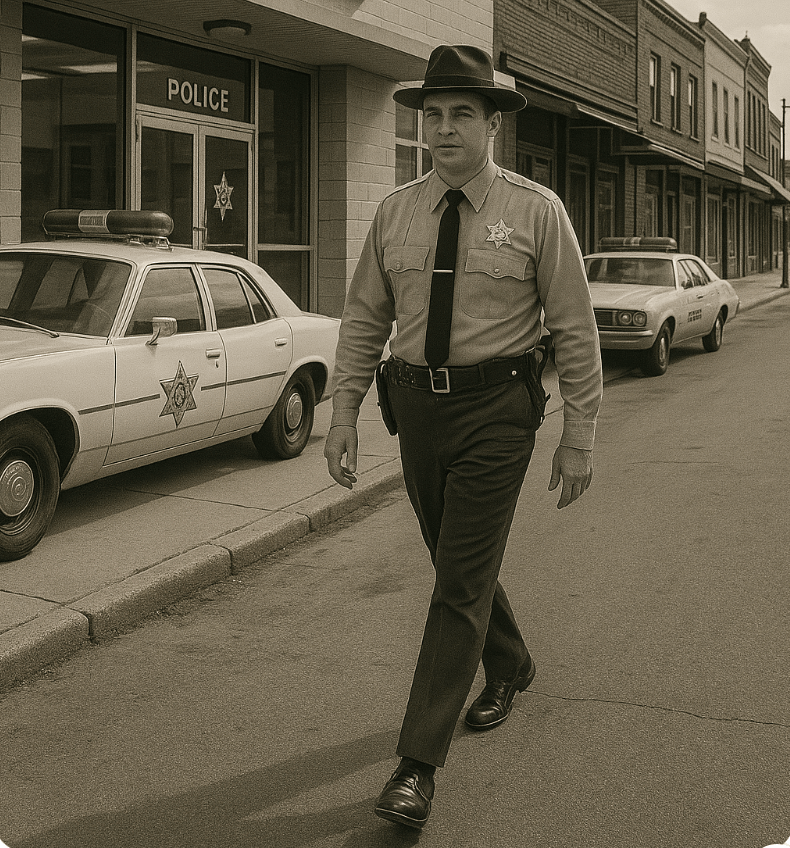
Jess Bowling’s journey into law enforcement began in 1953 when he joined the Dos Palos Police Department. His first assignment? Tackling the town’s parking problem. Officer Bowling issued dozens of citations, doing so with a steady hand and a sense of duty. He even issued one to his father, the Mayor. Years later, he found that very ticket among his father’s possessions, a keepsake of humor and integrity.
Although that first stint in law enforcement was brief, it planted a seed. After returning to the family store, Bowling joined the Atwater Police Department in 1956. In 1958, he made the move that would define his career: joining the Merced County Sheriff’s Department.
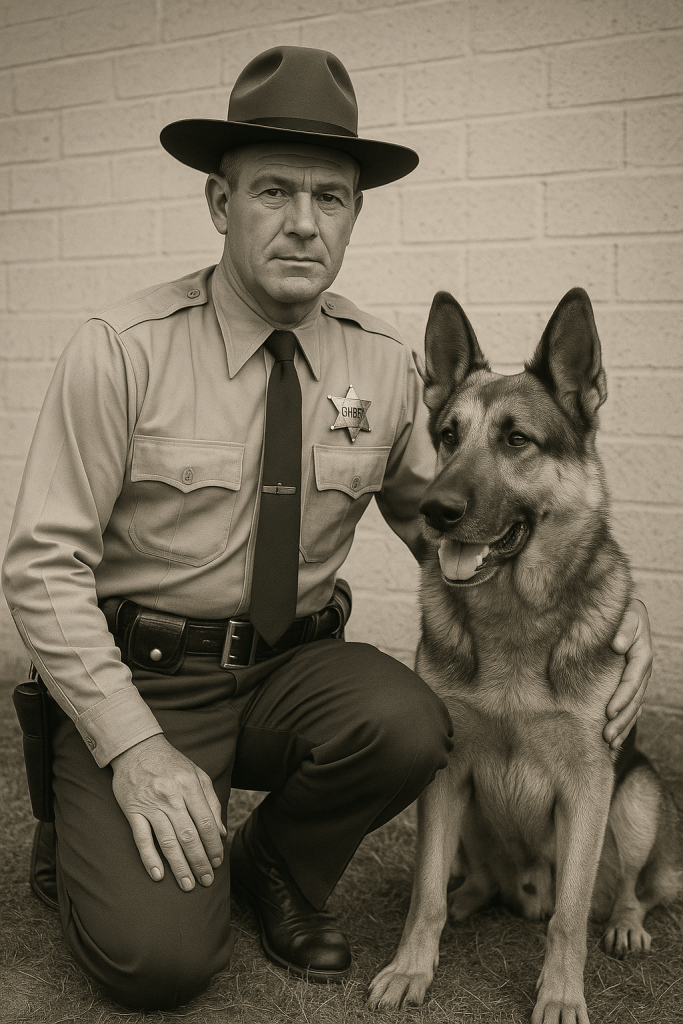
In 1963, Bowling became the department’s first-ever canine handler, partnered with a large, loyal German Shepherd named Jim. Together, they helped pioneer a new era of policing.
By 1974, Jess Bowling had risen to the rank of Lieutenant when tragedy struck—the sudden passing of Sheriff Earl McKeown. In the aftermath, Bowling was appointed interim Sheriff. The people had already decided by the time the special election rolled around in May 1975. Bowling’s steady leadership and quiet competence earned him the Sheriff’s badge in his own right.
Reformer, Leader, Trailblazer
Sheriff Bowling led the department through six transformative years. He spearheaded major innovations that professionalized law enforcement in Merced County. Under his administration:
- The Corrections Division was established, moving jail staffing from deputies to trained corrections officers.
- Dispatch services were assigned to civilian professionals, freeing up sworn deputies for fieldwork.
- He launched the county’s first-ever 24-hour patrol, marking the end of the “resident deputy” model.
- He hired Merced’s first female deputy, breaking gender barriers in local law enforcement.
- The department acquired its first handheld radios, enabling Bowling to reintroduce the classic “walking beat cop” in areas like Winton.
These weren’t just administrative changes but foundational shifts that shaped the Sheriff’s Department into a modern, responsive force.
His achievements were not only admired—they were preserved. Jess “Pooch” Bowling’s remarkable career is documented in a collection. His family lovingly maintains it as a tribute to a life of service.
Legacy and Final Salute
I had the privilege of knowing the Bowling family. One of my sisters even married Jess’s nephew. Every time he returned to town, Sheriff Bowling brought a yearbook from the department he once led. He proudly pointed out the growth and accomplishments of his former team. The department’s scope, the number of divisions, and the professionalism he helped instill always struck me, as did his accomplishments.
1974 – The first female deputy was sworn in
1974 – First portable transceivers issued to deputies
1974 – The first 24-hour patrol begins
1977 – First Special Emergency Response Team (SERT) organized
1977 – Marshal’s Office established
1980 – Hostage negotiators were trained and included on the SERT team

But behind the badge was a man who never forgot where he came from. Before the titles and the accolades, Jess “Pooch” Bowling was a boy in a Buick. He was a cotton picker working under the sun. He was a young man doing what he could to help his family survive.
After a doctor advised him to retire due to a serious heart condition, Sheriff Bowling stepped down in 1980. He lived to celebrate his 80th birthday during Merced County’s 150th anniversary in 2005. This honor was fitting for a man who helped shape its modern history.
Jess “Pooch” Bowling passed away on April 18, 2007. He was laid to rest beside his beloved Darlene in Dos Palos Cemetery.
His story is one of grit, integrity, and service. It is a journey from the cotton fields to the highest badge in the county.



 benandsteve.com