As of February 2025, the United States has committed approximately $114 billion in bilateral aid to Ukraine. This commitment has been made since the onset of Russia’s invasion in February 2022. This figure encompasses military assistance, financial support, and humanitarian aid.
It’s important to note that reported aid amounts have been discrepant. This is due to differing accounting methodologies and the inclusion of various assistance categories. For instance, President Trump claimed that the US provided $350 billion in aid to Ukraine. Yet, official figures do not support this assertion.
The European Union and its member countries have collectively provided approximately €132 billion in aid to Ukraine. This surpasses the US contribution.
In summary, estimates vary slightly based on accounting practices. Still, the US has committed approximately $114 billion in aid. This aid supports Ukraine’s defense against Russian aggression.
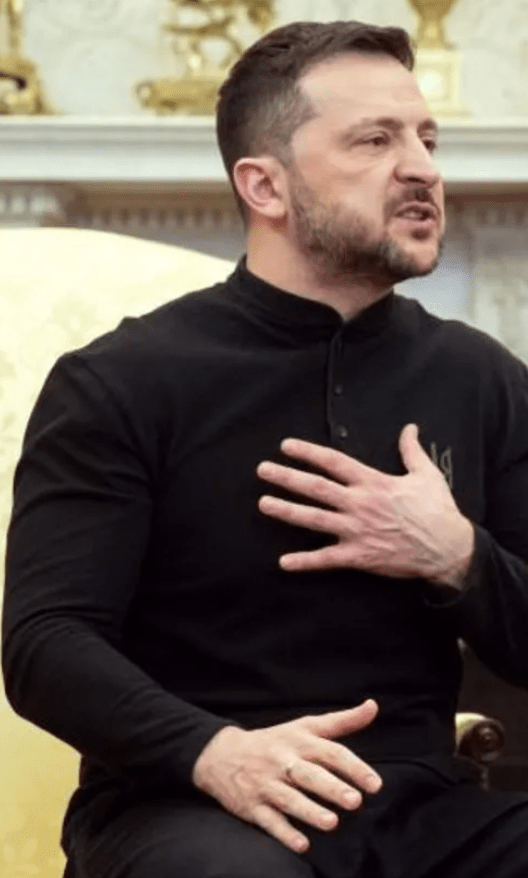
Since Russia invaded Ukraine in 2022, Ukrainian President Volodymyr Zelenskyy and his representatives have consistently expressed profound gratitude. They are thankful for the United States’ unwavering support.
Many news media estimate that Zelenskyy made as many as 33 public appearances during wartime. He aimed to show his appreciation for the United States financial and equipment support.
While it is challenging to enumerate every instance of appreciation, several notable expressions stand out:
December 2022 Speech to the US Congress: President Zelenskyy addressed a joint session of the US Congress. This was his first foreign visit since the war began. He thanked “every American” and highlighted Ukraine’s resilience, stating, “Against all odds, Ukraine still stands.” apnews.com
December 2022 Joint Press Conference with President Biden: Zelenskyy expressed gratitude for a new defense package. He stressed its prompt importance for Ukrainian soldiers during this visit. ua.usembassy.gov
July 2023 NATO Summit in Vilnius: Zelenskyy expressed his appreciation for US and NATO support before meeting with President Biden. He acknowledged the challenges faced by Ukrainians. Zelenskyy thanked Biden for standing “shoulder to shoulder” with Ukraine. bloomingtonian.com
February 2025 Post-Meeting Statement: The meeting with President Trump was contentious. Zelenskyy reaffirmed his gratitude toward the American people and Congress. He also expressed gratitude toward the President. Zelenskyy emphasized Ukraine’s pursuit of a just and lasting peace. en.wikipedia.org
March 2025 London Summit: Zelenskyy expressed “unwavering gratitude” for US military and financial support after a summit with European leaders. He underscored its critical role in Ukraine’s defense. nypost.com
These instances highlight the deep appreciation expressed by Ukrainian leadership. They value the United States’ financial assistance, military aid, and moral support throughout the conflict.
Zelenskyy’s Expressions of Gratitude Midst Diplomatic Tensions
The information stands in contrast to a description made by some. They called it two thugs attacking a robbery victim after he had already been beaten down. It is a sad portrayal. This is a betrayal of the executive office on show in the White House on February 28th, 2025.
The information referenced here documents that 350 billion dollars were not given to the Ukrainian government, contradicting what was claimed. Sadly, the United States Congress knows this. They approved the funding. They should make sure that factual statements involving tax dollars are presented to the public.
Basil Harry Losten (May 11, 1930 – September 15, 2024)
Bishop Basil Harry Losten, a revered figure in the Ukrainian Greek Catholic Church, passed away peacefully on September 15, 2024, in Stamford, Connecticut, after a brief illness. He was 94 years old. At the time of his passing, he was Bishop Emeritus of the Ukrainian Catholic Diocese of Stamford, a role he held with grace and devotion until his final days. Bishop Paul Patrick Chomnycky succeeds him.
Born in Chesapeake City, Maryland, on May 11, 1930, Basil Losten embarked on a life of faith and service that began with his early education at St. Basil School in Philadelphia. His journey into the priesthood was marked by years of dedicated study, first at the Ukrainian Catholic Seminary in Stamford and later at St. Basil College, where he earned a bachelor of arts in philosophy. His theological education culminated in a graduate degree from the Catholic University of America in 1957.
Basil Losten was ordained to the priesthood on June 10, 1957, by Bishop Constantine Bohachevsky. His initial assignments saw him serve the Philadelphia Archdiocese as chancery secretary and in various parishes across the city. In 1962, his leadership and loyalty were acknowledged when he was appointed personal secretary to Archbishop-Metropolitan Ambrose Senyshyn.
In 1968, Pope Paul VI recognized his contributions by elevating him to the rank of papal chamberlain. On March 23, 1971, he was nominated to the episcopacy, and on May 25 of that year, he was consecrated as auxiliary bishop of the Ukrainian Archdiocese of Philadelphia. He continued to serve with distinction, later being appointed apostolic administrator of the diocese in 1976 during the declining health of Archbishop-Metropolitan Senyshyn.
Bishop Losten was admired throughout his career for his unwavering dedication to his faith, leadership, and tireless service to the Ukrainian Catholic community. Losten’s impact on clergy and laity alike will be remembered for generations.
Bishop Losten is being mourned by his many parishioners, colleagues, and the communities he served. Funeral services will be held at Stamford’s Ukrainian Catholic Cathedral of the Immaculate Conception. May his memory be eternal.
Five years ago, on September 15, 2019, after about a six-week hiatus during the summer, I wrote a Facebook post that started:
“Many thanks to all of you who have reached out to see if I’m okay. I am, indeed (aside from having been on the losing end of an encounter with a yellow jacket this afternoon!). I’ve been moving, setting up house, and finishing the new book. Am back and ready to write, but now everything seems like such a dumpster fire it’s very hard to know where to start. So how about a general overview of how things at the White House look to me, today….”
I wrote a review of Trump’s apparent mental decline amidst his faltering presidency, stonewalling of investigations of potential criminal activity by him or his associates, stacking of the courts, and attempting to use the power of the government to help his 2020 reelection.
Then I noted that the chair of the House Intelligence Committee, Representative Adam Schiff (D-CA), had written a letter to the acting director of national intelligence, Joseph Maguire, on Friday, September 13, telling Maguire he knew that a whistleblower had filed a complaint with the inspector general of the intelligence community, who had deemed the complaint “credible” and “urgent.” This meant that the complaint was supposed to be sent on to the House Intelligence Committee. But, rather than sending it to the House as the law required, Maguire had withheld it. Schiff’s letter told Maguire that he’d better hand it over. Schiff speculated that Maguire was covering up evidence of crimes by the president or his closest advisors.
And I added: “None of this would fly in America if the Senate, controlled by Majority Leader Mitch McConnell of Kentucky, were not aiding and abetting him.”
“This is the story of a dictator on the rise,” I wrote, “taking control of formerly independent branches of government, and using the power of his office to amass power.”
Readers swamped me with questions. So I wrote another post answering them and trying to explain the news, which began breaking at a breathtaking pace.
And so these Letters from an American were born.
In the five years since then, the details of the Ukraine scandal—the secret behind the whistleblower complaint in Schiff’s letter—revealed that then-president Trump was running his own private foreign policy to strong-arm Ukraine into helping his reelection campaign. That effort brought to light more of the story of Russian support for Trump’s 2016 campaign, which until Russia’s February 2022 invasion of Ukraine seemed to be in exchange for lifting sanctions the Obama administration imposed against Russia after Russia invaded Ukraine in 2014.
The February 2022 invasion brought renewed attention to the Mariupol Plan, confirmed by Trump’s 2016 campaign advisor Paul Manafort, that Russia expected a Trump administration to permit Russian president Vladimir Putin to take over eastern Ukraine.
The Ukraine scandal of 2019 led to Trump’s first impeachment trial for abuse of power and obstruction of Congress, then his acquittal on those charges and his subsequent purge of career government officials, whom he replaced with Trump loyalists.
Then, on February 7, just two days after Senate Republicans acquitted him, Trump picked up the phone and called veteran journalist Bob Woodward to tell him there was a deadly new virus spreading around the world. It was airborne, he explained, and was five times “more deadly than even your strenuous flus.” “This is deadly stuff,” he said. He would not share that information with other Americans, though, continuing to play down the virus in hopes of protecting the economy.
More than a million of us did not live through the ensuing pandemic.
We have, though, lived through the attempts of the former president to rig the 2020 election, the determination of American voters to make their voices heard, the Black Lives Matter protests after the murder of George Floyd, the election of Democrat Joe Biden and Vice President Kamala Harris, and the subsequent refusal of Trump and his loyalists to accept Biden’s win.
And we have lived through the unthinkable: an attack on the U.S. Capitol by a mob determined to overrule the results of an election and install their own candidate in the White House. For the first time in our history, the peaceful transfer of power was broken. Republican senators saved Trump again in his second impeachment trial, and rather than disappearing after the inauguration of President Biden, Trump doubled down on the Big Lie that he had been the true winner of the 2020 presidential election.
We have seen the attempts of Biden and the Democratic-controlled Congress to move America past this dark moment by making coronavirus vaccines widely available and passing landmark legislation to rebuild the economy. The American Rescue Plan, the Bipartisan Infrastructure Law, the CHIPS and Science Act, and the Inflation Reduction Act spurred the economy to become the strongest in the world, proving that the tested policy of investing in ordinary Americans worked far better than post-1980 neoliberalism ever did. After Republicans took control of the House in 2023, we saw them paralyze Congress with infighting that led them, for the first time in history, to throw out their own speaker, Kevin McCarthy (R-CA).
We have watched as the Supreme Court, stacked by Trump with religious extremists, has worked to undermine the proven system in place before 1981. It took away the doctrine that required courts to defer to government agencies’ reasonable regulations and opened the way for big business to challenge those regulations before right-wing judges. It ended affirmative action in colleges and universities, and it overturned the 1973 Roe v. Wade decision recognizing the constitutional right to abortion.
And then we watched the Supreme Court hand down the stunning decision of July 1, 2024, that overturned the fundamental principle of the United States of America that no one is above the law. In Donald J. Trump v. U.S., the Supreme Court ruled that a president could not be prosecuted for crimes committed as part of his official duties.
We saw the reactionary authoritarianism of the former president’s supporters grow stronger. In Republican-dominated states across the country, legislatures passed laws to suppress Democratic voting and to put the counting of votes into partisan hands. Trump solidified control over the Republican Party and tightened his ties to far-right authoritarians and white supremacists. Republicans nominated him to be their presidential candidate in 2024 to advance policies outlined in Project 2025 that would concentrate power in the president and impose religious nationalism on the country. Trump chose as his running mate religious extremist Ohio senator J.D. Vance, putting in line for the presidency a man whose entire career in elected office consisted of the eighteen months he had served in the Senate.
In that first letter five years ago, I wrote: “So what do those of us who love American democracy do? Make noise. Take up oxygen…. Defend what is great about this nation: its people, and their willingness to innovate, work, and protect each other. Making America great has never been about hatred or destruction or the aggregation of wealth at the very top; it has always been about building good lives for everyone on the principle of self-determination. While we have never been perfect, our democracy is a far better option than the autocratic oligarchy Trump is imposing on us.”
And we have made noise, and we have taken up oxygen. All across the country, people have stepped up to defend our democracy from those who are open about their plans to destroy it and install a dictator. Democrats and Republicans as well as people previously unaligned, we have reiterated why democracy matters, and in this election where the issue is not policy differences but the very survival of our democracy, we are working to elect Democratic presidential nominee Kamala Harris and her running mate, Minnesota governor Tim Walz.
If you are tired from the last five years, you have earned the right to be.
And yet, you are still here, reading.
I write these letters because I love America. I am staunchly committed to the principle of human self-determination for people of all races, genders, abilities, and ethnicities, and I believe that American democracy could be the form of government that comes closest to bringing that principle to reality. And I know that achieving that equality depends on a government shaped by fact-based debate rather than by extremist ideology and false narratives.
And so I write.
But I have come to understand that I am simply the translator for the sentiments shared by millions of people who are finding each other and giving voice to the principles of democracy. Your steadfast interest, curiosity, critical thinking, and especially your kindness—to me and to one another—illustrate that we have not only the power, but also the passion, to reinvent our nation.
To those who read these letters, send tips, proofread, criticize, comment, argue, worry, cheer, award medals (!), and support me and one another: I thank you for bringing me along on this wild, unexpected, exhausting, and exhilarating journey.
Richardson has authored seven books on history and politics. In 2019, Richardson started publishing Letters from an American, a nightly newsletter that chronicles current events in the larger context of American history.[3] The newsletter accrued over one million subscribers, making her, as of December 2020, the most successful individual author of a paid publication on Substack.[4 (see more click here)



 benandsteve.com