Coming Up In 2026 – I’m Not Dead Yet!

By Benjamin GroffMedia© | benandsteve.com | ©2026

1–2 minutes

Hello to my loyal readers and visitors—this note will be brief, but heartfelt. Over the next few months, you may notice fewer stories appearing here. Please know this isn’t goodbye or silence; it’s simply a shift in rhythm.

I’m taking this time to focus on editing and publishing two books that have been waiting patiently for their moment. Writing new stories while preparing these projects feels like juggling reading, writing, and proofreading all at once. One task has to slow down. This way, the work can be done right. I’ll still share updates along the way, just not always on a daily schedule.

So if things feel a little quieter than usual, don’t worry. I haven’t decided to stay permanently in last year. I also haven’t skipped ahead without you into 2026. I’m still here… somewhere. I’m just surrounded by drafts and red ink. Stories are getting ready to find their way into the world.


By Benjamin GroffMedia© | benandsteve.com | ©2026

The Last Five Days

This Story From The Classics. Posted Originally in 2024 it is Reposted this year as part of the best of the best stories benandsteve.com are sharing at years end.

Groff Media 2024© Truth Endures IMDbPro

Presented by benandsteve.com By: Benjamin Groff II©

2–3 minutes

The year was drawing to a close. In the small town of Willow’s End, the final days carried a weight of reflection and anticipation. The air was cold but not bitter. The snow was soft and forgiving. Every storefront on Main Street was adorned with strings of lights that twinkled like tiny stars.

December 27th

Emily wandered through the park, her boots crunching against the frost-bitten ground. She carried a notebook. Its pages brimmed with half-written resolutions. They held sketches of dreams she hoped to realize in the coming year. Her golden retriever, Milo, bounded ahead, his tail wagging like a metronome. 

The park was quiet, save for the sound of distant laughter from the skating rink.

Emily paused by the frozen pond, watching the skaters glide effortlessly across the ice. 

She scribbled in her notebook: 

Be brave enough to try something new.

December 28th

The morning dawned with a vibrant sunrise, streaks of orange and pink painting the horizon. Friends and families gathered for breakfast at the local diner, sharing stories of their year. Old Mr. Harper, the town’s unofficial historian, sat by the window, regaling a group of children with tales of Willow’s End’s founding.

Emily listened from a nearby booth, smiling to herself. Inspired, she jotted another resolution:

 Learn the stories of those who came before me.

December 29th

The storm arrived unexpectedly, blanketing the town with fresh snow. Emily stayed indoors, wrapping herself in a quilt by the fireplace. She reread letters from old friends, rediscovering the warmth in their words.

Milo lay at her feet, snoring softly. The snowstorm felt like a pause, a chance to breathe before the year’s end. In her notebook, she wrote: 

Reconnect with those who matter most.

December 30th

By morning, the storm had passed, leaving the town glistening under the winter sun. Emily joined the townsfolk in clearing sidewalks and helping neighbors dig out their cars. Laughter echoed as children built snowmen and adults exchanged cups of steaming cocoa.

As Emily shoveled, she realized how connected the community felt in such moments. That evening, she added another note to her resolutions: 

Be an active part of something bigger than myself.

December 31st

The year’s final day arrived, bringing a mix of celebration and introspection. The town square rang with energy as the community readied for the annual New Year’s Eve bonfire.

Emily stood among the crowd, her notebook tucked safely in her coat pocket. When the clock struck midnight, fireworks began exploding, painting the sky with bursts of color. Cheers and laughter filled the air. 

Emily closed her eyes and whispered her final resolution: 

Embrace the unknown with hope.

The last five days of the year hadn’t been filled with grand adventures. There weren’t dramatic changes. Yet, they had been quietly transformative. As Emily walked home under the starlit sky, she felt ready for the year ahead. She was also prepared for whatever life had in store.

Santa’s Ride Through the Deep West

This story is pulled from the archives as a celebration for the season edition.

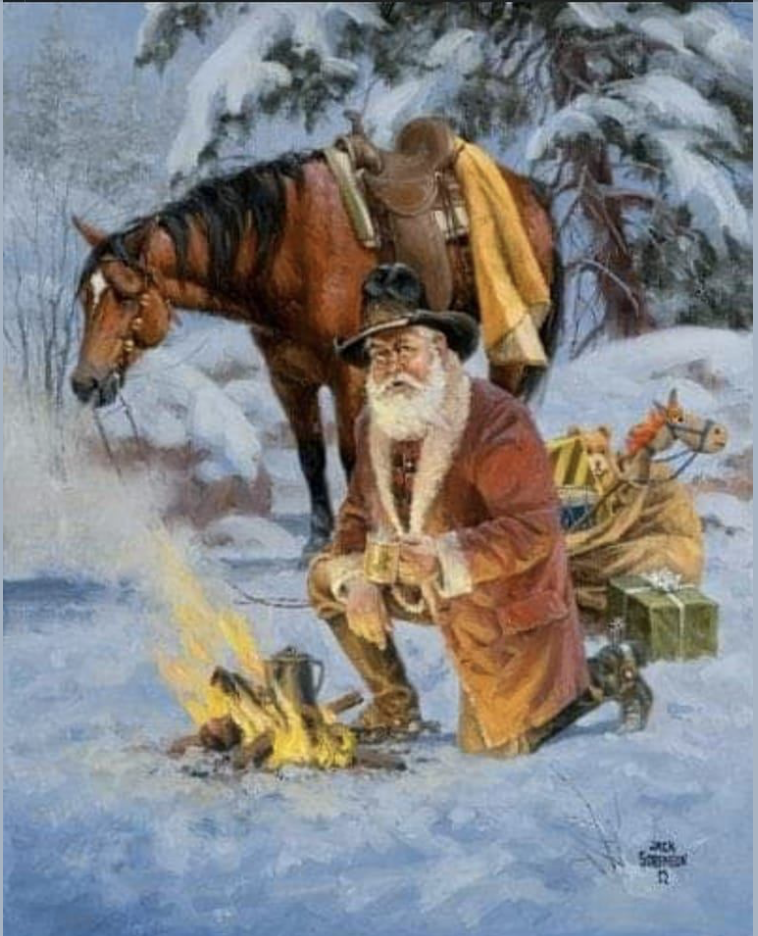
Santa Claus Goes Horseback Riding To Deliver Gifts Deep In The Heart Of The West!

Groff Media 2024© Truth Endures IMDbPro

Presented by benandsteve.com By: Benjamin Groff II©

3–4 minutes

It was Christmas Eve, and the moon cast a silvery glow over the rugged terrain of the American West. Santa Claus stood at the edge of a vast canyon. He stroked his thick white beard as he surveyed the land below. The snow drifts piled high, blanketing the valleys, draws, and washes, creating a breathtaking and treacherous scene. His sleigh and reindeer had brought him far, but this terrain was no place for flying. The jagged canyon walls and towering evergreens made it impossible for his magical team to navigate.

Santa turned to a figure waiting patiently in the moonlight: a sturdy chestnut stallion saddled with a well-worn western saddle. The horse, named Thunder, had been his trusted companion for these trips into the Deep West for hundreds of years. He patted Thunder’s neck affectionately.

Looks like it’s up to us again, old friend,”

Santa said.

He swapped his sleigh for the horse, securing the large sack of gifts over Thunder’s haunches. As he mounted, the jingling of bells on his coat mingled with the creak of leather. He clicked his tongue. They were off. The sound of hooves crunching through snow echoed into the quiet night.

The descent into the canyon was steep, and the trail was narrow and winding. Santa guided Thunder with practiced ease, his red coat standing out against the stark white snow. They crossed frozen creeks, forded icy streams, and climbed rocky outcrops that tested Thunder’s strength and agility.

The air was warmer but still crisp when they reached the valley floor. Santa paused to check his list, illuminated by a soft, magical glow. The Wilson-Anderson family ranch was just a few miles away, nestled among the rolling hills and cottonwood trees.

This family had been here for generations, raising cattle and carrying on the traditions of the American West. Santa always made a special effort to visit their remote ranch, knowing life’s challenges in such a rugged land.

The silhouette of the homestead came into view as they approached the ranch. Its windows glowed warmly in the cold night. Santa dismounted and led Thunder to the barn, leaving the horse to rest and nibble on hay.

Quietly, Santa crept to the house. He climbed onto the porch and found the door unlocked, as was common in these parts. Inside, the living room had simple yet heartfelt decorations. There was a cedar wreath and a small tree decorated with handmade ornaments. Stockings hung above a wood-burning stove.

Santa set to work. He filled the stockings with treats and small trinkets. Then he placed a beautifully wrapped gift for each family member under the tree. Santa left a fine leather rope for the youngest, Jesse. A tiny cowboy hat was also there because Jesse had asked for a lasso.

Before leaving, Santa took a moment to admire the scene. The family dog, a blue heeler, stirred from its bed by the fire. Recognizing the kind man, it wagged its tail and drifted back to sleep.

For Santa Claus, this was more than just delivering gifts. It was a tribute to the resilience of the families. These families carved out lives in the harsh beauty of the deep West. As he rode into the night, he hummed a cowboy tune. He felt grateful for the chance to be part of their enduring story. It was magical, even for one night each year.

Santa returned to the barn, where Thunder waited patiently. With a final glance at the peaceful ranch, he mounted his horse and began the journey back. The moon was high, and the stars sparkled like diamonds as they retraced their path through the snow-filled wilderness.

Santa’s Sleepless Encounter

This story is pulled from the archives as a celebration for the season edition.

Groff Media 2024© Truth Endures IMDbPro
Presented by benandsteve.com By: Benjamin Groff II©

2–4 minutes

It was Christmas Eve. The sleigh soared high worldwide. The northern wind whistled through the bells on the reindeer harnesses. Santa Claus wore his crimson coat and had twinkling eyes. He held the reins tightly. His sack of presents was bursting at the seams. Santa’s job went beyond delivering gifts. He needed to make sure every child was sound asleep before he even set foot on their rooftops.

Santa had his secrets. He carried a special pocket watch gifted by the elves centuries ago. This watch sensed the rhythms of sleep in every home. A little pointer swung wildly when a child stirred awake. Santa would patiently wait, high above the house, until the child drifted off again.

Tonight, in a small town nestled under a blanket of snow, Santa’s watch began to twitch. He hovered over a modest little house on Maple Street.

“Ah, looks like young Clara is having a restless night,” 

Santa mused, his voice soft and kind. He tapped his watch lightly, watching the pointer as it steadied.

Confident she was asleep, he climbed down the chimney with practiced ease. The room was warm, lit by the soft glow of a dying fire. Stockings hung neatly by the hearth, and the scent of pine filled the air from the brightly decorated tree. Santa moved silently. He set down a dollhouse wrapped in shimmering paper. He also placed a pair of skates for Clara. This added to the cozy atmosphere.

But a creak echoed through the room just as he reached into his sack for the next gift. Santa froze. Two wide eyes peeked out from behind the door, framed by Clara’s curly hair. She gasped audibly, her tiny face a mixture of astonishment and delight.

“Oh no!” 

Santa whispered. He had a rule for centuries: no child should ever see him deliver gifts. Magic thrived on belief, and his sight can cause the magic to falter. But here she was, staring right at him.

“Santa?”

 Clara asked, her voice barely a whisper.

Santa thought quickly. He tapped his boot. The room filled with a light dusting of sparkles. Clara suddenly found herself in the most enchanting of dreams. In her vision, Santa smiled and said,

“Go back to bed, little one. This is your special Christmas moment to remember only in your heart.” 

Her eyes fluttered shut. She slipped back into sleep. This was a testament to Santa’s quick thinking and resourcefulness.

Santa sighed with relief and adjusted the gifts under the tree.

“Close call,” 

he chuckled softly, brushing soot off his coat. Before he disappeared up the chimney, he placed an extra candy cane in Clara’s stocking. It was a silent reward for her innocent curiosity.

Outside, the reindeer waited, their noses glowing faintly in the night. Santa climbed aboard his sleigh, glancing once more at the little house before urging the team onward. As the sleigh vanished into the night, leaving behind a trail of twinkling stars, Santa smiled.

“Sometimes,”

he said to the stars,

“even the magic needs a little extra magic.”

As the sleigh vanished into the night, Santa smiled.

“Yes, sometimes,” 

he repeated to the stars,

“even the magic needs a little extra magic!”

The Year Joey And Jimmy Saved Christmas

This story is pulled from the archives as a celebration for the season edition.

Groff Media 2024© Truth Endures IMDbPro

Presented by benandsteve.com By: Benjamin Groff II©

3–5 minutes

Joey and Jimmy McAllister were known in the little town of Maple Hollow for their endless mischief. Like clockwork, Santa’s naughty list bore their names in bold, red ink every year. The brothers raided the cookie jar before dinner. They set off firecrackers in the backyard. They also sneaked frogs into their teacher’s desk drawer. The brothers always found trouble. Trouble always found them.

But this year was different. Something strange was happening in the McAllister household. Joey and Jimmy were behaving like angels. They shared their toys, completed their chores without being asked, and even helped old Mrs. Henshaw carry her groceries home. The town was surprised as the boys’ antics disappeared like melting snow. It wasn’t long before whispers reached the North Pole.

Santa Claus, peering over his list in his workshop, rubbed his spectacles in disbelief. 

“Joey and Jimmy?”

He muttered. 

“Good? All year?” 

He scribbled a note to Mrs. Claus. 

“Something isn’t right. I need to investigate.”

So, with Christmas Eve approaching, Santa decided to do undercover work. Disguised as a kindly repairman, he appeared at the McAllister’s doorstep one frosty afternoon.

Joey answered the door, his face pale with worry.

“Hello, sir,” 

He said politely. 

“Can I help you?”

“Just checking the neighborhood for chimneys in need of repair,” 

Santa said, glancing around. 

“I couldn’t help but notice you and your brother have been outstanding this year. What’s brought about the change?”

Joey’s face fell. 

“We just wanted to make sure we were good enough to get what we wished.”

Santa’s heart warmed. 

“Well, that sounds lovely. What did you wish for?”

Jimmy appeared behind Joey, his voice barely a whisper. 

“We don’t want toys or anything like that. We want Mom to get better.”

Santa’s heart ached. He noticed their pale and frail mother sitting by the fireplace. Her knitting needles trembled in her hands. He realized the boys’ sudden good behavior wasn’t driven by selfishness, love, and desperation. As only children can, they believed. If they were perfect, their Christmas wish would come true. Their mother’s illness would vanish like the morning frost.

Back at the North Pole, Santa sat in his armchair that evening, deep in thought. 

“How do I tell them?” 

he murmured. 

“How do I explain that even the magic of Christmas can’t fix everything?”

Mrs. Claus placed a hand on his shoulder. 

“Remind them of what Christmas truly means,” 

she said softly. 

“It’s not about making everything perfect. It’s about love, hope, and being together, even in the hardest times.”

Christmas Eve arrived, and Santa climbed down the McAllisters’ chimney. He found Joey and Jimmy waiting by the tree, their eyes wide with hope. Santa knelt before them, his eyes twinkling but serious.

“Joey, Jimmy,” he began, “I know what you’ve wished for, and I need you to understand something significant. Your love for your mother is the most powerful gift you can give her. It’s stronger than anything I can put in my sack.”

Tears welled in Joey’s eyes. “But we thought if we were good, you’d save her. Isn’t that how it works?”

Santa pulled the boys close. 

“Sometimes, even the best magic can’t stop someone we love from becoming an angel. Your mother’s journey is not something you can control, but your love will make every moment she has brighter. And no matter what happens, she will always be with you.”

The boys sobbed quietly, and Santa held them until their tears slowed. Then he reached into his sack and pulled out a small, glowing star ornament. 

“Hang this on your tree. It’s a reminder that the people we love are never truly gone. They watch over us like stars in the night sky.”

When Christmas morning came, the McAllister family gathered around the tree. Weak but smiling, their mother held the glowing ornament in her hands. The boys’ hearts felt heavy but full, knowing their love was the best gift they gave her.

That year, Joey and Jimmy stayed off the naughty list for good. Though their mother passed the next spring, her love and courage became the foundation of their lives. Every Christmas, they hung Santa’s star on their tree. It was a beacon of hope, love, and the enduring magic of family.

“Herbie” ––– The Tiny Christmas Tree Searches For A Family

This story is pulled from the archives as a celebration for the season edition.

Groff Media 2024© Truth Endures IMDbPro
Presented by benandsteve.com By: Benjamin Groff II©

3–4 minutes

In a quiet forest stood a skinny cedar tree, so different from all the others. The tall, majestic cedars around him stretched their lush branches high. In contrast, the little tree looked scrawny. It had sparse needles and a slightly crooked trunk.

People often came to the forest to select the perfect Christmas tree, always passing him by.

The other trees whispered and rustled in the wind, teasing him.

“Look at you, Herbie,”

They said, giving him the nickname that stuck.

“No one’s ever going to want you.”

Herbie tried to stand tall, but he knew they were right. Year after year, Herbie remained as the big, beautiful trees were chosen and taken away. The forest changed around him. He stayed in his lonely spot. He dreamed of what it would feel like to be wanted.

Then, one crisp winter morning, the tree cutters came again, their saws buzzing. Herbie didn’t expect to get noticed, but this time, something different happened. As they cleared their path, one of the workers stopped, scratched his head, and said,

“Well, let’s take this little one, too. Someone might like it.”

Herbie felt the sharp blade cut through his trunk. Before he could fully understand what was happening, he was bundled with the others and taken to the city.

A sea of magnificent Christmas trees surrounded Herbie at the tree lot. Their branches glistened with dew, and they stood tall and proud. Compared to them, Herbie felt even smaller, and his crooked trunk made him look even more awkward.

Shoppers strolled by, admiring the grand trees and taking them home individually. Herbie overheard a nearby pine whisper,

“Face it, Herbie, you’re not cut out for this. No one’s going to pick you.”

The lot grew emptier daily, and Herbie’s hope dwindled. By Christmas Eve, he was the only tree left, standing under the dim glow of a street lamp. The wind whistled through his sparse branches, and Herbie prepared for the inevitable—being tossed away, unloved.

But just as Herbie’s spirits hit their lowest, a tiny voice broke through the cold night air.

“Mama, look! That one’s perfect!”

Herbie lifted his branches slightly in surprise. A little boy with messy hair and bright, eager eyes was pointing at him.

“Are you sure, Tommy?”

His mother asked, crouching beside him,

“This tree is so small. And, well, it’s not exactly full.”

––––

“Exactly!”

Tommy said with a grin.

“It’s different, just like me. We’ll make it the best Christmas tree ever!”

Herbie’s heart soared as Tommy and his mother carefully carried him home. Tommy got to work in their cozy living room, stringing popcorn and cranberries across Herbie’s branches. His mother tucked shiny ornaments into every gap, and finally, they placed a glowing star on top.

Herbie couldn’t believe it. For the first time, he felt truly beautiful. He wasn’t just a funny-looking tree anymore—a Christmas tree.

On Christmas morning, Herbie watched with joy as Tommy tore through his presents, his laughter filling the room. The warmth of the fire danced on Herbie’s branches, and he realized he had never felt so happy.

When the holiday ended, Herbie feared getting thrown out like many trees before him. But instead, Tommy’s family carried him to their backyard.

Tommy said, patting his trunk as they planted him firmly in the soil.

“You’re part of our family now, Herbie,”

Year after year, as Herbie grew taller and fuller, Tommy would decorate him anew, even in the coldest winters.

Herbie learned that it wasn’t about how perfect he looked or how he compared to the other trees. The love and care he received—and gave—made him truly special.

And so, Herbie stood proudly, knowing he would always be part of something wonderful: a family.

Guardians of Memory: Writing Our Truth Before It’s Rewritten

© Benjamin H. Groff II — Truth Endures / benandsteve.com

1–2 minutes

Tell It Like It Is

There comes a time in every nation’s history when silence becomes more dangerous than speaking. We are living in such a time now. Books are being banned, lessons erased, and truths rewritten to serve new agendas. What once stood as collective memory is being scrubbed clean, leaving behind a shell of what was. But history, real history, lives in the people who lived it — and that means you.

If the history of your people, your town, your family, or your country is under attack, write it down. Don’t wait for permission. Don’t assume someone else will record it for you. Every letter and every diary is a piece of the truth. Every recollection of how life was is also a piece of the truth. This includes the food you ate and the songs that played on your street. This truth is something that no one can erase.

Print it. Bind it. Keep it in a box, a drawer, or a chest. Place it anywhere it can be found by those who come after you. Share copies among your family members. Hide one in a place that time itself will forget. Digital memories are fleeting; servers fail, passwords vanish, and what is “deleted” online is often gone forever. But paper endures.

We have the power, still, to protect the soul of a free people — not through politics, but through preservation. Keep the banned books. Read them. Understand why they were silenced. They are often the keys to liberty’s locked door. The stories, poems, and records we save are not only for nostalgia’s sake. They defend against those who claim freedom was always fragile. They made it seem that way to future generations.

When freedom falters, truth is what leads us back.
Write your book. Tell your story.
Save it as if your grandchildren’s liberty depends on it — because one day, it just will.


By Benjamin GroffMedia© | benandsteve.com | ©2025 

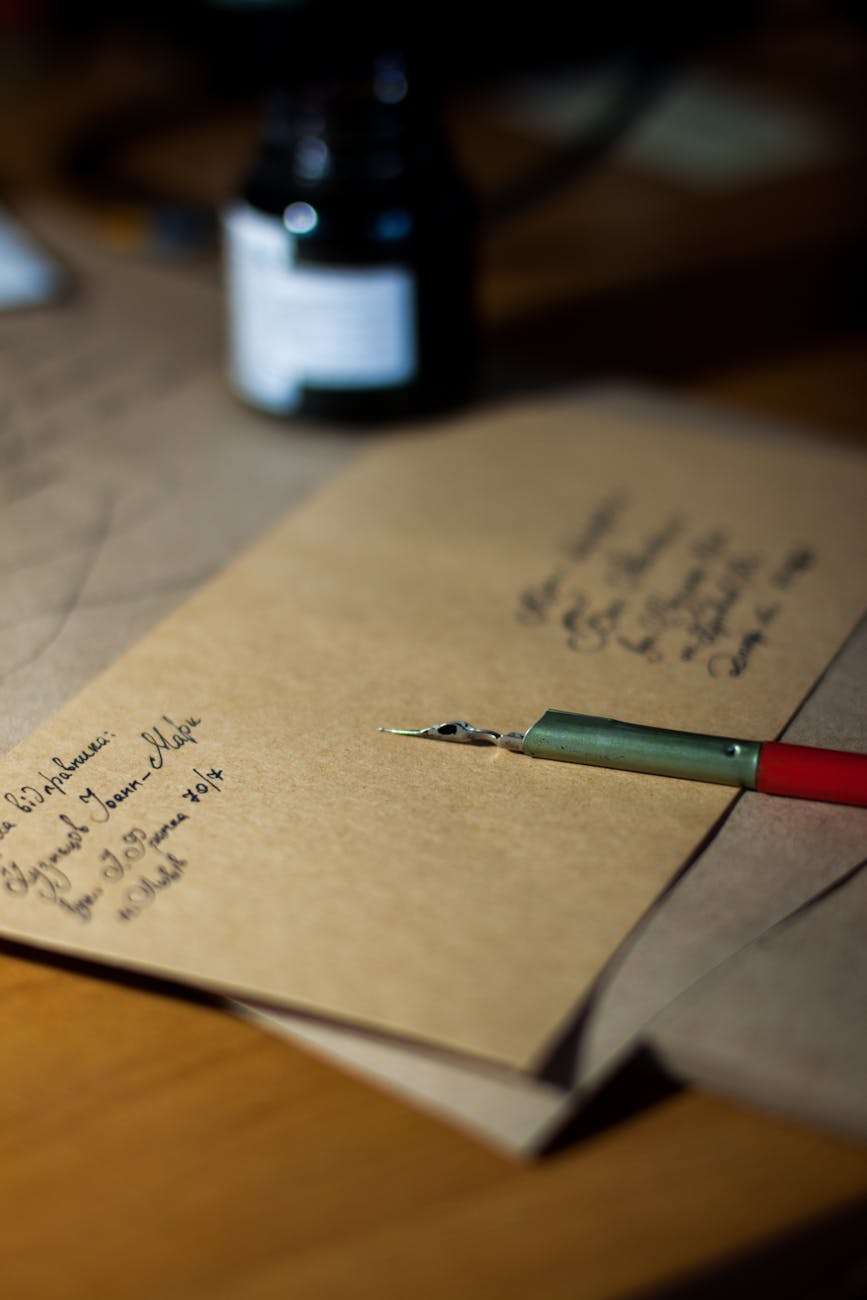
What Used To Be Considered Contents Of A Friendly Letter To Relatives And Friends – Sent Via The Postal Service!

Once common, a letter like this is no longer sent, a quiet casualty of how communication has evolved.

By Benjamin GroffMedia© | benandsteve.com | 2025 Truth Endures©

4–6 minutes

Photo by John-Mark Smith on Pexels.com

Otis the Protector & the Blessing of Good Friends

Dear Lawrence and Matilda,

Summer is the season when friendly faces return. Over the last two days, we’ve been lucky to welcome four dear friends into our lives again. One of them we hadn’t seen in nearly twenty years.

Our friend David moved away long ago in pursuit of new opportunities. We kept in touch online, and about a year ago, we sold his mother one of our cars. He trusted our word that the car was solid and dependable—and that trust meant a lot.

David and his spouse Josh flew into town Thursday. We already had our plans set. We planned to have dinner at our favorite Main Street spot, Christina’s Wildberry Restaurant. The food there is so good you’ll want to order extra sides. (And I do.)

We caught up on everything. David had moved on from California and now lives in Seattle, working as a film producer for Amazon. We had once caught a glimpse of him in a movie. We wondered if acting was his calling. Yet, he ended up behind the camera instead. The conversation flowed easily as we shared stories of the past twenty years. We talked about loved ones we’d lost. We discussed the changes in our lives. We even shared our various health battles. It was a wonderful reunion.

Back at home, yet, Otis—our ever-vigilant dog—was not quite as enthusiastic. He’s fiercely protective of our home, and new visitors throw his routine into chaos. He needed time to warm up: slow approaches, sniffing, backing off. Growling. Barking. Panting. It was a whole process. After a solid half-hour of cautious interaction, Otis finally accepted David and Josh. But his window of friendliness only lasted about five to ten minutes—just in time for them to leave.

And then came Saturday morning.

Otis had barely recovered from his last round of introductions. Then our friends Angie and Sasha showed up for breakfast—again at Christina’s Wildberry. But this time, Otis escalated. He was in full protection mode from the moment they approached the door. We strapped him into his safety vest. I controlled his lunges. As soon as the door opened, he exploded into noise. Growls, barks, lunges—the works. He reared on his hind legs like a wild stallion, roaring from the depths of his protective instincts. I had to scoop him up just so our friends was allowed to come inside.

We finally decided the best move was to leave for breakfast and give Otis a break. I would be the last one out. I unhooked his leash and bent down to reassure him.

“You’re in charge now,”

I said.

“Watch the house, and you’re free to bite anyone who tries to get in.”

His ears perked. Head tilted. Tail wagging. He jumped up with glee, clearly proud to be entrusted with such an important task. I locked the door and set the alarm—knowing full well that no burglar was getting past Commander Otis.

At the restaurant, our regular waitress Christine (no relation to the owner) greeted us with a smile. We always sit in her section. The service is consistently wonderful, and the food never disappoints. As we enjoyed our meal, we caught up on recent happenings. We also discussed the month ahead. We talked about my upcoming surgery in July. Not the easiest topic, but one that matters deeply among close friends. Angie and Sasha have supported us immensely. We rely on them more than words can express.

After breakfast, we walked next door to the wholesale closeout auction warehouse. It’s a local gem filled with Amazon returns and overstock items. It’s a weekly stop for us, and we nearly always walk out with a treasure or two. This time was no exception—we all left holding bags of bargains from the $10, $5, and $3 tables. The outer walls of the warehouse show moderately priced goods under $50. These include cooking gear, tools, and musical equipment.

But that’s where I had to call it a day. My legs gave out—one of the symptoms tied to my spinal disc issue. It’s why surgery is coming. I was brought home to rest in my easy chair while Steve, Angie, and Sasha continued the shopping mission.

They headed to the local children’s home thrift store. Steve found me a kitchen stool. It was a fantastic find that will make cooking much easier. It allows me to sit while preparing meals. He also scored a new cutting board, which we’ve been sorely needing. The one we’ve been using is over twenty years old and has clearly done its time.

Later, the crew returned home, showing off their finds and bragging about their deals. We laughed, relaxed, and soaked in the joy of good company.

It’s been a full couple of days, and yes, I’m tired—but I’m also grateful. Sharing time with friends is a blessing, whether we saw them last week or haven’t seen them in decades. Add a protective dog with a dramatic flair. Include a few great meals and a handful of discount treasures. You’ve got the makings of a truly memorable summer weekend.

Talk again soon. Say hello to the folks.

With love,

Benjamin, Steven and Otis

Remembering An Inlaw Who Is Dearly Departed (But – Yes…Still Alive)

By Benjamin GroffMedia© | benandsteve.com | 2025 Truth Endures©

3–4 minutes

There are moments in life when we contemplate our relationships with relatives who are dearly departed. Some have passed on, leaving behind only memories. Others are dearly departed in a different sense. They are no longer married into the family. Yet their presence lingers in our stories, our recollections, and sometimes, in our affections.

This story is about one such family member, who dearly departed not through death, but through divorce—from my sister. For nearly eighteen years or more, he was a big part of our family. Long before the wedding, during their dating years, he was already woven into our daily lives. He would often spend the night at our house. More than a few times, he slept in my room just to be near her. He was older than both of us, and a farmer by trade. During the winter months, farming slowed down. During this time, he worked as a parts clerk at his father’s Chevrolet dealership in town.

Since I worked for him on the farm, I spent nearly as much time with him as my sister did. From sunrise to sunset, we toiled together—planting crops, moving irrigation pipe, working cattle, and hauling hay. He even pitched in at the Girl Scout Camp where my dad was the ranger. And that’s where this story takes place.

It was the summer of 1978. A flood had wiped out a water line. The line ran from a well to a storage tank at the Girl Scout Camp. Special piping was needed for repairs. My dad asked Benny to take me to Clinton, Oklahoma, to pick up the materials. I was thrilled when he handed me the keys to one of the camp’s state-owned ranger vehicles. For a brief moment, I thought, “Wow, I get to drive!” But then he said, “Give these to Benny—he’ll be the one driving.” Shucks.

Still, the outing promised a break from our usual routine. We set out just before noon, heading west on State Highway 152. As we neared the town of Eakly, an Oklahoma Highway Patrol car coming toward us slowed dramatically. The trooper gave us both a piercing look, as if trying to place us. After passing us, he glanced back as though deciding whether to turn around. Odd, we thought—we hadn’t been speeding or doing anything wrong.

A few miles farther west, another patrol car did the exact same thing. Now we were both feeling uneasy. We even pulled over to check the truck—maybe something was dragging, maybe we had a flat tire—but everything checked out.

Four more patrol units gave us the same strange treatment. By now we were more than a little paranoid. What were we missing? We hadn’t turned on the radio, thinking it wasn’t our place to use official equipment in the state-owned truck. If we had, we’d have had our answer.

When we finally returned to the Ranger’s Quarters with the piping, we were greeted with wide eyes and urgent questions. Turns out, there had been a prison break nearby. The escapees had stolen a state vehicle—same color, same model, same government-issued license plate as the one we were driving. No wonder the troopers were ready to pounce. If we had known, we would’ve waved our Girl Scout badges out the window. We would have done this for the entire ride, like waving a white flag.

That trip became one of the many memorable moments I shared with my once-brother-in-law Benny. It was the story told every holiday. And it got laughs no matter how many times it was heard. Benny was a close comrade through much of my youth and during family gatherings. It was hard to see him and my sister go their separate ways. Still, I understood and respected her reasons. Sometimes life and family change in ways you don’t expect. And sometimes, those changes, though painful, lead to something better.

But Benny—well, he’ll always be one of our dearly departed.

Where am I going? In July I will be going places…So watch for me here!

By Benjamin GroffMedia© | benandsteve.com | 2025 Truth Endures©

2–3 minutes

A Little Heads-Up About July

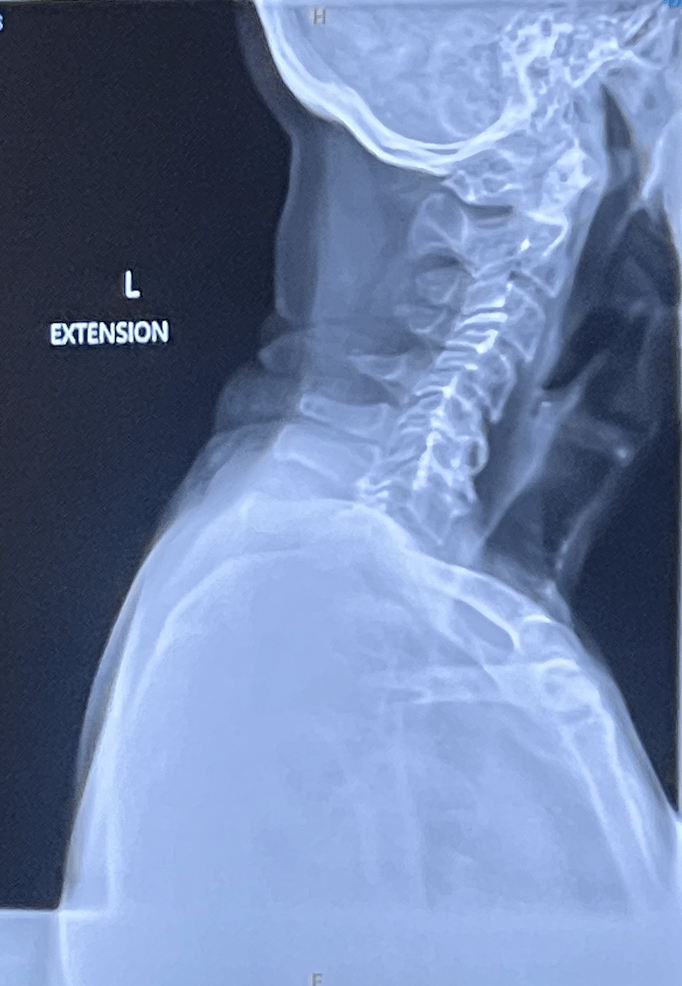
Next month, you will notice I won’t be posting daily. Don’t worry—some content will still show up, thanks to the magic of pre-scheduled posts. The reason for the slowdown? I’m finally getting a long-overdue back surgery.

It’s not a procedure I’m exactly excited about. There’s a good chance it’ll knock me off my usual rhythm for a while. That is, of course, if everything goes according to plan. But, there are plenty of ways it not happening:

  • I can experience a sudden, miraculous recovery and cancel the whole thing.
  • My insurance will decide it’s a luxury item and deny the claim.
  • The orderly will wheel me into the wrong operating room.
  • The doctor disappears right before showtime.
  • Or, I will be the one who disappears—just as the doctor walks in, ready to go.
  • Or, the operating table goes missing on the day of the surgery.
Benjamin’s Profile

My hope is that the surgery will go as planned. If so it will ease the constant, gnawing pain I feel. It affects me whether I’m walking, sitting, standing, or trying to sleep. The sharp, stabbing, burning sensations mostly travel down my left leg. Though, they sometimes jump to the right when they get bored. They’ve also been known to zap my arms and hands. This happens especially in the middle of the night. It leaves a tingling, numbing wake.

I still manage to write here and there. I try to sound semi-coherent. I cook the occasional meal. I do my best to avoid going completely coo-coo. This journey has been a slow burn, building over more than fifteen years of other health concerns.

Until then, I’ll keep doing what I do—telling stories, filing reports, and generally pretending everything is completely under control. I’ll keep you posted on the surgery prep as it unfolds. Yes, I’m still obsessively checking my doctors’ reviews on Healthgrades.com. So far, there are no red flags. There are just a few mildly worrying Yelp comments about cold hands and questionable playlist choices in the OR. 

1753360200

  days

  hours  minutes  seconds

until

Ben’s Surgery!

Meet Benji and His Canine Companions: A Heartwarming Tale

By Benjamin GroffMedia© | benandsteve.com | 2025 Truth Endures©

2–3 minutes

In the quiet stretch of Oklahoma back-country, the hills roll gently. The wind carries the scent of cedar and earth. A school bus door creaks open every afternoon at 3:35 p.m. Out steps a boy named Benji. He is full of curiosity and grit. He loves the wild places that lie just beyond the fence line. But he’s not alone. Waiting faithfully at the gate are his three loyal companions—Oggy, Bruiser, and Jackie.

To most folks, they’re just dogs. But to Benji—and anyone lucky enough to witness them in action—they’re guardians. Each has a purpose. Each with a soul as big as the land they roam.

Oggy is the scout. He is a lightning-fast border collie. His job is to stay out front. He sniffs out threats and leads the way with sharp instinct. Bruiser, the muscle-bound mastiff mix with a thunderous bark and a heart of gold, never strays from Benji’s side. He is the protector. And Jackie, the wise and steady golden retriever, always takes the rear. She remembers every twist and turn in the woods. She is the quiet navigator. She ensures they always find their way back home.

What begins as a simple after-school tradition—just a boy and his dogs hiking the countryside—becomes something far greater. These four face the untamed wilderness. They discover the secrets of the land. They defend each other against the dangers that lurk in the shadows. These include wild boars, treacherous terrain, and even the unpredictable spirit of nature itself.

But this story isn’t just about survival—it’s about trust and purpose. It’s about the powerful bond that exists between a child and the animals who would give anything to protect him. It’s about finding your place in the world, knowing your role, and honoring it with everything you’ve got. It’s about how the world can feel vast and uncertain. Having the right ones by your side can make all the difference.

The Trail Guardians is a heartwarming, adventurous tale set against the backdrop of rural America. It is perfect for readers who believe in the magic of animals. It also appeals to those who appreciate the courage of kids and the timeless rhythm of life in the country.

Watch for the first of five exciting chapters. Enjoy this engaging short read as we count down to the first day of summer!

Join Benji, Oggy, Bruiser, and Jackie on their journey. They explore wild places where memories are made. Loyalty is tested, and legends are born.

This is only the beginning.

Starting Tuesday June 17th, 2025!

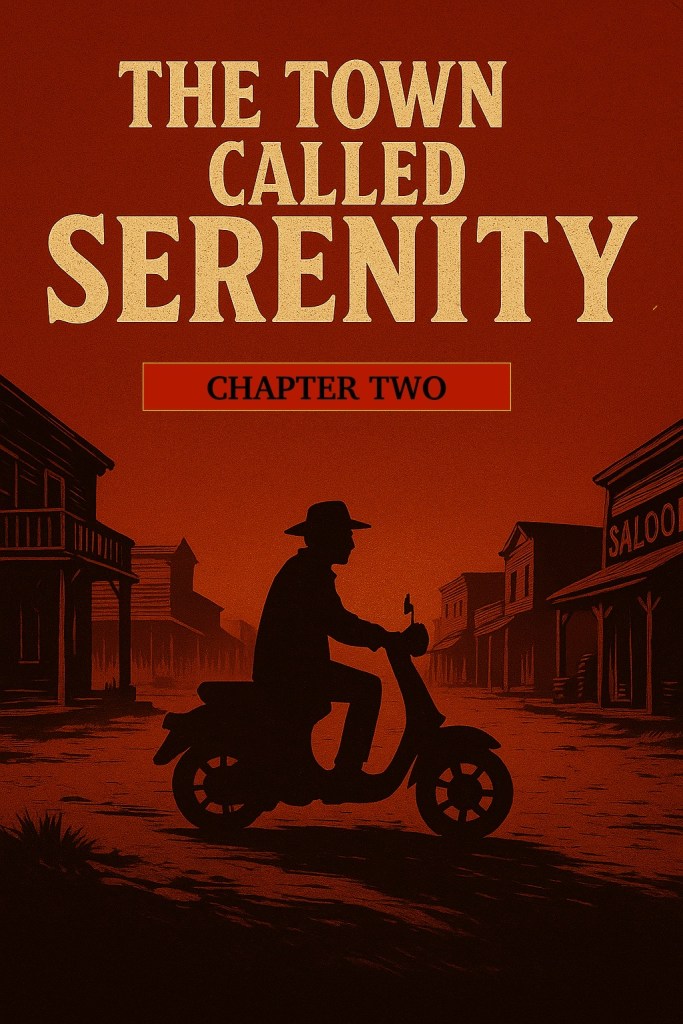
The Town Called Serenity – Chapter Two ~ The Man In The Velvet Chair ~

By Benjamin GroffMedia© | benandsteve.com | 2025 Truth Endures©

3–4 minutes

Chapter Two: The Man in the Velvet Chair

Braddock Cain held court in what used to be Serenity’s town hall. It has been redubbed The Assembly. This tongue-in-cheek title amused him to no end. The building’s original seal featured a gavel and olive branch. It had been charred. A mural of a coiled snake wrapped around a set of broken scales replaced it.

Cain reclined in a velvet chair salvaged from an old theater. His legs were crossed and his boots polished. A glass of brandy swirled in his hand. He dressed like a gentleman, but everything about him screamed predator. His jaw bore a faded scar shaped like a question mark, and his eyes—green, sharp, reptilian—missed nothing.

He was listening to the daily reports from his lieutenants. These included moonshine shipments and bribe tallies. They discussed who’d been bought and who needed reminding. It was during this time that the news came in.

“Marshal rode in today,” 

Said a wiry man named Poke, who hadn’t blinked since 1989. 

“Little fella on a moped. Arrested Julep Jake, if you can believe it.”

Cain’s eyebrow lifted slightly.

“Didn’t shoot him?” 

He asked, his voice smooth as oiled leather.

“No, sir. I hauled him off. Jake’s in the old jailhouse right now. He’s hollerin’ about election fraud. He’s claimin’ he’s immune to state law because of a sacred raccoon spirit.”

Cain chuckled, swirling his drink.

Side Note:

Julep Jake was a Yale-educated botanist. He loved whiskey-fueled nonsense. He habitually wore a sash that read “Honorary Mayor 4 Life.” Despite all this, he had a breakdown during a lecture on invasive species. He ended up in Serenity after wandering the desert in a bathrobe. He decided, on divine instruction, that this was where civilization needed his governance. The raccoon spirit came later, after a bad batch of moonshine.

Cain leaned forward, elbows on his knees. 

“So. The law’s back in town.”

Poke nodded. 

“Says he’s here to clean up.”

Cain smiled faintly. 

“Then let’s give him something to mop up.”

He rose, slow and deliberate. Every movement was calculated with the same precision he used to carve out his little empire. Cain wasn’t just a criminal—he was a tactician. He knew that fear didn’t come from bloodshed alone. It came from control. Predictability. Making people believe that resistance was a form of suicide.

“Send word to the Gentlemen,”

Cain said.

The Gentlemen weren’t gentlemen at all. They were Cain’s enforcers—four men, each with a particular specialty. One was a former preacher who liked to break fingers while quoting scripture. Another was a silent giant who wore a butcher’s apron even on Sundays.

“Tell them I want to meet our new Marshal. Kindly, of course. Offer him a warm Serenity welcome.”

Poke nodded and vanished.

Cain turned to the shattered windows behind him, looking out over his kingdom. Dust swirled in the streets. Somewhere, a gunshot echoed, followed by laughter.

“I do enjoy it when they come in idealistic,”

Cain murmured, sipping his drink. 

“They bleed slower.”

Lessons from the street: Shattered Expectations

By Benjamin GroffMedia© | benandsteve.com | 2025 Truth Endures

3–4 minutes

“Shattered Expectations”

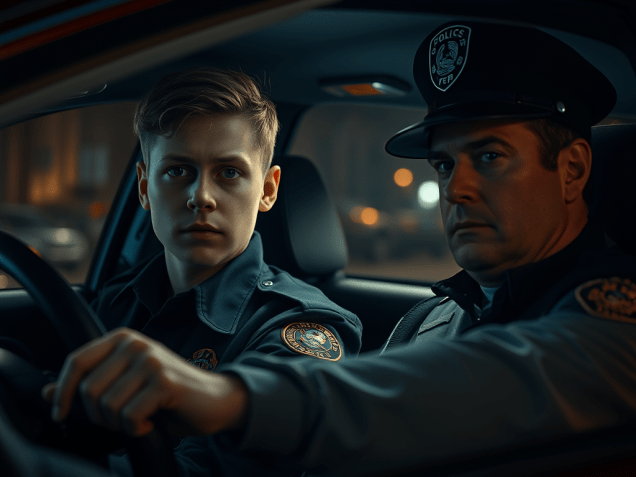
The night was calm in that tense, waiting way cops get used to. It was the quiet that makes your stomach coil. You know it won’t last. I was still new then, riding with my training officer. He was a crusty, seen-it-all type who barely spoke unless it was to point out something I’d done wrong. If I ever earned his approval, it’d be the same day pigs sprouted wings and took to the skies.

We cruised down a dark side street when I spotted a car weaving just enough to catch my attention. I hit the lights. It was a rust-bucket sedan packed with teenagers—maybe five of them, wide-eyed and frozen as I approached. My training officer stayed in the car. That was his style: throw the rookie in the water and see if he sank.

I had the driver step out. He was lanky, maybe seventeen. He wore his coat like a belt, tied around his waist. It seemed too warm for sleeves but too cool to ditch. As he stepped out, the hem of the coat caught on something. Then—clink clink clink—CRASH. Three or four bottles of beer tumbled from under the coat like traitors abandoning ship. They hit the pavement. The bottles shattered in an amber mess around our feet.

The kid froze. I froze. Then we both looked at the puddle between us. From where my training officer sat, it probably looked like I’d lost my temper and smashed the bottles myself. Great.

Before I processed the situation, the radio crackled with a priority call—armed robbery. We were the closest unit.

“Back in the car,”

Came the voice from the patrol unit.

I turned to the kids, who now looked ready to faint.

“Go to the police station. Wait there. I’ll meet you after this call.”

They didn’t argue. They didn’t run. I just nodded in frightened unison, which, in hindsight, has been the most surprising part of the whole thing.

We sped off. The call was a blur—adrenaline, sirens, controlled chaos. When it wrapped, I reminded my training officer about the teens.

“We need to swing by the station. The kids should be there.”

He gave me a skeptical glance.

“Right…”

But sure enough, there they were when we rolled up to the front of the station. All of them were sitting on the bench outside like they were waiting for a ride to Sunday school. Nobody had moved. Nobody had tried to hide or ditch the evidence.

I had them step inside one at a time. No citations. No handcuffs. It was just a firm talk I remembered getting when I was about their age. I laid it on thick—the “blood on the highway” speech, consequences, how lucky they were, all of it. They nodded solemnly. They got the message.

As we returned to the patrol car, my training officer gave me a sideways look.

“You know,”

He said,

“you didn’t have to bust the beer bottles like that. That was an asshole move.”

I laughed.

“That wasn’t me. The kid’s coat dragged them out. Total accident.”

He squinted at me like I was trying to sell him beachfront property in Kansas.

“Uh-huh,”

he said.

“Sure.”

I never did convince him. But a week later, during roll call, he told another officer I had

“a decent head on my shoulders.”

Coming from him, that was a standing ovation.

And me? I still smile every time I think of those kids. They sat quietly in front of the station, smelling like cheap beer and bad decisions. They were waiting for the rookie cop who didn’t quite screw it all up.

Red ‘Pinky’ Green: The Man Behind Marlow’s Legend – A Man They Called “Blue”

By Benjamin GroffMedia© | benandsteve.com | 2025 Truth Endures©

3–5 minutes

The Curious Legacy of Red “Pinky” Green, Known to All as Blue

The little town of Marlow’s Ridge was nestled between dusty hills and a river. This river had long forgotten how to rush. In this quaint setting lived a man named Red Green. His middle name was “Pinky,” a leftover from a grandmother who thought nicknames were good luck. But everyone in town—young, old, shopkeeper, sheriff, or schoolkid—called him Blue.

No one quite remembered how the name Blue came to be. Some said it was due to the denim shirt he always wore. It was frayed at the cuffs and patched at the elbows. Others swore it was because of his eyes. They were deep and stormy. They held stories no one ever heard him tell. Whatever the reason, the name stuck. And so did he.

Blue wasn’t what you’d call important. He wasn’t elected to anything. He didn’t own a business. He didn’t sing in church or march in parades. He wasn’t married and never had kids. He lived alone in a one-room shack on the edge of town. He built it himself, board by salvaged board. His house had a tin roof and a potbelly stove. The garden always grew more vegetables than one man can eat.

He was a fixture more than a figure. You’d see him mending a neighbor’s fence one day. The next day, he is fishing at the creek. Sometimes, he’d sit on the courthouse bench, whittling a stick into something halfway useful. He spoke little, smiled often, and always paid cash—exact change. Kids liked him because he had a knack for fixing broken toys with bits of wire and rubber bands. Adults liked him because he never asked for anything and always showed up when you needed another set of hands.

Blue was what folks called thrifty. He wore the same clothes for years. He repurposed everything. He carried a coffee can full of loose screws like it was a treasure. He never took credit, never owed money, and never once called attention to himself.

He died peacefully, in his sleep, sometime between dusk and dawn. So when he passed, the town mourned. They felt that soft, uncertain way people do when they realize someone quiet had been a cornerstone all along.

There was no family to speak of. The county handled the burial, and someone brought a pie to the service, which seemed appropriate. The people were about to scatter and return to their lives. Just then, the county clerk arrived with a letter in hand.

It was Blue’s ‘Will.’

Written in neat cursive on lined notebook paper, the will was short, but what it said stunned everyone with its unexpected generosity:

To the Town of Marlow’s Ridge,

If you’re hearing this, it means I’ve gone on ahead. It’s no use making a fuss, but I have a few things to leave behind.

First, I’ve set aside $20,000 for the school’s library. I want to make sure the kids get real books with pages they can turn.

Second, I’m giving $15,000 to the fire department. You’ve bailed me out more than once when I let that stove get too hot.

To Miss Delaney at the diner, you’ll find I’ve paid off your mortgage. You gave me free coffee every Monday for ten years. I figured it was time I returned the favor.

To the town mechanic, I left you my truck. It barely runs, but the toolbox in the back can come in handy.

The rest—over $300,000 in cash and savings—I want to put into a fund for the town. I want to fix up the playground, paint the church, and replace the town hall’s roof. You know what needs doing.

You were all my family. Maybe I didn’t say it, but I hope I showed it.

Thanks for everything.

Red “Pinky” Green, but you knew me as Blue.

There was silence. It was not the kind that follows shock or grief. It was the kind that settles when truth lands heavy and sweet, like the last snowfall of winter.

In the next weeks, the town changed. It didn’t change in the way bulldozers and scaffolding alter things. It changed in how people react when they realize they’ve misjudged someone. Children now whispered stories of Blue’s secret treasure. Adults spoke his name with a new reverence. The diner added a “Blue Plate Special” in his honor. Every kid at school got a brand new library card. His actions inspired a wave of kindness and respect that swept through the town.

The bench outside the courthouse where he used to sit remained empty. Someone carved his name into it, not his full name, just the one that mattered. A simple yet powerful tribute that ensured his memory would never fade.

BLUE

No title. No explanation.

This is just a reminder that sometimes, the quietest lives leave the loudest echoes.

The Sacred Telephone: A Journey Through Time – It’s Your Dime!

By Benjamin GroffMedia© | benandsteve.com | 2025 Truth Endures©

3–5 minutes

Photo by Rafael Duran on Pexels.com

When Phones Were Tied To The Wall

I remember when the telephone was sacred. It wasn’t sacred in the biblical sense. It was sacred in how a thing becomes sacred through ritual and reverence. It hung on the kitchen wall. It was a beige rotary with a coiled cord. The cord always managed to tangle itself, no matter how carefully we stretched it. There was no strolling around the yard while chatting, no slipping it in your pocket. That phone was anchored to the wall, and in a way, so were we.

Back then, if you were expecting a call, you waited—at home. You couldn’t run errands or mow the lawn and hope they’d “just leave a message.” There was no voicemail, and answering machines were still considered a luxury or a spy device. If you missed a call, that was it. Maybe they’d try again. Or, they wouldn’t.

There was an entire culture built around the act of calling. If the phone rang during dinner, it was a dilemma. Do you get up and answer it? That would offend Mom, who just set the casserole on the table. Or do you let it ring and risk missing something important? ‘Important’ means anything—a job offer or a family emergency. More often than not, it was just Aunt Margaret from Tulsa, who forgot about time zones again.

It’s Your Dime!

Long-distance calls were a whole other beast. Before area codes were common knowledge, calling someone more than a town away was a financial decision. “Unlimited minutes” became a birthright later. You thought twice, maybe three times. Sometimes, you waited until Sunday after 7 p.m., when the rates went down. You’d hear people say, 

“Make it quick; it’s a long distance,”

And suddenly, the air would tighten. Conversations became lean and efficient. There was no room for small talk when every second cost a dime.

And God help you if you live in a house with teenagers.

We had one line for the whole family. If someone was on the phone, that was it: no call waiting, no second line, no privacy. I sometimes sat on the front steps, listening to my older sister whisper sweet nothings to her boyfriend. At the same time, she stretched the phone cord into the hall closet for “privacy.” This meant insulation from our relentless teasing.

My Name Is In The Phone Book!

Phone books were gospel—fat and yellow and always near the phone. If someone’s number changed, you had to physically write it down in the back of the book. Otherwise, you risked losing it forever. If you didn’t know someone’s number, you called the operator, who answered with an almost magical, 

“Information, how may I help you?”

There was a time when arriving in a new town didn’t mean turning on a GPS. It didn’t involve scrolling through social media, either. Instead, it meant pulling up to a phone booth and flipping through the phone book. Every booth had one, thick and heavy, usually hanging from a little metal chain to keep it from wandering off. If you were looking for someone, all you needed was their name. You’d find their phone number listed alphabetically, and right next to it—their home address.

It was all just there, in plain ink, as ordinary as the weather report. Privacy wasn’t the concern it is today. Back then, being listed in the phone book was considered part of being a community member. It was how people stayed connected. Out-of-town relatives, old friends, and even traveling salespeople brought to your doorstep with just a name and a little patience. And it meant something to have your name listed in the phone book.

It’s funny now how phones used to ring, and everyone rushed to answer. It was exciting—an event. Now our phones ring, and we stare at the screen half the time like it’s a burden. Back then, it was a connection. A real, human voice carried over copper lines and across miles. There was a weight to it. You felt the distance.

It Is So Nice To Hear From You!

Photo by Min An on Pexels.com

And maybe that’s what I miss the most—not the inconvenience, not the cords or the costs, but the intention. Calls were planned. Conversations were meaningful, not disposable. There was something beautiful about the limits. There was something grounding about a phone that couldn’t follow you around. There was honesty in waiting for someone to call and hoping they’d find you home.

Because that was the world then—tied to the wall, rooted in place, and always listening. It was a simpler time in many ways. Yet, it would confuse anyone who had never experienced the rotary telephone era. 

The Last Post: A Security Nightmare at Ridgewood

By Benjamin GroffMedia© | benandsteve.com | 2025 Truth Endures©

3–4 minutes

“The Last Post”

The night shift at Ridgewood Corporate Plaza was supposed to be quiet. Ten floors of empty offices, humming servers, and fluorescent lights dimmed for the janitors’ comfort. The tenants had gone home. The day’s buzz was replaced by the solemn hum of vending machines. There was also the distant thrum of traffic.

That’s when the trouble started.

At exactly 11:42 PM, a woman from the 8th floor called 911. Her voice trembled as she whispered into the phone from behind a copier machine:

“It’s the security guard. He’s –– drunk. He has a gun, and he’s playing with it.”

“Officer intoxicated w/ a gun!”

Officer Marquez and his partner were already in the area and responded within minutes. They pulled up to the building’s glassy facade. They saw the guard—an older man with a thick mustache and sun-lathered skin. His uniform hung loose on his wiry frame. He stood under the lobby lights like he was in a stage play.

He spun a revolver on his index finger like an old-time cowboy. His other hand clutched a bottle of whiskey that sloshed wildly with each twirl.

Pow! 

He shouted, aiming at an invisible outlaw in the corner.

“You see that, Tex? That’s the ol’ Ridgewood Quickdraw!”

Inside, a cluster of overnight IT workers and janitors peeked nervously from the elevator bank. Some held phones. Others gripped cleaning poles like makeshift weapons.

“Sir,” 

Officer Marquez called out, stepping carefully from the squad car. 

“Let’s talk. Put the gun down, okay?”

The guard, whose name tag read Terry,” stopped spinning the weapon. He looked over as if noticing the world around him.

“Well, I’ll be,” 

He slurred. 

“Company’s here.” 

He saluted with the barrel of the gun, then promptly dropped it. The weapon clattered to the floor. It spun in a circle like a coin. Finally, it came to a rest near a vending machine.

Marquez’s hand was already on his holster, but he didn’t draw. His partner approached slowly from the other side.

“Mr. Terry,” 

She said, calm but firm. 

“You’re scaring people. Can we take a seat over here and talk things through?”

Terry blinked at her, then at the people behind the glass, the ones he was supposed to protect.

“They don’t trust me,” 

He muttered. 

“Not anymore. It used to be a man with a badge, and a sidearm meant something.” 

He took another swig from the bottle, winced, and gave a soft, hollow chuckle. 

“Guess all that’s old-fashioned now.”

Marquez knelt beside the dropped gun and slid it back with his foot.

“It’s not about trust,” 

He said. 

“It’s about safety. Yours and theirs.”

Terry looked down at his trembling hands. The whiskey sloshed in the bottle, no longer steady. Finally, he let it drop, too, and it landed with a dull thunk.

He sat heavily on the bench by the entrance, slumping over like a man who hadn’t rested in decades. The officers approached, cuffed him gently, and led him out into the cool night.

As the police cruiser pulled away, the building behind him exhaled a collective sigh of relief.

Inside, someone from IT muttered, 

“I never want to see another cowboy movie again.”

But for years afterward, whenever a door creaked open late at night, or the lights flickered for no reason, the cleaning crew would joke:

“That’s just Terry, doing one last patrol.”

And everyone would pause. They were half amused and half uneasy. They remembered the night the security guard became the danger he was supposed to guard against.

Detective Clara Vale: Unraveling Pine Hollow’s Secrets

By Benjamin GroffMedia© | benandsteve.com | 2025 Truth Endures©

2–4 minutes

The morning sun had just begun to burn away the last wisps of fog. The fog clung to Pine Hollow’s deserted streets. At this moment, Detective Clara Vale stepped off the county bus. The little town—nestled between whispering pines and rocky hills—was where everyone knew your grandmother’s maiden name. In this town, no secret stayed buried for long. But something about the silent hush felt different today, as if the forest was holding its breath.

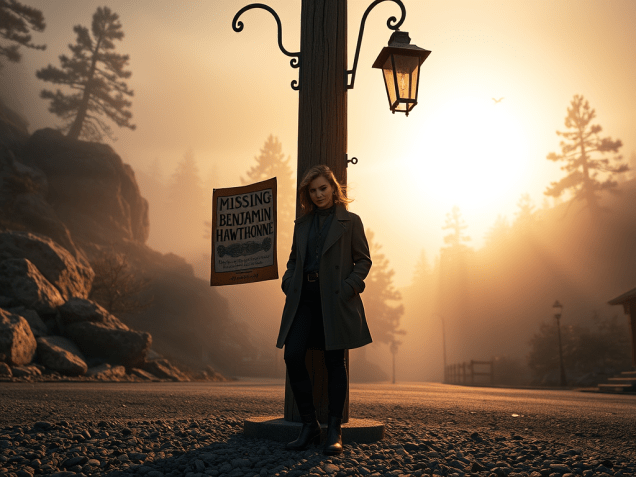
Clara’s boots crunched on the gravel. She walked to the crooked lamppost at the town square. There, a single bulletin board displayed the hand-painted flyer she’d come to see:

“Missing: Benjamin Hawthorne. Last seen at the Old Mill.”

Benjamin, a local schoolteacher, had vanished two nights before. He left only a trail of broken glass in his classroom. A smear of muddy footprints led into the woods. Clara studied the flyer’s edges—fresh tears around the corners told her someone had already pulled it down once. She taped it back in place and set off.

Her first stop was the Old Mill, its rotting wood groaning in the breeze. Inside, moonlight slanted through broken windows, illuminating desks overturned, and chalk dust still hovering in the air. Clara knelt by a desk. She noted the glass shards and a single, battered notebook. It lay open to a page filled with frantic mathematical equations. This was Benjamin’s lifework on the community’s crumbling dam.

Clara closed the book gently and pocketed it. The dam’s collapse would flood half the town; had Benjamin discovered a flaw and been threatened into silence?

As dusk fell, Clara meticulously combed through the Hawthorne farm. Benjamin’s aging parents stuttered about late-night visitors. Strange trucks idled on the gravel road, and their headlights flickered like watchful eyes. Their hands trembled as they described a low rumble, like a machine in the woods. Clara’s pulse quickened at the implication of clandestine logging or worse. She assured them she’d find Benjamin, her determination unwavering, then slipped out the back door.

By midnight, Clara was deep in the forest, tracking tire tracks that plunged toward the dam’s service tunnel. She shone her flashlight on fresh scuff marks along the tunnel walls. Heart pounding, she crept ahead until she heard a muffled voice. 

“Detective… over here.” 

Benjamin emerged from the shadows, bruised but alive, clutching the dam’s blueprints. 

“They wanted me to falsify the safety report,” 

He whispered. 

“When I refused, they locked me up.” 

Clara’s eyes narrowed as headlights flared above ground—masked men were coming back. Benjamin was by her side. She retraced her steps. She used the winding tunnel to slip past the guard trucks waiting at the entrance.

When they burst into the open, Clara raised her badge like a beacon. 

“State Police—step away from the dam!” 

Her command sent the conspirators scattering into the trees. Moments later, sirens rang in the distance—backup arrived earlier to secure the scene. In the stillness that followed, Clara handed Benjamin his blueprints. 

“Now the town knows the truth,” 

She said. As the first light of dawn filtered through the pines, Pine Hollow exhaled, its secrets finally laid to rest. 

The collective sigh of relief was relatable as Detective Vale boarded the morning bus, ready for whatever mystery came next.

Lost in the Forest: A Night of Mystery

By Benjamin GroffMedia© | benandsteve.com | 2025 Truth Endures©

2–3 minutes

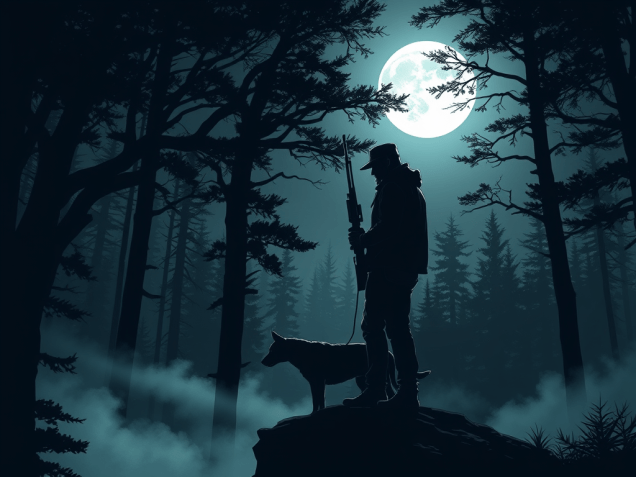
The Night Hunt

It was a night like any other in the deep woods outside Willow Creek. Forty years ago—give or take—a man and his dog set off for one of their usual late-night hunts. The man, grizzled and silent, kissed his wife on the forehead and muttered something about a long run. She barely looked up from her sewing. She was accustomed to his absences. He needed to run beneath the moonlight with only a rifle and his hound for company. She didn’t ask where he went. He never said.

The forest swallowed them quickly. Trees leaned in like eavesdropping strangers, and the undergrowth whispered beneath their boots and paws. The dog was a wiry black mutt with a white streak down its spine. It caught the scent of something just beyond the bend. It bolted. The man, cursing but grinning, gave chase.

They ran deeper and deeper into the overgrown trail for what felt like miles until the land suddenly disappeared.

The dog reached the edge of the cliff first. It barked, wild and electric, then dove headlong into the dark.

The man reached the edge just in time to see nothing at all. No bark. No rustle. There is just silence and blackness below. Without hesitation—without fear—he followed.

And that’s where the story ends, at least in the world we know.

The man awoke beside his dog in another place—somewhere between dream and fog. The stars above were fixed in unfamiliar constellations, and the air hummed with a silence too perfect to be real. He stood, brushed off dust that wasn’t dust, and called out.

No echo returned.

For years—or was it minutes?—he and the dog wandered this pale mirror of the forest they once knew. Sometimes, they saw flickers of their old lives. His wife was crying at the hearth. His brother was digging through the old footlocker for the will. But they couldn’t speak, they couldn’t reach, they only watched.

The man no longer aged. The dog’s coat remained pristine. Together, they waited—for what, neither capable of saying.

Then, one night, they heard something rustling through the brush ahead. They walked a trail that hadn’t been there before. The dog tensed. The man raised his hand. A shape moved—slowly, purposefully.

It was another hunter. Rifle slung over his shoulder. Dog at his side. Eyes vacant. He looked familiar.

The man called out. The hunter looked through him, then walked past.

The dog growled, uneasy.

And from the darkness behind them, a second pair of footsteps began to follow. They had found the lost forest of hunters who had died without a place to go.

The Memory Game: A Humorous Tale of Aging

By Benjamin GroffMedia© | benandsteve.com | 2025 Truth Endures©

2–4 minutes

“The Memory Game”

Earl and Edna had been married for fifty-two years. In those five decades, they had developed a comfortable rhythm, like an old song they both knew by heart. Lately, the lyrics were getting harder to remember.

It all started on a Tuesday morning when Earl stood in the living room, scratching his head.

“Edna,”

He called,

“have you seen my glasses?”

“They’re on your head, Earl,”

Edna replied from the kitchen, her voice tinged with amusement.

Earl patted his scalp and chuckled.

“Well, I’ll be. Guess I’ve been wearing ‘em this whole time.”

But later that day, Edna forgot to turn off the iron. This left a suspicious scorch mark on Earl’s good slacks. That evening, Earl nearly brushed his teeth with muscle ointment. The next morning, Edna scheduled a doctor’s appointment—for both of them.

At Dr. Preston’s office, they sat side by side, holding hands, looking like two nervous schoolchildren awaiting their report cards.

“Doctor,”

Edna began,

“we’re both starting to forget things. Little things, mostly, but…”

Dr. Preston smiled kindly.

“That’s perfectly normal as we get older. One strategy that helps is to write things down. Keep a notepad handy, leave little notes where you’ll see them. It makes a world of difference.”

Earl snorted.

“Write things down? My memory’s just fine. It’s Edna’s that needs the fixing.”

Dr. Preston gave them both a knowing look.

“Just try it. You’ll thank me.”

When they got home, Edna felt a nap coming on and settled into her recliner with a cozy blanket. Earl switched on the TV, flipping channels, landing on a baseball game he wasn’t really watching.

After a while, Edna sat up.

“Earl, dear, would you go to the kitchen and get me a dish of ice cream?”

Earl muted the TV.

“Sure thing, sweetheart.”

“And write it down, so you don’t forget.”

Earl waved her off.

“Nonsense, Edna. It’s a dish of ice cream. I’ve got it.”

“But I’d like strawberries on it too,”

She added.

“And whipped cream.”

Earl tapped his temple confidently.

“Ice cream, strawberries, whipped cream. No problem.”

Edna gave him a skeptical look.

“You sure you don’t want to write it down?”

Earl shook his head and marched into the kitchen.

For the next fifteen minutes, Edna listened as pots clanged. Cabinet doors creaked. The microwave beeped, and something—was that the blender?—whirred loudly.

Finally, Earl returned, triumphant, a plate in his hands.

“Here you go!”

He declared, setting the plate on her lap.

Edna stared at the plate. Bacon. Eggs. A sprig of parsley.

She looked up at him with an exasperated sigh.

“Earl, where’s the toast I asked for?”

Earl blinked, confused.

“Toast?”

Edna shook her head, laughing despite herself.

“Looks like we’re both making notes from now on.”

Earl sat down beside her, rubbing his chin thoughtfully.

“Maybe we should just order takeout.”

And together, they chuckled, holding hands, as the baseball game played softly in the background.

After a moment, Earl squinted at the screen.

“Edna… do you know who’s winning? I can’t tell.”

Edna grinned slyly.

“That’s because, Earl… you’re on first base.”

Earl frowned.

“I’m on first base?”

“No, no,”

Edna said, shaking her head with mock seriousness,

“Who’s on first.”

Earl’s eyes widened.

“Who’s on first?”

Edna corrected, her eyes twinkling.

“No, Who’s on third,”

They both burst out laughing. They cackled until they were wiping tears from their eyes. The baseball game was long forgotten. Their memories were momentarily lost, but their joy was perfectly intact.

Secrets of The Back Side Fishing Spot

By Benjamin GroffMedia© | benandsteve.com | 2025 Truth Endures©

2–3 minutes

The Back Side
Fishing The Back Side

It was a humid summer evening. The air clung to your skin. The world glowed gold in the last light of day. My friend Bub and I stood at the edge of the old creek, just downstream from the dam. The concrete wall loomed behind us. Its spillway trickled like a broken faucet, feeding the deep pool below. The water turned slow and murky there. This was our favorite spot, a secret place we called “The Backside.”

Bub handed me a bank pole he’d rigged himself. It was a sturdy sapling shaved smooth. A heavy line was tied at the end. A fat hook was baited with a chunk of cut shad. We drove it into the muddy bank. We angled it over the swirling water. We tied it off with an extra rope to a thick root jutting out of the ground. Across the creek, Bub set another pole, whistling as he worked, his boots sinking deep into the silt.

We settled onto the bank, backs against the grass, watching the poles bend and sway with the current. The sounds of the night crept in: frogs croaking, cicadas humming, the occasional splash of a carp rolling. Somewhere distant, a train rumbled across the trestle.

“Think they’ll bite tonight?”

Bub asked, tossing a pebble into the water.

“They always do back here,”

I said, grinning.

“Big ones like the deep pool. They come up from the river, get trapped behind the dam.”

We waited in comfortable silence. Just as the moon began to rise, one of the poles gave a sudden, violent lurch.

“There!”

Bub shouted, scrambling to his feet.

I grabbed the pole, feeling the weight and fight of something strong on the other end. The bank pole bent double, creaking against the strain. Bub rushed over to steady the base. I worked the line by hand. I pulled and gave slack as the fish surged beneath the surface. The water boiled and flashed, silver scales catching the moonlight.

“It’s a big one!”

I gasped.

Together we fought it, step by muddy step. At last, Bub plunged his hand into the water. He grabbed the fish just behind the gills, hauling it onto the bank. It was a channel cat, fat and whiskered, easily ten pounds. We stood over it, grinning like fools, watching it thrash in the mud.

“Told you they always bite back here,”

I said.

Bub laughed and clapped me on the back.

“Best pole fishing spot in the county.”

We reset the pole. We rinsed our hands in the creek. Then, we sat back down under the stars. The dam hummed softly behind us. We didn’t talk much after that. We didn’t need to. The night surrounded us. The water flowed gently. The old dam spoke for us. They weaved our friendship into the quiet rhythm of the creek, one fish at a time.