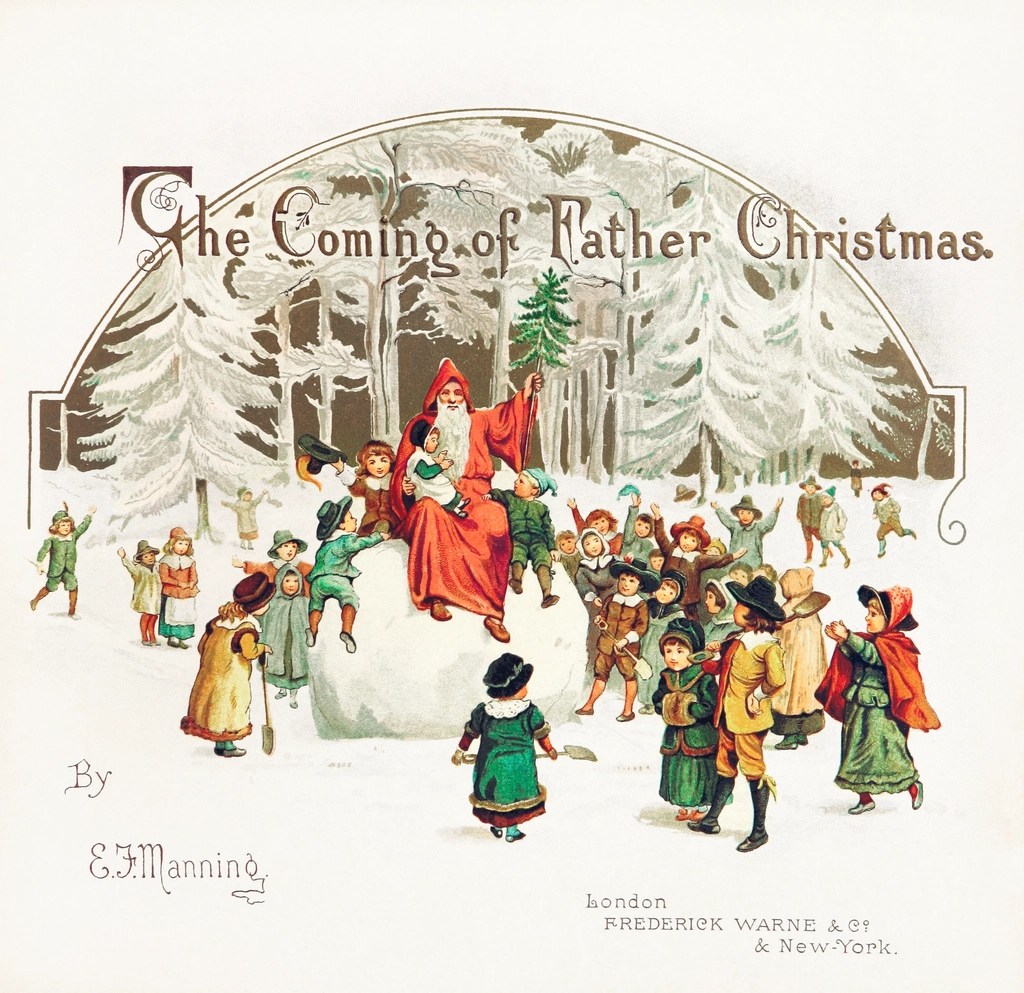
How Santa Tackles a Sky Jam in Los Angeles

This story is pulled from the archives as a celebration for the season edition.

Groff Media 2024© Truth Endures IMDbPro

Presented by benandsteve.com By: Benjamin Groff II©

2–3 minutes

Santa Arrives In Los Angeles To A Bustling Scene:

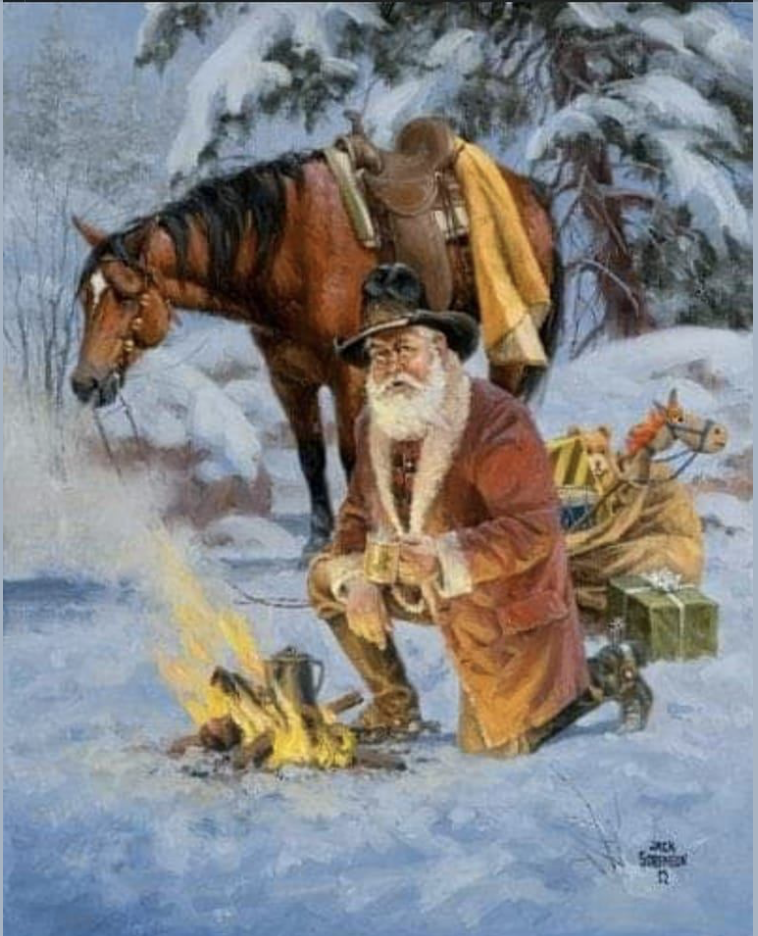
Santa is cruising through a starry night, his sleigh packed with presents. The reindeer are soaring with precision, Rudolph’s nose shining bright as they approach the bustling skies over Los Angeles. Santa remarks on how the city glows more colorful each year, marveling at the dazzling lights below.

The Problem Arises:

Santa checks his list. He guides the sleigh toward his next stop. Suddenly, he encounters a startling sight: a line of airplanes backed up in the sky. The sleigh slows as Rudolph blinks in confusion, and Santa pulls out his magic map to see what’s going on.

The airspace gets crowded with jets circling LAX, cargo planes, and private airplanes. Santa tries to weave through the gridlock but quickly realizes he’s stuck in a “sky jam.”

Santa’s Reaction:

Santa, determined to overcome this unexpected obstacle, starts to worry. He’s never faced air traffic congestion before! His magical sleigh, while nimble, still must adhere to the rules of the sky to avoid being spotted. He radios an air traffic controller using a unique device from his sleigh—something he rarely needs to do.

The controller is startled but professional.

“Uh… Santa? Is that you?”

“Ho ho ho! Yes, indeed! And I’m afraid I need some assistance navigating this mess!”

A Helping Hand:

The air traffic controller, Mia, quickly gathers her colleagues. They realize the only way to clear Santa’s path is to redirect some planes. Mia cleverly uses holiday magic and persuasion to coordinate a temporary gap in the airspace.

Meanwhile, Santa and the reindeer entertain themselves by performing aerial stunts. They draw candy canes in the sky. They share cookies with passing pilots who radio in. Their voices are filled with disbelief and joy.

A Creative Solution:

Santa, ever resourceful, taps into his bag of tricks to make up for lost time. He uses his magic to make his sleigh move twice as fast once the path clears. He asks for help from local elves stationed in Los Angeles. They zip around on drones to deliver some gifts while he’s getting delayed.

Santa’s Resolution:

The airspace clears, and Santa takes off like a rocket. With a heartfelt

“Thank you!”

To Mia and the air traffic team, he speeds into the night. He catches up on his deliveries with minutes to spare.

Ending:

As Santa finishes his rounds, he reflects on the night’s chaos. He chuckles, imagining the stories pilots will tell about seeing a sleigh stuck in traffic.

“Ho ho ho!” 

He bellows as he heads back to the North Pole.

“Next year, I will just get a flight plan!”

The Christmas Bells of Valley Brook

Groff Media 2024© Truth Endures IMDbPro

Presented by benandsteve.com By: Benjamin Groff II©

3–4 minutes

Every Christmas Eve, the quiet village of Valley Brook transformed into a magical tableau. As snow blanketed the streets, an ethereal ringing of bells echoed through the valley. The sound was sweet and haunting, like a melody from another world. The villagers marveled at the phenomenon for decades, yet no one knew where the bells came from.

The mystery was part of Valley Brook’s charm. Some claimed the bells were angels’ gifts, while others swore they were the spirits of Christmases past. But to Ethan, a curious young man with a heart full of wonder, the mystery demanded answers.

Ethan had lived in Valley Brook his entire life. Each Christmas, he stood at the frozen brook’s edge. He strained to hear even the faintest hint of the bells’ origin. Now 19 and filled with determination, Ethan resolved that this year would be different.

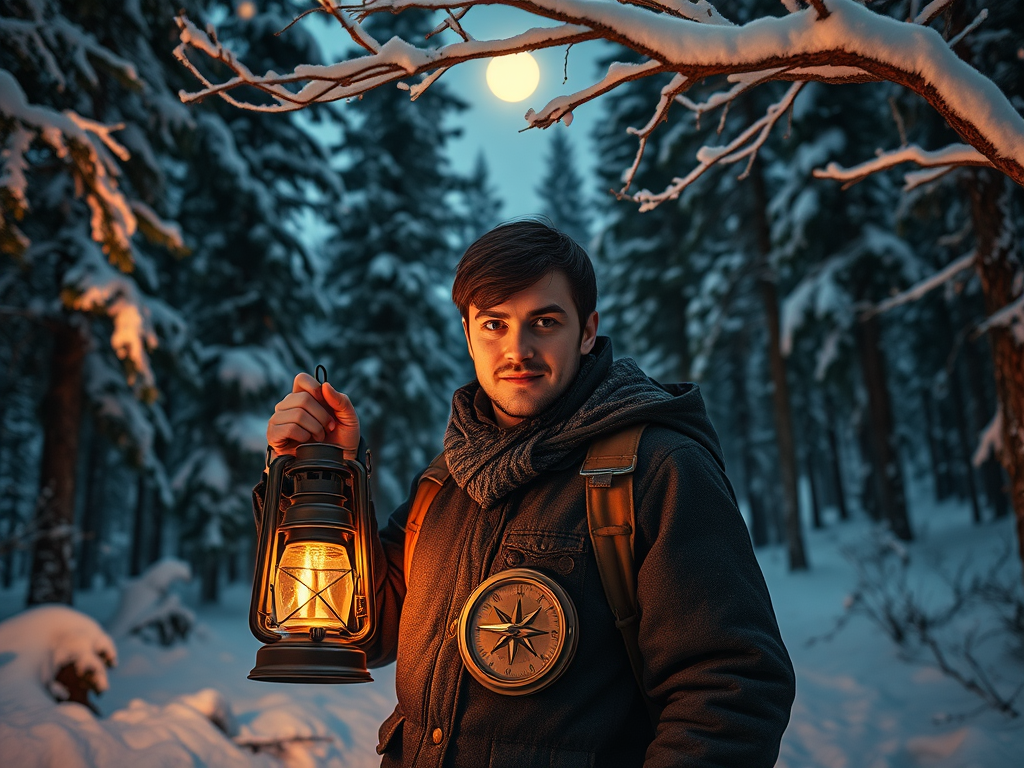
On Christmas Eve, armed with a lantern and his father’s old compass, Ethan entered the night. The air was crisp, and the snow crunched beneath his boots. As the bells began their enchanting tune, he paused to listen.

“North,” he whispered to himself, turning toward the sound.

The first stretch of his journey led him to the forest bordering the village. The tall pines were heavy with snow, their branches arching over him like cathedral ceilings. The bells grew louder as he walked deeper into the woods. Then, they seemed to shift direction, drawing him toward the hills.

Ethan climbed steadily, his lantern casting long shadows against the rocks. At the top of the hill, he paused to catch his breath. The bells sounded closer now, but their source still eluded him. His compass needle jittered as if caught in some unseen magnetic pull.

After the sound, Ethan descended into a hidden ravine. At the bottom, he discovered an ancient stone bridge, its surface worn smooth by time. Beneath it, the brook that gave the village its name flowed silently, its surface coated in thin ice. Ethan crouched and pressed his ear to the stones. The bells resonated through the bridge itself.

“This must be it!”

he exclaimed, but as soon as the thought formed, the melody shifted again, beckoning him onward.

Ethan continued his pursuit for hours, weaving through snow-covered meadows and icy trails. Finally, the first light of Christmas morning touched the horizon. He arrived at the mouth of a cavern nestled in the cliffs at the valley’s edge.

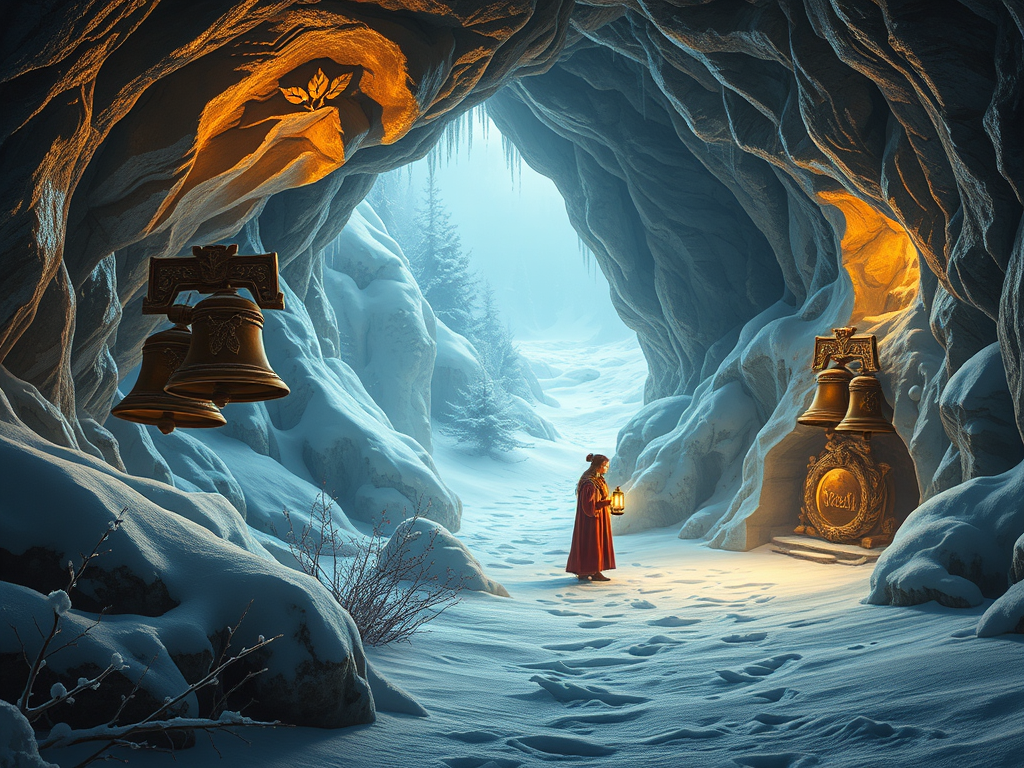
Inside, the bells chimed more clearly than ever. He entered cautiously, the glow of his lantern illuminating crystalline walls that shimmered like diamonds. He found them at the cavern’s heart. Rows of bronze bells were suspended in midair. Their surfaces were adorned with intricate carvings of holly and ivy.

Ethan approached in awe, reaching out to touch one of the bells. When his fingers brushed the metal, a warm light enveloped the cavern. A figure appeared—a woman in flowing robes, her face serene and timeless.

“Who are you?”

Ethan asked, his voice trembling.

“I am the Keeper of the Bells,”

she replied.

“These bells have rung for centuries to remind Valley Brook of the spirit of Christmas—hope, love, and unity. Only those who seek their origin with a pure heart will find them.”

“Why me?” 

Ethan whispered.

“Because you dared to wonder,”

 she said with a smile.

“Now, you must decide: will you keep their secret or share their magic with the world?”

Ethan thought of his village and how the bells brought everyone together each Christmas. Their mystery was part of what made them special. He nodded.

“I’ll keep the secret.”

The Keeper’s smile widened.

“Then the bells will continue to ring, their magic preserved for all who believe.”

When Ethan returned to Valley Brook, the bells still rang as they always had, their melody echoing through the valley. But now, when he stood at the edge of the brook, he smiled. He knew he was part of their timeless magic. He was a secret keeper of the Christmas Bells of Valley Brook.

“Herbie” ––– The Tiny Christmas Tree Searches For A Family

This story is pulled from the archives as a celebration for the season edition.

Groff Media 2024© Truth Endures IMDbPro

Presented by benandsteve.com By: Benjamin Groff II©

3–4 minutes

In a quiet forest stood a skinny cedar tree, so different from all the others. The tall, majestic cedars around him stretched their lush branches high. In contrast, the little tree looked scrawny. It had sparse needles and a slightly crooked trunk.

People often came to the forest to select the perfect Christmas tree, always passing him by.

The other trees whispered and rustled in the wind, teasing him.

“Look at you, Herbie,”

They said, giving him the nickname that stuck.

“No one’s ever going to want you.”

Herbie tried to stand tall, but he knew they were right. Year after year, Herbie remained as the big, beautiful trees were chosen and taken away. The forest changed around him. He stayed in his lonely spot. He dreamed of what it would feel like to be wanted.

Then, one crisp winter morning, the tree cutters came again, their saws buzzing. Herbie didn’t expect to get noticed, but this time, something different happened. As they cleared their path, one of the workers stopped, scratched his head, and said,

“Well, let’s take this little one, too. Someone might like it.”

Herbie felt the sharp blade cut through his trunk. Before he could fully understand what was happening, he was bundled with the others and taken to the city.

A sea of magnificent Christmas trees surrounded Herbie at the tree lot. Their branches glistened with dew, and they stood tall and proud. Compared to them, Herbie felt even smaller, and his crooked trunk made him look even more awkward.

Shoppers strolled by, admiring the grand trees and taking them home individually. Herbie overheard a nearby pine whisper,

“Face it, Herbie, you’re not cut out for this. No one’s going to pick you.”

The lot grew emptier daily, and Herbie’s hope dwindled. By Christmas Eve, he was the only tree left, standing under the dim glow of a street lamp. The wind whistled through his sparse branches, and Herbie prepared for the inevitable—being tossed away, unloved.

But just as Herbie’s spirits hit their lowest, a tiny voice broke through the cold night air.

“Mama, look! That one’s perfect!”

Herbie lifted his branches slightly in surprise. A little boy with messy hair and bright, eager eyes was pointing at him.

“Are you sure, Tommy?”

His mother asked, crouching beside him,

“This tree is so small. And, well, it’s not exactly full.”

––––

“Exactly!”

Tommy said with a grin.

“It’s different, just like me. We’ll make it the best Christmas tree ever!”

Herbie’s heart soared as Tommy and his mother carefully carried him home. Tommy got to work in their cozy living room, stringing popcorn and cranberries across Herbie’s branches. His mother tucked shiny ornaments into every gap, and finally, they placed a glowing star on top.

Herbie couldn’t believe it. For the first time, he felt truly beautiful. He wasn’t just a funny-looking tree anymore—a Christmas tree.

On Christmas morning, Herbie watched with joy as Tommy tore through his presents, his laughter filling the room. The warmth of the fire danced on Herbie’s branches, and he realized he had never felt so happy.

When the holiday ended, Herbie feared getting thrown out like many trees before him. But instead, Tommy’s family carried him to their backyard.

Tommy said, patting his trunk as they planted him firmly in the soil.

“You’re part of our family now, Herbie,”

Year after year, as Herbie grew taller and fuller, Tommy would decorate him anew, even in the coldest winters.

Herbie learned that it wasn’t about how perfect he looked or how he compared to the other trees. The love and care he received—and gave—made him truly special.

And so, Herbie stood proudly, knowing he would always be part of something wonderful: a family.

Santa Claus And The Tree In Apartment 828B

This story is pulled from the archives as a celebration for the season edition.

Groff Media 2024© Truth Endures IMDbPro

Presented by benandsteve.com By: Benjamin Groff II©

3–5 minutes

An apartment in a towering complex held a remarkable secret. It was located in the heart of a sprawling New York where high-rise buildings scraped the skies. Neon lights flickered day and night. Apartment 828B on Floor 39 was home to a Christmas tree unlike any other. The tree had glistening emerald branches. Its ornaments seemed to hum with a soft, otherworldly glow. This tree had the power to light up the entire city. It illuminated not just with light but with warmth, hope, and joy.

The tree belonged to an elderly widow named Mrs. Clarabelle, a retired teacher with a kind smile and a knack for storytelling. She had decorated the tree for decades. Her collection of ornaments included a porcelain angel from her childhood. She also had a wooden sled carved by her late husband. Former students gifted her glittering baubles. Each ornament carried a story. When the tree had its lights on, it radiated a magic that reached far beyond her tiny apartment.

The tree’s light flickered to life as Christmas Eve descended upon the city. Golden beams streamed through the apartment’s windows, spilling onto the streets below. Strangers paused to gaze upward. Their hurried steps slowed. The tree’s glow softened the sharp edges of their busy lives. For one night, the relentless hum of the city seemed to quiet.


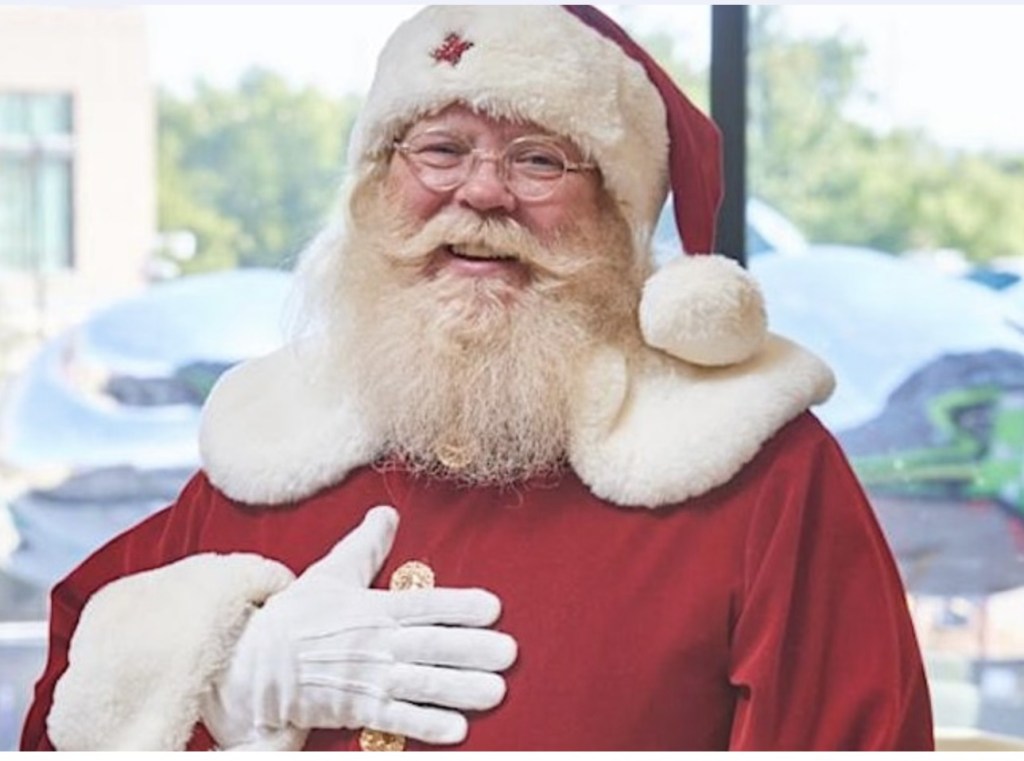
Late that night, a figure appeared on Mrs. Clarabelle’s balcony as snowflakes began to fall. Santa Claus was dressed in red. A twinkle was in his eye. He had a heavy sack slung over his shoulder. He stepped into the cozy living room. The tree’s magic had drawn him there, as it had every Christmas Eve for years.

“Ah, my old friend,”

Santa said, touching the tree’s sturdy trunk.

“How bright you shine, even in a world that’s grown so dim.”

The tree’s ornaments twinkled, and its branches swayed gently as if responding to Santa’s words. The tree couldn’t speak like humans. Its magic allowed it to communicate with Santa. He understood its every rustle and shimmer.

“Yes, I know,”

Santa said, settling into Mrs. Clarabelle’s armchair.

“People have forgotten the spirit of Christmas. Fewer homes are decorated, and fewer hearts are open. It’s as if they’ve lost their way.”

The tree’s lights dimmed momentarily, mirroring Santa’s sadness.

“Do you remember,”

Santa continued,

“When was every street filled with twinkling lights? When children left milk and cookies by the fireplace, and families gathered to sing carols by the fire?”

He sighed, his shoulders drooping.

“Now, so many homes are dark. It’s harder to find my way. And harder still to find the joy I once felt.”

The tree’s glow brightened as if to comfort him. Its magic reached out, filling the room with warmth. It reminded Santa of the countless small acts of kindness that still existed. A child shared their toys with a friend. A neighbor shoveled snow for an elderly couple. A stranger paid for someone’s coffee. Though the world seemed dim, the light of Christmas still flickered in the hearts of many.

Santa smiled, his spirits lifting.

“You’re right,”

He said, his voice steady.

“The spirit of Christmas isn’t gone. It’s just harder to see. But it’s there, in the small, quiet moments of love and generosity.”

He stood, his boots crunching softly on the rug.

“Thank you, old friend. Your light reminds me of why I do this, year after year.”

The tree’s lights shimmered, a silent acknowledgment of Santa’s words.

Before leaving, Santa placed a small, wrapped package beneath the tree. It glowed faintly, infused with his magic.

“For Mrs. Clarabelle,”

He said.

“A thank-you for keeping the spirit of Christmas alive.”

With a final nod to the tree, Santa stepped onto the balcony, his sleigh waiting above. The tree’s golden light followed him, illuminating the city as he soared into the night sky. For a brief moment, every window glowed with its reflection. The people below felt a spark of warmth they couldn’t quite explain.

In Apartment 828B on Floor 39, the tree’s light continued to shine. It served as a beacon of hope in New York City. The city needed it more than ever. And in the hearts of those who paused to look up, the spirit of Christmas found a home once again.

Christmas the Cat: That Lost The Day Of Christmas And Found It All Over Again For Good!

This story is pulled from the archives as a celebration for the season edition.

Groff Media 2024© Truth Endures IMDbPro

Presented by benandsteve.com By: Benjamin Groff II©

3–4 minutes

Christmas was a sleek, white cat with a bright red collar and a tiny bell. He sported one green eye. One eye blue. Christmas twinkles the kids called them. He got his name because he was born on Christmas Eve. Since then, his life revolved around the festive season. He loved the glittering lights and the scent of pine. He enjoyed the rustling of wrapping paper. He cherished the joy he saw in his family’s faces.

Christmas morning, the children had excitedly unwrapped their gifts. Afterward, the family went off to visit relatives. Christmas the Cat had wandered into the pantry. Curious, he batted at a loose box of crackers, which tipped over with a crash. Startled, he darted behind a stack of canned goods. In the commotion, someone closed the pantry door, locking him inside.

At first, Christmas thought this was just an oversight. Someone would open the door soon and scoop him up for a cuddle. But the minutes stretched into hours, and the house grew silent. Panic set in. 

He imagined the family around the table, sharing laughter, turkey, and pie. He pictured the children playing with their new toys. The warmth of the fireplace filled the room. Soft carols were in the air. And here he was, trapped in the dark, with only a box of crackers for company. 

Christmas, becoming convinced it was too late until the family returned that evening. His heart sank as he heard the keys jingle and the front door creak. He sat dejectedly on the pantry floor, his tail curled around him.

“Christmas! Where are you, buddy?” 

Called the youngest child, Emily.

The pantry door swung open, and a flood of light spilled in. Christmas blinked and looked up. Emily scooped him into her arms, covering him in kisses.

“We were so worried!” 

She exclaimed. 

“We couldn’t find you anywhere.”

The rest of the family gathered around, showering him with attention. Despite their love, Christmas couldn’t shake his gloom. He meowed mournfully, his usual purr absent.

“What’s wrong, Christmas?” 

Emily asked, stroking his fur. 

“You’re safe now.”

Her father, overhearing, knelt beside her.

“I think Christmas thinks he missed Christmas Day.” 

He said with a chuckle.

Emily’s eyes widened. 

“Oh no! That isn’t very good. We need to tell him it’s okay.”

She cradled Christmas close and said softly,

“You didn’t miss Christmas, silly kitty. Even if the day is over, Christmas isn’t just one day. It’s about love, kindness, and being together. We can celebrate Christmas every single day.”

He looked up at her, his green eyes shining. The bell on his collar jingled as he rubbed his head against her cheek.

That night, Emily insisted they set up a special celebration for him. They lit the tree again. They brought out leftover turkey for a feast. They even gave him a shiny bow to play with. As Christmas sat in Emily’s lap, batting at the bow, he realized she was right. Christmas wasn’t just about one day. It was about the joy and love that filled the house every day of the year.

Christmas the Cat didn’t fret about the calendar from that moment on. Whether it was July or December, he purred as loudly when the family was together. After all, every day is Christmas as long as there was love.

The Secret Santa of Cordell, Oklahoma

Groff Media 2024© Truth Endures IMDbPro

Presented by benandsteve.com By: Benjamin Groff II©

3–4 minutes

In the small, snow-covered town of Cordell, Oklahoma, Police Chief Eby Don Walters had a secret. Every December, the frost painted the windows and the smell of pine and cinnamon filled the air. During this time, he would don a plush red suit and strap on a padded belly. He transformed into the town’s beloved Santa Claus.

Decades ago, a young Eby Don joined the force. The town’s Santa fell ill just days before the annual Christmas Eve festival. Eby Don, with his deep, booming laugh, twinkling eyes, and short, round build, stepped in. The kids adored him, and the tradition was born, bringing enduring joy to the community.

The children of Cordell adored Santa. They poured their hearts into their whispered wishes. They handed him carefully drawn pictures. They giggled when he joked about knowing if they’d been naughty or nice. Eby Don never broke character. He stayed in character even when his nieces and nephews sat on his lap. Their eyes were wide with wonder.

As the years passed, the children grew up, never suspecting that Santa was their own Chief Walters. Many returned with their kids, eager to introduce them to the magical figure from their childhoods. Eby Don played along. He listened with a warm smile as grown adults recounted their cherished memories of Santa. He waited for the moment when they would discover the truth. Their surprise and delight added to the magic of Christmas.

One Christmas Eve, nearing his sixties, Eby Don felt the weight of the years. The suit fit slightly tighter, and his knees creaked as he crouched to hug the smallest children. Yet, he couldn’t bear the thought of passing the torch. This was his gift to the town, his way of keeping its spirit alive. The Santa suit took a physical toll on him. Despite this, Eby Don continued to wear it. He knew the joy it brought to the children and the community.

That night, a little girl named Emma tugged at his sleeve, her big blue eyes searching his face.

“Santa, will you be here forever?”

she asked.

Eby Don knelt, his voice gentle.

“Santa’s spirit is always here, sweetheart, as long as people keep believing in the magic of Christmas.”

He knew that the belief in Santa was not just about a man in a red suit. It was about the spirit of giving, love, and hope that Christmas symbolizes. It was this belief that kept the Secret Santa tradition alive in Cordell.

The festival ended with the usual fanfare: carols, laughter, and the lighting of the town tree. Eby Don slipped to the small changing room behind the stage, trading his Santa suit for his police uniform. He stepped out into the cold night. The snow fell softly around him. He overheard a group of parents. Some of them were his former ‘kids’. They were talking about how lucky Cordell was to have a Santa who never missed a year. It was a warm and nostalgic end to the festive evening.

Eby Don smiled to himself. They would never know how much those words meant to him. He returned to his patrol car. His heart was as full as the sack of presents he had left under the tree. Chief Eby Don Walters cherished the greatest gift. It was knowing he had brought a little magic into the lives of everyone in Cordell. It was knowing he had brought a little magic into the lives of everyone in Cordell. They never knew the man behind the beard.

🩸 The Making of a Nightmare

When Progress Buried the Past Beneath Big Canyon Lake

By Benjamin Groff II | The Story Teller – benandsteve.com.

3–5 minutes

As The Story Goes –––

No one had seriously thought it would be real. They all thought what they were doing would be forgotten in only a few weeks. But what followed would go on, and on, and on. And not even those with the worst of intentions have predicted the outcome.

It was the summer of 1941, and spring had brought heavy rains to the Big Canyon, flooding the valley below. The farmers had not yet seen the completion of the WPA projects. These projects began in the late 1930s across most of the country. With those projects came new schools, highways, bridges, and community centers. The last of the projects here was the shoring up of valleys. This involved building dams to control runoff waters from creeks, rivers, and streams. When the heavy rains came, the floods were tamed through a spillway cut deep into the earth.

Now that summer was upon them, workers from the CCC and WPA joined forces. They were building what would be known as the Big Canyon Watershed Project. They used mules and draft horses. With these animals, they pulled wedges and plows. The team cleared the valley floor that would soon disappear beneath the rising water. Every blow of an axe and every groan of timber was heard in the thick air. These sounds seemed to signify progress—or so they thought.

The men bunked in rough-hewn cabins and ate in a mess hall that smelled of kerosene and sweat. They joked about ghosts that will one day swim through the drowned cottonwoods or the abandoned family homesteads. But there was one homestead no one wanted to talk about—the Miller place.


The Miller Mystery

The Millers had lived at the base of the canyon for as long as anyone remember. Their house sat crooked beside a spring-fed creek that never dried, even in the harshest drought. Locals said the spring was sacred to the Washita people long before white settlers arrived. When the government bought out the land for the dam, every family took the offered payment—except the Millers.

Old Henry Miller refused to leave. “This land don’t belong to the government,” he told the surveyors. “It don’t even belong to me. It belongs to the water, and she’ll take it back when she’s good and ready.”

They said he vanished one night in late October, just before the final clearing began. The official report listed him as relocated. But the men who worked the next week swore. They heard hammering at night. They saw a lantern flickering deep in the canyon where the Miller house had stood.

When the first rains came that winter, the spillway gates were opened. The lake began to rise. Within days, the Miller place—and whatever was left of it—was gone.


The Haunting of Big Canyon Lake

By the next summer, Big Canyon Lake became a local attraction. Families came from nearby towns to picnic along the shore and marvel at the engineering wonder. Fishermen swore the lake was bottomless. Divers who dared to explore near the old creek bed spoke of hearing faint knocking under the water. It sounded as if someone were still hammering boards together.

A maintenance crew was at the spillway in 1947. They were inspecting it by draining part of the spillway. During the inspection, they found something jammed in one of the lower gates. It was a section of cabin timber—weathered, darkened, with three hand-carved letters burned into it: H. M.

The lake was drained once more in the drought of 1954. When it receded far enough, the foundation of the old Miller place appeared, blackened but intact. And at its center, where the spring once bubbled up, was a hole—dark, deep, and breathing.

No one went near it. The Army Corps sealed the area, and within weeks, the water rose again.


The Nightmare Endures

Locals say Big Canyon Lake is cursed. On calm nights, when the moon hangs over the still water, you can see a lantern light. It flickers beneath the surface. Fishermen have reported hearing someone tapping on their boats, like a muffled warning.

The government calls it folklore.
The people who live nearby call it memory.

As for the Miller land, they say the water finally took it back. It also took the man who tried to keep it.


© Benjamin H. Groff II — Truth Endures / benandsteve.com

When Ghosts Were Celebrated in Homes

By Benjamin H. Groff II

2–3 minutes

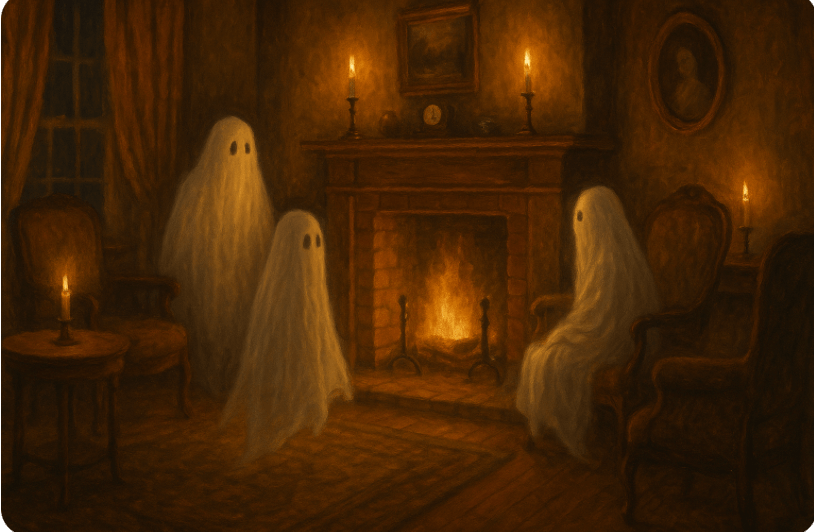
There was a time when ghosts were not feared, but welcomed. Long before the plastic skeletons and fog machines, the presence of the departed inside a home was seen as sacred. It was viewed as even comforting. Hollywood later turned spirits into screams.

In old America, the line between the living and the dead was not sharply drawn. Much earlier in Europe, this line was also blurred. Families left chairs empty at the table for those who had passed. Candles flickered in windows not to frighten away spirits, but to guide them home. A draft whispered through the house. The hallway creaked, or the boards settled. These sounds were spoken of with gentle reverence: “It’s only Mother checking on us.”

Autumn, of course, was the favored season for such visitations. The harvest was done. The air turned cool and thin. This is a time believed to make the veil between worlds soft as gauze. Many homes, especially in rural places, held small gatherings to honor those who came before. Food was left out overnight. The family Bible was opened to the names of the dead. In some corners, the very hearth hosted a spirit or two. They lingered close to the warmth that once gave them life.

Ghosts were part of the household, not intruders. They were reminders — that life continues, even in unseen ways. The wind brushing the curtains or the rocker swaying gently on its own didn’t make people scream. They didn’t call for help. They smiled. They believed their ancestors had found their way home.

It wasn’t until the age of electricity and industrial noise that ghosts were driven out — or at least, ignored. Modern light replaced candlelight, and superstition was traded for science. Yet, as every October rolls around, the scent of woodsmoke returns to the air. We still sense something ancient moving among us. Maybe that’s why we decorate with skeletons and glowing pumpkins — a way, even now, to say: we remember you.

So the old ways weren’t so strange after all. Maybe ghosts were never meant to be feared. Maybe they were simply waiting to be invited back in.


© Benjamin H. Groff II — Truth Endures / benandsteve.com

The Man Who Fell Asleep One Night-Dreaming He Became A Sheriff In The Wild West.

He awakes the next morning to find he is still there.

2–3 minutes

Sheriff Without a Gun

Harold was an ordinary man living in a small house on the edge of town. He spent most of his evenings quietly—reading, cooking for one, and watching old Western movies before bed. One night, after drifting off in his recliner, Harold dreamed he was a cowboy riding across the dusty plains.

When he awoke the next morning, he nearly fell out of bed. The world outside his window was no longer his quiet backyard—it was a wild west frontier town. And tied right outside his kitchen door stood a horse named Gus, saddled and ready. Harold blinked twice, rubbed his eyes, and muttered,

“Well… this is new.”

Stepping outside, he was greeted by the townsfolk calling him Sheriff. Sheriff Harold, that is. The twist? He wore no gun.

“Best sheriff we ever had,”

they cheered,

“because you don’t bring trouble.”

But soon, trouble found them anyway. A group of gunslingers rolled into town, looking to cause mayhem.

Harold had no firearm to fight back. Thinking fast, he filled the pockets of his vest with smooth river rocks. When the gunslingers strutted down Main Street, Harold let fly. Whack—right in the shin—crack—one to the forehead. Pebbles rained down like hail until the bandits doubled over, tears streaming, too humiliated to continue.

Harold yelled –

“You get the hell out of here and don’t come back!”

They scrambled for their horses, chased out of town by the rock-throwing Sheriff himself.

From that day on, Sheriff Harold became a legend. The townsfolk swore he was the greatest Sheriff they’d ever known. This wasn’t because he outgunned the bad guys. It was because he outsmarted them. Every morning, Harold would pat Gus on the neck and tip his hat. He remembered that sometimes the simplest tools—a rock, a clever mind, and a little courage—are enough to keep the peace.

But somewhere else, in another world, Harold lay still. His daughter sat quietly at his bedside, holding his hand, eyes brimming with worry.

“Do you think he’ll ever regain consciousness?” 

She asked the doctor softly.

The doctor shook his head. 

“I don’t know. Stroke victims sometimes choose to stay where they are. Maybe Harold is better off living where he is. In that other place, he’s strong and needed. He is riding tall as Sheriff.”

His daughter squeezed his hand, whispering through tears, 

“Then I hope he knows we’ll always be proud of him—here, or there.”

And in the world of his dreams, Sheriff Harold tipped his hat, smiled, and rode Gus into the golden horizon.


By Benjamin GroffMedia© | benandsteve.com | ©2025 

The Four Magic Words: A Father’s Legacy

2–3 minutes

Ebom Shoobem Shoobem Shoobem

The four magic words a father passed down to his four children. He told them that anytime they were about to face trouble, they should speak those words. The assistance they required would eventually. But only if they took the necessary action for it to occur. 

The words were only to be used when necessary. They should not be used as a want. Use them during a crisis, more than a wish. And a threat to life, rather than a threat to pride. If they ever abused the use of the words, then their special powers would no longer be available to them. The magic words would only be passed on when they reached the age of 18. They needed to have made plans to leave the family home.

The four children had each left their home by the time the father had reached 55 years of age. He had spent a great deal of his life enjoying his time with each of them. Now, he looked ahead to adventuring into his own life. 

The father’s four children carried the words with them into the wide world. Each one held them differently. One tucked them away like a secret prayer. Another spoke them aloud when fear pressed too heavily. A third doubted them but remembered all the same. The fourth treated them like a compass hidden in the lining of a coat.

In time, each child faced a moment that tested the promise of those words. One found themselves stranded in a snowstorm, far from home. Another stood at the edge of despair after losing nearly everything they had built. A third was cornered by deceit, betrayed by someone they had trusted. And the last stood between danger and an innocent life.

In every trial, the magic words did not summon thunderbolts or winged guardians. Instead, they sharpened courage, opened a hidden door, or drew the right ally to their side. The father had spoken true—the words alone were not enough. But when joined with action, with faith, with that one step ahead, help always came.

Years later, when the father’s hair had silvered and his own journeys were slowing, the children returned to him. Around the fire, they told their stories—each different, but threaded with the same truth. The words had worked. This was not because they carried power of their own. Instead, they reminded each child that strength and salvation arrive only when one dares to act.

The father smiled, warmed by both the fire and the glow in his children’s faces. He whispered, almost to himself, “Ebom Shoobem Shoobem Shoobem.” The four children echoed it back, not as magic, but as memory.

And from then on, they knew—the words were not only for escaping danger. They were meant to be carried ahead to their own children one day. The words served as a charm. They also posed a challenge. Help will come, but only if you rise to meet it.


By Benjamin GroffMedia© | benandsteve.com | 2025 

The Merman’s Transformation: Wally Askins’ Final Voyage

GROFF MEDIA 2024© TRUTH ENDURES IMDBPRO

Presented by benandsteve.com By: Benjamin Groff II©s

2–3 minutes

The Merman’s Final Voyage

The Mernan
Wally Askins – The Merman Groff Media©

Wally Askins had spent his life dreaming of the sea. He did not aspire to be a sailor or fisherman, but as something far more elusive—a merman. His belief in the sea was so strong that it seemed to shape his very being. He often spoke of the freedom of the water. It was a world unchained by the burdens of war. It was free from politics and human frailty. He believed neither in heaven nor hell. Still, he knew where he belonged if there was a way to pass into another existence.

His family and friends humored him over the years. They nodded along as he recounted legends of mermaids and mermen. These creatures swam in secret beneath the moonlit waves. Wally passed at seventy-eight. There was no question. His ashes would be scattered in the fabled river he had always spoken of.

On a misty morning, his loved ones gathered at the water’s edge. The river stretched before them like a silver ribbon. It dissolved into the fog. The air was thick, the kind that swallowed sound, leaving only the hush of lapping waves. They carried out his wish with solemn hands, releasing his ashes into the current.

At first, it was just water meeting dust. But then the river stirred.

The mist swirled, deepening, shifting into shapes that moved with intention. A ripple grew into a form—long, sinuous, and glistening like fish scales under moonlight. A figure emerged, half-man, half-sea creature, his eyes glowing with an otherworldly light. It was a sight that left the onlookers breathless, their hearts pounding with a mix of fear and wonder.

Wally Transitions Into A Merman After His Ashes Are Spread
The Merman – The Late Wally Askins Groff Media©

It was Wally.

His beard had turned to strands of seaweed, and his hands webbed like the legends foretold. A great, shining tail flicked behind him, disappearing beneath the water before rising again. The mourners gasped. Their hearts pounded in their chests. They stepped back in awe. Terror filled them at the sight of their beloved Wally transformed into a creature of the sea.

Then, through the thickening fog, a sound echoed—a ship’s bell, distant and struggling. The fog was too dense for a lighthouse beam to cut through. The boat would be lost.

Wally turned toward the river’s mouth, where the sea was called. Without hesitation, he dove ahead, his form shimmering as he swam into the mist. As he did, a soft glow spread in his wake. It was a beacon unlike any other. It guided the ship safely past the unseen dangers lurking in the fog. The sailors, their hearts filled with relief and gratitude, whispered of the merman who had saved them.

From that day on, sailors whispered of a presence in those waters. They spoke of a merman who led lost ships to safety. This happened when lighthouses failed. Some say the river was repaying him for his belief, others that he had found his way home.

His family and friends never spoke of what they saw. Yet, whenever they returned to the river, they would watch the mist. They waited for the shimmer of scales just beneath the surface.

Waiting for Wally.

The Great Dog Escape: A Story of Resourcefulness

GROFF MEDIA 2024© TRUTH ENDURES IMDBPRO

Presented by benandsteve.com By: Benjamin Groff II©s

2–3 minutes

Huey sat in the corner of the kennel, ears perked, eyes darting toward the metal gate between them and freedom. Max, his trusted partner, paced back and forth, tail flicking with nervous energy. Around them, the others—Spike, Bella, and Rufus—pretended to be sleeping, but they were all listening, waiting for the signal.


“Tonight’s the night,”

Huey whispered.

“The screws turn in at nine. We give ’em an hour, then we move.”

Max nodded.

“Bella, you’re on distraction. Get that yapper down the row to start barking. When the guard checks on him, we make our move.”


Bella wagged her tail.

“Piece of kibble.”


Spike chimed in,

“I got the latch covered. I’ve been watching the humans do it for weeks. I think I can pop it.”


“Good,”

Huey said.

“Once we’re out, we head for the back gate. Rufus, you still got that big brute act down?”


Rufus grinned, his jowls flopping.

“One good growl and the yard mutt will scatter.”


The plan was perfect. They had worked out every detail. The humans thought they were dumb dogs, but they’d prove them wrong tonight.


The lights went out, and the night settled over the pound. A low growl rumbled from the cage at the far end. Right on cue, the little yapper started up. Bella joined in, then Spike, then the whole row. Sure enough, heavy boots clomped down the hall. The guard muttered something about “dumb mutts” and stomped off to quiet them down.


“Go time,”

Huey whispered.


Spike reached through the bars, jiggling the latch—a click. The gate swung open. One by one, they slipped out, moving fast and low, paws silent on the concrete. They were almost to the back gate when Max skidded to a stop.


“What is it?”

Huey hissed.


Max’s eyes gleamed in the dark. His tail quivered.

“Bone.”


Huey sighed.

“Forget it, we gotta—”


“Bone,”

Max repeated, but the others saw it, too. A big, juicy, perfectly gnawed bone, lying right there, almost like fate had placed it in their path.


Rufus whined.

“It’s beautiful.”


“No time!”

Huey barked.

“We gotta go!”


Max, still, had already lunged for it. Spike growled, trying to shove him aside. Bella snapped at them both. Chaos erupted. Snarls and yips filled the air.


Lights flicked on. A door slammed. The humans were coming.


“Run!”

Huey yelled, but it was too late.


A net came down over Rufus. Bella yelped as a leash snapped around her neck. Huey dodged left, but a firm hand grabbed his collar.


Max? He was still chewing.


The next day, they sat in their cages, tucked tails, watching the humans talk about “bad dogs” and “extra security.”


Max sighed, staring at the bone still sitting outside the fence.

“Worth it.”


Huey groaned.

“Next time, we leave you behind.”


But they all knew there would be a next time. Because a good dog never quits, and a great dog always has another plan.

The Legend of the Wishing Tree: A Magical Tale

GROFF MEDIA 2024© TRUTH ENDURES IMDBPRO

Presented by benandsteve.com By: Benjamin Groff II©s

1–2 minutes

Deep in the heart of the Whispering Wood stood an ancient oak known as the Wishing Tree. Its gnarled branches stretched toward the heavens. The tree’s roots twisted deep into the earth. The soil received whispering secrets from it.

The legend passed from generation to generation. It told of the tree’s magic. The tree would grant a single wish to those who truly believed.

Many travelers sought the Wishing Tree. Only a rare few with pure hearts and sincere desires ever found it. The forest guided them. The wind carried soft murmurs. These murmurs led them down winding paths until they stood before the towering oak. Beneath its emerald canopy, the air shimmered with an almost otherworldly glow.

One such seeker was a young girl named Elara. She had heard the tales from her grandmother, who had once made a wish upon the tree as a child. With hope in her heart, Elara ventured into the forest. She followed the rustling leaves and the whispering wind. Soon, she stood before the grand tree.

Kneeling upon the moss-covered roots, she closed her eyes, her heart beating with anticipation, and whispered her wish.

“I wish for our village never to go hungry again.”

Elara’s voice carried the hope. It also carried the love of her people.

The tree remained silent, its leaves barely stirring. But then, a single golden acorn dropped into Elara’s hands. She gasped as warmth spread through her fingers.

Understanding the tree’s silent message, she carried the acorn home and planted it in the center of her village.

Days turned to weeks, and soon, a miraculous tree sprouted. Its branches bore fruits of all kinds—apples, pears, oranges, and even wheat grains. The villagers rejoiced, their hearts filled with joy and relief, never knowing famine again. Elara knew, in her heart. Now a guardian of the magical grove, she understood that belief and kindness were the magic behind the Wishing Tree.

And so, the legend continued, whispered among the trees, waiting for the next believer to find their way.

Ramone’s Lonely Adventure: A Tale of Discovery

GROFF MEDIA 2024© TRUTH ENDURES IMDBPRO

Presented by benandsteve.com By: Benjamin Groff II©s

4–6 minutes

Ramone was not supposed to go to town without his older siblings. Nonetheless, he felt he had to on this day. He had awoken without finding anyone in his home. The house was empty. The animals had disappeared. Even the dogs were not there. They typically stayed at home when everyone had to go to work. 

Ramone was alone. There was no reason he knew of for this. The boy had woken up in a strange place. He was stuffed under a bed and pushed between a bed and the wall. He thought he must’ve had a dream and wandered there. Why else would he be in such a place? Ramone was never left alone and was beginning to worry something terrible had happened.

Ramone crawled out from under the bed, his heart thumping in his tiny chest. He rubbed his sleepy eyes, trying to make sense of the eerie silence around him. The morning light poured through the cracked window. Yet, the house felt different. It was empty and hollow as if no one had been there for a long time.

He ran to the kitchen. He expected to see his mother at the stove. He also thought his older sister would scold him for being late for breakfast. Instead, the table was bare. There was no food, no dishes, nothing. He called out, his voice small against the stillness.

“Mamá?”

No answer.

He hurried outside, stepping onto the dusty ground with bare feet. The corral was empty. The goats, the chickens—gone. Even the dogs that always lounged in the shade were missing—a lump formed in his throat. Something was wrong.

Ramone had often been told not to go to town alone, but fear overpowered any thoughts of disobedience. If his family wasn’t home, maybe they had gone to town for help. He had to find them.

He slipped on his too-big sandals and started down the narrow dirt path that led to town. The sun was climbing higher, and the heat pressed against his small frame. The closer he got to town, the more his stomach twisted.

Something felt –– off.

When he reached the outskirts, he stopped. The usual chatter of morning markets and passing cars was missing. The streets were strangely quiet. Shops stood open, but no one was inside. Tables were set with half-eaten meals as if people had left in the middle of breakfast.

His breath came in quick gasps. His family wasn’t there.

No one was.

Ramone was alone in an empty town.

And then, a sound broke the silence from somewhere down the street—soft, slow footsteps echoing against the abandoned buildings.

Someone was coming. The footsteps became louder. It became clear that a cart being pulled by a donkey was coming around the corner. But there wasn’t a person with it.

Ramone’s heart pounded in his chest. The cart rattled onward, its wooden wheels creaking against the empty street. The donkey plodded ahead, its ears flicking as if listening for a command that would never come.

But there was no driver.

Ramone took a step back, his tiny hands trembling. His words from the day before echoed in his mind. He yelled words after getting into trouble for mischief that had found its way into his life.

“I wish I was the only person in the world!”

Had he wished for this? Had his anger somehow made it real?

His legs felt heavy as if the ground itself wanted to pull him down. He turned in circles, hoping—praying—to see someone step out of a doorway or call his name. But no one did.

Tears welled in his eyes. He hadn’t meant it. He didn’t want to be alone.

The cart rolled past him, and the donkey’s slow, steady steps were the only sound in the world.

Ramone squeezed his eyes shut, shaking his head.

“Wake up, wake up!” 

He whispered, pressing his fists against his temples. 

“This has to be a dream.”

He forced his eyes open.

The town was still empty.

He ran, his sandals slapping against the dusty road. He ran past the silent market. He ran past the still houses. He passed the church where the bells should have been ringing. But they weren’t ringing.

And then—he saw his home.

It looked just as he had left it. The door was slightly open, swaying in the wind.

He rushed inside, desperate. 

“Mamá!”

he cried.

“Papá! Anybody!”

Silence.

Ramone stumbled into his room, his breath coming in sharp gasps. The bed was there. The blankets were rumpled as if someone had pushed them aside in the middle of the night.

His knees buckled, and he collapsed onto the mattress. He curled up, his tiny body shaking.

“I take it back,” 

He whispered into the fabric. 

“I don’t want to be alone. I want my mamá. My papá. My sisters. Please…”

The weight of exhaustion pressed down on him, his eyelids growing heavy. The room began to spin, the world around him fading into darkness.

Then—

A voice.

Soft. Familiar.

“Ramone? Mijo, wake up.”

His eyes fluttered open.

The morning light streamed in. Ramone’s mamá stood over him, her warm hand brushing his forehead. From the kitchen, he heard his sisters laughing, the clatter of dishes, and the barking of the dogs outside.

His heart leaped.

It was just a dream.

It was a terrible, lonely dream.

Ramone threw his arms around his mamá, holding onto her tightly.

She chuckled, stroking his hair. 

“What’s gotten into you, mi niño?”

Ramone didn’t answer. He just held on, knowing that, no matter what, he would never wish to be alone again.

When Time Stopped: A Tale from Briar Hollow

GROFF MEDIA 2024© TRUTH ENDURES IMDBPRO

Presented by benandsteve.com By: Benjamin Groff II©s

2–3 minutes

It happened at precisely 3:17 p.m. on a warm autumn afternoon. The town of Briar Hollow had always been a quiet place. The most exciting event of the week was the arrival of fresh pies at Millie’s Diner. But on this particular day, something changed. Time stopped.


No one saw it happen. There was no flash of light, and there was no tremor in the ground. One moment, the clock on the courthouse tower was ticking as usual, and the next, its hands were frozen. Birds hung motionless in the sky, leaves hovered mid-fall, and the wind seemed trapped.


At first, the townsfolk didn’t notice. Old Mr. Grady blinks in confusion halfway through handing change to a customer, as the coins refuse to drop from his fingers. Sarah Porter had been driving to the grocery store. She finds her car inexplicably locked in place. The engine still hums. Children at the playground hang in mid-swing, their laughter caught in their throats.


And then, they noticed each other. Wide eyes met, tentative steps were taken, and panicked voices rose into the still air. The world had paused, yet they remained unstuck, the only things moving in a town frozen in time.


The local librarian, Maggie Holcomb, was the first to suggest that something bigger was at play.

“This isn’t just a power outage,”

she murmured, staring at the unmoving second hand of her wristwatch.

“This is…impossible.”


Hours passed, though the sky did not change. The sun remained where it was, suspended in golden radiance. Some tried to leave town, only to find that the roads looped them back to the center. Others attempted to wake those frozen, but their efforts were in vain. The townsfolk, once filled with panic, began to feel a creeping sense of fear. Fear turned to despair, and then—acceptance. Their emotional journey mirrored the strange stillness that had befallen their town.


The people of Briar Hollow, despite the unchanging world around them, learned to adapt. They still spoke, ate, laughed, and cried. Days passed, though they had no real way to count them. And just when they resigned to this strange eternity, the clocks began to tick again. Their resilience in the face of the unknown was a testament to the human spirit.


It was as sudden as it had started. The coins fell from Mr. Grady’s hand, Sarah’s car lurched ahead, and the children’s laughter resumed mid-breath. The world snapped back into motion, unaware that it had ever paused.


Yet, the people of Briar Hollow knew. They would never forget that strange day when time stopped. It was an even stranger feeling that just, it had been watching them.

Juniper and Luma: A Tale of Unlikely Friendship

GROFF MEDIA 2024© TRUTH ENDURES IMDBPRO

Presented by benandsteve.com By: Benjamin Groff II©s

1–2 minutes

The Fox and the Firefly

The trees hummed with the wind in the Whispering Woods’s heart. The moon painted silver on the forest floor. There lived a fox named Juniper. She was sleek, clever, and always alone. Other animals whispered about her, calling her a trickster, a thief. She had learned that being alone was more manageable than fighting their expectations.

One evening, a tiny glow flickered near her nose as she padded along the riverbank. A firefly, tiny and trembling, hovered in the air.

“You’re in my way,”

Juniper said, flicking her tail.

“I’m lost,”

The firefly admitted its light dimming.

Juniper sighed.

“Lost? How do you lose your way when you can fly?”

The firefly hesitated.

“I followed my friends, but the wind carried me away.”

Juniper should have walked on. She wasn’t the type to help. She had grown used to being alone, and companionship was foreign to her. But something about the firefly’s quivering glow made her pause.

“Fine,”

She said,

“I’ll help you, but only because I know these woods better than anyone.”

The firefly buzzed with gratitude.

“Thank you! I’m called Luma.”

For the first time in a long while, Juniper felt a glimmer of companionship. As they traveled together, Luma lit the dark paths. She guided Juniper through the thickest parts of the forest. Juniper used her sharp nose to avoid danger.

They spent the night talking. Luma didn’t fear or expect her to be anything other than what she was.

By dawn, they reached a clearing filled with twinkling lights—Luma’s family.

“Stay,”

Luma said.

Juniper almost did. But she was a fox, a creature of the earth, and Luma belonged to the sky.

Still, as she turned to leave, Luma promised,

“Whenever you walk the woods at night, look for my light. You’ll never be alone.”

And so, every night, as Juniper wandered, a tiny flickering glow followed her—an unlikely friendship that lit the darkness forever.

The Cat Who Became King: Whisker’s Tale

GROFF MEDIA 2024© TRUTH ENDURES IMDBPRO

Presented by benandsteve.com By: Benjamin Groff II©s

2–3 minutes

“Whisker the Magnificent: The Cat Who Became King”

In the grand kingdom of Eldoria, mighty kings and queens ruled vast lands. No one ever expected their next ruler to be ––– a cat.

It all began when King Aldric, the last of his line, passed away without an heir. The kingdom was chaotic, for the noble families all vied for the throne. Arguments broke out, alliances crumbled, and the land teetered on the brink of war.

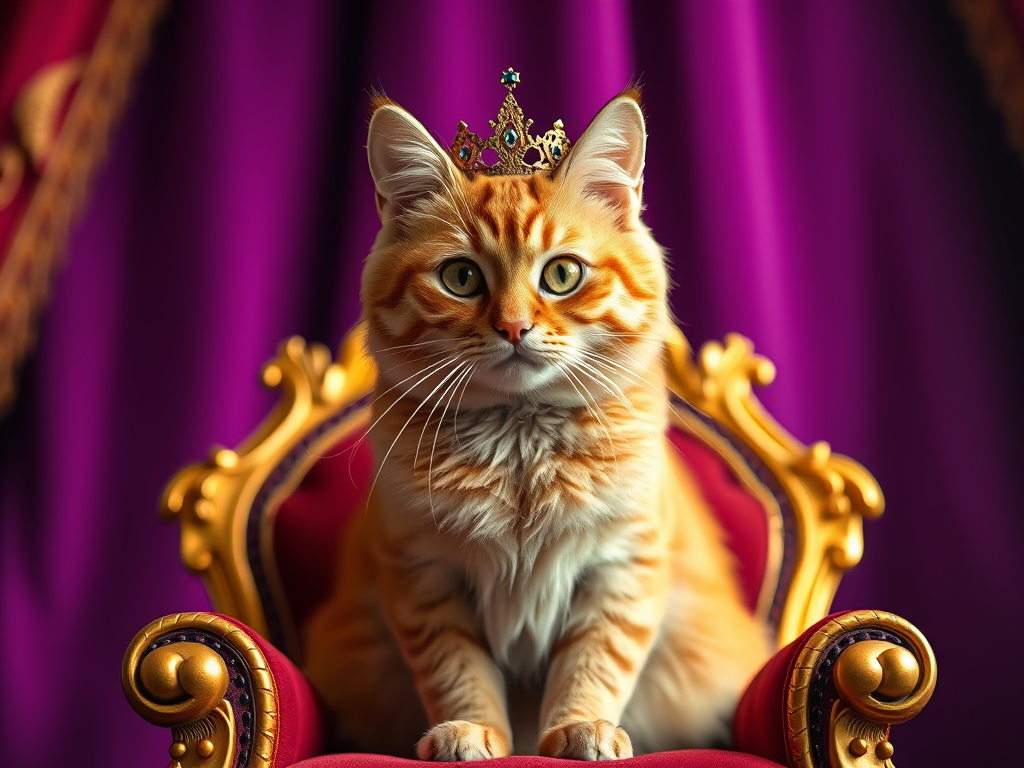
Amid this turmoil, a small, scruffy cat named Whisker roamed the royal palace. He had been the late king’s favorite pet. Whisker was a feline of unusual intelligence. His golden eyes seemed to see into a person’s very soul. Whisker spent his days lazily lounging on the throne as if he already owned it.

One day, the nobles gathered to decide the fate of the kingdom. The council was about to descend into another shouting match. Then Whisker leaped onto the great table and let out a commanding “meow.”

The room fell silent.

The royal advisor, an old and wise man named Cedric, chuckled. “This cat would make a better ruler than squabbling fools.”

The nobles laughed, but then a curious idea took hold. Whisker had lived in the palace for years, witnessing political games and royal affairs. He had a knack for knowing which people were trusted, often hissing at schemers and rubbing against the kind-hearted. What if –– what if fate had chosen him?

The High Priest of Eldoria, known for interpreting omens, declared, “The gods often choose the least expected. This feline is their will made manifest.”

And so, as a jest at first, they crowned Whisker with a tiny golden circlet. But what began as a joke soon became a tradition. Now known as –– King Whisker the Magnificent ––, he was placed on the throne. His presence alone brought peace, for no noble dared question his rule—after all, who argues with a cat?

Of course, Whisker did not speak, but he ruled in his way. When matters of state were brought before him, he would purr to show approval. If he disapproved, he would flick his tail and walk away. If a noble displeased him, he would swat their hand with his paw. Soon, even the most corrupt learned to fear his judgment.

Under King Whisker’s reign, Eldoria flourished. The land was peaceful, trade thrived, and justice prevailed. The people adored their feline ruler, leaving out bowls of milk and fish in tribute.

Years passed, and when Whisker finally passed into legend, a statue was erected in his honor, inscribed with the words:

“He ruled with wisdom, claw, and whisker.”

And so, Eldoria remained a land where, for one golden age, a cat had indeed been king.

Life Lessons from a Skunk: Trust and Taking Chances

GROFF MEDIA 2024© TRUTH ENDURES IMDBPRO

Presented by benandsteve.com By: Benjamin Groff II©s

3–5 minutes

It was an old house on the southeast side of town. The floorboards creaked. The front porch sagged just a little in the middle. Jeb and Lorine lived there with their giant Boxer. The dog was as broad as a barrel. He was just as heavy when he flopped into your lap.

At five years old, Tim sometimes spent his afternoons there, waiting for his dad to pick him up. He had just started kindergarten and hated school—not just kindergarten, but the whole idea for the next twelve years. The only good thing was that, for now, Tim only had to go until noon. Then, most days, he’d end up at Jeb and Lorine’s, where things were much more enjoyable.

One thing about their house always intrigued Tim: the mysterious knocking and pounding under the floor. It was a constant occurrence as if something—or someone—was moving beneath them. Tim had been taught not to be rude and ask questions in other people’s homes. He sat quietly, but his mind was buzzing with curiosity.

Maybe it was the bees. Jeb had a beehive in the backyard and collected honey from it. Tim imagined a massive honeycomb hidden under the house, so big that its weight made the boards creak. He pictured golden honey dripping through the cracks in the floor. But no, that didn’t explain the noise. The sound traveled, shifting from one end of the house to the other.

One afternoon, while playing in the backyard, Tim noticed a small fence blocking off a crawl space beneath the house. It was big enough to hold an animal—maybe even a dog. But why would Jeb fence it off? Was he trying to keep something out? Or ––– keep something in?

Curious, Tim dropped to his hands and knees, peering into a dark hole in the foundation. He squinted, trying to make sense of the shadows. Suddenly, two glassy eyes stared back at him. A jolt of surprise went through his body.

Tim let out a startled yelp and scrambled backward his heart racing. He barely managed to stop himself from swearing in shock.

“WHOA! HOLY COW!”

The eyes moved closer, emerging from the darkness. Tim’s breath caught as the creature stepped into the light.

“A SKUNK!”

He shot to his feet and bolted inside, bursting into the living room where Jeb and Lorine sat.

“There’s a skunk under your house!” he gasped. “You gotta get a shovel—hit it over the head! It’s living under there!”

Jeb and Lorine burst into laughter.

“You met Johnny,” Jeb said, shaking his head. “He’s a buddy of mine. Come on, I’ll let you hold him.”

Tim’s eyes widened.

“Hold him?! Are you crazy? He’ll spray us!”

Jeb chuckled.

“No, he won’t. Johnny had his scent glands removed when he was a baby. He can’t spray.”

His words were like a soothing balm, calming Tim’s nerves.

Tim hesitated, his skepticism clear.

“How can you be so sure?”

He asked, his voice tinged with doubt.

“Because I raised him,” Jeb said, standing up. “Found him in my barn after his mama got hit by a car on the highway. Watched that nest for days, but she never came back. He would’ve died if I hadn’t taken him in.”

Tim followed Jeb outside, still wary. The last thing he wanted was to go home reeking of skunk.

Jeb knelt by the crawl space and softly said,

“Johnny, Johnny, come on out, boy.”

Tim tensed as the skunk waddled into view, its black-and-white fur gleaming in the afternoon sun.

Jeb looked at Tim and grinned.

“Son, I know what you’re thinking. Life’s about trust, taking chances, and finding things out for yourself. You can do all three right now.”

Tim swallowed hard, debating. Does he trust this?

Taking a deep breath, he held out his arms.

Jeb carefully placed Johnny in his hands, and Tim braced himself for the worst. Johnny curled against his chest, nestling under his chin like a kitten. His friendly demeanor melted Tim’s apprehensions.

Tim stood there, stiff at first, then slowly relaxed. The skunk was warm, soft, and oddly ––– pleasant.

After a few minutes, Jeb patted Tim’s shoulder.

“That’s good now. Johnny must return inside, and your daddy’ll be here soon.”

Tim handed Johnny back and followed Jeb into the house. As he sat on the couch, he waited for his dad. He thought about what Jeb had said. It was about trust, taking chances, and learning things for yourself.

When his dad pulled up, Tim climbed into the truck. As they pulled away, his father wrinkled his nose.

“What have you been doing?”

He asked.

“You smell like a skunk!”

Tim just grinned. And said –––

“I’ve been taking a chance on trusting people and other things and learning things for myself.”

Loneliness and Connection: The Maple and the Crow

GROFF MEDIA 2024© TRUTH ENDURES IMDBPRO

Presented by benandsteve.com By: Benjamin Groff II©

2–3 minutes

The Maple and the Crow

In the quiet corner of Oakridge Park stood an old maple tree. Its branches stretched wide, offering shade to picnickers in the summer and a golden glow in the fall. 

It had seen many seasons pass and many creatures come and go, yet it always felt lonely. It never had a friend to share its days with.

Then came the crow.

The bird arrived one blustery afternoon, perching on the maple’s lowest branch with a ruffled look. Its wing drooped slightly, and its usual subdued sharp claws.

“Shoo!” 

The tree whispered as the wind rustled through its leaves. It was not quite ready to accept this new presence in its life.

But the crow did not move.

Day after day, the crow lingered. 

Caw Caw!

It hopped from branch to branch, picking at the bark, watching the world below. It cawed at passing dogs and tilted its head at children chasing kites.

“Why are you still here?” 

The maple finally asked.

“Nowhere else to go,” the crow replied. Its voice carried a hint of resilience. The tree had never heard this before.

The crow replied.

For the first time, the tree understood what it meant to be lonely. The Maple had never considered this feeling before. The sun rose, the rain fell, and its roots dug deep. But watching the crow, it felt something new—a quiet companionship.

The maple began to enjoy the crow’s presence. It let its leaves shiver in the wind to make music for the bird. When the crow felt strong enough to fly, it still returned, perching in the same spot.
Seasons passed. The maple grew older, and its branches were not as strong as they once were. But the crow remained. It brought stories of faraway places. These places had mountains that touched the sky and rivers that sang in the moonlight.

And when winter came, and the tree stood bare, the crow nestled close against its trunk.

“I will stay,”

 The crow promised.

“I know,”

The maple replied.

And so they remained, an old tree and a watchful crow, an unlikely friendship rooted in time.