From Hauling Oranges to Inspiring a Movement

2–3 minutes

The Brothers and the Orange Truck

Groff Media2025© BrotherTruckers

Eddie and Carl had always been close, but nothing tied them together like their truck. A massive eighteen-wheeler, shining chrome dulled by road dust, it was both their livelihood and their burden. They’d gone deep into debt to buy it. They hoped to build their hauling business around orange deliveries from the groves in California.

But the payments ate away at every mile they drove.

Even with steady work, the numbers never added up. So they tried to get clever. They began running side jobs—hauling crates of produce, lumber, even furniture—between their orange routes. One drove while the other slept. Their heads were propped against the hard cab window. They woke with stiff necks that seemed to worsen each week. 

“Just a few more years,” 

Carl would mutter. 

“We’ll get ahead.” 

Eddie always nodded, though neither believed it completely.

Then the crisis hit. On a rain-slicked highway outside Phoenix, a sudden shudder ran through the truck. Eddie, at the wheel, felt the steering go slack. He fought the wheel, but the trailer jackknifed, scattering oranges across three lanes of traffic. By some miracle, no one was killed—but the damage was catastrophic. Their load was ruined, the rig torn apart, and the trucking company that contracted them pulled their work instantly.

The brothers sat on the shoulder. They were soaked in the rain. They watched cars crunch over the fruit they had worked so hard to deliver. They thought it was the end.

But in the weeks that followed, something unexpected happened. Photos of the accident—highways littered with smashed oranges, drivers climbing out to help clean up—went viral. 

Reporters picked up the story of the brothers who worked around the clock. Their necks were stiff, and their wallets were thin. They were just trying to get ahead. 

Sympathy poured in. A crowdfunding campaign was launched. And soon, Eddie and Carl weren’t just hauling oranges anymore. They were speaking about small-town grit and about persistence. They talked about what it meant to keep pushing ahead when the load was too heavy.

The truck nearly broke them. The crisis almost ruined them. In losing everything, they discovered something bigger. They found a community that believed in them more than they had ever felt in themselves.


By Benjamin GroffMedia© | benandsteve.com | ©2025 
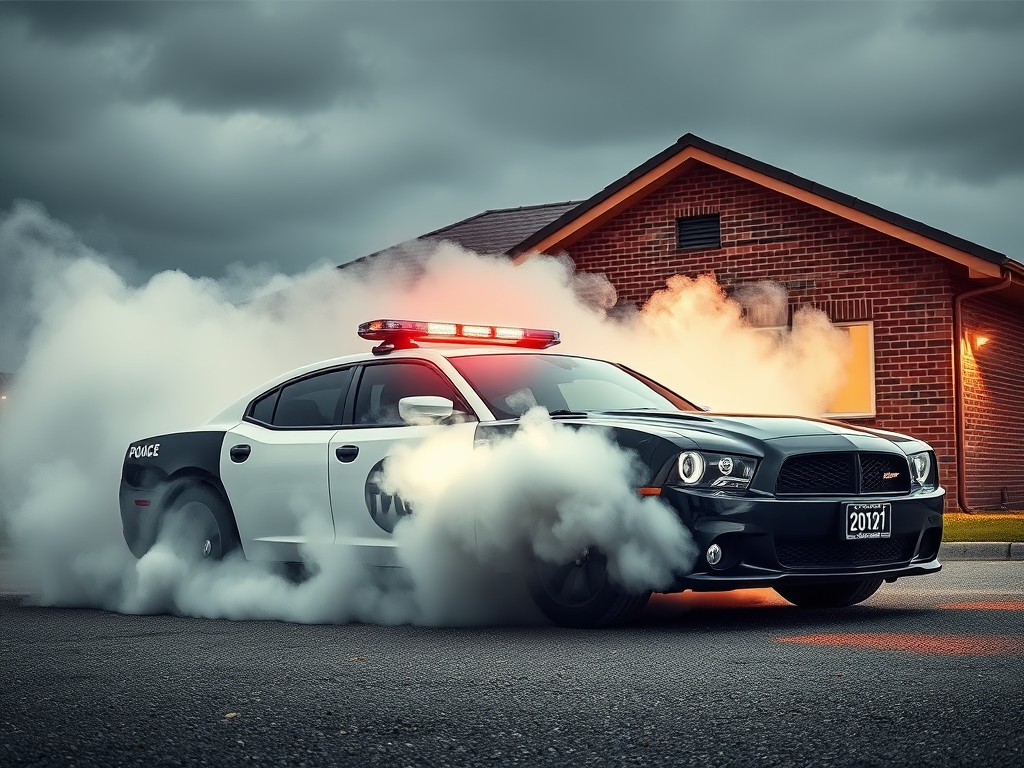
Henry’s Midnight Firestorm A Cloud Of Dust And Mistrust

2–3 minutes

Henry’s Midnight Firestorm

Henry had been laying low for months. He wasn’t exactly on the best terms with the brass at his small police department. He’d been on the midnight shift so long, most people in town barely remembered he worked there. To entertain himself, he left funny notes about the place signed “John Henry.” The detective division took six months to figure out who was behind the jokes. They learned the truth only by accident.

Henry confessed to one of the detectives during a neighborly beer session. The young detective was desperate for some action. He had gone a year without a single arrest. He thought maybe Henry can teach him a thing or two. Henry didn’t hold back: “For starters, I’m not sitting on my ass in the office for eight hours.” It stung. The detective had only one unit in his division. His wet-hen supervisor kept him glued to a desk. Henry, on the other hand, led the department in felony arrests for two years straight. His bluntness was legendary, especially among supervisors who loved to hate him.

But it was what happened at 3:00 a.m. one night that sealed Henry’s reputation. He pulled his black-and-white patrol unit up to the north entry door of the station. He wanted to check his oil. He also wanted to check his transmission fluid. Both were low. As he topped the transmission, some spilled onto the exhaust pipes and burst into flames. In seconds, the underside of the cruiser was lit up like a bonfire. Henry shouted, “Shit! Shit! Shit!” sprinted inside, grabbed the fire extinguisher, and went to work.

The flames went out. A massive cloud of extinguisher powder billowed everywhere—under the car, across the pavement, and straight into the police department itself. The breathalyzer, computers, and half the office equipment were dusted in a fine white film. To anyone walking in, it looked like a cocaine snowstorm had blown through the station.

Henry realized it would take 18 hours to clean, and he wasn’t about to spend his shift playing janitor. He called to a cat he saw over in a alley way. It came to him. He picked it up and threw it into the station. Then he rolled the extinguisher across the floor causing it to seem that it had knocked over. He dusted off his hands and thought: “Shit happens. Things happen. And I’ll be in the far south district when they find this mess.” shut and locked the door and headed south. And that is where he was at 0800. Day shift radioed saying they were 10-8. Henry replied, good I am Ten Dash Seven!

To this day, no one ever heard the story—until now. The Cat? No one ever mentioned it again!


By Benjamin GroffMedia© | benandsteve.com | 2025 

Speeding Into Mortality – A Story About One Land Speed Crew And It’s Driver’s Impermanence

2–3 minutes

A driver aimed to set a land speed record. He was going 283 mph during a racing event at Utah’s famed Bonneville Salt Flats. He died August 3rd, 2025, after losing control of his rocket-like vehicle called the Speed Demon, organizers said.  The team had got detoured due to traffic lanes being improved. They and others would arrive late to the event.

Driver Chris Raschke

Driver Chris Raschke lost control about two and a half miles into a run. He was treated by medical professionals at the scene, but died from his injuries. The Southern California Timing Association has organized the popular land-speed racing event. This event is known as “Speed Week” and has been organized since the late 1940s. 

For decades, the flat, glasslike white surface has drawn drivers from all over. They seek to set new land speed world records. Motorcycle and car fans come to watch. The salt flats are a remnant of a prehistoric lakebed. They are about 100 miles (160 kilometers) west of Salt Lake City. They have also been a backdrop for movies like “Independence Day” and “The World’s Fastest Indian.”

Read the full story here…

There is a question to be answered; why wasn’t there something soft for the man to land on? Case in point, a bouncy house, there is something soft. It would need to be ten or twenty fold. So, when his car popped off course, it would have bounced around the desert without killing anyone. Which is obvious to anyone looking at the desert.

For decades, people have used the flat, glasslike surface at Bonneville Salt Flats. It is located 100 miles (160 kilometers) west of Salt Lake City. They use it to set speed records, sometimes topping 400 mph (644 kph). Speed Week has long been a draw for motorcycle and car fans.

Raschke, 60, drove a streamliner. This long, narrow, aerodynamic car was made to run at high speeds and was known as the Speed Demon. He had worked in motor sports for more than four decades.

According to the Speed Demon racing team’s site, Raschke worked at the Ventura Raceway in the early 1980s. He raced 3-wheelers and cars in the mini stock division. Raschke learned to fabricate and keep race cars when working with an acclaimed engine builder. He later became a driver for the Speed Demon team. 

Keith Pedersen, the association’s president and Speed Week race director, said Raschke was a respected driver within the racing community. He also worked for a company that makes fasteners for race cars.

“He is one of the big ones. He had done all sorts of racing,” Pedersen said.

The Race Week event began on Saturday and runs through Friday. Are you in The Phoenix metro area and want to see vehicles passing the set speeds. All you have to do is drive on any of its freeways. And be safe!

To read the original report from visit here

Midnight Drives: A Journey of Freedom and Reflection

GROFF MEDIA 2024© TRUTH ENDURES IMDBPRO

Presented by benandsteve.com By: Benjamin Groff II©

1–2 minutes

The Open Road at Midnight

For Jake, the best time of his life wasn’t marked by grand achievements or milestones. It wasn’t a wedding, a promotion, or a once-in-a-lifetime trip. It was far more straightforward—something that came in the quiet hours when the rest of the world seemed to sleep.

He lived for those midnight drives. The highways stretched out before him like ribbons of endless possibility, empty and open beneath the glow of streetlights. There was something sacred in those moments. He would roll the windows down and let the wind rush in. It carried away the day’s weight. The music was always loud—classic rock, country, sometimes blues—whatever fit the night’s mood.

With no destination in mind, Jake would drive. Sometimes, it was the backroads, where the stars shone brighter than the city’s glow. Other times, it was the interstate. The hum of his tires and the engine rhythm became part of the melody.

Those drives were freedom and escape. There were also the rare moments when Jake’s thoughts never became tangled in the past or anxious for the future. He wasn’t Jake, the overworked employee, or the guy who never quite figured things out. He was just a man, a car, the night, and the music.

One night, he pulled onto a deserted stretch of highway. The wind whipped through his hair. Tom Petty’s Runnin’ Down a Dream poured from the speakers. He pressed the gas just a little harder. He felt the weightlessness of it all. He experienced a unique peace. No one was around to remind him of the world’s expectations.

He wished he had bottled that feeling—the weightlessness and possibility. The night seemed to whisper that everything would be okay, even if it wasn’t.

But maybe that was the beauty of it. It wasn’t meant to last forever—just long enough to remind Jake of what it felt like to be alive.