Santa’s Mission of Love

This story is pulled from the archives as a celebration for the season edition.

Groff Media 2024© Truth Endures IMDbPro

Presented by benandsteve.com By: Benjamin Groff II©

3–4 minutes

In the heart of a frosty December, Santa Claus sat in his workshop. His eyes scanning the pages of his magical list. It was a heavy year; kindness seemed scarce, and the world became fractured in ways he hadn’t seen before. One town in particular tugged at his heartstrings—Silver Pines, nestled in the Appalachian Mountains. Its beauty hid a darker reality. The LGBTQ+ community, especially gay individuals, faced judgment and outright abuse. Yet, in the face of such adversity, they showed remarkable courage. Letters from people in Silver Pines painted a picture of sorrow, isolation, and a longing yet to be seen.

Santa set down the list with a deep sigh. “No mistakes,” he whispered, stroking his snowy beard. It was a mantra he had held onto since the dawn of time. Every soul was crafted perfectly. Its existence was a thread in the fabric of humanity. His mission was to remind others of this truth.

The night of Christmas Eve was crisp, the air biting but alive with the hum of anticipation. Santa’s sleigh cut through the sky, its bells jingling softly. His bag was lighter than usual. It was not because he carried fewer gifts. His offerings weren’t wrapped in paper this year.

He landed in Silver Pines just past midnight, his boots crunching on the snow-covered streets. Despite the hour, the town was still. He began his journey with his signature magic. He quietly stepped into homes where letters had been written. He spread warmth and comfort to those who needed it most.

At the tiny home, Santa left a handwritten note. Liam and Paul were a gay couple who had faced the brunt of the town’s scorn. It read:

“You are seen. You are loved. You are perfect as you are.”

In another house, a young teen named Oliver found a shimmering snow globe under his tree. He had been wrestling with the fear of coming out. When he shook it, it revealed a rainbow that shimmered against the glass, and inside, a message:

“Your truth is your strength. The world needs your light.”

Throughout the night, Santa wove love into every corner of Silver Pines. He touched the hearts of allies, planting seeds of courage to stand against hatred. He left dreams of acceptance in the minds of those who harbored prejudice. His gifts weren’t toys or trinkets. They were powerful reminders of humanity’s shared essence. Each one carried the potential to transform hearts and minds.

By dawn, the town began to stir. Liam and Paul awoke to find the note, their hearts swelling with hope they hadn’t felt in years. Oliver clutched his snow globe, feeling a new resolve to embrace who he was. The day unfolded slowly. The spirit of Santa’s gifts began to ripple. This ripple ignited a wave of change. This wave would soon engulf the entire town.

People who had once turned away from their neighbors now questioned their biases. Conversations began, tentative at first but growing bolder with time. Acts of kindness, like inviting a marginalized individual to a community event, replaced judgment, and barriers began to crumble.

Santa watched from a distance, his eyes twinkling. The journey wasn’t over—true change would take time—but the seeds had been planted. As he climbed back into his sleigh, he whispered into the cold morning air:

“There are no mistakes in my Father’s design. Love is the gift I give, but it is also the gift you must carry ahead.”

And with that, Santa soared into the sky, his mission not finished but well underway.

The Year Joey And Jimmy Saved Christmas

This story is pulled from the archives as a celebration for the season edition.

Groff Media 2024© Truth Endures IMDbPro

Presented by benandsteve.com By: Benjamin Groff II©

3–5 minutes

Joey and Jimmy McAllister were known in the little town of Maple Hollow for their endless mischief. Like clockwork, Santa’s naughty list bore their names in bold, red ink every year. The brothers raided the cookie jar before dinner. They set off firecrackers in the backyard. They also sneaked frogs into their teacher’s desk drawer. The brothers always found trouble. Trouble always found them.

But this year was different. Something strange was happening in the McAllister household. Joey and Jimmy were behaving like angels. They shared their toys, completed their chores without being asked, and even helped old Mrs. Henshaw carry her groceries home. The town was surprised as the boys’ antics disappeared like melting snow. It wasn’t long before whispers reached the North Pole.

Santa Claus, peering over his list in his workshop, rubbed his spectacles in disbelief. 

“Joey and Jimmy?”

He muttered. 

“Good? All year?” 

He scribbled a note to Mrs. Claus. 

“Something isn’t right. I need to investigate.”

So, with Christmas Eve approaching, Santa decided to do undercover work. Disguised as a kindly repairman, he appeared at the McAllister’s doorstep one frosty afternoon.

Joey answered the door, his face pale with worry.

“Hello, sir,” 

He said politely. 

“Can I help you?”

“Just checking the neighborhood for chimneys in need of repair,” 

Santa said, glancing around. 

“I couldn’t help but notice you and your brother have been outstanding this year. What’s brought about the change?”

Joey’s face fell. 

“We just wanted to make sure we were good enough to get what we wished.”

Santa’s heart warmed. 

“Well, that sounds lovely. What did you wish for?”

Jimmy appeared behind Joey, his voice barely a whisper. 

“We don’t want toys or anything like that. We want Mom to get better.”

Santa’s heart ached. He noticed their pale and frail mother sitting by the fireplace. Her knitting needles trembled in her hands. He realized the boys’ sudden good behavior wasn’t driven by selfishness, love, and desperation. As only children can, they believed. If they were perfect, their Christmas wish would come true. Their mother’s illness would vanish like the morning frost.

Back at the North Pole, Santa sat in his armchair that evening, deep in thought. 

“How do I tell them?” 

he murmured. 

“How do I explain that even the magic of Christmas can’t fix everything?”

Mrs. Claus placed a hand on his shoulder. 

“Remind them of what Christmas truly means,” 

she said softly. 

“It’s not about making everything perfect. It’s about love, hope, and being together, even in the hardest times.”

Christmas Eve arrived, and Santa climbed down the McAllisters’ chimney. He found Joey and Jimmy waiting by the tree, their eyes wide with hope. Santa knelt before them, his eyes twinkling but serious.

“Joey, Jimmy,” he began, “I know what you’ve wished for, and I need you to understand something significant. Your love for your mother is the most powerful gift you can give her. It’s stronger than anything I can put in my sack.”

Tears welled in Joey’s eyes. “But we thought if we were good, you’d save her. Isn’t that how it works?”

Santa pulled the boys close. 

“Sometimes, even the best magic can’t stop someone we love from becoming an angel. Your mother’s journey is not something you can control, but your love will make every moment she has brighter. And no matter what happens, she will always be with you.”

The boys sobbed quietly, and Santa held them until their tears slowed. Then he reached into his sack and pulled out a small, glowing star ornament. 

“Hang this on your tree. It’s a reminder that the people we love are never truly gone. They watch over us like stars in the night sky.”

When Christmas morning came, the McAllister family gathered around the tree. Weak but smiling, their mother held the glowing ornament in her hands. The boys’ hearts felt heavy but full, knowing their love was the best gift they gave her.

That year, Joey and Jimmy stayed off the naughty list for good. Though their mother passed the next spring, her love and courage became the foundation of their lives. Every Christmas, they hung Santa’s star on their tree. It was a beacon of hope, love, and the enduring magic of family.

“Herbie” ––– The Tiny Christmas Tree Searches For A Family

This story is pulled from the archives as a celebration for the season edition.

Groff Media 2024© Truth Endures IMDbPro

Presented by benandsteve.com By: Benjamin Groff II©

3–4 minutes

In a quiet forest stood a skinny cedar tree, so different from all the others. The tall, majestic cedars around him stretched their lush branches high. In contrast, the little tree looked scrawny. It had sparse needles and a slightly crooked trunk.

People often came to the forest to select the perfect Christmas tree, always passing him by.

The other trees whispered and rustled in the wind, teasing him.

“Look at you, Herbie,”

They said, giving him the nickname that stuck.

“No one’s ever going to want you.”

Herbie tried to stand tall, but he knew they were right. Year after year, Herbie remained as the big, beautiful trees were chosen and taken away. The forest changed around him. He stayed in his lonely spot. He dreamed of what it would feel like to be wanted.

Then, one crisp winter morning, the tree cutters came again, their saws buzzing. Herbie didn’t expect to get noticed, but this time, something different happened. As they cleared their path, one of the workers stopped, scratched his head, and said,

“Well, let’s take this little one, too. Someone might like it.”

Herbie felt the sharp blade cut through his trunk. Before he could fully understand what was happening, he was bundled with the others and taken to the city.

A sea of magnificent Christmas trees surrounded Herbie at the tree lot. Their branches glistened with dew, and they stood tall and proud. Compared to them, Herbie felt even smaller, and his crooked trunk made him look even more awkward.

Shoppers strolled by, admiring the grand trees and taking them home individually. Herbie overheard a nearby pine whisper,

“Face it, Herbie, you’re not cut out for this. No one’s going to pick you.”

The lot grew emptier daily, and Herbie’s hope dwindled. By Christmas Eve, he was the only tree left, standing under the dim glow of a street lamp. The wind whistled through his sparse branches, and Herbie prepared for the inevitable—being tossed away, unloved.

But just as Herbie’s spirits hit their lowest, a tiny voice broke through the cold night air.

“Mama, look! That one’s perfect!”

Herbie lifted his branches slightly in surprise. A little boy with messy hair and bright, eager eyes was pointing at him.

“Are you sure, Tommy?”

His mother asked, crouching beside him,

“This tree is so small. And, well, it’s not exactly full.”

––––

“Exactly!”

Tommy said with a grin.

“It’s different, just like me. We’ll make it the best Christmas tree ever!”

Herbie’s heart soared as Tommy and his mother carefully carried him home. Tommy got to work in their cozy living room, stringing popcorn and cranberries across Herbie’s branches. His mother tucked shiny ornaments into every gap, and finally, they placed a glowing star on top.

Herbie couldn’t believe it. For the first time, he felt truly beautiful. He wasn’t just a funny-looking tree anymore—a Christmas tree.

On Christmas morning, Herbie watched with joy as Tommy tore through his presents, his laughter filling the room. The warmth of the fire danced on Herbie’s branches, and he realized he had never felt so happy.

When the holiday ended, Herbie feared getting thrown out like many trees before him. But instead, Tommy’s family carried him to their backyard.

Tommy said, patting his trunk as they planted him firmly in the soil.

“You’re part of our family now, Herbie,”

Year after year, as Herbie grew taller and fuller, Tommy would decorate him anew, even in the coldest winters.

Herbie learned that it wasn’t about how perfect he looked or how he compared to the other trees. The love and care he received—and gave—made him truly special.

And so, Herbie stood proudly, knowing he would always be part of something wonderful: a family.

Christmas the Cat: That Lost The Day Of Christmas And Found It All Over Again For Good!

This story is pulled from the archives as a celebration for the season edition.

Groff Media 2024© Truth Endures IMDbPro

Presented by benandsteve.com By: Benjamin Groff II©

3–4 minutes

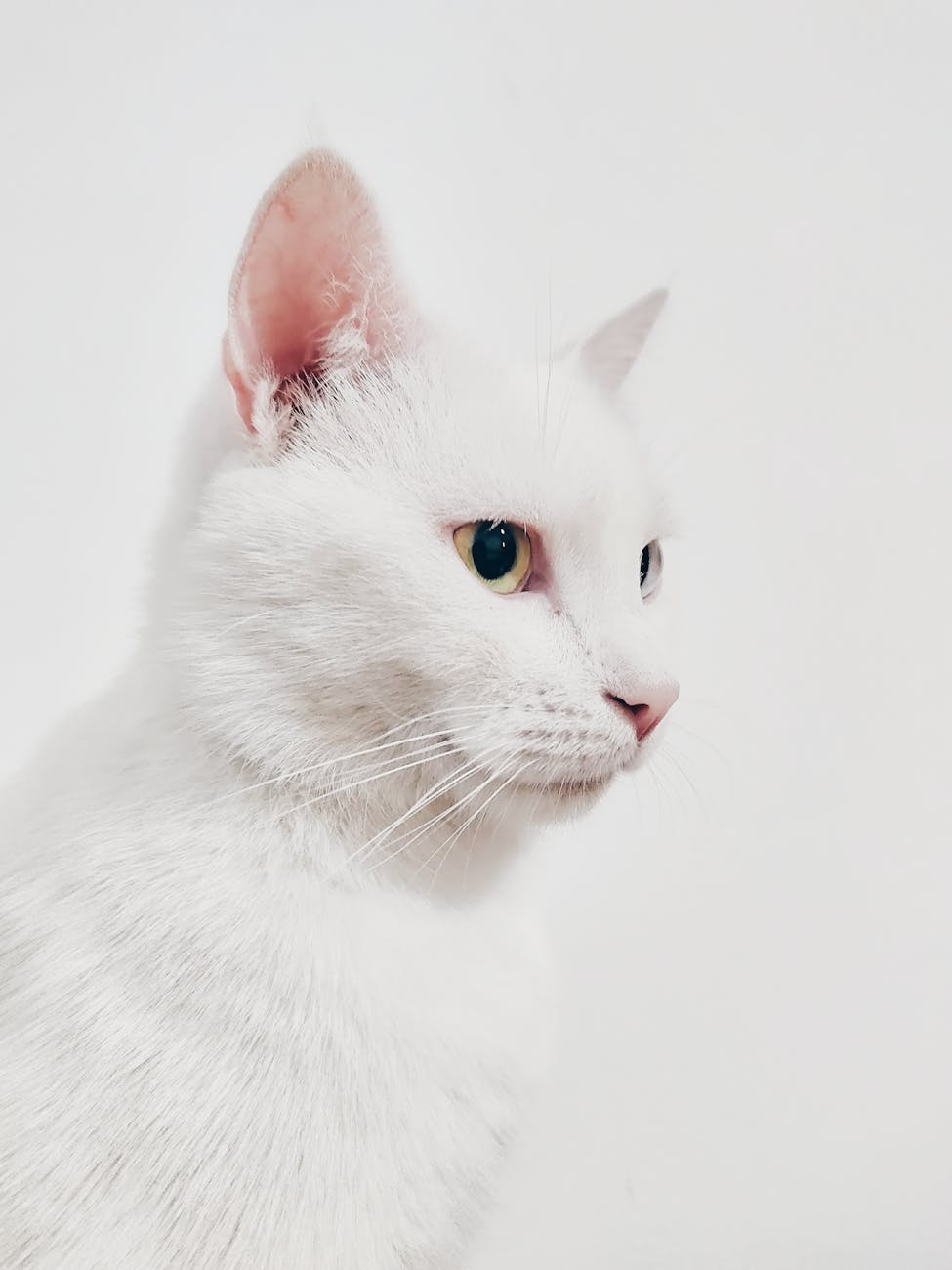
Christmas was a sleek, white cat with a bright red collar and a tiny bell. He sported one green eye. One eye blue. Christmas twinkles the kids called them. He got his name because he was born on Christmas Eve. Since then, his life revolved around the festive season. He loved the glittering lights and the scent of pine. He enjoyed the rustling of wrapping paper. He cherished the joy he saw in his family’s faces.

Christmas morning, the children had excitedly unwrapped their gifts. Afterward, the family went off to visit relatives. Christmas the Cat had wandered into the pantry. Curious, he batted at a loose box of crackers, which tipped over with a crash. Startled, he darted behind a stack of canned goods. In the commotion, someone closed the pantry door, locking him inside.

At first, Christmas thought this was just an oversight. Someone would open the door soon and scoop him up for a cuddle. But the minutes stretched into hours, and the house grew silent. Panic set in. 

He imagined the family around the table, sharing laughter, turkey, and pie. He pictured the children playing with their new toys. The warmth of the fireplace filled the room. Soft carols were in the air. And here he was, trapped in the dark, with only a box of crackers for company. 

Christmas, becoming convinced it was too late until the family returned that evening. His heart sank as he heard the keys jingle and the front door creak. He sat dejectedly on the pantry floor, his tail curled around him.

“Christmas! Where are you, buddy?” 

Called the youngest child, Emily.

The pantry door swung open, and a flood of light spilled in. Christmas blinked and looked up. Emily scooped him into her arms, covering him in kisses.

“We were so worried!” 

She exclaimed. 

“We couldn’t find you anywhere.”

The rest of the family gathered around, showering him with attention. Despite their love, Christmas couldn’t shake his gloom. He meowed mournfully, his usual purr absent.

“What’s wrong, Christmas?” 

Emily asked, stroking his fur. 

“You’re safe now.”

Her father, overhearing, knelt beside her.

“I think Christmas thinks he missed Christmas Day.” 

He said with a chuckle.

Emily’s eyes widened. 

“Oh no! That isn’t very good. We need to tell him it’s okay.”

She cradled Christmas close and said softly,

“You didn’t miss Christmas, silly kitty. Even if the day is over, Christmas isn’t just one day. It’s about love, kindness, and being together. We can celebrate Christmas every single day.”

He looked up at her, his green eyes shining. The bell on his collar jingled as he rubbed his head against her cheek.

That night, Emily insisted they set up a special celebration for him. They lit the tree again. They brought out leftover turkey for a feast. They even gave him a shiny bow to play with. As Christmas sat in Emily’s lap, batting at the bow, he realized she was right. Christmas wasn’t just about one day. It was about the joy and love that filled the house every day of the year.

Christmas the Cat didn’t fret about the calendar from that moment on. Whether it was July or December, he purred as loudly when the family was together. After all, every day is Christmas as long as there was love.

The Secret Santa of Cordell, Oklahoma

Groff Media 2024© Truth Endures IMDbPro

Presented by benandsteve.com By: Benjamin Groff II©

3–4 minutes

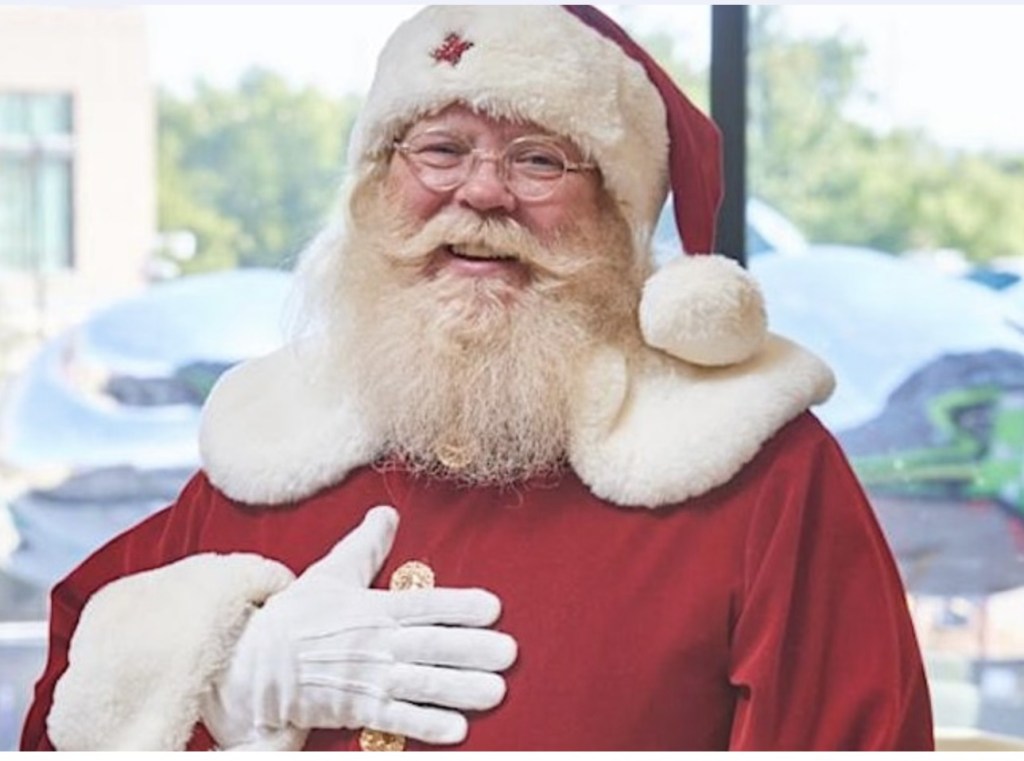
In the small, snow-covered town of Cordell, Oklahoma, Police Chief Eby Don Walters had a secret. Every December, the frost painted the windows and the smell of pine and cinnamon filled the air. During this time, he would don a plush red suit and strap on a padded belly. He transformed into the town’s beloved Santa Claus.

Decades ago, a young Eby Don joined the force. The town’s Santa fell ill just days before the annual Christmas Eve festival. Eby Don, with his deep, booming laugh, twinkling eyes, and short, round build, stepped in. The kids adored him, and the tradition was born, bringing enduring joy to the community.

The children of Cordell adored Santa. They poured their hearts into their whispered wishes. They handed him carefully drawn pictures. They giggled when he joked about knowing if they’d been naughty or nice. Eby Don never broke character. He stayed in character even when his nieces and nephews sat on his lap. Their eyes were wide with wonder.

As the years passed, the children grew up, never suspecting that Santa was their own Chief Walters. Many returned with their kids, eager to introduce them to the magical figure from their childhoods. Eby Don played along. He listened with a warm smile as grown adults recounted their cherished memories of Santa. He waited for the moment when they would discover the truth. Their surprise and delight added to the magic of Christmas.

One Christmas Eve, nearing his sixties, Eby Don felt the weight of the years. The suit fit slightly tighter, and his knees creaked as he crouched to hug the smallest children. Yet, he couldn’t bear the thought of passing the torch. This was his gift to the town, his way of keeping its spirit alive. The Santa suit took a physical toll on him. Despite this, Eby Don continued to wear it. He knew the joy it brought to the children and the community.

That night, a little girl named Emma tugged at his sleeve, her big blue eyes searching his face.

“Santa, will you be here forever?”

she asked.

Eby Don knelt, his voice gentle.

“Santa’s spirit is always here, sweetheart, as long as people keep believing in the magic of Christmas.”

He knew that the belief in Santa was not just about a man in a red suit. It was about the spirit of giving, love, and hope that Christmas symbolizes. It was this belief that kept the Secret Santa tradition alive in Cordell.

The festival ended with the usual fanfare: carols, laughter, and the lighting of the town tree. Eby Don slipped to the small changing room behind the stage, trading his Santa suit for his police uniform. He stepped out into the cold night. The snow fell softly around him. He overheard a group of parents. Some of them were his former ‘kids’. They were talking about how lucky Cordell was to have a Santa who never missed a year. It was a warm and nostalgic end to the festive evening.

Eby Don smiled to himself. They would never know how much those words meant to him. He returned to his patrol car. His heart was as full as the sack of presents he had left under the tree. Chief Eby Don Walters cherished the greatest gift. It was knowing he had brought a little magic into the lives of everyone in Cordell. It was knowing he had brought a little magic into the lives of everyone in Cordell. They never knew the man behind the beard.

97-Year-Old Country Doctor Delivers 14 Miracle Babies in Small Town Meadowview

A Golden Story Repost From 2024

5–8 minutes

A Story By: Benjamin Groff© Groff Media 2024© Truth Endures


The town coroner was also the same man who delivered most of the people’s babies in town. He was nearly 97 years old and still doing business. His name was Dr. Doodley. Dr. Doodley began working as a doctor when he graduated from Medical School at age thirty in 1957. He made his home in Meadowview. He had a significant other. He was a gentleman Dr. Doodley had met in college. Together, they raised Dr Doodley’s two nephews. They were the sons of Dr. Doodley’s brother, who got killed in an auto accident along with his wife. The community never questioned the couple’s union. They never questioned the children raised by the two men. Everyone welcomed the couple as they joined in events.

Dr. Doodley was the only doctor in the county. He was on call twenty-four hours a day. He would be available seven days a week. With such a schedule, it was common for the family only to see the older family member on the go. He was known for delivering nearly every child in the county for over 70 years. In as much, he declared dead nearly everyone who passed away in the county. This spanned the past 71 years. He had brought into the world and seen many of the same people leave it. He was known to many as an indirect member of their family for his declarations.

On a foggy Tuesday morning, Dr. Doodley received a call for his services. It was from a lady twelve miles from town. At the home, there was also a man. His wife was gravely ill too. It wasn’t until Dr. Doodley arrived that he discovered two other expecting mothers were present. There was also an older man who appeared about to die.

Dr. Doodley was 97 years old and thought to himself, ––

“I hope I am up to this chore. If all these people require my services, I will have my hands complete.”

A young lady at the home received Dr. Doodley, took his hat, and directed him to the kitchen. She had prepared several pans of hot water, clean towels, and sticks there. Dr. Doodley always required those three things to be available. He liked to have hot water for cleaning. Towels for drying and sticks for placing in people’s mouths to bite down on and grit through pain.

The doctor was known to use the sticks himself on occasion to avoid using curse words when he was stressed.

Mildred was a big lady. She was also Dr. Doodley’s first patient and was expecting twins. Her water had broken, and she was about to deliver. The conditions at the home were not ideal for privacy; there was only one room, and everyone was in it.

Mildred yelled ––

It is happening. They’re coming!

Dr. Doodley crunched his 97-year-old body down while Mildred sisters held her hands, trying to do breathing exercises.

Dr Doodley said to Mildred ––

Honey, you have to push, push like there is no tomorrow.

Mildred yelled ––

I’m trying. They’re fighting.

Dr. Doodley trying to soothe Mildred replied ––

They’re not fighting. They’re just taking their time.

Dr. Doodley smiled and, with a cough, shouted.

Looky here, they are here. Mildred! You did it! You got three! Boy, Girl, Boy!

Mildred, exhausted and sweating, shocked stewed back

What’s that, doc? Did you say Three? I was expecting two. Where is the third one from?

Dr. Doodley smiled and laughed,

Mildred, the third one is from you. You had a little hider in you—what a surprise!

The doctor went to announce the new arrivals to the rest of the family. Upon hearing that Mildred had triplets, two of the older family members dropped dead.

The triplets were the first ever born into the family since the 1800s. It was a blessing of riches for the family to get them. An old Irish family tale had always suggested such. The doctor tried to revive the two family members, but their aged bodies were nonrevivable. So he put on his Coroner hat, declared them dead, and called for the funeral home.

Dr. Doodley turned to the family. He told them their two older family members, Elmer and Magnolia, had passed away. He offered his condolences. As he explained the situation, Mildred’s sister, Ethel, entered labor.

Ethel was bigger than Mildred and only slightly smaller than Minnie, her twin sister, who was also expecting. Neither sister knew what they were expecting. They wanted to keep it a surprise for their families. It was also a surprise for the doctor.

Dr. Doodley barely had time to catch his breath before Ethel’s cries filled the room. With a weary but determined look, he wiped his brow and prepared for the next round. He had seen many things in his 97 years. Yet, he had a feeling that today would be one for the books.

Ethel’s contractions came fast and fierce. Dr. Doodley quickly realized that this delivery would be anything but ordinary. He moved swiftly, calling for more towels and hot water, his voice steady despite the chaos around him.

Ethel, gripping her sister Mildred’s hand, screamed out as the first baby appeared.

“Push, Ethel, just a little more,”

Dr. Doodley encouraged. To his astonishment, another head was crowned instantly after the first.

“Twins!”

He announced, but as he cradled the two newborns, he felt another tiny foot.

“Wait—triplets!”

The room buzzed with excitement and disbelief. But Ethel’s labor still needed to be done. With one final push, a fourth baby emerged, making history in the small town of Meadowview.

“Quadruplets!”

Dr. Doodley gasped, his voice cracking with the thrill of the moment. The room erupted in cheers, even as Minnie, the third sister, began to feel the unmistakable pangs of labor herself.

Dr. Doodley was now running on pure adrenaline. He had delivered quadruplets in his nearly seven decades of practice, but never had he faced such a succession. As Minnie’s labor intensified, he steeled himself for what was to come.

Minnie, the largest of the three sisters, began laboring with a determination that matched her size. The room grew quiet, anticipation thick in the air. The first baby arrived, the second, then the third, and when a fourth followed, the room collectively held its breath.

But Minnie wasn’t done. To the astonishment of all, a fifth baby emerged, followed by a sixth. Dr. Doodley, his hands trembling, delivered each child with care, his heart pounding with the sheer impossibility of it all.

“Six babies!”

He declared, his voice a mix of awe and exhaustion. Minnie lay back, breathless but smiling, as the room buzzed with the excitement of the extraordinary event.

Then in the back of the room a cousin named Sissy screamed ––

Doc I think I need you!

As the doctor walked back to her, he could see she had given partial birth to a child, and he said ––

Oh dear, lets get this corrected, and cleaned up. Lay back and hold your aunts hand while we help you!

And that is when the last baby of the night entered the world.

By the end of that foggy Tuesday, Meadowview had welcomed fourteen new babies. It made history in the sleepy little town.

Dr. Doodley, despite his age, had once again proven why he was the most revered doctor in the county. As he looked at the fourteen newborns swaddled and cooing, he couldn’t help but smile. It was a significant day in the history of Meadowview. An elderly man, nearly a century-old, delivered a miracle. No one would ever forget this event.


By Benjamin GroffMedia© | benandsteve.com | ©2025 

Guardians of Memory: Writing Our Truth Before It’s Rewritten

© Benjamin H. Groff II — Truth Endures / benandsteve.com

1–2 minutes

Tell It Like It Is

There comes a time in every nation’s history when silence becomes more dangerous than speaking. We are living in such a time now. Books are being banned, lessons erased, and truths rewritten to serve new agendas. What once stood as collective memory is being scrubbed clean, leaving behind a shell of what was. But history, real history, lives in the people who lived it — and that means you.

If the history of your people, your town, your family, or your country is under attack, write it down. Don’t wait for permission. Don’t assume someone else will record it for you. Every letter and every diary is a piece of the truth. Every recollection of how life was is also a piece of the truth. This includes the food you ate and the songs that played on your street. This truth is something that no one can erase.

Print it. Bind it. Keep it in a box, a drawer, or a chest. Place it anywhere it can be found by those who come after you. Share copies among your family members. Hide one in a place that time itself will forget. Digital memories are fleeting; servers fail, passwords vanish, and what is “deleted” online is often gone forever. But paper endures.

We have the power, still, to protect the soul of a free people — not through politics, but through preservation. Keep the banned books. Read them. Understand why they were silenced. They are often the keys to liberty’s locked door. The stories, poems, and records we save are not only for nostalgia’s sake. They defend against those who claim freedom was always fragile. They made it seem that way to future generations.

When freedom falters, truth is what leads us back.
Write your book. Tell your story.
Save it as if your grandchildren’s liberty depends on it — because one day, it just will.


By Benjamin GroffMedia© | benandsteve.com | ©2025 

Take Me Back To Yesterday Once More

5–8 minutes

The Farm That Built Me

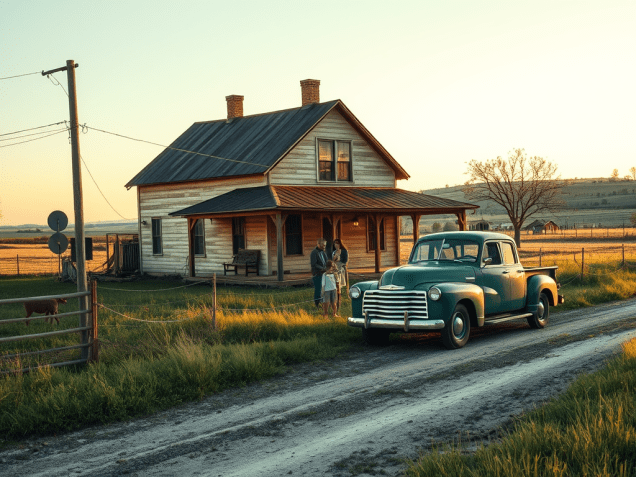
When I look back on my childhood, I’m struck by how much life changed. The changes happened between the time I was born and when I turned eight. We didn’t have indoor plumbing at first. Initially we hauled water from town in five gallon buckets. That was for drinking and cooking. In a big tank in the back of my dad’s truck, water was hauled for the livestock. Eventually water was found on the farm in a well far south of our house. Than ran pipe as far as possible. But, the water pipe stopped about twenty feet shy of our kitchen door. My parents couldn’t afford to run it inside. Every day, we carried buckets from the outdoor faucet to the house. This was still an improvement over hauling water all the way from town.

If you have ever heard of the ‘little brown shack out back.’ Well we had one. We used it even after water was found on the place. Because their wasn’t a bathroom in built in the house. It would be added later. We would walk a trail to the shack in the summer and winter. It wasn’t fancy built at all. It had yellow jackets nest high on the wall. It had a hook and eye lock to secure the door when you were inside. A wooden block turned to keep the door shut when you left. It was cold as ice in winter and hot as hell in the summer. And our company didn’t take to it. It would cut their visits short. And sometimes I wondered if that wasn’t my dad’s plan for having for so long to start with.

Around the same time, we got our first telephone. The line lay exposed down the center of the dirt road. It was shared on a party line with two other houses. Every time the road grader came, the blade cut the wire. We would wait weeks for the phone man to splice it back together. They buried it once, but the sandrock kept them from going deep. The grader still found it. Eventually, someone figured out how to run it four feet off to the side of the road. That man got a promotion—and passed away not long after. These were the everyday challenges of our farm life.

Electricity was another novelty. We had it most of the time. But if it went off during a storm, it was especially bad during a snow event. We would be without lights for a week or longer. They were also the threads that wove our family together. These challenges taught us the value of perseverance. They also brought the joy of shared triumphs.

Heat was another story. Before our fireplace was installed, a single stove in the living room was turned down at night to save propane. We woke up to breath clouds in the cold air before school. Summers weren’t much easier. With no air conditioning, the whole family slept in the living room on pallets. We threw every door and window open. This helped capture the breeze from the five-acre lake a quarter mile south. We’d even open the fireplace flue to pull in a cool draft. It sounds uncomfortable now.

Back then, it was more than just a living arrangement. It was a testament to the value of family closeness. Six kids, two parents, visitors, and dogs—living in one big indoor campsite every night. If you’ve never known family closeness, you’ve missed something truly special. It’s these moments that I look back on with nostalgia and a deep appreciation for the bond we shared.

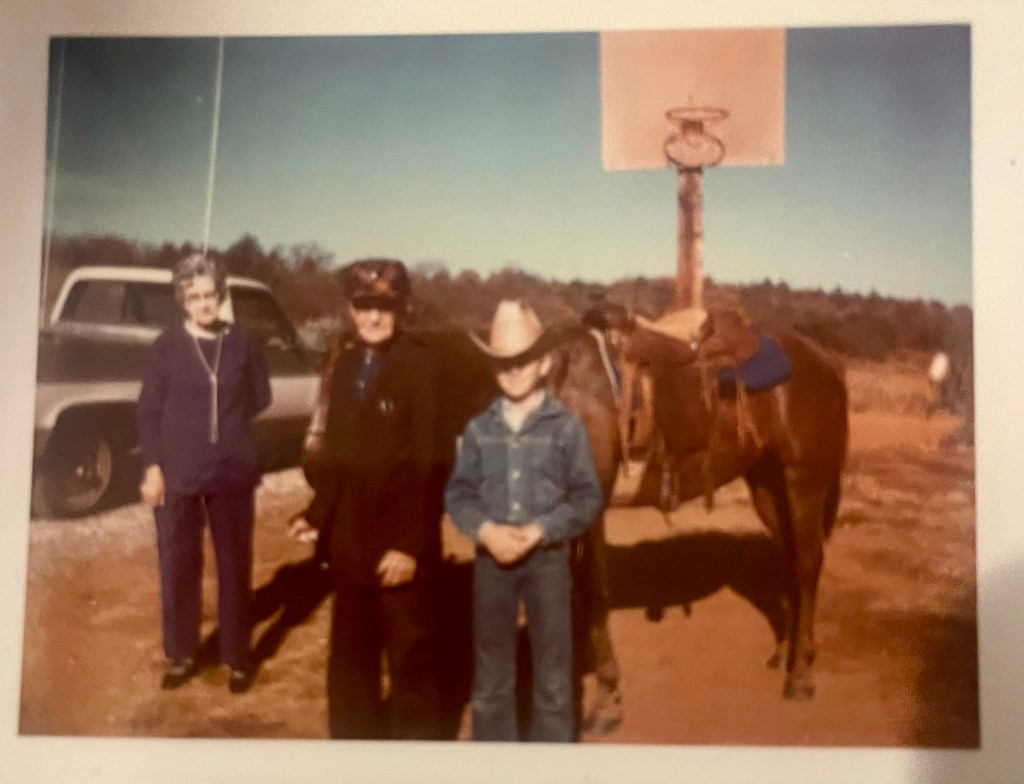
My father raised American Quarter Horses, and our farm revolved around them. We only kept one stud at a time to avoid brutal fights. Mares were bred individually, often requiring long hauls to other states to introduce new bloodlines. Our horses went everywhere—rodeo circuits, calf-cutting competitions, and even television shows. One star from Gunsmoke, Buck Taylor, called about a horse. Another buyer phoned from New York City during the Garden Square Futurity. He called to thank my dad for the mare Molly. Molly had taken him to the finals. My dad didn’t like us talking about our customers because he valued humility over reputation. As a kid, I didn’t understand. Now I do.

I remember the early 1970s and how tight our family budget must have been. My dad would come home from his barbershop with sacks of horse feed loaded in the back of his truck. He’d park in front of the house. Then, he’d hoist a heavy sack onto his shoulder and walk nearly two city blocks. He’d go down a hill, across a pasture, and all the way to our barn. He had back and leg issues that made every step painful, but he refused to “waste” fuel in his truck.

At the time, I didn’t grasp how precious that gallon of gas was during the oil crisis of the 1970s. To me, it was just Dad doing what he always did. He worked hard. He quietly bore pain. He put his family and animals first. Only now do I understand it was more than thrift; it was discipline and determination passed down like an heirloom.

That simple act—carrying those sacks of feed instead of burning a gallon of gas—left a mark on me. It taught me that sacrifice, resourcefulness, and responsibility are not always loud or dramatic. Sometimes they’re a man. He is alone at dusk, carrying a heavy burden down a path. This happens because it’s the right thing to do.

Everything shifted when Dad took a job at a Girl Scout camp. Horses were sold off until only a few remained for us to ride. We moved to the camp and poured ourselves into cleaning trails, rebuilding facilities, and living outdoors. Yet Dad’s passion for horses never dimmed. We still attended auctions and brought home horses to train. One day, I spotted a skittish dun mare at an auction—Lady. I knew she’d been mistreated and asked Dad to buy her. With patience, grooming, and daily walks, she became the smoothest riding horse I ever had. Lady followed me everywhere without reins, just like a loyal dog. Later, bred to a stud sixty miles away, she gave birth to a colt with the same gentle spirit.

Those years formed me. They were a school of life. They taught me resourcefulness. They also taught patience. I learned how to read the quiet signals of both people and animals. We didn’t have much, but we had each other. And now, decades later, every time a cool breeze brushes my face, I remember those nights in the living room. The windows were open. I hear the sound of our horses in the pasture. These are proof that even the simplest moments can shape a lifetime. The lessons I learned from farm life continue to inspire me. They shape my perspective. I appreciate the value of patience, resourcefulness, and the importance of family.


By Benjamin GroffMedia© | benandsteve.com | ©2025

“Don’t Go Where You Don’t Know Where You’re At” — A Lesson from My Father

2–3 minutes

A Memory That Ignites Each Year

Every year when All Hallows’ Eve rolls around, I think about a specific night. I remember it vividly. It was when I was sixteen. I was getting ready to go out with friends—excited, dressed up, and ready for a night of harmless fun. As I reached for the door, my father stopped me with a hand on my arm.

He’d never done that before. I was the youngest of six children. By the time I reached my teens, my parents had weathered every imaginable crisis. Their only standing rule was simple: “Be safe and be home before daylight.” But that night was different. Dad’s grip was firm, his eyes serious.

He said quietly, “Look—your Uncle Bennie came upon a man whose head had been cut off and left on a dirt road near our house when I was about your age. They never found who did it.”

I froze. Uncle Bennie had passed away before I was born, so I never had the chance to ask him about it. Dad didn’t offer more details. He only mentioned that Bennie had called the deputies. Bennie told them everything he knew. Then he lived with that memory for the rest of his life.

My father’s next words have stayed with me for decades: “I just want you to be safe. Don’t go where you don’t know where you’re at.”

Those words became a rule for me, a compass I’ve carried ever since. If my gut or my soul told me something wasn’t safe, I backed away. That simple warning guided me through my teenage years. It also helped me during my law enforcement career. Instincts and situational awareness can mean the difference between life and death in that field.

Even today, I don’t know much more than that chilling story about the headless man. But my father’s advice has saved me countless times. It’s taught me that safety isn’t just about the rules of the road. Safety is not limited to the places on a map. It’s about trusting the quiet warnings within yourself.

I share this story with you because maybe it can help someone else, just as it helped me. We live in a world full of distractions, routes we don’t know, and situations that feel uncertain. If you find yourself heading into something that doesn’t feel right, listen to that inner voice. Step back. Choose another path.

Because sometimes, the oldest lessons are the truest: Don’t go where you don’t know where you’re at. Your instincts know the terrain long before your eyes do. And that wisdom—passed from a father to a son—can save your life, too.


By Benjamin GroffMedia© | benandsteve.com | ©2025 

The Man Who Fell Asleep One Night-Dreaming He Became A Sheriff In The Wild West.

He awakes the next morning to find he is still there.

2–3 minutes

Sheriff Without a Gun

Harold was an ordinary man living in a small house on the edge of town. He spent most of his evenings quietly—reading, cooking for one, and watching old Western movies before bed. One night, after drifting off in his recliner, Harold dreamed he was a cowboy riding across the dusty plains.

When he awoke the next morning, he nearly fell out of bed. The world outside his window was no longer his quiet backyard—it was a wild west frontier town. And tied right outside his kitchen door stood a horse named Gus, saddled and ready. Harold blinked twice, rubbed his eyes, and muttered,

“Well… this is new.”

Stepping outside, he was greeted by the townsfolk calling him Sheriff. Sheriff Harold, that is. The twist? He wore no gun.

“Best sheriff we ever had,”

they cheered,

“because you don’t bring trouble.”

But soon, trouble found them anyway. A group of gunslingers rolled into town, looking to cause mayhem.

Harold had no firearm to fight back. Thinking fast, he filled the pockets of his vest with smooth river rocks. When the gunslingers strutted down Main Street, Harold let fly. Whack—right in the shin—crack—one to the forehead. Pebbles rained down like hail until the bandits doubled over, tears streaming, too humiliated to continue.

Harold yelled –

“You get the hell out of here and don’t come back!”

They scrambled for their horses, chased out of town by the rock-throwing Sheriff himself.

From that day on, Sheriff Harold became a legend. The townsfolk swore he was the greatest Sheriff they’d ever known. This wasn’t because he outgunned the bad guys. It was because he outsmarted them. Every morning, Harold would pat Gus on the neck and tip his hat. He remembered that sometimes the simplest tools—a rock, a clever mind, and a little courage—are enough to keep the peace.

But somewhere else, in another world, Harold lay still. His daughter sat quietly at his bedside, holding his hand, eyes brimming with worry.

“Do you think he’ll ever regain consciousness?” 

She asked the doctor softly.

The doctor shook his head. 

“I don’t know. Stroke victims sometimes choose to stay where they are. Maybe Harold is better off living where he is. In that other place, he’s strong and needed. He is riding tall as Sheriff.”

His daughter squeezed his hand, whispering through tears, 

“Then I hope he knows we’ll always be proud of him—here, or there.”

And in the world of his dreams, Sheriff Harold tipped his hat, smiled, and rode Gus into the golden horizon.


By Benjamin GroffMedia© | benandsteve.com | ©2025 

Exploring Viola’s Pumpkin Patch: A Family Adventure

1–2 minutes

https://media.phoenixwithkids.net/spai/q_glossy%2Bret_img%2Bto_auto/www.phoenixwithkids.net/wp-content/uploads/2023/08/img_2669-2048x1536.jpg

Every autumn, Viola’s Pumpkin Patch in Flagstaff, Arizona, turns the crisp October air into pure sunshine, even on cloudy days. Families gather among towering stacks of orange gourds. Kids wander through a cute little hay-bale maze. They also take on a friendly pumpkin scavenger hunt. Dads dramatically debate which pumpkin is the “perfect one.”

What really steals the show, though, is the pumpkin-painting nook. A staff member—always wearing a bright smile—guides little ones in creating wild faces and wacky designs. One three-year-old proudly painted a blue-and-yellow “monster” pumpkin so creatively that adults formed a temporary gallery to admire the work.

By mid-morning, the patch becomes a chorus of giggles. Kids chase painted gourds. Families capture silly selfies. Grandparents weave through pumpkins with apple cider in hand. It’s not just a fall outing—it’s a shared moment of joy.

For many people, including me, it’s the perfect reminder. Even amidst daily tasks, creativity can lift your heart. Laughter and seasonal fun also have this effect. October at Viola’s only lasts a few hours. Still, the warmth it leaves behind stays with you through the whole year.


By Benjamin GroffMedia© | benandsteve.com | ©2025 

From Hauling Oranges to Inspiring a Movement

2–3 minutes

The Brothers and the Orange Truck

Groff Media2025© BrotherTruckers

Eddie and Carl had always been close, but nothing tied them together like their truck. A massive eighteen-wheeler, shining chrome dulled by road dust, it was both their livelihood and their burden. They’d gone deep into debt to buy it. They hoped to build their hauling business around orange deliveries from the groves in California.

But the payments ate away at every mile they drove.

Even with steady work, the numbers never added up. So they tried to get clever. They began running side jobs—hauling crates of produce, lumber, even furniture—between their orange routes. One drove while the other slept. Their heads were propped against the hard cab window. They woke with stiff necks that seemed to worsen each week. 

“Just a few more years,” 

Carl would mutter. 

“We’ll get ahead.” 

Eddie always nodded, though neither believed it completely.

Then the crisis hit. On a rain-slicked highway outside Phoenix, a sudden shudder ran through the truck. Eddie, at the wheel, felt the steering go slack. He fought the wheel, but the trailer jackknifed, scattering oranges across three lanes of traffic. By some miracle, no one was killed—but the damage was catastrophic. Their load was ruined, the rig torn apart, and the trucking company that contracted them pulled their work instantly.

The brothers sat on the shoulder. They were soaked in the rain. They watched cars crunch over the fruit they had worked so hard to deliver. They thought it was the end.

But in the weeks that followed, something unexpected happened. Photos of the accident—highways littered with smashed oranges, drivers climbing out to help clean up—went viral. 

Reporters picked up the story of the brothers who worked around the clock. Their necks were stiff, and their wallets were thin. They were just trying to get ahead. 

Sympathy poured in. A crowdfunding campaign was launched. And soon, Eddie and Carl weren’t just hauling oranges anymore. They were speaking about small-town grit and about persistence. They talked about what it meant to keep pushing ahead when the load was too heavy.

The truck nearly broke them. The crisis almost ruined them. In losing everything, they discovered something bigger. They found a community that believed in them more than they had ever felt in themselves.


By Benjamin GroffMedia© | benandsteve.com | ©2025 

How Far Is Heaven? A Reflection on Belonging

2–3 minutes

How Far Is Heaven?

The little boy tugged at his father’s sleeve as they walked home one quiet evening. The sky stretched wide above them, painted in soft shades of pink and gold. After a long silence, the boy asked a question that seemed to hang as heavy as the clouds.

“Dad… how far is Heaven?”

The father slowed his steps, looking down at his son. For a moment, he didn’t answer. Then he smiled gently.

“That’s a big question, son. And the truth is—I don’t know.”

The boy’s brow furrowed.

“Don’t know? Isn’t it up there?”

He pointed toward the fading light above the rooftops.

“Well,”

his father began,

“that depends on what you believe Heaven is. For some people, Heaven is a faraway place where souls go when life here is over. For others, Heaven is closer than you think.”

He stooped down so they were eye to eye.

“Heaven can be the feeling of home when everyone’s together at the dinner table. It can be walking into your grandparents’ house and smelling fresh pies cooling on the counter. It can be the peace of sitting in a quiet cabin deep in the woods. There is no noise but the trees and the wind.”

The boy listened, his eyes wide, as though trying to imagine all those Heavens at once.

“You see, son,”

his father continued,

“Heaven doesn’t have just one location. It can mean different things to different people, at different times in their lives. Sometimes it’s a place, sometimes it’s a feeling. And sometimes, people think of it as a reward beyond this life. But no matter what, it’s something we long for—a place where we belong, where everything feels right.”

The boy was quiet, mulling it over. Then he looked back up at the sky.

“So… Heaven isn’t always far away?”

His father smiled, squeezing his hand.

“No, son. Sometimes, Heaven is right here—closer than we ever imagine.”

As they walked the rest of the way home, the boy noticed the laughter of his mother. She was waiting at the door. He smelled the supper drifting through the air. He felt the warmth of his father’s hand in his own. And for that moment, he decided, Heaven was not far at all.


Reflection

How Far Is Heaven?

By Benjamin Groff II

A boy once asked his father, “How far is Heaven?”

The father said, “That depends. For some, it’s beyond the stars where souls go when life is done. For others, it’s much closer. It is found in the smell of pies at Grandma’s. It is in the quiet of a cabin in the woods or the laughter of family at the dinner table.”

He paused and added, “Heaven is different for everyone, son. Sometimes it’s a dream, sometimes a memory, and sometimes it’s right here, in the moments we hold close.”

The boy thought for a while, then smiled. Heaven, he decided, was not so far away after all.


By Benjamin GroffMedia© | benandsteve.com | 2025 

The Four Magic Words: A Father’s Legacy

2–3 minutes

Ebom Shoobem Shoobem Shoobem

The four magic words a father passed down to his four children. He told them that anytime they were about to face trouble, they should speak those words. The assistance they required would eventually. But only if they took the necessary action for it to occur. 

The words were only to be used when necessary. They should not be used as a want. Use them during a crisis, more than a wish. And a threat to life, rather than a threat to pride. If they ever abused the use of the words, then their special powers would no longer be available to them. The magic words would only be passed on when they reached the age of 18. They needed to have made plans to leave the family home.

The four children had each left their home by the time the father had reached 55 years of age. He had spent a great deal of his life enjoying his time with each of them. Now, he looked ahead to adventuring into his own life. 

The father’s four children carried the words with them into the wide world. Each one held them differently. One tucked them away like a secret prayer. Another spoke them aloud when fear pressed too heavily. A third doubted them but remembered all the same. The fourth treated them like a compass hidden in the lining of a coat.

In time, each child faced a moment that tested the promise of those words. One found themselves stranded in a snowstorm, far from home. Another stood at the edge of despair after losing nearly everything they had built. A third was cornered by deceit, betrayed by someone they had trusted. And the last stood between danger and an innocent life.

In every trial, the magic words did not summon thunderbolts or winged guardians. Instead, they sharpened courage, opened a hidden door, or drew the right ally to their side. The father had spoken true—the words alone were not enough. But when joined with action, with faith, with that one step ahead, help always came.

Years later, when the father’s hair had silvered and his own journeys were slowing, the children returned to him. Around the fire, they told their stories—each different, but threaded with the same truth. The words had worked. This was not because they carried power of their own. Instead, they reminded each child that strength and salvation arrive only when one dares to act.

The father smiled, warmed by both the fire and the glow in his children’s faces. He whispered, almost to himself, “Ebom Shoobem Shoobem Shoobem.” The four children echoed it back, not as magic, but as memory.

And from then on, they knew—the words were not only for escaping danger. They were meant to be carried ahead to their own children one day. The words served as a charm. They also posed a challenge. Help will come, but only if you rise to meet it.


By Benjamin GroffMedia© | benandsteve.com | 2025 

The Flying Wagon – A Bribed Brother – A Frightened Mother

A true story about two brother’s antics on the Western Plains of Oklahoma in the 1920s and ’30s.

By Benjamin GroffMedia© | benandsteve.com | 2025 Truth Endures©

3–4 minutes

The Flying Wagon

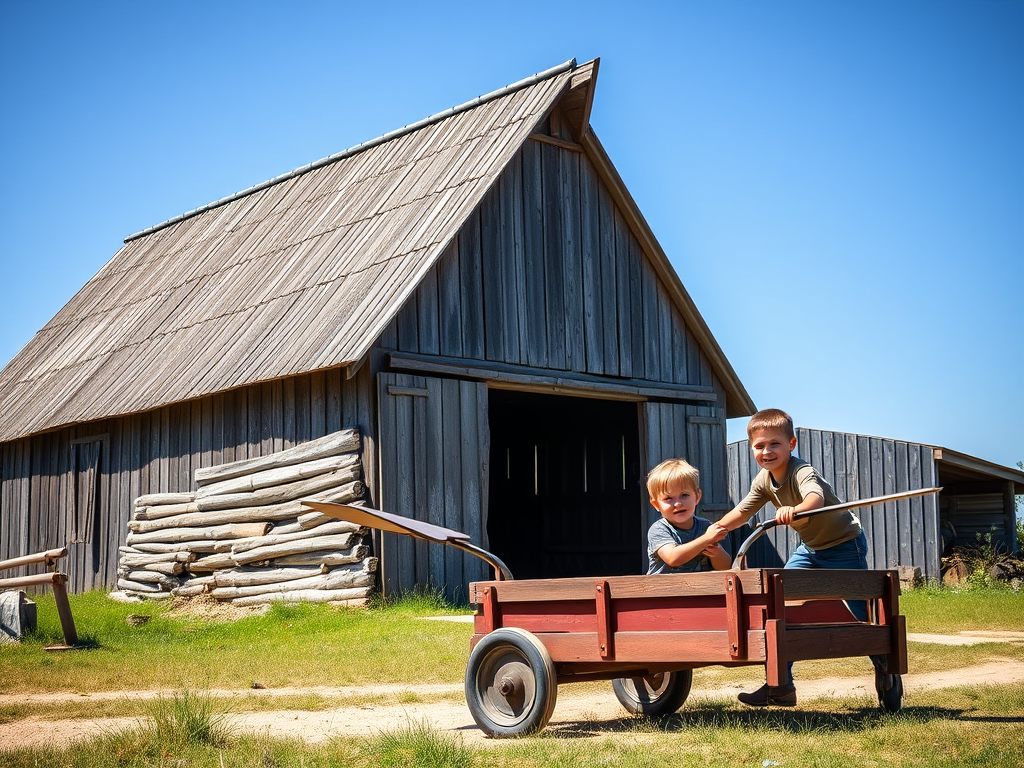
You’ve heard of the Wright Brothers, but you probably haven’t heard of the Groff Brothers—JD and Bennie. Two western Oklahoma boys growing up wild and dusty in the 1920s and ’30s. They didn’t have blueprints or flying machines. What they had was imagination, a tall barn, and a battered old wagon that Bennie believed could fly.

Bennie was the older one. He was full of ideas that didn’t always make sense. They always sounded like fun—at least to him. JD, the youngest, often found himself drafted into Bennie’s adventures under what you might call “big brother persuasion.” Bennie had a way of making cooperation seem more appealing. He would start listing all the minor sins JD had committed that week. JD wasn’t dumb. He knew how to pick his battles.

One summer day, Bennie got it in his head that their wagon could be made to fly. All it needed were wings—planks nailed out to the sides—and a launch platform. The barn roof, with its steep pitch and high drop, was just the place. Bennie did the math. He calculated it as only a 1930s farm kid could. He figured the wagon might be too heavy to lift both of them. So, of course, he chose JD to be the pilot.

JD protested. Loudly. But Bennie made his case and called in his leverage. They went up with the wagon. They dragged it onto the roof like a couple of cartoon inventors chasing the wind.

Perched high above the ground, JD sat nervously in the creaking wagon, holding on to the sides. The wings were loose, the wheels rattled, and JD knew better than anyone how this would end.

“Hold on tight and don’t jump out!” Bennie shouted.

“I won’t,” JD called back, “I’ll fall!”

And with that, Bennie gave the wagon a mighty shove.

It was right about then that their mother—Mom—looked out the kitchen window. She saw what no mother should ever see: her youngest son soaring off the roof in a makeshift flying contraption. She dropped what she was doing and ran out the door, just in time to witness gravity take over. The wagon left the barn roof for the briefest moment of flight—then fell straight down like a stone.

JD hit the ground in a cloud of dust and bent wood. Miraculously, he survived—more scared than scraped, and too winded to say anything right away. Bennie stood nearby, squinting at the wreckage like a disappointed engineer.

“Well,” Bennie muttered, “I guess there wasn’t enough lift.”

Mom had a different theory: they would never try that again.

JD agreed with Mom.

That was just one of many scrapes the Groff brothers got into over the years. Bennie had the ideas, and JD often paid the price. But through it all, they stuck together—laughing, fighting, inventing, surviving. That’s what brothers did.

The wild stunts and hijinks came to an end far too soon. Bennie passed away in his mid-forties, and with him, a certain spark left the family. One relative said the family had been “a little less jovial” ever since.

It’s true. A parent never fully recovers from losing a child. And a brother never fully recovers from losing his bud.

For a moment, a wagon flew on top of a barn in western Oklahoma. Two boys believed they could touch the sky.

The Illinois Folks Would Visit Cordell, Oklahoma Every Year…To See Family

By Benjamin GroffMedia© | benandsteve.com | 2025 Truth Endures©

4–6 minutes

Summer Roads to Oklahoma to Visit Uncle Ben and Aunt Florence

By Benjamin Groff II

Every summer—without fail—a car would ease out of the driveway in Olney, Illinois. It was packed tight with suitcases and ham sandwiches. Kids pressed against window glass. Stories were waiting to be lived again. The road ahead led straight to Cordell, Oklahoma. Uncle Ben and Aunt Florence kept the porch swept. They also kept the table set.

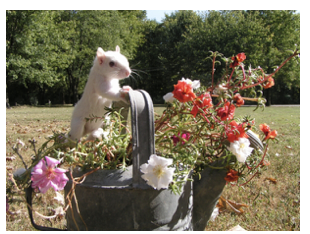
Olney was a quiet place, best known for something that always fascinated me as a child: white squirrels. My grandmother told me about them as if they were magical creatures. They were rare and watchful, darting through yards and city parks. I always hoped I’d see one myself, but somehow we always left too early or came back too late. Still, the idea of them stuck in my imagination like a bright stone in the pocket.

But the real adventure was always in Oklahoma.

Uncle Ben and Aunt Florence lived in a modest home in Cordell. There, the wind blew with purpose. Time slowed enough to sit and stay a while. The cousins from Caddo and Washita Counties began to arrive shortly after us. Many of them had been raised alongside the Illinois kin during the lean years of the 1920s and ’30s.

The car would keep rolling through Binger, Carnegie, Weatherford, and Colony. It traced out a web of family ties that never wore thin. There were hugs that lasted too long and pies that didn’t last long enough. Kids ran barefoot through the same red dirt that had once dusted our grandparents’ boots. The grownups told stories from both sides of the Dust Bowl.

“You remember when that storm blacked out the sky?”
“Your mama used to chase us out of the cellar with a broom!”


And everyone laughed, even if the memories came with a tear or two.

The trips began in the early 1960s. They stretched well into the 1980s. Each summer became a soft echo of the one before. Faces aged, but names stayed familiar. Porch swings creaked. Tin-roof rain was still the best music at night.

Eventually, the trips grew fewer, as the elders passed and the younger ones built lives farther away. But in my mind, a stretch of two-lane highway still runs from the white-squirrel town of Olney. It continues to the wide-open sky of Oklahoma. It’s a road paved with memory and love that survives distance, time, and even silence.

And one day, I still hope to see one of those white squirrels.

One cousin wrote a memory down in a letter to another -––

The tires hummed low against the highway as we crossed into Oklahoma, and I felt it—the shift. Not just in geography, but in memory. It had been years since we’d made this drive from Olney, Illinois. However, the road still felt familiar. It was like an old hymn you didn’t realize you remembered until you started humming along.

I leaned my head against the window, watching the land roll out in shades of tan and green. My thoughts rolled back too. I remembered the summers of my childhood. We’d pile into the car every year and head south to visit Uncle Ben and Aunt Florence in Cordell.

They were waiting when we arrived back then—porch light on, arms wide, iced tea already sweating on the kitchen table. The smell of fried chicken greeted us. We could hear the sound of someone laughing from the backyard before our feet ever hit the ground.

We’d stay for a week or more, using Cordell as home base. Then we’d branch out, visiting cousins scattered across Caddo and Washita Counties—Binger, Carnegie, Gotebo. Some were practically siblings. They were raised alongside our parents during the hard years of the 1920s and ’30s. Those were times when everyone shared everything. The stories from those days came freely over pie and coffee. They were told with the kind of clarity that only comes from having truly lived it.

But this trip—this time—was different.

There were no porch lights waiting. No tea glasses on the counter. Uncle Ben had been gone for years now. Aunt Florence too. And many of the cousins had passed, their homes quiet or sold. This time, we came to remember—not just to visit.

We stopped by the old places. Some were still standing, others just foundations and memories. We drove to the Cordell, Eakly, Colony and Alfalfa, cemeteries. I stood at the resting place of our folks I could remember seeing as if it was yesterday. I could still hear their voices in my head. I spoke softly, unsure if the wind could carry my words back to them, but I tried anyway.

Later that evening, we drove out to Binger. One of the cousins—now gray-haired and slow-moving—met us on the porch with a smile that hadn’t changed in 40 years.

“I didn’t think anyone remembered to come back,” she said.

“We never forgot,” I told her.

And we hadn’t.
Because the roots ran deep.
Deeper than distance.
Deeper than time.

So we returned to Oklahoma—not just to see the land or the gravestones, but to feel that presence again. To walk the same dusty paths, sit under the same wide skies, and remember who we are—and who we loved.

Some journeys are round trips.
Others are returns.
This was both.

As always time came when we had to return. And it always seemed longer going back to Illinois. It was sad to leave. Who would not be here next time we came to visit? Who on our crew would not make the trip next time? Uncle Ben always choked up when he said goodbye. He knew it could be the last time he saw us. Eventually, he was right.

Leaving A Writing That Opens A Window To Their Souls

By Benjamin GroffMedia© | benandsteve.com | 2025 Truth Endures©

2–3 minutes

In Their Own Hand: How Handwriting Revealed the Soul of My Ancestors

I’ve been tracing my family tree for years, patiently tracking each lead and clue like breadcrumbs through time. Some discoveries came through census records, others through photographs or whispered family legends. But nothing has stirred my spirit more deeply than the sight of my great-grandparents’ handwriting—elegant, looping, unmistakably human.

The moment I first held a document written in their own hand, I felt something shift. Their penmanship, carefully practiced and beautifully formed, didn’t just tell me who they were—it revealed how they lived. It was a window to their character, their care, and their time.

The Lost Art of Penmanship

In the 19th and early 20th centuries, good handwriting was a matter of pride, discipline, and social standing. Penmanship was taught rigorously in schools. Techniques like the Spencerian script dominated in the mid-1800s. This was followed by the Palmer Method in the early 1900s. These systems weren’t just about communication—they emphasized grace, control, and personality in each letter’s curve and flow. A person’s handwriting was part of their reputation.

To write beautifully was to show respect: for the reader, for the message, and for oneself. That’s something we’ve largely lost in today’s age of keyboards and quick texts.

A Personal Connection

As I sorted through old family papers—birth certificates, letters, recipe cards—I found myself lingering over the handwriting. There was something intimate about it, something tender. These weren’t just names on a tree or dates on a ledger. These were real people, and here they were, writing. Their fingers once held that pen, their thoughts shaped these lines.

My great-grandmother’s cursive was especially elegant, delicate yet confident. Her capital “L” swept like a violin bow, and her lowercase “r” curled just so. She had taken her time. Her writing carried weight. And somehow, through the shape of her letters, I felt like I knew her.

Handwriting as Legacy

Before voice recordings or home videos, handwriting was how our ancestors captured themselves. They wrote love letters, grocery lists, prayers, and goodbyes. They signed their names to marriage licenses and land deeds, wills and war drafts—leaving behind a fingerprint of the soul.

Today, when we stumble across those scraps, they don’t just offer genealogical evidence. They give us a bridge—a real, living connection to the people who came before us. As the world moves faster, something sacred arises. It comes from slowing down to read their words in their own hand.

Preserving the Past

If you’ve begun your own family history search, don’t overlook the handwritten notes. Scan them, preserve them, study them. Teach younger generations about their significance. They may not understand the loops and flourishes right away—but they’ll feel the legacy behind them.

Because sometimes, a single line of cursive can carry more emotion than a thousand digital files.


Have you come across your ancestors’ handwriting? Share your story in the comments below—or better yet, share an image of it. Let’s celebrate the quiet beauty of those who came before us, one pen stroke at a time.

The Legend of Ghost Mound: A Heartfelt Tale

By Benjamin GroffMedia© | benandsteve.com | 2025 Truth Endures©

3–5 minutes

The Story of Ghost Mound

There’s a story my dad loved to tell. It was one of his favorites. He told it often to friends, family, and customers in his barber shop. He shared it with anyone who needed a good tale. He and his friend GH rode out on horseback one afternoon. They went to a little rise in northern Caddo County called Ghost Mound.

Ghost Mound – Caddo County – Oklahoma

Ghost Mound is one of those landmarks that doesn’t quite belong to any one town. It’s south of Hydro, north of Eakly, east of Colony, and west of the Sickles community. It’s a rocky, oddly-shaped hill. It looks like a miniature volcano. It is steep on one side and more gradual on the other. Back in the 1930s, it was open country. Kids would ride or walk out there on lazy afternoons. They climbed the rocks, explored the cracks, and wasted time in the best way.

On that particular day, my dad, JD, and GH set out. They had nothing more in mind than a good ride. They were also looking for a little adventure. GH had just celebrated a birthday and was proudly carrying a brand-new wallet in his back pocket. Before they saddled up, he showed JD the five-dollar bill. It was tucked inside and was quite a lot of money for a kid in those days.

Once they reached the Mound, the boys began to climb, making a show of how tough it was. About halfway up, GH lagged behind. Suddenly, he shouted:

“HELP! I’ve lost it!”

JD turned and saw GH crouched down, peering into a narrow crack in the rocks. Sliding back to him, he asked what was going on.

GH pointed. He said his birthday wallet had slipped out of his pocket and fallen deep into the crack. The wallet was whole with the five-dollar bill. The boys tried everything to retrieve it. They rolled up their sleeves, dug around, tried moving rocks, even tried widening the gap—but nothing worked. The wallet was gone.

From that moment on, the story of the wallet lost in Ghost Mound became family legend. I grew up hearing about it. Over and over, my dad would retell the tale. Sometimes it was a quick story; other times it grew with detail. Always, it ended the same way. The wallet was still there. It was wedged in the rocks with a crisp 1930s five-dollar bill, waiting to be discovered. He told it with such conviction, I was sure it had to be true. Dad told people whose hair he cut. Keeping an entire room of waiting customers spellbound. Sometimes GH would be there to re-enforce what dad was telling.

The day of my father’s funeral arrived. It was deeply emotional. The house was full of people who had known and loved him. Among them was GH. I had a chance to sit with him, and naturally, I asked him about the wallet. He threw his head back and laughed.

“Yeah,” he said, “the wallet did fall out of my pocket. But your dad was the only one with arms skinny enough to reach in and get it. We got it back that same day.”

I was stunned.

“Then why did you say it was still up there?” I asked.

GH grinned and said, “Because your dad was the biggest joker in the world. He made me promise not to tell anyone the truth. After that, we’d ride our horses out. We would just sit back and watch folks climb all over that Mound looking for that five-dollar bill. We’d laugh and laugh. If anyone had found it, they wouldn’t have brought it back to us anyway!”

And suddenly, a memory clicked. Every time we’d drive past Ghost Mound, we’d see someone out there climbing. It was usually someone who had been in my dad’s barber chair just days before. My dad would start laughing to himself. I never understood why. Not until GH let me in on the real story.

So maybe there’s no wallet up there after all. But the legend my dad spun from that day? That’s still very real. And just like Ghost Mound itself, it’s stuck with me for good.

A Story About Tuff – The Dog That Became A Family Legend!

By Benjamin GroffMedia© | benandsteve.com | 2025 Truth Endures©

4–5 minutes

The Legend of Tuff

Tuff!

Tuff was no ordinary dog. He was a broad-chested, mixed-breed bulldog from the dusty plains of western Oklahoma. He was loyal to the core. He was tough as nails—just like his name. He belonged to a boy named JD, and from the moment they met, the two were inseparable.

Wherever JD went, Tuff followed. JD rode across the Caddo and Washita County prairie on his sturdy pony. He even rode it to the one-room schoolhouse west of Eakly. He rounded up cattle on the family farm. Regardless Tuff was there, his paws pounding the dirt in time with the horse’s hooves. At school, while JD sat through his lessons, Tuff stayed with the horse, standing guard like a seasoned sentry. Rain or shine, he never left his post. He stayed until the bell rang. Then, the trio trotted home together, just three-quarters of a mile up the road.

One warm afternoon, while JD was still in school, trouble came calling. A neighbor’s ornery bull had pushed its way through a loosely latched gate and wandered off. As luck would have it, it made its way straight to JD’s homestead, snorting and stomping with agitation. JD’s mother was outside hanging laundry to dry in the Oklahoma breeze. The bull burst through the linens like a locomotive. It tore shirts and sheets from the line as it charged.

Startled, she dropped her clothespin basket and backed toward the yard fence, but there was nowhere left to go. The bull pawed at the dirt, its head low, flaring its nostrils as it prepared to strike. Streaks of foam, mixed with dust and sweat, ran from its mouth. Its bulk towered just yards away from her.

Thinking fast, JD’s mom cupped her hands to her mouth and called out with everything she had:

“Tuff! Ole Tuff! Come on, boy!”

Three-quarters of a mile away, in the tall grass outside the schoolyard, Tuff heard her. His ears perked up. He knew that voice—and he knew something was wrong.

Without a moment’s hesitation, Tuff shot off like a bullet, heading for home. He crossed pasture and ditch, squeezing under fences and dodging brush, driven by pure instinct.

When he arrived, the bull was still threatening JD’s mother. Tuff didn’t bark or hesitate. He charged.

The bull turned at the last second. It was startled and tried to lower its head for a fight. But, Tuff was already on him. He raced in circles, nipping and weaving, confusing the brute. The bull spun to face him again and again, becoming dizzy from the dog’s unrelenting speed.

Then, in one perfectly timed leap, Tuff clamped down on the bull’s nose—hard. The bull bucked and shook, kicked and bawled, but Tuff held firm, teeth sunk deep, refusing to let go. He brought the angry beast to its knees, pinning it in place with nothing but grit and jaw strength.

Just then, a cowboy riding by spotted the commotion. JD’s mother waved him down, shouting, “Ride fast to the Yarnell place! Tell ’em their bull’s out before someone gets hurt!”

The man nodded and galloped off in a cloud of dust.

Within the hour, the Yarnells arrived with ropes, a nose ring, and a long wooden block to secure the bull. The farmer jumped down from his saddle, shaking his head in disbelief.

“I’m real sorry, ma’am,” he said. “I reckon I forgot to latch the gate. Wind must’ve blown it wide open.” He paused, nodding toward the growling dog still latched onto the bull’s nose. “But first, we’re gonna need that dog to let go.”

JD’s mom looked at Tuff, calm and composed despite the ordeal. “Tuff, let go now, boy. Come here.”

Without hesitation, Tuff released the bull and trotted obediently to her side, tongue lolling, chest heaving but proud. The bull didn’t move again until ropes were secured and the men began the long walk back to their farm.

JD’s mom glanced at her watch and smiled. “Tuff, JD’s about to get out of school. You’d better go meet him.”

And with that, Tuff turned and loped back down the road. He was headed to the schoolyard just in time to greet his boy.

That evening, Tuff was treated like a king. JD’s mom gave him the biggest soup bone she’d been saving. He was even allowed to lie on the kitchen floor during supper. This was something normally off-limits. As the family passed dishes and swapped stories, JD’s mom told them what Tuff had done.

The story of Ole Tuff was told time and again. It was passed down through the years by my grandmother and my dad. Every time it was told, Tuff got a little tougher. Tuff got a little braver. Yet, the heart of the story stayed the same.

Because sometimes, legends aren’t born in books or movies.

Sometimes, they’re born in backyards—with a boy, his dog, and a mama hanging laundry.

What Used To Be Considered Contents Of A Friendly Letter To Relatives And Friends – Sent Via The Postal Service!

Once common, a letter like this is no longer sent, a quiet casualty of how communication has evolved.

By Benjamin GroffMedia© | benandsteve.com | 2025 Truth Endures©

4–6 minutes

Photo by John-Mark Smith on Pexels.com

Otis the Protector & the Blessing of Good Friends

Dear Lawrence and Matilda,

Summer is the season when friendly faces return. Over the last two days, we’ve been lucky to welcome four dear friends into our lives again. One of them we hadn’t seen in nearly twenty years.

Our friend David moved away long ago in pursuit of new opportunities. We kept in touch online, and about a year ago, we sold his mother one of our cars. He trusted our word that the car was solid and dependable—and that trust meant a lot.

David and his spouse Josh flew into town Thursday. We already had our plans set. We planned to have dinner at our favorite Main Street spot, Christina’s Wildberry Restaurant. The food there is so good you’ll want to order extra sides. (And I do.)

We caught up on everything. David had moved on from California and now lives in Seattle, working as a film producer for Amazon. We had once caught a glimpse of him in a movie. We wondered if acting was his calling. Yet, he ended up behind the camera instead. The conversation flowed easily as we shared stories of the past twenty years. We talked about loved ones we’d lost. We discussed the changes in our lives. We even shared our various health battles. It was a wonderful reunion.

Back at home, yet, Otis—our ever-vigilant dog—was not quite as enthusiastic. He’s fiercely protective of our home, and new visitors throw his routine into chaos. He needed time to warm up: slow approaches, sniffing, backing off. Growling. Barking. Panting. It was a whole process. After a solid half-hour of cautious interaction, Otis finally accepted David and Josh. But his window of friendliness only lasted about five to ten minutes—just in time for them to leave.

And then came Saturday morning.

Otis had barely recovered from his last round of introductions. Then our friends Angie and Sasha showed up for breakfast—again at Christina’s Wildberry. But this time, Otis escalated. He was in full protection mode from the moment they approached the door. We strapped him into his safety vest. I controlled his lunges. As soon as the door opened, he exploded into noise. Growls, barks, lunges—the works. He reared on his hind legs like a wild stallion, roaring from the depths of his protective instincts. I had to scoop him up just so our friends was allowed to come inside.

We finally decided the best move was to leave for breakfast and give Otis a break. I would be the last one out. I unhooked his leash and bent down to reassure him.

“You’re in charge now,”

I said.

“Watch the house, and you’re free to bite anyone who tries to get in.”

His ears perked. Head tilted. Tail wagging. He jumped up with glee, clearly proud to be entrusted with such an important task. I locked the door and set the alarm—knowing full well that no burglar was getting past Commander Otis.

At the restaurant, our regular waitress Christine (no relation to the owner) greeted us with a smile. We always sit in her section. The service is consistently wonderful, and the food never disappoints. As we enjoyed our meal, we caught up on recent happenings. We also discussed the month ahead. We talked about my upcoming surgery in July. Not the easiest topic, but one that matters deeply among close friends. Angie and Sasha have supported us immensely. We rely on them more than words can express.

After breakfast, we walked next door to the wholesale closeout auction warehouse. It’s a local gem filled with Amazon returns and overstock items. It’s a weekly stop for us, and we nearly always walk out with a treasure or two. This time was no exception—we all left holding bags of bargains from the $10, $5, and $3 tables. The outer walls of the warehouse show moderately priced goods under $50. These include cooking gear, tools, and musical equipment.

But that’s where I had to call it a day. My legs gave out—one of the symptoms tied to my spinal disc issue. It’s why surgery is coming. I was brought home to rest in my easy chair while Steve, Angie, and Sasha continued the shopping mission.

They headed to the local children’s home thrift store. Steve found me a kitchen stool. It was a fantastic find that will make cooking much easier. It allows me to sit while preparing meals. He also scored a new cutting board, which we’ve been sorely needing. The one we’ve been using is over twenty years old and has clearly done its time.

Later, the crew returned home, showing off their finds and bragging about their deals. We laughed, relaxed, and soaked in the joy of good company.

It’s been a full couple of days, and yes, I’m tired—but I’m also grateful. Sharing time with friends is a blessing, whether we saw them last week or haven’t seen them in decades. Add a protective dog with a dramatic flair. Include a few great meals and a handful of discount treasures. You’ve got the makings of a truly memorable summer weekend.

Talk again soon. Say hello to the folks.

With love,

Benjamin, Steven and Otis