The Town Called Serenity – Chapter Six – Ashwood

By Benjamin GroffMedia© | benandsteve.com | 2025 Truth Endures©

1–2 minutes

Chapter Six: Ashwood

The file on Chester Finch wasn’t stored in any digital archive. It was handwritten, double-sealed, and stored in a fireproof vault in Washington, D.C., under a codename known only to four men who still remembered it.

Operation Ashwood.

Eight years ago, Chester was part of a black-bag unit inside the U.S. Marshal Service—officially unrecognized, unofficially unstoppable. The team was created to root out systemic corruption in rural American towns with privatized law enforcement and cartel-backed leadership. The mission was simple: infiltrate, destabilize, expose.

Ashwood’s first three targets were textbook. The fourth—Gulch County, Texas—was different.

Chester had made the call. He exposed the sheriff, three council members, and a judge and brought them down with a clean sweep.

But the blowback was lethal.

Three of Chester’s team were ambushed at the exit. A safe house was burned down—with a whistleblower’s daughter inside. The press got hold of fragments, but the whole truth? That was buried in a sealed report and heavily redacted.

Chester took the blame. Not officially. But quietly. They let him keep the badge—under the condition that he’d never be given another high-profile operation again.

Until now.

Serenity was never meant to be his assignment. Someone had slipped his name into the dispatch. Someone with a more extended memory than the agency admitted to.

And now Gallow, the last surviving Ashwood “fixer,” was on the trail.

Now, remember this is only a pause between Chapters Five and Seven. This moment is to clarify what was happening. It serves to show what brought Chester Finch to these parts. When Chapter Seven opens, it will seem like only a few days have passed. That will be just enough time for Finch to remember his past, whether he likes it or not. Still, there is no word where he has left the moped. Surely, it would have been used as a bargaining chip with him by now.

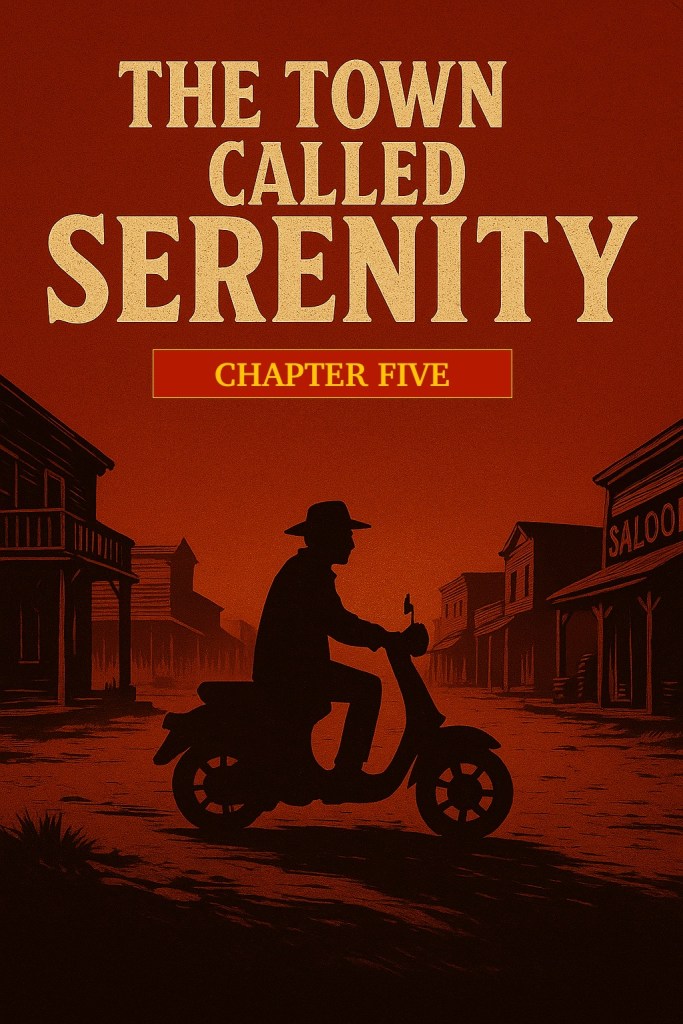
The Town Called Serenity – Chapter Five – The Clock In The Dust

By Benjamin GroffMedia© | benandsteve.com | 2025 Truth Endures©

3–5 minutes

Chapter Five: The Clock in the Dust

The bell above Petal’s shop rang twice—slow and deliberate.

That was the signal.

Wren waited until the third cloud passed over the moon before sliding off the schoolhouse roof. She moved like a whisper down the alleyway, avoiding the creaky boards and broken glass with practiced ease. She paused behind the horse trough near the sheriff’s office and whistled once—two notes, flat and low.

Chester was sitting inside the dim jailhouse with his boots propped up on a barrel. His bruised rib was bandaged with a strip of curtain. He heard the sound and stood up.

He opened the door.

Wren stepped into the lamplight. She was small and wiry, wrapped in an oversized coat that had seen better days. Her eyes were dark and deliberate, scanning the room, the exits, the Marshal.

“I watched you fight the Gentlemen,”

She said without greeting.

Chester gave her a nod, cautious but not cold. 

“You’re the girl from the roof.”

“I’m the girl from everywhere,”

She replied.

He gestured to a stool. 

“You hungry?”

She hesitated, then sat. 

“I want something else.”

“Alright.”

“I want Cain gone.”

Chester leaned back against the wall, arms crossed. 

“That makes two of us. But wantin’ it and surviving it are two different things.”

Wren pulled her notebook from her coat and opened it. She showed him a crude map—of underground tunnels, secret entrances, schedules.

“I’ve been tracking his movements for six months,”

She said. 

“He’s gotten sloppy. He trusts the wrong people. There’s a weak point—down in the old mines under the vault. He thinks no one remembers it exists.”

Chester raised an eyebrow. 

“And you want to hit him there?”

“I want to expose him first. Show Serenity what he is. Not just a tyrant. A liar. A coward. I can get you inside. You have to decide if you’re willing to break the rules you came here to enforce.”

He looked at her for a long moment. 

“You ever worked with a marshal before?”

“No,” 

Wren replied. 

“You ever work with a kid who knows where all the bodies are buried?”

Chester smiled. 

“Can’t say that I have.”

She closed the notebook. 

“Then we’re even.”

They shook hands—hers small and cold, his calloused and warm. In that moment, something changed. Not in Serenity. Not yet.

But it had started.

Meanwhile –––

Five miles west of Serenity, in a ravine that didn’t show on most maps, a boxcar shuddered to a halt. It stopped on rusted rails.

A figure stepped out—tall, dressed in black, face hidden beneath a wide-brimmed hat. Beside him, four others disembarked—mercenaries, by the look of them. Not local. Not from this state. Not from this country, maybe.

They called him Mr. Gallow.

No one knew if that was his real name. He didn’t speak often, but when he did, people obeyed—or disappeared.

Gallow held up a leather-bound dossier stamped with the faded seal of the Bureau of Internal Affairs. Inside was a photo of Chester Finch, clipped to a thick file marked:

“CLASSIFIED – OPERATION ASHWOOD.”

He flipped the page and revealed a second file—one that bore the name Braddock Cain.

And then a third.

Subject: WREN (Alias Unknown).

Status: Missing / Witness Protection Violation.

Gallow smiled faintly.

He turned to his team and said only two words.

“Kill quietly.”

They vanished into the desert night like wolves on the scent.

Back in Serenity

Petal watched the train lights fade on the horizon, her face tense.

She reached behind the counter, pulled out a dusty revolver, and said to herself, 

“They’re all waking up now.”

And somewhere, far below, in the tunnels beneath Serenity, a clock that had long stopped ticking began to turn again.

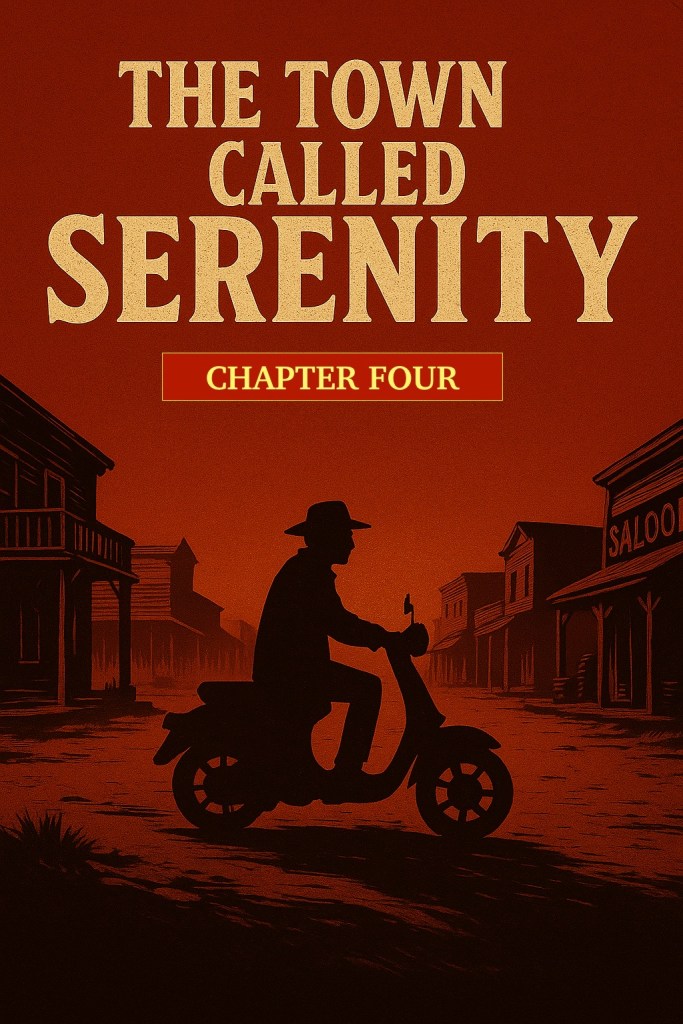
The Town Called Serenity – Chapter Four – Pieces on the Board

By Benjamin GroffMedia© | benandsteve.com | 2025 Truth Endures©

3–5 minutes

Chapter Four: Pieces on the Board

Braddock Cain stood in front of a pool table inside The Assembly, lining up a shot with surgical calm. His eyes didn’t leave the cue ball even as Poke relayed the report.

“He bloodied Silas’s nose, bruised Dutch’s ribs, broke Miles’ fiddle, and made Jonas fall on his ass,” 

Poke said, leaning against a cracked marble column. 

“Didn’t even draw his gun.”

Cain took the shot. The cue ball clicked sharply and sank the eight-ball in the corner pocket.

He stood slowly, placed the cue stick back on the rack, and poured himself a drink.

“And the town?”

“They watched,” 

Poke replied. 

“They didn’t help, but they didn’t laugh either. Some of ’em even looked –– curious.”

Cain stirred his drink with one finger. 

“That’s the worst part.”

Poke blinked. 

“Sir?”

Cain turned toward the window. 

“Fear keeps Serenity in check. When people get curious, they start to hope. And hope’s just a prettier way of saying ‘trouble.'”

He walked back to his velvet chair, every step echoing in the hollow room.

“I want to know everything about Marshal Finch. Where he came from. What he’s running from. Who sent him? And,”

He added, narrowing his eyes, 

“who he’s willing to die for.”

Poke nodded and disappeared.

Cain sipped his drink and muttered to the empty room,

“Let’s see what kind of man rides into Hell on a scooter.”

Across the Rooftops

Wren sat cross-legged on the corrugated roof of what had once been Serenity’s schoolhouse. The sun was setting in a blood-orange smear across the sky. She held a spyglass in one hand and a half-sharpened pencil in the other. A leather-bound journal rested in her lap.

Inside were names. Maps. Notes.

She turned to a fresh page and wrote:

Chester Finch – Marshal – Took a hit, didn’t fall. I watched the Gentlemen leave bruised. He won’t last a month. He might last longer.

Beside her sat a worn revolver wrapped in canvas, untouched. Wren didn’t shoot unless necessary. 

Observation was safer.

She reached into her coat and pulled out a folded piece of paper. It was a newspaper clipping, old and faded:

“LOCAL DEPUTY DIES IN FIRE — WIDOW, CHILD UNACCOUNTED FOR”

She stared at it for a long moment before tucking it away again.

Wren wasn’t born in Serenity. She was left here. Left during the chaos, after the fire, after the men in black suits came and went. Cain had taken her in—not out of kindness but calculation. He saw her silence, her memory, her talent for hiding in plain sight.

He never asked questions. Neither did she.

Until now.

She looked back toward the jailhouse, where Chester Finch was lighting a lantern in the window. He moved stiffly, but there was something in the way he held himself. Like a man who wasn’t afraid to die—but was trying real hard not to.

She flipped back through her notebook. She found a sketch she’d drawn weeks ago. It was a map of Serenity. The map had dotted lines marking the tunnels under the old mines. It showed the abandoned telegraph station and the hidden entrance to Cain’s private vault room.

Wren circled Chester’s name, then drew a faint arrow pointing to the vault.

It was almost time.

Elsewhere in Serenity ––

  • Petal wiped the dust from her apothecary shelves. She stared at a cracked photo of her brother. He was killed by Cain’s men for refusing to cook meth in the back room. She kept smiling, but her smile was starting to slip.
  • Julep Jake, now back in his cell by choice, was building something with matchsticks and chewing gum. “Civic infrastructure,” he explained to no one.
  • Silas Crane dipped his bleeding knuckle into holy water and laughed softly. “He’s gonna make me preach,” he whispered. “And I do love a sermon.”

Back in The Assembly, Cain sat alone in the dim light, polishing a gold coin between his fingers. One side bore the symbol of the old U.S. Marshal’s badge. The other side? Blank.

“Flip it,”

He whispered. 

“Heads, he burns. Tails, he breaks.”

He flipped the coin into the air and caught it.

But he didn’t look.

Not yet.

The Town Called Serenity – Chapter One

By Benjamin GroffMedia© | benandsteve.com | 2025 Truth Endures©

3–4 minutes

The Town Called Serenity

In a remote corner of the state, the roads grow narrow. The trees lean in like they’re sharing secrets. There lies a town called Serenity. The name is a cruel joke—there’s nothing serene about it. This is a place where street signs double as target practice. The law has long since departed. No one has noticed. The welcome sign on the outskirts used to say, Population: 312. Someone scratched it out and replaced it with Too Many.

In Serenity, bars outnumber churches, and the only thing thinner than a promise is a badge. It’s where outlaws hide not from the law but from one another. It’s a haven for grifters, gunmen, and ghosts of good men who didn’t make it out.

And into this outlaw’s paradise rolled Chester Finch.

Deputy U.S. Marshal Chester Finch was not the image of frontier justice. He didn’t ride in on a stallion or a dusty pickup truck. No, Chester arrived in Serenity on a cherry-red moped. It’s the kind you’d see zipping through suburbs. You also find it parked at a vegan coffee shop. He wore regulation boots, a broad-brimmed hat, and a badge that gleamed as if it still held some hope.

The moped sputtered as it crossed the town’s crooked boundary, its two-cycle engine whining like a mosquito. Chester parked outside the Rusted Spur Saloon. It was half brothel, half bar, and all trouble. Eyes were already watching him from behind dusty windows and cracked doors.

On the porch, an older man with a shotgun across his knees spat into a tin can and said, 

“That there’s the funniest damn thing I’ve seen all week.”

Chester dismounted, kicked the stand down, and brushed the dust off his badge. 

“I’m lookin’ for the sheriff,”

He said.

The older man cackled. 

“Ain’t had a sheriff since Mad-Eye Morgan got shot for winnin’ too many poker hands. That was six months back.”

“Then I suppose I’m it now,” 

Chester replied, squinting at the sun. 

“By order of the U.S. Marshal Service, I’m here to restore order.”

The laughter that followed came from more than just the porch. It drifted from second-story windows and behind swinging doors. It came from a town. The town believed the law was something you threw in a ditch. It was buried with the rest of your conscience.

Chester knew this wouldn’t be easy. He knew his badge would draw more bullets than respect. But he also knew Serenity was on the brink of something worse. The federal files hinted at growing ties to outlaw syndicates. There were whispers of gun-running. A name kept popping up: Braddock Cain.

Cain ran Serenity like a private kingdom. Tall, scarred, and charming as a rattlesnake in a bowtie, he was the unspoken king of vice. No one crossed him unless they wanted to disappear.

Chester had crossed worse. Or so he told himself.

His first night in Serenity ended with a knife fight. There was a horse in a bar. The moped was set on fire by a drunk named Julep Jake, who claimed to be the mayor. Chester arrested him anyway. This unpopular move earned him a cracked rib and a bloodied lip. It also earned him the first sliver of respect from the few decent souls still buried in Serenity’s mess.

By morning, Chester had taken over an old sheriff’s office. It was half caved in and smelled of rot and regret. He nailed his badge to the door. It was symbolic more than anything. And in this town, symbols were dangerous.

He had come for peace, riding on two wheels and carrying a quiet resolve. He found a town at war with itself. It was a fight that takes more than a badge to win.

But Chester Finch wasn’t here for symbolism. He was here to end the laughing.

Detective Clara Vale: Unraveling Pine Hollow’s Secrets

By Benjamin GroffMedia© | benandsteve.com | 2025 Truth Endures©

2–4 minutes

The morning sun had just begun to burn away the last wisps of fog. The fog clung to Pine Hollow’s deserted streets. At this moment, Detective Clara Vale stepped off the county bus. The little town—nestled between whispering pines and rocky hills—was where everyone knew your grandmother’s maiden name. In this town, no secret stayed buried for long. But something about the silent hush felt different today, as if the forest was holding its breath.

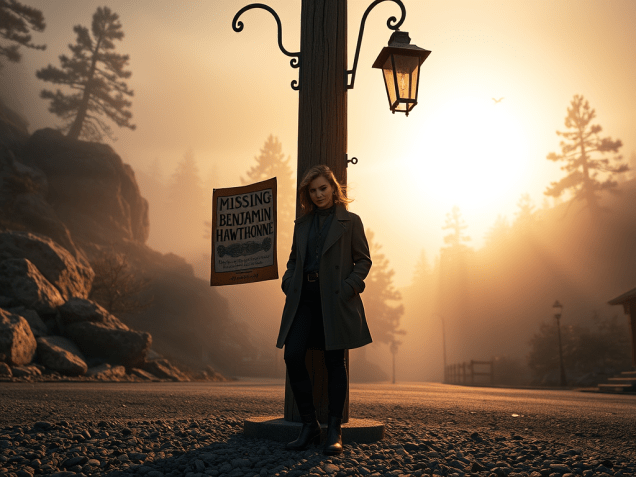
Clara’s boots crunched on the gravel. She walked to the crooked lamppost at the town square. There, a single bulletin board displayed the hand-painted flyer she’d come to see:

“Missing: Benjamin Hawthorne. Last seen at the Old Mill.”

Benjamin, a local schoolteacher, had vanished two nights before. He left only a trail of broken glass in his classroom. A smear of muddy footprints led into the woods. Clara studied the flyer’s edges—fresh tears around the corners told her someone had already pulled it down once. She taped it back in place and set off.

Her first stop was the Old Mill, its rotting wood groaning in the breeze. Inside, moonlight slanted through broken windows, illuminating desks overturned, and chalk dust still hovering in the air. Clara knelt by a desk. She noted the glass shards and a single, battered notebook. It lay open to a page filled with frantic mathematical equations. This was Benjamin’s lifework on the community’s crumbling dam.

Clara closed the book gently and pocketed it. The dam’s collapse would flood half the town; had Benjamin discovered a flaw and been threatened into silence?

As dusk fell, Clara meticulously combed through the Hawthorne farm. Benjamin’s aging parents stuttered about late-night visitors. Strange trucks idled on the gravel road, and their headlights flickered like watchful eyes. Their hands trembled as they described a low rumble, like a machine in the woods. Clara’s pulse quickened at the implication of clandestine logging or worse. She assured them she’d find Benjamin, her determination unwavering, then slipped out the back door.

By midnight, Clara was deep in the forest, tracking tire tracks that plunged toward the dam’s service tunnel. She shone her flashlight on fresh scuff marks along the tunnel walls. Heart pounding, she crept ahead until she heard a muffled voice. 

“Detective… over here.” 

Benjamin emerged from the shadows, bruised but alive, clutching the dam’s blueprints. 

“They wanted me to falsify the safety report,” 

He whispered. 

“When I refused, they locked me up.” 

Clara’s eyes narrowed as headlights flared above ground—masked men were coming back. Benjamin was by her side. She retraced her steps. She used the winding tunnel to slip past the guard trucks waiting at the entrance.

When they burst into the open, Clara raised her badge like a beacon. 

“State Police—step away from the dam!” 

Her command sent the conspirators scattering into the trees. Moments later, sirens rang in the distance—backup arrived earlier to secure the scene. In the stillness that followed, Clara handed Benjamin his blueprints. 

“Now the town knows the truth,” 

She said. As the first light of dawn filtered through the pines, Pine Hollow exhaled, its secrets finally laid to rest. 

The collective sigh of relief was relatable as Detective Vale boarded the morning bus, ready for whatever mystery came next.

Surviving Apocalypses: Earl’s Hilarious Journey

By Benjamin GroffMedia© | benandsteve.com | 2025 Truth Endures©

2–3 minutes

“How Earl Survived the End of the World (Three Times In One Week)”

It all started on Monday when the news said the world was ending. Again.

“Experts warn: AI, killer bees, and rising sea levels converge by Wednesday,” read the headline on Earl’s phone. He sighed, sipped his lukewarm coffee (the microwave broke last week—tragic), and Googled “How to survive multiple apocalypses.”

Step one: hoard supplies.

Earl ran to the grocery store, but unfortunately, so did the entire neighborhood. All that was left on the shelves were 37 cans of creamed spinach and one gluten-free hot dog bun. He grabbed both. Earl wasn’t proud.

Step two: fortify your home.

This was trickier. Earl’s DIY skills peaked at assembling an IKEA lamp in 2014 (and even that leans a little). He taped bubble wrap over the windows. He stacked his furniture into a makeshift barricade. He hung a sign on the door that read: “Beware of Dog (or raccoon—honestly not sure anymore).”

By Tuesday, the threat had shifted. AI wasn’t trying to destroy us; it just wanted us to finish a customer satisfaction survey. Earl politely declined. The bees were delayed due to weather conditions. The sea levels were rising slowly. Earl figured he had time to finish his Netflix backlog.

Then came Wednesday.

That’s when the real disaster struck:

🚨 The Wi-Fi went out. 🚨

Earl sat there, blinking into the void, unsure how to continue. How does one live without memes? How do you know what to be outraged about if you can’t check Twitter?

Earl tried reading a book. (Printed words? On paper? Barbaric.) He tried talking to my houseplants. Phil the fern judged him silently.

Finally, Earl ventured outside — mask on, hand sanitizer holstered like a gunslinger — only to discover ––

The neighborhood kids had set up a barter system.

“Two rolls of toilet paper for a bottle of sriracha!” 

One kid yelled.

“Half a pack of Oreo’s for an iPhone charger!”

Another bargained.

Earl traded three cans of creamed spinach for a Wi-Fi hotspot code—the best deal of his life.

By Thursday, the headlines read: World Fine (For Now).” 

Earl sighed in relief –– until he heard a knock at the door.

A drone hovered outside, lowering a package. Earl opened it to find:

A “survival for beginners” guidebook

An emergency avocado (slightly bruised)

A note that read:

“Stay tuned. Apocalypse 2.0 beta release coming Friday.”

Earl looked up at the sky, took a deep breath, and whispered:

“I’m going to need more creamed spinach.”

The Unlikely Astronaut: Walter Finch’s Accidental Adventure

Benjamin GroffMedia© | benandsteve.com | 2025 Truth Endures©

3–4 minutes

Title: “The Accidental Astronaut”

 Walter Finch had dreamed of the stars.
Walter Finch “The Accidental Astronaut”

Ever since he was a boy, Walter Finch had dreamed of the stars. His bedroom ceiling was a galaxy of glow-in-the-dark stickers. His shelves sagged under the weight of space encyclopedias and toy rockets. He knew the names of every astronaut in the Mercury, Gemini, and Apollo missions. He rattled off orbital mechanics faster than most people recite the alphabet.

There was just one problem.

Walter was terrified of heights.

Not just a little scared. Walter once got stuck on the third rung of a ladder while changing a light bulb. He had to call his neighbor for help. Airplanes? Never. Ferris wheels? A hard no. Balconies on tall buildings? He’d get dizzy just thinking about them.

So he buried his dreams of space travel beneath layers of rationalization. He became an aerospace technician—close enough to the action to feel involved, far enough from the edge to stay sane. Walter worked at the Johnson Space Center. There, he meticulously maintained spacecraft control panels. He also tested simulators and occasionally got to polish a real rocket capsule.

One evening, Walter had a particularly long day prepping a decommissioned capsule for a museum display. He climbed inside to double-check the switches. The interior was warm, quiet, and oddly comforting. He sat back in the pilot’s chair, which had once held real astronauts, and closed his eyes momentarily.

He fell asleep.

And the world moved on.

Somehow, through a wild and improbable series of events, Walter’s capsule encountered several issues. These included miscommunication, a sudden schedule change, and a very distracted launch coordinator. The capsule had been quietly reassigned to a last-minute uncrewed test mission. It was rolled onto the launchpad, sealed, and prepped for liftoff.

Walter awoke to the unmistakable rumble beneath him.

At first, he thought it was a dream. Then, the countdown began.

“Ten… nine…”

Panic hit like a tidal wave. He tried shouting, but the thick insulation swallowed his voice.

“Eight… seven…”

He fumbled with the comm system, but it was already rerouted for the launch.

“Six… five…”

By four, he was crying. At two, he was frozen. And at zero…

The world disappeared.

The force of the launch pinned him to his seat. His breath was ripped from his lungs. His heart pounded like a jackhammer. He blacked out for a second—maybe more.

When he came to, everything was quiet. No more rumble. No more fear.

Just space.

Black velvet studded with stars stretched infinitely beyond the small porthole. The Earth, a swirling marble of blue and green, floated beneath him. The capsule drifted peacefully, like a leaf on the wind.

Walter laughed.

It wasn’t fear anymore. It was a wonder. It was a joy.

For the first time in his life, Walter Finch wasn’t afraid of heights—because there was no height. There was only the infinite.

Mission Control eventually figured out what had happened. There was some yelling, some panicking, and a lot of paperwork.

But by then, Walter had already made history. He was the first untrained man to make it to orbit and back. This was achieved entirely by accident.

They brought him down safely and even gave him a medal. Someone suggested a movie deal. He just smiled and looked up.

From that day on, Walter Finch wasn’t the man afraid of ladders anymore. He was the man who slept his way into space—and found courage among the stars.

And now and then, late at night, he’d climb up to the roof of his house. He would lay on his back and stare at the sky.

He didn’t feel small anymore.

He felt infinite.

The Merman’s Transformation: Wally Askins’ Final Voyage

GROFF MEDIA 2024© TRUTH ENDURES IMDBPRO

Presented by benandsteve.com By: Benjamin Groff II©s

2–3 minutes

The Merman’s Final Voyage

The Mernan
Wally Askins – The Merman Groff Media©

Wally Askins had spent his life dreaming of the sea. He did not aspire to be a sailor or fisherman, but as something far more elusive—a merman. His belief in the sea was so strong that it seemed to shape his very being. He often spoke of the freedom of the water. It was a world unchained by the burdens of war. It was free from politics and human frailty. He believed neither in heaven nor hell. Still, he knew where he belonged if there was a way to pass into another existence.

His family and friends humored him over the years. They nodded along as he recounted legends of mermaids and mermen. These creatures swam in secret beneath the moonlit waves. Wally passed at seventy-eight. There was no question. His ashes would be scattered in the fabled river he had always spoken of.

On a misty morning, his loved ones gathered at the water’s edge. The river stretched before them like a silver ribbon. It dissolved into the fog. The air was thick, the kind that swallowed sound, leaving only the hush of lapping waves. They carried out his wish with solemn hands, releasing his ashes into the current.

At first, it was just water meeting dust. But then the river stirred.

The mist swirled, deepening, shifting into shapes that moved with intention. A ripple grew into a form—long, sinuous, and glistening like fish scales under moonlight. A figure emerged, half-man, half-sea creature, his eyes glowing with an otherworldly light. It was a sight that left the onlookers breathless, their hearts pounding with a mix of fear and wonder.

Wally Transitions Into A Merman After His Ashes Are Spread
The Merman – The Late Wally Askins Groff Media©

It was Wally.

His beard had turned to strands of seaweed, and his hands webbed like the legends foretold. A great, shining tail flicked behind him, disappearing beneath the water before rising again. The mourners gasped. Their hearts pounded in their chests. They stepped back in awe. Terror filled them at the sight of their beloved Wally transformed into a creature of the sea.

Then, through the thickening fog, a sound echoed—a ship’s bell, distant and struggling. The fog was too dense for a lighthouse beam to cut through. The boat would be lost.

Wally turned toward the river’s mouth, where the sea was called. Without hesitation, he dove ahead, his form shimmering as he swam into the mist. As he did, a soft glow spread in his wake. It was a beacon unlike any other. It guided the ship safely past the unseen dangers lurking in the fog. The sailors, their hearts filled with relief and gratitude, whispered of the merman who had saved them.

From that day on, sailors whispered of a presence in those waters. They spoke of a merman who led lost ships to safety. This happened when lighthouses failed. Some say the river was repaying him for his belief, others that he had found his way home.

His family and friends never spoke of what they saw. Yet, whenever they returned to the river, they would watch the mist. They waited for the shimmer of scales just beneath the surface.

Waiting for Wally.

The Long Holiday Journey: Family Moments on the Road

GROFF MEDIA 2024© TRUTH ENDURES IMDBPRO

Presented by benandsteve.com By: Benjamin Groff II©s

3–4 minutes

The Long Holiday Ride

Going Home
The Miller Family Going Home For the Holidays,

The old pickup truck rattled down the highway, packed tight with the Miller family. The father, Dale, gripped the steering wheel, his sharp eyes scanning the road ahead. Beside him, their mother, Janice, balanced a warm dish of sweet potatoes wrapped in a towel on her lap. Every thirty seconds she would let out a ‘hiss,’ and reach for the dash, her only comment to Dale’s driving. In the same seat, the children jostled for space. Clayton, the eldest at twenty-two, leaned against the window with his arms crossed. His younger sisters, Maggie and Rachel, squeezed in beside him. Then there was little Jack. He was the baby of the family, barely eight, and sat between his sisters. His feet barely touched the floor.


It was the same every year. They drove forty miles on bumpy roads. Gravel spat against the undercarriage. The chilly air sneaked in through cracks in the old truck’s frame. The family’s first stop was Janice’s side, the sprawling Henderson clan, where a sea of cousins, aunts, and uncles waited. The noon meal would be loud, laughter filling the air along with the scent of roasted turkey and homemade pies.

Clayton was ever the quiet one. He watched the open fields pass by. Meanwhile, Maggie chattered about the games she’d play with her cousins. Rachel checked the food in the back. She made sure nothing had tipped over. Meanwhile, Jack, restless, kicked his feet. He asked every ten minutes, “How much longer?”

When they finally pulled into the driveway of Janice’s childhood home, they heard the noise instantly. It hit them before they even got out of the truck. Kids ran around the yard. Adults stood in clusters laughing. The kitchen was an organized chaos of steaming dishes and busy hands. The family squeezed through the door, greeted by warm hugs, as coats were peeled off and plates were filled.

After lunch, games and stories took up the afternoon. Clayton found himself talking with an uncle about work on the ranch, while Maggie and Rachel gossiped with their cousins. Jack, after an impressive three plates of food, ran outside to join a game of tag. Dale was talking to his favorite brother-in-law, about a horse he was bringing along.

But there was no time to linger too long. As the sun began to sink, Dale gave the usual call: “Time to load up! We still got another stop!” They groaned and said their farewells. Everyone piled back into the truck with full stomachs. Hands waved through the window.

The second stop was Dale’s side, a quieter gathering with just his sister’s family. Fewer cousins, a calmer atmosphere, and jokes cracking from Bus and Virgil. Aunt Sis served coffee and pie, and the talk was slower, nostalgic—old family stories, memories of Christmases past.

Rachel curled up in a chair with a book while Maggie helped Aunt Sis in the kitchen. Jack, fighting off sleep, leaned against his mother, his eyes drooping. Clayton sat with his dad and uncle, talking about the year’s crops and the price of cattle.

By the time they left, the truck was much quieter. The ride home was filled with drowsy murmurs, Jack fast asleep against his mother’s side. Rachel and Maggie leaned on each other, the warmth of the long day still lingering. Dale, was dreaming of all the memories he had been reminded of while seeing his folks and kin.

As the headlights cut through the darkness, Dale glanced in the rear view mirror at his family. It was a long trip every year. Yet, as he looked at his wife and children—fed, happy, and together—he knew it was always worth it.

The holidays weren’t about the miles traveled, but the moments shared. He never had a million dollars, but he sure felt like it.

The Enduring Power of Love and Memory

GROFF MEDIA 2024© TRUTH ENDURES IMDBPRO

Presented by benandsteve.com By: Benjamin Groff II©s

2–3 minutes

A Bridge Beyond Time

The old oak tree, a silent witness to Sarah's life.
The old oak tree is a silent witness to Sarah’s life.

The old oak tree was a silent witness to Sarah’s life. It stood tall at the top of the hill, its branches stretching toward the heavens. Sarah sat on a wooden bench beneath its shade. She stared at the horizon, where the sun-drenched the sky in shades of gold and crimson. This was where she had always met her grandfather, who taught her about life, love, and faith. The oak tree, a symbol of strength and endurance, had always been a part of their meetings.

She can still hear his voice—soft yet firm, filled with wisdom. “Death takes the body, sweetheart, but never let it take your love. Love stays here.” He had placed his hand over her heart when he said it.

It had been a year since he passed. She still felt his presence in the whisper of the wind, even in the rustling leaves. The loss had been unbearable, but time had taught her something—her grandfather was not truly gone.

Her mind held the memories. They were like precious gems, each a testament to his life and their bond. She remembered sitting on his lap as a child, listening to stories of his youth. She recalled the scent of his old leather chair. He hummed an old hymn while tending his garden. She remembered the warmth of his calloused hand in hers during Sunday walks. Like a living tapestry, these memories kept him alive in her heart.

Her heart kept the love. Love did not disappear with death. It remained, placed safely within her, growing stronger each day.

And then there was faith. Faith whispered that this was not the end. It reassured her that she would see him again one day in a place beyond time and sorrow. This promise filled her with hope and anticipation.

Sarah reached into her pocket and pulled out a small wooden cross he had carved for her long ago. Clutching it tightly, she closed her eyes. “I miss you, Grandpa,” she whispered.

A gentle breeze brushed against her cheek. For a brief moment, she almost felt his hand on her shoulder. The sensation was so real that she almost felt the roughness of his palm and the warmth of his touch.

She smiled. Love remained. Memories endured. And faith promised—one day, they would meet again.

The Man Who Belonged: A Dark Psychological Mystery

GROFF MEDIA 2024© TRUTH ENDURES IMDBPRO

Presented by benandsteve.com By: Benjamin Groff II©s

4–6 minutes

The Man Who Belonged

Ethan Caldwell woke up every morning with the certainty that he was where he was supposed to be. His town, Dunridge, was a place people left but rarely arrived at. It was a quiet, tree-lined community. The roads curved in familiar ways. The seasons changed precisely when expected. The faces at the local diner never seemed to age.

He belonged here. He had always belonged here.

And yet, something was wrong.

It wasn’t how he looked—Ethan was an ordinary man with an ordinary life. He had ten fingers, ten toes, and a name that didn’t feel borrowed. Ethan had memories of childhood scraped knees. He remembered teenage love. His father taught him how to drive down the old county road. He worked at the hardware store. He knew which coffee shop made the best brew. He navigate the town with his eyes closed.

But deep within him, something itched. It wasn’t a feeling of displacement—it was the opposite.

He fit in too well.

There were no awkward silences when he spoke to strangers. No one ever misheard his name or mistook him for someone else. When he ordered at the diner, the waitress nodded as if she had already known his choice. His keys never went missing. The mail always arrived right when he expected.

He tried to shake the feeling, but it settled deeper.

One night, he walked the streets of Dunridge in search of something—he didn’t know what. The town was calm, quiet, and lit by the amber glow of streetlamps. As he passed the shops, he caught his reflection in the glass.

He looked at himself. Normal.

But the reflection wasn’t watching him.

It was waiting.

A chill ran down his spine, and Ethan took a step back. 

The moment he did, the feeling disappeared. He was himself again, the same Ethan Caldwell who had lived here his whole life.

But the thought lingered: Had he lived here his whole life?

The next day, he tried to recall his first memory of Dunridge. It was not just any memory. It was his first one, the earliest thing he remembered.

But there was nothing before the age of twenty-seven.

That wasn’t right.

He had childhood memories. He had school pictures. He had friends who swore they’d known him since grade school.

Hadn’t they?

He asked his neighbor, Mrs. Wallace, how long she had lived in Dunridge. She smiled, hands on her porch railing.

“Oh, all my life.”

“And me?” 

He asked.

She blinked, her smile unwavering. 

“Why, Ethan, you’ve always been here.”

He swallowed. 

“Right. Always.”

Mrs. Wallace nodded as if the question itself was odd. 

“You belong here, Ethan. Always have.”

His stomach twisted.

Somewhere in the distance, a clock tower chimed. Ethan had never noticed it before.

And suddenly, he was sure—something was wrong with this place.

Or maybe something was wrong with him.

That night, incapable of shaking the feeling, Ethan wandered the streets again. The town was as still as ever, its perfection unnerving. He passed the grocery store, the barbershop, and the town hall. Then he found himself in front of the library—its doors unlocked, though he had never seen anyone inside past closing.

He stepped in.

Dust motes filtered in the air, interrupted by his presence. The smell of old paper filled his nostrils. He ran his fingers along the spines of books until he reached the town records. He pulled one down and flipped through its pages.

And his blood ran cold.

There were no births recorded in Dunridge. No deaths. Only arrivals.

A new book, bound in leather, sat on a lower shelf. Inside, Ethan found the names of the people he’d known all his life next to brief descriptions. Scanning the pages, his hands trembled as he read:

Ernest Thatcher – Arrived: October 12, 1956 – Deformed hands, two thumbs on the left hand.

Lillian Monroe – Born without eyes

Samuel Dwyer – three-legged, five-arms, ousted by family at age 1

Patricia Thorne – Hairless, extra digits on each hand

The list went on. Each name was followed by a peculiarity—some mild, others grotesque, all rejected from wherever they came.

Ethan hesitated before flipping to the last page, where his name should have been. And when he found it, he almost dropped the book.

Ethan Calloway – 27 years old. No known origin. No memories before arrival. There is no past to recall. No home before Dunridge.

His breath hitched. His hands shook.

The town knew. All the townsfolk knew.

They were all misfits. They were cast out, discarded, and abandoned. They were left to disappear into a world where their abnormalities were masked. No one asked questions in this world. No one looked out of place because everyone had become perfect.

Even Ethan himself.

But why was he here? Why was he the only one who looked –– normal?

He turned to the mirror again, staring at his reflection under the streetlight.

And then, for the first time, he indeed saw himself.

He saw what he had been blind to all along.

And that’s when the horror set in.

Ethan had ears where his nose should be. There was a mouth where his ears should go. A nose sat on top of his head. His eyes looked back at him from his throat. Then, Ethan wished that he had never questioned his being. 

Sometimes, it is best to not change memories.

Echoes of War: A Bond Forged in Nightmares

GROFF MEDIA 2024© TRUTH ENDURES IMDBPRO

Presented by benandsteve.com By: Benjamin Groff II©s

2–3 minutes

Echoes of War

Chad Branson woke in a cold sweat, heart hammering against his ribs. The dream had come again—flashes of burning villages, the thunder of distant explosions, the acrid stench of smoke. He had never been to war. He had never even held a gun. Yet, the memories felt real, like echoes of a life he hadn’t lived.

It had started five years ago, these violent dreams that left him breathless and shaken. He had tried therapy, meditation, and even medication, but nothing dulled the visions. He had no explanation—until the day he met him.

The chance meeting happened in a quiet café, a place Chad often escaped to in hopes of finding solace. That morning, as he reached for his coffee, his hand bumped into another.

“Sorry,” 

He murmured, glancing up—and froze.

The man before him had eyes that mirrored his own exhaustion. His jawline was sharp, and faint scars traced his brow. When he spoke, his voice carried a weight. 

Chad recognized it but couldn’t place it.

“Chad Branson,” 

The man said, extending a hand.

Chad hesitated. 

“That’s… my name.”

The other man chuckled. 

“I know. That’s why I introduced myself.”

A strange silence stretched between them before Chad spoke again. 

“Do I know you?”

The other Chad was an ex-soldier and a survivor of two deployments. He was also the bearer of the nightmares Chad had somehow inherited. Chad watched him closely.

“No,” 

He said at last. 

“But I think we’ve been living the same war.”

Over the next weeks, they talked, comparing details.

Every dream Chad had lived, the other had experienced firsthand. The battlefield in his mind had once been real. The pain, the horror—it belonged to this man, but somehow, it had become part of Chad, too.

Neither explained it, but they didn’t need to. In their shared pain, something else took root: understanding and affection. A bond neither expected nor deny.

One night, as they sat in the dim glow of Chad’s apartment, he reached for the soldier’s hand. 

“Maybe the universe gave me your memories for a reason,”

He murmured. 

“Maybe I was always meant to find you.”

Echoes of War
Echoes of War

The other Chad squeezed his fingers gently, a small, weary smile forming. 

“And maybe,” 

He whispered, 

“We can finally find peace together.”

The nightmares didn’t seem so heavy for the first time in years.

For the first time, neither of them was alone.

The Lost Shopper: A Remarkable Time-Travel Mystery

GROFF MEDIA 2024© TRUTH ENDURES IMDBPRO

Presented by benandsteve.com By: Benjamin Groff II©s

3–4 minutes

The Lost Shopper

Harold Wexley left his house on a crisp October morning in 1977. He carried a shopping list, which his wife, Martha, had scribbled on the back of an old envelope. The list read bread, milk, eggs, and a pound of ground beef. That was all he needed. The sun was high, and the air smelled like damp earth. He had a pocket full of change jingling as he walked toward Miller’s Grocery, just six blocks away.

Harold never returned home.

Martha waited—first hours, then days. The police took her report, shook their heads, and assured her that most missing persons had turned up. Neighbors speculated wildly. Some thought maybe Harold had amnesia. Others guessed he’d run off with some floozy. He had just vanished into thin air.

The years passed, and Martha grew old. The town changed. Miller’s Grocery shut down in the ’90s, replaced by a chain supermarket. The world moved on.

Then, in 2024, something impossible happened.

Found Where He Was Lost

At precisely 9:17 a.m. on a Saturday, an employee at the local SaveMore supermarket screamed, sending a ripple of confusion through the store.

Harold Wexley stood in aisle seven, between the cereal and baking goods. He wore the same corduroy jacket. He also wore brown slacks and scuffed loafers. These were the clothes he wore when he left home 47 years earlier. Harold was still clutching the shopping list in his hand. His hair had not grown. His skin had not aged.

When the police arrived, Harold blinked at them in utter confusion.

“What’s all the fuss about?”

He asked, his voice scratchy from disuse.

“I just came in to pick up a few things.”

The officer, utterly dumbfounded, asked,

“Sir, do you know what year it is?”

Harold laughed.

“What question is that? It’s 1977.”

The grocery store manager rushed ahead.

“Sir, this place wasn’t even here back then. This store opened in 1999!”

Harold frowned, rubbing his temple. He looked down at the list in his hand. The ink had not faded. The paper wasn’t brittle. His clothes smelled faintly of Martha’s lavender detergent.

But Martha was gone. His house was gone. His entire world had disappeared. He had been standing in this store, this spot. It was as if no time had passed.

The Mystery Remains

Scientists, journalists, and conspiracy theorists all descended upon Harold. Tests revealed that he was, biologically, still 42 years old. He remembered nothing beyond walking into Miller’s Grocery on that fateful day. He hadn’t eaten in 47 years. He hadn’t aged.

Some claimed he had slipped into a time loop. They believed the store had somehow preserved him in a pocket of frozen time. Others whispered about aliens, government experiments, or divine intervention.

Harold, meanwhile, was only concerned with one thing.

“Can someone tell me where my wife is?”

No one had the heart to answer him.

Epilogue

Harold never adjusted to the modern world. He refused to believe that the year was 2024, even when he saw flat-screen TVs and self-checkout kiosks. He spent his days wandering the grocery store, staring at shelves full of strange new products. He was looking for the familiar brands of his youth.

One night, after closing, a janitor was working late. He swore he saw Harold standing in aisle seven. Then he blinked, and Harold was gone.

The next day, an old yellow envelope with a shopping list was found on the floor. It was written in Martha’s neat handwriting. It seemed to have fallen from Harold’s hand in confusion.

No one ever saw Harold again. Sometimes, in the stillness of the grocery store, employees swore they heard the faint jingle of coins. The coins seemed to come from a pocket that wasn’t there, as if Harold’s spirit still wandered the aisles.

And sometimes, in the stillness of the grocery store, shoppers would listen closely. Even they swore they heard the faint jingle of coins. The sound came from a pocket of a man’s pants. It was from Harold, who had disappeared again.

The Legend of the Wishing Tree: A Magical Tale

GROFF MEDIA 2024© TRUTH ENDURES IMDBPRO

Presented by benandsteve.com By: Benjamin Groff II©s

1–2 minutes

Deep in the heart of the Whispering Wood stood an ancient oak known as the Wishing Tree. Its gnarled branches stretched toward the heavens. The tree’s roots twisted deep into the earth. The soil received whispering secrets from it.

The legend passed from generation to generation. It told of the tree’s magic. The tree would grant a single wish to those who truly believed.

Many travelers sought the Wishing Tree. Only a rare few with pure hearts and sincere desires ever found it. The forest guided them. The wind carried soft murmurs. These murmurs led them down winding paths until they stood before the towering oak. Beneath its emerald canopy, the air shimmered with an almost otherworldly glow.

One such seeker was a young girl named Elara. She had heard the tales from her grandmother, who had once made a wish upon the tree as a child. With hope in her heart, Elara ventured into the forest. She followed the rustling leaves and the whispering wind. Soon, she stood before the grand tree.

Kneeling upon the moss-covered roots, she closed her eyes, her heart beating with anticipation, and whispered her wish.

“I wish for our village never to go hungry again.”

Elara’s voice carried the hope. It also carried the love of her people.

The tree remained silent, its leaves barely stirring. But then, a single golden acorn dropped into Elara’s hands. She gasped as warmth spread through her fingers.

Understanding the tree’s silent message, she carried the acorn home and planted it in the center of her village.

Days turned to weeks, and soon, a miraculous tree sprouted. Its branches bore fruits of all kinds—apples, pears, oranges, and even wheat grains. The villagers rejoiced, their hearts filled with joy and relief, never knowing famine again. Elara knew, in her heart. Now a guardian of the magical grove, she understood that belief and kindness were the magic behind the Wishing Tree.

And so, the legend continued, whispered among the trees, waiting for the next believer to find their way.

Ramone’s Lonely Adventure: A Tale of Discovery

GROFF MEDIA 2024© TRUTH ENDURES IMDBPRO

Presented by benandsteve.com By: Benjamin Groff II©s

4–6 minutes

Ramone was not supposed to go to town without his older siblings. Nonetheless, he felt he had to on this day. He had awoken without finding anyone in his home. The house was empty. The animals had disappeared. Even the dogs were not there. They typically stayed at home when everyone had to go to work. 

Ramone was alone. There was no reason he knew of for this. The boy had woken up in a strange place. He was stuffed under a bed and pushed between a bed and the wall. He thought he must’ve had a dream and wandered there. Why else would he be in such a place? Ramone was never left alone and was beginning to worry something terrible had happened.

Ramone crawled out from under the bed, his heart thumping in his tiny chest. He rubbed his sleepy eyes, trying to make sense of the eerie silence around him. The morning light poured through the cracked window. Yet, the house felt different. It was empty and hollow as if no one had been there for a long time.

He ran to the kitchen. He expected to see his mother at the stove. He also thought his older sister would scold him for being late for breakfast. Instead, the table was bare. There was no food, no dishes, nothing. He called out, his voice small against the stillness.

“Mamá?”

No answer.

He hurried outside, stepping onto the dusty ground with bare feet. The corral was empty. The goats, the chickens—gone. Even the dogs that always lounged in the shade were missing—a lump formed in his throat. Something was wrong.

Ramone had often been told not to go to town alone, but fear overpowered any thoughts of disobedience. If his family wasn’t home, maybe they had gone to town for help. He had to find them.

He slipped on his too-big sandals and started down the narrow dirt path that led to town. The sun was climbing higher, and the heat pressed against his small frame. The closer he got to town, the more his stomach twisted.

Something felt –– off.

When he reached the outskirts, he stopped. The usual chatter of morning markets and passing cars was missing. The streets were strangely quiet. Shops stood open, but no one was inside. Tables were set with half-eaten meals as if people had left in the middle of breakfast.

His breath came in quick gasps. His family wasn’t there.

No one was.

Ramone was alone in an empty town.

And then, a sound broke the silence from somewhere down the street—soft, slow footsteps echoing against the abandoned buildings.

Someone was coming. The footsteps became louder. It became clear that a cart being pulled by a donkey was coming around the corner. But there wasn’t a person with it.

Ramone’s heart pounded in his chest. The cart rattled onward, its wooden wheels creaking against the empty street. The donkey plodded ahead, its ears flicking as if listening for a command that would never come.

But there was no driver.

Ramone took a step back, his tiny hands trembling. His words from the day before echoed in his mind. He yelled words after getting into trouble for mischief that had found its way into his life.

“I wish I was the only person in the world!”

Had he wished for this? Had his anger somehow made it real?

His legs felt heavy as if the ground itself wanted to pull him down. He turned in circles, hoping—praying—to see someone step out of a doorway or call his name. But no one did.

Tears welled in his eyes. He hadn’t meant it. He didn’t want to be alone.

The cart rolled past him, and the donkey’s slow, steady steps were the only sound in the world.

Ramone squeezed his eyes shut, shaking his head.

“Wake up, wake up!” 

He whispered, pressing his fists against his temples. 

“This has to be a dream.”

He forced his eyes open.

The town was still empty.

He ran, his sandals slapping against the dusty road. He ran past the silent market. He ran past the still houses. He passed the church where the bells should have been ringing. But they weren’t ringing.

And then—he saw his home.

It looked just as he had left it. The door was slightly open, swaying in the wind.

He rushed inside, desperate. 

“Mamá!”

he cried.

“Papá! Anybody!”

Silence.

Ramone stumbled into his room, his breath coming in sharp gasps. The bed was there. The blankets were rumpled as if someone had pushed them aside in the middle of the night.

His knees buckled, and he collapsed onto the mattress. He curled up, his tiny body shaking.

“I take it back,” 

He whispered into the fabric. 

“I don’t want to be alone. I want my mamá. My papá. My sisters. Please…”

The weight of exhaustion pressed down on him, his eyelids growing heavy. The room began to spin, the world around him fading into darkness.

Then—

A voice.

Soft. Familiar.

“Ramone? Mijo, wake up.”

His eyes fluttered open.

The morning light streamed in. Ramone’s mamá stood over him, her warm hand brushing his forehead. From the kitchen, he heard his sisters laughing, the clatter of dishes, and the barking of the dogs outside.

His heart leaped.

It was just a dream.

It was a terrible, lonely dream.

Ramone threw his arms around his mamá, holding onto her tightly.

She chuckled, stroking his hair. 

“What’s gotten into you, mi niño?”

Ramone didn’t answer. He just held on, knowing that, no matter what, he would never wish to be alone again.

When Time Stopped: A Tale from Briar Hollow

GROFF MEDIA 2024© TRUTH ENDURES IMDBPRO

Presented by benandsteve.com By: Benjamin Groff II©s

2–3 minutes

It happened at precisely 3:17 p.m. on a warm autumn afternoon. The town of Briar Hollow had always been a quiet place. The most exciting event of the week was the arrival of fresh pies at Millie’s Diner. But on this particular day, something changed. Time stopped.


No one saw it happen. There was no flash of light, and there was no tremor in the ground. One moment, the clock on the courthouse tower was ticking as usual, and the next, its hands were frozen. Birds hung motionless in the sky, leaves hovered mid-fall, and the wind seemed trapped.


At first, the townsfolk didn’t notice. Old Mr. Grady blinks in confusion halfway through handing change to a customer, as the coins refuse to drop from his fingers. Sarah Porter had been driving to the grocery store. She finds her car inexplicably locked in place. The engine still hums. Children at the playground hang in mid-swing, their laughter caught in their throats.


And then, they noticed each other. Wide eyes met, tentative steps were taken, and panicked voices rose into the still air. The world had paused, yet they remained unstuck, the only things moving in a town frozen in time.


The local librarian, Maggie Holcomb, was the first to suggest that something bigger was at play.

“This isn’t just a power outage,”

she murmured, staring at the unmoving second hand of her wristwatch.

“This is…impossible.”


Hours passed, though the sky did not change. The sun remained where it was, suspended in golden radiance. Some tried to leave town, only to find that the roads looped them back to the center. Others attempted to wake those frozen, but their efforts were in vain. The townsfolk, once filled with panic, began to feel a creeping sense of fear. Fear turned to despair, and then—acceptance. Their emotional journey mirrored the strange stillness that had befallen their town.


The people of Briar Hollow, despite the unchanging world around them, learned to adapt. They still spoke, ate, laughed, and cried. Days passed, though they had no real way to count them. And just when they resigned to this strange eternity, the clocks began to tick again. Their resilience in the face of the unknown was a testament to the human spirit.


It was as sudden as it had started. The coins fell from Mr. Grady’s hand, Sarah’s car lurched ahead, and the children’s laughter resumed mid-breath. The world snapped back into motion, unaware that it had ever paused.


Yet, the people of Briar Hollow knew. They would never forget that strange day when time stopped. It was an even stranger feeling that just, it had been watching them.

The Cat Who Became King: Whisker’s Tale

GROFF MEDIA 2024© TRUTH ENDURES IMDBPRO

Presented by benandsteve.com By: Benjamin Groff II©s

2–3 minutes

“Whisker the Magnificent: The Cat Who Became King”

In the grand kingdom of Eldoria, mighty kings and queens ruled vast lands. No one ever expected their next ruler to be ––– a cat.

It all began when King Aldric, the last of his line, passed away without an heir. The kingdom was chaotic, for the noble families all vied for the throne. Arguments broke out, alliances crumbled, and the land teetered on the brink of war.

Amid this turmoil, a small, scruffy cat named Whisker roamed the royal palace. He had been the late king’s favorite pet. Whisker was a feline of unusual intelligence. His golden eyes seemed to see into a person’s very soul. Whisker spent his days lazily lounging on the throne as if he already owned it.

One day, the nobles gathered to decide the fate of the kingdom. The council was about to descend into another shouting match. Then Whisker leaped onto the great table and let out a commanding “meow.”

The room fell silent.

The royal advisor, an old and wise man named Cedric, chuckled. “This cat would make a better ruler than squabbling fools.”

The nobles laughed, but then a curious idea took hold. Whisker had lived in the palace for years, witnessing political games and royal affairs. He had a knack for knowing which people were trusted, often hissing at schemers and rubbing against the kind-hearted. What if –– what if fate had chosen him?

The High Priest of Eldoria, known for interpreting omens, declared, “The gods often choose the least expected. This feline is their will made manifest.”

And so, as a jest at first, they crowned Whisker with a tiny golden circlet. But what began as a joke soon became a tradition. Now known as –– King Whisker the Magnificent ––, he was placed on the throne. His presence alone brought peace, for no noble dared question his rule—after all, who argues with a cat?

Of course, Whisker did not speak, but he ruled in his way. When matters of state were brought before him, he would purr to show approval. If he disapproved, he would flick his tail and walk away. If a noble displeased him, he would swat their hand with his paw. Soon, even the most corrupt learned to fear his judgment.

Under King Whisker’s reign, Eldoria flourished. The land was peaceful, trade thrived, and justice prevailed. The people adored their feline ruler, leaving out bowls of milk and fish in tribute.

Years passed, and when Whisker finally passed into legend, a statue was erected in his honor, inscribed with the words:

“He ruled with wisdom, claw, and whisker.”

And so, Eldoria remained a land where, for one golden age, a cat had indeed been king.

Cyclops in the Freezer: A Police Investigation Unfolds

GROFF MEDIA 2024© TRUTH ENDURES IMDBPRO

Presented by benandsteve.com By: Benjamin Groff II©s

4–6 minutes

Officer Christopher Cain and Officer William Fife had only been with the department briefly. Max Hinkle and Loyd Mavis’s senior officers often supported them on calls. They ensured the rookies didn’t get in over their heads.


That night, the fog was thicker than the young officers had ever seen. It clung to the streets like a dense blanket, reducing visibility to barely a few feet before their patrol unit. The radio crackled to life, and their dispatcher’s voice cut through the eerie stillness.

“Unit 17 and Unit 23 respond to 809 South Beaver Street. Caller reports strange occurrences and possible screaming.”

The call came in, and without hesitation, the officers prepared to face the unknown.

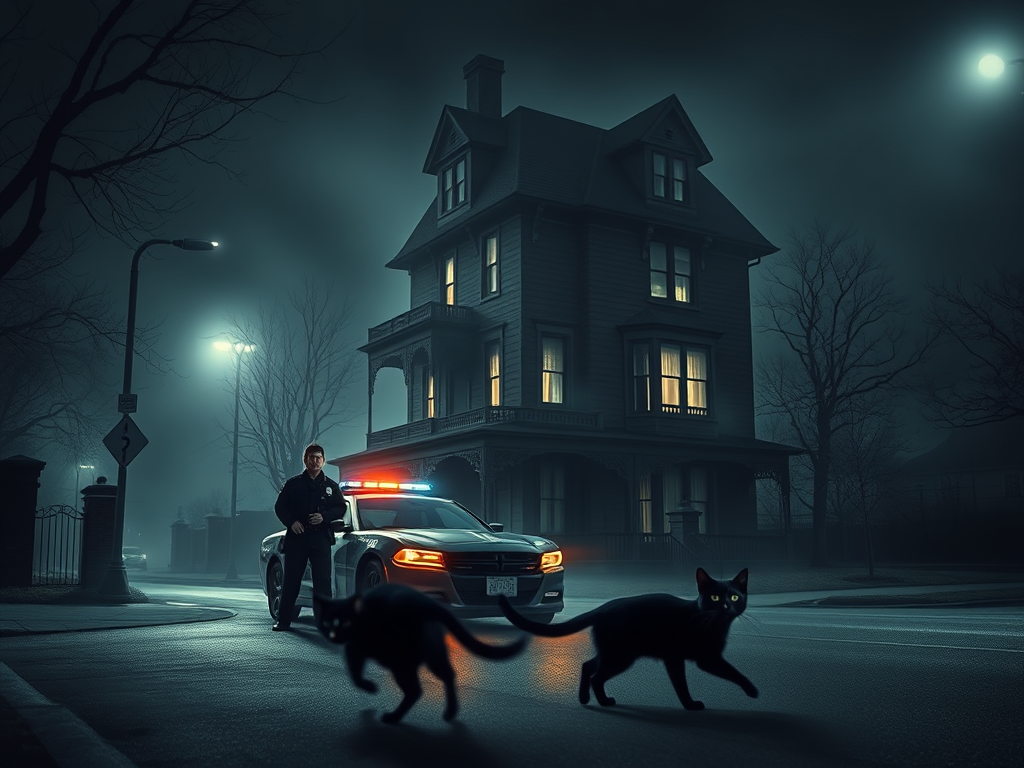
The mention of strange occurrences and possible screaming on Beaver Street sent a shiver down their spines. The street was lined with old, looming houses, most of which had seen better days. This location stood out as a towering two-story relic. It bore an uncanny resemblance to the Addams Family home from television.

The officers pulled up, the house’s silhouette barely visible through the fog. A black cat let out a piercing yowl as they exited the patrol car and bolted past them. Both officers jumped, reaching instinctively for their sidearms. Their senior partners, standing beside them, chuckled.

“Calm down, boys,”

Sgt. Mavis said, shaking his head.

“You watch too many TV shows.”

Still feeling their hearts pound, Cain and Fife took a deep breath. Mavis folded his arms.

“Did either of you catch what the call was about?”

“Uh, something about strange occurrences,”

Fife answered, regaining his composure.

“And screaming.”


Mavis raised an eyebrow.

“Screaming, huh? Alright, let’s do this by the book. You two take the front. Hinkle and I will check around back. Keep your radios on.”

Cain and Fife stepped onto the warped wooden porch and rapped the door. A moment later, the door creaked open, revealing a frail-looking older woman with white curls piled atop her head. She smiled sweetly, her blue eyes twinkling.

“Oh my, what a surprise! I didn’t expect officers at this hour,” she said in a thin, airy voice. “Please, do come in.”


The officers hesitated but, after protocol, stepped inside. The house smelled of mothballs and something faintly metallic. Antique lamps dimly lit the interior, their glow barely pushing back the shadows.

Cain glanced around, feeling a chill prickle his skin.

“Ma’am, we received a call about disturbing noises from this house. Have you heard anything unusual?”


The older woman chuckled softly.

“Oh, I suppose you mean the screaming?”

Fife shifted uneasily.

“Yes, ma’am. Can you tell us about that?”

Fife asked, his voice betraying his unease. The older woman chuckled softly, her response sending a chill down their spines.

The woman clasped her hands together, her expression turning solemn.

“Oh dear, I’m afraid it’s quite the story. You see, it’s my late husband. He doesn’t always know when to keep quiet.”

Cain frowned.

“Your late husband?”

“Yes, yes,”

She said, waving a frail hand.

“Come with me. I’ll show you.”

She turned and shuffled toward the kitchen. Cain and Fife exchanged a glance before trailing. As they entered the room, the smell of something foul hit them—a sickly, sweet, decaying odor. The woman pointed toward an old, industrial-sized freezer in the corner.
Fife hesitated.

“Ma’am, what exactly are we about to see?”

The older woman gave a thin smile.

“Oh, just an old guest who overstayed his welcome.”

Cain swallowed and slowly stepped ahead. He gripped the handle, feeling the frostbite at his fingertips, and lifted the lid.

A massive humanoid form lay frozen inside the ice and frost-covered meat. Its single, lidless eye remained open in an eternal stare.

Cain recoiled.

Cain recoiled in shock, his mind struggling to process what he saw.

“Jesus H. Christ!”

He exclaimed, his voice trembling with disbelief.

Fife staggered back, radioing for backup.

The older woman let out a sigh.

“Oh dear. I’ll have to explain.”

Mavis and Hinkle burst through the back door, weapons drawn.

“What the hell’s going on?”

Mavis demanded.

Fife pointed at the freezer, his face pale.

“There’s a goddamn cyclops in there.”

Hinkle blinked.

“A what?”

Cain barely found his voice.

“A real, honest-to-God cyclops. Dead. Frozen solid.”

Mavis exhaled sharply and turned to the older woman.

“Ma’am, you’d better start talking. Now.”

She folded her hands.

“Oh, it’s time someone knew. Freezer Boy wasn’t from around here, you see. He came looking for refuge long ago. Poor thing couldn’t adapt. He started getting ––– hungry. My husband and I did what we had to.”

Cain felt his blood run cold.

“And what exactly did you have to do?”

She looked at him with a knowing smile.

“We fed him. Until we couldn’t anymore.”

The room fell into silence. The fog outside thickened, swirling like ghosts against the windows.

And somewhere, deep within the house, another scream echoed.

And it wasn’t human.

“What was that?

Sgt. Davis yelled.

“Who? Who was that, Sergeant? Barry, That was Barry.”

She said,

Sargent Davis asked 

“What is up with Barry?”

“He keeps falling out of his crib.”

As the five people went up to the room to look at Barry, the little old lady warned them –

“you were startled at what you saw in the freezer. I don’t know how you will react when you see Barry!”

The Officers asked the old lady whatever became of her late husband. She explained that he died of natural causes. Barry and Freezer Boy fought over who got to eat him. That is how Freezer Boy ended up frozen.

“Poor Freezer Boy never saw it coming, but those two saved me thousands in funeral expenses!”

Mabel the Cow: A Unique Weather Oracle

GROFF MEDIA 2024© TRUTH ENDURES IMDBPRO

Presented by benandsteve.com By: Benjamin Groff II©

2–4 minutes

THE COW THAT FACED EAST AND WEST

Mabel The Cow
Mabel The Cow That Stood East and West

Mabel was no ordinary cow. Unlike her bovine companions, most faced north or south due to the Earth’s magnetic field. She alone possessed the uncanny ability to sense the shifting seasons. Her unique gift made her a figure of fascination and wonder in the town. If she stood facing due west upon stepping from her barn, an early spring was certain. But if she turned east, the town braced itself for six more weeks of winter’s harsh grip.

The people’s trust in Mabel was unwavering. She had consistently met their expectations. She had never let them down. This held true since old Farmer Ed Boyd’s grandfather first noticed her peculiar habit. To them, she was more than just a cow—an oracle of the changing seasons, a symbol of nature’s quiet wisdom. Their collective belief in her was a bond that united the entire community.

On this particular February 2nd, 2025, the excitement was palpable. The air was crisp. The sky was cloudless. The crowd murmured in hushed voices as they watched Farmer Ed lead Mabel from the barn. She had just finished her morning hay and grain, and Ed had completed the daily milking. Now, all eyes were on the old cow.

Mabel stepped into the winter sunlight, surveyed the expectant faces before her, and let out a deep, resonant moo. Then, to everyone’s shock, she did something she had never done before.

She laid down.

Not facing west. Not facing east. But southwest.

A stunned silence fell over the crowd. Uncertainty hung in the air, and people exchanged nervous glances.

“What does it mean?”

whispered Mrs. Thatcher, pulling her shawl tighter around her shoulders.

Farmer Ed scratched his head, bewildered.

“Well, folks, I reckon Mabel’s got somethin’ new to tell us this year.”

Sheriff Dobbs adjusted his hat.

“Maybe it means we’ll have a little of both—some winter, some spring?”

Standing on tiptoe beside his father, Young Tommy Jenkins piped up,

“Or maybe she’s just tired!” 

His innocent humor brought a wave of laughter, momentarily easing the tension.

The laughter helped ease the tension, but the mystery remained. Some of the older farmers nodded knowingly. It was as if they were saying that nature always had its way of keeping folks guessing.

And sure enough, in the next weeks, the weather seemed as indecisive as Mabel had been. One day, warm breezes carried the scent of budding trees. The next day, an icy wind howled through town. It coated the fields with frost. The seasons wrestled for control, neither willing to yield entirely.

By March’s arrival, the town understood—Mabel had been right all along. That year, winter and spring refused to play by the usual rules. It was a season of in-between, cold mornings followed by warm afternoons, snow melting too soon only to return overnight.

From that year onward, the town no longer saw Mabel’s predictions as simple answers. They realized that nature didn’t always give clear signs. It spoke in whispers, patterns, and subtle shifts. Only those who truly paid attention understood these messages.

And so, every February 2nd, the people still gathered at Ed Boyd’s farm. They came not just to see where Mabel would stand. They attended to be reminded of life’s one true certainty—change is always coming.

Mabel, as always, remained the one true expert.