Santa’s Time-Warped Christmas

The current image has no alternative text. The file name is: as-santa-claus-guided-his-sleigh-over-the-north-pole.png
It Is Only Six Days Until Christmas Eve!

This story is pulled from the archives as a celebration for the season edition.
Groff Media 2024© Truth Endures IMDbPro

Presented by benandsteve.com By: Benjamin Groff II©

3–4 minutes

As Santa Claus guided his sleigh over the North Pole, the stars shimmered brighter than ever. It was Christmas Eve, and his magic sleigh, loaded with gifts for children worldwide, zipped through the frosty air. But something strange happened as he crossed a shimmering aurora—an inexplicable jolt rattled the sleigh.

“Dasher, what was that?”

Santa muttered, steadying his hold on the reins. The reindeer snorted in reply, uneasy.

The aurora enveloped him before he gathered his thoughts, and time seemed to twist and fold around him. When the light dissipated, the world below him was not the one he knew. Snow-covered cottages and horse-drawn carriages replaced the bustling cities of 2024.

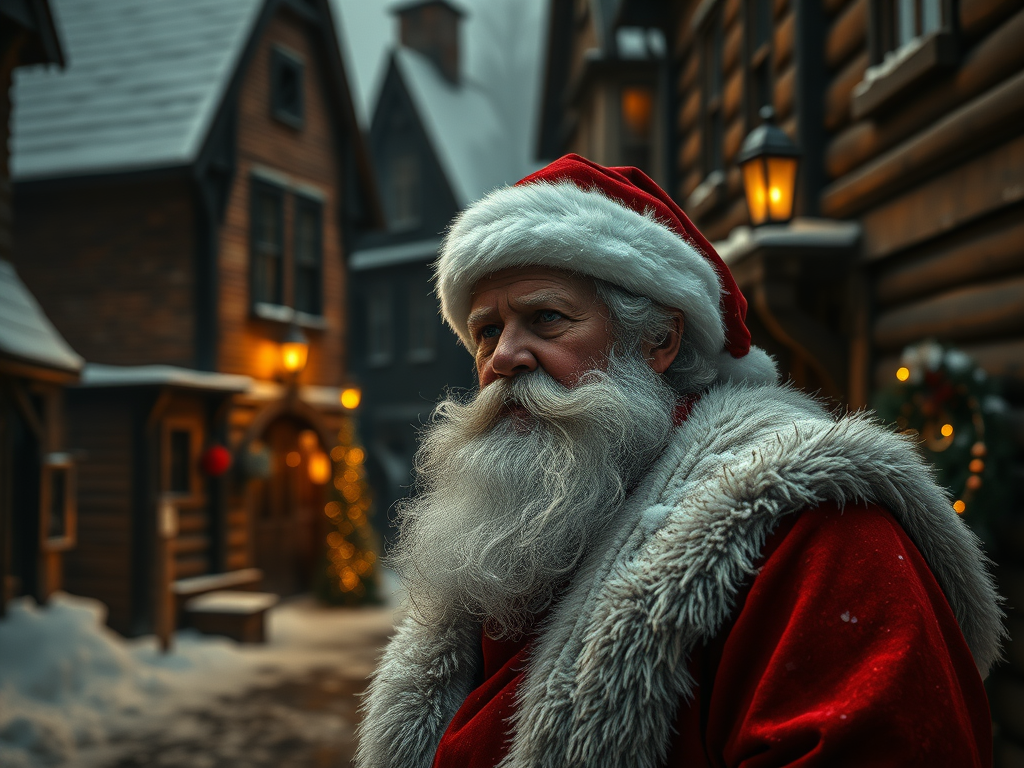
Santa realized he had been thrown back in time to the mid-1800s. He recognized the period instantly from the distinct architecture of a village below. It was a Christmas during a dark chapter in history. A devastating plague had gripped the land. It forced him to cancel his rounds that year.
“Great gumdrops!”

Santa exclaimed.

“What are the odds?”

He gazed at the sleigh’s cargo. By a twist of fate, it had been stocked with emergency medical supplies. These were intended for a charity hospital in the modern era. Among the crates were antibiotics, syringes, and boxes of penicillin.

As he landed his sleigh in the village square, the grim reality of the situation became clear. Emaciated villagers huddled near fires, their coughs echoing through the silent night. Santa’s heart ached as he walked among them, his red suit standing out against the bleak surroundings.

A child approached him, her face pale and gaunt.

“Who are you?”

She asked, her voice weak.

Santa knelt, his jolly demeanor softening.

“I’m Santa Claus, my dear. And I’ve brought –– hope.”

He opened a crate, revealing the miracle medicines of the future. Doctors, initially skeptical, were astonished by how quickly the penicillin began to heal their sickest patients. Word spread, and soon, Santa was inundated with requests for help.

But as he worked tirelessly through the night, a troubling thought weighed heavily on him. He altered the course of history by introducing modern medicine to the past. He remembered the first rule of time travel: do not interfere. Yet how he stand by and let so many suffer?

Santa consulted his reindeer, who were no strangers to magical predicaments.

“What do you think, Comet? If we save them now, what happens to the future?”

Comet stamped his hoof thoughtfully as if to say,

The heart often knows what the mind can’t reason.

Santa decided to take the risk.

“If kindness is a mistake, then I’ll gladly make it,”

He said aloud.

By dawn, the village was transformed. People sang carols, their strength returning. They looked at Santa with gratitude and wonder as he prepared to leave.

“Thank you, sir,”

said the village doctor.

“You’ve given us a miracle.”

Santa nodded, but his heart was heavy with uncertainty. As he guided the sleigh back into the sky, the aurora reappeared, pulling him back to his own time.

When he returned to the North Pole, he checked the world’s records, bracing for the consequences of his actions. To his amazement, the plague of the 1800s had been recorded as miraculously subsiding in one particular region. Yet, history did not explain this occurrence. Furthermore, the trajectory of medicine had advanced more quickly than he remembered. The saved lives gave rise to several key figures. These figures contributed significantly to society.

Santa smiled, chuckling saying,

“History has a way of balancing itself after all.”

Santa pondered the night’s events on Christmas Eve as he settled into his chair by the fire. Sometimes, he thought, doing the right thing means accepting the unknown. In the spirit of Christmas, a little magic can change the world for the better. A lot of kindness can also make a difference, no matter the time.

🩸 The Making of a Nightmare

When Progress Buried the Past Beneath Big Canyon Lake

By Benjamin Groff II | The Story Teller – benandsteve.com.

3–5 minutes

As The Story Goes –––

No one had seriously thought it would be real. They all thought what they were doing would be forgotten in only a few weeks. But what followed would go on, and on, and on. And not even those with the worst of intentions have predicted the outcome.

It was the summer of 1941, and spring had brought heavy rains to the Big Canyon, flooding the valley below. The farmers had not yet seen the completion of the WPA projects. These projects began in the late 1930s across most of the country. With those projects came new schools, highways, bridges, and community centers. The last of the projects here was the shoring up of valleys. This involved building dams to control runoff waters from creeks, rivers, and streams. When the heavy rains came, the floods were tamed through a spillway cut deep into the earth.

Now that summer was upon them, workers from the CCC and WPA joined forces. They were building what would be known as the Big Canyon Watershed Project. They used mules and draft horses. With these animals, they pulled wedges and plows. The team cleared the valley floor that would soon disappear beneath the rising water. Every blow of an axe and every groan of timber was heard in the thick air. These sounds seemed to signify progress—or so they thought.

The men bunked in rough-hewn cabins and ate in a mess hall that smelled of kerosene and sweat. They joked about ghosts that will one day swim through the drowned cottonwoods or the abandoned family homesteads. But there was one homestead no one wanted to talk about—the Miller place.


The Miller Mystery

The Millers had lived at the base of the canyon for as long as anyone remember. Their house sat crooked beside a spring-fed creek that never dried, even in the harshest drought. Locals said the spring was sacred to the Washita people long before white settlers arrived. When the government bought out the land for the dam, every family took the offered payment—except the Millers.

Old Henry Miller refused to leave. “This land don’t belong to the government,” he told the surveyors. “It don’t even belong to me. It belongs to the water, and she’ll take it back when she’s good and ready.”

They said he vanished one night in late October, just before the final clearing began. The official report listed him as relocated. But the men who worked the next week swore. They heard hammering at night. They saw a lantern flickering deep in the canyon where the Miller house had stood.

When the first rains came that winter, the spillway gates were opened. The lake began to rise. Within days, the Miller place—and whatever was left of it—was gone.


The Haunting of Big Canyon Lake

By the next summer, Big Canyon Lake became a local attraction. Families came from nearby towns to picnic along the shore and marvel at the engineering wonder. Fishermen swore the lake was bottomless. Divers who dared to explore near the old creek bed spoke of hearing faint knocking under the water. It sounded as if someone were still hammering boards together.

A maintenance crew was at the spillway in 1947. They were inspecting it by draining part of the spillway. During the inspection, they found something jammed in one of the lower gates. It was a section of cabin timber—weathered, darkened, with three hand-carved letters burned into it: H. M.

The lake was drained once more in the drought of 1954. When it receded far enough, the foundation of the old Miller place appeared, blackened but intact. And at its center, where the spring once bubbled up, was a hole—dark, deep, and breathing.

No one went near it. The Army Corps sealed the area, and within weeks, the water rose again.


The Nightmare Endures

Locals say Big Canyon Lake is cursed. On calm nights, when the moon hangs over the still water, you can see a lantern light. It flickers beneath the surface. Fishermen have reported hearing someone tapping on their boats, like a muffled warning.

The government calls it folklore.
The people who live nearby call it memory.

As for the Miller land, they say the water finally took it back. It also took the man who tried to keep it.


© Benjamin H. Groff II — Truth Endures / benandsteve.com

The Island – A Serialized Dystopian Story * Chapter Seven

2–3 minutes

Haven’s Reach: The Fracture Extended

By the time autumn winds rolled across Haven’s Reach, something in the air had shifted. The Council’s decrees were no longer whispered with unease. They were shouted from wooden platforms. The decrees were painted on walls and nailed to doors. “Obedience is Freedom,” one sign read. “Order Before All,” declared another. The rules had once been tolerated as minor irritations. Now, they pressed down like a boot on the neck of the people.

It began with curfews. Families were ordered indoors at dusk, lanterns extinguished by the ninth bell. Then came the bans. First, there was one on foreign books. Next, gatherings of more than five were forbidden. Finally, music played in public squares was banned. One by one, pieces of life that had once defined Haven’s Reach fell away. The Council insisted it was “for safety.” But everyone knew better—fear was safer for rulers than for the ruled.

Harper saw it most clearly when her younger brother, Eli, vanished. One evening, he was at the bakery kneading dough by her side. The next morning, his cot was empty. Blankets were folded neatly as though no one had ever lived there. Whispers reached her ears: Eli had spoken too freely about the Council in the market, and someone had reported him. Now he was “detained for questioning.” No one who had been questioned ever came home the same.

Harper’s grief sharpened into something more complex. She began wandering beyond her bakery’s door after curfew, listening at corners, watching shadows. That’s how she stumbled across The Quiet Ones. It was a ragtag circle of neighbors, merchants, and teachers. They took it upon themselves to preserve what the Council feared most: memory. They hid forbidden books in flour sacks. They scribbled children’s rhymes on the backs of ledgers. They whispered songs under their breath in defiance.

When Harper revealed her brother’s name, the Quiet Ones did not look away. An older man with ink-stained hands touched her shoulder and said, 

“You’re one of us now, whether you meant to be or not. The fight isn’t about one boy. It’s about all of us.”

The fracture had come—not just between ruler and ruled, but within the people themselves. Some chose silence and survival. Others, like Harper, chose risk and resistance. Haven’s Reach was no longer simply an island under rule. It was a tinderbox, waiting for a single spark to ignite.


By Benjamin GroffMedia© | benandsteve.com | ©2025

Professor Incredible: The Accidental Peacemaker

By Benjamin GroffMedia© | benandsteve.com | 2025 Truth Endures©

2–3 minutes

Professor Incredible and the Formula of All Things

Nobody paid much attention to Professor Incredible.

He was a quiet, peculiar man with wild hair and socks that rarely matched. He taught chemistry at the Third-Rate University of Northern Something. His lectures were confusing. His labs were explosive. His office smelled faintly of lemon cake and regret.

One Tuesday afternoon, Professor Incredible was mixing compounds to cure hiccups in parakeets (don’t ask). He tripped over his cat and accidentally spilled three unlabeled vials into a teacup. When he came to after the small puff of smoke cleared, he sipped the tea. Of course, he did. He then scribbled down what he felt was a rather pleasant aftertaste.

That night, he slept peacefully for the first time in years. His arthritis vanished. So did his neighbor’s yappy dog’s aggression. So did the neighborhood’s potholes. So did his runny nose. Something was… different.

The next day, two bickering students visited his office arguing over which was better—crunchy or creamy peanut butter. Absentmindedly, the professor handed them a flask of the leftover formula and said,

“Here. Split this and shake hands.”

They did.

Instantly, they blinked, smiled, and calmly agreed that both were wonderful in different ways. Then they shared a sandwich.

The formula, it turned out, only worked if applied by two people in conflict—who disagreed with equal passion. It didn’t pick a side. It didn’t declare a winner. Instead, it softened anger, lifted empathy, and melted stubbornness into understanding. It didn’t erase problems; it made people care enough to solve them together.

Soon, world leaders were sipping the formula while discussing borders. Rival fans hugged at sporting events. Siblings divided closets in peace. Traffic moved smoother. Even social media got a little less… cruel.

Professor Incredible was offered a Nobel Prize, but declined.

“The formula was an accident,”

he said.

“What matters is what people do with it.”

And so, the world changed—not because the formula was magic, but because people finally heard one another. Understood each other. Worked side by side.

All it took was a little chemistry—and two people willing to try.

The Town Called Serenity – Chapter One

By Benjamin GroffMedia© | benandsteve.com | 2025 Truth Endures©

3–4 minutes

The Town Called Serenity

In a remote corner of the state, the roads grow narrow. The trees lean in like they’re sharing secrets. There lies a town called Serenity. The name is a cruel joke—there’s nothing serene about it. This is a place where street signs double as target practice. The law has long since departed. No one has noticed. The welcome sign on the outskirts used to say, Population: 312. Someone scratched it out and replaced it with Too Many.

In Serenity, bars outnumber churches, and the only thing thinner than a promise is a badge. It’s where outlaws hide not from the law but from one another. It’s a haven for grifters, gunmen, and ghosts of good men who didn’t make it out.

And into this outlaw’s paradise rolled Chester Finch.

Deputy U.S. Marshal Chester Finch was not the image of frontier justice. He didn’t ride in on a stallion or a dusty pickup truck. No, Chester arrived in Serenity on a cherry-red moped. It’s the kind you’d see zipping through suburbs. You also find it parked at a vegan coffee shop. He wore regulation boots, a broad-brimmed hat, and a badge that gleamed as if it still held some hope.

The moped sputtered as it crossed the town’s crooked boundary, its two-cycle engine whining like a mosquito. Chester parked outside the Rusted Spur Saloon. It was half brothel, half bar, and all trouble. Eyes were already watching him from behind dusty windows and cracked doors.

On the porch, an older man with a shotgun across his knees spat into a tin can and said, 

“That there’s the funniest damn thing I’ve seen all week.”

Chester dismounted, kicked the stand down, and brushed the dust off his badge. 

“I’m lookin’ for the sheriff,”

He said.

The older man cackled. 

“Ain’t had a sheriff since Mad-Eye Morgan got shot for winnin’ too many poker hands. That was six months back.”

“Then I suppose I’m it now,” 

Chester replied, squinting at the sun. 

“By order of the U.S. Marshal Service, I’m here to restore order.”

The laughter that followed came from more than just the porch. It drifted from second-story windows and behind swinging doors. It came from a town. The town believed the law was something you threw in a ditch. It was buried with the rest of your conscience.

Chester knew this wouldn’t be easy. He knew his badge would draw more bullets than respect. But he also knew Serenity was on the brink of something worse. The federal files hinted at growing ties to outlaw syndicates. There were whispers of gun-running. A name kept popping up: Braddock Cain.

Cain ran Serenity like a private kingdom. Tall, scarred, and charming as a rattlesnake in a bowtie, he was the unspoken king of vice. No one crossed him unless they wanted to disappear.

Chester had crossed worse. Or so he told himself.

His first night in Serenity ended with a knife fight. There was a horse in a bar. The moped was set on fire by a drunk named Julep Jake, who claimed to be the mayor. Chester arrested him anyway. This unpopular move earned him a cracked rib and a bloodied lip. It also earned him the first sliver of respect from the few decent souls still buried in Serenity’s mess.

By morning, Chester had taken over an old sheriff’s office. It was half caved in and smelled of rot and regret. He nailed his badge to the door. It was symbolic more than anything. And in this town, symbols were dangerous.

He had come for peace, riding on two wheels and carrying a quiet resolve. He found a town at war with itself. It was a fight that takes more than a badge to win.

But Chester Finch wasn’t here for symbolism. He was here to end the laughing.

Lost in the Forest: A Night of Mystery

By Benjamin GroffMedia© | benandsteve.com | 2025 Truth Endures©

2–3 minutes

The Night Hunt

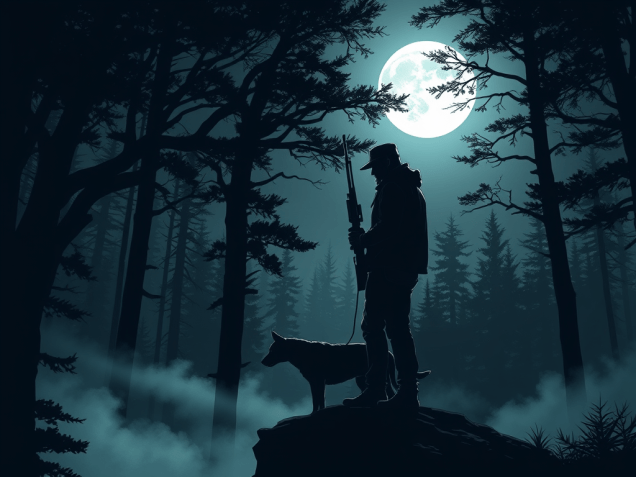
It was a night like any other in the deep woods outside Willow Creek. Forty years ago—give or take—a man and his dog set off for one of their usual late-night hunts. The man, grizzled and silent, kissed his wife on the forehead and muttered something about a long run. She barely looked up from her sewing. She was accustomed to his absences. He needed to run beneath the moonlight with only a rifle and his hound for company. She didn’t ask where he went. He never said.

The forest swallowed them quickly. Trees leaned in like eavesdropping strangers, and the undergrowth whispered beneath their boots and paws. The dog was a wiry black mutt with a white streak down its spine. It caught the scent of something just beyond the bend. It bolted. The man, cursing but grinning, gave chase.

They ran deeper and deeper into the overgrown trail for what felt like miles until the land suddenly disappeared.

The dog reached the edge of the cliff first. It barked, wild and electric, then dove headlong into the dark.

The man reached the edge just in time to see nothing at all. No bark. No rustle. There is just silence and blackness below. Without hesitation—without fear—he followed.

And that’s where the story ends, at least in the world we know.

The man awoke beside his dog in another place—somewhere between dream and fog. The stars above were fixed in unfamiliar constellations, and the air hummed with a silence too perfect to be real. He stood, brushed off dust that wasn’t dust, and called out.

No echo returned.

For years—or was it minutes?—he and the dog wandered this pale mirror of the forest they once knew. Sometimes, they saw flickers of their old lives. His wife was crying at the hearth. His brother was digging through the old footlocker for the will. But they couldn’t speak, they couldn’t reach, they only watched.

The man no longer aged. The dog’s coat remained pristine. Together, they waited—for what, neither capable of saying.

Then, one night, they heard something rustling through the brush ahead. They walked a trail that hadn’t been there before. The dog tensed. The man raised his hand. A shape moved—slowly, purposefully.

It was another hunter. Rifle slung over his shoulder. Dog at his side. Eyes vacant. He looked familiar.

The man called out. The hunter looked through him, then walked past.

The dog growled, uneasy.

And from the darkness behind them, a second pair of footsteps began to follow. They had found the lost forest of hunters who had died without a place to go.

The Burden of Inaction: A Haunting Missed Call

By Benjamin GroffMedia© | benandsteve.com | 2025 Truth Endures©

2–3 minutes

A Missed Call

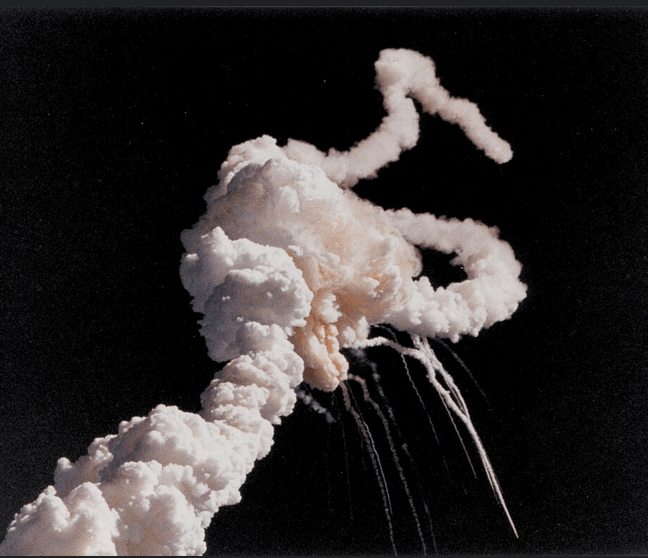
It was January 28th, 1986. Tim was driving to an appointment, his car weaving through fifty miles of winding highways. The radio crackled with the morning news. The Space Shuttle Challenger was set to launch, carrying the first civilian teacher into space.

As the announcer spoke, a sudden, vivid image flashed in Tim’s mind—an explosion, fiery and bright. He gripped the wheel tighter. Then, just as quickly, the vision faded.

This wasn’t the first time. During his years in law enforcement, Tim had experienced moments like this—flashes of insight, warnings he couldn’t explain. Colleagues had asked how he knew things before they happened. He’d only ever shrugged and said, “I’ve got a sixth sense, I guess.”

A commercial break interrupted the news. Tim leaned back, letting the hum of ads drown out the unease rising in his chest. Don’t be ridiculous, he told himself. There are engineers, scientists—people much smarter than me working on this. Who am I to question it?

Then the news returned, live coverage from Cape Canaveral. As the launch countdown continued, Tim felt it again. A deep, cold shiver passed across his neck. Then he envisioned the same haunting image of destruction.

He reached for the dashboard, then pulled his hand back. Should I call? he wondered. Would they even listen? The idea of calling NASA felt absurd. What would I say? he thought. That I had a feeling?

No one would believe him. He’d be laughed off the line—or worse. He pictured himself in a hospital gown, locked behind heavy doors for making prank calls to a national space agency.

So he drove on.

At the appointment, Tim entered the lobby and stepped up to the front desk. Just as he began to sign in, a man burst from his office, wide-eyed.

“You won’t believe what just happened!”

He turned on the TV. On the screen, the Space Shuttle Challenger rose into the sky—and then disintegrated in a plume of smoke and fire.

Gasps filled the room.

Tim stood frozen. The weight hit him all at once. Not just the horror of what had happened but also the hollow ache remained. He knew he had seen it coming… and done nothing.

In the days that followed, he replayed it again and again. The moment he didn’t call. The chance he didn’t take. The voice he silenced.

If he had picked up that phone, maybe nothing would’ve changed. Or maybe someone would’ve listened. Maybe someone smarter than him would’ve paused for just a second. He would never know.

One thing became clear to Tim that day. The burden of inaction weighs heavier than the risk of being wrong.

If he was able do it over, he’d make the call.

No matter how crazy it sounded.

This story is from actual events. The names of those in the story were changed to protect their privacy.

Surviving the Darkness: The Krieger Family’s Courage – Shadows In The Dark

GROFF MEDIA 2024© TRUTH ENDURES IMDBPRO

Presented by benandsteve.com By: Benjamin Groff II©

2–3 minutes

In the spring of 1942, the Krieger family vanished from the small town of Marburg, or so their neighbors believed. The truth, though, was a testament to their resilience. Ernst and Klara Krieger lived concealed behind a false wall. Their teenage daughter Lotte was with them in the attic of their modest home. They clung to a fragile existence beneath the ever-watchful eyes of the Nazi regime.

Before the war, Ernst had been a respected tailor, his shop bustling with customers seeking fine suits and dresses. The war machine tightened its grip on Germany, and Jewish families like the Kriegers became targets. They had no choice but to vanish from public view. Ernst’s friend, Herr Becker, was a trusted carpenter. He had built a hidden compartment in their attic. It was a space just large enough for the three of them to survive.

Each day, Klara prepared sparse meals from the dwindling stock of supplies. She rationed every crumb with the precision of a soldier. Lotte, once full of life and laughter, now spent her days in silence. She read the few books they had managed to take with them. Ernst, ever resourceful, repaired uniforms in secret. He exchanged this favor with Herr Becker for smuggled food. They also shared whispers of news from the outside world.

Life under the radar was a delicate balancing act, but the Kriegers refused to let go of hope. They learned to move only when the town slept, their footsteps carefully muffled. They endured bitter winters without fire, their breath hanging in the frozen air like ghosts. Klara kept their spirits up with whispered stories of better days. She spoke of summers at the lake and the scent of fresh bread filling their home. They lived in fear but also in quiet defiance, their hope a beacon in the darkness.

One night, in late 1944, as the war neared its end, a knock at the door sent their hearts racing. Herr Becker’s hushed voice broke through the silence. 

“The Americans are coming,” 

he whispered through the floorboards. 

“Stay hidden a little longer.”

Days passed like years until, at last, the sound of foreign voices filled the streets. The Kriegers dared to peek from their hidden vantage point. What they saw made their hearts swell with cautious hope. They observed Allied soldiers marching through the town. Their uniforms were different, and their faces were filled with determination rather than cruelty.

The danger had finally passed. Ernst and Klara stepped out into the light of a new morning. They held Lotte’s trembling hand. Their survival was a quiet miracle. It was a testament to the resilience, cunningness, and kindness of those who risked it all to help them. Their hearts were filled with gratitude for these unsung heroes.

Life was difficult in the next years, but the Kriegers rebuilt what they had lost. Ernst reopened his shop. Klara baked bread that once again filled their home with warmth. Lotte found her laughter in the sunlight. Though they had lived in the shadows for so long, they emerged stronger and free.

And in the attic, behind the false wall, they left a small inscription: 

We survived. We endured. We are free.

The Island of No Return

GROFF MEDIA 2024© TRUTH ENDURES IMDBPRO

Presented by benandsteve.com By: Benjamin Groff II©

3–4 minutes

Three men sat at the edge of a dock. Each was worn down by the ceaseless hum of modern life. Their gazes were fixed on a small, uninhabited island that shimmered in the midday sun. A mile off the coast, the island was lush with palm trees, surrounded by crystal-clear water, and untouched by civilization. It was perfect, a blank canvas for a life free from the chaos they had come to despise.

The trio’s leader, Warren, a former corporate executive, was the mastermind behind the escape. To buy the island, he’d sold everything—his penthouse, yacht, and stock portfolio.

“Gentlemen,”

he said, gesturing at the island,

“we’re about to start over. No emails, no alarms, no societal nonsense. Just us and the land.”

Tom, a rugged carpenter with calloused hands, nodded.

“I’ll build us the finest cabins you’ve ever seen. Give me trees and tools, and we’ll have a paradise.”

The third man, Elliott, a quiet botanist, adjusted his glasses and smiled faintly.

“And I’ll make sure we know which plants are safe to eat. Nature will supply for us if we respect it.”

They packed their small boat with essentials: tools, seeds, books, and fishing gear. They agreed to leave their phones behind, cutting ties with the rest of the world. “Once we’re there,” Warren declared, “there’s no turning back.”

Arrival

The island greeted them with pristine beaches and a dense jungle that hummed with life. They worked tirelessly in the first weeks. Tom constructed three sturdy cabins near the shoreline. Warren rigged up a rudimentary system for collecting rainwater. Elliott explored the interior, cataloging edible plants and marking trails.

At night, they sat by a fire, listening to the waves and reveling in the simplicity of their new existence.

“This is freedom,”

Warren said one evening.

“We’ve escaped the madness.”

But as the weeks turned to months, cracks began to form in their idyllic retreat.

Isolation

Elliott was the first to show signs of unease.

“The flora here is fascinating,”

he said one night, staring at the fire,

“but I miss my research. Sharing discoveries with others… it gave my work purpose.”

Tom, who had poured his energy into the building, grew restless after the cabins were completed. 

“There’s only so much wood to chop, so many things to fix. I feel… stagnant.”

Warren dismissed their concerns.

“We didn’t come here for purpose or projects. We came to live. You’ve forgotten why we left.”

But Warren, too, struggled. He’d envisioned a utopia, a life stripped of complications, but the endless quiet gnawed at him. Without the structure of his old life, he felt adrift.

The Turning Point

One stormy night, a ship appeared on the horizon. Its lights pierced the darkness, a beacon of their forsaken world.

“Do we signal it?”

Tom asked, his voice wavering.

Warren’s face hardened.

“No. We agreed: no contact.”

Elliott hesitated.

“What if they’re in trouble? Or what if… what if we are?”

The men argued for hours as the storm raged. Ultimately, they let the ship pass without making contact. But the moment lingered, a reminder of the life they’d left behind—and the choice they’d made to stay.

Conclusion

In time, the men adapted. They found a rhythm in the island’s isolation, but each carried a quiet longing for the world they’d abandoned. They didn’t regret their choice, but they understood it now for what it was: a trade, not an escape.

Years later, the island was still theirs, but they were no longer the same men who had arrived. They had built a new life, not without struggles or sacrifices, but one that was undeniably theirs.

They never saw another ship. They often looked out at the horizon. They wondered what have been if they’d signaled that one stormy night.