
Obituary
Ifigenia Martínez y Hernández, 99, Mexican politician and diplomat, senator (1988–1991, 2018–2024), president (since 2024) and four-time member of the chamber of deputies
Ifigenia Martha Martínez y Hernández
(16 June 1925 – 5 October 2024)
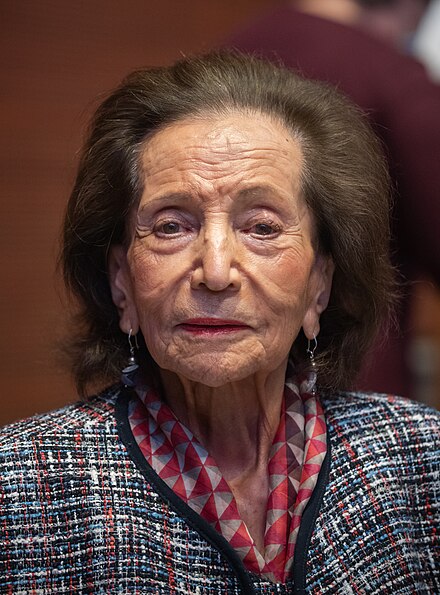
Ifigenia Martha Martínez y Hernández, a distinguished Mexican economist, diplomat, and politician, passed away on 5 October 2024 at the age of 99. Throughout her life, she was a pillar of Mexican political and economic thought, serving her country with dedication and vision.
Born on 16 June 1925, Martínez completed her undergraduate studies in economics at the National Autonomous University of Mexico (UNAM) and pursued further education, earning a master’s degree in economics from Harvard University. Her passion for academia and public service led her to become the head of the Faculty of Economics at UNAM, a position she held from 1966 to 1970. Her influence extended beyond the classroom, shaping the next generation of Mexican economists.
Martínez was not only a scholar but also a trailblazing politician. Over her illustrious career, she was affiliated with several prominent political parties, including the Institutional Revolutionary Party (PRI), the Party of the Democratic Revolution (PRD), which she co-founded with Cuauhtémoc Cárdenas and Porfirio Muñoz Ledo, and the National Regeneration Movement (Morena). Her commitment to Mexico’s development and progress led her to serve multiple terms in the Chamber of Deputies, first elected in 1976, and later in 1994, 2009, and 2024. She also held a seat in the Senate, representing the Federal District in 1988 and serving again in 2018 through proportional representation.
One of the crowning moments of her political career occurred just days before her passing, when she presided over the inauguration of Claudia Sheinbaum as President of Mexico on 1 October 2024. In a historic ceremony, she had the honor of handing Sheinbaum the presidential sash, symbolizing a peaceful and democratic transfer of power.
Ifigenia Martínez’s legacy will live on through her immense contributions to Mexican politics, her advocacy for social justice, and her unwavering commitment to her nation’s well-being. She leaves behind a lasting imprint on Mexico’s political landscape and will be remembered for her intellect, leadership, and grace.
She is survived by a grateful nation, which honors her profound impact on its history.
Japan’s Culinary Expert Yukio Hattori Dies 1945 – 2024
This Information Provided By: Benjamin Groff© Groff Media 2024© Truth Endures
Obituary: Yukio Hattori (1945 – 2024)
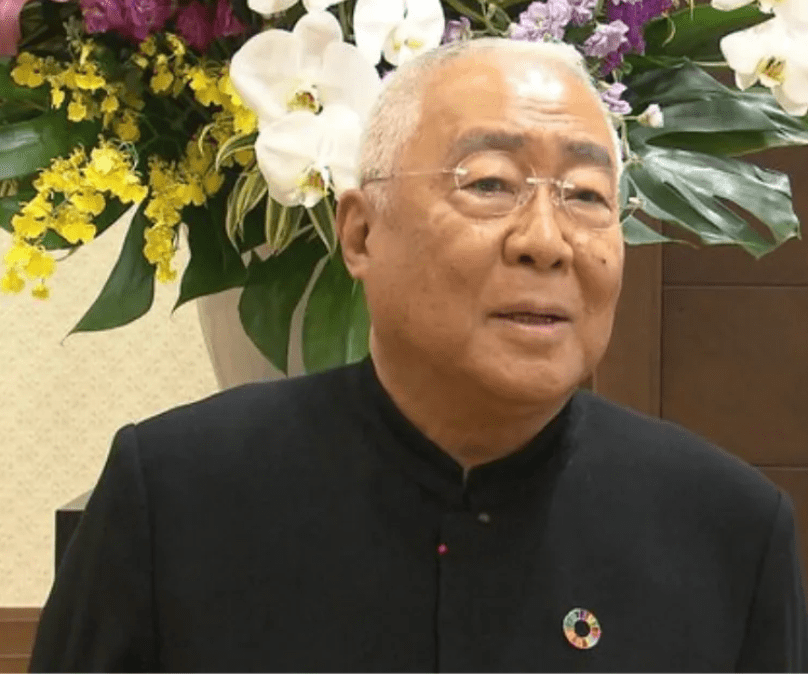
Yukio Hattori, beloved television personality, culinary expert, and educator, passed away on October 4, 2024, in Tokyo, Japan, at the age of 78. Best known as the insightful commentator on the popular Japanese cooking show Iron Chef, Hattori’s contributions to the world of food, nutrition, and culinary arts left an indelible mark on Japanese culture and beyond.
Born on December 16, 1945, in Tokyo, Hattori grew up in a family deeply rooted in the culinary tradition. He was inspired by his father’s work to pursue his passion for food and nutrition, eventually earning a PhD from Showa University. His profound understanding of both cooking and the science of nutrition shaped his career, which would extend far beyond the kitchen.
Hattori became the fifth president of Hattori Nutrition College, a prestigious institution founded by his father, known for its unique blend of culinary excellence and nutritional education. Under his leadership, the college trained thousands of chefs, nutritionists, and food critics, shaping the next generation of culinary professionals. His commitment to culinary education made him a pivotal figure in elevating the standards of both food preparation and healthy eating habits in Japan.
While his educational work was vital, Hattori was perhaps most recognizable for his television career. As a competitor, judge, and commentator on Iron Chef, Hattori’s sharp palate, deep culinary knowledge, and entertaining commentary endeared him to audiences across Japan and worldwide. His presence on the show not only lent credibility but also helped popularize Japanese cuisine internationally.

In addition to his work on television, Hattori appeared in films such as Aji ichi Monme (2011) and Mibu, and he continued to influence Japanese cuisine and public health through his numerous cookbooks, radio shows, and public health campaigns. He was a firm believer that good food should nourish both body and soul, a philosophy he called “Well Taste,” where flavor and health go hand in hand.
Yukio Hattori’s legacy will continue through his extensive contributions to culinary education, his influence on Japanese cuisine, and the students he mentored at Hattori Nutrition College. He is survived by his family, colleagues, and countless admirers who were inspired by his passion for food and nutrition.
Yukio Hattori’s memory will forever be cherished as one of the most prominent voices in Japan’s culinary world, whose life’s work brought taste and health together for the benefit of all.
There Once Was A Clown Named Ho Ho!
A True Story By Benjamin Groff© Groff Media 2024© Groff Media 2024© Truth Endures

Ho-Ho the Clown, known to Oklahoma City children from the 1960s to the 1980s, was more than a TV character. Born Edward Birchall on July 16, 1923, in Colchester, Connecticut, he carried a heart of gold beneath his red nose and clown makeup. After serving in the Army Air Forces during WWII, Ed pursued his love of entertainment, eventually becoming the beloved Ho-Ho on KOCO-TV.
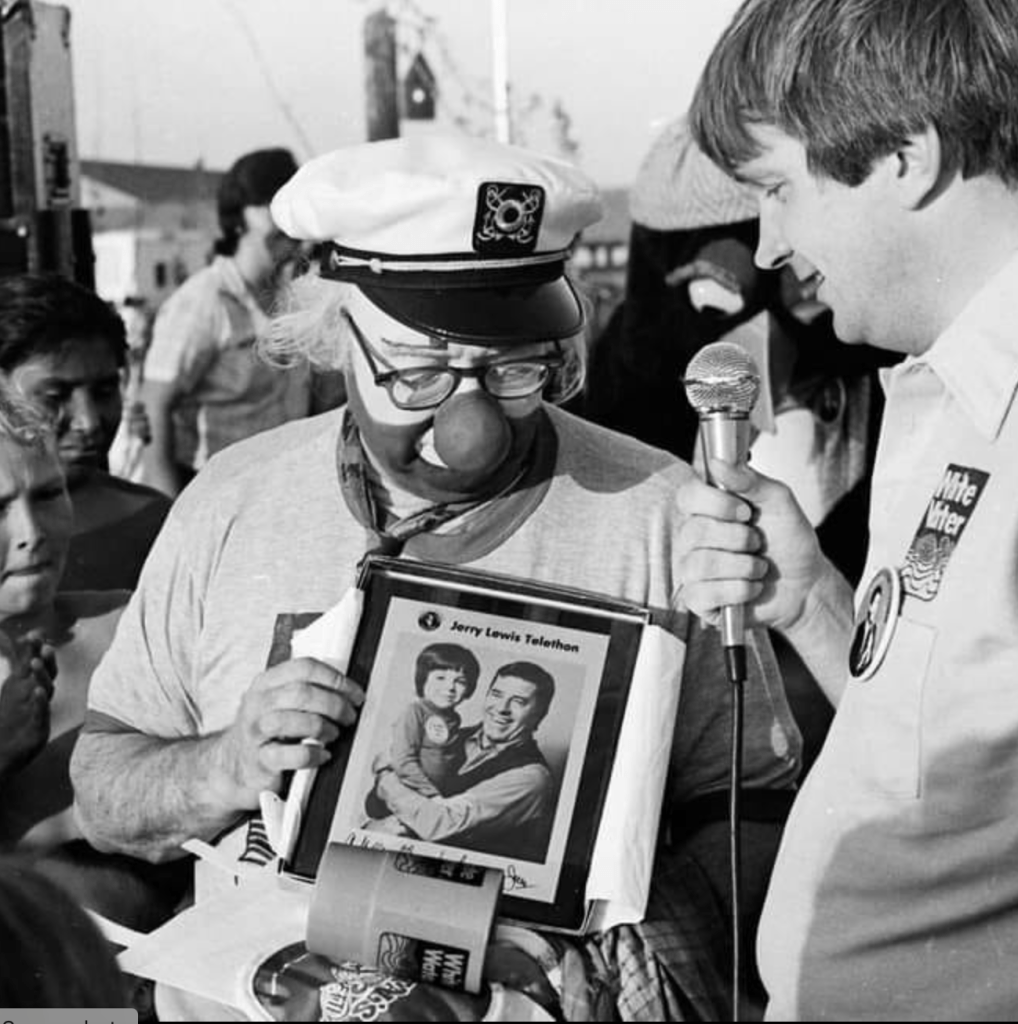
Behind the character, Ed Birchall was a regular dad raising six kids in Bethany, Oklahoma, with his wife, Beebe. Regina, one of his daughters, recalls him coming home with clown makeup smeared after a long day, trying to balance the unusual demands of being a full-time clown and father. His work often kept him away from family, but they later realized the personal sacrifices he made and how many lives he touched, instilling a deep sense of gratitude and respect.

For 29 years, Ho-Ho brought joy to children with shows like Lunch with Ho-Ho and Ho-Ho’s Showplace. His bright personality and whimsical sidekick, Pokey the Puppet, lit up local TV screens, helping him become a household name. Yet his role as an entertainer extended beyond the studio—Ed frequently visited children’s hospital wards, delighting patients with his warmth and humor. It wasn’t just his clowning that touched people; his kindness, dedication, and how he made every child feel seen.

When Ed passed in 1988, his funeral was a testament to his impact. It took three services to accommodate the thousands of well-wishers, including an honor guard of clowns. Ed Birchall’s legacy, carried on by his children and remembered by the community, continues to bring smiles to those who grew up with Ho-Ho’s charm, fostering a sense of belonging and shared memory among us all.
The Puppeteer Bill Howard Passed away On January 9th, 2013. Bill Howard, who entertained children as “Pokey the Puppet” on the Ho Ho the Clown show on KOCO in Oklahoma City, has died.
Roger Palm, 75, Swedish Drummer for ABBA, Dies from Complications of Alzheimer’s Disease
By: Benjamin. Groff Media 2024© Truth Endures
Roger Palm, a revered Swedish drummer whose beats helped define some of ABBA’s most iconic hits, passed away on September 21st., 2024 at the age of 75 due to complications from suffering from Alzheimer’s disease.
Born on March 31, 1949, in Kyrktåsjö, Sweden, Palm showed an early passion for music and began his professional drumming career at seventeen. His talent quickly garnered attention, leading him to become a member of the Swedish bands The Gimmicks and later The Beatmakers. By 1970, Palm had cemented himself as a highly sought-after session musician.

Roger Palm’s association with ABBA began in 1971 when he played on a session for a Frida single produced by Benny Andersson. A year later, in 1972, he laid down the drums for “Rock’n’Roll Band,” marking his first contribution to the ABBA sound. Though Ola Brunkert was the primary drummer for the band, Palm’s unmistakable rhythms enriched many of ABBA’s greatest hits, including “Mamma Mia,” “Dancing Queen,” “Take A Chance On Me,” and “Thank You For The Music.”
A studio musician of prodigious skill and vast discography, Palm was instrumental in creating timeless tracks that resonated around the world. His legacy, particularly his contributions to ABBA’s musical tapestry, will live on in the hearts of fans and music lovers worldwide.
He is survived by a loving family, friends galore and fans worldwide. Private services will be held at a later date.
Gone But Not Forgotten: Honoring Everyday Heroes
A Report By: Benjamin Groff© Groff Media 2024© Truth Endures
Gone But Not Forgotten: A Digital Memorial
In a quiet corner of the internet, there exists a place unlike any other—a virtual tribute to those who had walked this earth, loved, laughed, suffered, and left their mark, only to slip away as the sands of time carried them beyond the reach of the living. It was called Notable Deaths: Gone But Not Forgotten.
The website is more than just a list of names. It is a symphony of lives, a testament to the idea that every life matters, no matter how famous or obscure. Each entry tells the story of a person who has shaped the world in their own way, whether through art, science, politics, or just by touching the lives of those around them. This is a space for reflection, a collection of special memories and achievements.

At first glance, Gone But Not Forgotten appeared like any other tribute site—a photo, a name, a short biography. But for those who ventured deeper, it became clear that this was more than just a collection of obituaries. It was an evolving narrative, with contributors from all walks of life adding details about the departed, piecing together the puzzle of who they were. Some names were well-known household figures like actors, musicians, and leaders. Others were lesser-known heroes—activists, teachers, parents—whose contributions quietly wove into the fabric of society. This is a community of shared experiences, a place where grief is understood and shared.

Among the most moving sections was the Like You, These People Mattered column. Here, visitors could submit stories about people who had passed away. Major fame was not required of them, only a life well-lived. Each submission reminded the world that grief is universal, that love for the departed transcends celebrity, and that the value of a life doesn’t lie in recognition but in the impact it has on others. Every life, no matter how seemingly ordinary, is a treasure and a legacy.

One day, a young woman named Lena found herself on the website. She wasn’t sure how she’d ended up there—maybe it was fate, perhaps the randomness of an internet search—but she was grateful. Lena had lost her grandfather just a few weeks before, and the wound was still fresh. He had been the heart of their family, a kind, strong man who had lived through wars, raised children, and taught Lena everything she knew about compassion. His death had left a void she didn’t know how to fill.
On Gone But Not Forgotten, she found solace. She read stories of others who had felt the same loss, who had watched their loved ones slip away, only to hold onto their memories for comfort. She realized that her grandfather’s story, though deeply personal, was part of a much larger tapestry of human experience. Moved by the thought, Lena submitted a post to the Like You, These People Mattered section, pouring out her heart as she shared the man her grandfather had been—the jokes he told, the lessons he imparted, the quiet dignity with which he had faced his final days.

Days passed, and one afternoon, Lena returned to the site to find her story had been published. Not only that, but others had commented on it—people she didn’t know but who understood her grief. They offered words of sympathy, shared experience, and hope. Lena felt an overwhelming sense of connection. Here, in this virtual space, her grandfather lived on; in some small way, his life had touched others.
The website became a regular stop in her day. She began reading more of the stories, leaving comments for others who were grieving, and sometimes just sitting with the quiet weight of history as she browsed the names and faces of those who had passed. Famous or not, every story mattered. Each life was a thread in the rich, intricate tapestry of humanity.
As time went on, Gone But Not Forgotten grew. More stories were added, and more voices joined the chorus of remembrance. The world kept turning, and people kept living and dying, but this digital sanctuary reminded everyone that no one was truly gone as long as they were remembered. This is a place where the legacy of our loved ones lives, where their stories continue to inspire and comfort us.
Ultimately, the website became more than a place to honor the dead. It became a celebration of life—the connections we make, the people we love, and the way our stories, no matter how small, continue to ripple outward even after we’re gone.
Bluegrass Legend – AND LEader of -Warrior River Boys – David Davis Dies

David Davis, leader of the Warrior River Boys since 1984. David tragically lost his life due to injuries sustained in an automobile accident yesterday near Snead, AL, close to his home in Cullman. He was 63 years old.
David’s musical journey was a lifelong testament to his unwavering devotion to bluegrass, a genre that shaped his life from a young age. Born into a family steeped in musical tradition, David became influenced by his father, Leddell, a mandolin player and singer, and his uncle, Cleo, an early member of Bill Monroe’s iconic Blue Grass Boys. His maternal grandfather, J.H. Bailey, an old-time fiddler and banjo player, also played a significant role in his upbringing, filling their home with the rich sounds of traditional music.
David’s love for bluegrass deepened as a child, learning harmony in church and attending a life-changing performance by Bill Monroe at the age of 12. Which set him on a path of musical dedication, mastering the mandolin in Monroe’s style. In his early twenties, David began working with guitarist Gary Thurmond’s Warrior River Boys, eventually taking over the band in 1984 when Gary could no longer tour due to health issues.
Under David’s leadership, the Warrior River Boys toured extensively across the U.S. and signed with Rounder Records in 1989. Over the years, they recorded for Wango and Rebel Records, and in 2018, David returned to Rounder for a tribute album to Charlie Poole, Didn’t He Ramble. His contributions to bluegrass left an indelible mark on the genre, and his music, a source of inspiration for many, will continue to shape and influence future generations.
Our thoughts and prayers are with David’s wife, Cindy, who was also injured in the accident and is currently receiving treatment at a local hospital. We wish her a speedy recovery.
The loss of David Davis is a profound blow to the bluegrass community in Alabama and beyond. His absence, felt deeply, leaves a void that cannot be filled. His presence, leadership, and friendship touched countless lives, and family, friends, and fans will remember Davis not only as a brilliant musician and bandleader but also as a kind and generous spirit. In addition to his musical achievements, David also served his community by driving a school bus for Brewer High School, further exemplifying his commitment to those around him.
The passing of David Davis leaves a void in the hearts of all who knew him. His legacy, however, will continue to resonate through the music he loved and the many lives he touched. He will be deeply missed by the bluegrass community and beyond.
Bishop Basil Harry Losten, a revered figure in the Ukrainian Greek Catholic Church
Posted By: Benjamin Groff© Groff Media 2024© Truth Endures

Basil Harry Losten (May 11, 1930 – September 15, 2024)
Bishop Basil Harry Losten, a revered figure in the Ukrainian Greek Catholic Church, passed away peacefully on September 15, 2024, in Stamford, Connecticut, after a brief illness. He was 94 years old. At the time of his passing, he was Bishop Emeritus of the Ukrainian Catholic Diocese of Stamford, a role he held with grace and devotion until his final days. Bishop Paul Patrick Chomnycky succeeds him.
Born in Chesapeake City, Maryland, on May 11, 1930, Basil Losten embarked on a life of faith and service that began with his early education at St. Basil School in Philadelphia. His journey into the priesthood was marked by years of dedicated study, first at the Ukrainian Catholic Seminary in Stamford and later at St. Basil College, where he earned a bachelor of arts in philosophy. His theological education culminated in a graduate degree from the Catholic University of America in 1957.
Basil Losten was ordained to the priesthood on June 10, 1957, by Bishop Constantine Bohachevsky. His initial assignments saw him serve the Philadelphia Archdiocese as chancery secretary and in various parishes across the city. In 1962, his leadership and loyalty were acknowledged when he was appointed personal secretary to Archbishop-Metropolitan Ambrose Senyshyn.
In 1968, Pope Paul VI recognized his contributions by elevating him to the rank of papal chamberlain. On March 23, 1971, he was nominated to the episcopacy, and on May 25 of that year, he was consecrated as auxiliary bishop of the Ukrainian Archdiocese of Philadelphia. He continued to serve with distinction, later being appointed apostolic administrator of the diocese in 1976 during the declining health of Archbishop-Metropolitan Senyshyn.
Bishop Losten was admired throughout his career for his unwavering dedication to his faith, leadership, and tireless service to the Ukrainian Catholic community. Losten’s impact on clergy and laity alike will be remembered for generations.
Bishop Losten is being mourned by his many parishioners, colleagues, and the communities he served. Funeral services will be held at Stamford’s Ukrainian Catholic Cathedral of the Immaculate Conception. May his memory be eternal.
Earline S. Rogers (December 20, 1934 – September 5, 2024). In Memoriam
By: Benjamin Groff © Groff Media 2024© Truth Endures
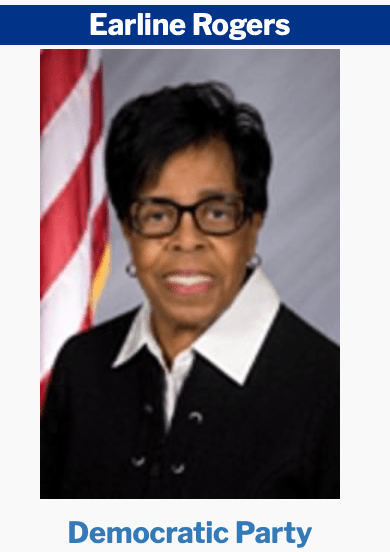
Earline S. Rogers, a distinguished American politician and lifelong education and civil rights advocate, passed away on September 5, 2024, at 89. Rogers dedicatedly served the people of Indiana for over thirty years, first in the Indiana House of Representatives from 1982 to 1990 and then in the Indiana State Senate, representing District 3 from 1990 through 2016.
As a proud member of the Democratic Party and the Indiana Black Legislative Caucus, she championed legislative efforts to support education, working families, and her beloved community of Gary, Indiana.
Born on December 20, 1934, Earline Rogers was a trailblazer from an early age. She earned her Bachelor’s (1957) and Master’s (1971) degrees from Indiana University, Bloomington.
Her career began as an educator in the Gary Community School Corporation, where Earline made a lasting impact by [specific impact]. Her passion for public service led her to the Gary City Council, where she served as a member and President from 1980 to 1982.
Rogers made history with her election to the Indiana House of Representatives in 1982. During her tenure, she spearheaded [specific achievements] and continued to rise, later serving as Minority Whip during her tenure in the Indiana Senate. She was a strong and tireless voice on numerous committees, including Appropriations, Homeland Security, and Transportation, and as the Ranking Minority Member on the Education and Career Development and Family and Children Services committees.
Throughout her career, she was known for improving education and advocating for students, always believing in the power of knowledge to empower and transform lives.
2016, after more than 30 years of public service, Rogers retired from political life, choosing not to seek re-election. Earline’s dedication and influence will continue to shape and inspire future generations through the laws she helped shape and the generations of students she inspired.
Earline Rogers leaves a legacy of courage, compassion, and commitment to public service. Her unwavering dedication to her community, particularly her profound belief in the importance of education as the key to progress and equality, will continue to inspire and connect us all.
She leaves behind a legacy of strength, integrity, and kindness that earned her the respect and admiration of her family, friends, and countless colleagues. Her memory will shine brightly forever in the hearts of those who knew her and the lives she touched throughout her incredible life.
Baseball’s Robert Edward “Bob” Blaylock Has Died. And Few Noticed.
By: Benjamin Groff© Groff Media 2024© Truth Endures
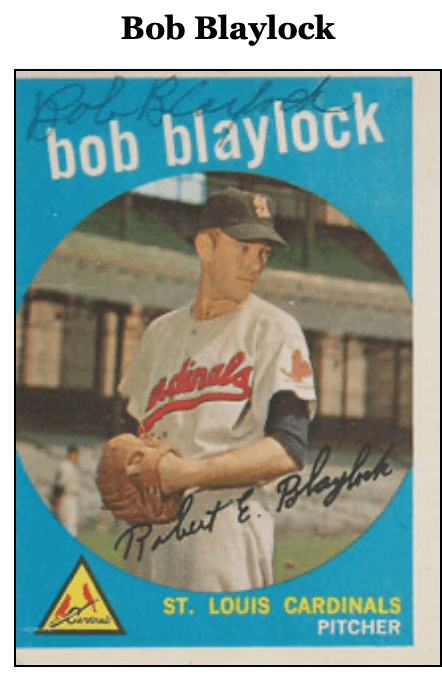
Robert Blaylock Obituary
Obituary published on Legacy.com by Green Hill Funeral Home of Owasso on Sep. 4, 2024.
Obituary of Robert Edward Blaylock
Robert Edward Blaylock, Husband, Father, Grandfather & Great Grandfather went to be with Jesus on September 1st, 2024, at the age of 89. He was born on June 28th, 1935, in Chattanooga, OK to Cecil and Fannie Blaylock.
Bob was a 1953 graduate of Muldrow High School where he excelled in baseball and basketball. After graduation he signed to play baseball with the St. Louis Cardinals organization. Bob’s love for baseball continued throughout his whole life, he was a great coach on and off the field. He was also inducted into the University of Arkansas – Ft. Smith for his basketball achievements in 2012 and he was the 1st Hall of Fame inductee at Muldrow High School in 2014.
He married Barbara Thompson on Oct 3, 1956. They had 3 children, Robyn, Russ and Terri. After his baseball career he raised his family in Tulsa, OK where he Managed the Saratoga Hotel and owned the Saratoga Restaurant until his retirement in 1997. After his retirement he bought a farm in Talala, OK where he raised racehorses and cattle. Bob loved animals of all kinds, he had pot belly pigs, cats, dogs and numerous Martin houses that he monitored hourly with his shotgun to keep the starlings away!
Bob’s Celebration of Life will be at 11:00 AM Friday, September 6th, 2024 at First Baptist Church, Owasso, OK. The visitation will be at Greenhill Funeral Home Thursday, September 5th, 2024, from 5:00 – 7:00 PM.
He was preceded in death by his wife Barbara, Parents Cecil & Fannie Blaylock, Brother & Sister-in-Law Harold & Wanda Blaylock and one infant sister Glenna Fay Blaylock.
He is survived by his sister and brother-in-law, Lois & OC Flanagan.
He is a Proud Papa of 9 Grandchildren and 10 Great Grandchildren who will always love and cherish the memories they have with him.
Pallbearers are his Grandsons John Einhellig, Tyler Lambert, Justin & Josh Beal and Luke & Jake Blaylock.
To send flowers to the family or plant a tree in memory of Robert Blaylock, please visit Tribute Store
EDITORS NOTE: Bob Blaylock’s talent on the mound caught the eye of the St. Louis Cardinals organization, with whom he would spend his entire ten-year professional career.
Bob made his MLB debut on July 22, 1956, pitching for the Cardinals against the Brooklyn Dodgers. Despite a promising start, his time in the majors was marked by challenges, including an injury in his youth that left him with only three fingers on his non-pitching hand. Yet, he was a hard thrower who led the American Association in strikeouts in 1958, a testament to his resilience and determination that should inspire us all.
Over two MLB seasons, in 1956 and 1959, Bob pitched in 17 games, striking out 42 batters. Though his major league career was brief, his impact was felt deeply by those who knew him. He was also part of a unique trio of unrelated Blaylocks who played in the National League during the 1950s, sharing the field with names like Marv and Gary Blaylock.
 benandsteve.com