The Christmas Eve Babbs Switch School Fire

This story is pulled from the archives as a celebration for the season edition.

Groff Media 2024© Truth Endures IMDbPro

Presented by benandsteve.com By: Benjamin Groff II©
3–5 minutes

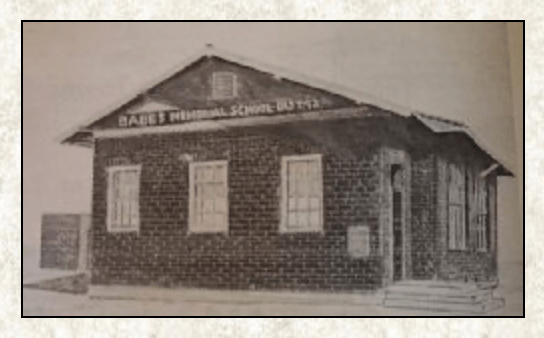
Every year at this time, I am reminded of a harrowing story. It is deeply etched into Oklahoma’s collective memory: the Babbs Switch School Fire of Christmas Eve, 1924. It stands as a tragic lesson in safety, humanity, and resilience.

The Fire

On that bitterly cold night, with heavy snow and sub-zero temperatures, 200 residents gathered. They met in Babbs Switch’s one-room schoolhouse for a Christmas Eve program. The school was tightly packed with engaged couples, grandparents, mothers, fathers, and children. The building’s windows were secured with wire mesh to deter intruders from the nearby railroad tracks. The sole exit—a door that opened inward—would soon become a deadly trap.

The program concluded with a teenage boy dressed as Santa Claus. He handed out toys and candy beneath a cedar Christmas tree. The tree was decorated with paper, tinsel, and lit candles. One of these candles brushed against the tree’s dry needles, igniting it instantly. Mrs. W.G. Boland, whose three children perished that night, later recounted the horror. 

“I tried to beat it out with a paper sack,”

she said, 

“but it did no good.” 

Initially, the crowd laughed, believing the small blaze was being contained. But within moments, the flames engulfed the tree, the ceiling, and the entire structure.

Panic erupted.

The sole exit became a bottleneck as the crowd surged toward the door. Those at the back pushed forward, while the unlucky at the front got crushed in the chaos. Some attempted to pry open the wired windows, but their efforts were futile. Trapped inside, children, parents, and neighbors succumbed to the smoke and flames. Witnesses recalled the horrifying scene of people clawing at the exit. Bodies piled atop one another, and the acrid stench of burning flesh.

The Survivors

Among those who escaped was Lillie Biggers. She crawled out from under a desk clutching a doll she had just received. Her mother, Margaret, managed to get out but suffered severe burns to her hands and arms. Tragically, Lillie’s brothers, William, 9, and Walter, 15, did not survive. The Biggers family’s grief mirrored that of the entire community, where 36 lives were lost—half of them children. The belongings later identified the bodies of William and Walter. They carried a toy gun and a belt buckle.

The injured and deceased were transported to Hobart, the nearest town, where makeshift morgues were set up. The community’s response, known as the “Hobart Spirit,” saw residents drop everything to give aid and comfort. Newspaper accounts likened this effort to the Oklahoma Standard that emerged decades later after the Oklahoma City bombing.

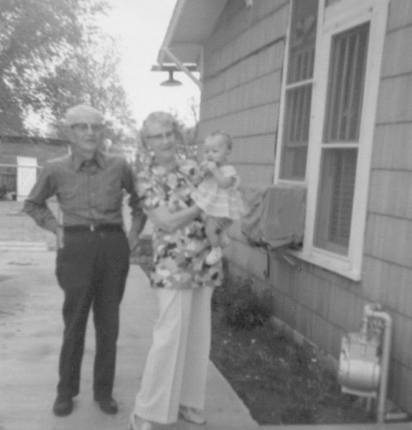
Julie Braun with Mother
Lillie’s Doll That Survived Fire

The Aftermath

The tragedy prompted a wave of reforms. Oklahoma legislators enacted fire safety laws requiring outward-opening doors, multiple exits, and accessible window screens in schools. Open flames were banned, and fire extinguishers became mandatory. The reforms eventually spread nationwide, though it would take more tragedies before they were fully adopted.

The morning after the Babbs Switch School Fire

A Missing Child

The story took a strange twist that turned it into a lingering mystery. Among the victims was three-year-old Mary Edens—or so it was believed. Her aunt, Alice Noah, escaped the building. She died days later. She claimed she had handed Mary to an unknown person outside the burning building. Mary’s body was never recovered, leading her family to hope she had survived.

In 1957, decades after the fire, a woman named Grace Reynolds came forth. She was from Barstow, California. She claimed to be the long-lost Mary. The Edens family reunited with her on Art Linkletter’s House Party television program, believing their prayers had been answered. Reynolds even wrote a book about her experiences. It is titled Mary, Child of Tragedy: The Story of the Lost Child of the 1924 Babbs Switch Fire.

But only some were convinced. A local newspaper editor who investigated the claim questioned its validity. 

Skeptics noted inconsistencies in Reynolds’s story, but no definitive evidence confirmed or debunked her identity. To this day, the truth remains elusive.

Legacy
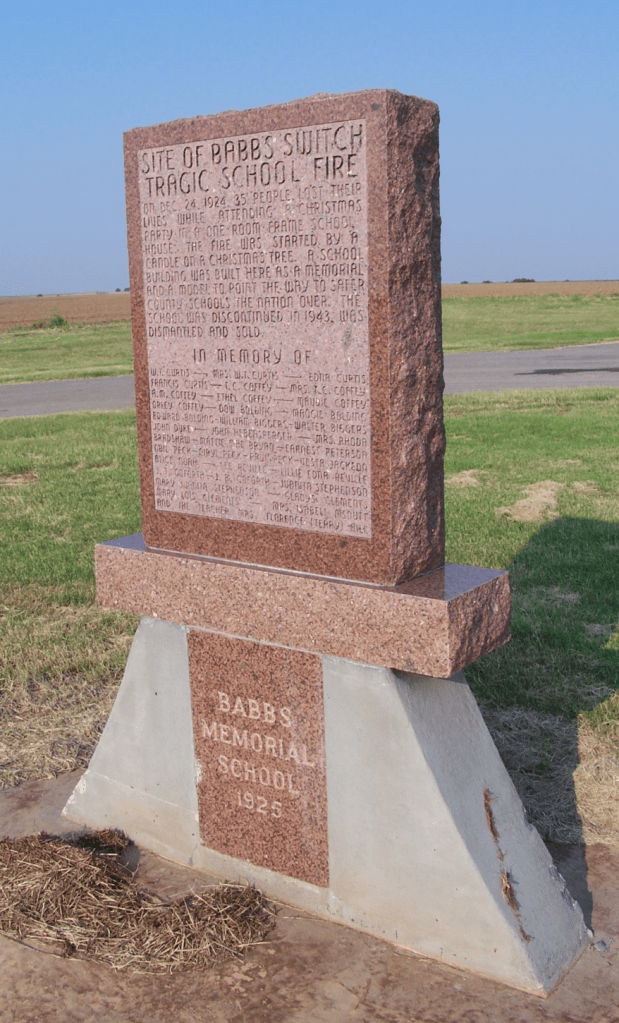
The Babbs Switch School Fire is remembered as one of the deadliest school fires in U.S. history. A stone monument now stands where the schoolhouse once stood, a quiet marker of lives lost and lessons learned. The physical scars of the tragedy have faded. Yet, its memory endures. It serves as a poignant reminder of the fragility of life and our enduring hope for safety and change.

References for this writing can be found at – 

https://blogoklahoma.us/place/394/kiowa/site-of-babbs-switch-tragic-school-fire

https://www.thesirenspodcast.com/post/case-files-babbs-christmas-fire
https://genealogytrails.com/oka/kiowa/babbsfire.html

https://en.wikipedia.org/wiki/Babbs_Switch_fire

Take Me Back To Yesterday Once More

5–8 minutes

The Farm That Built Me

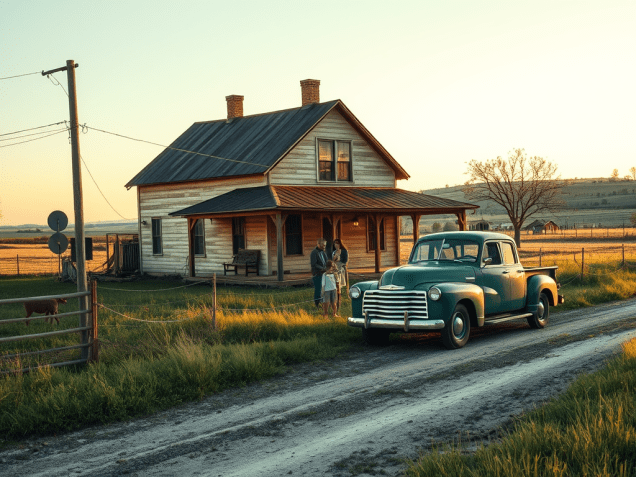
When I look back on my childhood, I’m struck by how much life changed. The changes happened between the time I was born and when I turned eight. We didn’t have indoor plumbing at first. Initially we hauled water from town in five gallon buckets. That was for drinking and cooking. In a big tank in the back of my dad’s truck, water was hauled for the livestock. Eventually water was found on the farm in a well far south of our house. Than ran pipe as far as possible. But, the water pipe stopped about twenty feet shy of our kitchen door. My parents couldn’t afford to run it inside. Every day, we carried buckets from the outdoor faucet to the house. This was still an improvement over hauling water all the way from town.

If you have ever heard of the ‘little brown shack out back.’ Well we had one. We used it even after water was found on the place. Because their wasn’t a bathroom in built in the house. It would be added later. We would walk a trail to the shack in the summer and winter. It wasn’t fancy built at all. It had yellow jackets nest high on the wall. It had a hook and eye lock to secure the door when you were inside. A wooden block turned to keep the door shut when you left. It was cold as ice in winter and hot as hell in the summer. And our company didn’t take to it. It would cut their visits short. And sometimes I wondered if that wasn’t my dad’s plan for having for so long to start with.

Around the same time, we got our first telephone. The line lay exposed down the center of the dirt road. It was shared on a party line with two other houses. Every time the road grader came, the blade cut the wire. We would wait weeks for the phone man to splice it back together. They buried it once, but the sandrock kept them from going deep. The grader still found it. Eventually, someone figured out how to run it four feet off to the side of the road. That man got a promotion—and passed away not long after. These were the everyday challenges of our farm life.

Electricity was another novelty. We had it most of the time. But if it went off during a storm, it was especially bad during a snow event. We would be without lights for a week or longer. They were also the threads that wove our family together. These challenges taught us the value of perseverance. They also brought the joy of shared triumphs.

Heat was another story. Before our fireplace was installed, a single stove in the living room was turned down at night to save propane. We woke up to breath clouds in the cold air before school. Summers weren’t much easier. With no air conditioning, the whole family slept in the living room on pallets. We threw every door and window open. This helped capture the breeze from the five-acre lake a quarter mile south. We’d even open the fireplace flue to pull in a cool draft. It sounds uncomfortable now.

Back then, it was more than just a living arrangement. It was a testament to the value of family closeness. Six kids, two parents, visitors, and dogs—living in one big indoor campsite every night. If you’ve never known family closeness, you’ve missed something truly special. It’s these moments that I look back on with nostalgia and a deep appreciation for the bond we shared.

My father raised American Quarter Horses, and our farm revolved around them. We only kept one stud at a time to avoid brutal fights. Mares were bred individually, often requiring long hauls to other states to introduce new bloodlines. Our horses went everywhere—rodeo circuits, calf-cutting competitions, and even television shows. One star from Gunsmoke, Buck Taylor, called about a horse. Another buyer phoned from New York City during the Garden Square Futurity. He called to thank my dad for the mare Molly. Molly had taken him to the finals. My dad didn’t like us talking about our customers because he valued humility over reputation. As a kid, I didn’t understand. Now I do.

I remember the early 1970s and how tight our family budget must have been. My dad would come home from his barbershop with sacks of horse feed loaded in the back of his truck. He’d park in front of the house. Then, he’d hoist a heavy sack onto his shoulder and walk nearly two city blocks. He’d go down a hill, across a pasture, and all the way to our barn. He had back and leg issues that made every step painful, but he refused to “waste” fuel in his truck.

At the time, I didn’t grasp how precious that gallon of gas was during the oil crisis of the 1970s. To me, it was just Dad doing what he always did. He worked hard. He quietly bore pain. He put his family and animals first. Only now do I understand it was more than thrift; it was discipline and determination passed down like an heirloom.

That simple act—carrying those sacks of feed instead of burning a gallon of gas—left a mark on me. It taught me that sacrifice, resourcefulness, and responsibility are not always loud or dramatic. Sometimes they’re a man. He is alone at dusk, carrying a heavy burden down a path. This happens because it’s the right thing to do.

Everything shifted when Dad took a job at a Girl Scout camp. Horses were sold off until only a few remained for us to ride. We moved to the camp and poured ourselves into cleaning trails, rebuilding facilities, and living outdoors. Yet Dad’s passion for horses never dimmed. We still attended auctions and brought home horses to train. One day, I spotted a skittish dun mare at an auction—Lady. I knew she’d been mistreated and asked Dad to buy her. With patience, grooming, and daily walks, she became the smoothest riding horse I ever had. Lady followed me everywhere without reins, just like a loyal dog. Later, bred to a stud sixty miles away, she gave birth to a colt with the same gentle spirit.

Those years formed me. They were a school of life. They taught me resourcefulness. They also taught patience. I learned how to read the quiet signals of both people and animals. We didn’t have much, but we had each other. And now, decades later, every time a cool breeze brushes my face, I remember those nights in the living room. The windows were open. I hear the sound of our horses in the pasture. These are proof that even the simplest moments can shape a lifetime. The lessons I learned from farm life continue to inspire me. They shape my perspective. I appreciate the value of patience, resourcefulness, and the importance of family.


By Benjamin GroffMedia© | benandsteve.com | ©2025

Back-to-School Memories at the Local Drug Store
2–3 minutes

Back-to-School at the Drug Store

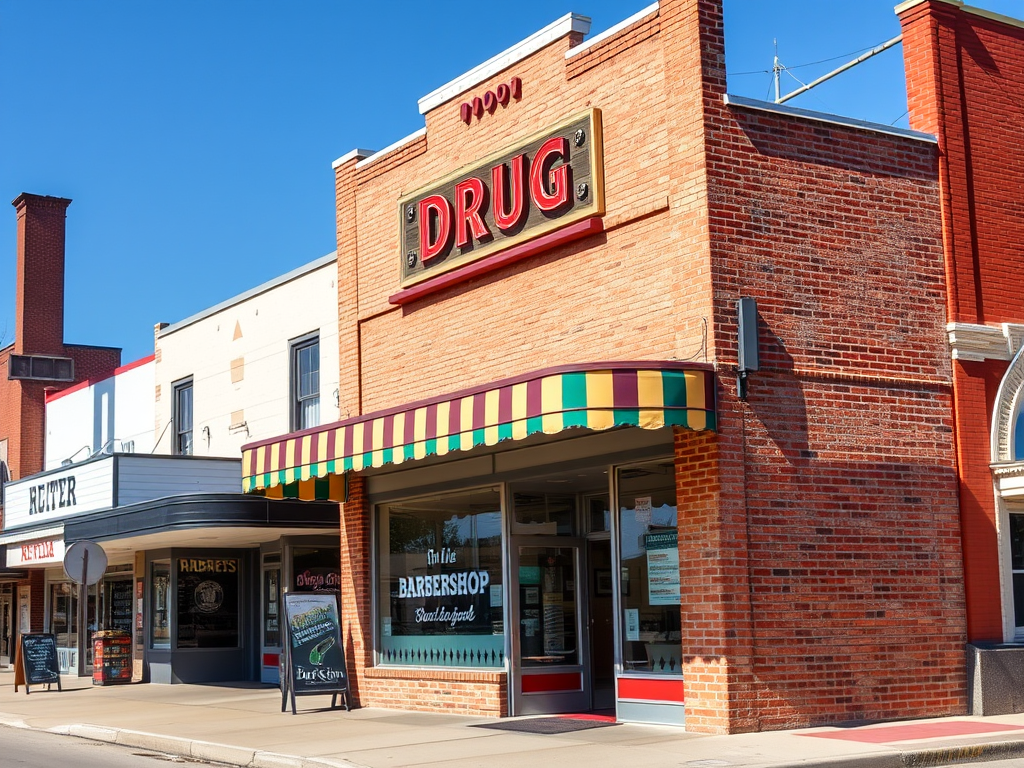
In our little town, back-to-school season wasn’t marked by glossy superstore aisles or online orders delivered in cardboard boxes. No, it happened right on Main Street. It was at the drug store tucked neatly between the barber shop and the movie theater.

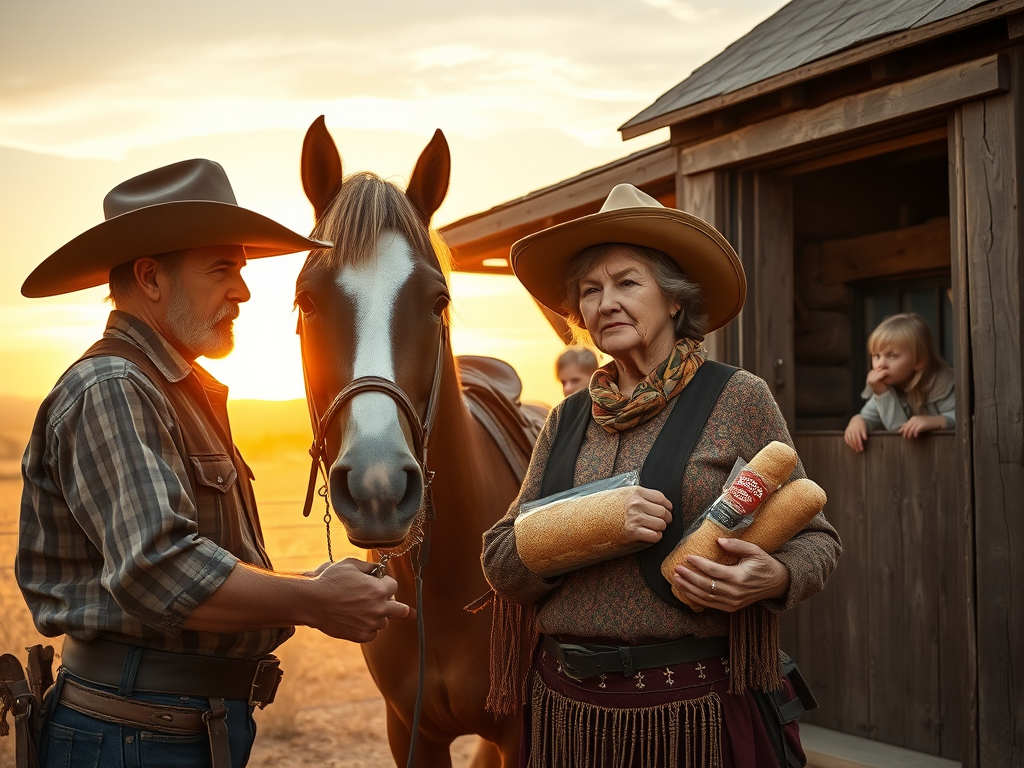
That drug store was a place all its own. A long soda fountain stretched nearly the length of one wall. It had red-topped stools that spun in slow circles when you climbed onto them. Folks would stop in for a cherry Coke or a vanilla phosphate. The hum of the soda jerk’s mixer became as familiar as the sound of church bells on Sunday morning. On the north end of the store, up near the front window, stood a glass display case. Behind it sat neat stacks of paper bags. Each bag was carefully filled with the exact school supplies a child would need for a given grade.

Every August, families filed in, children buzzing with nervous excitement. You only needed to walk up to the counter. Puff out your chest and tell the lady behind it your grade number. With a kind smile, she’d hand over a brown paper bag with your future sealed inside. The bag contained pencils, crayons, rulers, and erasers. For the younger grades, it included that wide-lined treasure known as the Big Chief Tablet.

Kindergarten through third grade was the golden stretch, when opening that bag felt like Christmas morning in August. We’d tear into the packages of crayons. We tested the sharpness of new pencils. We imagined all the things we’d draw and write. But as the years went on, the thrill wore off. By fourth grade, the magic faded. We realized those paper bags didn’t just hold supplies. They carried us straight back into the dreaded routine of homework. There were also spelling tests and teachers who never gave you quite enough recess.

Still, that ritual mattered. The drug store had a soda fountain fizzing. Its shelves were lined with shiny notebooks. It gave us a sense of belonging. It tied the town together. The barber cut hair next door. The movie theater marquee changed weekly. Parents shepherded kids through one more milestone.

Every bag marked a fresh start, even if we grumbled about it. None of us would have admitted it then. Yet, there was comfort in knowing that behind that glass display case was a little brown sack of sharpened pencils. It was waiting for us every year with brand-new beginnings.


By Benjamin GroffMedia© | benandsteve.com | 2025 

The Flying Wagon – A Bribed Brother – A Frightened Mother

A true story about two brother’s antics on the Western Plains of Oklahoma in the 1920s and ’30s.

By Benjamin GroffMedia© | benandsteve.com | 2025 Truth Endures©

3–4 minutes

The Flying Wagon

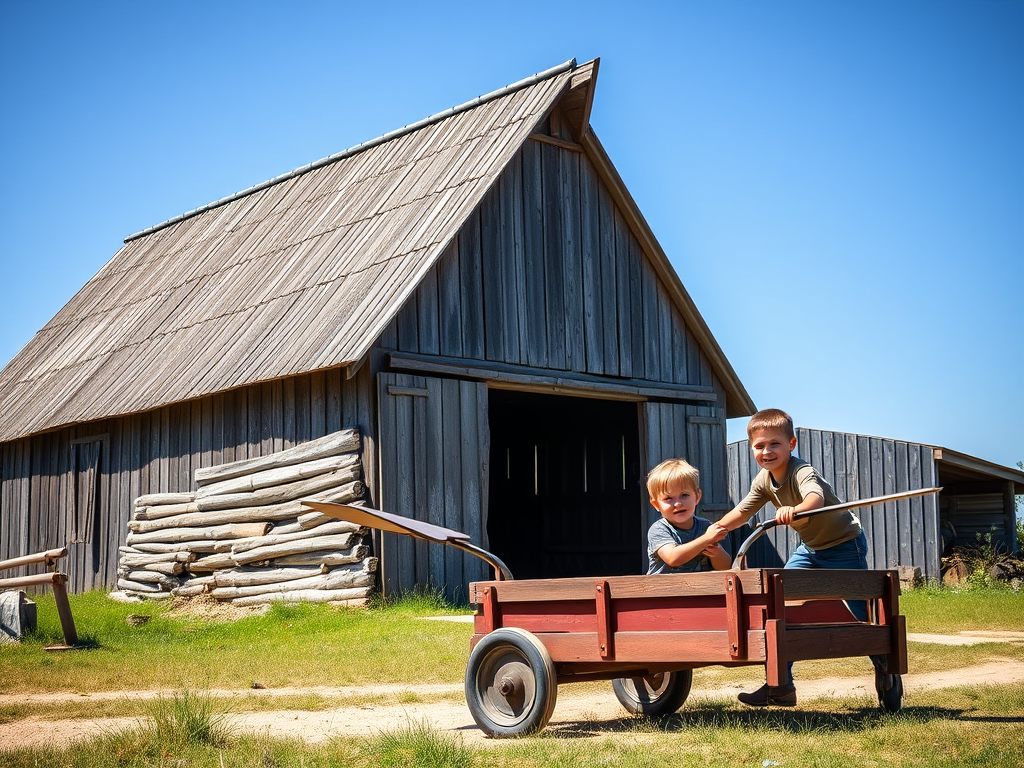
You’ve heard of the Wright Brothers, but you probably haven’t heard of the Groff Brothers—JD and Bennie. Two western Oklahoma boys growing up wild and dusty in the 1920s and ’30s. They didn’t have blueprints or flying machines. What they had was imagination, a tall barn, and a battered old wagon that Bennie believed could fly.

Bennie was the older one. He was full of ideas that didn’t always make sense. They always sounded like fun—at least to him. JD, the youngest, often found himself drafted into Bennie’s adventures under what you might call “big brother persuasion.” Bennie had a way of making cooperation seem more appealing. He would start listing all the minor sins JD had committed that week. JD wasn’t dumb. He knew how to pick his battles.

One summer day, Bennie got it in his head that their wagon could be made to fly. All it needed were wings—planks nailed out to the sides—and a launch platform. The barn roof, with its steep pitch and high drop, was just the place. Bennie did the math. He calculated it as only a 1930s farm kid could. He figured the wagon might be too heavy to lift both of them. So, of course, he chose JD to be the pilot.

JD protested. Loudly. But Bennie made his case and called in his leverage. They went up with the wagon. They dragged it onto the roof like a couple of cartoon inventors chasing the wind.

Perched high above the ground, JD sat nervously in the creaking wagon, holding on to the sides. The wings were loose, the wheels rattled, and JD knew better than anyone how this would end.

“Hold on tight and don’t jump out!” Bennie shouted.

“I won’t,” JD called back, “I’ll fall!”

And with that, Bennie gave the wagon a mighty shove.

It was right about then that their mother—Mom—looked out the kitchen window. She saw what no mother should ever see: her youngest son soaring off the roof in a makeshift flying contraption. She dropped what she was doing and ran out the door, just in time to witness gravity take over. The wagon left the barn roof for the briefest moment of flight—then fell straight down like a stone.

JD hit the ground in a cloud of dust and bent wood. Miraculously, he survived—more scared than scraped, and too winded to say anything right away. Bennie stood nearby, squinting at the wreckage like a disappointed engineer.

“Well,” Bennie muttered, “I guess there wasn’t enough lift.”

Mom had a different theory: they would never try that again.

JD agreed with Mom.

That was just one of many scrapes the Groff brothers got into over the years. Bennie had the ideas, and JD often paid the price. But through it all, they stuck together—laughing, fighting, inventing, surviving. That’s what brothers did.

The wild stunts and hijinks came to an end far too soon. Bennie passed away in his mid-forties, and with him, a certain spark left the family. One relative said the family had been “a little less jovial” ever since.

It’s true. A parent never fully recovers from losing a child. And a brother never fully recovers from losing his bud.

For a moment, a wagon flew on top of a barn in western Oklahoma. Two boys believed they could touch the sky.

A LAZY PORCH KIND OF AFTERNOON

By Benjamin GroffMedia© | benandsteve.com | 2025 Truth Endures©

1–2 minutes

A Lazy Porch on July 25, 1939

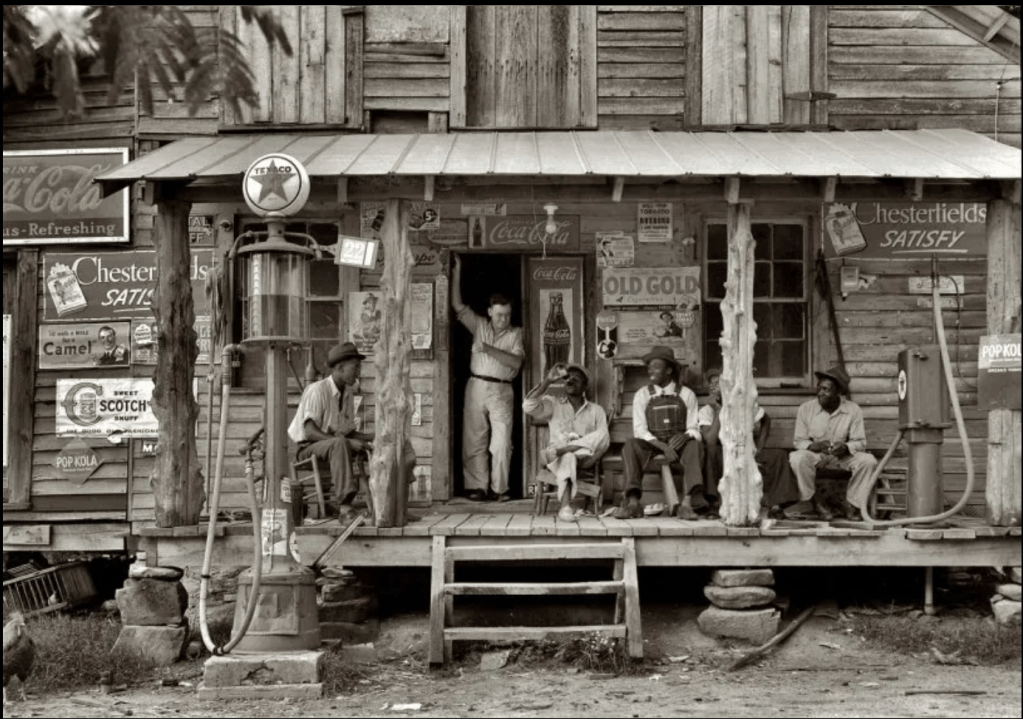
On July 25, 1939, Dorothea Lange was a renowned documentary photographer. She paused her busy travels across the American South. She stepped into a quiet moment just outside Gordonton, North Carolina. It was a humid summer Sunday. Through her lens, she discovered something golden: a rickety country store. Its wooden porch was dappled in shade. A few men sat comfortably in rocking chairs on it. The afternoon moved slowly around them.(1)

“Captured on July 25, 1939: a country store porch in rural North Carolina. Dorothea Lange found the perfect rendition of a lazy summer afternoon here. Let this moment remind you—it’s okay to choose rest today.”

Lange raised her camera and captured exactly what she saw: a peaceful summer tableau. The porch wasn’t staged—it was real life, real rest. The men lounged beside old kerosene and gas pumps, their chatter and quiet breaths blending with cicadas in the heat.

That moment—frozen in a gelatin silver print—became a small celebration of indolent joy. No agenda. No hurry. Just an afternoon spent doing exactly what summer begs you to do: nothing.

Twila Elouise: The ‘Standard Oil Baby’ and Her Amazing Birth Story

By Benjamin GroffMedia© | benandsteve.com | 2025 Truth Endures

3–4 minutes

A Frightening, Comical, and Hostile Ride: The Birth of Twila Elouise

By early June of 1960, Oklahoma’s summer heat had already settled in, pressing down across the vast plains. In Oklahoma City, JD Groff attended a convention of oil producers. He was representing Standard Oil Company alongside his superior. His superior was a man named Harold. Harold had a reputation for being both respected and heavy-handed with a whiskey glass.

Meanwhile, back in Clinton, JD’s wife Marjorie—known to family and friends as Margie—had decided to stay home during JD’s trip. Margie had four children already—Sheldon, Terry, Dennis, and Juli. She wanted to stay close to JD’s sister and brother-in-law. They could quickly step in and help with the kids if she needed to go to the hospital. It was a decision made with foresight and care, and as it turned out, it was the right one.

On June 2, Margie went into labor.

Her calm steadiness defined her actions. She went to the hospital, and the children were safely in good hands. Virgil Downing, her son-in-law, knew that JD needed to be reached quickly. He called the hotel in Oklahoma City. The oil convention was being held there. He had the front desk page, JD Groff.

“They called my name right in the middle of the banquet,” 

JD later recalled. 

“Everything stopped. I knew right then — it was time.”

JD bolted from the room, his heart pounding and his hands reaching for his keys when Harold intercepted him.

“You’re not driving,”

Harold slurred, wagging a finger. 

“You’ll crash the damn car. You’re too excited, Groff. I’ll take you.”

JD tried to argue and pry the keys back, insisting that Harold should not drive. He even asked him multiple times to pull over. They should then switch places. Harold refused every time. He repeated with drunken certainty that he was the safer choice.

“You’ll wrap us around a tree,” 

Harold barked, gripping the wheel with one hand and gesturing wildly with the other. 

“You’re gonna be a daddy tonight, shaking too much to steer.”

A two-hour rollercoaster ride across the Oklahoma highways followed. It was a journey that JD would remember for the rest of his life.

“He passed cars on the left, passed them on the right,” 

JD said later. 

“He cussed at every truck, hollered at every red light, and nearly rear-ended a tractor. At one point, he tried lighting a cigar while doing 80 down a back road.”

As JD would describe, 

“frightening, comical, and hostile all at once.”

By some miracle, they made it to Clinton in one piece. JD leaped from the car, bolted into the hospital, and made it to Margie’s side just in time.

That evening, on June 2, 1960, their daughter was born: Twila Elouise Groff.

JD had already picked the name. Twila for its soft, lyrical sound. Elouise served as a tribute to the Groff family lineage. This name stretched back to the family’s Swiss heritage. It was carried by strong women long before the Groffs ever set foot in America.

Twila’s birth quickly became more than a family milestone — it became a local legend.

In the next weeks and months, oil producers stopped by JD’s Standard Oil station in Clinton. Sales associates also visited. Colleagues from the convention came by as well. They checked in. 

“How’s the baby?”

They’d ask. 

“Did Harold drive you the whole way like a bat out of hell?”

Before long, the story had taken on a life of its own. Twila became affectionately known among oil company executives as 

“The Standard Oil Baby.” 

Her name would be mentioned at future conventions and meetings across Oklahoma. JD’s wild ride—and Twila’s prompt arrival—became an industry folklore, retold with laughter, awe, and camaraderie.

Years later, when new sales associates came through Clinton, they’d stop in and say, 

“Is this where the Standard Oil Baby lives?”

And JD, with that familiar half-smile, would nod proudly and say, 

“Yes, sir. That’s her.”

The Sacred Telephone: A Journey Through Time – It’s Your Dime!

By Benjamin GroffMedia© | benandsteve.com | 2025 Truth Endures©

3–5 minutes

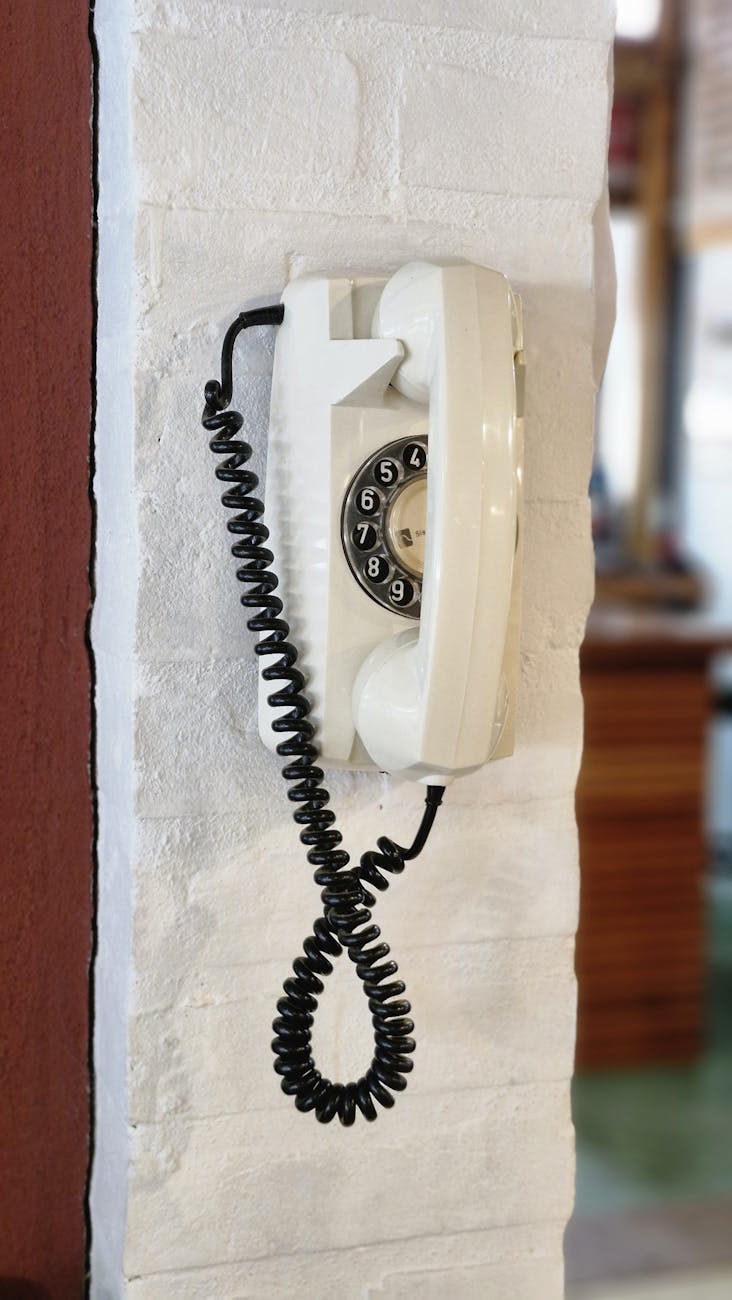
Photo by Rafael Duran on Pexels.com

When Phones Were Tied To The Wall

I remember when the telephone was sacred. It wasn’t sacred in the biblical sense. It was sacred in how a thing becomes sacred through ritual and reverence. It hung on the kitchen wall. It was a beige rotary with a coiled cord. The cord always managed to tangle itself, no matter how carefully we stretched it. There was no strolling around the yard while chatting, no slipping it in your pocket. That phone was anchored to the wall, and in a way, so were we.

Back then, if you were expecting a call, you waited—at home. You couldn’t run errands or mow the lawn and hope they’d “just leave a message.” There was no voicemail, and answering machines were still considered a luxury or a spy device. If you missed a call, that was it. Maybe they’d try again. Or, they wouldn’t.

There was an entire culture built around the act of calling. If the phone rang during dinner, it was a dilemma. Do you get up and answer it? That would offend Mom, who just set the casserole on the table. Or do you let it ring and risk missing something important? ‘Important’ means anything—a job offer or a family emergency. More often than not, it was just Aunt Margaret from Tulsa, who forgot about time zones again.

It’s Your Dime!

Long-distance calls were a whole other beast. Before area codes were common knowledge, calling someone more than a town away was a financial decision. “Unlimited minutes” became a birthright later. You thought twice, maybe three times. Sometimes, you waited until Sunday after 7 p.m., when the rates went down. You’d hear people say, 

“Make it quick; it’s a long distance,”

And suddenly, the air would tighten. Conversations became lean and efficient. There was no room for small talk when every second cost a dime.

And God help you if you live in a house with teenagers.

We had one line for the whole family. If someone was on the phone, that was it: no call waiting, no second line, no privacy. I sometimes sat on the front steps, listening to my older sister whisper sweet nothings to her boyfriend. At the same time, she stretched the phone cord into the hall closet for “privacy.” This meant insulation from our relentless teasing.

My Name Is In The Phone Book!

Phone books were gospel—fat and yellow and always near the phone. If someone’s number changed, you had to physically write it down in the back of the book. Otherwise, you risked losing it forever. If you didn’t know someone’s number, you called the operator, who answered with an almost magical, 

“Information, how may I help you?”

There was a time when arriving in a new town didn’t mean turning on a GPS. It didn’t involve scrolling through social media, either. Instead, it meant pulling up to a phone booth and flipping through the phone book. Every booth had one, thick and heavy, usually hanging from a little metal chain to keep it from wandering off. If you were looking for someone, all you needed was their name. You’d find their phone number listed alphabetically, and right next to it—their home address.

It was all just there, in plain ink, as ordinary as the weather report. Privacy wasn’t the concern it is today. Back then, being listed in the phone book was considered part of being a community member. It was how people stayed connected. Out-of-town relatives, old friends, and even traveling salespeople brought to your doorstep with just a name and a little patience. And it meant something to have your name listed in the phone book.

It’s funny now how phones used to ring, and everyone rushed to answer. It was exciting—an event. Now our phones ring, and we stare at the screen half the time like it’s a burden. Back then, it was a connection. A real, human voice carried over copper lines and across miles. There was a weight to it. You felt the distance.

It Is So Nice To Hear From You!

Photo by Min An on Pexels.com

And maybe that’s what I miss the most—not the inconvenience, not the cords or the costs, but the intention. Calls were planned. Conversations were meaningful, not disposable. There was something beautiful about the limits. There was something grounding about a phone that couldn’t follow you around. There was honesty in waiting for someone to call and hoping they’d find you home.

Because that was the world then—tied to the wall, rooted in place, and always listening. It was a simpler time in many ways. Yet, it would confuse anyone who had never experienced the rotary telephone era. 

Secrets of The Back Side Fishing Spot

By Benjamin GroffMedia© | benandsteve.com | 2025 Truth Endures©

2–3 minutes

The Back Side
Fishing The Back Side

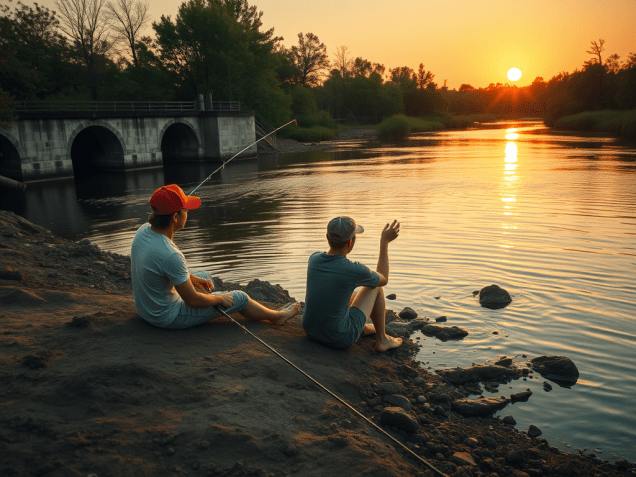
It was a humid summer evening. The air clung to your skin. The world glowed gold in the last light of day. My friend Bub and I stood at the edge of the old creek, just downstream from the dam. The concrete wall loomed behind us. Its spillway trickled like a broken faucet, feeding the deep pool below. The water turned slow and murky there. This was our favorite spot, a secret place we called “The Backside.”

Bub handed me a bank pole he’d rigged himself. It was a sturdy sapling shaved smooth. A heavy line was tied at the end. A fat hook was baited with a chunk of cut shad. We drove it into the muddy bank. We angled it over the swirling water. We tied it off with an extra rope to a thick root jutting out of the ground. Across the creek, Bub set another pole, whistling as he worked, his boots sinking deep into the silt.

We settled onto the bank, backs against the grass, watching the poles bend and sway with the current. The sounds of the night crept in: frogs croaking, cicadas humming, the occasional splash of a carp rolling. Somewhere distant, a train rumbled across the trestle.

“Think they’ll bite tonight?”

Bub asked, tossing a pebble into the water.

“They always do back here,”

I said, grinning.

“Big ones like the deep pool. They come up from the river, get trapped behind the dam.”

We waited in comfortable silence. Just as the moon began to rise, one of the poles gave a sudden, violent lurch.

“There!”

Bub shouted, scrambling to his feet.

I grabbed the pole, feeling the weight and fight of something strong on the other end. The bank pole bent double, creaking against the strain. Bub rushed over to steady the base. I worked the line by hand. I pulled and gave slack as the fish surged beneath the surface. The water boiled and flashed, silver scales catching the moonlight.

“It’s a big one!”

I gasped.

Together we fought it, step by muddy step. At last, Bub plunged his hand into the water. He grabbed the fish just behind the gills, hauling it onto the bank. It was a channel cat, fat and whiskered, easily ten pounds. We stood over it, grinning like fools, watching it thrash in the mud.

“Told you they always bite back here,”

I said.

Bub laughed and clapped me on the back.

“Best pole fishing spot in the county.”

We reset the pole. We rinsed our hands in the creek. Then, we sat back down under the stars. The dam hummed softly behind us. We didn’t talk much after that. We didn’t need to. The night surrounded us. The water flowed gently. The old dam spoke for us. They weaved our friendship into the quiet rhythm of the creek, one fish at a time.

Sharing A Story About “Cleaning Nana’s House” by KJ Stafford

By Benjamin GroffMedia© | benandsteve.com | 2025 Truth Endures©

4–7 minutes

My mother will turn 95 this August—if she makes it that far. Of the six siblings, only my youngest sister and I have cared for her in her old age. Two of the others gradually drifted away after our father passed. They chose, for their own reasons, to cut contact year by year. The two oldest brothers have both died in recent years.

My mother has always had a sharp mind and a strong, toned body. She was constantly on the move, always busy. Even into her 90s, she remained active and mentally alert. But over the past year, she’s started to slip. She now experiences episodes of sundowning. During these moments, she loses track of what she’s saying. She also becomes unaware of where she is or where she’s been.

She now lives far away from me. Our once hour-long phone conversations, filled with talk of daily life, have been reduced to five minutes or less. Her thoughts drift. She forgets what we’re discussing, where she is, or even who she’s speaking with.

The next is a piece shared with me by KJ Stafford, titled “Cleaning Nana’s House.” It resonated deeply. My sisters and I cleaned the house we’d all grown up in. This was before my mother moved in with me for several years. She later moved in with my sister, where she now lives. Stafford’s words capture an experience I believe many can relate to, and with her blessing, I’m sharing it here.

CLEANING NANA’S HOUSE

BY: KJ Stafford

In January of 2024 we moved my Nana into my parents house. Her health was failing, and so was her mind. She was no longer able to live alone anymore and she hated that fact. The woman had been independent her entire life. And now at 90 years old she was forced to be cared for. She could no longer take care of herself. I remember the thought hurting my heart. 


Fast forward to February 2025, I held her hand hours before she passed. I had never experienced death in that way before. Don’t get me wrong, I’ve dealt with death- both grandpa’s, aunts, uncles… but this was different. It had never been so in my face the way this was. I had never been physically there, witnessing the deterioration every day, every hour. I had never actually watched death slowly take someone. They are memories that will be buried inside my brain until death comes for me. Descriptions that will never make it down on paper ––


April 25th 2025: We piled in our cars, drove the 7 hours to my Nana’s house and began the task of clearing out our memories to make room for someone else’s. My Nana had lived in that house for over 50 years. My mom grew up there. My siblings and I spent weeks there during the summer and until 2024 every Thanksgiving of my life was spent in that tiny dining room around the round, antique wood table. The kitchen looks as if it got stuck in the 70’s. Yellow countertops remind me of sunflowers. The floor is tiled and worn from years of cooking. Years of family gatherings. Years of love. There’s the iconic green couch that sits in the living room…or sat- now it will be given to another family. Moved into a different living room after sitting comfortably in it’s corner for all of these years.

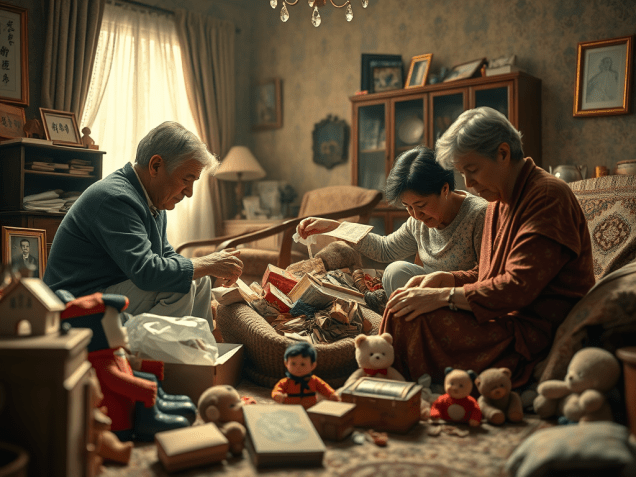
We found love letters from my Grampy to my Nana, boxes of old black and white photographs, ancient toys, jewelry, coats that have somehow found their way back in style, antique glass and trinkets galore. Each find triggering a specific memory. Each find making me wish I could go back 15 years ago. When I was just coming up for the week to visit. Instead of it being the last time within these cozy walls. 


My Nana was by far the strongest woman I’ve ever met. She grew up in Canada, abandoned by her mother before she was 8 years old, left with an alcoholic for a father who was never around. She spent Canadian winters in their small, wooden shack often times by herself. Venturing out into the thick snow every so often to find more logs for the fire- the only thing keeping her warm enough to survive. Scavenging for scraps of food. Eventually being passed on and off to relatives, never having a home to call her own. Never truly feeling loved by a family….


Upon finally coming to America, she met her first husband. She married him when she was only 17 and had three children by the time she was 27. He was a drunk. He was a cheater. She deserved better. One night he got back a little too late, my Nana kicked him out. Divorced his ass. She was the talk of the town. It was unheard of at that time. What woman with three young children abandons her husband? A STRONG one, that’s who. 


She set goals for herself. She knew she wanted to work at the University. She knew that is where she would meet someone else. And she DID. She worked hard until she got hired. And shortly after, she met my Grampy. The sweetest man to ever walk this earth. Years later they had my Mom. 
Without my Nana’s strength. Without her knowing her self-worth, I would have never existed. Had she not followed her intuition. Had she not trusted her gut, there would be no me. No family. And for that, I am forever grateful. 


I like to think she gave me a little of that strength. I feel it within myself sometimes. It’s why I took Stafford as my pen name. I am so honored. Honored that I was able to grow up with her in my life. Thankful that I had her to teach me how to become a strong woman. I vow to live my life as my Nana did. Never accepting less than I deserve and never being afraid to put myself out there, take a risk, trust my gut and grow. 

To read the original story CLEANING NANA’S HOUSE by KJ Stafford click here.

Clicking the line above will also supply images that go with the story.

Inside the Attic: Capturing a Dangerous Fugitive

By Benjamin GroffMedia© | benandsteve.com | 2025 Truth Endures©

2–3 minutes

Early in my law enforcement career, I rode with some of the best in the business. These included David “Booty” Ware, Bruce Poolaw, Junior Toehay, Don Gabbard, and Buttin Williams. All were Native American except for Gabbard, a character in his own right.


By the time I was 19, I had experienced more than most people do in a lifetime. I was just getting started.


One day, nearly every law enforcement officer in the county joined a search. They were looking for a man named Virgil Bass. He had a felony warrant and was considered dangerous. Virgil had vowed he wouldn’t go to jail without a fight. If anyone tried to arrest him, he’d either kill them or die trying.


We started early that morning, sweeping from one end of the county to another. By evening, we reached Virgil’s parents’ house on the county’s west side. We surrounded the place, each of us watching for any sign of an escape.


Bruce and I approached the door and stepped inside. His parents claimed they hadn’t seen him, but they kept glancing up at the ceiling.


Bruce, all 6’6″ of him, said firmly,

“We need to check everywhere.”


We made a show of slamming doors, stomping around, acting like we’d searched every corner. Then we got to the attic.


Bruce looked at me.

“You’re the only one who’ll fit up there. I’ll give you a boost.”


Before I knew it, my head was poking through the attic opening. It was pitch black. I called down,

“I need a flashlight!”


I was half-expecting a two-by-four to come crashing down on me—or worse. If Virgil was up there, he saw me silhouetted by the light from below.


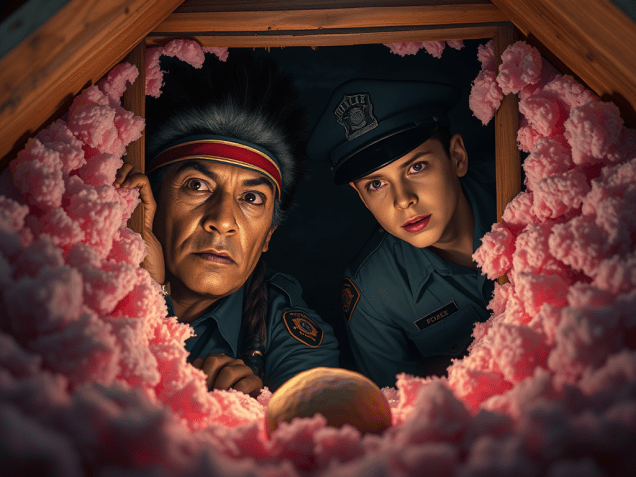
Bruce handed me his flashlight. I pulled myself up until my arms were entirely inside the attic and swept the beam around. The attic was filled with fluffy pink insulation. One spot was different. A trail led from the opening to a lumpy insulation patch. About five feet away, the insulation looked disturbed.


I looked down at Bruce.

“I need a poker iron.”


I heard Bruce ask the family if they had one, and he handed it to me within seconds. I jabbed the iron into the lump, then thought better of it and started whacking the hell out of it.


Suddenly, there was yelling and cursing, and Virgil burst out of the insulation.


“Stop it! Stop it! I give up!”

he hollered.


I ordered him to follow me down, and once he was out, we cuffed him. We took him outside to Booty’s patrol car. Booty looked at the lump rising over Virgil’s eye. He asked,

“How’d that happen?”


I shrugged.

“He fell on a poker iron.”


The whole crew burst out laughing. After all, it’s easy to fall on a poker iron. This is especially true when hiding in an attic after threatening to die before going to jail.

Lessons from Bill: Radio Adventures and Childhood Memories

By Benjamin GroffMedia© | benandsteve.com | 2025 Truth Endures©

4–7 minutes

I have many stories about growing up. Sometimes, I wonder how I fit everything I did into the years leading to where I am now. As a young teen, I always felt my family was boring. We never seemed to do anything special. But when I share our family stories today, people tell me they spark their forgotten memories. They bring back moments they thought were lost.


One such story involves our neighbors, Bill and his wife, Marie. They rescued every stray dog they found and invited each one into their growing pack.


I first met Bill while riding my bike home from a friend’s house. He had stopped his car to get the mail from his old roadside mailbox. I couldn’t help but stop and say hello. I asked him where he lived. He pointed across the road toward a distant antenna. It stood tall above the trees. “Right under that antenna,” he said with a smile. I had watched that antenna for years. It was massive. It perched on rotating poles to turn the shortwave and CB radio antennas in any direction he wanted. Seeing my interest, Bill invited me to visit the next day—but told me to check with my parents first.


I didn’t know it then, but Bill had been instrumental in bringing electricity to our area through a rural cooperative. He’d helped light up countless homes across several counties. My parents permitted me to visit but warned me not to overstay my welcome.


The next day after school, I finished my chores and pedaled toward Bill and Marie’s. As I left the paved road and turned onto the dirt path, barking erupted. A pack of dogs rushed to greet me, but they wagged their tails instead of attacking and licked my hands. It was like I was the first human they’d seen in years. They crowded around me, gently herding me up the porch steps. I reached for the doorbell, but before pressing it, the dogs nudged me ahead, practically carrying me into the house.


“Hello? Anyone home?”

I called out.


Marie’s sweet voice answered from the kitchen,

“I bet you’re JD’s boy. Bill told me you’d be stopping by. He’ll be out in a minute—say hello to the family.”


She gestured toward the dogs as she named them individually, expecting me to remember each name. There had to be twenty dogs in that living room alone. As I looked around, another thought puzzled me: how did she know I was my dad’s son? I hadn’t even introduced myself yet.
A moment later, Bill entered, smoking his pipe, followed by four more dogs circling his legs. He shook my hand warmly and led me into his den, where I would spend hours learning from him. Bill introduced me to the world of shortwave radio and explained how to get a license. He even lent me a Morse code training record to help me prepare for the exam.


But radios were just the beginning. Bill showed me his greenhouse, where he taught me how starting seedlings early gives a head start in spring. One day, he took me to another outbuilding—a woodworking shop filled with the scent of freshly cut lumber. There, he showed me how he crafted furniture and home goods, staining and treating each piece with care.


When I was almost sixteen, Bill revealed yet another surprise: a mechanic’s shop hidden behind his house. Inside sat an old Datsun pickup.

“I haven’t driven it in years,”

Bill admitted,

“but it’s still here.”


I could feel the gears turning in my head. I was about to get my driver’s license, and that old truck looked like the perfect first car. Before I said anything, I knew I had to check with my dad.
When I asked, my dad said,

“We can look at it.”

To me, that was a yes.


The next day, I returned to Bill’s and asked if he might be interested in selling the truck.
Bill chuckled.

“I never thought about selling it—but if the price is right, maybe.”


“I’ll need a car when I get my license,”

I told him.

“And my dad said we could take a look.”


“Bring your dad down,”

Bill grinned,

“and we’ll talk.”


Dad and I stood in Bill’s mechanic shop a week later, looking over the Datsun. Bill puffed his pipe thoughtfully.

“It ran fine when I parked it. Might go ten miles, might go another hundred thousand. Hard to say with an old truck.”

He smiled at Dad.

“You know how it is with cars.”


Then Bill turned to me.

“I’ll talk price with the boy. You’re too good a horse trader for me to haggle with.”


My dad laughed.

“You know what you’ve got in your savings,”

he told me.

“Don’t spend more than that—and don’t forget tax, title, and insurance.”


At that moment, I felt the weight of adulthood settling on my shoulders. I bartered with Bill for ten minutes, careful with every dollar. Later, I discovered an interesting fact about Bill and my dad. They had been late-night radio buddies for years. They even arranged for a state newspaper courier to toss them papers at a secret highway drop each morning.


I kept visiting Bill and Marie for years. As I grew older, I began to understand Marie’s quiet burdens. They were things I wish I’d been capable of helping with then. I only understood them now, knowing what I know. Bill and his beloved dogs carried on their calm, legendary life on the edge of town.


No one else ever visited them—not like I did. And sometimes, I wonder if that had been the plan all along.


Bill and Marie passed away in the 1990s. Per their wishes, their property was sold to help the local community center. Their home, once full of vibrant life with voices, radio signals, and loyal dogs, became part of something greater. It was destined to be that way.

Every time I turn on a radio, I still feel them with me. When I smell fresh-cut wood or see an old pickup truck, I also think of them. Their stories live on—in mine.

Discovering Lake Tenkiller: A Journey of Self-Discovery

By Benjamin GroffMedia© | benandsteve.com | 2025 Truth Endures©

2–4 minutes

Finding Home at Lake Tenkiller

One man’s journey through Oklahoma’s parks led him somewhere unexpected—and unforgettable.

When I graduated high school, I was no stranger to the outdoors. My dad was a park ranger, so much of my youth was spent in the Oklahoma parks where he worked. But let’s be honest. My version of “camping” came with cabins and beds. I always had the choice to stay inside if the weather got bad. I didn’t venture far into the woods unless I had to. That was just the way it was.

As I entered adulthood, though, something shifted. I started craving a deeper experience with nature, something less structured and more raw. I planned to visit every state park in Oklahoma. I aimed to camp at each one—no cabins—just me, a tent, and the open sky.

That plan lasted exactly five stops.

On my sixth visit, I reached Lake Tenkiller—and everything changed. The water was clear and clean, the air calm, sheltered from Oklahoma’s notorious winds. It was unlike anything I’d experienced. I pitched my tent and knew, deep down, I wouldn’t need to search any further. I had found my place.

Stormy Nights and Quiet Joys

I returned often, even through thunderstorms. While other campers packed up or ran to their cars at the first crack of thunder, I stayed. I watched lightning dance across the water. Thunder rolled through the hills. Rain swept across the lake. These moments became one of my life’s most calming experiences. Tenkiller is situated north of Gore, Oklahoma, in the Cookson Hills. It also feeds the Lower Illinois River, which contributes to the Arkansas River.

In those younger years, full of energy and a touch of recklessness, I embraced the wilderness. I was there for all the peace, the storms, and the quiet lessons only nature can teach.

Evolving Comforts

Eventually, the novelty of sleeping on the ground wore off. The cold felt colder, and the earth felt harder. That’s when I discovered a few rental cabins tucked near a cove. I asked around and spoke to the owner. They explained how they customized cabins for guests. They even hung a shingle with my name on the front.

Suddenly, a fireplace, stove, refrigerator, and absolute beds transformed my experience. It was still my beloved lake—but now with a touch of comfort. When friends heard about it, they wanted in. Soon, I was making the trip with six or eight others. We built a tradition of campfires, storytelling, and fish tales. These tales only grew bigger over time.

Moving On, But Never Forgetting

As the years passed, life caught up with me. Work, family, and obligations—they pulled me in new directions. My visits to Tenkiller slowed, then stopped. One day, I realized it had been years since I’d last seen that clear water.

But that’s the way of things. The lake had given me what I needed when I needed it—freedom, peace, community, clarity. And though I will not return as often, the memories are stitched into who I am. When life gets noisy, I remember those quiet storms. I think of the glassy mornings. I recall the crackle of fire in a lakeside cabin.

Some places stay with you, even after you’ve left them.

Lake Tenkiller is that place for me

The Heartbeat of Small Towns: Lessons from Main Street

Benjamin GroffMedia© | benandsteve.com | 2025 Truth Endures©

4–6 minutes

The Old Main Street

The Old Groff House
The Groff House, first moved to Binger from Anadarko.

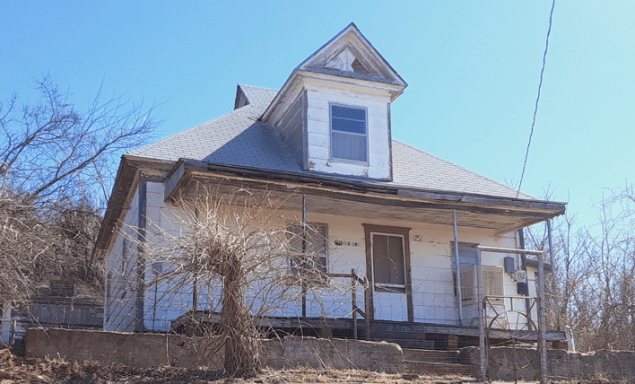
Our move to the farm east of Binger, Oklahoma marked a drastic change in life. It was vastly different from our life in Cordell. My dad had bought a house set on a modest foundation. A propane stove heated it. There was no running water. We had no telephone. The electricity worked until a snowstorm or thunderstorm blew through and took it down. In time, things would improve, but first, we had to learn a new way of living.

Each evening, my dad brought home two five-gallon containers of water and set them on the kitchen floor. Hanging above them was a metal ladle, which we all used to scoop ourselves a drink. It was a crude method, but it worked—and we didn’t think twice about it.

Going to the restroom was another matter. Several attempts had been made to drill wells, but all came up dry. My dad had the holes filled in, except one. Over that one, he placed an old-fashioned outhouse—worn, sun-bleached, and splintered. It looked fifty years old, and maybe it was. But he fitted it with a new toilet seat, and we used it like it was brand new. The worst part? The yellow jacket wasps that swarmed it in summer. They built their cones overnight, and chasing them off was a risky job that none of us looked ahead to.

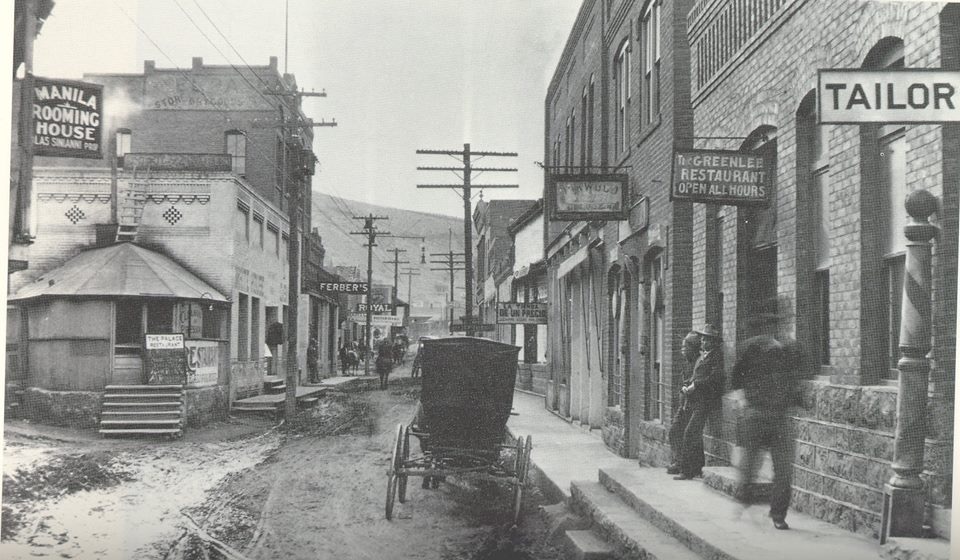
This story isn’t about the outhouse or the water jugs. It’s about the town’s Main Street during that time. The impression it left on me was significant. I was only five years old, but the images are burned into my memory.

My dad was the town barber. His shop sat on a steep sidewalk, at least three feet above the street. Set into the concrete were old metal rings. For the longest time, I had no idea what they were for. One spring morning, I was playing on the sidewalk. I was flipping one of the rings back and forth. An old timer stopped and looked down at me.

“Do you know what that ring is for, Sonny?” 

He asked.

I shook my head. 

“No.”

He grinned. 

“Those were for tying up horses and wagons. Back in the day, folks would come to town on Saturdays—buggies and wagons lined this whole street. Horses everywhere.”

That answered a mystery I’d long wondered about. But there were more to come—and like those rings, they’d slowly be explained to me, one by one.

That same sidewalk saw a lot of stories. I remember one day. A slick Chevrolet four-door pulled up. Two men and their children—a boy and a girl—went into the drugstore next to Dad’s barbershop. My oldest brother had come into town to visit and was sitting in the shop when someone waiting for a haircut suddenly shouted, 

“FIRE! FIRE! THAT CAR IS ON FIRE!”

The man bolted into the drugstore to alert the others. Someone must’ve called the fire department—but “fire department” was a stretch. The town had a 1945 fire truck with a rusted tank and an engine that wouldn’t start. They had to tow it with another truck to get it to the fire. My brother ran to the car and had one of the men pop the hood. Without hesitation, he ripped off his shirt and began beating out the flames around the carburetor.

The twins—those two kids—stood next to me on the sidewalk, watching. They would later become my classmates and lifelong friends. That introduction during the chaos would forge a connection we kept through the years.

My brother eventually put out the fire. The fire truck, still leaking water, finally rolled to a stop behind the car—just as the tank began to empty. The scene would’ve been funny if it hadn’t been so sad. Laughter erupted from my dad’s shop. The volunteer firefighters were embarrassed, and I remember feeling bad for them.

It wasn’t the last mishap. Months later, a house caught fire just behind the fire station. The truck’s wheels locked up that time, and it couldn’t even be towed out. The town then decided it was time for a new truck. 

Through donations and fundraisers, they finally got one. The arrival of the new fire truck was a significant moment in our town’s history. It was a testament to our resilience and the importance of community support. It was a real point of pride—a saving grace when it finally arrived.

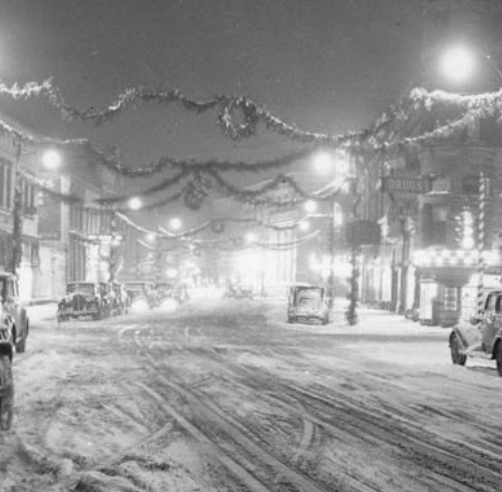
Main Street had its beautiful moments, too, especially at Christmas. The decorations draped across the street like something out of It’s a Wonderful Life. Seeing them lit up at night turned Main Street into a glowing wonderland.

One Christmas, the town threw a parade. The governor came. And so did our hometown hero, Johnny Bench, riding in the back of a convertible. I stood beside my dad in front of his barbershop, watching as they passed by. It was one of the biggest things to happen to our little town of 750 souls.

Main Street had different values back then, too. I remember a funeral procession once drove through town. My dad stopped cutting hair and closed the shop until the last car had passed. Other businesses did the same. That quiet gesture of respect left an impression on me that’s never gone away.

Looking back now, I realize that old Main Street was more than just a stretch of asphalt and storefronts. It was the heartbeat of a simpler time. Life was slower and more mindful then. It taught me about community, kindness, hard work, and the small moments that shape our lives. Those sidewalk rings, flickering Christmas lights, and clunky fire trucks are gone, but the memories stay. And in my heart, Main Street still stands—just as it was.

Memories of My Grandmother and the Whippoorwill

GROFF MEDIA 2024© TRUTH ENDURES IMDBPRO

Presented by benandsteve.com By: Benjamin Groff II©s

2–3 minutes

My grandmother, whom I affectionately called Mom, often shared childhood memories filled with the enchanting call of the whippoorwill. She spoke of its song with reverence, describing it as a sound of pure beauty that she dearly missed. Her stories wove a special bond between us. They spanned the miles that separated our homes in Northeast Texas, Southwest Arkansas, and Southeast Oklahoma.


Nowhere else, she insisted, did the whippoorwill’s call sound as sweet.


I lived nearly forty miles east of her. It was on a farm where the evenings were alive with the calls of night birds. When Mom visited, I would take her on walks to the barns. We listened to the quail and other birds stirring in the brush.


“Mom, are those the whippoorwills you were talking about?”

I’d ask eagerly.


She would shake her head, smiling softly.

“No, that’s not them.”


Her answer certainly puzzled me. I knew the birds in our region. What I heard matched the description of a whippoorwill. At least, it did to my ears. Yet she remained firm. The sound she longed for existed only in the woods of her childhood, some two hundred miles away.


Mom passed away in April 1975, and with her, I thought, went the mystery of the whippoorwill. But fate had other plans.


Not long after, my parents decided we would take a trip. We went to visit my great-uncle Sam and great-aunt Dora. They lived in the very place where Mom had been born. I expected only a family visit. Yet, something remarkable happened as we settled onto my great-uncle’s front porch.


The evening air cooled as the sun dipped below the horizon. Towering trees stood like silent guardians, their leaves rustling in the gentle breeze. The Ouachita Mountains stretched beyond us, their shadows deepening as dusk settled in. And then, clear as a bell, I heard it.


“Whip-poor-will! Whip-poor-will!”


The call rang through the crisp and melodic trees, carried by the mountains and forest floor acoustics. It was so rich and hauntingly beautiful, unlike anything I had ever heard.

At that moment, I understood.


I knew why Mom had never heard it quite the same anywhere else. Here, and only here, the whippoorwill’s call possessed a magic she had never been capable of finding again.
I have never heard it since.


But in that fleeting moment, I was surrounded by nature’s beauty. I heard the echoes of the whippoorwill’s song. I found peace. It was as if I had brought her wish full circle. I was hearing the sound she longed for. I was honoring her memory in a way that words never could.


And in that sound, I found her again.

Hear the sound in the video below.

Learn about the Whippoorwill here!

Lessons from Pa Pa J: The Joy of Simple Traditions

GROFF MEDIA 2024© TRUTH ENDURES IMDBPRO

Presented by benandsteve.com By: Benjamin Groff II©s

1–2 minutes

Pa Pa J.
Pa Pa J., Dad,

We never took a trip or spent a day alone without resorting to Vienna sausages. It was a ritual. Sometimes we’d have crackers with them. Sometimes not. But one thing was sure: the lid of that little can popped open when hunger struck.


I’m talking about my dad, JD. He refused to stop at roadside cafés or even at convenience stores. If we needed gas, we’d pull into a filling station. But for food, we used whatever we brought from home. As a child, I never minded. Sitting there, sharing those sausages with my dad, I saw they tasted better than anything we bought.


Years passed, and I eventually moved out. But my dad’s traditions didn’t stop with me. His grandkids soon got to experience his simple pleasures, though I didn’t realize it then.
Recently, while visiting with my nephew, he shared a memory that made me smile.

“Pa Pa,”

he said,

“always had a can of Vienna sausages when he visited. We’d sit together and share them like he used to do with you.”

But then he added something even more telling about my dad’s practical ways.


One day, they were out on the back patio. When the last sausage was gone, my nephew picked up the empty can. He was ready to throw it away. But Pa Pa stopped him.

“No, give it to me,”

Pa Pa J. said.

He walked to a pipe with an open end. This pipe was leading into the house. He placed the can over it. It fit perfectly, sealing the opening. My nephew chuckled as he realized the simple genius behind it—Pa Pa’s foolproof way of keeping wasps from nesting inside.


And so, somewhere in that old homeplace, if someone tinkering around. They find a pipe with a can stuck inside. They should leave it be. Because if Pa Pa put it there, you can bet it was for a good reason. Unless, of course, they want a house full of Yellow Jackets.

Honoring Tradition: Birthday Memories and Family Bonds

GROFF MEDIA 2024© TRUTH ENDURES IMDBPRO

Presented by benandsteve.com By: Benjamin Groff II©s

2–4 minutes

February 17th: A Day to Remember

Today is February 17th. In the United States, it’s recognized as Presidents’ Day. This holiday honors past leaders and their contributions to the nation. Initially, the day was all about Washington and Lincoln, but eventually, every other president wanted in on the act. At least, that’s how I remember it from my elementary school days.

Groff Family Celebrations
Groff Media©

But for me, February 17th holds a much deeper meaning. It marks the birthdays of three people who shaped my life. They are my grandmother, father, and an uncle by marriage to my father’s sister. And with that, it also carries a tradition that has lingered through the years.

When they were alive, our family gathered every year on the Sunday before their birthdays. Relatives, friends, and even neighbors would fill my grandparents’ home. Some were from their old farm. Others came from their city life after retirement. As a child, I didn’t fully grasp the significance of these gatherings. Now, in my retirement years, I see it so clearly. The warmth of belonging, the shared stories, the laughter—it all meant something. Looking back at the old photos, I understand now what I couldn’t then.

After they passed, my mother kept the tradition alive in her way. Every year, without fail, she’d call each of us siblings and ask,

“You know what day it is?”

Groff Family Celebrations Groff Media©

But time moves ahead, as it always does. My mother is now 95. She no longer makes those calls. Her mind can’t reach for the dates and details that once anchored her. So instead, we call her. And the tradition continues, binding us together in shared memories and love.

Only my sister and I acknowledge the day out of six siblings. Sometimes, I call her first. Other times, like this morning, she beats me to it—before I’ve even had my first sip of coffee. Our conversation is brief but meaningful, a moment to honor the three lives that shaped us. And, of course, to share a hearty laugh at the memory of my father’s favorite joke.

My dad was a barber, and in our town, barbershops traditionally closed on Mondays. But when Presidents’ Day landed on February 17th, he saw an opportunity for mischief. At family gatherings, he’d grin and announce,

“If the Post Office is closing on my birthday, then I suppose I have to close my shop too!”

In those years, he’d even hang a sign in his shop window:

“JOINING THE POST OFFICE—WE WILL BE CLOSED ON MONDAY IN RECOGNITION OF MY BIRTHDAY.”

My Father JD
Groff Media©

He thought it was the funniest thing in the world, and as kids, we did too.

I always admired my dad. I looked up to him, though I never told him outright. I wish I had. There were so many times I wanted to say the words, but I never quite found the right moment. And yet, I believe he knew. Somehow, he always knew things about me that I never spoke out loud.

Even on February 17th, I felt his presence in the quiet traditions that remained. I sense it in the phone calls, laughter, and stories we still tell.

And I think—that’s enough.

A Poem and a Poker Game: Life Lessons Learned

GROFF MEDIA 2024© TRUTH ENDURES IMDBPRO

Presented by benandsteve.com By: Benjamin Groff II©s

2–3 minutes

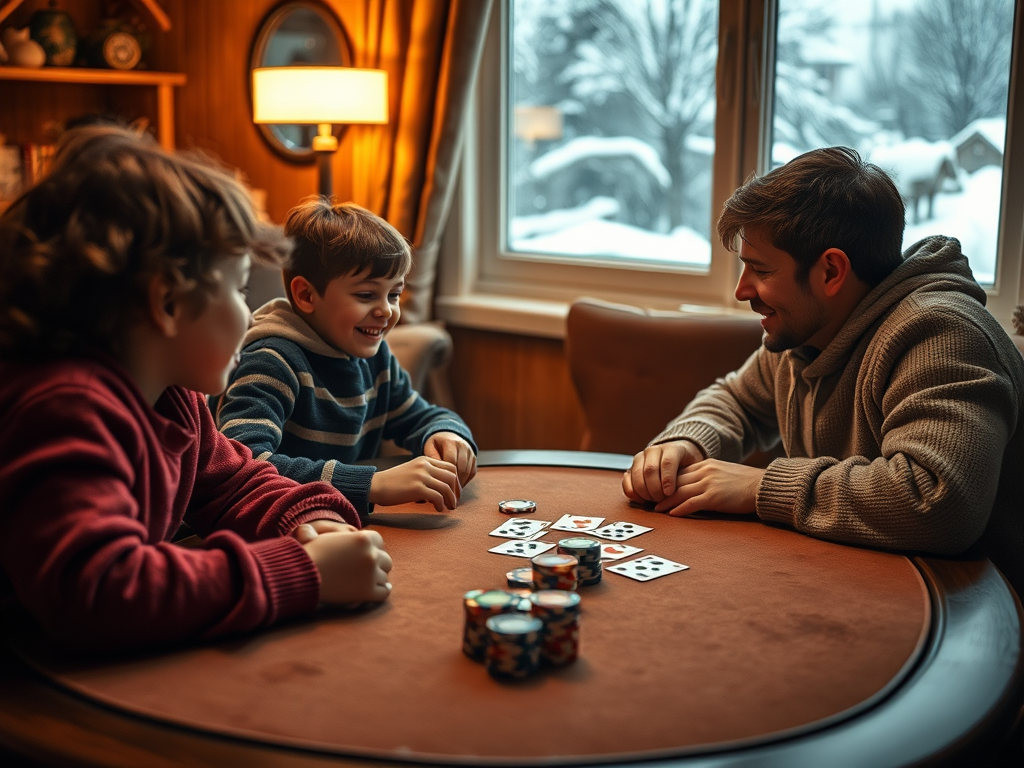
It was cold and snowing the day my dad decided to teach my sister and me how to play poker. We set up a card table in the living room. He brought out his cherished poker chips and cardholder. He placed them carefully in the center.

The chips were red, white, and blue. Dad told us not to worry about their dollar value. White was the least expensive. Red was worth more. Blue held the highest value, at least for this game. Then, with a practiced hand, he shuffled the deck and dealt the cards, and our lesson began.

I can’t recall exactly which variation of poker we played. It was Seven Card Stud, Texas Hold’Em, or Five Card Draw. But I remember the three of us sitting around that table. Each had a tall glass of iced tea. The snow piled up outside. With every inch of snowfall, I grew more hopeful that school would get canceled the next day. In my mind, I was already winning.

I caught on quickly, learning to hold onto high-value cards and giving myself a decent advantage. But the real edge came from my dad. He wasn’t just teaching us poker. He was teaching us something more. This lesson would stay with me long after the cards were put away.

A fire crackled in the fireplace, filling the room with warmth, and for a moment, life felt perfect. That house, that evening, that love—it’s a place I often dream of returning to. Yet, it no longer exists beyond memory. And in that memory, my dad shared something else with us. It was a poem—a warm blanket of words that wrapped us in comfort.

It was nonsensical and crude, but it belonged to him, and now it belonged to me. Decades later, I still carry it with me:

DAD’S POEM

I Woke Up Just This Morning

And I Looked Upon The Wall

The Roaches And The Bedbugs

Were Playing A Game Of Ball

The Score Was Six To Nothing

The Roaches Were Ahead

I Got So Doggone Excited

I Jumped Right Out Of Bed

I Ran Downstairs to Breakfast

But The Coffee Was So Stale

It Tastes Just Like Tobacco Juice

Right Out Of The County Jail.

Dad said he wasn’t sure where he’d first heard it—maybe in school as a boy. He had just always known it. And now, it was mine to carry on.

That silly little poem has come in handy more times than I can count. It has bailed me out when I’ve been put on the spot and asked to speak publicly. When I needed to write something quickly for school, it found its way onto my paper. It has brought laughter to gatherings and lightened tense moments. Somehow, it has traveled with me through time. It serves as a testament to the enduring power of shared memories. It is just like the memory of that snowy afternoon.

I never became a poker player, but I went on to work with words, write, and tell stories. I believe it started with that poem.

Cherished Memories from 608 E Kiowa Street

GROFF MEDIA 2024© TRUTH ENDURES IMDBPRO

Presented by benandsteve.com By: Benjamin Groff II©s

3–5 minutes

The house at 608 E Kiowa Street was a two-story, single-family dwelling. It was the largest home on the street. It was on the road’s south side, just east of Jefferson Elementary School. The exterior was adorned with a well-kept garden. There was a porch with a swing where we spent many evenings. A large oak tree provided shade in the summer. It was my grandparents’ home from when I was born until my grandmother passed away in the mid-1970s.

With its shale shingle siding, the house always seemed enormous to me. The first floor held a kitchen, a cozy den, and a bedroom. It contained a formal sitting room and a living room where their black-and-white television rested. Upstairs were three large rooms—spacious enough for my grandmother to host visiting relatives from out of state.

My grandmother’s hospitality was legendary. She accommodated up to three full-size beds with people. She had sleeping cots and plenty of room to use if needed. She was always ready to welcome more guests into her home, making everyone feel like they belonged.

One of the most memorable aspects of the upstairs was the introduction to an old-fashioned necessity: the chamber pot. My grandmother clarified that it was mainly for the ‘men folk.’ The women seemed to manage through the night without issue. Every morning, my grandfather would empty the pot into the downstairs toilet. Then he would step outside. He would wash it thoroughly with the garden hose. He’d always follow this routine by filling it halfway with water and calling out to my grandmother,

“Ok, Mom, I got halfway there.”

To which she’d respond from somewhere in the house,

“Don’t put the lid on it. I’m bringing the bleach!”

Everyone called them Pop and Mom. Over the years, the names became so natural that they started addressing each other that way. This was true except when my grandmother was exasperated with Pop for not hearing her. Then, she’d call him by his actual name, the very name I shared with him. But beneath the surface, how much they loved and cared for each other was always evident.

“BEN!”

Whenever I visited, I couldn’t help but worry that the neighbors thought she was yelling at me for misbehaving. I loved my grandparents too much to ever cause trouble. I tried my best to help Pop hear her. I acted as a go-between for their familiar, loving banter.

Another curiosity upstairs was an old doorstop. It was a gift from my great-grandfather. He was a stern, fire-and-brimstone Baptist preacher. He roamed Northeast Texas, Southwest Arkansas, and Southeast Oklahoma. His mission work often left my grandmother unsure which state they lived in since their farm straddled all three.

She once told me something interesting. The doorstop had accompanied her brother. He came to give my grandfather permission to marry her. It remained tucked away upstairs because, as she explained,

“Times have changed, and it wouldn’t be proper to show it in the main part of the house.”

In the kitchen, a small toy was tucked inside a cabinet. It was the only toy my grandmother ever bought for my dad during his childhood. Money was tight back then, and buying toys was a luxury most couldn’t afford. Yet, she purchased this wind-up toy. It would dance and entertain my dad as a toddler while she worked around the house. When my grandmother passed away, the toy went to my dad. After his passing, I found it in our attic. It was worn and weathered by time. Yet, it still carried the weight of all those cherished memories. I kept it—not for its value, but for the stories and love it symbolized.

The family gatherings we shared there pull me back to that old house, even though it no longer stands. Mom and Pop’s home was a magnet for loved ones, filled with laughter and warmth. Even during the most challenging economic times, a sense of togetherness and unity prevailed. This feeling seems more elusive in today’s world. Their old radio will not pick up the stations it once did.

I often wonder what Mom and Pop would think if they saw our modern world—technology and conveniences. But more than that, I wonder how they’d feel. How would they react if they saw what we’ve done with the legacy they left us? They instilled the values of hard work, love, and togetherness. Would they be proud of the way we’ve upheld these values? Would they recognize the strong family bonds they worked so hard to instill? The actual family values of love before judgment.

Those questions linger, just like the memory of the old house on Kiowa Street.

Elmer’s Tough Ride: A Journey Through the Dust Bowl

GROFF MEDIA 2024© TRUTH ENDURES IMDBPRO

Presented by benandsteve.com By: Benjamin Groff II©s

4–6 minutes

Pa Elmer’s Ride

The winter had been relentless. The worst sandstorm in memory had swept through the region the year before. It buried the land in towering drifts of dust and sand. In some places, these drifts were waist-deep.

It marked the beginning of the Dust Bowl. This was a devastating era of dust storms. These storms crippled agriculture and reshaped life across the American and Canadian prairies in the 1930s.

Few families had stored enough food from the past year’s harvest. Even fewer were sure how long this disaster would last.

They say two things in life are certain: death and taxes. And for Elmer, tax time had come knocking. He had no choice but to ride nearly forty miles to the courthouse. He needed to pay his property taxes in person. He risked default if he didn’t. Despite the hard times, he had always kept his land in good standing. He intended to do so now, even with their dwindling savings. With three young children to feed, responsibility was heavily on his shoulders. His two sons and daughter were too young to fully grasp the hardship that had taken hold of the land. The struggle was real for Elmer and his wife, Ma Ma.

The night before his journey, Elmer told Ma Ma,

“I’ll be up by 3:30 and gone before sunrise. There’s no need to let anyone know I’m carrying money. Hard times make people desperate.”

While he trusted his neighbors, he wasn’t about to take unnecessary risks. He planned to make it halfway and camp near the Washita River before reaching the courthouse the next day.

At dawn, Pa Elmer saddled his pony, Smokey. Ma Ma handed him a small bundle—a few slices of fresh bread and beef jerky from the smokehouse.

“It’s not much,”

she said, touching his knee as he mounted up,

“but it’ll hold you over till you’re back. Ride safe, and don’t take any risks. Smokey can outrun any trouble that comes your way.”

Pa Elmer bent down in the saddle and kissed her.

“Two days there, a day and a half back. I’ll be fine.”

The parents didn’t know it. Their three children watched from behind the screen door, their little faces pressed against the mesh. As Ma-Ma gave Smokey a firm slap on the hip, Pa clicked his tongue and hollered,

“Yaw!”

The journey had begun.

Back inside, Ma Ma found the children still watching. She shooed them back to bed. Then she settled into her rocking chair with the Bible. It was her source of comfort through times of uncertainty.

The Ride to Town

Pa made good time. Smokey, eager for the open trail, trotted strong beneath him. By evening, they had covered thirty miles. Elmer found a spot near the Washita River where the grass was matted down—a daytime swimming hole. He unsaddled Smokey. Then, he tied him to a long rope to graze. Elmer stretched out beneath a tree, using his saddle as a pillow.

Sleep took him fast; it was a blessing he had dozed off facing east. The first light of dawn warmed his face, stirring him awake. After a quick breakfast of beef jerky, he saddled Smokey and continued.

By mid-morning, he reached the county seat. He tied Smokey to the hitching rail and strode into the courthouse. The county clerk barely glanced up from her papers.

“You here to ask for an extension on your taxes like everyone else?”

she asked.

Elmer tipped his hat.

“No, ma’am. I’m here to pay my taxes for this year and next.”

The clerk blinked, then scribbled out a receipt, her expression unreadable.

Paid this date: $28.33 for two years of property taxes.

Elmer folded the receipt and tucked it into the same safe spot where his money had been. Simply saying ––––

“Thank you, Mam!”

Pa had finished his business.

Trouble in Town

As he walked back to Smokey, a man loitering nearby gave a slow nod.

“That’s a fine-looking horse you got there. I’d buy him off you for $25.”

Elmer stiffened.

“No, you wouldn’t.”

The man’s eyes darkened, and his tone shifted.

“Maybe I just take the horse for nothin’.”

Elmer didn’t flinch. He met the man’s stare with steely resolve.

“No, you’d be lyin’ dead if you tried.”

A tense silence hung between them before the man forced a crooked smile.

“Mister, I was just jokin’.” 

He backed away.

“You have yourself a nice day.”

Elmer wasted no time. He swung into the saddle and galloped out of town.

The Journey Home

The Journey Home

Elmer has made the ride back in a day. Still, he took his time. He stopped by a few relatives along the way. In this part of the country, it was tradition—when you passed by kin, you paid a visit.

Late in the afternoon, as he approached home, he saw Ma Ma and the kids waiting at the gate. The children ran to meet him, full of questions.

“Well, Pa? How’d it go?” 

Ma Ma asked, relief washing over her face.

Elmer grinned and swung down from Smokey.

“Would’ve been home sooner,” 

he said, stretching his legs,

“but I kept runnin’ out of pipe tobacco.”

Ma Ma shook her head with a chuckle. As the family led him inside, the weight of the journey melted away. Home had never felt so good.

Nostalgia and Popcorn: A Journey Through Memories

GROFF MEDIA 2024© TRUTH ENDURES IMDBPRO

Presented by benandsteve.com By: Benjamin Groff II©s

1–2 minutes

The Smell of Popcorn

Daniel stepped into the old movie theater, greeted by the warm, buttery aroma of freshly popped popcorn. It was the same scent from childhood when he remembered Saturday matinees with his father. His fingers were sticky from too much caramel corn. He heard the comforting rustle of a paper bag in his lap.

Tonight, the theater was nearly empty. A black-and-white classic was playing, something from Daniel’s father’s era. Daniel barely glanced at the screen. As he moved to the concession stand, the current blurred with the past in his mind.

“Large popcorn, extra butter,”

he said out of habit.

The teenage worker scooped the golden kernels into a striped bag, the scent thick and intoxicating. The warm, buttery aroma enveloped Daniel, transporting him back in time. He inhaled deeply. For a moment, he was seven years old again. He held his father’s hand as they walked down the carpeted aisles. They found their usual seats in the middle row.

“You always gotta have popcorn, kid,”

his father had said, grinning.

“It’s part of the experience.”

Daniel took his seat and set the bag beside him. His father should have been sitting there, too. The empty chair, a stark reminder of his absence, felt heavier than it should.

The smell of popcorn filled the air, wrapping around him like a familiar embrace. He closed his eyes, listening to the distant crackle of the projector. He almost heard his father’s voice, whispering about the film’s history like Daniel always did.

Daniel reached into the bag with a soft smile and tossed a handful of popcorn into his mouth. The taste was salty and warm, each kernel bursting with flavor. The theater didn’t feel so empty for the first time in years.