When Time Stopped: A Tale from Briar Hollow

GROFF MEDIA 2024ยฉ TRUTH ENDURES IMDBPRO

Presented by benandsteve.com By: Benjamin Groff IIยฉs

2โ€“3 minutes

It happened at precisely 3:17 p.m. on a warm autumn afternoon. The town of Briar Hollow had always been a quiet place. The most exciting event of the week was the arrival of fresh pies at Millieโ€™s Diner. But on this particular day, something changed. Time stopped.


No one saw it happen. There was no flash of light, and there was no tremor in the ground. One moment, the clock on the courthouse tower was ticking as usual, and the next, its hands were frozen. Birds hung motionless in the sky, leaves hovered mid-fall, and the wind seemed trapped.


At first, the townsfolk didnโ€™t notice. Old Mr. Grady blinks in confusion halfway through handing change to a customer, as the coins refuse to drop from his fingers. Sarah Porter had been driving to the grocery store. She finds her car inexplicably locked in place. The engine still hums. Children at the playground hang in mid-swing, their laughter caught in their throats.


And then, they noticed each other. Wide eyes met, tentative steps were taken, and panicked voices rose into the still air. The world had paused, yet they remained unstuck, the only things moving in a town frozen in time.


The local librarian, Maggie Holcomb, was the first to suggest that something bigger was at play.

โ€œThis isnโ€™t just a power outage,โ€

she murmured, staring at the unmoving second hand of her wristwatch.

โ€œThis isโ€ฆimpossible.โ€


Hours passed, though the sky did not change. The sun remained where it was, suspended in golden radiance. Some tried to leave town, only to find that the roads looped them back to the center. Others attempted to wake those frozen, but their efforts were in vain. The townsfolk, once filled with panic, began to feel a creeping sense of fear. Fear turned to despair, and thenโ€”acceptance. Their emotional journey mirrored the strange stillness that had befallen their town.


The people of Briar Hollow, despite the unchanging world around them, learned to adapt. They still spoke, ate, laughed, and cried. Days passed, though they had no real way to count them. And just when they resigned to this strange eternity, the clocks began to tick again. Their resilience in the face of the unknown was a testament to the human spirit.


It was as sudden as it had started. The coins fell from Mr. Gradyโ€™s hand, Sarahโ€™s car lurched ahead, and the childrenโ€™s laughter resumed mid-breath. The world snapped back into motion, unaware that it had ever paused.


Yet, the people of Briar Hollow knew. They would never forget that strange day when time stopped. It was an even stranger feeling that just, it had been watching them.

Mabel the Cow: A Unique Weather Oracle

GROFF MEDIA 2024ยฉ TRUTH ENDURES IMDBPRO

Presented by benandsteve.com By: Benjamin Groff IIยฉ

2โ€“4 minutes

THE COW THAT FACED EAST AND WEST

Mabel The Cow
Mabel The Cow That Stood East and West

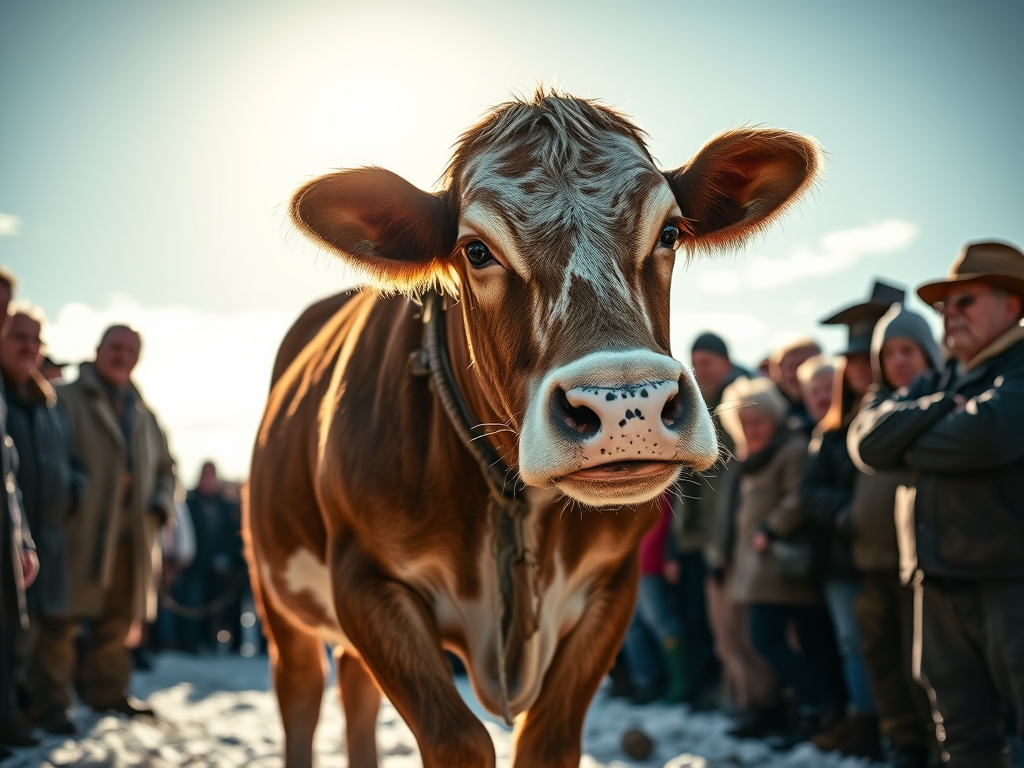
Mabel was no ordinary cow. Unlike her bovine companions, most faced north or south due to the Earth’s magnetic field. She alone possessed the uncanny ability to sense the shifting seasons. Her unique gift made her a figure of fascination and wonder in the town. If she stood facing due west upon stepping from her barn, an early spring was certain. But if she turned east, the town braced itself for six more weeks of winter’s harsh grip.

The people’s trust in Mabel was unwavering. She had consistently met their expectations. She had never let them down. This held true since old Farmer Ed Boyd’s grandfather first noticed her peculiar habit. To them, she was more than just a cowโ€”an oracle of the changing seasons, a symbol of nature’s quiet wisdom. Their collective belief in her was a bond that united the entire community.

On this particular February 2nd, 2025, the excitement was palpable. The air was crisp. The sky was cloudless. The crowd murmured in hushed voices as they watched Farmer Ed lead Mabel from the barn. She had just finished her morning hay and grain, and Ed had completed the daily milking. Now, all eyes were on the old cow.

Mabel stepped into the winter sunlight, surveyed the expectant faces before her, and let out a deep, resonant moo. Then, to everyone’s shock, she did something she had never done before.

She laid down.

Not facing west. Not facing east. But southwest.

A stunned silence fell over the crowd. Uncertainty hung in the air, and people exchanged nervous glances.

“What does it mean?”

whispered Mrs. Thatcher, pulling her shawl tighter around her shoulders.

Farmer Ed scratched his head, bewildered.

“Well, folks, I reckon Mabel’s got somethin’ new to tell us this year.”

Sheriff Dobbs adjusted his hat.

“Maybe it means we’ll have a little of bothโ€”some winter, some spring?”

Standing on tiptoe beside his father, Young Tommy Jenkins piped up,

“Or maybe she’s just tired!”ย 

His innocent humor brought a wave of laughter, momentarily easing the tension.

The laughter helped ease the tension, but the mystery remained. Some of the older farmers nodded knowingly. It was as if they were saying that nature always had its way of keeping folks guessing.

And sure enough, in the next weeks, the weather seemed as indecisive as Mabel had been. One day, warm breezes carried the scent of budding trees. The next day, an icy wind howled through town. It coated the fields with frost. The seasons wrestled for control, neither willing to yield entirely.

By March’s arrival, the town understoodโ€”Mabel had been right all along. That year, winter and spring refused to play by the usual rules. It was a season of in-between, cold mornings followed by warm afternoons, snow melting too soon only to return overnight.

From that year onward, the town no longer saw Mabel’s predictions as simple answers. They realized that nature didn’t always give clear signs. It spoke in whispers, patterns, and subtle shifts. Only those who truly paid attention understood these messages.

And so, every February 2nd, the people still gathered at Ed Boyd’s farm. They came not just to see where Mabel would stand. They attended to be reminded of life’s one true certaintyโ€”change is always coming.

Mabel, as always, remained the one true expert.

The Power of Storytelling: My Journey Through Words

GROFF MEDIA 2024ยฉ TRUTH ENDURES IMDBPRO

Presented by benandsteve.com By: Benjamin Groff IIยฉ

3โ€“5 minutes

A Journey Through Words: For Everyone Who Has Liked My Stories Over Time!

Each day, I search the depths of memory for details that can shape a story. Sometimes, I draw inspiration from current events or pressing concerns that resonate with my readers. Usually, the stories I share come from personal experiences; they are events I lived through firsthand or about those close to me. Or, I was involved enough with a concern to know the details intimately.  

As a child, I had a speech defect. It kept me from speaking up in crowds, around strangers, or in public settings. What seemed like a limitation at the time was a giftโ€”it taught me to listen. I became an observer, absorbing conversations, secrets, and moments others have overlooked. I often teased my older relatives that I held onto some of the family’s best-kept secrets. Over time, those secrets became storiesโ€”carefully crafted to preserve history while protecting the people behind them. It also helped me to learn how to be invisible, in a sense. When you stay still and always stay quiet, people overlook the kid in the corner. Conversations happen, and they let their guard down. That was a gift of sorts I brought in my adult life.

There’s a line I often use when people ask what I’ve done in life. I tell them, half-jokingly:  

“I’ve done damn near everything.”

And it’s true.  

I started working on our farm at eight, feeding horses, cleaning barns, and doing chores. Later, I rode fences, helped my dad with his duties as a ranger, and ran errands. As a teenager, I worked at the camp he oversaw, mowing lawns and clearing brush. Once I got my driver’s license, I started hauling hay and peanuts with three friends. It was some of the most challenging work I’ve ever done.  

I became a police officer and served in that role until retirement, after which I transitioned into radio broadcasting. I anchored newscasts for a five-state radio network before moving to a larger market as a news director. Eventually, I returned to law enforcement, working for the Department of Corrections, where I tracked down escaped prisoners. Tracking sometimes required undercover jobsโ€”working at bakeries, hardware stores, magazine suppliers, or grocery storesโ€”blending into communities to locate fugitives. I blend into the scenes, always becoming invisible, just as I did when I was younger. I was always successful, though I often found it hard to leave the undercover roles behind.  The people I had met always became colleagues.

After the September 11th attacks, my spouse’s employer offered a transfer from Kansas to Phoenix, Arizona. The decision was easy. I left law enforcement behind. I found work with Ford-Volvo of North America. I became a vehicle test driver at the Arizona Proving Grounds. I assisted the Ford assembly group in the winter. In the summer, I tested the endurance of Volvo cars and SUVs in the Arizona heat.  

In 2008, medical issues forced me to stop driving. That’s when I turned to writingโ€”first with news articles and then by building news sites for small communities. The site you’re reading now was born from that transition. I created this space when I realized traditional employment was no longer a choice.  

When I started using WordPress, it differed from the platforms I had worked with. I learned through trial and error, studying the work of others, adapting, and refining my skills. Over time, I explored your sites. I saw your creativity, dedication, and unique voices. I better understood how to navigate and thrive in this space.  

I’ve always believed that you get back what you put into something. That’s why I make it a point to read the work of othersโ€”it broadens my perspective beyond my world. And for that, I’m grateful.  

To all our followers, subscribers, and readersโ€”thank you. Yesterday, I received a message from WordPress announcing that our site has reached **500 likes!** That’s an incredible milestone, especially since I don’t commercially promote these stories or actively drive traffic to them. This achievement is entirely because of your support, shares, and encouragement.  

I truly appreciate every one of you for being part of this journey. It seems trivial to some. But, for someone who overcame a speech defect, getting 500 likes is a big deal. Thank you, indeed!

Warm Bread, Warm Hearts: A Touching Tale from Willowbrook

GROFF MEDIA 2024ยฉ TRUTH ENDURES IMDBPRO

Presented by benandsteve.com By: Benjamin Groff IIยฉ

2โ€“4 minutes

The Baker’s Extra Loaf

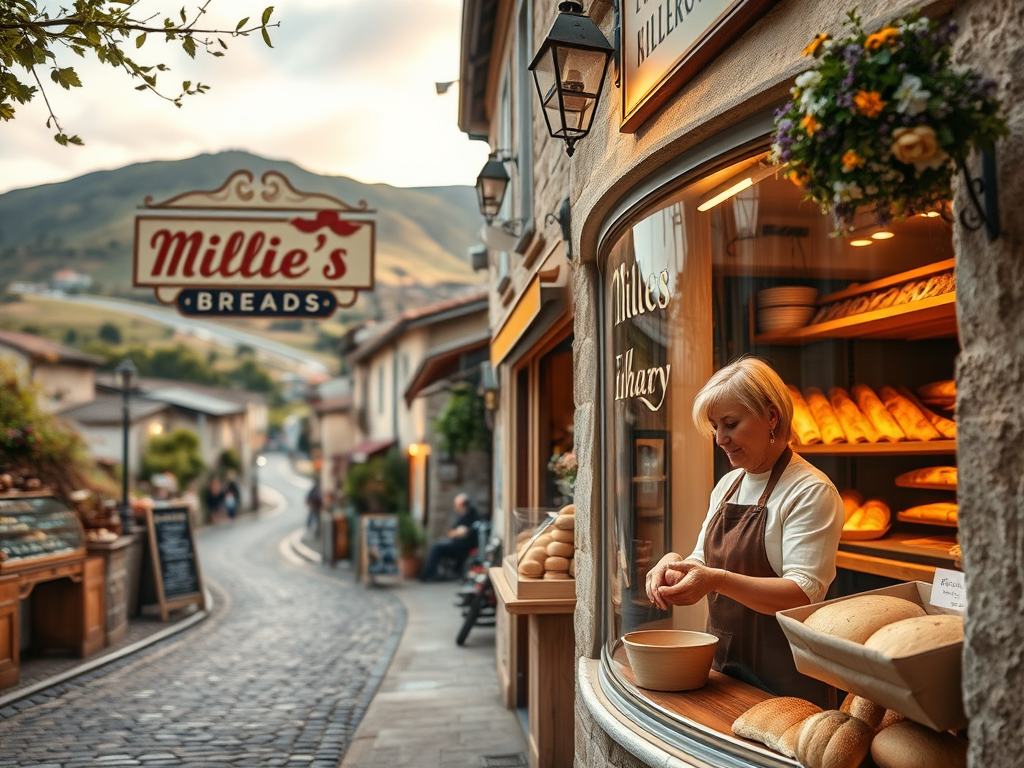
Willowbrook was a quaint town nestled between rolling hills and winding cobblestone streets. In this charming setting, a little bakery called Millie’s Breads stood. Millie, the baker, had spent decades perfecting her craft. She kneaded dough with love, and the air filled with the comforting aroma of fresh bread.

Every morning, without fail, Millie would bake precisely enough loaves to meet the demands of her customersโ€”except for one. Each day, she would bake an extra loaf. The townsfolk often wondered why, but Millie never spoke of it. The extra loaf sat on the counter until closing time. It remained untouched and unnoticed. By morning, it would quietly disappear, adding to the mystery.

Speculations floated through the town. Some believed Millie kept it for herself. She always said she had little appetite for bread after a long baking day. Others whispered that she was feeding a stray cat or a secret admirer. But no one knew the truth.

One chilly winter evening, young Emma, the florist’s daughter, stayed behind after closing. She wanted to help her mother pick up an order of pastries for a town event. As they waited, Emma noticed Millie wrapping the extra loaf in brown paper and slipping out the back door. Emma felt curious, so she decided to follow at a distance. Her eyes were keen, and her heart was open to the possibility of a heartwarming discovery.

Hidden in the shadows, Emma saw Millie stop by an old wooden bench. An elderly man sat on it, wrapped in a tattered coat. His face was weathered, and his hands trembled from the cold. Millie handed him the loaf with a warm smile, exchanging a few kind words before returning to her shop.

Emma’s heart swelled with admiration. The extra loaf wasn’t a mystery after all. It was an act of quiet kindness. A small gesture of compassion that no one ever knew about. The man, known simply as Mr. Thomas, had once been a beloved schoolteacher but had fallen hard after losing his family.

The next day, Emma shared what she had seen with her mother. Word spread through the town, and the townspeople, inspired by Millie’s act of kindness, found their ways to contribute. Some would leave warm clothing on the bench. Others discreetly added a little extra to their purchases at Millie’s bakery. They knew it would go to someone in need.

One evening, as Millie once again delivered the extra loaf, she found Mr. Thomas sitting on the bench with a new coat draped over his shoulders and a gentle smile. He looked at her with gratitude and said,

“Your kindness has brought more than just bread, Millie. You’ve brought me hope.”

His words echoed the profound impact of Millie’s simple act of kindness.

Millie patted his hand, offering her usual warm smile, and returned to her bakery. She never needed recognition, for she believed that kindness, like bread, was best when shared freely.

The baker continued to bake an extra loaf each day. The town of Willowbrook learned that sometimes, the smallest gestures hold the most significant meaning. Millie’s simple act of kindness brought hope to Mr. Thomas and inspired the townspeople to look out for each other, fostering a sense of community and shared responsibility.

The Opinionated Gentleman: “I used to like him before I heard what he had to say.”

GROFF MEDIA 2024ยฉ TRUTH ENDURES IMDBPRO

Presented by benandsteve.com By: Benjamin Groff IIยฉ

2โ€“3 minutes

Richard Pearce considered himself a fair man, a gentleman of discernment. His friendships were plentiful, his network expansive, and his reputation as a conversationalist well-earned.

He had a knack for summing people up with a single statement, a phrase he used so often it had become a trademark:

“I used to like him before I heard what he had to say.”

It wasn’t meant to be cruelโ€”at least, Richard didn’t think so. It was his way of assessing character, of sorting wheat from chaff. But those who knew him best saw it differently.

One sunny afternoon, Richard found himself at a small cafรฉ in the park. A friend of a friend, Henry Townsend, joined him unexpectedly. Henry, a boisterous man with a ready laugh, was a newcomer to their social circle.

“I hear you’re a man of strong opinions, Richard,”

Henry said as he stirred his coffee.

Richard tilted his head, amused.

“I suppose you can say that. I have a good read on people.”

“Well, let’s see then. What do you think of me?”

Richard smiled politely, his eyes narrowing.

“You’re affable, sharp-wittedโ€ฆ but prone to over-explanation.”

Henry laughed heartily.

“Fair enough! And what do you think about James Potter?”

Richard leaned back, swirling his tea.

“Ah, James. I used to like him before I heard what he had to say.”

Henry’s smile faltered.

“What did he say?”

“Oh, something about how he sees charity as a personal failing in those who accept it. Can you imagine? A man with such shallow views.”

Henry’s brows furrowed.

“Did you ask him why he thought that? Maybe he has a deeper story.”

Richard waved the thought away.

“One’s words show their heart, Henry. Why dig further?”

~

Months passed, and Richard’s circle seemed to shrink. The people he dismissed began avoiding him, and conversations grew shorter. Henry, nevertheless, remained a steadfast presence. One day, Richard couldn’t help but ask.

“Why do you stay, Henry? Surely, I’ve said something to offend you by now.”

Henry grinned.

“Oh, plenty of times! But if I left, you would not get the chance to hear what you haven’t heard yet.”

Richard frowned.

“What do you mean?”

“You write people off after hearing one thing. But people aren’t books you can skim, Richard. They’re libraries. If you only read one page, you miss the whole story.”


That evening, as Richard walked home alone, Henry’s words lingered. The cafรฉ, once bustling with friendly faces, seemed quieter now. For the first time, Richard wondered if he’d been too quick with his judgment, too harsh with his words. He couldn’t help but think, —-

And he couldn’t help but think, โ€“โ€“โ€“โ€“

And he couldn’t help but think, that he had been too quick to judge, too eager to dismiss. He couldn’t help but think โ€“โ€“โ€“โ€“

I used to like myself before I heard what I had to say.

And, before I realized the impact of my words and the depth of my own biases.

The Little Puppy That Was Capable To Do What Others Said Thought He Couldn’t

Groff Media 2024ยฉ Truth Endures IMDbPro

Presented by benandsteve.com By: Benjamin Groff IIยฉ

2โ€“3 minutes

A small town was nestled by rolling hills and surrounded by fields of wildflowers. In it, there lived a scrappy little puppy named Patches. He was a mix of this and that, with one ear that stood up and the other that flopped down. Patches was small for his age. But, he had something that set him apart. He leaped higher than any dog anyone had ever seen.

At first, no one noticed Patches’ gift. He spent his days chasing butterflies and rolling in the grass like any other puppy. It was a sunny afternoon. The town’s children were setting up a lemonade stand. A gust of wind came through and carried their banner high into the branches of an old oak tree.

“Oh no!”

“How will anyone know about our lemonade?”

Cried Emily, the youngest of the children.

Patches, who had been snoozing nearby, perked up. He tilted his head, wagged his tail, and, without hesitation, bounded toward the tree. He made a mighty leap and soared through the air. He snatched the banner in his teeth. Then, he landed gracefully on the ground.

The children cheered.

“Patches saved the day!”

From that moment on, Patches became the town’s little hero. Patches fetched lost kites from rooftops. He rescued baby birds from precarious ledges. Simply bringing smiles with his high-flying antics was enough to prove his worth. Patches proved that being small didn’t mean you couldn’t do big things.

One day, during the annual Harvest Festival, a gust of wind toppled the mayor’s prized pumpkin from the display podium. The enormous gourd rolled straight toward a table of pies, threatening to ruin the event. The crowd gasped.

Without a moment’s hesitation, Patches darted into action. He landed on the pumpkin with a mighty leap, planting his tiny paws firmly to slow its roll. The pumpkin came to a stop just inches from the table. The crowd erupted into applause, and the mayor declared Patches the town’s official mascot.

From then on, Patches wore a little red cape stitched by Emily’s grandmother. Wherever he went, he reminded everyone that sometimes, the smallest among us can do the most extraordinary things.

Jimmy Carter: A President’s Quiet Resolve

Groff Media 2024ยฉ Truth Endures IMDbPro

Presented by benandsteve.com By: Benjamin Groff IIยฉ

2โ€“3 minutes

Jimmy Carter
The Carter Center Photo

Jimmy Carter served as the 39th President of the United States from 1977 to 1981. He brought a quiet and deliberate resolve to the Oval Office. Carter was a former peanut farmer and Georgia governor. His presidency was shaped by his outsider status. He was known for his Southern charm and deep sense of morality. This quiet resolve was tested by the significant challenges he faced, but it never wavered.

Carter inherited a nation grappling with inflation, an energy crisis, and a faltering trust in government post-Watergate. Undeterred, he tackled the energy crisis head-on. He donned a cardigan during televised addresses to encourage Americans to conserve energy. He also urged Congress to pass legislation for renewable resources and energy independence. His solar panels on the White House symbolized a progressive-thinking approach that would resonate decades later.

On the international stage, Carter championed human rights, placing them at the core of U.S. foreign policy. His leadership during the Camp David Accords remains a hallmark of his presidency. It was a historic peace treaty between Egypt and Israel. This significant achievement demonstrated his commitment to diplomacy and peace. It marked the first time an Arab country formally recognized Israel.

Jimmy Carter
The Carter Center Photo

Yet, Carter’s term was also marred by challenges. The Iranian hostage crisis cast a long shadow as 52 Americans were held captive for 444 days. The crisis tested his patience. It also tested his diplomacy. The eventual release of the hostages coincided with Ronald Reagan’s inauguration. This became a bittersweet moment in his legacy. Carter showed resilience during this crisis. It proved his unwavering commitment to his duties as President.

Jimmy Carter – The Carter Center Photo

Carter served only one term. His presidency reflected his unwavering belief in doing what was right. He did this regardless of political consequences. His tenure laid the groundwork for a post-presidential humanitarian service life, earning him the Nobel Peace Prize decades later. This continued commitment to the greater good is a testament to the lasting impact of his presidency.

Jimmy Carter’s time in office was not marked by soaring rhetoric or overwhelming popularity. Still, it was defined by integrity, resilience, and a steadfast commitment to the greater good.

Thanksgiving At The Police Department

Groff Media 2024ยฉ Truth Endures IMDbPro

Presented by benandsteve.com By: Benjamin Groff IIยฉ

3โ€“4 minutes

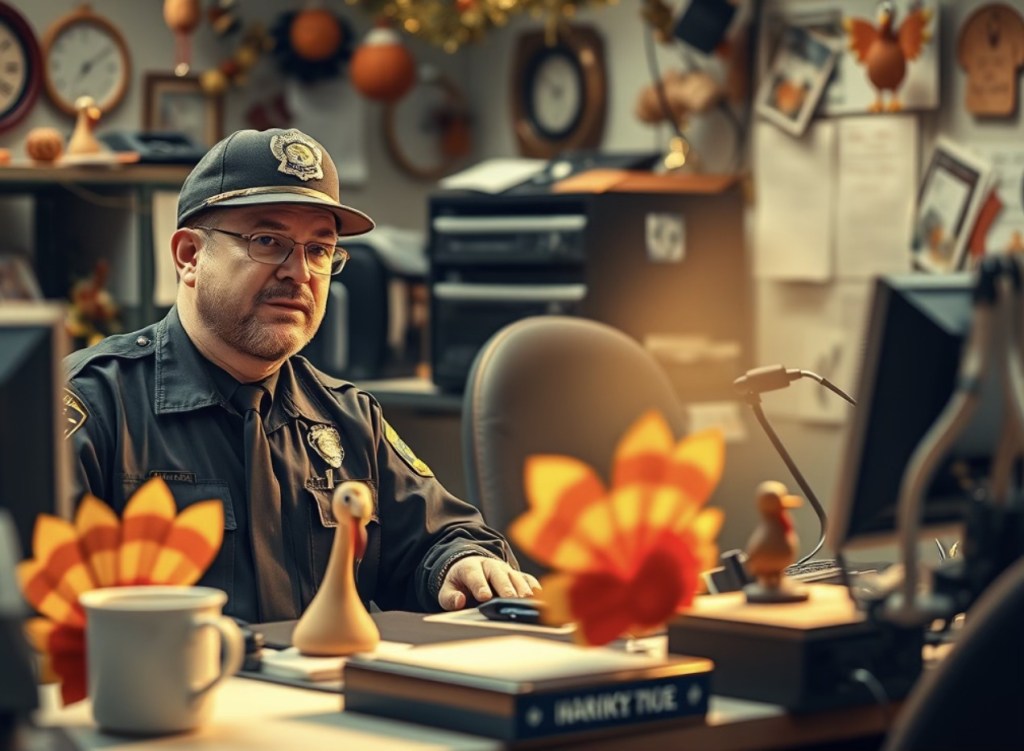
Thanksgiving at the Elk City Police Department was a paradox of warmth and chaos. While dispatchers decorated their consoles with paper turkeys and the smell of leftover pie filled the air, the holiday calls kept coming. It was supposed to be a day of gratitude and family, but for the officers on duty, it was one of their busiest days of the year.

Officer Jim Layfette, a ten-year veteran of the force, leaned back in his chair and sipped lukewarm coffee.

“Thanksgiving,”

he muttered to his rookie partner, Dan Thomas.

“The one day everyone thinks they can play Jerry Springer.”

Their first call came just before 2 p.m., a disturbance at a modest home on Fourth Street. Two brothers were at each other’s throats over who was more entitled to the last slice of pumpkin pie. When Layfette and Thomnas arrived, the brothers were outside, yelling loud enough to drown out the TV playing the Cowboys game.

“Seriously?”

Thomas asked as they broke up the fight.

“Welcome to the holiday shift,”

Layfette replied. The brothers were separated and sent home with stern warnings and a firm reminder that family arguments weren’t worth a trip to jail.

“Unit 4, you’ve got a 10-16 on Elm Street. Argument over stuffing. Use cautionโ€”reporting party says it’s ‘too moist.'”

As the day wore on, the calls became more bizarre. At a small rental house on the edge of town, a woman had locked her husband out because he had insulted her mother’s green bean casserole. He stood in the front yard, arms crossed and shivering in a light jacket, refusing to apologize. Thomas handed him a blanket from the patrol car while Layfette gave him a brief lecture on tact.

“Is it that bad?”

The husband asked.

Layfette smirked.

“I’ve had worse. Just say sorry and move on.”

By evening, the call volume skyrocketed. In one house, a drunken uncle had tried to carve the turkey with a chainsaw. In another, two cousins had turned a friendly card game into a shouting match that ended with one flipping the table. When Layfette thought the shift couldn’t get weirder, the radio crackled with another call.

The dispatcher, Chris, kept things lively with dry humor.

“Unit 4, you’ve got a 10-16 on Elm Street. Argument over stuffing. Use cautionโ€”reporting party says it’s ‘too moist.'”

Layfette couldn’t suppress a laugh at the Elm Street house when the elderly matriarch opened the door.

“I didn’t call you,”

she said with a sigh.

“It was my daughter. She’s too sensitive. But if you could take the turkey with you.”

“No, ma’am, thanks for the offer,”ย 

Layfette replied.

Officers gathered at the station to share a potluck meal and stories of their day. Amidst the oddball arguments and creative resolutions, a sense of camaraderie and shared experience began to emerge. Thomas, who had started the shift apprehensive about the chaos, was beginning to see the humor in it all, feeling a part of the team.

“It’s like therapy,”ย 

Layfette told him as they sat in the patrol car during a lull.

“Families blow off steam, and we get to play referee. It beats the usual stuff.”

By the end of their shift, Layfette and Thomas had responded to a dozen calls. No one had been seriously hurt, and most of the disputes ended with hugs and laughter. This sense of accomplishment and the fact that they had kept the peace on a chaotic day filled them with a deep sense of fulfillment and pride.

As they handed off their patrol car to the next shift, Layfette gave Thomas a pat on the shoulder.

“Congratulations, rookie. You survived your first Thanksgiving shift.”

He grinned.

“And I thought holidays were supposed to be relaxing.”

“Not here,”ย 

Layfette said with a chuckle.

“Welcome to the Elk City PD.”

They left the station to find the night unusually quiet, as though the town had finally run out of steam. It was a well-spent Thanksgiving for the officersโ€”keeping the peace one turkey-fueled feud at a time.

A Last Breath in Elk City โ€“โ€“ An Emergency Calls Impact

Groff Media 2024ยฉ Truth Endures IMDbPro

Presented by benandsteve.com By: Benjamin Groff IIยฉ

2โ€“4 minutes

Officer Ben Groff was sipping his coffee when the dispatcher’s voice crackled over the radio:

Ben’s heart sank. Unresponsive calls rarely ended well, but there was no time for speculation. He flipped on his patrol car’s lights, the urgency of the situation palpable, and sped through Elk City’s quiet streets.

Pulling up to the modest brick house, upon arrival, Ben was met by the frantic figure of a woman waving her arms. Her cries cut through the crisp evening air.

“Help him! Please, he’s not breathing!”ย 

She screamed, her voice thick with terror and desperation, cutting through the crisp evening air.

Ben rushed through the backyard gate to find a man sprawled on the grass. His skin had a bluish tinge, his lips ashen. A can of tobacco lay spilled nearby, and the faint, acrid scent of chewing tobacco lingered in the air. Without hesitation, Ben dropped to his knees and began chest compressions.

“Stay with me, buddy!”ย 

He muttered, counting each press. He tilted the man’s head back and prepared for rescue breaths. As his lips met the man’s, the bitter taste of tobacco hit him like a punch. He pushed past theย revulsion, determined to do everything he could.

Minutes felt like hours as he alternated compressions and breaths. The wife, clutching her robe, sobbed uncontrollably nearby.

The wail of the Elk City Fire Department’s engine announced the arrival of help. Firefighters and paramedics streamed into the backyard, their calm precision contrasting with the chaos. The wife’s sobs turned into hopeful gasps as they quickly took over, attaching monitors and preparing to transport the man.

Ben stood back, his chest heaving, sweat mixing with the cool night air. The lead paramedic gave him a somber shake of the head. “We’ll do what we can on the way.”

The wife collapsed to her knees.

“He can’t be gone! He just can’t!”ย 

She cried, clutching at Ben’s uniform. He knelt beside her, steadying her trembling shoulders.

“Ma’am, listen to me,”

He said gently.

“Let’s get you to the hospital. I’ll take you.”

Ben helped her into his patrol car and jumped into the driver’s seat. With lights and sirens blazing, he circled Elk City’s streets, his mind racing. This kind of call never left youโ€”the taste of desperation as real as the tobacco on his tongue, the weight of every life lost or saved resting heavily on your shoulders.

As they reached the hospital, Ben parked and helped the woman inside. She stumbled into the emergency room, her cries echoing in the sterile space. He stayed close, quietly offering whatever comfort he could, the uncertainty of the man’s fate hanging heavy in the air.

“Thank you for trying,”ย 

The medical team wheeled the man into the ER, leaving Ben and the man’s wife in a stark, quiet waiting room. She gripped his arm as though it were a lifeline.

She whispered between sobs.

Ben nodded, feeling the weight of her words. In a job where victories were rare, and heartbreak was plenty, sometimes all you could do was try. And for this woman, in her darkest hour, his effort mattered. Officer Groff remained with the lady until her family arrived to hear the news and begin to support her grieving. The heartbreaking call was not the first for Groff and would not be the last!

Justice Served: Stolen Vehicle Chase in Elk City

Groff Media 2024ยฉ Truth Endures IMDbPro

Presented by benandsteve.com By: Benjamin Groff IIยฉ


3โ€“4 minutes

Officer Ben Groff had just started his shift at the Elk City Police Department when the call came through dispatch:

“Units should be advised of a report of a stolen vehicle spotted heading north on Main Street. It collided with several vehicles in front of the theater and continued. The suspect is a white Dodge Charger. All units respond.”

Ben’s patrol car roared to life as he drove through Third and Madison Avenue to intercept the vehicle on Main Street. Ben hit the lights and siren, merging into the city’s bustling evening traffic. Main Street was alive with its usual commotionโ€”families grabbing dinner, teens cruising, and trucks rumbling through on their way to the interstate. The Charger weaved recklessly through it all, its driver seemingly unfazed by the chaos.

Ben’s adrenaline surged as he radioed in.

“Unit 3 in pursuit. The suspect vehicle appears to be trying to head towards Washington Street through alleyways.”

As the stolen vehicle blew past a red light, narrowly missing a minivan, Ben deftly maneuvered around other cars, keeping his pursuit controlled but relentless. He’d chased suspects before, but this one felt differentโ€”the driver was audacious and desperate, taking wild risks that jeopardized everyone on the road. The danger was palpable, the stakes high, and the adrenaline was pumping.

When the Charger made a sharp turn onto a quieter side street, Ben followed, his tires screeching on the asphalt. For a moment, the streetlights flickered off the Charger’s rear window, and Ben caught a glimpse of the driverโ€”a young woman, her face twisted with determination.

Finally, the suspect tried to cut through an alley too narrow for her car’s speed. The Charger clipped a dumpster and spun out, slamming into a utility pole. Smoke billowed from the crumpled hood.

Ben skidded to a stop, jumping out with his weapon drawn.

“Show me your hands! Out of the car, now!”

The woman hesitated before stepping out, her hands trembling but raised. She was strikingly familiarโ€”Lisa Rhodes, the girlfriend of the auto magnate and social media influencer John DeLorean. The revelation sent a shockwave through the scene, a twist in the narrative that no one, not even Ben, saw coming.

“You’ve got to be kidding me,”

Ben muttered under his breath.

Lisa tried to talk her way – out of it, her voice honeyed but shaky.

“Officer, I didn’t steal this car. It’s one I borrowed. A man, let me borrow itโ€”this is just a misunderstanding!”

Ben wasn’t buying it. As he cuffed her, he noticed her purse on the passenger seat. When he peeked inside, his suspicions were confirmedโ€”a substantial stash of drugs, including pills and small baggies of powder.

Backup arrived moments later, securing the scene. Lila’s protests grew louder as the reality of her arrest sank in.

“You don’t know who you’re messing with! John will have his attorneys save me and get your badge for this!”

Ben smirked as he read her rights.

“Maybe he will, but not before I make sure you face the consequences of tonight’s little joyride.”

Ben’s determination was unwavering, and his commitment to upholding the law was resolute, making it clear that justice would prevail.

Back at the station, the news spread like wildfire. Lila Rhodes, the woman frequently seen on John DeLorean’s arm at high-profile events, was booked for possession and vehicle theft. Reporters swarmed the station, eager for a statement. As she promised, high-profile attorneys showed up the following day to post bail and escort her back to California.

Later, as Ben completed his report, his sergeant clapped him on the shoulder.

“Hell of a job tonight, Ben. You nabbed someone who thought she was untouchable.”

Ben nodded, exhausted but satisfied. In Elk City, justice didn’t care about status or connectionsโ€”it only cared about the law. This matter would become evident as Ben brought in well-known individuals on burglary, auto theft, and other felony charges. That is a story coming soon.

NOTE: Some names, locations, and information are changed or edited to contain alternate identifications for privacy reasons.

When You Fight For your Life Any Thing Is Fair! Lt Wheeler’s Advice Of A Lifetime

Groff Media 2024ยฉ Truth Endures IMDbPro

Presented by benandsteve.com By: Benjamin Groff IIยฉ


3โ€“5 minutes
Officer Steve Mahan
Shot and Killed Jan 5. 1983

As I prepared for work, the memory of Officer Steve Mahan lingered heavily in my thoughts. He had been shot and killed on January 5th, 1983โ€”a day etched in tragedy. That morning, a dense, unrelenting fog blanketed the world as if nature itself mourned the impending loss. I recalled how the rescue helicopter, grounded by the impenetrable fog, couldn’t transport him to a larger hospital equipped to treat his severe head trauma. Desperate, the doctors had no choice but to send him by ambulance over 100 miles away.


The ambulance crawled through the soupy mist, often unable to exceed 30 miles per hour. Time was slipping away, and the slow, arduous journey became a race against death. Despite their best efforts, he passed en route, his life extinguished before the fog could lift.


That day haunted me. As I pulled on my uniform, I reminded myself that tonight, I would be assigned to the very unit he had been using on the night he was executed. A weight settled on my shouldersโ€”not fear but a solemn understanding of the risks we all faced. Yet, I felt a measure of reassurance knowing that Lt. Wheeler would be by my side, his steady guidance serving as both a compass and a shield against the uncertainty of the streets.

On my first day of patrol, the challenges of the job revealed themselves immediately, with a fatality marking my inaugural call. It was a sobering introduction to the weight of my duty. My Lieutenant, a seasoned mentor, shared his wisdom throughout the shift as we navigated the Oklahoma Statutes, Title 21. He precisely explained how every crime must meet specific legal criteria before being classified as such and emphasized the foundational principle that every suspect is presumed innocent until proven guilty. That early understanding of the law, I realized, was not just knowledgeโ€”it was a tool for justice and fairness, critical to our line of work.

The second day began differently. I was well-rested but curious about what this shift could bring. What could top the tragic death of the older woman the day before? The night unfolded quietly at first. My Lieutenant and I were patrolling the city’s southern section, with him now shifting the conversation to Title 47 of the Oklahoma Statutes, covering traffic laws and their nuances.

Then, without warning, the calm was shattered. The Lieutenant slammed our unit’s transmission into park and leapt out, his movements fluid and precise. Before I could react, he bolted to my side of the vehicle and tackled a man gripping his wife by the hair on the sidewalk. It had all happened instantlyโ€”I hadn’t even registered the altercation out of the corner of my eye. When I opened my door, Lieutenant Wheeler was already cuffing the suspect with practiced efficiency.

I stood momentarily frozen, feeling like I had failed to pull my weight. The Lieutenant’s decisive action was a masterclass in vigilance, and I resolved to sharpen my instincts.

After ensuring the woman was safe and gathering her statement, we booked the man into jail on charges of public intoxication, disorderly conduct, and assault and battery. The routine of patrol resumed, but the night had already taken on a different tone. During this lull, Lieutenant Wheeler imparted what I’ve come to regard as the most crucial lesson of my career.

He also stressed the importance of situational awareness and knowing the city like the back of my hand. While my previous experience in communications had given me a solid understanding of the city from a dispatcher’s perspective, patrolling the streets was entirely different.

He taught me to read the moving pieces of the urban puzzleโ€”to develop a comprehensive view that encompassed the road ahead and the vast expanses on either side. Under his guidance, my observational skills sharpened, leading to accomplishments such as preventing a potential robbery and aiding in a successful arrest, which I could later be proud of.

It felt like I’d absorbed a semester’s criminal justice training in just two nights. But nothing could have prepared me for what was to come on the third night. Neither of us could have anticipated the events that would unfold, including a high-speed escort and a tense high profile traffic stop and truthfully, neither of us would have chosen to.

What happened next would change everything. Yet, in the end, it would pass unnoticed by the worldโ€”a fleeting moment in the grand scheme of our duty. This moment, however, was a stark reminder of the unpredictable nature of our work and the need for constant vigilance and resilience. That is the story which unfolded for day three.

The Story Of The Unchecked Mayor

Groff Media 2024ยฉ Truth Endures IMDbPro

Presented by benandsteve.com By: Benjamin Groff IIยฉ

In a small city, one man’s election as Mayor marked a drastic turning point. Traditionally, city decisions required approval from a council of six members, with a majority vote ensuring every person wielded only a little power. But soon after taking office, the Mayor and his political allies on the council pushed through changes that redefined his role. They granted him unprecedented authority to make sweeping decisions for the city and its residents, bypassing the usual oversight.

But that initial optimism soon eroded, giving way to a profound sense of disappointment and betrayal. The Mayor began filling oversight boards and committees with his chosen peopleโ€”none of whom had relevant experience. They promised to “clean house” and end wasteful spending, but their true motives quickly surfaced.

The Commissioner of Streets and Lights, handpicked by the Mayor, promptly fired the street crew and supervisors, many of whom had worked for the city for over fifteen years and were approaching retirement. The Commissioner hired the Mayor’s son’s paving company in their place, and he also contracted two out-of-town electricians for lighting maintenance. These new hires lacked the skills to handle the city’s infrastructure needs, but the Mayor’s orders were clear. The supposed “savings” were diverted into three hidden accounts linked to companies the Mayor quietly operated on the side.

The Mayor restructured Water and Trash Services similarly. Water management was outsourced to a neighboring town with little regard for the community’s best interests. Trash collection was reduced to once a week, and a company from two towns away was hired, offering only minimal service. The Mayor’s promised savings got funneled into an account controlled solely by the Mayor.

Every city department followed the same grim trajectory. Once-dedicated employees were let go and replaced by disinterested newcomers complaining about their low wages and minimal benefits. City services deteriorated rapidly, with potholes on the streets, frequent power outages, and overflowing trash bins, leaving residents dismayed as their quality of life declined.

The townspeople soon noticed their bills creeping upwardโ€”first by ten dollars, then by thirty, with no explanation or improvement in service. This financial strain, coupled with crumbling city infrastructure, directly resulted from the Mayor’s unchecked power and self-serving decisions, placing a heavy burden and stress on the residents.

Residents registered with the opposing political party received letters citing dubious code violations and demanding fines. Those who contested were slapped with even more violations, driving many to leave the city altogether. Once most of his opposition had been driven out, the Mayor enacted a new ordinance requiring his remaining supporters to pay a “privilege to live here” fee. When citizens objected, he sent his security force to arrest vocal dissenters, warning others of eviction if they did not comply.

The Mayor’s reign of intimidation didn’t stop there. He established a “Mayor’s Court,” where anyone accused of a crimeโ€”even minor infractionsโ€”was jailed indefinitely. Their families could “buy” their release, but only at exorbitant prices, often reaching hundreds of thousands of dollars. The city had become a prison, and its leader was a dictator.

Many residents clung to the hope that this nightmare would end with the Mayor’s death. But when he passed away, the townspeople were horrified to learn that city law now dictated his son would inherit his office.

This tale serves as a stark warning: when voting, beware of who you trust with power. Sometimes, that choice can cost more than you ever imagined.

Gerald The Goose Goes Mad On Park Goers Until He Finds Officer Tom A Friend For Life.

Groff Media 2024ยฉ Truth Endures IMDbPro

Presented by benandsteve.com By: Benjamin Groff IIยฉ


In the heart of a bustling city, there was a quaint park known for its serene beauty and vibrant wildlife. Among the ducks and swans was one particularly notorious residentโ€”a mad goose named Gerald. Gerald had a reputation for chasing unsuspecting park-goers, honking furiously and flapping his wings in a display of avian aggression.

One sunny afternoon, the park was filled with families enjoying picnics and children playing games. A commotion erupted as Gerald began his usual antics, sending people scattering in all directions. Exasperated by the chaos, the park’s caretaker decided it was time to call for help. Enter Officer Tom, a kind-hearted police officer known for his patience and love for animals.

Officer Tom arrived at the park, his calm demeanor contrasting sharply with the commotion around him. As he approached Gerald, the goose stopped, tilting his head curiously. Something about Officer Tom intrigued Gerald. Instead of chasing him away, Gerald shuffled to the officer and nuzzled his leg affectionately.

Seeing the unexpected bond forming, Officer Tom decided to take Gerald home. He became the goose’s sole caretaker, and they developed a deep friendship. A gentle loyalty to Tom replaced Gerald’s wild antics, and the two became inseparable. They were a familiar sight around town, with Gerald waddling faithfully beside Tom on his daily patrols.

As the years passed, Officer Tom grew older, and his hair turned silver. Gerald, too, showed signs of aging, but their bond remained as strong as ever. The townspeople grew fond of the duo, often stopping to chat with Tom and feed Gerald treats. They became beloved characters in the town’s story, symbolizing friendship and loyalty.

One day, the town was struck by the sad news of Officer Tom’s passing. The townspeople mourned the passing of their beloved officer, but their hearts also went out to Gerald, who was now alone. Concerned about the old goose, the townspeople gathered to decide what to do.

In a touching display of unity, the town took turns caring for Gerald. Each day, a different family welcomed him into their home, ensuring he was well-fed and loved. Though he missed his dear friend, Tom, Gerald found comfort in the townspeople’s kindness.

And so, Gerald lived out his days surrounded by the love and care of the community. The story of the mad goose and the kind-hearted officer became a cherished legend, reminding everyone of the power of friendship and the importance of looking out for one another.

Leave a comment

This site uses Akismet to reduce spam. Learn how your comment data is processed.

Toby and Spitfire The Horse That Had Never Been Rode!

Groff Media 2024ยฉ Truth Endures IMDbPro.

Presented by benandsteve.com By: Benjamin Groff IIยฉ 

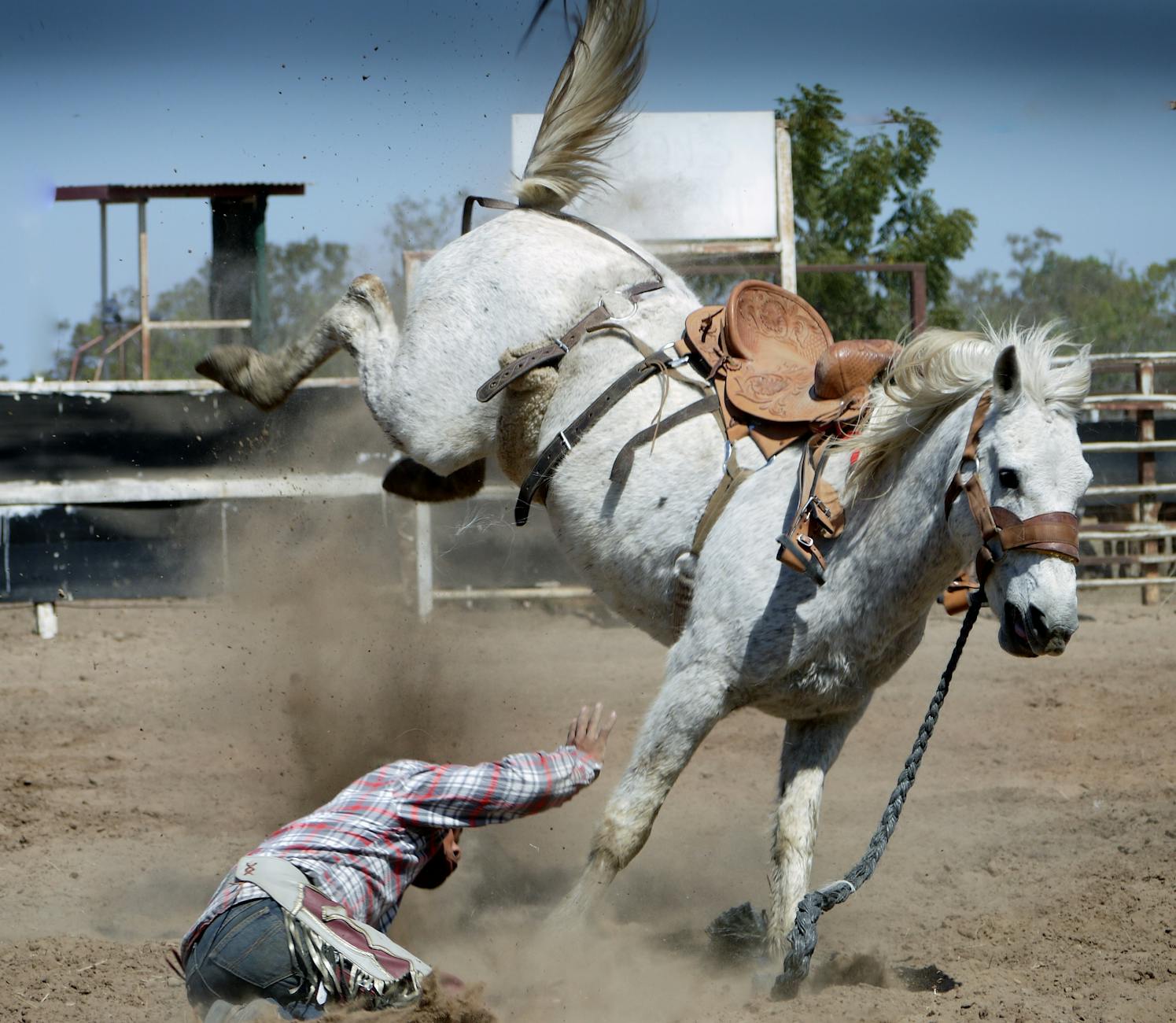
Ranch Hands told stories of Spitfire on the Whispering Pines Ranchโ€”a wild and untamable horse that earned his name with every snort and stomp. Cowboys from every corner of the county had tried to ride him, only to find themselves airborne within moments, landing with bruised pride and sore limbs. Spitfire’s eyes would glimmer with a defiant fire as if daring the next rider even to try.

But one summer day, the world shifted on its axis when a nine-year-old boy named Toby visited the ranch. Toby’s light frame was offset by the quiet resilience of a child who had learned to conquer more obstacles than many seasoned ranchhands. Born with legs that didn’t work like other kids, Toby’s movements were careful and deliberate, assisted by crutches that clinked softly with each step.


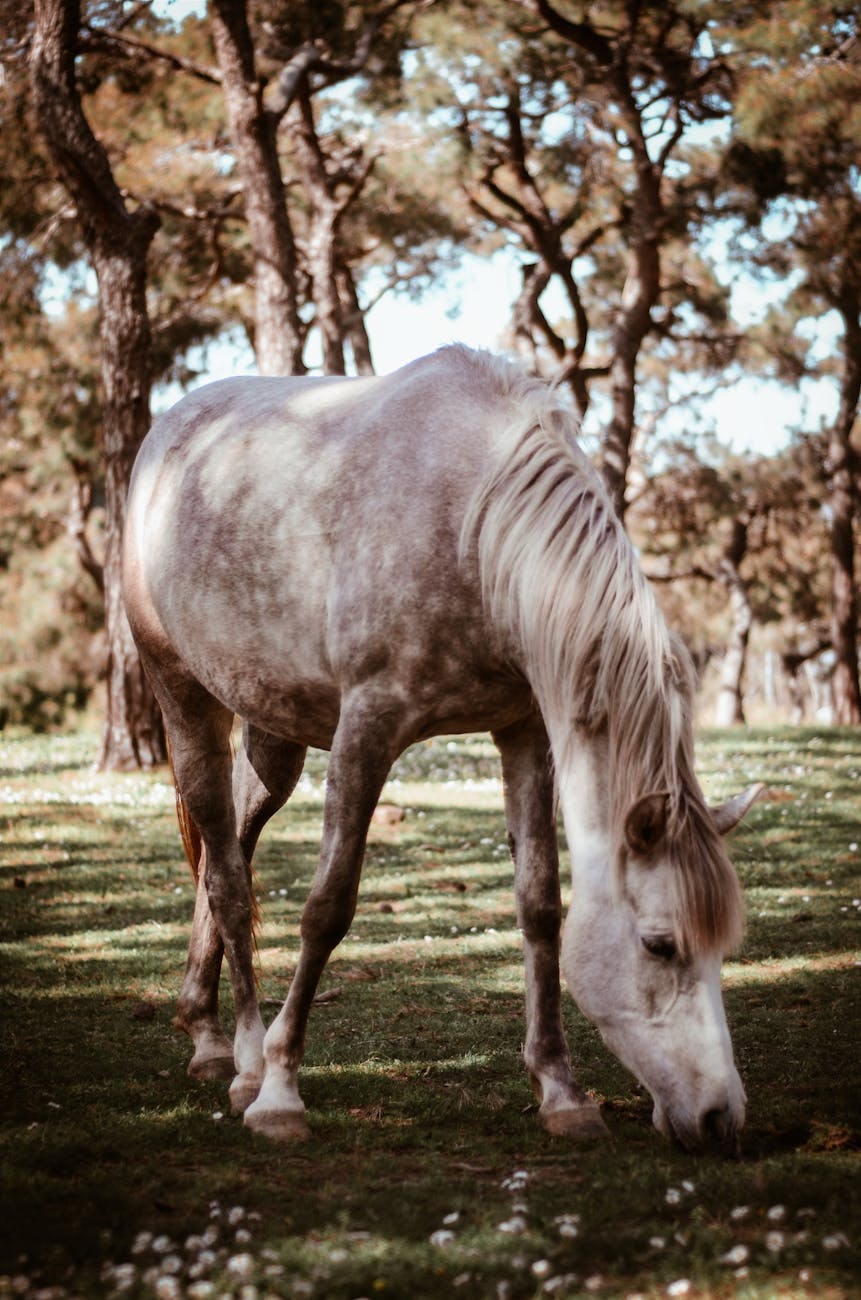
Drawn by a gentle breeze and the soft nickering sounds, Toby found himself near Spitfire’s corral. The horse stood apart, tossing his white mane like a storm cloud, eyes wary and sharp. But as Toby watched, something stirred in Spitfire’s gaze; a flicker of curiosity outshone his usual mistrust.


Before anyone could stop him, Toby set his crutches by the fence and used the railings to hoist himself. Spitfire’s ears flicked, muscles tensed, but he didn’t move away. Instead, he watched the boy with an intensity that made time pause.


With tiny movements, Toby approached. He whispered soft words that only the horse could hear, offering no challenge, only companionship. Spitfire took a cautious step forward, then another. The horse’s powerful head bent down a moment later, and his breath warmed Toby’s outstretched fingers.


The ranchhands who came running, yelling warnings, froze as they witnessed the impossible: Spitfire, the proud, untamable beast, knelt in the dust as if making a silent vow. Toby’s smile lit up his face as he settled onto Spitfire’s broad back, and for the first time, Spitfire carried a rider not with rebellion but grace.

They could remember when the horse was born in a south pasture four springs ago and got herded into the corrals for the first time. That someone had got that close and made peace with the critter.


“You couldn’t get close enough to feed him,” โ€“โ€“โ€“ said Harland the leadhand.

“Given how cantankerous he is, how could the kid get that close to him?” โ€“โ€“โ€“ said Orville, an outfitter.

The stunned onlookers could only watch in awe as they moved in perfect harmony. Toby, the boy who faced each day with quiet determination, had found his match in the fierce spirit of a horse that would allow no other. And Spitfire, known for his wild, unbroken heart, found a rider worthy of his trust in a child who saw him as a friend. Not as a challenge. Teaching the ranchhands, as opposed to spurs and whips, a gentle touch can go a long way!

The Unlikely Friendship: Lessons in Kindness

By: Benjamin Groff IIยฉ Groff Media 2024ยฉ Truth Endures IMDbPro

It was a quiet Sunday morning. A knock came at the door as the man leafed through the morning paper. He answered it, and there stood a stranger, looking road-worn but determined. โ€“โ€“โ€“โ€“

“Is this where Benjamin Groff lives?”

the stranger asked.

“Yes, it is,”

the man replied, studying the stranger’s face.

“You must be his father,”

the stranger ventured his smile kind and knowing.

“Yes, I am,”

the man replied, both curious and wary.

The stranger introduced himself.

“My name is Samuel Johnson. I’ve driven over seventy miles to meet you, sir. You must have been one remarkable man to raise a son like Benjamin.”

The father, his heart swelling with pride, felt a mix of emotions.

“Thank you, Samuel,”

he said.

“But, please, how do you know my son?”

Samuel nodded as though expecting the question.

“I met Ben at the Oklahoma State Fair last fall. I was just there to do a jobโ€”keeping an eye on one of the old buildings. Some local boys had been giving me trouble, but Ben stepped in. Out of all the things he could have done at the fair, he chose to sit down and talk with me. We spoke for hours. Your son has a way of making people feel seen, of looking out for folks. He even asked me if anyone was bothering me, and from that moment on, I felt I wasn’t just working the fairโ€”I was spending time with a friend.”

The father listened, deeply touched.

“That sounds like Ben,”

he said softly, gesturing for Samuel to take a seat.

“Let me wake himโ€”he’ll want to know you’re here.”

Ben’s father went to his son’s room and gently shook him awake.

“Ben, you’ll never guess who’s here to see you,”

he said.

Still half-asleep, Ben slowly got up and followed his father into the living room. To his surprise, there sat Samuel, his old buddy from the State Fair. A smile of joy spread across Ben’s face as memories flooded back.

On that day at the fair, Ben had already taken in the sights, ridden the rides, and wandered through the livestock shows, which, to his surprise, had lost their charm despite his upbringing on a farm. He was winding down, simply walking, when he happened upon Samuel’s post.

Samuel was friendly, the kind of person who seemed to carry his life’s story in the lines of his face. Ben had sensed the man’s kindness right away, trusting him instinctively. They talked for hours, sharing stories. Samuel had offered him cold water from the employee stash and even let him use the private restroom in the back, which felt like a luxury compared to the crowded ones across the fairgrounds. Ben could still recall their easy camaraderie, even though much of what they’d discussed had faded over time.

Before parting, Ben had written down his number and directions to their home, saying,

“If you’re ever in town and need anything, look us up.”

Now, here was Samuel, having made good on that invitation.

After they caught up for a while, Ben suggested a tour of the campground where his father worked as a Ranger. The sprawling property had over 350 acres, six cabins, and a large recreation hall. As they rode around, they laughed about old times and marveled at the twists and turns that brought two unlikely friends together again.

Finally, as the afternoon sun started to wane, Samuel turned to Ben with a smile.

“I’d better head back to the city,”

he said, patting Ben on the shoulder.

“I’m grateful to have met your folks and seen your homeโ€”it’s even better than I’d imagined.”

He climbed into his Lincoln Continental, waved as he pulled away, and drove down the dusty road until he was out of sight. That was the last time Ben saw Samuel. But in the years that followed, he often recalled the kindness they’d shared, proof that a simple act of friendship could reach far beyond the boundaries of a single day.

Benjamin stood on the porch as Samuel drove off, watching the dust settle behind the Lincoln. He thought about how Samuel’s visit had bridged two worldsโ€”a fact that didn’t escape him in a town where Black residents were often confined to the southwest corner, seen more as a separate community than as neighbors.


Growing up, Benjamin noticed the prejudices that ran through many families in town but never took root in his heart. His father, a man who saw people for who they were, not where they came from, profoundly influenced him. Samuel’s visit was a powerful reminder of how simple kindness could defy those boundaries, how a shared afternoon at a fair could lead to a journey across miles.

Though he never saw Samuel again, Benjamin often recalled those two encounters. They left him with a lesson he carried into adulthood and his careerโ€”a quiet but powerful truth about compassion. Samuel had come to honor Benjamin’s father. Still, Benjamin always remembered Samuel for showing him how friendship and decency could surpass any divide, leaving an enduring mark on his life.

In a way, Samuel had gifted him a legacy of his own: the reminder that sometimes, the connections we make in unexpected places leave the most enduring marks on our lives.

In Memory of Samuel!

The Intestate Legacy of John Ellis, Esq.

A Glimpsing Report By: Benjamin Groffยฉ Groff Media 2024ยฉ Truth Endures

The name John Ellis, Esq. still echoes in the rolling hills and creeks of Deep River, North Carolina. To those who knew him, he was a stern yet fair Justice of the Peace, ruling his township with a measured hand, holding court in his modest home, and settling disputes with the wisdom of a man who had seen both war and peace. However, there was one mystery about John Ellis that no one could quite explain. For all his legal prowess and the order he brought to his community, John Ellis died without leaving a willโ€”a fact unsettled his descendants for years to come and continues to intrigue history enthusiasts and those interested in legal history.

The year was 1812, and a biting winter frost clung to the edges of the Ellis estate, an imposing tract of land the Earl of Granville granted to John fifty years earlier. John’s death cast a long shadow on the west side of Deep River, where his 520 acres stretch over the rugged terrain. His wife, Mary Quinn Ellis, now widowed and frail, remained in their home in Fort Mill, York County, South Carolina, surrounded by memories of their eleven children and the life they had built together. John’spassing was not unexpectedโ€”he was 83โ€”but the silence he left behind was.

It wasn’t just his absence that haunted those around him. It was the absence of something elseโ€”his final words, his will. John had settled countless estates during his time as Justice of the Peace, ensuring families were provided for, debts were settled, and the land was distributed correctly. And yet, he left no such document for his own family. Eighteen years would pass before his estate got probated in 1831, long after his burial in the family cemetery at Jumping Branch Creek. The delay gnawed at the Ellis children, especially William Quinn, the eldest son, who should have inherited the bulk of the estate. But the land was silent, locked in bureaucratic limbo.

In the years following John’s death, whispers swelled through the small towns of North Carolina and South Carolina, where his family had deep roots. The family cemetery where John and Mary would get buried became a place of whispered tales. Some said that John had left instructions hidden somewhere on his landโ€”perhaps in a letter or beneath a cornerstone in his house. His children, it was said, spent months after his death combing through every inch of the property but found nothing. These rumors and folklore added a layer of fascination to the mystery of John Ellis’s intestate legacy.

The most curious rumor concerned the woods that bordered the Ellis estate. Hunters and travelers passing through Rowan and Tryon Counties spoke of a strange figureโ€”an older man who resembled John Ellis, seen walking among the trees, sometimes at dusk, sometimes at dawn. This figure, they claimed, seemed to be searching for something, bending low to inspect the ground or pausing by the river as if lost in thought. Others said the older man appeared near the family cemetery, wandering among the graves silently.

By 1831, when the estate was finally resolved and divided among the children, most of these tales had faded into local folklore. But there was one final piece of the story that remained unexplained. One autumn afternoon, shortly after the estate gets settled, a group of workers clearing trees from the property stumbled upon a small, hidden clearing by the river. There, beneath a heavy stone, they found a weathered leather-bound book half-buried in the soil. This discovery added a new chapter to the mystery of John Ellis’s intestate legacy, sparking curiosity and speculation.

“To those who come after, let the land be their guide. All answers will be revealed in the river’s flow and the earth’s turning. I leave my legacy to the water, where I once made peace.”

No one knew what John had meant, but the discovery only deepened the mystery surrounding his death. Had John left his will in the elements, knowing it would be lost to time? Or had he chosen, in his final years, to let go of the very legal structures he had spent his life upholding?

The land remained, of course, just as the family stayed. However, the legend of John Ellis, Esq. grew with each passing year. And those who ventured near Deep River, when the mist was thick and the air still, would sometimes swear they heard a voice, carried on the wind, speaking words too faint to be understood.

Perhaps, they said, John Ellis had finally found his willโ€”hidden somewhere between the river and the earth, waiting for those brave enough to listen.
 

The End.

The Legend Of Earl and Maynard And Boy Scout Troop 159 – High Atop Mount Sopris!

A Story By: Benjamin Groff IIยฉ Groff Media 2024ยฉ Truth Endures

The wind howled through the pines as Boy Scout Troop 159 huddled together, trying to keep warm. Their campfire flickered weakly in the clearing, barely enough to fight the growing cold. The storm was coming, the first winter blast of the season. It had crept in on them like an ambush, driven by the low-pressure system spinning in from California’s Baja Peninsula.

Scoutmaster Pearson sat by the fire, pale and shivering. He’d confidently led them into the wilds of Mount Sopris, but now he looked lost, his breaths shallow. His assistant, Mr. Haines, leaned against a tree, coughing into a handkerchief. The boys had whispered that it could be Covid-19, but no one wanted to say it aloud.

“We sleep here,” Pearson rasped, his voice barely louder than the crackling fire. The boys exchanged worried glances, unsure of what to do.

“Shouldn’t we move, sir?” asked Danny, the oldest scout, his voice steady despite the fear in his eyes. “Get lower before the snow hits?”

Pearson shook his head weakly. “Too farโ€ฆ it’sโ€ฆ it’s better to stay.”

They had marched for hours, though the cold terrain made it feel like days. Each step felt heavier as they passed by the marker where it was said John Denver had written “Rocky Mountain High.” The mountains loomed like sentinels in the fading light, watching the troops struggle.

But it wasn’t the storm that haunted their thoughts. It was the legend.

As they had set out that morning, Mr. Haines had told stories of Earl and Maynard, the two mysterious backwoodsmen who supposedly lived on the mountain. Most people thought they were fictional characters, spun from the drunken memories of old-timers in Carbondale’s pubs, but the boys had listened with wide eyes as Haines spoke, their imaginations running wild with the possibilities.

“No one ever sees ’em,” Haines had said, his voice low and conspiratorial. “But those who’ve been lost on this mountain and lived to tell the tale always say they feltโ€ฆ something. It’s like someone was watching. Some even claim Earl and Maynard saved them.”

With the snow already beginning to fall, Danny thought back to that tale. His gut twisted with uncertainty. Was there any truth to it?

“Come on, guys, get your sleeping bags out,” Danny urged, trying to sound calm despite his racing heart. The sky had darkened, and the storm clouds were heavy with snow. The wind snapped through the clearing like the mountain was breathing down on them. Fear and uncertainty hung in the air, thick and palpable.

Something rustled in the trees as the boys settled in for the night. Danny jerked his head up, his eyes scanning the darkness beyond the fire. He strained to listen, but the wind masked everything.

“Did you hear that?” one of the younger boys, Jacob, whispered.

Danny shook his head, not wanting to frighten the others, but deep down, he had heard it too. Somethingโ€”or someoneโ€”was out there.

Hours passed, and the storm hit hard. Snow piled up quickly, covering their small camp in a thick, white blanket. The fire had gone out, and the temperature dropped below freezing. Danny shivered uncontrollably in his sleeping bag, his mind racing through every possible scenario. They were lost. They had sick leaders. And the storm was only getting worse.

Then, something changed.

In the middle of the night, Danny sat up when the wind howled loudest. The air felt differentโ€”calmer, almost still. He blinked in the dim light and noticed something strange. Just beyond the edge of their clearing, the snow had been disturbed. Large footprintsโ€”deep, wide, and unmistakableโ€”led from the forest to the edge of their camp.

His heart pounded as he nudged Jacob awake. “Look at that,” Danny whispered, pointing to the unmistakable footprints. Jacob’s eyes widened in shock and disbelief. “Who-what is that? No one’s been out here!” he exclaimed, his voice a mix of fear and wonder.

Jacob’s eyes widened. “Whoโ€”what is that? No one’s been out here!”

Suddenly, the sound of snapping branches filled the air. The boys froze, their breath catching in their throats. The smell of wood smoke drifted through the clearing from the shadows, though their own fire had long since died out.

“Come on,” Danny said, his voice shaky but determined. He grabbed a flashlight and motioned for Jacob to follow. “We’ve got to see where this leads.” Their fear was palpable, but they refused to let it paralyze them.

They followed the tracks, their boots crunching in the snow. The prints led them deeper into the woods, winding through the trees. The further they walked, the more a strange warmth surrounded themโ€”almost unnatural, given the biting cold of the storm.

Then, they saw it.

An old cabin stood nestled between the trees, its roof sagging under the weight of the snow, but smoke curled from its chimney. The door creaked open slightly as if someone had left in a hurry.

Without thinking, Danny pushed the door wider. Inside, there was no one. But there was warmth. A fire roared in the stone hearth, and two tin mugs of coffee steamed on the table. More importantly, there were blankets, canned food, and an old map tacked to the wall with a safe path marked in pencil that led directly back to the mountain’s base.

The boys exchanged wide-eyed glances. “Whoโ€ฆ who do you think was here?” Jacob whispered.

Danny shook his head slowly. His eyes drifted to the wall, where a small, yellowed note was pinned next to the map. Scrawled in faded ink were the initials, E&M.

“Do you thinkโ€ฆ?” Jacob began, but Danny cut him off with a glance. He didn’t know what to think.

The boys gathered supplies and hurried back to camp, guiding the others to the cabin. By dawn, the storm had eased, and they began their descent down the mountain, safe and warm.

No one spoke of the tracks, the fire, the cabin, or the initials on the wall.

But as they reached the base of the mountain, the legend of Earl and Maynard lived onโ€”alive, as ever, in the back of their minds.

Where Will An Individual Be When They Get There?

An Insight By Benjamin Groffยฉ Groff Media 2024ยฉ Truth Endures

Gregory Halloway, a man who had spent much of his life navigating a world filled with expectations and routines, found himself unable to shake a persistent question:ย “Do you know where you will be when you get to where you are going?”ย This question, seemingly simple at first, grew more complex and intriguing the more he pondered it.

One morning, he decided to take this question to the streets. He asked his co-workers, neighbors, and even strangers passing by in the park. Everyone offered a different answer, often shaped by their immediate concernsโ€”a promotion, a dream home, or retirement. However, to Gregory, none of their answers captured the depth of what he sought.

As days went by, the question began to evolve. It was not about a physical location or a milestone. Gregory realized he was asking about something more profound:ย the essence of one’s journey in life.ย Did societal pressures predetermine it, or was there a self-will that guided each step? Were people truly aware of where their decisions were taking them, or were they drifting from one event to another on autopilot?

Gregory sat down with an old mentor, Mrs. Callahan, who had always seemed to possess a quiet wisdom. Over tea, he asked her the question. She looked at him thoughtfully and replied,

“Where I am going is not a place on a map but a state of mind. It is peace, it is fulfillment, it is the discovery of who they are beyond the roles I play. The ‘where’ is fluid and shaped by what they are willing to confront within themselves.”

Her answer struck Gregory deeply. Was this the missing piece? Realizing where they are going is not just external but internalโ€”a product of understanding themselves, their desires, their fears, and their drive.

For the next few weeks, Gregory delved deep into his own life, questioning his motivations. Were they truly his, or were they borrowed from the expectations of others? He noticed how often he pursued goals without considering their significance, and how fear and insecurity often dictated his path, steering him away from uncomfortable but necessary choices.

And then, the revelation dawned on him: self-will. The ultimate destination was not just about achieving a tangible goal but about aligning with one’s inner purpose. Gregory’s understanding of life’s journey shifted. It was less about a final destination and more about the transformative process of becoming who one was meant to be.

Gregory returned to his question, but this time, he asked himself:ย 

“Do I know where I will be when I get to where I am going?”

Gregory smiled, realizing he did not need an answer. The beauty of the question was that it forced him to confront the process, not the end. It was a way of understanding that wherever Gregory ended up, it would be shaped by how consciously he lived each moment, how much of his true self Gregory brought into each decision, and how deeply he understood his drive.

The ultimate journey was not about getting to a place but about who Gregory would become.

Barry’s Trip To Space To Rescue Boeing’s Starliner

A Story By: Benjamin Groffยฉ Groff Media 2024ยฉ Truth Endures

Barry Figg, renowned for his practicality and unconventional approach, was on the brink of an interstellar journey. His mind was ignited with possibilities as he readied his trusty 1968 Ford pickup truck. He had hauled many things in his lifetime, from trailers to farm equipment, but a Boeing Starliner? This was uncharted territory. The fact that no one else had dared to use a pickup truck for such a task only fueled Barry’s determination, a determination that was unwavering in the face of skepticism.

“Beau, you ready for a road trip? Or should I say space trip?”


Beau cocked his head, giving his usual “I’m not sure about this” Look. But he followed Barry, hopping into the passenger seat as Barry checked his supplies. Duct tape, check. Extra gas cans, check. A spare tire, in case outer space, had potholesโ€”check. He’d even brought along an old CB radio, thinking it might work in zero gravity, though he had no clue how radio waves worked in space. Barry didn’t care; he figured he’d wing it like most things.

Once NASA learned of Barry’s mission, skepticism was immediate. Experts in aerodynamics and astrophysics laughed but turned to dead silence when Barry’s truck, rigged to a makeshift launch system, somehow lifted off without a hitch.

“Well, that wasn’t so bad,” Barry muttered as he and Beau cruised past the stratosphere.

“This ol’ girl’s still got it.”

Barry marveled at the view as the Ford ascended through the layers of atmosphere. Earth, a glowing blue marble beneath him, seemed serene. And there, floating ahead, was the broken-down Boeing Starliner its silver hull gleaming in the sunlight. Inside the Starliner, astronauts Mike and Sarah, who had been stranded for days, stared in disbelief as the pickup truck came into view, their shock and awe palpable even from a distance.

“You seeing what I’m seeing?” Mike asked over the radio.
“Is that a pickup truck?” Sarah’s voice crackled over the radio, disbelief evident in her tone. “Did NASA send a guy in a truck?”

As Barry carefully maneuvered the truck closer to the shuttle, he saw their faces peering through the small windows, wide-eyed and in shock.

“Do you need a lift?”

Barry asked through the CB, unaware it was probably not connected to any NASA frequency. Luckily, the two astronauts got tuned in to a general frequency, and Mike responded,

“Uhโ€ฆ yes. Yes, we do.”

Barry pulled alongside the shuttle and threw his hookโ€”a custom-made towing rig he’d welded together using old chains and farm partsโ€”around the back of the spacecraft. The starliner got securely latched to his truck with a few hard pulls.

“Hold tight, fellas. We’re goin’ home,”

Barry said, grinning from ear to ear as Beau barked in approval.

Barry set his course for Earth with the astronauts safely aboard and the spacecraftin tow. The news of this unprecedented rescue spread like wildfire, catching the attention of NASA, SpaceX, and Boeing engineers. Always hungry for a good story, the media began reporting on the ‘Miracle Towman’ who was bringing the astronauts home.

The shuttle’s re-entry into Earth’s atmosphere was tense. The heat shields were supposed to disintegrate, but they managed to hold with Barry’s truck pulling it at just the right angle and speed. Barry Figg was a hero when the Ford’s tires hit the ground, rolling onto the Kennedy Space Center runway.

The crowd went wild. Reporters rushed to the scene, cameras flashing, as Barry and Beau stepped out of the truck. The two astronauts emerged next, dazed but alive.

The media was abuzz with the story of the ‘Miracle Towman,’ who had defied all odds to bring the astronauts home, and the story was soon making headlines around the world.

“Barry, how did you do it?”

A reporter asked, thrusting a microphone in his face.

Barry scratched his head, looked down at Beau, and then back at the reporter.

“I dunno. I just did what I always doโ€”haul stuff. It didn’t matter if it was a broken tractor or a spacecraft. You hook it up, pull it, and ensure it doesn’t fall apart.”

NASA and Boeing executives stood in the crowd, their faces a mixture of awe and disbelief. Melon Lusk tweeted,

“Sometimes the simplest solution is the most unexpected. Well done, Barry.”

Barry couldn’t believe the attention. He had never asked for fame but was a national sensation here. As the praise rolled in, he felt a mix of pride and humility. He thought,

“Maybe space haulin’ ain’t so bad after all.”

But deep down, he knew that he was just a small-town hauler who had done what he thought was right.
Later that evening, after all the interviews and handshakes, Barry climbed back into his pickup with Beau and started the engine. As he pulled out of the space center parking lot, he turned to his loyal dog.

“Well, Beau, we’re not just small-town haulers anymore, are we?”

Beau barked once, agreeing they now head for more than just earthbound odd jobs. The Beau began to speak human, saying


“You are one lucky son-of-a-bitch, Barry!”

Then, he began barking using his dog voiceโ€”Wolf, Wolf, Wolf, Wolf, Wolf. This caused Barry to wake up from the most incredible dream he had ever experienced!

When Barry woke up, he realized he had to go to work at the job he had been doing for the last 18 years, 11 months, 14 days, and 16 hours: folding boxes at a candy-making company. โ€“โ€“โ€“ The End.

NightShift In The South District

A Story By: Benjamin Groffยฉ Groff Media 2024ยฉ Truth Endures

The city’s skyline, dotted with the faint glow of distant lights, stretched like a jagged silhouette against the darkening sky. As the clock struck 8 p.m., the streets of the south district began to stir with a life all their own. The south district was notorious, where the line between night and day blurred into a constant shade of grey, and danger was not just a possibility but an expectation.

Officer Jacob Reed adjusted his vest and checked his gear before leaving the station. According to the seasoned officers, it was his first solo night shift in the south district, a baptism by fire. He had heard the storiesโ€”the gang disputes, the addicts, the desperate, the damned. But nothing could truly prepare him for the reality of patrolling these mean streets.

The radio crackled to life as he started his patrol car, the familiar voice of the dispatcher cutting through the static. “Unit 27, disturbance reported on 5th and Elm. Suspected domestic violence. Proceed with caution.”

Jacob felt a knot tighten in his stomach. Domestic calls were unpredictable and often turned violent. He sped through the streets, the red and blue lights flashing against the crumbling buildings and graffiti-stained walls.

As he arrived, he could already hear the shouting. A man and a woman, voices thick with anger and pain, spilling out from a run-down apartment. Jacob approached cautiously, hand on his holster. The door was ajar, the argument escalating. He knocked loudly, announcing his presence, which momentarily stunned the couple into silence.

The woman, tears streaking her face, pushed past him and ran into the night, leaving Jacob alone with the manโ€”a towering figure, eyes wild with rage and something darker. “You got no business here, cop,” the man snarled.

Jacob knew better than to engage in a back-and-forth. “Sir, I need you to calm down. Let’s talk this out. No one needs to get hurt tonight.”

But the man was beyond reason. He lunged at Jacob, who barely had time to react, wrestling him to the floor. The training kicked in, and within moments, Jacob had the man subdued and in handcuffs. But the adrenaline still pumped through his veins as he led the man to the patrol car, the woman’s disappearance lingering in his mind. It was just the beginning of the night.

The hours they dragged on, each call blurring into the nextโ€”a bar fight that ended with broken bottles and blood, a missing child who had been found in an alley shivering and alone, a burglary in progress that turned into a chase through the maze of backstreets.

The south district had a pulse of its own, a relentless, pounding rhythm that seemed to sync with the beat of Jacob’s heart. He could feel the weight of the night pressing down on him, the darkness closing in from all sides. There were moments when the fear gnawed at him, but he pushed it down, focused on the next call, the next crisis.

Around 3 a.m., as the city reached its most sinister hour, Jacob found himself at a crossroads, literally and figuratively. He got flagged down by a frantic woman claiming someone shot her boyfriend. She led him to a dilapidated building where the faint scent of gunpowder still hung in the air. Inside, the scene was grimโ€”a young man, barely older than Jacob, lay bleeding out on the floor.

Jacob radioed for an ambulance and knelt beside the man, trying to stop the bleeding, but the wounds were too severe. The man’s eyes, filled with pain and fear, met Jacob’s. “I didn’t mean toโ€ฆ I didn’t meanโ€ฆ” he rasped before the light in his eyes faded.

Jacob sat back, his hands stained with blood, his heart heavy. The ambulance arrived too late, and as they wheeled the body away, Jacob felt a hollowness settle in. The streets had claimed another life, and despite his best efforts, he was powerless to stop it.

The night continued its brutal march towards dawn, with Jacob responding to calls that tested his resolveโ€”an overdose that ended with a life saved, a car accident where luck favored the victim, and a confrontation with a knife-wielding suspect that left him shaken but unharmed.

As the first light of dawn broke over the horizon, Jacob finally pulled back into the station, exhausted and drained. The south district was a battleground, and the scars it left were not always visible. He had survived the night, but he knew there would be many more like it, each with its dangers, each demanding more from him than he thought he had to give.

But as he hung up his gear and prepared to go home, he knew he would return the next night. Because despite the fear, despite the darkness, there was a part of him that knew he was needed here, in these mean streets, where the line between good and evil was as blurred as the city skyline at dusk