Until Death, Never Did They Part – Thomas & Mary Ellen Souder

In 1921, Thomas and Mary Ellen Souder of Texas proved love doesn’t end at goodbye.

1–2 minutes

A Story of Devotion: Thomas Jefferson Souder & Mary Ellen

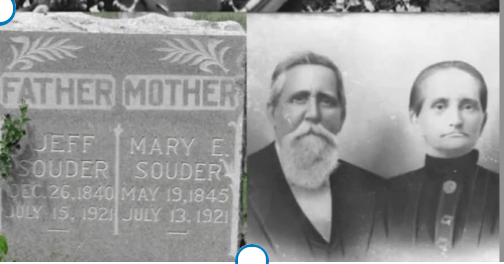
In the gentle stillness of Hurst, Texas, Thomas Jefferson Souder and Mary Ellen East Souder shared a quiet love. It spanned six decades. They were married for 60 years. They raised a family and cultivated a home. They remained inseparable through every upturn and downturn of life.

July 1921 brought a cruel twist. Both fell victim to “the flux.” It was a brutal wave of gastroenteritis. It was so swift that it swept Mary Ellen away first, on July 13. Thomas Jefferson, already weakened, succumbed to grief and illness just two days later on July 15.

The community mourned—especially those who believed no bond was stronger than theirs. So it was decided: they would rest together, side by side, in a unique double coffin. Their shared burial echoed their life—inseparable, even in death.

Newspapers of the day captured the sentiment well. The Fort Worth Star-Telegram, on July 16, headlined their story: “Death fails to Separate Couple Wed 60 Years.” They honored not just the passing of two individuals. It was a love that truly endured it all.

More than a century later, their story endures. It is not a tragedy but a testament. True devotion can span lifetimes. It quietly reminds us that love, in its purest form, touches eternity.

Fact-Checked Details

  • Thomas Jefferson Souder and Mary Ellen East Souder were married for about 60 years. They passed within a couple of days of one another in July 1921 (1).
  • Mary Ellen died on July 13, 1921, and Thomas Jefferson followed two days later, on July 15, 1921 (2).
  • Their cause of death was identified as dysentery. It was referred to at the time as “the flux.” This is a severe form of gastroenteritis (3).
  • Both were well-known pioneers of Hurst in Tarrant County, Texas. They were buried together in a double coffin. It was a striking symbol of their lifelong unity (4).
  • Their joint burial made front-page news in the Fort Worth Star-Telegram on July 16, 1921, under a headline expressing how “Death fails to Separate Couple Wed 60 Years”

By Benjamin GroffMedia© | benandsteve.com | 2025 

Orange Noise II: Revenge Unleashed

3–4 minutes

Orange Noise (By Pets Demand.)

By popular demand, this follow-up dives deeper into how the Orange Noise machines ended up producing such deadly results. Here’s the story.

It began as a fad.

“Orange Noise Therapy — the next step in restful sleep. Scientifically engineered to calm your mind and gently drift you into the deepest dreams.”

The commercials showed happy couples. There were slow-motion scenes of blissful smiles beneath soft blankets. In the background, a low, warm hum laced with delicate chimes sounded. It was hypnotic in a way you couldn’t quite describe. It made you want to close your eyes.

And so the orders poured in.

At first, it seemed perfect. People reported sleeping deeper than they had in years. Doctors praised it. Sleep scientists called it “a breakthrough.” Sales skyrocketed.

But then, somewhere in the shadows, something shifted.

A young woman in Warsaw woke to find her bird dead in its cage. The bars bent as if from desperate thrashing. A man in Toronto woke up with deep, bleeding scratches down his legs. He had no memory of how they got there. Reports trickled in, never connected — until they were too many to ignore.

Couples, families, entire households found dead. No signs of forced entry. No fingerprints. No footprints. Just wounds — savage, animal wounds.

But still, no one suspected the pets.

The killings always happened at night. Always when the chimes were playing. And the footage — when it existed — was either corrupted or mysteriously missing. Except for one file.

Detective Randall Kerrigan found it in a police evidence server, buried under mislabeled case notes. He watched it alone, the faint hiss of the playback filling his dim office. A couple lay in bed, breathing slow and deep. The chimes played softly in the background.

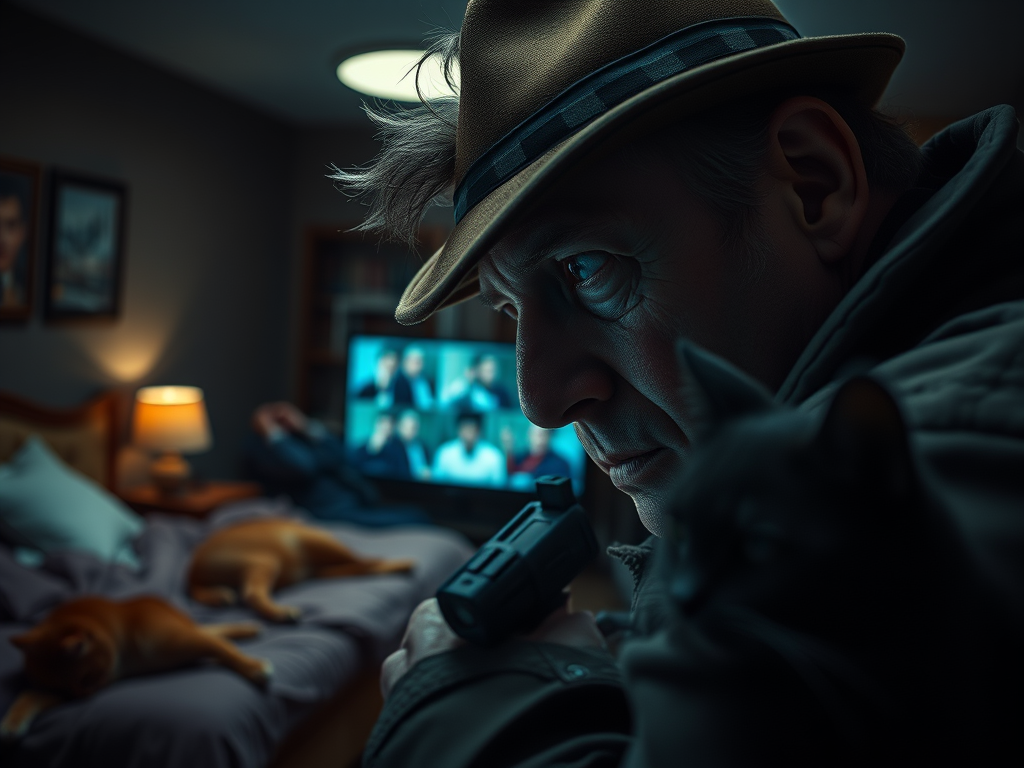
Then their cat jumped onto the bed. Kerrigan leaned up. The animal froze in place, eyes wide, pupils blown black. Its tail twitched once, twice — and then it lunged.

Kerrigan stopped the video, the cursor trembling in his hand. He replayed it. Again. And again. Each time, the truth pressed heavier on his chest: the Orange Noise wasn’t just calming humans. It was triggering something in animals. Something primal.

By morning, he’d traced dozens of similar cases — all linked to the therapy. The broadcasts were still going out, millions of households unknowingly inviting their killers into their bedrooms each night.

He took the evidence to his superiors. They dismissed it. “Mass hysteria,” they said. “A coincidence.” No one wanted to pull a billion-dollar product off the shelves. No one wanted to admit that bedtime bliss had become a death sentence.

Kerrigan tried to go public, but the networks shut him down. Lawsuits loomed. His badge was taken.

That night, he sat alone in his apartment. He heard it faint at first, then louder. It was the warm hum and the delicate chimes.

They weren’t coming from his speakers. They were coming from outside. From every apartment, every home in the city.

His own dog padded into the room, eyes fixed on him in a way they never had before.

Kerrigan stared back, a sick mix of fear and grief twisting in his gut. He reached slowly for the pistol on the table. Knowing that if he was right, this was the only chance he had. But a part of him hesitated. Because if he was wrong, he’d be killing the last friend he had left.

The dog took a step ahead.

And in that moment, hope and despair became the same thing. It was the hope that he can save himself. It was also the despair of knowing what it would cost him.

The Haunting Experience of a Small Town Funeral Home

2–4 minutes

The Dead Has Gone – A Night Call to the Funeral Home

Jake Roff was a man of routine. Up before the sun, station lights on by 4:30, coffee brewed by 4:35. He liked the quiet hours before the town woke up. There was no traffic and no gossip. Just the hum of the soda cooler and the smell of gasoline.

That’s when the hearse pulled in.

The local funeral director appeared. He was a man who had perfected the art of wearing a solemn face. He maintained this expression even when discussing baseball scores. He leaned out the window and said,

“Jake… I can use an extra set of hands unloading a client.”

Jake wasn’t sure “client” was the right word, but he was too polite to argue. He locked the station door and climbed into the passenger seat. The ride was short. It was a ride where the air feels colder than it should. You can’t shake the notion that someone in back is listening.

At the funeral home, the place was dark. A single light illuminated the hallway. It was the light that leaves more shadows than it removes. The two men wheeled their passenger toward the prep room, the floor squeaking under the gurney wheels.

That’s when Jake’s hip clipped something.

The “something” was another gurney, parked just out of sight. The bump sent the sheet sliding to the floor in slow, terrible motion. It was like a curtain rising before a play no one wants to see.

Underneath was a woman. Her hair was a halo of white, frizzed and jutting out like she’d been caught mid-scream in a lightning storm. Her eyes were wide and glassy, locked on Jake as if she’d been waiting for him specifically. Her jaw hung slack. Her teeth were just visible. It was an open-mouthed stare that made him wonder if she was about to say something.

Jake didn’t stick around to find out. He backpedaled so fast he nearly tipped the “client” he’d come to help with. His heart was pounding. He mumbled something about

“forgetting to check the oil at the station.”

Then, he made a break for the door.

The funeral director called after him. By then, Jake was halfway down the block. He vowed never to set foot in that place again. For the rest of his days, he’d open his station early. Yet, if a hearse rolled in before sunrise, Bill always ensured he had a sudden, urgent appointment anywhere else.

Your Claim To Sobriety Matters – Will You Be Able To Do It When You Are Asked To Step Up?

When Did Walking The Line Become A Thing?

3–4 minutes

If you’ve ever been told to “walk a straight white line,” the meaning depends a lot on where you’re standing. It also depends on who’s watching. In the Welsh valleys of How Green Was My Valley, the “white line” was a poetic path. It symbolized memory and loss. In American trucker slang, it’s the hypnotic blur of endless road miles. But to a police officer at 1 a.m. on the shoulder of a highway, that white line is all about one thing: sobriety.

A Path in Song and Story

In How Green Was My Valley, the final scene drifts to Alfred Newman’s Finale. It is woven with the Welsh hymn Pen Calfaria. Its the “white line” was a poetic path of memory and loss. “This shall never leave my memory”, feels like a pledge. This pledge is to never forget where you’ve walked. The “white line” here is a metaphorical road. It signifies a way home, a journey of life. It is the one path you try to stay true to.

Road Paint and Real Lines

Outside of metaphor, the first real white lines appeared on American roads in the early 20th century. Two names claim credit:

  • A leaking milk wagon inspired Edward Hines in 1911.
  • Dr. June McCarroll, who proposed painted center lines after a close call in 1917.

Whichever story you buy, the point is safety—keeping drivers in their lane and avoiding head-on collisions. And from there, the idea of “walking the line” naturally started meaning “stay where you’re supposed to.”

Law and Order: The Walk-and-Turn

The “walk the white line” sobriety test isn’t ancient Irish pub lore or a circus stunt. It’s a product of late 1970s American law enforcement. The U.S. National Highway Traffic Safety Administration (NHTSA) funded research to standardize roadside sobriety tests. Out of those studies came the now-famous “Walk and Turn” test:

  • Nine heel-to-toe steps along a straight line.
  • Turn in a prescribed way.
  • Nine steps back.

It’s part of the Standardized Field Sobriety Tests (SFSTs), along with the horizontal gaze test and the one-leg stand. The idea is to challenge both balance and divided attention—two abilities alcohol loves to mess with.

Officers used informal techniques before the SFSTs. They asked suspects to touch their nose. Suspects were also asked to recite the alphabet or, yes, walk a straight line. These early “white line” walks have been inspired by the painted road markings. They also have been inspired by circus balance acts. Alternatively, the practical idea of watching someone try to move in a perfectly straight path have been the inspiration.

Beyond the Pavement

Hymns about life’s journey include the image of a narrow path you must follow. Truckers experience “white line fever.” Country music promises fidelity with songs like Johnny Cash’s“I Walk the Line.” This imagery runs deep in human storytelling. The white line is painted down the middle of a highway, showing control and direction. It can also be imagined across the green hills of Wales. It shows the consequences of straying.

The modern police test feel clinical—clipboards, flashlights, and a yellow legal pad. Nevertheless, the symbolism is the same. Can you keep your feet steady? Is your head clear, and can you stay on the line?

Sometimes, the answer to “where did it come from?” is that it came from everywhere. It came from roads, songs, and courtrooms. It also originated from the human habit of evaluating a person’s worth. This is done by observing how well they adhere to the path.

The Cost Of Doing Away With The Government


How Trump is starting to shape the job market

In recent years, the Trump Administration has made headlines for its policy stances. It has also garnered attention for the sweeping federal cutbacks. These cutbacks have redefined the size and role of the federal government. Thousands of government employees have been laid off. Hundreds of federal offices have been shuttered. A wide range of services — from healthcare to environmental aid — has been reduced or eliminated entirely.

The administration has championed these actions as part of a broader effort to “drain the swamp.” They aim to reduce federal spending and ultimately return power and resources to American taxpayers. The rationale has been clear. A leaner federal government would lead to significant cost savings. It would result in a more efficient use of tax dollars. But many Americans are beginning to ask a critical question: Where are the savings?

Among the most significant cutbacks:

  • Layoffs: Tens of thousands of federal workers across agencies have been laid off or had positions eliminated.
  • Office Closures: Many government-run facilities have been closed. These include Social Security branch offices and rural USDA outreach centers. This closure reduces accessibility for millions of Americans.
  • Social Programs Slashed: Legislation was recently passed. As a result, funding for programs like Medicaid and Medicare has been reduced. Food assistance and global humanitarian aid are also affected. Preventive services and outreach initiatives that once supported millions are being dismantled or left underfunded.

These cutbacks, in theory, should have freed up hundreds of billions of dollars from the federal budget. Many believed this money would reduce personal tax burdens. Others thought it would be used to invest in infrastructure or support domestic economic growth.

Yet, for the average citizen, these savings have not become visible.

If the government is spending less, why aren’t Americans seeing a difference in their tax bills? Why are services harder to access, but costs stay the same — or even rise?

Economists point to several possible explanations:

  • Redistribution of Savings: Much of the money saved through cutbacks has not been returned to taxpayers. Instead, it has been redirected toward defense spending and border enforcement. There are also tax breaks for corporations and high-income earners.
  • One-Time Costs of Downsizing: Severance packages, contract terminations, and administrative restructuring often generate short-term costs that offset early savings.
  • Unseen Long-Term Consequences: Cuts to health and humanitarian programs will result in higher long-term costs. These range from emergency medical care to international instability.

The Trump Administration has often framed these reductions as a necessary reset. They see it as a chance to shrink government. It is also viewed as an opportunity to re-center American values around individual responsibility and self-reliance. Nonetheless, critics argue that the effects are disproportionately felt by the vulnerable. The elderly and rural communities are significantly affected. Those who rely most on public services are also affected.

Meanwhile, for those expecting an immediate drop in taxes, there is little evidence to support those hopes. The same applies to a boost in services funded by savings.

In the end, the administration claims victory in trimming government “fat.” Yet, the benefits of those savings stay largely invisible to the average voter. Instead, Americans are paying the same or more for fewer services. They experience longer wait times and less support.

The promise of efficiency has been delivered, but at a human cost. The American people are still waiting for their return on investment.


1. The Layoff Machine

  • Estimated decline: Over 275,000 federal civil-sector layoffs have been announced under Trump’s second term—roughly 12% of the 2.4 million workforce—comprising 58,000 confirmed cuts, 76,000 buyouts, and 149,000 planned layoffs en.wikipedia.org.
  • Net reductions: As of March, the Office of Personnel Management reported a single-quarter decline of about 23,700 jobs. This signifies a 1% drop. The federal workforce has been reduced to approximately 2.29 million reuters.com.
  • Legal rollback: A federal judge blocked mass layoffs at HHS. The judge deemed them “arbitrary and capricious.” This decision halted over 10,000 planned terminations en.wikipedia.org+3thedailybeast.com+3apnews.com+3.

“The American people deserve a government that is lean. It should be efficient and focused on core priorities,” OPM Acting Director Charles Ezell said. He framed the downsizing as a fiscal win reuters.com+6federalnewsnetwork.com+6foxnews.com+6.

2. Agency-by-Agency Fallout

  • Health & Human Services: Targeted a 25% workforce reduction—about 20,000 jobs eliminated—affecting the CDC, FDA, NIH, and CMS apnews.com.
  • National Science Foundation: Paused or canceled 1,600 grants. It slashed fellowships by 75%. It also dismantled peer-review independence—a move scientists warn will cost U.S. innovation and “a generation of talent” theguardian.com.
  • National Park Service: Permanent staffing fell by 24%. There were only 4,500 seasonal hires, which is far short of the needed 7,700. This resulted in maintenance backlogs and delayed emergency responses staffingindustry.com+3sfgate.com+3govexec.com+3.

3. The Savings That Never Materialized

  • DOGE’s bold claims: The Department of Government Efficiency (DOGE) announced $160 billion in savings. They achieved this via contract cancellations, leases, and workforce cuts en.wikipedia.org+5en.wikipedia.org+5cbsnews.com+5.
  • Reality check: Independent analysts argue that actual cost reductions are closer to $80 billion, and note caveats:
    • ~$135 million lost from disruption.
    • Contract “savings” often overstated—e.g., a $655 million USAID contract cut was restated at just 35 cents reuters.com.
  • Budget context:
    • Federal outlays rose by over $200 billion in Trump’s first 100 days. This amount was more than what was spent in nine of the prior ten years.
    • Debt-service climbed too: $94 billion in interest payments in one month vs. $80 billion a year earlier reuters.com.
    • DOGE’s savings amount to just 2.6% of discretionary spending—effectively negligible overall visualcapitalist.com.

4. Impact on Taxpayers & Services

Despite layoffs:

  • No direct tax relief for average Americans.
  • Essential services have been impaired: reduced access for Medicaid/Medicare beneficiaries, eroded scientific research, delayed park maintenance, weakened emergency response.
  • Budget cuts amount to a drop in the bucket. Mandatory expenditures like Social Security, Medicare, defense, veterans’ benefits, and debt interest consume around two-thirds of the federal budget. sfgate.com+1wsj.com+1.

5. Public Opinion & Potential Fallout

  • Public sentiment: 55% of Americans believe cuts to federal employees and services will harm the economy; only 31% disagree ourpublicservice.org+1cbsnews.com+1.
  • Economist takeaway:“To cut federal spending significantly, focus on Medicare, Medicaid, and Social Security. Interest spending must also be addressed,” notes AEIs Nat Malkus cbsnews.com.
    • Even a 10% workforce cut yields only ~$25 billion per year—less than 1% of total federal outlays investopedia.com.

Cutback TypeScale of ReductionEstimated SavingsCaveats / Impact
Federal layoffs~275,000 announced; ~23k net cut$25–80 B annuallyDisruptive, costly; limited fiscal effect
Agency-specific job cutsHHS (20k), NSF grants (1.6k), NPS (24%)Not fully quantifiedServices degraded: health, science, park management
DOGE-reported cutsClaimed $160 B$80 B real impact?Misdocuments, redistribution to defense/veteran spending
Overall federal spendingUp $200 B first 100 daysOutlays still increasing due to fixed costs and one-off obligations

The Trump Administration’s aggressive federal cutbacks have certainly shrunk parts of government. Yet, they haven’t translated into noticeable savings for average taxpayers. Most reductions target lower-tier programs instead of trimming the core federal budget. Mandatory spending, including defense, healthcare, pensions, and debt interest, continues unchecked. Meanwhile, disruptions to critical services—public health, national parks, scientific research—have been significant.

Bottom line: The headline of a leaner government resonate politically, but the economic reality for taxpayers is murky—and bleak. Unless cuts touch the big-ticket mandatory spending items, true budget relief remains elusive.


Recent coverage on Trump cutbacks

What you will see is the fallout:

  • Higher grocery bills
  • Rising medical costs
  • More expensive fuel

By year’s end, everything you need will cost more, while your paycheck buys less. The framework isn’t built for you to win—it’s built for you to keep paying. And that is the bottom line!

SOURCES:

Recent coverage on Trump cutbacks;

Recent coverage on Trump cutbacks found at;

reuters.com

How Trump is starting to shape the job market

Today

theguardian.com

Scientists warn US will lose a generation of talent because of Trump cuts

Today

sfgate.com

‘Truly devastating’: National Park Service lost nearly a quarter of permanent workforce

Today

vox.com

Does Trump really not understand his huge bill cuts Medicaid?

Today

Speeding Into Mortality – A Story About One Land Speed Crew And It’s Driver’s Impermanence

2–3 minutes

A driver aimed to set a land speed record. He was going 283 mph during a racing event at Utah’s famed Bonneville Salt Flats. He died August 3rd, 2025, after losing control of his rocket-like vehicle called the Speed Demon, organizers said.  The team had got detoured due to traffic lanes being improved. They and others would arrive late to the event.

Driver Chris Raschke

Driver Chris Raschke lost control about two and a half miles into a run. He was treated by medical professionals at the scene, but died from his injuries. The Southern California Timing Association has organized the popular land-speed racing event. This event is known as “Speed Week” and has been organized since the late 1940s. 

For decades, the flat, glasslike white surface has drawn drivers from all over. They seek to set new land speed world records. Motorcycle and car fans come to watch. The salt flats are a remnant of a prehistoric lakebed. They are about 100 miles (160 kilometers) west of Salt Lake City. They have also been a backdrop for movies like “Independence Day” and “The World’s Fastest Indian.”

Read the full story here…

There is a question to be answered; why wasn’t there something soft for the man to land on? Case in point, a bouncy house, there is something soft. It would need to be ten or twenty fold. So, when his car popped off course, it would have bounced around the desert without killing anyone. Which is obvious to anyone looking at the desert.

For decades, people have used the flat, glasslike surface at Bonneville Salt Flats. It is located 100 miles (160 kilometers) west of Salt Lake City. They use it to set speed records, sometimes topping 400 mph (644 kph). Speed Week has long been a draw for motorcycle and car fans.

Raschke, 60, drove a streamliner. This long, narrow, aerodynamic car was made to run at high speeds and was known as the Speed Demon. He had worked in motor sports for more than four decades.

According to the Speed Demon racing team’s site, Raschke worked at the Ventura Raceway in the early 1980s. He raced 3-wheelers and cars in the mini stock division. Raschke learned to fabricate and keep race cars when working with an acclaimed engine builder. He later became a driver for the Speed Demon team. 

Keith Pedersen, the association’s president and Speed Week race director, said Raschke was a respected driver within the racing community. He also worked for a company that makes fasteners for race cars.

“He is one of the big ones. He had done all sorts of racing,” Pedersen said.

The Race Week event began on Saturday and runs through Friday. Are you in The Phoenix metro area and want to see vehicles passing the set speeds. All you have to do is drive on any of its freeways. And be safe!

To read the original report from visit here

The Anatomy of a Shooter – Part Four: Red Flags and Shrugged Shoulders

By Benjamin GroffMedia© | benandsteve.com | 2025 Truth Endures©

2–4 minutes

Part Four: Red Flags and Shrugged Shoulders

After every mass shooting, the same story unfolds.
News reports reveal the shooter made threats.
He posted disturbing content.
He stockpiled weapons.
He scared people.

And then the world asks, 

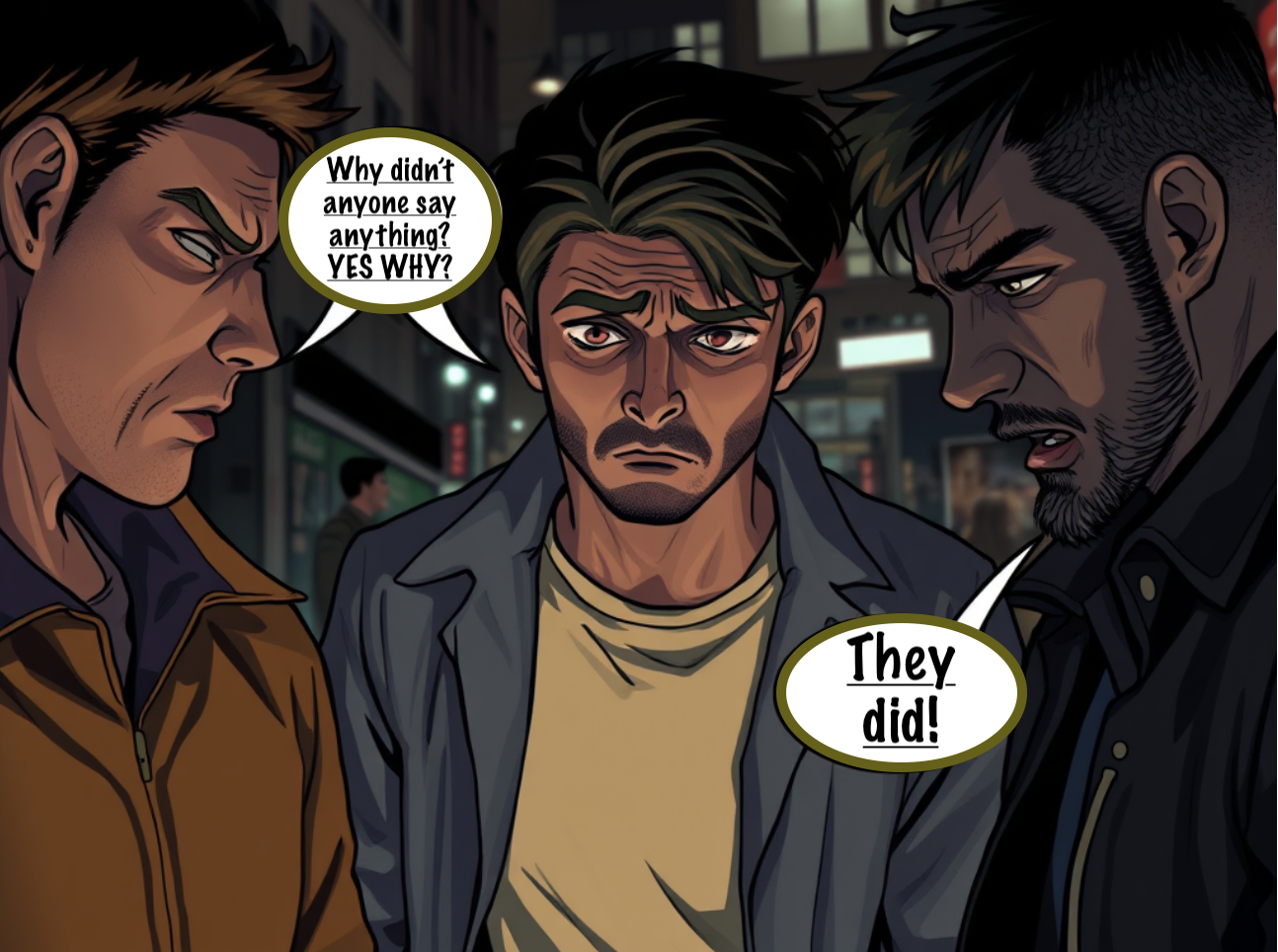
“Why didn’t anyone say something?”

Except someone usually did.

They said it quietly to a friend.
They reported it to HR.
They sent up a flare—but it fizzled in a system built to tolerate discomfort until it explodes.


“It Just Felt Off”

Human instinct is powerful.
We know when something doesn’t feel right—when someone is spiraling, simmering, or clinging to rage a little too tightly.
But we’ve been trained to doubt our gut.

Why?
Because:

  • We don’t want to overreact.
  • We don’t want to get someone in trouble.
  • We don’t want to look paranoid or mean or judgmental.

So we say things like:

  • “He’s just blowing off steam.”
  • “He’s always been like that.”
  • “It’s probably nothing.”

Until it’s not.


The Signs Were There. The Action Wasn’t.

Let’s break it down. Red flags can look like:

  • Obsessive talk about violence or past shooters
  • Extreme ideological rants
  • Sudden personality changes or withdrawal
  • Threats—direct or veiled
  • Obsession with weapons or martyrdom
  • Social media posts that scream “notice me”

But here’s the kicker:
Even when these signs are clear, most people don’t act.
And when they do? They’re often ignored, dismissed, or redirected through layers of bureaucracy.

“It’s not our jurisdiction.”
“We can’t do anything unless he acts.”
“He hasn’t broken any laws.”

We treat early warning signs like legal puzzles, not human lives.


Fear of the Awkward Conversation

Red flags aren’t just missed.
They’re avoided—because confronting someone is uncomfortable.

There are times when you have to take the bull by the horns.
  • What if I’m wrong?
  • What if they get mad?
  • What if it ruins my relationship with them?
  • What if it’s not serious?

So instead of leaning in, we back away.

And we let someone else deal with it.
Except, too often, there isn’t someone else.


The Burden of Hindsight

Afterward, the red flags look obvious.
Crystal clear.
Undeniable.

But by then it’s too late.
And we’re left with vigils, flowers, and questions we didn’t ask soon enough.


A Shift in Mindset

We need to stop treating red flags like rumors.
They’re signals. Warnings.
Opportunities to intervene.

That doesn’t mean we accuse people on a hunch.
It means we build systems and cultures that listen.
That act before a weapon is drawn, not after.

Because by the time the police tape goes up, the story’s already been written.


Coming Up in the Series:

Part Five: What We Can Actually Do About It
We’ve identified the patterns. We’ve seen the signs. Now it’s time to talk about real solutions—what works, what doesn’t, and why “thoughts and prayers” aren’t enough.

About the Author:

Benjamin Groff is a former police officer and radio news anchor. He has hosted programs for CNN and ABC News affiliates in Colorado and Wyoming. His career in law enforcement began in 1980 and lasted more than two decades. This gave him firsthand insight into the criminal mind and public safety. Moreover, it provided him with an understanding of the human stories that often go untold. His writing draws on these experiences, blending street-level truth with a journalist’s eye for the bigger picture.

The Anatomy of a Shooter – Part Three: The Myth of the Lone Wolf

“Monsters aren’t born overnight. They’re made—in silence, in shadows, in places we refuse to look.”

By Benjamin GroffMedia© | benandsteve.com | 2025 Truth Endures©

2–4 minutes

Part Three: The Myth of the Lone Wolf

Every time the news breaks, we hear it:
“He acted alone.”
And just like that, the story is framed.
One man. One moment. One monster. Case closed.

But here’s the problem:
It’s not true.
Or at least, it’s not the whole truth.


The Comfortable Lie

Calling someone a “lone wolf” is tidy. It makes the rest of us feel better.
It tells the public:

  • This was a fluke.
  • It couldn’t have been predicted.
  • There’s nothing we could’ve done.

And maybe, if we say it enough, we’ll believe it.

But in reality? Shooters rarely emerge from a vacuum.
They come from families. Communities. Schools. Workplaces. Chatrooms.
They leave trails of clues—behavioral, verbal, digital, emotional.

And more often than not, somebody saw something.


He Was Always Quiet… Until He Wasn’t

We’ve all heard it:

  • “He kept to himself.”
  • “He was a little odd, but polite.”
  • “He never really fit in.”

The thing is, these aren’t descriptions of a mystery. They’re descriptions of a pattern.

Withdrawn doesn’t mean harmless.
Quiet doesn’t mean invisible.

But we’ve trained ourselves to look away.
To shrug off disturbing comments.
To ignore that one guy at work who’s always simmering just below the surface.
Because to speak up feels awkward. And what if we’re wrong?

Well—what if we’re right?


Behind the Shooter Is a System That Failed

Lone wolf? No.
It’s more like a failure of the pack.

The system failed.

  • The family that didn’t ask questions.
  • The school that let him fall through the cracks.
  • The workplace that ignored his meltdown.
  • The internet forums that radicalized him.
  • The society that let him buy a weapon without blinking.

A shooter might pull the trigger alone, yes.
But the road there was crowded.


When “Alone” Is a Strategy

Photo by Danik Prihodko on Pexels.com

Let’s not forget—some shooters want to be seen as lone wolves.
It fits the fantasy: the avenger, the martyr, the misunderstood genius.
They want us to think no one could’ve stopped them.

Because if we believe that, then we stop looking for answers.
And they get to become a headline instead of a warning.


So What Should We Say Instead?

We should say:
“He was one part of a larger failure.”
“This wasn’t random—it was ignored.”
“This wasn’t a mystery—it was a message we didn’t read in time.”


Coming Up in the Series:

Part Four: Red Flags and Shrugged Shoulders
He gave off signs. He said things. He posted warnings. But no one did anything. Why? Because we’re experts at convincing ourselves it’s not our problem—until it is. That is next!


About the Author:

Benjamin Groff is a former police officer and radio news anchor. He has hosted programs for CNN and ABC News affiliates in Colorado and Wyoming. He writes for organizations from his home in Arizona. His career in law enforcement began in 1980 and lasted more than two decades. This gave him firsthand insight into the criminal mind and public safety. Moreover, it provided him with an understanding of the human stories that often go untold. His writing draws on these experiences, blending street-level truth with a journalist’s eye for the bigger picture.

The Anatomy of a Shooter – Part One: In the Beginning, There Was Silence

“Monsters aren’t born overnight. They’re made—in silence, in shadows, in places we refuse to look.”

By Benjamin GroffMedia© | benandsteve.com | 2025 Truth Endures©

3–4 minutes

Part One: In the Beginning, There Was Silence

Let’s start with a hard truth:
Shooters don’t come out of nowhere. They come out of silence.

Silence from the people around them.
Silence in rooms where pain festered.
And eventually, silence before the gunfire broke it all.

In this series, I’m not asking for sympathy for those who’ve caused unspeakable pain. But I am asking this:

How does a person get to the point where picking up a gun feels like a solution?

If we keep pretending it’s as simple as “they snapped,” we’re not solving a damn thing. If we keep saying “they were crazy,” we’re not solving a damn thing.


The Seed of Isolation

No one wakes up one day and says, “You know what? Today’s the day I destroy lives.”
It begins slowly. Quietly. Almost invisibly.

Maybe they were left out.
Maybe they were bullied.
Maybe they were weird, withdrawn, angry, or awkward.
Maybe they simply felt invisible.

That kind of loneliness doesn’t whisper—it screams. But not everyone knows how to listen to the silence. Some don’t even try.

And so, that person—young or old—starts pulling away from others. Or worse, starts resenting them.


Grievance: The Gateway Drug

Here’s where things shift.

What started as pain turns into blame.
Not just “I’m hurting,” but “They did this to me.”

And they might be:

  • The cool kids at school
  • The coworkers who laughed
  • The family who ignored
  • The ex who left
  • The entire world

Suddenly, it’s not just a personal wound—it’s a mission. A vendetta. A delusion of justice.

And online, there are entire dark corners ready to cheer them on.


When the Weapon Becomes a Microphone

The shooter mindset often merges with a desire to be seen—finally, undeniably.
And that’s what makes these tragedies feel like performances.
Not just an act of violence, but a message broadcast with blood:

“Look at me now.”

That’s not an excuse.
That’s an alarm bell.


What We Rarely Say Out Loud

Yes, mental illness plays a role in some cases. But not always.
Plenty of people struggle with mental health and don’t turn into killers.

What we’re talking about is a toxic cocktail:

  • Isolation
  • Grievance
  • Identity crisis
  • Obsession
  • Ego
  • Easy access to destruction

It’s not one red flag.
It’s a collection of ignored ones.


So, Why Write This?

Because the only thing more dangerous than a shooter is a society that refuses to understand one.

And understanding doesn’t mean excusing.

It means preventing.


Coming Up in the Series:

  • Part Two: The Online Echo Chamber
    How algorithms and angry forums radicalize the already isolated.
  • Part Three: The Myth of the Lone Wolf
    Why shooters aren’t anomalies—they’re symptoms of something bigger.
  • Part Four: Red Flags and Shrugged Shoulders
    What we miss—and why we keep missing it.
  • Part Five: What We Can Actually Do About It
    Solutions that go beyond slogans and shallow politics.

About the Author:
Benjamin Groff is a former police officer. He is also a radio news anchor. He has hosted programs for CNN and ABC News affiliates in Oklahoma, Colorado and Wyoming. His career in law enforcement began in 1980 and spanned more than two decades. This gave him firsthand insight into the criminal mind and public safety. He also learned about the human stories that often go untold. His writing draws on these experiences, blending street-level truth with a journalist’s eye for the bigger picture.

The Revolving House Of Mystery

By Benjamin GroffMedia© | benandsteve.com | 2025 Truth Endures©

10–15 minutes

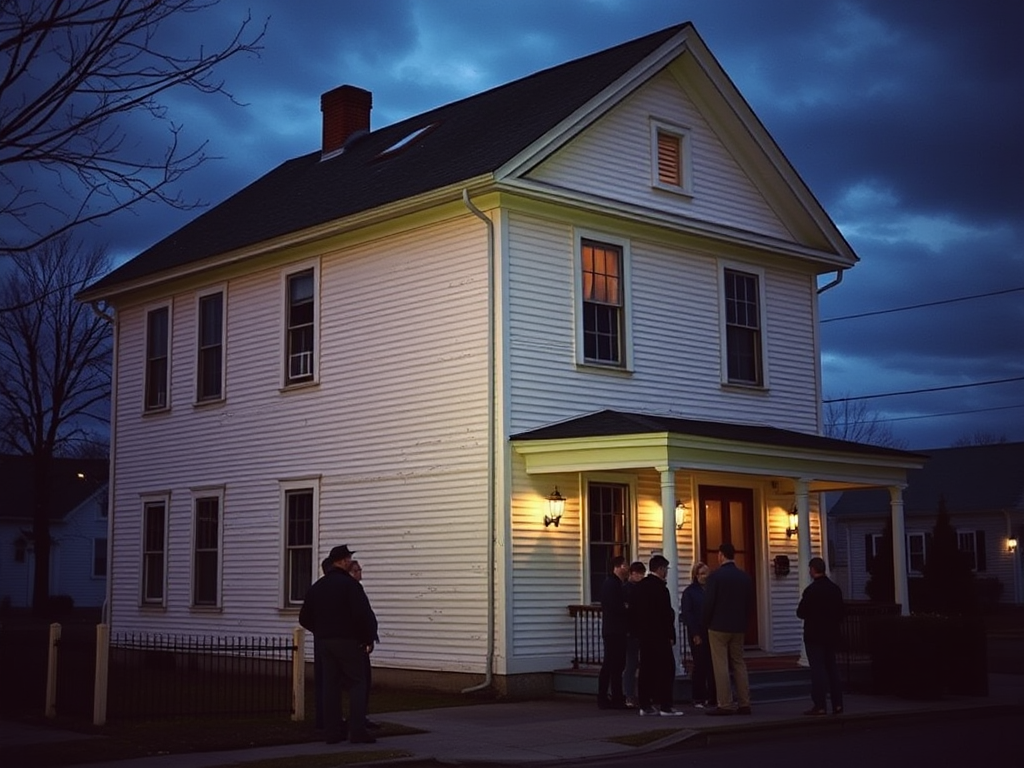
Far from the edges of the town, set an old two-story house. No one ever saw anyone going in or out of the house. The townspeople referred to the old house as the Sims’ place. As far as everyone knew, the last member of the Sims’ family had died years ago. They didn’t know who inherited the ownership of the house. Still, without being seen, the lawn remained manicured and the house was painted and kept up. It looked like the model home for anyone wanting to buy a house. The problem was it wasn’t for sale. As far as anyone knew, they never met anyone who lived there. If anyone lived there at all, nobody knew.

That didn’t stop the stories from spreading.

Children dared each other to run up the front walk and touch the heavy oak door. Teenagers boasted of throwing pebbles at the upstairs windows—until one swore he saw a pale face staring back. No one ever stayed long. The Sims’ place pressed against your skin. It was like a cold hand resting on the back of your neck.

The mail never piled up, though no one ever saw it being collected. No lights came on at night. The porch lantern flickered gently with each dusk. It was like it was welcoming someone home.

One autumn morning, a moving truck pulled into the narrow drive. This was just after the first frost turned the fields silver.

People watched from porches and behind curtains, half-certain the truck would vanish like smoke. But it didn’t. A tall man in a dark coat stepped out. He stood for a long moment at the edge of the walk. Then, he turned the knob and entered without knocking. The door swung open smoothly, like it had been waiting.

By noon, the truck was gone. No one had seen anything carried in or out.

That night, a light glowed faintly in the attic window—the first time anyone had seen one inside in decades.

The next day, the town’s quietest librarian, Mrs. Evelyn Crane, who hadn’t missed a shift in forty years, did not show up for work.

They found Mrs. Crane’s front door wide open, her coat still hanging by the hook, tea cooling on the counter. Nothing was out of place—except for the fact she was gone.

On the floor of her study, neatly laid out, was a photograph no one remembered being taken. It showed the Sims’ house bathed in golden afternoon light. In the top-floor window, a shadowy figure could just barely be made out. A figure with Evelyn Crane’s unmistakable silhouette—bunned hair, long cardigan, glasses catching the light.

The photo was crisp, fresh—too fresh. The paper hadn’t yellowed, and the ink hadn’t aged. Yet, the style, tone, and eerie texture of the photograph made it feel as if it were decades old.

Sheriff McKinley requested a discreet investigation. 

Quiet was always the town’s way. A formal missing person report was filed. It was filed only after a week had passed. The report was done with hushed voices.

The librarian’s house sat untouched after that—no one eager to enter it. On the morning of the seventh day, someone noticed a flicker in the Sims’ attic window. The light now flickered slightly. Like a candle in a room with a draft. Like someone moving just beyond its reach.

Then others began to disappear.

Not suddenly, but subtly. A school janitor didn’t show up for work. The pharmacist’s assistant left for her lunch break and never came back. With each absence, the same pattern followed—no signs of struggle, no witnesses, just something left behind. A photograph, a trinket, a drawing… always showing the Sims’ house. 

Always with a shadow in the attic.

One morning, the mayor ordered a city records search. He wanted to find any deeds, wills, or other documents related to the Sims family’s legal existence.

The file was blank.

No birth certificates. No death records. No property tax history. Just a penciled note in the margins of a 1933 zoning map:

“Leave undisturbed. Occupied.”

By whom, no one knew. But the attic light still burned. And some said if you stood on the sidewalk long enough, you would hear soft music playing. A woman humming. And the sound of someone pacing slowly across wooden floors.

Would you like to explore who—or what—is in the attic next? Or maybe follow a new character brave (or foolish) enough to enter the house?

His name was Jonah Bell. A drifter by most accounts, though some swore he’d grown up just a few towns over. He had that type of face—familiar, yet hard to place—late thirties. Wore an old canvas satchel, carried a notebook bound in cracked leather, and spoke only when spoken to.

Jonah arrived on foot, just before dusk. He stopped outside the Sims’ house. He looked it over for a long minute. He muttered something under his breath that sounded like “Still standing.”

A few townsfolk watched him from a distance, expecting him to keep walking. Instead, he opened the rusted gate, walked straight up the weedless stone path, and knocked once.

No one had ever knocked before.

The door creaked open as if it had been listening.

He stepped inside.

The air in the entry hall was still and dry. It was faintly perfumed with old cedar and beeswax. There was also a hint of something sweeter, like lilacs. The floors gleamed under a thin veil of dust. Every piece of furniture stood precisely placed, as if awaiting a long-anticipated visit.

Jonah took out his notebook and began jotting down notes. He whispered as he walked, like he was reciting some memorized litany to keep his courage close.

He passed through the parlor—walls lined with books, many handwritten, their spines bare. The grandfather clock stood frozen at 3:17. In the mirror above the fireplace, his reflection wavered slightly, a half-second behind his movements.

He didn’t stop.

At the end of the hall, the narrow staircase rose, twisting sharply to the left halfway up. It was there, on the sixth step, that the air grew colder.

He reached the landing, hesitated only briefly, then started the climb to the attic. Each step groaned—not with age, but with reluctance, like the house was reconsidering his welcome.

The attic door was shut. White paint cracked along its edges. Carved into the wood, nearly invisible unless you looked for it, was a single word:

“Stay.”

Jonah opened it anyway.

The attic was warm, despite the chill below. A low, golden light poured from an unseen source, casting no transparent shadows. Dust floated like tiny spirits in the air.

In the center of the attic was a rocking chair. And in it, a woman sat.

She was facing the window, her back to Jonah. Gray hair pinned neatly. A music box was on a small table beside her. It played a lilting tune. This was the same tune Evelyn Crane used to hum at the library desk.

Jonah didn’t speak. He stepped closer, notebook open, pencil ready.

The woman turned her head slowly, not startled—expectant.

She had no eyes.

Just smooth, unbroken skin where they should have been. Still, she looked at him.

And she smiled.

“I was wondering,” 

She said in a voice like leaves scraping on glass, 

“When you’d come back.”

Jonah’s pencil trembled. A page fluttered loose from his notebook.

It was a drawing—sketched in charcoal—of this very attic. The woman in the chair. The music box. The golden light.

Dated: October 13, 1922.

Jonah stared at the sketch, hands trembling, mind racing.

“I don’t remember drawing this.” 

He said aloud, but only to himself.

The woman in the chair—still smiling—nodded slowly. 

“You never do, not at first.”

He took a cautious step closer, boots silent on the attic’s polished wood. 

“Who are you?” 

He asked. 

“What is this place?”

The woman tilted her head. 

“The house remembers.” 

She said. 

“Even when you forget.”

Jonah knelt to retrieve the page. His fingers brushed the corner of the rocking chair. In a sudden rush, something opened in him. It was a flood of memory. It was not like something recalled, but like a dream breaking the surface after years of sinking.

He was ten. Standing in this very attic. A woman—this same woman—was brushing his hair, humming that tune.

Her face was younger, but the eyes—nonexistent yet somehow seeing—were just the same.

“You called me your boy.” 

He whispered, blinking hard. 

“But that can’t be. You’re not… real.”

“Oh, I’m real.” 

She said. 

“As real as anything you forgot.”

He backed away. 

“I’ve never lived here.”

The woman raised one hand and pointed to the rafters. Jonah followed her gaze.

Up near the slanted beams, nailed between two joists, was a faded photograph. A family portrait—sepia-toned. 

A tall man with a mustache. A small boy with serious eyes. And a woman in a white dress, her arms around them both.

Jonah felt his knees weaken.

The boy was him.

Same face, same eyes.

He staggered back.

“No, no, this can’t—”

“You were born here, Jonah.” 

The woman said gently. 

“And you left. They made you leave. But the house… the house never forgot. Neither did I.”

He looked around now with different eyes. Not the attic of a haunted place, but something older. Familiar. As though the walls were whispering lullabies from a life he’d buried.

“I don’t understand,”

He murmured.

“You don’t have to.” 

She said. 

“You only need to remember why you came back.”

He looked down at his notebook again. Page after page of sketches—rooms in the house. A hand-drawn map of the garden. Symbols he didn’t recognize but somehow understood. At the very end, a single phrase repeated over and over:

“The house is waiting. The house is watching. The house wants me home.”

Suddenly, the attic door slammed shut behind him.

He didn’t turn.

The rocking chair creaked gently as the woman leaned forward.

“Now,” 

She said, her voice sharper, colder. 

“Are you ready to take your place?”

Jonah closed the notebook and looked out the attic window again. Down below, on the street, a child stood at the edge of the lawn. Watching the house and watching him.

The way he once had.

The woman’s eyes—those smooth, sightless hollows—seemed to deepen as she leaned closer.

“You were always meant to return.” 

She said. 

“Not as the boy you were, but as the man we need.”

Jonah’s voice caught in his throat. 

“We?”

The rocking chair stopped moving.

Suddenly, the attic air thickened, as if the room had drawn a breath and was holding it. All around him, the golden light faded. It was replaced by a dim, pulsing glow from the floorboards beneath his feet. The wood creaked in rhythm—a heartbeat.

And then the whispering began.

Not from the woman. From the house.

It came from the walls, from the pipes, from behind the bookshelves. Countless voices, layered over one another. Some frantic, some pleading, others calm and patient, like they had waited an eternity.

He was made out the names—EvelynTommyClara—names of the vanished.

“We are here.” 

The voices murmured. 

“Waiting. Watching. Living still.”

Jonah stumbled backward toward the attic window, but the light outside had changed. The sky beyond was no longer dusky violet but deep, ink-black. No stars. No moon. Only the faint shimmer of fog rolling in across the lawn.

The child he had seen moments ago was no longer there.

The woman in the chair stood.

Not slowly. Not creakingly. She rose, as though the gravity in the attic shifted just for her.

“The house keeps what it claims.” 

She said. 

“And it chose you long ago.”

Jonah opened his notebook again, desperately flipping pages. The last one had changed.

Where once the phrase had repeated—The house is waiting. The house is watching.—now there was only one line:

“The house has taken root in me.”

His hands began to tremble. He dropped the notebook.

The floor beneath him rippled slightly, the wooden planks softening beneath his boots. He looked down. He saw the faint outline of veins—not his. They were pressing against his skin from below. The veins snaked up his legs like ivy. His reflection in the attic’s glass window twisted subtly—his eyes darker, his face slackening.

The woman smiled gently now.

“You will remember everything soon.” 

She whispered.

Then her body folded in on itself, collapsing like smoke caught in reverse. She vanished, leaving the rocking chair slowly swaying, empty once more.

Jonah tried to scream but found no sound.

The voices filled the attic.

“Welcome home.”

Outside, the porch lantern flickered brighter.

And in the attic window, a tall man is now be seen standing in the golden glow, perfectly still. Eyes like shadow. Watching.

Jonah Bell had returned.

But he would not be leaving again.

The next morning, a thin layer of fog clung to the outskirts of town, thickest around the old Sims’ place. The porch lantern had burned through the night, casting a low amber halo across the perfectly trimmed lawn.

A small group of townsfolk had gathered again on the sidewalk, just beyond the rusted gate. They stood quietly—arms crossed, coffee cups in hand, pretending they were just out for a walk.

Sheriff McKinley stood among them, jaw tight, his badge catching the early sun.

“Who was he?” 

Asked Mr. Darnell, the barber, adjusting his cap.

“No one local.” 

Said the sheriff.

“Drifter, maybe. Name’s Jonah Bell. Didn’t leave a car. Walked in, like they all do.”

The crowd fell silent again. No birds sang. Even the breeze seemed reluctant to pass through the yard.

And then, from the attic window, the light flickered once.

Mrs. Calloway, who had lived on that block the longest, shook her head slowly and muttered, half to herself:

“Oh dear. It’s starting all over again.”

No one disagreed.

They stood a while longer, staring at the house. They quietly dispersed. Each of them walked away faster than they meant to.

None of them noticed the child standing just beyond the fog, clutching a sketchpad and watching the window.

Waiting for the house to notice him.

Don’t Wait To Die When You Retire – If You Are 55+ The Time To Do It Is Now

By Benjamin GroffMedia© | benandsteve.com | 2025 Truth Endures©

3–4 minutes

Life, Sirens, and a 55+ Sense of Humor

As I write this, I am still in recovery—at least, I hope I am. Truthfully, this post was written before my surgery, so I can’t yet say how it all turned out. By the time you read this, several weeks will have passed since the procedure took place. It was scheduled to publish automatically, so here we are. If the doctors didn’t nick a major artery, I’ll be fine. If they didn’t accidentally close me up with a coffee lid inside, I’ll be okay. I will eventually get back to writing these posts daily. Until then, I’ve got a few stories lined up and ready to go.

The other day, I heard a siren blaring in my right ear. That startled me, since my left ear—damaged years ago in a police shooting—usually just rings nonstop. But this sound was sharp, insistent, and real. It kept getting louder, and I was sure it was headed into our neighborhood. I turned to my better half and said:

“Sounds like a house is about to go up for sale.”

He replied:

“Nope. I’m watching a police pursuit on YouTube.”

And we laughed—and I mean, really laughed. That’s the kind of exchange you’ll hear often in a 55+ community. Especially among those of us in the 55–65 age range, and certainly from our older friends beyond that. Because when sirens echo through the streets here, the conversation usually shifts to:

“Did you hear who it was?”

And yes, sadly, “was” is often the operative word. Sirens and flashing lights tend to signal more than just a medical emergency. They also draw a small parade of concerned neighbors. Curious drive-by observers and the always-early realtor, already imagining the next listing, gather quickly.

Now, don’t mistake this for a lack of respect for the sick or the departed. It’s really about staying informed. In a 55+ community, if you miss a couple of days, you could easily fall behind on who passed away. You might not know when the services are. This could affect your pickleball schedule. You could be waiting to play a doubles match that will never happen. The other team has quite literally checked out.

Even the golf course has its quirks. The back nine may suddenly open up if someone didn’t quite finish the front five. It’s the kind of morbid practicality that comes with age—and a bit of wit.

Social gatherings here often revolve around food, especially the cherished potluck lunch. And trust me, in a 55+ community, when they say potluck, they mean luck. You just hope enough actual pots show up to make it a meal by the time noon rolls around.

But all joking aside, living here has been one of the best choices we’ve ever made. Will Rogers once said, “If you don’t like the weather in Oklahoma, just wait a minute.” Well, in a 55+ community, the same could be said about neighbors.

We love this place. In the twelve years we’ve lived here, we’ve only lost three neighbors. This is a testament to the spirit and vitality of this community. Funny enough, when we first moved in, we were technically too young to qualify. But we were here to care for my then 83-year-old mother. After she moved in with my sister and never came back, we decided to stay. Eventually, we aged into the group ourselves and bought a home right here in the neighborhood.

It’s clean, quiet, and secure. There’s 24-hour security. Many of our needs are covered through a very affordable HOA. Less than $100 a month covers trash service, gym access, swimming and tennis. It also includes pickleball courts, a dog park, clubhouse use, and even a monthly newspaper.

So, if you’re nearing that point in life—my advice? Raise the kids and get them out of the house. Then consider moving to a 55+ community as soon as you can. The sooner you arrive, the more life you’ll have to enjoy it. You don’t have to work yourself into the grave. You can laugh your way there instead—one siren, one potluck, one sunrise at a time.

The Sonoran Desert’s Buck Milford – Chapter 10: Cooler Heads (and Sandwiches) Prevail

Reclaiming Ajo, Arizona!

Dawn broke over a transformed Ajo. The Mexican beagle crickets, now thoroughly stuffed with peanut butter goodness, retreated to the desert brush. The crickets appeared content. It was as if the agreement had fulfilled their mission. A sense of calm, albeit a wry and weary one, settled over the town.

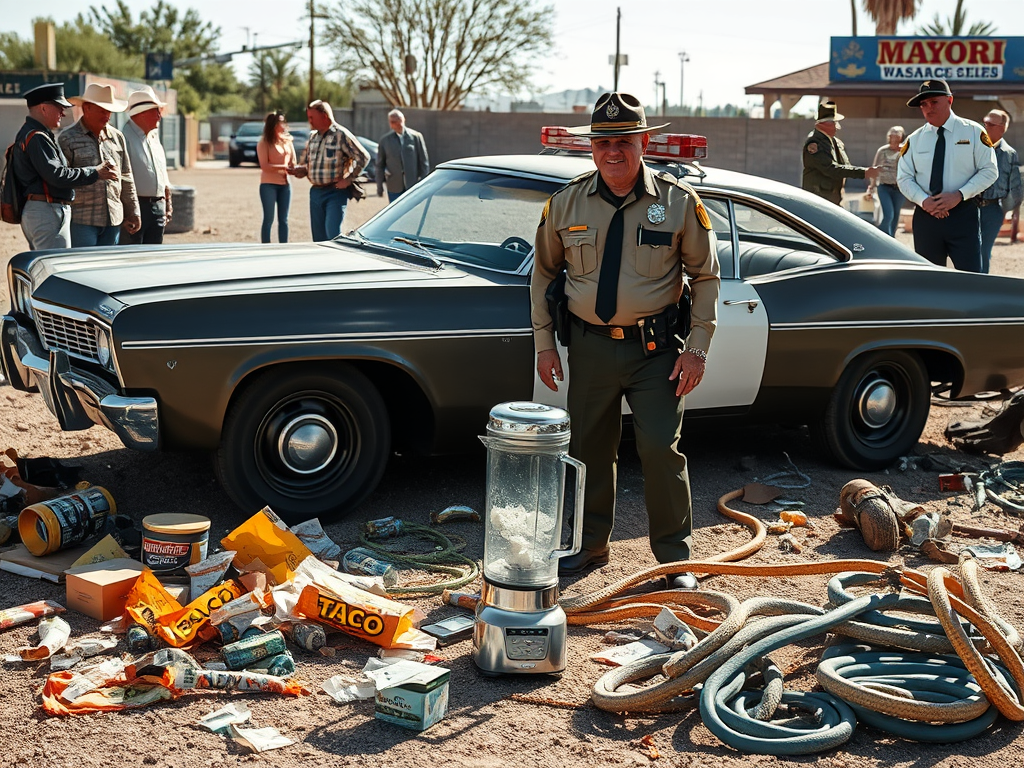
Buck found himself standing amid the remnants of last night’s epic showdown. Discarded taco wrappers were all around. A few broken garden hoses added to the debris. An old margarita blender lay as if a token of an absurd battle. The Mayor, still in full “wartime” regalia, shook hands with retirees. He even gave a slight nod of respect to Carl for his unorthodox diplomacy.

At the gas station, the local newspaper was already printing the headline:

“PEANUT BUTTER PACIFIST: HOW BUCK MILFORD CALMED THE CRICKET STORM”

— Ajo Today, alongside a coupon for “Buy One, Get One Free – Peace of Mind.”

Buck, ever the humble hero, tipped his hat.

“Sometimes, all it takes is cooler heads…and a couple of sandwiches,”

he remarked dryly.

The final act of the evening unfolded with a local radio show, hosted by Marty the janitor. Marty, now reformed, played a slow, soulful tune. The music blended cowboy ballads with cricket chirps in the background. Buck’s patrol car, dusty and battered, stood as a symbol of resilience against absurdity.

As the sun climbed higher in the sky the next morning, Ajo prepared for another day in the desert. Danger and humor mingled that day. There was also the possibility of another bizarre escapade in the shimmering heat. And Buck, always ready, knew that in a town like this, adventure was never too far away.

~THE END~

The Sonoran Desert’s Buck Milford – Chapter 9: Showdown at Sunset

By Benjamin GroffMedia© | benandsteve.com | 2025 Truth Endures©

2–3 minutes

Catching Heat In Ajo, Arizona

The sun dipped low. It cast long shadows over the scorched earth of Ajo. The stage was set for the ultimate confrontation. Every faction had gathered. Mayor Gonzalez stood with her fleet of feisty seniors armed with flyswatters. Carl Sandlin rode his tinfoil-covered dune buggy, banjo in hand. A defiant Barney Fife-lookalike still clutched his oversized ticket book. Buck was caught in the middle, displaying a mixture of resignation and amusement.

Across the dusty open space, the beagle crickets aligned themselves in rows that shimmered in the golden glow. Their usual hum was replaced by a rising, almost militant chorus of chirps. It was a rallying cry that sent a shiver down everyone’s spine (or was it just the cool desert breeze?).

Mayor Gonzalez stepped up, megaphone in hand, and declared,

“Today, we settle this once and for all! You bugs have terrorized our town long enough, and you’re coming to justice!

At the same time, Carl revved his banjo as if it were a trigger. He let out a wild, improvised yodel. This merged into a banjo riff—a challenge thrown down in musical form. The tension was palpable.

Then came the unexpected moment. Buck acted on pure instinct. His genius shone brightly from a half-forgotten lunch order. He pulled out a thermos of peanut butter sandwiches.

“Folks, and… critters,”

he announced, his voice steady.

“Sometimes all you need is a little tad of nourishment. It’s a reminder of simpler days.”

He scattered the sandwiches across the open space. The crickets, baffled by the offering (and even enticed by the rich aroma), paused their chorus. Slowly, as if savoring each bite, they began to nibble at the offerings. One by one, the insects lowered their guard. In that surreal instant, music and mayhem faded into an almost peaceful tableau.

Barney Fife-like hollered,

“This is it—the bug truce is on!”

While Mayor Gonzalez’s frown slowly morphed into a reluctant smile as her deputies put down their flyswatters.

For a heartbeat, the desert held its breath.

How long can everyone hold their breath? Too long, and we’ll have folks fainting in the streets—because that’s what happens when you forget to breathe! We hope the Mayor will remind the crowd to inhale. Barney Fife or Buck himself might do that too. We need this reminder before we move on to Chapter 10—the final installment of this wild ride.

If you’ve been reading since Chapter 1, you already know how it started. It began with unidentified flying toilets. Additionally, there was a full-blown invasion of Mexican Beagle Crickets across Southern Arizona’s Sonoran Desert. But if you just tuned in now… do yourself a favor—go back to the beginning. Otherwise, you’ll be as lost as the lady in the blue ’74 Buick LeSabre. She’s still sitting at the stop sign outside Ajo. She’s waiting for directions that may never come.

The Sonoran Desert’s Buck Milford – Chapter 7: Buck Joins the Bug Peace Talks

By Benjamin GroffMedia© | benandsteve.com | 2025 Truth Endures©

2–3 minutes

Salsa Dancing To A Deal With The Mexican Beagle Crickets

The escalating cricket crisis soon took a bizarre turn. After the Mayor declared martial law, Buck inexplicably found himself roped into a ceasefire negotiation. It was by invitation and circumstance, not entirely by choice.

Under the twilight sky, Buck set up a pair of folding chairs near the old taco stand. It was now decked out as a makeshift negotiation table. He sat alongside Carl Sandlin, who was still sporting his sequined –––

“diplomatic vest.”

An unexpected guest joined them: Gladys “The Negotiator” Ramirez. She is a spry 82-year-old with a background in community organizing and a penchant for peanut butter.

A gentle breeze stirred the desert sand as dozens of beagle crickets gathered in a semicircle. Their chirps and hums intermingled with the soft strumming of Carl’s banjo. It was not a formal diplomatic session at all. Instead, it was a surreal backyard barbecue meeting. Buck found himself as the unintended mediator.

Carl, with a dramatic flourish, announced,

“I propose we work together! You bugs, you stop the invasions, and we guarantee a steady supply of fresh, organic salsa.”

The crickets, of course, did not respond with words, but their synchronized humming seemed to offer a tentative –––

“aye.”

Then, Gladys cleared her throat.

“Now listen here, critters. We are not capable to talk your language, but I do know a thing or two about compromise. How ’bout a trade?”

There was a pause that lasted nearly two seconds in cricket time. A single cricket marched ahead. It tapped an abandoned sombrero with its leg, as if in silent agreement.

Buck, rubbing the bridge of his nose, grinned. He thought,

“I have to admit, this is just the most peculiar peace talk.”

It was indeed the most peculiar peace talk this side of a cactus convention.

The ceasefire was as fragile as the morning dew on the desert floor. For one mystical, humid moment, man and cricket reached an understanding.

Will this agreement hold? The Mexican Beagle Crickets and man—finally in harmony? Or will the crickets grow weary of salsa and develop a taste for avocado dip instead? Will a sudden craving for classic TV jingles like Sanford and Son or The Beverly Hillbillies derail the peace? And what happens when today’s senior citizens pass on—will the next generation need to renegotiate the whole deal? With only a few chapters left, Buck better hustle—answers aren’t going to find themselves!

The Sonoran Desert’s Buck Milford – Chapter 6: The Mayor Declares War

By Benjamin GroffMedia© | benandsteve.com | 2025 Truth Endures©

1–2 minutes

ONE STEP TOO FAR – TAKING OVER OF A TACO STAND

Mayor DeeDee Gonzalez wasn’t one to take a half-measure. Her town’s only claim to fame was a bug outbreak with a penchant for humming and line-dancing. Mexican beagle crickets had commandeered a taco stand once more. They also interrupted a high-stakes karaoke contest at the community center. She had had enough.

The emergency meeting took place in the town hall. Chairs were hastily arranged in a circle. The table was littered with half-eaten enchiladas. The Mayor banged her gavel with a determined clatter.

“Enough is enough!” 

She declared.

“These pests have overstepped their bounds. As of now, martial law is declared on all cricket activity in Ajo!”

In a matter of minutes, local retirees received “bug defense kits.” These kits featured oversized flyswatters and garden hoses. They also included homemade “cricket deterrent” spray (an odd blend of cactus juice and a hint of mint). The newly minted “deputies” marched down Main Street. The Beagle Cricket Brigade paused their evening serenade. It was as if to say, “They brought reinforcements!”

Buck, watching from the window of the Impala, smirked.

“Now that’s what you call bugging out,”

He muttered. He anticipated the chaos. It would ensue when a troop of seniors met a swarm of rhythmic insects.

How dare they! A Taco Stand? Those evil Beagle Crickets! It is only a matter of time before someone is called to main street for a shootout at high noon. But, will Buck’s aim hit something as small as a cricket in a shootout? Would the crime fighter be outmatched by crickets? Or will they challenge him to Karaoke sing off?

The Sonoran Desert’s Buck Milford – Chapter 4: Yodels and Yellows

By Benjamin GroffMedia© | benandsteve.com | 2025 Truth Endures©

2–4 minutes

Buck Plays a Tune!

The Mexican beagle crickets arrived five days ago. Already, the Arizona Department of Wildlife had received over 300 complaints. Not about damage, mind you—but about the music.

“They’re too dang punctual,”

one retiree griped.


“They hum like my mother-in-law when she’s judging me,”

wrote another.


One anonymous caller just yelled. MAKE IT STOP!” for forty-two seconds before hanging up.

Buck Milford was used to desert weirdness. He’d once ticketed a man for driving a dune buggy made entirely of rattlesnake skins. But nothing prepared him for Carl Sandlins latest idea: The Great Cricket Peace Yodel.

“I’ve been listenin’ to ‘em closely,”

Carl explained, pacing in front of his yurt-slash-taco-stand.

“And I think they respond to pitch. What we got here is a musical species. They ain’t hostile—they just need harmony!”

Carl wore what he called his “diplomatic vest.” It was a sequined denim jacket with fringe. He also equipped himself with an old harmonica, a rusted washboard, and a five-gallon pickle bucket labeled AMBASSADOR DRUM.

Buck just stared at him.
“You sure you haven’t been drinking your aloe again, Carl?”

But Carl was undeterred. That night at 2:00 a.m., he set up two lawn chairs. Fifteen minutes before the crickets’ usual humming ritual, he arranged a battery-powered spotlight. He also prepared a megaphone duct-taped to a broomstick.

“Alright, fellas,”

he said into the megaphone.

“Let’s talk tunes!”

Buck sat in the cruiser, sipping lukewarm coffee, radio off. “This is going to end with him either arrested, abducted, or somehow elected,” he muttered.

At exactly 2:15 a.m., right on schedule, the desert came alive with humming.

But this time… Carl joined in.

He yodeled.

He drummed.

He played a harmonica solo that sounded like a walrus stepping on bubble wrap.

And for thirty glorious seconds… the crickets paused.

Then, they hummed louder than ever.

They didn’t just hum The Andy Griffith Show this time. They mashed it up with Achy Breaky Heart. It sounded suspiciously like a 1996 Taco Bell jingle.

Carl dropped his bucket.

“They answered me, Buck! I think we’re collaborating!”

Buck opened his door.

“Carl, I think they’re angry.”

Suddenly, thousands of beagle crickets surged toward the yurt, drawn to the sounds of tin, harmonica, and misguided ambition. They swarmed Carl’s taco stand, leapt onto the megaphone, and—somehow—turned on his margarita blender.

It spun wildly. Salsa flew.

The crickets began line-dancing.

Buck had seen a lot, but beagle crickets doing synchronized grapevines under a disco light powered by solar lawn gnomes? That was new.

The next morning, the bugs had gone quiet. Carl stood in the rubble of his salsa bar. He was shirtless and proud.

“We made contact,”

he said, eyes shining.

“They danced, Buck. They danced!”

Buck surveyed the scene: overturned lawn chairs, chewed speaker wire, a cricket still stuck in a jar of queso.

“Well, Carl,”

he said,

“either they liked your music—or they mistook you for a piñata.”

Carl smiled.

“Doesn’t matter. Tonight, I’m bringin’ in the banjo!”

SO! CARL. He is bringing in the Banjo! Will it be on his knee? And will someone named Ole Susanna show up in Chapter Five if Carl swings that Banjo too wildly? That is a story for tomorrow. So be sure to check back and see if the Mexican Beagle Crickets have segued into classical jazz. Also, will the Highway Patrol get Buck a larger fly swatter?

The Sonoran Desert’s Buck Milford- Chapter 1 -Hotter Than Hades – A Hot Day Fighting Beatle Crickets In Arizona

Arizona State Trooper Buck Milford From Ajo Dispatched To One Of The Hottest Calls Of The Summer

By Benjamin GroffMedia© | benandsteve.com | 2025 Truth Endures©

3–4 minutes

A Hot Day Fighting Beagle Crickets In Arizona

It had been a hot day in the Arizona Desert. The sun had sizzled the sands in the Sonoran Desert for the last month. High temperatures reached over 115 degrees for each day during the past seven days. The weather forecast warned of night temperatures reaching 120°F or higher in the days ahead. Arizona State Trooper Wayne Milford had his 1968 Chevrolet Impala Patrol car parked outside Ajo. He had filled the fuel tank with fuel. An ice chest was filled with water. This was in case motorists or hikers needed rescue in the barren desert regions. Buck was known for his mishaps.

Trooper Milford was widely appreciated for his sense of humor. He would show community members safety tips during public meetings when he had spare time. He also attended public events during his off-duty time. He was respected by those even that received traffic tickets from and who had been arrested by the state trooper. Because he was known as a fair individual.

That summer was challenging. The extreme heat and the invasion of the Mexican beagle cricket placed the whole state under stress. Trooper Milford became essential because there would be more surprises than one could shake a stick at. And Buck had ton’s of sticks!

The Mexican beagle cricket wasn’t actually from Mexico. It didn’t bark like a beagle. Yet, it did hum the theme song to The Andy Griffith Show at exactly 2:15 a.m., every night, in unison. No one knew why. Some said it was a mating call. Others blamed radiation. Buck didn’t care. He kept a fly swatter in the glove box and an old harmonica to confuse them.

On this particular Thursday, Buck had just finished explaining the dangers of cooking bacon on your car hood. This activity was a popular desert pastime. He was speaking to a group of overheated tourists from Connecticut when his police radio crackled.

“Unit 12, we’ve got a report of a suspicious object at mile marker 88. The caller says it might be a UFO or possibly a very shiny porta-potty. Please respond.”

Buck took a sip from his melted water bottle, sighed, and muttered, 

“Well, that’s probably just Carl again.” 

Carl Sandlin is a local conspiracy theorist and professional yodeler. He had been filing UFO reports ever since a silver taco truck passed him on I-10 doing 95.

Still, the procedure was the procedure. Buck fired up the Impala. He turned on the siren, which sounded more like a kazoo than a siren thanks to a duct-tape repair. Then, he rumbled down the dusty road.

When he reached mile marker 88, he saw Carl. Carl was shirtless and shoeless. He was holding up what appeared to be a fishing net wrapped in aluminum foil.

“There it is, Buck!”

Carl shouted, pointing to a shimmering metal shape in the distance. 

“That thing’s been hovering over my taco stand for an hour. My queso is boiling itself!”

Buck squinted. The heatwaves shimmered, giving everything a wobbly, dreamlike quality.

“Carl… that’s a new solar-powered PortaCooler. The highway crew just installed it yesterday. It’s got a misting feature and Wi-Fi.”

Carl blinked. 

“You mean I can update my blog from out here now?”

“Yes, Carl.”

“Well, dang.”

Just then, a convoy of beagle crickets marched across the road in front of them, humming their nightly tune.

Buck and Carl watched in silence. 

Carl finally said,

“You reckon they take requests?”

The Power of Actuality Reporting in Journalism

1–2 minutes

I came across this news report and was genuinely impressed by its craftsmanship. The reporter doesn’t just tell the story. They show it. They use actuality reporting and a wraparound technique that gives the piece depth and authenticity. It’s the type of journalism that doesn’t just inform—it immerses you. This level of storytelling should be seen and appreciated by more people.

A LAZY PORCH KIND OF AFTERNOON

By Benjamin GroffMedia© | benandsteve.com | 2025 Truth Endures©

1–2 minutes

A Lazy Porch on July 25, 1939

On July 25, 1939, Dorothea Lange was a renowned documentary photographer. She paused her busy travels across the American South. She stepped into a quiet moment just outside Gordonton, North Carolina. It was a humid summer Sunday. Through her lens, she discovered something golden: a rickety country store. Its wooden porch was dappled in shade. A few men sat comfortably in rocking chairs on it. The afternoon moved slowly around them.(1)

“Captured on July 25, 1939: a country store porch in rural North Carolina. Dorothea Lange found the perfect rendition of a lazy summer afternoon here. Let this moment remind you—it’s okay to choose rest today.”

Lange raised her camera and captured exactly what she saw: a peaceful summer tableau. The porch wasn’t staged—it was real life, real rest. The men lounged beside old kerosene and gas pumps, their chatter and quiet breaths blending with cicadas in the heat.

That moment—frozen in a gelatin silver print—became a small celebration of indolent joy. No agenda. No hurry. Just an afternoon spent doing exactly what summer begs you to do: nothing.

How Western Movies Perpetuate Harmful Stereotypes of Indigenous Peoples

By Benjamin GroffMedia© | benandsteve.com | 2025 Truth Endures©

3–4 minutes

I was watching an old Western on television this past weekend. You know, the kind—cowboys and Indians. Or, as we might say today, American Ranchers and Indigenous Peoples.

The film, likely made in the 1950s, had the signature gloss of that era’s post-war cinema. Still, something about it suggested it was possibly shot even earlier, maybe in the 1940s. It was only later spliced, refitted, and packaged for the screen. The costumes, dialogue, and scenery all hinted at a time when the stereotypes were deeply ingrained in the script. They weren’t even questioned.

I probably watched that movie as a kid. I was sitting next to my father, not giving it a second thought. Back then, it was just another Western. But this time around, with a different set of eyes, what I saw was jarring.

It followed the predictable narrative: the cavalry riding in to tame the West and keep the “Indians” under control. Two delicately dressed white heroines were caught in the middle of a brewing conflict. A white doctor stood out as the lone character who dared to see Native people as human beings. He was mocked and ostracized for his compassion. This was especially true when a malaria outbreak swept through the tribe. He insisted they deserved treatment.

At one point, he stood in a room full of fellow whites. He asked,

“Do you think Indians are not human beings? Human beings like you and me, who deserve to live and be healthy?”

And one of the prim ladies, her hair perfect and her face untouched by empathy replied:

“I don’t know… how could they be?”

To which others in the room nodded and added, 

“That’s right.”

“Of course, they’re not!”

“No way, in God’s name.”

I sat there stunned, wondering:

“How did a line like that ever make it into a movie script?”

Even more troubling:

“How did it get past editors, producers, censors—only to be broadcast, repeated, and absorbed by generations?”

It wasn’t just offensive. It was abusive. And it made me sad.

Is there a historical context to such language? Possibly. But what would a young Native American child feel sitting in front of that screen? Would they see their life reflected as something lesser—something not worthy of protection or dignity? Listening to the white characters, it certainly felt that way.

And it took me back to where I grew up.

I’m from the Kiowa and Comanche Counties area in Oklahoma—Caddo County, specifically. I was raised alongside Native American children, many of whom I called friends.

Later in life, I worked in law enforcement and came to know tribal members through both personal and professional relationships. I learned a great deal from them—about their culture, their pride, their pain.

When I started in law enforcement, the department had an initiation ritual. It involved arresting a man nicknamed Fifteen Thousand. He was a Native man, around 50 years old, who’d been detained countless times—hence the name. His real name was Thomas Kamaulty Sr.

He was the first person I ever arrested as an officer. 

And, in time, Thomas became the first person I ever saw get sober. That meant something.

Ira Hayes

I also think about people like Ira Hayes. He was a Pima Indian from Arizona. Ira helped raise the flag at Iwo Jima during World War II. A hero by every standard. And yet, like Thomas, Ira suffered. Both carried the scars of discrimination and trauma. Both turned to alcohol as a way to numb the soul-deep wounds this country handed them.

We often ask why these cycles exist—but we rarely admit the truth: it’s because we’ve designed them to. We’ve placed people like Thomas, like Ira, into roles and systems. Their suffering can be managed. Their voices are diminished. Their lives are controlled. That was always the plan. And until we stop pretending it wasn’t, the script will keep playing—over and over again.