What difference does it really make — who we are or who we love? We accept without question that some people like black hair, others like blondes, and some like redheads. Some are tall, some are short, some are in between. Yet history shows us how quickly an innocent difference can become a target.
Imagine if tomorrow there was an eruption of public hatred toward blondes. They dye their hair to avoid detection. Or if short people were suddenly ostracized, they try to stay inside except during “short hours.” Many people already camouflage parts of themselves—how they speak, dress, or behave—to stay safe in public. But not everyone can change.
That’s what today’s reflection is about: What do we do with differences that can’t be hidden or changed? When does society’s discomfort become cruelty? Should people who can’t “blend in” be cast aside, alienated, or worse? We’re at our best when we challenge these questions. We must remind ourselves that our shared humanity matters far more than our differences.
A Hopeful Call-to-Action
If differences can be used to divide, they can also be used to unite. Every person you meet carries something unique—something you can’t see at first glance. Rather than asking people to blend in or hide, we can create a world where authenticity is safe and celebrated. Each act of kindness is important. Each open conversation contributes to understanding. Each refusal to judge by appearance fosters inclusivity. These are steps toward a society that values humanity over uniformity. The question isn’t how we can camouflage ourselves—it’s how we can build a place where no one needs to.
Ethan was only a few miles from home when it happened. A sudden dizziness swept over him, the road blurred, and he pulled his car to the side. When the fog lifted, he realized he couldn’t remember who he was, or where he had been going. All he had was a backpack, a half-filled journal, and the overwhelming instinct that he needed to find shelter.
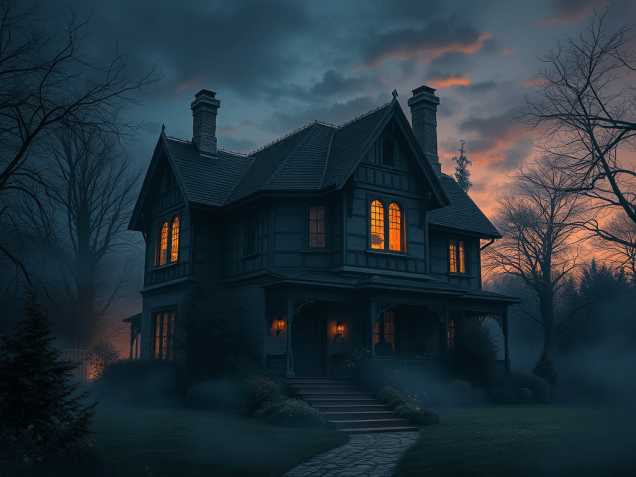
He wandered until he reached Brookfield Lane, where an old house loomed against the evening sky. As a child, Ethan had feared this place. It was where shadows seemed darker, where kids whispered about ghosts and curses. Though he didn’t remember that fear, his body did—a chill ran through him as he stepped onto the porch. Still, with nowhere else to go, he knocked.
An elderly woman opened the door. “Come in, child,” she said softly, as though she had been expecting him. Ethan stayed, helping with small chores, sharing meals, and slowly growing comfortable in the quiet warmth of the house. In the evenings, they talked. She asked about his life. Even though he couldn’t remember, fragments began returning. He recalled his laughter with friends, the smell of campus coffee shops, and the long nights of studying. Then, something deeper surfaced. It was the secret he had held since high school. He thought he’d never say it aloud. He told her he was gay. Instead of fear or judgment, she smiled. “Love,” she said, “is never something to be ashamed of. It’s what keeps this house alive.”
When his memory finally returned, it shocked everyone. Ethan’s parents had always thought of Brookfield Lane as cursed, a place to avoid. They couldn’t understand how the son they worried about had found comfort, truth, and acceptance there. For Ethan, though, the house became more than a place of fear. It became the place where he embraced who he was. He learned that what we fear most sometimes holds the power to set us free.
Robella, a woman with physical differences, was born into a world that seemed to reject her. Her hair grew out long and kinky on one side and short and stubby on the other, and she was nearly bald in the back. Her left leg was shorter than the right. The elbow on her right arm is three inches higher than the left. Her nose had a long mole on end, which, when she was in school, all the children nicknamed her ‘witchy-pooh.’ Her body had grown misshaped, and she had to wear specially-made clothes that she made since her parents had distanced themselves from her for being so embarrassing.
Robella, often misunderstood and feared, would rummage the town’s alleys for whatever she could find. She would growl feverishly at anyone who said hello to her or offered to help her, a response born out of years of rejection. However, even this didn’t stop the town’s nicest people from trying to help her. Mrs. Meyers, who ran the bakery, would make a point to set a hot loaf of bread out on the back steps of her store every Monday, knowing that Robella would soon be looking for items the store owners had discarded. Robella would rummage through the cans and junk in the alley until she got to the bread, every week she would sniff it and say out loud,
“Mrs. Myers Bakery always forgets and leaves a loaf of bread in the oven over the weekend. My gain!”
She proceeded down the alley, finding other items that store owners had carefully placed for her, knowing where she would look for them. Robella would find the goods, and she would let out a grunt and laugh and proceed on.
One cold winter day, as Robella made her usual rounds through the alley, she stumbled upon something unexpected. There was a small, wrapped package with a note attached among the carefully placed items. Curiosity piqued, and she hesitated before picking it up.
The note read:
“To Robella, You are special and loved just as you are. Please join us at the town square tonight for a surprise.
With love, Your Neighbors”
Robella frowned and grumbled to herself, unsure what to make of it. Despite her mistrust, a flicker of curiosity and hope stirred within her. She decided to see what kind of joke the townspeople might be playing on her.
As the evening approached, Robella made her way to the town square, staying in the shadows so she would not be seen. To her surprise, the square was transformed into a magical wonderland, filled with lights and decorations. The townspeople had gathered, and a large table was set with all kinds of delicious food. At the center of it all stood Mrs. Meyers, holding a beautifully decorated cake.
“Robella, we’ve been waiting for you,”
Mrs. Meyers called warmly, spotting her in the shadows. The crowd turned, and they all smiled at her, to her amazement.
“Come, join us, “ one of the townspeople said, extending a hand towards her.
“We’ve prepared a feast in your honor.”
Robella hesitated, unsure of what to make of this unexpected show of kindness. But Mrs. Meyers, sensing her hesitation, walked over and gently took her hand, leading her to the center of the square.
“This is for you, dear. We want you to know that we see you, we care about you, and we want you to be part of our community. Your differences are what make you special, and we celebrate them.”
Tears welled up in Robella’s eyes. For so long, she had felt nothing but rejection and loneliness. Now, faced with genuine kindness and acceptance, her hardened exterior began to crack. She felt a mix of emotions-disbelief, gratitude, and a glimmer of hope. Could it be that she was finally finding a place where she belonged?
“But I’m so different,” she whispered, looking down.
“And that makes you unique and wonderful,” Mrs. Meyers replied.
“We all have our differences, which makes our community rich and beautiful.”
The townspeople came forward one by one, each offering a word of kindness or a small gift. They shared stories of their struggles and how they had overcome them with the support of each other. Robella listened, her heart slowly warming with each tale.
As the night went on, Robella felt something she hadn’t felt in years: a sense of belonging. She realized that she didn’t have to be alone or angry anymore. These people truly cared for her, and they wanted her to be a part of their lives. Their kindness, their acceptance, had the power to transform her life.
From that day forward, Robella became an integral part of the community. She used her skills to help others, sewing clothes for those in need and sharing her resourcefulness. The townspeople, in turn, included her in their daily lives, and she formed deep, meaningful friendships. It was the collective acceptance and kindness of the community that had transformed her life, showing her that she was not alone and that her differences were not a barrier to belonging.
Robella’s heart softened, and her once harsh demeanor transformed into one of kindness and warmth. She learned to smile and laugh genuinely, and the townspeople celebrated her unique qualities, seeing the beauty in her differences. She became an integral part of the community, using her skills to help others, sewing clothes for those in need and sharing her resourcefulness. The townspeople, in turn, included her in their daily lives, and she formed deep, meaningful friendships.
Every day, anti-trans rhetoric is spreading and becoming more virulent. Conservative forces in statehouses across America are pushing bills that would strip trans people of rights, including access to vital medical care. In some places, these laws have already passed. This is all part of a concerted, coordinated effort, as Madison Pauly’s reporting shows. Paul
WHEN ANYONE GETS DENIED A RIGHT AFFORDED TO ANOTHER, WHETHER THE REASON FOR WITHHOLDING IS CIVIL OR PRIVILEGED, IT’S DENIAL TO ALL. BECAUSE IT IS A NEED FOR MANY – THAT – THE FEW ARE TOO PREJUDICED EVER TO UNDERSTAND.




 benandsteve.com